

Sustained desensitization to bacterial Toll-like receptor ligands after resolutionof respiratory influenza infection
Open accessThe DOI matches its Crossref record; 31 of the 31 references it cites were found in a registry or an index.
Abstract
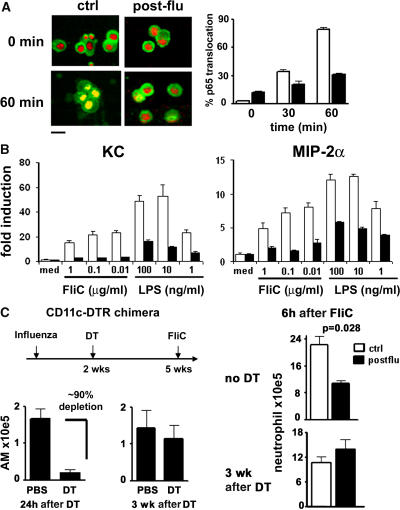
The World Health Organization estimates that lower respiratory tract infections (excluding tuberculosis) account for ∼35% of all deaths caused by infectious diseases. In many cases, the cause of death may be caused by multiple pathogens, e.g., the life-threatening bacterial pneumonia observed in patients infected with influenza virus. The ability to evolve more efficient immunity on each successive encounter with antigen is the hallmark of the adaptive immune response. However, in the absence of cross-reactive T and B cell epitopes, one lung infection can modify immunity and pathology to the next for extended periods of time. We now report for the first time that this phenomenon is mediated by a sustained desensitization of lung sentinel cells to Toll-like receptor (TLR) ligands; this is an effect that lasts for several months after resolution of influenza or respiratory syncytial virus infection and is associated with reduced chemokine production and NF-κB activation in alveolar macrophages. Although such desensitization may be beneficial in alleviating overall immunopathology, the reduced neutrophil recruitment correlates with heightened bacterial load during secondary respiratory infection. Our data therefore suggests that post-viral desensitization to TLR signals may be one possible contributor to the common secondary bacterial pneumonia associated with pandemic and seasonal influenza infection.
Overview
The claims and statistics of this paper haven’t been checked yet.
Free: it reads the open-access text and checks the first 5 claims that cite a source we can check. Create a free account to check every claim.
Integrity signals
Registry
Cites
Statistics
Figures
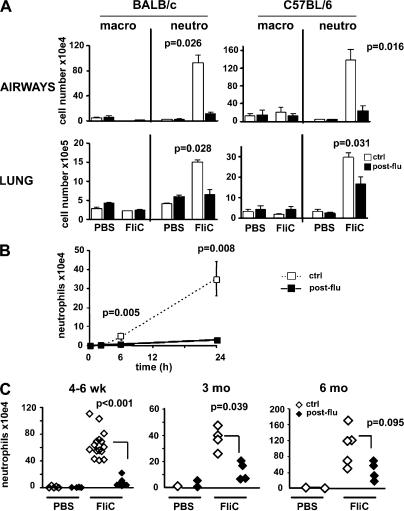
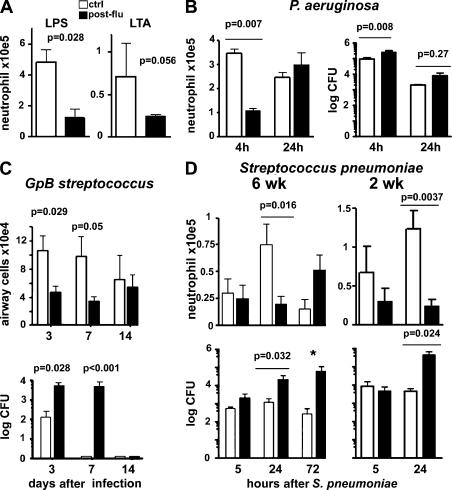
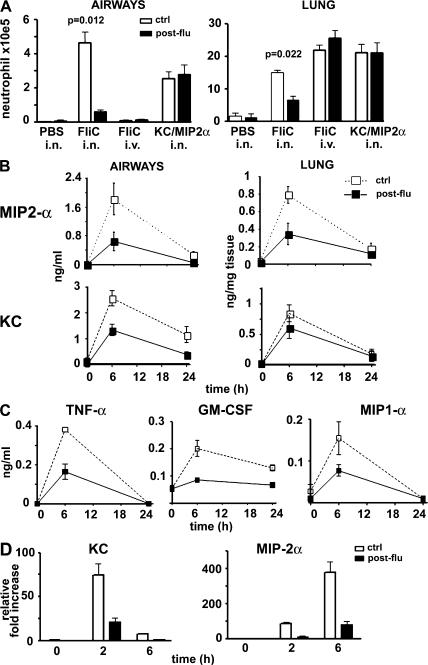
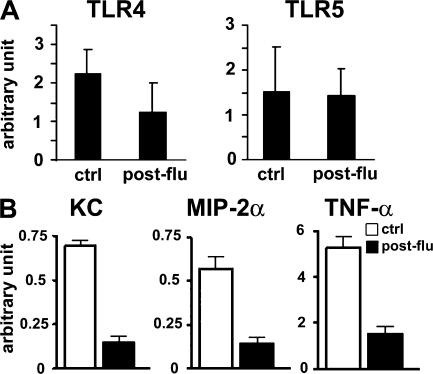
Verification
Claims the paper makes
The claims and statistics of this paper haven’t been checked yet.
Free: it reads the open-access text and checks the first 5 claims that cite a source we can check. Create a free account to check every claim.
Claims other papers make about this one
Each is checked against this paper’s own text: does it say what the citing paper says it does?
The source backs part of the claim, not all of it — or backs it for a different population, condition or comparison.
In the citing paper
“Late after infection, when virus has cleared (.12 days), desensitization of pattern recognition receptors to stimuli reverses this effect, preventing beneficial inflammatory responses from contributing to bacterial clearance [40].”
From Influenza virus primes mice for pneumonia from Staphylococcus aureus. (2011) · cites this paper as [40]
Experimental — accuracy not yet measuredThe cited source says what the claim attributes to it.
In the citing paper
“respiratory viruses can modulate innate and adaptive immune responses in the host, thereby promoting bacterial colonization and infection; for example, by impairing monocyte activity108, the extended desensitization of alveolar macrophages for Toll-like receptor (TLR)-ligands109, suppressing phagocytic capacity of alveolar macrophages110, and by inhibiting the production of antimicrobial peptides”
From The microbiota of the respiratory tract: gatekeeper to respiratory health (2017) · cites this paper as [109]
In the citing paper
“Third, respiratory viral infections impair innate immune responses against bacteria (128–130).”
From Respiratory viral infection-induced microbiome alterations and secondary bacterial pneumonia. (2018) · cites this paper as [129]
Self-check
Percentages, sums and reported differences re-computed from the paper’s own numbers.
The self-check needs the paper’s full text.
Citations
Cites
2 retracted
Induction of a Homeostatic Circuit in Lung Tissue by Microbial Compounds
Takabayshi, K., Corr, M., Hayashi, T., Redecke, V., Beck, L., Guiney, D. G., Sheppard, D., & Raz, E. (2008) · Immunity · doi:10.1016/j.immuni.2008.04.011 · Cited by 89
RetractedRETRACTED: Induction of a Homeostatic Circuit in Lung Tissue by Microbial Compounds
Takabayshi, K., Corr, M., Hayashi, T., Redecke, V., Beck, L., Guiney, D. G., Sheppard, D., & Raz, E. (2006) · Immunity · doi:10.1016/j.immuni.2006.02.008 · Cited by 76
RetractedPathogen Recognition and Innate Immunity
Akira, S., Uematsu, S., & Takeuchi, O. (2006) · Cell · doi:10.1016/j.cell.2006.02.015 · Cited by 11,952
Jung, S., Unutmaz, D., Wong, P., Sano, G.-I., De los Santos, K., Sparwasser, T., Wu, S., Vuthoori, S., Ko, K., Zavala, F., et al. (2002) · Immunity · doi:10.1016/s1074-7613(02)00365-5 · Cited by 1,773
Insights into the Interaction between Influenza Virus and Pneumococcus
McCullers, J. A. (2006) · Clinical Microbiology Reviews · doi:10.1128/cmr.00058-05 · Cited by 846
Prokaryotic Regulation of Epithelial Responses by Inhibition of IκB-α Ubiquitination
Neish, A. S., Gewirtz, A. T., Zeng, H., Young, A. N., Hobert, M. E., Karmali, V., Rao, A. S., & Madara, J. L. (2000) · Science · doi:10.1126/science.289.5484.1560 · Cited by 844
Role of inducible bronchus associated lymphoid tissue (iBALT) in respiratory immunity
Moyron-Quiroz, J. E., Rangel-Moreno, J., Kusser, K., Hartson, L., Sprague, F., Goodrich, S., Woodland, D. L., Lund, F. E., & Randall, T. D. (2004) · Nature Medicine · doi:10.1038/nm1091 · Cited by 821
van Rijt, L. S., Jung, S., KleinJan, A., Vos, N., Willart, M., Duez, C., Hoogsteden, H. C., & Lambrecht, B. N. (2005) · The Journal of Experimental Medicine · doi:10.1084/jem.20042311 · Cited by 623
Self-citationPostnatal acquisition of endotoxin tolerance in intestinal epithelial cells
Lotz, M., Gütle, D., Walther, S., Ménard, S., Bogdan, C., & Hornef, M. W. (2006) · The Journal of Experimental Medicine · doi:10.1084/jem.20050625 · Cited by 464
Andonegui, G., Bonder, C. S., Green, F., Mullaly, S. C., Zbytnuik, L., Raharjo, E., & Kubes, P. (2003) · Journal of Clinical Investigation · doi:10.1172/jci16510 · Cited by 408
Cited by
Items 301–400 of 406
What came first, the virus or the egg: Innate immunity during viral coinfections
Rippee‐Brooks, M. D., Marcinczyk, R. N., & Lupfer, C. R. (2020) · Immunological Reviews · doi:10.1111/imr.12911 · Cited by 7
Prospects for an asthma vaccine
Anderson, G. P. (2010) · Respirology · doi:10.1111/j.1440-1843.2010.01820.x · Cited by 7
Short-term repeated HRV-16 exposure results in an attenuated immune response in vivo in humans
Koch, R. M., Kox, M., van den Kieboom, C. H., Ferwerda, G., Gerretsen, J., ten Bruggencate, S., van der Hoeven, J. G., de Jonge, M. I., & Pickkers, P. (2018) · PLoS ONE · doi:10.1371/journal.pone.0191937 · Cited by 6
“macrophages to Toll-like receptor (TLR) ligands, associated with reduced NF-kappaB activation and chemokine production[5].”
BackgroundResultJiang, W., Chen, Y., Yu, C., Zou, B., Lu, Y., Yang, Q., Tang, Z., Mao, W., Li, J., Han, H., et al. (2024) · European Journal of Immunology · doi:10.1002/eji.202350378 · Cited by 7
“…IFN-γ dampened AMs’ innate responses and phagocytic activity, making the hosts more susceptible to subsequent bacterial infections [60, 61], while pre-exposure to TLR agonists, adenovirus, or bacterial colonization protects against pulmonary infections [43, 47, 62, 66] and restricts…”
Clinical Characteristics and Severity Predictors of Pediatric Adenovirus Infections
Ho, S., Zhou, Y., Ho, S., Hu, Y., Yen, T., Huang, K. A., Lu, C., Huang, L., & Chang, L. (2025) · Journal of Medical Virology · doi:10.1002/jmv.70248 · Cited by 5
Brown, M., Abeer, F., Roe, T., Beecham, R., Arscott, O., Eastwood, B., Mahar, S., Montague, M., Neseam, D., Patel, P., et al. (2025) · Infection · doi:10.1007/s15010-025-02637-2 · Cited by 6
“…increased expression of receptors that facilitate bacterial adhesion, which can result in synergistic pathogenesis resulting in poor outcomes [27–31 ] Studies investigating H1N1 influenza-bac - terial co-infections have demonstrated that patients with such co-infections experience higher rates…”
Sviriaeva, E. N., Korneev, K. V., Drutskaya, M. S., Nedospasov, S. A., & Kuprash, D. V. (2016) · Doklady Biochemistry and Biophysics · doi:10.1134/s1607672916060053 · Cited by 5
Vagima, Y., Gur, D., Erez, N., Achdout, H., Aftalion, M., Levy, Y., Zauberman, A., Tidhar, A., Gutman, H., Lazar, S., et al. (2020) · Scientific Reports · doi:10.1038/s41598-020-75840-w · Cited by 5
Rozario, C., Martínez‐Sobrido, L., McSorley, H. J., & Chauché, C. (2021) · Viruses · doi:10.3390/v13122519 · Cited by 5
Amano, S., Haniuda, K., Fukao, S., Aoki, H., Ueha, S., & Kitamura, D. (2023) · The Journal of Immunology · doi:10.4049/jimmunol.2200888 · Cited by 5
Mechanisms Causing the Inflammatory Response to Streptococcus pneumoniae
Ferreira, D. M., & Gordon, S. B. (2015) · Elsevier eBooks · doi:10.1016/b978-0-12-410530-0.00020-x · Cited by 5
Short, K. R., Grant, E. J., Vissers, M., Reading, P. C., Diavatopoulos, D. A., & Kedzierska, K. (2013) · Frontiers in Immunology · doi:10.3389/fimmu.2013.00389 · Cited by 7
Gréve, F. V. S., van der Sluijs, K. F., Boer, A. M. T., Schultz, M. J., de Jong, M. D., & Juffermans, N. P. (2018) · Journal of Medical Virology · doi:10.1002/jmv.25212 · Cited by 5
“Furthermore, the innate host response can be dysregulated, including decreased phagocytosis of neutrophils(33,34) and desensitization of alveolar macrophages.(35) The adaptive response can also be impaired during severe influenza infection, which may increase the susceptibility of the host to bacterial superinfection.”
BackgroundKlebsiella pneumoniae co-infection leads to fatal pneumonia in SARS-CoV-2-infected mice
Villalva, C., Patil, G., Narayanan, S. S., Ghimire, R., Chanda, D., Samarakoon, N., Snider, T. A., Ramachandran, A., Channappanavar, R., & More, S. (2024) · Frontiers in Virology · doi:10.3389/fviro.2024.1426728 · Cited by 5
Luna, X. D., & Hartshorn, K. L. (2017) · American Journal Of Pathology · doi:10.1016/j.ajpath.2017.01.007 · Cited by 4
“One of the surprising features of IAV infection is that pathological and immunological changes in the lung persist long after clearance of the virus.(2) The article by Pociask et al(3) in this issue of The American Journal of Pathology provides important new insights into the mechanism of these prolonged effects.”
BackgroundCD200 genotype is associated with clinical outcome of patients with multiple myeloma
Montes, Y. G., Osca‐Gelis, G., Rodríguez-Romanos, R., Villavicencio, A., González‐Bártulos, M., Llopis, F., Clapés, V., Oriol, A., Sureda, A. M., Escoda, L., et al. (2024) · Frontiers in Immunology · doi:10.3389/fimmu.2024.1252445 · Cited by 4
Pathogenesis of Invasive Pulmonary Aspergillosis
Ben‐Ami, R., & Kontoyiannis, D. P. (2009) · Springer eBooks · doi:10.1007/978-90-481-2408-4_21 · Cited by 8
The pathophysiology of pneumococcal pneumonia
Wootton, D. G., Aston, S., & Gordon, S. B. (2014) · European Respiratory Society eBooks · doi:10.1183/1025448x.10003313 · Cited by 4
Mechanisms of changes in immune response during bacterial coinfections of the respiratory tract
Sviriaeva, E. N., Korneev, K. V., Drutskaya, M. S., & Kuprash, D. V. (2016) · Biochemistry (Moscow) · doi:10.1134/s0006297916110110 · Cited by 4
La grippe et les surinfections bactériennes: Menaces et traitements
Roquilly, A., & Trottein, F. (2017) · médecine/sciences · doi:10.1051/medsci/20173305017 · Cited by 4
Why Are Children With Bronchiolitis At Risk Of Urinary Tract Infections?
Hendaus, M. A. (2019) · Risk Management and Healthcare Policy · doi:10.2147/rmhp.s222470 · Cited by 6
“For instance, TLR4 and TLR5 pathways are modified after influenza virus infection, leading to decreased neutrophil attraction, hence resulting in increased attachment of bacteria.(38) Several epithelial cells can also express the classical antiviral interferons (INFs), especially IFN-α and IFNβ.”
BackgroundDeciphering the Role of Macrophages in RSV Infection and Disease
Looy, S. V., Fransen, A., Jacobs, L., Schaerlaekens, S., Ceconi, M., Serrano‐Cano, F. I., Hudda, N. U., Moll, L. V., Smedt, M. D., Cos, P., et al. (2025) · Viruses · doi:10.3390/v17101351 · Cited by 3
“This suggests that RSV can induce a sustained anti-inflammatory state that may help limit excessive inflammation during reinfection but could also compromise effective immune responses [123].”
Brand, O. J., Kirkham, S., Jagger, C. P., Ozols, M., Purohit, K. P., Zhang, Z., Lennon, R., Hussell, T., & Eckersley, A. (2025) · Mucosal Immunology · doi:10.1016/j.mucimm.2025.11.005 · Cited by 4
Self-citationMifsud, E. J., Farrukee, R., Hurt, A. C., Reading, P. C., & Barr, I. (2022) · FEMS Microbes · doi:10.1093/femsmc/xtac011 · Cited by 5
“Moreover, influenza virus-induced immune cell suppression has been shown to last for prolonged periods of time (Williams et al. 2004, Didierlaurent et al. 2008).”
BackgroundJarras, H., Blais, I., Goyer, B., Bazié, W. W., Rabezanahary, H., Thériault, M., Santerre, K., Langlois, M., Masson, J., Pelletier, J. N., et al. (2025) · Frontiers in Immunology · doi:10.3389/fimmu.2024.1513717 · Cited by 4
Boehme, J. D., Jeron, A., Schultz, K., Melcher, L., Schott, K., Gelmez, E., Kröger, A., Stegemann‐Koniszewski, S., & Bruder, D. (2025) · Cell Communication and Signaling · doi:10.1186/s12964-025-02284-y · Cited by 3
“However, we and others have previously shown that influenza-mediated susceptibility to S. pn. can persist after viral clearance has been accomplished, i.e. during the post-influenza recovery period [11, 12].”
H3N2 canine influenza virus and Enterococcus faecalis coinfection in dogs in China
Zhou, L., Sun, H., Song, S., Liu, J., Xia, Z., Sun, Y., & Lyu, Y. (2019) · BMC Veterinary Research · doi:10.1186/s12917-019-1832-x · Cited by 5
“In addition, virus infection causes sustained desensitization to bacterial toll-like receptor ligands, affecting the normal bacterial clearance mechanism [37].”
BackgroundAdaptive Characteristics of Innate Immune Responses in Macrophages
Netea, M. G., & Mantovani, A. (2014) · Springer eBooks · doi:10.1007/978-1-4939-1311-4_15 · Cited by 4
Onzuka, T., Tomita, Y., Shimizu, I., Okano, S., Yamada, H., Yoshikai, Y., & Tominaga, R. (2009) · Scandinavian Journal of Immunology · doi:10.1111/j.1365-3083.2009.02314.x · Cited by 2
Diego, J. G.-B., Arranz-Herrero, J., Laghlali, G., Burgess, E., Park, S., Singh, G., Chang, L. A., Warang, P., Noureddine, M., Ochando, J., et al. (2025) · Journal of Virology · doi:10.1128/jvi.01774-25 · Cited by 2
Respiratory Viral and Bacterial Superinfection
Naghshtabrizi, N., & Robinson, K. M. (2026) · Clinics in Chest Medicine · doi:10.1016/j.ccm.2025.12.006 · Cited by 2
Current insights into bacterial secondary infection following influenza A virus infection
Seo, J.-H., Seo, Y.-J., Ryu, H., Shin, M., & Lee, C.-Y. (2026) · Frontiers in Microbiology · doi:10.3389/fmicb.2026.1851115 · Cited by 2
“This state is primarily mediated by impaired NF-κ B nuclear translocation upon secondary bacterial challenge, which prevents the rapid induction of pro-inflammatory cytokines and chemokines (Didierlaurent et al., 2008).”
InfluentialViral–bacterial interactions within hosts
Endsley, J. J., & Sun, K. (2024) · Elsevier eBooks · doi:10.1016/b978-0-12-818619-0.00048-4 · Cited by 2
Secondary bacterial infections in patients with COVID-19
Lachana, A., Chrysanthopoulou, E., Vakiarou, F., & Dimοpoulos, G. (2021) · Pneumon · doi:10.18332/pne/136152 · Cited by 3
Evaluating Macrophages in Immunotoxicity Testing
Franko, J., McCall, J. L., & Barnett, J. B. (2018) · Methods in molecular biology · doi:10.1007/978-1-4939-8549-4_17 · Cited by 2
Mathematical modelling of epithelium homeostasis
Domínguez‐Hüttinger, E. (2014) · Spiral (Imperial College London) · doi:10.25560/47969 · Cited by 2
Okda, F. A., Sakr, A., Webster, R. G., & Webby, R. J. (2021) · bioRxiv (Cold Spring Harbor Laboratory) · doi:10.1101/2021.05.03.442542 · Cited by 2
Research progress on the mechanism of secondary bacterial infection of influenza virus
Zhang, X., & Liu, L. (2019) · Community Acquired Infection · doi:10.4103/cai.cai_3_20 · Cited by 1
Zhu, Y., Wei, L., Zwygart, A. C., Gaínza, P., Khac, Q. O., Olgiati, F., Kurum, A., Tang, L., Correia, B. E., Tapparel, C., et al. (2024) · Small · doi:10.1002/smll.202307709 · Cited by 1
Sun, Y., Fan, H., Li, W., Li, D., Ke-fei, B., Lu-jiao, D., Zhang, H., JianLiang, L., & Xie, Z. (2025) · Veterinary Microbiology · doi:10.1016/j.vetmic.2025.110499 · Cited by 1
Fan, L., Diao, F., Bo, J., Qian, Y., Liang, H., Zhu, X., & Li, W. (2026) · Toxicon · doi:10.1016/j.toxicon.2026.109072 · Cited by 1
Shaw, S. C., Jamil, T. L., Heslop, G., Fleck, J., Johnson, W., Lorenz, B. P., Drigot, Z., Harris, J. K., Gitomer, S. A., & Clark, S. E. (2026) · Cell Reports Medicine · doi:10.1016/j.xcrm.2026.102846 · Cited by 1
Hijacking and subversion of macrophage antiviral functions by viruses
Xu, Z., Shi, F., Han, J., Zhou, L., & Yang, H. (2026) · Virulence · doi:10.1080/21505594.2026.2694165 · Cited by 1
Sanders, R. D., Godlee, A., Goulding, J., Ma, D., Maze, M., & Hussell, T. (2012) · Influenza and Other Respiratory Viruses · doi:10.1111/irv.12066 · Cited by 1
Self-citationAcute Exacerbations of Airway Inflammation
Goyal, V., & Chang, A. B. (2016) · Compendium of Inflammatory Diseases · doi:10.1007/978-3-7643-8550-7_196 · Cited by 1
Granger, J., Cho, E., Lindsey, K., Lemoine, N., Calvert, D. D., Marucci, J., Mullenix, S., O’Neal, H. R., Irving, B. A., Johannsen, N. M., et al. (2022) · Scientific Reports · doi:10.1038/s41598-022-12934-7 · Cited by 1
On the Relationship between Asymptomatic Infections and Diseases
Zach, M. (2023) · Philosophy of Medicine · doi:10.5195/pom.2023.171 · Cited by 1
“…infection, changes in alveolar macrophages contribute to the prolonged establishment of an immunosuppressive environment in the lungs, with consequences for responses to secondary infections (Didierlaurent et al. 2008; see also Snelgrove, Godlee, and Hussell 2011 for additional considerations).”
BackgroundZhao, D., Sun, Y., Guo, J., Tang, Y., Wang, Z., Wen, X., Dong, Y., & Liu, Y. (2024) · Transboundary and Emerging Diseases · doi:10.1155/2024/2237621 · Cited by 2
“Traditionally, the reasons for coinfection to aggravate the disease include increased exposure to cell receptors [34], damage to the mucosal barrier [35, 36], and immune abnormalities during viral infection followed by secondary bacterial infection [37 – 39].”
ROLE OF VIRAL AND HOST FACTORS IN INFLUENZA VIRUS MEDIATED INHIBITION OF INTERLEUKIN-23
Tiwari, A. (2014) · UKnowledge (University of Kentucky) · Cited by 1
Early metabolic reprogramming licenses Streptococcus pneumoniae for Influenza-driven superinfectionPreprint
Lagune, M., Bianchi, N., Herren, M., Prados, J., Caillon, A., Kulkarni, G. V., Silva, F., Rohr, O. V., Sierra, R., Colpaert, M. G., et al. (2026) · bioRxiv (Cold Spring Harbor Laboratory) · doi:10.64898/2026.01.10.698720 · Cited by 1
“Influenza A virus infection induces extensive 31 and long-lasting remodeling of the lung environment 22 , generating a permissive niche for pneumococcal expansion that persists beyond viral clearance.”
Airway Macrophages: Sentinels of Health
Hussell, T., Bell, T. J., & Fujimori, T. (2014) · Springer eBooks · doi:10.1007/978-1-4939-1311-4_8 · Cited by 2
Self-citationColonisation-induced protection against Streptococcus pneumoniae disease
Cohen, J. (2011) · UCL Discovery (University College London)
Innate Immunity Immunomodulators in Post-Influenza Bacterial Pneumonia
Wu, M. (2015) · Digital Access to Scholarship at Harvard (DASH) (Harvard University)
Moore, D. P. (2010) · University of the Witwatersrand, Johannesburg Institutional Repository on DSpace (University of the Witwatersrand, Johannesburg) · Cited by 2
Infecciones de vías respiratorias bajas
Chang, A. B., Chang, C. C., & Torzillo, P. J. (2009) · Clínicas pediátricas de Norteamérica
Toll-like receptor interactions and their contribution to airway inflammation.
Melkamu, T. (2010) · University of Minnesota Digital Conservancy (University of Minnesota) · Cited by 1
Kaushic, C., Ashkar, A. A., Damjanovic, Z. X., Brown, E. G., Arck, P., Jordana, M., Jeyanathan, M., & Shaler, C. R. (2010)
A Novel Mechanism of Enhanced Susceptibility to Bacterial Pneumonia in Influenza-infected Hosts
Ghoneim, H. E. (2013) · doi:10.21007/etd.cghs.2013.0108
“In addition, downregulation of MARCO receptor or impaired AM functions by TLR desensitization after influenza infection may permit respiratory pneumococcal outgrowth in animal models of secondary pneumococcal pneumonia [100, 101].”
BackgroundMcCallum, G. B. (2014) · CDU eSpace Institutional Repository (Charles Darwin University) · doi:10.25913/5eb4dad51c1b7
Editorial: RSV: a new box of delights for an old enemy
Sabroe, I., Dockrell, D. H., & Culley, F. J. (2014) · Journal of Leukocyte Biology · doi:10.1189/jlb.4ce0714-341r
“Infection of the lungs with influenza or RSV can induce desensitization of lung macrophage inflammatory responses that may last many months [15].”
Background3. Clinical Practice of Interstitial Lung Disease
Nukiwa, T. (2009) · Nihon Naika Gakkai Zasshi · doi:10.2169/naika.98.2112
Childhood Community-aCquired pneumonia
Julkaisuja, T. Y. (2008)
Andrews, K. (2013) · doi:10.21007/etd.cghs.2013.0015
“TLR-induced immune responses have been shown to be inhibited following viral infections (Didierlaurent et al., 2008; Oliver et al., 2008), which is associated with increased risk of secondary bacterial infection.”
BackgroundA nutriceutical approach to inhibiting H1N1 influenza infection
Lü, L. (2012) · Illinois Digital Environment for Access to Learning and Scholarship (University of Illinois at Urbana-Champaign)
Severe viral respiratory tract infections in children
Rhedin, S. (2017) · Figshare · Cited by 1
IL-33: a jack of all trades in the orchestration of respiratory antibacterial immunity
Boehme, J. D., & Bruder, D. (2017) · Cellular and Molecular Immunology · doi:10.1038/cmi.2017.53 · Cited by 1
How Vaccinating People Can Also Protect Others
Finn, A. H. R. (2017) · Springer eBooks · doi:10.1007/978-3-319-59952-6_2
Viral-Bacterial Interactions in Cystic Fibrosis Lung Disease
Hendricks, M. R. (2017) · D-Scholarship@Pitt (University of Pittsburgh)
Understanding Impaired Immunity to Bacterial Pathogens Post-Bone Marrow Transplantation
Martínez-Colón, G. J. (2018) · Deep Blue (University of Michigan)
Impact d’une infection par le virus grippal de type A sur la myélopoïèse
Beshara, R. Y. (2018) · theses.fr (ABES) · doi:10.70675/b43b5a20z6979z47c9z89e0z7f7c0d6a4ae8
Acute Exacerbations of Airway Inflammation
Goyal, V., & Chang, A. B. (2016) · Encyclopedia of Inflammatory Diseases · doi:10.1007/978-3-0348-0620-6_196-1
Pathogen analysis of bacterial pneumonia secondary to influenza
He, B., & Wang, F. (2019) · Community Acquired Infection · doi:10.4103/cai.cai_4_20
The role of viruses in chronic rhinosinusitis
Goggin, R. K. (2020) · Adelaide Research & Scholarship (AR&S) (University of Adelaide) · Cited by 1
Impact of obesity on immune responses to influenza virus infection
Kumar, A. A. (2016)
Li, J., Wang, H., Lian, P., Bai, Y., Zhang, Z., Zhao, L., Xu, T., & Qiao, J. (2021) · Infection and Immunity · doi:10.1128/iai.00062-21
“lead to significantly increased pulmonary bacterial loads and mortality after pneumococcal infection at 42 days postinfluenza in mice (46).”
BackgroundEffects of Aging and Associated Conditions on Humoral Responses to Respiratory Tract Infections
Frasca, D. (2021) · Healthy ageing and longevity · doi:10.1007/978-3-030-87532-9_5
Chang, A. B. (2012) · Elsevier eBooks · doi:10.1016/b978-1-4377-1984-0.00026-7
Adaptive Characteristics of Innate Immune Responses in Macrophages
Arts, R. J. W., & Netea, M. G. (2017) · ASM Press eBooks · doi:10.1128/9781555819194.ch38
How Vaccinating People Can Also Protect Others
Finn, A. H. R. (2021) · Springer eBooks · doi:10.1007/978-3-030-77173-7_2
Kaiser, M., & Ali, A. (2020) · NUST Journal of Natural Sciences · doi:10.53992/njns.v4i2.7
Review of the British Thoracic Society Winter Meeting 2021, 24–26 November 2021
Jha, A., Ward, T., Walker, S. P., Goodwin, A. T., & Chalmers, J. D. (2022) · Thorax · doi:10.1136/thorax-2022-219150
Sharma, H. N. (2023) · International Journal of Research -GRANTHAALAYAH · doi:10.29121/granthaalayah.v11.i7.2023.5200
“…infection desensitizes the alveolar macrophage to the TLR ligands and upregulates the expression of inhibitory surface molecules, like PD-L1, impairing T-Cell activation, subsequent viral or bacterial infections can be promoted by RSV infections Didierlaurent et al. (2008), Telcian et al. (2011).”
BackgroundKoinfektion mit Influenza und Pneumokokken: Influenza bereitet Infektion mit Pneumokokken vor
Boehme, J. D., & Bruder, D. (2023) · Deutsches Ärzteblatt · doi:10.3238/perspneumo.2023.10.06.02
Epigenetics of Influenza: The Host-Virus Interaction.
Mustafa, M., Nadeem, M. S., Asif, A., & Kazmi, I. A. (2023) · Springer eBooks · doi:10.1007/978-981-99-4780-5_10
Jeannoël, M. (2019) · theses.fr (ABES) · doi:10.70675/005a066bza678z4637z9889zfa4e97a9a6b8
“The utilized concentrations of protein A, HKSA, and influenza virus were similar to those currently employed in vitro to induce inflammation in monocyte cell lines [9,22,31].”
MethodLi, N., Zhang, L., Gao, Y., Lai, Q.-Q., Tang, Y.-J., Du, X., Chen, P., Yue, C.-S., Zhao, M., Yu, K., et al. (2024) · Journal of International Medical Research · doi:10.1177/03000605241238134
“16,17 26 Given that hundreds of millions of people have been infected with SARS-CoV-2, this very large group would include many with abnormal clinical parameters, receiving antibiotics, and a worsening clinical condition with prolonged hospital or ICU stay, as well as significant mortality, and…”
BackgroundObesity-Mediated Alterations in Immune Function, Host Defense, and Lung Disease
Reichenbach, A., Guerrero, S. C., & Rastogi, D. (2024) · Respiratory medicine · doi:10.1007/978-3-031-52696-1_2
Fougeron, D. (2013) · theses.fr (ABES) · doi:10.70675/08054c62zd90ez4e88z94beza5a932eeac69
“Our experiment revealed that the recruitment of PMNs started rapidly (as early as 3h post-instillation) and peaked at 6h, as described previously (28-31) (Fig.”
MethodÉtude de la pathogénicité des virus Influenza A/H1N1
Casalegno, J. (2014) · theses.fr (ABES) · doi:10.70675/6988852bz540fz4f0ez994czda4634eeb623
Caractérisation des propriétés anti-infectieuses de la flagelline, agoniste du Toll-like receptor 5
Porte, R. (2015) · theses.fr (ABES) · doi:10.70675/6cc92576z3cfdz4659z8f61z94fc63b14be3 · Cited by 1
Morgene, M. F. (2018) · theses.fr (ABES) · doi:10.70675/b0196800za02fz441eza108z5f55bfa12952 · Cited by 2
Bingula, R. (2019) · theses.fr (ABES) · doi:10.70675/0634dca5z63c4z42bdza47azaf2d4eb69fd8 · Cited by 1
Impact du microbiote intestinal sur les surinfections bactériennes post-grippales
Sencio, V. (2020) · theses.fr (ABES) · doi:10.70675/15f9ad6cz34d4z4d8azac75zece70c0fd094
Key signaling pathways hijacked by biofilms
Ghosh, S., Acharyya, A., & Biswas, S. (2026) · Progress in molecular biology and translational science · doi:10.1016/bs.pmbts.2026.07.008
Innate Immune Responses Induced by H9N2 Influenza A Virus and Klebsiella pneumoniae Co-Infection
Zhu, Y.-J., Rui-Rui, D., Xiao, F., Shao, L.-Y., Jia-xin, S., Zhou, Y.-J., Shi, Y.-X., Jin, Y.-W., & Xie, Z.-J. (2026) · Viruses · doi:10.3390/v18080900
“The TLR pathway mediates pathogen recognition and triggers pro-inflammatory responses, and excessive activation can lead to cytokine storms [35,38].”
Metadata
- Authors
- Didierlaurent, A., Goulding, J., Patel, S., Snelgrove, R., Low, L., Bebien, M., Lawrence, T., van Rijt, L. S., Lambrecht, B. N., Sirard, J.-C., & Hussell, T.
- Affiliations
- Imperial College London (GB)
- 1Kennedy Institute of Rheumatology, Imperial College London, London W6 8LH, England, UK
- 2Department of Pulmonary Medicine, Erasmus Medical Center, 3015 GE Rotterdam, Netherlands
- Erasmus MC (NL)
- Inserm (FR)
- ORCID
- Venue
- The Journal of Experimental Medicine
- Publisher
- Rockefeller University Press
- Published
- 2008-01-28
- Volume
- 205
- Issue
- 2
- Pages
- 323-329
- ISSN
- 0022-1007 (ISSN-L)
- 1540-9538
- PMC
- PMC2271005
- OpenAlex
- W2127612599
- Cited by
- 399
- References
- 31
- Citations by year
- 2026: 9 · 2025: 14 · 2024: 12 · 2023: 19 · 2022: 11 · 2021: 23 · 2020: 26 · 2019: 15 · 2018: 20 · 2017: 20 · 2016: 27 · 2015: 25 · 2014: 24 · 2013: 36 · 2012: 25
- FWCI
- 12.79
- Type
- journal article
- Language
- en
- Open access
- bronze
- doi.org
- Locations
- The Journal of Experimental Medicine (publishedVersion)
- Europe PMC (PubMed Central) (publishedVersion, cc-by-nc-sa)
- PubMed Central (publishedVersion, cc-by-nc-sa)
- PubMed (publishedVersion)
- Pure Amsterdam UMC (publishedVersion)
- Research Explorer (The University of Manchester) (publishedVersion)
- Data Archiving and Networked Services (DANS) (submittedVersion)
- RePub (Erasmus University Rotterdam) (submittedVersion, other-oa)
- HAL (submittedVersion)
- Ghent University Academic Bibliography (Ghent University) (submittedVersion)
- RePub (Erasmus University Rotterdam) (submittedVersion)
- Topics
- Life Sciences › Immunology and Microbiology › Immunology › Immune Response and Inflammation
- Life Sciences › Immunology and Microbiology › Immunology › Immune responses and vaccinations
- Life Sciences › Biochemistry, Genetics and Molecular Biology › Molecular Biology › Inflammasome and immune disorders
- Keywords
- influenza virus, respiratory syncytial virus, secondary bacterial pneumonia, alveolar macrophages, chemokine production, NF-κB activation, neutrophil recruitment
- MeSH terms
- Animals, Bacterial Infections, Bronchoalveolar Lavage Fluid, Epithelial Cells, Female, Flagellin, Ligands, Lipopolysaccharides, Mice, Inbred BALB C, Mice, Inbred C57BL, Mice, Transgenic, Neutrophils, Orthomyxoviridae Infections, Pseudomonas aeruginosa, Respiratory System, Respiratory Tract Infections, Streptococcus pneumoniae, Cytokines, NF-kappa B, Macrophages, Alveolar, Toll-Like Receptors, Mice
About these checks
Registry, retraction, Cites and statistics results are computed, not judged, with one exception: a printed reference that no index lists is read once by a model before it counts as a citation error. Claims are extracted by a model and kept only when their quote appears verbatim in the text; each cited source is then checked, with a model’s help, for whether it says what the claim relies on. Those verdicts can be wrong — read the claim’s quote and the cited source before relying on one.
Statistics and arithmetic are recomputed, not judged.
Confidence bands are shown only for fields calibrated on our annotated test set. None is calibrated yet, so no band is shown.
What counts as a claim ›How we measure confidence ›How we check this ›
Are you an author, or do you see a problem with this page? Request a review
Data sources
Bibliographic data: Semantic Scholar, OpenAlex, Crossref.
Contains information from the Semantic Scholar Academic Graph Datasets, made available under the ODC Attribution License (ODC-BY 1.0).
Semantic Scholar’s data is described in: Kinney, R., et al. (2023). The Semantic Scholar Open Data Platform. arXiv:2301.10140.
