

Sustained desensitization to bacterial Toll-like receptor ligands after resolutionof respiratory influenza infection
Open accessThe DOI matches its Crossref record; 31 of the 31 references it cites were found in a registry or an index.
Abstract
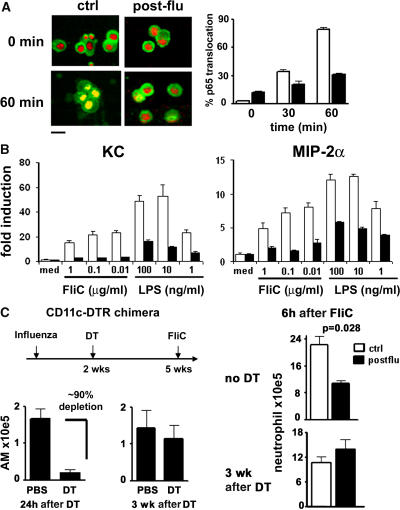
The World Health Organization estimates that lower respiratory tract infections (excluding tuberculosis) account for ∼35% of all deaths caused by infectious diseases. In many cases, the cause of death may be caused by multiple pathogens, e.g., the life-threatening bacterial pneumonia observed in patients infected with influenza virus. The ability to evolve more efficient immunity on each successive encounter with antigen is the hallmark of the adaptive immune response. However, in the absence of cross-reactive T and B cell epitopes, one lung infection can modify immunity and pathology to the next for extended periods of time. We now report for the first time that this phenomenon is mediated by a sustained desensitization of lung sentinel cells to Toll-like receptor (TLR) ligands; this is an effect that lasts for several months after resolution of influenza or respiratory syncytial virus infection and is associated with reduced chemokine production and NF-κB activation in alveolar macrophages. Although such desensitization may be beneficial in alleviating overall immunopathology, the reduced neutrophil recruitment correlates with heightened bacterial load during secondary respiratory infection. Our data therefore suggests that post-viral desensitization to TLR signals may be one possible contributor to the common secondary bacterial pneumonia associated with pandemic and seasonal influenza infection.
Overview
The claims and statistics of this paper haven’t been checked yet.
Free: it reads the open-access text and checks the first 5 claims that cite a source we can check. Create a free account to check every claim.
Integrity signals
Registry
Cites
Statistics
Figures
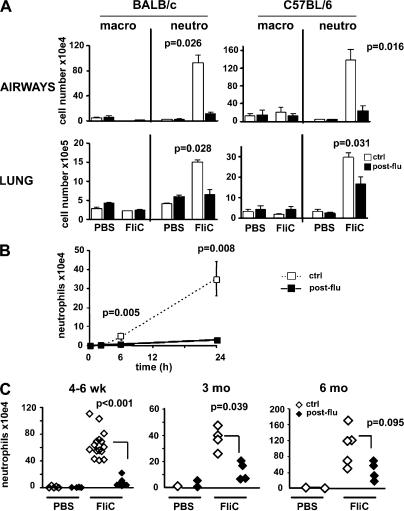
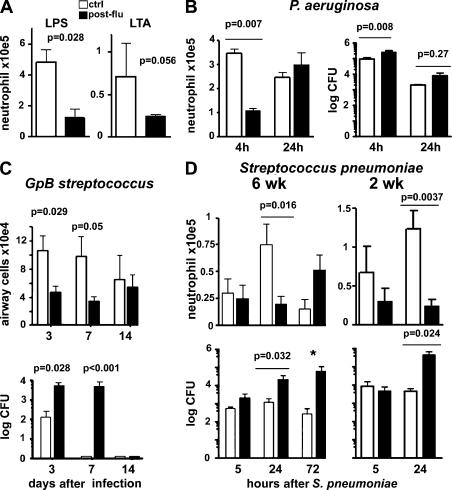
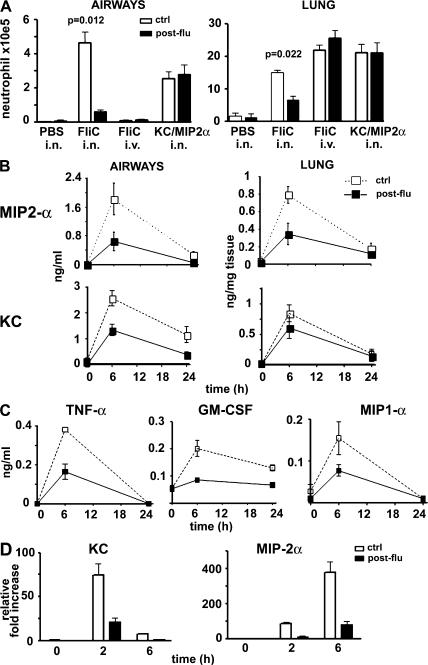
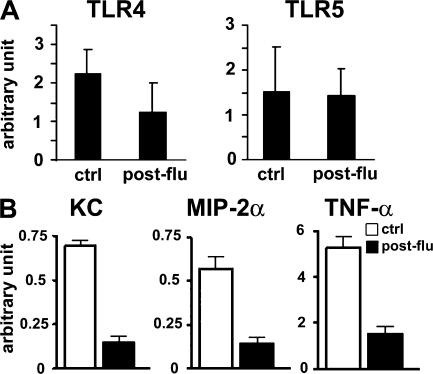
Verification
Claims the paper makes
The claims and statistics of this paper haven’t been checked yet.
Free: it reads the open-access text and checks the first 5 claims that cite a source we can check. Create a free account to check every claim.
Claims other papers make about this one
Each is checked against this paper’s own text: does it say what the citing paper says it does?
The source backs part of the claim, not all of it — or backs it for a different population, condition or comparison.
In the citing paper
“Late after infection, when virus has cleared (.12 days), desensitization of pattern recognition receptors to stimuli reverses this effect, preventing beneficial inflammatory responses from contributing to bacterial clearance [40].”
From Influenza virus primes mice for pneumonia from Staphylococcus aureus. (2011) · cites this paper as [40]
Experimental — accuracy not yet measuredThe cited source says what the claim attributes to it.
In the citing paper
“respiratory viruses can modulate innate and adaptive immune responses in the host, thereby promoting bacterial colonization and infection; for example, by impairing monocyte activity108, the extended desensitization of alveolar macrophages for Toll-like receptor (TLR)-ligands109, suppressing phagocytic capacity of alveolar macrophages110, and by inhibiting the production of antimicrobial peptides”
From The microbiota of the respiratory tract: gatekeeper to respiratory health (2017) · cites this paper as [109]
In the citing paper
“Third, respiratory viral infections impair innate immune responses against bacteria (128–130).”
From Respiratory viral infection-induced microbiome alterations and secondary bacterial pneumonia. (2018) · cites this paper as [129]
Self-check
Percentages, sums and reported differences re-computed from the paper’s own numbers.
The self-check needs the paper’s full text.
Citations
Cites
2 retracted
Induction of a Homeostatic Circuit in Lung Tissue by Microbial Compounds
Takabayshi, K., Corr, M., Hayashi, T., Redecke, V., Beck, L., Guiney, D. G., Sheppard, D., & Raz, E. (2008) · Immunity · doi:10.1016/j.immuni.2008.04.011 · Cited by 89
RetractedRETRACTED: Induction of a Homeostatic Circuit in Lung Tissue by Microbial Compounds
Takabayshi, K., Corr, M., Hayashi, T., Redecke, V., Beck, L., Guiney, D. G., Sheppard, D., & Raz, E. (2006) · Immunity · doi:10.1016/j.immuni.2006.02.008 · Cited by 76
RetractedPathogen Recognition and Innate Immunity
Akira, S., Uematsu, S., & Takeuchi, O. (2006) · Cell · doi:10.1016/j.cell.2006.02.015 · Cited by 11,952
Jung, S., Unutmaz, D., Wong, P., Sano, G.-I., De los Santos, K., Sparwasser, T., Wu, S., Vuthoori, S., Ko, K., Zavala, F., et al. (2002) · Immunity · doi:10.1016/s1074-7613(02)00365-5 · Cited by 1,773
Insights into the Interaction between Influenza Virus and Pneumococcus
McCullers, J. A. (2006) · Clinical Microbiology Reviews · doi:10.1128/cmr.00058-05 · Cited by 846
Prokaryotic Regulation of Epithelial Responses by Inhibition of IκB-α Ubiquitination
Neish, A. S., Gewirtz, A. T., Zeng, H., Young, A. N., Hobert, M. E., Karmali, V., Rao, A. S., & Madara, J. L. (2000) · Science · doi:10.1126/science.289.5484.1560 · Cited by 844
Role of inducible bronchus associated lymphoid tissue (iBALT) in respiratory immunity
Moyron-Quiroz, J. E., Rangel-Moreno, J., Kusser, K., Hartson, L., Sprague, F., Goodrich, S., Woodland, D. L., Lund, F. E., & Randall, T. D. (2004) · Nature Medicine · doi:10.1038/nm1091 · Cited by 821
van Rijt, L. S., Jung, S., KleinJan, A., Vos, N., Willart, M., Duez, C., Hoogsteden, H. C., & Lambrecht, B. N. (2005) · The Journal of Experimental Medicine · doi:10.1084/jem.20042311 · Cited by 623
Self-citationPostnatal acquisition of endotoxin tolerance in intestinal epithelial cells
Lotz, M., Gütle, D., Walther, S., Ménard, S., Bogdan, C., & Hornef, M. W. (2006) · The Journal of Experimental Medicine · doi:10.1084/jem.20050625 · Cited by 464
Andonegui, G., Bonder, C. S., Green, F., Mullaly, S. C., Zbytnuik, L., Raharjo, E., & Kubes, P. (2003) · Journal of Clinical Investigation · doi:10.1172/jci16510 · Cited by 408
Cited by
Morens, D. M., Taubenberger, J. K., & Fauci, A. S. (2008) · The Journal of Infectious Diseases · doi:10.1086/591708 · Cited by 1,625
“These include viral neuraminidase (NA)–induced exposure of bacterial adherence receptors; bacterial NA-induced upregulation of influenza infection; interleukin 10 –induced susceptibility to pneumococci and possibly staphylococci [76]; interferon type 1 effects [77]; viral PB1-F2 effects, the proaptotic and mitochondri…”
BackgroundThe microbiota of the respiratory tract: gatekeeper to respiratory health
Man, W. H., de Steenhuijsen Piters, W. A. A., & Bogaert, D. (2017) · Nature Reviews Microbiology · doi:10.1038/nrmicro.2017.14 · Cited by 1,384
“In addition, respiratory viruses can modulate innate and adaptive immune responses in the host, thereby promoting bacterial colonization and infection; for example, by impairing monocyte activity 108 , the extended desensitization of alveolar macrophages for Toll-like receptor (TLR)-ligands 109 , suppressing phagocyti…”
BackgroundAlveolar macrophages: plasticity in a tissue-specific context
Hussell, T., & Bell, T. J. (2014) · Nature Reviews Immunology · doi:10.1038/nri3600 · Cited by 1,377
Self-citationReig, M., Mariño, Z., Perelló, C., Iñarrairaegui, M., Ribeiro, A., Lens, S., Díaz, A., Vilana, R., Darnell, A., Varela, M., et al. (2016) · Journal of Hepatology · doi:10.1016/j.jhep.2016.04.008 · Cited by 1,018
“Indeed, there is evidence that the resolution of some types of inflammatory responses, such those triggered by some respiratory viruses, are followed by a prolonged period of immune suppression [21,22].”
BackgroundSmall airway-on-a-chip enables analysis of human lung inflammation and drug responses in vitro
Benam, K. H., Villenave, R., Lucchesi, C., Varone, A., Hubeau, C., Lee, H.-H., Alves, S. E., Salmon, M., Ferrante, T. C., Weaver, J. C., et al. (2016) · Nature Methods · doi:10.1038/nmeth.3697 · Cited by 816
Respiratory Viral Infections in Infants: Causes, Clinical Symptoms, Virology, and Immunology
Tregoning, J. S., & Schwarze, J. (2010) · Clinical Microbiology Reviews · doi:10.1128/cmr.00032-09 · Cited by 747
The co-pathogenesis of influenza viruses with bacteria in the lung.
McCullers, J. A. (2014) · Nature Reviews Microbiology · doi:10.1038/nrmicro3231 · Cited by 722
The airway epithelium: soldier in the fight against respiratory viruses
Vareille, M., Kieninger, E., Edwards, M. R., & Regamey, N. (2011) · Clinical Microbiology Reviews · doi:10.1128/cmr.00014-10 · Cited by 655
“Several mechanisms have been shown to participate in virusinduced bacterial adherence to the airway epithelium (46).”
BackgroundViral and Bacterial Interactions in the Upper Respiratory Tract
Bosch, A. A. T. M., Biesbroek, G., Trzcinski, K., Sanders, E. A. M., & Bogaert, D. (2013) · PLoS Pathogens · doi:10.1371/journal.ppat.1003057 · Cited by 651
“Respiratory viruses can also interact with toll-like receptor (TLR) pathways, preventing appropriate routing of immune responses [90].”
BackgroundThe resolution of inflammation
Buckley, C. D., Gilroy, D. W., Serhan, C. N., Stockinger, B., & Tak, P. P. (2013) · Nature Reviews Immunology · doi:10.1038/nri3362 · Cited by 560
Sun, K., & Metzger, D. W. (2008) · Nature Medicine · doi:10.1038/nm1765 · Cited by 587
Yao, Y., Jeyanathan, M., Haddadi, S., Barra, N. G., Vaseghi-Shanjani, M., Damjanovic, D., Lai, R., Afkhami, S., Chen, Y., Dvorkin-Gheva, A., et al. (2018) · Cell · doi:10.1016/j.cell.2018.09.042 · Cited by 531
“While evidence shows that AMs imprinted by certain viral exposure such as influenza may lead to innate immune tolerance (Didierlaurent et al., 2008; Hussell and Bell, 2014; Machiels et al., 2017), it remains unclear whether and how AMs may be primed to carry an innate memory and act as an enhancer in anti-microbial ho…”
Host Innate Immune Receptors and Beyond: Making Sense of Microbial Infections
Ishii, K. J., Koyama, S., Nakagawa, A., Coban, C., & Akira, S. (2008) · Cell Host & Microbe · doi:10.1016/j.chom.2008.05.003 · Cited by 499
Pulmonary macrophages: key players in the innate defence of the airways
Byrne, A. J., Mathie, S. A., Gregory, L. G., & Lloyd, C. M. (2015) · Thorax · doi:10.1136/thoraxjnl-2015-207020 · Cited by 484
Respiratory viral infection-induced microbiome alterations and secondary bacterial pneumonia.
Hanada, S., Pirzadeh, M., Carver, K. Y., & Deng, J. C. (2018) · Frontiers in Immunology · doi:10.3389/fimmu.2018.02640 · Cited by 495
“Prior viral infections dysregulate both alveolar macrophages (64, 131–136) and neutrophils (65, 128, 129), thereby inhibiting bactericidal activity.”
BackgroundType I IFNs mediate development of postinfluenza bacterial pneumonia in mice
Shahangian, A., Chow, E. K., Tian, X., Kang, J. R., Ghaffari, A., Liu, S. Y., Belperio, J. A., Cheng, G., & Deng, J. C. (2009) · Journal of Clinical Investigation · doi:10.1172/jci35412 · Cited by 479
“, who described influenza-induced desensitization of alveolar macrophages, including decreased Mip2 and KC production, in response to flagellin (TLR5 ligand) challenge following influenza infection (40).”
BackgroundInnate Immunity in the Respiratory Epithelium
Parker, D., & Prince, A. (2011) · American Journal of Respiratory Cell and Molecular Biology · doi:10.1165/rcmb.2011-0011rt · Cited by 456
Macrophage Activation and Polarization as an Adaptive Component of Innate Immunity
Locati, M., Mantovani, A., & Sica, A. (2013) · Advances in Immunology · doi:10.1016/b978-0-12-417028-5.00006-5 · Cited by 408
“viral infections (influenza and respiratory syncytial virus), a sustained lung macrophage desensitization lasting several months was observed (Didierlaurent et al., 2008).”
BackgroundRegulating the adaptive immune response to respiratory virus infection
Braciale, T. J., Sun, J., & Kim, T. S. (2012) · Nature Reviews Immunology · doi:10.1038/nri3166 · Cited by 361
Influenza-induced monocyte-derived alveolar macrophages confer prolonged antibacterial protection
Aegerter, H., Kulikauskaite, J., Crotta, S., Patel, H., Kelly, G., Hessel, E. M., Mack, M., Beinke, S., & Wack, A. (2020) · Nature Immunology · doi:10.1038/s41590-019-0568-x · Cited by 356
“This may explain why in other influenza studies, increased AM reactivity was not found 2 .”
Chen, F., Wu, W., Millman, A., Craft, J. F., Chen, E., Patel, N., Boucher, J. L., Urban, J. F., Kim, C. C., & Gause, W. C. (2014) · Nature Immunology · doi:10.1038/ni.2984 · Cited by 354
Influenza A inhibits Th17-mediated host defense against bacterial pneumonia in mice.
Kudva, A., Scheller, E. V., Robinson, K. M., Crowe, C. R., Choi, S. M., Slight, S. R., Khader, S. A., Dubin, P. J., Enelow, R. I., Kolls, J. K., et al. (2011) · The Journal of Immunology · doi:10.4049/jimmunol.1002194 · Cited by 346
“terial infections by altering bacterial adhesions (28), TLR expression (29, 30), and the pathogen-associated molecular pattern receptors (31) on epithelial cells.”
BackgroundIntegrative Physiology of Pneumonia
Quinton, L. J., Walkey, A. J., & Mizgerd, J. P. (2018) · Physiological Reviews · doi:10.1152/physrev.00032.2017 · Cited by 295
Chronic wet cough: Protracted bronchitis, chronic suppurative lung disease and bronchiectasis
Chang, A. B., Redding, G. J., & Everard, M. L. (2008) · Pediatric Pulmonology · doi:10.1002/ppul.20821 · Cited by 298
“Viral infections causes transient innate immunity dysfunction in the airways which then predisposes the airway to bacterial and other endobronchial infection.(96) Evidence of co-existent PBB in a subgroup of children with asthma is further gleaned from other studies.”
ResultRole of Tissue Protection in Lethal Respiratory Viral-Bacterial Coinfection
Jamieson, A. M., Pasman, L., Yu, S., Gamradt, P., Homer, R. J., Decker, T., & Medzhitov, R. (2013) · Science · doi:10.1126/science.1233632 · Cited by 292
Influenza and Bacterial Superinfection: Illuminating the Immunologic Mechanisms of Disease
Rynda-Apple, A., Robinson, K. M., & Alcorn, J. F. (2015) · Infection and Immunity · doi:10.1128/iai.00298-15 · Cited by 286
Metersky, M. L., Masterton, R. G., Lode, H., File, T. M., & Babinchak, T. (2012) · International Journal of Infectious Diseases · doi:10.1016/j.ijid.2012.01.003 · Cited by 293
“like receptor ligands lasts for several months after resolution of influenza and is associated with reduced chemokine production and nuclear factor kappa B (NF-kB) activation in alveolar macrophages.(63) This results in reduced neutrophil recruitment and correlates with heightened bacterial load during secondary respi…”
BackgroundInnate cell communication kick-starts pathogen-specific immunity
Rivera, A., Siracusa, M. C., Yap, G. S., & Gause, W. C. (2016) · Nature Immunology · doi:10.1038/ni.3375 · Cited by 259
The role of dendritic and epithelial cells as master regulators of allergic airway inflammation
Lambrecht, B. N., & Hammad, H. (2010) · The Lancet · doi:10.1016/s0140-6736(10)61226-3 · Cited by 262
Self-citationLung Homeostasis: Influence of Age, Microbes, and the Immune System
Lloyd, C. M., & Marsland, B. J. (2017) · Immunity · doi:10.1016/j.immuni.2017.04.005 · Cited by 251
“Expression of surface markers such as TLRs on both macrophages and epithelial cells might not return to the same levels as before infection (Didierlaurent et al., 2008), but also transcriptional and epigenetic reprogramming likely contributes to this ‘‘trained immunity,’’ which has consequences for any subsequent infe…”
BackgroundProtective and Harmful Immunity to RSV Infection
Openshaw, P. J. M., Chiu, C., Culley, F. J., & Johansson, C. (2017) · Annual Review of Immunology · doi:10.1146/annurev-immunol-051116-052206 · Cited by 243
The Regulation of Inflammation by Innate and Adaptive Lymphocytes
Cronkite, D. A., & Strutt, T. M. (2018) · Journal of Immunology Research · doi:10.1155/2018/1467538 · Cited by 222
“For example, conditioning of innate immune cells by prior infection can result in increased susceptibility to secondary infection [175].”
Is resolution the end of inflammation?
Feehan, K. T., & Gilroy, D. W. (2019) · Trends in Molecular Medicine · doi:10.1016/j.molmed.2019.01.006 · Cited by 229
IL-22 Is Essential for Lung Epithelial Repair following Influenza Infection
Pociask, D. A., Scheller, E. V., Mandalapu, S., McHugh, K. J., Enelow, R. I., Fattman, C. L., Kolls, J. K., & Alcorn, J. F. (2013) · The American Journal of Pathology · doi:10.1016/j.ajpath.2012.12.007 · Cited by 220
Small, C.-L., Shaler, C. R., McCormick, S., Jeyanathan, M., Damjanovic, D., Brown, E. G., Arck, P., Jordana, M., Kaushic, C., Ashkar, A. A., et al. (2010) · The Journal of Immunology · doi:10.4049/jimmunol.0902772 · Cited by 216
Malainou, C., Abdin, S. M., Lachmann, N., Matt, U., & Herold, S. (2023) · Journal of Clinical Investigation · doi:10.1172/jci170501 · Cited by 201
“AMs can initiate leukocyte recruitment (44, 45) and directly eliminate the pathogen using multiple pathogen-specific mechanisms (15).”
BackgroundShirey, K. A., Pletneva, L. M., Puche, A. C., Keegan, A. D., Prince, G. A., Blanco, J. C. G., & Vogel, S. N. (2010) · Mucosal Immunology · doi:10.1038/mi.2010.6 · Cited by 203
Directing traffic: IL‐17 and IL‐22 coordinate pulmonary immune defense
McAleer, J. P., & Kolls, J. K. (2014) · Immunological Reviews · doi:10.1111/imr.12183 · Cited by 194
“The mechanism by which type I IFNs downregulate Th17-type immunity appears to be through TLR desensitization in alveolar macrophages or DCs (109), inhibiting their release of IL-23 and IL-1b in response to bacteria (42, 110).”
BackgroundImmune Dysfunction and Bacterial Coinfections following Influenza
Metzger, D. W., & Sun, K. (2013) · The Journal of Immunology · doi:10.4049/jimmunol.1301152 · Cited by 199
“Furthermore, treatment of non-virus–infectedmice with exogenous IFN-g can mimic viral infection and result in inhibition of alveolar macrophage–mediated bacterial phagocytosis (3).”
BackgroundInfluentialKinetics of Coinfection with Influenza A Virus and Streptococcus pneumoniae
Smith, A. M., Adler, F. R., Ribeiro, R. M., Gutenkunst, R. N., McAuley, J. L., McCullers, J. A., & Perelson, A. S. (2013) · PLoS Pathogens · doi:10.1371/journal.ppat.1003238 · Cited by 196
“An influenza infection may modify this response and suppress innate protection against bacterial pathogens [23,25].”
Memory CD4+ T cells induce innate responses independently of pathogen
Strutt, T. M., McKinstry, K. K., Dibble, J. P., Winchell, C., Kuang, Y., Curtis, J. D., Huston, G., Dutton, R. W., & Swain, S. L. (2010) · Nature Medicine · doi:10.1038/nm.2142 · Cited by 195
Influenza A virus facilitates Streptococcus pneumoniae transmission and disease
Diavatopoulos, D. A., Short, K. R., Price, J. T., Wilksch, J. J., Brown, L. E., Briles, D. E., Strugnell, R. A., & Wijburg, O. L. (2010) · The FASEB Journal · doi:10.1096/fj.09-146779 · Cited by 192
“Specifically, influenza virus may reduce the activity of neutrophils (42), alter the cytokine environment (43), or reduce Toll-like receptor signaling (44), all of which would have important consequences for the immune response in the nasopharynx.”
BackgroundClarke, T. B. (2014) · Infection and Immunity · doi:10.1128/iai.02212-14 · Cited by 189
“Taken together, previous studies (19, 62) and data presented here show that macrophages in the lung assimilate information from various local and systemic cues and modify their function accordingly in order to maintain tissue homeostasis while maximizing local host defenses.”
BackgroundResultJamieson, A. M., Yu, S., Annicelli, C. H., & Medzhitov, R. (2010) · Cell Host & Microbe · doi:10.1016/j.chom.2010.01.010 · Cited by 180
“…demonstrated that infection with influenza virus can result in immunosuppression and subsequent secondary bacterial infection (Borrow et al., 2005; Didierlaurent et al., 2008; Marcus et al., 2005; Noone et al., 2005; Shahangian et al., 2009; Sun and Metzger, 2008; Tumpey et al., 2000; van der…”
Viral infection of the lung: Host response and sequelae
Yoo, J.-K., Kim, T. S., Hufford, M. M., & Braciale, T. J. (2013) · Journal of Allergy and Clinical Immunology · doi:10.1016/j.jaci.2013.06.006 · Cited by 161
Influenza virus primes mice for pneumonia from Staphylococcus aureus.
Iverson, A. R., Boyd, K. L., McAuley, J. L., Plano, L. R., Hart, M. E., & McCullers, J. A. (2011) · The Journal of Infectious Diseases · doi:10.1093/infdis/jiq113 · Cited by 168
“12 days), desensitization of pattern recognition receptors to stimuli reverses this effect, preventing beneficial inflammatory responses from contributing to bacterial clearance [40].”
BackgroundToll/IL-1 Signaling Is Critical for House Dust Mite–specific Th1 and Th2 Responses
Phipps, S., Lam, C. E., Kaiko, G. E., Foo, S. Y., Collison, A., Mattes, J., Barry, J., Davidson, S., Oreo, K., Smith, L., et al. (2009) · American Journal of Respiratory and Critical Care Medicine · doi:10.1164/rccm.200806-974oc · Cited by 159
“In this context, polymorphisms related to innate receptor signaling, TLR desensitization (as a result of infection or up-regulation of negative regulators or TIR signaling [60, 61]), or the gut flora of animal-derived allergens may all contribute toward protection from, or development of, allergic asthma.”
BackgroundPathogenesis of Respiratory Viral and Fungal Coinfections
Salazar, F., Bignell, E., Brown, G. D., Cook, P. C., & Warris, A. (2021) · Clinical Microbiology Reviews · doi:10.1128/cmr.00094-21 · Cited by 178
Modeling Influenza Virus Infection: A Roadmap for Influenza Research
Boianelli, A., Nguyễn, V. K., Ebensen, T., Schulze, K., Wilk, E., Sharma, N., Stegemann‐Koniszewski, S., Bruder, D., Toapanta, F. R., Guzmán, C. A., et al. (2015) · Viruses · doi:10.3390/v7102875 · Cited by 172
“The proposed underlying mechanisms include the desensitization of alveolar macrophages [94], as well as the IFN-γ mediated suppression of their phagocytic function [95,96].”
BackgroundThe role of respiratory epithelium in host defence against influenza virus infection
Denney, L., & Ho, L. (2018) · Biomedical Journal · doi:10.1016/j.bj.2018.08.004 · Cited by 173
“long-term modification of the lung microenvironment through an increase in the myeloid cell negative regulator CD200R (CD200 receptor) and de-sensitization to bacterial products [206,207].”
BackgroundThe inflammatory response triggered by Influenza virus: a two edged sword
Tavares, L. P., Teixeira, M. M., & Garcia, C. C. (2016) · Inflammation Research · doi:10.1007/s00011-016-0996-0 · Cited by 163
“IAV infection can also lead to downregulation and desensitization of receptors such as the class A scavenger receptor MARCO and TLRs in alveolar macrophages thus impairing detection, phagocytosis and killing of bacteria [176, 189].”
Van Maele, L., Carnoy, C., Cayet, D., Songhet, P., Dumoutier, L., Ferrero, I., Janot, L., Erard, F., Bertout, J., Leger, H., et al. (2010) · The Journal of Immunology · doi:10.4049/jimmunol.1000115 · Cited by 132
“LPS-depleted flagellin FliC from Salmonella typhimurium (5 mg) produced as previously described (21), ultrapure LPS from Escherichia coli (serotype 0111:B4, 5 mg; InvivoGen, Toulouse, France), or phosphorothioate CpG oligonucleotide (59-TCCATGACGTTCCTGATGCT-39, 5 mg; Eurogentec, Angers, France) diluted in PBS were inj…”
Self-citationDynamics of human monocytes and airway macrophages during healthy aging and after transplant
Byrne, A. J., Powell, J. E., O’Sullivan, B. J., Ogger, P. P., Hoffland, A., Cook, J., Bonner, K. L., Hewitt, R. J., Wolf, S., Ghai, P., et al. (2020) · Journal of Experimental Medicine · doi:10.1084/jem.20191236 · Cited by 140
Beumer, M. C., Koch, R. M., Beuningen, D. V., Oudelashof, A. M., van de Veerdonk, F. L., Kolwijck, E., van der Hoeven, J. G., Bergmans, D. C. J. J., & Hoedemaekers, C. (2018) · Journal of Critical Care · doi:10.1016/j.jcrc.2018.11.013 · Cited by 150
“Themedian duration of IMVwas 12 [3-33] days.”
BackgroundSecondary Bacterial Infections in Influenza Virus Infection Pathogenesis
Smith, A. M., & McCullers, J. A. (2014) · Current topics in microbiology and immunology · doi:10.1007/82_2014_394 · Cited by 151
“Production of interferon-c increases during influenza resolution and can downregulate bacterial scavenger receptors (e.g., MARCO) on macrophages leaving phagocytic cells suppressed and cytokine profiles altered (Didierlaurent et al. 2008; Sun and Metzger 2008).”
BackgroundRedford, P. S., Mayer-Barber, K. D., McNab, F. W., Stavropoulos, E., Wack, A., Sher, A., & O'Garra, A. (2014) · The Journal of Infectious Diseases · doi:10.1093/infdis/jit424 · Cited by 136
“account for the increased susceptibility to secondary bacterial infection following IAV infection, including increased levels of type I interferon (IFN) [5]; desensitization to Toll-like receptor ligands, leading to defective myeloid cell recruitment [4]; im-”
BackgroundBench-to-bedside review: Bacterial pneumonia with influenza - pathogenesis and clinical implications
Sluijs, K., Poll, T., Lutter, R., Juffermans, N. P., & Schultz, M. J. (2010) · Critical Care · doi:10.1186/cc8893 · Cited by 132
Immunopathology in influenza virus infection: Uncoupling the friend from foe
Damjanovic, D., Small, C.-L. N., Jeyananthan, M., McCormick, S. M., & Xing, Z. (2012) · Clinical Immunology · doi:10.1016/j.clim.2012.05.005 · Cited by 152
Herpesviral–bacterial interactions in periodontal diseases
Slots, J. (2009) · Periodontology 2000 · doi:10.1111/j.1600-0757.2009.00308.x · Cited by 158
The immunology of influenza virus-associated bacterial pneumonia.
Robinson, K. M., Kolls, J. K., & Alcorn, J. F. (2015) · Current Opinion in Immunology · doi:10.1016/j.coi.2015.02.002 · Cited by 132
The Axl receptor tyrosine kinase is a discriminator of macrophage function in the inflamed lung
Fujimori, T., Grabiec, A. M., Kaur, M., Bell, T. J., Fujino, N., Cook, P. C., Svedberg, F. R., MacDonald, A. S., Maciewicz, R. A., Singh, D., et al. (2015) · Mucosal Immunology · doi:10.1038/mi.2014.129 · Cited by 131
“Viral triggers and influenza infection induce Axl expression on macrophages Macrophage populations in the airspaces and lung change dramatically during influenza infection; in wild-type mice intranasal influenza H1N1 infection induces a viral titerdependent weight loss that correlates with the extent of the inflammato…”
Self-citationAging induces B cell defects and decreased antibody responses to influenza infection and vaccination
Frasca, D., & Blomberg, B. B. (2020) · Immunity & Ageing · doi:10.1186/s12979-020-00210-z · Cited by 130
Sun, K., & Metzger, D. W. (2014) · The Journal of Immunology · doi:10.4049/jimmunol.1303049 · Cited by 123
Gabryszewski, S. J., Bachar, O., Dyer, K. D., Percopo, C. M., Killoran, K. E., Domachowske, J. B., & Rosenberg, H. F. (2011) · The Journal of Immunology · doi:10.4049/jimmunol.1001751 · Cited by 123
“Clearly, this does not rule out potential roles played by TLR-mediated signaling pathways that circumvent MyD88 or other pattern-recognition receptors that may play a role in sensing Lactobacillus species (44, 45); TLR desensitization has been observed as a mechanism that explains reduced inflammatory responses observ…”
Boyd, A. R., Shivshankar, P., Jiang, S., Berton, M. T., & Orihuela, C. J. (2012) · Experimental Gerontology · doi:10.1016/j.exger.2012.04.004 · Cited by 117
“In support of this notion, macrophage desensitization has been shown to occur in vitro following exposure to endotoxin and in vivo following resolution of respiratory influenza infection (Didierlaurent et al., 2008; Park et al., 2011; Xiong et al., 2011).”
BackgroundGoulding, J., Godlee, A., Vekaria, S., Hilty, M., Snelgrove, R., & Hussell, T. (2011) · The Journal of Infectious Diseases · doi:10.1093/infdis/jir467 · Cited by 110
“Bacterial colonization is also promoted by the apoptosis of neutrophils and macrophages during influenzainduced inflammation [9, 10] or reduced neutrophil recruitment [11, 12] due to a viral-driven type 1 interferon (IFN) reduction of appropriate chemokines [12].”
BackgroundSelf-citationRespiratory Virus Co-infection in Acute Respiratory Infections in Children
Meskill, S. D., & O’Bryant, S. C. (2020) · Current Infectious Disease Reports · doi:10.1007/s11908-020-0711-8 · Cited by 128
The expanding world of tissue‐resident macrophages
Jenkins, S. J., & Allen, J. E. (2021) · European Journal of Immunology · doi:10.1002/eji.202048881 · Cited by 107
Virus-induced secondary bacterial infection: a concise review
Hendaus, M., Jomha, F., & Alhammadi, A. (2015) · Therapeutics and Clinical Risk Management · doi:10.2147/tcrm.s87789 · Cited by 110
“In comparison, NLRs and RIG-like helicases activate innate immune responses through cytosolic sensing of viral and bacterial components.(22,25) Nod1 and Nod2, which are family members of NLRs, are induced by molecules synthesized during the production and/or degradation of bacterial peptidoglycan.”
Covid-19 induced superimposed bacterial infection
Hendaus, M. A., & Jomha, F. A. (2020) · Journal of Biomolecular Structure and Dynamics · doi:10.1080/07391102.2020.1772110 · Cited by 124
“Structure of Covid-19. immune reactions through cytosolic sensing of bacterial and viral components (Akira et al., 2006; Didierlaurent et al., 2008).”
BackgroundViral and Bacterial Co-Infections in the Lungs: Dangerous Liaisons
Oliva, J., & Terrier, O. (2021) · Viruses · doi:10.3390/v13091725 · Cited by 125
Teaching Old Dogs New Tricks? The Plasticity of Lung Alveolar Macrophage Subsets
Kulikauskaite, J., & Wack, A. (2020) · Trends in Immunology · doi:10.1016/j.it.2020.08.008 · Cited by 120
“This might also contribute to explaining why, in another IVI study, AMs were desensitized for TLR signaling 1–2 months post-recovery [37], reminiscent of the lipopolysaccharide (LPS) tolerance previously described [38].”
ResultSmed-Sörensen, A., Chalouni, C., Chatterjee, B., Cohn, L., Blattmann, P., Nakamura, N., Delamarre, L., & Mellman, I. (2012) · PLoS Pathogens · doi:10.1371/journal.ppat.1002572 · Cited by 99
“IAV infection has an immunomodulatory effect that is thought to promote an increased susceptibility to secondary infections [24,26].”
BackgroundImmune dysregulation in severe influenza
Heltzer, M. L., Coffin, S. E., Maurer, K., Bagashev, A., Zhang, Z., Orange, J. S., & Sullivan, K. E. (2009) · Journal of Leukocyte Biology · doi:10.1189/jlb.1108710 · Cited by 110
“In the murine lung, alveolar macrophages have been found to be desensitized to bacteria and flagellin after influenza infection [30].”
BackgroundResultMoore, E. C., Barber, J. P., & Tripp, R. A. (2008) · Virology Journal · doi:10.1186/1743-422x-5-116 · Cited by 103
“For example, RSV has been shown to mediate long-term desensitization of lung alveolar macrophages to TLR ligands [8].”
BackgroundSkovgaard, K., Cirera, S., Vasby, D. E. L., Podolska, A., Breum, S. Ø., Dürrwald, R., Schlegel, M., & Heegaard, P. M. H. (2013) · Innate Immunity · doi:10.1177/1753425912473668 · Cited by 104
Short, K. R., Habets, M. N., Hermans, P. W., & Diavatopoulos, D. A. (2012) · Future Microbiology · doi:10.2217/fmb.12.29 · Cited by 96
Sender, V., Hentrich, K., & Henriques‐Normark, B. (2021) · Frontiers in Cellular and Infection Microbiology · doi:10.3389/fcimb.2021.643326 · Cited by 107
“Alveolar macrophages isolated after a resolved influenza infection respond poorly to TLR stimuli, which prevents the initiation of antibacterial responses and allows outgrowth of bacteria such as pneumococci in vivo (Didierlaurent et al., 2008).”
BackgroundImmune homeostasis in the respiratory tract and its impact on heterologous infection
Wissinger, E., Goulding, J., & Hussell, T. (2009) · Seminars in Immunology · doi:10.1016/j.smim.2009.01.005 · Cited by 119
“Similar to our observations [86,102] this protection is not due to cross-reactive antigens but involves prolonged production of the anti-viral cytokines, systemic activation of macrophages and an alteration of basal innate immunity.”
BackgroundInfluentialSelf-citationLoving, C. L., Brockmeier, S. L., Vincent, A. L., Palmer, M. V., Sacco, R. E., & Nicholson, T. L. (2010) · Microbial Pathogenesis · doi:10.1016/j.micpath.2010.06.004 · Cited by 95
“recently reported a desensitization of lung cells to TLR agonists following respiratory viral infection, which is in contrast to our findings [16].”
BackgroundResultInfluentialReig, M., Mariñó, Z., Perelló, C., Iñarrairaegui, M., Ribeiro, A., Lens, S., Díaz, A., Vilana, R., Darnell, A., Varela, M., et al. (2016) · Cited by 95
Infection with Human Metapneumovirus Predisposes Mice to Severe Pneumococcal Pneumonia
Kukavica-Ibrulj, I., Hamelin, M.-E., Prince, G. A., Gagnon, C., Bergeron, Y., Bergeron, M. G., & Boivin, G. (2009) · Journal of Virology · doi:10.1128/jvi.01123-08 · Cited by 90
“, suggesting that the bacterial desensitization of TLRs following influenza virus infection is associated with reduced chemokine production and neutrophil recruitment (11).”
BackgroundSun, K., Ye, J., Perez, D. R., & Metzger, D. W. (2011) · The Journal of Immunology · doi:10.4049/jimmunol.1002664 · Cited by 99
“This is a long-term effect that lasts for several months after resolution of influenza (33).”
BackgroundMechanisms of Bacterial Superinfection Post-influenza: A Role for Unconventional T Cells
Paget, C., & Trottein, F. (2019) · Frontiers in Immunology · doi:10.3389/fimmu.2019.00336 · Cited by 105
The amazing innate immune response to influenza A virus infection
Tripathi, S., White, M. R., & Hartshorn, K. L. (2015) · Innate Immunity · doi:10.1177/1753425913508992 · Cited by 83
Clinical reviews in allergy and immunology
Leung, D. Y. M., Ledford, D. K., Wechsler, M. E., Fulkerson, P. C., Bochner, B. S., Gauvreau, G. M., Gleich, G. J., Henkel, T., Kolbeck, R., Mathur, S. K., et al. (2012) · Cited by 87
Xing, Z., Afkhami, S., Bavananthasivam, J., Fritz, D. K., D’Agostino, M. R., Vaseghi‐Shanjani, M., Yao, Y., & Jeyanathan, M. (2020) · Journal of Leukocyte Biology · doi:10.1002/jlb.4mr0220-446r · Cited by 92
The impact of successive infections on the lung microenvironment
Didierlaurent, A. M., Goulding, J., & Hussell, T. (2007) · Immunology · doi:10.1111/j.1365-2567.2007.02729.x · Cited by 98
Self-citationMarchant, J. M., Gibson, P. G., Grissell, T. V., Timmins, N. L., Masters, I. B., & Chang, A. B. (2008) · Pediatric Pulmonology · doi:10.1002/ppul.20906 · Cited by 86
Lower Respiratory Tract Infections
Chang, A. B., Chang, C. C., O’Grady, K.-A. F., & Torzillo, P. J. (2009) · Pediatric Clinics of North America · doi:10.1016/j.pcl.2009.09.003 · Cited by 100
“tially overwhelms the local lung defenses (mucosal and innate immunity) already impaired by the viral infection.(44,45) In Indigenous children, bacterial (Streptococcus pneumoniae, nontypeable Haemophilus influenzae, Moraxella catarrhalis) colonization”
BackgroundTissue-resident immune cells: from defining characteristics to roles in diseases
Li, J., Chu, X., Li, C., & He, J. (2025) · Signal Transduction and Targeted Therapy · doi:10.1038/s41392-024-02050-5 · Cited by 102
Lu, M., Varley, A. W., Ohta, S., Hardwick, J., & Munford, R. S. (2008) · Cell Host & Microbe · doi:10.1016/j.chom.2008.06.009 · Cited by 91
The role of influenza in the severity and transmission of respiratory bacterial disease
Mina, M. J., & Klugman, K. P. (2014) · The Lancet Respiratory Medicine · doi:10.1016/s2213-2600(14)70131-6 · Cited by 77
Yáñez, A., Hassanzadeh‐Kiabi, N., Ng, M. Y., Megías, J., Subramanian, A., Liu, G. Y., Underhill, D. M., Gil, M. L., & Goodridge, H. S. (2013) · European Journal of Immunology · doi:10.1002/eji.201343403 · Cited by 79
Commensal pathogens, with a focus on Streptococcus pneumoniae, and interactions with the human host
Henriques‐Normark, B., & Normark, S. J. (2010) · Experimental Cell Research · doi:10.1016/j.yexcr.2010.03.003 · Cited by 84
Staphylococcus aureus Bacteremia in Patients Infected With COVID-19: A Case Series
Cusumano, J. A., Dupper, A. C., Malik, Y., Gavioli, E. M., Banga, J., Caban, A. B., Nadkarni, D., Obla, A., Vasa, C. V., Mazo, D., et al. (2020) · Open Forum Infectious Diseases · doi:10.1093/ofid/ofaa518 · Cited by 101
“Viruses can upregulate ligands for bacterial adherence to virus-infected respiratory tract cells [23, 24] and can initiate immune-suppressive cytokines to reduce neutrophil recruitment [25].”
BackgroundShibata, T., Makino, A., Ogata, R., Nakamura, S., Ito, T., Nagata, K., Terauchi, Y., Oishi, T., Fujieda, M., Takahashi, Y., et al. (2020) · Journal of Clinical Investigation · doi:10.1172/jci125505 · Cited by 81
Airway immune homeostasis and implications for influenza-induced inflammation
Snelgrove, R. J., Godlee, A., & Hussell, T. (2011) · Trends in Immunology · doi:10.1016/j.it.2011.04.006 · Cited by 94
Self-citationPneumonia recovery reprograms the alveolar macrophage pool
Guillon, A., Arafa, E. I., Barker, K. A., Belkina, A. C., Martin, I. M. C., Shenoy, A. T., Wooten, A. K., Ana, C. L. D., Dai, A., Labadorf, A. T., et al. (2020) · JCI Insight · doi:10.1172/jci.insight.133042 · Cited by 85
D’Anna, S. E., Maniscalco, M., Cappello, F., Carone, M., Motta, A., Balbi, B., Ricciardolo, F. L. M., Caramori, G., & Stefano, A. D. (2020) · Annals of Medicine · doi:10.1080/07853890.2020.1831050 · Cited by 92
Metadata
- Authors
- Didierlaurent, A., Goulding, J., Patel, S., Snelgrove, R., Low, L., Bebien, M., Lawrence, T., van Rijt, L. S., Lambrecht, B. N., Sirard, J.-C., & Hussell, T.
- Affiliations
- Imperial College London (GB)
- 1Kennedy Institute of Rheumatology, Imperial College London, London W6 8LH, England, UK
- 2Department of Pulmonary Medicine, Erasmus Medical Center, 3015 GE Rotterdam, Netherlands
- Erasmus MC (NL)
- Inserm (FR)
- ORCID
- Venue
- The Journal of Experimental Medicine
- Publisher
- Rockefeller University Press
- Published
- 2008-01-28
- Volume
- 205
- Issue
- 2
- Pages
- 323-329
- ISSN
- 0022-1007 (ISSN-L)
- 1540-9538
- PMC
- PMC2271005
- OpenAlex
- W2127612599
- Cited by
- 399
- References
- 31
- Citations by year
- 2026: 9 · 2025: 14 · 2024: 12 · 2023: 19 · 2022: 11 · 2021: 23 · 2020: 26 · 2019: 15 · 2018: 20 · 2017: 20 · 2016: 27 · 2015: 25 · 2014: 24 · 2013: 36 · 2012: 25
- FWCI
- 12.79
- Type
- journal article
- Language
- en
- Open access
- bronze
- doi.org
- Locations
- The Journal of Experimental Medicine (publishedVersion)
- Europe PMC (PubMed Central) (publishedVersion, cc-by-nc-sa)
- PubMed Central (publishedVersion, cc-by-nc-sa)
- PubMed (publishedVersion)
- Pure Amsterdam UMC (publishedVersion)
- Research Explorer (The University of Manchester) (publishedVersion)
- Data Archiving and Networked Services (DANS) (submittedVersion)
- RePub (Erasmus University Rotterdam) (submittedVersion, other-oa)
- HAL (submittedVersion)
- Ghent University Academic Bibliography (Ghent University) (submittedVersion)
- RePub (Erasmus University Rotterdam) (submittedVersion)
- Topics
- Life Sciences › Immunology and Microbiology › Immunology › Immune Response and Inflammation
- Life Sciences › Immunology and Microbiology › Immunology › Immune responses and vaccinations
- Life Sciences › Biochemistry, Genetics and Molecular Biology › Molecular Biology › Inflammasome and immune disorders
- Keywords
- influenza virus, respiratory syncytial virus, secondary bacterial pneumonia, alveolar macrophages, chemokine production, NF-κB activation, neutrophil recruitment
- MeSH terms
- Animals, Bacterial Infections, Bronchoalveolar Lavage Fluid, Epithelial Cells, Female, Flagellin, Ligands, Lipopolysaccharides, Mice, Inbred BALB C, Mice, Inbred C57BL, Mice, Transgenic, Neutrophils, Orthomyxoviridae Infections, Pseudomonas aeruginosa, Respiratory System, Respiratory Tract Infections, Streptococcus pneumoniae, Cytokines, NF-kappa B, Macrophages, Alveolar, Toll-Like Receptors, Mice
About these checks
Registry, retraction, Cites and statistics results are computed, not judged, with one exception: a printed reference that no index lists is read once by a model before it counts as a citation error. Claims are extracted by a model and kept only when their quote appears verbatim in the text; each cited source is then checked, with a model’s help, for whether it says what the claim relies on. Those verdicts can be wrong — read the claim’s quote and the cited source before relying on one.
Statistics and arithmetic are recomputed, not judged.
Confidence bands are shown only for fields calibrated on our annotated test set. None is calibrated yet, so no band is shown.
What counts as a claim ›How we measure confidence ›How we check this ›
Are you an author, or do you see a problem with this page? Request a review
Data sources
Bibliographic data: Semantic Scholar, OpenAlex, Crossref.
Contains information from the Semantic Scholar Academic Graph Datasets, made available under the ODC Attribution License (ODC-BY 1.0).
Semantic Scholar’s data is described in: Kinney, R., et al. (2023). The Semantic Scholar Open Data Platform. arXiv:2301.10140.
