

The DOI matches its Crossref record; 3 of the 3 references it cites were found in a registry or an index.
ATF4 is an oxidative stress–inducible, prodeath transcription factor in neurons in vitro and in vivo
Open accessAbstract
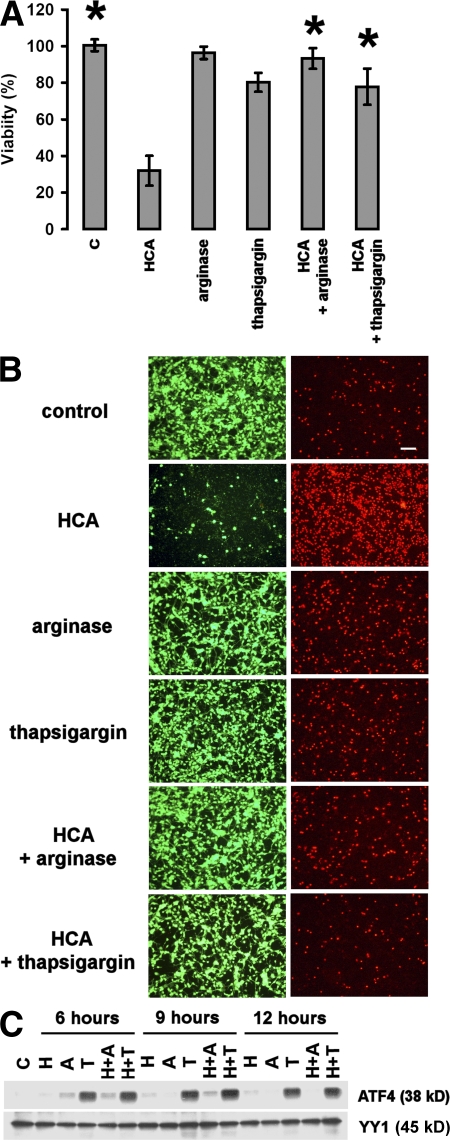
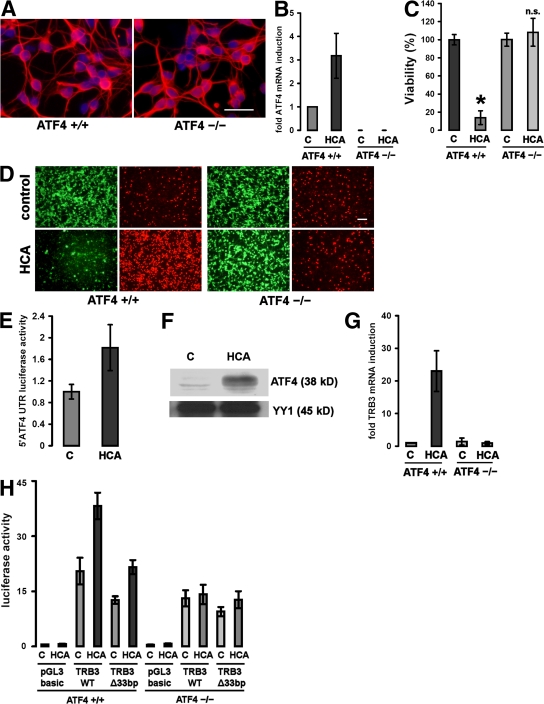
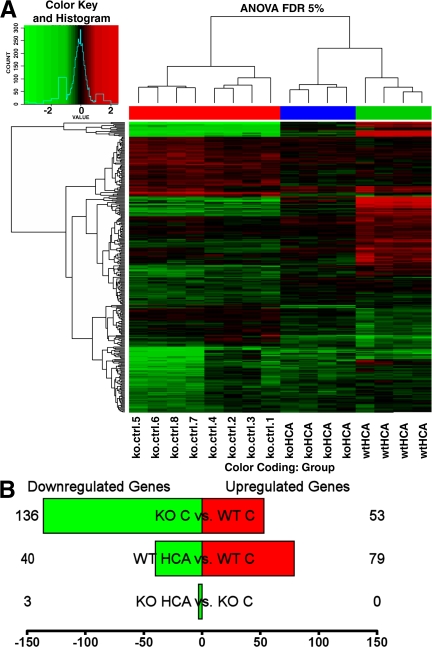
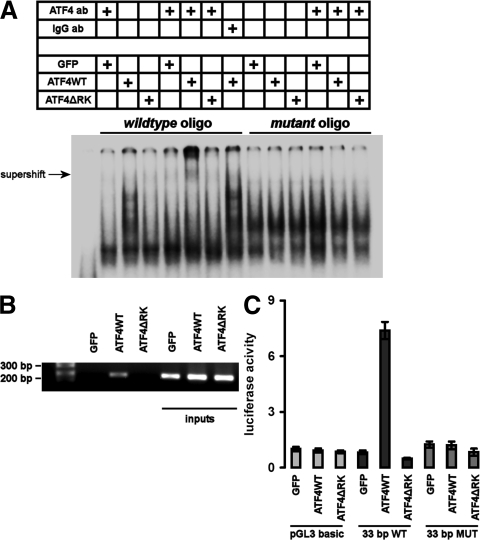
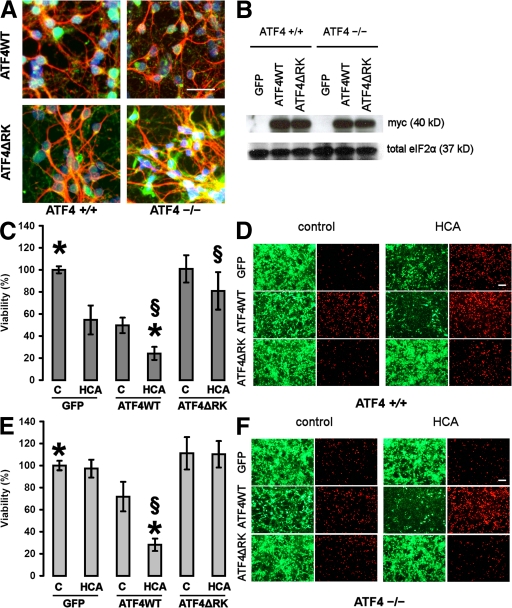
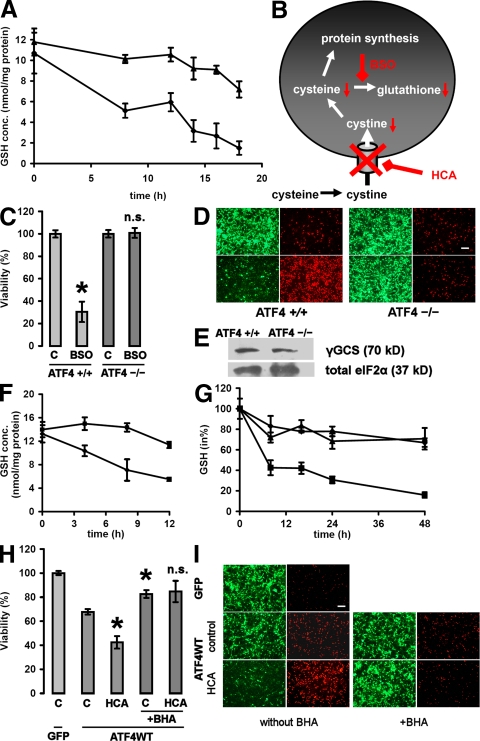
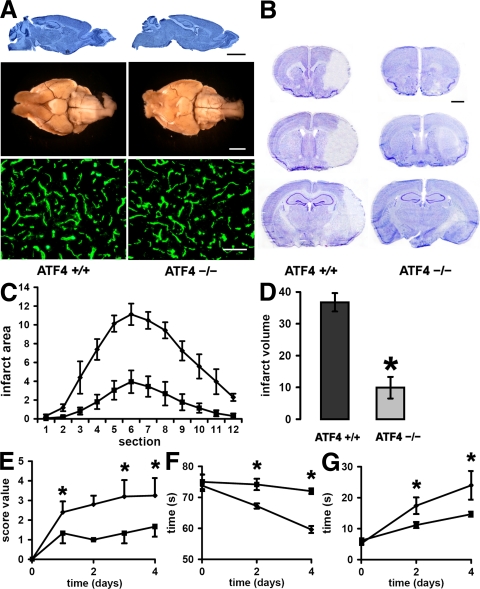
Oxidative stress is pathogenic in neurological diseases, including stroke. The identity of oxidative stress–inducible transcription factors and their role in propagating the death cascade are not well known. In an in vitro model of oxidative stress, the expression of the bZip transcription factor activating transcription factor 4 (ATF4) was induced by glutathione depletion and localized to the promoter of a putative death gene in neurons. Germline deletion of ATF4 resulted in a profound reduction in oxidative stress–induced gene expression and resistance to oxidative death. In neurons, ATF4 modulates an early, upstream event in the death pathway, as resistance to oxidative death by ATF4 deletion was associated with decreased consumption of the antioxidant glutathione. Forced expression of ATF4 was sufficient to promote cell death and loss of glutathione. In ATF4−/− neurons, restoration of ATF4 protein expression reinstated sensitivity to oxidative death. In addition, ATF4−/− mice experienced significantly smaller infarcts and improved behavioral recovery as compared with wild-type mice subjected to the same reductions in blood flow in a rodent model of ischemic stroke. Collectively, these findings establish ATF4 as a redox-regulated, prodeath transcriptional activator in the nervous system that propagates death responses to oxidative stress in vitro and to stroke in vivo.
Overview
The claims and statistics of this paper haven’t been checked yet.
Run the check — free, no account needed. It reads the open-access text and checks the sources it cites.
Integrity signals
Registry
Cites
Statistics
Figures
Verification
Claims the paper makes
The claims and statistics of this paper haven’t been checked yet.
Run the check — free, no account needed. It reads the open-access text and checks the sources it cites.
Claims other papers make about this one
Each is checked against this paper’s own text: does it say what the citing paper says it does?
The source backs part of the claim, not all of it — or backs it for a different population, condition or comparison.
In the citing paper
“We verified that known ATF4 target genes, Tribbles 3 (Trib3), a modulator of AKT, and Chac1, a cyclohydrolase that degrades glutathione,51”
From 2-Deoxyglucose drives plasticity via an adaptive ER stress-ATF4 pathway and elicits stroke recovery and Alzheimer’s resilience (2023) · cites this paper as [51]
Experimental — accuracy not yet measuredThe source backs part of the claim, not all of it — or backs it for a different population, condition or comparison.
In the citing paper
“GSK2606414 significantly inhibited 2-DG-induced eIF2α phosphorylation (Figures 6G and 6H) and transcription of the ATF4 target gene, Trib3, in primary neurons51”
From 2-Deoxyglucose drives plasticity via an adaptive ER stress-ATF4 pathway and elicits stroke recovery and Alzheimer’s resilience (2023) · cites this paper as [51]
Experimental — accuracy not yet measured
Self-check
Percentages, sums and reported differences re-computed from the paper’s own numbers.
The self-check needs the paper’s full text.
Citations
Cites
Mitochondrial Dysfunction and Oxidative Stress in Neurodegenerative Diseases
Lin, M. T., & Beal, M. F. (2006) · Nature · doi:10.1038/nature05292 · Cited by 6,455
limma: Linear Models for Microarray Data
Smyth, G. K. (2005) · Statistics for Biology and Health · doi:10.1007/0-387-29362-0_23 · Cited by 5,796
Vinson, C. R., Hai, T., & Boyd, S. M. (1993) · Genes & Development · doi:10.1101/gad.7.6.1047 · Cited by 336
Research works printed but not linked: 56
- 2002, Physiol. Rev., 82, 47, 10.1152/physrev.00018.2001 · DOI · Paper page
- 2006, Int. J. Biochem. Cell Biol., 38, 317, 10.1016/j.biocel.2005.09.018 · DOI · Paper page
- 2000, Ann. NY Acad. Sci., 924, 164, 10.1111/j.1749-6632.2000.tb05575.x · DOI
- 2007, FEBS Lett., 581, 3634, 10.1016/j.febslet.2007.04.028 · DOI
- 2007, Mol. Cell., 26, 1, 10.1016/j.molcel.2007.03.016 · DOI · Paper page
- 2003, J. Neurosci., 23, 3597, 10.1523/JNEUROSCI.23-09-03597.2003 · DOI
- 1997, J. Biol. Chem., 272, 24088, 10.1074/jbc.272.38.24088 · DOI
- 2001, Gene., 273, 1, 10.1016/S0378-1119(01)00551-0 · DOI
- 2006, Cancer Biol. Ther., 5, 723
- 2003, Mol. Cell., 11, 619, 10.1016/S1097-2765(03)00105-9 · DOI
- 1998, J. Neurosci., 18, 4083, 10.1523/JNEUROSCI.18-11-04083.1998 · DOI
- 2002, Methods Enzymol., 352, 183, 10.1016/S0076-6879(02)52018-8 · DOI
- 1994, J. Neurochem., 62, 376, 10.1046/j.1471-4159.1994.62010376.x · DOI
- 1995, Clin. Exp. Pharmacol. Physiol., 22, 309, 10.1111/j.1440-1681.1995.tb02006.x · DOI
- 1996, Neurochem. Int., 29, 153, 10.1016/0197-0186(95)00115-8 · DOI
- 2004, J. Nutr., 134, 2812S, 10.1093/jn/134.10.2812S · DOI
- 2003, J. Biol. Chem., 278, 37375, 10.1074/jbc.M303619200 · DOI
- 2002, Blood., 99, 736, 10.1182/blood.V99.3.736 · DOI
- 1994, J. Neurosci., 14, 4385, 10.1523/JNEUROSCI.14-07-04385.1994 · DOI
- 2005, J. Cereb. Blood Flow Metab., 25, 41, 10.1038/sj.jcbfm.9600005 · DOI
- 2007, J. Biol. Chem., 282, 4634, 10.1074/jbc.M609388200 · DOI
- 2007, J. Neurosci., 27, 6320, 10.1523/JNEUROSCI.0449-07.2007 · DOI
- 2003, J. Biol. Chem., 278, 17421, 10.1074/jbc.M300761200 · DOI
- 1998, Genes Cells., 3, 801, 10.1046/j.1365-2443.1998.00230.x · DOI
- 2000, Dev. Biol., 222, 110, 10.1006/dbio.2000.9699 · DOI
- 2001, Neuron., 29, 563, 10.1016/S0896-6273(01)00232-X · DOI
- 2000, Mol. Cell., 6, 1099, 10.1016/S1097-2765(00)00108-8 · DOI
- 2003, Dev. Cell., 4, 442, 10.1016/S1534-5807(03)00100-X · DOI
- 2002, J. Biol. Chem., 277, 24120, 10.1074/jbc.M201959200 · DOI
- 2001, J. Cell Biol., 153, 1011, 10.1083/jcb.153.5.1011 · DOI
- 2001, Mol. Cell. Biol., 21, 2192, 10.1128/MCB.21.6.2192-2202.2001 · DOI
- 2006, Ann. NY Acad. Sci., 1068, 131, 10.1196/annals.1346.027 · DOI
- 1992, Proc. Natl. Acad. Sci. USA., 89, 4820, 10.1073/pnas.89.11.4820 · DOI
- 1995, Cell., 83, 979, 10.1016/0092-8674(95)90213-9 · DOI · Paper page
- 2001, J. Biol. Chem., 276, 20858, 10.1074/jbc.M101198200 · DOI
- 2003, Curr. Pharm. Des., 9, 2499, 10.2174/1381612033453730 · DOI
- 2004, Mol. Cell. Biol., 24, 9456, 10.1128/MCB.24.21.9456-9469.2004 · DOI
- 2004, Cell., 117, 387, 10.1016/S0092-8674(04)00344-7 · DOI
- 2004, J. Biol. Chem., 279, 5288, 10.1074/jbc.M311862200 · DOI
- 2005, EMBO J., 24, 1243, 10.1038/sj.emboj.7600596 · DOI
- 2006, Proc. Natl. Acad. Sci. USA., 103, 768, 10.1073/pnas.0505723102 · DOI
- 1999, Biochem. Biophys. Res. Commun., 258, 260, 10.1006/bbrc.1999.0576 · DOI
- 2004, EMBO J., 23, 169, 10.1038/sj.emboj.7600030 · DOI
- 2006, J. Biomed. Sci., 13, 205, 10.1007/s11373-005-9057-3 · DOI
- 2006, Br. J. Haematol., 134, 145, 10.1111/j.1365-2141.2006.06132.x · DOI
- 2005, Curr. Med. Chem. Anticancer Agents., 5, 15, 10.2174/1568011053352587 · DOI
- 2004, J. Natl. Cancer Inst., 96, 1300, 10.1093/jnci/djh243 · DOI
- 2003, Cancer Res., 63, 8592
- 2006, Cell., 125, 971, 10.1016/j.cell.2006.05.012 · DOI
- 2005, J. Biol. Chem., 280, 30689, 10.1074/jbc.M500750200 · DOI
- 2006, J. Cereb. Blood Flow Metab., 26, 1465, 10.1038/sj.jcbfm.9600298 · DOI
- 2005, Nat. Rev. Neurosci., 6, 775
- 2005, J. Biol. Chem., 280, 41732, 10.1074/jbc.M504963200 · DOI
- 2005, J. Biol. Chem., 280, 3996, 10.1074/jbc.M409223200 · DOI
- 2004, Genome Biol., 5, R80, 10.1186/gb-2004-5-10-r80 · DOI
- 2006, J. Neurosci., 26, 9471, 10.1523/JNEUROSCI.2838-06.2006 · DOI
Cited by
Sorted by citations
ER-stress-induced transcriptional regulation increases protein synthesis leading to cell death
Han, J., Back, S. H., Hur, J., Lin, Y.-H., Gildersleeve, R., Shan, J., Yuan, C. L., Krokowski, D., Wang, S., Hatzoglou, M., et al. (2013) · Nature Cell Biology · doi:10.1038/ncb2738 · Cited by 1,691
Selenium Drives a Transcriptional Adaptive Program to Block Ferroptosis and Treat Stroke
Alim, I., Caulfield, J. T., Chen, Y., Swarup, V., Geschwind, D. H., Ivanova, E., Seravalli, J., Ai, Y., Sansing, L. H., Ste.Marie, E. J., et al. (2019) · Cell · doi:10.1016/j.cell.2019.03.032 · Cited by 1,024
“Germline deletion of ATF4 in neurons renders them resistant to homocysteic acid (HCA)-induced ferroptosis in vitro, and sensitivity to cell death can be reinstated by wildtype ATF4, but not ATF4 with the DNA binding domain mutated (Lange et al., 2008).”
Self-citationTargeting the unfolded protein response in disease
Hetz, C. A., Chevet, É., & Harding, H. P. (2013) · Nature Reviews Drug Discovery · doi:10.1038/nrd3976 · Cited by 942
Antioxidant response elements: Discovery, classes, regulation and potential applications
Raghunath, A., Sundarraj, K., Raju, N., Arfuso, F., Bian, J., Kumar, A. P., Sethi, G., & Perumal, E. (2018) · Redox Biology · doi:10.1016/j.redox.2018.05.002 · Cited by 483
ATF4 Regulates MYC-Mediated Neuroblastoma Cell Death upon Glutamine Deprivation
Qing, G., Li, B., Vu, A., Skuli, N., Walton, Z. E., Liu, X., Mayes, P. A., Wise, D. R., Thompson, C. B., Maris, J. M., et al. (2012) · Cancer Cell · doi:10.1016/j.ccr.2012.09.021 · Cited by 375
“In contrast to fibroblasts, ATF4 is a proapoptotic factor in neurons both in vitro and in vivo (Lange et al., 2008).”
Metadata
- Authors
- Lange, P. S., Chavez, J. C., Pinto, J. T., Coppola, G., Sun, C.-W., Townes, T. M., Geschwind, D. H., & Ratan, R. R.
- Affiliations
- University of Bonn (DE)
- Cornell University (US)
- New York Medical College (US)
- 6Program in Neurogenetics, Department of Neurology,
- University of Alabama at Birmingham (US)
- University of California, Los Angeles (US)
- Venue
- The Journal of Experimental Medicine
- Publisher
- Rockefeller University Press
- Published
- 2008-05-05
- Volume
- 205
- Issue
- 5
- Pages
- 1227-1242
- ISSN
- 0022-1007 (ISSN-L)
- 1540-9538
- PMC
- PMC2373852
- OpenAlex
- W2105818495
- Cited by
- 272
- References
- 62
- Citations by year
- 2026: 15 · 2025: 16 · 2024: 17 · 2023: 19 · 2022: 17 · 2021: 21 · 2020: 12 · 2019: 18 · 2018: 19 · 2017: 9 · 2016: 17 · 2015: 17 · 2014: 20 · 2013: 16 · 2012: 13
- FWCI
- 3.79
- Type
- journal article
- Language
- en
- Open access
- green
- www.ncbi.nlm.nih.gov
- Licence
- cc-by-nc-sa
- Locations
- The Journal of Experimental Medicine (publishedVersion)
- PubMed Central (publishedVersion, cc-by-nc-sa)
- PubMed (publishedVersion)
- eScholarship (California Digital Library) (submittedVersion, cc-by-nc-sa)
- Touro Scholar (Touro College) (submittedVersion, cc-by-nc-sa)
- eScholarship (California Digital Library) (submittedVersion)
- Funders
- American Heart Association
- Dr. Miriam and Sheldon G. Adelson Medical Research Foundation
- Burke Foundation
- Deutsche Forschungsgemeinschaft
- Universität zu Köln
- National Institutes of Health
- National Institute of Neurological Disorders and Stroke (R01NS040591, NS40591)
- Topics
- Life Sciences › Biochemistry, Genetics and Molecular Biology › Cell Biology › Endoplasmic Reticulum Stress and Disease
- Life Sciences › Biochemistry, Genetics and Molecular Biology › Molecular Biology › Redox biology and oxidative stress
- Life Sciences › Biochemistry, Genetics and Molecular Biology › Molecular Biology › Cell death mechanisms and regulation
- Keywords
- ATF4, oxidative stress, neuronal cell death, transcription factors, glutathione depletion, ischemic stroke, infarct size, redox regulation, bZIP transcription factors, neuroprotection, stroke recovery
- MeSH terms
- Animals, Cell Nucleus, Cell Survival, Cells, Cultured, Cerebral Cortex, Chromatin, DNA, Neurons, Plasmids, Polymerase Chain Reaction, Leucine Zippers, Cell Death, Mice, Knockout, Oxidative Stress, Mice, Activating Transcription Factor 4
About these checks
Registry, retraction, Cites and statistics results are computed, not judged, with one exception: a printed reference that no index lists is read once by a model before it counts as a citation error. Claims are extracted by a model and kept only when their quote appears verbatim in the text; each cited source is then checked, with a model’s help, for whether it says what the claim relies on. Those verdicts can be wrong — read the claim’s quote and the cited source before relying on one.
Statistics and arithmetic are recomputed, not judged.
Confidence bands are shown only for fields calibrated on our annotated test set. None is calibrated yet, so no band is shown.
What counts as a claim ›How we measure confidence ›How we check this ›
Are you an author, or do you see a problem with this page? Request a review
