

Host type I IFN signals are required for antitumor CD8+ T cell responses through CD8α+ dendritic cells
Open accessThe DOI matches its Crossref record; 58 of the 60 references it cites were found in a registry or an index.
Abstract
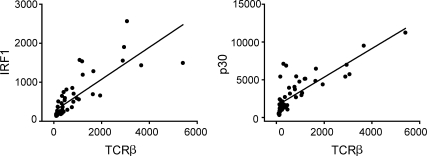
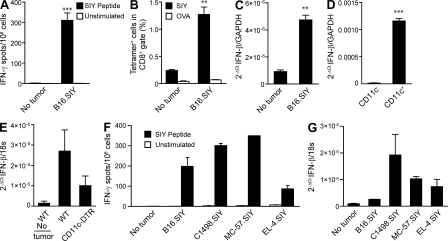
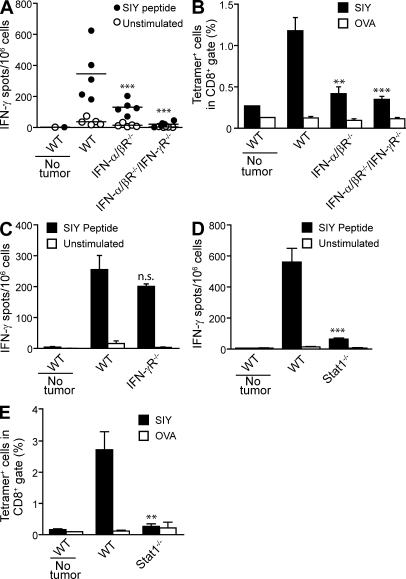
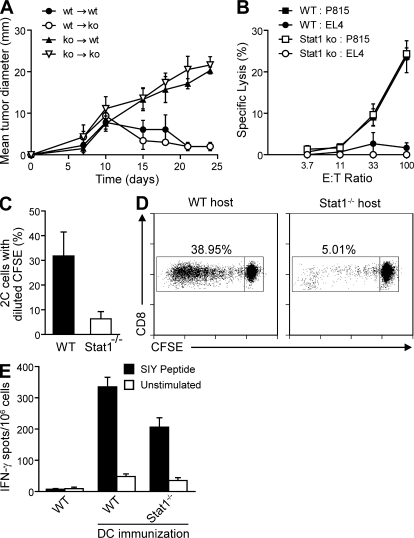
Despite lack of tumor control in many models, spontaneous T cell priming occurs frequently in response to a growing tumor. However, the innate immune mechanisms that promote natural antitumor T cell responses are undefined. In human metastatic melanoma, there was a correlation between a type I interferon (IFN) transcriptional profile and T cell markers in metastatic tumor tissue. In mice, IFN-β was produced by CD11c+ cells after tumor implantation, and tumor-induced T cell priming was defective in mice lacking IFN-α/βR or Stat1. IFN signaling was required in the hematopoietic compartment at the level of host antigen-presenting cells, and selectively for intratumoral accumulation of CD8α+ dendritic cells, which were demonstrated to be essential using Batf3−/− mice. Thus, host type I IFNs are critical for the innate immune recognition of a growing tumor through signaling on CD8α+ DCs.
Overview
The claims and statistics of this paper haven’t been checked yet.
Free: it reads the open-access text and checks the first 5 claims that cite a source we can check. Create a free account to check every claim.
Integrity signals
Registry
Cites
Statistics
Figures
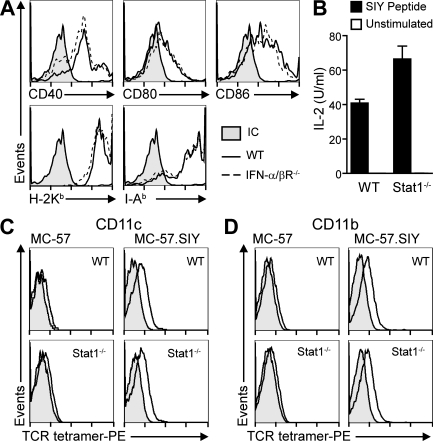
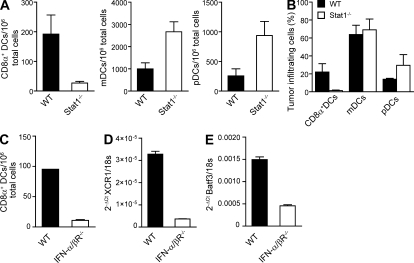
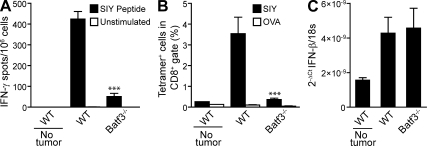
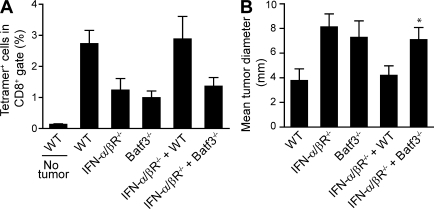
Verification
Claims the paper makes
The claims and statistics of this paper haven’t been checked yet.
Free: it reads the open-access text and checks the first 5 claims that cite a source we can check. Create a free account to check every claim.
Claims other papers make about this one
Each is checked against this paper’s own text: does it say what the citing paper says it does?
The source backs part of the claim, not all of it — or backs it for a different population, condition or comparison.
In the citing paper
“For instance, DCs secrete the chemoattractants chemokine (C‐X‐C motif) ligand 9 (CXCL9) and 10 (CXCL10) to facilitate the infiltration of CD8+ Teff cells in the TME and for T cell cytotoxic activity [15].”
From Tumor microenvironment signaling and therapeutics in cancer progression (2023) · cites this paper as [15]
Experimental — accuracy not yet measuredThe source backs part of the claim, not all of it — or backs it for a different population, condition or comparison.
In the citing paper
“Previous study showed that DC-specific Ifnar -/- mice were unble to reject highly immunogenic tumor cells due to the defects in antigen cross-presentation to CD8+ T cells.”
From mRNA vaccine with unmodified uridine induces robust type I interferon-dependent anti-tumor immunity in a melanoma model (2022) · cites this paper as [52]
Experimental — accuracy not yet measuredThe cited source says what the claim attributes to it.
In the citing paper
“This evidence strongly shows that IFN-I can act through DCs to promote T cell immunity (52).”
From mRNA vaccine with unmodified uridine induces robust type I interferon-dependent anti-tumor immunity in a melanoma model (2022) · cites this paper as [52]
The cited source says what the claim attributes to it.
In the citing paper
“multiple clinical observations have linked intratumoral presence of CD8+ T cells to a type-I interferon (IFN) transcriptional signature14–16.”
From Epigenetic state determines the in vivo efficacy of STING agonist therapy (2023) · cites this paper as [14]
Self-check
Percentages, sums and reported differences re-computed from the paper’s own numbers.
The self-check needs the paper’s full text.
Citations
Cites
Release of chromatin protein HMGB1 by necrotic cells triggers inflammation
Scaffidi, P., Misteli, T., & Bianchi, M. E. (2002) · Nature · doi:10.1038/nature00858 · Cited by 4,221 · cited 2×
“, 2003), HMGB1 (high-mobility-group box 1; Scaffidi et al., 2002), ATP (Haag et al.”
BackgroundHOW CELLS RESPOND TO INTERFERONS
Stark, G. R., Kerr, I. M., Williams, B. R. G., Silverman, R. H., & Schreiber, R. D. (1998) · Annual Review of Biochemistry · doi:10.1146/annurev.biochem.67.1.227 · Cited by 3,932 · cited 1×
“During various types of viral infection, type I IFNs induce the expression of an array of genes that act to prevent viral spread, thus creating an antiviral state (Stark et al., 1998).”
BackgroundInaba, K., Inaba, M., Romani, N., Aya, H., Deguchi, M., Ikehara, S., Muramatsu, S., & Steinman, R. M. (1992) · The Journal of experimental medicine · doi:10.1084/jem.176.6.1693 · Cited by 3,738 · cited 2×
“version of a published protocol (Inaba et al., 1992).”
MethodApetoh, L., Ghiringhelli, F., Tesniere, A., Obeid, M., Ortiz, C., Criollo, A., Mignot, G., Maiuri, M. C., Ullrich, E., Saulnier, P., et al. (2007) · Nature Medicine · doi:10.1038/nm1622 · Cited by 3,056
STING regulates intracellular DNA-mediated, type I interferon-dependent innate immunity
Ishikawa, H., Ma, Z., & Barber, G. N. (2009) · Nature · doi:10.1038/nature08476 · Cited by 2,759 · cited 2×
“…proteomics that the CD8+ DC subpopulation selectively lacks the receptors and signaling molecules (such as DAI [Takaoka et al., 2007] and Sting [Ishikawa et al., 2009]) required for the detection of nucleotides in the cytoplasm (Luber et al., 2010), so if this is indeed the pathway involved in…”
BackgroundNatural Innate and Adaptive Immunity to Cancer
Vesely, M. D., Kershaw, M. H., Schreiber, R. D., & Smyth, M. J. (2011) · Annual Review of Immunology · doi:10.1146/annurev-immunol-031210-101324 · Cited by 2,101 · cited 2×
“However, recent results have indicated that in many instances, spontaneous T cell responses against tumor antigens can be detected in both human cancer patients and in murine models, and that immune escape in those cases appears to occur through dominant inhibition by immunoregulatory pathways (Vesely et al., 2011).”
BackgroundResultBatf3 Deficiency Reveals a Critical Role for CD8α + Dendritic Cells in Cytotoxic T Cell Immunity
Hildner, K., Edelson, B. T., Purtha, W. E., Diamond, M., Matsushita, H., Kohyama, M., Calderon, B., Schraml, B. U., Unanue, E. R., Diamond, M. S., et al. (2008) · Science · doi:10.1126/science.1164206 · Cited by 2,081 · cited 4×
“Recent work has indicated that mice lacking the transcriptional regulator, Batf3, have a specific deficiency in the development of the CD8+ DC lineage (which includes a CD103+ DC subset; Hildner et al., 2008).”
BackgroundMethodInfluentialSelf-citationGhiringhelli, F., Apetoh, L., Tesniere, A., Aymeric, L., Ma, Y., Ortiz, C., Vermaelen, K., Panaretakis, T., Mignot, G., Ullrich, E., et al. (2009) · Nature Medicine · doi:10.1038/nm.2028 · Cited by 1,898 · cited 2×
“It has been recently demonstrated that after radiotherapy or chemotherapy, dying tumor cells can release HMGB1 that binds to TLR4 (Apetoh et al., 2007) and ATP that activates the NALP3 inflammasome (Ghiringhelli et al., 2009).”
BackgroundJung, S., Unutmaz, D., Wong, P., Sano, G.-I., De los Santos, K., Sparwasser, T., Wu, S., Vuthoori, S., Ko, K., Zavala, F., et al. (2002) · Immunity · doi:10.1016/s1074-7613(02)00365-5 · Cited by 1,773 · cited 2×
“CD11c-DTR mice (Jung et al., 2002) were provided by D. Littman (New York University School of Medicine, New York, NY).”
MethodHow dying cells alert the immune system to danger
Kono, H., & Rock, K. L. (2008) · Nature Reviews Immunology · doi:10.1038/nri2215 · Cited by 1,737 · cited 10×
“Recently, it has been shown that dsDNA can be released from necrotic cells, reach the cytoplasm of APCs, and be recognized by a TLR-independent on January 17, 2012 jem .rupress.org D ow nloaded from JEM Vol. 208, No. 10 Article 2013 of type I IFNs, which are already FDA approved for other indications, in order to prom…”
BackgroundInfluentialDAI (DLM-1/ZBP1) is a cytosolic DNA sensor and an activator of innate immune response
Takaoka, A., Wang, Z., Choi, M. K., Yanai, H., Negishi, H., Ban, T., Lu, Y., Miyagishi, M., Kodama, T., Honda, K., et al. (2007) · Nature · doi:10.1038/nature06013 · Cited by 1,715 · cited 2×
“Consistent with this model, it has been recently shown using quantitative proteomics that the CD8+ DC subpopulation selectively lacks the receptors and signaling molecules (such as DAI [Takaoka et al., 2007] and Sting [Ishikawa et al.”
MethodImmunosuppressive Strategies that are Mediated by Tumor Cells
Rabinovich, G. A., Gabrilovich, D., & Sotomayor, E. M. (2007) · Annual Review of Immunology · doi:10.1146/annurev.immunol.25.022106.141609 · Cited by 1,702 · cited 1×
“Expression of multiple immune evasion mechanisms likely blunts immune function at the effector phase and allows tumor outgrowth in those instances (Rabinovich et al., 2007).”
BackgroundMolecular identification of a danger signal that alerts the immune system to dying cells
Shi, Y., Evans, J. E., & Rock, K. L. (2003) · Nature · doi:10.1038/nature01991 · Cited by 1,684 · cited 2×
“, 2000), uric acid (Shi et al., 2003), HMGB1 (high-mobility-group box 1; Scaffidi et al.”
BackgroundInterferons, immunity and cancer immunoediting
Dunn, G. P., Koebel, C. M., & Schreiber, R. D. (2006) · Nature Reviews Immunology · doi:10.1038/nri1961 · Cited by 1,617 · cited 1×
“Although a role for type I IFNs has been described for immunosurveillance against carcinogen-induced tumors and for rejection of transplanted tumors (Dunn et al., 2005, 2006), the source of type I IFNs and the mechanism of action of this cytokine during the priming phase of an antitumor immune…”
BackgroundMotzer, R. J., Bacik, J., Murphy, B. A., Russo, P., & Mazumdar, M. (2002) · Journal of Clinical Oncology · doi:10.1200/jco.20.1.289 · Cited by 1,576 · cited 1×
“Although early clinical trials of systemic administration of type I IFNs showed encouraging results for the treatment of a broad range of tumors (Neidhart et al., 1984; Motzer et al., 2002), the mechanism by which exogenously administered type I IFNs induces antitumor activity has remained elusive.”
BackgroundBasu, S., Binder, R. J., Suto, R., Anderson, K. M., & Srivastava, P. K. (2000) · International Immunology · doi:10.1093/intimm/12.11.1539 · Cited by 1,305 · cited 2×
“Among these molecules are heat-shock proteins (Basu et al., 2000), uric acid (Shi et al.”
BackgroundType I Interferons in Host Defense
Stetson, D. B., & Medzhitov, R. (2006) · Immunity · doi:10.1016/j.immuni.2006.08.007 · Cited by 1,195 · cited 1×
“Type I IFNs have been studied extensively in the context of viral infections (Stetson and Medzhitov, 2006b).”
BackgroundRole of Bone Marrow-Derived Cells in Presenting MHC Class I-Restricted Tumor Antigens
Huang, A. Y. C., Golumbek, P., Ahmadzadeh, M., Jaffee, E., Pardoll, D., & Levitsky, H. (1994) · Science · doi:10.1126/science.7513904 · Cited by 1,160 · cited 2×
“Vol. 208 No. 10 2005-2016 www.jem.org/cgi/doi/10.1084/jem.20101159 2005 Most tumors express antigens that can be recognized by T cells of the host immune system (Huang et al., 1994; Boon and Old, 1997).”
BackgroundInfluentialChemokine expression in melanoma metastases associated with CD8+ T-cell recruitment
Harlin, H., Meng, Y., Peterson, A. C., Zha, Y., Tretiakova, M., Slingluff, C., McKee, M., & Gajewski, T. F. (2009) · Cancer Research · doi:10.1158/0008-5472.can-08-2281 · Cited by 1,121 · cited 7×
“Gene expression profiling of human melanoma metastases along with confirmatory assays revealed that a subset of tumors showed evidence of spontaneous inflammation that included the presence of infiltrating CD8+ T cells (Harlin et al., 2009).”
BackgroundMethodInfluentialSelf-citationRecognition of Cytosolic DNA Activates an IRF3-Dependent Innate Immune Response
Stetson, D. B., & Medzhitov, R. (2006) · Immunity · doi:10.1016/j.immuni.2005.12.003 · Cited by 1,008 · cited 1×
“pathway leading to IRF3 activation and to type I IFN production (Stetson and Medzhitov, 2006a).”
BackgroundCross-priming of CD8+ T cells stimulated by virus-induced type I interferon
Le Bon, A., Etchart, N., Rossmann, C., Ashton, M., Hou, S., Gewert, D., Borrow, P., & Tough, D. F. (2003) · Nature Immunology · doi:10.1038/ni978 · Cited by 818 · cited 2×
“But type I IFNs also regulate antiviral immune effector responses and play an important role in promoting the cross-presentation of viral antigens to CD8+ T cells (Le Bon et al., 2003).”
BackgroundKrug, A., French, A. R., Barchet, W., Fischer, J. A. A., Dzionek, A., Pingel, J. T., Orihuela, M. M., Akira, S., Yokoyama, W. M., & Colonna, M. (2004) · Immunity · doi:10.1016/j.immuni.2004.06.007 · Cited by 727 · cited 2×
“Preliminary studies of depletion of pDCs using the anti-PDCA (Krug et al., 2004) mAb have revealed that T cell priming and IFN- production appear to be intact (unpublished data).”
BackgroundPD-1:PD-L inhibitory pathway affects both CD4+ and CD8+ T cells and is overcome by IL-2
Carter, L. L., Fouser, L. A., Jussif, J., Fitz, L., Deng, B., Wood, C. R., Collins, M., Honjo, T., Freeman, G. J., & Carreno, B. M. (2002) · European Journal of Immunology · doi:10.1002/1521-4141(200203)32:3<634::aid-immu634>3.0.co;2-9 · Cited by 673
A critical function for type I interferons in cancer immunoediting
Dunn, G. P., Bruce, A. T., Sheehan, K. C. F., Shankaran, V., Uppaluri, R., Bui, J. D., Diamond, M. S., Koebel, C. M., Arthur, C., White, J. M., et al. (2005) · Nature Immunology · doi:10.1038/ni1213 · Cited by 605 · cited 2×
“Although a role for type I IFNs has been described for immunosurveillance against carcinogen-induced tumors and for rejection of transplanted tumors (Dunn et al., 2005, 2006), the source of type I IFNs and the mechanism of action of this cytokine during the priming phase of an antitumor immune…”
BackgroundAutoantibody Signatures in Prostate Cancer
Wang, X., Yu, J., Sreekumar, A., Varambally, S., Shen, R., Giacherio, D., Mehra, R., Montie, J. E., Pienta, K. J., Sanda, M. G., et al. (2005) · New England Journal of Medicine · doi:10.1056/nejmoa051931 · Cited by 582 · cited 1×
“Antibody responses in early stage prostate cancer have been reported to be detected before PSA becomes detectably elevated (Wang et al., 2005).”
BackgroundQuantitative proteomics reveals subset-specific viral recognition in dendritic cells
Luber, C. A., Cox, J., Lauterbach, H., Fancke, B., Selbach, M., Tschopp, J., Akira, S., Wiegand, M., Hochrein, H., O'Keeffe, M., et al. (2010) · Immunity · doi:10.1016/j.immuni.2010.01.013 · Cited by 576 · cited 2×
“, 2009]) required for the detection of nucleotides in the cytoplasm (Luber et al., 2010), so if this is indeed the pathway involved in type I IFN production to tumor, a non-CD8+ DC subpopulation would need to be involved.”
BackgroundPittet, M. J., Valmori, D., Dunbar, P. R., Speiser, D. E., Liénard, D., Lejeune, F., Fleischhauer, K., Cerundolo, V., Cerottini, J.-C., & Romero, P. (1999) · The Journal of Experimental Medicine · doi:10.1084/jem.190.5.705 · Cited by 508 · cited 1×
“For example, high frequencies of CD8+ T cells specific for MelanA/ MART-1, MAGE-10, and NY-Eso-1 have been detected in the blood of subsets of patients with metastatic melanoma (Pittet et al., 1999; Valmori et al., 2001; Mortarini et al., 2003; Peterson et al., 2003).”
BackgroundSelective expression of an antigen receptor on CD8-bearing T lymphocytes in transgenic mice
Sha, W. C., Nelson, C. A., Newberry, R. D., Kranzt, D. M., Russell, J. H., & Loh, D. Y. (1988) · Nature · doi:10.1038/335271a0 · Cited by 491 · cited 3×
“2C/RAG2/ mice (Sha et al., 1988) were obtained from D. Loh (Washington University School of Medicine, St. Louis, MO).”
BackgroundMethodInfluentialMigration of Dendritic Cell Subsets and their Precursors
Randolph, G. J., Ochando, J., & Partida-Sánchez, S. (2008) · Annual Review of Immunology · doi:10.1146/annurev.immunol.26.021607.090254 · Cited by 466 · cited 2×
“Although several studies have suggested that CD8+ DC distribution is restricted to lymphoid organs (Randolph et al., 2008) our results clearly indicate that CD8+ DCs (defined as CD3CD11c+B220CD11bCD8+ cells) can infiltrate tumors.”
BackgroundResultDorner, B. G., Dorner, M. B., Zhou, X., Opitz, C., Mora, A., Güttler, S., Hutloff, A., Mages, H. W., Ranke, K., Schaefer, M., et al. (2009) · Immunity · doi:10.1016/j.immuni.2009.08.027 · Cited by 456 · cited 2×
“XCR1 is a chemokine receptor exclusively expressed by CD8+ DCs (Dorner et al., 2009) and Batf 3, a transcription factor preferentially expressed by CD8+ DCs and absolutely required for their development.”
BackgroundInduced sensitization of tumor stroma leads to eradication of established cancer by T cells
Zhang, B., Bowerman, N. A., Salama, J. K., Schmidt, H., Spiotto, M. T., Schietinger, A., Yu, P., Fu, Y.-X., Weichselbaum, R. R., Rowley, D. A., et al. (2007) · The Journal of Experimental Medicine · doi:10.1084/jem.20062056 · Cited by 359 · cited 1×
“Hans Schreiber’s laboratory has observed expression of processed tumorderived antigen in tumor-infiltrating macrophages (Zhang et al., 2007).”
BackgroundSelf-citationAutoantibodies to tumor‐associated antigens: reporters from the immune system
Tan, E. M., & Zhang, J. (2008) · Immunological Reviews · doi:10.1111/j.1600-065x.2008.00611.x · Cited by 309 · cited 1×
“Spontaneous antibody responses against a range of tumor-associated antigens have been previously described (Tan and Zhang, 2008).”
BackgroundBelz, G. T., Smith, C. M., Eichner, D., Shortman, K., Karupiah, G., Carbone, F. R., & Heath, W. R. (2004) · The Journal of Immunology · doi:10.4049/jimmunol.172.4.1996 · Cited by 300 · cited 2×
“CD8+ DCs have been shown to be the most important DC population for cross-presentation of antigens to CD8+ T cells in the setting of viral infection (Belz et al., 2004).”
BackgroundBoon, T., & Old, L. (1997) · Current Opinion in Immunology · doi:10.1016/s0952-7915(97)80049-0 · Cited by 283 · cited 1×
“20101159 2005 Most tumors express antigens that can be recognized by T cells of the host immune system (Huang et al., 1994; Boon and Old, 1997).”
BackgroundGenomic DNA Released by Dying Cells Induces the Maturation of APCs
Ishii, K. J., Suzuki, K., Coban, C., Takeshita, F., Itoh, Y., Matoba, H., Kohn, L. D., & Klinman, D. M. (2001) · The Journal of Immunology · doi:10.4049/jimmunol.167.5.2602 · Cited by 237 · cited 5×
“Recently, it has been shown that dsDNA can be released from necrotic cells, reach the cytoplasm of APCs, and be recognized by a TLR-independent on January 17, 2012 jem .rupress.org D ow nloaded from JEM Vol. 208, No. 10 Article 2013 of type I IFNs, which are already FDA approved for other indications, in order to prom…”
BackgroundInfluentialTCRs with high affinity for foreign pMHC show self-reactivity
Holler, P. D., Chlewicki, L. K., & Kranz, D. M. (2003) · Nature Immunology · doi:10.1038/ni863 · Cited by 217
Self-citationMortarini, R., Piris, A., Maurichi, A., Molla, A., Bersani, I., Bono, A. V., Bartoli, C., Santinami, M., Lombardo, C., Ravagnani, F., et al. (2003) · PubMed · Cited by 197
Self-MHC-restricted peptides recognized by an alloreactive T lymphocyte clone
Udaka, K., Wiesmüller, K. H., Kienle, S., Jung, G., & Walden, P. (1996) · The Journal of Immunology · doi:10.4049/jimmunol.157.2.670 · Cited by 196 · cited 2×
“…activation of tumor antigen– specific CD8+ T cells, we CFSE labeled wild-type CD8+ T cells purified from 2C TCR Tg/Rag2/ mice (Sha et al., 1988) specific for the SIY octameric peptide in the context of Kb (Udaka et al., 1996) and adoptively transferred them into wild-type or Stat1/ syngeneic mice.”
BackgroundMethodAnichini, A., Molla, A., Mortarini, R., Tragni, G., Bersani, I., Di Nicola, M., Gianni, A. M., Pilotti, S., Dunbar, R., Cerundolo, V., et al. (1999) · The Journal of Experimental Medicine · doi:10.1084/jem.190.5.651 · Cited by 190
Kranz, D. M., Tonegawa, S., & Eisen, H. N. (1984) · Proceedings of the National Academy of Sciences · doi:10.1073/pnas.81.24.7922 · Cited by 174
Self-citationExtracellular NAD and ATP: Partners in immune cell modulation
Haag, F., Adriouch, S., Braß, A., Jung, C., Möller, S., Scheuplein, F., Bannas, P., Seman, M., & Koch-Nolte, F. (2007) · Purinergic Signalling · doi:10.1007/s11302-006-9038-7 · Cited by 168 · cited 3×
“It has been recently demonstrated that after radiotherapy or chemotherapy, dying tumor cells can release HMGB1 that binds to TLR4 (Apetoh et al., 2007) and ATP that activates the NALP3 inflammasome (Ghiringhelli et al., 2009).”
BackgroundHarlin, H., Kuna, T. V., Peterson, A., Meng, Y., & Gajewski, T. F. (2006) · Cancer Immunology Immunotherapy · doi:10.1007/s00262-005-0118-2 · Cited by 161 · cited 1×
“Parallel studies have indicated that among tumorassociated CD8+ T cells there are cells that recognize human melanoma antigens as reflected by class I MHC/peptide tetramer staining (Speiser et al., 2002; Harlin et al., 2006).”
BackgroundSelf-citationPeterson, A. C., Harlin, H., & Gajewski, T. F. (2003) · Journal of Clinical Oncology · doi:10.1200/jco.2003.12.144 · Cited by 153 · cited 1×
“For example, high frequencies of CD8+ T cells specific for MelanA/ MART-1, MAGE-10, and NY-Eso-1 have been detected in the blood of subsets of patients with metastatic melanoma (Pittet et al., 1999; Valmori et al., 2001; Mortarini et al., 2003; Peterson et al., 2003).”
BackgroundSelf-citationGajewski, T. F., Renauld, J. C., Van Pel, A., & Boon, T. (1995) · The Journal of Immunology · doi:10.4049/jimmunol.154.11.5637 · Cited by 104
Self-citationSpeiser, D. E., Liénard, D., Pittet, M. J., Batard, P., Rimoldi, D., Guillaume, P., Cerottini, J.-C., & Romero, P. (2002) · European Journal of Immunology · doi:10.1002/1521-4141(200203)32:3<731::aid-immu731>3.0.co;2-h · Cited by 104
Preynat-Seauve, O., Schuler, P., Contassot, E., Beermann, F., Huard, B., & French, L. E. (2006) · The Journal of Immunology · doi:10.4049/jimmunol.176.1.61 · Cited by 94 · cited 2×
“In agreement with our findings, it has been reported that CD8+ DCs can infiltrate transplantable and spontaneous melanomas in B6 mice (Preynat-Seauve et al., 2006) and sarcomas in BALB/c mice treated with Flt3L and GM-CSF (Berhanu et al., 2006), and that such recruitment is associated with tumor…”
ResultInjection of mice with antibody to interferon enhances the growth of transplantable murine tumors.
Gresser, I., Belardelli, F., Maury, C., Maunoury, M. T., & Tovey, M. G. (1983) · The Journal of experimental medicine · doi:10.1084/jem.158.6.2095 · Cited by 93 · cited 2×
“In addition, injection of mice with blocking antibody to IFN-/ has been reported to enhance tumor growth, suggesting the importance of endogenous type I IFNs after tumor challenge and a role in inhibiting tumor growth in immunocompetent mice (Gresser et al., 1983).”
BackgroundAnderson, M. J., Shafer-Weaver, K., Greenberg, N. M., & Hurwitz, A. A. (2007) · The Journal of Immunology · doi:10.4049/jimmunol.178.3.1268 · Cited by 91 · cited 1×
“In addition, in the TRAMP model, tumorinfiltrating DCs have been suggested to express processed antigen and behave in a tolerogenic rather than an activating fashion (Anderson et al., 2007).”
BackgroundHomeostatic Proliferation Plus Regulatory T-Cell Depletion Promotes Potent Rejection of B16 Melanoma
Kline, J., Brown, I. E., Zha, Y.-Y., Blank, C., Strickler, J., Wouters, H., Zhang, L., & Gajewski, T. F. (2008) · Clinical Cancer Research · doi:10.1158/1078-0432.ccr-07-4696 · Cited by 89 · cited 2×
“The SIY antigen is advantageous because of the set of tools we have assembled for monitoring details of the host immune response, including peptide/MHC tetramers, TCR transgenic T cells, and high-affinity TCR tetramers to monitor processed antigen on APCs (Kline et al., 2008; Zhang et al., 2008).”
BackgroundSelf-citationSpontaneous Rejection of Poorly Immunogenic P1.HTR Tumors by Stat6-Deficient Mice
Kacha, A. K., Fallarino, F., Markiewicz, M. A., & Gajewski, T. F. (2000) · The Journal of Immunology · doi:10.4049/jimmunol.165.11.6024 · Cited by 86
Self-citationEndogenous IL-12 is necessary for rejection of P815 tumor variants in vivo
Fallarino, F., Uyttenhove, C., Boon, T., & Gajewski, T. F. (1996) · The Journal of Immunology · doi:10.4049/jimmunol.156.3.1095 · Cited by 85 · cited 1×
“Toward this end, we turned to the immunogenic variant of the P815 mastocytoma, P198, which initially grows but is spontaneously rejected in syngeneic DBA/2 mice (Fallarino et al., 1996).”
BackgroundSelf-citationInterferon-alpha therapy of renal cancer.
Neidhart, J. A., Gagen, M. M., Young, D., Tuttle, R. L., Melink, T. J., Ziccarelli, A., & Kisner, D. L. (1984) · PubMed · Cited by 81
Equilibrium between Host and Cancer Caused by Effector T Cells Killing Tumor Stroma
Zhang, B., Zhang, Y., Bowerman, N. A., Schietinger, A., Fu, Y.-X., Kranz, D. M., Rowley, D. A., & Schreiber, H. (2008) · Cancer Research · doi:10.1158/0008-5472.can-07-5324 · Cited by 73 · cited 9×
“Recently, it has been shown that dsDNA can be released from necrotic cells, reach the cytoplasm of APCs, and be recognized by a TLR-independent on January 17, 2012 jem .rupress.org D ow nloaded from JEM Vol. 208, No. 10 Article 2013 of type I IFNs, which are already FDA approved for other indications, in order to prom…”
BackgroundInfluentialSelf-citationFrequent cytolytic T-cell responses to peptide MAGE-A10(254-262) in melanoma.
Valmori, D., Dutoit, V., Rubio‐Godoy, V., Chambaz, C., Liénard, D., Guillaume, P., Romero, P. J., Cerottini, J. C., & Rimoldi, D. (2001) · PubMed · Cited by 72
Fortunato, G., Calcagno, G., Morra, V. B., Salvatore, E., Filla, A., Capone, S., Liguori, R., Borelli, S., Gentile, I., Borrelli, F., et al. (2008) · Journal of Interferon & Cytokine Research · doi:10.1089/jir.2007.0049 · Cited by 57 · cited 2×
“…nucleotide polymorphisms (SNPs) in different genes involved in the type I IFN pathway have been reported, including IFNAR (Muldoon et al., 2001) and Stat1 (Fortunato et al., 2008), that could affect levels of expression of the mature proteins, leading to variation in the response to type I IFNs.”
BackgroundBerhanu, A., Huang, J., Alber, S. M., Watkins, S. C., & Storkus, W. J. (2006) · Cancer Research · doi:10.1158/0008-5472.can-05-2384 · Cited by 33 · cited 4×
“In agreement with our findings, it has been reported that CD8+ DCs can infiltrate transplantable and spontaneous melanomas in B6 mice (Preynat-Seauve et al., 2006) and sarcomas in BALB/c mice treated with Flt3L and GM-CSF (Berhanu et al., 2006), and that such recruitment is associated with tumor rejection.”
BackgroundInfluentialDotti, I., Nardon, E., Pracella, D., & Bonin, S. (2011) · Springer eBooks · doi:10.1007/978-3-642-17890-0_25 · Cited by 16
Novel IFN-α receptor promoter polymorphisms
Muldoon, J., Uriel, A. J., Khoo, S., Ollier, W., & Hajeer, A. H. (2001) · Genes and Immunity · doi:10.1038/sj.gene.6363757 · Cited by 14 · cited 2×
“Single nucleotide polymorphisms (SNPs) in different genes involved in the type I IFN pathway have been reported, including IFNAR (Muldoon et al., 2001) and Stat1 (Fortunato et al., 2008), that could affect levels of expression of the mature proteins, leading to variation in the response to type I…”
Background
Cited by
Galluzzi, L., Vitale, I., Aaronson, S. A., Abrams, J. M., Adam, D., Agostinis, P., Alnemri, E. S., Altucci, L., Amelio, I., Andrews, D. W., et al. (2018) · Cell Death & Differentiation · doi:10.1038/s41418-017-0012-4 · Cited by 6,680
Innate and adaptive immune cells in the tumor microenvironment
Gajewski, T. F., Schreiber, H., & Fu, Y.-X. (2013) · Nature Immunology · doi:10.1038/ni.2703 · Cited by 4,148
Self-citationCommensal Bifidobacterium promotes antitumor immunity and facilitates anti–PD-L1 efficacy
Sivan, A., Corrales, L., Hubert, N., Williams, J. B., Aquino-Michaels, K., Earley, Z. M., Benyamin, F. W., Man Lei, Y., Jabri, B., Alegre, M.-L., et al. (2015) · Science · doi:10.1126/science.aac4255 · Cited by 3,888
Self-citationMelanoma-intrinsic β-catenin signalling prevents anti-tumour immunity
Spranger, S., Bao, R., & Gajewski, T. F. (2015) · Nature · doi:10.1038/nature14404 · Cited by 2,830
Self-citationCancer immunotherapy via dendritic cells
Palucka, K., & Banchereau, J. (2012) · Nature Reviews Cancer · doi:10.1038/nrc3258 · Cited by 2,049
“Furthermore, murine models demonstrate that the generation of protective anti-tumor immunity depends on the presentation of tumor antigens (Ags) by DCs [6, 7].”
Influential
Metadata
- Authors
- Fuertes, M. B., Kacha, A. K., Kline, J., Woo, S.-R., Kranz, D. M., Murphy, K. M., & Gajewski, T. F.
- Affiliations
- University of Chicago (US)
- University of Illinois Urbana-Champaign (US)
- Washington University in St. Louis (US)
- Corresponding author
- Gajewski, Thomas F.
- ORCID
- Venue
- Journal of Experimental Medicine
- Publisher
- Rockefeller University Press
- Published
- 2011-09-19
- Volume
- 208
- Issue
- 10
- Pages
- 2005-2016
- ISSN
- 0022-1007 (ISSN-L)
- 1540-9538
- PMC
- PMC3182064
- OpenAlex
- W2143523733
- Cited by
- 1,192
- References
- 60
- Citations by year
- 2026: 56 · 2025: 67 · 2024: 94 · 2023: 114 · 2022: 102 · 2021: 115 · 2020: 102 · 2019: 100 · 2018: 74 · 2017: 91 · 2016: 71 · 2015: 67 · 2014: 53 · 2013: 54 · 2012: 31
- FWCI
- 19.73
- Type
- journal article
- Language
- en
- Open access
- bronze
- doi.org
- Locations
- The Journal of Experimental Medicine (publishedVersion)
- Europe PMC (PubMed Central) (publishedVersion, cc-by-nc-sa)
- PubMed Central (publishedVersion, cc-by-nc-sa)
- PubMed (publishedVersion)
- Digital Commons@Becker (Washington University School of Medicine) (submittedVersion)
- LA Referencia (Red Federada de Repositorios Institucionales de Publicaciones Científicas) (submittedVersion, other-oa)
- Americanae (AECID Library) (submittedVersion, cc-by-nc-sa)
- Funders
- University of Chicago
- Wellcome Trust
- National Cancer Institute (P01CA97296, P01CA097296)
- Topics
- Life Sciences › Immunology and Microbiology › Immunology › Immunotherapy and Immune Responses
- Health Sciences › Medicine › Oncology › Cancer Immunotherapy and Biomarkers
- Life Sciences › Immunology and Microbiology › Immunology › interferon and immune responses
- Keywords
- type I interferon, antitumor immunity, CD8+ T cell responses, CD8α+ dendritic cells, CD11c+ antigen-presenting cells, interferon-beta, IFN-alpha/beta receptor, STAT1, Batf3, melanoma, host innate immunity
- MeSH terms
- Animals, Dendritic Cells, Humans, Immunity, Innate, Interferon Type I, Lymph Nodes, Lymphatic Metastasis, Melanoma, Mice, Inbred C57BL, Signal Transduction, Lymphocyte Subsets, Mice, Knockout, CD8-Positive T-Lymphocytes, Cell Line, Tumor, STAT1 Transcription Factor, Mice
About these checks
Registry, retraction, Cites and statistics results are computed, not judged, with one exception: a printed reference that no index lists is read once by a model before it counts as a citation error. Claims are extracted by a model and kept only when their quote appears verbatim in the text; each cited source is then checked, with a model’s help, for whether it says what the claim relies on. Those verdicts can be wrong — read the claim’s quote and the cited source before relying on one.
Statistics and arithmetic are recomputed, not judged.
Confidence bands are shown only for fields calibrated on our annotated test set. None is calibrated yet, so no band is shown.
What counts as a claim ›How we measure confidence ›How we check this ›
Are you an author, or do you see a problem with this page? Request a review
Data sources
Bibliographic data: Semantic Scholar, OpenAlex, Crossref.
Contains information from the Semantic Scholar Academic Graph Datasets, made available under the ODC Attribution License (ODC-BY 1.0).
Semantic Scholar’s data is described in: Kinney, R., et al. (2023). The Semantic Scholar Open Data Platform. arXiv:2301.10140.
