

Essential role of peripheral node addressin in lymphocyte homing to nasal-associated lymphoid tissues and allergic immune responses
Open accessThe DOI matches its Crossref record; 52 of the 52 references it cites were found in a registry or an index.
Abstract
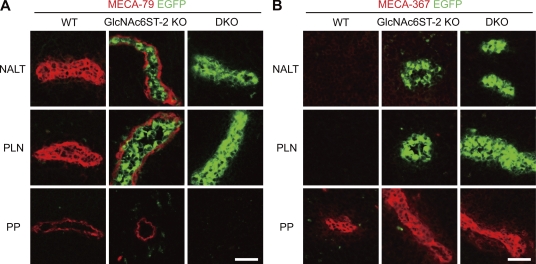
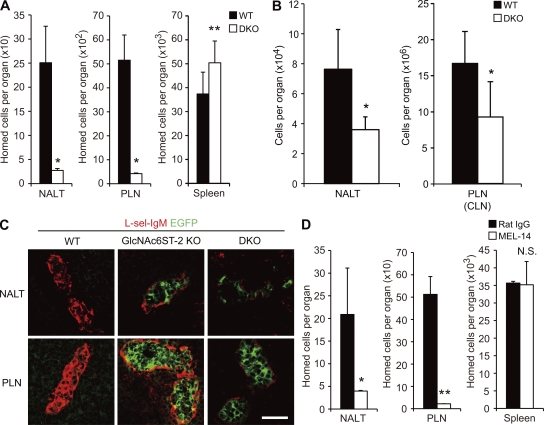
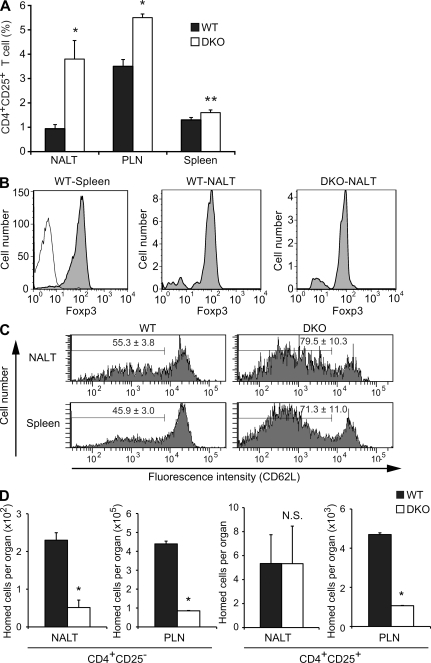
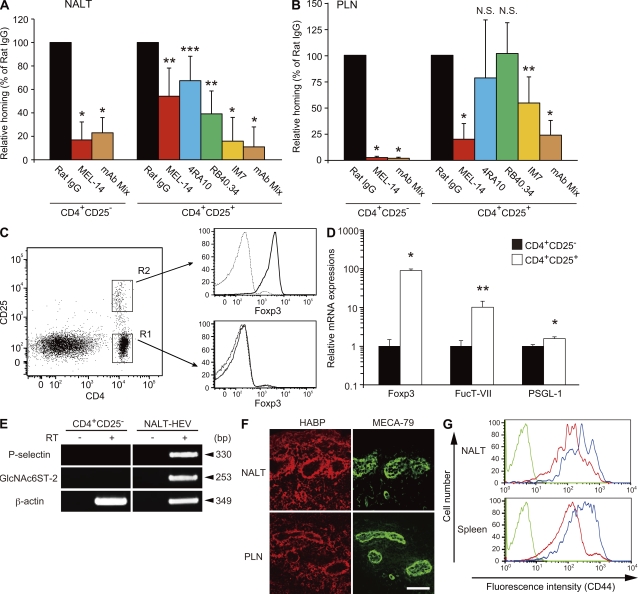
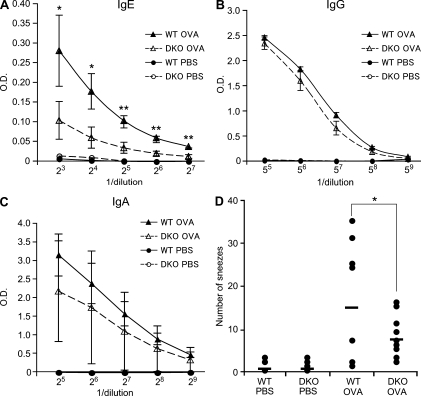
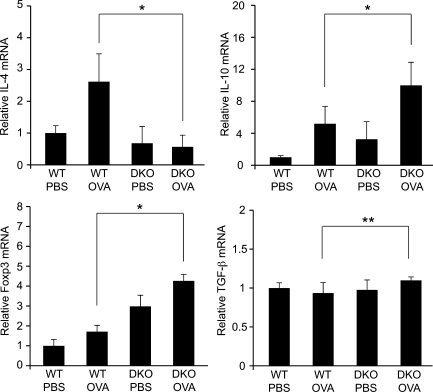
Nasal-associated lymphoid tissue (NALT) is a mucosal immune tissue that provides immune responses against inhaled antigens. Lymphocyte homing to NALT is mediated by specific interactions between lymphocytes and high endothelial venules (HEVs) in NALT. In contrast to HEVs in other mucosal lymphoid tissues, NALT HEVs strongly express peripheral node addressins (PNAds) that bear sulfated glycans recognized by the monoclonal antibody MECA-79. We investigated the role of PNAd in lymphocyte homing to NALT using sulfotransferase N-acetylglucosamine-6-O-sulfotransferase (GlcNAc6ST) 1 and GlcNAc6ST-2 double knockout (DKO) mice. The expression of PNAd in NALT HEVs was eliminated in DKO mice. Short-term homing assays indicated that lymphocyte homing to NALT was diminished by 90% in DKO mice. Production of antigen-specific IgE and the number of sneezes in response to nasally administered ovalbumin were also substantially diminished. Consistently, the NALT of DKO mice showed reduced production of IL-4 and increased production of IL-10 together with an increase in CD4+CD25+ regulatory T cells (Treg cells). Compared with the homing of CD4+CD25− conventional T cells, the homing of CD4+CD25+ Treg cells to NALT was less dependent on the L-selectin–PNAd interaction but was partially dependent on PSGL-1 (P-selectin glycoprotein ligand 1) and CD44. These results demonstrate that PNAd is essential for lymphocyte homing to NALT and nasal allergic responses.
Overview
The claims and statistics of this paper haven’t been checked yet.
Free: it reads the open-access text and checks the first 5 claims that cite a source we can check. Create a free account to check every claim.
Integrity signals
Registry
Cites
Statistics
Figures
Verification
Claims the paper makes
The claims and statistics of this paper haven’t been checked yet.
Free: it reads the open-access text and checks the first 5 claims that cite a source we can check. Create a free account to check every claim.
Claims other papers make about this one
Each is checked against this paper’s own text: does it say what the citing paper says it does?
The source backs part of the claim, not all of it — or backs it for a different population, condition or comparison.
In the citing paper
“FoxP3+ Tregs are capable of expressing these endothelial selectins [65].”
From Potential anti-tumor effects of regulatory T cells in the tumor microenvironment: a review (2024) · cites this paper as [65]
Experimental — accuracy not yet measured
Self-check
Percentages, sums and reported differences re-computed from the paper’s own numbers.
The self-check needs the paper’s full text.
Citations
Cites
Control of Regulatory T Cell Development by the Transcription Factor Foxp3
Hori, S., Nomura, T., & Sakaguchi, S. (2003) · Science · doi:10.1126/science.1079490 · Cited by 8,187
Traffic signals for lymphocyte recirculation and leukocyte emigration: The multistep paradigm
Springer, T. A. (1994) · Cell · doi:10.1016/0092-8674(94)90337-9 · Cited by 6,929 · cited 2×
“Lymphocyte migration is achieved by a series of interactions between lymphocytes and HEVs (Springer, 1994): (1) lymphocyte rolling mediated by L-selectin on the lymphocytes and sulfated glycans on the HEVs; (2) activation of lymphocytes by chemokines presented on the surface of HEVs by heparan…”
BackgroundThe Role of Tumoral FOXP3 on Cell Proliferation, Migration, and Invasion in Gastric Cancer
Zhang, L., Xu, J., Zhang, X., Zhang, Y., Wang, L., Huang, X., & Xu, Z. (2017) · Cellular Physiology and Biochemistry · doi:10.1159/000479442 · Cited by 4,088
Induction of Colonic Regulatory T Cells by Indigenous Clostridium Species
Atarashi, K., Tanoue, T., Shima, T., Imaoka, A., Kuwahara, T., Momose, Y., Cheng, G., Yamasaki, S., Saito, T., Ohba, Y., et al. (2011) · Science · doi:10.1126/science.1198469 · Cited by 3,752 · cited 2×
“, 2009) and some others are induced by a commensal bacterium of the intestinal microbiota (Round and Mazmanian, 2010; Atarashi et al., 2011), the CD4+CD25+ Treg cells activated in the inflamed mucosa or induced in the intestines expressing lower levels of L-selectin might accumulate in DKO mice.”
BackgroundLymphocyte Homing and Homeostasis
Butcher, E. C., & Picker, L. J. (1996) · Science · doi:10.1126/science.272.5258.60 · Cited by 2,846 · cited 1×
“20101786 1015 Lymphocytes migrate into the parenchyma of secondary lymphoid organs, such as peripheral LNs (PLNs) and Peyer’s patches (PPs), through specialized blood vessels called high endothelial venules (HEVs; Butcher and Picker, 1996; von Andrian and Mempel, 2003).”
BackgroundSakaguchi, S. (2005) · Nature Immunology · doi:10.1038/ni1178 · Cited by 2,669 · cited 2×
“We believe that the results of the present study have clarified, at least in part, the address codes for Treg cell migration, and they should permit the function of Treg cells to be manipulated in the future, with relevance for host responses to tumors, transplant rejection, autoimmunity, and allergies (Sakaguchi, 200…”
BackgroundResultCD44 is the principal cell surface receptor for hyaluronate
Aruffo, A., Stamenkovic, I., Melnick, M., Underhill, C. B., & Seed, B. (1990) · Cell · doi:10.1016/0092-8674(90)90694-a · Cited by 2,438 · cited 1×
“Consistent with these findings, expression of HA, a ligand for CD44 (Aruffo et al., 1990), was detected in the NALT and PLN HEVs (Fig.”
ResultRound, J. L., & Mazmanian, S. K. (2010) · Proceedings of the National Academy of Sciences · doi:10.1073/pnas.0909122107 · Cited by 2,233 · cited 1×
“, 2009) and some others are induced by a commensal bacterium of the intestinal microbiota (Round and Mazmanian, 2010; Atarashi et al., 2011), the CD4+CD25+ Treg cells activated in the inflamed mucosa or induced in the intestines expressing lower levels of L-selectin might accumulate in DKO mice.”
BackgroundCD4 T cells: fates, functions, and faults
Zhu, J., & Paul, W. E. (2008) · Blood · doi:10.1182/blood-2008-05-078154 · Cited by 1,798 · cited 1×
“The induction of the humoral immunity-related Th2 cytokine IL-4, which is a major mediator of IgE class switching in B cells (Zhu and Paul, 2008), was observed in WT mice, but not in DKO mice, after intranasal immunization with OVA.”
BackgroundA cell-surface molecule involved in organ-specific homing of lymphocytes
Gallatin, W. M., Weissman, I. L., & Butcher, E. C. (1983) · Nature · doi:10.1038/304030a0 · Cited by 1,484 · cited 1×
“…difference in chemokine expression but might be explained by the fact that B cells express lower levels of L-selectin compared with T cells and that B cell homing is more susceptible to the reduction of L-selectin ligands in HEVs than that of T cells (Gauguet et al., 2004; Uchimura et al., 2005).”
Backgroundα4β7 integrin mediates lymphocyte binding to the mucosal vascular addressin MAdCAM-1
Berlin, C., Berg, E. L., Briskin, M. J., Andrew, D. P., Kilshaw, P. J., Holzmann, B., Weissman, I. L., Hamann, A., & Butcher, E. C. (1993) · Cell · doi:10.1016/0092-8674(93)90305-a · Cited by 1,453 · cited 6×
“Vol. 208 No. 5 1015-1025 www.jem.org/cgi/doi/10.1084/jem.20101786 1015 Lymphocytes migrate into the parenchyma of secondary lymphoid organs, such as peripheral LNs (PLNs) and Peyer’s patches (PPs), through specialized blood vessels called high endothelial venules (HEVs; Butcher and Picker, 1996; von Andrian and Mempel…”
BackgroundInfluentialHoming and cellular traffic in lymph nodes
von Andrian, U. H., & Mempel, T. R. (2003) · Nature Reviews Immunology · doi:10.1038/nri1222 · Cited by 1,281 · cited 1×
“…migrate into the parenchyma of secondary lymphoid organs, such as peripheral LNs (PLNs) and Peyer’s patches (PPs), through specialized blood vessels called high endothelial venules (HEVs; Butcher and Picker, 1996; von Andrian and Mempel, 2003).”
BackgroundFibroblastic reticular cells in lymph nodes regulate the homeostasis of naive T cells
Link, A., Vogt, T. K., Favre, S., Britschgi, M. R., Acha-Orbea, H., Hinz, B., Cyster, J. G., & Luther, S. A. (2007) · Nature Immunology · doi:10.1038/ni1513 · Cited by 931 · cited 2×
“Considering a previous study that fibroblastic reticular cells in LNs provide survival signals through IL-7 to naive T cells (Link et al., 2007), one possible explanation for why CD4+CD25+ Treg cells expressing lower levels of L-selectin accumulate in DKO mice is that naive CD4+CD25+ Treg cells…”
BackgroundLigands for L-Selectin: Homing, Inflammation, and Beyond
Rosen, S. D. (2004) · Annual Review of Immunology · doi:10.1146/annurev.immunol.21.090501.080131 · Cited by 790 · cited 4×
“…ligands for L-selectin expressed on LN HEVs have identified several sialomucins, including GlyCAM-1, CD34, podocalyxin-like protein, and Sgp200 (Rosen, 2004), that are reactive with the MECA-79 antibody (Streeter et al., 1988), which blocks L-selectin–mediated lymphocyte binding to HEVs.”
BackgroundInfluentialNALT- versus PEYER'S-patch-mediated mucosal immunity
Kiyono, H., & Fukuyama, S. (2004) · Nature Reviews Immunology · doi:10.1038/nri1439 · Cited by 745 · cited 1×
“revealed that PPs and NALT are two of the main components of mucosa-associated lymphoid tissue (MALT) and are important inductive sites for mucosal immunity against antigens entering through the mucus by ingestion and inhalation, respectively (Kiyono and Fukuyama, 2004).”
BackgroundLifetime of the P-selectin-carbohydrate bond and its response to tensile force in hydrodynamic flow
Alon, R., Hammer, D. A., & Springer, T. A. (1995) · Nature · doi:10.1038/374539a0 · Cited by 715 · cited 13×
“To determine the specificity of the residual lymphocyte homing to NALT observed in DKO mice, we next examined found that CD4+CD25+ Treg cells are recruited to NALT in a manner less dependent on the L-selectin–PNAd interaction and partially dependent on P-selectin glycoprotein ligand 1 (PSGL-1) and CD44.”
BackgroundInfluentialP-selectin glycoprotein ligand-1 mediates rolling of human neutrophils on P-selectin.
Moore, K. L., Patel, K. D., Bruehl, R. E., Li, F., Johnson, D. A., Lichenstein, H. S., Cummings, R. D., Bainton, D. F., & McEver, R. P. (1995) · The Journal of cell biology · doi:10.1083/jcb.128.4.661 · Cited by 710 · cited 14×
“To determine the specificity of the residual lymphocyte homing to NALT observed in DKO mice, we next examined found that CD4+CD25+ Treg cells are recruited to NALT in a manner less dependent on the L-selectin–PNAd interaction and partially dependent on P-selectin glycoprotein ligand 1 (PSGL-1) and CD44.”
BackgroundInfluentialFoxall, C., Watson, Sr., Dowbenko, D., Fennie, C., Lasky, L., Kiso, M., Hasegawa, A., Asa, D., & Brandley, B. (1992) · The Journal of cell biology · doi:10.1083/jcb.117.4.895 · Cited by 687 · cited 1×
“4 (A and B), an anti–PSGL-1 blocking mAb 4RA10 (Frenette et al., 2000) and an anti– P-selectin mAb RB40.”
BackgroundStreeter, P. R., Rouse, B. T., & Butcher, E. C. (1988) · The Journal of cell biology · doi:10.1083/jcb.107.5.1853 · Cited by 640 · cited 4×
“RESULTS Expression of PNAd, but not MAdCAM-1, in NALT HEVs An immunofluorescence study using the antibody MECA-79 (Streeter et al., 1988) indicated that PNAd is strongly expressed in the NALT HEVs of C57BL/6 WT mice (Fig.”
BackgroundMethodInfluentialLuther, S. A., Tang, H. L., Hyman, P. L., Farr, A. G., & Cyster, J. G. (2000) · Proceedings of the National Academy of Sciences · doi:10.1073/pnas.97.23.12694 · Cited by 595 · cited 5×
“It was reported that plt mutant mice, which have mutations in CCL21 (produced by stromal cells and HEVs) and CCL19 (Luther et al., 2000; Nakano and Gunn, 2001), showed aggravated allergic symptoms associated with a reduction in Treg cells expressing CCR7, the receptor for CCL21 (Yoshida et al.”
BackgroundMethodInfluentialHigh endothelial venules (HEVs): specialized endothelium for lymphocyte migration
Girard, J.-P., & Springer, T. A. (1995) · Immunology Today · doi:10.1016/0167-5699(95)80023-9 · Cited by 552 · cited 1×
“HEVs have a characteristic cuboidal morphology and a prominent Golgi complex where unique sulfated glycans are synthesized (Girard and Springer, 1995).”
BackgroundChemokine Requirements for B Cell Entry to Lymph Nodes and Peyer's Patches
Okada, T., Ngo, V. N., Ekland, E. H., Förster, R., Lipp, M., Littman, D. R., & Cyster, J. G. (2002) · The Journal of Experimental Medicine · doi:10.1084/jem.20020201 · Cited by 512
Frenette, P. S., Denis, C. V., Weiss, L., Jurk, K., Subbarao, S., Kehrel, B., Hartwig, J. H., Vestweber, D., & Wagner, D. D. (2000) · The Journal of Experimental Medicine · doi:10.1084/jem.191.8.1413 · Cited by 435 · cited 1×
“Consistent with this notion, pretreatment of fluorescence-labeled lymphocytes with MEL-14, a mAb that blocks L-selectin function (Gallatin et al., 1983), significantly inhibited the residual lymphocyte homing to NALT observed in the DKO mice, similar to what was observed in PLNs (Fig.”
ResultZhang, N., Schröppel, B., Lal, G., Jakubzick, C., Mao, X., Chen, D., Yin, N., Jessberger, R., Ochando, J. C., Ding, Y., et al. (2009) · Immunity · doi:10.1016/j.immuni.2008.12.022 · Cited by 411
Yoshida, R., Imai, T., Hieshima, K., Kusuda, J., Baba, M., Kitaura, M., Nishimura, M., Kakizaki, M., Nomiyama, H., & Yoshie, O. (1997) · Journal of Biological Chemistry · doi:10.1074/jbc.272.21.13803 · Cited by 394 · cited 3×
“It was reported that plt mutant mice, which have mutations in CCL21 (produced by stromal cells and HEVs) and CCL19 (Luther et al., 2000; Nakano and Gunn, 2001), showed aggravated allergic symptoms associated with a reduction in Treg cells expressing CCR7, the receptor for CCL21 (Yoshida et al., 1998) and CCL19 (Yoshid…”
BackgroundYeh, J.-C., Hiraoka, N., Petryniak, B., Nakayama, J., Ellies, L. G., Rabuka, D., Hindsgaul, O., Marth, J. D., Lowe, J. B., & Fukuda, M. (2001) · Cell · doi:10.1016/s0092-8674(01)00394-4 · Cited by 346
Self-citationSecondary Lymphoid-tissue Chemokine Is a Functional Ligand for the CC Chemokine Receptor CCR7
Yoshida, R., Nagira, M., Kitaura, M., Imagawa, N., Imai, T., & Yoshie, O. (1998) · Journal of Biological Chemistry · doi:10.1074/jbc.273.12.7118 · Cited by 321 · cited 5×
“In some experiments, sections were incubated with L-selectin–IgM (Hiraoka et al., 2004), 10 µg/ml goat anti–mouse CCL21 (R&D Systems), or 10 µg/ml goat anti–mouse CXCL12 (Santa Cruz Biotechnology, Inc.), followed by 2 µg/ml Alexa Fluor 594–labeled goat anti– human IgM (Invitrogen) or 3 µg/ml biotinylated rabbit anti–g…”
BackgroundInfluentialHomeister, J. W., Thall, A. D., Petryniak, B., Malý, P., Rogers, C. E., Smith, P. L., Kelly, R. J., Gersten, K. M., Askari, S. W., Cheng, G., et al. (2001) · Immunity · doi:10.1016/s1074-7613(01)00166-2 · Cited by 318 · cited 2×
“…because the other core structures, such as core 2 O-glycans (Hiraoka et al., 2004) and N-glycans (Mitoma et al., 2007), as well as fucosylation (Homeister et al., 2001) and sialylation (Rosen et al., 1985) of PNAd, are also important for L-selectin binding, one possible explanation is that…”
BackgroundDeGrendele, H. C., Estess, P., Picker, L. J., & Siegelman, M. H. (1996) · The Journal of experimental medicine · doi:10.1084/jem.183.3.1119 · Cited by 316 · cited 3×
“To determine the role of CD44, we next examined the effects of the anti-CD44 mAb IM7, which blocks CD44mediated lymphocyte rolling on hyaluronic acid (HA)–coated dishes (DeGrendele et al., 1996).”
BackgroundNakache, M., Lakey Berg, E., Streeter, P. R., & Butcher, E. C. (1989) · Nature · doi:10.1038/337179a0 · Cited by 246 · cited 3×
“It has been revealed that the interaction of 47 integrin on lymphocytes and mucosal addressin cell adhesion molecule 1 (MAdCAM-1) on HEVs is essential for lymphocyte homing to PPs (Nakache et al., 1989; Berlin et al., 1993).”
BackgroundInvolvement of Sialic Acid on Endothelial Cells in Organ-Specific Lymphocyte Recirculation
Rosen, S. D., Singer, M. S., Yednock, T. A., & Stoolman, L. M. (1985) · Science · doi:10.1126/science.4001928 · Cited by 235
Nakano, H., & Gunn, M. D. (2001) · The Journal of Immunology · doi:10.4049/jimmunol.166.1.361 · Cited by 210 · cited 3×
“It was reported that plt mutant mice, which have mutations in CCL21 (produced by stromal cells and HEVs) and CCL19 (Luther et al., 2000; Nakano and Gunn, 2001), showed aggravated allergic symptoms associated with a reduction in Treg cells expressing CCR7, the receptor for CCL21 (Yoshida et al., 1998) and CCL19 (Yoshid…”
BackgroundMethodBosse, R., & Vestweber, D. (1994) · European Journal of Immunology · doi:10.1002/eji.1830241215 · Cited by 190
Inflammatory mediators in allergic rhinitis
Gelfand, E. W. (2004) · Journal of Allergy and Clinical Immunology · doi:10.1016/j.jaci.2004.08.043 · Cited by 188 · cited 2×
“, 2005) and that various antigens, including pollen and house dust, that are taken up from the nasal mucosal barrier often cause Th2mediated allergic rhinitis characterized by antigen-specific IgE production and nasal symptoms, such as sneezing (Gelfand, 2004), understanding the molecular mechanisms of cellular traffi…”
BackgroundKawashima, H., Petryniak, B., Hiraoka, N., Mitoma, J., Huckaby, V., Nakayama, J., Uchimura, K., Kadomatsu, K., Muramatsu, T., Lowe, J. B., et al. (2005) · Nature Immunology · doi:10.1038/ni1259 · Cited by 181
Self-citationHoming to suppress: address codes for Treg migration
Huehn, J., & Hamann, A. (2005) · Trends in Immunology · doi:10.1016/j.it.2005.10.001 · Cited by 181 · cited 1×
“It has been well discussed that appropriate localization is indispensable for the appropriate function of Treg cells in vivo (Huehn and Hamann, 2005).”
BackgroundCritical functions of N-glycans in L-selectin-mediated lymphocyte homing and recruitment
Mitoma, J., Bao, X., Petryanik, B., Schaerli, P., Gauguet, J.-M., Yu, S.-Y., Kawashima, H., Saito, H., Ohtsubo, K., Marth, J. D., et al. (2007) · Nature Immunology · doi:10.1038/ni1442 · Cited by 180 · cited 3×
“It has been reported that N-glycans modified with the 6-sulfo sialyl Lewis X structure are also important for lymphocyte homing to PLNs (Mitoma et al., 2007).”
BackgroundSelf-citationUchimura, K., Gauguet, J.-M., Singer, M. S., Tsay, D., Kannagi, R., Muramatsu, T., von Andrian, U. H., & Rosen, S. D. (2005) · Nature Immunology · doi:10.1038/ni1258 · Cited by 177 · cited 5×
“To determine the sulfation requirement of L-selectin ligands in vivo, mice deficient in two HEV-expressed sulfotransferases, N-acetylglucosamine-6-O-sulfotransferase (GlcNAc6ST) 1 and GlcNAc6ST-2 (also called HEC-GlcNAc6ST or L-selectin ligand sulfotransferase) were generated (Kawashima et al., 2005; Uchimura et al.,…”
BackgroundResultInfluentialNasal-associated lymphoid tissue (NALT): frequency and localization in young children
DEBERTIN, A. S., TSCHERNIG, T., TÖNJES, H., KLEEMANN, W. J., TRÖGER, H. D., & PABST, R. (2003) · Clinical and Experimental Immunology · doi:10.1111/j.1365-2249.2003.02311.x · Cited by 163 · cited 2×
“…of a NALT-like structure in humans as a morphologically distinct structure from tonsils and adenoids disseminated in the nasal mucosa, with morphological features typical of secondary lymphoid organs, such as HEVs and lymphoid follicles, sometimes with germinal centers (Debertin et al., 2003).”
BackgroundMolecular Cloning and Characterization of anN-Acetylglucosamine-6-O-sulfotransferase
Uchimura, K., Muramatsu, H., Kadomatsu, K., Fan, Q.-W., Kurosawa, N., Mitsuoka, C., Kannagi, R., Habuchi, O., & Muramatsu, T. (1998) · Journal of Biological Chemistry · doi:10.1074/jbc.273.35.22577 · Cited by 159 · cited 2×
“Unlike GlcNAc6ST-2, GlcNAc6ST-1 is widely expressed in various tissues (Uchimura et al., 1998).”
BackgroundImaoka, K., Miller, C. J., Kubota, M., McChesney, M. B., Lohman, B., Yamamoto, M., Fujihashi, K., Someya, K., Honda, M., McGhee, J. R., et al. (1998) · The Journal of Immunology · doi:10.4049/jimmunol.161.11.5952 · Cited by 143 · cited 2×
“Considering that nasal vaccination protocols have achieved effective immune reactions (Imaoka et al., 1998; Kurono et al., 1999; Imai et al., 2005) and that various antigens, including pollen and house dust, that are taken up from the nasal mucosal barrier often cause Th2mediated allergic rhinitis…”
BackgroundKurono, Y., Yamamoto, M., Fujihashi, K., Kodama, S., Suzuki, M., Mogi, G., McGhee, J. R., & Kiyono, H. (1999) · The Journal of Infectious Diseases · doi:10.1086/314827 · Cited by 130 · cited 2×
“Considering that nasal vaccination protocols have achieved effective immune reactions (Imaoka et al., 1998; Kurono et al., 1999; Imai et al., 2005) and that various antigens, including pollen and house dust, that are taken up from the nasal mucosal barrier often cause Th2mediated allergic rhinitis…”
BackgroundCsencsits, K. L., Jutila, M. A., & Pascual, D. W. (1999) · The Journal of Immunology · doi:10.4049/jimmunol.163.3.1382 · Cited by 115 · cited 4×
“It was previously reported that PNAd is expressed in NALT HEVs (Csencsits et al., 1999), but the significance of its expression for lymphocyte homing in vivo remains elusive.”
BackgroundInfluentialHellings, P. W., Jorissen, M., & Ceuppens, J. (2000) · PubMed · Cited by 80
Roles of Sulfated Glycans in Lymphocyte Homing
Kawashima, H. (2006) · Biological and Pharmaceutical Bulletin · doi:10.1248/bpb.29.2343 · Cited by 77 · cited 1×
“The binding of these sialomucins to L-selectin is dependent on their decoration with a specific carbohydrate structure known as 6-sulfo sialyl Lewis X (Sialic acid23Gal1-4[Fuc1-3(sulfo-6)]GlcNAc1-R; Rosen, 2004; Kawashima, 2006).”
BackgroundSelf-citationSnapp, K. R., Wagers, A. J., Craig, R. A., Stoolman, L. M., & Kansas, G. S. (1997) · Blood · doi:10.1182/blood.v89.3.896 · Cited by 72 · cited 8×
“To determine the specificity of the residual lymphocyte homing to NALT observed in DKO mice, we next examined found that CD4+CD25+ Treg cells are recruited to NALT in a manner less dependent on the L-selectin–PNAd interaction and partially dependent on P-selectin glycoprotein ligand 1 (PSGL-1) and CD44.”
BackgroundInfluentialHiraoka, N., Kawashima, H., Petryniak, B., Nakayama, J., Mitoma, J., Marth, J. D., Lowe, J. B., & Fukuda, M. (2004) · Journal of Biological Chemistry · doi:10.1074/jbc.m311150200 · Cited by 70 · cited 6×
“However, because the other core structures, such as core 2 O-glycans (Hiraoka et al., 2004) and N-glycans (Mitoma et al.”
BackgroundMethodSelf-citationRegulatory Role of Lymphoid Chemokine CCL19 and CCL21 in the Control of Allergic Rhinitis
Takamura, K., Fukuyama, S., Nagatake, T., Kim, D., Kawamura, A., Kawauchi, H., & Kiyono, H. (2007) · The Journal of Immunology · doi:10.4049/jimmunol.179.9.5897 · Cited by 62 · cited 2×
“, 1997), in NALT, showing the importance of the chemokines CCL21 and CCL19 for Treg cell homing to NALT (Takamura et al., 2007).”
BackgroundHirakawa, J., Tsuboi, K., Sato, K., Kobayashi, M., Watanabe, S., Takakura, A., Imai, Y., Ito, Y., Fukuda, M., & Kawashima, H. (2010) · Journal of Biological Chemistry · doi:10.1074/jbc.m110.167296 · Cited by 60
Self-citationVenturi, G. M., Conway, R. M., Steeber, D. A., & Tedder, T. F. (2007) · The Journal of Immunology · doi:10.4049/jimmunol.178.1.291 · Cited by 59 · cited 1×
“It was reported that CD4+CD25+ Treg cell migration to PLNs requires L-selectin (Venturi et al., 2007).”
BackgroundGauguet, J.-M., Rosen, S. D., Marth, J. D., & von Andrian, U. H. (2004) · Blood · doi:10.1182/blood-2004-05-1986 · Cited by 47 · cited 1×
“…difference in chemokine expression but might be explained by the fact that B cells express lower levels of L-selectin compared with T cells and that B cell homing is more susceptible to the reduction of L-selectin ligands in HEVs than that of T cells (Gauguet et al., 2004; Uchimura et al., 2005).”
BackgroundImai, Y., Ishikawa, T., Tanikawa, T., Nakagami, H., Maekawa, T., & Kurohane, K. (2005) · Journal of Immunological Methods · doi:10.1016/j.jim.2005.05.007 · Cited by 16
Self-citation
Cited by
West, N. R., Kost, S. E., Martin, S. D., Milne, K., deLeeuw, R. J., Nelson, B. H., & Watson, P. H. (2013) · British Journal of Cancer · doi:10.1038/bjc.2012.524 · Cited by 268
T cell homing to epithelial barriers in allergic disease
Islam, S. A., & Luster, A. D. (2012) · Nature Medicine · doi:10.1038/nm.2760 · Cited by 221
High endothelial venules (HEVs) in immunity, inflammation and cancer
Blanchard, L., & Girard, J.-P. (2021) · Angiogenesis · doi:10.1007/s10456-021-09792-8 · Cited by 207
Pabst, R. (2015) · Vaccine · doi:10.1016/j.vaccine.2015.07.022 · Cited by 139
Ling, A., Edin, S., Wikberg, M. L., Öberg, Å., & Palmqvist, R. (2014) · British Journal of Cancer · doi:10.1038/bjc.2014.161 · Cited by 111
“Both subsets express ligands enabling T-cell extravasation and tumour infiltration (Ohmichi et al, 2011; West et al, 2013), possibly potentiating immune cell infiltration synergistically.”
Background
Metadata
- Authors
- Ohmichi, Y., Hirakawa, J., Imai, Y., Fukuda, M., & Kawashima, H.
- Affiliations
- Shizuoka University (JP)
- Sanford Burnham Prebys Medical Discovery Institute (US)
- Corresponding author
- Kawashima, Hiroto
- Venue
- Journal of Experimental Medicine
- Publisher
- Rockefeller University Press
- Published
- 2011-04-25
- Volume
- 208
- Issue
- 5
- Pages
- 1015-1025
- ISSN
- 0022-1007 (ISSN-L)
- 1540-9538
- PMC
- PMC3092357
- OpenAlex
- W1970060796
- Semantic Scholar
- 9f8a793e638a2112e1ce6d51ea05d674d6f423e8
- Cited by
- 30
- References
- 52
- Citations by year
- 2024: 3 · 2023: 1 · 2022: 1 · 2021: 4 · 2020: 1 · 2019: 2 · 2017: 1 · 2016: 1 · 2015: 4 · 2014: 4 · 2013: 4 · 2012: 3
- FWCI
- 2.89
- Type
- journal article
- Language
- en
- Open access
- bronze
- doi.org
- Locations
- The Journal of Experimental Medicine (publishedVersion)
- Europe PMC (PubMed Central) (publishedVersion, cc-by-nc-sa)
- PubMed Central (publishedVersion, cc-by-nc-sa)
- PubMed (publishedVersion)
- Funders
- Takeda Science Foundation
- Ministry of Education, Culture, Sports, Science and Technology (21390023, 22659018, 20057022)
- National Institutes of Health
- Japan Society for the Promotion of Science (22659018, 20057022, 23890173, 21390023)
- National Cancer Institute (P01CA071932, P01-CA71932)
- Topics
- Health Sciences › Medicine › Immunology and Allergy › Cell Adhesion Molecules Research
- Life Sciences › Immunology and Microbiology › Immunology › T-cell and B-cell Immunology
- Health Sciences › Medicine › Immunology and Allergy › Allergic Rhinitis and Sensitization
- Keywords
- peripheral node addressin, lymphocyte homing, nasal-associated lymphoid tissue, high endothelial venules, sulfated glycans, MECA-79, allergic rhinitis, ovalbumin, IgE, IL-4, IL-10, regulatory T cells, L-selectin, PSGL-1, CD44, mucosal immunity
- MeSH terms
- Carbohydrate Sulfotransferases, Animals, Hypersensitivity, Immunoglobulin E, Lymph Nodes, Membrane Glycoproteins, Mice, Inbred BALB C, Nasal Mucosa, Sulfotransferases, Interleukin-4, Receptors, Lymphocyte Homing, Interleukin-10, Mice, Knockout, Immunity, Mucosal, Hyaluronan Receptors, L-Selectin, T-Lymphocytes, Regulatory, Mice
About these checks
Registry, retraction, Cites and statistics results are computed, not judged, with one exception: a printed reference that no index lists is read once by a model before it counts as a citation error. Claims are extracted by a model and kept only when their quote appears verbatim in the text; each cited source is then checked, with a model’s help, for whether it says what the claim relies on. Those verdicts can be wrong — read the claim’s quote and the cited source before relying on one.
Statistics and arithmetic are recomputed, not judged.
Confidence bands are shown only for fields calibrated on our annotated test set. None is calibrated yet, so no band is shown.
What counts as a claim ›How we measure confidence ›How we check this ›
Are you an author, or do you see a problem with this page? Request a review
Data sources
Bibliographic data: Semantic Scholar, OpenAlex, Crossref.
Contains information from the Semantic Scholar Academic Graph Datasets, made available under the ODC Attribution License (ODC-BY 1.0).
Semantic Scholar’s data is described in: Kinney, R., et al. (2023). The Semantic Scholar Open Data Platform. arXiv:2301.10140.
