

Lung-resident tissue macrophages generate Foxp3+ regulatory T cells and promote airway tolerance
Open accessThe DOI matches its Crossref record; 66 of the 66 references it cites were found in a registry or an index.
Abstract
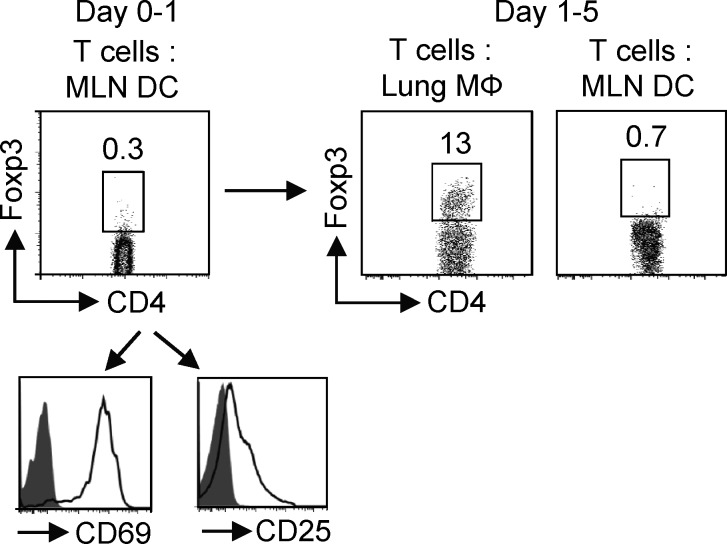
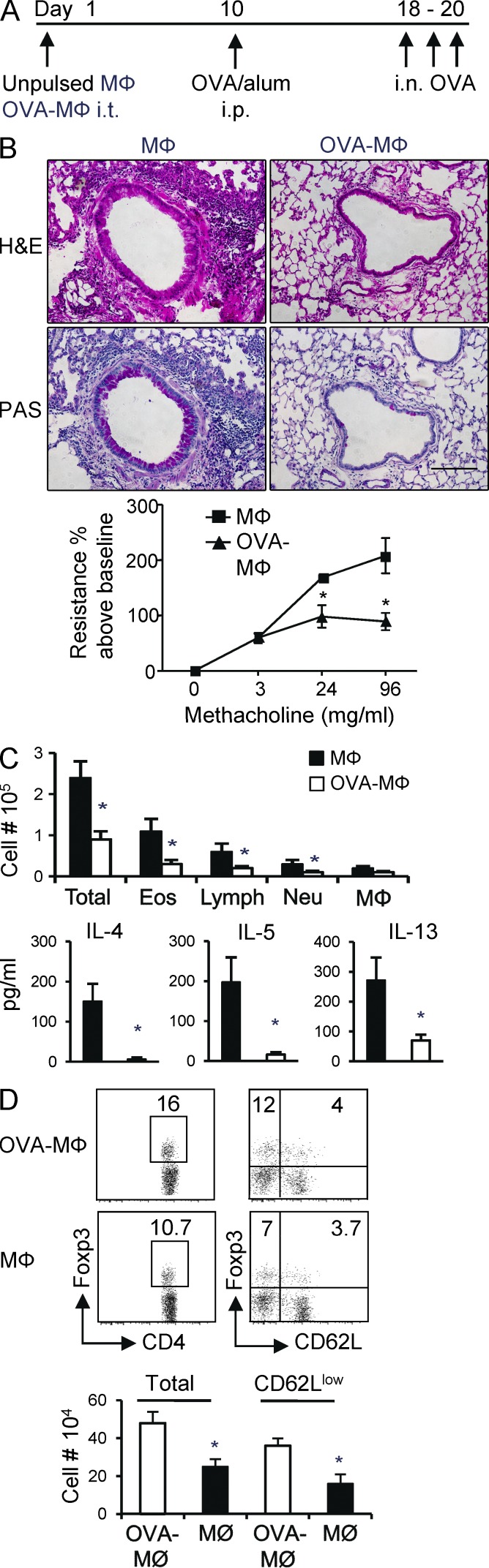
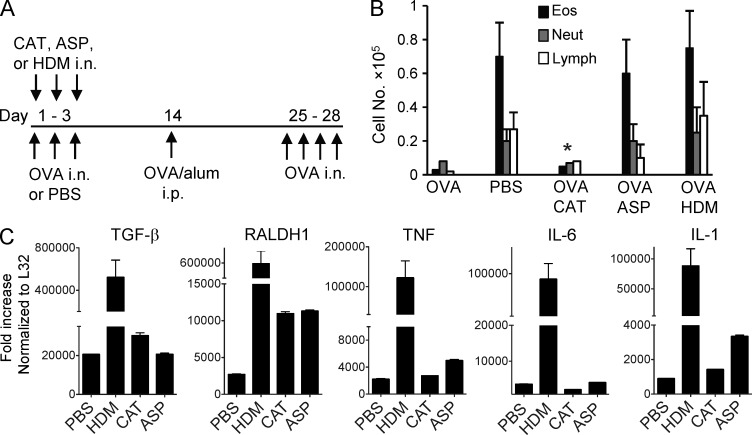
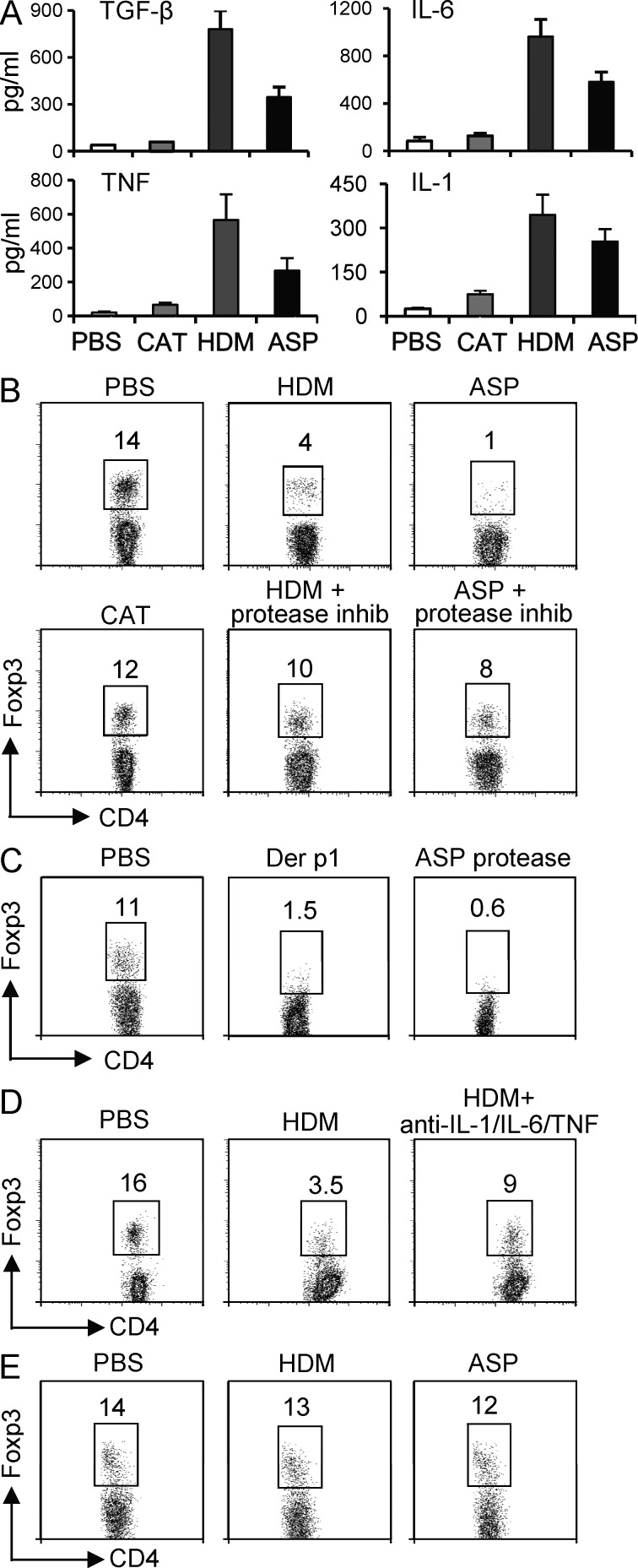
Airway tolerance is the usual outcome of inhalation of harmless antigens. Although T cell deletion and anergy are likely components of tolerogenic mechanisms in the lung, increasing evidence indicates that antigen-specific regulatory T cells (inducible Treg cells [iTreg cells]) that express Foxp3 are also critical. Several lung antigen-presenting cells have been suggested to contribute to tolerance, including alveolar macrophages (MØs), classical dendritic cells (DCs), and plasmacytoid DCs, but whether these possess the attributes required to directly promote the development of Foxp3+ iTreg cells is unclear. Here, we show that lung-resident tissue MØs coexpress TGF-β and retinal dehydrogenases (RALDH1 and RALDH 2) under steady-state conditions and that their sampling of harmless airborne antigen and presentation to antigen-specific CD4 T cells resulted in the generation of Foxp3+ Treg cells. Treg cell induction in this model depended on both TGF-β and retinoic acid. Transfer of the antigen-pulsed tissue MØs into the airways correspondingly prevented the development of asthmatic lung inflammation upon subsequent challenge with antigen. Moreover, exposure of lung tissue MØs to allergens suppressed their ability to generate iTreg cells coincident with blocking airway tolerance. Suppression of Treg cell generation required proteases and TLR-mediated signals. Therefore, lung-resident tissue MØs have regulatory functions, and strategies to target these cells might hold promise for prevention or treatment of allergic asthma.
Overview
The claims and statistics of this paper haven’t been checked yet.
Free: it reads the open-access text and checks the first 5 claims that cite a source we can check. Create a free account to check every claim.
Integrity signals
Registry
Cites
Statistics
Figures
Verification
Claims the paper makes
The claims and statistics of this paper haven’t been checked yet.
Free: it reads the open-access text and checks the first 5 claims that cite a source we can check. Create a free account to check every claim.
Claims other papers make about this one
Each is checked against this paper’s own text: does it say what the citing paper says it does?
The source backs part of the claim, not all of it — or backs it for a different population, condition or comparison.
In the citing paper
“These cells dampen TLR-induced inflammatory signals in epithelial cells143, suppress inflammation by inhibiting dendritic cell- mediated activation of T cells144,145 and induce regulatory cells146”
From The microbiota of the respiratory tract: gatekeeper to respiratory health (2017) · cites this paper as [146]
Experimental — accuracy not yet measured
Self-check
Percentages, sums and reported differences re-computed from the paper’s own numbers.
The self-check needs the paper’s full text.
Citations
Cites
Chen, W., Jin, W., Hardegen, N., Lei, K.-J., Li, L., Marinos, N., McGrady, G., & Wahl, S. M. (2003) · The Journal of Experimental Medicine · doi:10.1084/jem.20030152 · Cited by 4,699 · cited 2×
“TGF- was found to be key to the conversion of naive CD4 T cells into Foxp3+ iTreg cells from an in vitro study (Chen et al., 2003), and we and others in several models of lung tolerance showed that neutralizing TGF- allowed the development of Th2-driven eosinophilia in the airway and blocked the generation of antige…”
BackgroundCoombes, J. L., Siddiqui, K. R. R., Arancibia-Cárcamo, C. V., Hall, J., Sun, C.-M., Belkaid, Y., & Powrie, F. (2007) · The Journal of Experimental Medicine · doi:10.1084/jem.20070590 · Cited by 2,710 · cited 3×
“Within the gut, another mucosal tissue that may be very similar to the lung, both MØs and CD103+ cDCs in mesenteric LNs and in lamina propria have been suggested to afford tolerance and promote Foxp3+ iTreg cells, and again sequential interactions among these APCs in different compartments may be critical for maintain…”
BackgroundReciprocal T H 17 and Regulatory T Cell Differentiation Mediated by Retinoic Acid
Mucida, D., Park, Y., Kim, G., Turovskaya, O., Scott, I., Kronenberg, M., & Cheroutre, H. (2007) · Science · doi:10.1126/science.1145697 · Cited by 1,982 · cited 2×
“, 2010), which mediates the ability of retinoic acid to synergize with TGF- and enhance the induction of Foxp3 (Benson et al., 2007; Mucida et al., 2007).”
BackgroundSun, C.-M., Hall, J. A., Blank, R. B., Bouladoux, N., Oukka, M., Mora, J. R., & Belkaid, Y. (2007) · The Journal of Experimental Medicine · doi:10.1084/jem.20070602 · Cited by 1,881
Akbari, O., DeKruyff, R. H., & Umetsu, D. T. (2001) · Nature Immunology · doi:10.1038/90667 · Cited by 1,205 · cited 4×
“…have suggested that lung cDCs expressing IL-10, lung pDCs, and alveolar MØs all exert suppressive function and might contribute to maintaining tolerance in the lung (Thepen et al., 1992; Bilyk and Holt, 1993; Lipscomb et al., 1993; Roth and Golub, 1993; Akbari et al., 2001; de Heer et al., 2004).”
BackgroundInfluentialRole of conserved non-coding DNA elements in the Foxp3 gene in regulatory T-cell fate
Zheng, Y., Josefowicz, S., Chaudhry, A., Peng, X. P., Forbush, K., & Rudensky, A. Y. (2010) · Nature · doi:10.1038/nature08750 · Cited by 1,169 · cited 2×
“Significantly, CNS1 contains a binding site for Smad3 that is critical for TGF-–dependent induction of Foxp3 (Tone et al., 2008; Zheng et al., 2010).”
BackgroundHammad, H., Chieppa, M., Perros, F., Willart, M. A., Germain, R. N., & Lambrecht, B. N. (2009) · Nature Medicine · doi:10.1038/nm.1946 · Cited by 1,139 · cited 4×
“Inhalation of HDM extract completely abrogated lung tolerance, as reported previously (Hammad et al., 2009; Duan et al., 2011), and ASP extract displayed the same activity.”
BackgroundInfluentialDenning, T. L., Wang, Y.-C., Patel, S. R., Williams, I. R., & Pulendran, B. (2007) · Nature Immunology · doi:10.1038/ni1511 · Cited by 994 · cited 17×
“Several years ago, both lung-resident CD11c+ classical DCs (cDCs) and plasmacytoid DCs (pDCs) were suggested to participate in tolerance in the airways and shown to block priming of CD4 T cells (Akbari et al., 2001; de Heer et al., 2004), but their activity was either centered on the production of IL-10 and induction…”
BackgroundInfluentialHadis, U., Wahl, B., Schulz, O., Hardtke-Wolenski, M., Schippers, A., Wagner, N., Müller, W., Sparwasser, T., Förster, R., & Pabst, O. (2011) · Immunity · doi:10.1016/j.immuni.2011.01.016 · Cited by 898 · cited 2×
“Within the gut, another mucosal tissue that may be very similar to the lung, both MØs and CD103+ cDCs in mesenteric LNs and in lamina propria have been suggested to afford tolerance and promote Foxp3+ iTreg cells, and again sequential interactions among these APCs in different compartments may be critical for maintain…”
BackgroundBenson, M. J., Pino-Lagos, K., Rosemblatt, M., & Noelle, R. J. (2007) · The Journal of Experimental Medicine · doi:10.1084/jem.20070719 · Cited by 847 · cited 2×
“, 2010), which mediates the ability of retinoic acid to synergize with TGF- and enhance the induction of Foxp3 (Benson et al., 2007; Mucida et al., 2007).”
Background
Cited by
Macrophages in Tissue Repair, Regeneration, and Fibrosis
Wynn, T. A., & Vannella, K. M. (2016) · Immunity · doi:10.1016/j.immuni.2016.02.015 · Cited by 4,481
Microbiota in health and diseases
Hou, K., Wu, Z.-X., Chen, X.-Y., Wang, J.-Q., Zhang, D., Xiao, C., Zhu, D., Koya, J. B., Wei, L., Li, J., et al. (2022) · Signal Transduction and Targeted Therapy · doi:10.1038/s41392-022-00974-4 · Cited by 3,171
“Given the important role that lung microbiota plays in maintaining lung homeostasis, the lung microbiota composition is useful in monitoring lung health conditions.(113) The interactions between lung microbiota and local immune cells are closely relevant to the pattern recognition receptors (PRRs), which are responsib…”
BackgroundThe microbiota of the respiratory tract: gatekeeper to respiratory health
Man, W. H., de Steenhuijsen Piters, W. A. A., & Bogaert, D. (2017) · Nature Reviews Microbiology · doi:10.1038/nrmicro.2017.14 · Cited by 1,384
Alveolar macrophages: plasticity in a tissue-specific context
Hussell, T., & Bell, T. J. (2014) · Nature Reviews Immunology · doi:10.1038/nri3600 · Cited by 1,377
TGF-β Activation and Function in Immunity
Travis, M. A., & Sheppard, D. (2014) · Annual Review of Immunology · doi:10.1146/annurev-immunol-032713-120257 · Cited by 856
Metadata
- Authors
- Soroosh, P., Doherty, T. A., Duan, W., Mehta, A. K., Choi, H., Adams, Y. F., Mikulski, Z., Khorram, N., Rosenthal, P., Broide, D. H., & Croft, M.
- Affiliations
- La Jolla Institute for Immunology (US)
- University of California San Diego (US)
- Corresponding author
- Croft, Michael
- Venue
- Journal of Experimental Medicine
- Publisher
- Rockefeller University Press
- Published
- 2013-04-01
- Volume
- 210
- Issue
- 4
- Pages
- 775-788
- ISSN
- 0022-1007 (ISSN-L)
- 1540-9538
- PMC
- PMC3620360
- OpenAlex
- W2111740348
- Cited by
- 340
- References
- 65
- Citations by year
- 2026: 12 · 2025: 18 · 2024: 25 · 2023: 23 · 2022: 25 · 2021: 24 · 2020: 34 · 2019: 23 · 2018: 27 · 2017: 31 · 2016: 29 · 2015: 20 · 2014: 29 · 2013: 20
- FWCI
- 18.08
- Type
- journal article
- Language
- en
- Open access
- green
- www.ncbi.nlm.nih.gov
- Licence
- cc-by-nc-sa
- Locations
- The Journal of Experimental Medicine (publishedVersion)
- Europe PMC (PubMed Central) (publishedVersion, cc-by-nc-sa)
- PubMed Central (publishedVersion, cc-by-nc-sa)
- PubMed (publishedVersion)
- Figshare (submittedVersion, cc-by)
- Funders
- National Cancer Institute (CA91837, R01CA091837)
- National Institute of Allergy and Infectious Diseases (AI 70535, U19AI070535)
- Topics
- Life Sciences › Immunology and Microbiology › Immunology › T-cell and B-cell Immunology
- Health Sciences › Medicine › Pulmonary and Respiratory Medicine › Asthma and respiratory diseases
- Life Sciences › Immunology and Microbiology › Immunology › Immunotherapy and Immune Responses
- Keywords
- Foxp3+ regulatory T cells, inducible regulatory T cells, alveolar macrophages, TGF-beta, retinoic acid, ALDH1A1, Raldh2, antigen presentation, allergic asthma, allergen exposure, proteolytic enzymes, Toll-like receptor signaling, CD4+ T cells
- MeSH terms
- Allergens, Animals, Antineoplastic Agents, Asthma, Female, Immune Tolerance, Lung, Tretinoin, Signal Transduction, Transforming Growth Factor beta, Macrophages, Alveolar, Mice, Knockout, T-Lymphocytes, Regulatory, Toll-Like Receptors, Mice
About these checks
Registry, retraction, Cites and statistics results are computed, not judged, with one exception: a printed reference that no index lists is read once by a model before it counts as a citation error. Claims are extracted by a model and kept only when their quote appears verbatim in the text; each cited source is then checked, with a model’s help, for whether it says what the claim relies on. Those verdicts can be wrong — read the claim’s quote and the cited source before relying on one.
Statistics and arithmetic are recomputed, not judged.
Confidence bands are shown only for fields calibrated on our annotated test set. None is calibrated yet, so no band is shown.
What counts as a claim ›How we measure confidence ›How we check this ›
Are you an author, or do you see a problem with this page? Request a review
How to cite
Cite CoChat for the checks on this page, and the paper for its own findings.
- This page
- CoChat. (2026). Citation check: Lung-resident tissue macrophages generate Foxp3+ regulatory T cells and promote airway tolerance. https://app.cochat.ai/papers/10.1084/jem.20121849
- The paper
- Soroosh, P., Doherty, T. A., Duan, W., Mehta, A. K., Choi, H., Adams, Y. F., Mikulski, Z., Khorram, N., Rosenthal, P., Broide, D. H., & Croft, M. (2013). Lung-resident tissue macrophages generate Foxp3+ regulatory T cells and promote airway tolerance. Journal of Experimental Medicine. https://doi.org/10.1084/jem.20121849
Data sources
Bibliographic data: Semantic Scholar, OpenAlex, Crossref.
Contains information from the Semantic Scholar Academic Graph Datasets, made available under the ODC Attribution License (ODC-BY 1.0).
Semantic Scholar’s data is described in: Kinney, R., et al. (2023). The Semantic Scholar Open Data Platform. arXiv:2301.10140.
