

An index-based framework for assessing patterns and trends in river fragmentation and flow regulation by global dams at multiple scales
Open accessThe DOI matches its Crossref record; 86 of the 86 references it cites were found in a registry or an index.
Abstract
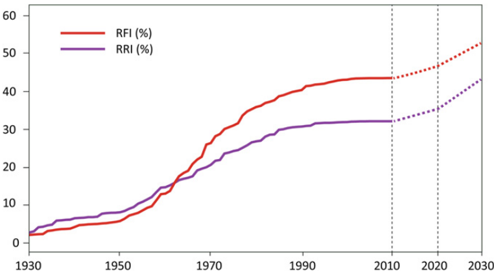
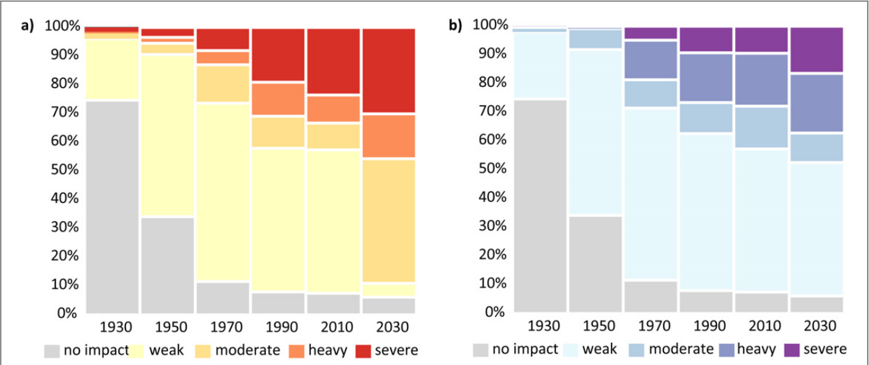
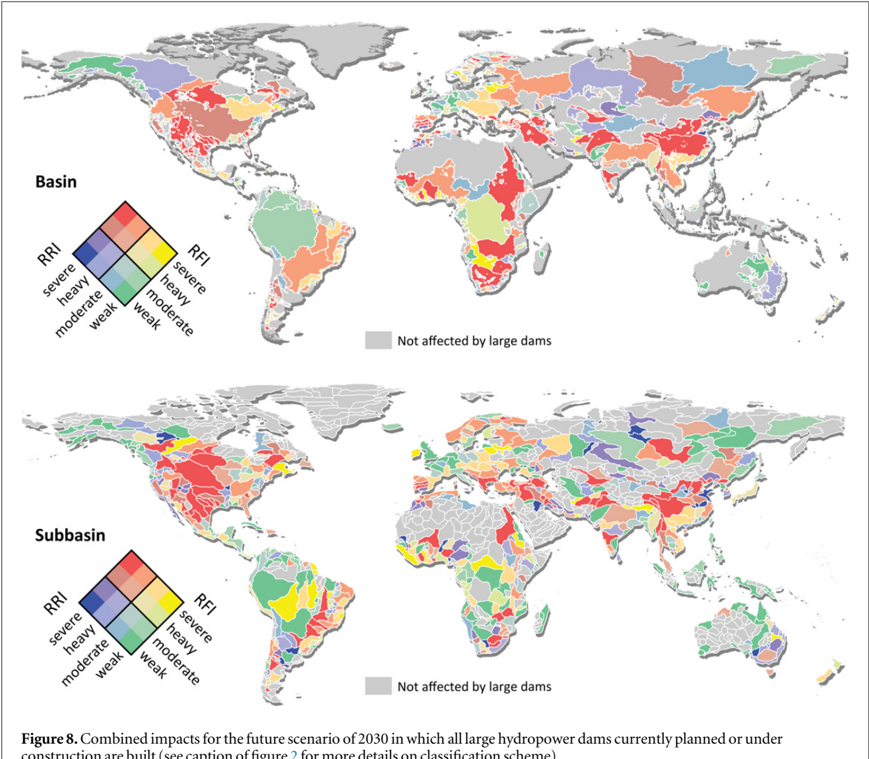
The global number of dam constructions has increased dramatically over the past six decades and is forecast to continue to rise, particularly in less industrialized regions. Identifying development pathways that can deliver the benefits of new infrastructure while also maintaining healthy and productive river systems is a great challenge that requires understanding the multifaceted impacts of dams at a range of scales. New approaches and advanced methodologies are needed to improve predictions of how future dam construction will affect biodiversity, ecosystem functioning, and fluvial geomorphology worldwide, helping to frame a global strategy to achieve sustainable dam development. Here, we respond to this need by applying a graph-based river routing model to simultaneously assess flow regulation and fragmentation by dams at multiple scales using data at high spatial resolution. We calculated the cumulative impact of a set of 6374 large existing dams and 3377 planned or proposed dams on river connectivity and river flow at basin and subbasin scales by fusing two novel indicators to create a holistic dam impact matrix for the period 1930–2030. Static network descriptors such as basin area or channel length are of limited use in hierarchically nested and dynamic river systems, so we developed the river fragmentation index and the river regulation index, which are based on river volume. These indicators are less sensitive to the effects of network configuration, offering increased comparability among studies with disparate hydrographies as well as across scales. Our results indicate that, on a global basis, 48% of river volume is moderately to severely impacted by either flow regulation, fragmentation, or both. Assuming completion of all dams planned and under construction in our future scenario, this number would nearly double to 93%, largely due to major dam construction in the Amazon Basin. We provide evidence for the importance of considering small to medium sized dams and for the need to include waterfalls to establish a baseline of natural fragmentation. Our versatile framework can serve as a component of river fragmentation and connectivity assessments; as a standardized, easily replicable monitoring framework at global and basin scales; and as part of regional dam planning and management strategies.
Overview
The claims and statistics of this paper haven’t been checked yet.
Free: it reads the open-access text and checks the first 5 claims that cite a source we can check. Create a free account to check every claim.
Integrity signals
Registry
Cites
Statistics
Figures
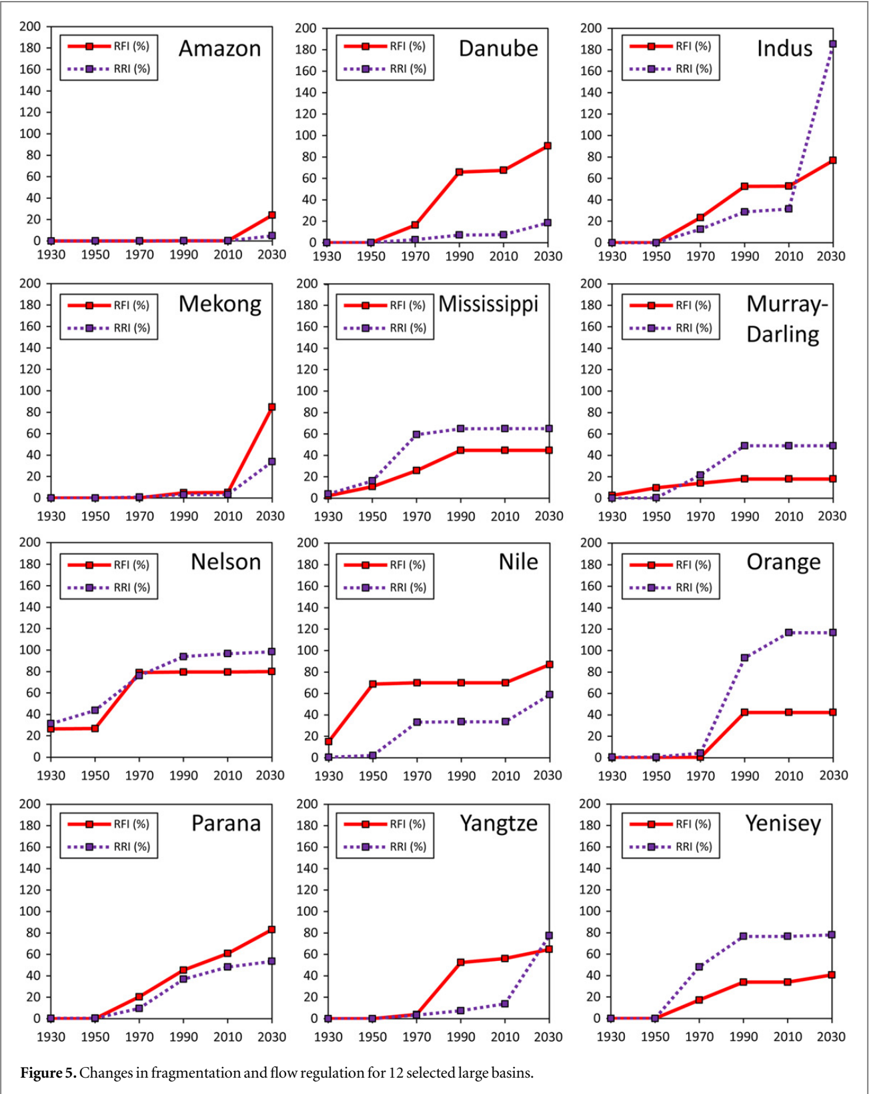
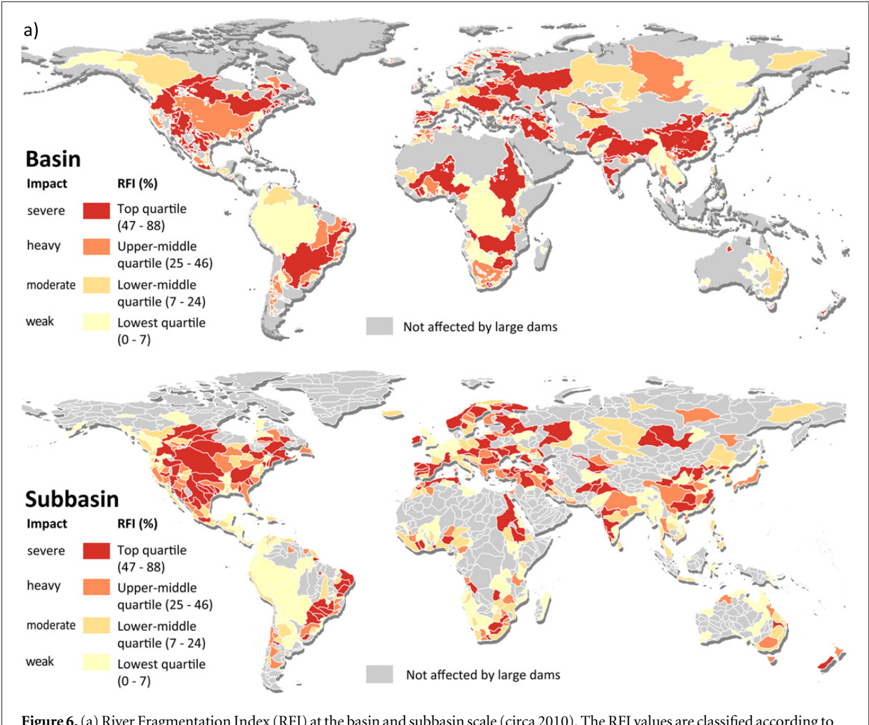
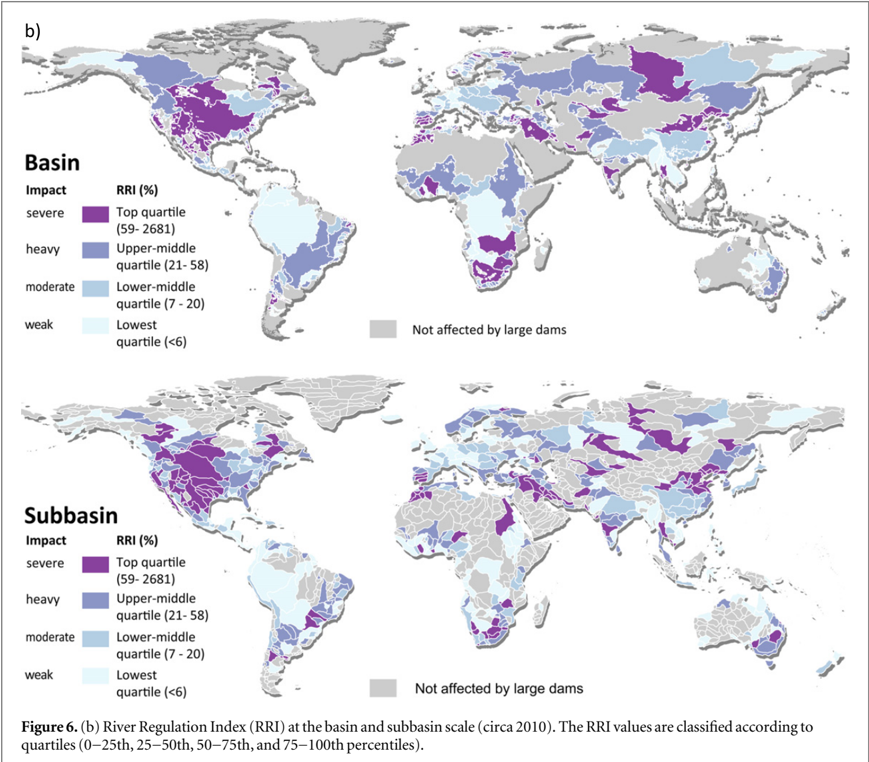
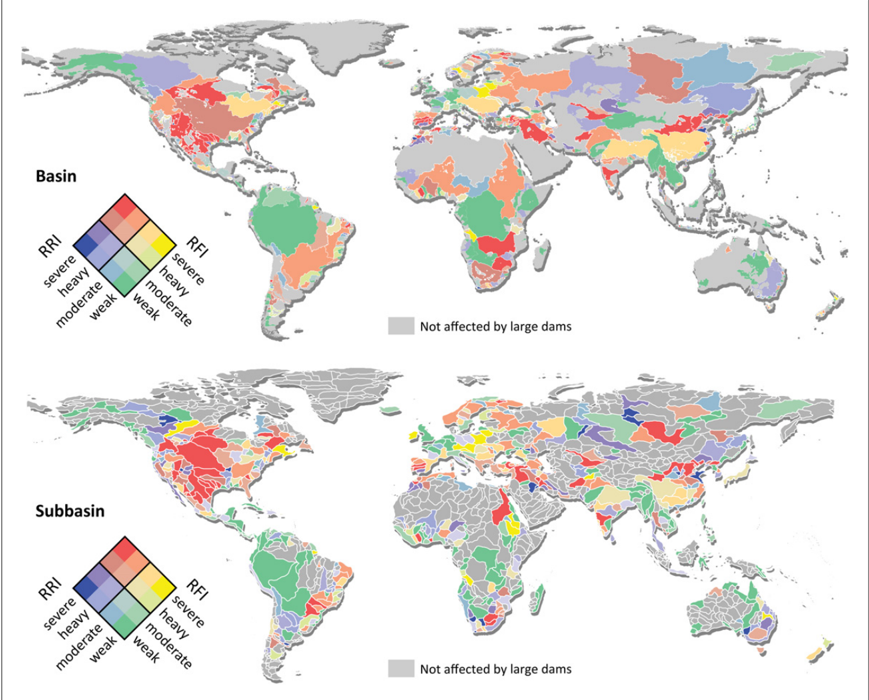
Verification
Claims the paper makes
The claims and statistics of this paper haven’t been checked yet.
Free: it reads the open-access text and checks the first 5 claims that cite a source we can check. Create a free account to check every claim.
Claims other papers make about this one
Each is checked against this paper’s own text: does it say what the citing paper says it does?
In the citing paper
“HydroSHEDS is a hydrographic mapping product that provides river and catchment information for regional and global-scale applications in a consistent format ( 26 ), including catchment areas and discharge estimates.”
From Mapping the world’s free-flowing rivers (2019) · cites this paper as [26]
Self-check
Percentages, sums and reported differences re-computed from the paper’s own numbers.
The self-check needs the paper’s full text.
Citations
Cites
Vannote, R. L., Minshall, G. W., Cummins, K. W., Sedell, J. R., & Cushing, C. E. (1980) · Canadian Journal of Fisheries and Aquatic Sciences · doi:10.1139/f80-017 · Cited by 9,984 · cited 2×
“Following Ward (1989), connectivity has a longitudinal aspect that connects upstream and downstream ecosystems (Vannote et al 1980), a lateral dimension by linking riverine systems with wetlands and floodplains (Tockner et al 1999), and a vertical component that connects surface water with…”
InfluentialGlobal threats to human water security and river biodiversity
Vörösmarty, C. J., McIntyre, P. B., Gessner, M. O., Dudgeon, D., Prusevich, A., Green, P., Glidden, S., Bunn, S. E., Sullivan, C. A., Liermann, C. R., et al. (2010) · Nature · doi:10.1038/nature09440 · Cited by 7,582
Poff, N. L., Allan, J. D., Bain, M. B., Karr, J. R., Prestegaard, K. L., Richter, B. D., Sparks, R. E., & Stromberg, J. C. (1997) · BioScience · doi:10.2307/1313099 · Cited by 6,500 · cited 1×
“…ecological functioning (Ward and Stanford 1995, Pringle et al 2000, Carlisle et al 2011), e.g., by reducing sediment delivery to floodplains and deltas (Syvitski et al 2009), altering thermal regimes (Poole and Berman 2001), or by disrupting life cycles of freshwater species (Poff et al 1997).”
Mackay, A. (2008) · Journal of Environmental Quality · doi:10.2134/jeq2008.0015br · Cited by 5,591
Fragmentation and Flow Regulation of the World's Large River Systems
Nilsson, C., Reidy, C. A., Dynesius, M., & Revenga, C. (2005) · Science · doi:10.1126/science.1107887 · Cited by 3,509 · cited 7×
“The DOR has in one form or another been a key component of seminal studies on flow regulation (e.g., Nilsson et al 2005) or has been analyzed in terms of the hydrologically equivalent ‘change in residence time’ or ‘water aging’ (e.g., Vörösmarty et al 1997).”
InfluentialBasic Principles and Ecological Consequences of Altered Flow Regimes for Aquatic Biodiversity
BUNN, S. E., & ARTHINGTON, A. H. (2002) · Environmental Management · doi:10.1007/s00267-002-2737-0 · Cited by 3,379
Parry, M. L., Canziani, O. F., de Strihou, J.-P. V. Y., & Palutikof, J. P. (2007) · Cited by 2,783
High‐resolution mapping of the world's reservoirs and dams for sustainable river‐flow management
Lehner, B., Liermann, C. R., Revenga, C., Vörösmarty, C., Fekete, B., Crouzet, P., Döll, P., Endejan, M., Frenken, K., Magome, J., et al. (2011) · Frontiers in Ecology and the Environment · doi:10.1890/100125 · Cited by 2,515 · cited 7×
“In order to compare our volumetric results to Lehner et al (2011)who focussed on river length, we calculated the volume of all reaches with DOR values ⩾2%, a threshold previously used to distinguish ‘affected’ rivers (Dynesius and Nilsson 1994, Nilsson et al 2005, Lehner et al 2011).”
InfluentialSelf-citationSinking deltas due to human activities
Syvitski, J. P. M., Kettner, A. J., Overeem, I., Hutton, E. W. H., Hannon, M. T., Brakenridge, G. R., Day, J., Vörösmarty, C., Saito, Y., Giosan, L., et al. (2009) · Nature Geoscience · doi:10.1038/ngeo629 · Cited by 2,465
A Method for Assessing Hydrologic Alteration within Ecosystems
Richter, B. D., Baumgartner, J. V., Powell, J., & Braun, D. P. (1996) · Conservation Biology · doi:10.1046/j.1523-1739.1996.10041163.x · Cited by 2,463 · cited 2×
“We believe that the proposed method and indicators can be applied inmultiple ways: as a standardized, easily replicable monitoring tool that provides comparable global and basin-scale indicators of changes and trends in support of international initiatives such as the Millennium Development Goals, the Global Biodivers…”
MethodNew Global Hydrography Derived from Spaceborne Elevation Data
Lehner, B., Verdin, K., & Jarvis, A. (2008) · Eos, Transactions American Geophysical Union · doi:10.1029/2008eo100001 · Cited by 2,411 · cited 2×
“Our framework combines global high resolution hydrographic data (Lehner et al 2008) with a graph- based river routing model (HydroROUT, Lehner and Grill 2013, Grill et al 2014).”
MethodSelf-citationLehner, B., & Grill, G. (2013) · Hydrological Processes · doi:10.1002/hyp.9740 · Cited by 2,193 · cited 6×
“Our framework combines global high resolution hydrographic data (Lehner et al 2008) with a graph- based river routing model (HydroROUT, Lehner and Grill 2013, Grill et al 2014).”
InfluentialSelf-citationA global boom in hydropower dam construction
Zarfl, C., Lumsdon, A. E., Berlekamp, J., Tydecks, L., & Tockner, K. (2015) · Aquatic Sciences · doi:10.1007/s00027-014-0377-0 · Cited by 2,181 · cited 4×
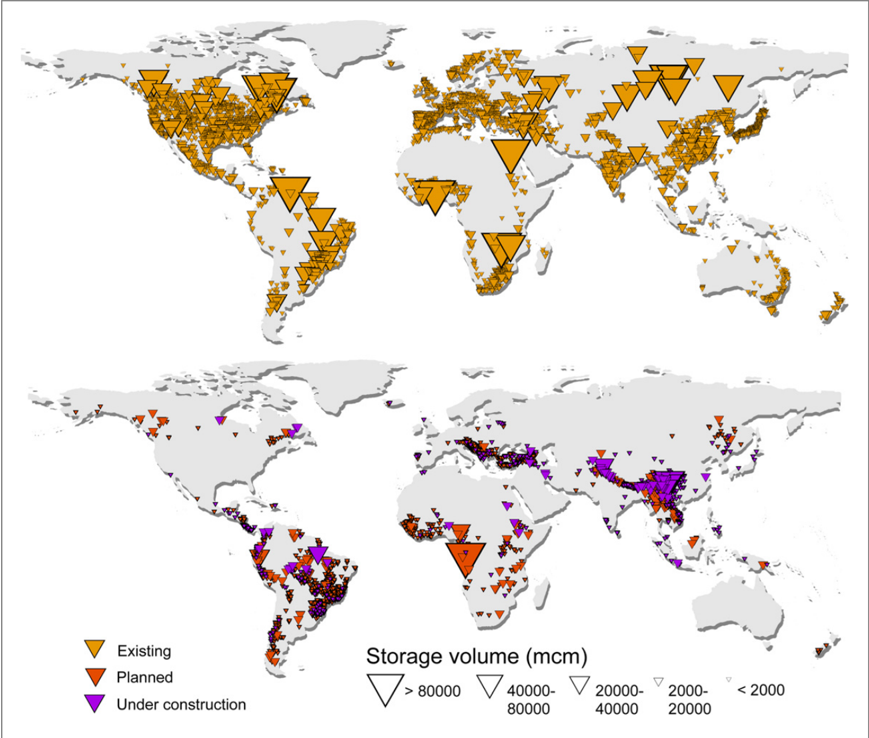
“We considered 6374 current dams from the GRanD database (Lehner et al 2011) and 3377 future hydropower dams compiled by Zarfl et al (2014) in our analysis (figure 1).”
InfluentialSelf-citationRiverine flood plains: present state and future trends
Tockner, K., & Stanford, J. A. (2002) · Environmental Conservation · doi:10.1017/s037689290200022x · Cited by 2,116 · cited 1×
“…impacts on the ecological integrity of aquatic systems and on the productivity of river systems that provide important resources for rural communities and regional economies (Tockner and Stanford 2002, Arthington et al 2010, Poff and Zimmerman 2010, Richter © 2015 IOPPublishing Ltd et al 2010).”
BackgroundPOFF, N. L., & ZIMMERMAN, J. K. H. (2010) · Freshwater Biology · doi:10.1111/j.1365-2427.2009.02272.x · Cited by 2,078 · cited 1×
“…impacts on the ecological integrity of aquatic systems and on the productivity of river systems that provide important resources for rural communities and regional economies (Tockner and Stanford 2002, Arthington et al 2010, Poff and Zimmerman 2010, Richter © 2015 IOPPublishing Ltd et al 2010).”
BackgroundAbell, R., Thieme, M. L., Revenga, C., Bryer, M., Kottelat, M., Bogutskaya, N., Coad, B., Mandrak, N., Balderas, S. C., Bussing, W., et al. (2008) · BioScience · doi:10.1641/b580507 · Cited by 2,045 · cited 1×
“As a step towards addressing this issue, Reidy Liermann et al (2012) measured the length of the longest undammed stretch of the five largest rivers in each ‘freshwater ecoregion’ (as defined by Abell et al 2008) to derive the percentage of freeflowing rivers.”
Fragmentation and Flow Regulation of River Systems in the Northern Third of the World
Dynesius, M., & Nilsson, C. (1994) · Science · doi:10.1126/science.266.5186.753 · Cited by 1,732 · cited 3×
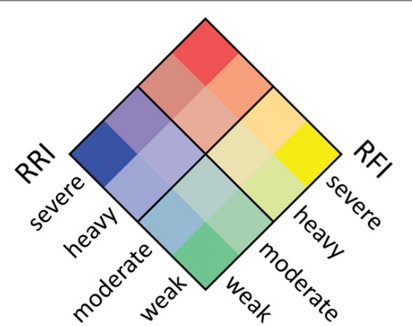
“Dam impactmatrix (DIM) Building upon previous concepts by Dynesius and Nilsson (1994), we assessed fragmentation and regulation effects simultaneously by creating an impactmatrix.”
POFF, N. L., RICHTER, B. D., ARTHINGTON, A. H., BUNN, S. E., NAIMAN, R. J., KENDY, E., ACREMAN, M., APSE, C., BLEDSOE, B. P., FREEMAN, M. C., et al. (2010) · Freshwater Biology · doi:10.1111/j.1365-2427.2009.02204.x · Cited by 1,595
Homogenization of regional river dynamics by dams and global biodiversity implications
Poff, N. L., Olden, J. D., Merritt, D. M., & Pepin, D. M. (2007) · Proceedings of the National Academy of Sciences · doi:10.1073/pnas.0609812104 · Cited by 1,461
Anthropogenic sediment retention: major global impact from registered river impoundments
Vörösmarty, C. J., Meybeck, M., Fekete, B., Sharma, K., Green, P., & Syvitski, J. P. M. (2003) · Global and Planetary Change · doi:10.1016/s0921-8181(03)00023-7 · Cited by 1,313
On the usage and measurement of landscape connectivity
Tischendorf, L., & Fahrig, L. (2000) · Oikos · doi:10.1034/j.1600-0706.2000.900102.x · Cited by 1,236 · cited 2×
“River fragmentation diminishes the natural connectivity within and among river systems (Tischendorf and Fahrig 2000,Moilanen andHanski 2001).”
The Four-Dimensional Nature of Lotic Ecosystems
Ward, J. V. (1989) · Journal of the North American Benthological Society · doi:10.2307/1467397 · Cited by 1,225 · cited 1×
“Following Ward (1989), connectivity has a longitudinal aspect that connects upstream and downstream ecosystems (Vannote et al 1980), a lateral dimension by linking riverine systems with wetlands and floodplains (Tockner et al 1999), and a vertical component that connects surface water with…”
BackgroundInfluentialA global hydrological model for deriving water availability indicators: model tuning and validation
Döll, P., Kaspar, F., & Lehner, B. (2003) · Journal of Hydrology · doi:10.1016/s0022-1694(02)00283-4 · Cited by 1,174
Self-citationWinterbourn, M., Fontaine, T. D., & Bartell, S. M. (1984) · The Journal of Ecology · doi:10.2307/2259560 · Cited by 1,070
Freshwater resources and their management
Kundzewicz, Z. W., Mata, L., Arnell, N. W., & Miller, K. A. (2007) · Cited by 975
Trading-off fish biodiversity, food security, and hydropower in the Mekong River Basin
Ziv, G., Baran, E., Nam, S., Rodríguez-Iturbe, I., & Levin, S. A. (2012) · Proceedings of the National Academy of Sciences · doi:10.1073/pnas.1201423109 · Cited by 945 · cited 1×
“…is particularly important for river ecology because of its relation to species migration and dispersal (Fukushima et al 2007, Cote et al 2009, Ziv et al 2012) as well as its role in community structure and biodiversity patterns in river channels (Altermatt 2013) and riparian zones (Jansson…”
BackgroundEcological connectivity in alluvial river ecosystems and its disruption by flow regulation
Ward, J. V., & Stanford, J. A. (1995) · Regulated Rivers: Research & Management · doi:10.1002/rrr.3450110109 · Cited by 942 · cited 1×
“These alterations can disrupt ecological functioning (Ward and Stanford 1995, Pringle et al 2000, Carlisle et al 2011), e.g., by reducing sediment delivery to floodplains and deltas (Syvitski et al 2009), altering thermal regimes (Poole and Berman 2001), or by disrupting life cycles of freshwater…”
BackgroundClimate change and the world's river basins: anticipating management options
Palmer, M. A., Reidy Liermann, C. A., Nilsson, C., Flörke, M., Alcamo, J., Lake, P. S., & Bond, N. (2008) · Frontiers in Ecology and the Environment · doi:10.1890/060148 · Cited by 934
The riverine ecosystem synthesis: biocomplexity in river networks across space and time
Thorp, J. H., Thoms, M. C., & Delong, M. D. (2006) · River Research and Applications · doi:10.1002/rra.901 · Cited by 919 · cited 1×
“The third challenge for dam impact assessments on large scales is that a river constitutes a continuum of habitat types with distinct ecohydrological properties from headwater to lowland rivers (Vannote et al 1980, Thorp and Delong 1994, Thorp et al 2006).”
BackgroundRiverine landscapes: taking landscape ecology into the water
WIENS, J. A. (2002) · Freshwater Biology · doi:10.1046/j.1365-2427.2002.00887.x · Cited by 912 · cited 1×
“Connectivity has been shown to be scale dependent (Kunin 1998, Tischendorf and Fahrig 2000, Fagan et al 2005), for example, due to different dispersal abilities of species (Wiens 2002).”
Development and testing of the WaterGAP 2 global model of water use and availability
ALCAMO, J., DÖLL, P., HENRICHS, T., KASPAR, F., LEHNER, B., RÖSCH, T., & SIEBERT, S. (2003) · Hydrological Sciences Journal · doi:10.1623/hysj.48.3.317.45290 · Cited by 877 · cited 1×
“Discharge values from the global hydrological model WaterGAP (Alcamo et al 2003, Döll et al 2003) were downscaled to HydroROUT’s river network using spatial interpolation methods.”
MethodSelf-citationPOOLE, G. C., & BERMAN, C. H. (2001) · Environmental Management · doi:10.1007/s002670010188 · Cited by 843 · cited 1×
“…ecological functioning (Ward and Stanford 1995, Pringle et al 2000, Carlisle et al 2011), e.g., by reducing sediment delivery to floodplains and deltas (Syvitski et al 2009), altering thermal regimes (Poole and Berman 2001), or by disrupting life cycles of freshwater species (Poff et al 1997).”
An Ecosystem Perspective of Alluvial Rivers: Connectivity and the Hyporheic Corridor
Stanford, J. A., & Ward, J. V. (1993) · Journal of the North American Benthological Society · doi:10.2307/1467685 · Cited by 809 · cited 1×
“…has a longitudinal aspect that connects upstream and downstream ecosystems (Vannote et al 1980), a lateral dimension by linking riverine systems with wetlands and floodplains (Tockner et al 1999), and a vertical component that connects surface water with groundwater flows (Stanford and Ward 1993).”
BackgroundThe serial discontinuity concept of lotic ecosystems
WARD, J. V., & Stanford, J. A. (1983) · Medical Entomology and Zoology · Cited by 792
Fish Community Structure and Function along Two Habitat Gradients in a Headwater Stream
Schlosser, I. J. (1982) · Ecological Monographs · doi:10.2307/2937352 · Cited by 694
What is hydrologic connectivity and why is it ecologically important?
Pringle, C. (2003) · Hydrological Processes · doi:10.1002/hyp.5145 · Cited by 666 · cited 1×
“We define connectivity from an ecological viewpoint with a focus on hydrology as ‘water-mediated transfer of matter, energy or organisms within or between elements of the hydrologic cycle’ (Pringle 2003).”
Landscape connectivity: A conservation application of graph theory
Bunn, A. G., Urban, D. L., & Keitt, T. H. (2000) · Journal of Environmental Management · doi:10.1006/jema.2000.0373 · Cited by 661
HYDROLOGIC CONNECTIVITY AND THE MANAGEMENT OF BIOLOGICAL RESERVES: A GLOBAL PERSPECTIVE
Pringle, C. M. (2001) · Ecological Applications · doi:10.1890/1051-0761(2001)011[0981:hcatmo]2.0.co;2 · Cited by 643 · cited 1×
“As a large-scale framework, our methodology could be used to minimize further exposure, for example, by identifying free-flowing river sections as part of a strategy to derive conservation targets or to design protected areas (Pringle 2001, Abell et al 2007, Thieme et al 2007).”
MethodImplications of Dam Obstruction for Global Freshwater Fish Diversity
Liermann, C. R., Nilsson, C., Robertson, J., & Ng, R. Y. (2012) · BioScience · doi:10.1525/bio.2012.62.6.5 · Cited by 634 · cited 3×
“In turn, thismay cause the loss of endemic species or the invasion of exotics (Bunn andArthington 2002), thereby reducing overall biodiversity (Poff et al 2007, Reidy Liermann et al 2012).”
Self-citationARTHINGTON, A. H., NAIMAN, R. J., McCLAIN, M. E., & NILSSON, C. (2010) · Freshwater Biology · doi:10.1111/j.1365-2427.2009.02340.x · Cited by 633
Tockner, K., Pennetzdorfer, D., Reiner, N., Schiemer, F., & Ward, J. V. (1999) · Freshwater Biology · doi:10.1046/j.1365-2427.1999.00399.x · Cited by 591
PRINGLE, C. M., FREEMAN, M. C., & FREEMAN, B. J. (2000) · BioScience · doi:10.1641/0006-3568(2000)050[0807:reohao]2.0.co;2 · Cited by 570
Thorp, J. H., & Delong, M. D. (1994) · Oikos · doi:10.2307/3545642 · Cited by 548 · cited 1×
“The third challenge for dam impact assessments on large scales is that a river constitutes a continuum of habitat types with distinct ecohydrological properties from headwater to lowland rivers (Vannote et al 1980, Thorp and Delong 1994, Thorp et al 2006).”
BackgroundUnlocking the potential of protected areas for freshwaters
Abell, R., Allan, J. D., & Lehner, B. (2007) · Biological Conservation · doi:10.1016/j.biocon.2006.08.017 · Cited by 540 · cited 1×
“As a large-scale framework, our methodology could be used to minimize further exposure, for example, by identifying free-flowing river sections as part of a strategy to derive conservation targets or to design protected areas (Pringle 2001, Abell et al 2007, Thieme et al 2007).”
MethodSelf-citationThe role of hydrochory in structuring riparian and wetland vegetation
Nilsson, C., Brown, R. L., Jansson, R., & Merritt, D. M. (2010) · Biological Reviews · doi:10.1111/j.1469-185x.2010.00129.x · Cited by 530
Finer, M., & Jenkins, C. N. (2012) · PLoS ONE · doi:10.1371/journal.pone.0035126 · Cited by 525 · cited 2×
“%) in the subbasin upstream of the Madeira tributary, but these are still considered a substantial change (see Finer and Jenkins 2012).”
Lost in Development's Shadow: The Downstream Human Consequences of Dams
Richter, B. D., Postel, S. L., Revenga, C., Scudder, T., Lehner, B., Churchill, A., & Chow, M. (2010) · DOAJ (DOAJ: Directory of Open Access Journals) · Cited by 524
Self-citationThe storage and aging of continental runoff in large reservoir systems of the world
Voeroesmarty, C. J., Sharma, K. P., Fekete, B. M., Copeland, A. H., Holden, J., & Marble, J. (1997) · AMBIO · Cited by 414
Species‐Area Relationship for Stream Fishes
Angermeier, P. L., & Schlosser, I. J. (1989) · Ecology · doi:10.2307/1938204 · Cited by 411 · cited 1×
“Habitat volume predict species richness better than habitat area (Angermeier and Schlosser 1989, Magalhaes et al 2002) and certain fish species are particularly sensitive to variations of habitat volume as a result of reduced dam releases that diminished habitat availability (Shea and Peterson…”
A new measure of longitudinal connectivity for stream networks
Cote, D., Kehler, D. G., Bourne, C., & Wiersma, Y. F. (2009) · Landscape Ecology · doi:10.1007/s10980-008-9283-y · Cited by 405 · cited 4×
“New concepts such as the dendritic connectivity index (DCI, Cote et al 2009) and the river connectivity index (RCI, Grill et al 2014) are graphbased models that avoid intense computations through simplified connectivity indices.”
InfluentialHuman water consumption intensifies hydrological drought worldwide
Wada, Y., van Beek, L. P. H., Wanders, N., & Bierkens, M. F. P. (2013) · Environmental Research Letters · doi:10.1088/1748-9326/8/3/034036 · Cited by 397
A comparison-shopper's guide to connectivity metrics
Calabrese, J. M., & Fagan, W. F. (2004) · Frontiers in Ecology and the Environment · doi:10.1890/1540-9295(2004)002[0529:acgtcm]2.0.co;2 · Cited by 394 · cited 1×
“Since dispersal ability is highly variable or often unknown, multiple scales should be examined (Calabrese and Fagan 2004).”
Diversity in riverine metacommunities: a network perspective
Altermatt, F. (2013) · Aquatic Ecology · doi:10.1007/s10452-013-9450-3 · Cited by 385 · cited 1×
“…important for river ecology because of its relation to species migration and dispersal (Fukushima et al 2007, Cote et al 2009, Ziv et al 2012) as well as its role in community structure and biodiversity patterns in river channels (Altermatt 2013) and riparian zones (Jansson et al 2000).”
Döll, P., & Schmied, H. M. (2012) · Environmental Research Letters · doi:10.1088/1748-9326/7/1/014037 · Cited by 381
Hydrological connectivity for riverine fish: measurement challenges and research opportunities
FULLERTON, A. H., BURNETT, K. M., STEEL, E. A., FLITCROFT, R. L., PESS, G. R., FEIST, B. E., TORGERSEN, C. E., MILLER, D. J., & SANDERSON, B. L. (2010) · Freshwater Biology · doi:10.1111/j.1365-2427.2010.02448.x · Cited by 379 · cited 2×
“River networks have a strong hierarchical nesting structure (Fullerton et al 2010), so advanced dam assessment frameworks should be capable of accommodating nested spatial scales within larger basins.”
Moving Headwater Streams to the Head of the Class
LOWE, W. H., & LIKENS, G. E. (2005) · BioScience · doi:10.1641/0006-3568(2005)055[0196:mhstth]2.0.co;2 · Cited by 348 · cited 1×
“If river length is used, low level stream orders (first- and second-order streams) can add disproportionately large amounts of river length to the network (>70% of rivers are headwater streams; Lowe and Likens 2005), yet their contribution to volume is small.”
On the use of connectivity measures in spatial ecology
Moilanen, A., & Hanski, I. (2001) · Oikos · doi:10.1034/j.1600-0706.2001.950116.x · Cited by 341
Special Issue: Environmental flows: science and management.
Arthington, A. H., Naiman, R. J., McClain, M. E., & Nilsson, C. (2010) · Griffith Research Online (Griffith University, Queensland, Australia) · Cited by 338
Carlisle, D. M., Wolock, D. M., & Meador, M. R. (2011) · Frontiers in Ecology and the Environment · doi:10.1890/100053 · Cited by 319 · cited 1×
“These alterations can disrupt ecological functioning (Ward and Stanford 1995, Pringle et al 2000, Carlisle et al 2011), e.g., by reducing sediment delivery to floodplains and deltas (Syvitski et al 2009), altering thermal regimes (Poole and Berman 2001), or by disrupting life cycles of freshwater…”
Extrapolating Species Abundance Across Spatial Scales
Kunin, W. E. (1998) · Science · doi:10.1126/science.281.5382.1513 · Cited by 306 · cited 2×
“Connectivity has been shown to be scale dependent (Kunin 1998, Tischendorf and Fahrig 2000, Fagan et al 2005), for example, due to different dispersal abilities of species (Wiens 2002).”
Large-scale impacts of hydroelectric development
Rosenberg, D. M., Berkes, F., Bodaly, R. A., Hecky, R. E., Kelly, C. A., & Rudd, J. W. (1997) · Environmental Reviews · doi:10.1139/a97-001 · Cited by 282 · cited 1×
“Permanent dam disruption of river systems can have effects from species to ecosystem levels and from local to global scales (Rosenberg et al 1997).”
BackgroundFRAGMENTATION OF RIPARIAN FLORAS IN RIVERS WITH MULTIPLE DAMS
Jansson, R., Nilsson, C., & Renöfält, B. (2000) · Ecology · doi:10.1890/0012-9658(2000)081[0899:forfir]2.0.co;2 · Cited by 208 · cited 1×
“…important for river ecology because of its relation to species migration and dispersal (Fukushima et al 2007, Cote et al 2009, Ziv et al 2012) as well as its role in community structure and biodiversity patterns in river channels (Altermatt 2013) and riparian zones (Jansson et al 2000).”
Addressing longitudinal connectivity in the systematic conservation planning of fresh waters
HERMOSO, V., LINKE, S., PRENDA, J., & POSSINGHAM, H. P. (2011) · Freshwater Biology · doi:10.1111/j.1365-2427.2009.02390.x · Cited by 194
Directed connectivity among fish populations in a riverine network
SCHICK, R. S., & LINDLEY, S. T. (2007) · Journal of Applied Ecology · doi:10.1111/j.1365-2664.2007.01383.x · Cited by 179
Grill, G., Ouellet Dallaire, C., Fluet Chouinard, E., Sindorf, N., & Lehner, B. (2014) · Ecological Indicators · doi:10.1016/j.ecolind.2014.03.026 · Cited by 179
Self-citationNetwork thinking in riverscape conservation – A graph-based approach
Erős, T., Schmera, D., & Schick, R. S. (2010) · Biological Conservation · doi:10.1016/j.biocon.2010.08.013 · Cited by 177 · cited 1×
“These new approaches take into account network structure (Bunn et al 2000, Erős et al 2011) and utilize newly developed hydrographical data (Lehner and Grill 2013).”
GOING WITH THE FLOW: USING SPECIES–DISCHARGE RELATIONSHIPS TO FORECAST LOSSES IN FISH BIODIVERSITY
Xenopoulos, M. A., & Lodge, D. M. (2006) · Ecology · doi:10.1890/0012-9658(2006)87[1907:gwtfus]2.0.co;2 · Cited by 176 · cited 1×
“River volume may more adequately represent freshwater habitat space and aquatic biodiversity, assuming that larger rivers generally have a greater opportunity for more heterogeneous habitats that fosters greater overall biodiversity (Xenopoulos and Lodge 2006).”
BackgroundMagalhães, M. F., Beja, P. R., Canas, C., & Collares‐Pereira, M. J. (2002) · Freshwater Biology · doi:10.1046/j.1365-2427.2002.00941.x · Cited by 169
Modelling the effects of dams on freshwater fish distributions in Hokkaido, Japan
Fukushima, M., Kameyama, S., Kaneko, M., Nakao, K., & Steel, E. A. (2007) · Freshwater Biology · doi:10.1111/j.1365-2427.2007.01783.x · Cited by 164 · cited 1×
“Longitudinal connectivity is particularly important for river ecology because of its relation to species migration and dispersal (Fukushima et al 2007, Cote et al 2009, Ziv et al 2012) as well as its role in community structure and biodiversity patterns in river channels (Altermatt 2013) and…”
Thieme, M. L., Lehner, B., Abell, R., Hamilton, S. K., Kellndorfer, J., Powell, G. V. N., & Riveros, J. C. (2007) · Biological Conservation · doi:10.1016/j.biocon.2006.10.054 · Cited by 160
Self-citation100 years of California’s water rights system: patterns, trends and uncertainty
Grantham, T. E., & Viers, J. H. (2014) · Environmental Research Letters · doi:10.1088/1748-9326/9/8/084012 · Cited by 150
Torrente‐Vilara, G., Zuanon, J. A. S., Leprieur, F., Oberdorff, T., & Tedesco, P. A. (2011) · Ecology Of Freshwater Fish · doi:10.1111/j.1600-0633.2011.00508.x · Cited by 149
Natural fragmentation in river networks as a driver of speciation for freshwater fishes
Dias, M. S., Cornu, J., Oberdorff, T., Lasso, C. A., & Tedesco, P. A. (2012) · Ecography · doi:10.1111/j.1600-0587.2012.07724.x · Cited by 131 · cited 1×
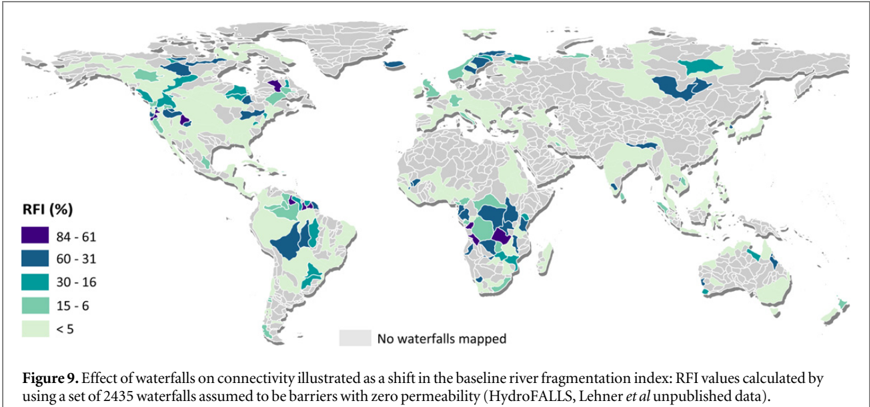
“Natural barriers, such as waterfalls, could have similar consequences for river network connectivity as dams (Torrente-Vilara et al 2011, Dias et al 2013); although they also have unique characteristics such as typically allowing for greater permeability for species in the downstream direction.”
Open rivers: Barrier removal planning and the restoration of free-flowing rivers
O’Hanley, J. R. (2011) · Journal of Environmental Management · doi:10.1016/j.jenvman.2011.07.027 · Cited by 126
RARITY, FRAGMENTATION, AND THE SCALE DEPENDENCE OF EXTINCTION RISK IN DESERT FISHES
Fagan, W. F., Aumann, C., Kennedy, C. M., & Unmack, P. J. (2005) · Ecology · doi:10.1890/04-0491 · Cited by 105 · cited 2×
“Connectivity has been shown to be scale dependent (Kunin 1998, Tischendorf and Fahrig 2000, Fagan et al 2005), for example, due to different dispersal abilities of species (Wiens 2002).”
Evolutionary dynamics and fixation probabilities in directed networks
Masuda, N., & Ohtsuki, H. (2009) · New Journal of Physics · doi:10.1088/1367-2630/11/3/033012 · Cited by 84
Grizzetti, B., Passy, P., Billen, G., Bouraoui, F., Garnier, J. A., & Lassaletta, L. (2015) · Environmental Research Letters · doi:10.1088/1748-9326/10/6/065008 · Cited by 82
Lassalle, G., Crouzet, P., & Rochard, É. (2008) · Freshwater Biology · doi:10.1111/j.1365-2427.2008.02135.x · Cited by 72
Ward, P. J., Strzepek, K. M., Pauw, P., Brander, L., Hughes, G. A., & Aerts, J. C. J. H. (2010) · Environmental Research Letters · doi:10.1088/1748-9326/5/4/044011 · Cited by 59
The costs of uncoordinated infrastructure management in multi-reservoir river basins
Jeuland, M., Baker, J. S., Bartlett, R., & Lacombe, G. (2014) · Environmental Research Letters · doi:10.1088/1748-9326/9/10/105006 · Cited by 52
A GIS based approach for prioritizing dams for potential removal
Hoenke, K., Kumar, M., & Batt, L. (2014) · Ecological Engineering · doi:10.1016/j.ecoleng.2013.12.009 · Cited by 48 · cited 1×
“With an increasing number of dams becoming dysfunctional due to sedimentation, our framework could also inform regional dam removal strategies by prioritizing which dams would potentially provide the biggest benefit if removed (O’Hanley 2011,Hoenke et al 2014).”
Anderson, E. P., Pringle, C. M., & Freeman, M. C. (2007) · Aquatic Conservation Marine and Freshwater Ecosystems · doi:10.1002/aqc.882 · Cited by 44
Shea, C. P., & Peterson, J. T. (2007) · Transactions of the American Fisheries Society · doi:10.1577/t06-165.1 · Cited by 37 · cited 1×
“…volume predict species richness better than habitat area (Angermeier and Schlosser 1989, Magalhaes et al 2002) and certain fish species are particularly sensitive to variations of habitat volume as a result of reduced dam releases that diminished habitat availability (Shea and Peterson 2007).”
BackgroundNitrogen management challenges in major watersheds of South America
Bustamante, M., Martinelli, L. A., Pérez, T., Rasse, R., Ometto, J. P., Pacheco, F. S., Lins, S. R. M., & Marquina, S. (2015) · Environmental Research Letters · doi:10.1088/1748-9326/10/6/065007 · Cited by 33
Response lags and environmental dynamics of restoration efforts for Lake Rotorua, New Zealand
Mueller, H., Hamilton, D. P., & Doole, G. J. (2015) · Environmental Research Letters · doi:10.1088/1748-9326/10/7/074003 · Cited by 22
Maddock, I. P., Smolar‐Žvanut, N., & Hill, G. (2008) · IOP Conference Series Earth and Environmental Science · doi:10.1088/1755-1307/4/1/012026 · Cited by 17
Research works printed but not linked: 3
- ICPDR, 2009, Danube River Basin District Management Plan. Part A—Basin-wide overview.
- Ostroff A, Wieferich D, Cooper A and Infante D M 2013 National Anthropogenic Barrier Dataset (NABD) (Denver, CO: United States Geological Service (USGS) Aquatic GAP Program)
- Vörösmarty C J, 1997, AMBIO: J. Hum. Environ., 26, 210
Cited by
Emerging threats and persistent conservation challenges for freshwater biodiversity
Reid, A. J., Carlson, A. K., Creed, I. F., Eliason, E. J., Gell, P. A., Johnson, P. T. J., Kidd, K. A., MacCormack, T. J., Olden, J. D., Ormerod, S. J., et al. (2019) · Biological Reviews · doi:10.1111/brv.12480 · Cited by 3,645
“%) of global river volume is altered by flow regulation and/or fragmentation (Grill et al. , 2015).”
BackgroundMapping the world’s free-flowing rivers
Grill, G., Lehner, B., Thieme, M., Geenen, B., Tickner, D., Antonelli, F., Babu, S., Borrelli, P., Cheng, L., Crochetiere, H., et al. (2019) · Nature · doi:10.1038/s41586-019-1111-9 · Cited by 2,473
Self-citationBalancing hydropower and biodiversity in the Amazon, Congo, and Mekong
Winemiller, K. O., McIntyre, P. B., Castello, L., Fluet-Chouinard, E., Giarrizzo, T., Nam, S., Baird, I. G., Darwall, W., Lujan, N. K., Harrison, I., et al. (2016) · Science · doi:10.1126/science.aac7082 · Cited by 1,569
Self-citationAnthropogenic stresses on the world’s big rivers
Best, J. (2019) · Nature Geoscience · doi:10.1038/s41561-018-0262-x · Cited by 1,315
River dam impacts on biogeochemical cycling
Maavara, T., Chen, Q., Van Meter, K., Brown, L. E., Zhang, J., Ni, J., & Zarfl, C. (2020) · Nature Reviews Earth & Environment · doi:10.1038/s43017-019-0019-0 · Cited by 839
Self-citation
Metadata
- Authors
- Grill, G., Lehner, B., Lumsdon, A. E., MacDonald, G. K., Zarfl, C., & Reidy Liermann, C.
- Affiliations
- McGill University (CA)
- Leibniz Institute of Freshwater Ecology and Inland Fisheries (DE)
- University of Minnesota (US)
- Venue
- Environmental Research Letters
- Publisher
- IOP Publishing
- Published
- 2015-01-01
- Volume
- 10
- Issue
- 1
- Pages
- 015001
- ISSN
- 1748-9326 (ISSN-L)
- OpenAlex
- W2098921456
- Semantic Scholar
- e33c1b1aab65d6db9b2cac33ab424a011f8b3258
- Cited by
- 646
- References
- 86
- Citations by year
- 2026: 37 · 2025: 46 · 2024: 68 · 2023: 66 · 2022: 100 · 2021: 107 · 2020: 75 · 2019: 48 · 2018: 40 · 2017: 28 · 2016: 20 · 2015: 11
- FWCI
- 34.21
- Type
- journal article
- Language
- en
- Open access
- gold
- doi.org
- Licence
- cc-by
- iopscience.iop.org/info/page/text-and-data-mining (tdm, 5 d)
- creativecommons.org/licenses/by/3.0/ (vor, 5 d)
- Locations
- Environmental Research Letters (publishedVersion, cc-by)
- DOAJ (DOAJ: Directory of Open Access Journals) (submittedVersion)
- Refubium (Universitätsbibliothek der Freien Universität Berlin) (submittedVersion, cc-by)
- Universitätsbibliothek der FU Berlin Hochschulschriftenstelle u. Dokumentenserver (cc-by)
- Funders
- Gordon and Betty Moore Foundation
- World Wildlife Fund
- McGill University
- Nature Conservancy
- WWF International
- Natural Sciences and Engineering Research Council of Canada
- Topics
- Physical Sciences › Environmental Science › Nature and Landscape Conservation › Fish Ecology and Management Studies
- Physical Sciences › Earth and Planetary Sciences › Earth-Surface Processes › Hydrology and Sediment Transport Processes
- Physical Sciences › Environmental Science › Water Science and Technology › Water resources management and optimization
- Keywords
- dam impacts, river fragmentation, flow regulation, river connectivity, dam planning, Amazon basin, waterfalls
About these checks
Registry, retraction, Cites and statistics results are computed, not judged, with one exception: a printed reference that no index lists is read once by a model before it counts as a citation error. Claims are extracted by a model and kept only when their quote appears verbatim in the text; each cited source is then checked, with a model’s help, for whether it says what the claim relies on. Those verdicts can be wrong — read the claim’s quote and the cited source before relying on one.
Statistics and arithmetic are recomputed, not judged.
Confidence bands are shown only for fields calibrated on our annotated test set. None is calibrated yet, so no band is shown.
What counts as a claim ›How we measure confidence ›How we check this ›
Are you an author, or do you see a problem with this page? Request a review
Data sources
Bibliographic data: Semantic Scholar, OpenAlex, Crossref.
Contains information from the Semantic Scholar Academic Graph Datasets, made available under the ODC Attribution License (ODC-BY 1.0).
Semantic Scholar’s data is described in: Kinney, R., et al. (2023). The Semantic Scholar Open Data Platform. arXiv:2301.10140.
