

An index-based framework for assessing patterns and trends in river fragmentation and flow regulation by global dams at multiple scales
Open accessThe DOI matches its Crossref record; 86 of the 86 references it cites were found in a registry or an index.
Abstract
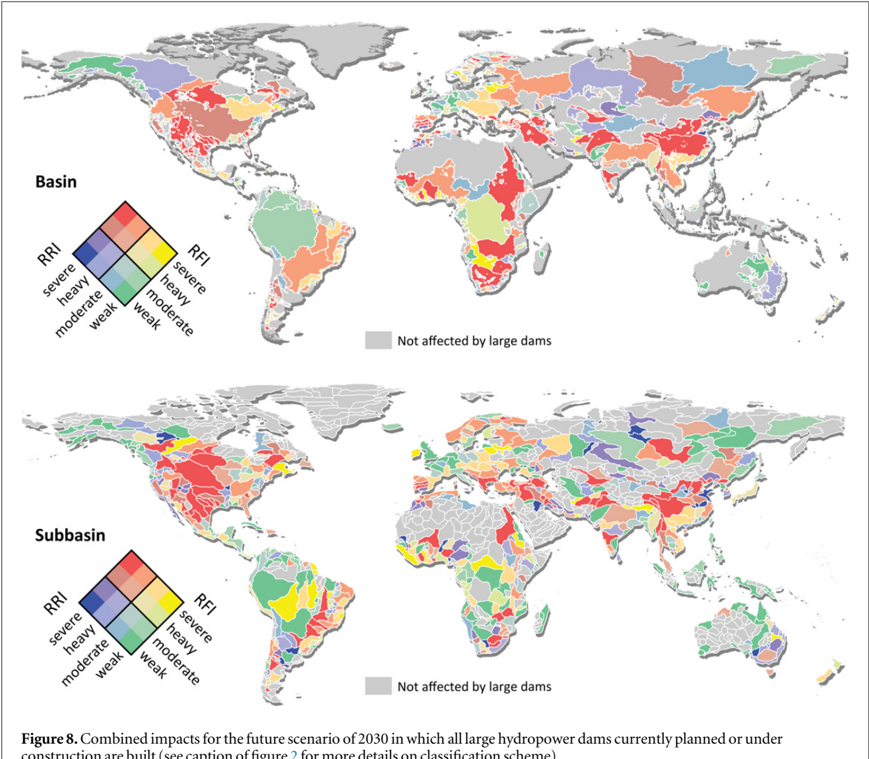
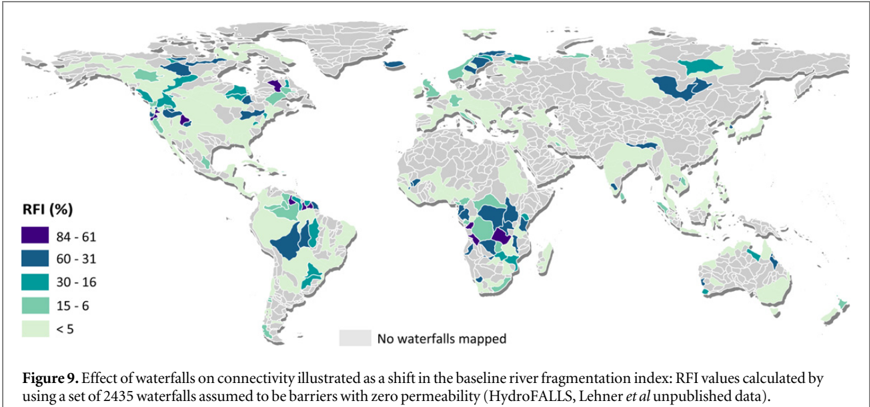
The global number of dam constructions has increased dramatically over the past six decades and is forecast to continue to rise, particularly in less industrialized regions. Identifying development pathways that can deliver the benefits of new infrastructure while also maintaining healthy and productive river systems is a great challenge that requires understanding the multifaceted impacts of dams at a range of scales. New approaches and advanced methodologies are needed to improve predictions of how future dam construction will affect biodiversity, ecosystem functioning, and fluvial geomorphology worldwide, helping to frame a global strategy to achieve sustainable dam development. Here, we respond to this need by applying a graph-based river routing model to simultaneously assess flow regulation and fragmentation by dams at multiple scales using data at high spatial resolution. We calculated the cumulative impact of a set of 6374 large existing dams and 3377 planned or proposed dams on river connectivity and river flow at basin and subbasin scales by fusing two novel indicators to create a holistic dam impact matrix for the period 1930–2030. Static network descriptors such as basin area or channel length are of limited use in hierarchically nested and dynamic river systems, so we developed the river fragmentation index and the river regulation index, which are based on river volume. These indicators are less sensitive to the effects of network configuration, offering increased comparability among studies with disparate hydrographies as well as across scales. Our results indicate that, on a global basis, 48% of river volume is moderately to severely impacted by either flow regulation, fragmentation, or both. Assuming completion of all dams planned and under construction in our future scenario, this number would nearly double to 93%, largely due to major dam construction in the Amazon Basin. We provide evidence for the importance of considering small to medium sized dams and for the need to include waterfalls to establish a baseline of natural fragmentation. Our versatile framework can serve as a component of river fragmentation and connectivity assessments; as a standardized, easily replicable monitoring framework at global and basin scales; and as part of regional dam planning and management strategies.
Overview
The claims and statistics of this paper haven’t been checked yet.
Free: it reads the open-access text and checks the first 5 claims that cite a source we can check. Create a free account to check every claim.
Integrity signals
Registry
Cites
Statistics
Figures
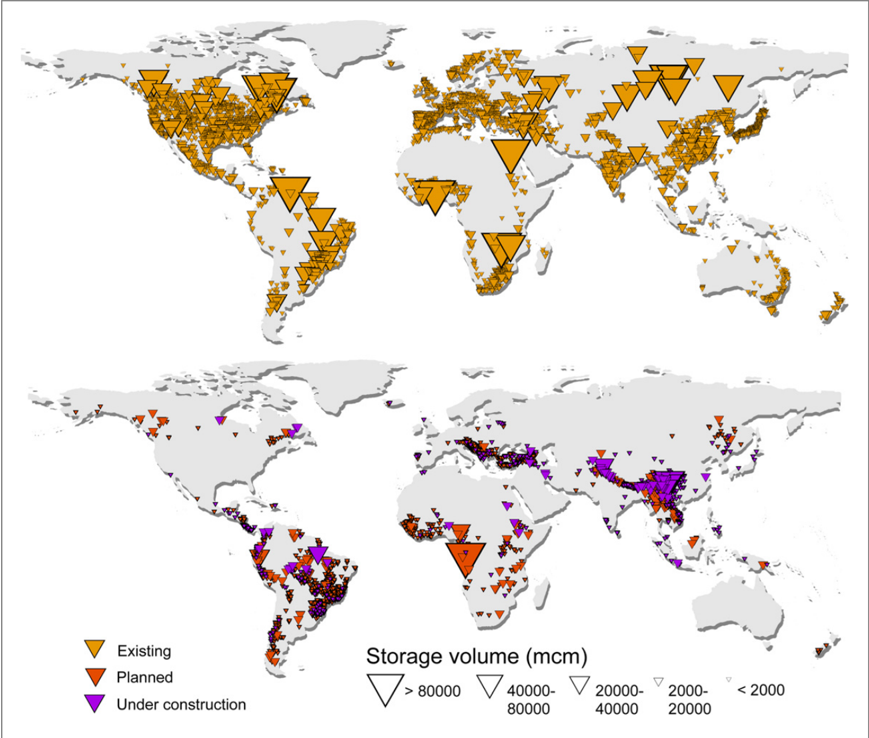
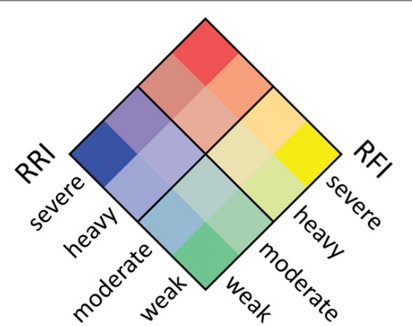
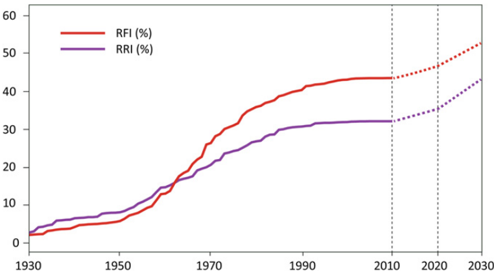
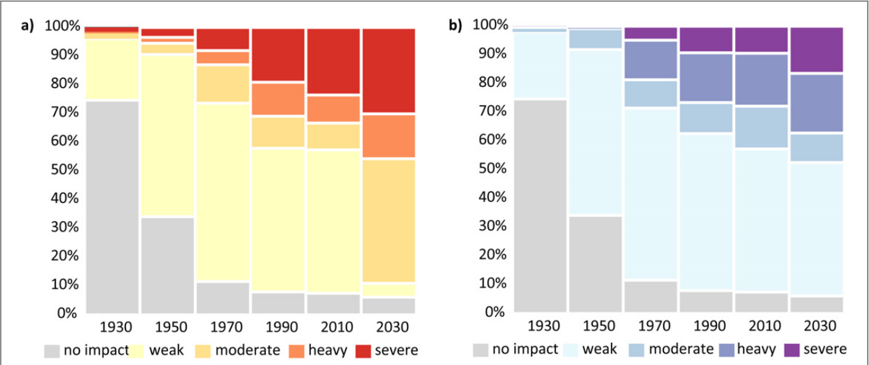
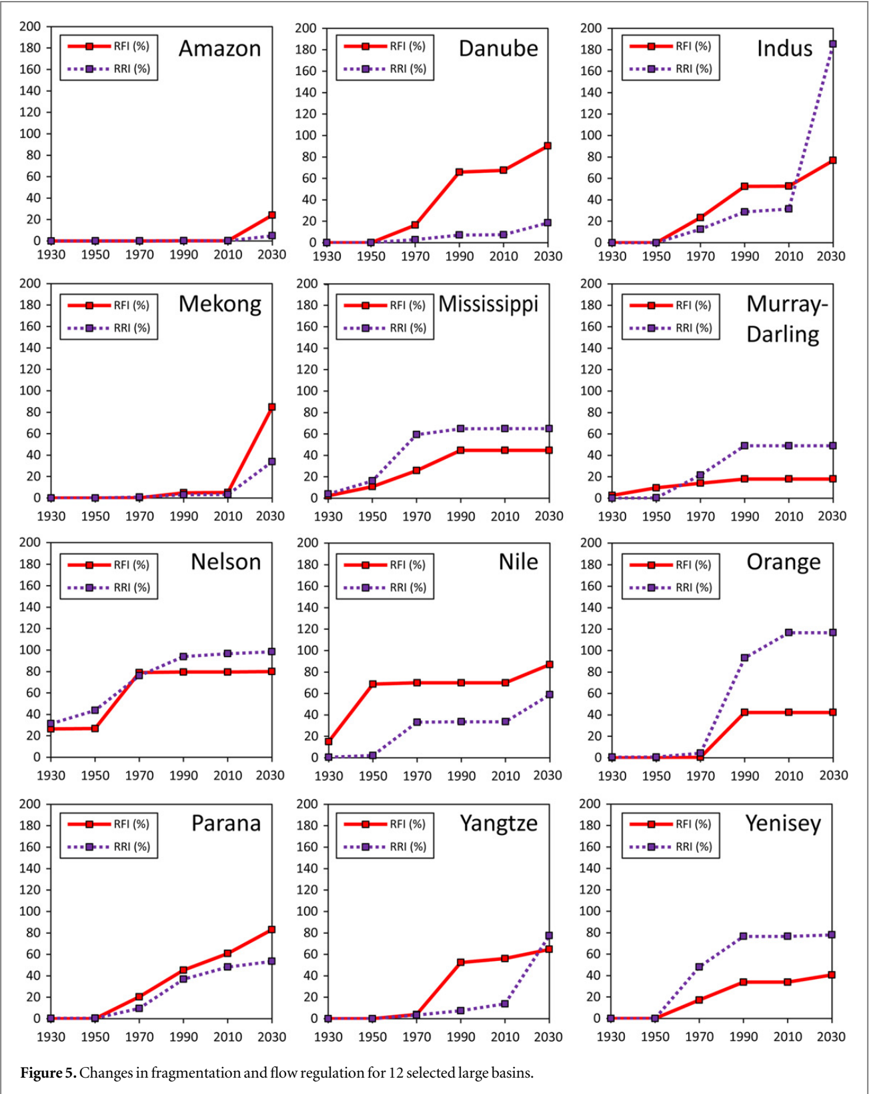
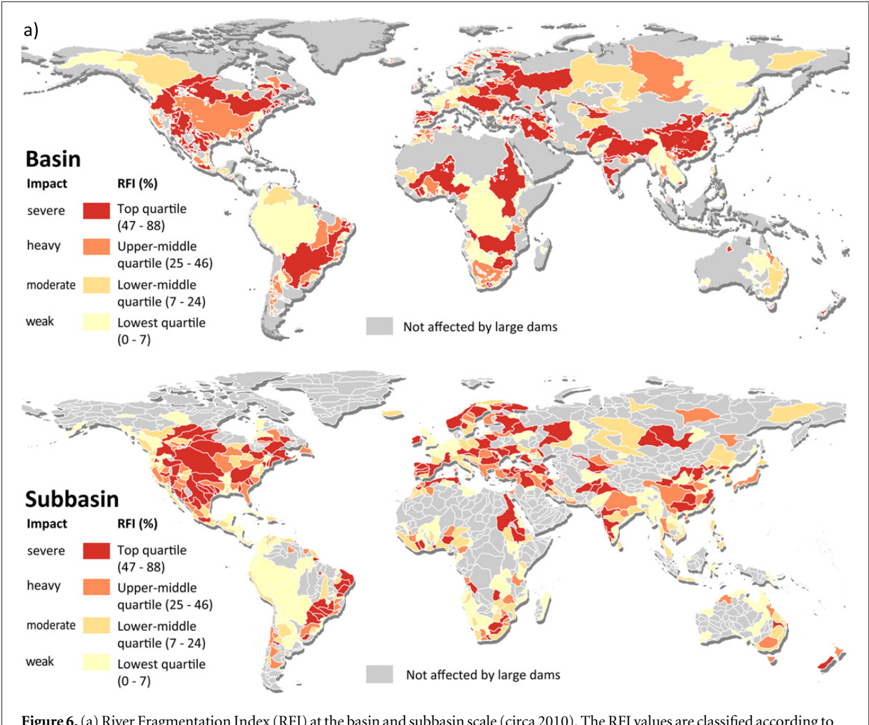
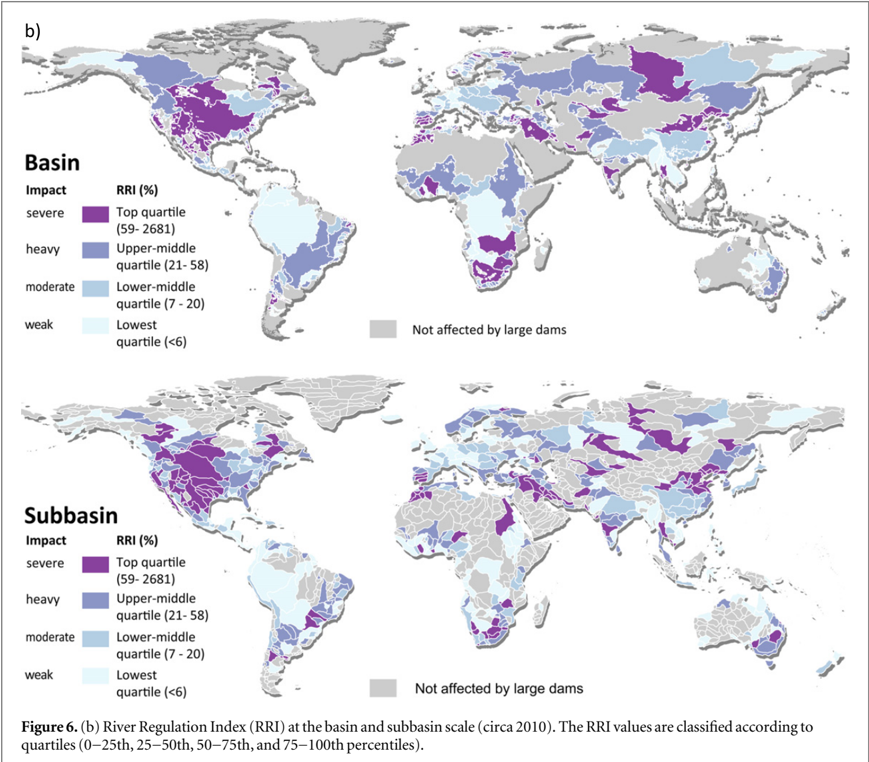
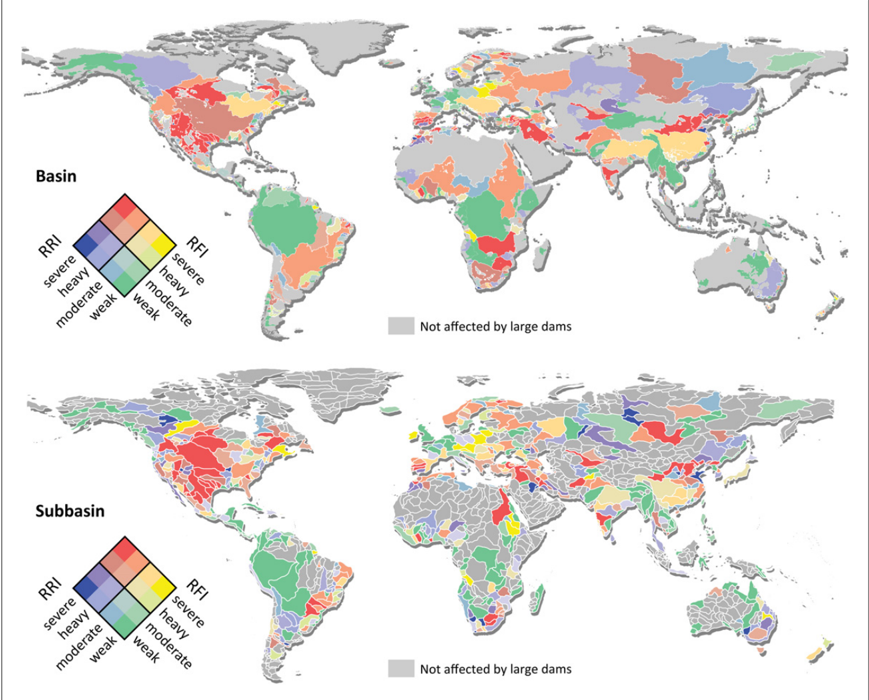
Verification
Claims the paper makes
The claims and statistics of this paper haven’t been checked yet.
Free: it reads the open-access text and checks the first 5 claims that cite a source we can check. Create a free account to check every claim.
Claims other papers make about this one
Each is checked against this paper’s own text: does it say what the citing paper says it does?
In the citing paper
“HydroSHEDS is a hydrographic mapping product that provides river and catchment information for regional and global-scale applications in a consistent format ( 26 ), including catchment areas and discharge estimates.”
From Mapping the world’s free-flowing rivers (2019) · cites this paper as [26]
Self-check
Percentages, sums and reported differences re-computed from the paper’s own numbers.
The self-check needs the paper’s full text.
Citations
Cites
Vannote, R. L., Minshall, G. W., Cummins, K. W., Sedell, J. R., & Cushing, C. E. (1980) · Canadian Journal of Fisheries and Aquatic Sciences · doi:10.1139/f80-017 · Cited by 9,984 · cited 2×
“Following Ward (1989), connectivity has a longitudinal aspect that connects upstream and downstream ecosystems (Vannote et al 1980), a lateral dimension by linking riverine systems with wetlands and floodplains (Tockner et al 1999), and a vertical component that connects surface water with…”
InfluentialGlobal threats to human water security and river biodiversity
Vörösmarty, C. J., McIntyre, P. B., Gessner, M. O., Dudgeon, D., Prusevich, A., Green, P., Glidden, S., Bunn, S. E., Sullivan, C. A., Liermann, C. R., et al. (2010) · Nature · doi:10.1038/nature09440 · Cited by 7,582
Poff, N. L., Allan, J. D., Bain, M. B., Karr, J. R., Prestegaard, K. L., Richter, B. D., Sparks, R. E., & Stromberg, J. C. (1997) · BioScience · doi:10.2307/1313099 · Cited by 6,500 · cited 1×
“…ecological functioning (Ward and Stanford 1995, Pringle et al 2000, Carlisle et al 2011), e.g., by reducing sediment delivery to floodplains and deltas (Syvitski et al 2009), altering thermal regimes (Poole and Berman 2001), or by disrupting life cycles of freshwater species (Poff et al 1997).”
Mackay, A. (2008) · Journal of Environmental Quality · doi:10.2134/jeq2008.0015br · Cited by 5,591
Fragmentation and Flow Regulation of the World's Large River Systems
Nilsson, C., Reidy, C. A., Dynesius, M., & Revenga, C. (2005) · Science · doi:10.1126/science.1107887 · Cited by 3,509 · cited 7×
“The DOR has in one form or another been a key component of seminal studies on flow regulation (e.g., Nilsson et al 2005) or has been analyzed in terms of the hydrologically equivalent ‘change in residence time’ or ‘water aging’ (e.g., Vörösmarty et al 1997).”
InfluentialBasic Principles and Ecological Consequences of Altered Flow Regimes for Aquatic Biodiversity
BUNN, S. E., & ARTHINGTON, A. H. (2002) · Environmental Management · doi:10.1007/s00267-002-2737-0 · Cited by 3,379
Parry, M. L., Canziani, O. F., de Strihou, J.-P. V. Y., & Palutikof, J. P. (2007) · Cited by 2,783
High‐resolution mapping of the world's reservoirs and dams for sustainable river‐flow management
Lehner, B., Liermann, C. R., Revenga, C., Vörösmarty, C., Fekete, B., Crouzet, P., Döll, P., Endejan, M., Frenken, K., Magome, J., et al. (2011) · Frontiers in Ecology and the Environment · doi:10.1890/100125 · Cited by 2,515 · cited 7×
“In order to compare our volumetric results to Lehner et al (2011)who focussed on river length, we calculated the volume of all reaches with DOR values ⩾2%, a threshold previously used to distinguish ‘affected’ rivers (Dynesius and Nilsson 1994, Nilsson et al 2005, Lehner et al 2011).”
InfluentialSelf-citationSinking deltas due to human activities
Syvitski, J. P. M., Kettner, A. J., Overeem, I., Hutton, E. W. H., Hannon, M. T., Brakenridge, G. R., Day, J., Vörösmarty, C., Saito, Y., Giosan, L., et al. (2009) · Nature Geoscience · doi:10.1038/ngeo629 · Cited by 2,465
A Method for Assessing Hydrologic Alteration within Ecosystems
Richter, B. D., Baumgartner, J. V., Powell, J., & Braun, D. P. (1996) · Conservation Biology · doi:10.1046/j.1523-1739.1996.10041163.x · Cited by 2,463 · cited 2×
“We believe that the proposed method and indicators can be applied inmultiple ways: as a standardized, easily replicable monitoring tool that provides comparable global and basin-scale indicators of changes and trends in support of international initiatives such as the Millennium Development Goals, the Global Biodivers…”
Method
Research works printed but not linked: 3
- ICPDR, 2009, Danube River Basin District Management Plan. Part A—Basin-wide overview.
- Ostroff A, Wieferich D, Cooper A and Infante D M 2013 National Anthropogenic Barrier Dataset (NABD) (Denver, CO: United States Geological Service (USGS) Aquatic GAP Program)
- Vörösmarty C J, 1997, AMBIO: J. Hum. Environ., 26, 210
Cited by
Emerging threats and persistent conservation challenges for freshwater biodiversity
Reid, A. J., Carlson, A. K., Creed, I. F., Eliason, E. J., Gell, P. A., Johnson, P. T. J., Kidd, K. A., MacCormack, T. J., Olden, J. D., Ormerod, S. J., et al. (2019) · Biological Reviews · doi:10.1111/brv.12480 · Cited by 3,645
“%) of global river volume is altered by flow regulation and/or fragmentation (Grill et al. , 2015).”
BackgroundMapping the world’s free-flowing rivers
Grill, G., Lehner, B., Thieme, M., Geenen, B., Tickner, D., Antonelli, F., Babu, S., Borrelli, P., Cheng, L., Crochetiere, H., et al. (2019) · Nature · doi:10.1038/s41586-019-1111-9 · Cited by 2,473
Self-citationBalancing hydropower and biodiversity in the Amazon, Congo, and Mekong
Winemiller, K. O., McIntyre, P. B., Castello, L., Fluet-Chouinard, E., Giarrizzo, T., Nam, S., Baird, I. G., Darwall, W., Lujan, N. K., Harrison, I., et al. (2016) · Science · doi:10.1126/science.aac7082 · Cited by 1,569
Self-citationAnthropogenic stresses on the world’s big rivers
Best, J. (2019) · Nature Geoscience · doi:10.1038/s41561-018-0262-x · Cited by 1,315
River dam impacts on biogeochemical cycling
Maavara, T., Chen, Q., Van Meter, K., Brown, L. E., Zhang, J., Ni, J., & Zarfl, C. (2020) · Nature Reviews Earth & Environment · doi:10.1038/s43017-019-0019-0 · Cited by 839
Self-citationDamming the rivers of the Amazon basin
Latrubesse, E. M., Arima, E. Y., Dunne, T., Park, E., Baker, V. R., d’Horta, F. M., Wight, C., Wittmann, F., Zuanon, J., Baker, P. A., et al. (2017) · Nature · doi:10.1038/nature22333 · Cited by 838
The Global Food‐Energy‐Water Nexus
D'Odorico, P., Davis, K. F., Rosa, L., Carr, J. A., Chiarelli, D., Dell'Angelo, J., Gephart, J., MacDonald, G. K., Seekell, D. A., Suweis, S., et al. (2018) · Reviews of Geophysics · doi:10.1029/2017rg000591 · Cited by 796
“…of river systems, which can disrupt the movement of organisms and sediment, whereas water storage associated with dam operations regulates river flow, which can alter geomorphic processes and disrupt ecological functions both upstream and downstream (e.g., Grill et al., 2015; Nilsson et al., 2005).”
BackgroundSelf-citationMultiple threats imperil freshwater biodiversity in the Anthropocene
Dudgeon, D. (2019) · Current Biology · doi:10.1016/j.cub.2019.08.002 · Cited by 779
Living Planet Report 2018: Aiming Higher
Barrett, M., Belward, A. S., Bladen, S., Breeze, T. D., Burgess, N. D., Butchart, S. H. M., Clewclow, H., Cornell, S., Cottam, A., Croft, S., et al. (2018) · IIASA PURE (International Institute of Applied Systems Analysis) · Cited by 622
Sustainable water management under future uncertainty with eco-engineering decision scaling
Poff, N. L., Brown, C. M., Grantham, T. E., Matthews, J. H., Palmer, M. A., Spence, C. M., Wilby, R. L., Haasnoot, M., Mendoza, G. F., Dominique, K. C., et al. (2016) · Nature Climate Change · doi:10.1038/nclimate2765 · Cited by 520
Pickens, A. H., Hansen, M. C., Hancher, M., Stehman, S. V., Tyukavina, A., Potapov, P., Marroquin, B., & Sherani, Z. (2020) · Remote Sensing of Environment · doi:10.1016/j.rse.2020.111792 · Cited by 512
Barbarossa, V., Schmitt, R. J. P., Huijbregts, M. A. J., Zarfl, C., King, H., & Schipper, A. M. (2020) · Proceedings of the National Academy of Sciences · doi:10.1073/pnas.1912776117 · Cited by 496
“Existing global assessments have focused on mapping river connectivity, but without quantifying impacts on freshwater biodiversity (5, 10, 14).”
Self-citationHarmful algae at the complex nexus of eutrophication and climate change
Glibert, P. M. (2020) · Harmful Algae · doi:10.1016/j.hal.2019.03.001 · Cited by 491
Global phosphorus retention by river damming
Maavara, T., Parsons, C. T., Ridenour, C., Stojanovic, S., Dürr, H. H., Powley, H. R., & Van Cappellen, P. (2015) · Proceedings of the National Academy of Sciences · doi:10.1073/pnas.1511797112 · Cited by 485
“Current and near-future damming hotspots include western China, the Himalayas and Andes, Brazil, Southeast Asia, and the Balkans, where collectively more than 3,000 major hydropower dams (>1-MW generating capacity) are under construction or planned (2, 3).”
BackgroundInfluentialThe Brisbane Declaration and Global Action Agenda on Environmental Flows (2018)
Arthington, A. H., Bhaduri, A., Bunn, S. E., Jackson, S. E., Tharme, R. E., Tickner, D., Young, B., Acreman, M., Baker, N., Capon, S., et al. (2018) · Frontiers in Environmental Science · doi:10.3389/fenvs.2018.00045 · Cited by 473
“Globally, 48% of river volume is moderately to severely impacted by either flow regulation, fragmentation, or both, and this proportion will nearly double if all dams planned and under construction are completed (Grill et al., 2015).”
BackgroundGOODD, a global dataset of more than 38,000 georeferenced dams
Mulligan, M., van Soesbergen, A., & Sáenz, L. (2020) · Scientific Data · doi:10.1038/s41597-020-0362-5 · Cited by 457
Global perturbation of organic carbon cycling by river damming
Maavara, T., Lauerwald, R., Regnier, P., & Van Cappellen, P. (2017) · Nature Communications · doi:10.1038/ncomms15347 · Cited by 447
“Note that equations (8) and (9) are formally similar to the equation derived by Vollenweider46 to describe phosphorus cycling in lakes, though scaled with ai and bi to account for the separation of loss fluxes into mineralization and burial, rather than lumped together as in Vollenweider’s derivation.”
MethodResultHydropower and the future of Amazonian biodiversity
Lees, A. C., Peres, C. A., Fearnside, P. M., Schneider, M., & Zuanon, J. A. S. (2016) · Biodiversity and Conservation · doi:10.1007/s10531-016-1072-3 · Cited by 372
“Biodiversity impacts may be lessened in these areas, which may already be ‘naturally fragmented’ by waterfalls (Grill et al. 2015) although the cumulative environmental impacts of many small dams are still considerable (see e.”
BackgroundTurtles and Tortoises Are in Trouble
Stanford, C. B., Iverson, J. B., Rhodin, A. G. J., Paul van Dijk, P., Mittermeier, R. A., Kuchling, G., Berry, K. H., Bertolero, A., Bjorndal, K. A., Blanck, T. E. G., et al. (2020) · Current Biology · doi:10.1016/j.cub.2020.04.088 · Cited by 369
“At least 48% of the global river volume has been altered by flow regulation or fragmentation by impoundment structures [54].”
BackgroundSlater, L. J., Anderson, B., Buechel, M., Dadson, S., Han, S., Harrigan, S., Kelder, T., Kowal, K., Lees, T., Matthews, T., et al. (2021) · Hydrology and Earth System Sciences · doi:10.5194/hess-25-3897-2021 · Cited by 357
Kondolf, G. M., Schmitt, R. J. P., Carling, P., Darby, S., Arias, M., Bizzi, S., Castelletti, A., Cochrane, T. A., Gibson, S., Kummu, M., et al. (2018) · Science of The Total Environment · doi:10.1016/j.scitotenv.2017.11.361 · Cited by 320
The global decline of freshwater megafauna
He, F., Zarfl, C., Bremerich, V., David, J. N. W., Hogan, Z., Kalinkat, G., Tockner, K., & Jähnig, S. C. (2019) · Global Change Biology · doi:10.1111/gcb.14753 · Cited by 283
“For example, approximately 3,700 additional large hydropower dams are planned or under construction, increasing the fragmentation of rivers worldwide (Grill et al., 2015, 2019; Zarfl, Lumsdon, Berlekamp, Tydecks, & Tockner, 2015).”
BackgroundSelf-citationRiverine Ecosystem Management: Science for Governing Towards a Sustainable Future
(2018) · Springer eBooks · doi:10.1007/978-3-319-73250-3 · Cited by 277
Dunn, F. E., Darby, S. E., Nicholls, R. J., Cohen, S., Zarfl, C., & Fekete, B. M. (2019) · Environmental Research Letters · doi:10.1088/1748-9326/ab304e · Cited by 213
Self-citationNatural infrastructure in sustaining global urban freshwater ecosystem services
Chung, M. G., Frank, K. A., Pokhrel, Y., Dietz, T., & Liu, J. (2021) · Nature Sustainability · doi:10.1038/s41893-021-00786-4 · Cited by 212
Dams: Ecological Impacts and Management
Schmutz, S., & Moog, O. (2018) · Springer eBooks · doi:10.1007/978-3-319-73250-3_6 · Cited by 208
“Impacts might double should all planned dams be constructed by 2030 (Grill et al. 2015).”
BackgroundRiver Damming Impacts on Fish Habitat and Associated Conservation Measures
Chen, Q., Li, Q., Lin, Y., Zhang, J., Xia, J., Ni, J., Cooke, S. J., Best, J., He, S., Feng, T., et al. (2023) · Reviews of Geophysics · doi:10.1029/2023rg000819 · Cited by 183
Future large hydropower dams impact global freshwater megafauna
Zarfl, C., Berlekamp, J., He, F., Jähnig, S. C., Darwall, W., & Tockner, K. (2019) · Scientific Reports · doi:10.1038/s41598-019-54980-8 · Cited by 182
Self-citationTamario, C., Sunde, J., Petersson, E., Tibblin, P., & Forsman, A. (2019) · Frontiers in Ecology and Evolution · doi:10.3389/fevo.2019.00271 · Cited by 182
“Damming is one of the most widespread environmental alterations of river ecosystems, affecting about half of all large river systems globally (Nilsson et al., 2005; Grill et al., 2015).”
BackgroundExisting and new arrangements of pumped-hydro storage plants
Hunt, J. D., Zakeri, B., Lopes, R., Barbosa, P. S. F., Nascimento, A., Castro, N. J. D., Brandão, R., Schneider, P. S., & Wada, Y. (2020) · Renewable and Sustainable Energy Reviews · doi:10.1016/j.rser.2020.109914 · Cited by 181
“Run-of-the-river SPHS plants can store water from a main river, without the need to 250 dam the river (Figure 5), thus, reducing social and environmental impacts [37,64].”
Sustainable Development, Poverty Eradication and Reducing Inequalities
(2022) · Global Warming of 1.5°C · doi:10.1017/9781009157940.007 · Cited by 178
Bending the curve of global freshwater biodiversity loss: what are the prospects?
Dudgeon, D. L., & Strayer, D. L. (2024) · Biological reviews/Biological reviews of the Cambridge Philosophical Society · doi:10.1111/brv.13137 · Cited by 181
Reducing adverse impacts of Amazon hydropower expansion
Flecker, A. S., Shi, Q., Almeida, R. M., Angarita, H., Gomes-Selman, J. M., García-Villacorta, R., Sethi, S. A., Thomas, S. A., Poff, N. L., Forsberg, B. R., et al. (2022) · Science · doi:10.1126/science.abj4017 · Cited by 176
Rivers in the Anthropocene: Global scale modifications of riverine nutrient fluxes by damming
Van Cappellen, P., & Maavara, T. (2016) · Ecohydrology & Hydrobiology · doi:10.1016/j.ecohyd.2016.04.001 · Cited by 170
“Within the next decades, dams will moderately to severely impact flow conditions in almost all major rivers on earth (Grill et al., 2015).”
BackgroundInfluentialResource subsidies between stream and terrestrial ecosystems under global change
Larsen, S., Muehlbauer, J. D., & Marti, E. (2016) · Global Change Biology · doi:10.1111/gcb.13182 · Cited by 159
“…from the global boom in dam hydropower development (Zarfl et al., 2015), and a major research effort is needed to quantify the entrainment and burial of terrestrial carbon subsidies in reservoirs (Cole et al., 2007), for example using a modelling approach at the network scale (Grill et al., 2015).”
MethodEisner, S., Flörke, M., Chamorro, A., Daggupati, P., Donnelly, C., Huang, J., Hundecha, Y., Koch, H., Kalugin, A., Krylenko, I. N., et al. (2017) · Climatic Change · doi:10.1007/s10584-016-1844-5 · Cited by 157
“In many regions of the world, the natural flow regime is already significantly altered by human activity through e.g. flow regulation, water abstraction and transfer, and land-use change (Döll et al. 2009; Grill et al. 2015).”
BackgroundRiver network connectivity and fish diversity
Shao, X., Fang, Y., Jawitz, J. W., Yan, J., & Cui, B. (2019) · The Science of The Total Environment · doi:10.1016/j.scitotenv.2019.06.340 · Cited by 155
Landscape changes and their hydrologic effects: Interactions and feedbacks across scales
Stephens, C. M., Lall, U., Johnson, F. M., & Marshall, L. A. (2020) · Earth-Science Reviews · doi:10.1016/j.earscirev.2020.103466 · Cited by 155
Schmitt, R., Bizzi, S., Castelletti, A. F., Opperman, J. J., & Kondolf, G. M. (2019) · Science Advances · doi:10.1126/sciadv.aaw2175 · Cited by 148
Carbon dynamics of river corridors and the effects of human alterations
Wohl, E., Hall, R. O., Lininger, K. B., Sutfin, N. A., & Walters, D. (2017) · Ecological Monographs · doi:10.1002/ecm.1261 · Cited by 147
“The most recent global syntheses of dams (Nilsson et al. 2005b, Lehner et al. 2011, Grill et al. 2015) indicate that most of the world’s major river basins have at least some degree of flow regulation.”
BackgroundDams have varying impacts on fish communities across latitudes: a quantitative synthesis
Turgeon, K., Turpin, C., & Gregory‐Eaves, I. (2019) · Ecology Letters · doi:10.1111/ele.13283 · Cited by 141
The first emergence of unprecedented global water scarcity in the Anthropocene
Ravinandrasana, V. P., & Franzke, C. L. E. (2025) · Nature Communications · doi:10.1038/s41467-025-63784-6 · Cited by 142
“The GRanD database version 1.3 was used due to its highly adaptable geodatabase that offers expanded attribute coverage and spatial precision, making it possible to implement regional or global analysis at unprecedented spatial resolution 73 – 75 .”
InfluentialIntegrative assessment of river damming impacts on aquatic fauna in a Portuguese reservoir
Santos, R. M. B., Fernandes, L. F. S., Cortes, R., Varandas, S. D. G. P., Jesus, J., & Pacheco, F. A. L. (2017) · The Science of The Total Environment · doi:10.1016/j.scitotenv.2017.05.255 · Cited by 131
“Taken altogether, disruption of connectivity, eutrophication, reduction of autochthonous fauna, introduction of exotic species, hypolimnetic discharges, sediment accumulation and alteration of hydrologic regimen and water composition, are considered prime threats of river regulation to the integrity of aquatic ecosyst…”
BackgroundStreamflow droughts aggravated by human activities despite management
Loon, A. F. V., Rangecroft, S., Coxon, G., Werner, M., Wanders, N., Baldassarre, G. D., Tijdeman, E., Bosman, M., Gleeson, T., Nauditt, A., et al. (2022) · Environmental Research Letters · doi:10.1088/1748-9326/ac5def · Cited by 133
A comprehensive assessment of stream fragmentation in Great Britain
Jones, J., Börger, L., Tummers, J., Jones, P., Lucas, M., Kerr, J., Kemp, P., Bizzi, S., Consuegra, S., Marcello, L., et al. (2019) · Science of The Total Environment · doi:10.1016/j.scitotenv.2019.04.125 · Cited by 125
Siala, K., Chowdhury, K., Dang, T. D., & Galelli, S. (2021) · Nature Communications · doi:10.1038/s41467-021-24437-6 · Cited by 125
Contribution of human and climate change impacts to changes in streamflow of Canada
Tan, X., & Gan, T. Y. (2015) · Scientific Reports · doi:10.1038/srep17767 · Cited by 123
“Following Yang, et al. 48 , Equation (2) was expanded by Taylor’s series to estimate errors associated with using a first-order approximation for estimating streamflow change.”
InfluentialHunt, J. D., Byers, E. A., Riahi, K., & Langan, S. (2018) · Energy Conversion and Management · doi:10.1016/j.enconman.2018.04.044 · Cited by 122
“Ecosystem fragmentation impacts the river’s 255 fauna and flora biodiversity and river’s nutrients concentration [68].”
BackgroundThresholds of lake and reservoir connectivity in river networks control nitrogen removal
Schmadel, N. M., Harvey, J. W., Alexander, R. B., Schwarz, G. E., Moore, R. B., Eng, K., Gomez‐Velez, J. D., Boyer, E. W., & Scott, D. (2018) · Nature Communications · doi:10.1038/s41467-018-05156-x · Cited by 122
Effects of Damming on River Nitrogen Fluxes: A Global Analysis
Akbarzadeh, Z., Maavara, T., Slowinski, S., & Cappellen, P. V. (2019) · Global Biogeochemical Cycles · doi:10.1029/2019gb006222 · Cited by 124
The natural flow regime: A master variable for maintaining river ecosystem health
Sofi, M. S., Bhat, S. U., Rashid, I., & Kuniyal, J. C. (2020) · Ecohydrology · doi:10.1002/eco.2247 · Cited by 122
Keskinen, M., Someth, P., Salmivaara, A., & Kummu, M. (2015) · Water · doi:10.3390/w7105416 · Cited by 120
“As a result, while the Tonle Sap system forms an important source of local and national food security, its food production capacity is threatened by one of the most intensive hydropower development plans in the world [28].”
BackgroundGudmundsson, L., Greve, P., & Seneviratne, S. I. (2016) · Geophysical Research Letters · doi:10.1002/2016gl069763 · Cited by 116
“, 2015], or the construction of reservoirs and dams [e.g., Döll et al., 2009; Destouni et al., 2013; Grill et al., 2015].”
BackgroundJumani, S., Deitch, M. J., Kaplan, D., Anderson, E. P., Krishnaswamy, J., Lecours, V., & Whiles, M. R. (2020) · Environmental Research Letters · doi:10.1088/1748-9326/abcb37 · Cited by 116
The evolution of dam induced river fragmentation in the United States
Spinti, R. A., Condon, L. E., & Zhang, J. (2023) · Nature Communications · doi:10.1038/s41467-023-39194-x · Cited by 117
Zhu, G., Liu, Y., Shi, P., Jia, W., Zhou, J., Liu, Y., Ma, X., Pan, H., Zhang, Y., Zhang, Z., et al. (2022) · Earth system science data · doi:10.5194/essd-14-3773-2022 · Cited by 114
Dam and reservoir removal projects: a mix of social-ecological trends and cost-cutting attitudes
Habel, M., Mechkin, K., Podgórska, K., Saunes, M., Babiński, Z., Chalov, S., Absalon, D., Podgórski, Z., & Obolewski, K. (2020) · Scientific Reports · doi:10.1038/s41598-020-76158-3 · Cited by 110
Global Dam‐Driven Changes to Riverine N:P:Si Ratios Delivered to the Coastal Ocean
Maavara, T., Akbarzadeh, Z., & Cappellen, P. V. (2020) · Geophysical Research Letters · doi:10.1029/2020gl088288 · Cited by 108
“While at present, a third of large rivers (>1,000 km long) remain free flowing (Grill et al., 2019), by 2030 up to 93% of all river systems on Earth will be fragmented by dams (Grill et al., 2015).”
BackgroundHou, J., van Dijk, A. I. J. M., Beck, H. E., Renzullo, L. J., & Wada, Y. (2022) · Hydrology and earth system sciences · doi:10.5194/hess-26-3785-2022 · Cited by 108
Inferring reservoir operating patterns across the M ekong B asin using only space observations
Bonnema, M., & Hossain, F. (2017) · Water Resources Research · doi:10.1002/2016wr019978 · Cited by 109
“Basin-wide reservoir impacts on residence time and flow alteration will no longer remain insignificant [Grill et al., 2014, 2015].”
BackgroundKingsford, R. T., Bino, G., & Porter, J. L. (2017) · Global Change Biology · doi:10.1111/gcb.13743 · Cited by 101
Global expansion of sustainable irrigation limited by water storage
Schmitt, R., Rosa, L., & Daily, G. C. (2022) · Proceedings of the National Academy of Sciences · doi:10.1073/pnas.2214291119 · Cited by 101
Basin-scale impacts of hydropower development on the Mompós Depression wetlands, Colombia
Angarita, H., Wickel, A. J., Sieber, J., Chavarro, J., Maldonado‐Ocampo, J. A., Herrera‐R, G. A., Delgado, J., & Purkey, D. (2018) · Hydrology and earth system sciences · doi:10.5194/hess-22-2839-2018 · Cited by 105
“Basin-scale analysis aims to explicitly take into account the benefits of water management infrastructure along with potential repercussions to long-range processes and services that freshwater systems naturally provide; such analysis is especially relevant because the hierarchical and nested character of river networ…”
InfluentialJones, P. E., Consuegra, S., Börger, L., Jones, J., & de Leániz, C. G. (2020) · Freshwater Biology · doi:10.1111/fwb.13493 · Cited by 101
“River fragmentation is an ongoing process (Couto & Olden, 2018; Grill et al., 2015), so increasing isolation of populations could potentially leave many macrophyte species vulnerable to genetic erosion.”
BackgroundLarge storage operations under climate change: expanding uncertainties and evolving tradeoffs
Giuliani, M., Anghileri, D., Castelletti, A. F., Vu, P. N., & Soncini‐Sessa, R. (2016) · Environmental Research Letters · doi:10.1088/1748-9326/11/3/035009 · Cited by 99
“…the natural hydrologic regimes by moving water volumes in space and time (Haddeland et al 2014)with potentially negative impacts on ecosystem services (Ziv et al 2012, Castelletti et al 2014), habitat fragmentation (Grill et al 2015), and sediment transport and dynamics (Wild and Loucks 2014).”
BackgroundSmialek, N., Pander, J., & Geist, J. P. (2021) · Fisheries Management and Ecology · doi:10.1111/fme.12507 · Cited by 97
Climate change will reduce North American inland wetland areas and disrupt their seasonal regimes
Xu, D., Bisht, G., Tan, Z., Sinha, E., Vittorio, A. D., Zhou, T., Ivanov, V. Y., & Leung, L.-Y. R. (2024) · Nature Communications · doi:10.1038/s41467-024-45286-z · Cited by 98
“Climate change can impact the spatiotemporal distribution of inland wetlands 14 – 17 , but the direction and magnitude of the changes remain uncertain 18 .”
BackgroundFantin‐Cruz, I., Pedrollo, O. C., Girard, P., Zeilhofer, P., & Hamilton, S. K. (2015) · Journal of Hydrology · doi:10.1016/j.jhydrol.2015.10.045 · Cited by 96
Williams‐Subiza, E. A., & Epele, L. B. (2021) · Aquatic Conservation Marine and Freshwater Ecosystems · doi:10.1002/aqc.3627 · Cited by 97
The Human Impact on All Soil-Forming Factors during the Anthropocene
Dror, I., Yaron, B., & Berkowitz, B. (2021) · ACS Environmental Au · doi:10.1021/acsenvironau.1c00010 · Cited by 100
Quantifying the impact of the Three Gorges Dam on the thermal dynamics of the Yangtze River
Cai, H., Piccolroaz, S., Huang, J., Liu, Z., Liu, F., & Toffolon, M. (2018) · Environmental Research Letters · doi:10.1088/1748-9326/aab9e0 · Cited by 95
“Due to their potential adverse ecological impacts (Belmar et al 2013, Chen et al 2015, Grill et al 2015), the reliable quantification of the effect of dam construction and operations on RWT is a central issue in several studies on water resource management and freshwater ecology (e.g. Cole et al…”
BackgroundTeodósio, M. A., Paris, C. B., Wolanski, E. J., & Morais, P. (2016) · Estuarine Coastal and Shelf Science · doi:10.1016/j.ecss.2016.10.022 · Cited by 95
Cumulative ecological effects of a Neotropical reservoir cascade across multiple assemblages
dos Santos, N. C. L., García‐Berthou, E., Dias, J. D., Lopes, T. M., Affonso, I. D. P., Severi, W., Gomes, L. C., & Agostinho, Â. A. (2018) · Hydrobiologia · doi:10.1007/s10750-018-3630-z · Cited by 91
Souza, C., Kirchhoff, F. T., Oliveira, B. C., Ribeiro, J. N. D. A., & Sales, M. (2019) · Water · doi:10.3390/w11030566 · Cited by 87
“Hydroelectric Dams are a well-known driver of fragmentation of large rivers dramatically affecting freshwater connectivity [9,51].”
BackgroundFreshwater Biodiversity: Status, Threats and Conservation
Dudgeon, D. L. (2020) · Cambridge University Press eBooks · doi:10.1017/9781139032759 · Cited by 87
Stressing over the Complexities of Multiple Stressors in Marine and Estuarine Systems
Glibert, P. M., Cai, W., Hall, E. R., Li, M. H., Main, K. L., Rose, K. A., Testa, J. M., & Vidyarathna, N. K. (2022) · Ocean-Land-Atmosphere Research · doi:10.34133/2022/9787258 · Cited by 86
“By 2030, 93% of all rivers will have been affected by dams [27, 28].”
BackgroundThieme, M. L., Khrystenko, D., Qin, S., Golden Kroner, R. E., Lehner, B., Pack, S., Tockner, K., Zarfl, C., Shahbol, N., & Mascia, M. B. (2020) · Conservation Letters · doi:10.1111/conl.12719 · Cited by 66
“By 2030, assuming completion of all hydropower dams planned or under construction, natural hydrologic flows will be altered for 93% of river volume globally (Grill et al., 2015, 2019).”
BackgroundSelf-citationEffect of river damming on nutrient transport and transformation and its countermeasures
Wang, X., Chen, Y., Yuan, Q., Xing, X., Hu, B., Gan, J., Zheng, Y., & Liu, Y. (2022) · Frontiers in Marine Science · doi:10.3389/fmars.2022.1078216 · Cited by 85
“To control global C balance, it is crucial to understand the profound modifications caused by damming (Mendonca et al., 2012; Grill et al., 2015).”
BackgroundWang, W., Li, S., Zhong, J., MABERLY, S. C., Li, C., Wang, F., Xiao, H., & Liu, C. (2019) · The Science of The Total Environment · doi:10.1016/j.scitotenv.2019.135628 · Cited by 84
Vu, D. T., Dang, T. D., Galelli, S., & Hossain, F. (2022) · Hydrology and earth system sciences · doi:10.5194/hess-26-2345-2022 · Cited by 86
Duarte, G., Segurado, P., Haidvogl, G., Pont, D., Ferreira, M. T., & Branco, P. (2020) · The Science of The Total Environment · doi:10.1016/j.scitotenv.2020.143293 · Cited by 79
Huđek, H., Žganec, K., & PUSCH, M. T. (2019) · Renewable and Sustainable Energy Reviews · doi:10.1016/j.rser.2019.109434 · Cited by 78
“These in turn, have triggered a revival in the construction of hydropower plants (HPPs) [3,4].”
BackgroundLi, F., Guo, F., Gao, W., Cai, Y., Zhang, Y., & Yang, Z. (2022) · Environmental Science & Technology · doi:10.1021/acs.est.2c06919 · Cited by 79
Deng, X., Xu, Y., & Han, L. (2018) · Land Degradation and Development · doi:10.1002/ldr.3008 · Cited by 77
“The results presented that river fragmentation and flow regulation were the most serious consequences of dam construction, and the cumulative impacts of the existing and proposed dams on river connectivity were extremely significant (Grill et al., 2015; Nilsson et al., 2005).”
BackgroundPahl‐Wostl, C. (2020) · International Journal of Water Resources Development · doi:10.1080/07900627.2020.1721268 · Cited by 78
“Fuelled by the pressure to mitigate climate change, the hydropower boom continues, and an unprecedented number of dams are currently in the construction or planning phase (Grill et al., 2015; Winemiller et al., 2016; Zarfl, Lumsdon, Berlekamp, Tydecks, & Tockner, 2015).”
BackgroundSchneider, C., Flörke, M., Stefano, L. D., & Petersen‐Perlman, J. D. (2017) · Hydrology and earth system sciences · doi:10.5194/hess-21-2799-2017 · Cited by 78
Incorporating climate change projections into riparian restoration planning and design
Perry, L. G., Reynolds, L. V., Beechie, T. J., Collins, M. J., & Shafroth, P. B. (2015) · Ecohydrology · doi:10.1002/eco.1645 · Cited by 76
“…Caskey et al., 2014), while dam operations have increased low flows, reduced flood magnitude and frequency, altered flood timing, and impeded sediment movement, thus reducing fluvial disturbance and hindering riparian ecosystem dynamics (Graf, 2006; Poff and Zimmerman, 2010; Grill et al., 2015).”
BackgroundBiswas, N. K., Hossain, F., Bonnema, M., Lee, H., & Chishtie, F. (2020) · Environmental Modelling & Software · doi:10.1002/essoar.10505453.1 · Cited by 76
Hermoso, V., Filipe, A. F., Segurado, P., & Beja, P. R. (2017) · Aquatic Conservation Marine and Freshwater Ecosystems · doi:10.1002/aqc.2826 · Cited by 73
Patterns and Distributions of Urban Expansion in Global Watersheds
Huang, Q., Zhang, H., van Vliet, J., Ren, Q., Wang, R. Y., Du, S., Liu, Z., & He, C. (2021) · Earth s Future · doi:10.1029/2021ef002062 · Cited by 72
Bing, H., Liu, Y., Huang, J., Tian, X., Zhu, H., & Wu, Y. (2022) · Water Research · doi:10.1016/j.watres.2022.118419 · Cited by 70
Baud, A., Jenny, J., Francus, P., & Gregory‐Eaves, I. (2021) · Journal of Paleolimnology · doi:10.1007/s10933-021-00217-6 · Cited by 68
“Rates of reservoir construction and management of lake volume have increased greatly since the industrial revolution (Syvitski et al. 2005; Rodriguez et al. 2020) and are widespread (Grill et al. 2015).”
BackgroundWantzen, K. M. (2022) · Geographical Journal · doi:10.1111/geoj.12476 · Cited by 68
Koehn, J. D., Raymond, S. M. C., Stuart, I., Todd, C. R., Balcombe, S. R., Zampatti, B. P., Bamford, H., Ingram, B. A., Bice, C. M., Burndred, K., et al. (2020) · Marine and Freshwater Research · doi:10.1071/mf20127 · Cited by 69
Does a hydropower reservoir cascade really harm downstream nutrient regimes
Chen, Q., Chen, Y., Lin, Y., Zhang, J., Ni, J., Xia, J., Xiao, L., Feng, T., & Ma, H. (2024) · Science Bulletin · doi:10.1016/j.scib.2024.01.007 · Cited by 67
Craven, J., Angarita, H., Corzo, G., & Vasquez, D. (2017) · Environmental Modelling & Software · doi:10.1016/j.envsoft.2017.01.002 · Cited by 69
Changing freshwater contributions to the Arctic
Stadnyk, T., Tefs, A., Broesky, M., Déry, S. J., Myers, P. G., Ridenour, N. A., Koenig, K. A., Vonderbank, L., & Gustafsson, D. (2021) · Elementa Science of the Anthropocene · doi:10.1525/elementa.2020.00098 · Cited by 67
Identifying the current and future status of freshwater connectivity corridors in the Amazon Basin
Caldas, B., Thieme, M. L., Shahbol, N., Coelho, M. E. M. S., Grill, G., Damme, P. A. V., Aranha, R., Cañas, C., Fagundes, C. K., Franco‐León, N., et al. (2022) · Conservation Science and Practice · doi:10.1111/csp2.12853 · Cited by 66
“We used the storage volume provided in the respective data layers, however for 275 projects, we estimated storage volumes based on a simple linear model that has been derived for observed storage capacity and power generation capacity of planned dams in Asia (Grill et al., 2015).”
MethodSelf-citationA toolkit for optimizing fish passage barrier mitigation actions
King, S., O'Hanley, J. R., Newbold, L. R., Kemp, P. S., & Diebel, M. W. (2017) · Journal of Applied Ecology · doi:10.1111/1365-2664.12706 · Cited by 55
“The presence of river barrier infrastructure across the world has substantially reduced the longitudinal, lateral, and even vertical connectivity of (cid:29)uvial ecosystems (Nilsson et al., 2005; Grill et al., 2015).”
A global perspective of fragmentation on a declining taxon—the sturgeon (Acipenseriformes)
Haxton, T. J., & Cano, T. (2016) · Endangered Species Research · doi:10.3354/esr00767 · Cited by 64
“In fact, hydro development has recently undergone a renaissance as a source of renewable energy to meet growing demands (Nilsson et al. 2005, Grill et al. 2015, Zarfl et al. 2015), with over 3700 large dams either planned or currently under construction globally (Zarfl et al. 2015).”
Background
Metadata
- Authors
- Grill, G., Lehner, B., Lumsdon, A. E., MacDonald, G. K., Zarfl, C., & Reidy Liermann, C.
- Affiliations
- McGill University (CA)
- Leibniz Institute of Freshwater Ecology and Inland Fisheries (DE)
- University of Minnesota (US)
- Venue
- Environmental Research Letters
- Publisher
- IOP Publishing
- Published
- 2015-01-01
- Volume
- 10
- Issue
- 1
- Pages
- 015001
- ISSN
- 1748-9326 (ISSN-L)
- OpenAlex
- W2098921456
- Semantic Scholar
- e33c1b1aab65d6db9b2cac33ab424a011f8b3258
- Cited by
- 646
- References
- 86
- Citations by year
- 2026: 37 · 2025: 46 · 2024: 68 · 2023: 66 · 2022: 100 · 2021: 107 · 2020: 75 · 2019: 48 · 2018: 40 · 2017: 28 · 2016: 20 · 2015: 11
- FWCI
- 34.21
- Type
- journal article
- Language
- en
- Open access
- gold
- doi.org
- Licence
- cc-by
- iopscience.iop.org/info/page/text-and-data-mining (tdm, 5 d)
- creativecommons.org/licenses/by/3.0/ (vor, 5 d)
- Locations
- Environmental Research Letters (publishedVersion, cc-by)
- DOAJ (DOAJ: Directory of Open Access Journals) (submittedVersion)
- Refubium (Universitätsbibliothek der Freien Universität Berlin) (submittedVersion, cc-by)
- Universitätsbibliothek der FU Berlin Hochschulschriftenstelle u. Dokumentenserver (cc-by)
- Funders
- Gordon and Betty Moore Foundation
- World Wildlife Fund
- McGill University
- Nature Conservancy
- WWF International
- Natural Sciences and Engineering Research Council of Canada
- Topics
- Physical Sciences › Environmental Science › Nature and Landscape Conservation › Fish Ecology and Management Studies
- Physical Sciences › Earth and Planetary Sciences › Earth-Surface Processes › Hydrology and Sediment Transport Processes
- Physical Sciences › Environmental Science › Water Science and Technology › Water resources management and optimization
- Keywords
- dam impacts, river fragmentation, flow regulation, river connectivity, dam planning, Amazon basin, waterfalls
About these checks
Registry, retraction, Cites and statistics results are computed, not judged, with one exception: a printed reference that no index lists is read once by a model before it counts as a citation error. Claims are extracted by a model and kept only when their quote appears verbatim in the text; each cited source is then checked, with a model’s help, for whether it says what the claim relies on. Those verdicts can be wrong — read the claim’s quote and the cited source before relying on one.
Statistics and arithmetic are recomputed, not judged.
Confidence bands are shown only for fields calibrated on our annotated test set. None is calibrated yet, so no band is shown.
What counts as a claim ›How we measure confidence ›How we check this ›
Are you an author, or do you see a problem with this page? Request a review
Data sources
Bibliographic data: Semantic Scholar, OpenAlex, Crossref.
Contains information from the Semantic Scholar Academic Graph Datasets, made available under the ODC Attribution License (ODC-BY 1.0).
Semantic Scholar’s data is described in: Kinney, R., et al. (2023). The Semantic Scholar Open Data Platform. arXiv:2301.10140.
