

Quantum Fisher information matrix and multiparameter estimation
Open accessThe DOI matches its Crossref record; 198 of the 198 references it cites were found in a registry or an index; 63 of the 161 sources its claims cite were checked for support.
Abstract
Quantum Fisher information matrix (QFIM) is a core concept in theoretical quantum metrology due to the significant importance of quantum Cramér–Rao bound in quantum parameter estimation. However, studies in recent years have revealed wide connections between QFIM and other aspects of quantum mechanics, including quantum thermodynamics, quantum phase transition, entanglement witness, quantum speed limit and non-Markovianity. These connections indicate that QFIM is more than a concept in quantum metrology, but rather a fundamental quantity in quantum mechanics. In this paper, we summarize the properties and existing calculation techniques of QFIM for various cases, and review the development of QFIM in some aspects of quantum mechanics apart from quantum metrology. On the other hand, as the main application of QFIM, the second part of this paper reviews the quantum multiparameter Cramér–Rao bound, its attainability condition and the associated optimal measurements. Moreover, recent developments in a few typical scenarios of quantum multiparameter estimation and the quantum advantages are also thoroughly discussed in this part.
Overview
CoChat Summary
TL;DR
This topical review presents the quantum Fisher information matrix (QFIM) as both the core quantity of quantum multiparameter estimation and a fundamental quantity in quantum mechanics connected to thermodynamics, phase transitions, entanglement, speed limits, and non-Markovianity. It surveys QFIM properties and calculation techniques, then reviews the quantum multiparameter Cramér-Rao bound, its attainability conditions, optimal measurements, and representative estimation scenarios.
Key findings
- The QFIM is defined via the symmetric logarithmic derivative, \(F_{ab}=\frac12\mathrm{Tr}(\rho\{L_a,L_b\})\), and its diagonal entries are the single-parameter QFIs, \(F_{aa}=\mathrm{Tr}(\rho L_a^2)\).
- The quantum multiparameter Cramér-Rao bound is generally not attainable; the necessary and sufficient saturation condition is \(\mathrm{Tr}(\rho[L_a,L_b])=0\) for all \(a,b\), reducing for pure states to \(\mathrm{Im}(\partial_a\psi|\partial_b\psi)=0\), equivalently zero Berry curvature.
- The review reports calculation methods for full-rank and arbitrary-rank density matrices, pure states, few-qubit states, unitary processes, and Gaussian states, including Bloch-representation and Liouville-space formulas.
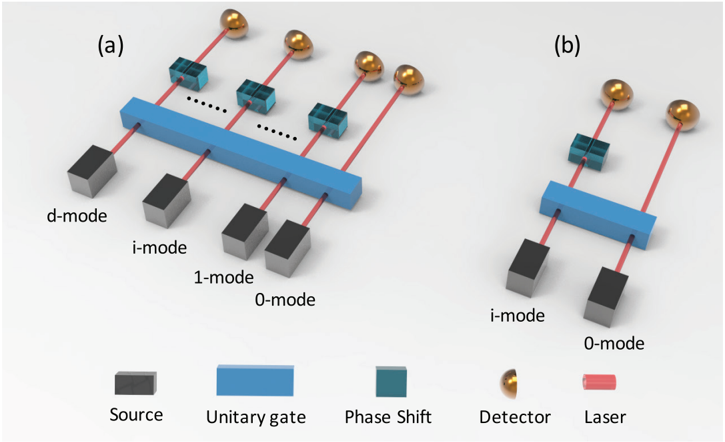
- In multiphase estimation examples, a generalized \((d+1)\)-mode N00N state gives \(\min_{c_1}\mathrm{Tr}(F^{-1})=(1+\sqrt d)^2/(4N^2)\), while a generalized entangled coherent state gives \(\min_{c_1}\mathrm{Tr}(F^{-1})=(1+\sqrt d)^2/[4(1+|\alpha|^2)^2]\), indicating better performance for the latter for most \(d\) and \(|\alpha|\); simultaneous estimation shows an \(O(d)\) advantage over independent estimation in the absence of noise.
Methods
- Design: topical review/textbook-style synthesis of QFIM theory and quantum multiparameter estimation, with technical derivations placed in appendices.
- Data or sample: no experimental sample or primary dataset; the paper reviews mathematical results and literature across quantum metrology, open systems, thermodynamics, quantum dynamics, interferometry, waveform estimation, control-enhanced estimation, and magnetic-field estimation.
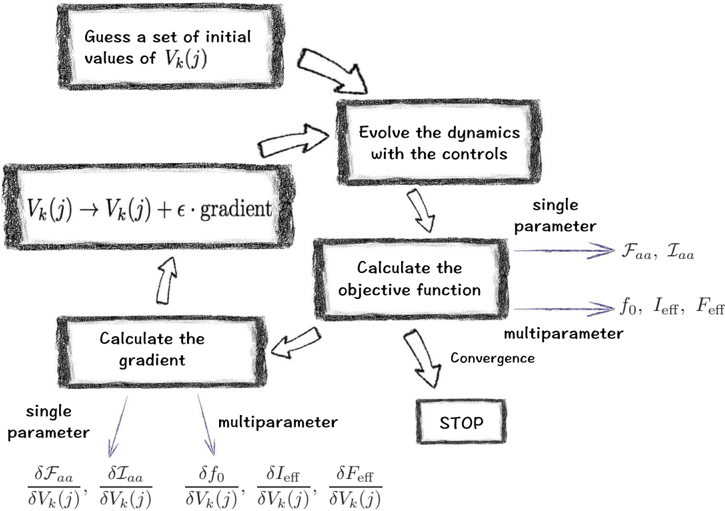
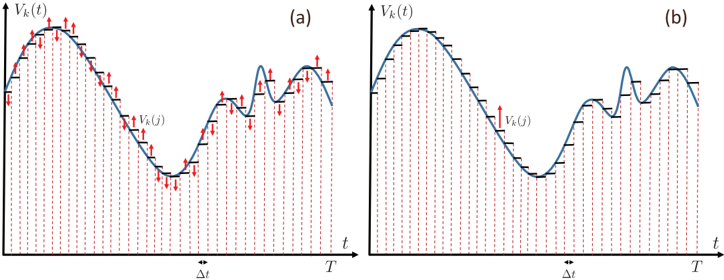
- Main analysis: mathematical derivation and organization of QFIM formulas, properties, attainability conditions, optimal-measurement constructions, and scenario-specific bounds, including Mach-Zehnder interferometry, multiphase estimation, Gaussian states, and GRAPE/Krotov control methods.
Limitations
- The paper states open problems including the design of optimal measurements, especially simple and practical measurements independent of unknown parameters, and the robustness of precision limits against noise and imperfect controls.
- The paper explicitly does not discuss mathematical tools beyond the Cramér-Rao bound, such as Bayesian, Ziv-Zakai, Weiss-Weinstein, and Holevo bounds, referring readers to another review; it also refers nuisance-parameter estimation to a separate review.
- Evident from the text: this is a broad topical review rather than a systematic review or primary study, so coverage is selective and no new experimental validation is provided.
Model-written summary. Check it against the paper before relying on it.
Integrity signals
Registry
Cites
Statistics
Figures
Verification
Claims the paper makes
34 Valid · 11 Not valid · 73 Not checked · 81 Own results and interpretations
The cited sources support only part of this claim — read each source’s verdict below.
In the paper
“An alternative operator that can be used to characterize the precision limit of unitary process is [50,53,54]”
§ Quantum Fisher information matrix and multiparameter estimation > 2.3.4. Unitary processes.
What the sources say
- Partly supportedcites [50] Boixo S, Flammia S T, Caves C M and Geremia J M 2007 Generalized limits for single-parameter quantum estimation Phys. Rev. Lett. 98 090401 sourceExperimental — accuracy not yet measured
On p. 2, the paper identifies Kγ(t) as the Hermitian generator of parameter displacements and relates its variance to Fisher information. On p. 3, it uses Kγ(t) to bound estimation precision. Our copy does not decode the displayed formula defining Kγ(t), so it cannot verify the specific derivative identity in the claim. (LLM, conf=0.82)
- Supportedcites [53] Pang S and Brun T A 2014 Quantum metrology for a general Hamiltonian parameter Phys. Rev. A 90 022117 source
Section III (p. 3) introduces the local parameter-translation generator h_g for unitary evolution and uses it to obtain the quantum Fisher information. Section IV (p. 4) explicitly calls h_g the key to that information, which characterizes the precision limit. The displayed definition in Eq. (9) is not decoded in our copy, but the surrounding text identifies its role and links it to the derivative of U_g. (LLM, conf=0.88)
- Supportedcites [54] Pang S and Jordan A N 2017 Optimal adaptive control for quantum metrology with time-dependent Hamiltonians Nat. Commun. 8 14695 source
In Results > Time-dependent quantum metrology (page unavailable), the paper defines a derivative-based operator for the unitary evolution and says that its eigenvalue gap determines the maximum quantum Fisher information, hence the optimal estimation precision. This supports the cited use of an alternative operator to characterize the precision limit; the mathematical formatting of the operator is incomplete in our copy. (LLM, conf=0.84)
plainstates an association- Asserted: passes — The authors put it forward as true.
- Checkable: passes — It can be checked against evidence.
- Load-bearing: unclear — It is unclear whether the paper’s conclusions depend on it.
- Based: passes — The paper gives a reason why it holds.
- Partly supported
The cited sources support only part of this claim — read each source’s verdict below.
In the paper
“In this case, the H operator for θ can be analytically calculated via equation (51), which is [48]”
§ Quantum Fisher information matrix and multiparameter estimation > 2.3.4. Unitary processes.
What the sources say
- Partly supportedcites [48] Liu J, Jing X-X and Wang X 2015 Quantum metrology with unitary parametrization processes Sci. Rep. 5 8565 sourceExperimental — accuracy not yet measured
The Results section 'Quantum Fisher information with operator' does set up exactly this system — 'the interaction Hamiltonian of a collective spin system in a magnetic field' with n0 = (cos θ, 0, sin θ)T, J = (Jx, Jy, Jz)T, B the field amplitude, θ the parameter under estimation — and states that the operator is obtained analytically from Eq. (9), with the result expressed through a normalized vector n1 and µ = sgn(sin(Bt/2)); the Methods section 'Collective spin system in a magnetic field' repeats the derivation for Hamiltonian (12). So the physical content attributed here (analytic H-operator for θ along J_{n1} with a sin(Bt/2) dependence) is in our copy. However, the inline equations are stripped in our text, so the precise closed form '−2 sin(½Bt) J_{n1}' — its numerical prefactor and overall sign — cannot be checked verbatim; the only sign visible anywhere is the spin-half parametrization 'Hθ = Bn0 · σ/2' (Results, Exponential form initial state), which is positive rather than the citing sentence's H = −B J_{n0}. (LLM, conf=0.70)
plainstates a cause- Asserted: passes — The authors put it forward as true.
- Checkable: passes — It can be checked against evidence.
- Load-bearing: unclear — It is unclear whether the paper’s conclusions depend on it.
- Based: passes — The paper gives a reason why it holds.
- Partly supported
Every source the paper cites for this claim was checked and supports it.
In the paper
“Recently, it has been rigorously proved that the QFIM for a finite dimensional density matrix can be expressed with the support of the density matrix [31].”
§ Quantum Fisher information matrix and multiparameter estimation > 2.3.1. General methods.
What the sources say
- Supportedcites [31] Liu J, Xiong H-N, Song F and Wang X 2014 Fidelity susceptibility and quantum Fisher information for density operators with arbitrary ranks Physica A 410 167-73 source
Section 3 states that the authors calculate the QFIM for a density matrix of arbitrary rank and show it is determined by the matrix’s support (p. 7). Section 3.1 explicitly identifies this as a property of their QFIM expression (p. 8). (LLM, conf=0.94)
boostedstates an association- Asserted: passes — The authors put it forward as true.
- Checkable: passes — It can be checked against evidence.
- Load-bearing: unclear — It is unclear whether the paper’s conclusions depend on it.
- Based: passes — The paper gives a reason why it holds.
- Supported
The sources with a verdict support this claim; the rest weren’t checked yet, have no full text we could read, or their verdicts aren’t rated yet.
In the paper
“In the eigenbasis of the density matrix ρ, g µν takes the form as [91][92][93] g µν = 1 4 i λ i |dρ|λ i 2 λ i + 1 2 i<j | λ i |dρ|λ j | 2 λ j h(λ i /λ j ) ,(78”
§ Quantum Fisher information matrix and multiparameter estimation > 2.4.2. Fidelity and Bures metric.
What the sources say
- Not checked yetcites [91] Bengtsson I and Zyczkowski K 2006 Geometry of Quantum States: an Introduction to Quantum Entanglement (Cambridge: Cambridge University Press)
- Supportedcites [92] Sommers H J and Źyczkowski K 2003 Bures volume of the set of mixed quantum states J. Phys. A: Math. Gen. 36 10083-100 source
Section 3.2, equation (3.6), gives the Bures metric in the eigenbasis with the claimed diagonal term and an off-diagonal term proportional to 1/(λ_i+λ_j). Section 2, equations (2.16)–(2.18), expresses the off-diagonal part of a monotone metric using a Morozova–Chentsov function; its Bures choice gives the stated form under the paper’s metric normalization. (LLM, conf=0.88)
- Supportedcites [93] Pires D P, Cianciaruso M, Céleri L C, Adesso G and Soares-Pinto D O 2016 Generalized geometric quantum speed limits Phys. Rev. X 6 021031 source
Section II, Eq. (3) defines the eigenvalue factor as 1/[y f(x/y)], with f a Morozova–Čencov function. Section III, Eqs. (13)–(16) give the metric tensor as a diagonal term with coefficient 1/4 and an off-diagonal term with coefficient 1/2, matching the claimed eigenbasis form. Page numbers are unavailable in our copy. (LLM, conf=0.90)
plainstates an association- Asserted: passes — The authors put it forward as true.
- Checkable: passes — It can be checked against evidence.
- Load-bearing: unclear — It is unclear whether the paper’s conclusions depend on it.
- Based: passes — The paper gives a reason why it holds.
The cited sources support only part of this claim — read each source’s verdict below.
In the paper
“Theorem 2.10.For a continuous variable bosonic m-mode Gaussian state with the displacement vector (first moment) R and the covariance matrix (second moment) C, the entry of QFIM can be expressed by [64][65][66] F ab = Tr (G a ∂ b C) + (∂ a R T )C -1 ∂ b R , (68”
§ Quantum Fisher information matrix and multiparameter estimation > 2.3.5. Gaussian states.
What the sources say
- Partly supportedcites [64] Gao Y and Lee H 2014 Bounds on quantum multiple-parameter estimation with Gaussian state Eur. Phys. J. D 68 347 sourceExperimental — accuracy not yet measured
The Conclusion (p. 6) says the Gaussian-state QFI matrices can be fully expressed in terms of mean displacement and covariance. Section III (p. 3) identifies an SLD QFI result, but the equations in our copy are undecoded, so it does not verify the specific trace-and-inverse formula or its coefficients. (LLM, conf=0.82)
- Partly supportedcites [65] Nichols R, Liuzzo-Scorpo P, Knott P A and Adesso G 2018 Multiparameter Gaussian quantum metrology Phys. Rev. A 98 012114 sourceExperimental — accuracy not yet measured
Theorem 1 (Section III, p. 3) covers the QFI matrix of an arbitrary m-mode Gaussian state in terms of its first and second moments. The exact expression in Eq. (20) is marked “formula-not-decoded” in our copy, so the stated trace term and displacement term cannot be checked against it. (LLM, conf=0.75)
- Supportedcites [66] Šafránek D 2018 Estimation of Gaussian quantum states J. Phys. A: Math. Theor. 52 035304 source
Appendix A, equation (A.3), gives the QFIM for an N-mode Gaussian state as a covariance-derivative term plus ∂ᵢλᵀΣ⁻¹∂ⱼλ. The claim’s trace term is an equivalent way to write that covariance term with an appropriately defined Gₐ; the paper uses λ and Σ rather than R and C. Section 2.4, equation (23), specifies a limiting prescription when pure modes make the direct inverse ill-defined. (LLM, conf=0.88)
plainstates a cause- Asserted: passes — The authors put it forward as true.
- Checkable: passes — It can be checked against evidence.
- Load-bearing: passes — The paper’s conclusions depend on it.
- Based: passes — The paper gives a reason why it holds.
- Partly supported
97 more claims · 17 with their cited sources checked
Create a free account to see all 199 claims and to verify the 98 references still open.
- Probably not a substantial claim. 59
- It may state two separate claims as one. 48
- The quote only partly states this claim. 4
Claims other papers make about this one
Each is checked against this paper’s own text: does it say what the citing paper says it does?
The check wasn’t confident either way, so it gives no verdict — never disputed.
In the citing paper
“The class of variational quantum circuits specified by Eqs. (3) and (4) are commonly used and there exists a simple parameter-shift rule to evaluate their gradients [10-13].”
From Estimating the gradient and higher-order derivatives on quantum hardware (2021) · cites this paper as [13]
Experimental — accuracy not yet measuredThe check wasn’t confident either way, so it gives no verdict — never disputed.
In the citing paper
“This rule provides the gradient analytically by evaluating the circuit with fixed shifts of π/ 2 in the parameters θ .”
From Estimating the gradient and higher-order derivatives on quantum hardware (2021) · cites this paper as [13]
Experimental — accuracy not yet measuredThe check wasn’t confident either way, so it gives no verdict — never disputed.
In the citing paper
“which allows implementation of all gradientbased optimizers such as gradient descent.”
From Estimating the gradient and higher-order derivatives on quantum hardware (2021) · cites this paper as [13]
Experimental — accuracy not yet measuredThe check wasn’t confident either way, so it gives no verdict — never disputed.
In the citing paper
“The analytic gradient of a quantum circuit can be experimentally evaluated using the so called parameter-shift rule [10-13]”
From Estimating the gradient and higher-order derivatives on quantum hardware (2021) · cites this paper as [13]
Experimental — accuracy not yet measuredThe check wasn’t confident either way, so it gives no verdict — never disputed.
In the citing paper
“For s = π/ 2, we get an analytic parameter-shift rule which is similar to the gradient formula used in Refs. [10-13], but extended to the Hessian.”
From Estimating the gradient and higher-order derivatives on quantum hardware (2021) · cites this paper as [13]
Experimental — accuracy not yet measured
1 more claim about this paper
Create a free account to see every claim other papers make about this one.
Self-check
Percentages, sums and reported differences re-computed from the paper’s own numbers.
Each contradiction between two passages listed here was confirmed by an independent check.
Rated minor: it would not touch a result — a value no result rests on, a p-value that stays on the same side of the significance level, or a conflict that is clerical, resolved elsewhere in the paper, or outside its own findings.
In the paper
§ Quantum Fisher information matrix and multiparameter estimation > E.1. SLD operator for multimode Gaussian states
“S = 1 √ c √ C 00 sin φ √ C 00 cos φ √ C 11 cos φ √ C 11 cos φ , (E.42)”
§ Quantum Fisher information matrix and multiparameter estimation > E.1. SLD operator for multimode Gaussian states
“S 10 = C 11 c cos φ, S 11 = C 11 c sin φ. (E.40)”
Rated minor: it would not touch a result — a value no result rests on, a p-value that stays on the same side of the significance level, or a conflict that is clerical, resolved elsewhere in the paper, or outside its own findings.
In the paper
§ Quantum Fisher information matrix and multiparameter estimation > Appendix F. QFIM and Bures metric
“D B (ρ( x), ρ( x + d x)) = ab 1 4 F ab dx a x b . (F.17)”
§ Quantum Fisher information matrix and multiparameter estimation > 2.4.2. Fidelity and Bures metric.
“D 2 B (ρ( x), ρ( x + d x)) = 1 4 µν F µν dx µ dx ν .(77)”
Rated minor: it would not touch a result — a value no result rests on, a p-value that stays on the same side of the significance level, or a conflict that is clerical, resolved elsewhere in the paper, or outside its own findings.
In the paper
§ Quantum Fisher information matrix and multiparameter estimation > 3.2. Phase estimation in the Mach-Zehnder interferometer
“If the input state is a pure state |ψ 0 , the QFI for θ is just the variance of J y with respect to |ψ 0 , i.e. var |ψ0 (J y ).”
§ Quantum Fisher information matrix and multiparameter estimation > 2.3.4. Unitary processes.
“F ab = 4cov |ψ0 (H a , H b ), (43 ) where cov |ψ0 (H a , H b ) is defined by equation (28) and the QFI for x a can then be obtained as F aa = 4var |ψ0 (H a ).”
Rated minor: it would not touch a result — a value no result rests on, a p-value that stays on the same side of the significance level, or a conflict that is clerical, resolved elsewhere in the paper, or outside its own findings.
In the paper
§ Quantum Fisher information matrix and multiparameter estimation > Corollary 2.2.1.
“L a = 2 ∞ 0 e -ρs (∂ a ρ) e ρs ds,(16)”
§ Quantum Fisher information matrix and multiparameter estimation > 2.1. Definition
“∂ a ρ = 1 2 (ρL a + L a ρ) .(2)”
Citations
Cites
Quantal phase factors accompanying adiabatic changes
Berry, M. V. (1984) · Proceedings of the Royal Society of London. A. Mathematical and Physical Sciences · doi:10.1098/rspa.1984.0023 · Cited by 9,252 · cited 1×
“The geometric phase can then be obtained as [97]”
BackgroundDegen, C. L., Reinhard, F., & Cappellaro, P. (2017) · Reviews of Modern Physics · doi:10.1103/revmodphys.89.035002 · Cited by 4,045
Giovannetti, V., Lloyd, S., & Maccone, L. (2011) · Nature Photonics · doi:10.1038/nphoton.2011.35 · Cited by 3,894
Quantum information with continuous variables
Braunstein, S. L., & van Loock, P. (2005) · Reviews of Modern Physics · doi:10.1103/revmodphys.77.513 · Cited by 3,858
Weedbrook, C., Pirandola, S., García-Patrón, R., Cerf, N. J., Ralph, T. C., Shapiro, J. H., & Lloyd, S. (2012) · Reviews of Modern Physics · doi:10.1103/revmodphys.84.621 · Cited by 3,664
Quantum-mechanical noise in an interferometer
Caves, C. M. (1981) · Physical Review D · doi:10.1103/physrevd.23.1693 · Cited by 3,202 · cited 5×
“In 1981, Caves [142] showed that there exists an unused port in the MZI due to quantum mechanics and the vacuum fluctuation in that port actually affects the phase precision and limit it to the standard quantum limit (also known as shot-noise limit), which is the ultimate limit for a classical apparatus.”
BackgroundInfluentialStatistical distance and the geometry of quantum states
Braunstein, S. L., & Caves, C. M. (1994) · Physical Review Letters · doi:10.1103/physrevlett.72.3439 · Cited by 3,176 · cited 2×
“Recently, Yang et al [138] provided the attainable conditions for the CFIM to attain this bound by generalizing the approach in [30].”
BackgroundQuantum-Enhanced Measurements: Beating the Standard Quantum Limit
Giovannetti, V., Lloyd, S., & Maccone, L. (2004) · Science · doi:10.1126/science.1104149 · Cited by 3,038 · cited 1×
“on the quantum-enhanced measurement [4] and the advances in quantum metrology [5], the ones given by Paris [6] and Toth et al.”
MethodKhaneja, N., Reiss, T., Kehlet, C., Schulte-Herbrüggen, T., & Glaser, S. J. (2005) · Journal of Magnetic Resonance · doi:10.1016/j.jmr.2004.11.004 · Cited by 1,854 · cited 2×
“Gradient ascent pulse engineering (GRAPE) algorithm is a gradient-based algorithm, which was originally developed to search the optimal control for the design of nuclear magnetic resonance pulse sequences [173], and now is extended to the scenario of quantum parameter estimation [171, 172].”
BackgroundMethodQuantum metrology with nonclassical states of atomic ensembles
Pezzè, L., Smerzi, A., Oberthaler, M. K., Schmied, R., & Treutlein, P. (2018) · Reviews of Modern Physics · doi:10.1103/revmodphys.90.035005 · Cited by 1,682 · cited 3×
“In recent years, several outstanding reviews on quantum metrology and quantum parameter estimation have been provided from different perspectives and at different time, including the ones given by Giovannetti et al on the quantum-enhanced measurement [3] and the advances in quantum metrology [4], the ones given by Par…”
Background
Research works printed but not linked: 13
- Petz D 2008 Quantum Information Theory and Quantum Statistics (Theoretical and Mathematical Physics) (Berlin: Springer)
- Watanabe Y 2014 Formulation of Uncertainty Relation Between Error and Disturbance in Quantum Measurement by Using Quantum Estimation Theory (Berlin: Springer)
- Scully M O and Zubairy M S 1997 Quantum Optics (Cambridge: Cambridge University Press)
- Serafini A 2017 Quantum Continuous Variables: a Primer of Theoretical Methods (Oxford: Taylor and Francis)
- Nielsen M A and Chuang I L 2000 Quantum Computation and Quantum Information (Cambridge: Cambridge University Press)
- Hayashi M (ed) 2005 Asymptotic Theory of Quantum Statistical Inference: Selected Papers (Singapore: World Scientific)
- Bengtsson I and Zyczkowski K 2006 Geometry of Quantum States: an Introduction to Quantum Entanglement (Cambridge: Cambridge University Press)
- Shapere A and and Wilczek F (ed) 1989 Geometric Phases in Physics (Singapore: World Scientific)
- Kubo R, Toda M and Hashitsume N 1991 Statistical Physics II, Nonequilibrium Statistical Mechanics (Springer Series on Solid State Sciences) (Berlin: Springer)
- Shirane G, Shapiro S M and Tranquada J M 2002 Neutron Scattering with a Triple-Axis Spectrometer, Basic Techniques (Cambridge: Cambridge University Press)
- Lu X-M, Ma Z and Zhang C 2004 Generalized-mean Cramér-Rao bound for multiparameter quantum metrology (arXiv:1010.06035)
- Eberhart R and Kennedy J 1995 Proc. 6th Int. Symp. on Micro Machine and Human Science (New York: IEEE)
- Guţă M et al 2019 Multiparameter estimation beyond quantum Fisher information J. Phys. A: Math. Theor. (submitted)
Cited by
Items 701–800 of 1,002
Li, Y., & Ren, Z. (2023) · Chaos Solitons & Fractals · doi:10.1016/j.chaos.2023.114289 · Cited by 3
Li, N., Hu, C., & Lu, X.-M. (2024) · Chinese Optics Letters · doi:10.3788/col202422.060009 · Cited by 3
“≥ F − 1 = n is called the quantum CRB or Helstrom ’ s bound [44,47,48] , which is the most popular theoretical tool used in quantum metrology [49 – 52]”
MethodSelf-citationCui, Q., Sun, H., Li, W., Lu, J., & Li, B. (2024) · Lecture notes in computer science · doi:10.1007/978-3-031-72751-1_25 · Cited by 3
“Furthermore, the Fisher information matrix [39, 62] is computed to measure the parameter sensitivity, with larger indicating the domain-sensitive parameter, and vice versa.”
MethodAn upper bound on the number of compatible parameters in simultaneous quantum estimation
Kukita, S. (2020) · Journal of Physics A Mathematical and Theoretical · doi:10.1088/1751-8121/ab6d3d · Cited by 3
Duran, D. (2020) · Quantum Information Processing · doi:10.1007/s11128-020-02847-7 · Cited by 3
“s = dim[supp(ρφ)], then QFI for density matrices with arbitrary ranks can be expressed by [38,39,40, 41,42]”
BackgroundThe optimal estimation state of one-axis twisting model
Alhashash, A., Zidan, N., & METWALLY, N. (2020) · Optik · doi:10.1016/j.ijleo.2020.165934 · Cited by 3
Hamiltonian estimation based on adaptive weak value amplification
Fang, C., Xia, B., Huang, J., Xiao, T., Yang, Y., Li, H., & Zeng, G. (2021) · Journal of Physics B Atomic Molecular and Optical Physics · doi:10.1088/1361-6455/abe5c7 · Cited by 3
Local discrimination of qudit lattice states
Yang, Y., Liu, Q., Mi, G.-W., & Jing, T.-Y. (2022) · Quantum Information Processing · doi:10.1007/s11128-022-03662-y · Cited by 3
“The quantum Fisher information matrix [33] is also a useful tool for state discrimination because quantum Fisher information can give the limit value of the precision of pre-estimated parameters in the process of quantum teleportation.”
MethodBorisenok, S. (2023) · European Journal of Science and Technology · doi:10.31590/ejosat.1249710 · Cited by 3
Fisher information of sequential measurements and the optimization in composite systems
Li, J., & Cui, D. (2023) · Physical Review A · doi:10.1103/physreva.108.012419 · Cited by 3
Tonchev, N. S. (2021) · arXiv (Cornell University) · doi:10.48550/arxiv.2106.07599 · Cited by 3
“[10] Jing Liu,, Haidong Yuan, Xiao-Ming Lu and Xiaoguang Wang, Quantum Fisher information matrix and multiparameter estimation, J.”
BackgroundBayesian Parametric Matrix Models: Principled Uncertainty Quantification for Spectral LearningPreprint
Nooraiepour, M. (2025) · SSRN Electronic Journal · doi:10.2139/ssrn.5625491 · Cited by 3
Scaling Enhancement in Quantum Metrology via Indefinite-Time-Direction EncodingPreprint
Xia, B., Huang, J., Yang, Y., & Zeng, G. (2025) · arXiv (Cornell University) · doi:10.48550/arxiv.2510.09216 · Cited by 3
Sajia, A., Benzimoun, B., Khatiwada, P., Zhao, G., & Qian, X.-F. (2025) · arXiv (Cornell University) · doi:10.48550/arxiv.2504.14156 · Cited by 3
“Estimating s from p q thus becomes a multi-parameter estimation problem, which severely degrades the Fisher information 54–56 and introduces significant uncertainty.”
Generating function and Bloch representation for quantum Fisher tensorPreprint
Abreu, F. P., & Chen, W. (2025) · arXiv (Cornell University) · doi:10.48550/arxiv.2511.05260 · Cited by 3
Stochastic Quantum Information Geometry and Speed Limits at the Trajectory LevelPreprint
Melo, P. B., Paraguassú, P. V., Queirós, S. M. D., Iemini, F., Paternostro, M., & Morgado, W. A. M. (2026) · arXiv (Cornell University) · doi:10.48550/arxiv.2601.12475 · Cited by 3
Approaching the Limit in Multiparameter AC Magnetometry with Quantum ControlPreprint
Isogawa, T., Hu, Z., Kanamoto, A., Phadetsuwannukun, N., Wang, S., Nishimura, S., Li, B., Jiang, L., Saleem, Z. H., Wang, G., et al. (2026) · arXiv (Cornell University) · doi:10.48550/arxiv.2602.17648 · Cited by 3
“This occurs when the QFIM is singular (non-invertible), a situation that precludes any joint estimation of the parameters [9, 30, 31].”
Self-citationPrecision and Privacy in Distributed Quantum Sensing: A Quantum Fisher Information DualityPreprint
Farokhi, F. (2026) · arXiv (Cornell University) · doi:10.48550/arxiv.2605.20765 · Cited by 3
“Using (27) in [21], the QFIM can be simplified to where ⟨ A ⟩ = ⟨ ψ 0 | A | ψ 0 ⟩ .”
(Non-)Traversable Quantum Phase TransitionsPreprint
Balducci, F., Schindler, P. M., Solfanelli, A., & Bukov, M. (2026) · arXiv (Cornell University) · doi:10.48550/arxiv.2605.31472 · Cited by 3
“Therefore, preparing the critical state proposed for sensing and metrological purposes [59, 95, 96] should be approached from the FM side.”
Fisher geometry reshapes the effect of incompatibility in multiparameter quantum estimationPreprint
He, J., & Paris, M. G. A. (2026) · arXiv (Cornell University) · doi:10.48550/arxiv.2606.11343 · Cited by 3
Quantum Information Geometry of Multicomponent Superconducting Fluctuation TransportPreprint
Sun, Z.-T., Xie, Y.-M., & Nagaosa, N. (2026) · arXiv (Cornell University) · doi:10.48550/arxiv.2606.15928 · Cited by 3
“I ab is a Hermitian tensor, whose real (symmetric) part can be identified as the QFI matrix as whose spectral form [23] is Then the corresponding Bures-Wasserstein distance is given by ds = F ab dp a dp b / 4 [41].”
Quantum-limited imaging using diffractive optical neural networksPreprint
Warke, A., Zhang, A., & Lvovsky, A. I. (2026) · arXiv (Cornell University) · doi:10.48550/arxiv.2608.12300 · Cited by 3
The ebbs and flows of quantum learning and sensingPreprint
Karjula, M., Ojanen, T., Ala-Nissilä, T., & Ivaki, M. N. (2026) · arXiv (Cornell University) · doi:10.48550/arxiv.2608.20155 · Cited by 3
“For a mixed one-qubit state, the quantum Fisher information with respect to ϕ is [117] with the pure-state limit understood by continuity.”
Certified Fidelity Susceptibility from Classical ShadowsPreprint
Adhikari, K. (2026) · arXiv (Cornell University) · doi:10.48550/arxiv.2608.24732 · Cited by 3
Quantum Natural Gradient on Quotient SpacesPreprint
Chen, Z. (2026) · arXiv (Cornell University) · doi:10.48550/arxiv.2608.29350 · Cited by 3
Uncertainty-disturbance relations and applications
Sun, L.-L., Bharti, K., Zhou, X., Kwek, L. C., Fan, J., & Yu, S. (2026) · Physical Review Research · doi:10.1103/q9c1-nnqj · Cited by 2
“It determines the ultimate precision of the parameter estimation via the quantum Cramér-Rao bound [86].”
Guo, L., Ran, Q., Gao, J., Min, B., Liang, Q., & Chen, G. (2025) · Ocean Engineering · doi:10.1016/j.oceaneng.2025.122303 · Cited by 2
Achieving the Heisenberg limit of metrology via measurement on an ancillary qubit
Chen, P., & Jing, J. (2025) · Physical Review A · doi:10.1103/f79z-vjsb · Cited by 2
“In a practical parametric estimation, CFI measures the amount of information that can be extracted from the probability distribution of the output state [48, 62, 63], which is upper bounded by QFI about the metrology precision.”
A unified dynamical framework for quantum sensing based on dephasing interaction
Hu, B., Zhang, Z.-Z., & Wu, W. (2025) · Physics Letters A · doi:10.1016/j.physleta.2025.130944 · Cited by 2
OH molecule as a quantum probe to jointly estimate electric and magnetic fields
Previdi, L., Albarelli, F., & Paris, M. G. A. (2026) · Physical Review A · doi:10.1103/gpmd-ck38 · Cited by 3
“…(SLD) operators ˆ L µ , defined implicity by the equation and it is usually known simply as the quantum Fisher information matrix (QFIM) [12, 30, 39], defined as: As mentioned, one can prove the matrix inequality Q µν ( λ ) ⪰ F ( λ , { ˆΠ k } ) for any POVM, which in turn implies the…”
Maggio, L., & Tamma, V. (2026) · The European Physical Journal Plus · doi:10.1140/epjp/s13360-025-07257-1 · Cited by 2
Four-mode quantum sensing and Fisher information in a spin-orbit-coupled Bose gas
Zhu, F., Tang, Z., Zeng, L., Wang, S. F., & Chen, L. (2025) · Physical Review A · doi:10.1103/5z1q-4rzl · Cited by 2
Nonequilibrium thermometry via an ensemble of initially correlated qubits
Trombetti, E., Malitesta, M., Pezzutto, M., & Gherardini, S. (2026) · Physical Review A · doi:10.1103/bb24-kfrz · Cited by 3
“The Quantum Fisher Information (QFI) is a central tool to assess the maximum achievable precision in the estimation of a parameter—the inverse bath temperature β in our case—whose unknown value is encoded into the state of the quantum system used as a probe [51, 52].”
Zhu, X., Mo, F., Zhang, Z., Wang, J., Shi, Y., Wu, M., Zhang, C., Li, M., & Wu, J. Y. (2025) · ACM International Conference on Multimedia (ACM MM) · doi:10.1145/3746027.3754716 · Cited by 2
“As one of the fundamental tools to quantify the sensitivity of model parameters to variations in the data probability distribution, the Fisher information matrix (FIM) plays a pivotal role in fields such as neural network weight pruning and model optimization [12, 21, 32, 34].”
Exact analysis of ac sensors based on Floquet time crystals
Tsypilnikov, A., Fibger, M., & Iemini, F. (2026) · Physical Review A · doi:10.1103/9h67-kqyz · Cited by 2
“If prior knowledge about the parameter is available, the estimation uncertainty ∆ h ( t ) is bounded by the quantum Cram´er-Rao bound, where F h ( t ) represents the quantum Fisher information (QFI) of the probe and µ is the number of measurements [32, 33].”
Momentum-resolved two photon interference of weak coherent states
Sgobba, F., Lena, F. D., Triggiani, D., Pallotti, D. K., Lupo, C., Daniele, P., Fratta, G., Acconcia, G., Rech, I., & Amato, L. S. (2025) · Quantum Science and Technology · doi:10.1088/2058-9565/ae24a7 · Cited by 2
“This can be done by evaluating the Fisher information [45], denoted F , and the Cramér-Rao bound associated with the transverse-momentum resolved measurement, and compare it with the quantum Fisher information [46, 47], denoted H .”
Li, Y., Liu, H., Lu, D., & Ren, C. (2025) · Physical Review Letters · doi:10.1103/yzg1-3dfk · Cited by 2
Efficient adaptive control strategy for multi-parameter quantum metrology in two-dimensional systems
Wei, Q., & Pang, S. (2026) · Communications Physics · doi:10.1038/s42005-026-02912-0 · Cited by 2
Hunza, M., Huang, M.-D., Shoaib, U., Qin, Q., & Abbas, T. (2025) · Optics Express · doi:10.1364/oe.581329 · Cited by 2
Enhancement of quantum estimation in cavity magnonics
Lakhfif, A., Slaoui, A., Hidki, A., Benrass, N., & Laamara, R. A. (2026) · Journal of Physics A Mathematical and Theoretical · doi:10.1088/1751-8121/ae38a6 · Cited by 2
“The QFI is obtained by optimizing classical Fisher information (CFI) over all possible positive-operator-valued measures (POVMs) [15, 16].”
Squeezed-light-enhanced multiparameter quantum estimation in cavity magnonics
Harraf, H., Amazioug, M., & Laamara, R. A. (2026) · Physical Review A · doi:10.1103/5fh1-nrmh · Cited by 2
Do AI Markets Drive Financial Performance in Chinese Banks? A Quantum-Inspired (QI) MCDM Approach
Wänke, P., Tan, Y., & Floros, C. (2026) · Information Systems Frontiers · doi:10.1007/s10796-025-10685-0 · Cited by 2
Enhanced Quantum Metrology via Saddle-Point Scrambling in Phase Space
Shao, L., Xing, H., & Fu, L. (2026) · Physical Review Letters · doi:10.1103/4sn5-ngdg · Cited by 2
“…the connection be-tween the classical trajectories and the parameter precision in step (ii), we introduce the quantum Cramér-Rao bound, which gives the lower bound on the variance of parameter 𝜆 , i.e., , where 𝜈 is the number of independent measurement rounds and is the QFI [46, 47, 53].”
Wang, C., Shan, W., Pan, J., & Xing, H. (2026) · Physical Review A · doi:10.1103/389g-d3sy · Cited by 2
Resource-optimal quantum mode parameter estimation with multimode Gaussian states
Fabre, N., Reichert, M., & Sanz, M. (2026) · Optica Quantum · doi:10.1364/opticaq.605648 · Cited by 2
Parameter estimation with the steady states of non-Hermitian spin chains
Zhang, H., & Jin, J. (2022) · Physica A Statistical Mechanics and its Applications · doi:10.1016/j.physa.2022.127460 · Cited by 2
Study of quantum Fisher information matrix and multiparameter estimation for an atomic-field system
Houssaoui, A., Anouz, K. E., & Allati, A. E. (2023) · The European Physical Journal Plus · doi:10.1140/epjp/s13360-023-03737-4 · Cited by 2
“The quantum Fisher information matrix possesses the following elements [19, 23] Qi j 1 2 Tr [ ρ ( Sαi Sα j + Sα j Sαi )] , (10)”
BackgroundResonant weak-value enhancement for solid-state quantum metrology
Subramanian, M., Mathew, A., & Muralidharan, B. (2023) · Physical Review Applied · doi:10.1103/physrevapplied.20.044065 · Cited by 2
Reference-frame-independent quantum metrology
Imai, S., Gühne, O., & Tóth, G. (2026) · Physical Review Research · doi:10.1103/988w-6tpf · Cited by 2
李, Y.-L. 艳. L., Liao, C.-H., & 肖, X. 兴. X. (2024) · Chinese Physics B · doi:10.1088/1674-1056/ad8f9e · Cited by 2
Wu, K., Chen, Z., Xu, Z., Ma, Z., & Fei, S. (2024) · Advanced Quantum Technologies · doi:10.1002/qute.202400443 · Cited by 2
Quantum thermometry for the Hamiltonians constructed by quantum Yang–Baxter equation
Türkmen, A., Çelebi, G., Dernek, B., & Duran, D. (2024) · Quantum Information Processing · doi:10.1007/s11128-024-04622-4 · Cited by 2
Enhancement in the temperature sensing of a reservoir by a Kerr-nonlinear resonator
Akhtar, N., Peng, J., Yang, X., & Chen, Y. (2025) · Physical Review A · doi:10.1103/physreva.111.012412 · Cited by 2
Approaching the double-Heisenberg scaling sensitivity in the Tavis–Cummings model
Su, Y., Ying, T., Лю, Б., & Wang, X. (2025) · APL Photonics · doi:10.1063/5.0252072 · Cited by 2
Self-citationOptimal multi-parameter quantum metrology for frequencies of magnetic field
龙, Z. 振. L., & Pang, S. (2025) · Chinese Physics B · doi:10.1088/1674-1056/add4e7 · Cited by 2
Quantum sensing enhanced via periodic modulation
Peng, J., & Asjad, M. (2025) · Physical Review Applied · doi:10.1103/pqf6-92sk · Cited by 2
Learning to maximize quantum neural network expressivity via effective rank
Yao, J. (2026) · Quantum Science and Technology · doi:10.1088/2058-9565/ae7151 · Cited by 2
“This interpretation is consistent with the rank of the Fisher information matrix, which captures the number of locally identifiable parameter directions.”
InfluentialEnhancing Phase Sensitivity in Mach–Zehnder Interferometers for Arbitrary Input States
Liang, H., Pei, J., & Wang, X. (2020) · Chinese Physics Letters · doi:10.1088/0256-307x/37/7/070301 · Cited by 2
Self-citationP T-Enhanced Bayesian Parameter Estimation
Balytskyi, Y., Raavi, M., & Chang, S. (2021) · IEEE International Conference on Quantum Computing and Engineering (QCE) · doi:10.1109/qce52317.2021.00022 · Cited by 2
Bell’s inequality with biased experimental settings
Singh, P., Faujdar, J., Sarkar, M., & Kumar, A. (2022) · Quantum Information Processing · doi:10.1007/s11128-022-03504-x · Cited by 2
“(60) is the same as sufficient condition for entanglement defined by [35].”
BackgroundLeggett–Garg-like Inequalities from a Correlation Matrix Construction
Porath, D. B., & Cohen, E. (2023) · Quantum Reports · doi:10.3390/quantum5020025 · Cited by 2
“In addition, since there are known connections between correlation matrices and both classical [31] and quantum [32] Fisher information, the bounds derived in this manuscript can provide analogous bounds on elements of the Fisher information matrix.”
MethodBukbech, S., Anouz, K. E., Allali, Z. E., METWALLY, N., & Allati, A. E. (2023) · Quantum Studies Mathematics and Foundations · doi:10.1007/s40509-023-00303-6 · Cited by 2
“The elements of QFIM, namely F are defined by [28] Fi j = 1 2 Tr [ ρ ( Lθi Lθ j + Lθ j Lθi )] , (7)”
Resource theory of dephasing estimation in multiqubit systems
Chen, Z., & Hu, X. (2023) · Physical Review A · doi:10.1103/physreva.108.032415 · Cited by 2
“Here the Fisher information F (θ) is defined as [11, 13, 27]”
BackgroundMethodInfluentialEnhanced quantum sensing mediated by a cavity in open systems
Langfitt, Q., Saleem, Z. H., Perlin, M. A., Zhong, T., Shaji, A., & Gray, S. K. (2026) · Physica Scripta · doi:10.1088/1402-4896/aebcd3 · Cited by 2
Quantum limits of position and polarizability estimation in the optical near field
Kienesberger, L., Juffmann, T., & Nimmrichter, S. (2024) · Physical Review Research · doi:10.1103/physrevresearch.6.023204 · Cited by 2
“That is, we calculate the quantum field state ϱ ( t, θ ) at every time t during the scattering process and quantify its sensitivity to θ -variations in terms of the measurement model-independent QFI matrix J jℓ ( θ , t ) [9–11].”
MethodSuperresolution picks entanglement over coherencePreprint
Sajia, A., & Qian, X. F. (2023) · arXiv (Cornell University) · doi:10.48550/arxiv.2302.04909 · Cited by 2
Information Theoretic Significance of Projective MeasurementsPreprint
Zhu, H. (2023) · arXiv (Cornell University) · doi:10.48550/arxiv.2305.14110 · Cited by 2
De modelos estatísticos α -conexões: um panorama geral da geometria da informação
Trindade, G. D. R. (2023) · Digital Library of Theses and Dissertations (Universidade de São Paulo) · doi:10.11606/d.55.2023.tde-09012024-110256 · Cited by 2
Nurdin, H. I. (2024) · arXiv (Cornell University) · doi:10.48550/arxiv.2405.01471 · Cited by 2
“…estimation theory underlies the field of quantum metrology, which is concerned with exploiting quantum effects to obtain more accurate estimates of physical parameters such as position, velocity, force, etc, in various physical platforms such as quantum optics, photonics and cold atoms [1, 2, 3].”
BackgroundNonclassical Driven-Dissipative Dynamics in Collective Quantum OpticsPreprint
Vivas-Viaña, A. (2025) · arXiv (Cornell University) · doi:10.48550/arxiv.2509.10672 · Cited by 2
Composable privacy of networked quantum sensingPreprint
Solomons, N. R., & Markham, D. (2025) · arXiv (Cornell University) · doi:10.48550/arxiv.2510.06326 · Cited by 2
“This work introduces a metric for the privacy of certain implementations, given in terms of the quantum Fisher information matrix (QFIm) [15, 26], Q , which is defined for a particular state (i.e. ρ ( θ ) ), given with respect to a set of parameters (i.e. { θ µ } ), and is a measure of the…”
Muhammad, A. (2025) · arXiv (Cornell University) · doi:10.48550/arxiv.2509.24044 · Cited by 2
“The quantum Fisher information metric [65, 66, 67] extends these concepts to parameterized quantum states | ψ θ ⟩ : The Quantum Cramér-Rao bound Var (ˆ θ i ) ≥ 1 / ( M F ii ) establishes fundamental limits on parameter estimation precision.”
Quantum error correction for multiparameter metrologyPreprint
Gutiérrez, M., Mukhopadhyay, C., Montenegro, V., & Bayat, A. (2025) · arXiv (Cornell University) · doi:10.48550/arxiv.2511.04018 · Cited by 2
Heisenberg limited quantum algorithm for estimating the fidelity susceptibilityPreprint
Zhang, Y., & Yuan, X. (2025) · arXiv (Cornell University) · doi:10.48550/arxiv.2509.01359 · Cited by 2
Meng, Q., & Wang, Y. (2026) · arXiv (Cornell University) · doi:10.48550/arxiv.2601.11942 · Cited by 2
“…how the classical preconditioner influences optimization geometry, for example through the spectrum of the quantum Fisher information matrix (QFIM) and its relation to gradient variance, could provide deeper insight into when and why hybrid preconditioning improves trainability [Liu et al. , 2020].”
Self-Purification Mitigates Backdoors in Multimodal Diffusion Language ModelsPreprint
Wan, G., Li, Q., Fang, G., Ma, X., & Wang, X. (2026) · arXiv (Cornell University) · doi:10.48550/arxiv.2602.22246 · Cited by 2
“We compute the Fisher information [37] of this distribution as: Let J = ∂ L gen /∂ E v denote the Jacobian of the generation logits with respect to the visual embeddings.”
Self-citationDisquisitions on quantum-enhanced polarimetry
Goldberg, A. Z. (2021) · TSpace (University of Toronto) · Cited by 2
Unified Probe of Quantum Chaos and Ergodicity from Hamiltonian LearningPreprint
Gjonbalaj, N. O., Kokail, C., Yelin, S. F., & Choi, S. (2026) · arXiv (Cornell University) · doi:10.48550/arxiv.2603.04486 · Cited by 2
“Although taking this derivative requires the use of the symmetric logarithmic derivative [86], our modification will not.”
Maggio, L., & Tamma, V. (2026) · arXiv (Cornell University) · doi:10.48550/arxiv.2603.08602 · Cited by 2
Subsystem Quantum Error Correction for Noisy Quantum MetrologyPreprint
Liu, Q., & Zhou, S. (2026) · arXiv (Cornell University) · doi:10.48550/arxiv.2606.19628 · Cited by 2
Susceptibility-kinetic uncertainty relations for quantum systemsPreprint
Palmqvist, D., Splettstoesser, J., & Tesser, L. (2026) · arXiv (Cornell University) · doi:10.48550/arxiv.2607.01035 · Cited by 2
“…employ the quantum Cram´er-Rao bound [32] to limit the response of ∆ ˆ X H ( t, θ ) through where Var[ • ] denotes the variance, and F θθ is the quantum Fisher information, which is a central quantity in quantum metrology and information geometry [37], see Appendix A for its general definition.”
Quantum Fisher information of magnetic quantum phase transition on Kondo latticePreprint
Fang, Y. D., Chen, L., Mahankali, M., Xie, F., Wang, Y., Sur, S., & Qimiao Si, A. (2026) · arXiv (Cornell University) · doi:10.48550/arxiv.2607.16150 · Cited by 2
Hybrid Quantum Neural Networks: Theory, Implementations, and ApplicationsPreprint
Monbroussou, L., Periyasamy, M., Kuzmin, V., Sekatski, P., Patapovich, V., Sagingalieva, A., & Melnikov, A. A. (2026) · arXiv (Cornell University) · doi:10.48550/arxiv.2608.01194 · Cited by 2
Parameter-Decoupled Quantum Superresolution without Multiparameter EstimationPreprint
Qian, X. F. (2026) · arXiv (Cornell University) · doi:10.48550/arxiv.2609.21796 · Cited by 2
Quantum score matching with applications to learning thermal statesPreprint
Dong, Y., & Leng, J. (2026) · arXiv (Cornell University) · doi:10.48550/arxiv.2609.28391 · Cited by 2
Influence of kinetic energy on the metrology of Rabi frequency
Zhang, X., & Wang, X. (2021) · Journal of Physics A Mathematical and Theoretical · doi:10.1088/1751-8121/abdfe7 · Cited by 1
Self-citationPhase-sensitive nonclassical properties in quantum metrology with a displaced squeezed vacuum state
Tao, Z., Ren, Y.-C., Abdukirim, A., Liu, S., & Rao, R. (2021) · Journal of the Optical Society of America B · doi:10.1364/josab.419752 · Cited by 1
Cardoso-Isidoro, C., & Delgado, F. (2024) · Symmetry · doi:10.3390/sym16010074 · Cited by 1
Real-time parameter estimation for two-qubit systems based on hybrid control
Tian, Y., Lu, X., Kuang, S., & Dong, D. (2024) · Physical Review A · doi:10.1103/physreva.109.062222 · Cited by 1
“Using the Cauchy-Schwartz inequality [37], it can be proved that CFI is equivalent to QFI under the action of the optimal measurement operators, i.e., max { M y } I θ ( ρ θ , { M y } ) = F θ [38].”
BackgroundMethodInfluentialSelf-citationRevisiting the quantum parameter estimation approach for Mach–Zehnder interferometry
Hu, B., & Lu, X.-M. (2025) · Communications in Theoretical Physics · doi:10.1088/1572-9494/adcf08 · Cited by 1
“In cases where the quantum system depends on multiple parameters, the quantum Fisher information (QFI) matrix can be used to analyze the quantum limit of precision in parameter estimation [7].”
Self-citationN00N State Generation by Floquet Engineering
Maleki, Y. (2025) · Mathematics · doi:10.3390/math13101667 · Cited by 1
Fluctuation as a probe of entanglement transition in a monitored free-fermion chain
Qiu, W.-J., Yu, Y.-C., & Cai, X. (2025) · Physical Review A · doi:10.1103/ps1h-ftfw · Cited by 1
Phase estimation in lossy optical interferometry without a reference beam
Tang, J., Wang, D., Zhong, W., Zhou, L., & Sheng, Y. (2025) · Communications in Theoretical Physics · doi:10.1088/1572-9494/ade6da · Cited by 1
“ECSs can be generated by mixing coherent and coherent superposition states of light on a BS [10], or alternatively generated by mixing coherent and squeezed vacuum states of light on a BS [40].”
Multi-parameter estimation in critical quantum metrology
Fresco, G. D., Spagnolo, B., Valenti, D., & Carollo, A. C. M. (2025) · Chaos Solitons & Fractals · doi:10.1016/j.chaos.2025.116913 · Cited by 2
Wang, Z., Ma, Z., Chen, L., Zhang, C., & Fei, S.-M. (2025) · Quantum Information Processing · doi:10.1007/s11128-025-04862-y · Cited by 1
“Recently, the authors in [20] showed the GMESD in three-qubit systems and found an initial condition which yields the GMESD under certain dynamics.”
Superresolution of unequal-brightness thermal sources for stellar interferometry
Hu, C. W., Wang, B., Zhang, J., Wang, K., Liu, H.-G., Zhou, J., & Zhang, L. (2025) · Physical Review A · doi:10.1103/z157-q6n3 · Cited by 1
“Recent investigations by Tsang and coworkers have revisited this subject using the quantum estimation theory, i.e., the quantum Fisher information (QFI) and quantum Cram´er-Rao bound [2].”
Hu, C. D., Xin, J., & Lu, X.-M. (2025) · Optics Continuum · doi:10.1364/optcon.575505 · Cited by 1
Self-citationSequential analysis in a continuous spin-noise quantum sensor
Roda-Salichs, E., Gasbarri, G., Alou, A., Skotiniotis, M., Sierant, A., Méndez-Avalos, D., Mitchell, M. W., & Calsamiglia, J. (2026) · Physical Review Research · doi:10.1103/z7zj-864q · Cited by 1
Measurement compatibility in multiparameter quantum interferometry
Jayakumar, J., Barbieri, M., & Stobińska, M. (2025) · Physical Review A · doi:10.1103/m8l6-8nct · Cited by 1
“The latter, instead, develops on more sophisticated tools and delivers a bound on the variance that can be attained in principle, by a collective measurement on a large number of probes [34–39].”
Holdsworth, T., Adamczyk, J., & Agarwal, G. S. (2025) · Physical Review A · doi:10.1103/2y17-j6fv · Cited by 1
Metadata
- Authors
- Liu, J., Yuan, H., Lu, X.-M., & Wang, X.
- Affiliations
- Huazhong University of Science and Technology (CN)
- Chinese University of Hong Kong (HK)
- Hangzhou Dianzi University (CN)
- Zhejiang University (CN)
- Corresponding author
- Liu, Jing
- Yuan, Haidong
- Lu, Xiao-Ming
- Wang, Xiaoguang
- Venue
- Journal of Physics A: Mathematical and Theoretical
- Publisher
- IOP Publishing
- Published
- 2019-12-18
- Volume
- 53
- Issue
- 2
- Pages
- 023001
- ISSN
- 1751-8113 (ISSN-L)
- 1751-8121
- OpenAlex
- W2959466714
- Semantic Scholar
- 9bb5bf567d8bcef47326edb29bdd28a4b742327f
- Cited by
- 802
- References
- 196
- Citations by year
- 2026: 138 · 2025: 182 · 2024: 143 · 2023: 101 · 2022: 102 · 2021: 82 · 2020: 51 · 2019: 3
- FWCI
- 27.15
- Type
- journal article
- Language
- en
- Open access
- hybrid
- doi.org
- Licence
- cc-by
- creativecommons.org/licenses/by/3.0/ (vor)
- iopscience.iop.org/info/page/text-and-data-mining (tdm)
- Locations
- Journal of Physics A Mathematical and Theoretical (publishedVersion, cc-by)
- arXiv (Cornell University) (publishedVersion)
- arXiv (Cornell University) (cc-by)
- Funders
- Fundamental Research Funds for the Central Universities (2017FZA3005)
- Research Grants Council of Hong Kong (14207717)
- National Natural Science Foundation of China (11805073)
- National Key Research and Development Program of China (2017YFA0304202)
- Zhejiang Provincial Natural Science Foundation of China (LY18A050003)
- Topics
- Physical Sciences › Physics and Astronomy › Atomic and Molecular Physics, and Optics › Quantum Information and Cryptography
- Physical Sciences › Computer Science › Artificial Intelligence › Quantum Computing Algorithms and Architecture
- Physical Sciences › Physics and Astronomy › Atomic and Molecular Physics, and Optics › Quantum Mechanics and Applications
- Keywords
- quantum Fisher information matrix, multiparameter estimation, quantum Cramér-Rao bound, quantum metrology, optimal quantum measurement, quantum thermodynamics, quantum phase transitions, entanglement witnesses, quantum speed limit, non-Markovianity
About these checks
Registry, retraction, Cites and statistics results are computed, not judged, with one exception: a printed reference that no index lists is read once by a model before it counts as a citation error. Claims are extracted by a model and kept only when their quote appears verbatim in the text; each cited source is then checked, with a model’s help, for whether it says what the claim relies on. Those verdicts can be wrong — read the claim’s quote and the cited source before relying on one.
The claim verdicts this report counts are experimental: their accuracy is not yet measured.
A language model drew the claims from the paper on 2026-10-08, under version 3 of the claim definition (model deepseek-v4.1-flash, prompt extract-v3).
A second model labelled each claim on 2026-10-08 (model jev-1.13-20260917, definition revision gold-guideline-v0.2).
Cited sources are checked with a language model’s help (gpt-6-sol and qwen3.8-omni-flash).
Statistics and arithmetic are recomputed, not judged.
Confidence bands are shown only for fields calibrated on our annotated test set. None is calibrated yet, so no band is shown.
What counts as a claim ›How we measure confidence ›How we check this ›
Are you an author, or do you see a problem with this page? Request a review
Data sources
Bibliographic data: Semantic Scholar, OpenAlex, Crossref.
Contains information from the Semantic Scholar Academic Graph Datasets, made available under the ODC Attribution License (ODC-BY 1.0).
Semantic Scholar’s data is described in: Kinney, R., et al. (2023). The Semantic Scholar Open Data Platform. arXiv:2301.10140.
