

Quantum Fisher information matrix and multiparameter estimation
Open accessThe DOI matches its Crossref record; 198 of the 198 references it cites were found in a registry or an index; 63 of the 161 sources its claims cite were checked for support.
Abstract
Quantum Fisher information matrix (QFIM) is a core concept in theoretical quantum metrology due to the significant importance of quantum Cramér–Rao bound in quantum parameter estimation. However, studies in recent years have revealed wide connections between QFIM and other aspects of quantum mechanics, including quantum thermodynamics, quantum phase transition, entanglement witness, quantum speed limit and non-Markovianity. These connections indicate that QFIM is more than a concept in quantum metrology, but rather a fundamental quantity in quantum mechanics. In this paper, we summarize the properties and existing calculation techniques of QFIM for various cases, and review the development of QFIM in some aspects of quantum mechanics apart from quantum metrology. On the other hand, as the main application of QFIM, the second part of this paper reviews the quantum multiparameter Cramér–Rao bound, its attainability condition and the associated optimal measurements. Moreover, recent developments in a few typical scenarios of quantum multiparameter estimation and the quantum advantages are also thoroughly discussed in this part.
Overview
CoChat Summary
TL;DR
This topical review presents the quantum Fisher information matrix (QFIM) as both the core quantity of quantum multiparameter estimation and a fundamental quantity in quantum mechanics connected to thermodynamics, phase transitions, entanglement, speed limits, and non-Markovianity. It surveys QFIM properties and calculation techniques, then reviews the quantum multiparameter Cramér-Rao bound, its attainability conditions, optimal measurements, and representative estimation scenarios.
Key findings
- The QFIM is defined via the symmetric logarithmic derivative, \(F_{ab}=\frac12\mathrm{Tr}(\rho\{L_a,L_b\})\), and its diagonal entries are the single-parameter QFIs, \(F_{aa}=\mathrm{Tr}(\rho L_a^2)\).
- The quantum multiparameter Cramér-Rao bound is generally not attainable; the necessary and sufficient saturation condition is \(\mathrm{Tr}(\rho[L_a,L_b])=0\) for all \(a,b\), reducing for pure states to \(\mathrm{Im}(\partial_a\psi|\partial_b\psi)=0\), equivalently zero Berry curvature.
- The review reports calculation methods for full-rank and arbitrary-rank density matrices, pure states, few-qubit states, unitary processes, and Gaussian states, including Bloch-representation and Liouville-space formulas.
- In multiphase estimation examples, a generalized \((d+1)\)-mode N00N state gives \(\min_{c_1}\mathrm{Tr}(F^{-1})=(1+\sqrt d)^2/(4N^2)\), while a generalized entangled coherent state gives \(\min_{c_1}\mathrm{Tr}(F^{-1})=(1+\sqrt d)^2/[4(1+|\alpha|^2)^2]\), indicating better performance for the latter for most \(d\) and \(|\alpha|\); simultaneous estimation shows an \(O(d)\) advantage over independent estimation in the absence of noise.
Methods
- Design: topical review/textbook-style synthesis of QFIM theory and quantum multiparameter estimation, with technical derivations placed in appendices.
- Data or sample: no experimental sample or primary dataset; the paper reviews mathematical results and literature across quantum metrology, open systems, thermodynamics, quantum dynamics, interferometry, waveform estimation, control-enhanced estimation, and magnetic-field estimation.
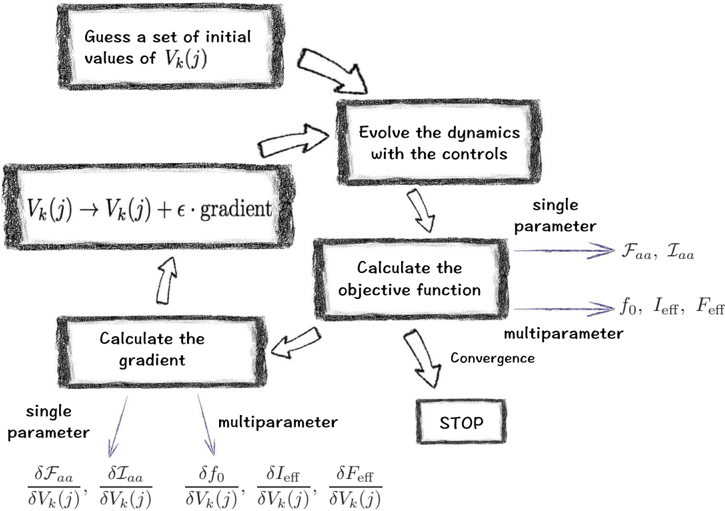
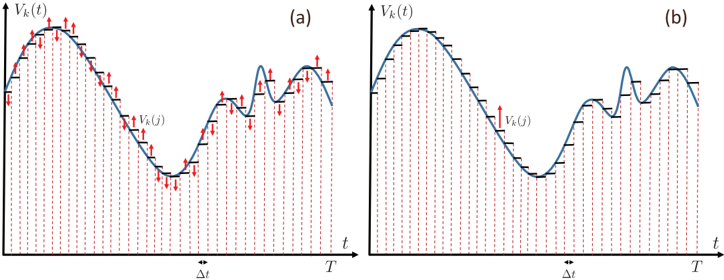
- Main analysis: mathematical derivation and organization of QFIM formulas, properties, attainability conditions, optimal-measurement constructions, and scenario-specific bounds, including Mach-Zehnder interferometry, multiphase estimation, Gaussian states, and GRAPE/Krotov control methods.
Limitations
- The paper states open problems including the design of optimal measurements, especially simple and practical measurements independent of unknown parameters, and the robustness of precision limits against noise and imperfect controls.
- The paper explicitly does not discuss mathematical tools beyond the Cramér-Rao bound, such as Bayesian, Ziv-Zakai, Weiss-Weinstein, and Holevo bounds, referring readers to another review; it also refers nuisance-parameter estimation to a separate review.
- Evident from the text: this is a broad topical review rather than a systematic review or primary study, so coverage is selective and no new experimental validation is provided.
Model-written summary. Check it against the paper before relying on it.
Integrity signals
Registry
Cites
Statistics
Figures
Verification
Claims the paper makes
34 Valid · 11 Not valid · 73 Not checked · 81 Own results and interpretations
The cited sources support only part of this claim — read each source’s verdict below.
In the paper
“An alternative operator that can be used to characterize the precision limit of unitary process is [50,53,54]”
§ Quantum Fisher information matrix and multiparameter estimation > 2.3.4. Unitary processes.
What the sources say
- Partly supportedcites [50] Boixo S, Flammia S T, Caves C M and Geremia J M 2007 Generalized limits for single-parameter quantum estimation Phys. Rev. Lett. 98 090401 sourceExperimental — accuracy not yet measured
On p. 2, the paper identifies Kγ(t) as the Hermitian generator of parameter displacements and relates its variance to Fisher information. On p. 3, it uses Kγ(t) to bound estimation precision. Our copy does not decode the displayed formula defining Kγ(t), so it cannot verify the specific derivative identity in the claim. (LLM, conf=0.82)
- Supportedcites [53] Pang S and Brun T A 2014 Quantum metrology for a general Hamiltonian parameter Phys. Rev. A 90 022117 source
Section III (p. 3) introduces the local parameter-translation generator h_g for unitary evolution and uses it to obtain the quantum Fisher information. Section IV (p. 4) explicitly calls h_g the key to that information, which characterizes the precision limit. The displayed definition in Eq. (9) is not decoded in our copy, but the surrounding text identifies its role and links it to the derivative of U_g. (LLM, conf=0.88)
- Supportedcites [54] Pang S and Jordan A N 2017 Optimal adaptive control for quantum metrology with time-dependent Hamiltonians Nat. Commun. 8 14695 source
In Results > Time-dependent quantum metrology (page unavailable), the paper defines a derivative-based operator for the unitary evolution and says that its eigenvalue gap determines the maximum quantum Fisher information, hence the optimal estimation precision. This supports the cited use of an alternative operator to characterize the precision limit; the mathematical formatting of the operator is incomplete in our copy. (LLM, conf=0.84)
plainstates an association- Asserted: passes — The authors put it forward as true.
- Checkable: passes — It can be checked against evidence.
- Load-bearing: unclear — It is unclear whether the paper’s conclusions depend on it.
- Based: passes — The paper gives a reason why it holds.
- Partly supported
The cited sources support only part of this claim — read each source’s verdict below.
In the paper
“In this case, the H operator for θ can be analytically calculated via equation (51), which is [48]”
§ Quantum Fisher information matrix and multiparameter estimation > 2.3.4. Unitary processes.
What the sources say
- Partly supportedcites [48] Liu J, Jing X-X and Wang X 2015 Quantum metrology with unitary parametrization processes Sci. Rep. 5 8565 sourceExperimental — accuracy not yet measured
The Results section 'Quantum Fisher information with operator' does set up exactly this system — 'the interaction Hamiltonian of a collective spin system in a magnetic field' with n0 = (cos θ, 0, sin θ)T, J = (Jx, Jy, Jz)T, B the field amplitude, θ the parameter under estimation — and states that the operator is obtained analytically from Eq. (9), with the result expressed through a normalized vector n1 and µ = sgn(sin(Bt/2)); the Methods section 'Collective spin system in a magnetic field' repeats the derivation for Hamiltonian (12). So the physical content attributed here (analytic H-operator for θ along J_{n1} with a sin(Bt/2) dependence) is in our copy. However, the inline equations are stripped in our text, so the precise closed form '−2 sin(½Bt) J_{n1}' — its numerical prefactor and overall sign — cannot be checked verbatim; the only sign visible anywhere is the spin-half parametrization 'Hθ = Bn0 · σ/2' (Results, Exponential form initial state), which is positive rather than the citing sentence's H = −B J_{n0}. (LLM, conf=0.70)
plainstates a cause- Asserted: passes — The authors put it forward as true.
- Checkable: passes — It can be checked against evidence.
- Load-bearing: unclear — It is unclear whether the paper’s conclusions depend on it.
- Based: passes — The paper gives a reason why it holds.
- Partly supported
Every source the paper cites for this claim was checked and supports it.
In the paper
“Recently, it has been rigorously proved that the QFIM for a finite dimensional density matrix can be expressed with the support of the density matrix [31].”
§ Quantum Fisher information matrix and multiparameter estimation > 2.3.1. General methods.
What the sources say
- Supportedcites [31] Liu J, Xiong H-N, Song F and Wang X 2014 Fidelity susceptibility and quantum Fisher information for density operators with arbitrary ranks Physica A 410 167-73 source
Section 3 states that the authors calculate the QFIM for a density matrix of arbitrary rank and show it is determined by the matrix’s support (p. 7). Section 3.1 explicitly identifies this as a property of their QFIM expression (p. 8). (LLM, conf=0.94)
boostedstates an association- Asserted: passes — The authors put it forward as true.
- Checkable: passes — It can be checked against evidence.
- Load-bearing: unclear — It is unclear whether the paper’s conclusions depend on it.
- Based: passes — The paper gives a reason why it holds.
- Supported
The sources with a verdict support this claim; the rest weren’t checked yet, have no full text we could read, or their verdicts aren’t rated yet.
In the paper
“In the eigenbasis of the density matrix ρ, g µν takes the form as [91][92][93] g µν = 1 4 i λ i |dρ|λ i 2 λ i + 1 2 i<j | λ i |dρ|λ j | 2 λ j h(λ i /λ j ) ,(78”
§ Quantum Fisher information matrix and multiparameter estimation > 2.4.2. Fidelity and Bures metric.
What the sources say
- Not checked yetcites [91] Bengtsson I and Zyczkowski K 2006 Geometry of Quantum States: an Introduction to Quantum Entanglement (Cambridge: Cambridge University Press)
- Supportedcites [92] Sommers H J and Źyczkowski K 2003 Bures volume of the set of mixed quantum states J. Phys. A: Math. Gen. 36 10083-100 source
Section 3.2, equation (3.6), gives the Bures metric in the eigenbasis with the claimed diagonal term and an off-diagonal term proportional to 1/(λ_i+λ_j). Section 2, equations (2.16)–(2.18), expresses the off-diagonal part of a monotone metric using a Morozova–Chentsov function; its Bures choice gives the stated form under the paper’s metric normalization. (LLM, conf=0.88)
- Supportedcites [93] Pires D P, Cianciaruso M, Céleri L C, Adesso G and Soares-Pinto D O 2016 Generalized geometric quantum speed limits Phys. Rev. X 6 021031 source
Section II, Eq. (3) defines the eigenvalue factor as 1/[y f(x/y)], with f a Morozova–Čencov function. Section III, Eqs. (13)–(16) give the metric tensor as a diagonal term with coefficient 1/4 and an off-diagonal term with coefficient 1/2, matching the claimed eigenbasis form. Page numbers are unavailable in our copy. (LLM, conf=0.90)
plainstates an association- Asserted: passes — The authors put it forward as true.
- Checkable: passes — It can be checked against evidence.
- Load-bearing: unclear — It is unclear whether the paper’s conclusions depend on it.
- Based: passes — The paper gives a reason why it holds.
The cited sources support only part of this claim — read each source’s verdict below.
In the paper
“Theorem 2.10.For a continuous variable bosonic m-mode Gaussian state with the displacement vector (first moment) R and the covariance matrix (second moment) C, the entry of QFIM can be expressed by [64][65][66] F ab = Tr (G a ∂ b C) + (∂ a R T )C -1 ∂ b R , (68”
§ Quantum Fisher information matrix and multiparameter estimation > 2.3.5. Gaussian states.
What the sources say
- Partly supportedcites [64] Gao Y and Lee H 2014 Bounds on quantum multiple-parameter estimation with Gaussian state Eur. Phys. J. D 68 347 sourceExperimental — accuracy not yet measured
The Conclusion (p. 6) says the Gaussian-state QFI matrices can be fully expressed in terms of mean displacement and covariance. Section III (p. 3) identifies an SLD QFI result, but the equations in our copy are undecoded, so it does not verify the specific trace-and-inverse formula or its coefficients. (LLM, conf=0.82)
- Partly supportedcites [65] Nichols R, Liuzzo-Scorpo P, Knott P A and Adesso G 2018 Multiparameter Gaussian quantum metrology Phys. Rev. A 98 012114 sourceExperimental — accuracy not yet measured
Theorem 1 (Section III, p. 3) covers the QFI matrix of an arbitrary m-mode Gaussian state in terms of its first and second moments. The exact expression in Eq. (20) is marked “formula-not-decoded” in our copy, so the stated trace term and displacement term cannot be checked against it. (LLM, conf=0.75)
- Supportedcites [66] Šafránek D 2018 Estimation of Gaussian quantum states J. Phys. A: Math. Theor. 52 035304 source
Appendix A, equation (A.3), gives the QFIM for an N-mode Gaussian state as a covariance-derivative term plus ∂ᵢλᵀΣ⁻¹∂ⱼλ. The claim’s trace term is an equivalent way to write that covariance term with an appropriately defined Gₐ; the paper uses λ and Σ rather than R and C. Section 2.4, equation (23), specifies a limiting prescription when pure modes make the direct inverse ill-defined. (LLM, conf=0.88)
plainstates a cause- Asserted: passes — The authors put it forward as true.
- Checkable: passes — It can be checked against evidence.
- Load-bearing: passes — The paper’s conclusions depend on it.
- Based: passes — The paper gives a reason why it holds.
- Partly supported
97 more claims · 17 with their cited sources checked
Create a free account to see all 199 claims and to verify the 98 references still open.
- Probably not a substantial claim. 59
- It may state two separate claims as one. 48
- The quote only partly states this claim. 4
Claims other papers make about this one
Each is checked against this paper’s own text: does it say what the citing paper says it does?
The check wasn’t confident either way, so it gives no verdict — never disputed.
In the citing paper
“The class of variational quantum circuits specified by Eqs. (3) and (4) are commonly used and there exists a simple parameter-shift rule to evaluate their gradients [10-13].”
From Estimating the gradient and higher-order derivatives on quantum hardware (2021) · cites this paper as [13]
Experimental — accuracy not yet measuredThe check wasn’t confident either way, so it gives no verdict — never disputed.
In the citing paper
“This rule provides the gradient analytically by evaluating the circuit with fixed shifts of π/ 2 in the parameters θ .”
From Estimating the gradient and higher-order derivatives on quantum hardware (2021) · cites this paper as [13]
Experimental — accuracy not yet measuredThe check wasn’t confident either way, so it gives no verdict — never disputed.
In the citing paper
“which allows implementation of all gradientbased optimizers such as gradient descent.”
From Estimating the gradient and higher-order derivatives on quantum hardware (2021) · cites this paper as [13]
Experimental — accuracy not yet measuredThe check wasn’t confident either way, so it gives no verdict — never disputed.
In the citing paper
“The analytic gradient of a quantum circuit can be experimentally evaluated using the so called parameter-shift rule [10-13]”
From Estimating the gradient and higher-order derivatives on quantum hardware (2021) · cites this paper as [13]
Experimental — accuracy not yet measuredThe check wasn’t confident either way, so it gives no verdict — never disputed.
In the citing paper
“For s = π/ 2, we get an analytic parameter-shift rule which is similar to the gradient formula used in Refs. [10-13], but extended to the Hessian.”
From Estimating the gradient and higher-order derivatives on quantum hardware (2021) · cites this paper as [13]
Experimental — accuracy not yet measured
1 more claim about this paper
Create a free account to see every claim other papers make about this one.
Self-check
Percentages, sums and reported differences re-computed from the paper’s own numbers.
Each contradiction between two passages listed here was confirmed by an independent check.
Rated minor: it would not touch a result — a value no result rests on, a p-value that stays on the same side of the significance level, or a conflict that is clerical, resolved elsewhere in the paper, or outside its own findings.
In the paper
§ Quantum Fisher information matrix and multiparameter estimation > E.1. SLD operator for multimode Gaussian states
“S = 1 √ c √ C 00 sin φ √ C 00 cos φ √ C 11 cos φ √ C 11 cos φ , (E.42)”
§ Quantum Fisher information matrix and multiparameter estimation > E.1. SLD operator for multimode Gaussian states
“S 10 = C 11 c cos φ, S 11 = C 11 c sin φ. (E.40)”
Rated minor: it would not touch a result — a value no result rests on, a p-value that stays on the same side of the significance level, or a conflict that is clerical, resolved elsewhere in the paper, or outside its own findings.
In the paper
§ Quantum Fisher information matrix and multiparameter estimation > Appendix F. QFIM and Bures metric
“D B (ρ( x), ρ( x + d x)) = ab 1 4 F ab dx a x b . (F.17)”
§ Quantum Fisher information matrix and multiparameter estimation > 2.4.2. Fidelity and Bures metric.
“D 2 B (ρ( x), ρ( x + d x)) = 1 4 µν F µν dx µ dx ν .(77)”
Rated minor: it would not touch a result — a value no result rests on, a p-value that stays on the same side of the significance level, or a conflict that is clerical, resolved elsewhere in the paper, or outside its own findings.
In the paper
§ Quantum Fisher information matrix and multiparameter estimation > 3.2. Phase estimation in the Mach-Zehnder interferometer
“If the input state is a pure state |ψ 0 , the QFI for θ is just the variance of J y with respect to |ψ 0 , i.e. var |ψ0 (J y ).”
§ Quantum Fisher information matrix and multiparameter estimation > 2.3.4. Unitary processes.
“F ab = 4cov |ψ0 (H a , H b ), (43 ) where cov |ψ0 (H a , H b ) is defined by equation (28) and the QFI for x a can then be obtained as F aa = 4var |ψ0 (H a ).”
Rated minor: it would not touch a result — a value no result rests on, a p-value that stays on the same side of the significance level, or a conflict that is clerical, resolved elsewhere in the paper, or outside its own findings.
In the paper
§ Quantum Fisher information matrix and multiparameter estimation > Corollary 2.2.1.
“L a = 2 ∞ 0 e -ρs (∂ a ρ) e ρs ds,(16)”
§ Quantum Fisher information matrix and multiparameter estimation > 2.1. Definition
“∂ a ρ = 1 2 (ρL a + L a ρ) .(2)”
Citations
Cites
Quantal phase factors accompanying adiabatic changes
Berry, M. V. (1984) · Proceedings of the Royal Society of London. A. Mathematical and Physical Sciences · doi:10.1098/rspa.1984.0023 · Cited by 9,252 · cited 1×
“The geometric phase can then be obtained as [97]”
BackgroundDegen, C. L., Reinhard, F., & Cappellaro, P. (2017) · Reviews of Modern Physics · doi:10.1103/revmodphys.89.035002 · Cited by 4,045
Giovannetti, V., Lloyd, S., & Maccone, L. (2011) · Nature Photonics · doi:10.1038/nphoton.2011.35 · Cited by 3,894
Quantum information with continuous variables
Braunstein, S. L., & van Loock, P. (2005) · Reviews of Modern Physics · doi:10.1103/revmodphys.77.513 · Cited by 3,858
Weedbrook, C., Pirandola, S., García-Patrón, R., Cerf, N. J., Ralph, T. C., Shapiro, J. H., & Lloyd, S. (2012) · Reviews of Modern Physics · doi:10.1103/revmodphys.84.621 · Cited by 3,664
Quantum-mechanical noise in an interferometer
Caves, C. M. (1981) · Physical Review D · doi:10.1103/physrevd.23.1693 · Cited by 3,202 · cited 5×
“In 1981, Caves [142] showed that there exists an unused port in the MZI due to quantum mechanics and the vacuum fluctuation in that port actually affects the phase precision and limit it to the standard quantum limit (also known as shot-noise limit), which is the ultimate limit for a classical apparatus.”
BackgroundInfluentialStatistical distance and the geometry of quantum states
Braunstein, S. L., & Caves, C. M. (1994) · Physical Review Letters · doi:10.1103/physrevlett.72.3439 · Cited by 3,176 · cited 2×
“Recently, Yang et al [138] provided the attainable conditions for the CFIM to attain this bound by generalizing the approach in [30].”
BackgroundQuantum-Enhanced Measurements: Beating the Standard Quantum Limit
Giovannetti, V., Lloyd, S., & Maccone, L. (2004) · Science · doi:10.1126/science.1104149 · Cited by 3,038 · cited 1×
“on the quantum-enhanced measurement [4] and the advances in quantum metrology [5], the ones given by Paris [6] and Toth et al.”
MethodKhaneja, N., Reiss, T., Kehlet, C., Schulte-Herbrüggen, T., & Glaser, S. J. (2005) · Journal of Magnetic Resonance · doi:10.1016/j.jmr.2004.11.004 · Cited by 1,854 · cited 2×
“Gradient ascent pulse engineering (GRAPE) algorithm is a gradient-based algorithm, which was originally developed to search the optimal control for the design of nuclear magnetic resonance pulse sequences [173], and now is extended to the scenario of quantum parameter estimation [171, 172].”
BackgroundMethodQuantum metrology with nonclassical states of atomic ensembles
Pezzè, L., Smerzi, A., Oberthaler, M. K., Schmied, R., & Treutlein, P. (2018) · Reviews of Modern Physics · doi:10.1103/revmodphys.90.035005 · Cited by 1,682 · cited 3×
“In recent years, several outstanding reviews on quantum metrology and quantum parameter estimation have been provided from different perspectives and at different time, including the ones given by Giovannetti et al on the quantum-enhanced measurement [3] and the advances in quantum metrology [4], the ones given by Par…”
BackgroundQuantum estimation for quantum technology
PARIS, M. G. A. (2009) · International Journal of Quantum Information · doi:10.1142/s0219749909004839 · Cited by 1,632 · cited 5×
“In control theory, equation (2) is also referred to as the Lyapunov equation and the solution can be obtained as [5]”
BackgroundMethodInfluentialColloquium: Non-Markovian dynamics in open quantum systems
Breuer, H.-P., Laine, E.-M., Piilo, J., & Vacchini, B. (2016) · Reviews of Modern Physics · doi:10.1103/revmodphys.88.021002 · Cited by 1,401
SU(2) and SU(1,1) interferometers
Yurke, B., McCall, S. L., & Klauder, J. R. (1986) · Physical Review A · doi:10.1103/physreva.33.4033 · Cited by 1,366
Magnetometry with nitrogen-vacancy defects in diamond
Rondin, L., Tetienne, J.-P., Hingant, T., Roch, J.-F., Maletinsky, P., & Jacques, V (2014) · Reports on Progress in Physics · doi:10.1088/0034-4885/77/5/056503 · Cited by 1,336
Dynamics of non-Markovian open quantum systems
de Vega, I., & Alonso, D. (2017) · Reviews of Modern Physics · doi:10.1103/revmodphys.89.015001 · Cited by 1,234
All of Statistics: A Concise Course in Statistical Inference
Wasserman, L. (2004) · Springer Texts in Statistics · doi:10.1007/978-0-387-21736-9 · Cited by 1,090
Machine learning & artificial intelligence in the quantum domain: a review of recent progress
Dunjko, V., & Briegel, H. J. (2018) · Reports on Progress in Physics · doi:10.1088/1361-6633/aab406 · Cited by 1,055 · cited 1×
“In recent years, it has been applied to condensed matter physics for phase transitions [194, 195], design of a magneto-optical trap [196] and other aspects [197].”
MethodTransition from a strongly interacting 1D superfluid to a Mott insulator
Stöferle, T., Moritz, H., Schori, C., Köhl, M., & Esslinger, T. (2004) · Physical Review Letters · doi:10.1103/physrevlett.92.130403 · Cited by 1,047 · cited 1×
“Because of equations (89) and (90), and the fact that Sab(ω) and χab(ω) can be directly measured in the experiments [110–114], Fab becomes measurable in this case, which breaks the previous understanding that QFI is not observable since the fidelity is not observable.”
BackgroundQuantum non-Markovianity: characterization, quantification and detection
Rivas, Á., Huelga, S. F., & Plenio, M. B. (2014) · Reports on Progress in Physics · doi:10.1088/0034-4885/77/9/094001 · Cited by 1,035
Quantum optical metrology – the lowdown on high-N00N states
Dowling, J. P. (2008) · Contemporary Physics · doi:10.1080/00107510802091298 · Cited by 894 · cited 1×
“In recent years, several outstanding reviews on quantum metrology and quantum parameter estimation have been provided from different perspectives and at different time, including the ones given by Giovannetti et al on the quantum-enhanced measurement [3] and the advances in quantum metrology [4], the ones given by Par…”
BackgroundRiemannian structure on manifolds of quantum states
Provost, J. P., & Vallee, G. (1980) · Communications in Mathematical Physics · doi:10.1007/bf02193559 · Cited by 886 · cited 1×
“For a pure state |ψ〉 = |ψ( x)〉, the quantum geometric tensor Q is defined as [23, 95]”
Quantum metrology from a quantum information science perspective
Tóth, G., & Apellaniz, I. (2014) · Journal of Physics A Mathematical and Theoretical · doi:10.1088/1751-8113/47/42/424006 · Cited by 862 · cited 5×
“trics on quantum states indicates that the QFIM can be used to quantify the evolution time. As a matter of fact, the QFI and the QFIM have been used to bound the quantum speed limit in recent studies [7,36,75,76]. For a unitary evolution, U = exp( iHt), to steer a state away from the initial position with a Bures angl…”
BackgroundMethodInfluentialOn the Algebraic Problem Concerning the Normal Forms of Linear Dynamical Systems
Williamson, J. (1936) · American Journal of Mathematics · doi:10.2307/2371062 · Cited by 849
Advances in photonic quantum sensing
Pirandola, S., Bardhan, B. R., Gehring, T., Weedbrook, C., & Lloyd, S. (2018) · Nature Photonics · doi:10.1038/s41566-018-0301-6 · Cited by 804 · cited 1×
“on the photonic quantum sensing [11], the ones by Dowling on quantum optical metrology with highN00N state [12] and Dowling and Seshadreesan on theoretical and experimental optical technologies in quantum metrology, sensing and imaging [13], the one by DemkowiczDobrzański et al.”
MethodContinuous Variable Quantum Information: Gaussian States and Beyond
Adesso, G., Ragy, S., & Lee, A. R. (2014) · Open Systems & Information Dynamics · doi:10.1142/s1230161214400010 · Cited by 787 · cited 1×
“, [55, 56,58,60,61] χ(~s) = e− 1 2 ~sTΩCΩT~s−i(Ω〈~ R〉)T~s, (60) W (~ R) = 1 (2π)m √ detC e− 1 2( R−〈~ R〉) T C−1(~ R−〈~ R〉), (61)”
Learning phase transitions by confusion
van Nieuwenburg, E. P. L., Liu, Y.-H., & Huber, S. D. (2017) · Nature Physics · doi:10.1038/nphys4037 · Cited by 739 · cited 1×
“In recent years, it has been applied to condensed matter physics for phase transitions [193, 194], design of a magneto-optical trap [195] and other aspects [196].”
MethodPrecision measurement beyond the shot-noise limit
Xiao, M., Wu, L.-A., & Kimble, H. J. (1987) · Physical Review Letters · doi:10.1103/physrevlett.59.278 · Cited by 723 · cited 1×
“This pioneer work proved that quantum technologies can be powerful in the field of precision measure, which was experimentally confirmed in 1987 [142, 143].”
BackgroundFIDELITY APPROACH TO QUANTUM PHASE TRANSITIONS
GU, S.-J. (2010) · International Journal of Modern Physics B · doi:10.1142/s0217979210056335 · Cited by 663 · cited 3×
“In 2007, You et al. [18,108] first studied the connection between the fidelity susceptibility and the correlation function, and then in 2016, Hauke et al. [109] extended this connection between the QFI and the symmetric and asymmetric correlation functions to the thermal states.”
BackgroundDiscovering phase transitions with unsupervised learning
Wang, L. (2016) · Physical Review B · doi:10.1103/physrevb.94.195105 · Cited by 618 · cited 1×
“In recent years, it has been applied to condensed matter physics for phase transitions [194, 195], design of a magneto-optical trap [196] and other aspects [197].”
MethodFisher information and multiparticle entanglement
Hyllus, P., Laskowski, W., Krischek, R., Schwemmer, C., Wieczorek, W., Weinfurter, H., Pezzé, L., & Smerzi, A. (2012) · Physical Review A · doi:10.1103/physreva.85.022321 · Cited by 593
Monotone metrics on matrix spaces
Petz, D. (1996) · Linear Algebra and its Applications · doi:10.1016/0024-3795(94)00211-8 · Cited by 585 · cited 4×
“All versions of QFIMs belong to a family of Riemannian monotone metrics established by Petz [26,27] in 1996, which will be further discussed in section 2.4.”
BackgroundInfluentialQuantum speed limits: from Heisenberg’s uncertainty principle to optimal quantum control
Deffner, S., & Campbell, S. (2017) · Journal of Physics A: Mathematical and Theoretical · doi:10.1088/1751-8121/aa86c6 · Cited by 585 · cited 1×
“trics on quantum states indicates that the QFIM can be used to quantify the evolution time. As a matter of fact, the QFI and the QFIM have been used to bound the quantum speed limit in recent studies [7,36,75,76]. For a unitary evolution, U = exp( iHt), to steer a state away from the initial position with a Bures angl…”
MethodMultipartite entanglement and high-precision metrology
Tóth, G. (2012) · Physical Review A · doi:10.1103/physreva.85.022322 · Cited by 560 · cited 2×
“Apart from quantum metrology, the QFI also connects to other aspects of quantum physics, such as quantum phase transition [18–20] and entanglement witness [21,22].”
BackgroundQuantum Fisher information flow and non-Markovian processes of open systems
Lu, X.-M., Wang, X., & Sun, C. P. (2010) · Physical Review A · doi:10.1103/physreva.82.042103 · Cited by 540 · cited 1×
“[127] in 2010 is a valid witness for non-Markovianity.”
BackgroundSelf-citationFidelity, dynamic structure factor, and susceptibility in critical phenomena
You, W.-L., Li, Y.-W., & Gu, S.-J. (2007) · Physical Review E · doi:10.1103/physreve.76.022101 · Cited by 532 · cited 2×
“In 2007, You et al. [18,108] first studied the connection between the fidelity susceptibility and the correlation function, and then in 2016, Hauke et al. [109] extended this connection between the QFI and the symmetric and asymmetric correlation functions to the thermal states.”
BackgroundQuantum metrology with entangled coherent states
Joo, J., Munro, W. J., & Spiller, T. P. (2011) · Physical Review Letters · doi:10.1103/physrevlett.107.083601 · Cited by 526 · cited 1×
“In the single phase estimation, it is known that the entangled coherent state N (|0α〉+ |α0〉) (|α〉 is a coherent state and N is the normalization) can provide a better precision limit than the N00N state [157].”
BackgroundQuantum Limits in Optical Interferometry
Demkowicz-Dobrzański, R., Jarzyna, M., & Kołodyński, J. (2015) · Progress in Optics · doi:10.1016/bs.po.2015.02.003 · Cited by 517 · cited 1×
“on the quantum limits in optical interferometry [14], the one by Sidhu”
BackgroundQuantum Speed Limit for Non-Markovian Dynamics
Deffner, S., & Lutz, E. (2013) · Physical Review Letters · doi:10.1103/physrevlett.111.010402 · Cited by 511
Quantum Speed Limit for Physical Processes
Taddei, M. M., Escher, B. M., Davidovich, L., & de Matos Filho, R. L. (2013) · Physical Review Letters · doi:10.1103/physrevlett.110.050402 · Cited by 509 · cited 6×
“For a more general case, that the Hamiltonian is timedependent, Taddei et al [49] provided an implicit bound based on the QFI, √ 1 2 d2D( f ) df 2 ( dD df ∣∣∣∣ f→1 D( f (ρ(0), ρ(t))) ∫ t”
BackgroundMethodInfluentialInformation-Theoretic Differential Geometry of Quantum Phase Transitions
Zanardi, P., Giorda, P., & Cozzini, M. (2007) · Physical Review Letters · doi:10.1103/physrevlett.99.100603 · Cited by 506 · cited 1×
“Compared to the specific heat Cv = ∂T 〈H〉 ∂T = 1 T 2 (〈H2〉 − 〈H〉2), we have [18,82,99–101] FTT = 1 T 2 Cv, (88) i.”
Quantum critical scaling of the geometric tensors
Campos Venuti, L., & Zanardi, P. (2007) · Physical Review Letters · doi:10.1103/physrevlett.99.095701 · Cited by 499 · cited 2×
“For a pure state |ψ〉 = |ψ( x)〉, the quantum geometric tensor Q is defined as [23, 95]”
BackgroundQuantum Speed Limits in Open System Dynamics
del Campo, A., Egusquiza, I. L., Plenio, M. B., & Huelga, S. F. (2013) · Physical Review Letters · doi:10.1103/physrevlett.110.050403 · Cited by 493
Squeezed-light–enhanced polarization interferometer
Grangier, P., Slusher, R. E., Yurke, B., & LaPorta, A. (1987) · Physical Review Letters · doi:10.1103/physrevlett.59.2153 · Cited by 493 · cited 1×
“This pioneer work proved that quantum technologies can be powerful in the field of precision measure, which was experimentally confirmed in [143, 144].”
BackgroundQuantum theory of superresolution for two incoherent optical point sources
Tsang, M., Nair, R., & Lu, X.-M. (2016) · Physical Review X · doi:10.1103/physrevx.6.031033 · Cited by 482 · cited 3×
“With this result, it has been shown that direct imaging performs poorly for estimating small separations and other elaborate methods like spatial-mode demultiplexing and image inversion interferometry can be used to achieve the quantum limit [192,193].”
MethodSelf-citationQuantum-noise matrix for multimode systems: U(n) invariance, squeezing, and normal forms
Simon, R., Mukunda, N., & Dutta, B. (1994) · Physical Review A · doi:10.1103/physreva.49.1567 · Cited by 463 · cited 1×
“C satisfies the uncertainty relation C + i 2 Ω ≥ 0 [57, 58].”
BackgroundQuantum-enhanced measurements without entanglement
Braun, D., Adesso, G., Benatti, F., Floreanini, R., Marzolino, U., Mitchell, M. W., & Pirandola, S. (2018) · Reviews of Modern Physics · doi:10.1103/revmodphys.90.035006 · Cited by 434 · cited 2×
“on the quantum enhanced metrology without entanglement [7], the ones by Pezzè et al.”
BackgroundMethodGeneralized Limits for Single-Parameter Quantum Estimation
Boixo, S., Flammia, S. T., Caves, C. M., & Geremia, J. (2007) · Physical Review Letters · doi:10.1103/physrevlett.98.090401 · Cited by 403 · cited 2×
“The operator Ha is defined as [49, 50] Ha := i ( ∂aU ) U = −iU† (∂aU) .”
Quantum information with Gaussian states
WANG, X., HIROSHIMA, T., TOMITA, A., & HAYASHI, M. (2007) · Physics Reports · doi:10.1016/j.physrep.2007.04.005 · Cited by 392 · cited 1×
“, [55, 56,58,60,61] χ(~s) = e− 1 2 ~sTΩCΩT~s−i(Ω〈~ R〉)T~s, (60) W (~ R) = 1 (2π)m √ detC e− 1 2( R−〈~ R〉) T C−1(~ R−〈~ R〉), (61)”
Self-citationQuantum enhanced multiple phase estimation
Humphreys, P. C., Barbieri, M., Datta, A., & Walmsley, I. A. (2013) · Physical Review Letters · doi:10.1103/physrevlett.111.070403 · Cited by 379
Subfemtotesla Scalar Atomic Magnetometry Using Multipass Cells
Sheng, D., Li, S., Dural, N., & Romalis, M. V. (2013) · Physical Review Letters · doi:10.1103/physrevlett.110.160802 · Cited by 364 · cited 1×
“Various physical systems have been used as quantum magnetometers, including but not limited to nitrogen-vacancy centers [176, 177], optomechanical systems [178], and cold atoms [179].”
Measuring multipartite entanglement through dynamic susceptibilities
Hauke, P., Heyl, M., Tagliacozzo, L., & Zoller, P. (2016) · Nature Physics · doi:10.1038/nphys3700 · Cited by 362 · cited 3×
“This appendix gives the thorough calculation of the relation between QFIM and dynamic susceptibility in reference [109].”
BackgroundInfluentialFisher information under decoherence in Bloch representation
Zhong, W., Sun, Z., Ma, J., Wang, X., & Nori, F. (2013) · Physical Review A · doi:10.1103/physreva.87.022337 · Cited by 321 · cited 1×
“The diagonal entry of equation (24) is exactly the one given by reference [47].”
BackgroundSelf-citationMultiparameter Estimation in Networked Quantum Sensors
Proctor, T. J., Knott, P. A., & Dunningham, J. A. (2018) · Physical Review Letters · doi:10.1103/physrevlett.120.080501 · Cited by 318
Quantum criticality as a resource for quantum estimation
Zanardi, P., Paris, M. G. A., & Campos Venuti, L. (2008) · Physical Review A · doi:10.1103/physreva.78.042105 · Cited by 314
Individual Quantum Probes for Optimal Thermometry
Correa, L. A., Mehboudi, M., Adesso, G., & Sanpera, A. (2015) · Physical Review Letters · doi:10.1103/physrevlett.114.220405 · Cited by 306
Compatibility in multiparameter quantum metrology
Ragy, S., Jarzyna, M., & Demkowicz-Dobrzański, R. (2016) · Physical Review A · doi:10.1103/physreva.94.052108 · Cited by 305 · cited 2×
“After this, its generalization to mixed states was discussed in several specific scenarios [28,131–133] and rigorously proved via the Holevo bound firstly with the theory of local asymptotic normality [134] and then the direct minimization of one term in Holevo bound [135].”
MethodResultSimultaneous Broadband Vector Magnetometry Using Solid-State Spins
Schloss, J. M., Barry, J. F., Turner, M. J., & Walsworth, R. L. (2018) · Physical Review Applied · doi:10.1103/physrevapplied.10.034044 · Cited by 270
Multi-parameter quantum metrology
Szczykulska, M., Baumgratz, T., & Datta, A. (2016) · Advances in Physics: X · doi:10.1080/23746149.2016.1230476 · Cited by 267 · cited 3×
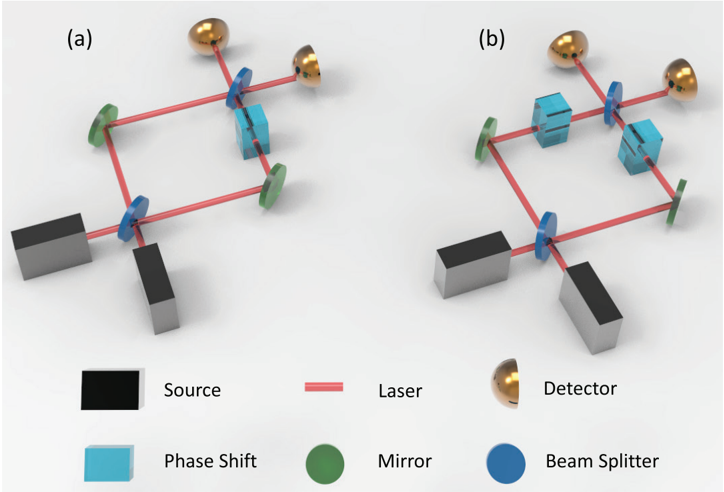
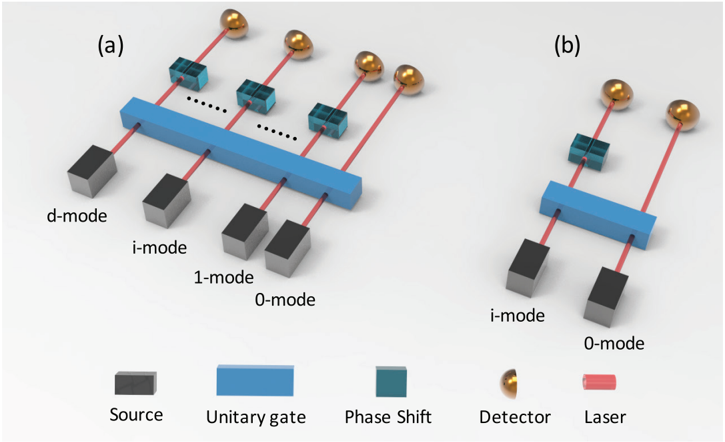
“important scenario in multiparameter estimation. The multi-phase estimation is usually considered in the multi-phase interferometer shown in gure5(a). Another recent review on this topic is reference [16]. In this case, the total variance of all phases is the major concern, which is bounded by 1 n Tr(F ) according to…”
BackgroundInfluentialGeneralized Geometric Quantum Speed Limits
Pires, D. P., Cianciaruso, M., Céleri, L. C., Adesso, G., & Soares-Pinto, D. O. (2016) · Physical Review X · doi:10.1103/physrevx.6.021031 · Cited by 265 · cited 2×
“Recently, Pires et al. [93] established an infinite family of quantum speed limits based on a contractive Riemannian metric discussed in section 2.4.2.”
BackgroundInfluentialQuantum Fidelity for Arbitrary Gaussian States
Banchi, L., Braunstein, S. L., & Pirandola, S. (2015) · Physical Review Letters · doi:10.1103/physrevlett.115.260501 · Cited by 259 · cited 2×
“The expressions of the QFI and the fidelity for multi-mode Gaussian states are given by Monras [62], Safranek et al [69] and Banchi et al [73], and reproduced by Oh et al [74] with a Hermitian operator related to the optimal measurement of the fidelity.”
MethodMultiple-parameter quantum estimation and measurement of nonselfadjoint observables
Yuen, H., & Lax, M. (1973) · IEEE Transactions on Information Theory · doi:10.1109/tit.1973.1055103 · Cited by 254 · cited 2×
“The expression of right logarithmic derivative for a general Gaussian state and the corresponding QFIM was provided by Gao and Lee [64] in 2014, which is an appropriate tool for the estimation of complex numbers [25], such as the number α of a coherent state |α〉.”
MethodQuantum enhanced estimation of a multidimensional field
Baumgratz, T., & Datta, A. (2016) · Physical Review Letters · doi:10.1103/physrevlett.116.030801 · Cited by 249 · cited 2×
“36 In 2016, Baumgratz and Datta [181] provided a framework for the estimation of a multidimensional field with noncommuting unitary generators.”
BackgroundQuantum parameter estimation using general single-mode Gaussian states
Pinel, O., Jian, P., Treps, N., Fabre, C., & Braun, D. (2013) · Physical Review A · doi:10.1103/physreva.88.040102 · Cited by 246 · cited 2×
“in 2013 [63], and for two-mode Gaussian states by Šafránek et al.”
BackgroundGeometric perspective on quantum parameter estimation
Sidhu, J. S., & Kok, P. (2020) · AVS Quantum Science · doi:10.1116/1.5119961 · Cited by 245
Tensor networks and graphical calculus for open quantum systems
Wood, C. J., Biamonte, J., & Cory, D. G. (2015) · Quantum Information and Computation · doi:10.26421/qic15.9-10-3 · Cited by 236
Phase space formalism for quantum estimation of Gaussian statesPreprint
Monràs, A. (2013) · arXiv (Cornell University) · doi:10.48550/arxiv.1303.3682 · Cited by 224
Dissipation in many-body systems: A geometric approach based on information theory
Balian, R., Alhassid, Y., & Reinhardt, H. (1986) · Physics Reports · doi:10.1016/0370-1573(86)90005-0 · Cited by 221 · cited 1×
“Denote ∫ 1 0 ρL̃aρ 1−sds = ∂aρ and replace A, B with L̃a and L̃b, the canonical correlation reduces to the so-called BogoliubovKuboMori Fisher information matrix ∫ 1 0 ρL̃aρ L̃bds [27, 104–107].”
Monotonically convergent optimization in quantum control using Krotov’s method
Reich, D. M., Ndong, M., & Koch, C. P. (2012) · The Journal of Chemical Physics · doi:10.1063/1.3691827 · Cited by 220 · cited 1×
“Krotov’s method is another gradient-based method in quantum control, which promises the monotonicity of convergence during the iteration [144].”
MethodDistributed Quantum Metrology with Linear Networks and Separable Inputs
Ge, W., Jacobs, K., Eldredge, Z., Gorshkov, A. V., & Foss-Feig, M. (2018) · Physical Review Letters · doi:10.1103/physrevlett.121.043604 · Cited by 220
Knysh, S., Smelyanskiy, V. N., & Durkin, G. A. (2011) · Physical Review A · doi:10.1103/physreva.83.021804 · Cited by 218
Joint estimation of phase and phase diffusion for quantum metrology
Vidrighin, M. D., Donati, G., Genoni, M. G., Jin, X.-M., Kolthammer, W. S., Kim, M. S., Datta, A., Barbieri, M., & Walmsley, I. A. (2014) · Nature Communications · doi:10.1038/ncomms4532 · Cited by 217 · cited 2×
“In 2014, Vidrighin et al [132] provide a trade-off bound on the statistical variances for the joint estimation of phase and phase diffusion.”
BackgroundFundamental quantum limit to waveform estimation
Tsang, M., Wiseman, H. M., & Caves, C. M. (2011) · Physical Review Letters · doi:10.1103/physrevlett.106.090401 · Cited by 213 · cited 5×
“The QFIM also plays an important role in the estimation of such signals, also known as waveform estimation [165].”
BackgroundMethodInfluentialA new approach to the Cramér-Rao-type bound of the pure-state model
Matsumoto, K. (2002) · Journal of Physics A: Mathematical and General · doi:10.1088/0305-4470/35/13/307 · Cited by 208 · cited 1×
“The quantum Cramer-Rao bound for the estimation of multiple parameters is then not necessary attainable, which is a major obstacle for the utilization of this bound in many years. In 2002, Matsumoto [130] rst provided the necessary and sucient condition for pure states. After this, its generalization to mixed states w…”
BackgroundQuantum Fisher information of entangled coherent states in the presence of photon loss
Zhang, Y. M., Li, X. W., Yang, W., & Jin, G. R. (2013) · Physical Review A · doi:10.1103/physreva.88.043832 · Cited by 207
Quantum enhanced optomechanical magnetometry
Li, B.-B., Bílek, J., Hoff, U. B., Madsen, L. S., Forstner, S., Prakash, V., Schäfermeier, C., Gehring, T., Bowen, W. P., & Andersen, U. L. (2018) · Optica · doi:10.1364/optica.5.000850 · Cited by 203 · cited 1×
“performances than the classical counterparts. Various physical systems have been used as quantum magnetometers, including but not limited to nitrogen-vacancy centers [177,178], optomechanical systems [179], and cold atoms [180]. A magnetic eld can be represented as a vector, B~= B(coscos˚;cossin˚;sin˚), in the spheric…”
BackgroundOptimal measurements for simultaneous quantum estimation of multiple phases
Pezzè, L., Ciampini, M. A., Spagnolo, N., Humphreys, P. C., Datta, A., Walmsley, I. A., Barbieri, M., Sciarrino, F., & Smerzi, A. (2017) · Physical Review Letters · doi:10.1103/physrevlett.119.130504 · Cited by 200
Machine learning for precise quantum measurement
Hentschel, A., & Sanders, B. C. (2010) · Physical Review Letters · doi:10.1103/physrevlett.104.063603 · Cited by 197 · cited 1×
“With respect to quantum parameter estimation, in 2010, Hentschel and Sanders [198] applied the particle swarm optimization algorithm [199] in the adaptive phase estimation to determine the best estimation strategy, which was experimentally realized by Lumino et al.”
MethodOptimal adaptive control for quantum metrology with time-dependent Hamiltonians
Pang, S., & Jordan, A. N. (2017) · Nature Communications · doi:10.1038/ncomms14695 · Cited by 195
Evaluating the Holevo Cramér-Rao Bound for Multiparameter Quantum Metrology
Albarelli, F., Friel, J., & Datta, A. (2019) · Physical Review Letters · doi:10.1103/physrevlett.123.200503 · Cited by 194 · cited 1×
“Bayesian approach [203–207], including Ziv–Zakai family [167, 168, 201] and Weiss–Weinstein family [166, 208], and some other tools [208–210] like Holevo bound [2, 28, 202], have also shown their validity in various multiparameter scenarios.”
MethodMulti-parameter estimation beyond quantum Fisher information
Demkowicz-Dobrzański, R., Górecki, W., & Guţă, M. (2020) · Journal of Physics A: Mathematical and Theoretical · doi:10.1088/1751-8121/ab8ef3 · Cited by 191 · cited 3×
“These tools beyond the Cramér-Rao bound will be thoroughly reviewed by M. Guţă et al. [212] in the same special issue and hence we do not discuss them in this paper.”
BackgroundMethodInfluentialQuantum Optical Technologies for Metrology, Sensing, and Imaging
Dowling, J. P., & Seshadreesan, K. P. (2015) · Journal of Lightwave Technology · doi:10.1109/jlt.2014.2386795 · Cited by 182
Optimal quantum-enhanced interferometry using a laser power source
Lang, M. D., & Caves, C. M. (2013) · Physical Review Letters · doi:10.1103/physrevlett.111.173601 · Cited by 181 · cited 5×
“In 1981, Caves [141] showed that there exists an unused port in the MZI due to quantum mechanics and the vacuum fluctuation in that port actually affects the phase precision and limit it to the standard quantum limit (also known as shot-noise limit), which is the ultimate limit for a classical apparatus.”
BackgroundInfluentialQuantum metrology for a general Hamiltonian parameter
Pang, S., & Brun, T. A. (2014) · Physical Review A · doi:10.1103/physreva.90.022117 · Cited by 175 · cited 4×
“The density matrix ρ x+dxa can then be approximately calculated as ρ x+dxa = e −iKadxaρeiKadxa [53], which indicates that Ka is the generator of U along parameter xa.”
BackgroundMethodInfluentialSensitivity bounds for multiparameter quantum metrology
Gessner, M., Pezzè, L., & Smerzi, A. (2018) · Physical Review Letters · doi:10.1103/physrevlett.121.130503 · Cited by 169
Havel, T. F. (2003) · Journal of Mathematical Physics · doi:10.1063/1.1518555 · Cited by 167
Attaining the Ultimate Precision Limit in Quantum State Estimation
Yang, Y., Chiribella, G., & Hayashi, M. (2019) · Communications in Mathematical Physics · doi:10.1007/s00220-019-03433-4 · Cited by 166 · cited 1×
“Bayesian approach [204–208], including ZivZakai family [166, 167, 202] and Weiss-Weinstein family [165, 209], and some other tools [209–211] like Holevo bound [2, 28, 203], have also shown their validity in various multiparameter scenarios.”
MethodQuantum Speed Limits across the Quantum-to-Classical Transition
Shanahan, B., Chenu, A., Margolus, N., & del Campo, A. (2018) · Physical Review Letters · doi:10.1103/physrevlett.120.070401 · Cited by 165
Quantum Fisher information as a signature of the superradiant quantum phase transition
Wang, T.-L., Wu, L.-N., Yang, W., Jin, G.-R., Lambert, N., & Nori, F. (2014) · New Journal of Physics · doi:10.1088/1367-2630/16/6/063039 · Cited by 163
Bures volume of the set of mixed quantum states
Sommers, H.-J. R., & Zyczkowski, K. (2003) · Journal of Physics A Mathematical and General · doi:10.1088/0305-4470/36/39/308 · Cited by 163
Quantum Fisher metric and estimation for pure state models
Fujiwara, A., & Nagaoka, H. (1995) · Physics Letters A · doi:10.1016/0375-9601(95)00269-9 · Cited by 160 · cited 3×
“For pure states, Fujiwara and Nagaoka [29] also extended the SLD to a family via ∂aρ = 1 2 (ρLa + L † aρ), in which La is not necessarily to be Hermitian, and when it is, it reduces to the SLD.”
BackgroundAt the limits of criticality-based quantum metrology: apparent super-Heisenberg scaling revisited
Rams, M. M., Sierant, P., Dutta, O., Horodecki, P., & Zakrzewski, J. (2018) · Physical Review X · doi:10.1103/physrevx.8.021022 · Cited by 160 · cited 1×
“On the other hand, the enhancement of QFIM at the critical point indicates that the precision limit of the parameter can be improved near the phase transition, as shown in references [67,68].”
BackgroundQuantum Fisher information for states in exponential form
Jiang, Z. (2014) · Physical Review A · doi:10.1103/physreva.89.032128 · Cited by 157 · cited 1×
“There are other approaches, such as the exponential state [76], Husimi Q function [77], that can obtain the QFI and the QFIM for some specific types of Gaussian states.”
MethodPhase-matching condition for enhancement of phase sensitivity in quantum metrology
Liu, J., Jing, X., & Wang, X. (2013) · Physical Review A · doi:10.1103/physreva.88.042316 · Cited by 152 · cited 1×
“1 Given the spectral decomposition of a density matrix, ρ = ∑ λi∈S |λi〉〈λi|, the QFI for the parameter xa can be calculated as [32–36] Faa = ∑”
Self-citationFrérot, I., & Roscilde, T. (2018) · Physical Review Letters · doi:10.1103/physrevlett.121.020402 · Cited by 149
Uhlmann fidelity between two-mode Gaussian states
Marian, P., & Marian, T. A. (2012) · Physical Review A · doi:10.1103/physreva.86.022340 · Cited by 148 · cited 1×
“The QFI for single-mode Gaussian states has been obtained through the fidelity by Pinel et al in [63], and for two-mode Gaussian states by Šafránek et al in [69] and Marian et al [70] in 2016, based on the expressions of the fidelity given by Scutaru [71] and Marian et al in [72].”
MethodTightening Quantum Speed Limits for Almost All States
Campaioli, F., Pollock, F. A., Binder, F. C., & Modi, K. (2018) · Physical Review Letters · doi:10.1103/physrevlett.120.060409 · Cited by 148
The theory of spin noise spectroscopy: a review
Sinitsyn, N. A., & Pershin, Y. V. (2016) · Reports on Progress in Physics · doi:10.1088/0034-4885/79/10/106501 · Cited by 147
Parallel derivation of isogenic human primed and naive induced pluripotent stem cells
Kilens, S., Meistermann, D., Moreno, D., Chariau, C., Gaignerie, A., Reignier, A., Lelièvre, Y., Casanova, M., Vallot, C., Nedellec, S., et al. (2018) · Nature Communications · doi:10.1038/s41467-017-02107-w · Cited by 147
Classical and quantum Fisher information in the geometrical formulation of quantum mechanics
Paolo Facchi, A., Kulkarni, R. S., Man’ko, V. I., Marmo, G., Sudarshan, E. C. G., & Ventriglia, F. (2010) · Physics Letters A · doi:10.1016/j.physleta.2010.10.005 · Cited by 145 · cited 1×
“The squared infinitesimal distance here is usually expressed as [79]”
BackgroundINTRODUCTION TO QUANTUM FISHER INFORMATION
PETZ, D., & GHINEA, C. (2011) · Quantum Probability and Related Topics · doi:10.1142/9789814338745_0015 · Cited by 143 · cited 1×
“also wrote a thorough technical introduction on QFI [17].”
BackgroundTradeoff in simultaneous quantum-limited phase and loss estimation in interferometry
Crowley, P. J. D., Datta, A., Barbieri, M., & Walmsley, I. A. (2014) · Physical Review A · doi:10.1103/physreva.89.023845 · Cited by 141
Fidelity for displaced squeezed thermal states and the oscillator semigroup
Scutaru, H. (1998) · Journal of Physics A: Mathematical and General · doi:10.1088/0305-4470/31/15/025 · Cited by 140 · cited 2×
“The QFI for single-mode Gaussian states has been obtained through the fidelity by Pinel et al. in 2013 [63], and for two-mode Gaussian states by Šafránek et al. in 2015 [69] and Marian et al. [70] in 2016, based on the expressions of the fidelity given by Scutaru [71] and Marian et al. in 2012 [72].”
BackgroundDemkowicz-Dobrzański, R., Banaszek, K., & Schnabel, R. (2013) · Physical Review A · doi:10.1103/physreva.88.041802 · Cited by 139 · cited 1×
“The recently developed gravitational wave detector GEO 600 can also be mapped as a MZI in the absence of noise [140].”
BackgroundZiv–Zakai error bounds for quantum parameter estimation
Tsang, M. (2012) · Physical Review Letters · doi:10.1103/physrevlett.108.230401 · Cited by 137 · cited 1×
“Bayesian approach [204–208], including ZivZakai family [166, 167, 202] and Weiss-Weinstein family [165, 209], and some other tools [209–211] like Holevo bound [2, 28, 203], have also shown their validity in various multiparameter scenarios.”
MethodQuantum state estimation with nuisance parameters
Suzuki, J., Yang, Y., & Hayashi, M. (2020) · Journal of Physics A Mathematical and Theoretical · doi:10.1088/1751-8121/ab8b78 · Cited by 137 · cited 2×
“[213] has thoroughly reviewed the quantum state estimation with nuisance parameters in the same special issue.”
BackgroundQuantum parameter estimation with optimal control
Liu, J., & Yuan, H. (2017) · Physical Review A · doi:10.1103/physreva.96.012117 · Cited by 133 · cited 8×
“The performance of the controlled scheme relies on the specific form of noise [171,172], which could be different for different magnetometers.”
BackgroundMethodInfluentialSelf-citationMultiparameter Gaussian quantum metrology
Nichols, R., Liuzzo-Scorpo, P., Knott, P. A., & Adesso, G. (2018) · Physical Review A · doi:10.1103/physreva.98.012114 · Cited by 131 · cited 4×
“The SLD operator for Gaussian states has been given in references [62, 65, 67], and we organize the corresponding results in the following theorem.”
BackgroundMethodInfluentialHyllus, P., Pezzé, L., & Smerzi, A. (2010) · Physical Review Letters · doi:10.1103/physrevlett.105.120501 · Cited by 128 · cited 2×
“, the variance should be involved in the Heisenberg limit [162,163] and be treated as a resource.”
BackgroundQuantum Fisher Information for Density Matrices with Arbitrary Ranks
Liu, J., Jing, X.-X., Zhong, W., & Wang, X.-G. (2014) · Communications in Theoretical Physics · doi:10.1088/0253-6102/61/1/08 · Cited by 126
Discontinuities of the quantum Fisher information and the Bures metric
Šafránek, D. (2017) · Physical Review A · doi:10.1103/physreva.95.052320 · Cited by 125 · cited 2×
“In the case that the rank of ρ(~x) does not equal to that of ρ(~x + d~x), Šafránek recently showed [87] that the QFIM does not exactly equal to the fidelity susceptibility.”
BackgroundQuantum parameter estimation using multi-mode Gaussian states
Šafránek, D., Lee, A. R., & Fuentes, I. (2015) · New Journal of Physics · doi:10.1088/1367-2630/17/7/073016 · Cited by 122 · cited 3×
“[69] and Banchi et al.”
BackgroundThe Bogoliubov inner product in quantum statistics: Dedicated to J. Merza on his 60th birthday
Petz, D., & Tóth, G. (1993) · Letters in Mathematical Physics · doi:10.1007/bf00739578 · Cited by 120
Bures metric over thermal state manifolds and quantum criticality
Zanardi, P., Campos Venuti, L., & Giorda, P. (2007) · Physical Review A · doi:10.1103/physreva.76.062318 · Cited by 118 · cited 2×
“(76) The relationship between the fidelity and the QFIM has been well studied in the literature [30,31,81–84].”
BackgroundOptimal Feedback Scheme and Universal Time Scaling for Hamiltonian Parameter Estimation
Yuan, H., & Fung, C.-H. F. (2015) · Physical Review Letters · doi:10.1103/physrevlett.115.110401 · Cited by 118 · cited 1×
“It is already known that quantum control can help to improve the QFI to the Heisenberg scaling with the absence of noise in some scenarios [168–170].”
BackgroundSelf-citationPinel, O., Fade, J., Braun, D., Jian, P., Treps, N., & Fabre, C. (2012) · Physical Review A · doi:10.1103/physreva.85.010101 · Cited by 116 · cited 1×
“The QFI for pure Gaussian states is studied in reference [68].”
BackgroundLocal quantum thermal susceptibility
De Pasquale, A., Rossini, D., Fazio, R., & Giovannetti, V. (2016) · Nature Communications · doi:10.1038/ncomms12782 · Cited by 113 · cited 1×
“For a system of which the Hamiltonian has no interaction terms, the relation above still holds for its subsystems [102].”
BackgroundSequential feedback scheme outperforms the parallel scheme for Hamiltonian parameter estimation
Yuan, H. (2016) · Physical Review Letters · doi:10.1103/physrevlett.117.160801 · Cited by 112 · cited 3×
“(76) The relationship between the fidelity and the QFIM has been well studied in the literature [30,31,81–84].”
BackgroundSelf-citationGeometry of canonical correlation on the state space of a quantum system
Petz, D. (1994) · Journal of Mathematical Physics · doi:10.1063/1.530611 · Cited by 110 · cited 1×
“Denote ∫ 1 0 ρL̃aρ 1−sds = ∂aρ and replace A, B with L̃a and L̃b, the canonical correlation reduces to the so-called BogoliubovKuboMori Fisher information matrix ∫ 1 0 ρL̃aρ L̃bds [27, 104–107].”
Estimation of Gaussian quantum states
Šafránek, D. (2019) · Journal of Physics A: Mathematical and Theoretical · doi:10.1088/1751-8121/aaf068 · Cited by 110 · cited 3×
“[65] and Šafránek [66] provided the expression of QFIM for multi-mode Gaussian states independently, which was obtained based on the calculation of SLD [7].”
BackgroundMethodSimple expression for the quantum Fisher information matrix
Šafránek, D. (2018) · Physical Review A · doi:10.1103/physreva.97.042322 · Cited by 109 · cited 2×
“3 For a full-rank density matrix, the QFIM can be expressed by [39] Fab = 2vec(∂aρ) (ρ⊗ 1 + 1 ⊗ ρ∗) vec(∂bρ), (19) where ρ∗ is the conjugate of ρ, and the SLD operator in Liouville space, denoted by vec(La), reads vec(La) = 2 (ρ⊗ 1 + 1 ⊗ ρ∗) vec(∂aρ).”
MethodNonlinear quantum metrology of many-body open systems
Beau, M., & del Campo, A. (2017) · Physical Review Letters · doi:10.1103/physrevlett.119.010403 · Cited by 107 · cited 1×
“In 2017, Beau and del Campo [123] discussed the nonlinear metrology of many-body open systems and established the relation between the QFI for coupling constants and the quantum speed limit, which indicates that the quantum speed limit directly determines the amplitude of the estimation error in such cases.”
BackgroundControl-enhanced multiparameter quantum estimation
Liu, J., & Yuan, H. (2017) · Physical Review A · doi:10.1103/physreva.96.042114 · Cited by 105 · cited 5×
“The performance of the controlled scheme relies on the specific form of noise [171,172], which could be different for different magnetometers.”
BackgroundMethodInfluentialSelf-citationQuantum-enhanced multiparameter estimation in multiarm interferometers
Ciampini, M. A., Spagnolo, N., Vitelli, C., Pezzè, L., Smerzi, A., & Sciarrino, F. (2016) · Scientific Reports · doi:10.1038/srep28881 · Cited by 104 · cited 2×
“2, the total variance is then bounded by [151] ∑”
BackgroundQuantum metrology in the presence of limited data
Rubio, J., & Dunningham, J. (2019) · New Journal of Physics · doi:10.1088/1367-2630/ab098b · Cited by 102 · cited 1×
“Bayesian approach [204–208], including ZivZakai family [166, 167, 202] and Weiss-Weinstein family [165, 209], and some other tools [209–211] like Holevo bound [2, 28, 203], have also shown their validity in various multiparameter scenarios.”
MethodInterferometric superlocalization of two incoherent optical point sources
Nair, R., & Tsang, M. (2016) · Optics Express · doi:10.1364/oe.24.003684 · Cited by 101 · cited 1×
“With this result, it has been shown that direct imaging performs poorly for estimating small separations and other elaborate methods like spatial-mode demultiplexing and image inversion interferometry can be used to achieve the quantum limit [192,193].”
MethodExperimental multiphase estimation on a chip
Polino, E., Riva, M., Valeri, M., Silvestri, R., Corrielli, G., Crespi, A., Spagnolo, N., Osellame, R., & Sciarrino, F. (2019) · Optica · doi:10.1364/optica.6.000288 · Cited by 101 · cited 2×
“Experimentally, Polino et al. [146] recently demonstrated quantum-enhanced double-phase estimation with a photonic chip.”
BackgroundBayesian quantum frequency estimation in presence of collective dephasing
Macieszczak, K., Fraas, M., & Demkowicz-Dobrzański, R. (2014) · New Journal of Physics · doi:10.1088/1367-2630/16/11/113002 · Cited by 99 · cited 1×
“ference [160]. As a mathematical tool, quantum Cramer-Rao bound is not the only one for quantum multiparameter estimation. Ziv-Zakai bound [128,129,161], Holevo bound [2, 100,162], Bayesian approach [163,164] and some other tools [165{167] have also shown their validity in various multiparameter scenarios. These tools…”
Markov invariant geometry on manifolds of states
Morozova, E. A., & Chentsov, N. N. (1991) · Journal of Soviet Mathematics · doi:10.1007/bf01095975 · Cited by 98 · cited 1×
“In more concrete terms, the QFIM belongs to a family of contractive Riemannian metric [24, 26, 89, 90], associated with which the infinitesimal distance in state space is ds2 = ∑ μ gμνdxμdxν with gμν as the contractive Riemannian metric.”
BackgroundGaussian systems for quantum-enhanced multiple phase estimation
Gagatsos, C. N., Branford, D., & Datta, A. (2016) · Physical Review A · doi:10.1103/physreva.94.042342 · Cited by 98 · cited 1×
“There are other approaches, such as the exponential state [76], Husimi Q function [77], that can obtain the QFI and the QFIM for some specific types of Gaussian states.”
MethodExperimental phase estimation enhanced by machine learning
Lumino, A., Polino, E., Rab, A. S., Milani, G., Spagnolo, N., Wiebe, N., & Sciarrino, F. (2018) · Physical Review Applied · doi:10.1103/physrevapplied.10.044033 · Cited by 97 · cited 1×
“[200] in 2018.”
Quantum-Limited Loss Sensing: Multiparameter Estimation and Bures Distance between Loss Channels
Nair, R. (2018) · Physical Review Letters · doi:10.1103/physrevlett.121.230801 · Cited by 97 · cited 1×
“In the case of noise estimation, the simultaneous estimation of loss parameters has been studied in reference [191].”
BackgroundQuantum metrology with unitary parametrization processes
Liu, J., Jing, X.-X., & Wang, X. (2015) · Scientific Reports · doi:10.1038/srep08565 · Cited by 95 · cited 6×
“For a unitary process U with a pure probe state |ψ0〉, this condition can be expressed with the operator Ha and Hb, as shown in the following corollary [48].”
BackgroundMethodInfluentialSelf-citationExplicit formulae for the Bures metric
Dittmann, J. (1999) · Journal of Physics A: Mathematical and General · doi:10.1088/0305-4470/32/14/007 · Cited by 95 · cited 3×
“rnal of Physics A Review Appendix C. One-qubit basis-independent expression of QFIM This appendix shows the proof of Theorem2.5. We rst prove that the QFIM for one-qubit mixed state can be written as [33] F ab= Tr[(@ xa ˆ)(@ x b ˆ)] + 1 detˆ Tr[(@ xa ˆ ˆ@ xa ˆ)(@ x ˆ ˆ@ x ˆ)]: (C.1) Utilizing the spectral decompositio…”
BackgroundInfluentialBayesian multiparameter quantum metrology with limited data
Rubio, J., & Dunningham, J. (2020) · Physical Review A · doi:10.1103/physreva.101.032114 · Cited by 95
Generalizable control for quantum parameter estimation through reinforcement learning
Xu, H., Li, J., Liu, L., Wang, Y., Yuan, H., & Wang, X. (2019) · npj Quantum Information · doi:10.1038/s41534-019-0198-z · Cited by 94 · cited 1×
“In the case of designing controlled schemes, similar to gradient-based methods, machine learning could also help use to find the optimal control protocal in order to achieve the best precision limit [186].”
MethodSelf-citationOptimal probe states for the estimation of Gaussian unitary channels
Šafránek, D., & Fuentes, I. (2016) · Physical Review A · doi:10.1103/physreva.94.062313 · Cited by 90 · cited 1×
“Besides, a general method to find the optimal probe states to optimize the QFIM of Gaussian unitary channels is also provided by Šafránek and Fuentes in 2016 [78], and Matsubara et al.”
MethodKind of entanglement that speeds up quantum evolution
Fröwis, F. (2012) · Physical Review A · doi:10.1103/physreva.85.052127 · Cited by 87
Fundamental limits on low-temperature quantum thermometry with finite resolution
Potts, P. P., Brask, J. B., & Brunner, N. (2019) · Quantum · doi:10.22331/q-2019-07-09-161 · Cited by 87
Uncertainty relation revisited from quantum estimation theory
Watanabe, Y., Sagawa, T., & Ueda, M. (2011) · Physical Review A · doi:10.1103/physreva.84.042121 · Cited by 86 · cited 2×
“Now we express the SLD operator with the su(d) generators as [43,44] Lxa = za1 + ~ya · ~κ, (C.”
MethodLocal versus global strategies in multiparameter estimation
Knott, P. A., Proctor, T. J., Hayes, A. J., Ralph, J. F., Kok, P., & Dunningham, J. A. (2016) · Physical Review A · doi:10.1103/physreva.94.062312 · Cited by 86 · cited 1×
“A linear network is another common structure for multi-phase estimation [160, 161].”
BackgroundOptimal measurements for quantum multiparameter estimation with general states
Yang, J., Pang, S., Zhou, Y., & Jordan, A. N. (2019) · Physical Review A · doi:10.1103/physreva.100.032104 · Cited by 86 · cited 3×
“Apart from the QFIM, the CFIM is also bounded by a measurement-dependent matrix with the abth entry ∑ k Re[Tr(ρLaΠkLb)] [138], where {Πk} is a set of POVM.”
BackgroundMethodQuantum-enhanced metrology for multiple phase estimation with noise
Yue, J.-D., Zhang, Y.-R., & Fan, H. (2014) · Scientific Reports · doi:10.1038/srep05933 · Cited by 84
Statistical speed of quantum states: Generalized quantum Fisher information and Schatten speed
Gessner, M., & Smerzi, A. (2018) · Physical Review A · doi:10.1103/physreva.97.022109 · Cited by 83 · cited 1×
“Quantum speed limit Quantum speed limit aims at obtaining the smallest evolution time for quantum processes [6, 49, 93, 116–121].”
BackgroundBayesian parameter estimation by continuous homodyne detection
Kiilerich, A. H., & Mølmer, K. (2016) · Physical Review A · doi:10.1103/physreva.94.032103 · Cited by 81
Quantum Bell–Ziv–Zakai bounds and Heisenberg limits for waveform estimation
Berry, D. W., Tsang, M., Hall, M. J. W., & Wiseman, H. M. (2015) · Physical Review X · doi:10.1103/physrevx.5.031018 · Cited by 81 · cited 2×
“The waveform estimation can also be solved with other tools, like the Bell–Ziv–Zakai lower bounds [167].”
MethodTwo quantum analogues of Fisher information from a large deviation viewpoint of quantum estimation
Hayashi, M. (2002) · Journal of Physics A Mathematical and General · doi:10.1088/0305-4470/35/36/302 · Cited by 80 · cited 1×
“Denote ∫ 1 0 ρL̃aρ 1−sds = ∂aρ and replace A, B with L̃a and L̃b, the canonical correlation reduces to the so-called BogoliubovKuboMori Fisher information matrix ∫ 1 0 ρL̃aρ L̃bds [27, 104–107].”
Optimal measurement on noisy quantum systems
Watanabe, Y., Sagawa, T., & Ueda, M. (2010) · Physical Review Letters · doi:10.1103/physrevlett.104.020401 · Cited by 80 · cited 1×
“Now we express the SLD operator with the su(d) generators as [43, 44] Lxa = za + ya · κ, (C.”
MethodOn asymptotic quantum statistical inference
Gill, R. D., & Guţă, M. I. (2013) · Institute of Mathematical Statistics Collections · doi:10.1214/12-imscoll909 · Cited by 79 · cited 2×
“o h j[L a;L b]j i= 0; 8a;b; (102) which is equivalent to the form Im(h@ a j@ b i) = 0: (103) When this condition is satised, the Holevo bound is also attained and equivalent to the Cramer-Rao bound [101,102]. Recall that the Berry curvature introduced in section2.4.3 is of the form ab= i@ a(h j@ b i) i@ b(h j@ a i) =…”
BackgroundMethodInfluentialFidelity susceptibility and quantum Fisher information for density operators with arbitrary ranks
Liu, J., Xiong, H.-N., Song, F., & Wang, X. (2014) · Physica A Statistical Mechanics and its Applications · doi:10.1016/j.physa.2014.05.028 · Cited by 76 · cited 2×
“Recently, it has been rigorously proved that the QFIM for a finite dimensional density matrix can be expressed with the support of the density matrix [24].”
BackgroundSelf-citationBounds on quantum multiple-parameter estimation with Gaussian state
Gao, Y., & Lee, H. (2014) · The European Physical Journal D · doi:10.1140/epjd/e2014-50560-1 · Cited by 75 · cited 2×
“(69) The expression of right logarithmic derivative for a general Gaussian state and the corresponding QFIM was provided by Gao and Lee [64] in 2014, which is an appropriate tool for the estimation of complex numbers [25], such as the number α of a coherent state |α〉.”
MethodExplicit formula for the Holevo bound for two-parameter qubit-state estimation problem
Suzuki, J. (2016) · Journal of Mathematical Physics · doi:10.1063/1.4945086 · Cited by 75
Vectorization of quantum operations and its usePreprint
Gilchrist, A., Terno, D. R., & Wood, C. J. (2009) · arXiv (Cornell University) · doi:10.48550/arxiv.0911.2539 · Cited by 74 · cited 1×
“(20) This theorem can be proved by using the facts that vec(AB1 ) = (A ⊗ 1 )vec(B) = (1 ⊗BT)vec(A) (B is the transpose of B) [40–42] and Tr(A†B) = vec(A)†vec(B).”
BackgroundTakeoka, M., Seshadreesan, K. P., You, C., Izumi, S., & Dowling, J. P. (2017) · Physical Review A · doi:10.1103/physreva.96.052118 · Cited by 72 · cited 1×
“[145] considered this question and gave the answer by proving a no-go theorem stating that in the double phase MZI, if one input port is the vacuum state, the sensitivity can never be better than the standard quantum limit regardless of the choice of quantum state in the other port and the detection scheme.”
BackgroundAchieving the Landau bound to precision of quantum thermometry in systems with vanishing gap
Paris, M. G. A. (2015) · Journal of Physics A Mathematical and Theoretical · doi:10.1088/1751-8113/49/3/03lt02 · Cited by 69 · cited 1×
“Compared to the specific heat Cv = ∂T 〈H〉 ∂T = 1 T 2 (〈H2〉 − 〈H〉2), we have [16,86,87] FTT = 1 T 2 Cv, (86) i.”
Control-enhanced sequential scheme for general quantum parameter estimation at the Heisenberg limit
Hou, Z., Wang, R.-J., Tang, J.-F., Yuan, H., Xiang, G.-Y., Li, C.-F., & Guo, G.-C. (2019) · Physical Review Letters · doi:10.1103/physrevlett.123.040501 · Cited by 68
Self-citationQuantum Fisher information and symmetric logarithmic derivative via anti-commutators
Liu, J., Chen, J., Jing, X.-X., & Wang, X. (2016) · Journal of Physics A Mathematical and Theoretical · doi:10.1088/1751-8113/49/27/275302 · Cited by 65 · cited 2×
“As a matter of fact, this conclusion can be extended to the QFIM for any quantum state [31, 38], i.”
BackgroundSelf-citationQuantum non-Markovianity based on the Fisher-information matrix
Song, H., Luo, S., & Hong, Y. (2015) · Physical Review A · doi:10.1103/physreva.91.042110 · Cited by 65 · cited 2×
“Later in 2015, Song et al [128] utilized the maximum eigenvalue of average QFIM flow to construct a quantitative measure of non-Markovianity.”
MethodMarzolino, U., & Prosen, T. (2017) · Physical Review B · doi:10.1103/physrevb.96.104402 · Cited by 63 · cited 1×
“Apart from quantum metrology, the QFI also connects to other aspects of quantum physics, such as quantum phase transition [18–20] and entanglement witness [21,22].”
Seveso, L., Albarelli, F., Genoni, M. G., & Paris, M. G. A. (2019) · Journal of Physics A Mathematical and Theoretical · doi:10.1088/1751-8121/ab599b · Cited by 58
Bures and statistical distance for squeezed thermal states
Twamley, J. (1996) · Journal of Physics A Mathematical and General · doi:10.1088/0305-4470/29/13/036 · Cited by 57 · cited 1×
“(76) The relationship between the fidelity and the QFIM has been well studied in the literature [30,31,81–84].”
BackgroundEntangling measurements for multiparameter estimation with two qubits
Roccia, E., Gianani, I., Mancino, L., Sbroscia, M., Somma, F., Genoni, M. G., & Barbieri, M. (2018) · Quantum Science and Technology · doi:10.1088/2058-9565/aa9212 · Cited by 57
Quantum multiparameter estimation with generalized balanced multimode noon-like states
Zhang, L., & Chan, K. W. C. (2017) · Physical Review A · doi:10.1103/physreva.95.032321 · Cited by 54 · cited 1×
“[126] considered a general balanced state c ∑ j |ψj〉 with |ψj〉 = |0.”
Quantum metrological bounds for vector parameters
Zhang, Y.-R., & Fan, H. (2014) · Physical Review A · doi:10.1103/physreva.90.043818 · Cited by 51 · cited 1×
“Bayesian approach [204–208], including ZivZakai family [166, 167, 202] and Weiss-Weinstein family [165, 209], and some other tools [209–211] like Holevo bound [2, 28, 203], have also shown their validity in various multiparameter scenarios.”
MethodQuantum estimation of a two-phase spin rotation
Vaneph, C., Tufarelli, T., & Genoni, M. G. (2013) · Quantum Measurements and Quantum Metrology · doi:10.2478/qmetro-2013-0003 · Cited by 50
Optimal Gaussian metrology for generic multimode interferometric circuit
Matsubara, T., Facchi, P., Giovannetti, V., & Yuasa, K. (2019) · New Journal of Physics · doi:10.1088/1367-2630/ab0604 · Cited by 49 · cited 1×
“[75] in 2019.”
Quantum Fisher Information of Entangled Coherent States in a Lossy Mach—Zehnder Interferometer
Jing, X.-X., Liu, J., Zhong, W., & Wang, X.-G. (2014) · Communications in Theoretical Physics · doi:10.1088/0253-6102/61/1/18 · Cited by 46
Precision bounds for gradient magnetometry with atomic ensembles
Apellaniz, I., Urizar-Lanz, I., Zimborás, Z., Hyllus, P., & Tóth, G. (2018) · Physical Review A · doi:10.1103/physreva.97.053603 · Cited by 45 · cited 1×
“The corresponding theory for the estimation of gradients based on Cramér-Rao bound has been established in references [184,185].”
BackgroundAn estimation theoretical characterization of coherent states
Fujiwara, A., & Nagaoka, H. (1999) · Journal of Mathematical Physics · doi:10.1063/1.532962 · Cited by 43 · cited 2×
“For pure states, Fujiwara and Nagaoka [29] also extended the SLD to a family via ∂aρ = 1 2 (ρLa + L † aρ), in which La is not necessarily to be Hermitian, and when it is, it reduces to the SLD.”
BackgroundQuantum parameter estimation with the Landau-Zener transition
Yang, J., Pang, S., & Jordan, A. N. (2017) · Physical Review A · doi:10.1103/physreva.96.020301 · Cited by 43 · cited 1×
“It is already known that quantum control can help to improve the QFI to the Heisenberg scaling with the absence of noise in some scenarios [168–170].”
BackgroundScalable Generation of Multi-mode NOON States for Quantum Multiple-phase Estimation
Zhang, L., & Chan, K. W. C. (2018) · Scientific Reports · doi:10.1038/s41598-018-29828-2 · Cited by 43 · cited 1×
“The generation of this state has been proposed in reference [120].”
QUANTUM METROLOGY WITH COLD ATOMS
Huang, J., Wu, S., Zhong, H., & Lee, C. (2014) · Annual review of cold atoms and molecules · doi:10.1142/9789814590174_0007 · Cited by 42
Multiple phase estimation for arbitrary pure states under white noise
Yao, Y., Ge, L., Xiao, X., Wang, X., & Sun, C. P. (2014) · Physical Review A · doi:10.1103/physreva.90.062113 · Cited by 42 · cited 1×
“However, the performance of the simultaneous estimation may be strongly affected by the noise [153, 154] and the O(d) advantage may even disappear under the photon loss noise [155].”
BackgroundSelf-citationCross-correlation spin noise spectroscopy of heterogeneous interacting spin systems
Roy, D., Yang, L., Crooker, S. A., & Sinitsyn, N. A. (2015) · Scientific Reports · doi:10.1038/srep09573 · Cited by 42
Oh, C., Lee, C., Banchi, L., Lee, S., Rockstuhl, C., & Jeong, H. (2019) · Physical Review A · doi:10.1103/physreva.100.012323 · Cited by 42 · cited 1×
“[74] with a Hermitian operator related to the optimal measurement of the fidelity.”
BackgroundHybrid optimization schemes for quantum control
Goerz, M. H., Whaley, K. B., & Koch, C. P. (2015) · EPJ Quantum Technology · doi:10.1140/epjqt/s40507-015-0034-0 · Cited by 40 · cited 1×
“Thus, it is also useful to involve gradient-free methods, including Monte Carlo method and particle swarm optimization, into the quantum parameter estimation, or apply a hybrid method combining gradient-based and gradient-free methods as discussed in [175].”
MethodFundamental quantum limits to waveform detection
Tsang, M., & Nair, R. (2012) · Physical Review A · doi:10.1103/physreva.86.042115 · Cited by 40 · cited 1×
“Waveform estimation In many practical problems, like the detection of gravitational waves [140] or the force detection [164], what needs to be estimated is not a parameter, but a time-varing signal.”
BackgroundDetermining the continuous family of quantum Fisher information from linear-response theory
Shitara, T., & Ueda, M. (2016) · Physical Review A · doi:10.1103/physreva.94.062316 · Cited by 36 · cited 1×
“As a matter of fact, Shitara and Ueda [94] showed that the relations in equations (89) and (90) can be further extended to the family of metric described in equation (78) by utilizing the generalized fluctuation-dissipation theorem.”
MethodQuantum Fisher information on two manifolds of two-mode Gaussian states
Marian, P., & Marian, T. A. (2016) · Physical Review A · doi:10.1103/physreva.93.052330 · Cited by 36 · cited 2×
“The QFI for single-mode Gaussian states has been obtained through the fidelity by Pinel et al. in 2013 [63], and for two-mode Gaussian states by Šafránek et al. in 2015 [69] and Marian et al. [70] in 2016, based on the expressions of the fidelity given by Scutaru [71] and Marian et al. in 2012 [72].”
MethodMaximal quantum Fisher information for general su(2) parametrization processes
Jing, X.-X., Liu, J., Xiong, H.-N., & Wang, X. (2015) · Physical Review A · doi:10.1103/physreva.92.012312 · Cited by 35
Self-citationWeak measurements and the joint estimation of phase and phase diffusion
Altorio, M., Genoni, M. G., Vidrighin, M. D., Somma, F., & Barbieri, M. (2015) · Physical Review A · doi:10.1103/physreva.92.032114 · Cited by 34 · cited 1×
“[147] addressed the usefulness of weak measurements in this case and in 2018 Hu et al.”
BackgroundMultiple phase estimation in quantum cloning machines
Yao, Y., Ge, L., Xiao, X., Wang, X.-G., & Sun, C.-P. (2014) · Physical Review A · doi:10.1103/physreva.90.022327 · Cited by 31 · cited 1×
“However, the performance of the simultaneous estimation may be strongly affected by the noise [153, 154] and the O(d) advantage may even disappear under the photon loss noise [155].”
BackgroundSelf-citationQuantum Weiss–Weinstein bounds for quantum metrology
Lu, X.-M., & Tsang, M. (2016) · Quantum Science and Technology · doi:10.1088/2058-9565/1/1/015002 · Cited by 31 · cited 1×
“Bayesian approach [203–207], including Ziv–Zakai family [167, 168, 201] and Weiss–Weinstein family [166, 208], and some other tools [208–210] like Holevo bound [2, 28, 202], have also shown their validity in various multiparameter scenarios.”
MethodSelf-citationQuantum metrology of spatial deformation using arrays of classical and quantum light emitters
Sidhu, J. S., & Kok, P. (2017) · Physical Review A · doi:10.1103/physreva.95.063829 · Cited by 31 · cited 2×
“Recently, Sidhu and Kok [51, 52] use this H-representation to study the spatial deformations, epecially the grid deformations of classical and quantum light emitters.”
BackgroundValid lower bound for all estimators in quantum parameter estimation
Liu, J., & Yuan, H. (2016) · New Journal of Physics · doi:10.1088/1367-2630/18/9/093009 · Cited by 28 · cited 1×
“Bayesian approach [204–208], including ZivZakai family [166, 167, 202] and Weiss-Weinstein family [165, 209], and some other tools [209–211] like Holevo bound [2, 28, 203], have also shown their validity in various multiparameter scenarios.”
MethodSelf-citationPhase estimation for an SU(1,1) interferometer in the presence of phase diffusion and photon losses
Hu, X.-L., Li, D., Chen, L. Q., Zhang, K., Zhang, W., & Yuan, C.-H. (2018) · Physical Review A · doi:10.1103/physreva.98.023803 · Cited by 26 · cited 1×
“[148] discussed the SU(1,1) interferometry in the presence of phase diffusion.”
BackgroundDoes large quantum Fisher information imply Bell correlations?
Fröwis, F., Fadel, M., Treutlein, P., Gisin, N., & Brunner, N. (2019) · Physical Review A · doi:10.1103/physreva.99.040101 · Cited by 25 · cited 1×
“Furthermore, due to the fact that the QFI is a witness for multipartite entanglement [22], and a large QFI can imply Bell correlations [115], equations (89) and (90) provide an experimentally-friendly way to witness the quantum correlations in the thermal systems.”
BackgroundQuantum parameter estimation with a neural networkPreprint
Greplová, E., Andersen, C. K., & Mølmer, K. (2017) · arXiv (Cornell University) · doi:10.48550/arxiv.1711.05238 · Cited by 25 · cited 1×
“[201] proposed to use neural networks to estimate the rates of coherent and incoherent processes in quantum systems with continuous measurement records.”
BackgroundProbing many-body localization by spin noise spectroscopy
Roy, D., Singh, R., & Moessner, R. (2015) · Physical Review B · doi:10.1103/physrevb.92.180205 · Cited by 24 · cited 1×
“Because of equations (89) and (90), and the fact that Sab(ω) and χab(ω) can be directly measured in the experiments [110–114], Fab becomes measurable in this case, which breaks the previous understanding that QFI is not observable since the fidelity is not observable.”
BackgroundEstimation of gradients in quantum metrology
Altenburg, S., Oszmaniec, M., Wölk, S., & Gühne, O. (2017) · Physical Review A · doi:10.1103/physreva.96.042319 · Cited by 23 · cited 1×
“The corresponding theory for the estimation of gradients based on Cramér-Rao bound has been established in references [184,185].”
BackgroundQuantum Fisher information for general spatial deformations of quantum emittersPreprint
Sidhu, J. S., & Kok, P. (2018) · arXiv (Cornell University) · doi:10.48550/arxiv.1802.01601 · Cited by 22 · cited 2×
“Recently, Sidhu and Kok [51, 52] use this H-representation to study the spatial deformations, epecially the grid deformations of classical and quantum light emitters.”
BackgroundQuantum-enhanced multi-parameter estimation for unitary photonic systems
Liu, N., & Cable, H. V. (2017) · Quantum Science and Technology · doi:10.1088/2058-9565/aa6fea · Cited by 21
Fundamental Quantum Limits of Multicarrier Optomechanical Sensors
Branford, D., Miao, H., & Datta, A. (2018) · Physical Review Letters · doi:10.1103/physrevlett.121.110505 · Cited by 21
Two-mode bosonic quantum metrology with number fluctuations
Pasquale, A. D., Paolo Facchi, A., Florio, G., Giovannetti, V., Matsuoka, K., & Yuasa, K. (2015) · Physical Review A · doi:10.1103/physreva.92.042115 · Cited by 19 · cited 1×
“, the variance should be involved in the Heisenberg limit [162,163] and be treated as a resource.”
BackgroundBerry curvature as a lower bound for multiparameter estimation
Guo, W., Zhong, W., Jing, X.-X., Fu, L.-B., & Wang, X. (2016) · Physical Review A · doi:10.1103/physreva.93.042115 · Cited by 19
Self-citationMultiparameter estimation via an ensemble of spinor atoms
Zhuang, M., Huang, J., & Lee, C. (2018) · Physical Review A · doi:10.1103/physreva.98.033603 · Cited by 17 · cited 1×
“Apart from the aforementioned cases, quantum multiparameter estimation is also studied in other scenarios, including the spinor systems [187], unitary photonic systems [188], networked quantum sensors [189], and the quantum thermometry [190].”
BackgroundDiscrete-to-continuous transition in quantum phase estimation
Rządkowski, W., & Demkowicz-Dobrzański, R. (2017) · Physical Review A · doi:10.1103/physreva.96.032319 · Cited by 12 · cited 1×
“Bayesian approach [204–208], including ZivZakai family [166, 167, 202] and Weiss-Weinstein family [165, 209], and some other tools [209–211] like Holevo bound [2, 28, 203], have also shown their validity in various multiparameter scenarios.”
MethodLiu (2016) · doi:10.1088/1751-8113/49/11/115303 · Cited by 11
Quantum state estimation with nuisance parametersPreprint
Suzuki, J., Yang, Y., & Hayashi, M. (2019) · arXiv (Cornell University) · doi:10.48550/arxiv.1911.02790 · Cited by 1 · cited 2×
“[213] has thoroughly reviewed the quantum state estimation with nuisance parameters in the same special issue.”
Background
Research works printed but not linked: 13
- Petz D 2008 Quantum Information Theory and Quantum Statistics (Theoretical and Mathematical Physics) (Berlin: Springer)
- Watanabe Y 2014 Formulation of Uncertainty Relation Between Error and Disturbance in Quantum Measurement by Using Quantum Estimation Theory (Berlin: Springer)
- Scully M O and Zubairy M S 1997 Quantum Optics (Cambridge: Cambridge University Press)
- Serafini A 2017 Quantum Continuous Variables: a Primer of Theoretical Methods (Oxford: Taylor and Francis)
- Nielsen M A and Chuang I L 2000 Quantum Computation and Quantum Information (Cambridge: Cambridge University Press)
- Hayashi M (ed) 2005 Asymptotic Theory of Quantum Statistical Inference: Selected Papers (Singapore: World Scientific)
- Bengtsson I and Zyczkowski K 2006 Geometry of Quantum States: an Introduction to Quantum Entanglement (Cambridge: Cambridge University Press)
- Shapere A and and Wilczek F (ed) 1989 Geometric Phases in Physics (Singapore: World Scientific)
- Kubo R, Toda M and Hashitsume N 1991 Statistical Physics II, Nonequilibrium Statistical Mechanics (Springer Series on Solid State Sciences) (Berlin: Springer)
- Shirane G, Shapiro S M and Tranquada J M 2002 Neutron Scattering with a Triple-Axis Spectrometer, Basic Techniques (Cambridge: Cambridge University Press)
- Lu X-M, Ma Z and Zhang C 2004 Generalized-mean Cramér-Rao bound for multiparameter quantum metrology (arXiv:1010.06035)
- Eberhart R and Kennedy J 1995 Proc. 6th Int. Symp. on Micro Machine and Human Science (New York: IEEE)
- Guţă M et al 2019 Multiparameter estimation beyond quantum Fisher information J. Phys. A: Math. Theor. (submitted)
Cited by
The Variational Quantum Eigensolver: A review of methods and best practices
Tilly, J., Chen, H., Cao, S., Picozzi, D., Setia, K., Li, Y., Grant, E., Wossnig, L., Rungger, I., Booth, G. H., et al. (2022) · Physics Reports · doi:10.1016/j.physrep.2022.08.003 · Cited by 1,031
Polino, E., Valeri, M., Spagnolo, N., & Sciarrino, F. (2020) · AVS Quantum Science · doi:10.1116/5.0007577 · Cited by 414
Review: Quantum metrology and sensing with many-body systems
Montenegro, V., Mukhopadhyay, C., Yousefjani, R., Sarkar, S., Mishra, U., Paris, M. G. A., & Bayat, A. (2025) · Physics Reports · doi:10.1016/j.physrep.2025.05.005 · Cited by 249
Albarelli, F., Barbieri, M., Genoni, M. G., & Gianani, I. (2020) · Physics Letters A · doi:10.1016/j.physleta.2020.126311 · Cited by 217
Five Open Problems in Quantum Information Theory
Horodecki, P., Rudnicki, Ł., & Życzkowski, K. (2022) · PRX Quantum · doi:10.1103/prxquantum.3.010101 · Cited by 211
Metadata
- Authors
- Liu, J., Yuan, H., Lu, X.-M., & Wang, X.
- Affiliations
- Huazhong University of Science and Technology (CN)
- Chinese University of Hong Kong (HK)
- Hangzhou Dianzi University (CN)
- Zhejiang University (CN)
- Corresponding author
- Liu, Jing
- Yuan, Haidong
- Lu, Xiao-Ming
- Wang, Xiaoguang
- Venue
- Journal of Physics A: Mathematical and Theoretical
- Publisher
- IOP Publishing
- Published
- 2019-12-18
- Volume
- 53
- Issue
- 2
- Pages
- 023001
- ISSN
- 1751-8113 (ISSN-L)
- 1751-8121
- OpenAlex
- W2959466714
- Semantic Scholar
- 9bb5bf567d8bcef47326edb29bdd28a4b742327f
- Cited by
- 802
- References
- 196
- Citations by year
- 2026: 138 · 2025: 182 · 2024: 143 · 2023: 101 · 2022: 102 · 2021: 82 · 2020: 51 · 2019: 3
- FWCI
- 27.15
- Type
- journal article
- Language
- en
- Open access
- hybrid
- doi.org
- Licence
- cc-by
- creativecommons.org/licenses/by/3.0/ (vor)
- iopscience.iop.org/info/page/text-and-data-mining (tdm)
- Locations
- Journal of Physics A Mathematical and Theoretical (publishedVersion, cc-by)
- arXiv (Cornell University) (publishedVersion)
- arXiv (Cornell University) (cc-by)
- Funders
- Fundamental Research Funds for the Central Universities (2017FZA3005)
- Research Grants Council of Hong Kong (14207717)
- National Natural Science Foundation of China (11805073)
- National Key Research and Development Program of China (2017YFA0304202)
- Zhejiang Provincial Natural Science Foundation of China (LY18A050003)
- Topics
- Physical Sciences › Physics and Astronomy › Atomic and Molecular Physics, and Optics › Quantum Information and Cryptography
- Physical Sciences › Computer Science › Artificial Intelligence › Quantum Computing Algorithms and Architecture
- Physical Sciences › Physics and Astronomy › Atomic and Molecular Physics, and Optics › Quantum Mechanics and Applications
- Keywords
- quantum Fisher information matrix, multiparameter estimation, quantum Cramér-Rao bound, quantum metrology, optimal quantum measurement, quantum thermodynamics, quantum phase transitions, entanglement witnesses, quantum speed limit, non-Markovianity
About these checks
Registry, retraction, Cites and statistics results are computed, not judged, with one exception: a printed reference that no index lists is read once by a model before it counts as a citation error. Claims are extracted by a model and kept only when their quote appears verbatim in the text; each cited source is then checked, with a model’s help, for whether it says what the claim relies on. Those verdicts can be wrong — read the claim’s quote and the cited source before relying on one.
The claim verdicts this report counts are experimental: their accuracy is not yet measured.
A language model drew the claims from the paper on 2026-10-08, under version 3 of the claim definition (model deepseek-v4.1-flash, prompt extract-v3).
A second model labelled each claim on 2026-10-08 (model jev-1.13-20260917, definition revision gold-guideline-v0.2).
Cited sources are checked with a language model’s help (gpt-6-sol and qwen3.8-omni-flash).
Statistics and arithmetic are recomputed, not judged.
Confidence bands are shown only for fields calibrated on our annotated test set. None is calibrated yet, so no band is shown.
What counts as a claim ›How we measure confidence ›How we check this ›
Are you an author, or do you see a problem with this page? Request a review
Data sources
Bibliographic data: Semantic Scholar, OpenAlex, Crossref.
Contains information from the Semantic Scholar Academic Graph Datasets, made available under the ODC Attribution License (ODC-BY 1.0).
Semantic Scholar’s data is described in: Kinney, R., et al. (2023). The Semantic Scholar Open Data Platform. arXiv:2301.10140.
