

Quantum Fisher information matrix and multiparameter estimation
Open accessThe DOI matches its Crossref record; 198 of the 198 references it cites were found in a registry or an index; 63 of the 161 sources its claims cite were checked for support.
Abstract
Quantum Fisher information matrix (QFIM) is a core concept in theoretical quantum metrology due to the significant importance of quantum Cramér–Rao bound in quantum parameter estimation. However, studies in recent years have revealed wide connections between QFIM and other aspects of quantum mechanics, including quantum thermodynamics, quantum phase transition, entanglement witness, quantum speed limit and non-Markovianity. These connections indicate that QFIM is more than a concept in quantum metrology, but rather a fundamental quantity in quantum mechanics. In this paper, we summarize the properties and existing calculation techniques of QFIM for various cases, and review the development of QFIM in some aspects of quantum mechanics apart from quantum metrology. On the other hand, as the main application of QFIM, the second part of this paper reviews the quantum multiparameter Cramér–Rao bound, its attainability condition and the associated optimal measurements. Moreover, recent developments in a few typical scenarios of quantum multiparameter estimation and the quantum advantages are also thoroughly discussed in this part.
Overview
CoChat Summary
TL;DR
This topical review presents the quantum Fisher information matrix (QFIM) as both the core quantity of quantum multiparameter estimation and a fundamental quantity in quantum mechanics connected to thermodynamics, phase transitions, entanglement, speed limits, and non-Markovianity. It surveys QFIM properties and calculation techniques, then reviews the quantum multiparameter Cramér-Rao bound, its attainability conditions, optimal measurements, and representative estimation scenarios.
Key findings
- The QFIM is defined via the symmetric logarithmic derivative, \(F_{ab}=\frac12\mathrm{Tr}(\rho\{L_a,L_b\})\), and its diagonal entries are the single-parameter QFIs, \(F_{aa}=\mathrm{Tr}(\rho L_a^2)\).
- The quantum multiparameter Cramér-Rao bound is generally not attainable; the necessary and sufficient saturation condition is \(\mathrm{Tr}(\rho[L_a,L_b])=0\) for all \(a,b\), reducing for pure states to \(\mathrm{Im}(\partial_a\psi|\partial_b\psi)=0\), equivalently zero Berry curvature.
- The review reports calculation methods for full-rank and arbitrary-rank density matrices, pure states, few-qubit states, unitary processes, and Gaussian states, including Bloch-representation and Liouville-space formulas.
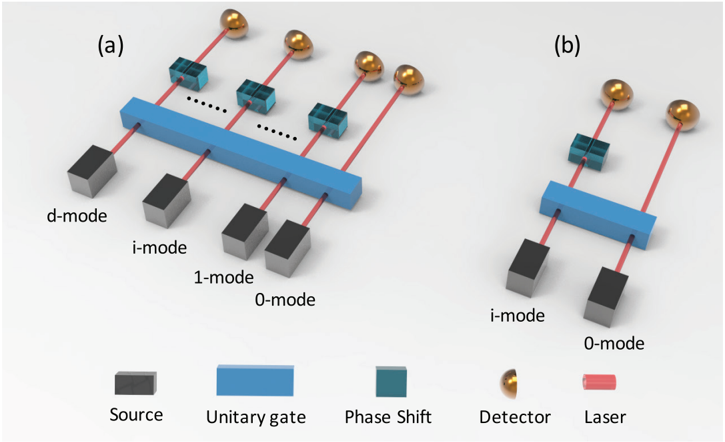
- In multiphase estimation examples, a generalized \((d+1)\)-mode N00N state gives \(\min_{c_1}\mathrm{Tr}(F^{-1})=(1+\sqrt d)^2/(4N^2)\), while a generalized entangled coherent state gives \(\min_{c_1}\mathrm{Tr}(F^{-1})=(1+\sqrt d)^2/[4(1+|\alpha|^2)^2]\), indicating better performance for the latter for most \(d\) and \(|\alpha|\); simultaneous estimation shows an \(O(d)\) advantage over independent estimation in the absence of noise.
Methods
- Design: topical review/textbook-style synthesis of QFIM theory and quantum multiparameter estimation, with technical derivations placed in appendices.
- Data or sample: no experimental sample or primary dataset; the paper reviews mathematical results and literature across quantum metrology, open systems, thermodynamics, quantum dynamics, interferometry, waveform estimation, control-enhanced estimation, and magnetic-field estimation.
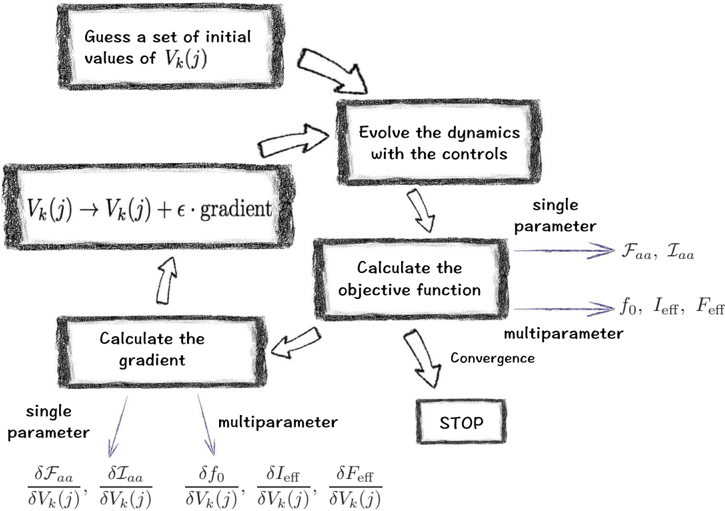
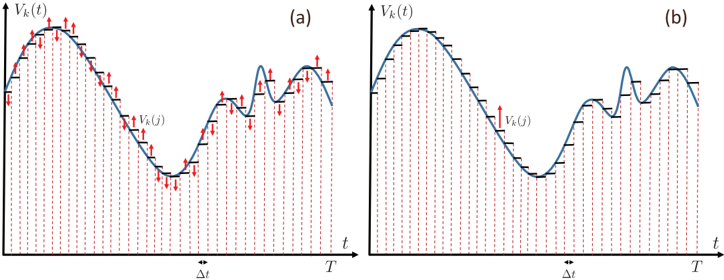
- Main analysis: mathematical derivation and organization of QFIM formulas, properties, attainability conditions, optimal-measurement constructions, and scenario-specific bounds, including Mach-Zehnder interferometry, multiphase estimation, Gaussian states, and GRAPE/Krotov control methods.
Limitations
- The paper states open problems including the design of optimal measurements, especially simple and practical measurements independent of unknown parameters, and the robustness of precision limits against noise and imperfect controls.
- The paper explicitly does not discuss mathematical tools beyond the Cramér-Rao bound, such as Bayesian, Ziv-Zakai, Weiss-Weinstein, and Holevo bounds, referring readers to another review; it also refers nuisance-parameter estimation to a separate review.
- Evident from the text: this is a broad topical review rather than a systematic review or primary study, so coverage is selective and no new experimental validation is provided.
Model-written summary. Check it against the paper before relying on it.
Integrity signals
Registry
Cites
Statistics
Figures
Verification
Claims the paper makes
34 Valid · 11 Not valid · 73 Not checked · 81 Own results and interpretations
The cited sources support only part of this claim — read each source’s verdict below.
In the paper
“An alternative operator that can be used to characterize the precision limit of unitary process is [50,53,54]”
§ Quantum Fisher information matrix and multiparameter estimation > 2.3.4. Unitary processes.
What the sources say
- Partly supportedcites [50] Boixo S, Flammia S T, Caves C M and Geremia J M 2007 Generalized limits for single-parameter quantum estimation Phys. Rev. Lett. 98 090401 sourceExperimental — accuracy not yet measured
On p. 2, the paper identifies Kγ(t) as the Hermitian generator of parameter displacements and relates its variance to Fisher information. On p. 3, it uses Kγ(t) to bound estimation precision. Our copy does not decode the displayed formula defining Kγ(t), so it cannot verify the specific derivative identity in the claim. (LLM, conf=0.82)
- Supportedcites [53] Pang S and Brun T A 2014 Quantum metrology for a general Hamiltonian parameter Phys. Rev. A 90 022117 source
Section III (p. 3) introduces the local parameter-translation generator h_g for unitary evolution and uses it to obtain the quantum Fisher information. Section IV (p. 4) explicitly calls h_g the key to that information, which characterizes the precision limit. The displayed definition in Eq. (9) is not decoded in our copy, but the surrounding text identifies its role and links it to the derivative of U_g. (LLM, conf=0.88)
- Supportedcites [54] Pang S and Jordan A N 2017 Optimal adaptive control for quantum metrology with time-dependent Hamiltonians Nat. Commun. 8 14695 source
In Results > Time-dependent quantum metrology (page unavailable), the paper defines a derivative-based operator for the unitary evolution and says that its eigenvalue gap determines the maximum quantum Fisher information, hence the optimal estimation precision. This supports the cited use of an alternative operator to characterize the precision limit; the mathematical formatting of the operator is incomplete in our copy. (LLM, conf=0.84)
plainstates an association- Asserted: passes — The authors put it forward as true.
- Checkable: passes — It can be checked against evidence.
- Load-bearing: unclear — It is unclear whether the paper’s conclusions depend on it.
- Based: passes — The paper gives a reason why it holds.
- Partly supported
The cited sources support only part of this claim — read each source’s verdict below.
In the paper
“In this case, the H operator for θ can be analytically calculated via equation (51), which is [48]”
§ Quantum Fisher information matrix and multiparameter estimation > 2.3.4. Unitary processes.
What the sources say
- Partly supportedcites [48] Liu J, Jing X-X and Wang X 2015 Quantum metrology with unitary parametrization processes Sci. Rep. 5 8565 sourceExperimental — accuracy not yet measured
The Results section 'Quantum Fisher information with operator' does set up exactly this system — 'the interaction Hamiltonian of a collective spin system in a magnetic field' with n0 = (cos θ, 0, sin θ)T, J = (Jx, Jy, Jz)T, B the field amplitude, θ the parameter under estimation — and states that the operator is obtained analytically from Eq. (9), with the result expressed through a normalized vector n1 and µ = sgn(sin(Bt/2)); the Methods section 'Collective spin system in a magnetic field' repeats the derivation for Hamiltonian (12). So the physical content attributed here (analytic H-operator for θ along J_{n1} with a sin(Bt/2) dependence) is in our copy. However, the inline equations are stripped in our text, so the precise closed form '−2 sin(½Bt) J_{n1}' — its numerical prefactor and overall sign — cannot be checked verbatim; the only sign visible anywhere is the spin-half parametrization 'Hθ = Bn0 · σ/2' (Results, Exponential form initial state), which is positive rather than the citing sentence's H = −B J_{n0}. (LLM, conf=0.70)
plainstates a cause- Asserted: passes — The authors put it forward as true.
- Checkable: passes — It can be checked against evidence.
- Load-bearing: unclear — It is unclear whether the paper’s conclusions depend on it.
- Based: passes — The paper gives a reason why it holds.
- Partly supported
Every source the paper cites for this claim was checked and supports it.
In the paper
“Recently, it has been rigorously proved that the QFIM for a finite dimensional density matrix can be expressed with the support of the density matrix [31].”
§ Quantum Fisher information matrix and multiparameter estimation > 2.3.1. General methods.
What the sources say
- Supportedcites [31] Liu J, Xiong H-N, Song F and Wang X 2014 Fidelity susceptibility and quantum Fisher information for density operators with arbitrary ranks Physica A 410 167-73 source
Section 3 states that the authors calculate the QFIM for a density matrix of arbitrary rank and show it is determined by the matrix’s support (p. 7). Section 3.1 explicitly identifies this as a property of their QFIM expression (p. 8). (LLM, conf=0.94)
boostedstates an association- Asserted: passes — The authors put it forward as true.
- Checkable: passes — It can be checked against evidence.
- Load-bearing: unclear — It is unclear whether the paper’s conclusions depend on it.
- Based: passes — The paper gives a reason why it holds.
- Supported
The sources with a verdict support this claim; the rest weren’t checked yet, have no full text we could read, or their verdicts aren’t rated yet.
In the paper
“In the eigenbasis of the density matrix ρ, g µν takes the form as [91][92][93] g µν = 1 4 i λ i |dρ|λ i 2 λ i + 1 2 i<j | λ i |dρ|λ j | 2 λ j h(λ i /λ j ) ,(78”
§ Quantum Fisher information matrix and multiparameter estimation > 2.4.2. Fidelity and Bures metric.
What the sources say
- Not checked yetcites [91] Bengtsson I and Zyczkowski K 2006 Geometry of Quantum States: an Introduction to Quantum Entanglement (Cambridge: Cambridge University Press)
- Supportedcites [92] Sommers H J and Źyczkowski K 2003 Bures volume of the set of mixed quantum states J. Phys. A: Math. Gen. 36 10083-100 source
Section 3.2, equation (3.6), gives the Bures metric in the eigenbasis with the claimed diagonal term and an off-diagonal term proportional to 1/(λ_i+λ_j). Section 2, equations (2.16)–(2.18), expresses the off-diagonal part of a monotone metric using a Morozova–Chentsov function; its Bures choice gives the stated form under the paper’s metric normalization. (LLM, conf=0.88)
- Supportedcites [93] Pires D P, Cianciaruso M, Céleri L C, Adesso G and Soares-Pinto D O 2016 Generalized geometric quantum speed limits Phys. Rev. X 6 021031 source
Section II, Eq. (3) defines the eigenvalue factor as 1/[y f(x/y)], with f a Morozova–Čencov function. Section III, Eqs. (13)–(16) give the metric tensor as a diagonal term with coefficient 1/4 and an off-diagonal term with coefficient 1/2, matching the claimed eigenbasis form. Page numbers are unavailable in our copy. (LLM, conf=0.90)
plainstates an association- Asserted: passes — The authors put it forward as true.
- Checkable: passes — It can be checked against evidence.
- Load-bearing: unclear — It is unclear whether the paper’s conclusions depend on it.
- Based: passes — The paper gives a reason why it holds.
The cited sources support only part of this claim — read each source’s verdict below.
In the paper
“Theorem 2.10.For a continuous variable bosonic m-mode Gaussian state with the displacement vector (first moment) R and the covariance matrix (second moment) C, the entry of QFIM can be expressed by [64][65][66] F ab = Tr (G a ∂ b C) + (∂ a R T )C -1 ∂ b R , (68”
§ Quantum Fisher information matrix and multiparameter estimation > 2.3.5. Gaussian states.
What the sources say
- Partly supportedcites [64] Gao Y and Lee H 2014 Bounds on quantum multiple-parameter estimation with Gaussian state Eur. Phys. J. D 68 347 sourceExperimental — accuracy not yet measured
The Conclusion (p. 6) says the Gaussian-state QFI matrices can be fully expressed in terms of mean displacement and covariance. Section III (p. 3) identifies an SLD QFI result, but the equations in our copy are undecoded, so it does not verify the specific trace-and-inverse formula or its coefficients. (LLM, conf=0.82)
- Partly supportedcites [65] Nichols R, Liuzzo-Scorpo P, Knott P A and Adesso G 2018 Multiparameter Gaussian quantum metrology Phys. Rev. A 98 012114 sourceExperimental — accuracy not yet measured
Theorem 1 (Section III, p. 3) covers the QFI matrix of an arbitrary m-mode Gaussian state in terms of its first and second moments. The exact expression in Eq. (20) is marked “formula-not-decoded” in our copy, so the stated trace term and displacement term cannot be checked against it. (LLM, conf=0.75)
- Supportedcites [66] Šafránek D 2018 Estimation of Gaussian quantum states J. Phys. A: Math. Theor. 52 035304 source
Appendix A, equation (A.3), gives the QFIM for an N-mode Gaussian state as a covariance-derivative term plus ∂ᵢλᵀΣ⁻¹∂ⱼλ. The claim’s trace term is an equivalent way to write that covariance term with an appropriately defined Gₐ; the paper uses λ and Σ rather than R and C. Section 2.4, equation (23), specifies a limiting prescription when pure modes make the direct inverse ill-defined. (LLM, conf=0.88)
plainstates a cause- Asserted: passes — The authors put it forward as true.
- Checkable: passes — It can be checked against evidence.
- Load-bearing: passes — The paper’s conclusions depend on it.
- Based: passes — The paper gives a reason why it holds.
- Partly supported
97 more claims · 17 with their cited sources checked
Create a free account to see all 199 claims and to verify the 98 references still open.
- Probably not a substantial claim. 59
- It may state two separate claims as one. 48
- The quote only partly states this claim. 4
Claims other papers make about this one
Each is checked against this paper’s own text: does it say what the citing paper says it does?
The check wasn’t confident either way, so it gives no verdict — never disputed.
In the citing paper
“The class of variational quantum circuits specified by Eqs. (3) and (4) are commonly used and there exists a simple parameter-shift rule to evaluate their gradients [10-13].”
From Estimating the gradient and higher-order derivatives on quantum hardware (2021) · cites this paper as [13]
Experimental — accuracy not yet measuredThe check wasn’t confident either way, so it gives no verdict — never disputed.
In the citing paper
“This rule provides the gradient analytically by evaluating the circuit with fixed shifts of π/ 2 in the parameters θ .”
From Estimating the gradient and higher-order derivatives on quantum hardware (2021) · cites this paper as [13]
Experimental — accuracy not yet measuredThe check wasn’t confident either way, so it gives no verdict — never disputed.
In the citing paper
“which allows implementation of all gradientbased optimizers such as gradient descent.”
From Estimating the gradient and higher-order derivatives on quantum hardware (2021) · cites this paper as [13]
Experimental — accuracy not yet measuredThe check wasn’t confident either way, so it gives no verdict — never disputed.
In the citing paper
“The analytic gradient of a quantum circuit can be experimentally evaluated using the so called parameter-shift rule [10-13]”
From Estimating the gradient and higher-order derivatives on quantum hardware (2021) · cites this paper as [13]
Experimental — accuracy not yet measuredThe check wasn’t confident either way, so it gives no verdict — never disputed.
In the citing paper
“For s = π/ 2, we get an analytic parameter-shift rule which is similar to the gradient formula used in Refs. [10-13], but extended to the Hessian.”
From Estimating the gradient and higher-order derivatives on quantum hardware (2021) · cites this paper as [13]
Experimental — accuracy not yet measured
1 more claim about this paper
Create a free account to see every claim other papers make about this one.
Self-check
Percentages, sums and reported differences re-computed from the paper’s own numbers.
Each contradiction between two passages listed here was confirmed by an independent check.
Rated minor: it would not touch a result — a value no result rests on, a p-value that stays on the same side of the significance level, or a conflict that is clerical, resolved elsewhere in the paper, or outside its own findings.
In the paper
§ Quantum Fisher information matrix and multiparameter estimation > E.1. SLD operator for multimode Gaussian states
“S = 1 √ c √ C 00 sin φ √ C 00 cos φ √ C 11 cos φ √ C 11 cos φ , (E.42)”
§ Quantum Fisher information matrix and multiparameter estimation > E.1. SLD operator for multimode Gaussian states
“S 10 = C 11 c cos φ, S 11 = C 11 c sin φ. (E.40)”
Rated minor: it would not touch a result — a value no result rests on, a p-value that stays on the same side of the significance level, or a conflict that is clerical, resolved elsewhere in the paper, or outside its own findings.
In the paper
§ Quantum Fisher information matrix and multiparameter estimation > Appendix F. QFIM and Bures metric
“D B (ρ( x), ρ( x + d x)) = ab 1 4 F ab dx a x b . (F.17)”
§ Quantum Fisher information matrix and multiparameter estimation > 2.4.2. Fidelity and Bures metric.
“D 2 B (ρ( x), ρ( x + d x)) = 1 4 µν F µν dx µ dx ν .(77)”
Rated minor: it would not touch a result — a value no result rests on, a p-value that stays on the same side of the significance level, or a conflict that is clerical, resolved elsewhere in the paper, or outside its own findings.
In the paper
§ Quantum Fisher information matrix and multiparameter estimation > 3.2. Phase estimation in the Mach-Zehnder interferometer
“If the input state is a pure state |ψ 0 , the QFI for θ is just the variance of J y with respect to |ψ 0 , i.e. var |ψ0 (J y ).”
§ Quantum Fisher information matrix and multiparameter estimation > 2.3.4. Unitary processes.
“F ab = 4cov |ψ0 (H a , H b ), (43 ) where cov |ψ0 (H a , H b ) is defined by equation (28) and the QFI for x a can then be obtained as F aa = 4var |ψ0 (H a ).”
Rated minor: it would not touch a result — a value no result rests on, a p-value that stays on the same side of the significance level, or a conflict that is clerical, resolved elsewhere in the paper, or outside its own findings.
In the paper
§ Quantum Fisher information matrix and multiparameter estimation > Corollary 2.2.1.
“L a = 2 ∞ 0 e -ρs (∂ a ρ) e ρs ds,(16)”
§ Quantum Fisher information matrix and multiparameter estimation > 2.1. Definition
“∂ a ρ = 1 2 (ρL a + L a ρ) .(2)”
Citations
Cites
Quantal phase factors accompanying adiabatic changes
Berry, M. V. (1984) · Proceedings of the Royal Society of London. A. Mathematical and Physical Sciences · doi:10.1098/rspa.1984.0023 · Cited by 9,252 · cited 1×
“The geometric phase can then be obtained as [97]”
BackgroundDegen, C. L., Reinhard, F., & Cappellaro, P. (2017) · Reviews of Modern Physics · doi:10.1103/revmodphys.89.035002 · Cited by 4,045
Giovannetti, V., Lloyd, S., & Maccone, L. (2011) · Nature Photonics · doi:10.1038/nphoton.2011.35 · Cited by 3,894
Quantum information with continuous variables
Braunstein, S. L., & van Loock, P. (2005) · Reviews of Modern Physics · doi:10.1103/revmodphys.77.513 · Cited by 3,858
Weedbrook, C., Pirandola, S., García-Patrón, R., Cerf, N. J., Ralph, T. C., Shapiro, J. H., & Lloyd, S. (2012) · Reviews of Modern Physics · doi:10.1103/revmodphys.84.621 · Cited by 3,664
Quantum-mechanical noise in an interferometer
Caves, C. M. (1981) · Physical Review D · doi:10.1103/physrevd.23.1693 · Cited by 3,202 · cited 5×
“In 1981, Caves [142] showed that there exists an unused port in the MZI due to quantum mechanics and the vacuum fluctuation in that port actually affects the phase precision and limit it to the standard quantum limit (also known as shot-noise limit), which is the ultimate limit for a classical apparatus.”
BackgroundInfluentialStatistical distance and the geometry of quantum states
Braunstein, S. L., & Caves, C. M. (1994) · Physical Review Letters · doi:10.1103/physrevlett.72.3439 · Cited by 3,176 · cited 2×
“Recently, Yang et al [138] provided the attainable conditions for the CFIM to attain this bound by generalizing the approach in [30].”
BackgroundQuantum-Enhanced Measurements: Beating the Standard Quantum Limit
Giovannetti, V., Lloyd, S., & Maccone, L. (2004) · Science · doi:10.1126/science.1104149 · Cited by 3,038 · cited 1×
“on the quantum-enhanced measurement [4] and the advances in quantum metrology [5], the ones given by Paris [6] and Toth et al.”
MethodKhaneja, N., Reiss, T., Kehlet, C., Schulte-Herbrüggen, T., & Glaser, S. J. (2005) · Journal of Magnetic Resonance · doi:10.1016/j.jmr.2004.11.004 · Cited by 1,854 · cited 2×
“Gradient ascent pulse engineering (GRAPE) algorithm is a gradient-based algorithm, which was originally developed to search the optimal control for the design of nuclear magnetic resonance pulse sequences [173], and now is extended to the scenario of quantum parameter estimation [171, 172].”
BackgroundMethodQuantum metrology with nonclassical states of atomic ensembles
Pezzè, L., Smerzi, A., Oberthaler, M. K., Schmied, R., & Treutlein, P. (2018) · Reviews of Modern Physics · doi:10.1103/revmodphys.90.035005 · Cited by 1,682 · cited 3×
“In recent years, several outstanding reviews on quantum metrology and quantum parameter estimation have been provided from different perspectives and at different time, including the ones given by Giovannetti et al on the quantum-enhanced measurement [3] and the advances in quantum metrology [4], the ones given by Par…”
Background
Research works printed but not linked: 13
- Petz D 2008 Quantum Information Theory and Quantum Statistics (Theoretical and Mathematical Physics) (Berlin: Springer)
- Watanabe Y 2014 Formulation of Uncertainty Relation Between Error and Disturbance in Quantum Measurement by Using Quantum Estimation Theory (Berlin: Springer)
- Scully M O and Zubairy M S 1997 Quantum Optics (Cambridge: Cambridge University Press)
- Serafini A 2017 Quantum Continuous Variables: a Primer of Theoretical Methods (Oxford: Taylor and Francis)
- Nielsen M A and Chuang I L 2000 Quantum Computation and Quantum Information (Cambridge: Cambridge University Press)
- Hayashi M (ed) 2005 Asymptotic Theory of Quantum Statistical Inference: Selected Papers (Singapore: World Scientific)
- Bengtsson I and Zyczkowski K 2006 Geometry of Quantum States: an Introduction to Quantum Entanglement (Cambridge: Cambridge University Press)
- Shapere A and and Wilczek F (ed) 1989 Geometric Phases in Physics (Singapore: World Scientific)
- Kubo R, Toda M and Hashitsume N 1991 Statistical Physics II, Nonequilibrium Statistical Mechanics (Springer Series on Solid State Sciences) (Berlin: Springer)
- Shirane G, Shapiro S M and Tranquada J M 2002 Neutron Scattering with a Triple-Axis Spectrometer, Basic Techniques (Cambridge: Cambridge University Press)
- Lu X-M, Ma Z and Zhang C 2004 Generalized-mean Cramér-Rao bound for multiparameter quantum metrology (arXiv:1010.06035)
- Eberhart R and Kennedy J 1995 Proc. 6th Int. Symp. on Micro Machine and Human Science (New York: IEEE)
- Guţă M et al 2019 Multiparameter estimation beyond quantum Fisher information J. Phys. A: Math. Theor. (submitted)
Cited by
Items 801–900 of 1,002
Hosseiny, S. M., Khabisi, A. P., Seyed‐Yazdi, J., & Norouzi, M. (2025) · International Journal of Theoretical Physics · doi:10.1007/s10773-025-06145-9 · Cited by 1
Quantum Mpemba-like effect in Unruh thermalization
Wang, Z., Chen, W., Han, S.-W., Feng, X. N., Qiao, L., Ouyang, Z., & Feng, J. M. (2026) · Journal of High Energy Physics · doi:10.1007/jhep06(2026)183 · Cited by 1
Enhanced quantum sensing of gravitational acceleration constant
Stucchi, G., & Paris, M. G. A. (2026) · Quantum Review Letters · doi:10.1016/j.qrl.2026.10.002 · Cited by 1
“Consequently, trade-off relations among the uncertainties of the parameters arise, as the initial information in the measurement probe needs to be distributed among the different parameters [31, 32].”
Mohamed, A. A., Allhibi, H., & Aljuaydi, F. (2025) · International Journal of Theoretical Physics · doi:10.1007/s10773-025-06156-6 · Cited by 1
Saidi, H., Kirdi, M. E., Slaoui, A., Hadfi, H. E., & Laamara, R. A. (2025) · Brazilian Journal of Physics · doi:10.1007/s13538-025-01928-1 · Cited by 1
Information geometry of nonmonotonic quantum natural gradient
Miyahara, H. (2025) · Quantum Machine Intelligence · doi:10.1007/s42484-025-00322-z · Cited by 1
Li, Z.-H., Wei, P.-F., Zhang, Z., Zhang, Z., Zhong, W., & Sun, Z. (2025) · APL Photonics · doi:10.1063/5.0293530 · Cited by 1
Multiensemble superradiance for distributed quantum sensing
Shen, K., Hu, X., & Wang, F. (2026) · Physical Review A · doi:10.1103/nv5w-fq89 · Cited by 1
“The moment matrix satisfies the hierarchy [60, 65] M where F Q [ ˆ G ] denotes the QFIM, which is symmetric and positive semidefinite, and is determined by both the generators ˆ G and the probe state.”
Impact of decoherence on the metrological advantage of weak-value amplification
严, Y.-H. 雨. Y., 谭, Y.-P. 艳. T., Lu, Y.-Y., Xiong, S.-J., & Sun, Z. (2025) · Chinese Physics B · doi:10.1088/1674-1056/ae29fe · Cited by 1
Supersensitive noise sensing based on high-spin systems
Lv, Y., Yang, W., & Zhi, Q. (2025) · Physical Review A · doi:10.1103/n89b-9z64 · Cited by 1
Directional quantum walks of two bosons on the Hatano-Nelson lattice
Anisur, S., Singh, K., & Choudhury, S. (2026) · Physical Review A · doi:10.1103/vsl9-csdt · Cited by 1
“This sensitivity is characterized by the quantum Fisher information (QFI), F Q [70, 71]: where the precision of measuring F is bound by the Cramer-Rao bound [72]: For the Hermitian case there is a characteristic time t 0 ≈ 0 .”
Efficient Machine Unlearning using Mislabel Unlearning
Chahal, A., Sharma, Y., Mehta, S., & Surolia, A. (2025) · International Conference on Contemporary Computing · doi:10.1109/ic366947.2025.11290239 · Cited by 1
“Rather than employing computationally intensive operations, such as calculating Fisher information matrices [15] or implementing dual-teacher frameworks [16], our approach simply changes the labels of data points in the forget set to random labels from other classes and fine-tunes the model on this…”
Lin, K., Zhang, L., Liu, Z., Huang, Y., & Zhang, Z. (2026) · IEEE Sensors Journal · doi:10.1109/jsen.2026.3657144 · Cited by 1
“Utilizing the Fisher Information Matrix (FIM), Liu et al. [19] proposed various optimization criteria that serve as a foundation for investigating optimal network topologies for wireless sensors.”
Li, J., & Pang, S. (2026) · Physical Review A · doi:10.1103/tzyy-cwb4 · Cited by 1
Nonclassical many-body superradiant states with interparticle and spin-momentum entanglement
Reilly, J., Harmon, G. W., Wilson, J. D., Holland, M., & Jäger, S. B. (2026) · Physical Review A · doi:10.1103/q6wz-7by8 · Cited by 1
“Here, the elements of the QFIM are given by [90] for pure states, where ˆ 𝐺 is an operator in an orthonormal basis [see Eq.”
Progressive Representation Learning for Multimodal Sentiment Analysis with Incomplete Modalities
Bao, J., Qian, J., Yan, M., & Yang, J. (2026) · Lecture notes in computer science · doi:10.1007/978-3-032-37098-3_18 · Cited by 1
Quantum speed limit in open quantum systems: A stochastic approach
Wang, X.-B., & Wu, W. (2026) · Physical Review A · doi:10.1103/gnns-hf69 · Cited by 1
Self-citationA thermofield-double model of Uhlmann’s anholonomy
Lévay, P., & Velich, C. (2026) · Journal of High Energy Physics · doi:10.1007/jhep03(2026)226 · Cited by 1
“[51] it is known that for a full rank density matrix the Bures metric can be calculated from the formula where the matrix elements are taken with respect to the eigenbasis of ϱ and ∂ j denotes derivatives with respect to the parameters u j .”
Optimizing precision in quantum metrology through engineered environments
Berrada, K. (2026) · Scientific Reports · doi:10.1038/s41598-025-31810-8 · Cited by 1
Enhancing quantum clocks and sensors with randomization and decoherence
García-Pintos, L. P. (2026) · Quantum Science and Technology · doi:10.1088/2058-9565/ae5fc8 · Cited by 1
“(cid:0) (cid:1) The quantum Fisher information about the parameter λ is F ( λ ) := Tr ρ L 2 ( λ ) , where the symmetric logarithmic derivative L ( λ ) is implicitly defined by ∂ρ/∂λ = { ρ, L ( λ ) } / 2 [ 48].”
Multiheaded Schrödinger Cats and their Power for Quantum Metrology
Bibi, T., Javed, S., Naeem, A., & Iqbal, S. (2026) · Journal of Russian Laser Research · doi:10.1007/s10946-026-10287-4 · Cited by 1
“O G , where O G is the generator of the parameter translation, the QFI is given by [16]: where represents the variance of the generator in the pure state j i .”
Tao, S., Meng, X., & Wang, H. (2026) · IEEE Transactions on Automation Science and Engineering · doi:10.1109/tase.2026.3689277 · Cited by 1
“To overcome this challenge, we use the Fisher information matrix [39] F to approximate the Hessian matrix ∇ 2 θ L ( D ; θ ) ˇˇ : Once F is obtained, we can e ffi ciently approximate the posterior distribution p ( θ | D ) of the last-layer parameters.”
Sensitivity bounds of multiparameter metrology at thermal equilibrium
Cao, Z. (2026) · Physical Review A · doi:10.1103/4dv5-qtwk · Cited by 1
“Furthermore, quantum metrology provides a bridge between fundamental and applied science, linking abstract concepts such as entanglement entropy [20] and Fisher information [21] to tangible experimental outcomes.”
Quantum criticality beyond thermodynamic stability
Ughrelidze, M., Flynn, V. P., Cobanera, E., & Viola, L. (2026) · New Journal of Physics · doi:10.1088/1367-2630/aeb687 · Cited by 1
“Second, for pure states of a standard (Hermitian) system, it is known that the QMT can be directly related to the quantum Fisher information matrix, a core tool in the theory of quantum estimation theory [65].”
Floquet quantum multiparameter estimation with periodic-driving-induced topological phase transition
Yang, Y., Tang, Y., Zhang, P., & Fu-li, L. (2026) · New Journal of Physics · doi:10.1088/1367-2630/ae6d2d · Cited by 2
“Differing from the time-independent quantum metrology [11–14], the complexity embodied in the time evolution operator makes the estimation precision of parameters difficult to be obtained analytically.”
InfluentialFisher information of a nonequilibrium anharmonic donor-acceptor rectifier
Thakuria, B. R., Kalita, T., Akhtar, J., & Goswami, H. P. (2026) · Physica A Statistical Mechanics and its Applications · doi:10.1016/j.physa.2026.131723 · Cited by 1
Quantum metrology and thermodynamic performance in a two-qubit superconducting system
Bachain, O., Jaloum, E., Amazioug, M., Altuijri, R., Laamara, R. A., Nisar, K. S., & Abdel‐Aty, A. (2026) · Physics Letters A · doi:10.1016/j.physleta.2026.131897 · Cited by 1
Daka, C., & Bhattacharyya, S. (2026) · New Journal of Physics · doi:10.1088/1367-2630/ae8053 · Cited by 1
Critical states preparation in light-matter systems with deep reinforcement learning
Yu, J.-W., Yu, Y., Yan, K.-X., Lin, J., Song, J., Chen, Y., & Xia, Y. (2026) · Physical Review Research · doi:10.1103/34yc-wj82 · Cited by 1
Anonymous, Reilly, J., & Holland, M. (2026) · Physical Review Research · doi:10.1103/sq34-nf4v · Cited by 1
“[73] greatly reduces the task of both taking the trace and diagonal-izing the density matrix in order to calculate quantities such as the quantum Fisher information [31] and entanglement entropy [18].”
Amirov, O., Çelik, N., & Karabacak, M. (2026) · International Journal of Theoretical Physics · doi:10.1007/s10773-026-06401-6 · Cited by 1
Bouafia, Z., Pathania, N., & Mansour, M. (2026) · Physica Scripta · doi:10.1088/1402-4896/aeb192 · Cited by 1
“In quantum metrology, quantum Fisher information (QFI) is considered a promising indicator for characterizing the precision of parameter estimation in various metrological scenarios [47].”
Quantum Speed Limits and the Ultimate Scaling of the Quantum Sensors
Maleki, Y. (2026) · Entropy · doi:10.3390/e28080836 · Cited by 1
“Most of these reviews focus on specific aspects of the field, including multiparameter estimation [16–18], estimation in quantum many-body systems [21], parameter estimation in continuous-variable systems [22], geometric approaches [19], and applications in areas such as particle physics [23] and…”
Hosseiny, S. M., & Norouzi, M. (2026) · Annalen der Physik · doi:10.1002/andp.70255 · Cited by 1
“The Cramér–Rao bound defines the ultimate precision limit for estimating parameters of any parameterized quantum state: the variance of any estimator is lower-bounded by the inverse of the QFI [ 85 ].”
Two-Tooth Bosonic Quantum Comb for Temporal-Correlation Sensing
Anonymous, You, X., Romanenko, A., & Grassellino, A. (2026) · Physical Review Letters · doi:10.1103/6738-xcgc · Cited by 1
“Within a process-tensor description of the resulting effective phase-noise dynamics, we derive a compact two-time memory kernel and obtain analytic expressions for the probe visibility and the corresponding quantum Fisher information (QFI) [25, 26].”
Enhanced Multiparameter Quantum Estimation in Cavity Magnomechanics via a Coherent Feedback Loop
Naimy, A., Slaoui, A., Lakhfif, A., & Laamara, R. A. (2026) · Advanced Quantum Technologies · doi:10.1002/qute.70370 · Cited by 1
“In this section, we apply the theoretical formalism developed previously to our hybrid magnomechanical system, in which a coherent feedback loop is introduced to modify and optimize the overall dynamics of the device.”
Quantum sensing in the vicinity of dissipative phase transition
Anonymous, & Agarwal, G. S. (2026) · Physical Review Research · doi:10.1103/x7gn-pqzb · Cited by 1
Enhanced long-wavelength signal detection via a quantum antenna
Wang, D., Jin, S., Fan, X., Li, H., Liu, J., Huang, J.-Z., Zeng, G., & Sun, Y. (2026) · Photonics Research · doi:10.1364/prj.600459 · Cited by 1
Self-citationEnhancing Gaussian quantum metrology via measurement-engineered probe states
Hall, A. P. G., Vieira, C. H. S., & Santos, J. F. G. (2026) · The European Physical Journal Plus · doi:10.1140/epjp/s13360-026-08185-4 · Cited by 1
“This is answered by the quantum Cram´er-Rao bound (QCRB) [34], which constitutes a lower bound to the fluctuations of a given estimator.”
Anonymous, & Müstecaplıoğlu, Ö. E. (2026) · Physical Review A · doi:10.1103/hsth-h5w8 · Cited by 1
Anonymous, Li, M., Wang, X., Luo, J., & Chen, J. F. (2026) · Physical Review A · doi:10.1103/1r2v-ztlr · Cited by 1
Self-citationUniversal sensitivity bound for thermal quantum dynamic sensing
Anonymous, Yang, Y., Lü, X.-Y., Ding, W., & Wang, X. (2026) · Physical Review A · doi:10.1103/8sv7-vxz5 · Cited by 1
Self-citationTowards quantum networks: Theory, experiment, and applications
Zhang, Y. (2024) · Illinois Digital Environment for Access to Learning and Scholarship (University of Illinois at Urbana-Champaign) · Cited by 2
Two-parameter estimation in a matter-wave Sagnac interferometer
Xu, Y., Liang, H., & Wang, X. (2020) · Communications in Theoretical Physics · doi:10.1088/1572-9494/ab8a2e · Cited by 1
Self-citationEntanglement witnesses of four-qubit tripartite separable quantum states*
Xu, M., Zhou, W., Chen, F., Jiang, L.-Z., & Chen, X. (2021) · Communications in Theoretical Physics · doi:10.1088/1572-9494/ac3fb1 · Cited by 1
Majorana’s stellar representation for the quantum geometric tensor of symmetric states
Zhang, X., Pei, J., Fu, L., & Wang, X. (2022) · Communications in Theoretical Physics · doi:10.1088/1572-9494/ac6801 · Cited by 1
Self-citationQuantum Limits in Precision Hong-Ou-Mandel Interferometry
Jordan, K. M., Abrahão, R. A., & Lundeen, J. S. (2022) · Quantum 2.0 Conference and Exhibition · doi:10.1364/quantum.2022.qtu2a.12 · Cited by 1
Recommender system expedited quantum control optimization
Batra, P., Ram, M. H., & Mahesh, T. S. (2022) · Physics Open · doi:10.1016/j.physo.2022.100127 · Cited by 1
One-shot coherence distillation in superconducting circuit systems
Xiong, S.-J., Zhang, R., Лю, Б., Lu, W., Sun, Z., & Wang, X. (2022) · Results in Physics · doi:10.1016/j.rinp.2022.106198 · Cited by 1
Self-citationGeneralized uncertainty relation between thermodynamic variables in quantum thermodynamics
Abuali, Z., Kamin, F. H., Afonso, R. J. S., Soares-Pinto, D. O., & Salimi, S. (2023) · Quantum Information Processing · doi:10.1007/s11128-023-03959-6 · Cited by 1
“In the context of quantum-enhanced parameter estimation, a suitable measure to determine the ultimate limit of estimation precision is the Cramér-Rao (CR) bound [43, 44, 45] ∆θ ≥ 1 √ nF(θ) , (10)”
BackgroundQuantum hypothesis testing via robust quantum control
Han, X., Wang, B., Yuan, H., & Wang, X. (2023) · New Journal of Physics · doi:10.1088/1367-2630/ad0a50 · Cited by 1
Self-citationXing, H. (2024) · Physical Review A · doi:10.1103/physreva.110.012449 · Cited by 1
Quantum Multi-Parameter Estimation Near Criticality in Ising-XXZ Diamond Structure
Yan, B., & Chen, P. (2024) · International Journal of Theoretical Physics · doi:10.1007/s10773-024-05778-6 · Cited by 1
Quantum Fisher information for a nanowire system with Rashba interaction under intrinsic damping
Mohamed, R. I., & Eldin, M. G. (2025) · Physica E Low-dimensional Systems and Nanostructures · doi:10.1016/j.physe.2025.116197 · Cited by 1
Federated adaptive pruning with differential privacy
Wang, Z., Shen, J., Dai, H., Xu, J., Yang, G., & Zhou, H. (2025) · Future Generation Computer Systems · doi:10.1016/j.future.2025.107783 · Cited by 1
Magnetic field detection using a two-qubit system under noisy Heisenberg interaction
Biswas, G., Sengupta, S., & Biswas, A. (2025) · Journal of Physics A Mathematical and Theoretical · doi:10.1088/1751-8121/adc887 · Cited by 1
Separation estimation of two freely rotating dipole emitters near the quantum limit
Liu, S., Pani, S., Khan, S. A., Becerra, F. E., & Lidke, K. A. (2026) · Physical Review A · doi:10.1103/nwrq-4fqv · Cited by 1
“[ 2,5,12,17,27,29,35,38–48] therein) for the detailed derivation of each electric field component.”
Optimal noisy quantum phase estimation with finite-dimensional states
Qin, J.-F., & Liu, J. (2026) · Physical Review Research · doi:10.1103/l752-sl6p · Cited by 1
Self-citationError trade-off relations for two-parameter unitary model with commuting generatorsPreprint
Funada, S., & Suzuki, J. (2020) · arXiv (Cornell University) · doi:10.48550/arxiv.2010.00789 · Cited by 1
Quantifying coherence with respect to general measurements via quantum Fisher informationPreprint
Xu, J. (2021) · arXiv (Cornell University) · doi:10.48550/arxiv.2107.10615 · Cited by 1
Quantum Cram\'er-Rao bound based on the Bures distancePreprint
Ye, Y., & Lu, X.-M. (2021) · arXiv (Cornell University) · Cited by 1
Self-citationInstantaneous indirect measurement principle in quantum mechanicsPreprint
Lu, W., Zhang, X., Shao, L., Zhang, Z., Chen, J., Zhang, R., Xiong, S.-J., Zhan, L., & Wang, X. (2022) · arXiv (Cornell University) · doi:10.48550/arxiv.2207.04761 · Cited by 1
Self-citationAdvantage of quantum coherence in postselected metrologyPreprint
Xiong, S.-J., Wei, P.-F., Wang, H.-Q.-C., Shao, L., Sun, Y.-N., Liu, J., Sun, Z., & Wang, X. (2022) · arXiv (Cornell University) · doi:10.48550/arxiv.2212.05285 · Cited by 1
Self-citationMetrological detection of multipartite entanglement through dynamical symmetriesPreprint
Zhang, Y.-R., & Nori, F. (2023) · arXiv (Cornell University) · doi:10.48550/arxiv.2304.00564 · Cited by 1
“—The results can also be generalized to the QFI matrix [53] for evaluating the performance of quantum-enhanced multiple phase estimation [54– 56].”
BackgroundQuantum squeezing cannot beat the standard quantum limitPreprint
McGuinness, L. P. (2023) · arXiv (Cornell University) · doi:10.48550/arxiv.2306.14666 · Cited by 1
Bayesian estimation for collisional thermometry and time-optimal holonomic quantum computation
Alves, G. O. (2023) · LA Referencia (Red Federada de Repositorios Institucionales de Publicaciones Científicas) · doi:10.48550/arxiv.2307.10175 · Cited by 1
Heat and Work in Quantum Thermodynamics: a Cybernetic ApproachPreprint
Rupush, W., & Grånäs, O. (2024) · arXiv (Cornell University) · doi:10.48550/arxiv.2403.02022 · Cited by 1
“The Fisher information is a key concept in both classical and quantum estimation theory which represents the extent to which measurements on random variables provides information on some unknown parameter of interest [25] [26].”
BackgroundTowards the Quantum Limits of Phase RetrievalPreprint
Trzaska, J., & Ashok, A. (2024) · arXiv (Cornell University) · doi:10.48550/arxiv.2407.05265 · Cited by 1
Muhammad, A. (2025) · arXiv (Cornell University) · doi:10.48550/arxiv.2510.04887 · Cited by 1
“In such a setting, distances are instead measured as ds 2 = g ij ( x ) dx i dx j , where g ij ( x ) denotes the local geometry induced, for example, by the Fisher information matrix [1, 4, 5] or other information-geometric constructions.”
Unified formalism and adaptive algorithms for optimal quantum state, detector and process tomographyPreprint
Xiao, S., Wang, X., Wang, Y., Hou, Z., Zhang, J., Petersen, I. R., Yan, W.-Z., Yonezawa, H., Nori, F., Xiang, G., et al. (2025) · arXiv (Cornell University) · doi:10.48550/arxiv.2509.05988 · Cited by 1
“The O (1 /N ) scaling in C1 is in fact optimal for MSE, established by quantum Cram´er-Rao bound [52].”
Self-citationEncoding parameters by measurement: Forgetting can be better in quantum metrologyPreprint
Mondal, S., Ghosh, P., & Sen, U. (2025) · arXiv (Cornell University) · doi:10.48550/arxiv.2512.10541 · Cited by 1
“The goal of quantum metrology [5–7, 45 denotes the QFIM of the encoded state ρ ( x ) := Λ x ( ρ in ) , where Λ x ( • ) is the quantum process that encodes m ∈ N parameters x = { x 1 , . . . , x m } , the parameters intended to be estimated, into the input state ρ in .”
Pedram, A., & Müstecaplıoğlu, Ö. E. (2025) · arXiv (Cornell University) · doi:10.48550/arxiv.2507.19994 · Cited by 1
Theoretical Tools for Quantum Sensor Optimization and Entanglement Quantification
Beckey, J. L. (2024) · CU Scholar (University of Colorado Boulder) · Cited by 1
Optimal Parameter Estimation for Quantum Markov Chains and IID Pure State Models
Godley, A. (2025) · Nottingham ePrints (University of Nottingham) · Cited by 1
Differential magnetometry with partially flipped Dicke statesPreprint
Apellaniz, I., Gessner, M., & Tóth, G. (2025) · arXiv (Cornell University) · doi:10.48550/arxiv.2510.23815 · Cited by 1
“(22), the corresponding precision bounds for 𝑏 0 and 𝑏 1 are Since the two generators commute with each other, it is possible to saturate both bounds at the same time [94, 95].”
Efficient Estimation of Multiple Temperatures via a Collisional ModelPreprint
Ghosh, S., Chakraborty, S., & Franco, R. L. (2025) · arXiv (Cornell University) · doi:10.48550/arxiv.2511.20448 · Cited by 1
“Since a qubit possesses three degrees of freedom, it is, in principle, capable of encoding three independent parameters [36].”
Arman, & Panigrahi, P. K. (2026) · arXiv (Cornell University) · doi:10.48550/arxiv.2601.15654 · Cited by 1
“The magnitude of these small displacements ( | s | ) can be estimated with precision—identified via the sensitivity measure—the QFI ( F ) [12, 41] for probe ψ , associated with the Cramer-Rao bound.”
Enhanced creation of many-body entanglement via geodesic counterdiabatic driving
Dengis, S. (2026) · ORBi (University of Liège) · Cited by 1
Hidden $Z_{2}\times Z_{2}$ subspace symmetry protection for quantum scarsPreprint
Sharma, A., & Tripathi, V. (2026) · arXiv (Cornell University) · doi:10.48550/arxiv.2602.22397 · Cited by 1
Multi-Parameter Multi-Critical Metrology of the Dicke ModelPreprint
Previdi, L., Xu, Y., He, Q., & Paris, M. G. A. (2026) · arXiv (Cornell University) · doi:10.48550/arxiv.2603.03451 · Cited by 1
“…symmetric logarithmic derivative (SLD) operators ˆ L µ , defined implicitly by the Lyapunov equation: This leads to the definition of the QFIM [6, 7, 33]: The QFIM provides the ultimate bound on precision, known as the quantum Cramér-Rao bound (QCRB): For pure-state models where ρ λ = | ψ ⟩⟨ ψ |…”
Non-equilibrium dynamics of the disordered Power of Two modelPreprint
Singh, K., & Choudhury, S. (2026) · arXiv (Cornell University) · doi:10.48550/arxiv.2603.04220 · Cited by 1
“Firstly, it would be interesting to examine the growth of spin squeezing [73] and quantum Fisher information [74] in the disordered PWR2 model.”
Learnability, Identifiability, and Monitor Placement in Quantum Network TomographyPreprint
Raghunadhan, A. K., de Andrade, M. G., Towsley, D., Dey, I., Kilper, D. C., & Marchetti, N. (2026) · arXiv (Cornell University) · doi:10.48550/arxiv.2603.05777 · Cited by 1
“The MLE of the Werner parameter vector maximizes the likelihood of the observed measurement outcomes [20, 22] and is asymptotically efficient: its covariance matrix approaches the QCRB limit in the large-sample regime.”
InfluentialQuantum timekeeping and the dynamics of scrambling in critical systemsPreprint
Tripathy, D., Centrone, F., & Deffner, S. (2026) · arXiv (Cornell University) · doi:10.48550/arxiv.2603.13016 · Cited by 1
“In quantum metrology, this sensitivity is quantified by the quantum Fisher information (QFI) [9– 11] that sets the ultimate precision with which a parameter, such as time, can be estimated from measurements via the quantum Cramer-Rao bound [9, 12–14].”
Time-Multiplexed Distributed Quantum SensingPreprint
Yoo, H., Kwon, H., & Hong, S. (2026) · arXiv (Cornell University) · doi:10.48550/arxiv.2603.18807 · Cited by 1
“The QCRB then reads [53] where Cov( ˆ G i , ˆ G j ) ψ denotes the covariance matrix of the generators evaluated on | ψ ⟩ .”
InfluentialOptimal quantum phase estimation algorithms
Smith, J. (2025) · Apollo (University of Cambridge) · doi:10.17863/cam.127822 · Cited by 1
Multiparameter Method of Moments for Sources Resolving and Characterization
Karuseichyk, I. (2024) · theses.fr (ABES) · doi:10.70675/d2da848fz611fz463ez9007z49e2c0fa66de · Cited by 1
Quantum gravimetry with mechanical qubitsPreprint
Huo, X., An, J.-H., & Li, P.-B. (2026) · arXiv (Cornell University) · doi:10.48550/arxiv.2604.14950 · Cited by 1
“Both the scaling rules of δg 2 with N and m reach the standard quantum limit [58–60], which we refer to as the double standard quantum limits.”
Surpassing thermal-state limit in thermometry via non-completely positive quantum encodingPreprint
Sarkar, A., Chaki, P., Saha, D., & Sen, U. (2026) · arXiv (Cornell University) · doi:10.48550/arxiv.2604.17537 · Cited by 1
“…that the partial trace over E is a CPTP map over the composite system SE [99] and that the QFI is monotonically non-increasing under CPTP maps [98], we have Here, the map N = Tr E is a CPTP map acting on the joint state U SE ( ρ S ⊗ τ E ) U † SE , in contrast to the CPTP map N CPTP that…”
Ultimate sensitivity of multiparameter estimation in quantum sensing with undetected photonsPreprint
Panda, S. S., Conlon, L. O., Gong, L., Lam, P. K., Zhao, J., Cho, Y., & Lecamwasam, R. (2026) · arXiv (Cornell University) · doi:10.48550/arxiv.2604.19120 · Cited by 1
“Thus for single parameter estimation, the quantum Cram´er–Rao bound can always be saturated [31].”
InfluentialPrecision gravimetry via harnessing interaction-induced resonances in optical latticesPreprint
Manshouri, H., Zarei, M., Abdi, M., Omar, Y., Bose, S., & Bayat, A. (2026) · arXiv (Cornell University) · doi:10.48550/arxiv.2605.02872 · Cited by 1
OAM-Induced Lattice Rotation Reveals a Fractional Optimum in Fault-Tolerant GKP Quantum SensingPreprint
Kumar, S., & Bisht, N. S. (2026) · arXiv (Cornell University) · doi:10.48550/arxiv.2605.13271 · Cited by 1
Single-Ensemble Multiparameter Squeezing with QuditsPreprint
Lin, X., Qu, C., Zu, C., & Zhang, C. (2026) · arXiv (Cornell University) · doi:10.48550/arxiv.2605.26377 · Cited by 1
Huang, Y.-H., Hou, X.-Y., Hao, G., & Chien, C.-C. (2026) · arXiv (Cornell University) · doi:10.48550/arxiv.2605.27907 · Cited by 1
“Moreover, it connects to quantum Fisher information and has potential applications in metrology [7, 8].”
Multiparameter Maximum Information States for Coherent Diffraction MeasurementsPreprint
Verreussel, B., Seifert, J., & Mosk, A. P. (2026) · doi:10.1364/opticaopen.33436252 · Cited by 1
Quantum Machine Learning for Industrial Applications
Monbroussou, L. (2025) · theses.fr (ABES) · doi:10.70675/78b65d31z6c74z4ccfz8ce3zdbde6bf748e9 · Cited by 1
Speed-Fisher Information: Chaos and Irreversibility in Classical and Quantum DynamicsPreprint
Karve, N., Rose, N., Campbell, D. K., & Polkovnikov, A. (2026) · arXiv (Cornell University) · doi:10.48550/arxiv.2606.23810 · Cited by 1
“The arguments that follow in this Letter apply to both classical and quantum systems, and therefore, all expressions are ag-nostic as to whether ρ −∞ is interpreted as a probability distribution or a density matrix.”
Lv, C., & Renbao, L. (2026) · arXiv (Cornell University) · doi:10.48550/arxiv.2606.25768 · Cited by 1
Finite-Shot Sensitivity for Moment Estimation in Quantum MetrologyPreprint
du, S., Liu, S., Li, W., Pezzè, L., Smerzi, A., & He, Q. (2026) · arXiv (Cornell University) · doi:10.48550/arxiv.2606.25920 · Cited by 1
“Although optimal measurements are known to exist for single-parameter estimation in ideal settings [25– 27], their implementation may be limited by experimental imperfections such as measurement noise [28– 30].”
Optimal observables for quantum-enhanced sensing and applications in a Floquet time crystal sensorPreprint
Manya, M. A., Tsypilnikov, A., & Iemini, F. (2026) · arXiv (Cornell University) · doi:10.48550/arxiv.2606.26248 · Cited by 1
“(2) saturates the QFI bound for pure states within the MoM, it is helpful to write it in the following form [42, 43], One can now introduce a new operator ˆ L h 0 ( t ) ≡ ˆ L h ( t ) h = h 0 , which is the SLD operator computed for a fixed value h 0 .”
Entanglement Drives Common Noise into the Strong-Coupling RegimePreprint
Zhou, Y., Lei, X., Heng, X., Wang, Z., & Ma, D. (2026) · arXiv (Cornell University) · doi:10.48550/arxiv.2607.02962 · Cited by 1
Metadata
- Authors
- Liu, J., Yuan, H., Lu, X.-M., & Wang, X.
- Affiliations
- Huazhong University of Science and Technology (CN)
- Chinese University of Hong Kong (HK)
- Hangzhou Dianzi University (CN)
- Zhejiang University (CN)
- Corresponding author
- Liu, Jing
- Yuan, Haidong
- Lu, Xiao-Ming
- Wang, Xiaoguang
- Venue
- Journal of Physics A: Mathematical and Theoretical
- Publisher
- IOP Publishing
- Published
- 2019-12-18
- Volume
- 53
- Issue
- 2
- Pages
- 023001
- ISSN
- 1751-8113 (ISSN-L)
- 1751-8121
- OpenAlex
- W2959466714
- Semantic Scholar
- 9bb5bf567d8bcef47326edb29bdd28a4b742327f
- Cited by
- 802
- References
- 196
- Citations by year
- 2026: 138 · 2025: 182 · 2024: 143 · 2023: 101 · 2022: 102 · 2021: 82 · 2020: 51 · 2019: 3
- FWCI
- 27.15
- Type
- journal article
- Language
- en
- Open access
- hybrid
- doi.org
- Licence
- cc-by
- creativecommons.org/licenses/by/3.0/ (vor)
- iopscience.iop.org/info/page/text-and-data-mining (tdm)
- Locations
- Journal of Physics A Mathematical and Theoretical (publishedVersion, cc-by)
- arXiv (Cornell University) (publishedVersion)
- arXiv (Cornell University) (cc-by)
- Funders
- Fundamental Research Funds for the Central Universities (2017FZA3005)
- Research Grants Council of Hong Kong (14207717)
- National Natural Science Foundation of China (11805073)
- National Key Research and Development Program of China (2017YFA0304202)
- Zhejiang Provincial Natural Science Foundation of China (LY18A050003)
- Topics
- Physical Sciences › Physics and Astronomy › Atomic and Molecular Physics, and Optics › Quantum Information and Cryptography
- Physical Sciences › Computer Science › Artificial Intelligence › Quantum Computing Algorithms and Architecture
- Physical Sciences › Physics and Astronomy › Atomic and Molecular Physics, and Optics › Quantum Mechanics and Applications
- Keywords
- quantum Fisher information matrix, multiparameter estimation, quantum Cramér-Rao bound, quantum metrology, optimal quantum measurement, quantum thermodynamics, quantum phase transitions, entanglement witnesses, quantum speed limit, non-Markovianity
About these checks
Registry, retraction, Cites and statistics results are computed, not judged, with one exception: a printed reference that no index lists is read once by a model before it counts as a citation error. Claims are extracted by a model and kept only when their quote appears verbatim in the text; each cited source is then checked, with a model’s help, for whether it says what the claim relies on. Those verdicts can be wrong — read the claim’s quote and the cited source before relying on one.
The claim verdicts this report counts are experimental: their accuracy is not yet measured.
A language model drew the claims from the paper on 2026-10-08, under version 3 of the claim definition (model deepseek-v4.1-flash, prompt extract-v3).
A second model labelled each claim on 2026-10-08 (model jev-1.13-20260917, definition revision gold-guideline-v0.2).
Cited sources are checked with a language model’s help (gpt-6-sol and qwen3.8-omni-flash).
Statistics and arithmetic are recomputed, not judged.
Confidence bands are shown only for fields calibrated on our annotated test set. None is calibrated yet, so no band is shown.
What counts as a claim ›How we measure confidence ›How we check this ›
Are you an author, or do you see a problem with this page? Request a review
Data sources
Bibliographic data: Semantic Scholar, OpenAlex, Crossref.
Contains information from the Semantic Scholar Academic Graph Datasets, made available under the ODC Attribution License (ODC-BY 1.0).
Semantic Scholar’s data is described in: Kinney, R., et al. (2023). The Semantic Scholar Open Data Platform. arXiv:2301.10140.
