

Experimental indications of non-classical brain functions
Open accessPublished version of a preprint
The DOI matches its Crossref record; 44 of the 44 references it cites were found in a registry or an index.
Abstract
Recent proposals in quantum gravity have suggested that unknown systems can mediate entanglement between two known quantum systems, if the mediator itself is non-classical. This approach may be applicable to the brain, where speculations about quantum operations in consciousness and cognition have a long history. Proton spins of bulk water, which most likely interfere with any brain function, can act as the known quantum systems. If an unknown mediator exists, then NMR methods based on multiple quantum coherence (MQC) can act as an entanglement witness. However, there are doubts that today’s NMR signals can contain quantum correlations in general, and specifically in the brain environment. Here, we used a witness protocol based on zero quantum coherence (ZQC) where we minimized the classical signals to circumvent the NMR detection limits for quantum correlation. For short repetitive periods, we found evoked signals in most parts of the brain, whereby the temporal appearance resembled heartbeat-evoked potentials (HEPs). We found that those signals had no correlates with any classical NMR contrast. Similar to HEPs, the evoked signal depended on conscious awareness. Consciousness-related or electrophysiological signals are unknown in NMR. Remarkably, these signals only appeared if the local properties of the magnetization were reduced. Our findings suggest that we may have witnessed entanglement mediated by consciousness-related brain functions. Those brain functions must then operate non-classically, which would mean that consciousness is non-classical.
Overview
The claims and statistics of this paper haven’t been checked yet.
Free: it reads the open-access text and checks the first 5 claims that cite a source we can check. Create a free account to check every claim.
Integrity signals
Registry
Cites
Statistics
Figures
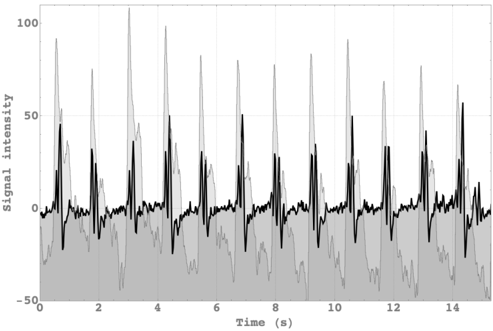
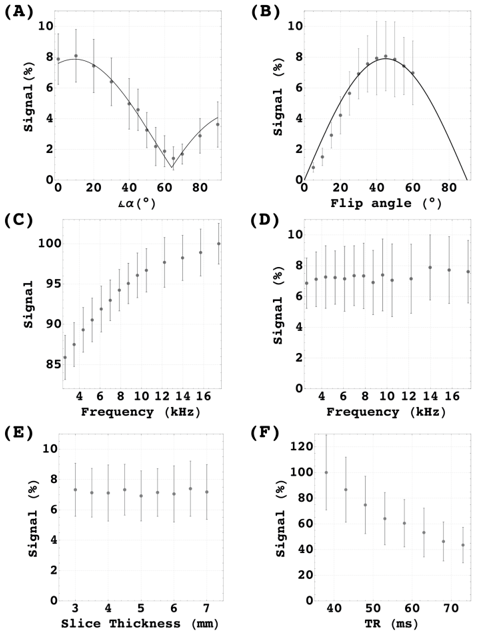
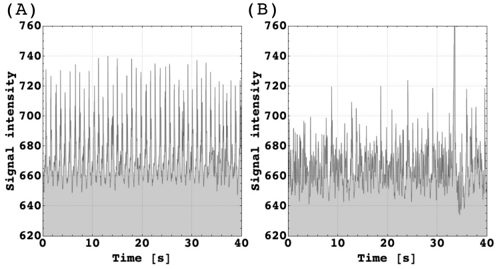
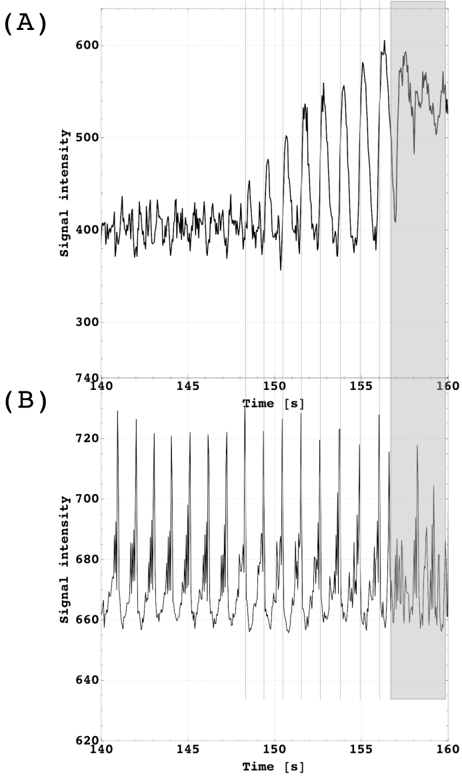
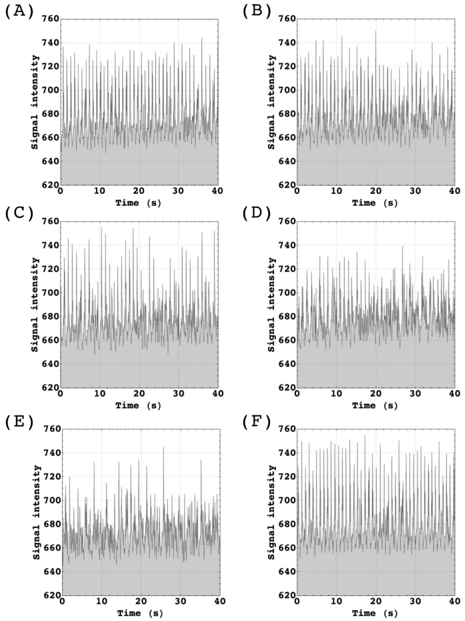
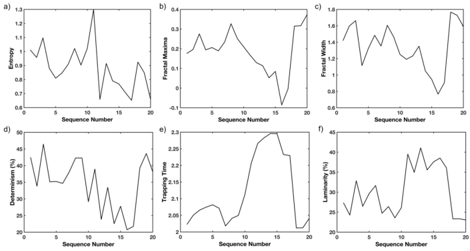
Verification
Claims the paper makes
The claims and statistics of this paper haven’t been checked yet.
Free: it reads the open-access text and checks the first 5 claims that cite a source we can check. Create a free account to check every claim.
Claims other papers make about this one
Each is checked against this paper’s own text: does it say what the citing paper says it does?
The source backs part of the claim, not all of it — or backs it for a different population, condition or comparison.
In the citing paper
“The difficulty arises from scale: quantum states typically evolve on femtosecond timescales and nanometer spatial resolutions—orders of magnitude finer than the temporal and spatial windows accessible to macroscopic neuroimaging tools such as EEG, MEG, or fMRI [17].”
From Quantum-Inspired and Non-Classical Approaches to Consciousness: Models, Evidence and Constraints (2026) · cites this paper as [17]
Experimental — accuracy not yet measuredThe source backs part of the claim, not all of it — or backs it for a different population, condition or comparison.
In the citing paper
“and direct physical evidence of a macroscopic quantum entangled state in the living human brain that is correlated with the conscious state and working memory performance”
From A quantum microtubule substrate of consciousness is experimentally supported and solves the binding and epiphenomenalism problems (2025) · cites this paper as Kerskens and Pérez 2022
Experimental — accuracy not yet measuredThe source backs part of the claim, not all of it — or backs it for a different population, condition or comparison.
In the citing paper
“They reported strong evidence for an entangled brain state related to consciousness and working memory performance.”
From A quantum microtubule substrate of consciousness is experimentally supported and solves the binding and epiphenomenalism problems (2025) · cites this paper as Kerskens and Pérez 2022
Experimental — accuracy not yet measuredThe source backs part of the claim, not all of it — or backs it for a different population, condition or comparison.
In the citing paper
“And we have direct MRI evidence of a macroscopic quantum state related to consciousness in the human brain.”
From A quantum microtubule substrate of consciousness is experimentally supported and solves the binding and epiphenomenalism problems (2025) · cites this paper as Kerskens and Pérez 2022
Experimental — accuracy not yet measuredThe cited source says what the claim attributes to it.
In the citing paper
“Reports describe heartbeat-synchronized signal fluctuations during wakefulness and reductions during decreased arousal (e.g., sleep onset in a subset of participants) [17].”
From Quantum-Inspired and Non-Classical Approaches to Consciousness: Models, Evidence and Constraints (2026) · cites this paper as [17]
6 more claims about this paper
Create a free account to see every claim other papers make about this one.
Self-check
Percentages, sums and reported differences re-computed from the paper’s own numbers.
The self-check needs the paper’s full text.
Citations
Cites
Recurrence plots for the analysis of complex systems
MARWAN, N., CARMENROMANO, M., THIEL, M., & KURTHS, J. (2007) · Physics Reports · doi:10.1016/j.physrep.2006.11.001 · Cited by 3,814 · cited 2×
“For the calculation, we used the CRP Toolbox [31, 32] for Matlab [33].”
MethodApplication of Fourier Transform Spectroscopy to Magnetic Resonance
Ernst, R. R., & Anderson, W. A. (1966) · Review of Scientific Instruments · doi:10.1063/1.1719961 · Cited by 1,683 · cited 1×
“In contrast, the Ernst-angle [22] which is a good indication for the optimum angle for SQC is around 13◦ (for T1 = 1.”
BackgroundMagnetic field effects in chemical kinetics and related phenomena
Steiner, U. E., & Ulrich, T. (1989) · Chemical Reviews · doi:10.1021/cr00091a003 · Cited by 1,667
Universal quantum computation with ideal Clifford gates and noisy ancillas
Bravyi, S., & Kitaev, A. (2005) · Physical Review A · doi:10.1103/physreva.71.022316 · Cited by 1,525
The First Step in Vision: Femtosecond Isomerization of Rhodopsin
Schoenlein, R. W., Peteanu, L. A., Mathies, R. A., & Shank, C. V. (1991) · Science · doi:10.1126/science.1925597 · Cited by 892
The Radical-Pair Mechanism of Magnetoreception
Hore, P. J., & Mouritsen, H. (2016) · Annual Review of Biophysics · doi:10.1146/annurev-biophys-032116-094545 · Cited by 813
Spin Entanglement Witness for Quantum Gravity
Bose, S., Mazumdar, A., Morley, G. W., Ulbricht, H., Toroš, M., Paternostro, M., Geraci, A. A., Barker, P. F., Kim, M. S., & Milburn, G. (2017) · Physical Review Letters · doi:10.1103/physrevlett.119.240401 · Cited by 808 · cited 1×
“To test our hypothesis, we implemented an approach which is based on recent proposals in quantum gravity [12, 13], where it was suggested circumventing the lack of a theory by using the graviton as a mediator between two quantum systems.”
MethodImportance of quantum decoherence in brain processes
Tegmark, M. (2000) · Physical Review E · doi:10.1103/physreve.61.4194 · Cited by 776
Marletto, C., & Vedral, V. (2017) · Physical Review Letters · doi:10.1103/physrevlett.119.240402 · Cited by 712 · cited 1×
“To test our hypothesis, we implemented an approach which is based on recent proposals in quantum gravity [12, 13], where it was suggested circumventing the lack of a theory by using the graviton as a mediator between two quantum systems.”
MethodSeparability of Very Noisy Mixed States and Implications for NMR Quantum Computing
Braunstein, S. L., Caves, C. M., Jozsa, R., Linden, N., Popescu, S., & Schack, R. (1999) · Physical Review Letters · doi:10.1103/physrevlett.83.1054 · Cited by 566
Cited by
Quantum Artificial Intelligence: A Brief Survey
Klusch, M., Lässig, J., Müssig, D., Macaluso, A., & Wilhelm, F. K. (2024) · Künstliche Intell. · doi:10.1007/s13218-024-00871-8 · Cited by 69
“The latter includes speculative multi-scale simulations of the human brain [168] and explanation of some consciousness-related brain functions [90], though not of how the human brain produces thoughts [108], as well as a better representation of and inference means for certain psychological models…”
Quantum aspects of the brain-mind relationship: A hypothesis with supporting evidence
Kauffman, S. A., & Radin, D. (2023) · Biosystems · doi:10.1016/j.biosystems.2022.104820 · Cited by 37
Wiest, M. C. (2025) · Neuroscience of Consciousness · doi:10.1093/nc/niaf011 · Cited by 34
“…correlated with short-term memory performance (Pérez et al. 2023) and the presence or absence of the conscious state itself in sleep vs. waking (Kerskens and Pérez 2022), the authors concluded that the quantum brain processes are likely an important part of our cognitive and conscious brain…”
Testing the Conjecture That Quantum Processes Create Conscious Experience
Neven, H., Read, P., Kosik, K. S., Van der Molen, T., Bouwmeester, D., Bodnia, E., Turin, L., & Koch, C. (2024) · doi:10.20944/preprints202402.1751.v1 · Cited by 33
Quantum Circuit Components for Cognitive Decision-Making
Widdows, D., Rani, J., & Pothos, E. M. (2023) · Entropy · doi:10.3390/e25040548 · Cited by 41
“, [32]), then such models are more oriented towards artificial intelligence rather than human cognition, though some recent findings also offer some indications that quantum entanglement is a factor in human consciousness [33].”
BackgroundFields, C., Fabrocini, F., Friston, K. J., Glazebrook, J. F., Hazan, H., Levin, M. G., & Marcianò, A. (2023) · IEEE Transactions on Molecular Biological and Multi-Scale Communications · doi:10.1109/tmbmc.2023.3272158 · Cited by 34
“Emerging empirical evidence for longer-range entanglement in mammalian brains suggests that large-scale networks may also be using quantum coherence as a resource [63].”
BackgroundMicrotubule-stabilizer epothilone B delays anesthetic-induced unconsciousness in rats
Khan, S., Huang, Y., Timuçin, D., Bailey, S., Lee, S., Lopes, J., Gaunce, E., Mosberger, J., Zhan, M., Abdelrahman, B., et al. (2024) · eneuro · doi:10.1523/eneuro.0291-24.2024 · Cited by 30
“Recent MRI (i.e., nuclear magnetic resonance imaging) studies appear to offer support for the general hypothesis that the physical substrate of consciousness in the brain must be a nontrivial macroscopic quantum state (C. M. Kerskens and Pérez, 2022; Pérez et al., 2023).”
BackgroundHolographic Brain Theory: Super-Radiance, Memory Capacity and Control Theory
Nishiyama, A., Tanaka, S., Tuszyński, J. A., & Tsenkova, R. N. (2024) · International Journal of Molecular Sciences · doi:10.3390/ijms25042399 · Cited by 25
“A recent experimental study by Kerskens suggests the presence of quantum entanglement of excited states emerging in a brain [39].”
BackgroundA quantum–classical model of brain dynamics
Sergi, A., Messina, A., Vicario, C. M., & Martino, G. (2023) · Entropy · doi:10.3390/e25040592 · Cited by 16
“Nonetheless, it has been proposed to interpret brain processes as a form of quantum computing [20, 22, 23, 25, 26].”
BackgroundMeasuring the quadrature coherence scale on a cloud quantum computer
Goldberg, A. Z., Thekkadath, G., & Heshami, K. (2023) · Physical Review A · doi:10.1103/physreva.107.042610 · Cited by 15
Metla, S. B. S., Huang, C.-H., Stachiv, I., & Jeng, Y. (2025) · Results in Engineering · doi:10.1016/j.rineng.2025.108272 · Cited by 12
A bifunctional superconducting cell as flux qubit and neuron
Pashin, D. S., Pikunov, P. V., Bastrakova, M. V., Schegolev, A. E., Klenov, N. V., & Soloviev, I. I. (2023) · Beilstein Journal of Nanotechnology · doi:10.3762/bjnano.14.92 · Cited by 9
Wiest, M. C., & Puniani, A. S. (2025) · Computational and Structural Biotechnology Journal · doi:10.1016/j.csbj.2025.09.016 · Cited by 7
“In a recent series of experiments Kerskens and P ´ erez [137,93] used a novel quantum entanglement-detection method applied to conscious humans in an MRI scanner.”
Minimal Units of Consciousness and Possible Evolution of Intelligence
Funk, R. H. W. (2024) · European journal of applied sciences · doi:10.14738/aivp.123.17049 · Cited by 7
The brain-computer analogy—“A special issue”
Matassi, G., & Martínez, P. (2023) · Frontiers in Ecology and Evolution · doi:10.3389/fevo.2022.1099253 · Cited by 7
Astrobiology: resolution of the statistical Drake equation by Maccone's lognormal method in 50 steps
Mieli, E., Valli, A. M. F., & Maccone, C. (2023) · International Journal of Astrobiology · doi:10.1017/s1473550423000113 · Cited by 7
Hulbig, P. R. (2023) · Springer eBooks · doi:10.1007/978-3-031-41436-7_3 · Cited by 7
Molecular Quantum (MolQ) Communication Channel in the Gut-Brain Axis Synapse
Maitra, B., & Akan, Ö. B. (2024) · IEEE Transactions on Molecular Biological and Multi-Scale Communications · doi:10.1109/tmbmc.2024.3462727 · Cited by 7
“There are some ground-breaking theories inspired by the quantum mechanism [28], [32]–[36], which have tried to explain the brain as a quantum communication system to validate or justify its functionality.”
BackgroundMethodDanilov, I. V. (2023) · OBM Neurobiology · doi:10.21926/obm.neurobiol.2304185 · Cited by 7
Three levels of information processing in the brain
Zhuravlev, A. V. (2023) · Biosystems · doi:10.1016/j.biosystems.2023.104934 · Cited by 7
Warren, W. S. (2023) · Journal of Physics Communications · doi:10.1088/2399-6528/acc4a8 · Cited by 5
Time-Irreversible Quantum-Classical Dynamics of Molecular Models in the Brain
Sergi, A., MESSINA, A., Saija, R., Martino, G., Caccamo, M. T., Kuo, M., & Nitsche, M. A. (2025) · Symmetry · doi:10.3390/sym17020285 · Cited by 7
“[67] state, “Experimental methods, which could distinguish classical from quantum correlations in the living brain, have not yet been established.””
InfluentialExploring the interface between quantum biology, microwave technology, and neuroscience
Goryanin, I., Ivanov, Y. D., Damms, B., Vesnin, S. G., Shevelev, O. A., & Goryanin, I. (2025) · Drug Discovery Today · doi:10.1016/j.drudis.2025.104408 · Cited by 5
Non-linearity, complexity, and quantization concepts in biology
Theise, N. D., & Tuszyński, J. A. (2026) · Frontiers in Human Neuroscience · doi:10.3389/fnhum.2025.1695510 · Cited by 5
Huang, Y., Qiu, Z., Yu, X., Lee, S., Zeng, X., Chang, A., & Wiest, M. C. (2026) · Neuropharmacology · doi:10.1016/j.neuropharm.2026.110834 · Cited by 5
Consciousness and Energy Processing in Neural Systems
Pepperell, R. (2024) · Brain Sciences · doi:10.3390/brainsci14111112 · Cited by 7
Kerskens, C., & Pérez, D. L. (2023) · Journal of Physics Communications · doi:10.1088/2399-6528/acc636 · Cited by 8
“We discovered that biological dynamics can create those entanglements under certain circumstances (Kerskens and Pérez 2022, Pérez et al 2022).”
BackgroundMethodSelf-citationA Quantum Elephant in the Room-an Entangled Hauntology of Prison
Campbell, L., & Anderson, J. M. (2025) · Critical Criminology · doi:10.1007/s10612-025-09813-8 · Cited by 4
Classical and Non-Classical Neural Communications
Winlow, W., Fatemi, R., & Johnson, A. S. (2023) · OBM Neurobiology · doi:10.21926/obm.neurobiol.2303181 · Cited by 4
The projective wave theory of consciousness
Worden, R. (2026) · Frontiers in Psychology · doi:10.3389/fpsyg.2026.1674983 · Cited by 4
The quantum-classical complexity of consciousness and orchestrated objective reduction
Sergi, A., MESSINA, A., Martino, G., Caccamo, M. T., Magazù, S., Ruffini, G., Kuo, M., & Nitsche, M. A. (2025) · Frontiers in Human Neuroscience · doi:10.3389/fnhum.2025.1630906 · Cited by 5
“…the possibility of quantum effects in brain structures, including MRI observations of cardiac-evoked zero quantum coherence signals in the brain (Kerskens and érez, 2022), and theoretical models describing coherent excitations in biological systems (Frölich, 1968, 1970, 1975; Pokorný, 1999,…”
Neurocomputational mechanisms underlying perception and sentience in the neocortex
Johnson, A. S., & Winlow, W. (2024) · Frontiers in Computational Neuroscience · doi:10.3389/fncom.2024.1335739 · Cited by 3
Sequencing one-dimensional Majorana materials for topological quantum computing
Minissale, M., Bondavalli, P., Figueira, M. S., & LAY, G. L. (2024) · Journal of Physics Materials · doi:10.1088/2515-7639/ad5763 · Cited by 3
Renormalization in Quantum Brain Dynamics
Nishiyama, A., Tanaka, S., & Tuszyński, J. A. (2023) · AppliedMath · doi:10.3390/appliedmath3010009 · Cited by 3
“Moreover, a recent experimental result suggests that our brain adopts quantum entanglement by studying zero quantum coherence [18].”
BackgroundBrain and Quantum Mechanics: the Epistemological Challenge of NeurosciencePreprint
Rossi, A. (2024) · SSRN Electronic Journal · doi:10.2139/ssrn.4801540 · Cited by 5
Cohen, D. B. (2023) · Progress in Biophysics and Molecular Biology · doi:10.1016/j.pbiomolbio.2023.11.008 · Cited by 2
A Framework for Free Will within a Quantum Universe
Pulga, A. (2025) · Journal of Physics Conference Series · doi:10.1088/1742-6596/2948/1/012017 · Cited by 2
Wiest, M. C. (2025) · Medical Gas Research · doi:10.4103/mgr.medgasres-d-25-00111 · Cited by 2
“9 On that basis, those authors concluded that the quantum state they measured in the human brain was probably related to consciousness and cognitive function.”
Ma, X., & Wang, A. (2026) · Frontiers in Psychology · doi:10.3389/fpsyg.2026.1730965 · Cited by 4
Bukalov, A. (2023) · Artificial Intelligence · doi:10.15407/jai2023.03.018 · Cited by 4
Fields, C., Cohen, L. G., Cusimano, A., Chakraborty, S., Nguyen, P., Deng, D., Iqbal, S., Nelson, M., Wei, D., Delorme, A., et al. (2024) · Biophysica · doi:10.3390/biophysica4020012 · Cited by 2
Viewpoint: The Physics in the New Era of Computing
Kamberaj, H. (2023) · European Scientific Journal ESJ · doi:10.19044/esj.2023.v19n15p1 · Cited by 2
Matassi, G., Mishra, B., & Martínez, P. (2023) · Frontiers in Ecology and Evolution · doi:10.3389/fevo.2023.1130510 · Cited by 2
Rakos, R. F., Rehfeldt, R. A., & Killeen, P. R. (2025) · Perspectives on Behavior Science · doi:10.1007/s40614-025-00447-3 · Cited by 2
“Kerskens and Perez (2022), for example, found suggestive evidence of “entanglement mediated by consciousness-related brain functions.”
Editorial: Quantum and quantum-like effects across neuroscience
Wiest, M. C., & Gupta, D. S. (2026) · Frontiers in Human Neuroscience · doi:10.3389/fnhum.2026.1838245 · Cited by 3
“…Kalra et al., 2023; Huang et al., 2026; Khan et al., 2024; Yu et al., 2026) and quantum spin (Li et al., 2018; Turin et al., 2014) in anesthetic mechanisms, and non-classical MRI signals appear to support quantum consciousness in living humans (Kerskens and Pérez, 2022; Lopez Perez et al., 2023).”
Quantum-Inspired and Non-Classical Approaches to Consciousness: Models, Evidence and Constraints
Arias-Carrión, O., Ortega-Robles, E., & Manjarrez, E. (2026) · Brain Sciences · doi:10.3390/brainsci16040386 · Cited by 1
“The difficulty arises from scale: quantum states typically evolve on femtosecond timescales and nanometer spatial resolutions—orders of magnitude finer than the temporal and spatial windows accessible to macroscopic neuroimaging tools such as EEG, MEG, or fMRI [17].”
InfluentialTuszyński, J. A. (2024) · Wiley eBooks · doi:10.1002/9781119865667.ch16 · Cited by 1
Bukalov, A. (2024) · Artificial Intelligence · doi:10.15407/jai2024.04.010 · Cited by 1
Ng, S., Yee, A. H. A., Ting, H.-N., Soo, K.-L., Rashid, R. B. A., & Ooi, C. H. R. (2025) · Biomedical Signal Processing and Control · doi:10.1016/j.bspc.2025.107816 · Cited by 1
Roeloffs, J., & Tuszyński, J. A. (2026) · Frontiers in Human Neuroscience · doi:10.3389/fnhum.2026.1783138 · Cited by 1
“If the Kerskens and López Pérez (2022) zero-quantum-coherence signals can be reliably measured, flow states should show enhanced or differently organized coherence signatures compared to stressed or self-monitoring states.”
InfluentialWang, W., Chen, G., Zhou, H., & Goi, E. (2024) · Elsevier eBooks · doi:10.1016/b978-0-323-98829-2.00003-7 · Cited by 1
Nuclear spin alignment of sodium ions via electric field gradients in phospholipid membranes
Zheng, Y., & Ren, Q. (2024) · Physical Chemistry Chemical Physics · doi:10.1039/d3cp06207d · Cited by 1
Quantum Brain-Computer Interface
Khoshnoud, F., Quadrelli, M. B., Galvez, E. J., de Silva, C. W., Javaherian, S., Bahr, B., Ghazinejad, M., Eddin, A. S., & El-Hadedy, M. (2024) · doi:10.18260/1-2-1124.1153-45655 · Cited by 1
Squiggle game et physique quantique : jouer avec l’incertitude
Velt, J. (2024) · Revue française de psychanalyse · doi:10.3917/rfp.882.0049 · Cited by 1
Planning with tensor networks based on active inference
Wauthier, S. T., Verbelen, T., Dhoedt, B., & Vanhecke, B. (2024) · Machine Learning Science and Technology · doi:10.1088/2632-2153/ad7571 · Cited by 1
“Lastly, it has been proposed that cells require quantum coherence for information processing [17, 59], with recent empirical evidence suggesting the occurrence of entanglement in the brain mediated by brain function [36].”
Reflections about a “Membrane” between Mind and Brain
Funk, R. H. W. (2024) · Archives of Anatomy and Physiology · doi:10.17352/aap.000023 · Cited by 3
Biophysical aspects of neurocognitive modeling with long-term sustained temperature variationsPreprint
Kernbach, S., Kernbach, O., & Kernbach, A. (2023) · arXiv (Cornell University) · doi:10.48550/arxiv.2302.01019 · Cited by 1
“via non-classical brain functions [28], can cause the observed thermal effects.”
BackgroundExploring the Interface of Microwave Technology, Quantum Computing and NeurosciencePreprint
Goryanin, I., Damms, B., Vesnin, S. G., Shevelev, O. A., & Gorya, I. (2024) · Preprints.org · doi:10.20944/preprints202406.0982.v1 · Cited by 1
Exploring Holography in Neuro-Vascular DynamicsPreprint
Kerskens, C. (2025) · bioRxiv (Cold Spring Harbor Laboratory) · doi:10.1101/2025.05.19.654699 · Cited by 1
Self-citationTao, J.-B., Sun, B., Zhu, W. D., Qu, S., Li, J., Li, G., Wang, Y.-Y., Chen, L.-K., Wu, C., Xiong, Y., et al. (2022) · arXiv (Cornell University) · doi:10.48550/arxiv.2203.11740
The (Present) Age of Quantum Computing
Senise Jr, C. R. (2023) · Physical Science & Biophysics Journal · doi:10.23880/psbj-16000229
Mobile MicroRNAs: Potential for MicroRNA Biogenesis
Fujii, Y. R. (2023) · Springer eBooks · doi:10.1007/978-981-99-3165-1_3
Dobson, S. (2023) · Physics of Life Reviews · doi:10.1016/j.plrev.2023.10.032
Some necessary constructs of consciousness as defined in the dynamic organicity theory
Integrative Neuroscience Group, A., & Poznanski, R. R. (2024) · Journal of Multiscale Neuroscience · doi:10.56280/1622210357
Quantum Brain Dynamics: History and New Perspectives
NISHIYAMA, A., & Tanaka, S. (2024) · Journal of the Japan Association for Philosophy of Science · doi:10.4288/kisoron.51.1-2_57
Human Fields and Their Impact on Brain WavesPreprint
Acosta‐Elías, J., Mendez-Moreno, S., Vital-Ochoa, O., & Espinosa‐Tanguma, R. (2024) · Research Square · doi:10.21203/rs.3.rs-4784230/v1
Marcos, U. N. M. D. S., Sarmiento-Peralta, G., Arévalo, C. E. A., de la Selva, U. N. A., Bacilio, R. C., & de Huánuco, U. (2024) · IATREIA · doi:10.17533/udea.iatreia.300
Otte, R. (2024) · Advances in Artificial Intelligence and Machine Learning · doi:10.54364/aaiml.2024.44175 · Cited by 1
Thought-Transmission Theory: A Quantum and Electromagnetic Perspective on Cognitive SynchronizationPreprint
Kharitonov, A. (2025) · OSF Preprints (OSF Preprints) · doi:10.31219/osf.io/3cxp5
Seventh Drake: Temporal Fraction of the Duration of a Civilization
Mieli, E., Valli, A. M. F., & Maccone, C. (2024) · Springer eBooks · doi:10.1007/978-3-031-67324-5_20
The Aeternum Drive: A Post-Relativistic Framework for Extratemporal PropulsionPreprint
Chairetakis, M., Joachim, N., & Varkas, E. (2025) · Preprints.org · doi:10.20944/preprints202504.0876.v1
Nakatsugawa, K., Tanda, S., & Fujii, T. (2025) · Physical Review A · doi:10.1103/k1q6-lr6x · Cited by 1
Humor - Advances in Research and New Insights
Grandi, A. (2025) · IntechOpen eBooks · doi:10.5772/intechopen.1007221
Qualia from quantum magic: A quantum resource approach to phenomenal consciousnessPreprint
Viswanathan, G. M. (2025) · PsyArXiv (OSF Preprints) · doi:10.31234/osf.io/2tbp7_v1
Signal-Level Witnessing of SU(1,1) Pair Dynamics in Brain Proton Spin EnsemblesPreprint
Kerskens, C. (2025) · bioRxiv (Cold Spring Harbor Laboratory) · doi:10.1101/2025.11.10.687594
“We apply this framework to the reported brain data [7], which display a signal whose features are inconsistent with the standard signatures of compact SU(2) exchange.”
InfluentialSelf-citationPerspective Chapter: Humor Paradox – Approach to the Quantum Theory of the Unconscious
López, L. L. (2025) · IntechOpen eBooks · doi:10.5772/intechopen.1011301
Erävala, E. (2024) · Aaltodoc (Aalto University)
Active Inference and Self-organizing Systems
Fields, C., & Glazebrook, J. F. (2025) · Synthesis lectures on engineering, science, and technology · doi:10.1007/978-3-031-97263-8_8
Habermas, Mead, Husserl: A Triadic Exploration
Chriss, J. J. (2025) · Springer eBooks · doi:10.1007/978-3-031-98026-8_7
Entropic tunneling time sheds light on efficient potassium ion transition in KcsA channel
Torabfam, G. Ç., Demir, G. K., Demir, D., Pusuluk, O., & Mustafaoğlu, N. (2026) · Progress in Biophysics and Molecular Biology · doi:10.1016/j.pbiomolbio.2026.03.002 · Cited by 1
Qualia from quantum magic: a quantum resource approach to phenomenal consciousness
Viswanathan, G. M. (2026) · Frontiers in Physics · doi:10.3389/fphy.2025.1715825
Quantum entanglement in brain neuronal circuitry
Lori, N. F., & Machado, J. (2026) · Logic Journal of IGPL · doi:10.1093/jigpal/jzaf079
Quantum Infrastructure in Biology and the Brain
Roeloffs, J. (2026) · The frontiers collection · doi:10.1007/978-3-032-20068-6_2
Beyond Redfield: Thermodynamic Bounds and Non-Perturbative Quantum Dynamics in Tubulin NetworksPreprint
Firmenich, F., Firmenich, P., & Firmenich, L. (2026) · bioRxiv (Cold Spring Harbor Laboratory) · doi:10.64898/2026.05.10.724047
Conscious simultaneity with continuous motion: a measure-theoretic resolution of the hard problem
Sanfey, J. (2026) · Frontiers in Human Neuroscience · doi:10.3389/fnhum.2026.1809939
“Kerskens found evidence suggesting entanglement between nuclear proton spins, and remarkably, also identified a strong association with awareness in human subjects (Kerskens and Pérez, 2022).”
Maksymov, I. S. (2026) · Cambridge University Press eBooks · doi:10.1017/9781108939010.034
Pogrebna, G., & Hills, T. T. (2026) · Cambridge University Press eBooks · doi:10.1017/9781108939010.024
Autoconocimiento y libertad. La vida por examinar
Quintanilla, P. (2024) · PhilPapers (PhilPapers Foundation)
La revanche de l’irrationnel : une conversation entre psychanalyse et sciences exactes
Velt, J. (2026) · Revue française de psychanalyse · doi:10.3917/rfp.902.0355
Maksymov, I. S. (2026) · Entropy · doi:10.3390/e28060697
“In practice, however, experimental implementations of quantum systems are technically demanding, especially with respect to measurement [64, 68].”
NAGAYAMA, T., Koyama, K., & Takada, T. (2026) · F1000Research · doi:10.12688/f1000research.180285.1
Quantum Cognition and Quantum Mind: Exploring Conceptual and Physical Links
Maksymov, I. S. (2026) · Springer eBooks · doi:10.1007/978-3-032-25965-3_11
Kurtev, S. (2026) · SSRN Electronic Journal · doi:10.2139/ssrn.7166767
Simulating neural network criticality and resource dynamics with Rydberg gasesPreprint
Mischke, P., Ott, H., Fleischhauer, M., & Niederprüm, T. (2026) · bioRxiv (Cold Spring Harbor Laboratory) · doi:10.64898/2026.07.21.739801
“Quantum entanglement in neural networks has been suggested as a relevant property in biological settings [44– 46], but remains an open question.”
Faizal, M., & Shabir, A. (2026) · Metaphysica · doi:10.1515/mp-2026-0028
“…signals in conscious human subjects, with the putative entanglement-like component correlating with wakefulness and short-term memory performance (Kerskens and López Pérez 2022); in parallel, cavity-QED models indicate that myelinated axons could generate entangled bipho-ton states, providing a…”
Albert, O. M. (2026) · Progress in Biophysics and Molecular Biology · doi:10.1016/j.pbiomolbio.2026.101958
Planck-Units-Based Consciousness Field and Wave Function Collapse Beyond Penrose OR
Šorli, A. (n.d.) · PhilPapers (PhilPapers Foundation)
Strategic Construction of Anomalies: A Quantum International Relations Framework for UAP
Ostdiek, N. (2025) · DigitalCommons@UNO
Percy, C., & Wiest, M. (2026) · Physics of Life Reviews · doi:10.1016/j.plrev.2026.10.003
Metadata
- Authors
- Kerskens, C. M., & López Pérez, D.
- Affiliations
- Trinity College Dublin (IE)
- Venue
- Journal of Physics Communications
- Publisher
- IOP Publishing
- Published
- 2022-10-01
- Volume
- 6
- Issue
- 10
- Pages
- 105001
- ISSN
- 2399-6528 (ISSN-L)
- OpenAlex
- W4297238654
- Cited by
- 88
- References
- 43
- Citations by year
- 2026: 18 · 2025: 19 · 2024: 25 · 2023: 25 · 2022: 1
- FWCI
- 7.18
- Type
- journal article
- Language
- en
- Open access
- gold
- doi.org
- Licence
- cc-by
- creativecommons.org/licenses/by/4.0/ (vor, 6 d)
- iopscience.iop.org/info/page/text-and-data-mining (tdm, 6 d)
- Locations
- Journal of Physics Communications (publishedVersion, cc-by)
- arXiv (Cornell University) (submittedVersion)
- arXiv (Cornell University) (cc-by)
- Funders
- Science Foundation Ireland (SFI-11/RFP.1/NES/3051)
- Topics
- Physical Sciences › Physics and Astronomy › Atomic and Molecular Physics, and Optics › Quantum Mechanics and Applications
- Health Sciences › Medicine › Complementary and alternative medicine › Biofield Effects and Biophysics
- Social Sciences › Psychology › Social Psychology › Paranormal Experiences and Beliefs
- Keywords
- consciousness, bulk water, multiple-quantum coherences, zero-quantum coherence, entanglement witnesses, heartbeat-evoked potentials, magnetization reduction, quantum gravity
About these checks
Registry, retraction, Cites and statistics results are computed, not judged, with one exception: a printed reference that no index lists is read once by a model before it counts as a citation error. Claims are extracted by a model and kept only when their quote appears verbatim in the text; each cited source is then checked, with a model’s help, for whether it says what the claim relies on. Those verdicts can be wrong — read the claim’s quote and the cited source before relying on one.
Statistics and arithmetic are recomputed, not judged.
Confidence bands are shown only for fields calibrated on our annotated test set. None is calibrated yet, so no band is shown.
What counts as a claim ›How we measure confidence ›How we check this ›
Are you an author, or do you see a problem with this page? Request a review
Data sources
Bibliographic data: Semantic Scholar, OpenAlex, Crossref.
Contains information from the Semantic Scholar Academic Graph Datasets, made available under the ODC Attribution License (ODC-BY 1.0).
Semantic Scholar’s data is described in: Kinney, R., et al. (2023). The Semantic Scholar Open Data Platform. arXiv:2301.10140.
