

The DOI matches its Crossref record; 81 of the 81 references it cites were found in a registry or an index.
Effects of Hydrogen Sulfide on the Microbiome: From Toxicity to Therapy
Open accessAbstract
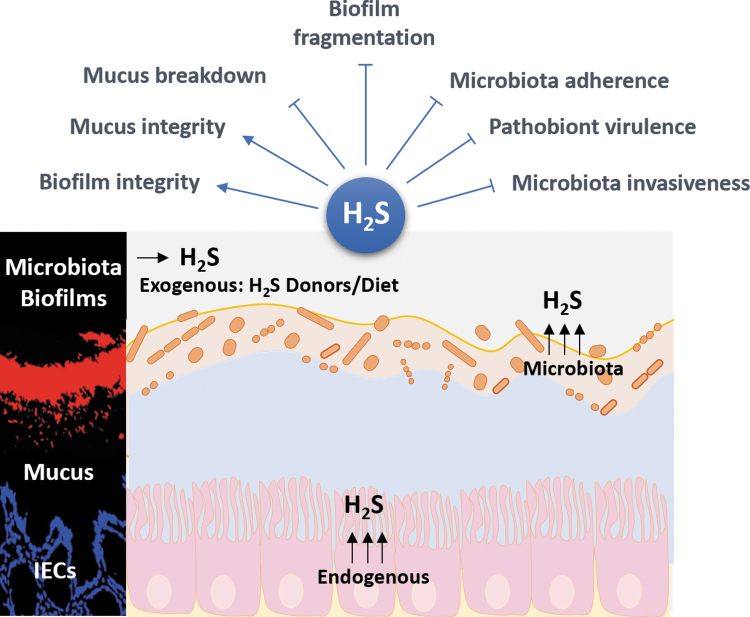
Significance: Hydrogen sulfide (H 2 S), an important regulator of physiology and health, helps resolve inflammation and promotes tissue repair in the gastrointestinal tract. Recent Advances: Gut microbiota live as a multispecies biofilm in close interaction with the upper mucus layer lining the epithelium. The relative abundance, spatial organization, and function of these microorganisms affect a broad range of health outcomes. This article provides a state-of-the-art review of our understanding of the cross talk between H 2 S, the gut microbiota, and health. H 2 S can have toxic or therapeutic effects, depending on its concentration and source. When produced at excessive concentrations by local microbiota, H 2 S may cause mucus disruption and inflammation and contribute to development of cancer. In contrast, low levels of endogenous or exogenous H 2 S directly stabilize mucus layers, prevent fragmentation and adherence of the microbiota biofilm to the epithelium, inhibit the release of invasive pathobionts, and help resolve inflammation and tissue injury. Although scarce, research findings suggest that dietary H 2 S obtained from plants or ingestion of the H 2 S precursor, L-cysteine, may also modulate the abundance and function of microbiota. Critical Issues: A critical issue is the lack of understanding of the metagenomic, transcriptomic, and proteomic alterations that characterize the interactions between H 2 S and gut microbiota to shape health outcomes. Future Directions: The ambivalent roles of H 2 S in the gut offer a fertile ground for research on such critical issues. The findings will improve our understanding of how H 2 S modulates the microbiota to affect body function and will help identify novel therapeutic strategies. Antioxid. Redox Signal . 36, 211–219.
Overview
The claims and statistics of this paper haven’t been checked yet.
Run the check — free, no account needed. It reads the open-access text and checks the sources it cites.
Integrity signals
Registry
Cites
Statistics
Figures
Verification
Claims the paper makes
The claims and statistics of this paper haven’t been checked yet.
Run the check — free, no account needed. It reads the open-access text and checks the sources it cites.
Claims other papers make about this one
Each is checked against this paper’s own text: does it say what the citing paper says it does?
In the citing paper
“However, H2S exhibits a dual effect, being cytoprotective at low concentrations but toxic at high concentrations [58].”
From Healthy Human Fecal Microbiota Transplantation into Mice Attenuates MPTP-Induced Neurotoxicity via AMPK/SOD2 Pathway (2023) · cites this paper as [58]
Self-check
Percentages, sums and reported differences re-computed from the paper’s own numbers.
The self-check needs the paper’s full text.
Citations
Cites
Current understanding of the human microbiome
Gilbert, J. A., Blaser, M. J., Caporaso, J. G., Jansson, J. K., Lynch, S. V., & Knight, R. (2018) · Nature Medicine · doi:10.1038/nm.4517 · Cited by 2,609
The possible role of hydrogen sulfide as an endogenous neuromodulator
Abe, K., & Kimura, H. (1996) · Journal of Neuroscience · doi:10.1523/jneurosci.16-03-01066.1996 · Cited by 2,240
The gut microbiota–brain axis in behaviour and brain disorders
Morais, L. H., Schreiber, H. L., & Mazmanian, S. K. (2021) · Nature Reviews Microbiology · doi:10.1038/s41579-020-00460-0 · Cited by 2,149
Control of pathogens and pathobionts by the gut microbiota
Kamada, N., Chen, G. Y., Inohara, N., & Núñez, G. (2013) · Nature Immunology · doi:10.1038/ni.2608 · Cited by 1,625
Hydrogen sulfide-based therapeutics: exploiting a unique but ubiquitous gasotransmitter
Wallace, J. L., & Wang, R. (2015) · Nature Reviews Drug Discovery · doi:10.1038/nrd4433 · Cited by 882
Self-citationHydrogen sulfide is an endogenous stimulator of angiogenesis
Papapetropoulos, A., Pyriochou, A., Altaany, Z., Yang, G., Marazioti, A., Zhou, Z., Jeschke, M. G., Branski, L. K., Herndon, D. N., Wang, R., et al. (2009) · Proceedings of the National Academy of Sciences · doi:10.1073/pnas.0908047106 · Cited by 868
Bäckhed, F., Fraser, C. M., Ringel, Y., Sanders, M. E., Sartor, R. B., Sherman, P. M., Versalovic, J., Young, V., & Finlay, B. B. (2012) · Cell Host & Microbe · doi:10.1016/j.chom.2012.10.012 · Cited by 836
The Battle for Iron between Bacterial Pathogens and Their Vertebrate Hosts
Skaar, E. P. (2010) · PLoS Pathogens · doi:10.1371/journal.ppat.1000949 · Cited by 796
H 2 S: A Universal Defense Against Antibiotics in Bacteria
Shatalin, K. Y., Shatalina, E., Mironov, A. S., & Nudler, E. (2011) · Science · doi:10.1126/science.1209855 · Cited by 769
Interactions of commensal and pathogenic microorganisms with the intestinal mucosal barrier
Martens, E. C., Neumann, M., & Desai, M. S. (2018) · Nature Reviews Microbiology · doi:10.1038/s41579-018-0036-x · Cited by 711
Valentini, M., & Filloux, A. (2016) · Journal of Biological Chemistry · doi:10.1074/jbc.r115.711507 · Cited by 665
H2S-induced vasorelaxation and underlying cellular and molecular mechanisms
Zhao, W., & Wang, R. T. (2002) · American Journal of Physiology-Heart and Circulatory Physiology · doi:10.1152/ajpheart.00013.2002 · Cited by 505
c-MAF-dependent regulatory T cells mediate immunological tolerance to a gut pathobiont
Xu, M., Pokrovskii, M., Ding, Y., Yi, R., Au, C., Harrison, O. J., Galan, C., Belkaid, Y., Bonneau, R., & Littman, D. R. (2018) · Nature · doi:10.1038/nature25500 · Cited by 498
Hydrogen sulfide (H 2 S) metabolism in mitochondria and its regulatory role in energy production
Fu, M., Zhang, W., Wu, L., Yang, G., Li, H., & Wang, R. (2012) · Proceedings of the National Academy of Sciences · doi:10.1073/pnas.1115634109 · Cited by 472
Host–microbiota maladaptation in colorectal cancer
Janney, A., Powrie, F., & Mann, E. H. (2020) · Nature · doi:10.1038/s41586-020-2729-3 · Cited by 445
Iron uptake mechanisms of pathogenic bacteria
Wooldridge, K. G., & WILLIAMS, P. H. (1993) · FEMS Microbiology Reviews · doi:10.1111/j.1574-6976.1993.tb00026.x · Cited by 426
Escherichia coli Pathobionts Associated with Inflammatory Bowel Disease
Mirsepasi‐Lauridsen, H. C., Vallance, B. A., Krogfelt, K. A., & Petersen, A. M. (2019) · Clinical Microbiology Reviews · doi:10.1128/cmr.00060-18 · Cited by 374
Lee, T., Clavel, T., Smirnov, K. S., Schmidt, A., Lagkouvardos, I., Walker, A., Lucio, M., Michalke, B., Schmitt‐Kopplin, P., Fedorak, R. N., et al. (2016) · Gut · doi:10.1136/gutjnl-2015-309940 · Cited by 333
Biology and therapeutic potential of hydrogen sulfide and hydrogen sulfide-releasing chimeras
Kashfi, K., & Olson, K. R. (2012) · Biochemical Pharmacology · doi:10.1016/j.bcp.2012.10.019 · Cited by 315
A Pathobiont of the Microbiota Balances Host Colonization and Intestinal Inflammation
Chow, J., & Mazmanian, S. K. (2010) · Cell Host & Microbe · doi:10.1016/j.chom.2010.03.004 · Cited by 312
Diagnosis and management of iron deficiency anemia in patients with IBD
Stein, J. M., Hartmann, F., & Dignass, A. U. (2010) · Nature Reviews Gastroenterology & Hepatology · doi:10.1038/nrgastro.2010.151 · Cited by 304
Sulfide as a Mucus Barrier-Breaker in Inflammatory Bowel Disease?
Ijssennagger, N., van der Meer, R., & van Mil, S. W. C. (2016) · Trends in Molecular Medicine · doi:10.1016/j.molmed.2016.01.002 · Cited by 300
Gastrointestinal biofilms in health and disease
Motta, J., Wallace, J. L., Buret, A. G., Deraison, C., & Vergnolle, N. (2021) · Nature Reviews Gastroenterology & Hepatology · doi:10.1038/s41575-020-00397-y · Cited by 291
Self-citationLavelle, A., Lennon, G., O’Sullivan, Ó., Docherty, N. G., Balfe, Á., Maguire, A. A., Mulcahy, H. E., Doherty, G. A., O’Donoghue, D., Hyland, J. M., et al. (2015) · Gut · doi:10.1136/gutjnl-2014-307873 · Cited by 281
Attene‐Ramos, M. S., Nava, G. M., Muellner, M. G., Wagner, E. D., Plewa, M. J., & Gaskins, H. R. (2010) · Environmental and Molecular Mutagenesis · doi:10.1002/em.20546 · Cited by 244
Recent Advances in Metabolic Pathways of Sulfate Reduction in Intestinal Bacteria
Kushkevych, I. V., Cejnar, J., Treml, J., Đorđević, Đ., Kollár, P., & Vítězová, M. (2020) · Cells · doi:10.3390/cells9030698 · Cited by 227
Mechanism of H 2 S-mediated protection against oxidative stress in Escherichia coli
Mironov, A. S., Seregina, T. A., Nagornykh, M. O., Luhachack, L. G., Королькова, Н. В., Errais, L. L., Kotova, V. Y., Zavilgelsky, G., Shakulov, R. S., Shatalin, K. Y., et al. (2017) · Proceedings of the National Academy of Sciences · doi:10.1073/pnas.1703576114 · Cited by 227
Hydrogen Sulfide Signaling in the Gastrointestinal Tract
Linden, D. R. (2013) · Antioxidants and Redox Signaling · doi:10.1089/ars.2013.5312 · Cited by 222
Buret, A. G., Motta, J., Allain, T., Ferraz, J. G., & Wallace, J. L. (2019) · Journal of Biomedical Science · doi:10.1186/s12929-018-0495-4 · Cited by 213
Self-citationH2S signaling in plants and applications in agriculture
Corpas, F. J., & Palma, J. M. (2020) · Journal of Advanced Research · doi:10.1016/j.jare.2020.03.011 · Cited by 211
Motta, J.-P., Flannigan, K. L., Agbor, T. A., Beatty, J. K., Blackler, R. W., Workentine, M. L., Da Silva, G. J., Wang, R., Buret, A. G., & Wallace, J. L. (2015) · Inflammatory Bowel Diseases · doi:10.1097/mib.0000000000000345 · Cited by 200
Self-citationPeck, S. C., Denger, K., Burrichter, A., Irwin, S. M., Balskus, E. P., & Schleheck, D. (2019) · Proceedings of the National Academy of Sciences · doi:10.1073/pnas.1815661116 · Cited by 194
Cysteine-derived hydrogen sulfide and gut health
Blachier, F., Beaumont, M., & Kim, E. (2018) · Current Opinion in Clinical Nutrition & Metabolic Care · doi:10.1097/mco.0000000000000526 · Cited by 182
Giardia duodenalis induces pathogenic dysbiosis of human intestinal microbiota biofilms
Beatty, J., Akierman, S. V., Motta, J., Muise, S. S. R., Workentine, M. L., Harrison, J. J., Bhargava, A., Beck, P. L., Rioux, K. P., McKnight, G. W., et al. (2017) · International Journal for Parasitology · doi:10.1016/j.ijpara.2016.11.010 · Cited by 172
Self-citationIntestinal bile acid physiology and pathophysiology
Martínez‐Augustin, O., & de Medina, F. S. (2008) · World Journal of Gastroenterology · doi:10.3748/wjg.14.5630 · Cited by 167
Label or Concept – What Is a Pathobiont?
Jochum, L. M., & Stecher, B. (2020) · Trends in Microbiology · doi:10.1016/j.tim.2020.04.011 · Cited by 164
Microbial biofilms and the human intestinal microbiome
de Vos, W. M. (2015) · npj Biofilms and Microbiomes · doi:10.1038/npjbiofilms.2015.5 · Cited by 163
Gut Bacteria and Hydrogen Sulfide: The New Old Players in Circulatory System Homeostasis
Tomášová, L., Konopelski, P., & Ufnal, M. (2016) · Molecules · doi:10.3390/molecules21111558 · Cited by 161
Dogan, B., Suzuki, H., Herlekar, D., Sartor, R. B., Campbell, B. J., Roberts, C. L., Stewart, K., Scherl, E., Araz, Y., Bitar, P. P., et al. (2014) · Inflammatory Bowel Diseases · doi:10.1097/mib.0000000000000183 · Cited by 160
Anti-Inflammatory and Cytoprotective Actions of Hydrogen Sulfide: Translation to Therapeutics
Wallace, J. L., Blackler, R. W., Chan, M. V., Da Silva, G. J., Elsheikh, W., Flannigan, K. L., Gamaniek, I., Manko, A., Wang, L., Motta, J.-P., et al. (2015) · Antioxidants & Redox Signaling · doi:10.1089/ars.2014.5901 · Cited by 156
Self-citationMetabolism of hydrogen gases and bile acids in the gut microbiome
Hylemon, P. B., Harris, S. C., & Ridlon, J. M. (2018) · FEBS Letters · doi:10.1002/1873-3468.13064 · Cited by 140
Campylobacter jejuni induces transcellular translocation of commensal bacteria via lipid rafts
Kalischuk, L. D., Inglis, G. D., & Buret, A. G. (2009) · Gut Pathogens · doi:10.1186/1757-4749-1-2 · Cited by 135
Self-citationNakamoto, M., Kunimura, K., Suzuki, J., & Kodera, Y. (2019) · Experimental and Therapeutic Medicine · doi:10.3892/etm.2019.8388 · Cited by 135
Hydrogen Sulfide in Pharmacotherapy, Beyond the Hydrogen Sulfide-Donors
Zaorska, E., Tomášová, L., Koszelewski, D., Ostaszewski, R., & Ufnal, M. (2020) · Biomolecules · doi:10.3390/biom10020323 · Cited by 130
Hydrogen sulfide in physiology and pathogenesis of bacteria and viruses
Pal, V. K., Bandyopadhyay, P., & Singh, A. (2018) · IUBMB Life · doi:10.1002/iub.1740 · Cited by 122
Hydrogen sulfide: an agent of stability at the microbiome-mucosa interface
Wallace, J. L., Motta, J., & Buret, A. G. (2017) · American Journal of Physiology-Gastrointestinal and Liver Physiology · doi:10.1152/ajpgi.00249.2017 · Cited by 120
Self-citationShukla, P., Khodade, V. S., Mallojjala, S. C., Chauhan, P., Mishra, S., Siddaramappa, S., Bulagonda, E. P., Singh, A., & Chakrapani, H. (2017) · Chemical Science · doi:10.1039/c7sc00873b · Cited by 116
Wallace, J. L., Nagy, P., Feener, T. D., Allain, T., Ditrói, T., Vaughan, D. J., Muscará, M. N., Nucci, G. D., & Buret, A. G. (2019) · British Journal of Pharmacology · doi:10.1111/bph.14641 · Cited by 114
Self-citationTargeting redox heterogeneity to counteract drug tolerance in replicating Mycobacterium tuberculosis
Mishra, R., Kohli, S., Malhotra, N., Bandyopadhyay, P., Mehta, M., Munshi, M., Adiga, V., Ahuja, V. K., Shandil, R. K., Rajmani, R. S., et al. (2019) · Science Translational Medicine · doi:10.1126/scitranslmed.aaw6635 · Cited by 113
Hydrogen sulfide stimulates Mycobacterium tuberculosis respiration, growth and pathogenesis
Saini, V., Chinta, K. C., Reddy, V. P., Glasgow, J. N., Stein, A., Lamprecht, D. A., Rahman, M. A., Mackenzie, J. S., Truebody, B. E., Adamson, J., et al. (2020) · Nature Communications · doi:10.1038/s41467-019-14132-y · Cited by 112
The human microbiome in the 21st century
Rackaityte, E., & Lynch, S. V. (2020) · Nature Communications · doi:10.1038/s41467-020-18983-8 · Cited by 101
Hydrogen sulfide donors in research and drug development
Song, Z. J., Ng, M. Y., Lee, Z., Dai, W., Hagen, T., Moore, P. K., Huang, D., Deng, L., & Tan, C. (2014) · MedChemComm · doi:10.1039/c3md00362k · Cited by 101
Microbial biofilms and gastrointestinal diseases
von Rosenvinge, E. C., O’May, G. A., Macfarlane, S., Macfarlane, G. T., & Shirtliff, M. E. (2012) · Pathogens and Disease · doi:10.1111/2049-632x.12020 · Cited by 91
Kushkevych, I. V., Đorđević, Đ., Kollár, P., Vítězová, M., & Drago, L. (2019) · Journal of Clinical Medicine · doi:10.3390/jcm8071054 · Cited by 88
Rahman, M. A., Cumming, B. M., Addicott, K. W., Pacl, H. T., Russell, S., Nargan, K., Naidoo, T., Ramdial, P. K., Adamson, J., Wang, R., et al. (2020) · Proceedings of the National Academy of Sciences · doi:10.1073/pnas.1919211117 · Cited by 83
Production and elimination of sulfur-containing gases in the rat colon
Suarez, F. L., Furne, J. K., Springfield, J. R., & Levitt, M. D. (1998) · American Journal of Physiology-Gastrointestinal and Liver Physiology · doi:10.1152/ajpgi.1998.274.4.g727 · Cited by 81
Sharma, I. M., Petchiappan, A., & Chatterji, D. (2014) · IUBMB Life · doi:10.1002/iub.1339 · Cited by 70
Frommeyer, B., Fiedler, A. W., Oehler, S. R., Hanson, B. T., Loy, A., Franchini, P., Spiteller, D., & Schleheck, D. (2020) · iScience · doi:10.1016/j.isci.2020.101510 · Cited by 68
Pruteanu, M., Hyland, N. P., Clarke, D. J., Kiely, B., & Shanahan, F. (2011) · Inflammatory Bowel Diseases · doi:10.1002/ibd.21475 · Cited by 67
Hydrogen sulphide protects against NSAID ‐enteropathy through modulation of bile and the microbiota
Blackler, R. W., Motta, J., Manko, A., Workentine, M., Bercik, P., Surette, M. G., & Wallace, J. L. (2015) · British Journal of Pharmacology · doi:10.1111/bph.12961 · Cited by 66
Self-citationWareham, L. K., Southam, H. M., & Poole, R. K. (2018) · Biochemical Society Transactions · doi:10.1042/bst20170311 · Cited by 65
Burrichter, A. G., Denger, K., Franchini, P., Huhn, T., Müller, N., Spiteller, D., & Schleheck, D. (2018) · Frontiers in Microbiology · doi:10.3389/fmicb.2018.02792 · Cited by 64
Active thrombin produced by the intestinal epithelium controls mucosal biofilms
Motta, J., Denadai‐Souza, A., Sagnat, D., Guiraud, L., Edir, A., Bonnart, C., Sebbag, M., Rousset, P., Lapeyre, A., Séguy, C., et al. (2019) · Nature Communications · doi:10.1038/s41467-019-11140-w · Cited by 63
Self-citationTherapeutic importance of hydrogen sulfide in age-associated neurodegenerative diseases
Jeong, N., Jung, J., & Tabassum, R. (2019) · Neural Regeneration Research · doi:10.4103/1673-5374.266911 · Cited by 61
Gerbaba, T. K., Gupta, P., Rioux, K. P., Hansen, D., & Buret, A. G. (2015) · American Journal of Physiology-Gastrointestinal and Liver Physiology · doi:10.1152/ajpgi.00335.2014 · Cited by 59
Self-citationHydrogen Sulfide in Bone Tissue Regeneration and Repair: State of the Art and New Perspectives
Gambari, L., Grigolo, B., & Grassi, F. (2019) · International Journal of Molecular Sciences · doi:10.3390/ijms20205231 · Cited by 58
Walsh, B. J. C., Wang, J., Edmonds, K. A., Palmer, L. D., Zhang, Y., Trinidad, J. C., Skaar, E. P., & Giedroc, D. P. (2020) · mBio · doi:10.1128/mbio.01254-20 · Cited by 56
Yao, C. K., Rotbart, A., Ou, J. Z., Kalantar‐Zadeh, K., Muir, J. G., & Gibson, P. R. (2018) · Gut Microbes · doi:10.1080/19490976.2018.1451280 · Cited by 55
Hydrogen sulfide as a vasculoprotective factor
Streeter, E., Ng, H. H., & Hart, J. L. (2013) · Medical Gas Research · doi:10.1186/2045-9912-3-9 · Cited by 50
Motta, J., Allain, T., Green-Harrison, L. E., Groves, R. A., Feener, T. D., Ramay, H. R., Beck, P. L., Lewis, I. A., Wallace, J. L., & Buret, A. G. (2018) · Inflammatory Bowel Diseases · doi:10.1093/ibd/izy116 · Cited by 50
Self-citationEllermann, M., Huh, E. Y., Liu, B., Carroll, I. M., Tamayo, R., & Sartor, R. B. (2015) · Infection and Immunity · doi:10.1128/iai.00904-15 · Cited by 48
Dietary Cysteine and Other Amino Acids and Stroke Incidence in Women
Larsson, S. C., Håkansson, N., & Wolk, A. (2015) · Stroke · doi:10.1161/strokeaha.114.008022 · Cited by 46
Liang, D., Wang, C., Tocmo, R., Wu, H., Deng, L., & Huang, D. (2015) · Journal of Functional Foods · doi:10.1016/j.jff.2015.02.007 · Cited by 44
Neto, J. C. G., Kittana, H., Mantz, S., Muñoz, R. R. S., Schmaltz, R. J., Bindels, L. B., Clarke, J., Hostetter, J. M., Benson, A. K., Walter, J., et al. (2017) · Scientific Reports · doi:10.1038/s41598-017-18014-5 · Cited by 42
Ng, L. T., Ng, L. F., Tang, R. M. Y., Barardo, D., Halliwell, B. B., Moore, P. K., & Gruber, J. (2020) · npj Aging and Mechanisms of Disease · doi:10.1038/s41514-020-0044-8 · Cited by 42
Doherty, N., Shen, F., Halliday, N., Barrett, D. A., Hardie, K. R., Winzer, K., & Atherton, J. C. (2010) · Journal of Bacteriology · doi:10.1128/jb.01372-09 · Cited by 41
Reti, K. L., Tymensen, L. D., Davis, S. P., Amrein, M., & Buret, A. G. (2015) · Infection and Immunity · doi:10.1128/iai.00970-15 · Cited by 40
Self-citationCosta, S. K. P., Muscará, M. N., Allain, T., Dallazen, J. L., Santos, L. G., Buret, A. G., Vaughan, D. J., Fowler, C. J., Nucci, G. D., & Wallace, J. L. (2020) · Antioxidants and Redox Signaling · doi:10.1089/ars.2019.7884 · Cited by 36
Self-citationMotta, J., Palese, S., Giorgio, C., Chapman, K., Denadai‐Souza, A., Rousset, P., Sagnat, D., Guiraud, L., Edir, A., Séguy, C., et al. (2020) · Journal of Crohn s and Colitis · doi:10.1093/ecco-jcc/jjaa229 · Cited by 36
Self-citationToit, A. D. (2015) · Nature Reviews Molecular Cell Biology · doi:10.1038/nrm3939 · Cited by 10
Prevalence of lower extremity venous disease in inflammatory bowel disease.
Gosk−Bierska, I., McBane, R. D., Waszczuk, E., Paradowski, L., & Wysokiński, W. E. (2007) · PubMed · Cited by 5
Research works printed but not linked: 1
- Du Toit A. The health benefits of hydrogen sulphide. Nat Rev Mol Cell Biol, 16: 68, 2015. · DOI
Cited by
Sorted by citations
Physiological roles of hydrogen sulfide in mammalian cells, tissues, and organs
Cirino, G., Szabó, C., & Papapetropoulos, A. (2022) · Physiological Reviews · doi:10.1152/physrev.00028.2021 · Cited by 578
Advances in pathogenesis and therapeutic strategies for osteoporosis
Song, S., Guo, Y., Yang, Y., & Fu, D. (2022) · Pharmacology & Therapeutics · doi:10.1016/j.pharmthera.2022.108168 · Cited by 476
Desulfovibrio in the Gut: The Enemy within?
Singh, S., Carroll‐Portillo, A., & Lin, H. C. (2023) · Microorganisms · doi:10.3390/microorganisms11071772 · Cited by 279
Interactions between polysaccharides and gut microbiota: A metabolomic and microbial review
Zhang, D., Liu, J., Cheng, H., Wang, H., Tan, Y., Feng, W., & Peng, C. Y. (2022) · Food Research International · doi:10.1016/j.foodres.2022.111653 · Cited by 206
Varghese, S., Rao, S., Khattak, A., Zamir, F., & Chaari, A. (2024) · Nutrients · doi:10.3390/nu16213663 · Cited by 152
Metadata
- Authors
- Buret, A. G., Allain, T., Motta, J.-P., & Wallace, J. L.
- Affiliations
- Host–Parasite Interactions Program, Inflammation Research Network, Biological Sciences, University of Calgary, Calgary, Canada.
- University of Calgary (CA)
- Inserm (FR)
- Venue
- Antioxidants & Redox Signaling
- Publisher
- SAGE Publications
- Published
- 2022-02
- Volume
- 36
- Issue
- 4-6
- Pages
- 211-219
- ISSN
- 1523-0864 (ISSN-L)
- 1557-7716
- PMC
- PMC8861923
- OpenAlex
- W3133888684
- Cited by
- 151
- References
- 81
- Citations by year
- 2026: 33 · 2025: 29 · 2024: 30 · 2023: 32 · 2022: 23
- FWCI
- 6.90
- Type
- journal article
- Language
- en
- Open access
- hybrid
- doi.org
- Licence
- Locations
- Antioxidants and Redox Signaling (publishedVersion, cc-by-nc)
- PubMed Central (publishedVersion, cc-by-nc)
- PubMed (publishedVersion)
- HAL (submittedVersion)
- Funders
- Canadian Institutes of Health Research
- Topics
- Life Sciences › Biochemistry, Genetics and Molecular Biology › Molecular Biology › Gut microbiota and health
- Life Sciences › Biochemistry, Genetics and Molecular Biology › Biochemistry › Sulfur Compounds in Biology
- Health Sciences › Medicine › Gastroenterology › Helicobacter pylori-related gastroenterology studies
- Keywords
- hydrogen sulfide, gut microbiota, mucus layer, inflammation resolution, tissue repair, gastrointestinal cancer, pathobionts, cysteine, microbiota-metabolite interactions
- MeSH terms
- Gastrointestinal Microbiome, Hydrogen Sulfide, Proteomics, Gastrointestinal Tract, Microbiota
About these checks
Registry, retraction, Cites and statistics results are computed, not judged, with one exception: a printed reference that no index lists is read once by a model before it counts as a citation error. Claims are extracted by a model and kept only when their quote appears verbatim in the text; each cited source is then checked, with a model’s help, for whether it says what the claim relies on. Those verdicts can be wrong — read the claim’s quote and the cited source before relying on one.
Statistics and arithmetic are recomputed, not judged.
Confidence bands are shown only for fields calibrated on our annotated test set. None is calibrated yet, so no band is shown.
What counts as a claim ›How we measure confidence ›How we check this ›
Are you an author, or do you see a problem with this page? Request a review
