

The DOI matches its Crossref record; 20 of the 20 references it cites were found in a registry or an index.
The Value of Automated Diabetic Retinopathy Screening with the EyeArt System: A Study of More Than 100,000 Consecutive Encounters from People with Diabetes
Open accessAbstract
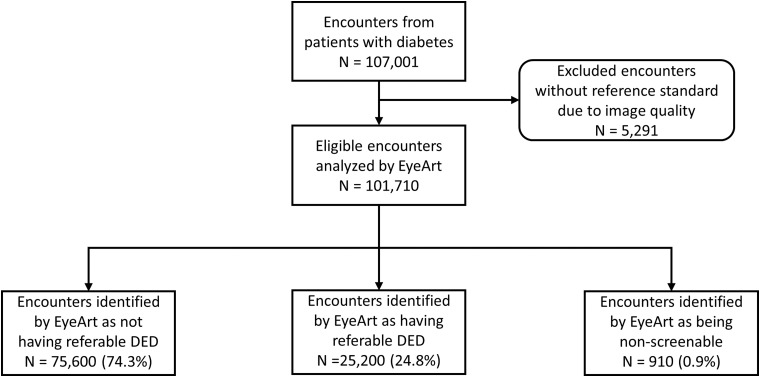
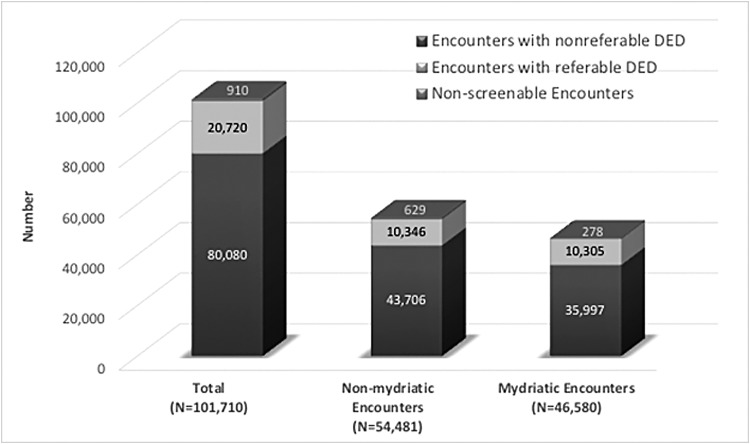
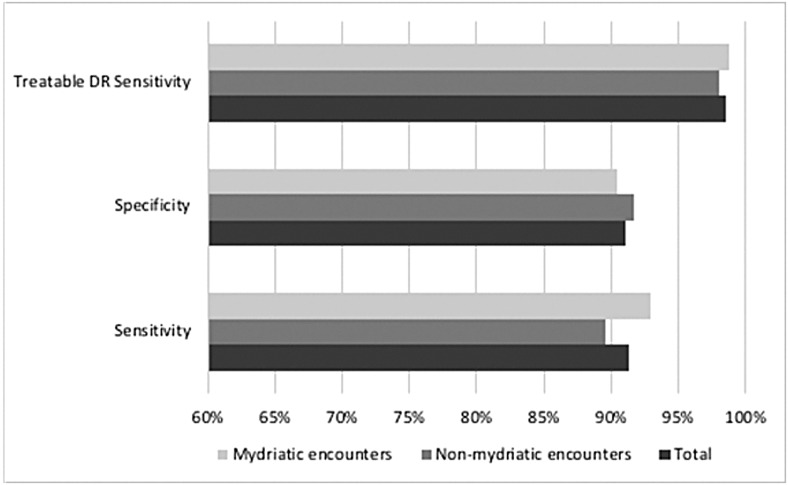
Background: Current manual diabetic retinopathy (DR) screening using eye care experts cannot scale to screen the growing population of diabetes patients who are at risk for vision loss. EyeArt system is an automated, cloud-based artificial intelligence (AI) eye screening technology designed to easily detect referral-warranted DR immediately through automated analysis of patient's retinal images. Methods: This retrospective study assessed the diagnostic efficacy of the EyeArt system v2.0 analyzing 850,908 fundus images from 101,710 consecutive patient visits, collected from 404 primary care clinics. Presence or absence of referral-warranted DR (more than mild nonproliferative DR [NPDR]) was automatically detected by the EyeArt system for each patient encounter, and its performance was compared against a clinical reference standard of quality-assured grading by rigorously trained certified ophthalmologists and optometrists. Results: Of the 101,710 visits, 75.7% were nonreferable, 19.3% were referable to an eye care specialist, and in 5.0%, the DR level was unknown as per the clinical reference standard. EyeArt screening had 91.3% (95% confidence interval [CI]: 90.9–91.7) sensitivity and 91.1% (95% CI: 90.9–91.3) specificity. For 5446 encounters with potentially treatable DR (more than moderate NPDR and/or diabetic macular edema), the system provided a positive “refer” output to 5363 encounters achieving sensitivity of 98.5%. Conclusions: This study captures variations in real-world clinical practice and shows that an AI DR screening system can be safe and effective in the real world. This study demonstrates the value of this easy-to-use, automated tool for endocrinologists, diabetologists, and general practitioners to address the growing need for DR screening and monitoring.
Overview
The claims and statistics of this paper haven’t been checked yet.
Run the check — free, no account needed. It reads the open-access text and checks the sources it cites.
Integrity signals
Registry
Cites
Statistics
Figures
Verification
Claims the paper makes
The claims and statistics of this paper haven’t been checked yet.
Run the check — free, no account needed. It reads the open-access text and checks the sources it cites.
Claims other papers make about this one
Each is checked against this paper’s own text: does it say what the citing paper says it does?
The source backs part of the claim, not all of it — or backs it for a different population, condition or comparison.
In the citing paper
“In the screening and evaluation of diabetic complications, the screening of DR using retinal images was studied well in multi-ethnic cohorts, with comparable accuracy compared with professional graders (discussed in detail in the conclusion and perspective).103,104,105,106,107,108,109”
From Artificial intelligence in diabetes management: Advancements, opportunities, and challenges (2023) · cites this paper as [105]
Experimental — accuracy not yet measuredThe cited source says what the claim attributes to it.
In the citing paper
“the system could achieve 91.3% sensitivity and 91.1% specificity for detecting referral-warranted DR (more than mild non-proliferative DR)”
From Artificial intelligence in diabetes management: Advancements, opportunities, and challenges (2023) · cites this paper as Bhaskaranand et al.105
The cited source says what the claim attributes to it.
In the citing paper
“Multiple artificial intelligence (AI) algorithms have been developed and validated for DR5–8 screening and it is the most frequently implemented deep learning application in prospective real-world studies9.”
From Referral uptake after diabetic retinopathy screening with artificial intelligence-assisted care pathways: a systematic review and meta-analysis (2026) · cites this paper as [5]
The cited source says what the claim attributes to it.
In the citing paper
“Artificial intelligence (AI) is an accurate screening tool for diabetic retinopathy (DR), the leading cause of blindness among working-aged adults.”
From Referral uptake after diabetic retinopathy screening with artificial intelligence-assisted care pathways: a systematic review and meta-analysis (2026) · cites this paper as [5]
The check wasn’t confident either way, so it gives no verdict — never disputed.
In the citing paper
“Based on the claims database in 2023, DR testing has become one of the most widely adopted and fastest-growing AI-aided medical procedures in the United States, only second to coronary artery disease.”
From Autonomous Artificial Intelligence in Diabetic Retinopathy Testing—Lessons Learned on Successful Health System Adoption (2026) · cites this paper as [21]
Experimental — accuracy not yet measured
Self-check
Percentages, sums and reported differences re-computed from the paper’s own numbers.
The self-check needs the paper’s full text.
Citations
Cites
Gulshan, V., Peng, L., Coram, M., Stumpe, M. C., Wu, D., Narayanaswamy, A., Venugopalan, S., Widner, K., Madams, T., Cuadros, J., et al. (2016) · JAMA · doi:10.1001/jama.2016.17216 · Cited by 7,697
Self-citationAbràmoff, M. D., Lavin, P. T., Birch, M., Shah, N., & Folk, J. C. (2018) · npj Digital Medicine · doi:10.1038/s41746-018-0040-6 · Cited by 1,638
Statistics with Confidence: Confidence Intervals and Statistical Guidelines.
JOLLIFFE, F. R., Gardner, M. J., & Altman, D. G. (1990) · Journal of the Royal Statistical Society Series A (Statistics in Society) · doi:10.2307/2982808 · Cited by 1,319
Rajalakshmi, R., Subashini, R., Anjana, R. M., & Mohan, V. (2018) · Eye · doi:10.1038/s41433-018-0064-9 · Cited by 462
EyePACS: An Adaptable Telemedicine System for Diabetic Retinopathy Screening
Cuadros, J., & Bresnick, G. (2009) · Journal of Diabetes Science and Technology · doi:10.1177/193229680900300315 · Cited by 390 · cited 3×
“Repeat grading by a retinal subspecialist who is an expert in the EyePACS grading protocol may also be included.(17) A third limitation of this study is that data on the mean age of the patients or the mean duration of diabetes are unavailable to assess the performance of the EyeArt system, stratified on these factors.”
BackgroundMethodInfluentialSelf-citationvan der Heijden, A. A., Abramoff, M. D., Verbraak, F., van Hecke, M. V., Liem, A., & Nijpels, G. (2018) · Acta Ophthalmologica · doi:10.1111/aos.13613 · Cited by 296
Automated Early Detection of Diabetic Retinopathy
Abràmoff, M. D., Reinhardt, J. M., Russell, S. R., Folk, J. C., Mahajan, V. B., Niemeijer, M., & Quellec, G. (2010) · Ophthalmology · doi:10.1016/j.ophtha.2010.03.046 · Cited by 287
Automated Diabetic Retinopathy Image Assessment Software
Tufail, A., Rudisill, C., Egan, C., Kapetanakis, V. V., Salas-Vega, S., Owen, C. G., Lee, A., Louw, V., Anderson, J., Liew, G., et al. (2017) · Ophthalmology · doi:10.1016/j.ophtha.2016.11.014 · Cited by 283
Self-citationAbràmoff, M. D., Niemeijer, M., Suttorp-Schulten, M. S. A., Viergever, M. A., Russell, S. R., & van Ginneken, B. (2008) · Diabetes Care · doi:10.2337/dc07-1312 · Cited by 277
Artificial Intelligence With Deep Learning Technology Looks Into Diabetic Retinopathy Screening
Wong, T. Y., & Bressler, N. M. (2016) · JAMA · doi:10.1001/jama.2016.17563 · Cited by 271
Research works printed but not linked: 4
- National Eye Institute: Facts about diabetic eye disease. 2015. https://nei.nih.gov/health/diabetic/retinopathy (accessed November25 2018). · DOI
- Solanki K, , Ramachandra C, , Bhat S, et al.: EyeArt system: automated, high-throughput, image analysis for diabetic retinopathy screening. IOVS, 2015; 56. Abstract 1429.
- Simonyan K Zisserman A: Very Deep Convolutional Networks for Large-Scale Image Recognition. ArXiv 2014. http://arxiv.org/abs/1409.1556. · arXiv
- Solanki K, , Bhaskaranand M, , Bhat S, et al.: Comprehensive clinical validation study of an automated DR screening system against 7-field ETDRS stereoscopic reference standard. Am Acad Ophthalmol, 2016. Abstract 30049096.
Cited by
Sorted by citations
Diabetic retinopathy: Looking forward to 2030
Tan, T., & Wong, T. Y. (2023) · Frontiers in Endocrinology · doi:10.3389/fendo.2022.1077669 · Cited by 546
Artificial Intelligence to Detect Papilledema from Ocular Fundus Photographs
Miléa, D., Najjar, R. P., Jiang, Z., Ting, D. S. W., Vasseneix, C., Xu, X., Fard, M. A., Fonseca, P., Vanikieti, K., Lagrèze, W. A., et al. (2020) · New England Journal of Medicine · doi:10.1056/nejmoa1917130 · Cited by 356
Artificial intelligence in diabetes management: Advancements, opportunities, and challenges
Guan, Z., Li, H., Liu, R., Cai, C., Liu, Y., Li, J., Wang, X., Huang, S., Wu, L., Liu, D., et al. (2023) · Cell Reports Medicine · doi:10.1016/j.xcrm.2023.101213 · Cited by 287
Ipp, E., Liljenquist, D., Bode, B., Shah, V. N., Silverstein, S., Regillo, C. D., Lim, J. I., Sadda, S., Domalpally, A., Gray, G., et al. (2021) · JAMA Network Open · doi:10.1001/jamanetworkopen.2021.34254 · Cited by 256
Self-citationRuamviboonsuk, P., Tiwari, R., Sayres, R., Nganthavee, V., Hemarat, K., Kongprayoon, A., Raman, R., Levinstein, B., Liu, Y., Schaekermann, M., et al. (2022) · The Lancet Digital Health · doi:10.1016/s2589-7500(22)00017-6 · Cited by 250
Lee, A. Y., Yanagihara, R. T., Lee, C. S., Blazes, M., Jung, H. C., Chee, Y. E., Gencarella, M. D., Gee, H., Maa, A. Y., Cockerham, G. C., et al. (2021) · Diabetes Care · doi:10.2337/dc20-1877 · Cited by 194
Heydon, P., Egan, C. A., Bolter, L., Chambers, R., Anderson, J., Aldington, S. J., STRATTON, I. M., Scanlon, P. H., Webster, L., Mann, S. S., et al. (2020) · British Journal of Ophthalmology · doi:10.1136/bjophthalmol-2020-316594 · Cited by 183
Artificial Intelligence Detection of Diabetic Retinopathy
Lim, J. I., Regillo, C. D., Sadda, S. R., Ipp, E., Bhaskaranand, M., Ramachandra, C., Solanki, K., Dubiner, H., Levy-Clarke, G., Pesavento, R., et al. (2023) · Ophthalmology Science · doi:10.1016/j.xops.2022.100228 · Cited by 157
Self-citationArtificial intelligence for diabetic retinopathy screening, prediction and management
Gunasekeran, D. V., Ting, D. S. W., Tan, G. S. W., & Wong, T. Y. (2020) · Current Opinion in Ophthalmology · doi:10.1097/icu.0000000000000693 · Cited by 133
Wu, J.-H., Liu, T. Y. A., Hsu, W.-T., Ho, J. H.-C., & Lee, C.-C. (2021) · Journal of Medical Internet Research · doi:10.2196/23863 · Cited by 108
Focused Attention in Transformers for interpretable classification of retinal images
Playout, C., Duval, R., Boucher, M. C., & Farida Cheriet, A. (2022) · Medical Image Analysis · doi:10.1016/j.media.2022.102608 · Cited by 98
Cost-effectiveness of artificial intelligence screening for diabetic retinopathy in rural China
Huang, X.-M., Yang, B.-F., Zheng, W.-L., Liu, Q., Xiao, F., Ouyang, P.-W., Li, M.-J., Li, X.-Y., Meng, J., Zhang, T.-T., et al. (2022) · BMC Health Services Research · doi:10.1186/s12913-022-07655-6 · Cited by 89
Liu, J., Gibson, E., Ramchal, S., Shankar, V., Piggott, K., Sychev, Y., Li, A. S., Rao, P. K., Margolis, T. P., Fondahn, E., et al. (2021) · Ophthalmology Retina · doi:10.1016/j.oret.2020.06.016 · Cited by 88
Self-citationSosale, B., Aravind, S. R., Murthy, H., Narayana, S., Sharma, U., GOWDA, S. G. V., & Naveenam, M. (2020) · BMJ Open Diabetes Research & Care · doi:10.1136/bmjdrc-2019-000892 · Cited by 85
Diabetes and its complications: molecular mechanisms, prevention and treatment
Zhao, L., Yuan, J., Yang, Q., Ma, J., Yang, F., Zou, Y., Liu, K., & Liu, F. (2026) · Signal Transduction and Targeted Therapy · doi:10.1038/s41392-025-02401-w · Cited by 80
Grzybowski, A. E., Singhanetr, P., Nanegrungsunk, O., & Ruamviboonsuk, P. (2023) · Ophthalmology and Therapy · doi:10.1007/s40123-023-00691-3 · Cited by 86
Sosale, B., Sosale, A., Murthy, H., Sengupta, S., & Naveenam, M. (2020) · Indian Journal of Ophthalmology · doi:10.4103/ijo.ijo_1203_19 · Cited by 69
Grzybowski, A., & Brona, P. (2021) · Journal of Clinical Medicine · doi:10.3390/jcm10112352 · Cited by 64
Wolf, R. M., Liu, T. Y. A., Thomas, C., Prichett, L., Zimmer-Galler, I., Smith, K., Abramoff, M. D., & Channa, R. (2021) · Diabetes Care · doi:10.2337/dc20-1671 · Cited by 62
The Diabetic Retinopathy “Pandemic” and Evolving Global Strategies: The 2023 Friedenwald Lecture
Wong, T. Y., & Tan, T. (2023) · Investigative Ophthalmology & Visual Science · doi:10.1167/iovs.64.15.47 · Cited by 61
Huemer, J. C., Wagner, S. K., & Sim, D. A. (2020) · Clinical ophthalmology · doi:10.2147/opth.s261629 · Cited by 63
Lu, L., Ren, P., Tang, X., Yang, M. Z., Yuan, M., Yu, W., Huang, J., Zhou, E., Lu, L., He, Q., et al. (2021) · Frontiers in Cell and Developmental Biology · doi:10.3389/fcell.2021.719262 · Cited by 57
Patients Perceptions of Artificial Intelligence in Diabetic Eye Screening
Yap, A., Wilkinson, B., Chen, E., Han, L., Vaghefi, E., Galloway, C., & Squirrell, D. (2022) · Asia-Pacific Journal of Ophthalmology · doi:10.1097/apo.0000000000000525 · Cited by 59
BRSET: A Brazilian Multilabel Ophthalmological Dataset of Retina Fundus Photos
Nakayama, L. F., Restrepo, D. S., de Matos, J. C. R. G., Ribeiro, L. Z., Malerbi, F. K., Celi, L. A., & Regatieri, C. V. (2024) · PLOS Digital Health · doi:10.1371/journal.pdig.0000454 · Cited by 55
Pieczyński, J., Kuklo, P., & Grzybowski, A. E. (2021) · Ophthalmology and Therapy · doi:10.1007/s40123-021-00353-2 · Cited by 54
Ophthalmic imaging in diabetic retinopathy: A review
Nanegrungsunk, O., Patikulsila, D., & Sadda, S. R. (2022) · Clinical and Experimental Ophthalmology · doi:10.1111/ceo.14170 · Cited by 53
Self-citationArtificial intelligence and diabetes technology: A review
Gautier, T., Ziegler, L. B., Gerber, M. S., Campos-Náñez, E., & Patek, S. D. (2021) · Metabolism · doi:10.1016/j.metabol.2021.154872 · Cited by 56
Ong, J. X., Konopek, N., Fukuyama, H., & Fawzi, A. A. (2022) · Ophthalmology Retina · doi:10.1016/j.oret.2022.06.018 · Cited by 50
Yousefi, F., Dehnavieh, R., Laberge, M., Gagnon, M.-P., Ghaemi, M. M., Nadali, M., & Azizi, N. (2025) · BMC Primary Care · doi:10.1186/s12875-025-02785-2 · Cited by 48
Artificial intelligence for diabetic retinopathy
Li, S., Zhao, R., & Zou, H. (2021) · Chinese Medical Journal · doi:10.1097/cm9.0000000000001816 · Cited by 55
Olvera‐Barrios, A., Heeren, T. F. C., Balaskas, K., Chambers, R., Bolter, L., Egan, C. A., Tufail, A., & Anderson, J. (2020) · British Journal of Ophthalmology · doi:10.1136/bjophthalmol-2019-315394 · Cited by 49
Neovascularization Detection and Localization in Fundus Images Using Deep Learning
Tang, M. C. S., Teoh, S. S., Ibrahim, H., & Zunaina, E. (2021) · Sensors · doi:10.3390/s21165327 · Cited by 47
Wang, S., Zhang, Y., Lei, S., Zhu, H., Li, J., Wang, Q., Yang, J., Chen, S., & Pan, H. (2020) · European Journal of Endocrinology · doi:10.1530/eje-19-0968 · Cited by 46
Sarao, V., Veritti, D., & Lanzetta, P. (2020) · Graefe s Archive for Clinical and Experimental Ophthalmology · doi:10.1007/s00417-020-04853-y · Cited by 41
Current research and future strategies for the management of vision-threatening diabetic retinopathy
Li, H., Jia, W., Vujosevic, S., Sabanayagam, C., Grauslund, J., Sivaprasad, S., & Wong, T. Y. (2024) · Asia-Pacific Journal of Ophthalmology · doi:10.1016/j.apjo.2024.100109 · Cited by 50
Wintergerst, M. W. M., Bejan, V., Hartmann, V., Schnorrenberg, M., Bleckwenn, M., Weckbecker, K., & Finger, R. P. (2022) · Ophthalmic Epidemiology · doi:10.1080/09286586.2021.1939886 · Cited by 39
Using artificial intelligence for diabetic retinopathy screening: Policy implications
Raman, R., DasGupta, D., Ramasamy, K., George, R., Mohan, V., & Ting, D. (2021) · Indian Journal of Ophthalmology · doi:10.4103/ijo.ijo_1420_21 · Cited by 29
Bias and Non-Diversity of Big Data in Artificial Intelligence: Focus on Retinal Diseases
Jacoba, C. M. P., Celi, L. A., Lorch, A., Fickweiler, W., Sobrin, L., Gichoya, J. W., Aiello, L. P., & Silva, P. S. (2023) · Seminars in Ophthalmology · doi:10.1080/08820538.2023.2168486 · Cited by 38
Baget‐Bernaldiz, M., Romero‐Aroca, P., Santos-Blanco, E., Navarro-Gil, R., Valls, A., Moreno, A., Rashwan, H. A., & Puig, D. (2021) · Diagnostics · doi:10.3390/diagnostics11081385 · Cited by 37
Pediatric Diabetic Retinopathy: Updates in Prevalence, Risk Factors, Screening, and Management
Lin, T., Gubitosi‐Klug, R., Channa, R., & Wolf, R. M. (2021) · Current Diabetes Reports · doi:10.1007/s11892-021-01436-x · Cited by 38
Rêgo, S., Dutra-Medeiros, M., Soares, F., & Monteiro‐Soares, M. (2020) · Ophthalmologica · doi:10.1159/000512638 · Cited by 36
Cai, S. C. S., & Liu, T. Y. A. (2021) · Current Diabetes Reports · doi:10.1007/s11892-021-01398-0 · Cited by 35
Held, L. A., Wewetzer, L., & Steinhäuser, J. (2022) · Health Informatics Journal · doi:10.1177/14604582221112816 · Cited by 34
A Review of Advancements and Evidence Gaps in Diabetic Retinopathy Screening Models
Pearce, E., & Sivaprasad, S. (2020) · Clinical ophthalmology · doi:10.2147/opth.s267521 · Cited by 34
Wewetzer, L., Held, L. A., & Steinhäuser, J. (2021) · PLoS ONE · doi:10.1371/journal.pone.0255034 · Cited by 38
Accelerating ophthalmic artificial intelligence research: the role of an open access data repository
Kras, A., Celi, L. A., & Miller, J. B. (2020) · Current Opinion in Ophthalmology · doi:10.1097/icu.0000000000000678 · Cited by 33
Abdulazeem, H. M., Whitelaw, S., Schauberger, G., & Klug, S. J. (2023) · PLoS ONE · doi:10.1371/journal.pone.0274276 · Cited by 40
Diabetic retinopathy in China: Epidemiology, screening and treatment trends—A review
Li, X., Tan, T., Wong, T. Y., & Sun, X. (2023) · Clinical and Experimental Ophthalmology · doi:10.1111/ceo.14269 · Cited by 34
Lupidi, M., Danieli, L., Fruttini, D., Nicolai, M., Lassandro, N. V., Chhablani, J. K., & Mariotti, C. (2023) · Acta Diabetologica · doi:10.1007/s00592-023-02104-0 · Cited by 31
Artificial Intelligence Improves Patient Follow-Up in a Diabetic Retinopathy Screening Program
Dow, E. R., Chen, K. M., Zhao, C., Knapp, A., Phadke, A., Weng, K., Do, D. V., Mahajan, V. B., Mruthyunjaya, P., Leng, T., et al. (2023) · Clinical Ophthalmology · doi:10.2147/opth.s422513 · Cited by 29
Khan, N. C., Perera, C. M., Dow, E. R., Chen, K., Mahajan, V. B., Mruthyunjaya, P., Diana, V., Leng, T., & Myung, D. J. (2022) · Diagnostics · doi:10.3390/diagnostics12071714 · Cited by 33
Zhelev, Z., Peters, J., Rogers, M., Allen, M. J., Kijauskaite, G., Seedat, F., Wilkinson, E. C., & Hyde, C. (2023) · Journal of Medical Screening · doi:10.1177/09691413221144382 · Cited by 31
Sarayar, R., Lestari, Y. D., Setio, A. A. A., & Sitompul, R. (2023) · Frontiers in Public Health · doi:10.3389/fpubh.2023.1239231 · Cited by 26
Brigell, M., Chiang, B., Maa, A. Y., & Davis, C. Q. (2020) · Translational Vision Science & Technology · doi:10.1167/tvst.9.9.40 · Cited by 25
Smartphone Eye Examination: Artificial Intelligence and Telemedicine
Vilela, M. A. P., Arrigo, A., Parodi, M. B., & Mengue, C. D. S. (2023) · Telemedicine Journal and e-Health · doi:10.1089/tmj.2023.0041 · Cited by 27
Duggal, M., Chauhan, A., Gupta, V., Kankaria, A., Budhija, D., Verma, P., Miglani, V., Syal, P., Kaur, G., Kumar, L., et al. (2025) · JMIR Medical Informatics · doi:10.2196/67529 · Cited by 24
Application of Artificial Intelligence in Precision Medicine for Diabetic Macular Edema
Li, L., Zhang, W., Tu, X., Pang, J., Lai, I. F., Jin, C., Cheung, C. Y.-L., & Lin, H. (2023) · Asia-Pacific Journal of Ophthalmology · doi:10.1097/apo.0000000000000583 · Cited by 24
Teng, C. W., Patel, S. D., Barkmeier, A. J., Liu, T. Y. A., Myung, D., Henderer, J., Liu, J., Hansen, E., & Al-Aswad, L. A. (2026) · Ophthalmology Science · doi:10.1016/j.xops.2025.100935 · Cited by 23
“34 A study in 2023 by Najac et al assessed the feasibility of telemedicine diabetic eye disease testing in a point-of-care general practice setting.”
Chu, A., Squirrell, D., Phillips, A. M., & Vaghefi, E. (2020) · Journal of Ophthalmology · doi:10.1155/2020/8841927 · Cited by 26
Mokhashi, N., Grachevskaya, J., Cheng, L., Yu, D., Lu, X., Zhang, Y., & Henderer, J. D. (2022) · Journal of Diabetes Science and Technology · doi:10.1177/1932296821999370 · Cited by 23
Dong, X., Du, S., Zheng, W., Cai, C., Liu, H., & Zou, J. (2022) · Frontiers in Medicine · doi:10.3389/fmed.2022.883462 · Cited by 24
Review on diabetic retinopathy with deep learning methods
Shekar, S. C., Satpute, N., & Gupta, A. (2021) · Journal of Medical Imaging · doi:10.1117/1.jmi.8.6.060901 · Cited by 19
EyeArt artificial intelligence analysis of diabetic retinopathy in retinal screening events
Vought, R., Vought, V., Shah, M., Szirth, B., & Bhagat, N. (2023) · International Ophthalmology · doi:10.1007/s10792-023-02887-9 · Cited by 23
Kalavar, M., Al-khersan, H., Sridhar, J. S., Gorniak, R., Lakhani, P. C., Flanders, A. E., & Kuriyan, A. E. (2020) · International Ophthalmology Clinics · doi:10.1097/iio.0000000000000333 · Cited by 23
Jacoba, C. M. P., Celi, L. A., & Silva, P. S. (2021) · Seminars in Ophthalmology · doi:10.1080/08820538.2021.1893351 · Cited by 24
Kaur, J., & Kaur, P. (2022) · Concurrency and Computation Practice and Experience · doi:10.1002/cpe.7138 · Cited by 22
Malerbi, F. K., Nakayama, L. F., Melo, G. B., Stuchi, J. A., Lencione, D., Prado, P. V. D. S., Ribeiro, L. Z., Dib, S. A., & Regatieri, C. V. (2024) · Ophthalmology Science · doi:10.1016/j.xops.2024.100481 · Cited by 22
Transparency in Artificial Intelligence Reporting in Ophthalmology-A Scoping Review
Chen, D. K., Geevarghese, A., Lee, S., Plovnick, C., Elgin, C. Y., Zhou, R. W., Oermann, E. K., Aphinyonaphongs, Y., & Al‐Aswad, L. A. (2024) · Ophthalmology Science · doi:10.1016/j.xops.2024.100471 · Cited by 21
Cost-effectiveness of AI for pediatric diabetic eye exams from a health system perspective
Ahmed, M., Dai, T., Channa, R., Abràmoff, M. D., Lehmann, H. P., & Wolf, R. M. (2025) · npj Digital Medicine · doi:10.1038/s41746-024-01382-4 · Cited by 21
Hasan, S. U., & Siddiqui, M. A. R. (2023) · Diabetes Research and Clinical Practice · doi:10.1016/j.diabres.2023.110943 · Cited by 20
Vaghefi, E., Yang, S., Xie, L. Y., Hill, S., Schmiedel, O., Murphy, R., & Squirrell, D. (2020) · Diabetic Medicine · doi:10.1111/dme.14386 · Cited by 19
Alali, N. M., Albazei, A. I., Alotaibi, H. M., Almohammadi, A. M., Alsirhani, E. K., Alanazi, T. S., Alshammri, B. J., Alqahtani, M. Q., Magliyah, M., Alreshidi, S. O., et al. (2022) · Journal of Clinical Medicine · doi:10.3390/jcm11216351 · Cited by 19
Skevas, C., Levering, M., Engelberts, J., Thirona B.V., T. 3. 6. E., van Grinsven, M. J. J. P., Thirona B.V., T. 3. 6. E., & Katz, T. R. (2022) · International Journal of Ophthalmology · doi:10.18240/ijo.2022.12.14 · Cited by 16
Trustworthy Evaluation of Clinical AI for Analysis of Medical Images in Diverse Populations.
Fajtl, J., Welikala, R., Barman, S., Chambers, R., Bolter, L., Anderson, J., Olvera-Barrios, A., Shakespeare, R., Egan, C., Owen, C. G., et al. (2024) · NEJM AI · doi:10.1056/aioa2400353 · Cited by 14
Rudnicka, A. R., Shakespeare, R., Chambers, R., Bolter, L., Anderson, J., Fajtl, J., Welikala, R. A., Barman, S. A., Olvera‐Barrios, A., Webster, L., et al. (2025) · The Lancet Digital Health · doi:10.1016/j.landig.2025.100914 · Cited by 15
Vaghefi, E., Yang, S., Xie, L. Y., Han, D., Yap, A., Schmeidel, O., Marshall, J., & Squirrell, D. (2022) · Eye · doi:10.1038/s41433-022-02217-w · Cited by 14
Ding, X., Romano, F., Garg, I., Gan, J., Vingopoulos, F., Garcia, M., Overbey, K. M., Cui, Y., Zhu, Y., Bennett, C. F., et al. (2024) · American Journal of Ophthalmology · doi:10.1016/j.ajo.2024.10.016 · Cited by 15
Yuen, J., Pike, S., Khachikyan, S., & Nallasamy, S. (2022) · Exon Publications eBooks · doi:10.36255/exon-publications-digital-health-telehealth-ophthalmology · Cited by 15
Kemp, O., Bascarán, C., Cartwright, E., McQuillan, L., Matthew, N., Shillingford-Ricketts, H., Zondervan, M., Foster, A., & Burton, M. J. (2023) · BMJ Open Ophthalmology · doi:10.1136/bmjophth-2023-001491 · Cited by 14
Wroblewski, J. J., Sánchez-Buenfil, E., Inciarte, M., Berdia, J., Blake, L. R., Wroblewski, S., Patti, A., Suter, G., & Sanborn, G. E. (2023) · Journal of Diabetes Science and Technology · doi:10.1177/19322968231194644 · Cited by 18
Tomić, M., Vrabec, R., Hendelja, Đ., Kolarić, V., Bulum, T., & Rahelić, D. (2023) · Biomedicines · doi:10.3390/biomedicines12010034 · Cited by 14
Artificial intelligence for improving sickle cell retinopathy diagnosis and management
Cai, S. C. S., Han, I. C., & Scott, A. W. (2021) · Eye · doi:10.1038/s41433-021-01556-4 · Cited by 13
Lin, S.-L., Li, L., Zou, H.-D., Xu, Y., & Lu, L.-N. (2022) · Journal of Medical Internet Research · doi:10.2196/40249 · Cited by 12
Grzybowski, A. E., Peeters, F., Barão, R., Brona, P., Rommes, S., Krzywicki, T., Stalmans, I., & Jacob, J. (2024) · Acta ophthalmologica · doi:10.1111/aos.17428 · Cited by 11
Artificial Intelligence in the assessment of diabetic retinopathy from fundus photographs
Gilbert, M. J., & Sun, J. K. (2020) · Seminars in Ophthalmology · doi:10.1080/08820538.2020.1855358 · Cited by 13
(2022) · European Journal of Medical and Health Sciences · doi:10.34104/ejmhs.022.024040 · Cited by 12
Bhambhwani, V., Whitestone, N., Patnaik, J. L., Ojeda, A., Scali, J., & Cherwek, D. H. (2025) · Ophthalmic Epidemiology · doi:10.1080/09286586.2024.2434738 · Cited by 11
Barakat, A., Mobarak, O., Javaid, H. A., Awad, M. R., Hamweyah, K., Ouban, A., & Al-Hazzaa, S. A. F. (2023) · Frontiers in Medicine · doi:10.3389/fmed.2023.1303300 · Cited by 16
Diving Deep into Deep Learning: an Update on Artificial Intelligence in Retina
Goldhagen, B. E., & Al-khersan, H. (2020) · Current Ophthalmology Reports · doi:10.1007/s40135-020-00240-2 · Cited by 11
A Clinical Conundrum: Intensifying Glycemic Control in the Presence of Advanced Diabetic Retinopathy
Ipp, E., & Kumar, M. (2021) · Diabetes Care · doi:10.2337/dci21-0029 · Cited by 12
Nolan, B., DayBranch, E. R., Barton, K., & Korsen, N. (2023) · Journal of Maine Medical Center · doi:10.46804/2641-2225.1144 · Cited by 10
Integrating AI with tele-ophthalmology in Canada: a review
Balas, M., Micieli, J. A., & Wong, J. C. Y. (2024) · Canadian Journal of Ophthalmology · doi:10.1016/j.jcjo.2024.08.013 · Cited by 12
Artificial intelligence applied to diabetes complications: a bibliometric analysis
Tao, Y.-H., Hou, J., Zhou, G., & Zhang, D. (2025) · Frontiers in Artificial Intelligence · doi:10.3389/frai.2025.1455341 · Cited by 10
Peeters, F., Rommes, S., Elen, B., Gerrits, N., Stalmans, I., Jacob, J., & Boever, P. D. (2023) · Journal of Clinical Medicine · doi:10.3390/jcm12041408 · Cited by 11
Artificial Intelligence in Diabetic Retinopathy Screening. A Review
Straňák, Z., Penčák, M., & Veith, M. (2021) · Czech and Slovak Ophthalmology · doi:10.31348/2021/6 · Cited by 11
Current status and solutions for AI ethics in ophthalmology: a bibliometric analysis
Chen, X., Yang, Y., Yun, D., Wang, R., Lin, Y., Luo, M., Zhang, W., Yu‐Wai‐Man, P., Burton, M. J., Liang, L., et al. (2025) · npj Digital Medicine · doi:10.1038/s41746-025-01976-6 · Cited by 9
Wang, T.-W., Luo, W.-T., Tu, Y., Chou, Y.-B., & Wu, Y.-T. (2025) · American Journal of Ophthalmology · doi:10.1016/j.ajo.2025.09.045 · Cited by 9
Diaz, E. A., Seifert, M. L., Gruning, V., Stadnick, N. A., Lugo-Butler, E., Servin, A. N., Rodríguez-Rosales, C. I., Geremia, C., Ramachandra, C., Bhaskaranand, M., et al. (2025) · JAMA Network Open · doi:10.1001/jamanetworkopen.2025.38114 · Cited by 9
Self-citationEvaluation of a novel deep learning based screening system for pathologic myopia
Ren, P., Yu, C., Zhu, L.-L., Yang, W., & Shen, Y. (2023) · International Journal of Ophthalmology · doi:10.18240/ijo.2023.09.07 · Cited by 9
Deep learning detection of diabetic retinopathy in Scotland’s diabetic eye screening programme
Fleming, A. D., Mellor, J., McGurnaghan, S., Blackbourn, L., Goatman, K., Styles, C., Storkey, A., McKeigue, P., & Colhoun, H. (2023) · British Journal of Ophthalmology · doi:10.1136/bjo-2023-323395 · Cited by 8
Metadata
- Authors
- Bhaskaranand, M., Ramachandra, C., Bhat, S., Cuadros, J., Nittala, M. G., Sadda, S. R., & Solanki, K.
- Affiliations
- Eyenuk (United States) (US)
- EyePACS LLC, San Jose, California.
- Doheny Eye Institute (US)
- Corresponding author
- Bhaskaranand, Malavika
- Venue
- Diabetes Technology & Therapeutics
- Publisher
- SAGE Publications
- Published
- 2019-10-21
- Volume
- 21
- Issue
- 11
- Pages
- 635-643
- ISSN
- 1520-9156 (ISSN-L)
- 1557-8593
- PMC
- PMC6812728
- OpenAlex
- W2963963432
- Cited by
- 211
- References
- 20
- Citations by year
- 2026: 25 · 2025: 37 · 2024: 31 · 2023: 41 · 2022: 24 · 2021: 30 · 2020: 23
- FWCI
- 12.73
- Type
- journal article
- Language
- en
- Open access
- hybrid
- doi.org
- Licence
- Locations
- Diabetes Technology & Therapeutics (publishedVersion, cc-by)
- PubMed Central (publishedVersion, cc-by)
- PubMed (publishedVersion)
- Funders
- National Institutes of Health (R44TR000377)
- National Eye Institute
- National Institute of Biomedical Imaging and Bioengineering (R44EB013585)
- National Center for Advancing Translational Sciences
- Topics
- Health Sciences › Medicine › Radiology, Nuclear Medicine and Imaging › Retinal Imaging and Analysis
- Health Sciences › Medicine › Ophthalmology › Ophthalmology and Visual Health Research
- Health Sciences › Medicine › Ophthalmology › Retinal Diseases and Treatments
- Keywords
- diabetic retinopathy, automated retinal screening, artificial intelligence, fundus images, non-proliferative diabetic retinopathy, diabetic macular edema, primary care screening, diagnostic accuracy, blindness prevention
- MeSH terms
- Artificial Intelligence, Diabetic Retinopathy, Humans, Image Interpretation, Computer-Assisted, Macular Edema, Mass Screening, Middle Aged, Ophthalmology, Reference Standards, Retrospective Studies, Observer Variation
About these checks
Registry, retraction, Cites and statistics results are computed, not judged, with one exception: a printed reference that no index lists is read once by a model before it counts as a citation error. Claims are extracted by a model and kept only when their quote appears verbatim in the text; each cited source is then checked, with a model’s help, for whether it says what the claim relies on. Those verdicts can be wrong — read the claim’s quote and the cited source before relying on one.
Statistics and arithmetic are recomputed, not judged.
Confidence bands are shown only for fields calibrated on our annotated test set. None is calibrated yet, so no band is shown.
What counts as a claim ›How we measure confidence ›How we check this ›
Are you an author, or do you see a problem with this page? Request a review
