

The DOI matches its Crossref record; 62 of the 62 references it cites were found in a registry or an index.
Cell survival, DNA damage, and oncogenic transformation after a transient and reversible apoptotic response
Open accessAbstract
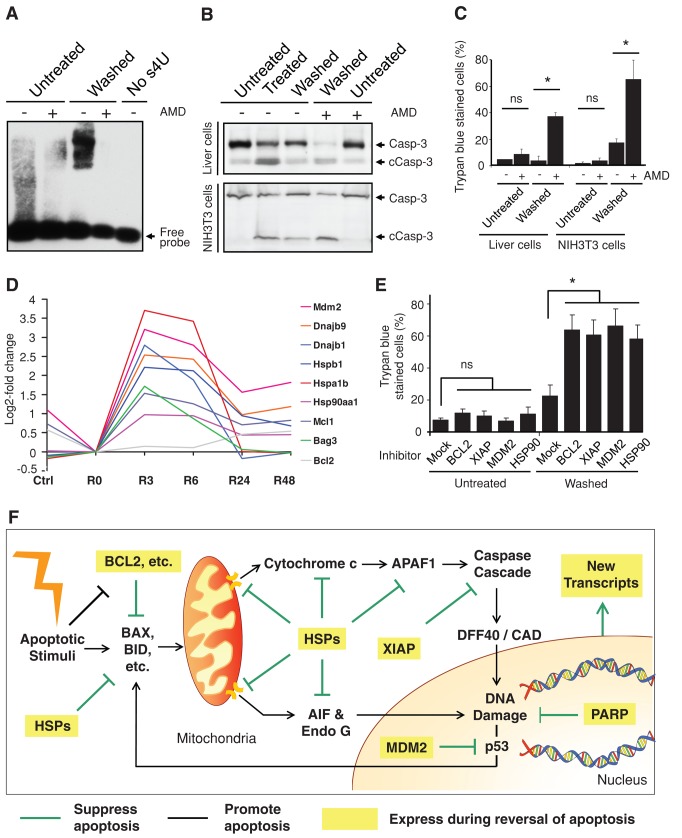
Apoptosis serves as a protective mechanism by eliminating damaged cells through programmed cell death. After apoptotic cells pass critical checkpoints, including mitochondrial fragmentation, executioner caspase activation, and DNA damage, it is assumed that cell death inevitably follows. However, this assumption has not been tested directly. Here we report an unexpected reversal of late-stage apoptosis in primary liver and heart cells, macrophages, NIH 3T3 fibroblasts, cervical cancer HeLa cells, and brain cells. After exposure to an inducer of apoptosis, cells exhibited multiple morphological and biochemical hallmarks of late-stage apoptosis, including mitochondrial fragmentation, caspase-3 activation, and DNA damage. Surprisingly, the vast majority of dying cells arrested the apoptotic process and recovered when the inducer was washed away. Of importance, some cells acquired permanent genetic changes and underwent oncogenic transformation at a higher frequency than controls. Global gene expression analysis identified a molecular signature of the reversal process. We propose that reversal of apoptosis is an unanticipated mechanism to rescue cells from crisis and propose to name this mechanism “anastasis” (Greek for “rising to life”). Whereas carcinogenesis represents a harmful side effect, potential benefits of anastasis could include preservation of cells that are difficult to replace and stress-induced genetic diversity.
Overview
The claims and statistics of this paper haven’t been checked yet.
Run the check — free, no account needed. It reads the open-access text and checks the sources it cites.
Integrity signals
Registry
Cites
Statistics
Figures
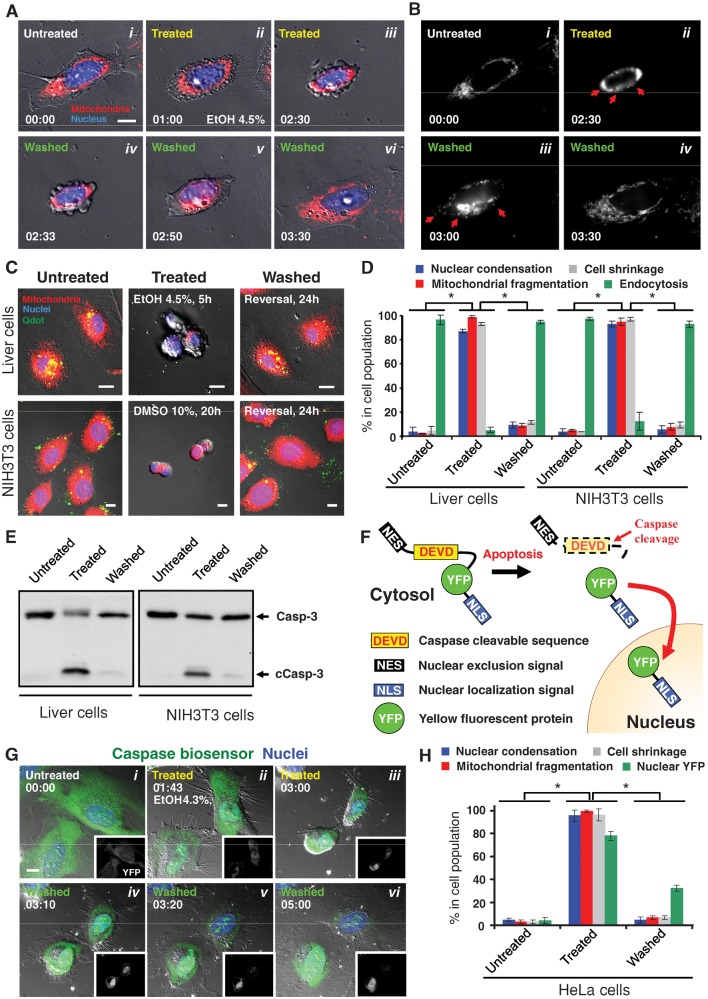
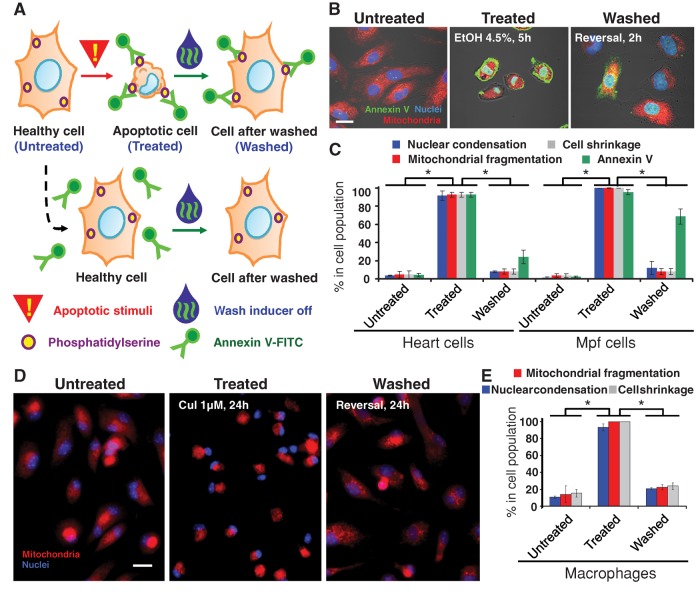
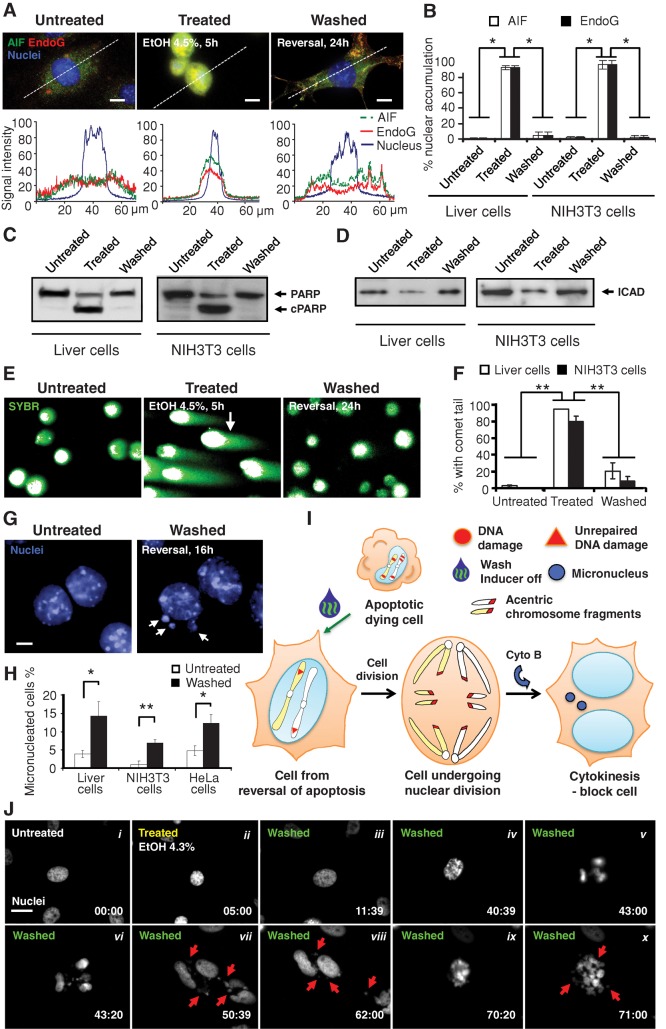
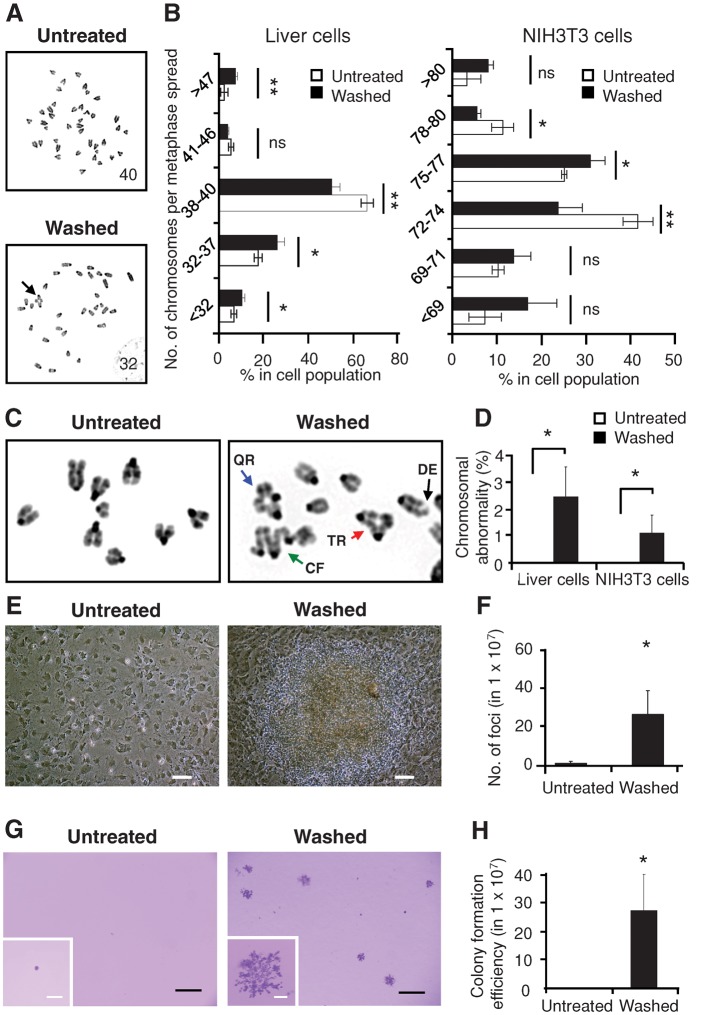
Verification
Claims the paper makes
The claims and statistics of this paper haven’t been checked yet.
Run the check — free, no account needed. It reads the open-access text and checks the sources it cites.
Claims other papers make about this one
Each is checked against this paper’s own text: does it say what the citing paper says it does?
In the citing paper
“Finally, at least some cells exposed to transient apoptotic stimuli appear to survive MOMP affecting a limited number of mitochondria and the partial activation of executioner caspases by a hitherto poorly characterized process called anastasis (most likely constituting a robust adaptative response upstream of the boundary between cellular life and death) [226–228].”
From Molecular mechanisms of cell death: recommendations of the nomenclature committee on cell death 2018. (2018) · cites this paper as [228]
Self-check
Percentages, sums and reported differences re-computed from the paper’s own numbers.
The self-check needs the paper’s full text.
Citations
Cites
Apoptosis: A Basic Biological Phenomenon with Wideranging Implications in Tissue Kinetics
Kerr, J. F. R., Wyllie, A. H., & Currie, A. R. (1972) · British Journal of Cancer · doi:10.1038/bjc.1972.33 · Cited by 15,673
Molecular characterization of mitochondrial apoptosis-inducing factor
Susin, S. A., Lorenzo, H. K., Zamzami, N., Marzo, I., Snow, B. E., Brothers, G. M., Mangion, J., Jacotot, E., Costantini, P., Loeffler, M., et al. (1999) · Nature · doi:10.1038/17135 · Cited by 4,060
Stratton, M. R., Campbell, P. J., & Futreal, P. A. (2009) · Nature · doi:10.1038/nature07943 · Cited by 3,625
The Pathophysiology of Mitochondrial Cell Death
Green, D. R., & Kroemer, G. (2004) · Science · doi:10.1126/science.1099320 · Cited by 3,487
Classification of cell death: recommendations of the Nomenclature Committee on Cell Death 2009
Kroemer, G., Galluzzi, L., Vandenabeele, P., Abrams, J., Alnemri, E. S., Baehrecke, E. H., Blagosklonny, M. V., El-Deiry, W. S., Golstein, P., Green, D. R., et al. (2009) · Cell Death & Differentiation · doi:10.1038/cdd.2008.150 · Cited by 3,399
A caspase-activated DNase that degrades DNA during apoptosis, and its inhibitor ICAD
Enari, M., Sakahira, H., Yokoyama, H., Okawa, K., Iwamatsu, A., & Nagata, S. (1998) · Nature · doi:10.1038/34112 · Cited by 3,239
Apoptosis: controlled demolition at the cellular level
Taylor, R. C., Cullen, S. P., & Martin, S. J. (2007) · Nature Reviews Molecular Cell Biology · doi:10.1038/nrm2312 · Cited by 2,708
Programmed Cell Death in Animal Development
Jacobson, M. D., Weil, M., & RAFF, M. C. (1997) · Cell · doi:10.1016/s0092-8674(00)81873-5 · Cited by 2,685
The Significance of Responses of the Genome to Challenge
McClintock, B. (1984) · Science · doi:10.1126/science.15739260 · Cited by 2,638
Cleavage of poly(ADP-ribose) polymerase by a proteinase with properties like ICE
Lazebnik, Y. A., Kaufmann, S. H., Desnoyers, S., Poirier, G. G., & Earnshaw, W. C. (1994) · Nature · doi:10.1038/371346a0 · Cited by 2,563
Research works printed but not linked: 1
- Gordon WC, 2002, Invest Ophthalmol Visual Sci, 43, 3511
Cited by
Sorted by citations
Items 201–290 of 290
Silver, B. B., Kreutz, A., Weick, M., Gerrish, K., & Tokar, E. J. (2024) · Frontiers in Oncology · doi:10.3389/fonc.2024.1393930 · Cited by 5
Molecular Cell Biology of Apoptosis in Health and Disease
Ahmed, A. S., & Tait, S. W. G. (2025) · Advances in experimental medicine and biology · doi:10.1007/978-3-031-92785-0_1 · Cited by 6
Saadeldin, I. M., Swelum, A. A., Tukur, H. A., & Alowaimer, A. N. (2019) · Environmental Science and Pollution Research · doi:10.1007/s11356-019-06208-5 · Cited by 5
de Freitas, F. A., Levy, D., Reichert, C. O., Sampaio‐Silva, J., Giglio, P. N., Lage, L. A. D. P. C., Demange, M. K., Pereira, J. C., & Bydlowski, S. P. (2024) · International Journal of Molecular Sciences · doi:10.3390/ijms25094748 · Cited by 5
Mirzayans, R. (2025) · International Journal of Molecular Sciences · doi:10.3390/ijms26051881 · Cited by 5
Ladiwala, U. (2015) · Revista de Fomento Social · doi:10.16943/ptinsa/2015/v81i5/48343 · Cited by 5
Pellestor, F., & Gâtinois, V. (2018) · Methods in molecular biology · doi:10.1007/978-1-4939-7780-2_3 · Cited by 6
Gene amplifications and extrachromosomal circular DNAs: function and biogenesis
Yüksel, A., & Altungöz, O. (2023) · Molecular Biology Reports · doi:10.1007/s11033-023-08649-1 · Cited by 5
Combined Thermotherapy and Heat Shock Protein Modulation for Tumor Treatment
Hoter, A., Alsantely, A., Alsharaeh, E. H., Kulik, G., & Saadeldin, I. M. (2020) · Heat shock proteins · doi:10.1007/7515_2020_13 · Cited by 5
Bukowska, B., Rogalska, A., Forma, E., Bryś, M., & Marczak, A. (2016) · Asian Pacific Journal of Cancer Prevention · doi:10.7314/apjcp.2016.17.3.1299 · Cited by 5
Minority MOMP: a toxic, slow demise
Xu, Y., Surman, D. R., & Ripley, R. T. (2020) · Oncotarget · doi:10.18632/oncotarget.27753 · Cited by 5
Cao, Z., Qin, L., Liu, K., Yao, C., Li, E., Hao, X., Wang, Μ., Jiang, B., Zou, Y., Hu, H., et al. (2025) · PLoS Biology · doi:10.1371/journal.pbio.3003357 · Cited by 5
Self-citationThe effect of cytochrome c on Na,K-ATPase
Chkadua, G., Nozadze, E., Tsakadze, L., Shioshvili, L., Arutinova, N., Leladze, M., Dzneladze, S., Javakhishvili, M., Jariashvili, T., & Petriashvili, E. (2024) · Journal of Bioenergetics and Biomembranes · doi:10.1007/s10863-024-10012-3 · Cited by 4
Hashemi, S. R., Hosseinpour-Soleimani, F., Abedi, M., Tajbakhsh, A., Nemati, M. M., Salmasi, Z., Savardashtaki, A., & Irajie, C. (2025) · European Journal of Pharmacology · doi:10.1016/j.ejphar.2025.178121 · Cited by 3
Park, J., Cui, G., Hong, J.-Y., Jeong, H., Han, M., Choi, M. S., Lim, J. A., Han, S., Lee, C. S., Kim, M., et al. (2025) · International Journal of Molecular Sciences · doi:10.3390/ijms26178675 · Cited by 3
What Is Apoptosis and Why Is It Inhibited by the Most Important Tumor Suppressor (p53)?
Mirzayans, R. (2025) · International Journal of Molecular Sciences · doi:10.3390/ijms262110505 · Cited by 3
Cellular memory of sub-lethal stress
Tait, S. W. G., & Oberst, A. (2026) · Immunity · doi:10.1016/j.immuni.2026.02.017 · Cited by 5
Lee, J. Y., Yoon, M. S., Jo, M. J., Kang, S. J., Bong, S. H., Jin, C. E., Park, J.-H., Ma, H., Lee, K. H., Roh, Y. S., et al. (2026) · Journal of Controlled Release · doi:10.1016/j.jconrel.2026.115029 · Cited by 3
Soroko, S. S., Skamnitsky, D. V., Gorshkova, E. N., Kutova, O. M., Seriev, I. R., Maslennikova, A. V., Guryev, E. L., Gudkov, S. V., Vodeneev, V., Balalaeva, I. V., et al. (2024) · Current Issues in Molecular Biology · doi:10.3390/cimb46120828 · Cited by 3
Tang, H. L., Tang, H. M., & Montell, D. J. (2013) · Springer eBooks · doi:10.1007/978-1-4614-6280-4_11 · Cited by 3
Self-citationSafety control for apoptotic irreversibility
Dutreix, M. (2012) · Proceedings of the National Academy of Sciences · doi:10.1073/pnas.1210736109 · Cited by 3
Guerra, M. F., Lacoste, M. G., Anzulovich, A. C., & Makinistian, L. (2019) · Proceedings of the Royal Society B Biological Sciences · doi:10.1098/rspb.2019.2337 · Cited by 3
Zhang, M., Yang, J., Ji, K., He, X., He, T., & Xing, Y. (2022) · Experimental Eye Research · doi:10.1016/j.exer.2022.109082 · Cited by 3
Meme kanseri hücrelerinde anastaz fenomeninin tanımlanması
Bağca, B. G. (2022) · Ege Tıp Dergisi · doi:10.19161/etd.1168087 · Cited by 3
Pelliccia, A., Capradossi, F., Corsi, F., Tarquini, G. D., Bruni, E., Reichle, A., Torino, F., & Ghibelli, L. (2023) · International Journal of Molecular Sciences · doi:10.3390/ijms24032040 · Cited by 3
Correlations between U.S. county annual cancer incidence and population density.
Vares, D. A. E., St-Pierre, L. S., & Persinger, M. A. (2015) · PubMed Central · Cited by 3
Post-meiotic DNA double-strand breaks are conserved in fission yeast
Cavé, T., Grégoire, M.-C., Brazeau, M.-A., & Boissonneault, G. (2018) · The International Journal of Biochemistry & Cell Biology · doi:10.1016/j.biocel.2018.02.012 · Cited by 3
In vitro analysis reveals necroptotic signaling does not provoke DNA damage or HPRT mutations
Miles, M. A., & Hawkins, C. J. (2020) · Cell Death and Disease · doi:10.1038/s41419-020-02879-y · Cited by 3
Heat Shock Proteins Mediate Anastasis and Plasticity of Thermotolerant Cells
Saadeldin, I. M., Hussein, M. A., & Magdeldin, S. (2020) · Heat shock proteins · doi:10.1007/7515_2020_16 · Cited by 3
Ladiwala, U., Bankapur, A., Thakur, B. L., Chidangil, S., & Mathur, D. (2014) · arXiv (Cornell University) · doi:10.48550/arxiv.1401.7497 · Cited by 3
Pellestor, F., Ganne, B., & Gâtinois, V. (2025) · Methods in molecular biology · doi:10.1007/978-1-0716-4750-9_1 · Cited by 3
Recovery from apoptosis in photoreceptor cells: A role for mitophagy
Kaur, B., Scavuzzi, B. M., Yao, J., Yang, M.-L., Jia, L., Lentz, S. I., Sadda, J., Kocab, A. J., Shanmugam, S., & Zacks, D. N. (2026) · Cell Death and Disease · doi:10.1038/s41419-026-08436-3 · Cited by 2
Regulated cell death plasticity in cancer: thresholds, reversibility, and therapeutic failure
Jawwad, T., Baba, S. K., Surendranath, A., Chaudhary, E., Jeelani, G., Akil, A. S. A.-S., Menhali, A. A., Bhat, A. A., & Mirza, S. (2026) · Journal of Translational Medicine · doi:10.1186/s12967-026-08584-2 · Cited by 2
Ceisel, A., Graziano, G., Emmerich, K., Shi, X., Kam, T., Flores‐Bellver, M., Vergara, M. N., Aparicio‐Domingo, S., Brenerman, B. M., Vielle, A., et al. (2026) · Disease Models & Mechanisms · doi:10.1242/dmm.052747 · Cited by 2
McAllister, I. L., Vijayasekaran, S., McLenachan, S., Bhikoo, R., Chen, F. K., Zhang, D., Kanagalingam, E., & Yu, D. (2024) · Translational Vision Science & Technology · doi:10.1167/tvst.13.6.13 · Cited by 2
Eskiler, G. G., Özkan, A. D., Elmas, M. A., Öztürk, M., & Arbak, S. (2024) · Toxicology in Vitro · doi:10.1016/j.tiv.2024.105894 · Cited by 2
Role of mitochondrial outer membrane permeabilization during bacterial infection
Kontchou, C. W., & Häcker, G. A. (2022) · International review of cytology · doi:10.1016/bs.ircmb.2022.10.002 · Cited by 1
Szymańska, K. J., Göker, M., Bol, M., Dorpe, J. V., Weyers, S., & Leybaert, L. (2020) · PLoS ONE · doi:10.1371/journal.pone.0243663 · Cited by 2
Hadžić, M., Sun, Y., Tomić, N., Tsirvouli, E., Kuiper, M. T. R., & Pojskić, L. (2022) · FEBS Open Bio · doi:10.1002/2211-5463.13522 · Cited by 2
Reversal of Cell Death in the Laboratory: Reversal of Clinical Death in the Emergency Room
Scherlag, B. J., Scherlag, R. A., Elkholey, K., & Dasari, T. W. (2020) · Archives of Emergency Medicine and Intensive Care · doi:10.22259/2638-5007.0301004 · Cited by 2
Integration of past caspase activity biases cell elimination in vivoPreprint
Cumming, T., Villars, A., Davidović, A., Levillayer, F., Valon, L., & Levayer, R. (2025) · bioRxiv (Cold Spring Harbor Laboratory) · doi:10.1101/2025.05.18.654727 · Cited by 2
Zheng, H., Stenius, U., & Högberg, J. (2023) · Cancers · doi:10.3390/cancers15030865 · Cited by 1
Shen, Y., Li, L., Ni, H., Li, H., Xu, M., Tan, X., Li, Z., Li, P., Chen, F., Mao, S., et al. (2025) · Nucleic Acids Research · doi:10.1093/nar/gkaf797 · Cited by 1
Mal’shakova, M. V., Belykh, N. D., Shestakova, L. N., Galochkina, N. E., Belotelov, A. O., Soroko, S. S., Владимировна, Б. И., Belykh, D. V., & Shilyagina, N. Y. (2025) · Journal of Photochemistry and Photobiology B Biology · doi:10.1016/j.jphotobiol.2025.113268 · Cited by 1
Tetikoğlu, S., Akcan, M., Uzuner, U., & Uzuner, S. Ç. (2025) · Journal of Zhejiang University SCIENCE B · doi:10.1631/jzus.b2400466 · Cited by 1
Ali, M., Basu, V., Tanwar, M., & Seervi, M. (2026) · European Journal of Pharmacology · doi:10.1016/j.ejphar.2026.178708 · Cited by 1
Ram, T. R., Mu, C., MacEachern, S. J., & Shearer, J. (2026) · Antioxidants · doi:10.3390/antiox15060764 · Cited by 2
Глущенко, Е. С., Slesarvev, S. M., Moskovkin, A. A., Плотцев, В. М., & Saenko, Y. (2016) · Современные технологии в медицине · doi:10.17691/stm2016.8.2.02 · Cited by 1
George, C. H., & Edwards, D. H. (2016) · Methods in pharmacology and toxicology · doi:10.1007/978-1-4939-6661-5_9 · Cited by 1
Anastasis: Cell Survival Mechanism
Olagunju, A. S., Olorunfemi, F. G., Teibo, J. O., & Adewolu, A. M. (2020) · Cancer Studies and Molecular Medicine - Open Journal · doi:10.17140/csmmoj-6-131 · Cited by 1
Medina‐Chávez, D. A., Laborda-Gomariz, J. A., García‐Álvarez, O., Ortiz, J. A., Picazo, C. M., Maroto-Morales, A., Fernández-Santos, M. R., Garde, J. J., Soler, A. J., & Sánchez‐Ajofrín, I. (2023) · Theriogenology Wild · doi:10.1016/j.therwi.2023.100021 · Cited by 1
Inner Retinal Changes in Acute Experimental BRVO Treated With Bevacizumab or Triamcinolone Acetonide
McAllister, I. L., Vijayasekaran, S., Bhikoo, R., Chen, F. K., Zhang, D., Kanagalingam, E., McLenachan, S., & Yu, D. (2023) · Translational Vision Science & Technology · doi:10.1167/tvst.12.2.11 · Cited by 1
Cannan, W. J., & Pederson, D. S. (2017) · Elsevier eBooks · doi:10.1016/b978-0-12-809633-8.06208-7 · Cited by 2
Nieratschker, M., Yıldız, E., Gerlitz, M., Bera, S., Gadenstaetter, A. J., Kramer, A.-M., Kwiatkowska, M., Mistrík, P., Landegger, L. D., Braun, S., et al. (2024) · bioRxiv (Cold Spring Harbor Laboratory) · doi:10.1101/2024.02.14.580226 · Cited by 1
Tetikoğlu, S., Uzuner, U., & Uzuner, S. Ç. (2024) · bioRxiv (Cold Spring Harbor Laboratory) · doi:10.1101/2024.02.18.579605 · Cited by 1
Tetikoğlu, S., Akcan, M., Uzuner, U., & Uzuner, S. Ç. (2024) · Research Square · doi:10.21203/rs.3.rs-4235483/v1 · Cited by 1
Live to die another way: modes of programmed cell death and the signals emanating from dying cells
Interdisciplinary, L. L. (2015)
DNA-PK: A Perpetrator in Disguise
Anandi, L., V, & Lahiri, M. (2018) · Journal of Cell Signaling · doi:10.4172/2576-1471.1000184
Cell death through the ages: The ICDS 25th Anniversary Meeting
Mohammed, J. N., Gelles, J. D., Rubio‐Patiño, C., Serasinghe, M. N., Trotta, A. P., Lockshin, R. A., Zakeri, Z. F., & Chipuk, J. E. (2020) · FEBS Journal · doi:10.1111/febs.15252
Butcher, K. (2019) · Wolverhampton Intellectual Repository and E-Theses (University of Wolverhampton)
Lodhi, N., Sarojini, S., Keck, M., Nagpal, P., Chiu, Y. M., Parvez, Z., Adrianzen, L., & Suh, K. S. (2021) · bioRxiv (Cold Spring Harbor Laboratory) · doi:10.1101/2021.07.22.453100
Khoje, Z. B., kumarVootla, S., & David, M. (2022) · Journal of Biomolecular Structure and Dynamics · doi:10.1080/07391102.2022.2029566
Mitochondria in Cell Death Regulation
Inde, Z., Montero, J., & Sarosiek, K. A. (2022) · Elsevier eBooks · doi:10.1016/b978-0-12-821618-7.00189-9
Lodhi, N., Nagpal, P., Sarojini, S., Keck, M., Chiu, Y. M., Parvez, Z., Adrianzen, L., & Suh, K. S. (2022) · Cancer Reports · doi:10.1002/cnr2.1733
Plaza, S. C., & Su, T. T. (2022) · bioRxiv (Cold Spring Harbor Laboratory) · doi:10.1101/2022.11.18.517019
de Freitas, F. A. (2022) · Digital Library of Theses and Dissertations (Universidade de São Paulo) · doi:10.11606/t.5.2022.tde-01022023-113220
Arnoldner, C., Nieratschker, M., Yıldız, E., Gerlitz, M., Bera, S., Gadenstaetter, A. J., Kramer, A.-M., Kwiatkowska, M., Mistrík, P., Landegger, L. D., et al. (2024) · Research Square · doi:10.21203/rs.3.rs-3941113/v1
Non-apoptotic role of EGL-1 in exopher production and neuronal health in Caenorhabditis elegansPreprint
Wu, Z., Cardona, E. A., & Pierce, J. T. (2024) · bioRxiv (Cold Spring Harbor Laboratory) · doi:10.1101/2024.04.19.590348
Cao, Z., Qin, L., Liu, K., Yao, C., Li, E., Hao, X., Wang, Μ., Jiang, B., Zou, Y., Hu, H., et al. (2024) · bioRxiv (Cold Spring Harbor Laboratory) · doi:10.1101/2024.08.28.610033
Self-citationPotential and value of rescuing dying neurons
You, W., Berendschot, T. T. J. M., Benedikter, B. J., Webers, C. A. B., Reutelingsperger, C. P. M., & Gorgels, T. G. M. F. (2025) · Neural Regeneration Research · doi:10.4103/nrr.nrr-d-24-01134 · Cited by 2
Back from the brink: programmed cell revival for regeneration
Sundaram, B., & Kanneganti, T. (2025) · The EMBO Journal · doi:10.1038/s44318-025-00538-6
DFFB suppresses interferon to enable cancer persister cell regrowthPreprint
Williams, A. F., Gervasio, D. A. G., Turkal, C. E., Stuhlfire, A. E., Wang, M., Mauch, B. E., Plawat, R., Nguyen, A. H., Paw, M. H., Hairani, M., et al. (2025) · bioRxiv (Cold Spring Harbor Laboratory) · doi:10.1101/2025.08.15.670603
A review: shining a light on cheater microbes with positive molecular detection techniques
Dakheel, K. H., Abid, S. A., Al-Kadmy, I. M. S., & Aziz, S. N. (2025) · Reviews in Medical Microbiology · doi:10.1097/mrm.0000000000000434
Additional file 1 of A time window for rescuing dying retinal ganglion cells
You, W., Knoops, K., Boesten, I., Berendschot, T. T. J. M., van Zandvoort, M. A. M. J., Benedikter, B. J., Webers, C. A. B., Reutelingsperger, C. P. M., & Gorgels, T. G. M. F. (2024) · Figshare · doi:10.6084/m9.figshare.26675273
Anastasis: Reality or Fiction?
Kim, Y. S., Kovalskaya, K. V., Malov, S. L., Manukyan, G. V., Kholodenko, R. V., Iarygin, K. N., & Kholodenko, I. V. (2025) · Bulletin of Experimental Biology and Medicine · doi:10.1007/s10517-026-06591-3
Régulation de la stabilité de la protéine anti-apoptotique BCL2A1
Lionnard, L. (2018) · theses.fr (ABES) · doi:10.70675/1eec02ffz98dez4a56z98e2z389a2cd8558d
Orchestration of epithelial cell elimination by effector caspases
Villars, A. (2022) · theses.fr (ABES) · doi:10.70675/5aed636eza982z405fzb47dz7287e34c75c4
Mapping and Trend Analysis of Anastasis and Cell Death Reversal ResearchPreprint
Gong, H., Liu, S., & Jia, M. (2026) · Research Square · doi:10.21203/rs.3.rs-9855325/v1
Chaure, A., Joshi, J., Arora, S., Choudhary, N., Gurdatta, S. K., & Pusame, A. (2026) · Journal of Oral and Maxillofacial Pathology · doi:10.4103/jomfp.jomfp_396_25
Anastasis: A Remarkable Strategy to Escape Programmed Cell Death in Cancer Cells
Lia, M.-J., Chang, T.-Y., Syue, C.-N., & Liu, B. R. (2026) · IntechOpen eBooks · doi:10.5772/intechopen.1017489
Basu, V., Srivastava, A., Ali, M., Kar, S., Surendran, S., & Seervi, M. (2026) · APOPTOSIS · doi:10.1007/s10495-026-02422-y
Shaban, E. B., Elgayar, S. F., & El-Aziz, E. A. E. A. (2026) · Journal of Molecular Histology · doi:10.1007/s10735-026-10960-7
All the ways a cell can die — and why the variety matters
Dance, A. (2026) · Nature · doi:10.1038/d41586-026-02929-z
González-Seguel, C., Quiroga, J., Hancke, J. L., Ehrenfeld, P., Barrales, P., & Burgos, R. A. (2026) · Frontiers in Pharmacology · doi:10.3389/fphar.2026.1921579
Liu, B. C., Poudel, S., Zhang, X., Chen, J., Tran, Q., Guy, C. S., Yang, M., Mulder, H. L., Ma, X., & Green, D. R. (2026) · Science Advances · doi:10.1126/sciadv.aeb1137
Anastasis: an unwelcome guest in cancer therapy
Luo, Y., Lei, Y., Deng, J., Yu, Y., Qian, L., & Xiong, Y. (2026) · APOPTOSIS · doi:10.1007/s10495-026-02455-3
Metadata
- Authors
- Tang, H. L., Tang, H. M., Mak, K. H., Hu, S., Wang, S. S., Wong, K. M., Wong, C. S. T., Wu, H. Y., Law, H. T., Liu, K., Talbot, C. C., Lau, W. K., Montell, D. J., & Fung, M. C.
- Affiliations
- Johns Hopkins University (US)
- Chinese University of Hong Kong (HK)
- School of Life Sciences, Chinese University of Hong Kong, Shatin, Hong Kong
- Corresponding author
- Tang, Ho Lam
- Montell, Denise J.
- Fung, Ming Chiu
- Venue
- Molecular Biology of the Cell
- Published
- 2012-06-15
- Volume
- 23
- Issue
- 12
- Pages
- 2240-2252
- ISSN
- 1059-1524 (ISSN-L)
- 1939-4586
- PMC
- PMC3374744
- OpenAlex
- W2166525237
- Cited by
- 293
- References
- 62
- Citations by year
- 2026: 18 · 2025: 22 · 2024: 31 · 2023: 25 · 2022: 26 · 2021: 16 · 2020: 24 · 2019: 28 · 2018: 27 · 2017: 20 · 2016: 14 · 2015: 20 · 2014: 13 · 2013: 3 · 2012: 5
- FWCI
- 5.28
- Type
- journal article
- Language
- en
- Open access
- green
- www.ncbi.nlm.nih.gov
- Licence
- cc-by-nc-sa
- Locations
- Molecular Biology of the Cell (publishedVersion)
- Europe PMC (PubMed Central) (publishedVersion, cc-by-nc-sa)
- PubMed Central (publishedVersion, cc-by-nc-sa)
- PubMed (publishedVersion)
- Funders
- Johns Hopkins University
- National Institute of General Medical Sciences (R01GM46425, R01GM046425)
- National Center for Research Resources (S10RR024550)
- Topics
- Life Sciences › Biochemistry, Genetics and Molecular Biology › Molecular Biology › Cell death mechanisms and regulation
- Life Sciences › Biochemistry, Genetics and Molecular Biology › Cell Biology › Autophagy in Disease and Therapy
- Health Sciences › Medicine › Oncology › Cancer-related Molecular Pathways
- Keywords
- anastasis, oncogenic transformation, DNA damage, caspase-3 activation, mitochondrial fragmentation, cell survival, carcinogenesis, hepatocytes, cardiomyocytes, macrophages, fibroblasts, HeLa cells, brain cells
- MeSH terms
- Ethanol, Animals, Animals, Newborn, Anti-Infective Agents, Local, Antineoplastic Agents, Cell Survival, Cell Transformation, Neoplastic, Cells, Cultured, DNA Damage, HeLa Cells, Humans, Liver, Mice, Inbred BALB C, Microscopy, Fluorescence, Rats, Sprague-Dawley, Apoptosis, Reverse Transcriptase Polymerase Chain Reaction, Oligonucleotide Array Sequence Analysis, Gene Expression Profiling, Myocytes, Cardiac, NIH 3T3 Cells, Depsipeptides, Mice, Rats, Transcriptome
About these checks
Registry, retraction, Cites and statistics results are computed, not judged, with one exception: a printed reference that no index lists is read once by a model before it counts as a citation error. Claims are extracted by a model and kept only when their quote appears verbatim in the text; each cited source is then checked, with a model’s help, for whether it says what the claim relies on. Those verdicts can be wrong — read the claim’s quote and the cited source before relying on one.
Statistics and arithmetic are recomputed, not judged.
Confidence bands are shown only for fields calibrated on our annotated test set. None is calibrated yet, so no band is shown.
What counts as a claim ›How we measure confidence ›How we check this ›
Are you an author, or do you see a problem with this page? Request a review
