

The DOI matches its Crossref record; 62 of the 62 references it cites were found in a registry or an index.
Cell survival, DNA damage, and oncogenic transformation after a transient and reversible apoptotic response
Open accessAbstract
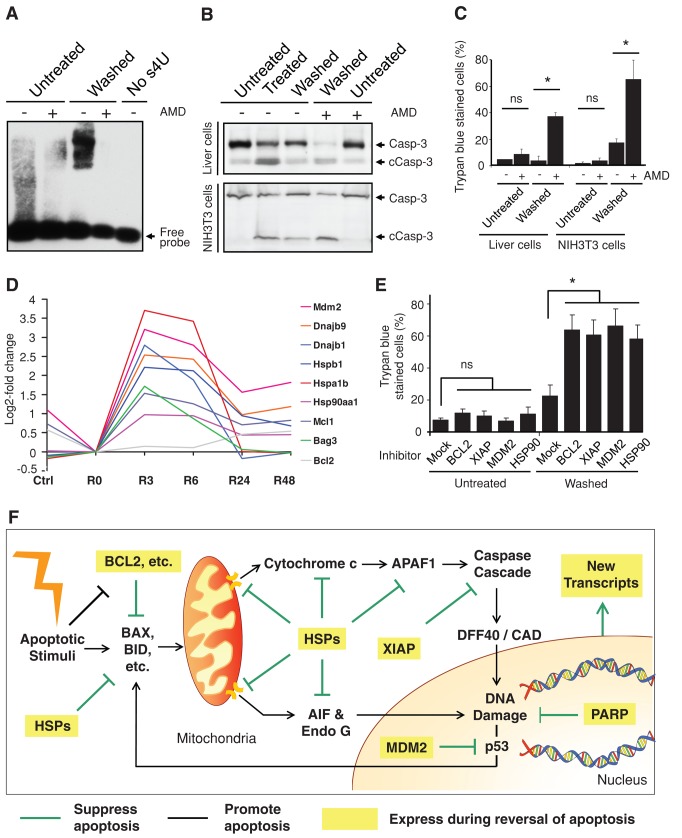
Apoptosis serves as a protective mechanism by eliminating damaged cells through programmed cell death. After apoptotic cells pass critical checkpoints, including mitochondrial fragmentation, executioner caspase activation, and DNA damage, it is assumed that cell death inevitably follows. However, this assumption has not been tested directly. Here we report an unexpected reversal of late-stage apoptosis in primary liver and heart cells, macrophages, NIH 3T3 fibroblasts, cervical cancer HeLa cells, and brain cells. After exposure to an inducer of apoptosis, cells exhibited multiple morphological and biochemical hallmarks of late-stage apoptosis, including mitochondrial fragmentation, caspase-3 activation, and DNA damage. Surprisingly, the vast majority of dying cells arrested the apoptotic process and recovered when the inducer was washed away. Of importance, some cells acquired permanent genetic changes and underwent oncogenic transformation at a higher frequency than controls. Global gene expression analysis identified a molecular signature of the reversal process. We propose that reversal of apoptosis is an unanticipated mechanism to rescue cells from crisis and propose to name this mechanism “anastasis” (Greek for “rising to life”). Whereas carcinogenesis represents a harmful side effect, potential benefits of anastasis could include preservation of cells that are difficult to replace and stress-induced genetic diversity.
Overview
The claims and statistics of this paper haven’t been checked yet.
Run the check — free, no account needed. It reads the open-access text and checks the sources it cites.
Integrity signals
Registry
Cites
Statistics
Figures
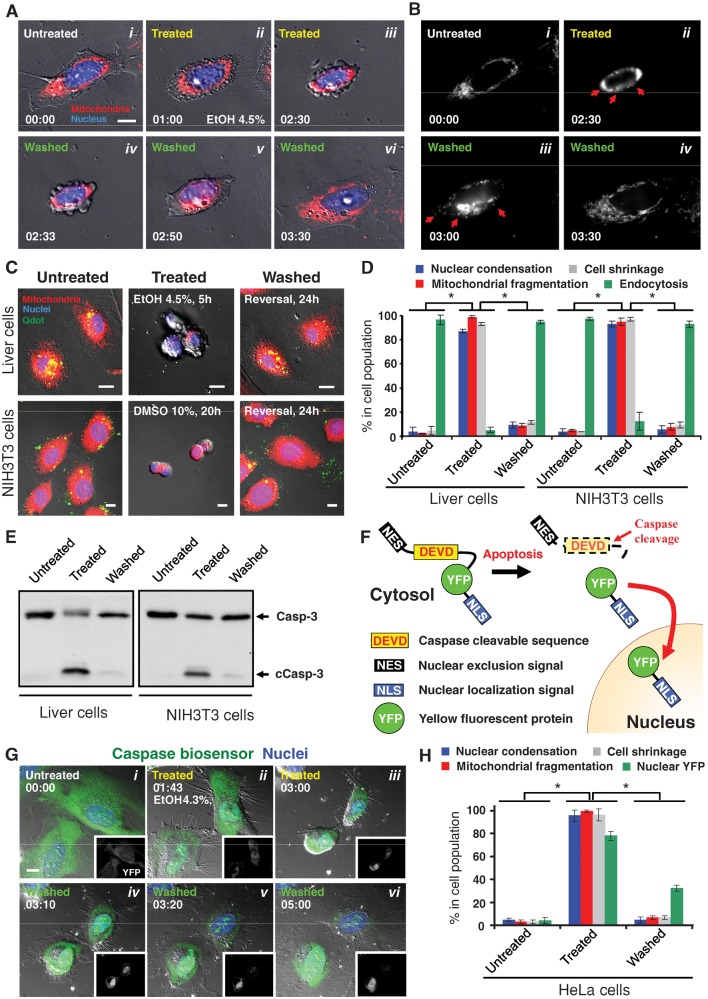
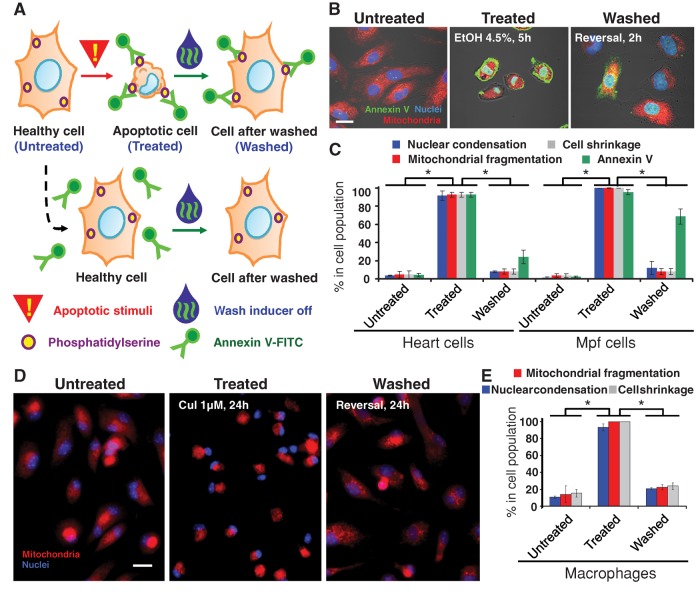
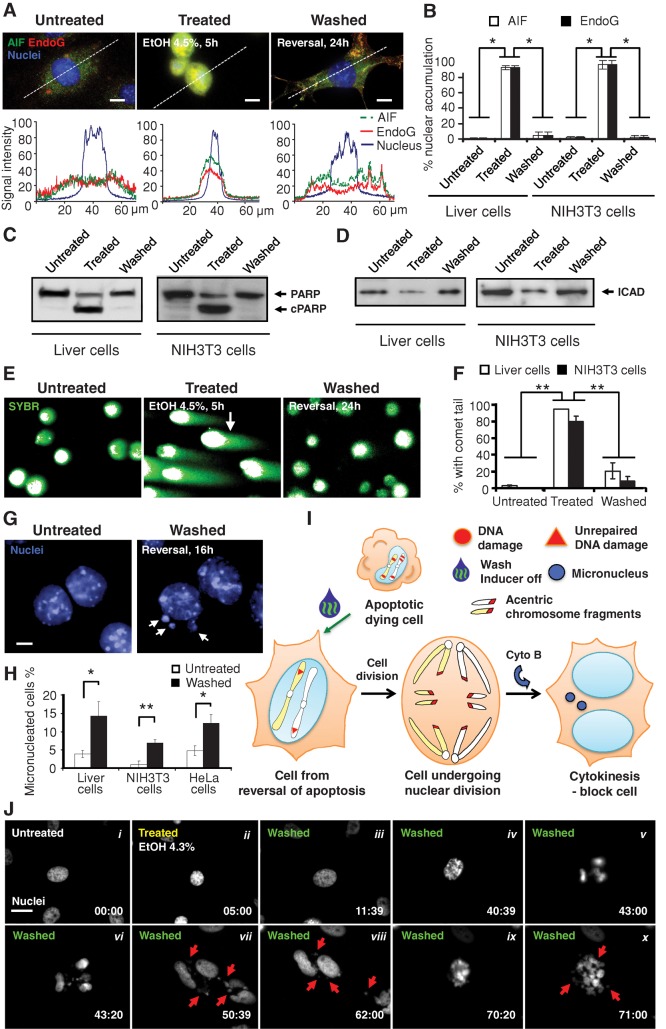
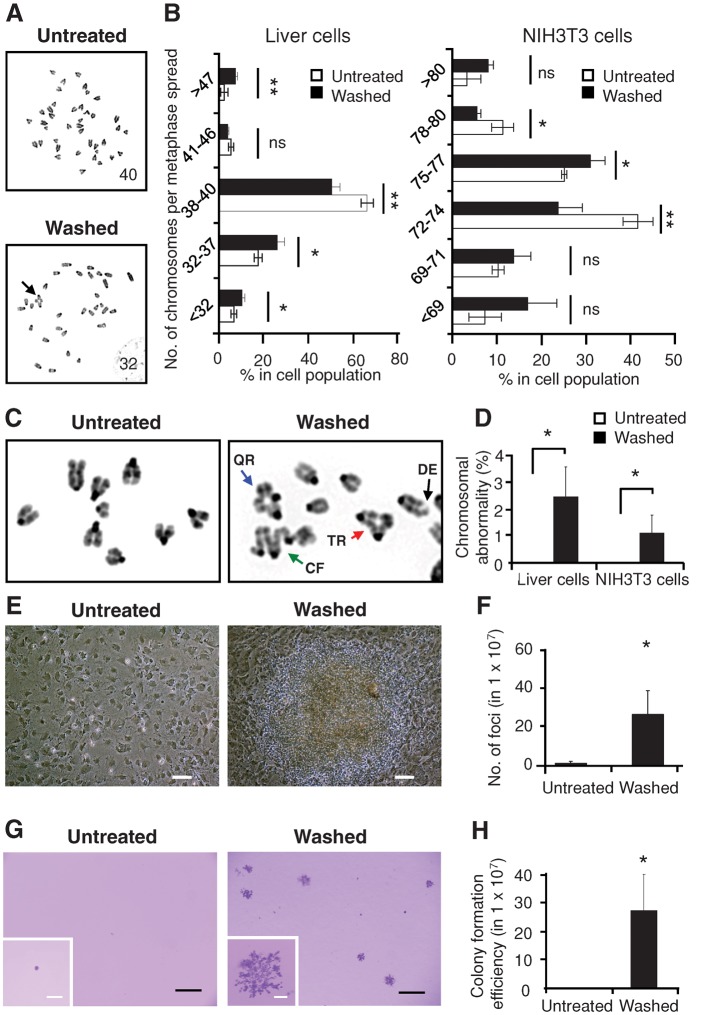
Verification
Claims the paper makes
The claims and statistics of this paper haven’t been checked yet.
Run the check — free, no account needed. It reads the open-access text and checks the sources it cites.
Claims other papers make about this one
Each is checked against this paper’s own text: does it say what the citing paper says it does?
In the citing paper
“Finally, at least some cells exposed to transient apoptotic stimuli appear to survive MOMP affecting a limited number of mitochondria and the partial activation of executioner caspases by a hitherto poorly characterized process called anastasis (most likely constituting a robust adaptative response upstream of the boundary between cellular life and death) [226–228].”
From Molecular mechanisms of cell death: recommendations of the nomenclature committee on cell death 2018. (2018) · cites this paper as [228]
Self-check
Percentages, sums and reported differences re-computed from the paper’s own numbers.
The self-check needs the paper’s full text.
Citations
Cites
Apoptosis: A Basic Biological Phenomenon with Wideranging Implications in Tissue Kinetics
Kerr, J. F. R., Wyllie, A. H., & Currie, A. R. (1972) · British Journal of Cancer · doi:10.1038/bjc.1972.33 · Cited by 15,673
Molecular characterization of mitochondrial apoptosis-inducing factor
Susin, S. A., Lorenzo, H. K., Zamzami, N., Marzo, I., Snow, B. E., Brothers, G. M., Mangion, J., Jacotot, E., Costantini, P., Loeffler, M., et al. (1999) · Nature · doi:10.1038/17135 · Cited by 4,060
Stratton, M. R., Campbell, P. J., & Futreal, P. A. (2009) · Nature · doi:10.1038/nature07943 · Cited by 3,625
The Pathophysiology of Mitochondrial Cell Death
Green, D. R., & Kroemer, G. (2004) · Science · doi:10.1126/science.1099320 · Cited by 3,487
Classification of cell death: recommendations of the Nomenclature Committee on Cell Death 2009
Kroemer, G., Galluzzi, L., Vandenabeele, P., Abrams, J., Alnemri, E. S., Baehrecke, E. H., Blagosklonny, M. V., El-Deiry, W. S., Golstein, P., Green, D. R., et al. (2009) · Cell Death & Differentiation · doi:10.1038/cdd.2008.150 · Cited by 3,399
A caspase-activated DNase that degrades DNA during apoptosis, and its inhibitor ICAD
Enari, M., Sakahira, H., Yokoyama, H., Okawa, K., Iwamatsu, A., & Nagata, S. (1998) · Nature · doi:10.1038/34112 · Cited by 3,239
Apoptosis: controlled demolition at the cellular level
Taylor, R. C., Cullen, S. P., & Martin, S. J. (2007) · Nature Reviews Molecular Cell Biology · doi:10.1038/nrm2312 · Cited by 2,708
Programmed Cell Death in Animal Development
Jacobson, M. D., Weil, M., & RAFF, M. C. (1997) · Cell · doi:10.1016/s0092-8674(00)81873-5 · Cited by 2,685
The Significance of Responses of the Genome to Challenge
McClintock, B. (1984) · Science · doi:10.1126/science.15739260 · Cited by 2,638
Cleavage of poly(ADP-ribose) polymerase by a proteinase with properties like ICE
Lazebnik, Y. A., Kaufmann, S. H., Desnoyers, S., Poirier, G. G., & Earnshaw, W. C. (1994) · Nature · doi:10.1038/371346a0 · Cited by 2,563
Massive genomic rearrangement acquired in a single catastrophic event during cancer development
Stephens, P. J., Greenman, C. D., Fu, B., Yang, F., Bignell, G. R., Mudie, L. J., Pleasance, E. D., Lau, K. W., Beare, D., Stebbings, L. A., et al. (2011) · Cell · doi:10.1016/j.cell.2010.11.055 · Cited by 2,414
Cytokinesis-block micronucleus cytome assay
Fenech, M. F. (2007) · Nature Protocols · doi:10.1038/nprot.2007.77 · Cited by 2,025
Long-term multiple color imaging of live cells using quantum dot bioconjugates
Jaiswal, J. K., Mattoussi, H. M., Mauro, J. M., & Simon, S. M. (2002) · Nature Biotechnology · doi:10.1038/nbt767 · Cited by 1,997
Molecular mechanisms of caspase regulation during apoptosis
Riedl, S. J., & Shi, Y. (2004) · Nature Reviews Molecular Cell Biology · doi:10.1038/nrm1496 · Cited by 1,933
Programmed Cell Death in Animal Development and Disease
Fuchs, Y., & Steller, H. (2011) · Cell · doi:10.1016/j.cell.2011.10.033 · Cited by 1,915
Johnstone (2002) · doi:10.1016/s0092-8674(02)00625-6 · Cited by 1,876
The comet assay: a method to measure DNA damage in individual cells
Olive, P. L., & Banáth, J. P. (2006) · Nature Protocols · doi:10.1038/nprot.2006.5 · Cited by 1,845
Liu, X., Zou, H., Slaughter, C. A., & Wang, X. (1997) · Cell · doi:10.1016/s0092-8674(00)80197-x · Cited by 1,835
Endonuclease G is an apoptotic DNase when released from mitochondria
Li, L. Y., Luo, X., & Wang, X. (2001) · Nature · doi:10.1038/35083620 · Cited by 1,787
Chipuk, J. E., Moldoveanu, T., Llambi, F., Parsons, M. J., & Green, D. R. (2010) · Molecular Cell · doi:10.1016/j.molcel.2010.01.025 · Cited by 1,476
Membrane blebbing during apoptosis results from caspase-mediated activation of ROCK I
Coleman, M. L., Sahai, E. A., Yeo, M., Bosch, M., Dewar, A. L., & Olson, M. F. (2001) · Nature Cell Biology · doi:10.1038/35070009 · Cited by 1,313
Balancing repair and tolerance of DNA damage caused by alkylating agents
Fu, D., Calvo, J. A., & Samson, L. D. (2012) · Nature reviews. Cancer · doi:10.1038/nrc3185 · Cited by 977
Substrate Specificities of Caspase Family Proteases
Talanian, R. V., Quinlan, C., Trautz, S., Hackett, M. C., Mankovich, J. A., Banach, D. L., Ghayur, T., Brady, K. D., & Wong, W. W. (1997) · Journal of Biological Chemistry · doi:10.1074/jbc.272.15.9677 · Cited by 879
Boffetta, P., & Hashibe, M. (2006) · The Lancet Oncology · doi:10.1016/s1470-2045(06)70577-0 · Cited by 877
Causes and consequences of aneuploidy in cancer
Gordon, D. J., Resio, B. J., & Pellman, D. S. (2012) · Nature Reviews Genetics · doi:10.1038/nrg3123 · Cited by 845
Stem Cells and Their Progeny Respond to Nutritional Changes during Drosophila Oogenesis
Drummond‐Barbosa, D., & Spradling, A. C. (2001) · Developmental Biology · doi:10.1006/dbio.2000.0135 · Cited by 631
Narula, J., Pandey, P., Arbustini, E., Haider, N., Narula, N., Kolodgie, F. D., Bello, B. D., Semigran, M. J., Bielsa-Masdeu, A., Dec, G. W., et al. (1999) · Proceedings of the National Academy of Sciences · doi:10.1073/pnas.96.14.8144 · Cited by 586
HeLa cells 50 years on: the good, the bad and the ugly
Masters, J. R. (2002) · Nature Reviews Cancer · doi:10.1038/nrc775 · Cited by 560
PARP is important for genomic stability but dispensable in apoptosisPreprint
Wang, Z., Stingl, L., Morrison, C. G., Jantsch, M. F., Łoś, M., Schulze‐Osthoff, K., & Wagner, E. F. (1997) · Genes & Development · doi:10.1101/gad.11.18.2347 · Cited by 557
Stress and transposable elements: co-evolution or useful parasites?
Capy, P., Gasperi, G., Biémont, C., & Bazin, C. (2000) · Heredity · doi:10.1046/j.1365-2540.2000.00751.x · Cited by 497
Chromosome Catastrophes Involve Replication Mechanisms Generating Complex Genomic Rearrangements
Liu, P., Erez, A., Nagamani, S. C. S., Dhar, S. U., Kołodziejska, K. E., Dharmadhikari, A. V., Cooper, M. L., Wiszniewska, J., Zhang, F., Withers, M. A., et al. (2011) · Cell · doi:10.1016/j.cell.2011.07.042 · Cited by 468
An active DNA transposon family in rice
Jiang, N., Bao, Z., Zhang, X., Hirochika, H., Eddy, S. R., McCouch, S. R., & Wessler, S. R. (2003) · Nature · doi:10.1038/nature01214 · Cited by 450
The CASBAH: a searchable database of caspase substrates
Lüthi, A. U., & Martin, S. J. (2007) · Cell Death and Differentiation · doi:10.1038/sj.cdd.4402103 · Cited by 434
Caspase Activity and a Specific Cytochrome C Are Required for Sperm Differentiation in Drosophila
Arama, E., Agapite, J., & Steller, H. (2003) · Developmental Cell · doi:10.1016/s1534-5807(03)00120-5 · Cited by 417
Evolving responsively: adaptive mutation
Rosenberg, S. M. (2001) · Nature Reviews Genetics · doi:10.1038/35080556 · Cited by 417
Apoptosis-based therapies and drug targets
Fischer, U., & Schulze‐Osthoff, K. (2005) · Cell Death and Differentiation · doi:10.1038/sj.cdd.4401556 · Cited by 283
Takemoto, K., Nagai, T., Miyawaki, A., & Miura, M. (2003) · The Journal of Cell Biology · doi:10.1083/jcb.200207111 · Cited by 272
Cifone, M. A., & Fidler, I. J. (1980) · Proceedings of the National Academy of Sciences · doi:10.1073/pnas.77.2.1039 · Cited by 243
Expression, purification and use of recombinant annexin V for the detection of apoptotic cells
Logue, S. E., Elgendy, M., & Martin, S. J. (2009) · Nature Protocols · doi:10.1038/nprot.2009.143 · Cited by 242
Cytological Evidence for Crossing-Over in vitro in Human Lymphoid Cells
GERMAN, J. L. (1964) · Science · doi:10.1126/science.144.3616.298 · Cited by 196
Apoptosis as a Mechanism for Liver Disease Progression
Guicciardi, M. E., & Gores, G. (2010) · Seminars in Liver Disease · doi:10.1055/s-0030-1267540 · Cited by 189
Aitken, R. J., Findlay, J. K., Hutt, K. J., & Kerr, J. B. (2010) · Reproduction · doi:10.1530/rep-10-0232 · Cited by 188
Induction of cell death by radiotherapy.
Ross, G. M. (1999) · Endocrine Related Cancer · doi:10.1677/erc.0.0060041 · Cited by 187
McKillop, I. H., & Schrum, L. W. (2005) · Alcohol · doi:10.1016/j.alcohol.2005.04.004 · Cited by 151
Milligan, S. C., Alb, J. G., Elagina, R. B., Bankaitis, V. A., & Hyde, D. R. (1997) · The Journal of Cell Biology · doi:10.1083/jcb.139.2.351 · Cited by 145
Mechanisms of Disease: apoptosis in heart failure—seeing hope in death
Narula, J., Haider, N., Arbustini, E., & Chandrashekhar, Y. (2006) · Nature Clinical Practice Cardiovascular Medicine · doi:10.1038/ncpcardio0710 · Cited by 141
Reversibility of apoptosis in cancer cells
Tang, H. L., Yuen, K., Tang, H. M., & Fung, M. C. (2008) · British Journal of Cancer · doi:10.1038/sj.bjc.6604802 · Cited by 129
Self-citationStress-induced germ cell apoptosis by a p53 independent pathway in Caenorhabditis elegans
Salinas, L. S., Maldonado, E., & Navarro, R. E. (2006) · Cell Death and Differentiation · doi:10.1038/sj.cdd.4401976 · Cited by 117
Postmitochondrial regulation of apoptosis during heart failure
Reed, J. C., & Paternostro, G. (1999) · Proceedings of the National Academy of Sciences · doi:10.1073/pnas.96.14.7614 · Cited by 112
Goldin, R. D., Hunt, N. C. A., Clark, J., & Wickramasinghe, S. N. (1993) · The Journal of Pathology · doi:10.1002/path.1711710115 · Cited by 100
DNA damage and repair in light-induced photoreceptor degeneration.
Gordon, W. C., Casey, D. M., Lukiw, W. J., & Bazan, N. G. (2002) · PubMed · Cited by 80
Functional reentry in cultured monolayers of neonatal rat cardiac cells
Iravanian, S., Nabutovsky, Y., Kong, C.-R., Saha, S., Bursac, N., & Tung, L. (2003) · American Journal of Physiology-Heart and Circulatory Physiology · doi:10.1152/ajpheart.00896.2002 · Cited by 69
Cytogenetic harvesting of commonly used tumor cell lines
MacLeod, R. A. F., Kaufmann, M., & Drexler, H. G. (2007) · Nature Protocols · doi:10.1038/nprot.2007.29 · Cited by 55
Rubin, H. (2008) · Proceedings of the National Academy of Sciences · doi:10.1073/pnas.0800747105 · Cited by 39
RNA Analysis by Biosynthetic Tagging Using 4-Thiouracil and Uracil Phosphoribosyltransferase
Zeiner, G. M., Cleary, M. D., Fouts, A. E., Meiring, C. D., Mocarski, E. S., & Boothroyd, J. C. (2008) · Methods in molecular biology · doi:10.1007/978-1-59745-033-1_9 · Cited by 37
Hu, S., Wu, Z., Yang, L., & Fung, M. C. (2008) · International Journal for Parasitology · doi:10.1016/j.ijpara.2008.06.017 · Cited by 37
Self-citationCharacterization of a primary hepatocyte culture system for toxicological studies
Zurlo, J., & Arterburn, L. M. (1996) · In Vitro Cellular & Developmental Biology - Animal · doi:10.1007/bf02722948 · Cited by 35
ON THE RECOVERY OF TRANSCRIPTION AFTER INHIBITION BY ACTINOMYCIN D
Sawicki, S. G., & Godman, G. C. (1972) · The Journal of Cell Biology · doi:10.1083/jcb.55.2.299 · Cited by 23
Recovery of the rabbit retina after light damage (preliminary observations)
McKechnie, N. M., & Foulds, W. S. (1980) · Graefe s Archive for Clinical and Experimental Ophthalmology · doi:10.1007/bf00410521 · Cited by 17
Avanços no manejo do recém-nascido prematuro extremo
Procianoy, R. S., & Guinsburg, R. (2005) · Jornal de Pediatria · doi:10.1590/s0021-75572005000200001 · Cited by 11
Apoptosis Modulation as a Promising Target for Treatment of Systemic Sclerosis
Chabaud, S., & Moulin, V. J. (2011) · International Journal of Rheumatology · doi:10.1155/2011/495792 · Cited by 11
Induced chromosomal aberrations: Biological and clinical significance
Bloom, A. D. (1972) · The Journal of Pediatrics · doi:10.1016/s0022-3476(72)80365-2 · Cited by 7
Research works printed but not linked: 1
- Gordon WC, 2002, Invest Ophthalmol Visual Sci, 43, 3511
Cited by
Sorted by citations
Galluzzi, L., Vitale, I., Aaronson, S. A., Abrams, J. M., Adam, D., Agostinis, P., Alnemri, E. S., Altucci, L., Amelio, I., Andrews, D. W., et al. (2018) · Cell Death & Differentiation · doi:10.1038/s41418-017-0012-4 · Cited by 6,680
Mitochondria as multifaceted regulators of cell death
Bock, F. J., & Tait, S. W. G. (2019) · Nature Reviews Molecular Cell Biology · doi:10.1038/s41580-019-0173-8 · Cited by 2,531
Regulation of apoptosis in health and disease: the balancing act of BCL-2 family proteins
Singh, R., Letai, A., & Sarosiek, K. (2019) · Nature Reviews Molecular Cell Biology · doi:10.1038/s41580-018-0089-8 · Cited by 2,111
Essential versus accessory aspects of cell death: recommendations of the NCCD 2015
Galluzzi, L., Bravo-San Pedro, J. M., Vitale, I., Aaronson, S. A., Abrams, J. M., Adam, D., Alnemri, E. S., Altucci, L., Andrews, D., Annicchiarico-Petruzzelli, M., et al. (2015) · Cell Death & Differentiation · doi:10.1038/cdd.2014.137 · Cited by 1,002
Self-citationMOMP, cell suicide as a BCL-2 family business
Kalkavan, H., & Green, D. R. (2017) · Cell Death and Differentiation · doi:10.1038/cdd.2017.179 · Cited by 707
Metadata
- Authors
- Tang, H. L., Tang, H. M., Mak, K. H., Hu, S., Wang, S. S., Wong, K. M., Wong, C. S. T., Wu, H. Y., Law, H. T., Liu, K., Talbot, C. C., Lau, W. K., Montell, D. J., & Fung, M. C.
- Affiliations
- Johns Hopkins University (US)
- Chinese University of Hong Kong (HK)
- School of Life Sciences, Chinese University of Hong Kong, Shatin, Hong Kong
- Corresponding author
- Tang, Ho Lam
- Montell, Denise J.
- Fung, Ming Chiu
- Venue
- Molecular Biology of the Cell
- Published
- 2012-06-15
- Volume
- 23
- Issue
- 12
- Pages
- 2240-2252
- ISSN
- 1059-1524 (ISSN-L)
- 1939-4586
- PMC
- PMC3374744
- OpenAlex
- W2166525237
- Cited by
- 293
- References
- 62
- Citations by year
- 2026: 18 · 2025: 22 · 2024: 31 · 2023: 25 · 2022: 26 · 2021: 16 · 2020: 24 · 2019: 28 · 2018: 27 · 2017: 20 · 2016: 14 · 2015: 20 · 2014: 13 · 2013: 3 · 2012: 5
- FWCI
- 5.28
- Type
- journal article
- Language
- en
- Open access
- green
- www.ncbi.nlm.nih.gov
- Licence
- cc-by-nc-sa
- Locations
- Molecular Biology of the Cell (publishedVersion)
- Europe PMC (PubMed Central) (publishedVersion, cc-by-nc-sa)
- PubMed Central (publishedVersion, cc-by-nc-sa)
- PubMed (publishedVersion)
- Funders
- Johns Hopkins University
- National Institute of General Medical Sciences (R01GM46425, R01GM046425)
- National Center for Research Resources (S10RR024550)
- Topics
- Life Sciences › Biochemistry, Genetics and Molecular Biology › Molecular Biology › Cell death mechanisms and regulation
- Life Sciences › Biochemistry, Genetics and Molecular Biology › Cell Biology › Autophagy in Disease and Therapy
- Health Sciences › Medicine › Oncology › Cancer-related Molecular Pathways
- Keywords
- anastasis, oncogenic transformation, DNA damage, caspase-3 activation, mitochondrial fragmentation, cell survival, carcinogenesis, hepatocytes, cardiomyocytes, macrophages, fibroblasts, HeLa cells, brain cells
- MeSH terms
- Ethanol, Animals, Animals, Newborn, Anti-Infective Agents, Local, Antineoplastic Agents, Cell Survival, Cell Transformation, Neoplastic, Cells, Cultured, DNA Damage, HeLa Cells, Humans, Liver, Mice, Inbred BALB C, Microscopy, Fluorescence, Rats, Sprague-Dawley, Apoptosis, Reverse Transcriptase Polymerase Chain Reaction, Oligonucleotide Array Sequence Analysis, Gene Expression Profiling, Myocytes, Cardiac, NIH 3T3 Cells, Depsipeptides, Mice, Rats, Transcriptome
About these checks
Registry, retraction, Cites and statistics results are computed, not judged, with one exception: a printed reference that no index lists is read once by a model before it counts as a citation error. Claims are extracted by a model and kept only when their quote appears verbatim in the text; each cited source is then checked, with a model’s help, for whether it says what the claim relies on. Those verdicts can be wrong — read the claim’s quote and the cited source before relying on one.
Statistics and arithmetic are recomputed, not judged.
Confidence bands are shown only for fields calibrated on our annotated test set. None is calibrated yet, so no band is shown.
What counts as a claim ›How we measure confidence ›How we check this ›
Are you an author, or do you see a problem with this page? Request a review
