

Axonal amyloid precursor protein and its fragments undergo somatodendritic endocytosis and processing
Open accessThe DOI matches its Crossref record; 61 of the 61 references it cites were found in a registry or an index; 4 of the 30 sources its claims cite were checked for support.
Abstract
Deposition of potentially neurotoxic Aβ fragments derived from amyloid precursor protein (APP) at synapses may be a key contributor to Alzheimer's disease. However, the location(s) of proteolytic processing and subsequent secretion of APP fragments from highly compartmentalized, euploid neurons that express APP and processing enzymes at normal levels is not well understood. To probe the behavior of endogenous APP, particularly in human neurons, we developed a system using neurons differentiated from human embryonic stem cells, cultured in microfluidic devices, to enable direct biochemical measurements from axons. Using human or mouse neurons in these devices, we measured levels of Aβ, sAPPα, and sAPPβ secreted solely from axons. We found that a majority of the fragments secreted from axons were processed in the soma, and many were dependent on somatic endocytosis for axonal secretion. We also observed that APP and the β-site APP cleaving enzyme were, for the most part, not dependent on endocytosis for axonal entry. These data establish that axonal entry and secretion of APP and its proteolytic processing products traverse different pathways in the somatodendritic compartment before axonal entry.
Overview
CoChat Summary
TL;DR
In mouse and human neurons, axons secrete APP fragments, but most axonal Aβ is processed in the soma through secretase- and endocytosis-dependent pathways. Full-length APP and BACE can still enter axons via endocytosis-independent routes, indicating multiple sorting pathways.
Key findings
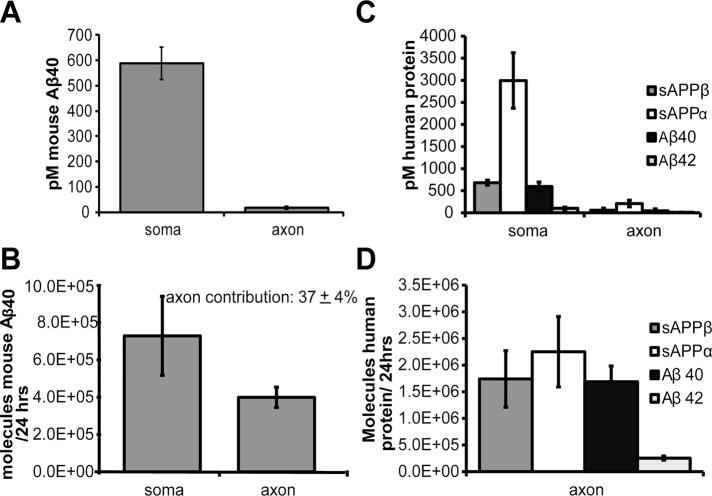
- Mouse hippocampal axons secreted Aβ40 at 17.1 ± 4.9 pM per chamber versus 588 ± 364 pM in bulk culture; estimated secretion was 4.0 × 10^5 ± 6 × 10^4 Aβ40 molecules per axon and 7.3 × 10^5 ± 2 × 10^5 per soma over 24 h, with axons contributing 37 ± 4% of total neuronal Aβ40.
- Human hESC-derived neurons secreted axonal Aβ40 at 45 ± 10 pM, Aβ42 at 10 ± 3 pM, sAPPβ at 58 ± 10 pM, and sAPPα at 210 ± 80 pM; per axon over 24 h, secretion was 1.7 × 10^6 ± 5.3 × 10^5 sAPPβ, 2.3 × 10^6 ± 6.6 × 10^5 sAPPα, 1.7 × 10^6 ± 3.0 × 10^5 Aβ40, and 2.6 × 10^5 ± 1.1 × 10^4 Aβ42 molecules.
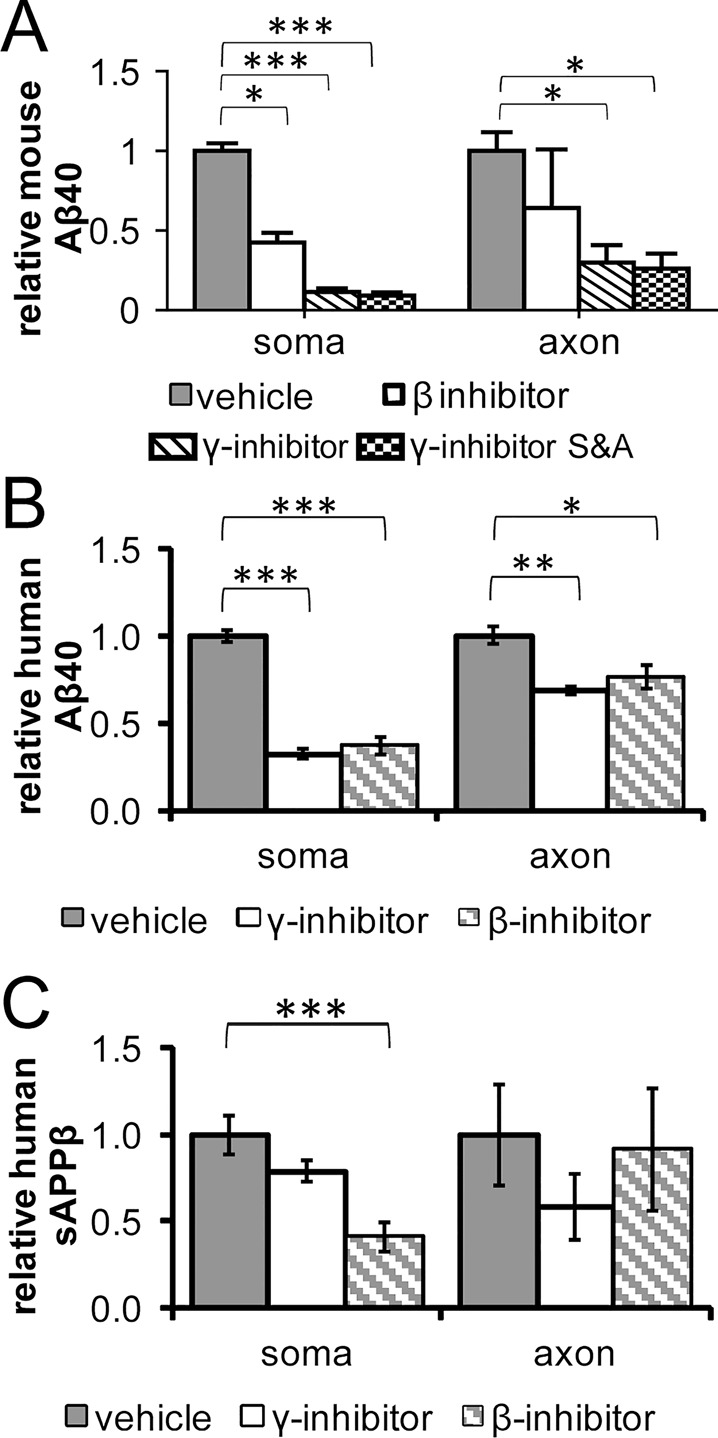
- Somatic secretase inhibition reduced axonal Aβ: mouse γ-secretase inhibition reduced axonal Aβ40 to 30 ± 10% of vehicle, and human Compound E treatment reduced axonal Aβ40 to 68 ± 3%; the authors estimate 70–90% of mouse and 60–70% of human axonal Aβ was processed in the soma.
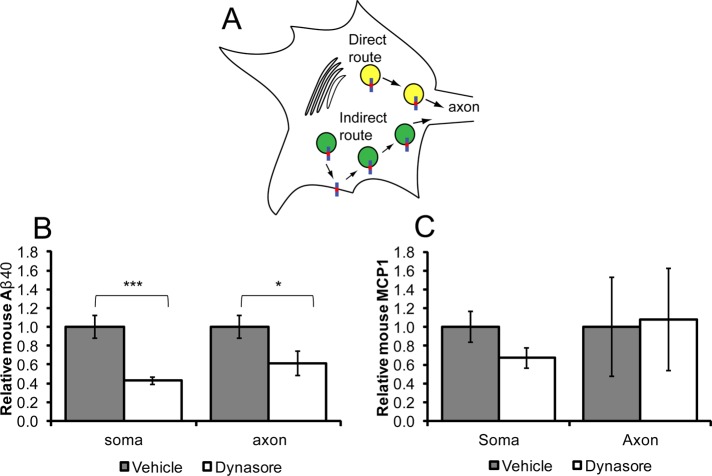
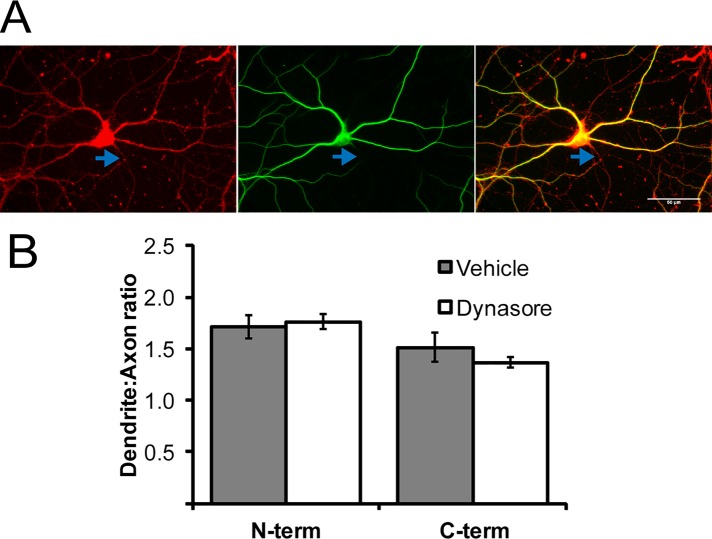
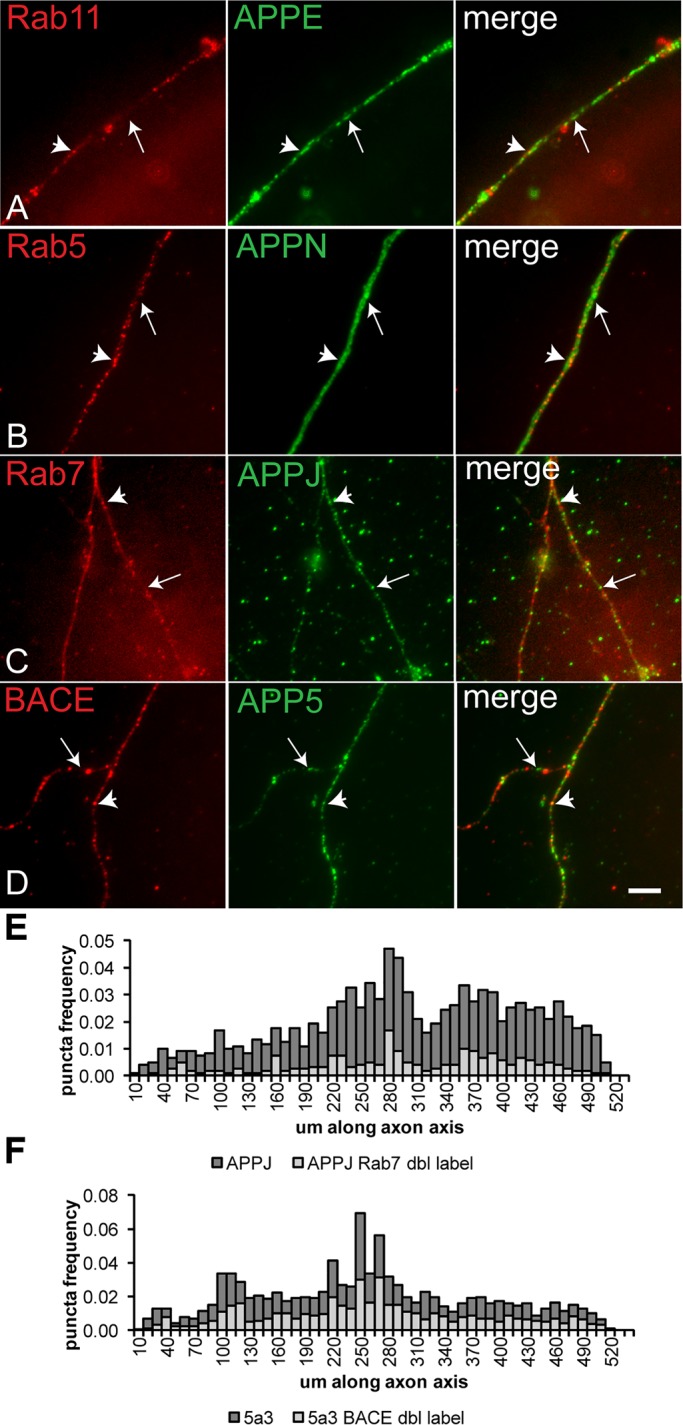
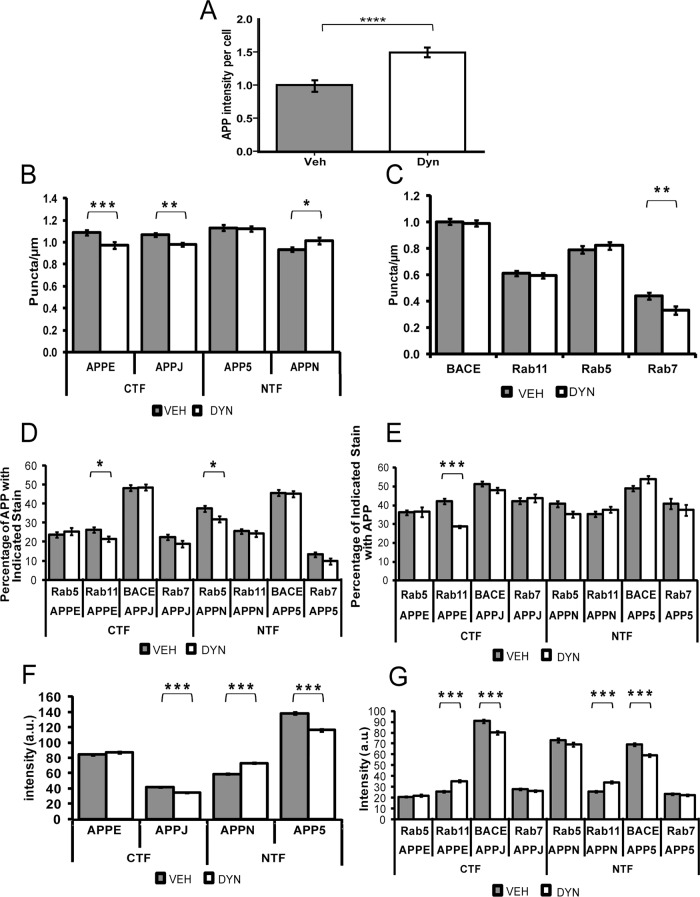
- Somatic dynasore reduced axonal Aβ40 to 61 ± 10% while axonal MCP1 was unchanged; full-length APP axonal delivery and dendrite-to-axon ratios were unchanged, and ~75% of axonal APP vesicles were positive for an endosomal marker, with 48 ± 1.6% colocalizing with BACE.
Methods
- Human neurons were differentiated from hESC lines HUES9/HSF6 on PA6 feeders with SMAD inhibitor/noggin and BDNF/GDNF/cAMP; primary mouse hippocampal neurons were cultured from P0–P1 C57/BL6 or APP mutant pups.
- Microfluidic chambers separated somal and axonal compartments; fluidic isolation was verified with 4-kDa FITC-dextran, and conditioned media were assayed by electrochemiluminescent immunoassay for Aβ40/42, sAPPβ, sAPPα, and MCP1.
- Pharmacological treatments included Compound E, OM99-2, β-secretase inhibitor IV, and dynasore; analyses used immunocytochemistry, live imaging, Matlab-based colocalization, ANOVA/Tukey, ANCOVA, and Mann-Whitney tests.
Limitations
- Stated: axonal Aβ and soluble APP measurements showed high variability, possibly from degradation or cleavage after secretion; human per-soma measurements were not possible due to neuronal aggregates and nonneuronal cells; direct axonal inhibitor treatment was not possible because media flow also inhibited the somal compartment; dynasore inhibition was incomplete after 24 h; some APP antibodies had specificity limitations.
- Stated/evident: the work is in compartmentalized in vitro cultures, not in vivo, and species or neuron-type differences may affect how much local axonal processing occurs.
- Evident from the text: estimates of processing location depend on inhibitor diffusion/dilution assumptions and normalization, and imaging/colocalization cannot fully exclude stabilized vesicle pools or nonspecific antibody binding.
Model-written summary. Check it against the paper before relying on it.
Integrity signals
Registry
Cites
Statistics
Figures
Verification
Claims the paper makes
2 Valid · 1 Not valid · 14 Not checked · 86 Own results and interpretations
At least one cited source doesn’t support this claim or points to a different paper, and none confirmed it — see the verdicts below.
In the paper
“there is considerable evidence that overexpression of APP can alter the sorting and trafficking of APP in neurons (Cataldo et al., 2003; Muresan and Muresan, 2007).”
§ Axonal amyloid precursor protein and its fragments undergo somatodendritic endocytosis and processing > INTRODUCTION
What the sources say
- Disputedcites Cataldo et al., 2003 matched to “App Gene Dosage Modulates Endosomal Abnormalities of Alzheimer's Disease in a Segmental Trisomy 16 Mouse Model of Down Syndrome” (2003) sourceExperimental — accuracy not yet measured
Our copy of Cataldo et al. (2003) directly tests APP overexpression in neurons and reports the opposite of the claim: in the Results section 'App gene dosage modulates early endosomal morphology in Ts65Dn mice' (p. 6788-6789), basal forebrain neurons from transgenic lines with two- to sevenfold overexpression of mutant human APP had normal-sized rab5-positive early endosomes and normal EEA1, rab4 and rabaptin5 labeling, and the Figure 4 legend (p. 6789) states that 'App dosage alone does not promote the endocytic response.' The Discussion reinforces this: 'Although increased App gene dosage is necessary for endosome pathology to develop in Ts65Dn mice, it is not sufficient, because overexpressing APP alone did not cause endosome pathology or atrophy of basal forebrain neurons,' and that APP's ability to alter endosome function requires other genes in the trisomic MMU16 region. The paper therefore does not support the assertion that APP overexpression alters APP sorting/trafficking in neurons; it shows the endocytic/trafficking compartment is unperturbed by overexpression alone and requires triplication plus other loci. (LLM, conf=0.68)
Checked by a reasoning model — may be wrong.
- Not checked yetcites Muresan and Muresan, 2007 matched to “The Amyloid-β Precursor Protein Is Phosphorylated via Distinct Pathways during Differentiation, Mitosis, Stress, and Degeneration” (2007) source
plainstates a cause- Asserted: passes — The authors put it forward as true.
- Checkable: passes — It can be checked against evidence.
- Load-bearing: passes — The paper’s conclusions depend on it.
- Based: passes — The paper gives a reason why it holds.
- Disputed
The cited sources support only part of this claim — read each source’s verdict below.
In the paper
“Although one study theorized that APP must be processed in the cell soma before being sorted into axons, a majority of the prior evidence supports a model by which most APP is processed and secreted locally from axons (Kamal et al., 2001; Cirrito et al., 2008; Muresan et al., 2009; Nikolaev et al., 2009).”
§ Axonal amyloid precursor protein and its fragments undergo somatodendritic endocytosis and processing > DISCUSSION
What the sources say
- Not checked yetcites Kamal et al., 2001 matched to “Kinesin-mediated axonal transport of a membrane compartment containing β-secretase and presenilin-1 requires APP” (2001) source
- Partly supportedcites Cirrito et al., 2008 matched to “Endocytosis Is Required for Synaptic Activity-Dependent Release of Amyloid-β In Vivo” (2008) sourceExperimental — accuracy not yet measured
Cirrito et al. (2008) build a model in which synaptic-vesicle cycling in the terminal drives clathrin-mediated APP endocytosis and hence Aβ generation and release (Discussion, model paragraph; Abstract/Introduction), and they state they 'identified a mechanism of Aβ production and release near the synapse' (Discussion). But the same Discussion explicitly concedes 'our studies do not directly assess where Aβ is produced or released,' offering localisation only as a likelihood, and the paper's quantitative estimates (~70% of ISF Aβ from endocytosis-associated mechanisms, ~60% synaptic-activity-dependent) concern the endocytic pathway, not axonal versus somatic processing. So the source supports the direction of the local/terminal model but not the citing sentence's stronger attribution of evidence that 'most APP is processed and secreted locally from axons,' which the paper does not test or claim. (LLM, conf=0.70)
- Not checked yetcites Muresan et al., 2009 matched to “The Cleavage Products of Amyloid-β Precursor Protein Are Sorted to Distinct Carrier Vesicles That Are Independently Transported within Neurites” (2009) source
plainstates a cause- Asserted: passes — The authors put it forward as true.
- Checkable: passes — It can be checked against evidence.
- Load-bearing: passes — The paper’s conclusions depend on it.
- Based: passes — The paper gives a reason why it holds.
The cited sources support only part of this claim — read each source’s verdict below.
In the paper
“In addition to the early-onset familial mutations with a clear etiology, AD risk variants, such as those found in the SorLA or ApoE genes, are also connected to sorting of APP (Rogaeva et al., 2007; Marzolo and Bu, 2009).”
§ Axonal amyloid precursor protein and its fragments undergo somatodendritic endocytosis and processing > DISCUSSION
What the sources say
- Partly supportedcites Rogaeva et al., 2007 matched to “The neuronal sortilin-related receptor SORL1 is genetically associated with Alzheimer disease” (2007) sourceExperimental — accuracy not yet measured
The SorLA half of the claim is squarely supported: the Abstract and RESULTS/DISCUSSION report that inherited variants in the SORL1 (SorLA) neuronal sorting receptor are associated with late-onset AD and that SORL1 'directs trafficking of APP into recycling pathways' and 'plays a key physiological role in the differential sorting of APP holoprotein' (Abstract; RESULTS, siRNA/retromer paragraph; DISCUSSION). The ApoE half is not: our copy mentions APOE only in the INTRODUCTION, where Aβ accumulation is said to be associated with disease-causing inherited variants in the APP, PS1, PS2 and APOE genes (citing references 5,6), with no demonstration or statement that ApoE risk variants act through sorting of APP. So the sorting mechanism attributed here to ApoE variants rests on other work (e.g. Marzolo and Bu, 2009), not on Rogaeva et al. 2007. (LLM, conf=0.78)
- Supportedcites Marzolo and Bu, 2009 matched to “Lipoprotein receptors and cholesterol in APP trafficking and proteolytic processing, implications for Alzheimer's disease” (2009) source
Section 3.4 of Marzolo & Bu (2009) states that sorLA 'acts as a sorting receptor' that 'regulates APP trafficking into discrete intracellular compartments' and that 'inherited variants in the SORL1 gene are associated with late-onset AD', directly linking a SorLA risk variant to APP sorting. The apoE side is carried by Section 3.5, where the disease-related isoform apoE4 depends on apoER2 co-expression to drive endocytosis of the X11/APP complex with BACE ('thus creating a link between the disease related isoform of apoE with it[!] receptor in the amyloidogenic pathway'), together with Section 4's statement that 'the genetic association of apoE ε4 allele with late-onset AD was established more than a decade ago'. The claim is hedged ('connected to sorting of APP'), matching the review's level of assertion; the only softening is that the review says the apoE ε4 molecular mechanisms 'are still unclear', and the apoE4/APP-endocytosis effect is reported from a primary study [96] rather than generated by the authors. (LLM, conf=0.82)
plainstates an association- Asserted: passes — The authors put it forward as true.
- Checkable: passes — It can be checked against evidence.
- Load-bearing: unclear — It is unclear whether the paper’s conclusions depend on it.
- Based: passes — The paper gives a reason why it holds.
- Partly supported
A result the paper reports from its own data — it cites no other source for it, so there is none to check. The quote shows it is in the paper.
In the paper
“Axons from human neurons secreted detectable amounts of Aβ40, Aβ42, sAPPβ, and sAPPα.”
§ Axonal amyloid precursor protein and its fragments undergo somatodendritic endocytosis and processing > RESULTS > Axons of neurons expressing endogenous APP secrete sAPP and Aβ
plainn = 14- Asserted: passes — The authors put it forward as true.
- Checkable: passes — It can be checked against evidence.
- Load-bearing: passes — The paper’s conclusions depend on it.
- Based: passes — The paper gives a reason why it holds.
A result the paper reports from its own data — it cites no other source for it, so there is none to check. The quote shows it is in the paper.
In the paper
“Thus axonal secretion of Aβ40 was ∼4 times higher from human neurons than from mouse neurons, possibly due to neuronal type or species differences.”
§ Axonal amyloid precursor protein and its fragments undergo somatodendritic endocytosis and processing > RESULTS > Axons of neurons expressing endogenous APP secrete sAPP and Aβ
hedgedstates an associationn = 7- Asserted: passes — The authors put it forward as true.
- Checkable: passes — It can be checked against evidence.
- Load-bearing: unclear — It is unclear whether the paper’s conclusions depend on it.
- Based: passes — The paper gives a reason why it holds.
57 more claims
Create a free account to see all 103 claims and to verify the 24 references still open.
- It may state two separate claims as one. 29
- Probably not a substantial claim. 17
Claims other papers make about this one
Each is checked against this paper’s own text: does it say what the citing paper says it does?
The source backs part of the claim, not all of it — or backs it for a different population, condition or comparison.
In the citing paper
“The Aβ aggregation usually starts in the presynaptic axon terminals, where APP is transported by vesicles and becomes enriched [33, 42, 53].”
From Abnormal accumulation of extracellular vesicles in hippocampal dystrophic axons and regulation by the primary cilia in Alzheimer's disease (2023) · cites this paper as [53]
Experimental — accuracy not yet measuredIn the citing paper
“~40% of neuronal Aβ production takes place in axons (Niederst et al., 2015; Das et al., 2016).”
From Axonal generation of amyloid-β from palmitoylated APP in mitochondria-associated endoplasmic reticulum membranes (2021) · cites this paper as Niederst et al., 2015
Self-check
Percentages, sums and reported differences re-computed from the paper’s own numbers.
Each contradiction between two passages listed here was confirmed by an independent check.
Rated minor: it would not touch a result — a value no result rests on, a p-value that stays on the same side of the significance level, or a conflict that is clerical, resolved elsewhere in the paper, or outside its own findings.
In the paper
§ Axonal amyloid precursor protein and its fragments undergo somatodendritic endocytosis and processing > RESULTS > Axons of neurons expressing endogenous APP secrete sAPP and Aβ
“bulk (soma) culture conditioned media contained 600 ± 100 pM Aβ40 and 100 ± 30 pM Aβ42 in 200 μl of media over 24 h (n = 14; Figure 2B).”
§ Axonal amyloid precursor protein and its fragments undergo somatodendritic endocytosis and processing > RESULTS > Axons of neurons expressing endogenous APP secrete sAPP and Aβ
“(B) Number of molecules of Aβ40 secreted per axon or cell body of mouse neurons in 24 h. (C) sAPPβ, sAPPα, and Aβ40 and Aβ42 measurements from human differentiated neurons after 24 h, in compartments 30–40 d.”
Rated minor: it would not touch a result — a value no result rests on, a p-value that stays on the same side of the significance level, or a conflict that is clerical, resolved elsewhere in the paper, or outside its own findings.
In the paper
§ Axonal amyloid precursor protein and its fragments undergo somatodendritic endocytosis and processing > RESULTS > Most APP fragments secreted from axons are processed in the cell soma
“In hippocampal cultures, we found that inhibition of soma β- or γ-secretase activity caused a significant decrease in secretion of Aβ40 from the axons compared with vehicle-treated controls (Figure 3A).”
§ Axonal amyloid precursor protein and its fragments undergo somatodendritic endocytosis and processing > RESULTS > Most APP fragments secreted from axons are processed in the cell soma
“with a trend toward reduction in axonal Aβ40 to 64 ± 30% (n.s.; n = 6; Figure 3A).”
Cited works that were retracted
Works this paper cites that were later retracted, from the retraction notices publishers deposit. Major when the notice came out before this paper was published.
A note, not an issue: for example, a cited work that was retracted only after this paper was published, which its authors could not have known.
In the paper
“Nikolaev A, 2009, Nature, 457, 981, 10.1038/nature07767”
Cited work 10.1038/nature07767 · retracted 2023-12-18 · notice 10.1038/s41586-023-06943-3 · this paper published 2015-01-15
Citations
Cites
1 retracted
RETRACTED ARTICLE: APP binds DR6 to trigger axon pruning and neuron death via distinct caspases
Nikolaev, A., McLaughlin, T., O’Leary, D. D. M., & Tessier-Lavigne, M. (2009) · Nature · doi:10.1038/nature07767 · Cited by 992
RetractedHighly efficient neural conversion of human ES and iPS cells by dual inhibition of SMAD signaling
Chambers, S. M., Fasano, C. A., Papapetrou, E. P., Tomishima, M., Sadelain, M., & Studer, L. (2009) · Nature Biotechnology · doi:10.1038/nbt.1529 · Cited by 3,620 · cited 1×
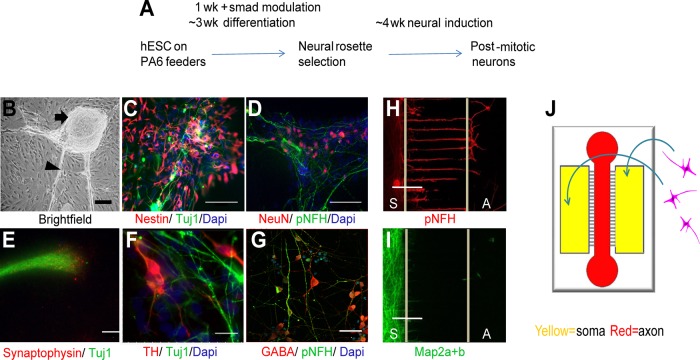
“The timeline and procedure is briefly outlined in Figure 1A and is a combination of previously published protocols (Chambers et al., 2009; Yuan et al., 2011).”
MethodDynasore, a Cell-Permeable Inhibitor of Dynamin
Macia, E., Ehrlich, M., Massol, R., Boucrot, E., Brunner, C., & Kirchhausen, T. (2006) · Developmental Cell · doi:10.1016/j.devcel.2006.04.002 · Cited by 1,958 · cited 1×
“To do this, we used the dynamin inhibitor dynasore (Macia et al., 2006).”
MethodDesign and validation of a tool for neurite tracing and analysis in fluorescence microscopy images
Meijering, E., Jacob, M., Sarria, J. ‐. F., Steiner, P., Hirling, H., & Unser, M. (2004) · Cytometry Part A · doi:10.1002/cyto.a.20022 · Cited by 1,608 · cited 2×
“For calculation of D:A ratio, Map2-positive or p-NFH–positive neurites were traced and measured using the NeuronJ plug-in for ImageJ (Meijering et al., 2004).”
MethodInduction of Midbrain Dopaminergic Neurons from ES Cells by Stromal Cell–Derived Inducing Activity
Kawasaki, H., Mizuseki, K., Nishikawa, S., Kaneko, S., Kuwana, Y., Nakanishi, S., Nishikawa, S.-I., & Sasai, Y. (2000) · Neuron · doi:10.1016/s0896-6273(00)00083-0 · Cited by 1,277
Probing sporadic and familial Alzheimer’s disease using induced pluripotent stem cells
Israel, M. A., Yuan, S. H., Bardy, C., Reyna, S. M., Mu, Y., Herrera, C., Hefferan, M. P., Van Gorp, S., Nazor, K. L., Boscolo, F. S., et al. (2012) · Nature · doi:10.1038/nature10821 · Cited by 1,253 · cited 1×
“The efficiency and neurotransmitter type are described in previously published reports for this PA6based induction method (Buytaert-Hoefen et al., 2004; Israel et al., 2012).”
MethodSelf-citationAxonopathy and Transport Deficits Early in the Pathogenesis of Alzheimer’s Disease
Stokin, G. B., Lillo, C., Falzone, T. L., Brusch, R. G., Rockenstein, E., Mount, S. L., Raman, R., Davies, P., Masliah, E., Williams, D. S., et al. (2005) · Science · doi:10.1126/science.1105681 · Cited by 1,214 · cited 1×
“In fact, overexpression of APP can cause alterations in axonal transport dynamics and change the content of axonal APP vesicles (Torroja et al., 1999; Gunawardena and Goldstein, 2001; Stokin et al., 2005; Muresan et al., 2009).”
BackgroundSelf-citationThe neuronal sortilin-related receptor SORL1 is genetically associated with Alzheimer disease
Rogaeva, E., Meng, Y., Lee, J. H., Gu, Y., Kawarai, T., Zou, F., Katayama, T., Baldwin, C. T., Cheng, R., Hasegawa, H., et al. (2007) · Nature Genetics · doi:10.1038/ng1943 · Cited by 1,167
A microfluidic culture platform for CNS axonal injury, regeneration and transport
Taylor, A. M., Blurton-Jones, M., Rhee, S. W., Cribbs, D. H., Cotman, C. W., & Jeon, N. L. (2005) · Nature Methods · doi:10.1038/nmeth777 · Cited by 1,153 · cited 4×
“Devices were molded by soft lithography using Sylgard 182 (Ellsworth Adhesives, Germantown, WI) as previously described (Taylor et al., 2005).”
BackgroundMethodInfluentialTrafficking and Proteolytic Processing of APP
Haass, C., Kaether, C., Thinakaran, G., & Sisodia, S. (2012) · Cold Spring Harbor Perspectives in Medicine · doi:10.1101/cshperspect.a006270 · Cited by 1,075 · cited 1×
“Full-length APP undergoes multiple proteolytic processing events, typically an α- or β-site cleavage step followed by γ-site cleavage by secretase proteins (Haass et al., 2012).”
Background
Cited by
Myelin dysfunction drives amyloid-β deposition in models of Alzheimer’s disease
Depp, C., Sun, T., Sasmita, A. O., Spieth, L., Berghoff, S. A., Nazarenko, T., Overhoff, K., Steixner-Kumar, A. A., Subramanian, S., Arinrad, S., et al. (2023) · Nature · doi:10.1038/s41586-023-06120-6 · Cited by 493
Amyloid-β and tau complexity — towards improved biomarkers and targeted therapies
Polanco, J. C., Li, C., Bodea, L.-G., Martinez-Marmol, R., Meunier, F. A., & Götz, J. (2018) · Nature Reviews Neurology · doi:10.1038/nrneurol.2017.162 · Cited by 378
Cellular Functions of the Amyloid Precursor Protein from Development to Dementia
van der Kant, R., & Goldstein, L. S. B. (2015) · Developmental Cell · doi:10.1016/j.devcel.2015.01.022 · Cited by 245
Self-citationLópez-Erauskin, J., Tadokoro, T., Baughn, M. W., Myers, B., McAlonis-Downes, M., Chillon-Marinas, C., Asiaban, J. N., Artates, J., Bui, A. T., Vetto, A. P., et al. (2018) · Neuron · doi:10.1016/j.neuron.2018.09.044 · Cited by 233
The Endolysosomal System and Proteostasis: From Development to Degeneration
Winckler, B., Faundez, V., Maday, S., Cai, Q., Guimas Almeida, C., & Zhang, H. (2018) · The Journal of Neuroscience · doi:10.1523/jneurosci.1665-18.2018 · Cited by 107
“…Hernandez et al., 2012; Shehata et al., 2012; Binotti et al., 2015; Lüningschrör et al., 2017; Nikoletopoulou et al., 2017; Ok- erlund et al., 2017; Nikoletopoulou and Tavernarakis, 2018), mitochondria (Cai et al., 2012; Maday et al., 2012; Ashrafi et al., 2014; Rangaraju et al., 2014; Wong…”
Background
Metadata
- Authors
- Niederst, E. D., Reyna, S. M., & Goldstein, L. S. B.
- Affiliations
- University of California San Diego (US)
- Boston Children's Hospital (US)
- Corresponding author
- Goldstein, Lawrence S. B.
- Venue
- Molecular Biology of the Cell
- Published
- 2015-01-15
- Volume
- 26
- Issue
- 2
- Pages
- 205-217
- ISSN
- 1059-1524 (ISSN-L)
- 1939-4586
- PMC
- PMC4294669
- OpenAlex
- W2321039262
- Cited by
- 51
- References
- 61
- Citations by year
- 2025: 4 · 2024: 3 · 2023: 5 · 2022: 8 · 2021: 5 · 2020: 5 · 2019: 4 · 2018: 8 · 2017: 2 · 2016: 4 · 2015: 3
- FWCI
- 2.00
- Type
- journal article
- Language
- en
- Open access
- green
- europepmc.org
- Licence
- cc-by-nc-sa
- Locations
- Molecular Biology of the Cell (publishedVersion)
- Europe PMC (PubMed Central) (publishedVersion, cc-by-nc-sa)
- PubMed Central (publishedVersion, cc-by-nc-sa)
- PubMed (publishedVersion)
- eScholarship (California Digital Library) (submittedVersion)
- Funders
- National Institute on Aging (P50AG005131)
- National Institute of General Medical Sciences (T32GM008666)
- Topics
- Life Sciences › Neuroscience › Cellular and Molecular Neuroscience › Alzheimer's disease research and treatments
- Life Sciences › Biochemistry, Genetics and Molecular Biology › Cell Biology › Cellular transport and secretion
- Life Sciences › Neuroscience › Cellular and Molecular Neuroscience › Neuroscience and Neuropharmacology Research
- Keywords
- amyloid precursor protein, axons, APP processing, amyloid-beta, sAPPα, sAPPβ, human embryonic stem cell-derived neurons, microfluidics, Alzheimer's disease, synapses
- MeSH terms
- Animals, Axons, Benzodiazepinones, Cell Differentiation, Cell Line, Cells, Cultured, Dendrites, Endocytosis, Humans, Hydrazones, Luminescent Proteins, Mice, Inbred C57BL, Oligopeptides, Peptide Fragments, Signal Transduction, Amyloid beta-Peptides, Amyloid beta-Protein Precursor, Mice, Knockout, Microscopy, Confocal, Microfluidic Analytical Techniques, Embryonic Stem Cells, Amyloid Precursor Protein Secretases
About these checks
Registry, retraction, Cites and statistics results are computed, not judged, with one exception: a printed reference that no index lists is read once by a model before it counts as a citation error. Claims are extracted by a model and kept only when their quote appears verbatim in the text; each cited source is then checked, with a model’s help, for whether it says what the claim relies on. Those verdicts can be wrong — read the claim’s quote and the cited source before relying on one.
The claim verdicts this report counts are experimental: their accuracy is not yet measured.
A language model drew the claims from the paper on 2026-11-19, under version 3 of the claim definition (model deepseek-v4.1-flash, prompt extract-v3).
A second model labelled each claim on 2026-11-19 (model jev-1.13-20260917, definition revision gold-guideline-v0.2).
Cited sources are checked with a language model’s help (qwen3.8-omni-flash).
Statistics and arithmetic are recomputed, not judged.
Confidence bands are shown only for fields calibrated on our annotated test set. None is calibrated yet, so no band is shown.
What counts as a claim ›How we measure confidence ›How we check this ›
Are you an author, or do you see a problem with this page? Request a review
Data sources
Bibliographic data: Semantic Scholar, OpenAlex, Crossref.
Contains information from the Semantic Scholar Academic Graph Datasets, made available under the ODC Attribution License (ODC-BY 1.0).
Semantic Scholar’s data is described in: Kinney, R., et al. (2023). The Semantic Scholar Open Data Platform. arXiv:2301.10140.
