

The DOI matches its Crossref record; 252 of the 254 references it cites were found in a registry or an index.
The Role of the Gut Microbiota in Dietary Interventions for Depression and Anxiety
Open accessAbstract
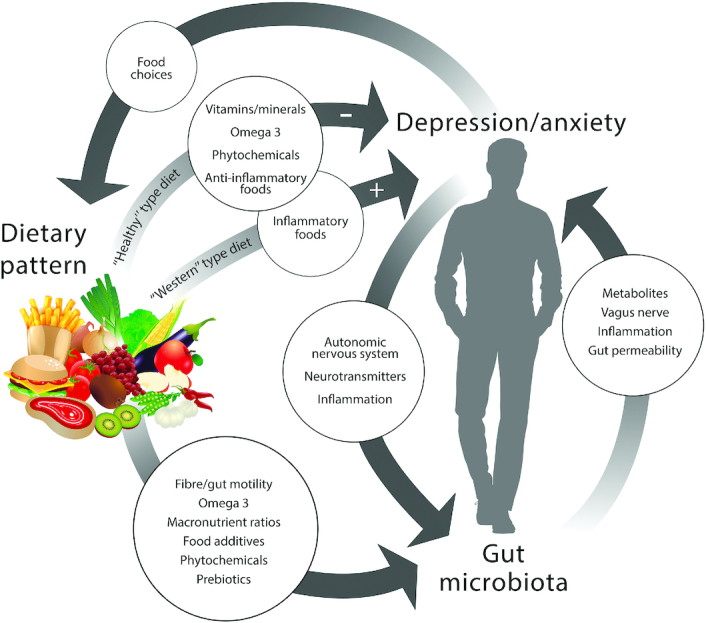
There is emerging evidence that an unhealthy dietary pattern may increase the risk of developing depression or anxiety, whereas a healthy dietary pattern may decrease it. This nascent research suggests that dietary interventions could help prevent, or be an alternative or adjunct therapy for, depression and anxiety. The relation, however, is complex, affected by many confounding variables, and is also likely to be bidirectional, with dietary choices being affected by stress and depression. This complexity is reflected in the data, with sometimes conflicting results among studies. As the research evolves, all characteristics of the relation need to be considered to ensure that we obtain a full understanding, which can potentially be translated into clinical practice. A parallel and fast-growing body of research shows that the gut microbiota is linked with the brain in a bidirectional relation, commonly termed the microbiome-gut-brain axis. Preclinical evidence suggests that this axis plays a key role in the regulation of brain function and behavior. In this review we discuss possible reasons for the conflicting results in diet-mood research, and present examples of areas of the diet-mood relation in which the gut microbiota is likely to be involved, potentially explaining some of the conflicting results from diet and depression studies. We argue that because diet is one of the most significant factors that affects human gut microbiota structure and function, nutritional intervention studies need to consider the gut microbiota as an essential piece of the puzzle.
Overview
The claims and statistics of this paper haven’t been checked yet.
Run the check — free, no account needed. It reads the open-access text and checks the sources it cites.
Integrity signals
Registry
Cites
Statistics
Figures
Verification
Claims the paper makes
The claims and statistics of this paper haven’t been checked yet.
Run the check — free, no account needed. It reads the open-access text and checks the sources it cites.
Claims other papers make about this one
Each is checked against this paper’s own text: does it say what the citing paper says it does?
In the citing paper
“Variations in macronutrient ratios, amounts, and types are large drivers of the effect on microbiota composition (111), with specific microbes thriving on selective macronutrients, thereby increasing their abundance.”
From Diet and the Microbiota–Gut–Brain Axis: Sowing the Seeds of Good Mental Health (2021) · cites this paper as [111]
Self-check
Percentages, sums and reported differences re-computed from the paper’s own numbers.
The self-check needs the paper’s full text.
Citations
Cites
1 retracted
Seck, E. H., Senghor, B., Merhej, V., Bachar, D., Cadoret, F., Robert, C., Azhar, E. I., Yasir, M., Bibi, F., Jiman-Fatani, A. A., et al. (2018) · International Journal of Obesity · doi:10.1038/s41366-018-0201-3 · Cited by 67
RetractedDiagnostic and Statistical Manual of Mental Disorders
American Psychiatric Association (2013) · doi:10.1176/appi.books.9780890425596 · Cited by 116,369
Structure, function and diversity of the healthy human microbiome
The Human Microbiome Project Consortium (2012) · Nature · doi:10.1038/nature11234 · Cited by 11,726
Diet rapidly and reproducibly alters the human gut microbiome
David, L. A., Maurice, C. F., Carmody, R. N., Gootenberg, D. B., Button, J. E., Wolfe, B. E., Ling, A. V., Devlin, A. S., Varma, Y., Fischbach, M. A., et al. (2014) · Nature · doi:10.1038/nature12820 · Cited by 10,100
Gibson, G. R., Hutkins, R., Sanders, M. E., Prescott, S. L., Reimer, R. A., Salminen, S. J., Scott, K., Stanton, C., Swanson, K. S., Cani, P. D., et al. (2017) · Nature Reviews Gastroenterology & Hepatology · doi:10.1038/nrgastro.2017.75 · Cited by 5,634
Cani, P. D., Bibiloni, R., Knauf, C., Waget, A., Neyrinck, A. M., Delzenne, N. M., & Burcelin, R. (2008) · Diabetes · doi:10.2337/db07-1403 · Cited by 4,819
Bravo, J. A., Forsythe, P., Chew, M. V., Escaravage, E., Savignac, H. M., Dinan, T. G., Bienenstock, J., & Cryan, J. F. (2011) · Proceedings of the National Academy of Sciences · doi:10.1073/pnas.1102999108 · Cited by 3,888
Inflammation and Its Discontents: The Role of Cytokines in the Pathophysiology of Major Depression
Miller, A. H., Maletic, V., & Raison, C. L. (2009) · Biological Psychiatry · doi:10.1016/j.biopsych.2008.11.029 · Cited by 3,848
Indigenous bacteria from the gut microbiota regulate host serotonin biosynthesis
Yano, J. M., Yu, K., Donaldson, G. P., Shastri, G. G., Ann, P., Ma, L., Nagler, C. R., Ismagilov, R. F., Mazmanian, S. K., & Hsiao, E. Y. (2015) · Cell · doi:10.1016/j.cell.2015.02.047 · Cited by 3,614
Host microbiota constantly control maturation and function of microglia in the CNS
Erny, D., Hrabě de Angelis, A. L., Jaitin, D., Wieghofer, P., Staszewski, O., David, E., Keren-Shaul, H., Mahlakoiv, T., Jakobshagen, K., Buch, T., et al. (2015) · Nature Neuroscience · doi:10.1038/nn.4030 · Cited by 3,569
Research works printed but not linked: 1
- Lydiard, 2001, Irritable bowel syndrome, anxiety, and depression: what are the links?, J Clin Psychiatry, 62, 38
Cited by
Sorted by citations
Diet and the Microbiota–Gut–Brain Axis: Sowing the Seeds of Good Mental Health
Berding, K., Vlckova, K., Marx, W., Schellekens, H., Stanton, C., Clarke, G., Jacka, F., Dinan, T. G., & Cryan, J. F. (2021) · Advances in Nutrition · doi:10.1093/advances/nmaa181 · Cited by 451
Bacterial Metabolites of Human Gut Microbiota Correlating with Depression
Averina, O. V., Zorkina, Y., Yunes, R. А., Kovtun, A. S., Ushakova, V. M., Morozova, A. Y., Kostyuk, G. P., Даниленко, В. Н., & Chekhonin, V. P. (2020) · International Journal of Molecular Sciences · doi:10.3390/ijms21239234 · Cited by 170
Gut Microbiota in Anxiety and Depression: Unveiling the Relationships and Management Options
Kumar, A., Pramanik, J., Goyal, N., Chauhan, D., Sivamaruthi, B. S., Prajapati, B. G., & Chaiyasut, C. (2023) · Pharmaceuticals · doi:10.3390/ph16040565 · Cited by 171
Gut-Brain-Microbiota Axis: Antibiotics and Functional Gastrointestinal Disorders
Karakan, T., Özkul, C., Akkol, E. K., Bilici, S., Sobarzo‐Sánchez, E., & Capasso, R. (2021) · Nutrients · doi:10.3390/nu13020389 · Cited by 158
The Relationship Between the Gut Microbiome-Immune System-Brain Axis and Major Depressive Disorder
Foster, J. A., Baker, G. B., & Dursun, S. M. (2021) · Frontiers in Neurology · doi:10.3389/fneur.2021.721126 · Cited by 161
Role of the intestinal microbiome, intestinal barrier and psychobiotics in depression
Trzeciak, P., & Herbet, M. (2021) · Nutrients · doi:10.3390/nu13030927 · Cited by 139
The Microbiome-Gut-Brain Axis and Resilience to Developing Anxiety or Depression under Stress
Bear, T., Dalziel, J. E., Coad, J., Roy, N. C., Butts, C. A., & Gopal, P. K. (2021) · Microorganisms · doi:10.3390/microorganisms9040723 · Cited by 136
Wang, D., Wu, J., Zhu, P., Xie, H., Lu, L., Bai, W., Pan, W., Shi, R., Ye, J., Xia, B., et al. (2022) · Food Research International · doi:10.1016/j.foodres.2022.111289 · Cited by 118
Hu, B., Das, P., Lv, X., Shi, M., Aa, J., Wang, K., Duan, L., Gilbert, J. A., Nie, Y., & Wu, X. (2022) · mSystems · doi:10.1128/msystems.00218-22 · Cited by 112
You, Y., Wang, R., Li, J., Cao, F., Zhang, Y., & Ma, X. (2024) · Applied Physiology, Nutrition, and Metabolism · doi:10.1139/apnm-2023-0550 · Cited by 93
The brain-gut-microbiota interplay in depression: A key to design innovative therapeutic approaches
Varesi, A., Campagnoli, L. I. M., Chirumbolo, S., Candiano, B., Carrara, A., Ricevuti, G., Esposito, C., & Pascale, A. (2023) · Pharmacological Research · doi:10.1016/j.phrs.2023.106799 · Cited by 88
Acharya, C., & Bajaj, J. S. (2020) · Gastroenterology · doi:10.1053/j.gastro.2020.10.056 · Cited by 78
Shared biological mechanisms of depression and obesity: focus on adipokines and lipokines
Fu, X., Wang, Y., Zhao, F., Cui, R., Xie, W., Liu, Q., & Yang, W. (2023) · Aging · doi:10.18632/aging.204847 · Cited by 87
Zhang, Y., Huang, J., Xiong, Y., Zhang, X., Lin, Y., & Liu, Z. (2021) · Nutrients · doi:10.3390/nu14010099 · Cited by 75
Rodríguez‐Landa, J. F., Germán-Ponciano, L. J., Puga-Olguín, A., & Olmos-Vázquez, O. J. (2022) · Molecules · doi:10.3390/molecules27113551 · Cited by 70
Role of Probiotics and Diet in the Management of Neurological Diseases and Mood States: A Review
Thangaleela, S., Sivamaruthi, B. S., Kesika, P., & Chaiyasut, C. (2022) · Microorganisms · doi:10.3390/microorganisms10112268 · Cited by 73
The Role of The Tumor Microbiome in Tumor Development and Its Treatment
Chen, Y., Wu, F., Wu, P., Xing, H., & Ma, T. (2022) · Frontiers in Immunology · doi:10.3389/fimmu.2022.935846 · Cited by 67
Onaolapo, A. Y., & Onaolapo, O. J. (2021) · World Journal of Psychiatry · doi:10.5498/wjp.v11.i7.297 · Cited by 71
Sjöstedt, P., Enander, J., & Isung, J. (2021) · Frontiers in Psychiatry · doi:10.3389/fpsyt.2021.682868 · Cited by 65
Zhang, R., Zhang, B., Shen, C., Sahakian, B. J., Li, Z., Zhang, W., Zhao, Y., Li, Y., Feng, J., & Cheng, W. (2024) · Nature Mental Health · doi:10.1038/s44220-024-00226-0 · Cited by 64
Ge, P., Qu, S., Ni, S., Yao, Z., Qi, Y., Zhao, X., Guo, R., Yang, N., Zhang, Q., & Zhu, H. (2022) · Phytotherapy Research · doi:10.1002/ptr.7616 · Cited by 59
The influence of diet quality on depression among adults and elderly: A population-based study
Meller, F. D. O., Manosso, L. M., & Schäfer, A. A. (2020) · Journal of Affective Disorders · doi:10.1016/j.jad.2020.12.155 · Cited by 57
Fart, F., Rajan, S., Wall, R., Rangel, I., Mall, J. G., Tingö, L., Brummer, R. J., Repsilber, D., Schoultz, I., & Lindqvist, C. M. (2020) · Nutrients · doi:10.3390/nu12092610 · Cited by 55
Wu, S.-X., Li, J., Zhou, D.-D., Xiong, R.-G., Huang, S., Saimaiti, A., Shang, A., & Li, H. (2022) · Antioxidants · doi:10.3390/antiox11112132 · Cited by 52
Clemente‐Suárez, V. J., Redondo-Flórez, L., Rubio-Zarapuz, A., Martín-Rodríguez, A., & Tornero-Aguilera, J. F. (2024) · Biomedicines · doi:10.3390/biomedicines12010221 · Cited by 58
Herselman, M. F., Bailey, S., & Bobrovskaya, L. (2022) · International Journal of Molecular Sciences · doi:10.3390/ijms23042013 · Cited by 51
Jiang, W., Hu, C., Chen, Y., Li, Y., Sun, X., Wu, H., Yang, R., Tang, Y., Niu, F., Wei, W., et al. (2023) · The Science of The Total Environment · doi:10.1016/j.scitotenv.2023.162101 · Cited by 47
Larroya, A., Pantoja, J., Codoñer‐Franch, P., & Cénit, M. C. (2021) · Frontiers in Pediatrics · doi:10.3389/fped.2021.705859 · Cited by 47
MacKay, M., Yang, B. H., Dursun, S. M., & Baker, G. B. (2023) · Current Neuropharmacology · doi:10.2174/1570159x21666230222092029 · Cited by 51
Merino, M., Clemente‐Suárez, V. J., Ruisoto, P., Jiménez, M., Ramos‐Campo, D. J., Beltrán-Velasco, A. I., Martínez‐Guardado, I., Rubio-Zarapuz, A., Navarro-Jiménez, E., & Tornero-Aguilera, J. F. (2024) · Metabolites · doi:10.3390/metabo14100549 · Cited by 58
Clerici, L., Bottari, D., & Bottari, B. (2025) · Current Nutrition Reports · doi:10.1007/s13668-025-00619-2 · Cited by 53
Bai, J., Bruner, D. W., Fedirko, V., Beitler, J. J., Zhou, C., Gu, J., Zhao, H., Lin, I., Chico, C. E., Higgins, K. A., et al. (2020) · Cancers · doi:10.3390/cancers12092531 · Cited by 44
Kurhaluk, N., Kamiński, P., Bilski, R., Kołodziejska, R., Woźniak, A., & Ткаченко, Г. М. (2025) · International Journal of Molecular Sciences · doi:10.3390/ijms26083658 · Cited by 50
Shabbir, M. A., Mehak, F., Khan, Z. M., Ahmed, W., Haq, S. M. A. U., Khan, M. R., Bhat, Z. F., & Aadil, R. M. (2022) · Trends in Food Science & Technology · doi:10.1016/j.tifs.2021.12.035 · Cited by 47
Microbiome-based therapies for Parkinson’s disease
Alam, M., Abbas, K., Mustafa, M., Usmani, N., & Habib, S. (2024) · Frontiers in Nutrition · doi:10.3389/fnut.2024.1496616 · Cited by 46
Mechanisms of microbiota-gut-brain axis communication in anxiety disorders
Jiang, M., Li, K., Wang, Y., Zhou, B., Li, H.-Y., Yan, Q., & Liu, Z.-G. (2024) · Frontiers in Neuroscience · doi:10.3389/fnins.2024.1501134 · Cited by 42
Zyoud, S. H., Shakhshir, M. H., Abushanab, A. S., Koni, A. A., Shahwan, M. J., Jairoun, A. A., & Al‐Jabi, S. W. (2023) · Journal of Health Population and Nutrition · doi:10.1186/s41043-023-00378-2 · Cited by 50
Chen, Y., Meng, P., Cheng, S., Jia, Y., Wen, Y. F., Yang, X., Yao, Y., Pan, C., Li, C., Zhang, H., et al. (2021) · Molecular Brain · doi:10.1186/s13041-021-00843-1 · Cited by 42
Dave, L. A., Hodgkinson, S. M., Roy, N. C., Smith, N. W., & McNabb, W. C. (2021) · Critical Reviews in Food Science and Nutrition · doi:10.1080/10408398.2021.2012753 · Cited by 47
Liu, Y., Wu, Z., Cheng, L., Zhang, X., & Yang, H. (2021) · Food & Function · doi:10.1039/d1fo01091c · Cited by 37
Gut microbiota: Linking nutrition and perinatal depression
Song, J. G., Bi, Z., Kan, J., Liu, G., Zhang, S., Si, L., Zhang, X., Yang, X., Ma, J., Cheng, J., et al. (2022) · Frontiers in Cellular and Infection Microbiology · doi:10.3389/fcimb.2022.932309 · Cited by 38
Mood and microbes: a comprehensive review of intestinal microbiota’s impact on depression
Luqman, A., He, M., Hassan, A., Ullah, M., Zhang, L., Khan, M. R., Din, A. U., Ullah, K., Wang, W. J., & Wang, G. (2024) · Frontiers in Psychiatry · doi:10.3389/fpsyt.2024.1295766 · Cited by 39
Health Benefits Beyond the Scale: The Role of Diet and Nutrition During Weight Loss Programmes
Contreras, F., Al‐Najim, W., & le Roux, C. W. (2024) · Nutrients · doi:10.3390/nu16213585 · Cited by 41
Next Generation Probiotics for Neutralizing Obesogenic Effects: Taxa Culturing Searching Strategies
López‐Moreno, A., Acuña, I., Torres-Sánchez, A., Ruiz-Moreno, Á., Cerk, K., Rivas, A., Suárez, A., Monteoliva‐Sánchez, M., & Aguilera, J. (2021) · Nutrients · doi:10.3390/nu13051617 · Cited by 34
Good bacteria, oxidative stress and neurological disorders: Possible therapeutical considerations
Soheili, M., Alinaghipour, A., & Salami, M. (2022) · Life Sciences · doi:10.1016/j.lfs.2022.120605 · Cited by 33
Pick fecal microbiota transplantation to enhance therapy for major depressive disorder
Meng, Y., Sun, J., & Zhang, G. (2023) · Progress in Neuro-Psychopharmacology and Biological Psychiatry · doi:10.1016/j.pnpbp.2023.110860 · Cited by 32
Zhao, Z., Xiao, G., Xia, J., Guo, H., Yang, X., Jiang, Q., Wang, H., Hu, J., & Zhang, C. (2023) · Journal of Affective Disorders · doi:10.1016/j.jad.2023.09.018 · Cited by 34
Zhang, Z., Yang, X., Jia, Y., Wen, Y. F., Cheng, S., Meng, P., Li, C., Zhang, H., Pan, C., Zhang, J., et al. (2021) · Nutrients · doi:10.3390/nu13103343 · Cited by 29
The gut-cardiovascular connection: new era for cardiovascular therapy
Cheng, C. K., & Huang, Y. (2021) · Medical Review · doi:10.1515/mr-2021-0002 · Cited by 31
Gut microbiota: A new target for traditional Chinese medicine in the treatment of depression
Li, B., Xu, M., Wang, Y., Feng, L., Xing, H., & Zhang, K. (2022) · Journal of Ethnopharmacology · doi:10.1016/j.jep.2022.116038 · Cited by 34
The Impact of Stress and Social Determinants on Diet in Cardiovascular Prevention in Young Women
Coppi, F., Bucciarelli, V., Solodka, K., Selleri, V., Zanini, G., Pinti, M., Nasi, M., Salvioli, B., Nodari, S., Gallina, S., et al. (2024) · Nutrients · doi:10.3390/nu16071044 · Cited by 30
Associations between diet quality and anxiety and depressive disorders: A systematic review
Eliby, D., Simpson, C. A., Lawrence, A. S., Schwartz, O., Haslam, N., & Simmons, J. G. (2023) · Journal of Affective Disorders Reports · doi:10.1016/j.jadr.2023.100629 · Cited by 34
Kefir peptides exhibit antidepressant-like activity in mice through the BDNF/TrkB pathway
Chen, H., Lan, Y., Tu, M., Tung, Y., Chan, M. N.-Y., Wu, H., Yen, C., & Chen, C. (2021) · Journal of Dairy Science · doi:10.3168/jds.2020-19222 · Cited by 29
Gao, F., Chen, X.-F., Cui, L.-X., Zhai, Y., Liu, J., Gao, C., Fang, Y., Huang, T., Wen, J., & Zhou, T. (2022) · Journal of Ethnopharmacology · doi:10.1016/j.jep.2022.115934 · Cited by 29
Merchak, A. R., Wachamo, S., Brown, L. C., Thakur, A., Moreau, G. B., Brown, R. M., Rivet-Noor, C. R., Raghavan, T. P., & Gaultier, A. (2023) · Brain Behavior and Immunity · doi:10.1016/j.bbi.2023.11.001 · Cited by 30
The Role of Gut Microbiome in Irritable Bowel Syndrome: Implications for Clinical Therapeutics
Zhao, Y., Zhu, S., Dong, Y., Xie, T., Chai, Z., Gao, X., Dai, Y., & Wang, X. (2024) · Biomolecules · doi:10.3390/biom14121643 · Cited by 30
The microbiota–gut–brain axis: A novel nutritional therapeutic target for growth retardation
Qi, M., Tan, B., Wang, J., Liao, S., Deng, Y., Ji, P., Song, T., Zha, A., & Yin, Y. (2021) · Critical Reviews in Food Science and Nutrition · doi:10.1080/10408398.2021.1879004 · Cited by 27
Yan, R., Andrew, L., Marlow, E., Kunaratnam, K., Devine, A., Dunican, I. C., & Christophersen, C. T. (2021) · Nutrients · doi:10.3390/nu13072159 · Cited by 29
Diet interventions for depression: Review and recommendations for practice
Staudacher, H. M., Teasdale, S. B., Cowan, C. S. M., Opie, R., Jacka, F. N., & Rocks, T. (2024) · Australian & New Zealand Journal of Psychiatry · doi:10.1177/00048674241289010 · Cited by 34
Cai, X., Cai, X., Xie, Q., Xiao, X., Li, T., Zhou, T., & Sun, H. (2025) · Neural Regeneration Research · doi:10.4103/nrr.nrr-d-24-00917 · Cited by 26
Changes in the rodent gut microbiome following chronic restraint stress and low-intensity rTMS
Seewoo, B. J., Chua, E. G., Arena-Foster, Y., Hennessy, L. A., Gorecki, A. M., Anderton, R. S., & Rodger, J. (2022) · Neurobiology of Stress · doi:10.1016/j.ynstr.2022.100430 · Cited by 27
Burton, T. C. J., Lv, N., Tsai, P., Bernabé, B. P., Tussing-Humphreys, L. M., Xiao, L., Pandey, G. N., Wu, Y., Ajilore, O., & Ma, J. (2023) · American Journal of Clinical Nutrition · doi:10.1016/j.ajcnut.2023.01.018 · Cited by 28
Hou, L., Liu, Y., Zhu, C., Miao, J., Zhou, W., Tang, Y., Meng, H., & Liu, S. (2023) · Frontiers in Pharmacology · doi:10.3389/fphar.2023.1107781 · Cited by 28
Lassmann, Ł., Pollis, M., Żółtowska, A., & Manfredini, D. (2022) · Biomedicines · doi:10.3390/biomedicines10071528 · Cited by 26
Xiang, J., Fei, P., Jiao, J., Tan, T., Liu, L., Chen, M., Wang, J., Luo, D., & Liu, S. (2025) · Journal of Affective Disorders · doi:10.1016/j.jad.2025.01.107 · Cited by 24
Jiang, X., Wang, X., Zhang, M., Yu, L., He, J., Wu, S., Yan, J., Zheng, Y., Zhou, Y., & Chen, Y. (2024) · Journal of Advanced Research · doi:10.1016/j.jare.2024.05.030 · Cited by 28
Dietary intervention in depression – a review
Wu, T., Liu, R., Zhang, L., Rifky, M., Sui, W., Zhu, Q., Zhang, J., Yin, J., & Zhang, M. (2022) · Food & Function · doi:10.1039/d2fo02795j · Cited by 24
Komorniak, N., Kaczmarczyk, M., Łoniewski, I., Kley, A. M., Nalian, A. G., Wroński, M., Kaseja, K., Kowalewski, B., Folwarski, M., & Stachowska, E. (2023) · Nutrients · doi:10.3390/nu15234905 · Cited by 24
Effects of Dietary Methionine Restriction on Cognition in Mice
Lail, H. L., Mabb, A. M., Parent, M. B., Pinheiro, F., & Wanders, D. (2023) · Nutrients · doi:10.3390/nu15234950 · Cited by 22
Exploring the potential of probiotics in Alzheimer's disease and gut dysbiosis
Sowmiya, S., Ls, D., Rajendran, P., Harikrishnan, N., & Ankul Singh, S. (2024) · IBRO Neuroscience Reports · doi:10.1016/j.ibneur.2024.11.004 · Cited by 22
Nutrition for Older Athletes: Focus on Sex-Differences
Strasser, B., Pesta, D. H., Rittweger, J., Burtscher, J., & Burtscher, M. (2021) · Nutrients · doi:10.3390/nu13051409 · Cited by 25
Cerk, K., & Aguilera, J. (2022) · EFSA Journal · doi:10.2903/j.efsa.2022.e200404 · Cited by 21
Dziedziak, M., Mytych, A., Szyller, H. P., Lasocka, M., Augustynowicz, G., Szydziak, J., Hrapkowicz, A., Dyda, M., Braksator, J., & Pytrus, T. (2025) · Biomedicines · doi:10.3390/biomedicines13092104 · Cited by 26
Tcherni‐Buzzeo, M. (2022) · Aggressive Behavior · doi:10.1002/ab.22050 · Cited by 22
Chronic Stress as a Risk Factor for Type 2 Diabetes: Endocrine, Metabolic, and Immune Implications
Lisco, G., Giagulli, V. A., Pergola, G. D., Guastamacchia, E., Jirillo, E., Vitale, E., & Triggiani, V. (2023) · Endocrine Metabolic & Immune Disorders - Drug Targets · doi:10.2174/1871530323666230803095118 · Cited by 25
Lu, Z., Chen, C., Zhang, J., Wang, X., Zhang, D., & Li, S. (2022) · Nutrients · doi:10.3390/nu14142856 · Cited by 20
Gluten and FODMAPs Relationship with Mental Disorders: Systematic Review
Aranburu, E., Matias, S., Simón, E., Larretxi, I., Martínez, O., Bustamante, M. Á., Fernández-Gil, M. D. P., & Miranda, J. (2021) · Nutrients · doi:10.3390/nu13061894 · Cited by 21
Bazaz, M. R., Balasubramanian, R., Monroy‐Jaramillo, N., & Dandekar, M. P. (2021) · ACS Chemical Neuroscience · doi:10.1021/acschemneuro.1c00457 · Cited by 19
Ephraim, E., Brockman, J. A., & Jewell, D. E. (2022) · Biology · doi:10.3390/biology11070976 · Cited by 22
Liu, X., Hu, Q., Xu, T., Yuan, Q., Hu, Q., Hu, N., Sun, W., Bai, Y., Liu, L., Feng, J., et al. (2023) · Brain Research · doi:10.1016/j.brainres.2023.148537 · Cited by 19
Nasreen, S., Ali, S., Andleeb, S., Summer, M., Hussain, T., Kaleem, I., Ara, C., & Tahir, H. M. (2024) · Folia Microbiologica · doi:10.1007/s12223-024-01155-2 · Cited by 19
Missong, H., Joshi, R., Khullar, N., Thareja, S., Navik, U., Bhatti, G. K., & Bhatti, J. S. (2024) · The Journal of Nutritional Biochemistry · doi:10.1016/j.jnutbio.2024.109592 · Cited by 19
Flor‐Alemany, M., Baena‐García, L., Migueles, J. H., Henriksson, P., Löf, M., & Aparicio, V. A. (2022) · Quality of Life Research · doi:10.1007/s11136-022-03121-2 · Cited by 18
Shi, Y., Luo, J., Narbad, A., & Chen, Q. (2023) · Microorganisms · doi:10.3390/microorganisms11010179 · Cited by 20
Nutritional Psychology: Review the Interplay Between Nutrition and Mental Health
Horovitz, O. (2024) · Nutrition Reviews · doi:10.1093/nutrit/nuae158 · Cited by 22
Zeng, L., zhang, S., Liu, R., Wang, L., & Tan, Y. (2025) · International Journal of Microbiology · doi:10.1155/ijm/6750078 · Cited by 17
Potential Benefits of Anthocyanins in Chronic Disorders of the Central Nervous System
Panchal, S. K., & Brown, L. (2022) · Molecules · doi:10.3390/molecules28010080 · Cited by 18
Diet quality and anxiety: a critical overview with focus on the gut microbiome
Basso, M., Zorzan, I., Johnstone, N., Barberis, M., & Kadosh, K. C. (2024) · Frontiers in Nutrition · doi:10.3389/fnut.2024.1346483 · Cited by 19
Campbell, R., Hauptmann, A. L., Campbell, K., Fox, S., & Marco, M. L. (2022) · Microbiome Research Reports · doi:10.20517/mrr.2021.06 · Cited by 17
Antidepressant-like Effects of Representative Types of Food and Their Possible Mechanisms
Piao, J., Wang, Y., Zhang, T., Zhao, J., Lv, Q., Ruan, M., Yu, Q., & Li, B. (2023) · Molecules · doi:10.3390/molecules28196992 · Cited by 16
Zheng, J., Liu, M., Zhao, L., Hébert, J. R., Steck, S. E., Wang, H., & Li, X. (2023) · Nutrients · doi:10.3390/nu16010121 · Cited by 17
Bhalla, D., Dinesh, S., Sharma, S., & Sathisha, G. J. (2024) · Neurochemical Research · doi:10.1007/s11064-023-04084-7 · Cited by 18
Wang, C., Qin, S., Shi, J., Zhu, J., Ju, X., Wang, W., & Yang, L. (2025) · Carbohydrate Polymers · doi:10.1016/j.carbpol.2025.124097 · Cited by 14
Li, Y., Li, T., Zhang, Y., Wang, Y., Wu, G., & Tan, Y. (2025) · Neuroscience · doi:10.1016/j.neuroscience.2025.12.002 · Cited by 16
Luo, J., Xu, X., Sun, Y., Lu, X., & Zhao, L. (2024) · Scientific Reports · doi:10.1038/s41598-024-60322-0 · Cited by 14
The Gut-Brain Axis and Mental Health: How Diet Shapes Our Cognitive and Emotional Well-Being
Patil, S., & Mehdi, S. S. (2025) · Cureus · doi:10.7759/cureus.88420 · Cited by 19
Offor, S. J., Orish, C. N., Frazzoli, C., & Orisakwe, O. E. (2021) · Frontiers in Psychiatry · doi:10.3389/fpsyt.2021.565583 · Cited by 14
Neuromodulators in the Brain-Gut Axis: their Role in the Therapy of the Irritable Bowel Syndrome
Stănculete, M. F., Dumitrascu, D. L., & Drossman, D. A. (2021) · Journal of Gastrointestinal and Liver Diseases · doi:10.15403/jgld-4090 · Cited by 14
Bibliometric Visualization Analysis of Microbiome-Gut-Brain Axis from 2004 to 2020
Wang, H., Long, T., You, J., Li, P., & Xu, Q. (2022) · Medical Science Monitor · doi:10.12659/msm.936037 · Cited by 13
Cillis, F. D., Begni, V., Genini, P., Leo, D., Riva, M. A., & Cattaneo, A. (2025) · Nutrients · doi:10.3390/nu17213426 · Cited by 15
Metadata
- Authors
- Bear, T. L. K., Dalziel, J. E., Coad, J., Roy, N. C., Butts, C. A., & Gopal, P. K.
- Affiliations
- Riddet Institute (NZ)
- AgResearch (NZ)
- Massey University (NZ)
- Corresponding author
- Bear, Tracey L K
- Venue
- Advances in Nutrition
- Publisher
- Elsevier BV
- Published
- 2020-07
- Volume
- 11
- Issue
- 4
- Pages
- 890-907
- ISSN
- 2156-5376 (ISSN-L)
- 2161-8313
- PMC
- PMC7360462
- OpenAlex
- W3011103980
- Cited by
- 229
- References
- 254
- Citations by year
- 2026: 17 · 2025: 43 · 2024: 39 · 2023: 53 · 2022: 43 · 2021: 27 · 2020: 7
- FWCI
- 3.11
- Type
- journal article
- Language
- en
- Open access
- hybrid
- doi.org
- Licence
- Locations
- Advances in Nutrition (publishedVersion, cc-by-nc)
- PubMed Central (publishedVersion, cc-by-nc)
- PubMed (publishedVersion)
- Figshare (submittedVersion, cc-by-nc)
- Funders
- Tertiary Education Commission
- Topics
- Life Sciences › Biochemistry, Genetics and Molecular Biology › Molecular Biology › Gut microbiota and health
- Health Sciences › Medicine › Public Health, Environmental and Occupational Health › Nutritional Studies and Diet
- Life Sciences › Neuroscience › Biological Psychiatry › Tryptophan and brain disorders
- Keywords
- gut microbiota, depression, anxiety, microbiome-gut-brain axis, dietary intervention, bidirectional relationship, conflicting study results
- MeSH terms
- Gastrointestinal Microbiome, Anxiety, Brain, Depression, Humans, Microbiota
About these checks
Registry, retraction, Cites and statistics results are computed, not judged, with one exception: a printed reference that no index lists is read once by a model before it counts as a citation error. Claims are extracted by a model and kept only when their quote appears verbatim in the text; each cited source is then checked, with a model’s help, for whether it says what the claim relies on. Those verdicts can be wrong — read the claim’s quote and the cited source before relying on one.
Statistics and arithmetic are recomputed, not judged.
Confidence bands are shown only for fields calibrated on our annotated test set. None is calibrated yet, so no band is shown.
What counts as a claim ›How we measure confidence ›How we check this ›
Are you an author, or do you see a problem with this page? Request a review
