

Maternal Dietary Patterns and Birth Outcomes: A Systematic Review and Meta-Analysis
Open accessThe DOI matches its Crossref record; 84 of the 85 references it cites were found in a registry or an index.
Abstract
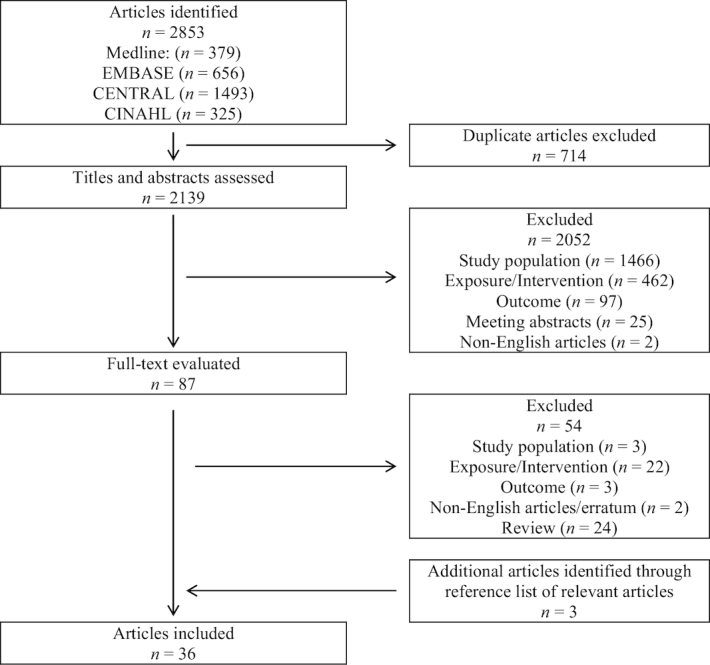
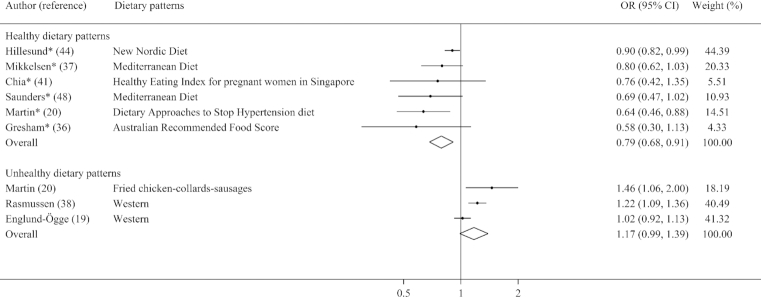
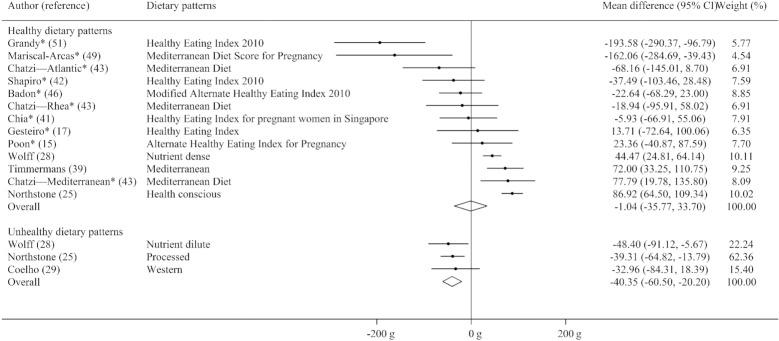
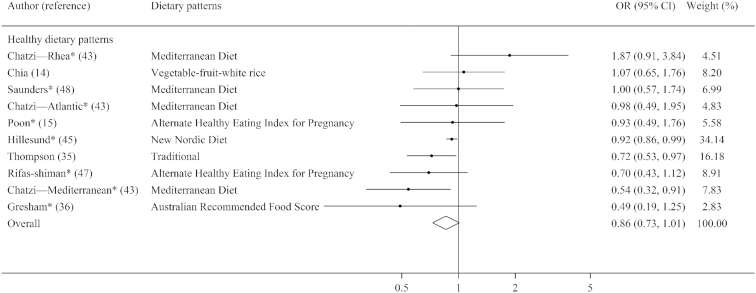
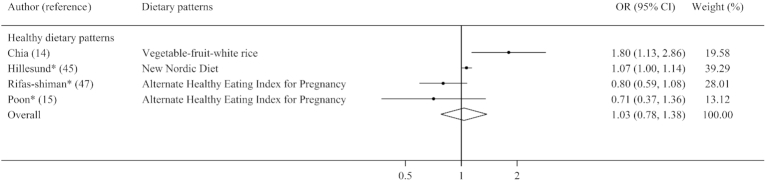
Findings on the relations of maternal dietary patterns during pregnancy and risk of preterm birth and offspring birth size remain inconclusive. We aimed to systematically review and quantify these associations. We searched MEDLINE, Embase, CENTRAL, and CINAHL up to December 2017. Three authors independently conducted a literature search, study selection, data extraction, and quality assessment. Summary effect sizes were calculated with random effects models and studies were summarized narratively if results could not be pooled. We included 36 studies and pooled results from 25 observational studies (167,507 participants). Two common dietary patterns-"healthy" and "unhealthy"-were identified. Healthy dietary patterns-characterized by high intakes of vegetables, fruits, wholegrains, low-fat dairy, and lean protein foods-were associated with lower risk of preterm birth (OR for top compared with bottom tertile: 0.79; 95% CI: 0.68, 0.91; I2 = 32%) and a weak trend towards a lower risk of small-for-gestational-age (OR: 0.86; 95% CI: 0.73, 1.01; I2 = 34%). Only statistically data-driven healthy dietary patterns, and not dietary index-based patterns, were associated with higher birth weight (mean difference: 67 g; 95% CI: 37, 96 g; I2 = 75%). Unhealthy dietary patterns-characterized by high intakes of refined grains, processed meat, and foods high in saturated fat or sugar-were associated with lower birth weight (mean difference: -40 g; 95% CI: -61, -20 g; I2 = 0%) and a trend towards a higher risk of preterm birth (OR: 1.17; 95% CI: 0.99, 1.39; I2 = 76%). Data from observational studies indicate that greater adherence to healthy dietary patterns during pregnancy is significantly related to lower risk of preterm birth. No consistent associations with birth weight and small- or large-for-gestational-age were observed.
Overview
The claims and statistics of this paper haven’t been checked yet.
Free: it reads the open-access text and checks the first 5 claims that cite a source we can check. Create a free account to check every claim.
Integrity signals
Registry
Cites
Statistics
Figures
Verification
Claims the paper makes
The claims and statistics of this paper haven’t been checked yet.
Free: it reads the open-access text and checks the first 5 claims that cite a source we can check. Create a free account to check every claim.
Self-check
Percentages, sums and reported differences re-computed from the paper’s own numbers.
The self-check needs the paper’s full text.
Citations
Cites
Preferred Reporting Items for Systematic Reviews and Meta-Analyses: the PRISMA statement
Moher, D., Liberati, A., Tetzlaff, J., Altman, D. G., & for the PRISMA Group (2009) · BMJ · doi:10.1136/bmj.b2535 · Cited by 83,823
Preferred reporting items for systematic reviews and meta-analyses: the PRISMA Statement.
(2009) · PubMed Central · Cited by 44,859
Preferred reporting items for systematic reviews and meta-analyses: The PRISMA statement
Moher, D., Liberati, A., Tetzlaff, J., Altman, D. G., & the PRISMA Group* (2009) · Annals of Internal Medicine · doi:10.7326/0003-4819-151-4-200908180-00135 · Cited by 37,554
Cochrane Handbook for Systematic Reviews of Interventions: Cochrane Book Series
(2008) · doi:10.1002/9780470712184 · Cited by 25,048 · cited 2×
“Publication bias was assessed by visual inspection of a funnel plot and Egger’s test (34).”
Stang, A. (2010) · European Journal of Epidemiology · doi:10.1007/s10654-010-9491-z · Cited by 17,396 · cited 4×
“All studies except for 5 (24, 25, 28, 48, 49) were of high quality (NOS score ≥ 7) (Supplemental Table 1).”
InfluentialCicchetti, D. V. (1994) · Psychological Assessment · doi:10.1037/1040-3590.6.4.284 · Cited by 9,349 · cited 1×
“The inter-rater agreement for each subscale was reasonably good (intraclass correlation coefficient values between 0.75 and 0.93) (13).”
InfluentialEpidemiology and causes of preterm birth
Goldenberg, R. L., Culhane, J. F., Iams, J. D., & Romero, R. (2008) · The Lancet · doi:10.1016/s0140-6736(08)60074-4 · Cited by 7,801
Cochrane Handbook for Systematic Reviews of Interventions
Tarsilla, M. (2010) · Journal of MultiDisciplinary Evaluation · doi:10.56645/jmde.v6i14.284 · Cited by 5,178
Blencowe, H., Cousens, S., Oestergaard, M. Z., Chou, D., Moller, A.-B., Narwal, R., Adler, A., Vera Garcia, C., Rohde, S., Say, L., et al. (2012) · The Lancet · doi:10.1016/s0140-6736(12)60820-4 · Cited by 4,568
Dietary pattern analysis: a new direction in nutritional epidemiology
Hu, F. B. (2002) · Current Opinion in Lipidology · doi:10.1097/00041433-200202000-00002 · Cited by 4,029 · cited 1×
“Furthermore, if certain dietary components of the index-based dietary pattern are not relevant to birth weight (72) or if most people are not meeting dietary recommendations, the association between the given index and birth weight could be attenuated (73).”
Research works printed but not linked: 1
- Dietary Guidelines Advisory Committee Scientific report of the 2015 Dietary Guidelines Advisory Committee. Washington (DC): USDA and US Department of Health and Human Services, 2015. PMC4717899 26773024
Cited by
Maternal exposures and the infant gut microbiome: a systematic review with meta-analysis
Grech, A., Collins, C. E., Holmes, A., Lal, R., Duncanson, K., Taylor, R., & Gordon, A. (2021) · Gut Microbes · doi:10.1080/19490976.2021.1897210 · Cited by 186
Welch, B. M., Keil, A. P., Buckley, J. P., Calafat, A. M., Christenbury, K. E., Engel, S. M., O’Brien, K. M., Rosen, E. M., James-Todd, T. M., Zota, A. R., et al. (2022) · Archives of Pediatrics and Adolescent Medicine · doi:10.1001/jamapediatrics.2022.2252 · Cited by 113
Tian, M., Li, Q., Zheng, T., Yang, S., Chen, F., Guan, W., & Zhang, S. (2023) · Gut Microbes · doi:10.1080/19490976.2023.2206505 · Cited by 108
Abdollahi, S., Soltani, S., de Souza, R. J., Forbes, S. C., Toupchian, O., & Salehi-Abargouei, A. (2021) · Advances in Nutrition · doi:10.1093/advances/nmaa156 · Cited by 91
“A meta-analysis (2017) of 25 studies showed that a healthy maternal diet is associated with higher birth weight and lower risk of preterm birth, while unhealthy diets were associated with lower birth weight (36).”
BackgroundDai, X., Guo, Z., Chen, D., Li, L., Song, X., Liu, T., Jin, G., Li, Y., Liu, Y., Ajiguli, A., et al. (2020) · Gut Microbes · doi:10.1080/19490976.2020.1738187 · Cited by 97
“” It is widely believed that maternal diet is associated with progeny’s body weight gain and obesity.(33,34) However, the effects of sucralose on the weight gain were not fully consistent in previous studies.”
ResultChen, L., Aubert, A. M., Shivappa, N., Bernard, J. Y., Mensink‐Bout, S. M., Geraghty, A. A., Mehegan, J., Suderman, M. J., Polańska, K., Hanke, W., et al. (2021) · PLoS Medicine · doi:10.1371/journal.pmed.1003491 · Cited by 88
“There have been recent comprehensive systematic reviews (without [20] or with [21] metaanalysis) on maternal dietary patterns and birth outcomes.”
BackgroundResultInfluentialSelf-citationPaula, W. O., Patriota, É. S. O., Gonçalves, V. S. S., & Pizato, N. (2022) · Nutrients · doi:10.3390/nu14153242 · Cited by 90
“[26] reported that unhealthy dietary patterns, characterized by high intakes of refined grains, processed meat, and foods high in saturated fat or sugar, were associated with lower birth weight and a trend towards a higher risk of preterm birth.”
BackgroundSchwingshackl, L., Balduzzi, S., Beyerbach, J., Bröckelmann, N., Werner, S. S., Zähringer, J., Nagavci, B., & Meerpohl, J. J. (2021) · BMJ · doi:10.1136/bmj.n1864 · Cited by 70
Dolin, C. D., Compher, C. W., Oh, J. K., & Durnwald, C. P. (2021) · American Journal of Obstetrics & Gynecology MFM · doi:10.1016/j.ajogmf.2021.100378 · Cited by 73
Saunders, C. M., Rehbinder, E. M., Carlsen, K. C. L., Gudbrandsgard, M., Carlsen, K., Haugen, G. N., Hedlin, G., Jonassen, C. M., Sjøborg, K., Landrø, L., et al. (2019) · Food & Nutrition Research · doi:10.29219/fnr.v63.3676 · Cited by 69
“Excessive consumption of saturated fat and low intakes of omega 3 fatty acids have been linked to adverse health outcomes in both mother and child (37, 38).”
BackgroundBorge, T. C., Biele, G., Papadopoulou, E., Andersen, L. F., Jacka, F. N., Eggesbø, M. Å., Caspersen, I. H., Aase, H., Meltzer, H. M., & Brantsæter, A. L. (2021) · BMC Psychiatry · doi:10.1186/s12888-021-03130-4 · Cited by 65
“This is in line with recent findings investigating maternal dietary patterns and birth outcomes, which found stronger associations with preterm birth for the healthy pattern compared to the unhealthy, and the opposite trend for birth weight [72], but only for data driven patterns, and not a-priori defined indices that…”
ResultLecorguillé, M., Teo, S. M., & Phillips, C. M. (2021) · Nutrients · doi:10.3390/nu13093130 · Cited by 69
“, sugar-sweetened beverages and fruit juice), both of which have been associated with pro-inflammatory states and the risk of overnutrition coming from excess prenatal sugar intakes [67,68].”
BackgroundSamuel, T. M., Sakwińska, O., Makinen, K., Burdge, G. C., Godfrey, K. M., & Silva‐Zolezzi, I. (2019) · Nutrients · doi:10.3390/nu11081811 · Cited by 62
Maternal diet patterns during early pregnancy in relation to neonatal outcomes
Yisahak, S. F., Mumford, S. L., Grewal, J., Li, M., Zhang, C., Grantz, K. L., & Hinkle, S. N. (2021) · American Journal of Clinical Nutrition · doi:10.1093/ajcn/nqab019 · Cited by 52
“Previous studies on the relation between maternal diet and neonatal outcomes have relied on these approaches (14).”
BackgroundGoodfellow, L., Care, A., & Alfirević, Ž. (2020) · BJOG An International Journal of Obstetrics & Gynaecology · doi:10.1111/1471-0528.16544 · Cited by 40
Kotoh, A. M., Amekudzie, B. S., Opoku-Mensah, K., Baku, E. A., & Glozah, F. N. (2022) · BMC Public Health · doi:10.1186/s12889-022-13318-2 · Cited by 48
“These often results in adverse pregnancy and birth outcomes such as stillbirth, preterm birth, neonatal death, congenital anomaly, and low birth weight [32].”
BackgroundDietary Patterns and Cardiovascular Diseases in Asia: A Systematic Review and Meta-Analysis
Lim, G. H., Neelakantan, N., Lee, Y. Q., Park, S. H., Kor, Z. H., van Dam, R. M., Chong, M. F., & Chia, A. (2024) · Advances in Nutrition · doi:10.1016/j.advnut.2024.100249 · Cited by 51
Self-citationFrancis, E. C., Dabelea, D., Shankar, K., & Perng, W. (2021) · Diabetologia · doi:10.1007/s00125-021-05533-0 · Cited by 40
“Prior studies have reported an inverse association of HEI with neonatal adiposity and birthweight [11, 12, 42, 62].”
BackgroundYang, J., Wang, M., Tobias, D. K., Rich-Edwards, J. W., Darling, A. M., Abioye, A. I., Noor, R. A., Madzorera, I., & Fawzi, W. W. (2021) · Maternal and Child Nutrition · doi:10.1111/mcn.13300 · Cited by 44
“While consuming foods of diverse sources may benefit micronutrient sufficiency, the choice of foods is relevant to maternal diet quality and its influence on birth outcomes (Abu‐Saad & Fraser, 2010; Chia et al., 2019).”
BackgroundFruit and Vegetable Dietary Patterns and Mental Health in Women: A Systematic Review
Guzek, D., Głąbska, D., Groele, B., & Gutkowska, K. (2021) · Nutrition Reviews · doi:10.1093/nutrit/nuab007 · Cited by 40
Appleton, A. A., Lin, B., Holdsworth, E. A., Feingold, B. J., & Schell, L. M. (2021) · International Journal of Environmental Research and Public Health · doi:10.3390/ijerph18116161 · Cited by 38
“Several studies have shown that prenatal depression [13], diet [14,15], smoking [16], body mass and weight gain [17–19], and pregnancy morbidities [8] can influence birth outcomes, with some evidence that these factors may mediate associations between neighborhood conditions and birth outcomes [20–23].”
BackgroundSoltani, S., Salari-Moghaddam, A., Saneei, P., Askari, M., Larijani, B. A., Azadbakht, L., & Esmaillzadeh, A. (2021) · Critical Reviews in Food Science and Nutrition · doi:10.1080/10408398.2021.1945532 · Cited by 38
“Dietary intakes of pregnant women has also been given a major role in this regard (Chia et al. 2019).”
BackgroundDemilew, Y. M., Alene, G. D., & Belachew, T. (2020) · Nutrition Journal · doi:10.1186/s12937-020-00536-w · Cited by 40
Deierlein, A. L., Ghassabian, A., Kahn, L. G., Afanasyeva, Y., Mehta‐Lee, S. S., Brubaker, S. G., & Trasande, L. (2021) · Frontiers in Nutrition · doi:10.3389/fnut.2021.639425 · Cited by 34
Mei, X., Li, Y., Zhang, X., Zhai, X., Yang, Y., Li, Z., & Li, L. (2024) · Journal of Agricultural and Food Chemistry · doi:10.1021/acs.jafc.3c06370 · Cited by 33
Hinkle, S. N., Zhang, C., Grantz, K. L., Sciscione, A. C., Wing, D. A., Grobman, W. A., Newman, R., D’Alton, M. E., Skupski, D. W., Nageotte, M. P., et al. (2020) · Current Developments in Nutrition · doi:10.1093/cdn/nzaa182 · Cited by 32
“In addition, greater dietary quality has also been associated with a lower risk for preterm delivery (10).”
BackgroundOkubo, H., & Nakayama, S. F. (2023) · Environment International · doi:10.1016/j.envint.2023.107808 · Cited by 29
Oulerich, Z., & Sferruzzi-Perri, A. N. (2024) · American Journal of Physiology-Renal Physiology · doi:10.1152/ajprenal.00383.2023 · Cited by 32
Dietary Patterns during Pregnancy and Gestational Weight Gain: A Systematic Review
Ferreira, L. B., Lobo, C. V., Miranda, A. E. D. S., Carvalho, B. D. C., & Santos, L. C. D. (2022) · Revista Brasileira de Ginecologia e Obstetrícia / RBGO Gynecology and Obstetrics · doi:10.1055/s-0042-1744290 · Cited by 25
Ultra-processed food (UPF) intake in pregnancy and maternal and neonatal outcomes
Avraham, S. B., Kohn, E., Tepper, S., Lubetzky, R., Mandel, D., Berkovitch, M., & Shahar, D. R. (2023) · European Journal of Nutrition · doi:10.1007/s00394-022-03072-x · Cited by 31
de Freitas, N. P. A., Carvalho, T. R., Gonçalves, C. C. R. A., da Silva, P. H. A., Romão, L. G. D. M., Kwak-Kim, J. Y.-H., & Cavalcante, M. B. (2022) · Journal of Reproductive Immunology · doi:10.1016/j.jri.2022.103651 · Cited by 31
Endocrine disruption and male reproductive disorders: unanswered questions
Sharpe, R. M. (2024) · Human Reproduction · doi:10.1093/humrep/deae143 · Cited by 27
“…plays in foetal growth, and thus foetal testis development, bearing in mind the evidence that links impaired foetal growth to maternal diet (Chia et al. , 2019), lifestyle (Reijnders et al. , 2019), EDC exposures (Ferguson et al. , 2014; Ferguson and Chin, 2017; Waterfield et al. , 2020),…”
BackgroundGaupšienė, A., Vainauskaitė, A., Baglajeva, J., Stukas, R., Ramašauskaitė, D., Paliulytė, V., & Istomina, N. (2023) · European Journal of Midwifery · doi:10.18332/ejm/170161 · Cited by 34
“Chia et al. 18 indicate in their study that mothers with healthy eating habits delivered babies with greater birth weight, while mothers with unhealthy eating patterns gave birth to babies with lower birth weight.”
BackgroundCanavan, C. R., D’cruze, T., Kennedy, M. A., Hatchell, K. E., Boardman, M., Suresh, A., Goodman, D., & Dev, A. (2022) · BMC Nutrition · doi:10.1186/s40795-022-00499-7 · Cited by 26
“Food insecurity can impact dietary quality during pregnancy, which also contributes to negative maternal health and birth outcomes [7–9].”
BackgroundConcina, F., Pani, P., Carletti, C. V., Rosolen, V., Knowles, A., Parpinel, M. T., Ronfani, L., Mariuz, M., Brumatti, L. V., Valent, F., et al. (2021) · Nutrients · doi:10.3390/nu13051434 · Cited by 24
“These have been linked to adverse health outcomes in both mothers and children [31,32], as opposed”
BackgroundDai, X., Wang, C., Guo, Z., Li, Y., Liu, T., Jin, G., Wang, S., Wang, B., Jiang, K., & Cao, H. (2021) · Food & Function · doi:10.1039/d1fo02921e · Cited by 23
Neupane, S., Scott, S., Piwoz, E., Kim, S. S., Menon, P., & Nguyen, P. H. (2023) · PLOS Global Public Health · doi:10.1371/journal.pgph.0001991 · Cited by 26
Tareke, A. A., Melak, E. G., Mengistu, B. K., Hussen, J., & Molla, A. (2024) · BMC Nutrition · doi:10.1186/s40795-024-00960-9 · Cited by 18
Santana, J. D. M., Queiroz, V. A. D. O., Pereira, M. E., Paixão, E. S., Brito, S. M., dos Santos, D. B., & Oliveira, A. M. (2021) · Nutrients · doi:10.3390/nu13114054 · Cited by 29
“A recent systematic review with evidence of observational studies involving 167,507 women recorded that adhesion to unhealthy diets composed of refined grains, processed meat, and sources of saturated fat and sugar during pregnancy was associated with a lower birth weight and higher chance of prematurity [16].”
BackgroundLow vegetable intake in pregnancy and associated maternal factors: A scoping review
Simmons, K., Meloncelli, N. J. L., Kearney, L. N., & Maher, J. H. (2022) · Nutrition Research · doi:10.1016/j.nutres.2021.12.004 · Cited by 20
Prevention of Pregnancy Complications Using a Multimodal Lifestyle, Screening, and Medical Model
Parker, J., Hofstee, P., & Brennecke, S. P. (2024) · Journal of Clinical Medicine · doi:10.3390/jcm13154344 · Cited by 33
“A systematic review found that unhealthy dietary patterns (high intakes of refined grains, processed meat, high saturated fat, or sugar) were associated with lower birth weight (mean difference: − 40 g; 95% CI: − 61 to − 20 g) [105].”
BackgroundInfluentialHart, K. H., Hill, A., Gonzalez, J. T., de la Hunty, A., Gallagher, A. M., & Stanner, S. A. (2025) · Nutrition Bulletin · doi:10.1111/nbu.70016 · Cited by 33
“…both before and during pregnancy, has been linked to improved micronutrient intake (Tanha et al. 2013), prevention of excessive GWG (Muktabhant et al. 2015) and a number of better maternal and offspring outcomes (Chia et al. 2019; Raghavan et al. 2019; Lecorguillé et al. 2023; Mou et al. 2024).”
Environmental Exposure: Effect on Maternal Morbidity and Mortality and Neonatal Health
Kumari, U., Sharma, R. K., Keshari, J. R., & Sinha, A. (2023) · Cureus · doi:10.7759/cureus.38548 · Cited by 31
“Supplementation of vitamins, iron-fortified diets, and other nutritional factors remains the only option to manage such situations [95-97].”
BackgroundMaternal diet and offspring telomere length: a systematic review
Habibi, N., Bianco‐Miotto, T., Phoi, Y. Y., Jankovic‐Karasoulos, T., Roberts, C. T., & Grieger, J. A. (2020) · Nutrition Reviews · doi:10.1093/nutrit/nuaa097 · Cited by 17
de Seymour, J. V., Beck, K. L., Conlon, C. A., Jones, M. B., Colombo, J. A., Xia, Y., Han, T.-L., Qi, H., Zhang, H., & Baker, P. N. (2022) · Frontiers in Nutrition · doi:10.3389/fnut.2022.775557 · Cited by 26
Chen, T., Cheng, S., Gau, M., & Lin, L. (2022) · Nutrients · doi:10.3390/nu14163429 · Cited by 20
“The quantities recorded for the food items are also prone to bias [8] because individuals generally do not describe food portions accurately, and there are substantial within-subject variations in the indication of food quantities [48].”
BackgroundInfluentialConstruction of the experimental rat model of gestational diabetes
Chen, F., Ge, L., Jiang, X.-Y., Lai, Y.-T., Huang, P., Hua, J., Lin, Y., Lin, Y., & Jiang, X. (2022) · PLoS ONE · doi:10.1371/journal.pone.0273703 · Cited by 22
“The high-fat and high-sugar (HFHS) diet is thus widely used because it can not only simulate the unhealthy dietary mode of humans [6] and induce the apparent symptoms of hyperglycemia and hyperinsulinemia in rats but also cause obesity, reduce the sensitivity of insulin target organs to insulin, thereby inducing insul…”
BackgroundBoah, M., Abdulai, N., Issah, A.-N., Yeboah, D., Kpordoxah, M. R., Aballo, J., & Adokiya, M. N. (2023) · Heliyon · doi:10.1016/j.heliyon.2023.e15391 · Cited by 19
Mishra, K. G., Bhatia, V., & Nayak, R. (2020) · Clinical Nutrition Research · doi:10.7762/cnr.2020.9.3.213 · Cited by 22
“However, studies pertaining to dietary intake throughout gestation in Indian women are insufficient and those available were mostly cross-sectional in nature [16].”
BackgroundDietary intake profile in high-risk pregnant women according to the degree of food processing
Paulino, D. S. M., Pinho‐Pompeu, M., de Assumpção, D., Kasawara, K. T., & Surita, F. G. (2020) · The Journal of Maternal-Fetal & Neonatal Medicine · doi:10.1080/14767058.2020.1818213 · Cited by 20
Schwedhelm, C., Lipsky, L. M., Shearrer, G. E., Betts, G. M., Liu, A., Iqbal, K., Faith, M. S., & Nansel, T. R. (2021) · International Journal of Behavioral Nutrition and Physical Activity · doi:10.1186/s12966-021-01172-1 · Cited by 16
Bai, G., Korfage, I. J., Mautner, E., & Raat, H. (2019) · International Journal of Environmental Research and Public Health · doi:10.3390/ijerph16214243 · Cited by 16
“As suggested by previous studies, healthy dietary patterns may be associated with a lower risk of adverse birth outcomes [39].”
Dynamic changes in the pregnancy microbiome and their role in preterm birth
Xie, Z., Chen, Z., & Ma, G. (2025) · Frontiers in Cellular and Infection Microbiology · doi:10.3389/fcimb.2025.1683610 · Cited by 21
Nagel, E., Jacobs, D. R., Johnson, K. E., Foster, L., Duncan, K. M., Kharbanda, E. O., Gregg, B. E., Harnack, L., Fields, D. A., & Demerath, E. W. (2021) · Journal of Nutrition · doi:10.1093/jn/nxab101 · Cited by 20
Maldonado, L. E., Bastain, T. M., Toledo‐Corral, C. M., Dunton, G. F., Habre, R., Eckel, S. P., Yang, T., Grubbs, B. H., Chavez, T., Al-Marayati, L. A., et al. (2024) · Journal of the American Heart Association · doi:10.1161/jaha.123.029848 · Cited by 23
“Furthermore, we believe differential dietary misclassification is not significantly impacting our findings based on the robustness of our findings after excluding pregnant women with prepregnancy hypertension and history of preeclampsia (Table S2) and their consistency with previous work demonstrating similar dietary…”
BackgroundMethodInfluentialBallon, M., Botton, J., Forhan, A., de Lauzon‐Guillain, B., Melchior, M., El-Khoury, F., Nakamura, A., Charles, M.-A. A., Lioret, S., & Heude, B. (2019) · Maternal and Child Nutrition · doi:10.1111/mcn.12878 · Cited by 15
“Indeed, healthy dietary patterns during pregnancy have been shown to be positively associated with birth weight (Chia et al., 2019; Emmett, Jones, & Northstone, 2015).”
Fat-soluble nutrients and Omega-3 fatty acids as modifiable factors influencing preterm birth risk
Thoene, M. K., Ormer, M. V., Yuil-Valdes, A. G., Bruett, T., Natarajan, S. K., Mukherjee, M. S., Thompson, M. K., Nordgren, T. M., Lippevelde, W. V., Øverby, N. C., et al. (2019) · Placenta · doi:10.1016/j.placenta.2019.12.002 · Cited by 13
“91) compared to an “unhealthy” diet (high intake of refined grains, processed meats, foods high in sugar or saturated fat) [8].”
BackgroundChe, X., Gross, S. M., Wang, G., Hong, X., Pearson, C., Bartell, T. R., & Wang, X. (2023) · PubMed Central · doi:10.1097/pn9.0000000000000047 · Cited by 14
“[26] Many studies have explored the association of maternal dietary patterns with birth outcomes.[27] However, despite the potential of a MSD to improve maternal inflammatory status and to affect the neurodevelopment of the offspring, studies of the effects of maternal MSD on NDD have been limited.”
BackgroundSleep duration trajectories and cognition in early childhood: A systematic review
Tham, E. K. H., Jafar, N. K. A., Koh, C. T., Goh, D. Y. T., Broekman, B. F. P., & Cai, S. (2024) · Sleep Medicine Reviews · doi:10.1016/j.smrv.2024.101912 · Cited by 17
Zhang, Y., Huang, W., Xu, R., Ye, T., Chen, G., Yue, X., Coêl, M. D. S. Z. S., Saldiva, P. H. N., Song, J., Guo, Y., et al. (2024) · Journal of Hazardous Materials · doi:10.1016/j.jhazmat.2024.136290 · Cited by 16
Yan, H., Dang, S., Zhang, Y., & Luo, S. (2020) · Nutrition Journal · doi:10.1186/s12937-020-00607-y · Cited by 19
Maternal diet quality moderates associations between parabens and birth outcomes
Pacyga, D. C., Talge, N. M., Gardiner, J. C., Calafat, A. M., Schantz, S. L., & Strakovsky, R. S. (2022) · Environmental Research · doi:10.1016/j.envres.2022.114078 · Cited by 21
Díaz‐López, A., Díaz-Torres, S., Martín‐Luján, F., Basora, J., & Arija, V. (2022) · Scientific Reports · doi:10.1038/s41598-022-17957-8 · Cited by 16
“Caesarean 86 (14) 35 (13) 28 (15) 23 (17)”
Pregnancy‐specific dietary guidelines for Americans are not met: Findings from a pilot study
Habbal, N. E., Filatava, E. J., Overton, N. E., Gregas, M., & Gregory, K. E. (2023) · Reproductive Female and Child Health · doi:10.1002/rfc2.63 · Cited by 12
Al-Bayyari, N. S., Sabbah, H. A., Hailat, M., AlDahoun, H., & Abu-Samra, H. (2024) · BMC Public Health · doi:10.1186/s12889-024-19294-z · Cited by 30
“However, consuming diverse food sources may ensure micronutrient adequacy; the choice of foods is pertinent to maternal diet quality and its impact on birth outcomes [14].”
BackgroundEsquivel, M. K. (2021) · American Journal of Lifestyle Medicine · doi:10.1177/15598276211004082 · Cited by 12
“This dietary pattern is associated with a modest risk reduction in poor pregnancy outcomes, but low socioeconomic and minority groups are underrepresented in research studies, limiting generalizability of findings and ability to draw conclusions.(9) In addition to this healthful eating pattern, diet diversity is also…”
BackgroundEffects of Dietary Patterns during Pregnancy on Preterm Birth: A Birth Cohort Study in Shanghai
Wang, Z., Zhao, S., Cui, X., Song, Q., Shi, Z., Su, J., & Zang, J. (2021) · Nutrients · doi:10.3390/nu13072367 · Cited by 12
“The systematic review including 36 studies on maternal dietary patterns and preterm birth identified two basic dietary patterns: healthy and unhealthy [29].”
BackgroundCan Synbiotic Dietary Pattern Predict Lactobacillales Strains in Breast Milk?
Bahreini, N., & Moravejolahkami, A. R. (2020) · Breastfeeding Medicine · doi:10.1089/bfm.2019.0301 · Cited by 14
“Maternal dietary pattern identification has been the center of attention in today’s scientific works; more specifically, dietary-related associations with birth outcomes 24 and infant’s immune system 25 are the newest scientific projects in developed countries.”
Raab, R., Hoffmann, J., Spies, M., Geyer, K., Meyer, D. M., Günther, J., & Hauner, H. (2022) · BMC Pregnancy and Childbirth · doi:10.1186/s12884-022-04513-5 · Cited by 20
“In line with our findings, recent systematic reviews [31, 62, 63] have found that healthier dietary patterns, characterised by a high intake of vegetables, fruits and whole grains, reduce the risk of preterm birth, while unhealthier western-type dietary patterns had the opposite effect [64].”
ResultAssociations of maternal dietary patterns during pregnancy and fetal intrauterine development
Qin, R., Ye, D., Lü, Q., Jiang, Y., Du, J., Song, C., Lv, H., Lv, S., Tao, S., Huang, L., et al. (2022) · Frontiers in Nutrition · doi:10.3389/fnut.2022.985665 · Cited by 16
Barchitta, M., Lio, R. M. S., Rosa, M. C. L., Mastra, C. L., Favara, G., Ferrante, G., Galvani, F., Pappalardo, E., Ettore, C., Ettore, G., et al. (2023) · Nutrients · doi:10.3390/nu15081922 · Cited by 15
“There was consistent evidence that certain dietary patterns may affect the risk of PTB [60,61].”
BackgroundMethodResultInfluentialLee, Y. Q., Lumbers, E. R., Schumacher, T. L., Collins, C. E., Rae, K. M., Pringle, K. G., & Gomeroi Gaaynggal Advisory Committee (2021) · Nutrients · doi:10.3390/nu13020569 · Cited by 14
Ferreira, L. B., Lobo, C. V., do Carmo, A. S., Souza, R. C. V. E., & dos Santos, L. C. (2022) · Maternal and Child Health Journal · doi:10.1007/s10995-022-03392-8 · Cited by 17
“Moreover, healthy dietary patterns composed primarily of vegetables, legumes, fruits, whole grains, low-fat dairy, lean protein, fish and seafood, along with physical activity during pregnancy could reduce the chance of inadequate GWG, premature births and reduce the risk of “small for gestational age” newborns (Cano-…”
BackgroundPreterm Birth and Its Association with Maternal Diet, and Placental and Neonatal Telomere Length
Lis, N., Lamnisos, D., Tzanetakou, A. B. , Hadjimbei, E., & Tzanetakou, I. P. (2023) · Nutrients · doi:10.3390/nu15234975 · Cited by 15
“In contrast, adherence to a Mediterranean and/or healthy diet pattern during pregnancy appears to be associated with a reduced risk of PTB [129,130].”
BackgroundMaternal dietary patterns during pregnancy and birth weight: a prospective cohort study
Li, T., He, Y., Wang, N., Feng, C., Zhou, P., Qi, Y., Wang, Z., Lin, X., Mao, D., Sun, Z., et al. (2024) · Nutrition Journal · doi:10.1186/s12937-024-01001-8 · Cited by 14
“Existing studies on the relationship between maternal dietary patterns and birth outcomes have mainly focused on low birth weight, rather than macrosomia, and shown large inconsistencies in findings [13, 38–41].”
ResultThomson, R. L., Brown, J. D., Oakey, H., Palmer, K. R., Ashwood, P., Penno, M. A. S., McGorm, K. J., Battersby, R., Colman, P. G., Craig, M. E., et al. (2024) · Diabetologia · doi:10.1007/s00125-024-06259-5 · Cited by 12
Campbell, G. J., Fisher, S. L., Brandon, A. E., Senior, A. M., & Bell-Anderson, K. S. (2022) · Frontiers in Nutrition · doi:10.3389/fnut.2022.917880 · Cited by 10
Dietary patterns and birth outcomes of healthy Lebanese pregnant women
Papazian, T., Salameh, P., Tayeh, G. A., Kesrouani, A. K., Aoun, C., Diwan, M. A., & Khabbaz, L. R. (2022) · Frontiers in Nutrition · doi:10.3389/fnut.2022.977288 · Cited by 14
Mitran, A.-M., Gherasim, A., Niță, O., Mihalache, L., Arhire, L. I., Cioancă, O., Gafițanu, D., & Popa, A. D. (2024) · Nutrients · doi:10.3390/nu16030377 · Cited by 14
“Unhealthy eating has been linked to an elevated risk of premature birth or the birth of newborns with low birth weight [32].”
BackgroundThe extent to which the domestic conditions of cocoa farmers in Bougainville impede livelihoods
Walton, M., Hall, J., van Ogtrop, F., Guest, D. I., Black, K. I., Beardsley, J., Totavun, C., & Hill-Cawthorne, G. A. (2020) · One Health · doi:10.1016/j.onehlt.2020.100142 · Cited by 10
“[33,34] Both the lack of quantity and quality of foods within these communities' diets suggests the need for more interdisciplinary One Health approaches to improve crop management and crop diversity as well as community-based education about healthy diets.”
BackgroundFang, X., Xie, Y., Cao, S., Liu, J., Shi, Y., Yu, L., Zheng, T., Liu, H., Li, Y., Xu, S., et al. (2023) · The Science of The Total Environment · doi:10.1016/j.scitotenv.2023.169222 · Cited by 11
Mitran, A.-M., Popa, A. D., Gherasim, A., Niță, O., Mihalache, L., Arhire, L. I., Gafițanu, D., Hăncianu, M., & Cioancă, O. (2024) · Nutrients · doi:10.3390/nu16111736 · Cited by 13
“The healthy patterns were significantly associated with a reduced risk of preterm birth, while unhealthy patterns were associated with a lower birth weight [24].”
BackgroundMethodLandry, M. J., Ward, C., Koh, L. M., & Gardner, C. D. (2024) · Frontiers in Nutrition · doi:10.3389/fnut.2024.1381132 · Cited by 10
Altered dietary behaviour during pregnancy impacts systemic metabolic phenotypes
Rowley, C. E., Lodge, S., Egan, S. L., Itsiopoulos, C., Christophersen, C. T., Silva, D. T., Kicic‐Starcevich, E., O’Sullivan, T. A., Wist, J., Nicholson, J. K., et al. (2023) · Frontiers in Nutrition · doi:10.3389/fnut.2023.1230480 · Cited by 11
Rainford, M., Barbour, L. A., Birch, D., Catalano, P. M., Daniels, E., Gremont, C., Marshall, N., Wharton, K., & Thornburg, K. L. R. (2024) · Annals of the New York Academy of Sciences · doi:10.1111/nyas.15122 · Cited by 14
Beressa, G., Whiting, S. J., & Belachew, T. (2024) · Scientific Reports · doi:10.1038/s41598-024-70861-1 · Cited by 19
Fotă, A., & Petca, A. T. (2025) · Medical Sciences · doi:10.3390/medsci13030144 · Cited by 20
“A 2019 systematic review and meta-analysis published by Chia et al. [66] included 36 studies discussing dietary patterns of 167,507 participants and revealed that “healthy” diets rich in fruits, vegetables, whole grains, low-fat dairy, and lean proteins were associated with a weak trend toward…”
Michita, R. T., Jimenez, N. R., Herbst‐Kralovetz, M. M., & Mysorekar, I. U. (2026) · Infection and Immunity · doi:10.1128/iai.00608-25 · Cited by 10
Maternal Dietary Inflammatory Potential and Offspring Birth Outcomes in a Chinese Population
Zhang, B., Xu, K., Mi, B., Liu, H., Wang, Y., Huo, Y., Ma, L., Liu, D., Jing, H., Liu, J., et al. (2023) · Journal of Nutrition · doi:10.1016/j.tjnut.2023.03.006 · Cited by 13
Dietary patterns and birth outcomes in the ELSPAC pregnancy cohort
Mikeš, O., Brantsæter, A. L., Knutsen, H. K., Torheim, L. E., Vašků, J. B., Pruša, T., Čupr, P., Janák, K., Dušek, L., & Klánová, J. (2021) · Journal of Epidemiology & Community Health · doi:10.1136/jech-2020-215716 · Cited by 12
Maldonado, L. E., Farzan, S. F., Toledo‐Corral, C. M., Dunton, G. F., Habre, R., Eckel, S. P., Johnson, M., Yang, T., Grubbs, B. H., Lerner, D. L., et al. (2022) · Journal of Nutrition · doi:10.1093/jn/nxac209 · Cited by 12
Pervin, S., Emmett, P. M., Northstone, K., Townsend, N. P., Fatima, Y., Huda, M. M., McIntyre, D. H., & Mamun, A. A. (2023) · European Journal of Nutrition · doi:10.1007/s00394-023-03185-x · Cited by 12
Kumar, R., Kumar, S. S., Parasannanavar, D. J., Khandelwal, S., & Rajkumar, H. (2021) · British Journal Of Nutrition · doi:10.1017/s0007114521000982 · Cited by 10
Yu, Y., Hardy, I. S., Sun, W., Fergusson, D. A., Zhou, Y., Feng, C. X., Ouyang, F., Marc, I., Fraser, W. D., & Dubois, L. (2021) · doi:10.22541/au.163251147.74307797/v1 · Cited by 9
Sharma, S., Esposito, S., Di Castelnuovo, A., Gialluisi, A., De Domenico, P., de Gaetano, G., Bonaccio, M., & Iacoviello, L. (2025) · Nutrients · doi:10.3390/nu17101723 · Cited by 9
Maternal Fiber Intake and Perinatal Depression and Anxiety
Ebrahimi, N., Turner, T., Gallant, F., Chandrakumar, A., Kohli, R., Lester, R., Forte, V., & Cooley, K. (2024) · Nutrients · doi:10.3390/nu16152484 · Cited by 7
“Gestational Diet, Microbiome, and PDA Many studies have focused on maternal nutrition, pregnancy, and neonatal outcomes [26].”
BackgroundFikadu, T., Tamiru, D., & Ademe, B. W. (2024) · Frontiers in Nutrition · doi:10.3389/fnut.2024.1443227 · Cited by 11
“And improving the nutritional status of pregnant women through the promotion of dietary patterns, rather than a single-nutrient approach, provides greater overall benefits (18).”
BackgroundAssociations between maternal dietary scores during early pregnancy with placental outcomes
Teo, S. M., Murrin, C. M., Mehegan, J., Douglas, A., Hébert, J. R., Segurado, R., Kelleher, C. C., & Phillips, C. M. (2023) · Frontiers in Nutrition · doi:10.3389/fnut.2023.1060709 · Cited by 12
Pacyga, D. C., Haggerty, D. K., Gennings, C., Schantz, S. L., & Strakovsky, R. S. (2023) · American Journal of Clinical Nutrition · doi:10.1016/j.ajcnut.2023.05.020 · Cited by 11
Maternal and Fetal Outcomes Among Pregnant Women Exposed to Violence
Al-Marhabi, B. D., Faheem, W. A., Katooa, N. E., & Al-Nujaydi, A. A. (2023) · Cureus · doi:10.7759/cureus.44715 · Cited by 7
“…link between prenatal violence, PTB, and LBW, including the fact that abused women experience high levels of stress and poor mental health, which can result in poor nutrition habits and their consequences, including anemia, underweight, and poor gestational weight gain, which may cause LBW [33,34].”
Background
Metadata
- Authors
- Chia, A.-R., Chen, L.-W., Lai, J. S., Wong, C. H., Neelakantan, N., van Dam, R. M., & Chong, M. F.-F.
- Affiliations
- University College Dublin (IE)
- Agency for Science, Technology and Research (SG)
- National University of Singapore (SG)
- Corresponding author
- Chong, Mary Foong-Fong
- ORCID
- Venue
- Advances in Nutrition
- Publisher
- Elsevier BV
- Published
- 2019-07
- Volume
- 10
- Issue
- 4
- Pages
- 685-695
- ISSN
- 2156-5376 (ISSN-L)
- 2161-8313
- PMC
- PMC6628847
- OpenAlex
- W2942597709
- Cited by
- 271
- References
- 85
- Citations by year
- 2026: 31 · 2025: 33 · 2024: 55 · 2023: 37 · 2022: 39 · 2021: 46 · 2020: 23 · 2019: 5
- FWCI
- 3.35
- Type
- journal article
- Language
- en
- Open access
- hybrid
- doi.org
- Licence
- cc-by-nc
- www.elsevier.com/tdm/userlicense/1.0/ (tdm)
- www.elsevier.com/legal/tdmrep-license (tdm)
- creativecommons.org/licenses/by-nc/4.0/ (vor)
- Locations
- Advances in Nutrition (publishedVersion, cc-by-nc)
- PubMed Central (publishedVersion, cc-by-nc)
- PubMed (publishedVersion)
- National University of Singapore (submittedVersion)
- Topics
- Health Sciences › Medicine › Public Health, Environmental and Occupational Health › Nutritional Studies and Diet
- Health Sciences › Medicine › Pediatrics, Perinatology and Child Health › Birth, Development, and Health
- Health Sciences › Medicine › Pediatrics, Perinatology and Child Health › Maternal and Neonatal Healthcare
- Keywords
- maternal dietary patterns, pregnancy, preterm birth, birth weight, small for gestational age, large for gestational age, healthy eating patterns, unhealthy dietary patterns, dietary adherence, refined grains, processed meat, saturated fat, sugar, fruit and vegetable intake, whole grains, low-fat dairy, lean protein
- MeSH terms
- Diet, Healthy, Adult, Birth Weight, Diet, Feeding Behavior, Female, Gestational Age, Humans, Infant, Low Birth Weight, Infant, Newborn, Pregnancy, Risk Factors, Maternal Nutritional Physiological Phenomena, Premature Birth, Young Adult, Observational Studies as Topic
About these checks
Registry, retraction, Cites and statistics results are computed, not judged, with one exception: a printed reference that no index lists is read once by a model before it counts as a citation error. Claims are extracted by a model and kept only when their quote appears verbatim in the text; each cited source is then checked, with a model’s help, for whether it says what the claim relies on. Those verdicts can be wrong — read the claim’s quote and the cited source before relying on one.
Statistics and arithmetic are recomputed, not judged.
Confidence bands are shown only for fields calibrated on our annotated test set. None is calibrated yet, so no band is shown.
What counts as a claim ›How we measure confidence ›How we check this ›
Are you an author, or do you see a problem with this page? Request a review
Data sources
Bibliographic data: Semantic Scholar, OpenAlex, Crossref.
Contains information from the Semantic Scholar Academic Graph Datasets, made available under the ODC Attribution License (ODC-BY 1.0).
Semantic Scholar’s data is described in: Kinney, R., et al. (2023). The Semantic Scholar Open Data Platform. arXiv:2301.10140.
