

Maternal Dietary Patterns and Birth Outcomes: A Systematic Review and Meta-Analysis
Open accessThe DOI matches its Crossref record; 84 of the 85 references it cites were found in a registry or an index.
Abstract
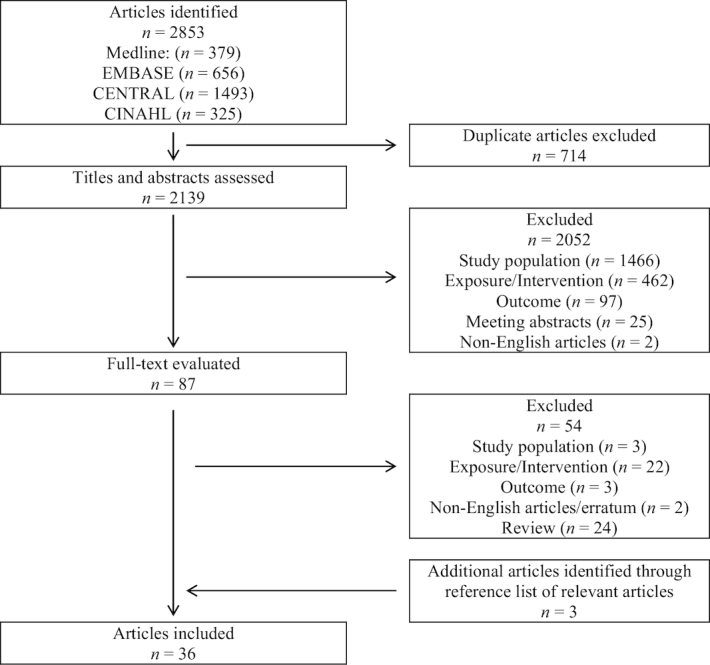
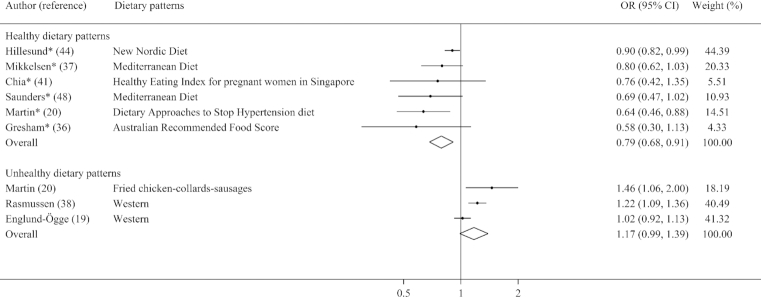
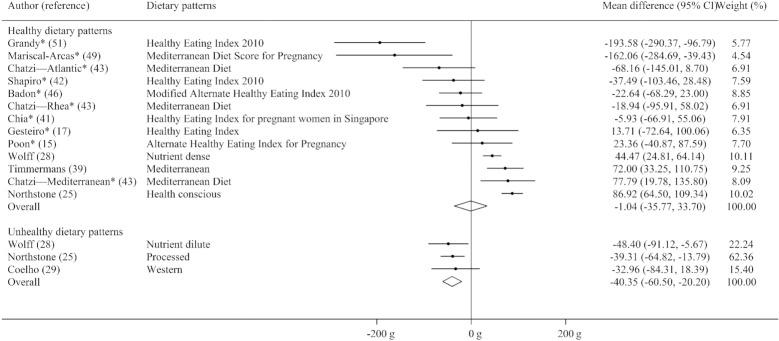
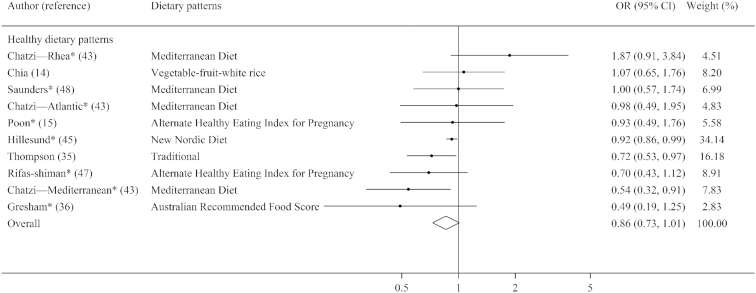
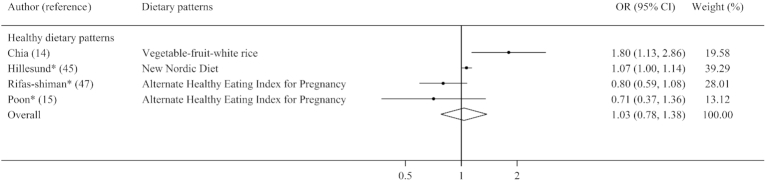
Findings on the relations of maternal dietary patterns during pregnancy and risk of preterm birth and offspring birth size remain inconclusive. We aimed to systematically review and quantify these associations. We searched MEDLINE, Embase, CENTRAL, and CINAHL up to December 2017. Three authors independently conducted a literature search, study selection, data extraction, and quality assessment. Summary effect sizes were calculated with random effects models and studies were summarized narratively if results could not be pooled. We included 36 studies and pooled results from 25 observational studies (167,507 participants). Two common dietary patterns-"healthy" and "unhealthy"-were identified. Healthy dietary patterns-characterized by high intakes of vegetables, fruits, wholegrains, low-fat dairy, and lean protein foods-were associated with lower risk of preterm birth (OR for top compared with bottom tertile: 0.79; 95% CI: 0.68, 0.91; I2 = 32%) and a weak trend towards a lower risk of small-for-gestational-age (OR: 0.86; 95% CI: 0.73, 1.01; I2 = 34%). Only statistically data-driven healthy dietary patterns, and not dietary index-based patterns, were associated with higher birth weight (mean difference: 67 g; 95% CI: 37, 96 g; I2 = 75%). Unhealthy dietary patterns-characterized by high intakes of refined grains, processed meat, and foods high in saturated fat or sugar-were associated with lower birth weight (mean difference: -40 g; 95% CI: -61, -20 g; I2 = 0%) and a trend towards a higher risk of preterm birth (OR: 1.17; 95% CI: 0.99, 1.39; I2 = 76%). Data from observational studies indicate that greater adherence to healthy dietary patterns during pregnancy is significantly related to lower risk of preterm birth. No consistent associations with birth weight and small- or large-for-gestational-age were observed.
Overview
The claims and statistics of this paper haven’t been checked yet.
Free: it reads the open-access text and checks the first 5 claims that cite a source we can check. Create a free account to check every claim.
Integrity signals
Registry
Cites
Statistics
Figures
Verification
Claims the paper makes
The claims and statistics of this paper haven’t been checked yet.
Free: it reads the open-access text and checks the first 5 claims that cite a source we can check. Create a free account to check every claim.
Self-check
Percentages, sums and reported differences re-computed from the paper’s own numbers.
The self-check needs the paper’s full text.
Citations
Cites
Preferred Reporting Items for Systematic Reviews and Meta-Analyses: the PRISMA statement
Moher, D., Liberati, A., Tetzlaff, J., Altman, D. G., & for the PRISMA Group (2009) · BMJ · doi:10.1136/bmj.b2535 · Cited by 83,823
Preferred reporting items for systematic reviews and meta-analyses: the PRISMA Statement.
(2009) · PubMed Central · Cited by 44,859
Preferred reporting items for systematic reviews and meta-analyses: The PRISMA statement
Moher, D., Liberati, A., Tetzlaff, J., Altman, D. G., & the PRISMA Group* (2009) · Annals of Internal Medicine · doi:10.7326/0003-4819-151-4-200908180-00135 · Cited by 37,554
Cochrane Handbook for Systematic Reviews of Interventions: Cochrane Book Series
(2008) · doi:10.1002/9780470712184 · Cited by 25,048 · cited 2×
“Publication bias was assessed by visual inspection of a funnel plot and Egger’s test (34).”
Stang, A. (2010) · European Journal of Epidemiology · doi:10.1007/s10654-010-9491-z · Cited by 17,396 · cited 4×
“All studies except for 5 (24, 25, 28, 48, 49) were of high quality (NOS score ≥ 7) (Supplemental Table 1).”
InfluentialCicchetti, D. V. (1994) · Psychological Assessment · doi:10.1037/1040-3590.6.4.284 · Cited by 9,349 · cited 1×
“The inter-rater agreement for each subscale was reasonably good (intraclass correlation coefficient values between 0.75 and 0.93) (13).”
InfluentialEpidemiology and causes of preterm birth
Goldenberg, R. L., Culhane, J. F., Iams, J. D., & Romero, R. (2008) · The Lancet · doi:10.1016/s0140-6736(08)60074-4 · Cited by 7,801
Cochrane Handbook for Systematic Reviews of Interventions
Tarsilla, M. (2010) · Journal of MultiDisciplinary Evaluation · doi:10.56645/jmde.v6i14.284 · Cited by 5,178
Blencowe, H., Cousens, S., Oestergaard, M. Z., Chou, D., Moller, A.-B., Narwal, R., Adler, A., Vera Garcia, C., Rohde, S., Say, L., et al. (2012) · The Lancet · doi:10.1016/s0140-6736(12)60820-4 · Cited by 4,568
Dietary pattern analysis: a new direction in nutritional epidemiology
Hu, F. B. (2002) · Current Opinion in Lipidology · doi:10.1097/00041433-200202000-00002 · Cited by 4,029 · cited 1×
“Furthermore, if certain dietary components of the index-based dietary pattern are not relevant to birth weight (72) or if most people are not meeting dietary recommendations, the association between the given index and birth weight could be attenuated (73).”
Research works printed but not linked: 1
- Dietary Guidelines Advisory Committee Scientific report of the 2015 Dietary Guidelines Advisory Committee. Washington (DC): USDA and US Department of Health and Human Services, 2015. PMC4717899 26773024
Cited by
Items 101–200 of 271
Food Choice and Dietary Perspectives of Young, Urban, Black Pregnant Women: A Focus Group Study
Burton, T. C. J., Crooks, N. K., Pezley, L., Hemphill, N. O., Li, Y., Sawatpanich, A., Farrow, V., Erbe, K., Kessee, N., Reed, L., et al. (2024) · Nutrients · doi:10.3390/nu16060781 · Cited by 10
“For the baby, poor maternal nutrition is associated with an increased risk of large development for gestational age [7–9], neural tube defects [8,10], preterm birth [8,11], and future development of type 2 diabetes and obesity [12,13].”
BackgroundStadelmaier, J., Bantle, G., Gorenflo, L., Kiesswetter, E., Nikolakopoulou, A., & Schwingshackl, L. (2025) · BMC Medicine · doi:10.1186/s12916-025-03860-2 · Cited by 6
Gioxari, A., Παπανδρέου, Π., Daskalou, E., Kaliora, A. C., & Skouroliakou, M. (2024) · Healthcare · doi:10.3390/healthcare12060693 · Cited by 6
“Maternal nutritional status, which primarily depends on the mother’s diet, affects the quality and quantity of transferred nutrients to the growing fetus within a complex “supply line” [2].”
BackgroundNgandu, C. B., Momberg, D. J., Magan, A., Norris, S. A., & Mohamed, R. S. (2021) · Maternal and Child Health Journal · doi:10.1007/s10995-021-03147-x · Cited by 7
“, 2012), diet (Chia et al., 2019), anthropometric indicators (Black et al.”
BackgroundGokoel, A. R., Shankar, A., Wahid, F. A., Hindori‐Mohangoo, A. D., Covert, H. H., Wickliffe, J. K., Harville, E. W., Zijlmans, W. C. W. R., & Lichtveld, M. Y. (2021) · International Journal of Environmental Research and Public Health · doi:10.3390/ijerph18147683 · Cited by 6
“In addition, dietary habits, which may affect birth outcomes [45], were not accounted for in this study.”
BackgroundSchwingshackl, L., Bröckelmann, N., Beyerbach, J., Werner, S. S., Zähringer, J., Schwarzer, G., & Meerpohl, J. J. (2022) · Advances in Nutrition · doi:10.1093/advances/nmac042 · Cited by 6
Sámano, R., Martínez‐Rojano, H., Ortiz-Hernández, L., Nájera-Medina, O., Chico‐Barba, G., Godínez-Martínez, E., Gamboa, R., & Aguirre-Minutti, E. (2022) · Nutrients · doi:10.3390/nu14214545 · Cited by 17
Lai, J. S., Colega, M., Godfrey, K. M., Tan, K. H., Yap, F. K. P., Chong, Y. S., Lee, Y. S., Eriksson, J. G., Chan, S., & Chong, M. F. (2023) · Nutrients · doi:10.3390/nu15081870 · Cited by 10
“There is evidence that adopting a healthy diet during pregnancy is associated with better pregnancy outcomes such as lower risks of gestational diabetes [1] and preterm birth [2], as well as better offspring metabolic and cognitive health [3,4].”
BackgroundSelf-citationConradie, C., Baumgartner, J., Malan, L., Symington, E. A., Cockeran, M., Smuts, C. M., & Faber, M. (2021) · Nutrients · doi:10.3390/nu13020565 · Cited by 11
“[73], it is likely that women with higher adherence to nutrient pattern 3 have an increased risk for adverse pregnancy outcomes.”
BackgroundVilme, H., Zhang, F. F., O’Tierney-Ginn, P., Sun, C. H., Anyanwu, O. A., Fahmi, R., & Folta, S. C. (2025) · Frontiers in Public Health · doi:10.3389/fpubh.2024.1462908 · Cited by 5
“Maternal nutritional status is a strong predictor of pregnancy complications (4, 5) and plays a central role in birthing outcomes (6).”
Salatas, C., Bronnert, A., Lawrence, R. L., Alexander, T., Wall, C. R., Bloomfield, F. H., & Lin, L. (2025) · Advances in Nutrition · doi:10.1016/j.advnut.2025.100490 · Cited by 9
“Although 1 review re-ported mixed results for the Mediterranean diet [72], others highlight its potential, particularly for reducing early preterm birth, though this finding stems from a single cohort study [10], and low birthweight risk [71].”
von Ash, T., Sanapo, L., Bublitz, M. H., Bourjeily, G. R., Salisbury, A. L., Petrillo, S., & Risica, P. M. (2023) · Nutrients · doi:10.3390/nu15092166 · Cited by 6
Hu, J., Li, M., Li, C., Yin, S., Tao, L., Li, L., Wan, N., Liu, Y., Liu, B., Zheng, L., et al. (2023) · Food & Function · doi:10.1039/d3fo00691c · Cited by 6
Nutritional Status and the Risk of Preterm Birth
Gillespie, B. (2022) · Springer eBooks · doi:10.1007/978-3-031-04462-5_6 · Cited by 6
Higurashi, S., Tsujimori, Y., Nojiri, K., Toba, Y., Nomura, K., & Ueno, H. (2022) · Current Developments in Nutrition · doi:10.1016/j.cdnut.2022.100004 · Cited by 5
Gladstone, M. E., Paquin, V., McLean, M. A., Lequertier, B., Elgbeili, G., Kildea, S. V., Klimos, C., King, S., & Dahlen, H. G. (2023) · Australian and New Zealand Journal of Obstetrics and Gynaecology · doi:10.1111/ajo.13673 · Cited by 8
Campbell, S. A., Dys, S. P., Henderson, J. M. T., Bradley, H. A., & Rucklidge, J. J. (2024) · Frontiers in Nutrition · doi:10.3389/fnut.2024.1307701 · Cited by 5
Nutrition knowledge among pregnant women in Lebanon: A cross-sectional study
Rizk, J., Andreou, E. P., Hileti, D., Ghaddar, A., & Zampelas, A. (2024) · Women s Health · doi:10.1177/17455057241272216 · Cited by 11
“…with higher birth weight, whereas “unhealthy” dietary patterns are associated with a higher risk of shorter length of gestation and thus a lower birth weight, 3 whereas maternal diets high in sugar and fat with a higher rate of cardiovascular disease, diabetes, and metabolic syndrome later in life.”
BackgroundSiargkas, A., Tranidou, A., Magriplis, E., Tsakiridis, I. G., Apostolopoulou, A., Xenidis, T., Pazaras, N., Chourdakis, M., & Dagklis, T. (2025) · Nutrients · doi:10.3390/nu17020269 · Cited by 5
“On the other hand, a recent systematic review and meta-analysis reported no clear associations between maternal dietary patterns and LGA risk, potentially reflecting heterogeneity in study designs, dietary assessment methods, and cultural contexts [22].”
Huang, J., Xie, L., Lin, J., Lu, X., Song, N., Cai, R., & Kuang, Y. (2020) · International Journal of Food Sciences and Nutrition · doi:10.1080/09637486.2020.1787958 · Cited by 6
“It should be noted that this study only assessed the association of a healthy dietary pattern with pregnancy chances, but did not deny or preclude its wellestablished advantages in reducing obstetrical complications and improving birth outcomes (Kibret et al. 2018; Chia et al. 2019).”
BackgroundFactors Associated with Prenatal Health Behaviors among Low-Income, Ethnic Minority Women
Urizar, G. G., Murillo, J., & Miller, K. (2023) · International Journal of Environmental Research and Public Health · doi:10.3390/ijerph20031695 · Cited by 9
Sewor, C., Rappazzo, K. M., & Clark, M. L. (2025) · Environmental Research Communications · doi:10.1088/2515-7620/adc903 · Cited by 4
“Along with the potential variations in the relationships between air pollution and health outcomes by socioeconomic and lifestyle factors in early life, maternal nutrition plays a substantial role in ensuring good fetal health and minimizing the risk of adverse birth outcomes.”
Adolescent Dietary Intake and Breast Cancer in Adulthood: A Systematic Review and Meta-analysis
Lim, G. H., Tan, Y. C. R. S., Lee, E. N., Loo, C. K. Y., Kumar, N., Chong, M. F., & Chia, A. (2025) · Advances in Nutrition · doi:10.1016/j.advnut.2025.100503 · Cited by 4
Self-citationCapra, M. E., Donini, V., Muzi, M., Bruni, S., Esposito, S., & Biasucci, G. (2026) · Frontiers in Nutrition · doi:10.3389/fnut.2026.1806903 · Cited by 6
Santarossa, S., Redding, A., Connell, M. L., Kao, K., Susick, L. L., & Kerver, J. M. (2024) · BMC Research Notes · doi:10.1186/s13104-024-06697-9 · Cited by 3
Association of Paternal BMI and Diet During Pregnancy with Offspring Birth Measures: The STEPS Study
Kearns, M. L., Lahdenperä, M., Galante, L., Rautava, S., Lagström, H., & Reynolds, C. M. (2025) · Nutrients · doi:10.3390/nu17050866 · Cited by 5
Spielau, U., Vogel, M., Körner, A., Kiess, W., & Poulain, T. (2021) · Public Health Nutrition · doi:10.1017/s1368980021002445 · Cited by 5
“A healthy diet contributes to fetal development and growth, prevents exceptional maternal weight gain during pregnancy and decreases the risk for gestational diabetes(2), preterm delivery(3,4) and increased birth weight(5).”
BackgroundChang, M., Tan, A., Schaffir, J., Wegener, D. T., Worly, B. L., Strafford, K. E., Sampsell, C., Kemper, K., Soma, L., Rosen, M. A., et al. (2022) · Journal of Pediatrics Perinatology and Child Health · doi:10.26502/jppch.74050131 · Cited by 5
“Maternal dietary intake during pregnancy plays a crucial role in prenatal development, a critical time for establishing health outcomes in offspring later in life [1, 2].”
BackgroundJaisamrarn, U., Habana, M. A. E., Padolina, C. S., Decena, D. C. D., Dee, M. T., Damodaran, P., Bhaskaran, V., Garg, V., Dorado, E., & Hu, H. (2023) · SAGE Open Medicine · doi:10.1177/20503121231173377 · Cited by 17
Maternal dietary patterns and placental outcomes among pregnant women in Los Angeles
Meng, Q., Rosario, I. P. C. D., Sung, K., Janzen, C., Devaskar, S. U., Carpenter, C. L., & Ritz, B. R. (2023) · Placenta · doi:10.1016/j.placenta.2023.12.002 · Cited by 7
Kim, S.-H., & yu-jin, L. (2024) · BMC Women s Health · doi:10.1186/s12905-024-02964-w · Cited by 4
“Additionally, maternal diet quality [7, 8] and healthy dietary patterns [9, 10] during pregnancy are associated with a lower risk of preterm birth.”
BackgroundNutrition and Epigenetic Modifications During Pregnancy
Maugeri, A., Barchitta, M., Lio, R. M. S., Favara, G., & Agodi, A. (2024) · Epigenetics and human health · doi:10.1007/978-3-031-54215-2_5 · Cited by 6
Dietary factors and risk for adverse pregnancy outcome: A Mendelian randomization analysis
Mu, F., Liu, L., Wang, W., Wang, M., & Wang, F. (2024) · Food Science & Nutrition · doi:10.1002/fsn3.4412 · Cited by 4
“Maternal nutrition during pregnancy is of paramount importance for pregnancy outcomes, birth outcomes, consequently, and the health of the offspring (Chia et al., 2019).”
BackgroundEvidence Based Global Health Manual for Preterm Birth Risk Assessment
Anumba, D. O. C., & Jayasooriya, S. (2022) · Springer eBooks · doi:10.1007/978-3-031-04462-5 · Cited by 6
Forsby, M., Hulander, E., Amberntsson, A., Brembeck, P., Winkvist, A., Bärebring, L., & Augustin, H. (2023) · Food Science & Nutrition · doi:10.1002/fsn3.3838 · Cited by 3
“Poor nutritional quality during pregnancy has been associated with adverse outcomes, including preeclampsia (Brantsaeter et al., 2009), gestational diabetes (Amati et al., 2019), and birth complications (Chia et al., 2019).”
BackgroundXue, H., Qin, R., Xi, Q., Xiao, S., Chen, Y., Liu, Y., Xu, B., Han, X., Lv, H., Hu, H., et al. (2024) · Journal of Nutrition · doi:10.1016/j.tjnut.2024.04.011 · Cited by 7
Nighttime eating during pregnancy and infant adiposity at 6 months of life
Rodríguez-Cano, A. M., Medel-Canchola, B., González-Ludlow, I., Rodríguez-Hernández, C., Reyes-Muñoz, E., Schiffman-Selechnik, E., Estrada‐Gutiérrez, G., & Perichart‐Perera, O. (2024) · Frontiers in Nutrition · doi:10.3389/fnut.2024.1364722 · Cited by 5
Iannotti, L. L., García, A. M. R., Palma, G., Fontaine, F., Scherf, B., Neufeld, L. M., Zimmerman, R., & Fracassi, P. (2024) · Nutrients · doi:10.3390/nu16193231 · Cited by 7
Ni, X., Qiao, T., Wang, R., Wang, F., Liang, Y., & Wei, S. (2024) · Frontiers in Nutrition · doi:10.3389/fnut.2024.1322225 · Cited by 3
Metin, A., & Kulakaç, Ö. (2025) · Health Care For Women International · doi:10.1080/07399332.2025.2464768 · Cited by 4
“The Birth Outcome Evaluation Form was developed by researchers to assess postpartum maternal and newborn outcomes (Brown et al., 2019; Chia et al., 2019; Gokoel et al., 2020; Wolke, 2019; Yost et al., 2020).”
Dassie, G. A., Lemi, H., Getachew, T., & Ayana, S. (2026) · BMC Nutrition · doi:10.1186/s40795-025-01229-5 · Cited by 8
Inflammatory potential of diet and health outcomes in pregnancy, infancy, and childhood
Phillips, C. M., Andrews, C., Brigham, E. P., Chen, L., Han, Y., Hanson, C., Litonjua, A. A., Monthé‐Drèze, C., Polańska, K., & Sen, S. (2022) · Elsevier eBooks · doi:10.1016/b978-0-12-822130-3.00004-1 · Cited by 4
Self-citationKpordoxah, M. R., Adiak, A. A., Issah, A.-N., Yeboah, D., Abdulai, N., & Boah, M. (2024) · BMC Pregnancy and Childbirth · doi:10.1186/s12884-023-06229-6 · Cited by 6
Loh, J., Loy, S. L., Appannah, G., Colega, M., Godfrey, K. M., Yap, F. K. P., Chong, Y. S., Eriksson, J. G., Chan, J. K. Y., Chan, S., et al. (2024) · Appetite · doi:10.1016/j.appet.2024.107336 · Cited by 4
Self-citationOoi, K. J., Taylor, R., Fenton, S., Hutchesson, M., & Collins, C. E. (2024) · Nutrition Reviews · doi:10.1093/nutrit/nuae073 · Cited by 4
Ji, B., Deng, F., Zhou, B., Zhao, C., Lei, J., Xu, T., Qiu, J., Zhang, M., Zhang, Y., Wei, M., et al. (2024) · Cellular and Molecular Life Sciences · doi:10.1007/s00018-024-05549-w · Cited by 3
“Current meta-analyses suggest that infants with reduced birth weight and a higher propensity for premature arrival are associated with poor dietary habits during the gestational period [6].”
Wójtowicz, D., Puk, A., Kopaczyńska, A., Bober, A., & Chwałczyńska, A. (2025) · Nutrition · doi:10.1016/j.nut.2025.112837 · Cited by 3
Observational study on dietary patterns in pregnancy
Departamentul Nursing, F. O. M., Popa, A. D., Caba, L., Departamentul Genetică, F. O. M., ENACHE, A., Departamentul Nursing, F. O. M., Mihalache, C., Departamentul Chirurgie, F. O. M., Antohe, I., & Departamentul Nursing, F. O. M. (2021) · Romanian Journal of Medical Practice · doi:10.37897/rjmp.2021.2.25 · Cited by 3
Darmaun, D. (2021) · Clinical Science · doi:10.1042/cs20210578 · Cited by 3
Effect of birth month on educational attainment and adult cognition in Rural China
Chen, L., & Ren, Q. (2022) · China Population and Development Studies · doi:10.1007/s42379-022-00111-2 · Cited by 3
Self-citationWeldegebriel, S. G., Beyene, S. A., Tela, F. G., Gufue, Z. H., & Hailu, H. T. (2023) · Food Science & Nutrition · doi:10.1002/fsn3.3368 · Cited by 3
“Using dietary patterns rather than isolated nutrients would be better for understanding the gap in maternal and child morbidity, and mortality related to malnutrition (Chia et al., 2019).”
BackgroundResultInfluentialIs Health Education among the Decisive Factors for the Diet Quality of Pregnant Women in Poland?
Demuth, A., Ratajczak, J., Czerniak, U., & Antosiak-Cyrak, K. (2023) · Nutrients · doi:10.3390/nu15112627 · Cited by 5
“Epidemiological studies have highlighted the significance of assessing diet quality and its determinants as the consequences of inadequate nutrition expose not only women but also their children to poorer health outcomes for the rest of their lives [4].”
BackgroundCarbohydrate-Mediated Pregnancy Gut Microbiota and Neonatal Low Birth Weight
Yu, H., Yeh, Y., Tzeng, H., Dai, H.-Y., Lee, W., Wu, K. L. H., Chan, J. Y. H., Tain, Y., & Hsu, C. (2024) · Nutrients · doi:10.3390/nu16091326 · Cited by 4
“[41].”
Neonatal Hair Cortisol and Birth Outcomes: An Empirical Study and Meta-Analysis
Deer, L. K., Demers, C. H., Hankin, B. L., Doom, J. R., Shields, G. S., Hoffman, M. C., & Davis, E. P. (2024) · Psychosomatic Medicine · doi:10.1097/psy.0000000000001339 · Cited by 4
Zhang, J., Bai, S., Lin, S., Du, S., Zhao, X., Qin, Y., Yang, X., & Wang, Z. (2024) · Clinical Nutrition ESPEN · doi:10.1016/j.clnesp.2024.08.007 · Cited by 3
Hino, M., & Yano, R. (2024) · Pacific Rim International Journal of Nursing Research · doi:10.60099/prijnr.2024.268970 · Cited by 5
Pacyga, D. C., Jolly, L., Whalen, J., Calafat, A. M., Braun, J. M., Schantz, S. L., & Strakovsky, R. S. (2024) · Environmental Research · doi:10.1016/j.envres.2024.120198 · Cited by 6
Ryva, B. A., Wylie, B. J., Aung, M. T., Schantz, S. L., & Strakovsky, R. S. (2025) · Environmental Health Perspectives · doi:10.1289/ehp15547 · Cited by 4
Yu, Y., Hardy, I. S., Sun, W., Fergusson, D. A., Fraser, W. D., & Dubois, L. (2020) · BMJ Open · doi:10.1136/bmjopen-2019-033130 · Cited by 3
Zong, X., & Xi, B. (2022) · Integrated science · doi:10.1007/978-3-030-85357-0_1 · Cited by 5
Tsakoumaki, F., Kyrkou, C., Fotiou, M., Dimitropoulou, A., Βiliaderis, C. G., Athanasiadis, A. P., Menexes, G. C., & Michaelidou, A.-M. (2022) · Metabolites · doi:10.3390/metabo12050395 · Cited by 4
Wang, S., Escobar, G. M. V., Chen, Z., Xiu, L., Xiong, G., Yang, X., Shen, J., & Hao, L. (2024) · Food & Function · doi:10.1039/d4fo01110d · Cited by 5
Fogaça, A. L., Chaves, A. V. L., de Lima, M. C., Carreira, N. P., & Sartorelli, D. S. (2024) · European Journal of Clinical Nutrition · doi:10.1038/s41430-024-01561-2 · Cited by 2
“Adopting an adequate and varied diet during pregnancy serves as a protective factor against numerous complications for both the mother and child, ensuring proper intrauterine development and minimizing the likelihood of deviations in birth weight [7 – 9].”
Maldonado, L. E., Adair, L. S., Dabelea, D., Farzan, S. F., Breton, C. V., Dunlop, A. L., MacKenzie, D. A., & Bastain, T. M. (2025) · Nutrition · doi:10.1016/j.nut.2025.112832 · Cited by 2
Hanley‐Cook, G., van der Meulen, E., Pries, A. M., Gie, S. M., Aburto, N., & Holmes, B. (2025) · Maternal and Child Nutrition · doi:10.1111/mcn.70081 · Cited by 4
“…are a common cause of all forms of malnutrition (Wells et al. 2020) and likely have detrimental short ‐ and long ‐ term intergenerational effects, as illustrated by unhealthy diets during pregnancy being associated with a greater risk of preterm birth (Chia et al. 2019; Raghavan et al. 2019).”
Witek, K., Wydra, K., Suder, A., & Filip, M. (2025) · Pharmacological Reports · doi:10.1007/s43440-025-00785-8 · Cited by 3
“These findings are consistent with preclinical evidence showing that excessive sugar consumption during pregnancy and lac - tation can adversely affect the health and neurobehavioral development of offspring [ 11–13].”
Capra, M. E., Bellani, A. M., Berzieri, M., Fradusco, A., Esposito, S., & Biasucci, G. (2026) · Nutrients · doi:10.3390/nu18091375 · Cited by 9
“Unhealthy dietary patterns have been associated with lower birth weight and a trend toward increased preterm birth [15].”
Estimate of Dietary Total Antioxidant Capacity of Pregnant Women and Associated Factors
Carvalho, M. R., Crivellenti, L. C., & Sartorelli, D. S. (2022) · Revista Brasileira Ginecologia e Obstetrícia · doi:10.1055/s-0041-1741454 · Cited by 2
Berube, L. T., Deierlein, A. L., Woolf, K., Messito, M. J., & Gross, R. S. (2023) · Childhood Obesity · doi:10.1089/chi.2022.0227 · Cited by 4
“7,8 Healthy dietary patterns may increase the supply of nutri-ents needed for optimal fetal growth, 36 which is supported by our findings that total vegetables, dark greens and beans, and whole grains explained the relationship between the HEI pattern and birthweight z-score.”
Gondin, M. S., Aguiar, H. P., Patriota, É. S. O., Paula, W. O., Pizato, N., Franceschini, S. D. C. C., & Gonçalves, V. S. S. (2022) · International Journal of Environmental Research and Public Health · doi:10.3390/ijerph192416557 · Cited by 4
“A recent systematic review reported that dietary patterns rich in ultra-processed foods were associated with greater gestational weight gain, which contributes to negative outcomes for the fetus, and increases the risk of venous thromboembolism, depression, and difficulties in breastfeeding [31].”
BackgroundAriyani, N. W., & Erawati, N. L. P. S. (2023) · Bali Medical Journal · doi:10.15562/bmj.v12i1.4194 · Cited by 2
Siekmans, K., Fracassi, P., Kato, T., Seow, T. K., Carter, D., Horton, S., Dizon, F., & Okamura, K. S. (2024) · World Bank policy research working paper · doi:10.1596/1813-9450-10747 · Cited by 4
Effect of Prenatal Dietary Pattern on Maternal Anemia and Low Birth Weight in Rural Areas of Kanpur
Siddiqui, A. A., Nigam, S., Anees, S., & Midha, T. (2022) · Indian Journal of Community Health · doi:10.47203/ijch.2022.v34i04.010 · Cited by 1
Zhang, B., Mi, B., Dang, S., & Yan, H. (2024) · Nutrients · doi:10.3390/nu16183122 · Cited by 1
“Potential confounders were selected based on a literature review [9,21–24] and univariate analysis results.”
MethodNickel, D., Wibæk, R., Friis, H., Wells, J. C. K., Girma, T., Kæstel, P., Michaelsen, K. F., Admassu, B., Abera, M., Schulze, M. B., et al. (2025) · BMC Pregnancy and Childbirth · doi:10.1186/s12884-025-07256-1 · Cited by 1
Chokor, F. A. Z., Eussen, S. J. P. M., Crone, M. R., Abdulmalik, M., Ayoub, J. J., Zgheib, P., Chatila, A., Nasreddine, L., & Naja, F. (2025) · Maternal and Child Nutrition · doi:10.1111/mcn.70070 · Cited by 1
“…in the figure due to the very low proportion of participants who adhered to or did not adhere to these recommendations. during pregnancy, including increased risks for cardiovascular and metabolic disorders, developmental issues in children, and excessive GWG (Bowers et al. 2012; Chia et al. 2019).”
Wickliffe, J. K., Buker, I. E., Newsom, C., Covert, H. H., Zijlmans, W. C. W. R., Wahid, F. A., Lichtveld, M. Y., Hindori‐Mohangoo, A. D., Gokoel, A. R., Baldewsingh, G. K., et al. (2025) · Environmental Research · doi:10.1016/j.envres.2025.122708 · Cited by 1
Karaglani, E., Papamichael, M. M., Argyropoulou, M., Vitoratou, D.-I., Anastasiou, C. A., Batra, M., Bekele, Y. A., Erbas, B., Μanios, Y., & Moschonis, G. (2025) · Nutrients · doi:10.3390/nu17182989 · Cited by 1
“Specifically, poor maternal diet quality has been significantly associated with higher odds of low birth weight, small for gestational age (SGA) [20,21], and preterm birth [21].”
Klumper, J., van Gils, L., van Doornik, R., Emmelkamp, E., Isabelle, D., Janiaud, P., Gosling, C., Oudijk, M. A., Jacobsson, B., Mol, B. W., et al. (2026) · European Journal of Obstetrics & Gynecology and Reproductive Biology · doi:10.1016/j.ejogrb.2026.115037 · Cited by 1
Callegaro, S., DALL’ASTA, A., Kaihura, C. T., Scazzina, F., & Rosi, A. (2026) · European Journal of Nutrition · doi:10.1007/s00394-026-03958-0 · Cited by 1
Favara, G., Leccese, L., Barchitta, M., Candelora, F., Culasso, M., Ettore, C., Ettore, G., Gagliardi, L., Galvani, F., Lastrucci, V., et al. (2026) · Nutrients · doi:10.3390/nu18071065 · Cited by 1
Estrada, K. A., Chan, C. N., Smilowitz, J. T., & Fetter, D. S. (2026) · Journal of American College Health · doi:10.1080/07448481.2026.2645896 · Cited by 1
“7,8 For instance, healthy dietary patterns (high intake of vegetables, fruit, whole-grains, low-fat dairy, and lean protein) have been associated with a lower risk for pre-term birth, while unhealthy dietary patterns (greater intake of refined grains, processed meat, and foods high in saturated fat…”
Mexican Healthy and Sustainable Dietary Guidelines for Pregnant and Lactating Women
Ramírez‐Silva, C. I., Jimenez, M. Y. M., Bonvecchio, A., Barragán-Vázquez, S., Pozas, C. P. C., Olvera-Mayorga, G., Landa-Gómez, N., Ariza, A. C., Moran, S. A. H., Perichart‐Perera, O., et al. (2026) · Archives of Medical Research · doi:10.1016/j.arcmed.2026.103442 · Cited by 1
Alaze-Hagemann, F., Reiß, K., Abou‐Dakn, M., Abu‐Omar, K., Alexy, U., Beyer, K., Breidenassel, C., Brettschneider, A.-K., Cremer, M., Ensenauer, R. E., et al. (2026) · Geburtshilfe und Frauenheilkunde · doi:10.1055/a-2827-5905 · Cited by 1
Pacyga, D. C., Xun, X., Bennett, D. H., Bloom, M. S., Braun, J. M., Carignan, C. C., Howe, C. G., Karagas, M. R., Kannan, K., Meeker, J. D., et al. (2026) · American Journal of Clinical Nutrition · doi:10.1016/j.ajcnut.2026.101393 · Cited by 1
“Beyond energy intake, healthy dietary patterns reduce the risk of pregnancy hypertensive disorders, gestational diabetes, preterm birth, and fetal growth problems [1, 3].”
Self-citationda Rocha, M. C. J. (2007) · Portuguese National Funding Agency for Science, Research and Technology (RCAAP Project by FCT) · Cited by 2
A Systematic Review of Maternal Dietary Intake and its Association with Childhood Stunting
Shukri, N. A. M., Nor, N. M., Mustafa, N., Azizan, A. F., Rostam, M. A., Seman, M. S. A., Hamid, M. R. A., & Romli, R. N. (2023) · IIUM Medical Journal Malaysia · doi:10.31436/imjm.v22i1.2141 · Cited by 7
Effects of cold climate on growth and development
Xing, C., Wang, Y., & Wang, Y. (2023) · Frigid Zone Medicine · doi:10.2478/fzm-2023-0010 · Cited by 1
Food environment index and preterm birth rate in the counties of the United States
Das, A., Trivedi, M., & Bellingham-Young, D. (2023) · Journal of Neonatal-Perinatal Medicine · doi:10.3233/npm-221180 · Cited by 1
“Reduced maternal adherence to a healthy diet is associated with a higher percentage of premature birth and lower birth weights (LBW) [6].”
Metabolic programming and early origins of childhood obesity
Labayen, I., Larqué, E., Rodríguez, G., & Iglesia, I. (2024) · Elsevier eBooks · doi:10.1016/b978-0-443-21975-7.00004-6 · Cited by 1
The Role of Nutrition in Promoting Child and Maternal Health
Maugeri, A., Barchitta, M., Favara, G., Lio, R. M. S., & Agodi, A. (2024) · Integrated science · doi:10.1007/978-3-031-64292-0_19 · Cited by 4
Shiau, S., Chen, X., April-Sanders, A., Francis, E. C., Rawal, S., Hansel, M. C., Adeyemi, K., Rivera‐Núñez, Z., & Barrett, E. S. (2024) · Nutrients · doi:10.3390/nu16244372 · Cited by 2
Evaluating the causal effects of life-course adiposity on jaw anomalies
Chen, X., Zheng, C., Wang, Q., Jiang, Y., Cheng, Q., & Jiang, Q. (2025) · Progress in Orthodontics · doi:10.1186/s40510-025-00565-3 · Cited by 1
“On the other hand, birth weight, which is significantly affected by maternal nutrition and health, might not accurately reflect an individual’s susceptibility to diseases in adulthood [38].”
Unemployment during the Great Recession and large-for-gestational age births
Oddo, V. M., & Jones‐Smith, J. C. (2020) · PLoS ONE · doi:10.1371/journal.pone.0233734 · Cited by 1
“preterm births, LBW), although the authors did not find any studies that investigated unhealthy diets in relation to LGA [28].”
ResultValidation of the Global Diet Quality Score (GDQS) for pregnant and lactating womenPreprint
Arsenault, J. E., Ali, N. B., Batis, C., Bromage, S., Conradie, C., Kehoe, S. H., Chopra, H., Moreno, A. G., Norde, M. M., & Symington, E. A. (2026) · doi:10.12688/verixiv.3157.1 · Cited by 1
Current Resources for Evidence-Based Practice, September 2020
Bovbjerg, M. L. (2020) · Journal of Obstetric, Gynecologic & Neonatal Nursing · doi:10.1016/j.jogn.2020.08.003
Bregante, P. M., & Huamán, J. O. (2013) · Advocatus · doi:10.26439/advocatus2013.n028.4194
Qualidade da dieta durante a gestação e sua relação com o peso ao nascer
Santos, I. D. S. (2020) · Digital Library of Theses and Dissertations (Universidade de São Paulo) · doi:10.11606/d.17.2020.tde-05102020-091937
Karimi, Z., Ayremlou, P., & Saeidlou, S. N. (2020) · Scientific Journal of Kurdistan University of Medical Sciences · doi:10.52547/sjku.25.5.67
Metadata
- Authors
- Chia, A.-R., Chen, L.-W., Lai, J. S., Wong, C. H., Neelakantan, N., van Dam, R. M., & Chong, M. F.-F.
- Affiliations
- University College Dublin (IE)
- Agency for Science, Technology and Research (SG)
- National University of Singapore (SG)
- Corresponding author
- Chong, Mary Foong-Fong
- ORCID
- Venue
- Advances in Nutrition
- Publisher
- Elsevier BV
- Published
- 2019-07
- Volume
- 10
- Issue
- 4
- Pages
- 685-695
- ISSN
- 2156-5376 (ISSN-L)
- 2161-8313
- PMC
- PMC6628847
- OpenAlex
- W2942597709
- Cited by
- 271
- References
- 85
- Citations by year
- 2026: 31 · 2025: 33 · 2024: 55 · 2023: 37 · 2022: 39 · 2021: 46 · 2020: 23 · 2019: 5
- FWCI
- 3.35
- Type
- journal article
- Language
- en
- Open access
- hybrid
- doi.org
- Licence
- cc-by-nc
- www.elsevier.com/tdm/userlicense/1.0/ (tdm)
- www.elsevier.com/legal/tdmrep-license (tdm)
- creativecommons.org/licenses/by-nc/4.0/ (vor)
- Locations
- Advances in Nutrition (publishedVersion, cc-by-nc)
- PubMed Central (publishedVersion, cc-by-nc)
- PubMed (publishedVersion)
- National University of Singapore (submittedVersion)
- Topics
- Health Sciences › Medicine › Public Health, Environmental and Occupational Health › Nutritional Studies and Diet
- Health Sciences › Medicine › Pediatrics, Perinatology and Child Health › Birth, Development, and Health
- Health Sciences › Medicine › Pediatrics, Perinatology and Child Health › Maternal and Neonatal Healthcare
- Keywords
- maternal dietary patterns, pregnancy, preterm birth, birth weight, small for gestational age, large for gestational age, healthy eating patterns, unhealthy dietary patterns, dietary adherence, refined grains, processed meat, saturated fat, sugar, fruit and vegetable intake, whole grains, low-fat dairy, lean protein
- MeSH terms
- Diet, Healthy, Adult, Birth Weight, Diet, Feeding Behavior, Female, Gestational Age, Humans, Infant, Low Birth Weight, Infant, Newborn, Pregnancy, Risk Factors, Maternal Nutritional Physiological Phenomena, Premature Birth, Young Adult, Observational Studies as Topic
About these checks
Registry, retraction, Cites and statistics results are computed, not judged, with one exception: a printed reference that no index lists is read once by a model before it counts as a citation error. Claims are extracted by a model and kept only when their quote appears verbatim in the text; each cited source is then checked, with a model’s help, for whether it says what the claim relies on. Those verdicts can be wrong — read the claim’s quote and the cited source before relying on one.
Statistics and arithmetic are recomputed, not judged.
Confidence bands are shown only for fields calibrated on our annotated test set. None is calibrated yet, so no band is shown.
What counts as a claim ›How we measure confidence ›How we check this ›
Are you an author, or do you see a problem with this page? Request a review
Data sources
Bibliographic data: Semantic Scholar, OpenAlex, Crossref.
Contains information from the Semantic Scholar Academic Graph Datasets, made available under the ODC Attribution License (ODC-BY 1.0).
Semantic Scholar’s data is described in: Kinney, R., et al. (2023). The Semantic Scholar Open Data Platform. arXiv:2301.10140.
