

Maternal Dietary Patterns and Birth Outcomes: A Systematic Review and Meta-Analysis
Open accessThe DOI matches its Crossref record; 84 of the 85 references it cites were found in a registry or an index.
Abstract
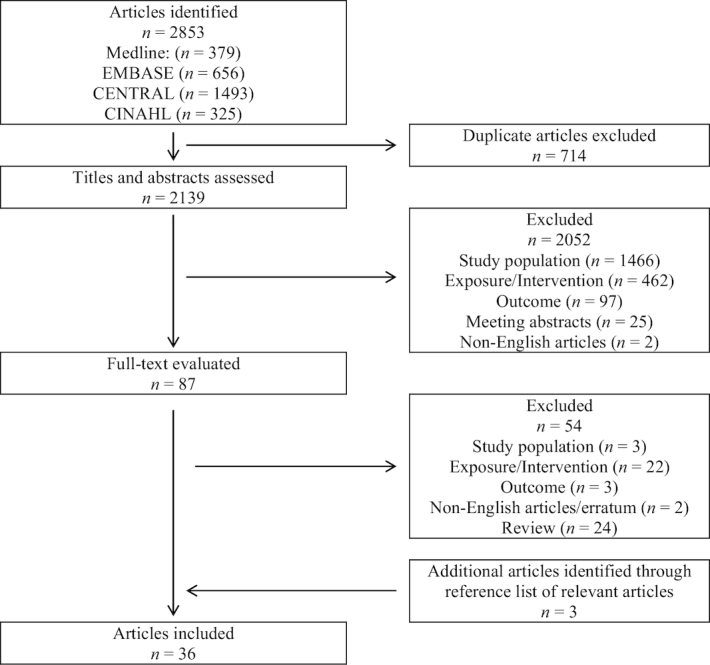
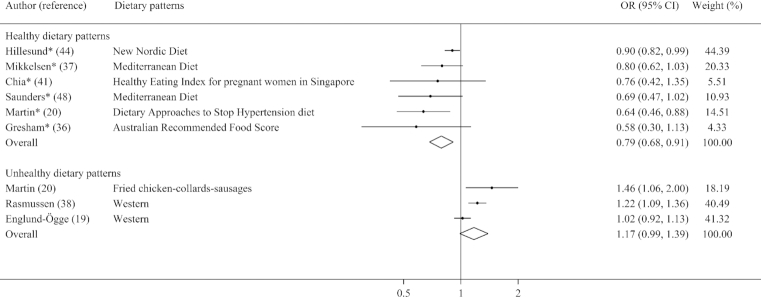
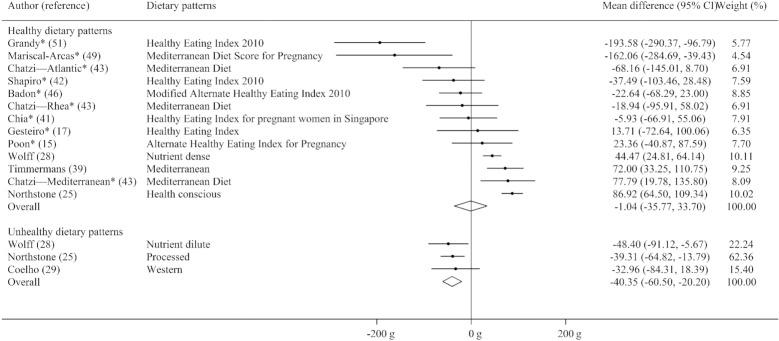
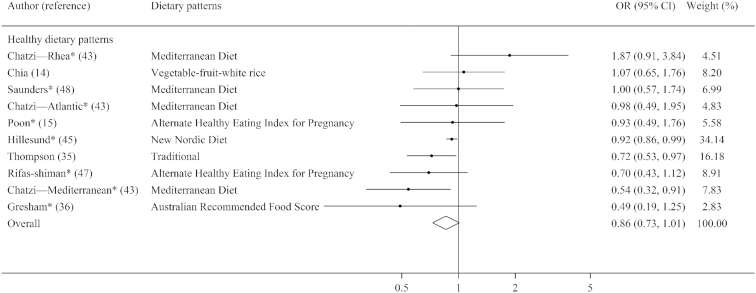
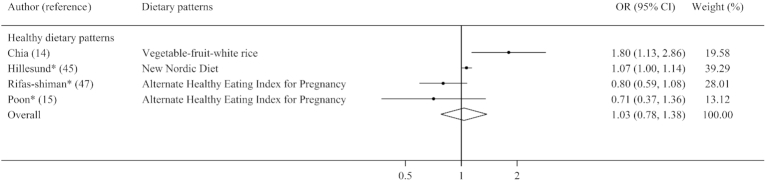
Findings on the relations of maternal dietary patterns during pregnancy and risk of preterm birth and offspring birth size remain inconclusive. We aimed to systematically review and quantify these associations. We searched MEDLINE, Embase, CENTRAL, and CINAHL up to December 2017. Three authors independently conducted a literature search, study selection, data extraction, and quality assessment. Summary effect sizes were calculated with random effects models and studies were summarized narratively if results could not be pooled. We included 36 studies and pooled results from 25 observational studies (167,507 participants). Two common dietary patterns-"healthy" and "unhealthy"-were identified. Healthy dietary patterns-characterized by high intakes of vegetables, fruits, wholegrains, low-fat dairy, and lean protein foods-were associated with lower risk of preterm birth (OR for top compared with bottom tertile: 0.79; 95% CI: 0.68, 0.91; I2 = 32%) and a weak trend towards a lower risk of small-for-gestational-age (OR: 0.86; 95% CI: 0.73, 1.01; I2 = 34%). Only statistically data-driven healthy dietary patterns, and not dietary index-based patterns, were associated with higher birth weight (mean difference: 67 g; 95% CI: 37, 96 g; I2 = 75%). Unhealthy dietary patterns-characterized by high intakes of refined grains, processed meat, and foods high in saturated fat or sugar-were associated with lower birth weight (mean difference: -40 g; 95% CI: -61, -20 g; I2 = 0%) and a trend towards a higher risk of preterm birth (OR: 1.17; 95% CI: 0.99, 1.39; I2 = 76%). Data from observational studies indicate that greater adherence to healthy dietary patterns during pregnancy is significantly related to lower risk of preterm birth. No consistent associations with birth weight and small- or large-for-gestational-age were observed.
Overview
The claims and statistics of this paper haven’t been checked yet.
Free: it reads the open-access text and checks the first 5 claims that cite a source we can check. Create a free account to check every claim.
Integrity signals
Registry
Cites
Statistics
Figures
Verification
Claims the paper makes
The claims and statistics of this paper haven’t been checked yet.
Free: it reads the open-access text and checks the first 5 claims that cite a source we can check. Create a free account to check every claim.
Self-check
Percentages, sums and reported differences re-computed from the paper’s own numbers.
The self-check needs the paper’s full text.
Citations
Cites
Preferred Reporting Items for Systematic Reviews and Meta-Analyses: the PRISMA statement
Moher, D., Liberati, A., Tetzlaff, J., Altman, D. G., & for the PRISMA Group (2009) · BMJ · doi:10.1136/bmj.b2535 · Cited by 83,823
Preferred reporting items for systematic reviews and meta-analyses: the PRISMA Statement.
(2009) · PubMed Central · Cited by 44,859
Preferred reporting items for systematic reviews and meta-analyses: The PRISMA statement
Moher, D., Liberati, A., Tetzlaff, J., Altman, D. G., & the PRISMA Group* (2009) · Annals of Internal Medicine · doi:10.7326/0003-4819-151-4-200908180-00135 · Cited by 37,554
Cochrane Handbook for Systematic Reviews of Interventions: Cochrane Book Series
(2008) · doi:10.1002/9780470712184 · Cited by 25,048 · cited 2×
“Publication bias was assessed by visual inspection of a funnel plot and Egger’s test (34).”
Stang, A. (2010) · European Journal of Epidemiology · doi:10.1007/s10654-010-9491-z · Cited by 17,396 · cited 4×
“All studies except for 5 (24, 25, 28, 48, 49) were of high quality (NOS score ≥ 7) (Supplemental Table 1).”
InfluentialCicchetti, D. V. (1994) · Psychological Assessment · doi:10.1037/1040-3590.6.4.284 · Cited by 9,349 · cited 1×
“The inter-rater agreement for each subscale was reasonably good (intraclass correlation coefficient values between 0.75 and 0.93) (13).”
InfluentialEpidemiology and causes of preterm birth
Goldenberg, R. L., Culhane, J. F., Iams, J. D., & Romero, R. (2008) · The Lancet · doi:10.1016/s0140-6736(08)60074-4 · Cited by 7,801
Cochrane Handbook for Systematic Reviews of Interventions
Tarsilla, M. (2010) · Journal of MultiDisciplinary Evaluation · doi:10.56645/jmde.v6i14.284 · Cited by 5,178
Blencowe, H., Cousens, S., Oestergaard, M. Z., Chou, D., Moller, A.-B., Narwal, R., Adler, A., Vera Garcia, C., Rohde, S., Say, L., et al. (2012) · The Lancet · doi:10.1016/s0140-6736(12)60820-4 · Cited by 4,568
Dietary pattern analysis: a new direction in nutritional epidemiology
Hu, F. B. (2002) · Current Opinion in Lipidology · doi:10.1097/00041433-200202000-00002 · Cited by 4,029 · cited 1×
“Furthermore, if certain dietary components of the index-based dietary pattern are not relevant to birth weight (72) or if most people are not meeting dietary recommendations, the association between the given index and birth weight could be attenuated (73).”
Danesh, J., Collins, R., Appleby, P., & Peto, R. (1998) · JAMA · doi:10.1001/jama.279.18.1477 · Cited by 2,026 · cited 1×
“To allow comparison across studies, effect estimates for each study were transformed to the same scale according to previously described methods (32, 33).”
Morrison, A., Polisena, J., Husereau, D., Moulton, K., Clark, M., Fiander, M., Mierzwinski-Urban, M., Clifford, T., Hutton, B., & Rabb, D. (2012) · International Journal of Technology Assessment in Health Care · doi:10.1017/s0266462312000086 · Cited by 1,257
Lee, A. C., Katz, J., Blencowe, H., Cousens, S., Kozuki, N., Vogel, J. P., Adair, L., Baqui, A. H., Bhutta, Z. A., Caulfield, L. E., et al. (2013) · The Lancet Global Health · doi:10.1016/s2214-109x(13)70006-8 · Cited by 846
Vitamin D supplementation for women during pregnancy
De-Regil, L. M., Palacios, C., Lombardo, L. K., & Peña-Rosas, J. P. (2016) · Cochrane Database of Systematic Reviews · doi:10.1002/14651858.cd008873.pub3 · Cited by 744
Multiple-micronutrient supplementation for women during pregnancy
Haider, B. A., & Bhutta, Z. A. (2017) · Cochrane Database of Systematic Reviews · doi:10.1002/14651858.cd004905.pub5 · Cited by 740
Endogenous Testosterone and Mortality in Men: A Systematic Review and Meta-Analysis
Araujo, A. B., Dixon, J. M., Suarez, E. A., Murad, M. H., Guey, L. T., & Wittert, G. A. (2011) · The Journal of Clinical Endocrinology & Metabolism · doi:10.1210/jc.2011-1137 · Cited by 671 · cited 1×
“To allow comparison across studies, effect estimates for each study were transformed to the same scale according to previously described methods (32, 33).”
Maternal Nutrition and Birth Outcomes
Abu-Saad, K., & Fraser, D. (2010) · Epidemiologic Reviews · doi:10.1093/epirev/mxq001 · Cited by 652
Dietary Guidelines for Chinese Residents (2016): comments and comparisons
Wang, S.-S., Lay, S., Yu, H.-N., & Shen, S.-R. (2016) · Journal of Zhejiang University-SCIENCE B · doi:10.1631/jzus.b1600341 · Cited by 461 · cited 3×
“…here is similar to current dietary recommendations in various countries including the United Kingdom (78), United States (6), Canada (79), and China (80), the results of this meta-analysis provide relevant information to policy makers and health professionals both locally and internationally.”
The macrosomic fetus: a challenge in current obstetrics
HENRIKSEN, T. (2008) · Acta Obstetricia et Gynecologica Scandinavica · doi:10.1080/00016340801899289 · Cited by 454 · cited 1×
“…( < 37 weeks of gestation) (1), 15–20% are born low birth weight (LBW; birth weight < 2500 g) (2), and the prevalence of macrosomia (birth weight > 4000 g) and large-for-gestational-age (LGA; birth weight > 90th percentile for gestational age) have increased by 15–25% in the last few decades (3).”
Dietary patterns: from nutritional epidemiologic analysis to national guidelines
Cespedes, E. M., & Hu, F. B. (2015) · The American Journal of Clinical Nutrition · doi:10.3945/ajcn.115.110213 · Cited by 369
Zinc supplementation for improving pregnancy and infant outcome
Ota, E., Mori, R., Middleton, P., Tobe-Gai, R., Mahomed, K., Miyazaki, C., & Bhutta, Z. A. (2015) · Cochrane Database of Systematic Reviews · doi:10.1002/14651858.cd000230.pub5 · Cited by 369 · cited 1×
“A previous meta-analysis on specific nutrients showed an 11% lower risk of preterm birth for a 1 SD increase in vitamin B-12 (53), whereas zinc supplementation resulted in a 14% reduction of preterm birth (primarily in low-income women) (54).”
Dietary Quality during Pregnancy Varies by Maternal Characteristics in Project Viva: A US Cohort
Rifas-Shiman, S. L., Rich-Edwards, J. W., Kleinman, K. P., Oken, E., & Gillman, M. W. (2009) · Journal of the American Dietetic Association · doi:10.1016/j.jada.2009.03.001 · Cited by 344 · cited 3×
“Nineteen studies were based in Europe (16–19, 22, 24, 25, 37–40, 43– 45, 48–50), 10 in America (15, 20, 21, 27–29, 42, 46, 47, 51), 4 in Asia (14, 23, 26, 41), 2 in Africa (30, 31), and 2 in Australasia (35, 36).”
Antenatal dietary education and supplementation to increase energy and protein intake
Ota, E., Hori, H., Mori, R., Tobe-Gai, R., & Farrar, D. (2015) · Cochrane Database of Systematic Reviews · doi:10.1002/14651858.cd000032.pub3 · Cited by 320 · cited 2×
“With regards to the benefits of other vitamins (55–59), minerals (60, 61), multiple micronutrients (62), or energy and protein supplementation (63) on preterm birth, there is presently no current convincing supporting evidence.”
Makrides, M., Duley, L., & Olsen, S. F. (2006) · Cochrane Database of Systematic Reviews · doi:10.1002/14651858.cd003402.pub2 · Cited by 293 · cited 1×
“In a meta-analysis of 6 multicenter trials, marine oil ( ω -3 fatty acids) supplementation showed no effect on SGA in high-risk pregnancies (75).”
Associations between red meat intake and biomarkers of inflammation and glucose metabolism in women
Ley, S. H., Sun, Q., Willett, W. C., Eliassen, A. H., Wu, K., Pan, A., Grodstein, F., & Hu, F. B. (2014) · The American Journal of Clinical Nutrition · doi:10.3945/ajcn.113.075663 · Cited by 248
Dietary patterns and mortality in Danish men and women: a prospective observational study
Osler, M., Heitmann, B. L., Gerdes, L. U., Jørgensen, L. M., & Schroll, M. (2001) · British Journal of Nutrition · doi:10.1079/bjn2000240 · Cited by 247 · cited 1×
“Commonly used data-driven methods such as factor analysis and principal component analysis may be more strongly related to birth weight than the index-based dietary patterns because they aim to maximize the explained variance in food intakes (70, 71).”
Maternal dietary patterns and preterm delivery: results from large prospective cohort study
Englund-Ogge, L., Brantsaeter, A. L., Sengpiel, V., Haugen, M., Birgisdottir, B. E., Myhre, R., Meltzer, H. M., & Jacobsson, B. (2014) · BMJ · doi:10.1136/bmj.g1446 · Cited by 240 · cited 5×
“Among studies that used data-driven dietary patterns, 8 were derived with factor analysis (14, 20–22, 28–30, 40), 4 with principal component analysis (19, 25, 35, 38), 2 with cluster analysis (23, 26), and the rest with reduced rank regression (27) and logistic regression (39).”
InfluentialReedy, J., Wirfalt, E., Flood, A., Mitrou, P. N., Krebs-Smith, S. M., Kipnis, V., Midthune, D., Leitzmann, M., Hollenbeck, A., Schatzkin, A., et al. (2010) · American Journal of Epidemiology · doi:10.1093/aje/kwp393 · Cited by 234 · cited 1×
“Furthermore, if certain dietary components of the index-based dietary pattern are not relevant to birth weight (72) or if most people are not meeting dietary recommendations, the association between the given index and birth weight could be attenuated (73).”
Vitamin C supplementation in pregnancy
Rumbold, A., Ota, E., Nagata, C., Shahrook, S., & Crowther, C. A. (2015) · Cochrane Database of Systematic Reviews · doi:10.1002/14651858.cd004072.pub3 · Cited by 233
Romero, R., Chaiworapongsa, T., & Espinoza, J. (2003) · The Journal of Nutrition · doi:10.1093/jn/133.5.1668s · Cited by 222 · cited 2×
“…by high intake of foods with antioxidative and anti-inflammatory properties such as vegetables, fruits, whole-grains, fish, legumes and pulses, thus have the potential to reduce inflammation contributing to premature rupture of membranes that subsequently reduce risk of preterm birth (65, 66).”
Folic acid supplementation during pregnancy for maternal health and pregnancy outcomes
Lassi, Z. S., Salam, R. A., Haider, B. A., & Bhutta, Z. A. (2013) · Cochrane Database of Systematic Reviews · doi:10.1002/14651858.cd006896.pub2 · Cited by 221
Major dietary patterns in pregnancy and fetal growth
Knudsen, V. K., Orozova-Bekkevold, I. M., Mikkelsen, T. B., Wolff, S., & Olsen, S. F. (2008) · European Journal of Clinical Nutrition · doi:10.1038/sj.ejcn.1602745 · Cited by 215
Khoury, J., Henriksen, T., Christophersen, B., & Tonstad, S. (2005) · American Journal of Obstetrics and Gynecology · doi:10.1016/j.ajog.2005.05.016 · Cited by 214 · cited 1×
“In the randomized controlled trial that was not included in the meta-analysis (52), a reduction in preterm birth risk was found in the intervention group encouraged to adopt the healthy dietary pattern.”
Vitamin E supplementation in pregnancy
Rumbold, A., Ota, E., Hori, H., Miyazaki, C., & Crowther, C. A. (2015) · Cochrane Database of Systematic Reviews · doi:10.1002/14651858.cd004069.pub3 · Cited by 202
Iodine supplementation for women during the preconception, pregnancy and postpartum period
Harding, K. B., Peña-Rosas, J. P., Webster, A. C., Yap, C. M., Payne, B. A., Ota, E., & De-Regil, L. M. (2017) · Cochrane Database of Systematic Reviews · doi:10.1002/14651858.cd011761.pub2 · Cited by 196 · cited 1×
“With regards to the benefits of other vitamins (55–59), minerals (60, 61), multiple micronutrients (62), or energy and protein supplementation (63) on preterm birth, there is presently no current convincing supporting evidence.”
Zerfu, T. A., Umeta, M., & Baye, K. (2016) · The American Journal of Clinical Nutrition · doi:10.3945/ajcn.115.116798 · Cited by 192 · cited 6×
“Maternal diets were typically assessed by FFQs (number of items ranged from 29 to 360) (15–26, 28– 30, 35–40, 43–50), but 6 studies used 24-h recalls or 3-d food diary (14, 27, 31, 41, 42, 51).”
InfluentialRogne, T., Tielemans, M. J., Chong, M. F.-F., Yajnik, C. S., Krishnaveni, G. V., Poston, L., Jaddoe, V. W. V., Steegers, E. A. P., Joshi, S., Chong, Y.-S., et al. (2017) · American Journal of Epidemiology · doi:10.1093/aje/kww212 · Cited by 188
Self-citationEnglund‐Ögge, L., Brantsæter, A. L., Haugen, M., Sengpiel, V., Khatibi, A., Myhre, R., Myking, S., Meltzer, H. M., Kacerovský, M., Nilsen, R. M., et al. (2012) · American Journal of Clinical Nutrition · doi:10.3945/ajcn.111.031567 · Cited by 177 · cited 1×
“On the contrary, foods from the unhealthy dietary patterns—processed meats, foods high in saturated fat or sugar—are associated with inflammation and preterm birth (67–69).”
Maternal diet quality in pregnancy and neonatal adiposity: the Healthy Start Study
Shapiro, A. L. B., Kaar, J. L., Crume, T. L., Starling, A. P., Siega-Riz, A. M., Ringham, B. M., Glueck, D. H., Norris, J. M., Barbour, L. A., Friedman, J. E., et al. (2016) · International Journal of Obesity · doi:10.1038/ijo.2016.79 · Cited by 172 · cited 2×
“Twenty-two studies evaluated maternal diet during the first and/or second trimester (14, 16–22, 26, 35, 37–41, 43–47), 5 in the third trimester (15, 25, 29, 50, 51), and 10 throughout pregnancy (23, 24, 27, 28, 30, 31, 36, 42, 48, 49).”
Vitamin A supplementation during pregnancy for maternal and newborn outcomes
van den Broek, N., Dou, L., Othman, M., Neilson, J. P., Gates, S., & Gülmezoglu, A. M. (2010) · Cochrane Database of Systematic Reviews · doi:10.1002/14651858.cd008666.pub2 · Cited by 171 · cited 1×
“With regards to the benefits of other vitamins (55–59), minerals (60, 61), multiple micronutrients (62), or energy and protein supplementation (63) on preterm birth, there is presently no current convincing supporting evidence.”
Systematic review of saturated fatty acids on inflammation and circulating levels of adipokines
Santos, S., Oliveira, A., & Lopes, C. M. M. (2013) · Nutrition Research · doi:10.1016/j.nutres.2013.07.002 · Cited by 162
Vitamin A supplementation during pregnancy for maternal and newborn outcomes
McCauley, M. E., van den Broek, N., Dou, L., & Othman, M. (2015) · Cochrane Database of Systematic Reviews · doi:10.1002/14651858.cd008666.pub3 · Cited by 162
Rodríguez-Bernal, C. L., Rebagliato, M., Íñiguez, C., Vioqué, J., Navarrete‐Muñoz, E. M., Murcia, M., Bolúmar, F., Marco, A., & Ballester, F. (2010) · American Journal of Clinical Nutrition · doi:10.3945/ajcn.2009.28866 · Cited by 158
Maternal Dietary Patterns and Pregnancy Outcome
Chen, X., Zhao, D., Mao, X., Xia, Y., Baker, P., & Zhang, H. (2016) · Nutrients · doi:10.3390/nu8060351 · Cited by 154 · cited 1×
“These reviews had only searched a single database, PubMed (8, 9).”
Maternal Dietary Patterns during the Second Trimester Are Associated with Preterm Birth
Martin, C. L., Sotres‐Alvarez, D., & Siega‐Riz, A. M. (2015) · Journal of Nutrition · doi:10.3945/jn.115.212019 · Cited by 148 · cited 6×
“Among studies that used data-driven dietary patterns, 8 were derived with factor analysis (14, 20–22, 28–30, 40), 4 with principal component analysis (19, 25, 35, 38), 2 with cluster analysis (23, 26), and the rest with reduced rank regression (27) and logistic regression (39).”
InfluentialThe Mediterranean diet and fetal size parameters: the Generation R Study
Timmermans, S., Steegers-Theunissen, R. P., Vujkovic, M., den Breeijen, H., Russcher, H., Lindemans, J., Mackenbach, J., Hofman, A., Lesaffre, E. E., Jaddoe, V. V., et al. (2012) · British Journal of Nutrition · doi:10.1017/s000711451100691x · Cited by 145 · cited 1×
“Among studies that used data-driven dietary patterns, 8 were derived with factor analysis (14, 20–22, 28–30, 40), 4 with principal component analysis (19, 25, 35, 38), 2 with cluster analysis (23, 26), and the rest with reduced rank regression (27) and logistic regression (39).”
Buppasiri, P., Lumbiganon, P., Thinkhamrop, J., Ngamjarus, C., Laopaiboon, M., & Medley, N. (2015) · Cochrane Database of Systematic Reviews · doi:10.1002/14651858.cd007079.pub3 · Cited by 144
Okubo, H., Miyake, Y., Sasaki, S., Tanaka, K., Murakami, K., Hirota, Y., & Osaka Maternal and Child Health Study Group (2011) · British Journal Of Nutrition · doi:10.1017/s0007114511004636 · Cited by 143 · cited 7×
“Among studies that used data-driven dietary patterns, 8 were derived with factor analysis (14, 20–22, 28–30, 40), 4 with principal component analysis (19, 25, 35, 38), 2 with cluster analysis (23, 26), and the rest with reduced rank regression (27) and logistic regression (39).”
InfluentialHillesund, E. R., Bere, E. T., Haugen, M. A., & Øverby, N. C. (2014) · Public Health Nutrition · doi:10.1017/s1368980014000421 · Cited by 135 · cited 2×
“Five studies examined LGA as an outcome, of which 4 reported on healthy dietary patterns (70,190 observations) (14, 15, 45, 47).”
Eating Well with Canada's Food Guide (2007): Development of the Food Intake Pattern
Katamay, S. W., Esslinger, K. A., Vigneault, M., Johnston, J. L., Junkins, B. A., Robbins, L. G., Sirois, I. V., Jones-McLean, E. M., Kennedy, A. F., Bush, M. A. A., et al. (2008) · Nutrition Reviews · doi:10.1111/j.1753-4887.2007.tb00295.x · Cited by 133 · cited 2×
“…described here is similar to current dietary recommendations in various countries including the United Kingdom (78), United States (6), Canada (79), and China (80), the results of this meta-analysis provide relevant information to policy makers and health professionals both locally and…”
Maternal dietary patterns in pregnancy and the association with small-for-gestational-age infants
Thompson, J. M. D., Wall, C., Becroft, D. M. O., Robinson, E., Wild, C. J., & Mitchell, E. A. (2010) · British Journal of Nutrition · doi:10.1017/s0007114509993606 · Cited by 122 · cited 4×
“Only 1 study has investigated the association between unhealthy dietary pattern and SGA; they observed no significant association (35).”
InfluentialChatzi, L., Mendez, M., Garcia, R., Roumeliotaki, T., Ibarluzea, J., Tardón, A., Amiano, P., Lertxundi, A., Iñiguez, C., Vioque, J., et al. (2012) · British Journal of Nutrition · doi:10.1017/s0007114511002625 · Cited by 121
Casanueva, E., Ripoll, C., Tolentino, M., Morales, R. M., Pfeffer, F., Vilchis, P., & Vadillo‐Ortega, F. (2005) · American Journal of Clinical Nutrition · doi:10.1093/ajcn/81.4.859 · Cited by 116 · cited 1×
“…by high intake of foods with antioxidative and anti-inflammatory properties such as vegetables, fruits, whole-grains, fish, legumes and pulses, thus have the potential to reduce inflammation contributing to premature rupture of membranes that subsequently reduce risk of preterm birth (65, 66).”
Adjusting for energy intake in dietary pattern investigations using principal components analysis
Northstone, K., Ness, A., Emmett, P. M., & Rogers, I. (2007) · European Journal of Clinical Nutrition · doi:10.1038/sj.ejcn.1602789 · Cited by 116 · cited 6×
“Among studies that used data-driven dietary patterns, 8 were derived with factor analysis (14, 20–22, 28–30, 40), 4 with principal component analysis (19, 25, 35, 38), 2 with cluster analysis (23, 26), and the rest with reduced rank regression (27) and logistic regression (39).”
InfluentialMIKKELSEN, T. B., LOUISE ØSTERDAL, M., KNUDSEN, V. K., HAUGEN, M., MELTZER, H. M., BAKKETEIG, L., & OLSEN, S. F. (2008) · Acta Obstetricia et Gynecologica Scandinavica · doi:10.1080/00016340801899347 · Cited by 114 · cited 2×
“In total, there were 11 studies with preterm birth as outcome measure, of which 6 reported on healthy dietary patterns (114,431 observations) (20, 36, 37, 41, 44, 48) and 3 on unhealthy dietary patterns (129,092 observations) (19, 20, 38).”
Maternal Dietary Patterns and Practices and Birth Weight in Northern Ghana
Abubakari, A., & Jahn, A. (2016) · PLoS ONE · doi:10.1371/journal.pone.0162285 · Cited by 114 · cited 5×
“Among studies that used data-driven dietary patterns, 8 were derived with factor analysis (14, 20–22, 28–30, 40), 4 with principal component analysis (19, 25, 35, 38), 2 with cluster analysis (23, 26), and the rest with reduced rank regression (27) and logistic regression (39).”
InfluentialInfluence of maternal birth weight on rate of fetal growth and duration of gestation
Klebanoff, M. A., & Yip, R. (1987) · The Journal of Pediatrics · doi:10.1016/s0022-3476(87)80089-6 · Cited by 109 · cited 1×
“Birth weight is influenced both by duration of gestation and rate of fetal growth (74).”
Schulze, M. B. (2003) · American Journal of Epidemiology · doi:10.1093/aje/kwg156 · Cited by 108 · cited 1×
“Commonly used data-driven methods such as factor analysis and principal component analysis may be more strongly related to birth weight than the index-based dietary patterns because they aim to maximize the explained variance in food intakes (70, 71).”
Eating Well with Canada's Food Guide (2007): Development of the Food Intake Pattern
Katamay, S. W., Esslinger, K. A., Vigneault, M., Johnston, J. L., Junkins, B. A., Robbins, L. G., Sirois, I. V., Jones-McLean, E. M., Kennedy, A. F., Bush, M. A. A., et al. (2007) · Nutrition Reviews · doi:10.1301/nr.2007.apr.155-166 · Cited by 108
Poon, A. K., Yeung, E. H., Boghossian, N. S., Albert, P. S., & Zhang, C. (2013) · Scientifica · doi:10.1155/2013/786409 · Cited by 100 · cited 4×
“Twenty-one studies examined index-based dietary patterns (15–18, 24, 31, 36, 37, 41–51), whereas 15 derived dietary patterns through data-driven approaches (14, 19, 21–23, 25–30, 35, 38–40); 1 study used both approaches (20).”
InfluentialChia, A., de Seymour, J. V., Colega, M., Chen, L., Chan, Y., Aris, I. M., Tint, M. T., Quah, P. L., Godfrey, K. M., Yap, F. K. P., et al. (2016) · American Journal of Clinical Nutrition · doi:10.3945/ajcn.116.133892 · Cited by 98 · cited 6×
“Among studies that used data-driven dietary patterns, 8 were derived with factor analysis (14, 20–22, 28–30, 40), 4 with principal component analysis (19, 25, 35, 38), 2 with cluster analysis (23, 26), and the rest with reduced rank regression (27) and logistic regression (39).”
InfluentialSelf-citationHAUGEN, M., MARGRETE MELTZER, H., LISE BRANTSÆTER, A., MIKKELSEN, T., LOUISE ØSTERDAL, M., ALEXANDER, J., OLSEN, S. F., & BAKKETEIG, L. (2008) · Acta Obstetricia et Gynecologica Scandinavica · doi:10.1080/00016340801899123 · Cited by 86 · cited 1×
“Twenty-one studies examined index-based dietary patterns (15–18, 24, 31, 36, 37, 41–51), whereas 15 derived dietary patterns through data-driven approaches (14, 19, 21–23, 25–30, 35, 38–40); 1 study used both approaches (20).”
Judd, S. E., Letter, A. J., Shikany, J. M., Roth, D. L., & Newby, P. K. (2015) · Frontiers in Nutrition · doi:10.3389/fnut.2014.00029 · Cited by 84 · cited 1×
“Defining dietary patterns with the same a priori scoring or employing confirmatory factor analysis to further establish the validity of the patterns derived with exploratory factor analysis could assist future research to obtain more consistent results (76).”
Maternal Dietary Patterns during Pregnancy Are Associated with Newborn Body Composition
Starling, A. P., Sauder, K. A., Kaar, J. L., Shapiro, A. L. B., Siega‐Riz, A. M., & Dabelea, D. (2017) · Journal of Nutrition · doi:10.3945/jn.117.248948 · Cited by 81 · cited 8×
“Among studies that used data-driven dietary patterns, 8 were derived with factor analysis (14, 20–22, 28–30, 40), 4 with principal component analysis (19, 25, 35, 38), 2 with cluster analysis (23, 26), and the rest with reduced rank regression (27) and logistic regression (39).”
InfluentialHillesund, E. R., Øverby, N. C., Engel, S. M., Klungsøyr, K., Harmon, Q. E., Haugen, M., & Bere, E. (2014) · European Journal of Epidemiology · doi:10.1007/s10654-014-9948-6 · Cited by 80 · cited 1×
“In total, there were 11 studies with preterm birth as outcome measure, of which 6 reported on healthy dietary patterns (114,431 observations) (20, 36, 37, 41, 44, 48) and 3 on unhealthy dietary patterns (129,092 observations) (19, 20, 38).”
Gesteiro, E., Bernal, B. R., Bastida, S., & Sánchez-Muniz, F. J. (2012) · European Journal of Clinical Nutrition · doi:10.1038/ejcn.2012.92 · Cited by 77
Gresham, E., Collins, C. E., Mishra, G. D., Byles, J. E., & Hure, A. J. (2016) · Public Health Nutrition · doi:10.1017/s1368980016001245 · Cited by 77 · cited 4×
“In total, there were 11 studies with preterm birth as outcome measure, of which 6 reported on healthy dietary patterns (114,431 observations) (20, 36, 37, 41, 44, 48) and 3 on unhealthy dietary patterns (129,092 observations) (19, 20, 38).”
InfluentialInflammatory potential of diet and risk of cardiovascular disease or mortality: A meta-analysis
Zhong, X., Guo, L., Zhang, L., Li, Y., He, R., & Cheng, G. (2017) · Scientific Reports · doi:10.1038/s41598-017-06455-x · Cited by 76 · cited 1×
“Studies that scored ≥ 7 were defined as high quality (12).”
Rasmussen, M. A., Maslova, E., Halldorsson, T. I., & Olsen, S. F. (2014) · PLoS ONE · doi:10.1371/journal.pone.0093644 · Cited by 74
Saunders, L., Guldner, L., Costet, N., Kadhel, P., Rouget, F., Monfort, C., Thomé, J., Multigner, L., & Cordier, S. (2014) · Paediatric and Perinatal Epidemiology · doi:10.1111/ppe.12113 · Cited by 73 · cited 4×
“All studies except for 5 (24, 25, 28, 48, 49) were of high quality (NOS score ≥ 7) (Supplemental Table 1).”
InfluentialVitamin D supplementation for women during pregnancy
Antonakou, A. (2017) · Women and Birth · doi:10.1016/j.wombi.2017.11.001 · Cited by 73
Colón‐Ramos, U., Racette, S. B., Ganiban, J. M., Nguyen, T. T., Koçak, M., Carroll, K. N., Völgyi, E., & Tylavsky, F. A. (2015) · Nutrients · doi:10.3390/nu7021318 · Cited by 69
Dietary patterns in pregnancy and birth weight
Coelho, N. D. L. P., Cunha, D. B., Esteves, A. P. P., Lacerda, E. M. D. A., & Theme Filha, M. M. (2015) · Revista de Saúde Pública · doi:10.1590/s0034-8910.2015049005403 · Cited by 68 · cited 3×
“…reference to infant overweight ( > 3500 g) (24); (iii) the study had dietary patterns that could not be categorized as healthy or unhealthy (19, 25–29), for example, “vegetarian” (25) and a “fruits, nuts, and Cantonese desserts” pattern (26); and (iv) the studies were based in resource-poor,…”
Maternal Eating Patterns and Birth Weight of Mexican American Infants
Wolff, C. B., & Wolff, H. K. (1995) · Nutrition and Health · doi:10.1177/026010609501000203 · Cited by 61 · cited 4×
“All studies except for 5 (24, 25, 28, 48, 49) were of high quality (NOS score ≥ 7) (Supplemental Table 1).”
InfluentialMaternal Dietary Patterns and Fetal Growth: A Large Prospective Cohort Study in China
Lu, M.-S., Chen, Q.-Z., He, J., Wei, X.-L., Lu, J., Li, S.-H., Wen, X.-X., Chan, F., Chen, N.-N., Qiu, L., et al. (2016) · Nutrients · doi:10.3390/nu8050257 · Cited by 60 · cited 3×
“…and the eggs, starchy vegetables, fruits, and non-wholegrains pattern in the United States (27), fruits, nuts, and Cantonese desserts and varied patterns in China (compared with the traditional Cantonese pattern—cereals, eggs, and Cantonese soups) (26) were associated with higher birth weight.”
Bouwland‐Both, M., Steegers‐Theunissen, R., Vujkovic, M., Lesaffre, E., Mook‐Kanamori, D., Hofman, A., Lindemans, J., Russcher, H., Jaddoe, V., & Steegers, E. (2013) · BJOG: An International Journal of Obstetrics & Gynaecology · doi:10.1111/1471-0528.12086 · Cited by 57
Chia, A., Tint, M. T., Han, C. Y., Chen, L., Colega, M., Aris, I. M., Chua, M.-C., Tan, K. H., Yap, F. K. P., Shek, L. P., et al. (2018) · American Journal of Clinical Nutrition · doi:10.1093/ajcn/nqx003 · Cited by 56 · cited 3×
“In total, there were 11 studies with preterm birth as outcome measure, of which 6 reported on healthy dietary patterns (114,431 observations) (20, 36, 37, 41, 44, 48) and 3 on unhealthy dietary patterns (129,092 observations) (19, 20, 38).”
Self-citationProposal of a Mediterranean diet index for pregnant women
Mariscal‐Arcas, M., Rivas, A., Monteagudo, C., Granada, A., Cerrillo, I., & Olea‐Serrano, F. (2009) · British Journal Of Nutrition · doi:10.1017/s0007114509274769 · Cited by 43
Poorer maternal diet quality and increased birth weight*
Grandy, M., Snowden, J. M., Boone-Heinonen, J., Purnell, J. Q., Thornburg, K. L., & Marshall, N. E. (2018) · The Journal of Maternal-Fetal & Neonatal Medicine · doi:10.1080/14767058.2017.1322949 · Cited by 35 · cited 4×
“Twenty-two studies evaluated maternal diet during the first and/or second trimester (14, 16–22, 26, 35, 37–41, 43–47), 5 in the third trimester (15, 25, 29, 50, 51), and 10 throughout pregnancy (23, 24, 27, 28, 30, 31, 36, 42, 48, 49).”
InfluentialMonteagudo, C., Mariscal‐Arcas, M., Heras-González, L., Ibáñez-Peinado, D., Rivas, A., & Olea‐Serrano, F. (2016) · Chemosphere · doi:10.1016/j.chemosphere.2016.04.103 · Cited by 33
Badon, S. E., Miller, R. S., Qiu, C., Sorensen, T. K., Williams, M. A., & Enquobahrie, D. A. (2017) · The Journal of Maternal-Fetal & Neonatal Medicine · doi:10.1080/14767058.2017.1309383 · Cited by 29 · cited 1×
“Nineteen studies were based in Europe (16–19, 22, 24, 25, 37–40, 43– 45, 48–50), 10 in America (15, 20, 21, 27–29, 42, 46, 47, 51), 4 in Asia (14, 23, 26, 41), 2 in Africa (30, 31), and 2 in Australasia (35, 36).”
Sánchez‐Villegas, A., Brito, N., Doreste‐Alonso, J., Nissensohn, M., Henríquez, P., Hermoso, M., Berti, C., & Serra‐Majem, L. (2010) · Maternal and Child Nutrition · doi:10.1111/j.1740-8709.2010.00263.x · Cited by 20 · cited 1×
“These reviews had only searched a single database, PubMed (8, 9).”
Gómez‐Roig, M. D., Mazarico, E., Ferrero, S., Montejo, R., Ibáñez, L., Guillén‐Grima, F., & Vela, A. (2017) · Journal of obstetrics and gynaecology research · doi:10.1111/jog.13330 · Cited by 19 · cited 1×
“Twenty-two studies evaluated maternal diet during the first and/or second trimester (14, 16–22, 26, 35, 37–41, 43–47), 5 in the third trimester (15, 25, 29, 50, 51), and 10 throughout pregnancy (23, 24, 27, 28, 30, 31, 36, 42, 48, 49).”
Dietary patterns in pregnancy and birth weight
Coelho, N. D. L. P., Cunha, D. B., Esteves, A. P. P., Lacerda, E. M. D. A., & Filha, M. M. T. (2017) · Figshare · doi:10.6084/m9.figshare.5670535 · Cited by 9
Research works printed but not linked: 1
- Dietary Guidelines Advisory Committee Scientific report of the 2015 Dietary Guidelines Advisory Committee. Washington (DC): USDA and US Department of Health and Human Services, 2015. PMC4717899 26773024
Cited by
Maternal exposures and the infant gut microbiome: a systematic review with meta-analysis
Grech, A., Collins, C. E., Holmes, A., Lal, R., Duncanson, K., Taylor, R., & Gordon, A. (2021) · Gut Microbes · doi:10.1080/19490976.2021.1897210 · Cited by 186
Welch, B. M., Keil, A. P., Buckley, J. P., Calafat, A. M., Christenbury, K. E., Engel, S. M., O’Brien, K. M., Rosen, E. M., James-Todd, T. M., Zota, A. R., et al. (2022) · Archives of Pediatrics and Adolescent Medicine · doi:10.1001/jamapediatrics.2022.2252 · Cited by 113
Tian, M., Li, Q., Zheng, T., Yang, S., Chen, F., Guan, W., & Zhang, S. (2023) · Gut Microbes · doi:10.1080/19490976.2023.2206505 · Cited by 108
Abdollahi, S., Soltani, S., de Souza, R. J., Forbes, S. C., Toupchian, O., & Salehi-Abargouei, A. (2021) · Advances in Nutrition · doi:10.1093/advances/nmaa156 · Cited by 91
“A meta-analysis (2017) of 25 studies showed that a healthy maternal diet is associated with higher birth weight and lower risk of preterm birth, while unhealthy diets were associated with lower birth weight (36).”
BackgroundDai, X., Guo, Z., Chen, D., Li, L., Song, X., Liu, T., Jin, G., Li, Y., Liu, Y., Ajiguli, A., et al. (2020) · Gut Microbes · doi:10.1080/19490976.2020.1738187 · Cited by 97
“” It is widely believed that maternal diet is associated with progeny’s body weight gain and obesity.(33,34) However, the effects of sucralose on the weight gain were not fully consistent in previous studies.”
Result
Metadata
- Authors
- Chia, A.-R., Chen, L.-W., Lai, J. S., Wong, C. H., Neelakantan, N., van Dam, R. M., & Chong, M. F.-F.
- Affiliations
- University College Dublin (IE)
- Agency for Science, Technology and Research (SG)
- National University of Singapore (SG)
- Corresponding author
- Chong, Mary Foong-Fong
- ORCID
- Venue
- Advances in Nutrition
- Publisher
- Elsevier BV
- Published
- 2019-07
- Volume
- 10
- Issue
- 4
- Pages
- 685-695
- ISSN
- 2156-5376 (ISSN-L)
- 2161-8313
- PMC
- PMC6628847
- OpenAlex
- W2942597709
- Cited by
- 271
- References
- 85
- Citations by year
- 2026: 31 · 2025: 33 · 2024: 55 · 2023: 37 · 2022: 39 · 2021: 46 · 2020: 23 · 2019: 5
- FWCI
- 3.35
- Type
- journal article
- Language
- en
- Open access
- hybrid
- doi.org
- Licence
- cc-by-nc
- www.elsevier.com/tdm/userlicense/1.0/ (tdm)
- www.elsevier.com/legal/tdmrep-license (tdm)
- creativecommons.org/licenses/by-nc/4.0/ (vor)
- Locations
- Advances in Nutrition (publishedVersion, cc-by-nc)
- PubMed Central (publishedVersion, cc-by-nc)
- PubMed (publishedVersion)
- National University of Singapore (submittedVersion)
- Topics
- Health Sciences › Medicine › Public Health, Environmental and Occupational Health › Nutritional Studies and Diet
- Health Sciences › Medicine › Pediatrics, Perinatology and Child Health › Birth, Development, and Health
- Health Sciences › Medicine › Pediatrics, Perinatology and Child Health › Maternal and Neonatal Healthcare
- Keywords
- maternal dietary patterns, pregnancy, preterm birth, birth weight, small for gestational age, large for gestational age, healthy eating patterns, unhealthy dietary patterns, dietary adherence, refined grains, processed meat, saturated fat, sugar, fruit and vegetable intake, whole grains, low-fat dairy, lean protein
- MeSH terms
- Diet, Healthy, Adult, Birth Weight, Diet, Feeding Behavior, Female, Gestational Age, Humans, Infant, Low Birth Weight, Infant, Newborn, Pregnancy, Risk Factors, Maternal Nutritional Physiological Phenomena, Premature Birth, Young Adult, Observational Studies as Topic
About these checks
Registry, retraction, Cites and statistics results are computed, not judged, with one exception: a printed reference that no index lists is read once by a model before it counts as a citation error. Claims are extracted by a model and kept only when their quote appears verbatim in the text; each cited source is then checked, with a model’s help, for whether it says what the claim relies on. Those verdicts can be wrong — read the claim’s quote and the cited source before relying on one.
Statistics and arithmetic are recomputed, not judged.
Confidence bands are shown only for fields calibrated on our annotated test set. None is calibrated yet, so no band is shown.
What counts as a claim ›How we measure confidence ›How we check this ›
Are you an author, or do you see a problem with this page? Request a review
Data sources
Bibliographic data: Semantic Scholar, OpenAlex, Crossref.
Contains information from the Semantic Scholar Academic Graph Datasets, made available under the ODC Attribution License (ODC-BY 1.0).
Semantic Scholar’s data is described in: Kinney, R., et al. (2023). The Semantic Scholar Open Data Platform. arXiv:2301.10140.
