

How countries can reduce child stunting at scale: lessons from exemplar countries
Open accessThe DOI matches its Crossref record; 39 of the 40 references it cites were found in a registry or an index.
Abstract
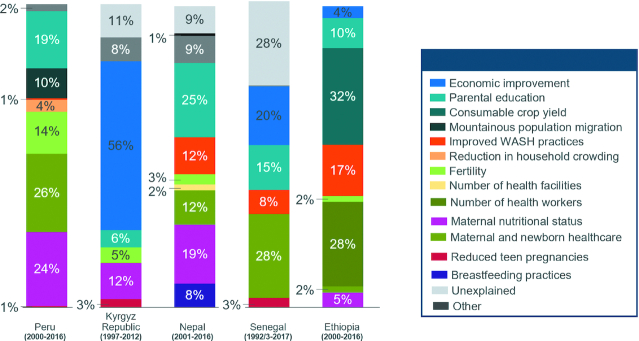
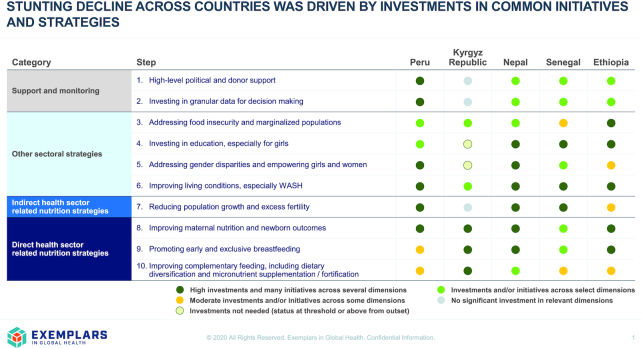
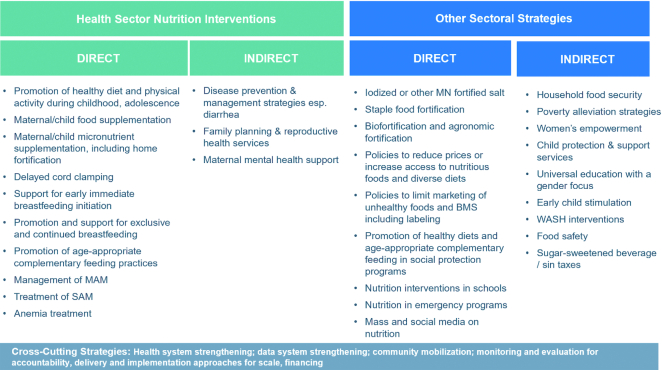
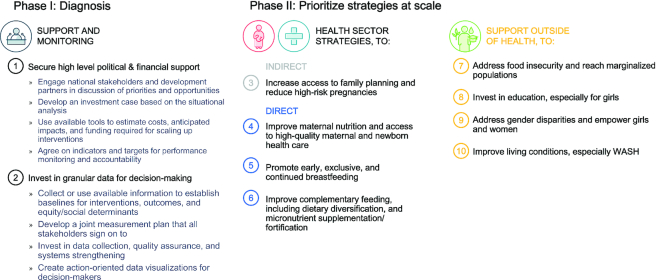
BACKGROUND: Child stunting and linear growth faltering have declined over the past few decades and several countries have made exemplary progress. OBJECTIVES: To synthesize findings from mixed methods studies of exemplar countries to provide guidance on how to accelerate reduction in child stunting. METHODS: We did a qualitative and quantitative synthesis of findings from existing literature and 5 exemplar country studies (Nepal, Ethiopia, Peru, Kyrgyz Republic, Senegal). Methodology included 4 broad research activities: 1) a series of descriptive analyses of cross-sectional data from demographic and health surveys and multiple indicator cluster surveys; 2) multivariable analysis of quantitative drivers of change in linear growth; 3) interviews and focus groups with national experts and community stakeholders and mothers; and 4) a review of policy and program evolution related to nutrition. RESULTS: Several countries have dramatically reduced child stunting prevalence, with or without closing geographical, economic, and other population inequalities. Countries made progress through interventions from within and outside the health sector, and despite significant heterogeneity and differences in context, contributions were comparable from health and nutrition sectors (40% of change) and other sectors (50%), previously called nutrition-specific and -sensitive strategies. Improvements in maternal education, maternal nutrition, maternal and newborn care, and reductions in fertility/reduced interpregnancy intervals were strong contributors to change. A roadmap to reducing child stunting at scale includes several steps related to diagnostics, stakeholder consultations, and implementing direct and indirect nutrition interventions related to the health sector and nonhealth sector . CONCLUSIONS: Our results show that child stunting reduction is possible even in diverse and challenging contexts. We propose that our framework of organizing nutrition interventions as direct/indirect and inside/outside the health sector should be considered when mapping causal pathways of child stunting and planning interventions and strategies to accelerate stunting reduction to achieve the 2030 Sustainable Development Goals.
Overview
The claims and statistics of this paper haven’t been checked yet.
Free: it reads the open-access text and checks the first 5 claims that cite a source we can check. Create a free account to check every claim.
Integrity signals
Registry
Cites
Statistics
Figures
Verification
Claims the paper makes
The claims and statistics of this paper haven’t been checked yet.
Free: it reads the open-access text and checks the first 5 claims that cite a source we can check. Create a free account to check every claim.
Claims other papers make about this one
Each is checked against this paper’s own text: does it say what the citing paper says it does?
The cited source says what the claim attributes to it.
In the citing paper
“The substantial progress in reducing the tuberculosis burden in children might reflect recent trends showing marked decreases in child mortality,54 global improvements in child nutrition outcomes,55, 56 increasing tuberculosis case finding and services for children,57, 58, 59 and continued reductions in vertical HIV transmission.60, 61”
Self-check
Percentages, sums and reported differences re-computed from the paper’s own numbers.
The self-check needs the paper’s full text.
Citations
Cites
Maternal and child undernutrition and overweight in low-income and middle-income countries
Black, R. E., Victora, C. G., Walker, S. P., Bhutta, Z. A., Christian, P., de Onis, M., Ezzati, M., Grantham-McGregor, S., Katz, J., Martorell, R., et al. (2013) · The Lancet · doi:10.1016/s0140-6736(13)60937-x · Cited by 8,475
Self-citationAbarca-Gómez, L., Abdeen, Z. A., Hamid, Z. A., Abu-Rmeileh, N. M., Acosta-Cazares, B., Acuin, C., Adams, R. J., Aekplakorn, W., Afsana, K., Aguilar-Salinas, C. A., et al. (2017) · The Lancet · doi:10.1016/s0140-6736(17)32129-3 · Cited by 7,482
Self-citationMaternal and child undernutrition: global and regional exposures and health consequences
Black, R. E., Allen, L. H., Bhutta, Z. A., Caulfield, L. E., de Onis, M., Ezzati, M., Mathers, C., & Rivera, J. (2008) · The Lancet · doi:10.1016/s0140-6736(07)61690-0 · Cited by 6,443 · cited 2×
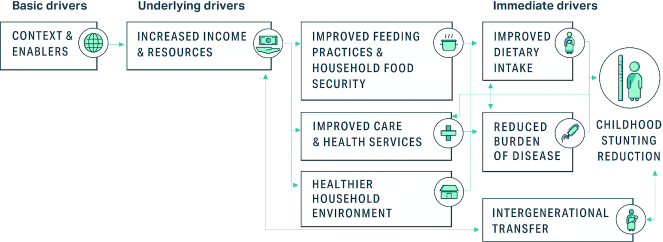
“(6, 7) (2008, 2013) was used to guide all analyses and inferences (Figure 1).”
BackgroundMethodSelf-citationBhutta, Z. A., Das, J. K., Rizvi, A., Gaffey, M. F., Walker, N., Horton, S., Webb, P., Lartey, A., & Black, R. E. (2013) · The Lancet · doi:10.1016/s0140-6736(13)60996-4 · Cited by 3,093
Self-citationEarly childhood development coming of age: science through the life course
Black, M. M., Walker, S. P., Fernald, L. C. H., Andersen, C. T., DiGirolamo, A. M., Lu, C., McCoy, D. C., Fink, G., Shawar, Y. R., Shiffman, J., et al. (2017) · The Lancet · doi:10.1016/s0140-6736(16)31389-7 · Cited by 3,014
What works? Interventions for maternal and child undernutrition and survival
Bhutta, Z. A., Ahmed, T., Black, R. E., Cousens, S., Dewey, K., Giugliani, E., Haider, B. A., Kirkwood, B., Morris, S. S., Sachdev, H., et al. (2008) · The Lancet · doi:10.1016/s0140-6736(07)61693-6 · Cited by 2,258
Self-citationRuel, M. T., & Alderman, H. (2013) · The Lancet · doi:10.1016/s0140-6736(13)60843-0 · Cited by 1,820
Dynamics of the double burden of malnutrition and the changing nutrition reality
Popkin, B. M., Corvalan, C., & Grummer-Strawn, L. M. (2020) · The Lancet · doi:10.1016/s0140-6736(19)32497-3 · Cited by 1,709 · cited 6×
“Recent case studies of success have identified these same factors as contributing to change in undernutrition over time in a set of LMICs (20).”
BackgroundInfluentialWorldwide Timing of Growth Faltering: Revisiting Implications for Interventions
Victora, C. G., de Onis, M., Hallal, P. C., Blössner, M., & Shrimpton, R. (2010) · Pediatrics · doi:10.1542/peds.2009-1519 · Cited by 1,466 · cited 1×
“The bulk of linear growth faltering seen in children aged <5 y occurs within 1000 d after conception (1, 2).”
BackgroundSelf-citationBlencowe, H., Krasevec, J., de Onis, M., Black, R. E., An, X., Stevens, G. A., Borghi, E., Hayashi, C., Estevez, D., Cegolon, L., et al. (2019) · The Lancet Global Health · doi:10.1016/s2214-109x(18)30565-5 · Cited by 1,242 · cited 1×
“With the global drive to improve data capture around birth weight (28), this might improve over time.”
BackgroundSelf-citation
Cited by
Items 101–200 of 247
When did the substantial loss of child linear growth occur?
Putri, D. S. K., Widodo, Y., Gunardi, H., Kusharisupeni, Besral, B., Jahari, A. B., Syafiq, A., Achadi, E. L., & Bhutta, Z. A. (2023) · PLoS ONE · doi:10.1371/journal.pone.0291176 · Cited by 5
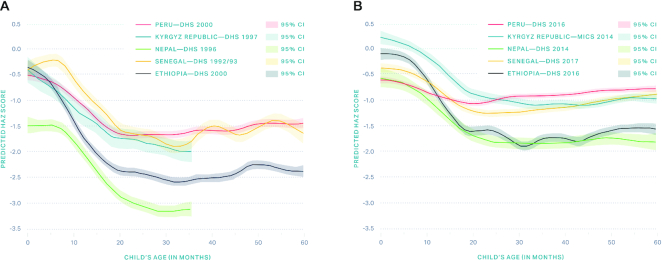
“The study also showed that all of the countries that have successfully reduced the prevalence of stunting showed flattening in the Victora curve during 0–6 months of age over time and it might be influenced by improvement in breastfeeding practice [29].”
BackgroundSelf-citationPublic Service Motivation Dalam Mewujudkan Desa Bebas Stunting : Studi Kasus Desa Mongpok
Berthanila, R., Zainuri, A., Mulyasih, R., Sururi, A., & Yulianti, R. (2023) · Sawala Jurnal Administrasi Negara · doi:10.30656/sawala.v11i2.7904 · Cited by 4
“…bahkan sebelum kelahiran sebagai akibat dari asupan nutrisi yang sangat tidak memadai selama kehamilan, pola konsumsi yang Stunting diakibatkan oleh pertumbuhan fisik dan mental yang terhambat akibat kurangnya asupan gizi, terutama pada 1000 Hari Pertama Kehidupan (HPK) (Bhutta et al., 2020).”
BackgroundMusfira, M., Hadju, V., Indriasari, R., Ibnu, I. F., Citrakesumasari, C., Thaha, A. R., & Foo, L. H. (2025) · International Journal of Adolescent Medicine and Health · doi:10.1515/ijamh-2025-0114 · Cited by 4
Mokori, A., Kirimi, N., Ndungutse, A. H., Fusheini, Z., & Ssenyondo, M. (2025) · Food Science & Nutrition · doi:10.1002/fsn3.71149 · Cited by 4
THE EFFECT OF SENSITIVE INTERVENTIONS ON STUNTING REDUCTION EFFORTS
Khasanah, U., Esyuananik, E., Laili, A. N., & Saadah, N. (2022) · Jurnal Berkala Epidemiologi · doi:10.20473/jbe.v10i32022.274-282 · Cited by 4
“Research by Bhutta et al., (2020) stated that reducing stunting on a large scale includes several steps related to diagnostics, stakeholder consultation, and implementing direct and indirect nutrition interventions in the health”
MethodNamukose, S., Maina, G. W., Kiwanuka, S. N., & Makumbi, F. E. (2024) · Journal of Health Population and Nutrition · doi:10.1186/s41043-024-00559-7 · Cited by 6
Yet, B., Başerdem, E. Ö., & Rosenstock, T. S. (2024) · Expert Systems with Applications · doi:10.1016/j.eswa.2024.124940 · Cited by 4
Siekmans, K., Bose, S., Escobar-DeMarco, J. L., & Frongillo, E. A. (2024) · Maternal and Child Nutrition · doi:10.1111/mcn.13711 · Cited by 4
“Leadership, operational capacity, and finance are key factors for enabling nutrition intervention delivery (Bhutta et al., 2020; Heidkamp et al., 2021).”
Sembiring, D., Aritonang, E. Y., Purba, A., & Lubis, R. (2021) · Open Access Macedonian Journal of Medical Sciences · doi:10.3889/oamjms.2021.6647 · Cited by 4
“Food treatments tailored to the nutritional needs of children under the age of 5 are also successful in improving their nutritional status [13], [14].”
BackgroundDecomposing the Intraurban Malnutrition Gap Between Poor and Non-poor Children in Colombia
Olmedo, G. A. R., Cárdenas, E., & Osório, A. M. (2022) · Journal of Urban Health · doi:10.1007/s11524-022-00683-x · Cited by 4
“For future studies, we recommend expanding research into the qualitative data to strengthen the evidence [26, 54], including the relationship between malnutrition with the type of education that mothers should have, breastfeeding practices, complementary feeding of the child, lifestyles, habits, and dietary changes.”
BackgroundMethodResultInfluentialRole of Intestinal Parasitic Infection in Stunting
Siagian, F. E. (2023) · South Asian Journal of Research in Microbiology · doi:10.9734/sajrm/2023/v15i2285 · Cited by 5
Juliani, H., & Wibawa, K. C. S. (2024) · Pakistan Journal of Criminology · doi:10.62271/pjc.16.2.843.856 · Cited by 5
Riyanto, S., Purwaningrum, D. N., & Lazuardi, L. (2025) · Media Kesehatan Masyarakat Indonesia · doi:10.30597/mkmi.v21i4.43510 · Cited by 3
Bawuah, A., Baatiema, L., Sarfo, M., Appiah, F., & Yaya, S. (2026) · Maternal and Child Nutrition · doi:10.1111/mcn.70175 · Cited by 3
“…Infant and Young Child Nutrition, the Scaling Up Nutrition (SUN) Movement, and the Thousand Days Initiative set ambitious goals, including a 40% reduction in childhood stunting and halting the rise in overweight (Bhutta et al. 2020; Food and Agriculture Organization 2018; Fracassi et al. 2020).”
Determinan dan Strategi Pencegahan Stunting Pada Anak di Negara Berkembang : Literatur Review
Mashatim, Akbar, I., Lembah, N. A. R., Sudirman, & Yani, A. (2026) · Lambda Jurnal Ilmiah Pendidikan MIPA dan Aplikasinya · doi:10.58218/lambda.v6i1.2956 · Cited by 3
“Kajian ini diharapkan dapat memberi gambaran komprehensif mengenai faktor penyebab stunting serta strategi pencegahan yang tidak hanya berfokus pada anak, tetapi juga pada ibu, keluarga, lingkungan, layanan kesehatan, dan kebijakan multisektor Bhutta et al. (2020).”
InfluentialPurnamasari, I., Alviana, F., Prihati, E., Tsani, N. M., & Husna, K. (2024) · Idea Pengabdian Masyarakat · doi:10.53690/ipm.v2i02.276 · Cited by 3
Social realities in remote villages: Infant and young child feeding in Kirewa, Uganda
Schneider, L., Korhonen, K., Ollila, S., & Mutanen, M. L. (2024) · PLOS Global Public Health · doi:10.1371/journal.pgph.0003016 · Cited by 5
“Reviews have indicated that education, socioeconomic status, maternal nutrition, hygiene, healthcare services and family planning affect child growth faltering [6, 7].”
Exploring Stunting in South Kalimantan Province Using R Programming-Based Data Visualization
Hudaya, M., Nor, W., Yuliastina, M., & Nordiansyah, M. (2025) · Kesmas National Public Health Journal · doi:10.7454/kesmas.v20i3.2267 · Cited by 3
Priority interventions for reducing stunting in the complementary feeding age group in South Africa
Burger, R., du Plessis, L., Trust Gangaidzo, Sadan, M., Slemming, W., & Wills, G. (2025) · Development Southern Africa · doi:10.1080/0376835x.2025.2596786 · Cited by 4
“Bhutta et al. (2020) estimate that non-health sector interventions – such as improvements in education, water, sanitation and hygiene (WASH), and poverty reduction – account for roughly 50% of the variation in childhood stunting.”
The Implementation of Learning Optimization for the Stunting Program
Surbakti, F. E., & Ismail, I. (2023) · Edumaspul - Jurnal Pendidikan · doi:10.33487/edumaspul.v7i1.6869 · Cited by 3
Krisseptiana, & Martadi, N. S. D. (2024) · Jurnal PROMKES · doi:10.20473/jpk.v12.i2.2024.218-228 · Cited by 4
“Many aspects of the analysis hinge on the proxy data available rather than direct measurements of constructs (Bhutta et al ., 2020).”
BackgroundFatima, N. E., Ijaz, F., Aziz, A., Yasin, M., Muhammad, A., & Aftab, R. K. (2024) · Global Journal of Medical Pharmaceutical and Biomedical Update · doi:10.25259/gjmpbu_3_2024 · Cited by 3
An IoT-based Baby Scales for Stunting Monitoring in Indonesia
Sofie, M., Olla, P. K., Kusumaningtyas, P., & Chambali, F. M. (2025) · Indonesian Journal of Electronics Electromedical Engineering and Medical Informatics · doi:10.35882/ijeeemi.v5i4.191 · Cited by 2
Noerjoedianto, D., Ibnu, I. N., & Wisudariani, E. (2024) · Contagion Scientific Periodical Journal of Public Health and Coastal Health · doi:10.30829/contagion.v6i1.19500 · Cited by 2
“…sector, which then shifted to a multi-sector approach where each government from the lowest level, village, district, and central government maximized its programs and created superior programs related to stunting respectively. the incidence of stunting can be prevented (Bhutta et al., 2020).”
BackgroundMeasuring the Success of the Urban Farming Concept in Combating Stunting in Central Java, Indonesia
Tarmizi, A., Prasetyo, A., Hendrixon, Nasution, M. J., Hariastuti, I., Sugiharti, S., Wijayanti, U. T., Arsyad, S. S., Kilmanun, J. C., Burhansyah, R., et al. (2023) · Transactions of the Chinese Society of Agricultural Machinery · doi:10.62321/issn.1000-1298.2023.12.03 · Cited by 2
The Effect of Moringa Pudding on Increasing Breast Milk for Postpartum Mothers
Nurachma, E., Lushinta, L., Puspitaningsih, R., & Sholikah, I. (2024) · Asian Journal of Engineering Social and Health · doi:10.46799/ajesh.v3i5.328 · Cited by 2
Hendera, H., Yunus, M., Fitriah, A., Nadilla, D., Dewi, A. P., Hidayah, A., Rijal, M., Anggraini, P., Hidayatullah, R., Susanti, M., et al. (2025) · PengabdianMu Jurnal Ilmiah Pengabdian kepada Masyarakat · doi:10.33084/pengabdianmu.v10i1.8403 · Cited by 2
Hadiyanti, P., Irvansyah, A., Sasmita, K., Dalimunthe, H. H. B., & Affandi, M. (2024) · Edukasi · doi:10.15294/edukasi.v18i2.13610 · Cited by 2
“One of the primary strategies employed in addressing stunting, particularly in these rural areas, involves the implementation of effective extension programs (Bhutta et al., 2020).”
Shakya, E., Yang, Z., Dou, N., & Na, M. (2025) · Nutrition Reviews · doi:10.1093/nutrit/nuaf187 · Cited by 2
Overview of Stunting in Newborns in Pekalongan Regency Health Centers: A Retrospective Study
Ratnawati, R., Kurniawati, T., Jumaroh, Kusuma, N. I., & Waskita, B. W. A. (2023) · Advances in Social Science, Education and Humanities Research/Advances in social science, education and humanities research · doi:10.2991/978-2-38476-022-0_97 · Cited by 1
Setianingsih, T., Suharso, E., & Hussain, N. (2024) · Padjadjaran Journal of Dentistry · doi:10.24198/pjd.vol36no1.50723 · Cited by 1
Wijayanti, P. M., Latifah, L., Purwoko, S., Riyanto, S., Yunitawati, D., & Setyaji, T. (2024) · BIO Web of Conferences · doi:10.1051/bioconf/202413300019 · Cited by 1
Sormin, R. E. M., Salesman, F., Neolaka, M. N. B. C., & Toda, H. (2025) · Journal of Lifestyle and SDGs Review · doi:10.47172/2965-730x.sdgsreview.v5.n01.pe04883 · Cited by 1
Alam, W. O. S. N., & Sari, R. F. (2025) · Lecture notes in networks and systems · doi:10.1007/978-981-96-6438-2_19 · Cited by 1
Nasaru, J., Azam, M., Kh, O. W., & Yuniastuti, A. (2025) · Proceeding of International Seminar and Workshop on Public Health Action · doi:10.60074/iswopha.v1i1.14418 · Cited by 1
“Research shows that collaborative models involving the health, education, agriculture, and local government sectors are able to create synergies that produce greater impact than stand-alone sectoral interventions (Astuti et al., 2025; Bhutta et al., 2020).”
Azzahra, N. A., Dwiputrianti, S., & Wang, T. (2025) · Irpia Jurnal Ilmiah Riset dan Pengembangan · doi:10.71040/irpia.v10i4.307 · Cited by 1
“How countries can reduce child stunting at scale: Lessons from exemplar countries (Bhutta et al., 2020) Table 1 shows that many Lower Middle Income Countries (LMICs) rely on community-based health strategies to reduce stunting, yet governance models and institutional arrangements differ…”
Pambudi, I., & Juwono, V. (2026) · Jurnal Public Policy · doi:10.35308/jpp.v12i1.13636 · Cited by 1
“The issue becomes complex because addressing stunting requires involvement from multiple sectors since success lies within the community (Aguayo & Menon, 2016; Bhutta et al., 2020; Dewey, 2016).”
Kunaepah, U., Sulistiyono, P., Azzahra, R., & Alviani, E. D. (2026) · AcTion Aceh Nutrition Journal · doi:10.30867/action.v11i1.3075 · Cited by 1
“…that nutrition education interventions have a limited impact on reducing stunting if not combined with nutrition-sensitive interventions, such as social protection, sanitation improvements, and strengthening household food security (Bhutta et al., 2020; Ruel & Alderman, 2015; Smith et al., 2015).”
Tafere, Z., Regassa, N., & Ashenafi, M. (2026) · BMC Public Health · doi:10.1186/s12889-026-27765-8 · Cited by 1
“This underscores the central role of women’s education in household health management [6, 30, 31].”
Morrison, T., Akseer, N., Heidkamp, R. A., Maïga, A., & Tasic, H. (2026) · BMJ Open · doi:10.1136/bmjopen-2025-111298 · Cited by 1
Self-citationUnderstanding the interaction between stunting and women’s autonomy
Zaluchu, F. (2022) · Inovasi · doi:10.33626/inovasi.v19i2.646 · Cited by 2
Arrascue, J., Oyola-Feijóo, A., Chapilliquen, D., Villanueva, D., Zapata, E., & Romaní, F. (2022) · Revista del Cuerpo Médico Hospital Nacional Almanzor Aguinaga Asenjo · doi:10.35434/rcmhnaaa.2022.154.1396 · Cited by 3
Validity & Reliability of Stunting Questionnaire for Toddlers in Rural Areas of Southwest Papua
Hasim, N. H., Inayah, I., & Nurjannah, N. (2023) · Babali Nursing Research · doi:10.37363/bnr.2023.43244 · Cited by 1
Family Empowerment to Fullfillment Nutrition in Stunted Children
Hastuti, A. P., Suprawoto, D. N., Roesardhyati, R., Kurniawan, A. W., Soares, D., & Fani, R. (2024) · Babali Nursing Research · doi:10.37363/bnr.2024.51337 · Cited by 1
Hariyadi, D., Ginting, M., Ginting, M., Dewintha, R., Dewintha, R., Dahliansyah, D., & Dahliansyah, D. (2023) · Pontianak Nutrition Journal (PNJ) · doi:10.30602/pnj.v6i1.1144 · Cited by 1
Kesulitan Orang Tua dalam Identifikasi Awal Gejala Stunting
Halimatussa'diah, Hernida, A. Y., Sitompul, A. D. P., & ningsih, D. (2025) · Indonesian Journal of Early Childhood Jurnal Dunia Anak Usia Dini · doi:10.35473/ijec.v7i1.2852 · Cited by 3
“Dengan memahami tingkat pengetahuan dan kebutuhan orang tua secara langsung, program-program edukasi dapat disesuaikan untuk memberikan informasi yang relevan dan membangun pemahaman yang lebih baik tentang stunting (Bhutta et al., 2020).”
Bela, S. R. A., Tappy, M., Rahawarin, E., & Pamean, M. S. (2025) · Jurnal Ners · doi:10.31004/jn.v9i3.46243 · Cited by 1
Konstruksi Model Intervensi Stunting Berbasis Riset Ilmiah: Tinjauan Literarur
Permana, D. N. S., & Adam, A. (2025) · Borneo Nursing Journal (BNJ) · doi:10.61878/bnj.v7i2.154 · Cited by 1
Verhagen, W., Pereira, C. C., Böhl, D., Meziere, M. E., Irfan, M. T., & Moyer, J. D. (2022) · SSRN Electronic Journal · doi:10.2139/ssrn.4064238 · Cited by 2
From Policy to Impact: A 10-Year Analysis of Stunting in Ecuador (2013-2023)Preprint
Ruales, J., Carvajal, E., Morejón-Terán, Y. A., Torres, Y., Arequipa, R., Sánche, M., Herrera, E., Armijos, L., Kern, E., Sánchez, X., et al. (2024) · SSRN Electronic Journal · doi:10.2139/ssrn.4837555 · Cited by 1
Abdullah, V. I. (2021) · Jurnal Kesehatan Prima · doi:10.32807/jkp.v15i2.624
“(Bhutta et al., 2020) In Indonesia, based on the results of Basic Health Research (Riskesdas), the prevalence of stunting in children under five has decreased from 37.”
BackgroundInfluentialDOES STUNTING ASSOCIATE TO THE TOTAL FACTOR PRODUCTIVITY? A CASE OF EAST JAVA, INDONESIA
Yasin, M. Z., & Arini, H. R. B. (2019) · East Java Economic Journal · doi:10.53572/ejavec.v3i2.54
“…program, which was dominantly centralized on economic welfare, such as women’s empowerment, poverty alleviation strategies, and policies to discount prices to nutritious foods and diverse diets, is found improving child growth by approximately 50 per cent (Bhutta et al., 2020)1.”
BackgroundAnalysis of Stunting Factors in Children Aged 24-59 Months during The Covid-19 Pandemic
Ezalina, E., Hasana, U., & Malfasari, E. (2022) · Jurnal Keperawatan Soedirman · doi:10.20884/1.jks.2022.17.1.5134
“If their rest is frequently disturbed, there will be abnormal growth due to the growth hormone Field's low or lack of excretion (Bhutta et al., 2020).”
BackgroundCOVID-19 pandemisinin bebek ve çocuk beslenmesine etkisi
Pars, H., & Özcebe, H. (2022) · Türkiye Halk Sağlığı Dergisi · doi:10.20518/tjph.1074875
Ismiraj, M. R., Nurhamsyah, D., Yuniarti, E., Putra, P. K. D. N. Y., & Wulansari, A. (2024) · Farmers Journal of Community Services · doi:10.24198/fjcs.v5i1.53225
Presidential election brings a challenging future for evidence informed health policies in Indonesia
Mahendradhata, Y. (2024) · BMJ · doi:10.1136/bmj.q1119
Casas, L. D., Bagas, J., Ulep, V. G., & Fund, U. N. C. (2024) · doi:10.62986/dp2024.07
Sitorus, S., Purba, J., Sinaga, H. T., & Sipayung, A. D. (2024) · Jurnal Penelitian Pendidikan IPA · doi:10.29303/jppipa.v10ispecialissue.7998
“For instance, a study in Ethiopia found similar associations between maternal knowledge of nutrition and reduced stunting rates, emphasizing the need for educational interventions (Bhutta et al., 2020; Abebe et al., 2016; Muche et al., 2021).”
BackgroundNutrition and Infectious Disease
McLaren, S. (2022) · Wiley eBooks · doi:10.1002/9781394322596.ch4
McLaren, S. (2022) · Wiley eBooks · doi:10.1002/9781394322596.ch6
Yuliwati, N., Irma, I., Putri, R. E., Untasih, R. A., & Yuliani, O. (2024) · Jurnal Penelitian Pendidikan IPA · doi:10.29303/jppipa.v10i11.8698 · Cited by 1
“…is relatively less sensitive to the problem of malnutrition in a relatively short period of time, the effect of malnutrition on height will appear over a relatively long period of time so that the TB/U index can be used to describe past nutritional status (Bhutta et al., 2020; Conway et al., 2020).”
Combat stunting in Indonesia: Quo vadis?
Choironi, E. A. (2024) · Jurnal kedokteran dan kesehatan Indonesia · doi:10.20885/jkki.vol15.iss3.art1
Trends in Stunting Prevalence in East Java (2019-2023): A Comprehensive Analysis
Hasan, D. S. (2025) · KAMBOTI Jurnal Sosial dan Humaniora · doi:10.51135/kambotivol4issue2page102-109
“International initiatives, such as the Sustainable Development Goals (SDGs) set by UNICEF and WHO, emphasize reducing stunting as a priority (Bhardwaj et al., 2017; Bhutta et al., 2020; Shekar et al., 2017).”
Mokori, A., Kirimi, N., Ndungutse, A. H., Fusheini, Z., & Ssenyondo, M. (2025) · Qeios · doi:10.32388/c65iij
Permana, I., Norviatin, D., Arumtara, H. N., & Wardhani, F. N. (2024) · Journal La Medihealtico · doi:10.37899/journallamedihealtico.v5i6.1731
Dynamics of Food Self-sufficiency and Stunting: Evidence Jember Regency Indonesia
Astuti, S. J. W., & Putra, A. P. (2025) · KnE Social Sciences · doi:10.18502/kss.v10i4.18054
“Stunting or stunted child growth has become an urgent global issue, especially in developing countries [1]; [2].”
Mokori, A., Kirimi, N., Ndungutse, A. H., Fusheini, Z., & Ssenyondo, M. (2025) · Qeios · doi:10.32388/c65iij.2
Chaudhry, T. T. (2026) · American Journal of Clinical Nutrition · doi:10.1016/j.ajcnut.2026.101307
Abbas, S., Tahir, A., Aneta, Y., & Dama, H. (2025) · Jurnal Public Policy · doi:10.35308/jpp.v11i2.11396
“Bhutta et al. (2020) stated that marriage as a social and cultural institution tends to place women in a subordinate position, where they often do not have the space to make decisions independently, including in matters of child health.”
Armaini, Syukur, S., Zein, R., Rilda, Y., Septiani, U., & Wendari, T. P. (2025) · Warta Pengabdian Andalas · doi:10.25077/jwa.32.2.147-158.2025
Improving early childhood nutrition practices through parents’ evening forums in rural Rwanda
Nsanzabera, F., Irakoze, E., Manishimwe, A., Nsengiyumva, J. B., Mwiseneza, A., Ntakirutimana, E., & Nkurikiyimana, F. (2025) · Public Health Nutrition · doi:10.1017/s1368980025100803
“…forum proves effective in Gicumbi district, the model could be expanded throughout Rwanda and in comparable regions across sub-Saharan Africa, providing a culturally embedded strategy for enhancing child nutrition and lowering morbidity and mortality from malnutrition on a broader scale (19,20) .”
Determinants of Inequality in Stunting among Children Aged Between 0-23 Months in Tanzania
Mwalupani, N. R., Mkelenga, A. J., & Pauline, R. N. (2025) · Rural Planning Journal/Rural planning journal · doi:10.59557/rpj.27.1.2025.164
Sociological Inequalities and Nutrition Outcomes
Baye, K. (2025) · Springer eBooks · doi:10.1007/978-3-031-32047-7_20-1
Gender Differentiated Impacts of Rural Advisory Services on Household and Child Nutrition
Addai, K. N., Iftekhar, M. S., & Rohde, N. (2025) · Social Indicators Research · doi:10.1007/s11205-025-03722-7
“By 2025, only 20% of the World Health Organization (WHO) target of reducing child stunting by 40% is expected to be achieved, even with 90% coverage of ten nutritional-specific interventions (Bhutta et al., 2020).”
Hastuti, A. P., Wahyusari, S., & Servitia, A. E. (2025) · Journal of Applied Nursing and Health · doi:10.55018/janh.v7i3.449
“Community Health Centers can also carry out stunting prevention and management programs integrated with various related parties, including community leaders, educational institutions and other community organizations (Perumal, Bassani, and Roth 2018; Bhutta et al. 2020a; 2020b).”
Van der Spek, L., & Sonneveld, B. G. J. S. (2024) · Figshare · doi:10.6084/m9.figshare.26702185
Van der Spek, L., & Sonneveld, B. G. J. S. (2024) · Figshare · doi:10.6084/m9.figshare.25547043
Van der Spek, L., & Sonneveld, B. G. J. S. (2024) · Figshare · doi:10.6084/m9.figshare.26702197
Van der Spek, L., & Sonneveld, B. G. J. S. (2024) · Figshare · doi:10.6084/m9.figshare.26702194
Van der Spek, L., & Sonneveld, B. G. J. S. (2024) · Figshare · doi:10.6084/m9.figshare.26702182
Van der Spek, L., & Sonneveld, B. G. J. S. (2024) · Figshare · doi:10.6084/m9.figshare.26702188
Van der Spek, L., & Sonneveld, B. G. J. S. (2024) · Figshare · doi:10.6084/m9.figshare.26702203
Aboagye, R. G., Donkoh, I. E., Okyere, J., Seidu, A.-A., Ahinkorah, B. O., & Yaya, S. (2024) · Figshare · doi:10.6084/m9.figshare.26729614
Van der Spek, L., & Sonneveld, B. G. J. S. (2024) · Figshare · doi:10.6084/m9.figshare.26702200
Sucipto, H., Nurhadi, N., & Supriyati, S. (2023) · Springer Link (Chiba Institute of Technology) · doi:10.1051/bioconf/20237505020/pdf
Van der Spek, L., & Sonneveld, B. G. J. S. (2024) · Figshare · doi:10.6084/m9.figshare.25547118
WATKINS, K. L., Nwajiaku, K., & Kovach, H. (2024) · Econstor (Econstor) · Cited by 9
Widjaja, G., Setiawan, M. N. A., Judijanto, L., Katmawanti, S., Bangkara, B. M. A. S. A., & Fatmawati, E. (2024) · Dialnet (Universidad de la Rioja)
Household resilience capacity and food security in central Asia
Egamberdiev, B. (2025) · Econstor (Econstor) · doi:10.25673/120337 · Cited by 1
Hasib (2024) · Magenta Journal De Healthymedi · doi:10.37899/mjdh.v1i1.11
Kebebu, A., Henry, C. J., & Abegaz, K. (2022) · Journal of Science and Development · doi:10.20372/y43bqc28
Armi, M. I. (2025) · Domus Legalis Cogitatio. · doi:10.24002/dlc.v2i2.12748
Mukashyaka, J., Nzeyimana, Z., Meharry, P. M., Katende, G., Mujawamariya, F., Aryeetey, R., & Uwimana, P. (2026) · Research Square · doi:10.21203/rs.3.rs-8300632/v1
Irwansyah, I., Zahran, W. S., & Fahriyah, A. (2025) · Transparansi Jurnal Ilmiah Ilmu Administrasi · doi:10.31334/transparansi.v8i2.5416
“Bhutta et al., (2020) explain that health education is an important channel that bridges the relationship between access to services and improving children's health.”
Edukasi Pencegahan Stunting dan Malaria Tahun 2025
Popang, C. T., & Lestari, D. (2025) · Journal of Community and Development · doi:10.47134/comdev.v6i2.1761
Yamin, I. S., Rahmawati, S. D., & Furqan, B. R. N. (2026) · JURNAL KESEHATAN TROPIS INDONESIA · doi:10.63265/jkti.v4i1.178
“This duration is insufficient to fully correct chronic, cumulative linear deficits that have accrued over years (Bhutta et al., 2020; Elisanti et al., 2023).”
Angelita C. Jaya, R., Hannah Grace D. Pugong, R., Daryne Aya H. Bolla, R., Edelmer B. Azcueta, R., & Falguera, C. C. (2026) · Acta Medica Philippina · doi:10.47895/amp.vi0.13099
“35 In this study, mothers/primary caregivers from the beneficiary households were found to be older and had lesser years of education compared to those from non-beneficiary households.”
Simatupang, M. Y., Gultom, S., & Rahman, A. (2026) · Journal of Education and Health Promotion · doi:10.4103/jehp.jehp_702_25
“[4] Stunting not only affects physical growth but also has long‑term impacts on cognitive development, academic performance, and future productivity.”
Pansho, M., & Mwanza, J. (2026) · African Journal of Empirical Research · doi:10.51867/ajernet.7.1.55
Istiqomah, I., Karlina, K., Nuriyah, N., Ainun, A., Rusmiati, R., & Hamzah, A. (2026) · Kegiatan Positif Jurnal Hasil Karya Pengabdian Masyarakat · doi:10.61132/kegiatanpositif.v4i1.2498
Metadata
- Authors
- Bhutta, Z. A., Akseer, N., Keats, E. C., Vaivada, T., Baker, S., Horton, S. E., Katz, J., Menon, P., Piwoz, E., Shekar, M., Victora, C., & Black, R.
- Affiliations
- Aga Khan University (PK)
- Hospital for Sick Children (CA)
- United States Agency for International Development (US)
- University of Waterloo (CA)
- Johns Hopkins University (US)
- International Food Policy Research Institute (US)
- Gates Foundation (US)
- World Bank (US)
- Universidade Federal de Pelotas (BR)
- Corresponding author
- Bhutta, Zulfiqar A
- ORCID
- Venue
- The American Journal of Clinical Nutrition
- Publisher
- Elsevier BV
- Published
- 2020-09
- Volume
- 112
- Issue
- Suppl 2
- Pages
- 894S-904S
- ISSN
- 0002-9165 (ISSN-L)
- PMC
- PMC7487427
- OpenAlex
- W3045232500
- Cited by
- 187
- References
- 40
- Citations by year
- 2026: 26 · 2025: 41 · 2024: 46 · 2023: 20 · 2022: 33 · 2021: 14 · 2020: 6
- FWCI
- 2.24
- Type
- journal article
- Language
- en
- Open access
- hybrid
- doi.org
- Licence
- cc-by
- www.elsevier.com/tdm/userlicense/1.0/ (tdm)
- creativecommons.org/licenses/by/4.0/ (vor)
- Locations
- American Journal of Clinical Nutrition (publishedVersion, cc-by)
- PubMed Central (publishedVersion, cc-by)
- PubMed (publishedVersion)
- eCommons - AKU (Aga Khan University) (submittedVersion)
- IFPRI E-brary (International Food Policy Research Institute) (submittedVersion, other-oa)
- International Food Policy Research Institute (International Food Policy Research Institute) (submittedVersion, other-oa)
- Funders
- Gates Ventures
- Topics
- Health Sciences › Nursing › Nutrition and Dietetics › Child Nutrition and Water Access
- Health Sciences › Medicine › Pediatrics, Perinatology and Child Health › Public Health and Nutrition
- Health Sciences › Medicine › Pediatrics, Perinatology and Child Health › Global Maternal and Child Health
- Keywords
- child stunting, linear growth faltering, stunting reduction, nutrition interventions, maternal education, maternal nutrition, maternal and newborn care, interpregnancy interval, fertility decline, nutrition policy, Sustainable Development Goals
- MeSH terms
- Adult, Child, Preschool, Cross-Sectional Studies, Developing Countries, Evaluation Studies as Topic, Female, Growth Disorders, Humans, Infant, Male, Nutritional Status, Multivariate Analysis, Maternal Nutritional Physiological Phenomena, Young Adult
About these checks
Registry, retraction, Cites and statistics results are computed, not judged, with one exception: a printed reference that no index lists is read once by a model before it counts as a citation error. Claims are extracted by a model and kept only when their quote appears verbatim in the text; each cited source is then checked, with a model’s help, for whether it says what the claim relies on. Those verdicts can be wrong — read the claim’s quote and the cited source before relying on one.
Statistics and arithmetic are recomputed, not judged.
Confidence bands are shown only for fields calibrated on our annotated test set. None is calibrated yet, so no band is shown.
What counts as a claim ›How we measure confidence ›How we check this ›
Are you an author, or do you see a problem with this page? Request a review
Data sources
Bibliographic data: Semantic Scholar, OpenAlex, Crossref.
Contains information from the Semantic Scholar Academic Graph Datasets, made available under the ODC Attribution License (ODC-BY 1.0).
Semantic Scholar’s data is described in: Kinney, R., et al. (2023). The Semantic Scholar Open Data Platform. arXiv:2301.10140.
