

Affordability influences nutritional quality of seafood consumption among income and race/ethnicity groups in the United States
Open accessThe DOI matches its Crossref record; 48 of the 50 references it cites were found in a registry or an index.
Abstract
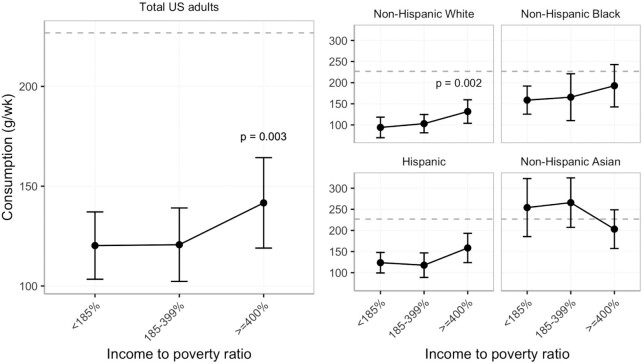
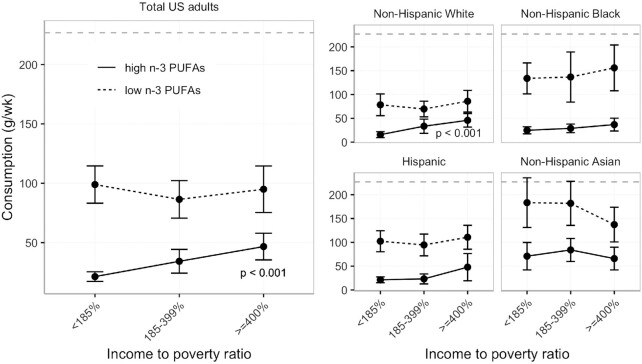
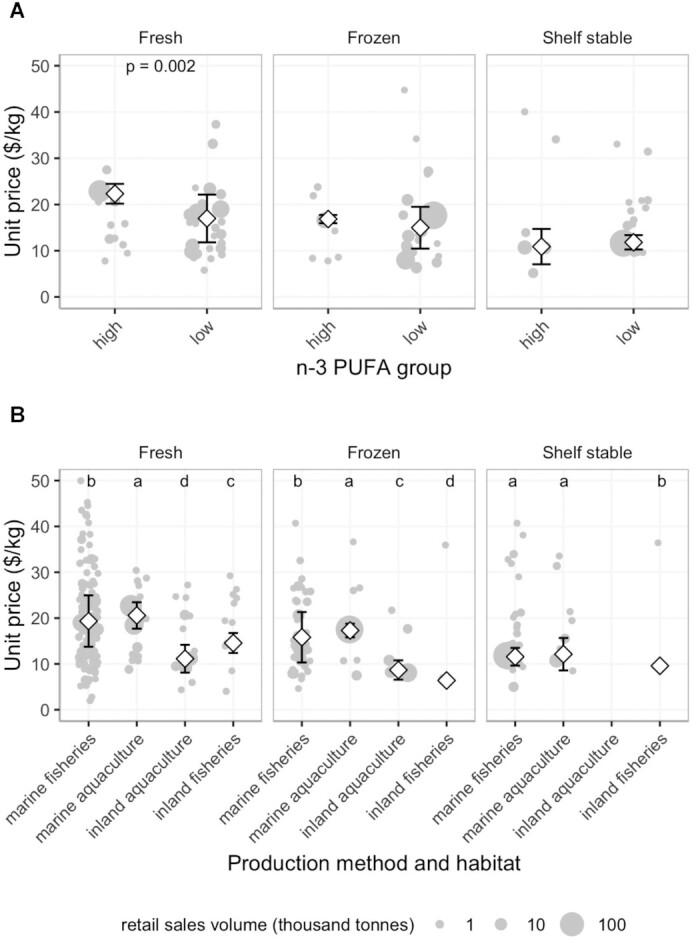
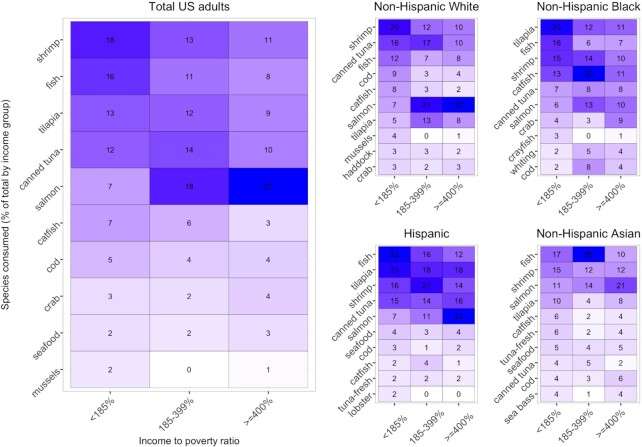
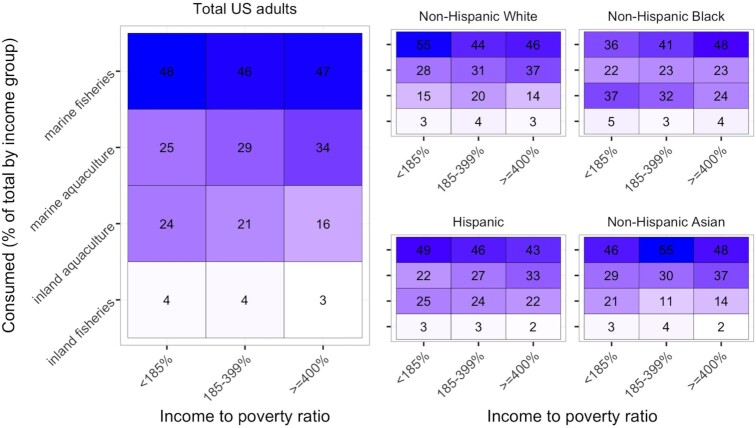
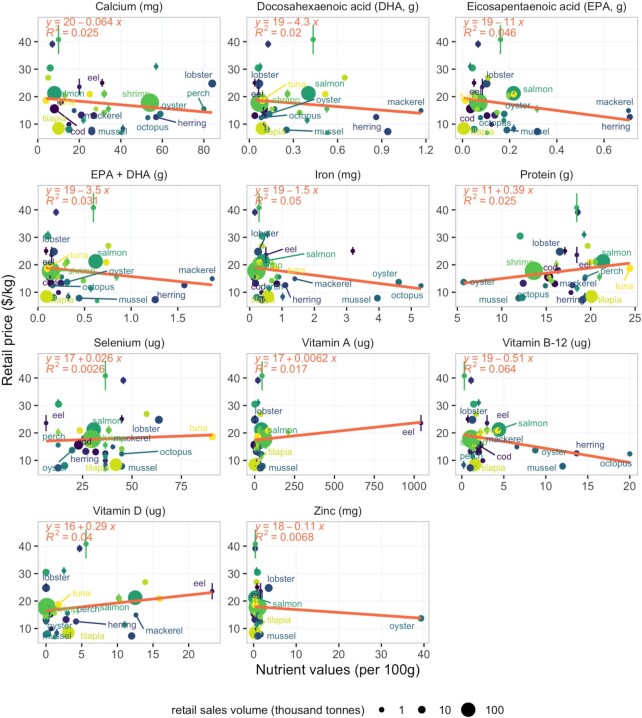
BACKGROUND: The 2020 US Dietary Guidelines for Americans recommend that the US population consume more seafood. Most analyses of seafood consumption ignore heterogeneity in consumption patterns by species, nutritional content, production methods, and price, which have implications for applying recommendations. OBJECTIVES: We assessed seafood intake among adults by socioeconomic and demographic groups, as well as the cost of seafood at retail to identify affordable and nutritious options. METHODS: NHANES 2011-2018 dietary data (n = 17,559 total, n = 3285 eating seafood) were used to assess adult (≥20 y) intake of seafood in relation to income and race/ethnicity. Multivariable linear regression assessed the association between seafood consumption and income, adjusted for age, sex, and race/ethnicity, and the association between nutrients and seafood price, using Nielsen 2017-2019 retail sales data, adjusted for sales volume. RESULTS: Low-income groups consume slightly less seafood than high-income groups [low income: mean 120.2 (95% CI: 103.5, 137.2) g/wk; high income: 141.8 (119.1, 164.1) g/wk] but substantially less seafood that is high in long-chain n-3 (ω-3) PUFAs [lower income: 21.3 (17.3, 25.5) g/wk; higher income: 46.8 (35.4, 57.8) g/wk]. Intake rates, species, and production method choices varied by race/ethnicity groups and within race/ethnicity groups by income. Retail seafood as a whole costs more than other protein foods (e.g., meat, poultry, eggs, beans), and fresh seafood high in n-3 PUFAs costs more (P < 0.002) than fresh seafood low in n-3 PUFAs. Retail seafood is available in a wide range of price points and product forms, and some lower-cost fish and shellfish were high in n-3 PUFAs, calcium, iron, selenium, and vitamins B-12 and D. CONCLUSIONS: New insights into the relation between seafood affordability and consumption patterns among income and ethnicity groups suggest that specific policies and interventions may be needed to enhance the consumption of seafood by different groups.
Overview
The claims and statistics of this paper haven’t been checked yet.
Free: it reads the open-access text and checks the first 5 claims that cite a source we can check. Create a free account to check every claim.
Integrity signals
Registry
Cites
Statistics
Figures
Verification
Claims the paper makes
The claims and statistics of this paper haven’t been checked yet.
Free: it reads the open-access text and checks the first 5 claims that cite a source we can check. Create a free account to check every claim.
Claims other papers make about this one
Each is checked against this paper’s own text: does it say what the citing paper says it does?
The cited source says what the claim attributes to it.
In the citing paper
“Fresh seafood with high n-3 PUFAs was 32% more expensive than fresh seafood with low n-3 PUFAs (p < 0.002).”
From Update on Omega-3 Polyunsaturated Fatty Acids on Cardiovascular Health (2022) · cites this paper as [24]
In the citing paper
“finding that individuals with lower incomes consumed less seafood (120.2 g/week) than individuals from high-income groups (141.8 g/week), with even lower consumption of seafood containing long-chain n-3 PUFAs (lower income: 21.3 g/week.vs. higher income 46.8 g/week) [24].”
From Update on Omega-3 Polyunsaturated Fatty Acids on Cardiovascular Health (2022) · cites this paper as [24]
In the citing paper
“These results were later corroborated after adjusting for age and sex as potential confounders, again finding that people with lower income consumed 18% less seafood than the people with higher income (p = 0.03), with an added lower intake of nuts, seeds (p < 0.001), soy (p < 0.001), and all protein foods (p < 0.001).”
From Update on Omega-3 Polyunsaturated Fatty Acids on Cardiovascular Health (2022) · cites this paper as [24]
Self-check
Percentages, sums and reported differences re-computed from the paper’s own numbers.
The self-check needs the paper’s full text.
Citations
Cites
Food in the Anthropocene: the EAT–Lancet Commission on healthy diets from sustainable food systems
Willett, W., Rockström, J., Loken, B., Springmann, M., Lang, T., Vermeulen, S., Garnett, T., Tilman, D., DeClerck, F., Wood, A., et al. (2019) · The Lancet · doi:10.1016/s0140-6736(18)31788-4 · Cited by 10,880 · cited 2×
“Identifying dietary patterns that are nutritious, affordable, and sustainable is critical for human and planetary health (1, 2) and for achieving several UN Sustainable Development Goals (3).”
Darmon, N., & Drewnowski, A. (2015) · Nutrition Reviews · doi:10.1093/nutrit/nuv027 · Cited by 1,258 · cited 1×
“quality diets (34) and are sensitive to food prices (35, 36).”
Blasbalg, T. L., Hibbeln, J. R., Ramsden, C. E., Majchrzak, S. F., & Rawlings, R. R. (2011) · The American Journal of Clinical Nutrition · doi:10.3945/ajcn.110.006643 · Cited by 881 · cited 1×
“Over the past century, the ratio of n–3 PUFAs to n–6 PUFAs has decreased over time with potential adverse implications for human health (42).”
BACI: International Trade Database at the Product-Level (the 1994-2007 Version)
Gaulier, G., & Zignago, S. (2010) · SSRN Electronic Journal · doi:10.2139/ssrn.1994500 · Cited by 860
Rao, M., Afshin, A., Singh, G., & Mozaffarian, D. (2013) · BMJ Open · doi:10.1136/bmjopen-2013-004277 · Cited by 770
Harnessing global fisheries to tackle micronutrient deficiencies
Hicks, C. C., Cohen, P. J., Graham, N. A. J., Nash, K. L., Allison, E. H., D’Lima, C., Mills, D. J., Roscher, M., Thilsted, S. H., Thorne-Lyman, A. L., et al. (2019) · Nature · doi:10.1038/s41586-019-1592-6 · Cited by 736 · cited 1×
“There are nearly 3000 taxa of aquatic foods with a wide range of fatty acid, macronutrient, and micronutrient levels, and nutrient composition data are becoming more available (17, 23, 41).”
Self-citationEnvironmental performance of blue foods
Gephart, J. A., Henriksson, P. J. G., Parker, R. W. R., Shepon, A., Gorospe, K. D., Bergman, K., Eshel, G., Golden, C. D., Halpern, B. S., Hornborg, S., et al. (2021) · Nature · doi:10.1038/s41586-021-03889-2 · Cited by 677 · cited 2×
“nutritional properties and environmental impacts (4, 5).”
Self-citationAquatic foods to nourish nations
Golden, C. D., Koehn, J. Z., Shepon, A., Passarelli, S., Free, C. M., Viana, D. F., Matthey, H., Eurich, J. G., Gephart, J. A., Fluet-Chouinard, E., et al. (2021) · Nature · doi:10.1038/s41586-021-03917-1 · Cited by 646 · cited 1×
“There are nearly 3000 taxa of aquatic foods with a wide range of fatty acid, macronutrient, and micronutrient levels, and nutrient composition data are becoming more available (17, 23, 41).”
Self-citationNutrition: Fall in fish catch threatens human health
Golden, C. D., Allison, E. H., Cheung, W. W. L., Dey, M. M., Halpern, B. S., McCauley, D. J., Smith, M., Vaitla, B., Zeller, D., & Myers, S. S. (2016) · Nature · doi:10.1038/534317a · Cited by 638 · cited 1×
“Seafood represents an opportunity to enhance the overall dietary quality given high micronutrient and n–3 PUFA content and the potential to substitute for less-healthy red and processed meat (43).”
Dietary Protein and Amino Acids in Vegetarian Diets—A Review
Mariotti, F., & Gardner, C. D. (2019) · Nutrients · doi:10.3390/nu11112661 · Cited by 411 · cited 1×
“Protein from animal source foods, including seafood, has a more balanced amino acid profile than that from most plant sources (18).”
Cited by
Production growth, company size, and concentration: The case of salmon
Pandey, R., Asche, F., Misund, B., Nygård, R., Adewumi, O. M., Straume, H., & Zhang, D. (2023) · Aquaculture · doi:10.1016/j.aquaculture.2023.739972 · Cited by 99
Self-citationUpdate on Omega-3 Polyunsaturated Fatty Acids on Cardiovascular Health
Rodriguez, D., Lavie, C. J., Elagizi, A., & Milani, R. V. (2022) · Nutrients · doi:10.3390/nu14235146 · Cited by 81
“[24], finding that individuals with lower incomes consumed less seafood (120.”
Small pelagic fish supply abundant and affordable micronutrients to low- and middle-income countries
Robinson, J. P. W., Mills, D. J., Ameyaw, G. A., Byrd, K. A., Mancha-Cisneros, M. D. M., Cohen, P. J., Fiorella, K. J., Graham, N. A. J., MacNeil, M. A., Maire, E., et al. (2022) · Nature Food · doi:10.1038/s43016-022-00643-3 · Cited by 106
Aquatic food loss and waste rate in the United States is half of earlier estimates
Love, D. C., Asche, F., Fry, J. P., Nguyen, L., Gephart, J. A., Garlock, T., Jenkins, L. D., Anderson, J. L., Brown, M. T., Viglia, S., et al. (2023) · Nature Food · doi:10.1038/s43016-023-00881-z · Cited by 54
“FLW at the retail and food services stages is probably influenced by what species are offered, which depends on the type of outlet 39 and consumer demographics 40 .”
BackgroundSelf-citationConsumption Patterns and Willingness to Pay for Sustainable Aquatic Food in China
Xu, H., Wu, T., Budhathoki, M., Fang, D. S., Zhang, W., & Wang, X. (2024) · Foods · doi:10.3390/foods13152435 · Cited by 44
“Food safety hazards, such as residual antibiotics in aquaculture foods [31], have led many consumers to perceive wild foods as safer than farmed alternatives [16].”
BackgroundInfluentialSeafood from Aquaculture and Fisheries, from Near and Afar
Asche, F. (2025) · Marine Resource Economics · doi:10.1086/734322 · Cited by 42
Self-citationGuillén, J., Asche, F., Borriello, A., Carvalho, N., Druon, J., Garlock, T., Llorente, I., & Macias, D. M. (2024) · Aquaculture · doi:10.1016/j.aquaculture.2024.741793 · Cited by 45
Self-citationLove, D. C., Asche, F., Gephart, J. A., Zhu, J., Garlock, T., Stoll, J. S., Anderson, J. L., Conrad, Z., Nussbaumer, E. M., Thorne‐Lyman, A., et al. (2022) · Reviews in Fisheries Science & Aquaculture · doi:10.1080/23308249.2022.2121601 · Cited by 37
“National annual statistics mask important patterns in seasonal and sub-national consumption, and particularly where and when seafood is consumed and by whom (Love et al., 2022a).”
BackgroundMethodSelf-citationWild fish consumption can balance nutrient retention in farmed fish
Willer, D. F., Newton, R., Malcorps, W., Kok, B., Little, D. C., Lӧfstedt, A., de Roos, B., & Robinson, J. P. W. (2024) · Nature Food · doi:10.1038/s43016-024-00932-z · Cited by 38
“Processed fillets from larger species are convenient, boneless and easy to prepare (for example, ‘big five’ of cod, tuna, haddock, salmon and prawns), and comprise 80% of all seafood consumed in the United Kingdom 50,51 .”
BackgroundIntermediaries in Norwegian salmon exports
Straume, H., Asche, F., & Øglend, A. (2023) · Aquaculture · doi:10.1016/j.aquaculture.2023.740437 · Cited by 27
Self-citationProduct forms and price transmission in major European salmon markets
Straume, H., Asche, F., Landazuri-Tveteraas, U., Misund, B., Pettersen, I. K., & Zhang, D. (2023) · Aquaculture · doi:10.1016/j.aquaculture.2023.740508 · Cited by 21
Self-citationAnderson, J. L., Asche, F., Håkan Eggert, A., & Garlock, T. (2025) · Aquaculture Economics & Management · doi:10.1080/13657305.2024.2446143 · Cited by 18
“There is also a growing literature that shows that aquaculture increases sea-food consumption where production is conducted (Garlock, Asche, et al., 2022) and that aquaculture is important for sustaining healthy diets (Golden et al., 2021; Love et al., 2022).”
Self-citationFood insecurity is associated with metabolic syndrome among US adults: NHANES 2005–2016
Reeder, N., & Reneker, J. C. (2024) · Nutrition Research · doi:10.1016/j.nutres.2024.03.014 · Cited by 18
Turmeric trends: analyzing consumer preferences and willingness to pay
Ly, N., Govindasamy, R., & Mentreddy, S. R. (2024) · Frontiers in Sustainable Food Systems · doi:10.3389/fsufs.2024.1359040 · Cited by 25
Conflict and alignment on aquaculture among Californian communities
Fong, C. R., Gonzales, C. M., Rennick, M., Lahr, H. J., Gardner, L. D., Halpern, B. S., & Froehlich, H. E. (2023) · Aquaculture · doi:10.1016/j.aquaculture.2023.740230 · Cited by 15
Unlocking the potential of forage fish to reduce the global burden of disease
Xia, S., Takakura, J., Tsuchiya, K., Park, C. Y., Heneghan, R., & Takahashi, K. (2024) · BMJ Global Health · doi:10.1136/bmjgh-2023-013511 · Cited by 17
Fogelholm, M., Vepsäläinen, H., Meinilä, J. M., McRae, C., Saarijärvi, H., Erkkola, M., & Nevalainen, J. (2024) · American Journal of Clinical Nutrition · doi:10.1016/j.ajcnut.2024.03.003 · Cited by 20
Lombardo, M. (2025) · Foods · doi:10.3390/foods14050887 · Cited by 16
“This trend is consistent with Love et al. [30] who demonstrated that income and local food availability significantly impact fish consumption.”
A Review of Global Fisheries Performance
Asche, F., Garlock, T., Anderson, J. L., Pincinato, R. B. M., Anderson, C. M., Camp, E. V., Chu, J., Cojocaru, A. L., Håkan Eggert, A., Lorenzen, K., et al. (2025) · Fish and Fisheries · doi:10.1111/faf.12890 · Cited by 10
Self-citationIdentifying market opportunities for farmed marine finfish in the southeast U.S.
Agyeman, D. A., Senten, J. H. V., Engle, C. R., & Schwarz, M. H. (2024) · Aquaculture Economics & Management · doi:10.1080/13657305.2024.2333313 · Cited by 10
“…fresh forms were generally preferred in this study but also because the fresh seafood category includes the greatest diversity of species sold at retail, accounts for a greater percentage of retail sales revenue (Love et al., 2022a), and is likelier to command a higher price (Asche et al., 2022).”
InfluentialBarragán-Hernández, W. A., López-Campos, Ó., Aalhus, J. L., & Prieto, N. (2024) · Meat Science · doi:10.1016/j.meatsci.2024.109643 · Cited by 9
Fang, Y., Gao, Z., & Zhang, X. (2024) · Aquaculture Economics & Management · doi:10.1080/13657305.2024.2368782 · Cited by 13
“…Yang, et al., 2022), production technology (Uchida, Onozaka, et al., 2014; Uchida, Roheim, et al., 2014; Bronnmann & Asche, 2017; Asche, Eggert, et al., 2022), and product form (Love, Asche, et al., 2022). not appear to be strong enough to conclude that information treatments can change the WTP.”
Uddin, M. T., Roy, S., & Dhar, A. R. (2024) · Fishes · doi:10.3390/fishes9110429 · Cited by 7
Khanal, N. B., Deb, U., Adhikari, S., & Dey, M. M. (2025) · Aquaculture Economics & Management · doi:10.1080/13657305.2025.2487528 · Cited by 7
“Issifu et al. (2022) reported a 5% increase in fish consumption for every 10% increase in income, while Love et al. (2022) found that high-income groups consumed 18% more seafood than low-income groups.”
InfluentialPan, K., Xu, J., Feng, L., Aris, A. Z., Yu, H., Xu, Y., He, J., Wang, C., & Yu, J. (2025) · iScience · doi:10.1016/j.isci.2025.112907 · Cited by 9
“High-income groups have a higher frequency of aquatic organisms such as seafood intake than low-income groups, 58 Because aquatic organisms are more likely to be polluted by PFASs, 51 the potential health risks of high-income groups may be higher than those of low-income groups.”
Pacyga, D. C., Buckley, J. P., Steele, E. M., Bommarito, P. A., Ferguson, K. K., & Stevens, D. R. (2025) · International Journal of Hygiene and Environmental Health · doi:10.1016/j.ijheh.2025.114557 · Cited by 5
Consumer Perceptions of Foods Fortified with Omega-3 from Fish Processing Side Streams
Okubanjo, S. S., Mæhle, N., Rugland, M. U., & Falch, E. (2025) · Journal of Aquatic Food Product Technology · doi:10.1080/10498850.2025.2527862 · Cited by 8
“…the highest amounts of fish (Atsumi et al. 2023; Harrison et al. 2004; Marinac Pupavac et al. 2022), while the population groups most in need of omega-3 (e.g., under-privileged households) appear to consume the lowest amounts of fish (Butler et al. 2021; Lane and Derbyshire 2013; Love et al. 2022).”
Agyeman, D. A., Senten, J. H. V., Engle, C. R., & Schwarz, M. H. (2024) · Aquaculture · doi:10.1016/j.aquaculture.2024.741681 · Cited by 5
Fish as food: Prioritizing domestic fish consumption to reduce the health burden
Xia, S., Takakura, J., Tsuchiya, K., Yamakawa, T., Wu, W., Park, C. Y., Hasegawa, T., Fujimori, S., & Takahashi, K. (2025) · Food Policy · doi:10.1016/j.foodpol.2025.102828 · Cited by 5
Xu, J. C., Peng, T., Kong, L., & Wei, N. (2025) · BMC Cardiovascular Disorders · doi:10.1186/s12872-025-04620-z · Cited by 3
“Furthermore, low-income groups in the United States often find it difficult to access foods rich in ω-3 fatty acids [26], such as fresh fish and seafood, further exacerbating the burden of IHD.”
Hossain, M. E., Dey, M. M., Asche, F., Sudhakaran, P. O., & Garlock, T. (2025) · Journal of the World Aquaculture Society · doi:10.1111/jwas.70071 · Cited by 3
Self-citationUncertain United States seafood sustainability in a manufactured crisis
Froehlich, H. E., & Gephart, J. A. (2025) · Marine Policy · doi:10.1016/j.marpol.2025.106795 · Cited by 3
Self-citationYiğit, M., Santaflıoglu, B., Kilic, E. K., Çelebier, K., & Kalaycı, F. (2025) · BMC Pediatrics · doi:10.1186/s12887-025-05791-6 · Cited by 4
“…in the literature to decrease fish consumption, our study found that while families with lower incomes consumed less fish overall, the frequency of children’s fish consumption and the timing of their first exposure to fish did not differ significantly from families with higher incomes [32, 39, 40].”
Zhang, J., Yeung, E. J., Vlahiotis, K., Bresolin, A. R., Hanna, D. E. L., Landsman, S. J., Cooke, S. J., & Nguyen, V. M. (2026) · Environmental Management · doi:10.1007/s00267-026-02389-1 · Cited by 2
“For instance, the stigma around people who harvest and eat “ trash fi sh ” or “ rough fi sh ” as opposed to popular “ game fi sh ” (Rypel et al. 2021; Miller 2023), may be interwoven with cultural differences in harvest among racial and ethnic communities (Roop et al. 2020; Love et al. 2022).”
Managing expectations: implementing nutrition-sensitive fisheries and aquaculture
Farmery, A. K., Fullbrook, L., & Allison, E. H. (2026) · Environmental Research Food Systems · doi:10.1088/2976-601x/ae5d4d · Cited by 2
Zheng, Z. J., Zhao, Q., & Xiao, Y. (2024) · Aquaculture Economics & Management · doi:10.1080/13657305.2024.2402252 · Cited by 2
“1 However, the consumption of aquatic products still falls short of the intake recommended by the Chinese Dietary Guidelines, in common with what is the case in most other countries as shown e.g. by Love et al. (2022) in the case of the US.”
Dietary Fatty Acid Intake: Impact of Low Income
Khor, B., & Ooi, Y. B. H. (2025) · Springer eBooks · doi:10.1007/978-3-031-32047-7_132-1 · Cited by 2
Waller, D. K., Miao, Z., Benjamin, R. H., Finnell, R. H., Dass, N. L. M., Nestoridi, E., Otto, M. C. D. O., Petersen, J. M., Ramadhani, T., Canfield, M. A., et al. (2026) · Birth Defects Research · doi:10.1002/bdr2.70053 · Cited by 1
“This may be due to the increased cost of some types of fish (Love et al. 2022), dislike of fish, a vegetarian diet, or concerns about the effects of mercury or other contaminants.”
Almada, A. A., Kim, A. J., Fenney, H., Kim, D. Y., Churches, N., Chilton, L., Madrigal, M., Quintanilla, M., & Campbell-Árvai, V. (2024) · Marine Policy · doi:10.1016/j.marpol.2024.106562
Abidin, Z., & Hamonangan, Y. N. (2025) · Jurnal Perikanan Unram · doi:10.29303/jp.v15i3.1496
Mendez, I., Farmer, N. M., Pujol, J. J., Camargo, J. T., Hinerman, A. S., Rodriquez, E. J., Nápoles, A. M., Daviglus, M. L., Pirzada, A., Cordero, C., et al. (2025) · Journal of Nutrition · doi:10.1016/j.tjnut.2025.09.002 · Cited by 1
“Although fatty fish naturally contains the largest amount of vitamin D, it is more expensive than other fish (e.g., tilapia) and protein sources, such as poultry, eggs, and beans [35].”
Gale, S., Aboluwade, R., Hunt, L., & Pettinger, C. (2025) · Nutrition Bulletin · doi:10.1111/nbu.70030 · Cited by 3
“This is supported by evidence that socioeconomic factors and afford-ability influence fish and seafood consumption overall (Love et al. 2022; DEFRA 2022) including the type of fish item selected.”
Balancing health benefits and risks: Consumer responses to seafood recalls
He, X. (2025) · European Review of Agricultural Economics · doi:10.1093/erae/jbaf028
Walker, M. F., Aldridge, D., & Willer, D. F. (2025) · International Journal of Food Sciences and Nutrition · doi:10.1080/09637486.2025.2590570
“Many previous studies concur that the perceived cost of fish is a key factor limiting increased consumption (Love et al. 2022; Gawel et al. 2023).”
Crusan, A. C., & Overcash, F. M. (2026) · Healthcare · doi:10.3390/healthcare14030291
“Seafood and olive oil, arguably the quintessential components of the Med-Style eating pattern, are found to be more expensive and less consumed, especially among low-income Americans [64,65].”
Malakoff, K. L., Kroetz, K., & Fissel, B. E. (2026) · Journal of Environmental Economics and Management · doi:10.1016/j.jeem.2026.103331
Dietary patterns and metabolic syndrome in US adults: Moderation by food security and sex
Zamora, A. N., Gersten, Z. P., & Cadenhead, J. W. (2026) · Nutrition and Health · doi:10.1177/02601060261433428
Large and small can be beautiful in fisheries and aquaculture
Asche, F., & Smith, M. S. (2026) · ICES Journal of Marine Science · doi:10.1093/icesjms/fsag092
Self-citationYin, T., Pan, M., Jiang, Z., Parker, M. K., Xu, J., Hedrick, V. E., Zhu, F., Yang, Y., Chen, R., & Zheng, W. J. (2026) · Food Science & Nutrition · doi:10.1002/fsn3.71985
“Love et al. (2022) have demonstrated that disparities in dietary patterns among racial groups may be influenced by economic affordability.”
SCIENTIFIC AND TECHNOLOGICAL ASPECTS OF CONSERVATION AND PROCESSING OF TILAPIA FILLETS
silva, R. D. E. S., da Silva, W. B., Porto, T. S., Shinohara, N. K. S., & Filho, P. R. C. O. (2026) · Revista Brasileira de Engenharia de Pesca · doi:10.18817/repesca.v17i1.4572
Foods Offered and Plate Waste Among School-Aged Children: A Descriptive Study
Barreiro, R. G. D., Harrall, K. K., Johnson, S. L., Martin, C. K., Dabelea, D., Friedman, C., Sauder, K. A., Glueck, D. H., Hsia, D. S., & Bekelman, T. A. (2026) · Journal of Nutrition Education and Behavior · doi:10.1016/j.jneb.2026.06.216
Global seafood demand in transition
Kidane, D. G., Myrland, Ø., & Zhang, D. (2026) · Aquaculture Economics & Management · doi:10.1080/13657305.2026.2709351
Cobamide Fingerprinting Reveals Nutritional Diversity of Vitamin B12 in Edible Shellfish
Watanabe, F., Koseki, K., & Bito, T. (2026) · Fishes · doi:10.3390/fishes11080472
“Recent evaluations of global aquatic food databases have identified mussels as one of the most cost-effective dietary sources of vitamin B 12 and other priority micronutrients [50,51].”
Coastal displacement and access to the local seafood system in Culebra, Puerto Rico
Maldonado-González, E., Martínez-González, N., Rodríguez-Cruz, L. A., & Gómez-Andújar, N. X. (2026) · Frontiers in Sustainable Food Systems · doi:10.3389/fsufs.2026.1798645
He, T., Wang, R., Wang, Y., Jia, H., Xun, Y., Huang, H., Zhang, H., Tang, M., & Zhang, Y. (2026) · Future Foods · doi:10.1016/j.fufo.2026.101165
Aruga, K., Jannat, A., & Islam, M. M. (2026) · Aquaculture Economics & Management · doi:10.1080/13657305.2026.2741841
Metadata
- Authors
- Love, D. C., Thorne-Lyman, A. L., Conrad, Z., Gephart, J. A., Asche, F., Godo-Solo, D., McDowell, A., Nussbaumer, E. M., & Bloem, M. W.
- Affiliations
- Johns Hopkins University (US)
- William & Mary (US)
- American University (US)
- University of Florida (US)
- Corresponding author
- Love, David C
- Venue
- The American Journal of Clinical Nutrition
- Publisher
- Elsevier BV
- Published
- 2022-08
- Volume
- 116
- Issue
- 2
- Pages
- 415-425
- ISSN
- 0002-9165 (ISSN-L)
- PMC
- PMC9348982
- OpenAlex
- W4226192159
- Cited by
- 56
- References
- 50
- Citations by year
- 2026: 15 · 2025: 19 · 2024: 14 · 2023: 5 · 2022: 3
- FWCI
- 5.45
- Type
- journal article
- Language
- en
- Open access
- hybrid
- doi.org
- Licence
- cc-by-nc
- www.elsevier.com/tdm/userlicense/1.0/ (tdm)
- creativecommons.org/licenses/by-nc/4.0/ (vor)
- Locations
- American Journal of Clinical Nutrition (publishedVersion, cc-by-nc)
- PubMed Central (publishedVersion, cc-by-nc)
- PubMed (publishedVersion)
- NORA - Norwegian Open Research Archives (submittedVersion, cc-by)
- Funders
- U.S. Department of Agriculture
- Topics
- Life Sciences › Agricultural and Biological Sciences › Food Science › Food Industry and Aquatic Biology
- Health Sciences › Medicine › Public Health, Environmental and Occupational Health › Food Security and Health in Diverse Populations
- Health Sciences › Medicine › Public Health, Environmental and Occupational Health › Nutritional Studies and Diet
- Keywords
- seafood consumption, seafood prices, income inequality, racial and ethnic disparities, omega-3 fatty acids, nutritional value, dietary intake, low-income populations, dietary guidelines adherence, NHANES
- MeSH terms
- Animals, Costs and Cost Analysis, Diet, Ethnicity, Humans, Nutrition Surveys, Nutritive Value, United States, Fatty Acids, Omega-3, Seafood
About these checks
Registry, retraction, Cites and statistics results are computed, not judged, with one exception: a printed reference that no index lists is read once by a model before it counts as a citation error. Claims are extracted by a model and kept only when their quote appears verbatim in the text; each cited source is then checked, with a model’s help, for whether it says what the claim relies on. Those verdicts can be wrong — read the claim’s quote and the cited source before relying on one.
Statistics and arithmetic are recomputed, not judged.
Confidence bands are shown only for fields calibrated on our annotated test set. None is calibrated yet, so no band is shown.
What counts as a claim ›How we measure confidence ›How we check this ›
Are you an author, or do you see a problem with this page? Request a review
Data sources
Bibliographic data: Semantic Scholar, OpenAlex, Crossref.
Contains information from the Semantic Scholar Academic Graph Datasets, made available under the ODC Attribution License (ODC-BY 1.0).
Semantic Scholar’s data is described in: Kinney, R., et al. (2023). The Semantic Scholar Open Data Platform. arXiv:2301.10140.
