

Sleep extension is a feasible lifestyle intervention in free-living adults who are habitually short sleepers: a potential strategy for decreasing intake of free sugars? A randomized controlled pilot study
Open accessThe DOI matches its Crossref record; 71 of the 72 references it cites were found in a registry or an index.
Abstract
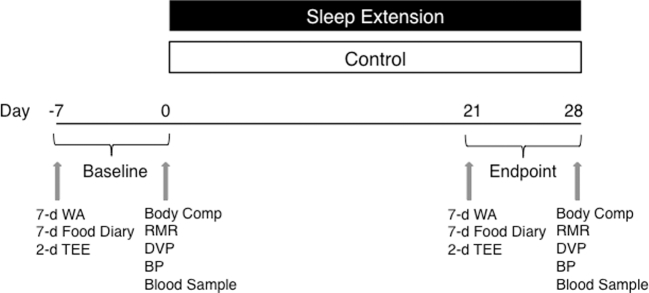
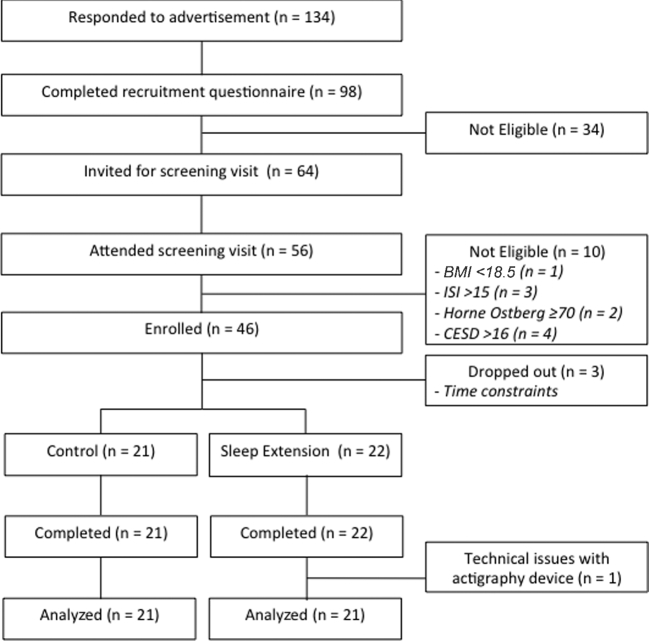
Background: Evidence suggests that short sleep duration may be a newly identified modifiable risk factor for obesity, yet there is a paucity of studies to investigate this. Objective: We assessed the feasibility of a personalized sleep extension protocol in adults aged 18-64 y who are habitually short sleepers (5 to <7 h), with sleep primarily measured by wrist actigraphy. In addition, we collected pilot data to assess the effects of extended sleep on dietary intake and quality measured by 7-d food diaries, resting and total energy expenditure, physical activity, and markers of cardiometabolic health. Design: Forty-two normal-weight healthy participants who were habitually short sleepers completed this free-living, 4-wk, parallel-design randomized controlled trial. The sleep extension group (n = 21) received a behavioral consultation session targeting sleep hygiene. The control group (n = 21) maintained habitual short sleep. Results: Rates of participation, attrition, and compliance were 100%, 6.5%, and 85.7%, respectively. The sleep extension group significantly increased time in bed [0:55 hours:minutes (h:mm); 95% CI: 0:37, 1:12 h:mm], sleep period (0:47 h:mm; 95% CI: 0:29, 1:05 h:mm), and sleep duration (0:21 h:mm; 95% CI: 0:06, 0:36 h:mm) compared with the control group. Sleep extension led to reduced intake of free sugars (-9.6 g; 95% CI: -16.0, -3.1 g) compared with control (0.7 g; 95% CI: -5.7, 7.2 g) (P = 0.042). A sensitivity analysis in plausible reporters showed that the sleep extension group reduced intakes of fat (percentage), carbohydrates (grams), and free sugars (grams) in comparison to the control group. There were no significant differences between groups in markers of energy balance or cardiometabolic health. Conclusions: We showed the feasibility of extending sleep in adult short sleepers. Sleep extension led to reduced free sugar intakes and may be a viable strategy to facilitate limiting excessive consumption of free sugars in an obesity-promoting environment. This trial was registered at www.clinicaltrials.gov as NCT02787577.
Overview
The claims and statistics of this paper haven’t been checked yet.
Free: it reads the open-access text and checks the first 5 claims that cite a source we can check. Create a free account to check every claim.
Integrity signals
Registry
Cites
Statistics
Figures
Verification
Claims the paper makes
The claims and statistics of this paper haven’t been checked yet.
Free: it reads the open-access text and checks the first 5 claims that cite a source we can check. Create a free account to check every claim.
Claims other papers make about this one
Each is checked against this paper’s own text: does it say what the citing paper says it does?
The cited source says what the claim attributes to it.
In the citing paper
“longer sleep episodes correlate with an earlier intake of dinner/the last meal (83) as well as a decreased consumption of free sugars (173).”
From Meal timing and its role in obesity and associated diseases (2024) · cites this paper as [173]
Experimental — accuracy not yet measured
Self-check
Percentages, sums and reported differences re-computed from the paper’s own numbers.
The self-check needs the paper’s full text.
Citations
Cites
The CES-D Scale: A Self-Report Depression Scale for Research in the General Population
Radloff, L. S. (1977) · Applied Psychological Measurement · doi:10.1177/014662167700100306 · Cited by 53,267
The Pittsburgh Sleep Quality Index: a new instrument for psychiatric practice and research
Buysse, D. J., Reynolds, C. F., Monk, T. H., Berman, S. R., & Kupfer, D. J. (1989) · Psychiatry Research · doi:10.1016/0165-1781(89)90047-4 · Cited by 35,234 · cited 2×
“Subjective measures of sleep quality were also assessed with the use of the Pittsburgh Sleep Quality Index (45).”
Matthews, D. R., Hosker, J. P., Rudenski, A. S., Naylor, B. A., Treacher, D. F., & Turner, R. C. (1985) · Diabetologia · doi:10.1007/bf00280883 · Cited by 31,502 · cited 1×
“We used the HOMA-IR (57), where the product of fasting glucose and fasting insulin is an index of insulin resistance.”
Toprak, O., Kurt, H., Sarı, Y., Şarkış, C., Us, H., & Kırık, A. (2017) · Kidney and Blood Pressure Research · doi:10.1159/000468530 · Cited by 29,627
A New Method for Measuring Daytime Sleepiness: The Epworth Sleepiness Scale
Johns, M. W. (1991) · Sleep · doi:10.1093/sleep/14.6.540 · Cited by 17,364 · cited 2×
“Those at a high risk of low mood or any sleep-related disorders according to the Center of Epidemiologic Studies–Depression scale (CES-D) (29), the Epworth Sleepiness Scale (ESS) (30), the Insomnia Severity Index (ISI) (31), or the Berlin Questionnaire for sleep apnea (32) were excluded from the study.”
Validation of the Insomnia Severity Index as an outcome measure for insomnia research
Bastien, C. (2001) · Sleep Medicine · doi:10.1016/s1389-9457(00)00065-4 · Cited by 8,067 · cited 2×
“Those at a high risk of low mood or any sleep-related disorders according to the Center of Epidemiologic Studies–Depression scale (CES-D) (29), the Epworth Sleepiness Scale (ESS) (30), the Insomnia Severity Index (ISI) (31), or the Berlin Questionnaire for sleep apnea (32) were excluded from the study.”
A self-assessment questionnaire to determine morningness- eveningness in human circadian rhythms
Home, J. K. (1976) · Medical Entomology and Zoology · Cited by 4,783
National Sleep Foundation's sleep time duration recommendations: methodology and results summary.
Hirshkowitz, M., Whiton, K., Albert, S. M., Alessi, C., Bruni, O., DonCarlos, L., Hazen, N., Herman, J., Katz, E. S., Kheirandish-Gozal, L., et al. (2015) · Sleep Health · doi:10.1016/j.sleh.2014.12.010 · Cited by 4,404 · cited 1×
“Today, ∼37% of US adults report sleeping ≤6 h, and less than two-thirds are achieving the recommended 7–9 h/night for optimal physical and mental well-being (12, 13).”
(1976) · PubMed · Cited by 3,979
A tutorial on pilot studies: the what, why and how
Thabane, L., Ma, J., Chu, R., Cheng, J., Ismaila, A., Rios, L. P., Robson, R., Thabane, M., Giangregorio, L., & Goldsmith, C. H. (2010) · BMC Medical Research Methodology · doi:10.1186/1471-2288-10-1 · Cited by 3,384
Research works printed but not linked: 1
- Bates B, Lennox A, Prentice A, Bates C, Page P, Nicholson S, Balmer R, Swan G National Diet and Nutrition Survey results from years 1, 2, 3, and 4 (combined) of the rolling programme (2008/2009-2011/2012). London: Public Health England; 2014.
Cited by
Sleep is essential to health: an American Academy of Sleep Medicine position statement
Ramar, K., Malhotra, R. K., Carden, K. A., Martin, J. L., Abbasi-Feinberg, F., Aurora, R. N., Kapur, V. K., Olson, E. J., Rosen, C. L., Rowley, J. A., et al. (2021) · Journal of Clinical Sleep Medicine · doi:10.5664/jcsm.9476 · Cited by 648
Depression, emotional eating and long-term weight changes: a population-based prospective study
Konttinen, H., van Strien, T., Männistö, S., Jousilahti, P., & Haukkala, A. (2019) · International Journal of Behavioral Nutrition and Physical Activity · doi:10.1186/s12966-019-0791-8 · Cited by 341
Sleep Duration and Myocardial Infarction
Daghlas, I., Dashti, H. S., Lane, J., Aragam, K. G., Rutter, M. K., Saxena, R., & Vetter, C. (2019) · Journal of the American College of Cardiology · doi:10.1016/j.jacc.2019.07.022 · Cited by 281
“This causal evidence is timely, as recent work has demonstrated that sleep extension for short sleepers is a feasible intervention (35).”
BackgroundThe links between sleep duration, obesity and type 2 diabetes mellitus
Antza, C., Kostopoulos, G., Mostafa, S., Nirantharakumar, K., & Tahrani, A. (2022) · Journal of Endocrinology · doi:10.1530/joe-21-0155 · Cited by 279
“At the end of the study, the intervention group had an increase in time-in-bed (55 min), sleep period (47 min) and sleep duration (21 min) compared to the control group (Al Khatib et al. 2018).”
InfluentialEmotional eating and obesity in adults: the role of depression, sleep and genes
Konttinen, H. (2020) · Proceedings of the Nutrition Society · doi:10.1017/s0029665120000166 · Cited by 274
“A pilot study performed in habitually short sleepers indicated that sleep extension was feasible and led to decreased intake of free sugars((66)).”
BackgroundVetter, C., Pattison, P. M., Houser, K., Herf, M., Phillips, A. J. K., Wright, K. P., Skene, D. J., Brainard, G. C., Boivin, D. B., & Glickman, G. (2022) · LEUKOS · doi:10.1080/15502724.2021.1872383 · Cited by 222
“In addition, improved sleep may be associated with a healthier lifestyle, such as improved dietary choices, as recently reported by a pilot study of sleep extension (e.g., Al Khatib et al. 2018).”
BackgroundSleep and Diet: Mounting Evidence of a Cyclical Relationship
Zuraikat, F. M., Wood, R. A., Barragán, R., & St-Onge, M.-P. (2021) · Annual Review of Nutrition · doi:10.1146/annurev-nutr-120420-021719 · Cited by 206
The Epidemiology of Sleep and Diabetes
Ogilvie, R. P., & Patel, S. R. (2018) · Current Diabetes Reports · doi:10.1007/s11892-018-1055-8 · Cited by 196
Timing of food intake: identifying contributing factors to design effective interventions
Dashti, H. S., Scheer, F. A. J. L., Saxena, R., & Garaulet, M. (2019) · Advances in Nutrition · doi:10.1093/advances/nmy131 · Cited by 121
“Through personalization, previous pilot studies suggested that lifestyle habits could be modified successfully, at least in the short term (80, 81).”
BackgroundConnecting insufficient sleep and insomnia with metabolic dysfunction
Duan, D., Kim, L. J., Jun, J. C., & Polotsky, V. Y. (2023) · Annals of the New York Academy of Sciences · doi:10.1111/nyas.14926 · Cited by 110
Sleep and cardiovascular disease
Miller, M. A., & Howarth, N. E. (2023) · Emerging Topics in Life Sciences · doi:10.1042/etls20230111 · Cited by 136
Chasens, E. R., Imes, C. C., Kariuki, J. K., Luyster, F. S., Morris, J. L., DiNardo, M. M., Godzik, C. M., Jeon, B., & Yang, K. (2021) · Nursing Clinics of North America · doi:10.1016/j.cnur.2020.10.012 · Cited by 130
Sleep Apnea and Sleep Habits: Relationships with Metabolic Syndrome
Borel, A. (2019) · Nutrients · doi:10.3390/nu11112628 · Cited by 105
“Metabolically, insulin sensitivity improved in two studies [84,85].”
BackgroundSleep interventions and glucose metabolism: systematic review and meta-analysis
Kothari, V., Cardona, Z., Chirakalwasan, N., Anothaisintawee, T., & Reutrakul, S. (2021) · Sleep Medicine · doi:10.1016/j.sleep.2020.11.035 · Cited by 86
Obstructive Sleep Apnea and Cardiometabolic Disease: Obesity, Hypertension, and Diabetes
Tasali, E., Pamidi, S., Covassin, N., & Somers, V. K. (2025) · Circulation Research · doi:10.1161/circresaha.125.325676 · Cited by 123
Léger, D., Richard, J., Collin, O., Sauvet, F., & Faraut, B. (2020) · Sleep Medicine · doi:10.1016/j.sleep.2020.05.030 · Cited by 89
Ryan, S., Cummins, E. P., Farré, R., Gileles‐Hillel, A., Jun, J. C., Oster, H., Pépin, J., Ray, D. W., Reutrakul, S., Sánchez‐de‐la‐Torre, M., et al. (2020) · European Respiratory Journal · doi:10.1183/13993003.02295-2019 · Cited by 76
Meal timing and its role in obesity and associated diseases
Peters, B., Vahlhaus, J., & Pivovarova-Ramich, O. (2024) · Frontiers in Endocrinology · doi:10.3389/fendo.2024.1359772 · Cited by 72
Lengton, R., Schoenmakers, M., Penninx, B. W. J. H., Boon, M. R., & van Rossum, E. F. C. (2024) · Clinical Obesity · doi:10.1111/cob.12725 · Cited by 115
The effects of sleep extension on cardiometabolic risk factors: A systematic review
Henst, R. H. P., Pienaar, P. R., Roden, L. C., & Rae, D. E. (2019) · Journal of Sleep Research · doi:10.1111/jsr.12865 · Cited by 67
“A possible explanation for two of these studies may be that the participants were of healthy weight or not obese when recruited (Al Khatib et al., 2018; Leproult et al., 2015), thus improvements in anthropometric outcomes may have been un‐ likely.”
BackgroundMethodResultInfluentialNoorwali, E. A., Cade, J. E., Burley, V. J., & Hardie, L. J. (2018) · BMJ Open · doi:10.1136/bmjopen-2017-020810 · Cited by 77
“Sleep extension intervention has been reported to reduce the intakes of free sugars in a 4-week randomised controlled pilot trial.(37) Longer term, fully powered sleep extension studies on FV intake and their associated biomarkers are needed to confirm these results.”
BackgroundFenton, S., Burrows, T. L., Skinner, J. A., & Duncan, M. J. (2020) · Journal of Human Nutrition and Dietetics · doi:10.1111/jhn.12813 · Cited by 77
Behavioral interventions to extend sleep duration: A systematic review and meta-analysis
Baron, K. G., Duffecy, J. L., Reutrakul, S., Levenson, J. C., McFarland, M., Lee, S., & Qeadan, F. (2021) · Sleep Medicine Reviews · doi:10.1016/j.smrv.2021.101532 · Cited by 75
“The most commonly reported BCT was “shaping knowledge (n = 30) [26–28, 30, 31, 34– 39 , 41, 43, 45– 50 ,”
BackgroundEffects of sleep extension on sleep duration, sleepiness, and blood pressure in college students
Stock, A. A., Lee, S., Nahmod, N. G., & Chang, A. (2019) · Sleep Health · doi:10.1016/j.sleh.2019.10.003 · Cited by 69
Kline, C. E., Chasens, E. R., Bizhanova, Z., Sereika, S. M., Buysse, D. J., Imes, C. C., Kariuki, J. K., Mendez, D. D., Cajita, M. I., Rathbun, S. L., et al. (2021) · International Journal of Obesity · doi:10.1038/s41366-020-00728-8 · Cited by 56
“Other studies have found that 2–4 weeks of sleep extension improve food choice and macronutrient intake [71, 72]; however, whether increasing sleep duration impacts body weight is unclear [11].”
BackgroundNoorwali, E. A., Hardie, L. J., & Cade, J. E. (2019) · Nutrients · doi:10.3390/nu11061382 · Cited by 66
“A recent study showed the feasibility of extending sleep by sleep hygiene intervention and their effects on dietary intake and energy balance [283].”
BackgroundGriggs, S. A., Conley, S., Batten, J., & Grey, M. J. (2020) · Sleep Medicine Reviews · doi:10.1016/j.smrv.2020.101356 · Cited by 64
“Four of these sleep-promotion RCTs included sleep hygiene education [22, 25, 27, 28], two included multiple cognitive-behavioral components [24, 27], one included a mindfulness-based group intervention [24], and three included sleep extension [23, 26, 29] (one with behavioral consultation [23] and one with a sleep hyg…”
BackgroundThe prevalence of sleep loss and sleep disorders in young and old adults
Jha, V. M. (2022) · Aging Brain · doi:10.1016/j.nbas.2022.100057 · Cited by 77
Baron, K. G., Duffecy, J. L., Richardson, D., Avery, E., Rothschild, S. K., & Lane, J. (2019) · Journal of Clinical Sleep Medicine · doi:10.5664/jcsm.8018 · Cited by 58
“Exclusion criteria included (1) high risk or presence of sleep disorders, including obstructive sleep apnea (OSA), restless legs syndrome (RLS), or insomnia as assessed by history or screening questionnaires; (2) history of cognitive or neurological disorders; (3) presence of any major psychiatric disorder (eg, bipola…”
Sleep Duration Patterns in Early to Middle Adulthood and Subsequent Risk of Type 2 Diabetes in Women
Baden, M. Y., Hu, F. B., Vetter, C., Schernhammer, E. S., Redline, S. S., & Huang, T. (2020) · Diabetes Care · doi:10.2337/dc19-2371 · Cited by 60
“A recent randomized control pilot study found that sleep extension in adult short sleepers led to reduced intakes of fat, carbohydrates, and free sugars (37).”
BackgroundHall, W. L. (2022) · British Journal Of Nutrition · doi:10.1017/s000711452200160x · Cited by 46
“…that prevented them sleeping for 7 h or more (e.g. having a dark, uncluttered bedroom, avoiding electronic screens late in the evening, keeping a regular bedtime, not exercising too close to bed-time, avoiding large meals, caffeine and alcohol close to bedtime, meditation for stress, etc) (34) .”
InfluentialSelf-citationPizinger, T., Aggarwal, B., & St‐Onge, M. (2018) · Frontiers in Endocrinology · doi:10.3389/fendo.2018.00392 · Cited by 38
Hartescu, I., Stensel, D. J., Thackray, A. E., King, J. A., Dorling, J. L., Rogers, E. N., Hall, A. P., Brady, E. M., Davies, M. J., Yates, T. E., et al. (2021) · Journal of Sleep Research · doi:10.1111/jsr.13469 · Cited by 38
“In contrast, Al Khatib et al. (2018) showed no changes in fasting insulin, glucose, leptin, or ghrelin concentrations in healthy participants whose sleep was extended by ~20 min/night in a 4- week intervention.”
BackgroundResultInfluentialPatterson, P. D., Ghen, J. D., Antoon, S. F., Martin‐Gill, C., Guyette, F. X., Weiss, P. M., Turner, R. L., & Buysse, D. J. (2019) · Sleep Health · doi:10.1016/j.sleh.2019.03.001 · Cited by 33
Du, C., Wang, W., Hsiao, P. Y., Ludy, M., & Tucker, R. M. (2021) · Behavioral Sciences · doi:10.3390/bs11050069 · Cited by 39
“Further, improving sleep quality led to improved eating behaviors [65,66].”
BackgroundMoreno-Frías, C., Figueroa‐Vega, N., & Malacara, J. M. (2020) · Journal of Adolescent Health · doi:10.1016/j.jadohealth.2019.11.301 · Cited by 34
Gut microbiota alterations in response to sleep length among African-origin adults
Fei, N., Choo-Kang, C., Reutrakul, S., Crowley, S. J., Rae, D. E., Bedu-Addo, K., Plange‐Rhule, J., Forrester, T., Lambert, E. V., Bovet, P., et al. (2021) · PLoS ONE · doi:10.1371/journal.pone.0255323 · Cited by 33
Zhang, H.-Z., Zhang, P., Chang, G., Xiang, Q., Cao, H., Zhou, J., Dong, Z., Qiao, C., Xu, C., Qin, Y., et al. (2021) · World Journal of Diabetes · doi:10.4239/wjd.v12.i3.292 · Cited by 31
A healthy lifestyle — reducing T2DM risk in shift workers?
Vetter, C., & Scheer, F. A. J. L. (2019) · Nature Reviews Endocrinology · doi:10.1038/s41574-019-0164-z · Cited by 28
Gordon-Dseagu, V., Derkach, A., Xiao, Q., Williams, I., Sampson, J. N., & Stolzenberg‐Solomon, R. Z. (2019) · Metabolomics · doi:10.1007/s11306-019-1472-y · Cited by 26
Effects of Sleep Duration on Cardiovascular Events
Ahmad, A. N., & Didia, S. C. (2020) · Current Cardiology Reports · doi:10.1007/s11886-020-1271-0 · Cited by 30
Sleep Extension: A Potential Target for Obesity Treatment
Hoddy, K. K., Potts, K. S., Bazzano, L., & Kirwan, J. P. (2020) · Current Diabetes Reports · doi:10.1007/s11892-020-01360-6 · Cited by 28
Savin, K. L., Clark, T. L., Perez-Ramirez, P., Allen, T. S., Parra, M. T., & Gallo, L. C. (2022) · Behavioral Sleep Medicine · doi:10.1080/15402002.2022.2154213 · Cited by 28
“These findings are similar to past studies of sleep extension, which found null effects for BMI(Haack et al., 2013; Al Khatib et al., 2018) and null effects(Leproult et al., 2015) or decreases in HOMA-IR(Killick et al., 2015; So-Ngern et al., 2019).”
ResultChrono‐nutrition – an emerging, modifiable risk factor for chronic disease?
Pot, G. K. (2021) · Nutrition Bulletin · doi:10.1111/nbu.12498 · Cited by 27
“The evidence from five short- term studies of sleep extension after sleep restriction [including the aforementioned SLuMBER study (Al Khatib et al., 2018)] suggests some health improvements, such as regulation of appetite hormones, glucose metabolism, bodyweight and dietary intake with sleep…”
BackgroundSelf-citationFenton, S., Burrows, T. L., Collins, C. E., Rayward, A. T., Murawski, B., & Duncan, M. J. (2021) · Nutrients · doi:10.3390/nu13072468 · Cited by 26
“The study reported that extended sleep duration reduced free-sugar intake and increased adherence to dietary guidelines [29].”
BackgroundInfluentialSleep Deficiency and Cardiometabolic Disease
Killick, R., Stranks, L., & Hoyos, C. M. (2022) · Clinics in Chest Medicine · doi:10.1016/j.ccm.2022.02.011 · Cited by 26
Modeling the cardiometabolic benefits of sleep in older women: exploring the 24-hour day
Full, K. M., Gallo, L. C., Malhotra, A., Bellettiere, J., Kerr, J., Arredondo, E. M., Stone, K. L., Zaslavsky, O., Lewis, C. E., Lin, X., et al. (2019) · SLEEP · doi:10.1093/sleep/zsz205 · Cited by 22
“but effective in decreasing cardiovascular risk [28, 29].”
ResultNiu, X., Zhou, S., & Casement, M. D. (2021) · Sleep Medicine Reviews · doi:10.1016/j.smrv.2021.101443 · Cited by 22
Sleep loss effects on physiological and cognitive responses to systemic environmental hypoxia
Fabries, P. A., Gomez-Mérino, D., Sauvet, F., Malgoyre, A., Koulmann, N., & Chennaoui, M. (2022) · Frontiers in Physiology · doi:10.3389/fphys.2022.1046166 · Cited by 29
Duraccio, K. M., Kamhout, S., Baron, K. G., Reutrakul, S., & Depner, C. M. (2024) · The Journal of Physiology · doi:10.1113/jp284911 · Cited by 25
Fritz, J., Huang, T., Depner, C. M., Zeleznik, O. A., Feliciano, E. M. C., Li, W., Stone, K. L., Manson, J. E., Clish, C. B., Sofer, T., et al. (2022) · SLEEP · doi:10.1093/sleep/zsac226 · Cited by 20
Reutrakul, S., Martyn-Nemeth, P. A., Quinn, L. T., Rydzon, B., Priyadarshini, M., Danielson, K. K., Baron, K. G., & Duffecy, J. L. (2022) · Pilot and Feasibility Studies · doi:10.1186/s40814-022-01076-2 · Cited by 22
“However, another 4-week randomized controlled trial (RCT) of 42 normal-weight, healthy, short sleepers showed that there were no significant changes in glycemic parameters despite an increase in sleep duration of 32 min/night [17].”
BackgroundMatsuura, N., Saito, A., Takahashi, O., Rahman, M., Tajima, R., Mabashi‐Asazuma, H., & Iida, K. (2019) · Sleep Health · doi:10.1016/j.sleh.2019.11.006 · Cited by 22
Lubas, M. M., Mandrell, B. N., Ness, K. K., Srivastava, D. K., Ehrhardt, M. J., Wang, Z., Hudson, M. M., Robison, L. L., Krull, K. R., & Brinkman, T. M. (2021) · Pediatric Blood & Cancer · doi:10.1002/pbc.28988 · Cited by 18
Mostafa, S. A., Hanif, W., Crowe, F. L., Balanos, G. M., Nirantharakumar, K., Ellis, J. G., & Tahrani, A. A. (2025) · Diabetes and Vascular Disease Research · doi:10.1177/14791641241307367 · Cited by 20
Khatib, H. A., Dikariyanto, V., Bermingham, K. M., Gibson, R., & Hall, W. L. (2022) · Public Health Nutrition · doi:10.1017/s1368980022000167 · Cited by 21
Self-citationFenton, S., Burrows, T. L., Collins, C. E., Holliday, E. G., Kolt, G. S., Murawski, B., Rayward, A. T., Stamatakis, E., Vandelanotte, C., & Duncan, M. J. (2021) · Appetite · doi:10.1016/j.appet.2021.105273 · Cited by 16
Noorwali, E. A., Hardie, L. J., & Cade, J. E. (2018) · Sleep Science and Practice · doi:10.1186/s41606-018-0032-0 · Cited by 17
Kundu, S., Rejwana, N., Banna, M. H. A., Kawuki, J., Ghosh, S., Alshahrani, N. Z., Dukhi, N., Kundu, S., Dey, R., Hagan, J. E., et al. (2022) · Healthcare · doi:10.3390/healthcare10101848 · Cited by 18
Romero, E. K., Abdalla, M., Thanataveerat, A., Alcántara, C., Kronish, I. M., Edmondson, D. E., & Shechter, A. (2019) · Psychosomatic Medicine · doi:10.1097/psy.0000000000000730 · Cited by 17
Aggarwal, B., Gao, Y., Alfini, A. J., Azarbarzin, A., Anafi, R. C., Baron, K. G., Bautch, V. L., Bowles, N. P., Broussard, J. L., Brown, M. K., et al. (2025) · Nature Reviews Cardiology · doi:10.1038/s41569-025-01188-1 · Cited by 21
“In real-life settings, short-term sleep extension strategies have been shown to reduce hunger and appetite 267,268 , improve blood pressure and reduce insulin sensitivity 269 , as well as reduce objectively assessed energy intake, resulting in a negative energy balance 270 .”
Benjamins, J. S., Hooge, I. T. C., Benedict, C., Smeets, P. A. M., & van der Laan, L. N. (2020) · Food Quality and Preference · doi:10.1016/j.foodqual.2020.104074 · Cited by 19
Metabolic Disturbances Induced by Sleep Restriction as Potential Triggers for Alzheimer’s Disease
García‐Aviles, J. E., Méndez‐Hernández, R., Guzmán‐Ruiz, M. A., Cruz, M., Guerrero‐Vargas, N. N., Velázquez‐Moctezuma, J., & Hurtado‐Alvarado, G. (2021) · Frontiers in Integrative Neuroscience · doi:10.3389/fnint.2021.722523 · Cited by 17
“In other studies, regarding sleep extension, increasing participants’ bedtime has been found to reduce their intake of foods high in fat and carbohydrates (Al Khatib et al., 2018).”
BackgroundBerjaoui, C., Kibrom, B. T., Ghayyad, M. H., Joumaa, S., Labban, N. T. A., Nazir, A., Kachouh, C., Moradeyo, A. A., Wojtara, M. S., & Uwishema, O. (2023) · Health Science Reports · doi:10.1002/hsr2.1773 · Cited by 17
Zhang, K., Guhn, M., & Conklin, A. (2022) · European Journal of Public Health · doi:10.1093/eurpub/ckac177 · Cited by 19
Zhu, B., Yin, Y., Shi, C., Chaiard, J., Park, C. G., Chen, X., & Izci‐Balserak, B. (2021) · European Journal of Cardiovascular Nursing · doi:10.1093/eurjcn/zvab055 · Cited by 13
Sleep Deficiency and Cardiometabolic Disease
Killick, R., Stranks, L., & Hoyos, C. M. (2023) · Sleep Medicine Clinics · doi:10.1016/j.jsmc.2023.05.012 · Cited by 12
Insomnia, Short Sleep, and Their Treatments: Review of Their Associations with Weight
Allison, K. C., Parnarouskis, L., Moore, M. D., & Minnick, A. M. (2024) · Current Obesity Reports · doi:10.1007/s13679-024-00570-3 · Cited by 16
“Of note, study samples were relatively homogenous, with most studies including a majority White women [70–72] and two studies that did not report participant race/ethnicity [73, 74].”
ResultRelationship stress, arguments, and sleep quality: A causal process analysis
Haydon, K. C., & Salvatore, J. E. (2023) · Journal of Social and Personal Relationships · doi:10.1177/02654075231190592 · Cited by 9
“Indeed, the bene fi ts of short-term sleep extension add up over several nights (Al Khatib et al., 2018) and may contribute to improved relationship functioning as they accumulate over time and support more effective self-regulation.”
BackgroundBaron, K. G., Duffecy, J. L., Simonsen, S. E., Bress, A. P., Conroy, M. B., Greene, T., Allen, C. M., & Vallejo, S. (2023) · Trials · doi:10.1186/s13063-023-07658-6 · Cited by 10
“…been paid to the development of sleep extension interventions and testing whether such treatments can improve CMD. Studies have demonstrated short-term sleep extension results in decreased insulin resistance [10, 11] decreased appetite [12] and lower intake of fat, carbohydrates, and sugars [13].”
BackgroundSleep Deficiency and Cardiometabolic Disease
Killick, R., Stranks, L., & Hoyos, C. M. (2024) · Sleep Medicine Clinics · doi:10.1016/j.jsmc.2024.07.011 · Cited by 13
Ong, J. L., Massar, S. A. A., Lau, T., Ng, B. K. L., Chan, L. F., Koek, D., Cheong, K., & Chee, M. W. L. (2022) · SLEEP · doi:10.1093/sleep/zsac315 · Cited by 13
Parsons, C. E., & Young, K. S. (2022) · Sleep Health · doi:10.1016/j.sleh.2022.05.008 · Cited by 14
A Narrative Review on Sleep and Eating Behavior
Cheng, W. Y., & Chan, W. S. (2025) · Current Diabetes Reports · doi:10.1007/s11892-025-01611-4 · Cited by 9
Hoopes, E. K., Brewer, B. C., Robson, S. M., Witman, M. A., D’Agata, M. N., Malone, S. K., Edwards, D. G., & Patterson, F. (2023) · SLEEP · doi:10.1093/sleep/zsad123 · Cited by 12
Sleep matters: Can a good night's sleep help tackle the obesity crisis?
Gibson‐Moore, H., & Chambers, L. C. (2019) · Nutrition Bulletin · doi:10.1111/nbu.12386 · Cited by 10
Time for bed: diet, sleep and obesity in children and adults
Miller, M. A. (2023) · Proceedings of The Nutrition Society · doi:10.1017/s0029665123004846 · Cited by 11
Sleep habits in the pathogenesis and management of diabesity
Rasmussen, C. H., Chun Kwan, O., Chan, W. S., Magkos, F., & Kong, A. P. S. (2025) · Journal of Diabetes Investigation · doi:10.1111/jdi.70075 · Cited by 9
“These results suggest that improving sleep duration may be a feasible strategy to lower excessive sugar consumption in the form of unhealthy snacks, which is likely to be bene fi cial amidst the modern obesogenic environment 77 .”
InfluentialGibson, R., Lewis, J., Hilberink, A., Philippou, E., Wilson, D., Theobald, H. E., Sum, K., David, D., Alawfi, J. S., Roper, H. J., et al. (2023) · Nutrition Bulletin · doi:10.1111/nbu.12605 · Cited by 5
Self-citationComponents in downstream health promotions to reduce sugar intake among adults: a systematic review
Hilmy, S. H. A., Nordin, N., Yusof, M. Y. P. M., Soh, T. Y. T., & Yusof, N. (2024) · Nutrition Journal · doi:10.1186/s12937-023-00884-3 · Cited by 6
Seixas, A. A., Robbins, R., Chung, A., Popp, C. J., Donley, T., McFarlane, S. I., Moore, J., & Jean‐Louis, G. (2019) · Elsevier eBooks · doi:10.1016/b978-0-12-815373-4.00017-4 · Cited by 12
The Hawthorne effect on wearable technology: A systematic review
Lastoria, D. A. A., Keynes, S., Nurek, M., Kellett, C. F., & Hing, C. B. (2025) · International Journal of Psychophysiology · doi:10.1016/j.ijpsycho.2025.113207 · Cited by 5
Sparks, J. R., & Wang, X. (2025) · Healthcare · doi:10.3390/healthcare13172085 · Cited by 12
“However, the beneficial effects are not shown in other studies [115,116], suggesting that the results are influenced by an individual participant’s level of cardiometabolic risk, the amount of sleep extended, and the measurement method.”
Beals, J. W., Smith, G. I., Farabi, S. S., Patterson, B. W., Lucey, B. P., Broussard, J. L., Wright, K. P., & Klein, S. (2026) · Diabetes Care · doi:10.2337/dc25-2083 · Cited by 5
COVID-19, Pandemi Sürecinin Psikolojik Etkileri ve Duygusal Yeme Davranışı
GÜNGÖR, A. G., & ÖZDOĞAN, Y. (2021) · Türkiye Sağlık Bilimleri ve Araştırmaları Dergisi · doi:10.51536/tusbad.935208 · Cited by 5
A feasibility study to understand the components of behavioral sleep extension
Baron, K. G., Trela-Hoskins, S., Duffecy, J. L., & Allen, C. M. (2022) · PEC Innovation · doi:10.1016/j.pecinn.2022.100114 · Cited by 7
“A growing number of experimental studies have demonstrated that short-term sleep extension may have health benefits including improving insulin sensitivity among prediabetic adults, reducing sugar, carbohydrate, and fat consumption in overweight individuals, lowering blood pressure, improving sleep disturbance, sleep-…”
BackgroundHaszard, J. J., Jackson, R., Morrison, S., Meredith-Jones, K. A., Galland, B. C., Beebe, D. W., Elder, D. E., & Taylor, R. W. (2024) · International Journal of Behavioral Nutrition and Physical Activity · doi:10.1186/s12966-024-01607-5 · Cited by 6
Habitual Sleep Duration, Daytime Napping, and Dietary Intake: A Mendelian Randomization Study
Alimenti, K., Chen, A., Saxena, R., & Dashti, H. S. (2021) · Current Developments in Nutrition · doi:10.1093/cdn/nzab019 · Cited by 4
“5-h/night sleep extension for 28 d in free-living adults showed a decrease in free sugar intake (45).”
BackgroundMostafa, S. A., Singh, P., Babwah, F., Hanif, W., Balanos, G. M., Nirantharakumar, K., Ellis, J. G., & Tahrani, A. A. (2026) · Obesity Reviews · doi:10.1111/obr.70139 · Cited by 4
The influence of sleep on human taste function and perception: A systematic review
Tucker, R. M., Tjahjono, I. E., Atta, G., Roberts, J., Vickers, K. E., Tran, L. Q., Stewart, E., Kelly, A., Silver, B. S., & Tan, S. (2024) · Journal of Sleep Research · doi:10.1111/jsr.14257 · Cited by 5
Examining Multiple Health Behaviors
Croff, J. M., Chiaf, A. L., & Crockett, E. K. (2019) · Health Behavior Research · doi:10.4148/2572-1836.1072 · Cited by 3
“Both sleep quality and quantity are critical factors regarding an individual’s readiness to engage in physical activity and dietary choices (Al Khatib et al., 2018).”
BackgroundSleep Disturbances in Type 1 Diabetes and Mitigating Cardiovascular Risk
Irsheed, G. A., Martyn-Nemeth, P. A., Baron, K. G., & Reutrakul, S. (2024) · The Journal of Clinical Endocrinology & Metabolism · doi:10.1210/clinem/dgae539 · Cited by 4
Xi, L., Li, L., Fu, S., Dai, Y., Shi, J., Yu, Y., Peng, Y. H., Qiu, H., Kuang, J., Lu, H., et al. (2025) · Journal of Diabetes · doi:10.1111/1753-0407.70095 · Cited by 3
Ghanem, F. K., Attarian, H. P., Al-Khalil, Z., & Kabrita, C. S. (2026) · Journal of Clinical Sleep Medicine · doi:10.1007/s44470-026-00144-1 · Cited by 3
“Al Khatib and colleagues demonstrated a 9.6 g reduction in sugar consumption and an average increase of 21 min in sleep per night over 4 weeks [95].”
InfluentialMerchant, A. M., Gray, S. R., Gray, C. M., Finlayson, G., Manyara, A. M., Trisotti, M. F. G., & Gill, J. M. R. (2025) · Appetite · doi:10.1016/j.appet.2025.108022 · Cited by 5
“…(n = 42) similarly reported that a 4-week behavioural intervention to extend sleep duration (which also improved sleep quality) in habitually short sleepers led to a reduction in free-sugar intake, but did not change total energy intake, relative to a control group (Al Khatib et al., 2018).”
InfluentialInsufficient sleep and obesity
Spaeth, A. M. (2019) · Elsevier eBooks · doi:10.1016/b978-0-12-815373-4.00015-0 · Cited by 4
Family Relationships in the Context of Sleep
Tracy, E. L., & Troxel, W. (2019) · Oxford University Press eBooks · doi:10.1093/oso/9780190930448.003.0012 · Cited by 2
Arlinghaus, A., Vetter, C., & Gärtner, J. (2022) · sozialpolitik ch · doi:10.18753/2297-8224-220 · Cited by 3
Malone, S. K., Patterson, F., Grunin, L., Yu, G., Dickson, V. V., & Melkus, G. D. (2023) · Nursing Research · doi:10.1097/nnr.0000000000000693 · Cited by 1
Lian, X., Jiang, K., Chen, X.-X., Dong, H.-C., Zhang, Y., & Wang, L. (2024) · BMC Public Health · doi:10.1186/s12889-024-19634-z · Cited by 2
“Sleep extension reduced intake of fat, carbohydrates and free sugars [37].”
Background
Metadata
- Authors
- Al Khatib, H. K., Hall, W. L., Creedon, A., Ooi, E., Masri, T., McGowan, L., Harding, S. V., Darzi, J., & Pot, G. K.
- Affiliations
- King's College London (GB)
- Queen's University Belfast (GB)
- Memorial University of Newfoundland (CA)
- Corresponding author
- Hall, Wendy L
- Venue
- The American Journal of Clinical Nutrition
- Publisher
- Elsevier BV
- Published
- 2018-01
- Volume
- 107
- Issue
- 1
- Pages
- 43-53
- ISSN
- 0002-9165 (ISSN-L)
- PMC
- PMC5972593
- OpenAlex
- W2782605093
- Cited by
- 126
- References
- 72
- Citations by year
- 2026: 12 · 2025: 14 · 2024: 15 · 2023: 12 · 2022: 15 · 2021: 22 · 2020: 13 · 2019: 18 · 2018: 5
- FWCI
- 18.99
- Type
- journal article
- Language
- en
- Update notices
- erratum (2018-04-01)
- Open access
- hybrid
- doi.org
- Licence
- cc-by
- www.elsevier.com/tdm/userlicense/1.0/ (tdm)
- creativecommons.org/licenses/by/4.0/ (vor, 9 d)
- Locations
- American Journal of Clinical Nutrition (publishedVersion, cc-by)
- Europe PMC (PubMed Central) (publishedVersion, cc-by)
- PubMed Central (publishedVersion, cc-by)
- PubMed (publishedVersion)
- VU Research Portal (publishedVersion, other-oa)
- Research Portal (King's College London) (submittedVersion, cc-by)
- Research Portal (Queen's University Belfast) (submittedVersion, cc-by)
- Data Archiving and Networked Services (DANS) (submittedVersion, other-oa)
- Funders
- National Institutes of Health
- Topics
- Social Sciences › Psychology › Experimental and Cognitive Psychology › Sleep and related disorders
- Social Sciences › Psychology › Experimental and Cognitive Psychology › Sleep and Work-Related Fatigue
- Life Sciences › Neuroscience › Endocrine and Autonomic Systems › Circadian rhythm and melatonin
- Keywords
- sleep extension, short sleep duration, free sugars, dietary intake, sleep hygiene, lifestyle intervention, feasibility, energy balance, cardiometabolic health, obesity risk, food diary, wrist actigraphy, physical activity, energy expenditure, dietary fat and carbohydrates, time in bed, healthy adults, normal-weight individuals
- MeSH terms
- Dietary Sugars, Adolescent, Adult, Diet, Energy Metabolism, Feasibility Studies, Female, Humans, Life Style, Male, Middle Aged, Obesity, Patient Compliance, Pilot Projects, Surveys and Questionnaires, Sleep, Sleep Deprivation, Time Factors, Health Behavior, Exercise, Nutrition Assessment, Body Mass Index, Nutrition Policy, Waist Circumference, Young Adult, Actigraphy, Food Quality
About these checks
Registry, retraction, Cites and statistics results are computed, not judged, with one exception: a printed reference that no index lists is read once by a model before it counts as a citation error. Claims are extracted by a model and kept only when their quote appears verbatim in the text; each cited source is then checked, with a model’s help, for whether it says what the claim relies on. Those verdicts can be wrong — read the claim’s quote and the cited source before relying on one.
Statistics and arithmetic are recomputed, not judged.
Confidence bands are shown only for fields calibrated on our annotated test set. None is calibrated yet, so no band is shown.
What counts as a claim ›How we measure confidence ›How we check this ›
Are you an author, or do you see a problem with this page? Request a review
Data sources
Bibliographic data: Semantic Scholar, OpenAlex, Crossref.
Contains information from the Semantic Scholar Academic Graph Datasets, made available under the ODC Attribution License (ODC-BY 1.0).
Semantic Scholar’s data is described in: Kinney, R., et al. (2023). The Semantic Scholar Open Data Platform. arXiv:2301.10140.
