

Sleep extension is a feasible lifestyle intervention in free-living adults who are habitually short sleepers: a potential strategy for decreasing intake of free sugars? A randomized controlled pilot study
Open accessThe DOI matches its Crossref record; 71 of the 72 references it cites were found in a registry or an index.
Abstract
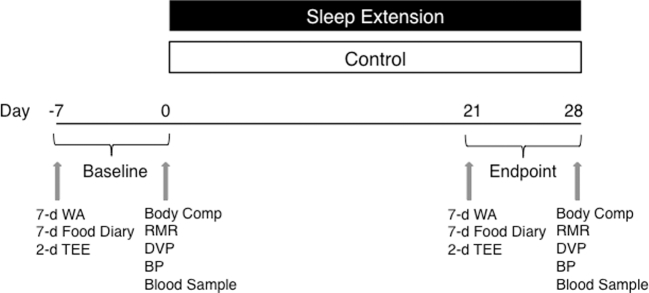
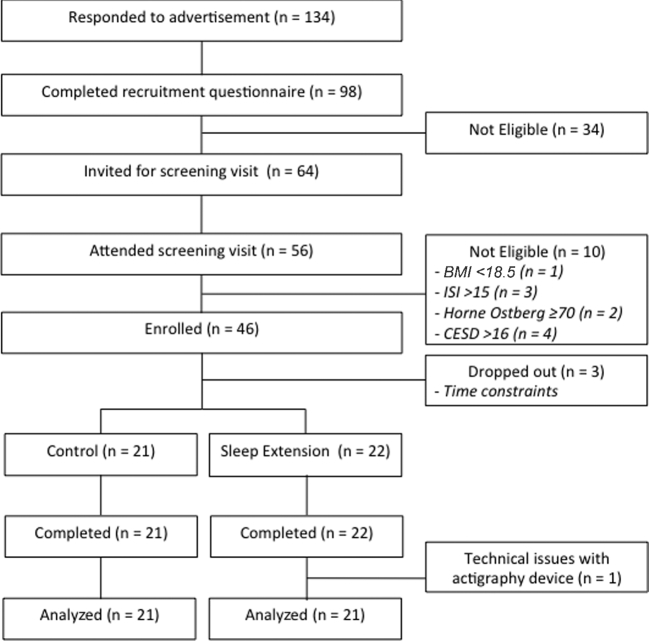
Background: Evidence suggests that short sleep duration may be a newly identified modifiable risk factor for obesity, yet there is a paucity of studies to investigate this. Objective: We assessed the feasibility of a personalized sleep extension protocol in adults aged 18-64 y who are habitually short sleepers (5 to <7 h), with sleep primarily measured by wrist actigraphy. In addition, we collected pilot data to assess the effects of extended sleep on dietary intake and quality measured by 7-d food diaries, resting and total energy expenditure, physical activity, and markers of cardiometabolic health. Design: Forty-two normal-weight healthy participants who were habitually short sleepers completed this free-living, 4-wk, parallel-design randomized controlled trial. The sleep extension group (n = 21) received a behavioral consultation session targeting sleep hygiene. The control group (n = 21) maintained habitual short sleep. Results: Rates of participation, attrition, and compliance were 100%, 6.5%, and 85.7%, respectively. The sleep extension group significantly increased time in bed [0:55 hours:minutes (h:mm); 95% CI: 0:37, 1:12 h:mm], sleep period (0:47 h:mm; 95% CI: 0:29, 1:05 h:mm), and sleep duration (0:21 h:mm; 95% CI: 0:06, 0:36 h:mm) compared with the control group. Sleep extension led to reduced intake of free sugars (-9.6 g; 95% CI: -16.0, -3.1 g) compared with control (0.7 g; 95% CI: -5.7, 7.2 g) (P = 0.042). A sensitivity analysis in plausible reporters showed that the sleep extension group reduced intakes of fat (percentage), carbohydrates (grams), and free sugars (grams) in comparison to the control group. There were no significant differences between groups in markers of energy balance or cardiometabolic health. Conclusions: We showed the feasibility of extending sleep in adult short sleepers. Sleep extension led to reduced free sugar intakes and may be a viable strategy to facilitate limiting excessive consumption of free sugars in an obesity-promoting environment. This trial was registered at www.clinicaltrials.gov as NCT02787577.
Overview
The claims and statistics of this paper haven’t been checked yet.
Free: it reads the open-access text and checks the first 5 claims that cite a source we can check. Create a free account to check every claim.
Integrity signals
Registry
Cites
Statistics
Figures
Verification
Claims the paper makes
The claims and statistics of this paper haven’t been checked yet.
Free: it reads the open-access text and checks the first 5 claims that cite a source we can check. Create a free account to check every claim.
Claims other papers make about this one
Each is checked against this paper’s own text: does it say what the citing paper says it does?
The cited source says what the claim attributes to it.
In the citing paper
“longer sleep episodes correlate with an earlier intake of dinner/the last meal (83) as well as a decreased consumption of free sugars (173).”
From Meal timing and its role in obesity and associated diseases (2024) · cites this paper as [173]
Experimental — accuracy not yet measured
Self-check
Percentages, sums and reported differences re-computed from the paper’s own numbers.
The self-check needs the paper’s full text.
Citations
Cites
The CES-D Scale: A Self-Report Depression Scale for Research in the General Population
Radloff, L. S. (1977) · Applied Psychological Measurement · doi:10.1177/014662167700100306 · Cited by 53,267
The Pittsburgh Sleep Quality Index: a new instrument for psychiatric practice and research
Buysse, D. J., Reynolds, C. F., Monk, T. H., Berman, S. R., & Kupfer, D. J. (1989) · Psychiatry Research · doi:10.1016/0165-1781(89)90047-4 · Cited by 35,234 · cited 2×
“Subjective measures of sleep quality were also assessed with the use of the Pittsburgh Sleep Quality Index (45).”
Matthews, D. R., Hosker, J. P., Rudenski, A. S., Naylor, B. A., Treacher, D. F., & Turner, R. C. (1985) · Diabetologia · doi:10.1007/bf00280883 · Cited by 31,502 · cited 1×
“We used the HOMA-IR (57), where the product of fasting glucose and fasting insulin is an index of insulin resistance.”
Toprak, O., Kurt, H., Sarı, Y., Şarkış, C., Us, H., & Kırık, A. (2017) · Kidney and Blood Pressure Research · doi:10.1159/000468530 · Cited by 29,627
A New Method for Measuring Daytime Sleepiness: The Epworth Sleepiness Scale
Johns, M. W. (1991) · Sleep · doi:10.1093/sleep/14.6.540 · Cited by 17,364 · cited 2×
“Those at a high risk of low mood or any sleep-related disorders according to the Center of Epidemiologic Studies–Depression scale (CES-D) (29), the Epworth Sleepiness Scale (ESS) (30), the Insomnia Severity Index (ISI) (31), or the Berlin Questionnaire for sleep apnea (32) were excluded from the study.”
Validation of the Insomnia Severity Index as an outcome measure for insomnia research
Bastien, C. (2001) · Sleep Medicine · doi:10.1016/s1389-9457(00)00065-4 · Cited by 8,067 · cited 2×
“Those at a high risk of low mood or any sleep-related disorders according to the Center of Epidemiologic Studies–Depression scale (CES-D) (29), the Epworth Sleepiness Scale (ESS) (30), the Insomnia Severity Index (ISI) (31), or the Berlin Questionnaire for sleep apnea (32) were excluded from the study.”
A self-assessment questionnaire to determine morningness- eveningness in human circadian rhythms
Home, J. K. (1976) · Medical Entomology and Zoology · Cited by 4,783
National Sleep Foundation's sleep time duration recommendations: methodology and results summary.
Hirshkowitz, M., Whiton, K., Albert, S. M., Alessi, C., Bruni, O., DonCarlos, L., Hazen, N., Herman, J., Katz, E. S., Kheirandish-Gozal, L., et al. (2015) · Sleep Health · doi:10.1016/j.sleh.2014.12.010 · Cited by 4,404 · cited 1×
“Today, ∼37% of US adults report sleeping ≤6 h, and less than two-thirds are achieving the recommended 7–9 h/night for optimal physical and mental well-being (12, 13).”
(1976) · PubMed · Cited by 3,979
A tutorial on pilot studies: the what, why and how
Thabane, L., Ma, J., Chu, R., Cheng, J., Ismaila, A., Rios, L. P., Robson, R., Thabane, M., Giangregorio, L., & Goldsmith, C. H. (2010) · BMC Medical Research Methodology · doi:10.1186/1471-2288-10-1 · Cited by 3,384
Using the Berlin Questionnaire To Identify Patients at Risk for the Sleep Apnea Syndrome
Netzer, N. C., Stoohs, R. A., Netzer, C. M., Clark, K., & Strohl, K. P. (1999) · Annals of Internal Medicine · doi:10.7326/0003-4819-131-7-199910050-00002 · Cited by 2,973 · cited 1×
“Those at a high risk of low mood or any sleep-related disorders according to the Center of Epidemiologic Studies–Depression scale (CES-D) (29), the Epworth Sleepiness Scale (ESS) (30), the Insomnia Severity Index (ISI) (31), or the Berlin Questionnaire for sleep apnea (32) were excluded from the study.”
Changes in diet and lifestyle and long-term weight gain in women and men
Mozaffarian, D., Hao, T., Rimm, E. B., Willett, W. C., & Hu, F. B. (2011) · New England Journal of Medicine · doi:10.1056/nejmoa1014296 · Cited by 2,527 · cited 1×
“Although we found no difference in weight over a 1-mo period, diet quality may influence an individual’s ability to maintain energy balance over the longer term (75).”
Spiegel, K., Tasali, E., Penev, P., & Cauter, E. V. (2004) · Annals of Internal Medicine · doi:10.7326/0003-4819-141-11-200412070-00008 · Cited by 2,459 · cited 1×
“Experimental evidence investigating the effects of sleep deprivation on insulin resistance (14–16) and glucose (17–19) and appetite hormone (20, 21) dysregulation has indicated that poor sleep is potentially detrimental to overall health.”
Cappuccio, F. P., Cooper, D., D'Elia, L., Strazzullo, P., & Miller, M. A. (2011) · European Heart Journal · doi:10.1093/eurheartj/ehr007 · Cited by 2,146
Meta-Analysis of Short Sleep Duration and Obesity in Children and Adults
Cappuccio, F. P., Taggart, F. M., Kandala, N.-B., Currie, A., Peile, E., Stranges, S., & Miller, M. A. (2008) · Sleep · doi:10.1093/sleep/31.5.619 · Cited by 2,076
Michie, S., Ashford, S., Sniehotta, F. F., Dombrowski, S. U., Bishop, A., & French, D. P. (2011) · Psychology & Health · doi:10.1080/08870446.2010.540664 · Cited by 1,756 · cited 4×
“Participants identified barriers (37) to achieving their selected behaviors, and were assisted to create implementation intentions (37) that were also noted in the personalized sleep diary.”
InfluentialQuantity and Quality of Sleep and Incidence of Type 2 Diabetes
Cappuccio, F. P., D'Elia, L., Strazzullo, P., & Miller, M. A. (2010) · Diabetes Care · doi:10.2337/dc09-1124 · Cited by 1,670
Short Sleep Duration and Weight Gain: A Systematic Review
Patel, S. R., & Hu, F. B. (2008) · Obesity · doi:10.1038/oby.2007.118 · Cited by 1,505
Sleep Disorders and Sleep Deprivation: An Unmet Public Health Problem: (719732007-001)
(2006) · PsycEXTRA Dataset · doi:10.1037/e719732007-001 · Cited by 1,325
Marino, M., Li, Y., Rueschman, M. N., Winkelman, J. W., Ellenbogen, J. M., Solet, J. M., Dulin, H., Berkman, L. F., & Buxton, O. M. (2013) · Sleep · doi:10.5665/sleep.3142 · Cited by 1,056 · cited 1×
“Sleep was assessed objectively by wrist actigraphy, which has been validated against the gold standard for sleep assessment, polysomnography (42).”
Kushida, C. A., Chang, A., Gadkary, C., Guilleminault, C., Carrillo, O., & Dement, W. C. (2001) · Sleep Medicine · doi:10.1016/s1389-9457(00)00098-8 · Cited by 997 · cited 1×
“The MotionWatch8 was programmed to record motions every 30-s epoch and set at a threshold of 20 s to distinguish sleep from waking, because this high-sensitivity setting yielded the clearest agreement with a polysomnography validation study (43, 44).”
Sleep duration and risk of type 2 diabetes: a meta-analysis of prospective studies
Shan, Z., Ma, H., Xie, M., Yan, P., Guo, Y., Bao, W., Rong, Y., Jackson, C. L., Hu, F. B., & Liu, L. (2015) · Diabetes Care · doi:10.2337/dc14-2073 · Cited by 902
Sleep curtailment is accompanied by increased intake of calories from snacks
Nedeltcheva, A. V., Kilkus, J. M., Imperial, J., Kasza, K., Schoeller, D. A., & Penev, P. D. (2009) · The American Journal of Clinical Nutrition · doi:10.3945/ajcn.2008.26574 · Cited by 717 · cited 2×
“The longest partial sleep deprivation RCT to date reported that a 2-wk intervention induced the consumption of excess calories from energy-dense, high-carbohydrate snacks, with no significant effect on total energy intake (65), lending support to our findings.”
Assessment of Sleep Hygiene Using the Sleep Hygiene Index
Mastin, D. F., Bryson, J., & Corwyn, R. (2006) · Journal of Behavioral Medicine · doi:10.1007/s10865-006-9047-6 · Cited by 635 · cited 11×
“The Sleep Hygiene Index (46) was used to verify adherence to behaviors of sleep hygiene.”
InfluentialBingham, S. (1997) · International Journal of Epidemiology · doi:10.1093/ije/26.suppl_1.s137 · Cited by 634 · cited 1×
“66, respectively) (48) and have been shown to provide better estimates than food-frequency questionnaires (49).”
Effects of Sleep Fragmentation on Glucose Metabolism in Normal Subjects
Stamatakis, K. A., & Punjabi, N. M. (2010) · Chest · doi:10.1378/chest.09-0791 · Cited by 614
O'Brien, E., Atkins, N., Stergiou, G., Karpettas, N., Parati, G., Asmar, R., Imai, Y., Wang, J., Mengden, T., & Shennan, A. (2010) · Blood Pressure Monitoring · doi:10.1097/mbp.0b013e3283360e98 · Cited by 610 · cited 2×
“Blood pressure measurements were then taken in triplicate with the use of an A&DMedical UA-767 Plus auto upper arm blood pressure monitor, in accordance with the British Hypertension Society Guidelines (36).”
Sleep Restriction for 1 Week Reduces Insulin Sensitivity in Healthy Men
Buxton, O. M., Pavlova, M., Reid, E. W., Wang, W., Simonson, D. C., & Adler, G. K. (2010) · Diabetes · doi:10.2337/db09-0699 · Cited by 604
Short sleep duration and dietary intake: epidemiologic evidence, mechanisms, and health implications
Dashti, H. S., Scheer, F. A., Jacques, P. F., Lamon-Fava, S., & Ordovás, J. M. (2015) · Advances in Nutrition · doi:10.3945/an.115.008623 · Cited by 503 · cited 1×
“Moreover, the poor dietary habits that are characteristic of short sleepers reported in observational studies have been extensively reviewed (24), yet the relation has yet to be investigated in randomized controlled trials (RCTs).”
Sleep duration and obesity among adults: a meta-analysis of prospective studies
Wu, Y., Zhai, L., & Zhang, D. (2014) · Sleep Medicine · doi:10.1016/j.sleep.2014.07.018 · Cited by 480
St-Onge, M.-P., Roberts, A. L., Chen, J., Kelleman, M., O’Keeffe, M., RoyChoudhury, A., & Jones, P. J. (2011) · The American Journal of Clinical Nutrition · doi:10.3945/ajcn.111.013904 · Cited by 463 · cited 1×
“Experimental sleep-restriction studies reported inconsistent findings, with some suggesting decreased physical activity (71, 72) in those who are sleep deprived and others reporting no changes in energy expenditure when assessed by using doubly labeled water (65, 73).”
Spaeth, A. M., Dinges, D. F., & Goel, N. (2013) · Sleep · doi:10.5665/sleep.2792 · Cited by 457
Schmid, S. M., Hallschmid, M., Jauch-Chara, K., Wilms, B., Benedict, C., Lehnert, H., Born, J., & Schultes, B. (2009) · The American Journal of Clinical Nutrition · doi:10.3945/ajcn.2009.27984 · Cited by 400 · cited 1×
“Experimental sleep-restriction studies reported inconsistent findings, with some suggesting decreased physical activity (71, 72) in those who are sleep deprived and others reporting no changes in energy expenditure when assessed by using doubly labeled water (65, 73).”
Roberts, C., Steer, T. E., Maplethorpe, N., Cox, L., Meadows, S. O., Nicholson, S. K., Page, P., & Swan, G. (2018) · Digital Education Resource Archive (University College London) · Cited by 389
Donga, E., van Dijk, M., van Dijk, J. G., Biermasz, N. R., Lammers, G.-J., van Kralingen, K. W., Corssmit, E. P. M., & Romijn, J. A. (2010) · The Journal of Clinical Endocrinology & Metabolism · doi:10.1210/jc.2009-2430 · Cited by 387
Nedeltcheva, A. V., Kessler, L., Imperial, J., & Penev, P. D. (2009) · The Journal of Clinical Endocrinology & Metabolism · doi:10.1210/jc.2009-0483 · Cited by 323
Grandner, M. A., Jackson, N., Gerstner, J. R., & Knutson, K. L. (2013) · Appetite · doi:10.1016/j.appet.2013.01.004 · Cited by 310
Acute Sleep Deprivation Enhances the Brain's Response to Hedonic Food Stimuli: An fMRI Study
Benedict, C., Brooks, S. J., O'Daly, O. G., Almèn, M. S., Morell, A., Åberg, K., Gingnell, M., Schultes, B., Hallschmid, M., Broman, J.-E., et al. (2012) · The Journal of Clinical Endocrinology & Metabolism · doi:10.1210/jc.2011-2759 · Cited by 308 · cited 1×
“Previous RCTs have shown enhanced brain neuronal activation in response to unhealthy food images in a sleepdeprived condition compared with a normal sleep condition (69, 70), suggesting that sleep influences reward-driven eating behavior.”
McKeown, N. M., Day, N. E., Welch, A. A., Runswick, S. A., Luben, R. N., Mulligan, A. A., McTaggart, A., & Bingham, S. A. (2001) · The American Journal of Clinical Nutrition · doi:10.1093/ajcn/74.2.188 · Cited by 280
Short sleep duration predicts risk of metabolic syndrome: A systematic review and meta-analysis
Xi, B., He, D., Zhang, M., Xue, J., & Zhou, D. (2014) · Sleep Medicine Reviews · doi:10.1016/j.smrv.2013.06.001 · Cited by 252
Wang, Q., Xi, B., Liu, M., Zhang, Y., & Fu, M. (2012) · Hypertension Research · doi:10.1038/hr.2012.91 · Cited by 246
Impact of acute sleep restriction on cortisol and leptin levels in young women
Omisade, A., Buxton, O. M., & Rusak, B. (2010) · Physiology & Behavior · doi:10.1016/j.physbeh.2010.01.028 · Cited by 235 · cited 1×
“Experimental evidence investigating the effects of sleep deprivation on insulin resistance (14–16) and glucose (17–19) and appetite hormone (20, 21) dysregulation has indicated that poor sleep is potentially detrimental to overall health.”
Sleep restriction increases the neuronal response to unhealthy food in normal-weight individuals
St-Onge, M.-P., Wolfe, S., Sy, M., Shechter, A., & Hirsch, J. (2014) · International Journal of Obesity · doi:10.1038/ijo.2013.114 · Cited by 229 · cited 1×
“Previous RCTs have shown enhanced brain neuronal activation in response to unhealthy food images in a sleepdeprived condition compared with a normal sleep condition (69, 70), suggesting that sleep influences reward-driven eating behavior.”
St-Onge, M.-P. (2013) · Journal of Clinical Sleep Medicine · doi:10.5664/jcsm.2348 · Cited by 220 · cited 1×
“Our study design precludes quantifying net energy balance, because our assessment of the mean 2-d energy expenditure may not reflect the mean 7-d reported dietary intake because humans are in constant energy flux (74).”
Procedures for screening out inaccurate reports of dietary energy intake
Mccrory, M. A., Hajduk, C. L., & Roberts, S. B. (2002) · Public Health Nutrition · doi:10.1079/phn2002387 · Cited by 213 · cited 1×
“(50) for sensitivity analysis on plausible reporters with the use of 2-SD cutoffs.”
Short Sleep Duration, Glucose Dysregulation and Hormonal Regulation of Appetite in Men and Women
St-Onge, M.-P., O'Keeffe, M., Roberts, A. L., RoyChoudhury, A., & Laferrère, B. (2012) · Sleep · doi:10.5665/sleep.2198 · Cited by 212
Leproult, R., Deliens, G., Gilson, M., & Peigneux, P. (2015) · Sleep · doi:10.5665/sleep.4660 · Cited by 189
Kant, A. K., & Graubard, B. I. (2014) · The American Journal of Clinical Nutrition · doi:10.3945/ajcn.114.085191 · Cited by 182 · cited 2×
“Today, ∼37% of US adults report sleeping ≤6 h, and less than two-thirds are achieving the recommended 7–9 h/night for optimal physical and mental well-being (12, 13).”
The effects of partial sleep deprivation on energy balance: a systematic review and meta-analysis
Al Khatib, H. K., Harding, S. V., Darzi, J., & Pot, G. K. (2017) · European Journal of Clinical Nutrition · doi:10.1038/ejcn.2016.201 · Cited by 167 · cited 1×
“control habitual sleep condition, with no compensatory effects on energy expenditure (22).”
Self-citationNieman, D. C., Austin, M. D., Benezra, L., Pearce, S., McInnis, T., Unick, J., & Gross, S. J. (2006) · Research in Sports Medicine · doi:10.1080/15438620600651512 · Cited by 157 · cited 1×
“RMR was measured by indirect calorimetry with the use of the FitMate (CosMed), a previously validated (34, 35) metabolic analyzer that measures”
Increasing sleep duration to lower beat‐to‐beat blood pressure: a pilot study
Haack, M., Serrador, J., Cohen, D., Simpson, N., Meier‐Ewert, H., & Mullington, J. M. (2013) · Journal of Sleep Research · doi:10.1111/jsr.12011 · Cited by 149 · cited 2×
“in free-living adult short sleepers, and these were mainly conducted in prehypertensive individuals with the aim of improving blood pressure (26, 27).”
Disturbed Glucoregulatory Response to Food Intake After Moderate Sleep Restriction
Schmid, S. M., Hallschmid, M., Jauch-Chara, K., Wilms, B., Lehnert, H., Born, J., & Schultes, B. (2011) · Sleep · doi:10.1093/sleep/34.3.371 · Cited by 140
Haghighatdoost, F., Karimi, G., Esmaillzadeh, A., & Azadbakht, L. (2012) · Nutrition · doi:10.1016/j.nut.2012.04.015 · Cited by 138 · cited 1×
“This suggests that the observational links between short sleep and poorer-quality diets (66, 67) and increased intake of sugar (12, 68) may be causal.”
Tasali, E., Chapotot, F., Wroblewski, K., & Schoeller, D. (2014) · Appetite · doi:10.1016/j.appet.2014.05.021 · Cited by 135 · cited 1×
“Previous SE interventional studies in healthy, free-living short sleepers were nonrandomized (61, 62).”
Sleep Restriction Decreases the Physical Activity of Adults at Risk for Type 2 Diabetes
Bromley, L. E., Booth, J. N., Kilkus, J. M., Imperial, J. G., & Penev, P. D. (2012) · Sleep · doi:10.5665/sleep.1964 · Cited by 134 · cited 1×
“Experimental sleep-restriction studies reported inconsistent findings, with some suggesting decreased physical activity (71, 72) in those who are sleep deprived and others reporting no changes in energy expenditure when assessed by using doubly labeled water (65, 73).”
Dewald‐Kaufmann, J. F., Oort, F. J., & Meijer, A. M. (2014) · Journal of Child Psychology and Psychiatry · doi:10.1111/jcpp.12157 · Cited by 128 · cited 1×
“A study conducted in young adults for 3 wk suggested that their graduated SE protocol preserved participants’ sleep quality (63).”
Sleep duration and risk of stroke: a dose–response meta-analysis of prospective cohort studies
He, Q., Sun, H., Wu, X., Zhang, P., Dai, H., Ai, C., & Shi, J. (2016) · Sleep Medicine · doi:10.1016/j.sleep.2016.12.012 · Cited by 108
Sleep to Lower Elevated Blood Pressure: A Randomized Controlled Trial (SLEPT)
McGrath, E. R., Espie, C. A., Power, A., Murphy, A. W., Newell, J., Kelly, C., Duffy, N., Gunning, P., Gibson, I., Bostock, S., et al. (2017) · American Journal of Hypertension · doi:10.1093/ajh/hpw132 · Cited by 88 · cited 2×
“in free-living adult short sleepers, and these were mainly conducted in prehypertensive individuals with the aim of improving blood pressure (26, 27).”
Stern, J. H., Grant, A. S., Thomson, C. A., Tinker, L., Hale, L., Brennan, K. M., Woods, N. F., & Chen, Z. (2014) · Obesity · doi:10.1002/oby.20683 · Cited by 86 · cited 1×
“This suggests that the observational links between short sleep and poorer-quality diets (66, 67) and increased intake of sugar (12, 68) may be causal.”
Longer sleep duration associates with lower adiposity gain in adult short sleepers
Chaput, J.-P., Després, J.-P., Bouchard, C., & Tremblay, A. (2012) · International Journal of Obesity · doi:10.1038/ijo.2011.110 · Cited by 83 · cited 1×
“Turning the relation the other way around, evidence from a longitudinal study in adults has shown that spontaneously shifting sleep duration from a short to a healthier length has been associated with attenuated fat mass gain (25).”
Validation of the Cosmed Fitmate for Prediction of Maximal Oxygen Consumption
Lee, J. M., Bassett, D. R., Thompson, D. L., & Fitzhugh, E. C. (2011) · The Journal of Strength and Conditioning Research · doi:10.1519/jsc.0b013e3181fc5c48 · Cited by 64 · cited 1×
“RMR was measured by indirect calorimetry with the use of the FitMate (CosMed), a previously validated (34, 35) metabolic analyzer that measures”
Shlisky, J., Hartman, T. J., Kris‐Etherton, P. M., Rogers, C. J., Sharkey, N. A., & Nickols‐Richardson, S. M. (2012) · Journal of the Academy of Nutrition and Dietetics · doi:10.1016/j.jand.2012.07.032 · Cited by 61 · cited 1×
“Sleep is increasingly recognized as a potential modifiable risk factor that may be involved in the complex etiology of obesity and cardiometabolic diseases (1) and is becoming an area of increasing public health concern (2).”
Cizza, G., Piaggi, P., Rother, K. I., Csako, G., & for the Sleep Extension Study Group (2014) · PLoS ONE · doi:10.1371/journal.pone.0104176 · Cited by 59
The Better Weight-Better Sleep Study: A Pilot Intervention in Primary Care
Logue, E. (2012) · American Journal of Health Behavior · doi:10.5993/ajhb.36.3.4 · Cited by 51 · cited 1×
“Previous long-term (≥1 mo) SE trials were conducted in prehypertensive adults (26, 27) or in overweight adults as part of a weight-loss program (60), sometimes relying on selfreported measures of sleep (26, 60).”
Elbaz, M. S. M., Yauy, K., Metlaine, A., Martoni, M., & Léger, D. (2012) · Cited by 41
Development of the Eating Choices Index (ECI): a four-item index to measure healthiness of diet
Pot, G. K., Richards, M., Prynne, C. J., & Stephen, A. M. (2014) · Public Health Nutrition · doi:10.1017/s1368980013003352 · Cited by 40 · cited 3×
“Diet quality and UK dietary guidelines adherence assessment Because there is currently no diet quality index available in the United Kingdom, we used the Eating Choices Index (51) and formulated a composite score to assess adherence to the UK dietary guidelines (52, 53) with the use of the 7-d food diaries.”
Self-citationPinto, A. M., Sanders, T. A. B., Kendall, A. C., Nicolaou, A., Gray, R., Khatib, H. A., & Hall, W. L. (2017) · British Journal Of Nutrition · doi:10.1017/s0007114517000629 · Cited by 36
Self-citationThe Actiheart in Adolescents: A Doubly Labelled Water Validation
Campbell, N., Prapavessis, H., Gray, C. E., McGowan, E. L., Rush, E. C., & Maddison, R. (2012) · Pediatric Exercise Science · doi:10.1123/pes.24.4.589 · Cited by 34 · cited 1×
“The Actiheart has been previously validated against doubly labeled water (54, 55), a gold standard for the assessment of TEE in free-living conditions.”
Ravussin, É., & Ryan, D. H. (2013) · Obesity · doi:10.1002/oby.20675 · Cited by 7
Salas, J. D. Z., & Murray, A. L. (2015) · Food and Nutrition Sciences · doi:10.4236/fns.2015.613125 · Cited by 5 · cited 1×
“The Actiheart has been previously validated against doubly labeled water (54, 55), a gold standard for the assessment of TEE in free-living conditions.”
van Strien (1986) · doi:10.1002/1098-108x(198602)5:2<295::aid-eat2260050209>3.0.co;2-t
Research works printed but not linked: 1
- Bates B, Lennox A, Prentice A, Bates C, Page P, Nicholson S, Balmer R, Swan G National Diet and Nutrition Survey results from years 1, 2, 3, and 4 (combined) of the rolling programme (2008/2009-2011/2012). London: Public Health England; 2014.
Cited by
Sleep is essential to health: an American Academy of Sleep Medicine position statement
Ramar, K., Malhotra, R. K., Carden, K. A., Martin, J. L., Abbasi-Feinberg, F., Aurora, R. N., Kapur, V. K., Olson, E. J., Rosen, C. L., Rowley, J. A., et al. (2021) · Journal of Clinical Sleep Medicine · doi:10.5664/jcsm.9476 · Cited by 648
Depression, emotional eating and long-term weight changes: a population-based prospective study
Konttinen, H., van Strien, T., Männistö, S., Jousilahti, P., & Haukkala, A. (2019) · International Journal of Behavioral Nutrition and Physical Activity · doi:10.1186/s12966-019-0791-8 · Cited by 341
Sleep Duration and Myocardial Infarction
Daghlas, I., Dashti, H. S., Lane, J., Aragam, K. G., Rutter, M. K., Saxena, R., & Vetter, C. (2019) · Journal of the American College of Cardiology · doi:10.1016/j.jacc.2019.07.022 · Cited by 281
“This causal evidence is timely, as recent work has demonstrated that sleep extension for short sleepers is a feasible intervention (35).”
BackgroundThe links between sleep duration, obesity and type 2 diabetes mellitus
Antza, C., Kostopoulos, G., Mostafa, S., Nirantharakumar, K., & Tahrani, A. (2022) · Journal of Endocrinology · doi:10.1530/joe-21-0155 · Cited by 279
“At the end of the study, the intervention group had an increase in time-in-bed (55 min), sleep period (47 min) and sleep duration (21 min) compared to the control group (Al Khatib et al. 2018).”
InfluentialEmotional eating and obesity in adults: the role of depression, sleep and genes
Konttinen, H. (2020) · Proceedings of the Nutrition Society · doi:10.1017/s0029665120000166 · Cited by 274
“A pilot study performed in habitually short sleepers indicated that sleep extension was feasible and led to decreased intake of free sugars((66)).”
Background
Metadata
- Authors
- Al Khatib, H. K., Hall, W. L., Creedon, A., Ooi, E., Masri, T., McGowan, L., Harding, S. V., Darzi, J., & Pot, G. K.
- Affiliations
- King's College London (GB)
- Queen's University Belfast (GB)
- Memorial University of Newfoundland (CA)
- Corresponding author
- Hall, Wendy L
- Venue
- The American Journal of Clinical Nutrition
- Publisher
- Elsevier BV
- Published
- 2018-01
- Volume
- 107
- Issue
- 1
- Pages
- 43-53
- ISSN
- 0002-9165 (ISSN-L)
- PMC
- PMC5972593
- OpenAlex
- W2782605093
- Cited by
- 126
- References
- 72
- Citations by year
- 2026: 12 · 2025: 14 · 2024: 15 · 2023: 12 · 2022: 15 · 2021: 22 · 2020: 13 · 2019: 18 · 2018: 5
- FWCI
- 18.99
- Type
- journal article
- Language
- en
- Update notices
- erratum (2018-04-01)
- Open access
- hybrid
- doi.org
- Licence
- cc-by
- www.elsevier.com/tdm/userlicense/1.0/ (tdm)
- creativecommons.org/licenses/by/4.0/ (vor, 9 d)
- Locations
- American Journal of Clinical Nutrition (publishedVersion, cc-by)
- Europe PMC (PubMed Central) (publishedVersion, cc-by)
- PubMed Central (publishedVersion, cc-by)
- PubMed (publishedVersion)
- VU Research Portal (publishedVersion, other-oa)
- Research Portal (King's College London) (submittedVersion, cc-by)
- Research Portal (Queen's University Belfast) (submittedVersion, cc-by)
- Data Archiving and Networked Services (DANS) (submittedVersion, other-oa)
- Funders
- National Institutes of Health
- Topics
- Social Sciences › Psychology › Experimental and Cognitive Psychology › Sleep and related disorders
- Social Sciences › Psychology › Experimental and Cognitive Psychology › Sleep and Work-Related Fatigue
- Life Sciences › Neuroscience › Endocrine and Autonomic Systems › Circadian rhythm and melatonin
- Keywords
- sleep extension, short sleep duration, free sugars, dietary intake, sleep hygiene, lifestyle intervention, feasibility, energy balance, cardiometabolic health, obesity risk, food diary, wrist actigraphy, physical activity, energy expenditure, dietary fat and carbohydrates, time in bed, healthy adults, normal-weight individuals
- MeSH terms
- Dietary Sugars, Adolescent, Adult, Diet, Energy Metabolism, Feasibility Studies, Female, Humans, Life Style, Male, Middle Aged, Obesity, Patient Compliance, Pilot Projects, Surveys and Questionnaires, Sleep, Sleep Deprivation, Time Factors, Health Behavior, Exercise, Nutrition Assessment, Body Mass Index, Nutrition Policy, Waist Circumference, Young Adult, Actigraphy, Food Quality
About these checks
Registry, retraction, Cites and statistics results are computed, not judged, with one exception: a printed reference that no index lists is read once by a model before it counts as a citation error. Claims are extracted by a model and kept only when their quote appears verbatim in the text; each cited source is then checked, with a model’s help, for whether it says what the claim relies on. Those verdicts can be wrong — read the claim’s quote and the cited source before relying on one.
Statistics and arithmetic are recomputed, not judged.
Confidence bands are shown only for fields calibrated on our annotated test set. None is calibrated yet, so no band is shown.
What counts as a claim ›How we measure confidence ›How we check this ›
Are you an author, or do you see a problem with this page? Request a review
Data sources
Bibliographic data: Semantic Scholar, OpenAlex, Crossref.
Contains information from the Semantic Scholar Academic Graph Datasets, made available under the ODC Attribution License (ODC-BY 1.0).
Semantic Scholar’s data is described in: Kinney, R., et al. (2023). The Semantic Scholar Open Data Platform. arXiv:2301.10140.
