

Selecting an Appropriate Caliper Can Be Essential for Achieving Good Balance With Propensity Score Matching
Open accessThe DOI matches its Crossref record; 23 of the 25 references it cites were found in a registry or an index.
Abstract
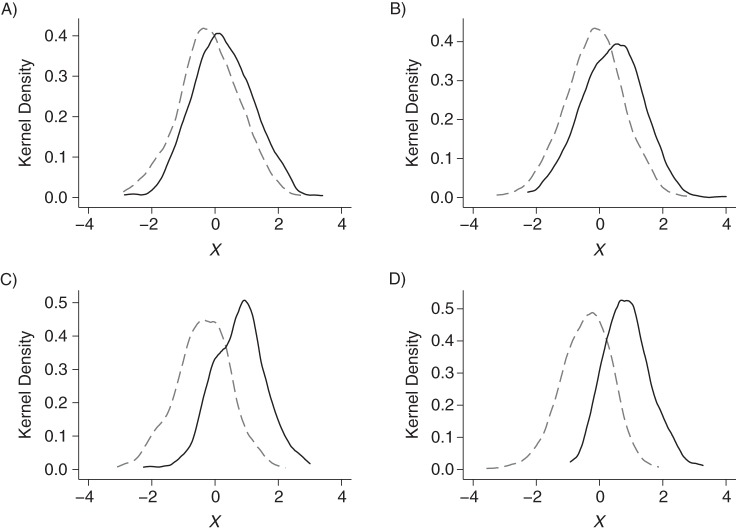
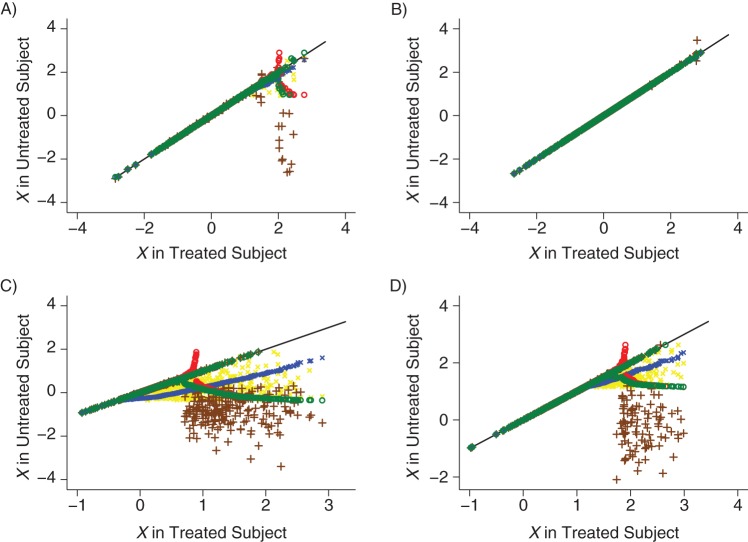
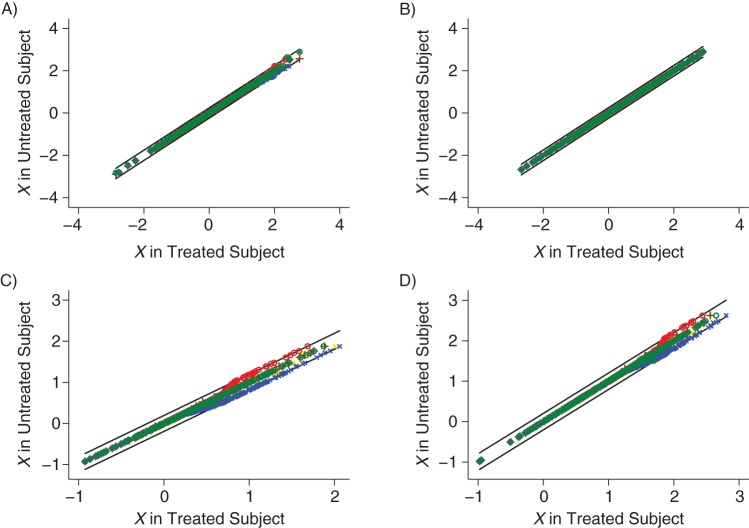
Matching on the propensity score is widely used to estimate the effect of an exposure in observational studies. However, the quality of the matches can be affected by decisions made during the matching process, particularly the order in which subjects are selected for matching and the maximum permitted difference between matched subjects (the "caliper"). This study used simulations to explore the effects of these decisions on both the imbalance of covariates and the closeness of matching, while allowing the numbers of potential matches and strengths of association between the confounding variable and the exposure to vary. It was found that, without a caliper, substantial bias was possible, particularly with a relatively small reservoir of potential matches and strong confounder-exposure association. Use of the recommended caliper reduced the bias considerably, but bias remained if subjects were selected by increasing or decreasing propensity score. A tighter caliper led to greatly reduced bias and closer matches, although some subjects could not be matched. This study suggests that a narrow caliper can improve the performance of propensity score matching. In situations where it is impossible to find appropriate matches for all exposed subjects, it is better to select subjects in order of the best available matches, rather than increasing or decreasing the propensity score.
Overview
The claims and statistics of this paper haven’t been checked yet.
Free: it reads the open-access text and checks the first 5 claims that cite a source we can check. Create a free account to check every claim.
Integrity signals
Registry
Cites
Statistics
Figures
Verification
Claims the paper makes
The claims and statistics of this paper haven’t been checked yet.
Free: it reads the open-access text and checks the first 5 claims that cite a source we can check. Create a free account to check every claim.
Claims other papers make about this one
Each is checked against this paper’s own text: does it say what the citing paper says it does?
In the citing paper
“Most of the literature suggests that the calliper method outperforms other methods such as nearest neighbour with and without replacement and optimal matching [55] and gives better results if it is difficult to find the matches from the control group [56].”
Self-check
Percentages, sums and reported differences re-computed from the paper’s own numbers.
The self-check needs the paper’s full text.
Citations
Cites
The central role of the propensity score in observational studies for causal effects
ROSENBAUM, P. R., & RUBIN, D. B. (1983) · Biometrika · doi:10.1093/biomet/70.1.41 · Cited by 31,241 · cited 4×
“It can be difficult to find appropriate matches when trying to match on several variables, but Rosenbaum and Rubin (7) showed that matching on the propensity score (the conditional probability of exposure given a set of covariates) could produce samples with the same distribution of covariates in exposed and unexposed…”
BackgroundInfluentialSOME PRACTICAL GUIDANCE FOR THE IMPLEMENTATION OF PROPENSITY SCORE MATCHING
Caliendo, M., & Kopeinig, S. (2008) · Journal of Economic Surveys · doi:10.1111/j.1467-6419.2007.00527.x · Cited by 6,238 · cited 1×
“2 standard deviations), more recent papers on the practicalities of matching have not given recommendations for setting a caliper (12, 13).”
BackgroundMatching Methods for Causal Inference: A Review and a Look Forward
Stuart, E. A. (2010) · Statistical Science · doi:10.1214/09-sts313 · Cited by 5,478 · cited 2×
“2 standard deviations), more recent papers on the practicalities of matching have not given recommendations for setting a caliper (12, 13).”
BackgroundPropensity Score-Matching Methods for Nonexperimental Causal Studies
Dehejia, R. H., & Wahba, S. (2002) · Review of Economics and Statistics · doi:10.1162/003465302317331982 · Cited by 4,846
Rosenbaum, P. R., & Rubin, D. B. (1985) · The American Statistician · doi:10.2307/2683903 · Cited by 4,774 · cited 6×
“It can be difficult to find appropriate matches when trying to match on several variables, but Rosenbaum and Rubin (7) showed that matching on the propensity score (the conditional probability of exposure given a set of covariates) could produce samples with the same distribution of covariates in exposed and unexposed…”
BackgroundMethodInfluentialAustin, P. C. (2011) · Pharmaceutical Statistics · doi:10.1002/pst.433 · Cited by 3,949 · cited 5×
“In practice, a wide variety of calipers is used (1) and, with the exception of Austin (11) (who recommended reducing the caliper from 0.25 standard deviations to 0.2 standard deviations), more recent papers on the practicalities of matching have not given recommendations for setting a caliper (12,…”
BackgroundMethodInfluentialA critical appraisal of propensity‐score matching in the medical literature between 1996 and 2003
Austin, P. C. (2008) · Statistics in Medicine · doi:10.1002/sim.3150 · Cited by 1,249
Matching Using Estimated Propensity Scores: Relating Theory to Practice
Rubin, D. B., & Thomas, N. (1996) · Biometrics · doi:10.2307/2533160 · Cited by 1,074
Matching Using Estimated Propensity Scores: Relating Theory to Practice
Thomas, N. (2006) · Matched Sampling for Causal Effects · doi:10.1017/cbo9780511810725.024 · Cited by 1,018 · cited 1×
“In order to be able to find suitable matches for all exposed subjects, the number of controls available needs to be greater than the number of exposed subjects; the ratio typically lies in the range of 2–20, although it may be higher (8).”
BackgroundControlling Bias in Observational Studies: A Review
Cochran, W. G. (2006) · Matched Sampling for Causal Effects · doi:10.1017/cbo9780511810725.005 · Cited by 958 · cited 5×
“It can be difficult to find appropriate matches when trying to match on several variables, but Rosenbaum and Rubin (7) showed that matching on the propensity score (the conditional probability of exposure given a set of covariates) could produce samples with the same distribution of covariates in exposed and unexposed…”
MethodInfluential
Cited by
Brown, J. W. L., Coles, A., Horakova, D., Havrdova, E., Izquierdo, G., Prat, A., Girard, M., Duquette, P., Trojano, M., Lugaresi, A., et al. (2019) · JAMA · doi:10.1001/jama.2018.20588 · Cited by 546
Yao, X. I., Wang, X., Speicher, P. J., Hwang, E. S., Cheng, P., Harpole, D. H., Berry, M. F., Schrag, D., & Pang, H. H. (2017) · JNCI: Journal of the National Cancer Institute · doi:10.1093/jnci/djw323 · Cited by 386
Bramante, C. T., Ingraham, N. E., Murray, T. A., Marmor, S., Hovertsen, S., Gronski, J., McNeil, C., Feng, R., Guzman, G., Abdelwahab, N., et al. (2021) · The Lancet Healthy Longevity · doi:10.1016/s2666-7568(20)30033-7 · Cited by 291
Ali, M. S., Groenwold, R. H. H., Belitser, S. V., Pestman, W. R., Hoes, A. W., Roes, K. C. B., Boer, A. D., & Klungel, O. H. (2015) · Journal of Clinical Epidemiology · doi:10.1016/j.jclinepi.2014.08.011 · Cited by 222
“It is important to note that exclusion of unmatched patients from the analysis not only affect the precision of the effect estimate but also have consequences on the generalizability of results [5,6].”
BackgroundInfluentialStatistical matching for conservation science
Schleicher, J., Eklund, J., D. Barnes, M., Geldmann, J., Oldekop, J. A., & Jones, J. P. G. (2020) · Conservation Biology · doi:10.1111/cobi.13448 · Cited by 229
Chen, J. W., Maldonado, D. R., Kowalski, B. L., Miecznikowski, K. B., Kyin, C., Gornbein, J. A., & Domb, B. G. (2022) · Arthroscopy: The Journal of Arthroscopic & Related Surgery · doi:10.1016/j.arthro.2021.06.037 · Cited by 193
Outcomes After Hip Fracture Surgery Compared With Elective Total Hip Replacement
Le Manach, Y., Collins, G., Bhandari, M., Bessissow, A., Boddaert, J., Khiami, F., Chaudhry, H., De Beer, J., Riou, B., Landais, P., et al. (2015) · JAMA · doi:10.1001/jama.2015.10842 · Cited by 211
Goel, R., Patel, E. U., Cushing, M. M., Frank, S. M., Ness, P. M., Takemoto, C. M., Vasovic, L. V., Sheth, S., Nellis, M. E., Shaz, B., et al. (2018) · JAMA Surgery · doi:10.1001/jamasurg.2018.1565 · Cited by 197
“2 of the SD of the logit of the propensity score.(32) The balance of covariates between patientswho received any perioperativeRBC transfusion andmatched control individuals was examined by calculating standardized percentage differences.”
Ali, M. S., Prieto-Alhambra, D., Lopes, L. C., Ramos, D., Bispo, N., Ichihara, M. Y., Pescarini, J. M., Williamson, E., Fiaccone, R. L., Barreto, M. L., et al. (2019) · Frontiers in Pharmacology · doi:10.3389/fphar.2019.00973 · Cited by 200
“4In PSM, when treated individuals are excluded, interpretation of the treatment effect may change, not just ATT and in Stratification, when there is treatment effect modification by the PS, in regression adjustment using PS, when non-collapsible effect measures such as odds ratios are used.”
BackgroundResultInfluentialA comparison of different methods to handle missing data in the context of propensity score analysis
Choi, J., Dekkers, O. M., & le Cessie, S. (2018) · European Journal of Epidemiology · doi:10.1007/s10654-018-0447-z · Cited by 185
Avoiding pitfalls when combining multiple imputation and propensity scores
Granger, E., Sergeant, J. C., & Lunt, M. (2019) · Statistics in Medicine · doi:10.1002/sim.8355 · Cited by 145
Self-citationOveresch, M., & Wolff, H. (2017) · Contemporary Accounting Research · doi:10.1111/1911-3846.12669 · Cited by 171
Stevenson, M., Pandor, A., James, M. M., Rafia, R., Uttley, L., Stevens, J., Sanderson, J., Wong, R., Perkins, G. D., McMullan, R., et al. (2016) · Health Technology Assessment · doi:10.3310/hta20460 · Cited by 155
Should China further expand its high-speed rail network? Consider the low-cost carrier factor
Wang, K., Xia, W., & Zhang, A. (2017) · Transportation Research Part A Policy and Practice · doi:10.1016/j.tra.2017.04.010 · Cited by 160
Lee, D., & Hosanagar, K. (2020) · Management Science · doi:10.1287/mnsc.2019.3546 · Cited by 153
To use or not to use propensity score matching?
Wang, J. (2020) · Pharmaceutical Statistics · doi:10.1002/pst.2051 · Cited by 139
“The selection of caliper width is a key factor for a good PSM, for which there have been some simulation studies evaluating the performance of PSM in relation to caliper width selection.(26,27) Here we present a small simulation study that focuses on the topic discussed here, that is, the benefit and harm of pruning i…”
MethodVeld, J. V., Amelung, F. J., Borstlap, W. A. A., van Halsema, E. E., Consten, E. C. J., Siersema, P. D., ter Borg, F., van der Zaag, E. S., de Wilt, J. H. W., Fockens, P., et al. (2020) · JAMA Surgery · doi:10.1001/jamasurg.2019.5466 · Cited by 127
Tao, S., He, S. Y., Kwan, M., & Luo, S. (2019) · Journal of Transport Geography · doi:10.1016/j.jtrangeo.2019.102583 · Cited by 108
Using propensity scores to estimate effects of treatment initiation decisions: State of the science
Webster‐Clark, M., Stürmer, T., Wang, T., Man, K. K. C., Marinac‐Dabic, D., Rothman, K. J., Ellis, A. R., Gokhale, M., Lunt, M., Girman, C. J., et al. (2020) · Statistics in Medicine · doi:10.1002/sim.8866 · Cited by 109
Self-citationChen, H., Laba, J. M., Boldt, G., Goodman, C. D., Palma, D. A., Senan, S., & Louie, A. V. (2018) · International Journal of Radiation Oncology*Biology*Physics · doi:10.1016/j.ijrobp.2018.01.064 · Cited by 105
Take a Stand or Keep Your Seat: Board Turnover after Social Movement Boycotts
McDonnell, M., & Cobb, J. A. (2019) · Academy of Management Journal · doi:10.5465/amj.2017.0890 · Cited by 110
Rocha, R. V., Manlhiot, C., Feindel, C. M., Yau, T. M., Mueller, B., David, T. E., & Ouzounian, M. (2017) · Circulation · doi:10.1161/circulationaha.117.030525 · Cited by 94
Cao, C. Q., Wang, D., Chung, C. D., Tian, D. H., Rimner, A., Huang, J. G., & Jones, D. R. (2018) · Journal of Thoracic and Cardiovascular Surgery · doi:10.1016/j.jtcvs.2018.08.075 · Cited by 91
“The closeness of matching, also known as the caliper, differed among studies, depending on the reservoir of potential matches and the number of measured covariates between treatment groups.(57) Additional statistical limitations of the present meta-analysis included relatively high heterogeneity identified among studi…”
BackgroundNémeth, E., Kovács, E., Rácz, K., Soltész, Á., Szigeti, S., Kiss, N., Csikós, G. R., Koritsánszky, K. B., Berzsenyi, V., Trembickij, G., et al. (2018) · Clinical Transplantation · doi:10.1111/ctr.13211 · Cited by 86
Prinja, S., Nimesh, R., Gupta, A., Bahuguna, P., Gupta, M., & Thakur, J. S. (2017) · Tropical Medicine & International Health · doi:10.1111/tmi.12895 · Cited by 81
“Most of the literature suggests that the calliper method outperforms other methods such as nearest neighbour with and without replacement and optimal matching [55] and gives better results if it is difficult to find the matches from the control group [56].”
MethodYang, J. Y., Webster‐Clark, M., Lund, J. L., Sandler, R. S., Dellon, E. S., & Stürmer, T. (2019) · Gastrointestinal Endoscopy · doi:10.1016/j.gie.2019.04.236 · Cited by 87
Propensity Scores in Pharmacoepidemiology: Beyond the Horizon
Jackson, J. W., Schmid, I. T., & Stuart, E. A. (2017) · Current Epidemiology Reports · doi:10.1007/s40471-017-0131-y · Cited by 90
Bunte, J. B., Desai, H., Gbala, K., Parks, B. C., & Runfola, D. M. (2018) · World Development · doi:10.1016/j.worlddev.2018.02.034 · Cited by 85
“25 caliper is a common “best practice” in studies using propensity score matching for causal inference (Lunt, 2013; Rosenbaum & Rubin, 2012).”
Allogeneic Transplantation in Advanced Cutaneous T-Cell Lymphomas
de Masson, A., Beylot-Barry, M., Ram‐Wolff, C., Méar, J.-B., Dalle, S., D'Incan, M., Oro, S., Orvain, C., Abraham, J., Dereure, O., et al. (2022) · The Lancet · doi:10.1016/s0140-6736(23)00329-x · Cited by 79
Smith, G. D., Pickles, T., Crook, J. M., Martin, A., Vigneault, É., Cury, F., Morris, J., Catton, C., Lukka, H. R., Warner, A., et al. (2015) · International Journal of Radiation Oncology*Biology*Physics · doi:10.1016/j.ijrobp.2014.11.018 · Cited by 79
Thompson, S., Whitaker, J., Kohli, R., & Jones, C. H. (2020) · MIS Quarterly · doi:10.25300/misq/2020/15085 · Cited by 80
“To determine the appropriate caliper we examined the sensitivity of estimated effects to small changes in the propensity score specification (Lunt 2014).”
MethodShah, M., Tsadok, M. A., Jackevicius, C. A., Essebag, V., Behlouli, H., & Pilote, L. (2014) · The American Journal of Cardiology · doi:10.1016/j.amjcard.2014.05.013 · Cited by 68
Katsuno, H., Shiomi, A., Ito, M., Koide, Y., Maeda, K., Yatsuoka, T., Hase, K., Komori, K., Minami, K., Sakamoto, K., et al. (2015) · Surgical Endoscopy · doi:10.1007/s00464-015-4566-2 · Cited by 65
“PSM, which is a relatively novel statistical technique, has been demonstrated to reduce bias in observational studies by balancing known confounding variables [12].”
BackgroundImpact of Sarcopenia on Surgical Outcomes in Non-small Cell Lung Cancer
Shinohara, S., Otsuki, R., KOBAYASHI, K. P., Sugaya, M., Matsuo, M., & Nakagawa, M. (2020) · Annals of Surgical Oncology · doi:10.1245/s10434-020-08224-z · Cited by 63
“2 of the standard deviation of the logit of the propensity score.(24) The balance of baseline variables before and after matching was evaluated by the standardized differences, in which less than 10% were well balanced after matching.”
MethodPopulation heterogeneity in clinical cohorts affects the predictive accuracy of brain imaging
Benkarim, O. M., Paquola, C., Park, B., Kebets, V., Hong, S., de Wael, R. V., Zhang, S., Yeo, B. T. T., Eickenberg, M., Ge, T., et al. (2022) · PLoS Biology · doi:10.1371/journal.pbio.3001627 · Cited by 70
“To overcome this hurdle, we added a restriction to the Hungarian algorithm such that the absolute difference in the propensity scores of matched participants must not exceed a prespecified threshold—the so-called caliper [73].”
BackgroundLeisman, D. E. (2019) · Critical Care Medicine · doi:10.1097/ccm.0000000000003567 · Cited by 56
Use of Propensity Score Methodology in Contemporary High-Impact Surgical Literature
Grose, E., Wilson, S., Barkun, J. S., Bertens, K. A., Martel, G., Balaa, F. K., & Khalil, J. A. (2019) · Journal of the American College of Surgeons · doi:10.1016/j.jamcollsurg.2019.10.003 · Cited by 58
Revision Analysis of Robotic Arm–Assisted and Manual Unicompartmental Knee Arthroplasty
Cool, C. L., Needham, K., Khlopas, A., & Mont, M. A. (2019) · The Journal of Arthroplasty · doi:10.1016/j.arth.2019.01.018 · Cited by 54
Williams, D. J., Edwards, K. M., Self, W. H., Zhu, Y., Arnold, S. R., McCullers, J. A., Ampofo, K., Pavia, A. T., Anderson, E. J., Hicks, L. A., et al. (2017) · Archives of Pediatrics and Adolescent Medicine · doi:10.1001/jamapediatrics.2017.3225 · Cited by 58
“Intensive care admissionf 152 (15) 63 (16) .”
Lauffenburger, J. C., Shrank, W. H., Bitton, A., Franklin, J. M., Glynn, R. J., Krumme, A. A., Matlin, O. S., Pezalla, E. J., Spettell, C. M., Brill, G. E., et al. (2016) · Annals of Internal Medicine · doi:10.7326/m15-2659 · Cited by 55
Synergies between Different Types of Agricultural Technologies in the Kenyan Small Farm Sector
Wainaina, P., Tongruksawattana, S., & Qaim, M. (2017) · The Journal of Development Studies · doi:10.1080/00220388.2017.1342818 · Cited by 53
“To achieve successful matching, the number of available untreated controls should be greater than the number of treated subjects (Lunt, 2014).”
BackgroundBramante, C. T., Buse, J. B., Tamaritz, L., Palacio, A., Cohen, K., Vojta, D. D., Liebovitz, D., Mitchell, N. S., Nicklas, J. M., Lingvay, I., et al. (2021) · Journal of Medical Virology · doi:10.1002/jmv.26873 · Cited by 51
“2 and a model with exact matching.(26,27) Even distribution of propensity scores was confirmed be-”
BackgroundZhai, G., Xie, K., Yang, D., & Yang, H. J. (2022) · Transportation Research Part A Policy and Practice · doi:10.1016/j.tra.2022.01.004 · Cited by 63
Kopko, E., & Crosta, P. M. (2015) · Research in Higher Education · doi:10.1007/s11162-015-9383-x · Cited by 46
“25rp is widely accepted as the recommended choice (Lunt 2014) based on Rosenbaum and Rubin’s (1985) article ‘‘Constructing a Control Group Using Multivariate Matched Sampling Methods that Incorporate the Propensity Score’’.”
Kim, Y. R., Chung, S. W., Kim, M.-J., Choi, W., Choi, J., Lee, D., Lee, H. C., & Shim, J. H. (2024) · Journal of Hepatocellular Carcinoma · doi:10.2147/jhc.s456093 · Cited by 47
Veld, J. V., Amelung, F. J., Borstlap, W. A. A., van Halsema, E. E., Consten, E. C. J., Dekker, J. W. T., Siersema, P. D., ter Borg, F., van der Zaag, E. S., Fockens, P., et al. (2020) · Annals of Surgery · doi:10.1097/sla.0000000000004173 · Cited by 45
“25 logit of the standard deviation of the propensity-score.(10) Propensity-score matching was performed according to the following baseline characteristics: sex, age, body mass index, American Society of Anaesthesiologists (ASA) score, previous abdominal surgery, tumor location, cM1 stage at presentation, length of th…”
MethodLi, Q., Maqsood, U. S., & Zahid, R. M. A. (2023) · Business Ethics the Environment & Responsibility · doi:10.1111/beer.12601 · Cited by 44
Mubarik, S., Liu, X., Eshak, E. S., Liu, K., Liu, Q., Wang, F., Shi, F., Wen, H., Bai, J., Yu, C., et al. (2021) · Frontiers in Medicine · doi:10.3389/fmed.2021.623608 · Cited by 50
Morgan, J. R., Barocas, J. A., Murphy, S. M., Epstein, R. L., Stein, M. D., Schackman, B. R., Walley, A. Y., & Linas, B. P. (2020) · JAMA Network Open · doi:10.1001/jamanetworkopen.2020.29676 · Cited by 44
The Payoffs of Organizational Membership for Political Activism in Established Democracies
Minkoff, D. (2016) · American Journal of Sociology · doi:10.1086/687743 · Cited by 45
Performance of propensity score matching to estimate causal effects in small samples
Andrillon, A., Pirracchio, R., & Chevret, S. (2020) · Statistical Methods in Medical Research · doi:10.1177/0962280219887196 · Cited by 49
“the caliper) to define similarity and match an exposed to an unexposed.(8).”
BackgroundMasaki, S., & Kawamoto, T. (2019) · PLoS ONE · doi:10.1371/journal.pone.0217120 · Cited by 45
Munjal, S., Bhasin, N., Nandrajog, D., & Kundu, S. K. (2022) · Journal of Business Research · doi:10.1016/j.jbusres.2022.03.027 · Cited by 55
Galina, P., Alexopoulou, E., Mentessidou, A., Mirilas, P., Zellos, A., Lykopoulou, L., Patereli, A., Salpasaranis, K., Kelekis, N., & Zarifi, M. K. (2021) · Pediatric Radiology · doi:10.1007/s00247-020-04959-9 · Cited by 40
Tax Avoidance through Advance Tax Rulings – Evidence from the LuxLeaks Firms
Huesecken, B., & Overesch, M. (2019) · FinanzArchiv Public Finance Analysis · doi:10.1628/fa-2019-0011 · Cited by 42
Chung, S. W., Moon, H.-S., Shin, H., Han, H., Park, S., Cho, H., Park, J., Hur, M. H., Park, M. K., Won, S., et al. (2024) · Hepatology · doi:10.1097/hep.0000000000000837 · Cited by 39
“[38] Among SGLT2i individuals, 19 could not be matched with DPP4i individuals.”
Kim, G., Oh, D. K., Lee, S. Y., Park, M. H., Lim, C., & the Korean Sepsis Alliance (KSA) investigators (2024) · Critical Care · doi:10.1186/s13054-024-05064-1 · Cited by 39
“The lowest score caliper width that resulted in a sufficient number of subjects and met adequate matching criteria was chosen to produce close matches [21].”
InfluentialNethery, R. C., Mealli, F., & Dominici, F. (2019) · The Annals of Applied Statistics · doi:10.1214/18-aoas1231 · Cited by 51
Fergusson, N. A., Hoiland, R. L., Thiara, S., Foster, D., Gooderham, P. A., Rikhraj, K. J. K., Grunau, B. E., Christenson, J. M., Ainslie, P. N., Griesdale, D. E. G., et al. (2021) · Critical Care Medicine · doi:10.1097/ccm.0000000000004945 · Cited by 41
Matching on the disease risk score in comparative effectiveness research of new treatments
Wyss, R., Ellis, A. R., Brookhart, M. A., Funk, M. J., Girman, C. J., Simpson, R. J., & Stürmer, T. (2015) · Pharmacoepidemiology and Drug Safety · doi:10.1002/pds.3810 · Cited by 38
Sun, F., Li, Y., Chen, Y., Guan, W., Jiang, X., Wang, X., Ren, P., Li, J., Shi, J., He, G., et al. (2018) · European Respiratory Journal · doi:10.1183/13993003.01770-2018 · Cited by 38
Liu, X., Molenaar, N. M., Agerbo, E., Momen, N. C., Rommel, A., Lupattelli, A., Bergink, V., & Munk‐Olsen, T. (2022) · PLoS Medicine · doi:10.1371/journal.pmed.1003895 · Cited by 39
“2 [25] based on the following considerations: (1) a tighter caliper leads to significantly reduced bias [26]; and (2) the increase in the number of matched pairs using caliper widths of 0.”
BackgroundKirschner, S. A., & Miller, A. (2019) · Journal of Conflict Resolution · doi:10.1177/0022002719831069 · Cited by 45
Nerio, R., Webber, A., MacLachlan, E., Lopatto, D. E., & Caplan, A. J. (2019) · CBE—Life Sciences Education · doi:10.1187/cbe.19-02-0042 · Cited by 39
“25 SDs) and assigned matches in descending order of propensity score (Cochran and Rubin, 1973; Rosenbaum and Rubin, 1985; Lunt, 2014).”
Castellani, D., Fong, K. Y., Lim, E. J., Chew, B. H., Tailly, T. O., Emiliani, E., Teoh, J. Y., Chai, C. A., Heng, C. T., Keat, W. O. L., et al. (2023) · The Journal of Urology · doi:10.1097/ju.0000000000003504 · Cited by 42
“To ensure optimal matching of covariates, caliper width was started at 0.2 17,18 and decreased in increments of 0.01 until the absolute standardized mean difference (ASMD) for all covariates was 0.1, 17 which was achieved at a caliper width of 0.07.”
InfluentialGovernment's Say‐on‐pay Policy and Corporate Risk‐taking: Evidence from China
Su, K., Jiang, H., & Tian, G. G. (2020) · Abacus · doi:10.1111/abac.12205 · Cited by 40
Pinar, U., Duquesne, I., Lannes, F., Bardet, F., Kaulanjan, K., MICHIELS, C., de Mazancourt, E. S., Dominique, I., Vallée, M., Felber, M., et al. (2021) · European Urology Focus · doi:10.1016/j.euf.2021.02.011 · Cited by 35
Boddapati, V., Fu, M. C., Nwachukwu, B. U., Camp, C. L., Spiker, A. M., Williams, R. J., & Ranawat, A. S. (2019) · Knee Surgery Sports Traumatology Arthroscopy · doi:10.1007/s00167-019-05622-z · Cited by 36
Mamun, M. A., Balachandran, B., Duong, H. N., & Gul, F. A. (2020) · European Accounting Review · doi:10.1080/09638180.2020.1763819 · Cited by 37
“Further, we conduct regression analysis using the PSM sample.”
InfluentialWhitworth, P. W., Hogan, A., Ferko, N. C., Son, D., Wang, F., Xiong, Y., Suri, H., & Barclay, B. (2020) · Journal of Breast Imaging · doi:10.1093/jbi/wbaa055 · Cited by 33
Gauhar, V., Nedbal, C., Castellani, D., Fong, K. Y., Sofer, M., Socarrás, M. E. R., Tursunkulov, A., Ying, L. K., Elterman, D., Mahajan, A. D., et al. (2023) · European Urology Focus · doi:10.1016/j.euf.2023.06.009 · Cited by 33
Gauhar, V., Traxer, O., Fong, K. Y., Sietz, C., Chew, B. H., Hamri, S. B., Gökçe, M. İ., Gadzhiev, N. K., Yuen, S. K. K., Малхасян, В. А., et al. (2024) · Journal of Endourology · doi:10.1089/end.2024.0653 · Cited by 33
Nelson, R. E., Jones, M., Liu, C., Samore, M. H., Evans, M. E., Graves, N., Lee, B., & Rubin, M. A. (2015) · Infection Control and Hospital Epidemiology · doi:10.1017/ice.2015.22 · Cited by 36
“One-to-one, nearest neighbor matching was conducted using a small caliper width (10% of the standard deviation of the propensity score; 20% is recommended) to ensure tight matches and only on patients whose propensity score fell within the region of common support.(26,27) Covariate balance was evaluated using standard…”
MethodDvouletý, O., Čadil, J., & Mirošník, K. (2018) · The B E Journal of Economic Analysis & Policy · doi:10.1515/bejeap-2018-0057 · Cited by 41
Montaño, M. A., Dombrowski, J. C., Dasgupta, S., Golden, M. R., Manhart, L. E., Barbee, L. A., Duerr, A. C., & Khosropour, C. M. (2019) · AIDS · doi:10.1097/qad.0000000000002281 · Cited by 35
“We used descending, nearest-neighbour matching without replacement to select two matched PrEP nonusers for each PrEP user based on their propensity scores [22,23].”
MethodNethery, R. C., Mealli, F., Sacks, J. D., & Dominici, F. (2020) · Journal of the American Statistical Association · doi:10.1080/01621459.2020.1803883 · Cited by 36
“Literature on choosing calipers in standard matching procedures (Lunt, 2013) and identifying regions of common support in causal inference (King and Zeng, 2006) may provide insight into how to specify ω and ν .”
BackgroundTettero, J. M., Ngai, L. L., Bachas, C., Breems, D. A., Fischer, T. H., Gjertsen, B. T., Gradowska, P. L., Griškevičius, L., Janssen, J. J. W. M., Juliusson, G., et al. (2023) · Haematologica · doi:10.3324/haematol.2022.282639 · Cited by 32
“09.(14) This resulted in 110 matches with similar patient characteristics.”
Gauhar, V., Castellani, D., Chew, B. H., Smith, D., Chai, C. A., Fong, K. Y., Teoh, J. Y., Traxer, O., Somani, B. K., & Tailly, T. O. (2023) · Therapeutic Advances in Urology · doi:10.1177/17562872231198629 · Cited by 33
Casciani, F., Trudeau, M. T., Asbun, H. J., Ball, C. G., Bassi, C., Behrman, S. W., Berger, A. C., Bloomston, M. P., Callery, M. P., Christein, J. D., et al. (2021) · Surgery · doi:10.1016/j.surg.2021.03.044 · Cited by 31
Pham, V. T., Roongtawanreongsri, S., Ho, T. Q., & Tran, P. H. N. (2021) · Forest Policy and Economics · doi:10.1016/j.forpol.2021.102578 · Cited by 32
on behalf of the SOS-KANTO 2012 Study Group, Yamamoto, R., Suzuki, M., Hayashida, K., Yoshizawa, J., Sakurai, A., Kitamura, N., Tagami, T., Nakada, T., Takeda, M., et al. (2019) · Scandinavian Journal of Trauma Resuscitation and Emergency Medicine · doi:10.1186/s13049-019-0657-8 · Cited by 33
Varga, A. N., Morel, A. E. G., Lokkerbol, J., van Dongen, J. M., van Tulder, M. W., & Bosmans, J. E. (2022) · Statistics in Medicine · doi:10.1002/sim.9628 · Cited by 33
Characterizing Land Use Impacts on Functional Plant Diversity for Life Cycle Assessments
Scherer, L., van Baren, S., & van Bodegom, P. M. (2020) · Environmental Science & Technology · doi:10.1021/acs.est.9b07228 · Cited by 34
Trinh, M., Kalloniatis, M., Alonso-Caneiro, D., & Nivison-Smith, L. (2022) · Investigative Opthalmology & Visual Science · doi:10.1167/iovs.63.5.36 · Cited by 29
“36”
Franchetti, Y. (2021) · The Journal of Clinical Pharmacology · doi:10.1002/jcph.1989 · Cited by 30
Low, Y., Gallego, B., & Shah, N. H. (2015) · Journal of Comparative Effectiveness Research · doi:10.2217/cer.15.53 · Cited by 30
Henriquez, D. D. C. A., Caram‐Deelder, C., le Cessie, S., Zwart, J. J., van Roosmalen, J., Eikenboom, J. C. J., So‐Osman, C., van de Watering, L. M. G., Zwaginga, J. J., Gemert, A. W. M. M. K.-V., et al. (2019) · JAMA Network Open · doi:10.1001/jamanetworkopen.2019.15628 · Cited by 31
“Median (IQR) time to plasma, 40 (23-50) min Median (IQR) RBC, 4 (3-7) units Median (IQR) FFP, 2 (2-5) units 114”
BackgroundThe use of blood and blood products in aortic surgery is associated with adverse outcomes
Sultan, I. S., Bianco, V. J., Aranda-Michel, E. C., Kilic, A., Serna-Gallegos, D. R., Navid, F., Wang, Y., & Gleason, T. G. (2021) · Journal of Thoracic and Cardiovascular Surgery · doi:10.1016/j.jtcvs.2021.02.096 · Cited by 29
Tilden, E. L., & Snowden, J. M. (2018) · Journal of Midwifery & Women s Health · doi:10.1111/jmwh.12710 · Cited by 29
The Effectiveness of Medical and Surgical Treatment for Children With Refractory Epilepsy
Pan, I.-W. E., LoPresti, M. A., Clarke, D., & Lam, S. K. (2020) · Neurosurgery · doi:10.1093/neuros/nyaa307 · Cited by 28
Garcia, J. A., Salamanca‐Bautista, P., Ferrero‐Gregori, A., Montero-Pérez-Barquero, M., Puig, T., Aramburu‐Bodas, Ó., Vázquez, R., Formiga, F., Delgado, J. F., Arias‐Jiménez, J. L., et al. (2016) · Revista Española de Cardiología · doi:10.1016/j.recesp.2016.09.021 · Cited by 28
Adedokun, O. A., Plonski, P., Jenkins-Howard, B., Cotterill, D. B., & Vail, A. (2018) · Journal of Nutrition Education and Behavior · doi:10.1016/j.jneb.2018.02.005 · Cited by 26
van de Graaf, R. A., Zinkstok, S. M., Chalos, V., Goldhoorn, R.-J. B., Majoie, C. B. L. M., van Oostenbrugge, R. J., van der Lugt, A., Dippel, D. W. J., Roos, Y. B. W. E. M., Lingsma, H. F., et al. (2020) · International Journal of Stroke · doi:10.1177/1747493020946975 · Cited by 26
“NIHSS at baseline 16 [11, 20] 16 [12, 20] 16 [11, 20] 16 [11, 19] 14/32”
App Usage Associated With Full Redemption of WIC Food Benefits: A Propensity Score Approach
Zhang, Q., Zhang, J., Park, K., & Tang, C. (2021) · Journal of Nutrition Education and Behavior · doi:10.1016/j.jneb.2021.03.002 · Cited by 25
Hirose, W., Harigai, M., Amano, K., Hidaka, T., Itoh, K., Aoki, K., Nakashima, M., Nagasawa, H., Komano, Y., Nanki, T., et al. (2021) · Arthritis Research & Therapy · doi:10.1186/s13075-021-02612-w · Cited by 24
Garcia, J. A., Salamanca‐Bautista, P., Ferrero‐Gregori, A., Montero-Pérez-Barquero, M., Puig, T., Aramburu‐Bodas, Ó., Vázquez, R., Formiga, F., Delgado, J. F., Arias‐Jiménez, J. L., et al. (2017) · Revista Española de Cardiología (English Edition) · doi:10.1016/j.rec.2016.12.026 · Cited by 29
Li, Z., Wang, Y., Ying, X., Shan, F., Wu, Z., Zhang, L., Li, S., Jia, Y., Ren, H., & Ji, J. (2019) · BMC Cancer · doi:10.1186/s12885-019-5283-3 · Cited by 24
Lai, Q., Iesari, S., Finkenstedt, A., Hoppe‐Lotichius, M., Foguenne, M., Lehner, K., Otto, G., & Lerut, J. P. (2019) · Hepatobiliary & pancreatic diseases international · doi:10.1016/j.hbpd.2019.05.006 · Cited by 24
ASSESSING THE TAX BENEFITS OF HYBRID ARRANGEMENTS — EVIDENCE FROM THE LUXEMBOURG LEAKS
Hardeck, I., & Wittenstein, P. U. (2015) · National Tax Journal · doi:10.17310/ntj.2018.2.04 · Cited by 23
Nshakira‐Rukundo, E., Mussa, E. C., Nshakira, N., Gerber, N., & von Braun, J. (2021) · International Journal of Health Economics and Management · doi:10.1007/s10754-021-09294-6 · Cited by 23
Metadata
- Authors
- Lunt, M.
- Affiliations
- University of Manchester (GB)
- Corresponding author
- Lunt, Mark
- ORCID
- Lunt, Mark
- Venue
- American Journal of Epidemiology
- Publisher
- Oxford University Press (OUP)
- Published
- 2013-10-10
- Volume
- 179
- Issue
- 2
- Pages
- 226-235
- ISSN
- 0002-9262 (ISSN-L)
- 1476-6256
- PMC
- PMC3873103
- OpenAlex
- W2154872949
- Cited by
- 358
- References
- 25
- Citations by year
- 2026: 30 · 2025: 50 · 2024: 21 · 2023: 35 · 2022: 31 · 2021: 39 · 2020: 36 · 2019: 39 · 2018: 24 · 2017: 16 · 2016: 15 · 2015: 16 · 2014: 6
- FWCI
- 10.88
- Type
- journal article
- Language
- en
- Open access
- hybrid
- doi.org
- Licence
- cc-by-nc
- Locations
- American Journal of Epidemiology (publishedVersion, cc-by-nc)
- Europe PMC (PubMed Central) (publishedVersion, cc-by-nc)
- PubMed Central (publishedVersion, cc-by-nc)
- PubMed (publishedVersion)
- Research Explorer (The University of Manchester) (publishedVersion)
- Funders
- Versus Arthritis (/17552)
- Topics
- Physical Sciences › Mathematics › Statistics and Probability › Advanced Causal Inference Techniques
- Physical Sciences › Mathematics › Statistics and Probability › Statistical Methods in Epidemiology
- Social Sciences › Decision Sciences › Statistics, Probability and Uncertainty › Meta-analysis and systematic reviews
- Keywords
- propensity score matching, covariate imbalance, matching bias, confounding, observational studies
- MeSH terms
- Epidemiologic Methods, Humans, Bias, Propensity Score
About these checks
Registry, retraction, Cites and statistics results are computed, not judged, with one exception: a printed reference that no index lists is read once by a model before it counts as a citation error. Claims are extracted by a model and kept only when their quote appears verbatim in the text; each cited source is then checked, with a model’s help, for whether it says what the claim relies on. Those verdicts can be wrong — read the claim’s quote and the cited source before relying on one.
Statistics and arithmetic are recomputed, not judged.
Confidence bands are shown only for fields calibrated on our annotated test set. None is calibrated yet, so no band is shown.
What counts as a claim ›How we measure confidence ›How we check this ›
Are you an author, or do you see a problem with this page? Request a review
Data sources
Bibliographic data: Semantic Scholar, OpenAlex, Crossref.
Contains information from the Semantic Scholar Academic Graph Datasets, made available under the ODC Attribution License (ODC-BY 1.0).
Semantic Scholar’s data is described in: Kinney, R., et al. (2023). The Semantic Scholar Open Data Platform. arXiv:2301.10140.
