

Selecting an Appropriate Caliper Can Be Essential for Achieving Good Balance With Propensity Score Matching
Open accessThe DOI matches its Crossref record; 23 of the 25 references it cites were found in a registry or an index.
Abstract
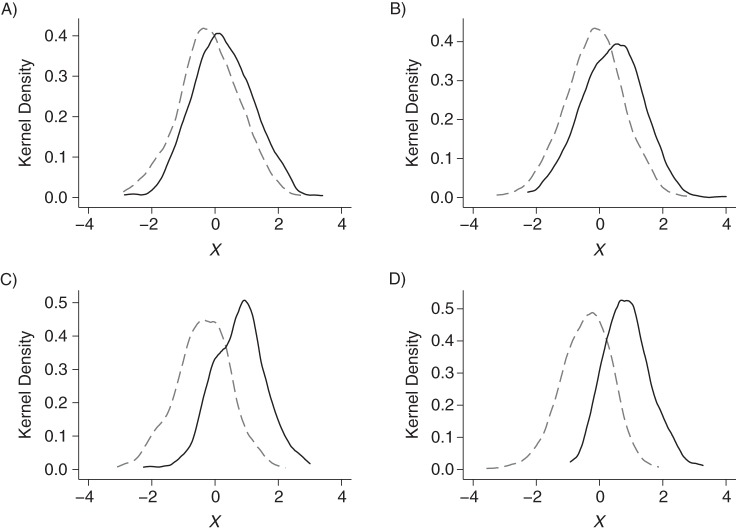
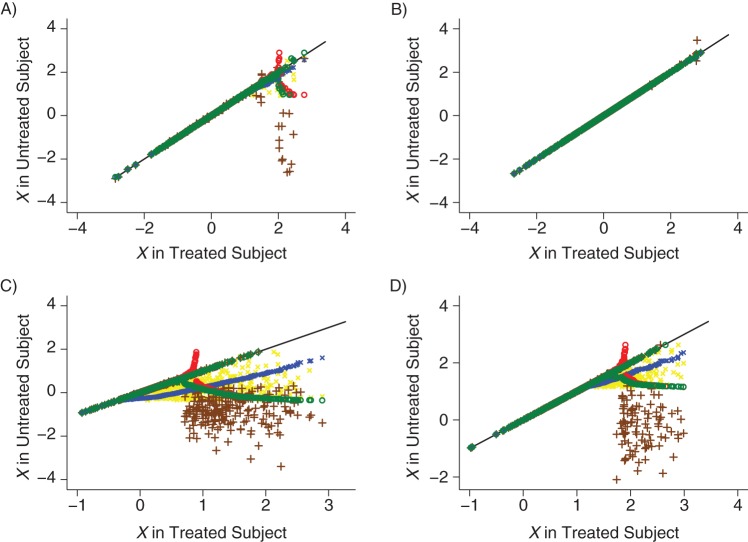
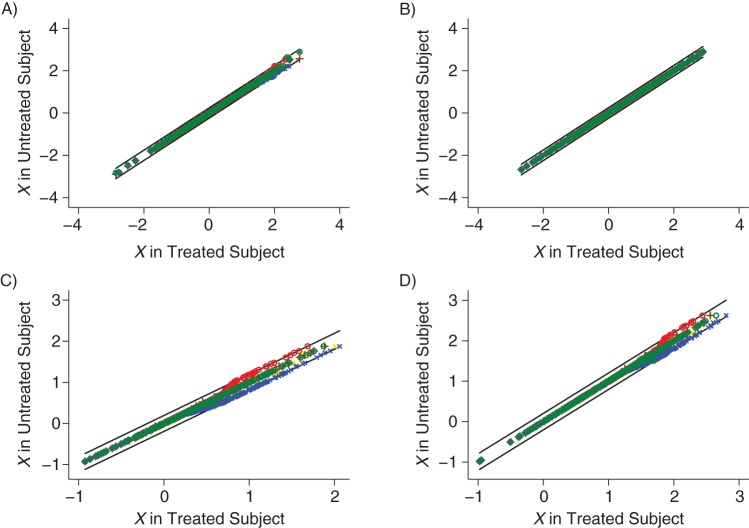
Matching on the propensity score is widely used to estimate the effect of an exposure in observational studies. However, the quality of the matches can be affected by decisions made during the matching process, particularly the order in which subjects are selected for matching and the maximum permitted difference between matched subjects (the "caliper"). This study used simulations to explore the effects of these decisions on both the imbalance of covariates and the closeness of matching, while allowing the numbers of potential matches and strengths of association between the confounding variable and the exposure to vary. It was found that, without a caliper, substantial bias was possible, particularly with a relatively small reservoir of potential matches and strong confounder-exposure association. Use of the recommended caliper reduced the bias considerably, but bias remained if subjects were selected by increasing or decreasing propensity score. A tighter caliper led to greatly reduced bias and closer matches, although some subjects could not be matched. This study suggests that a narrow caliper can improve the performance of propensity score matching. In situations where it is impossible to find appropriate matches for all exposed subjects, it is better to select subjects in order of the best available matches, rather than increasing or decreasing the propensity score.
Overview
The claims and statistics of this paper haven’t been checked yet.
Free: it reads the open-access text and checks the first 5 claims that cite a source we can check. Create a free account to check every claim.
Integrity signals
Registry
Cites
Statistics
Figures
Verification
Claims the paper makes
The claims and statistics of this paper haven’t been checked yet.
Free: it reads the open-access text and checks the first 5 claims that cite a source we can check. Create a free account to check every claim.
Claims other papers make about this one
Each is checked against this paper’s own text: does it say what the citing paper says it does?
In the citing paper
“Most of the literature suggests that the calliper method outperforms other methods such as nearest neighbour with and without replacement and optimal matching [55] and gives better results if it is difficult to find the matches from the control group [56].”
Self-check
Percentages, sums and reported differences re-computed from the paper’s own numbers.
The self-check needs the paper’s full text.
Citations
Cites
The central role of the propensity score in observational studies for causal effects
ROSENBAUM, P. R., & RUBIN, D. B. (1983) · Biometrika · doi:10.1093/biomet/70.1.41 · Cited by 31,241 · cited 4×
“It can be difficult to find appropriate matches when trying to match on several variables, but Rosenbaum and Rubin (7) showed that matching on the propensity score (the conditional probability of exposure given a set of covariates) could produce samples with the same distribution of covariates in exposed and unexposed…”
BackgroundInfluentialSOME PRACTICAL GUIDANCE FOR THE IMPLEMENTATION OF PROPENSITY SCORE MATCHING
Caliendo, M., & Kopeinig, S. (2008) · Journal of Economic Surveys · doi:10.1111/j.1467-6419.2007.00527.x · Cited by 6,238 · cited 1×
“2 standard deviations), more recent papers on the practicalities of matching have not given recommendations for setting a caliper (12, 13).”
BackgroundMatching Methods for Causal Inference: A Review and a Look Forward
Stuart, E. A. (2010) · Statistical Science · doi:10.1214/09-sts313 · Cited by 5,478 · cited 2×
“2 standard deviations), more recent papers on the practicalities of matching have not given recommendations for setting a caliper (12, 13).”
BackgroundPropensity Score-Matching Methods for Nonexperimental Causal Studies
Dehejia, R. H., & Wahba, S. (2002) · Review of Economics and Statistics · doi:10.1162/003465302317331982 · Cited by 4,846
Rosenbaum, P. R., & Rubin, D. B. (1985) · The American Statistician · doi:10.2307/2683903 · Cited by 4,774 · cited 6×
“It can be difficult to find appropriate matches when trying to match on several variables, but Rosenbaum and Rubin (7) showed that matching on the propensity score (the conditional probability of exposure given a set of covariates) could produce samples with the same distribution of covariates in exposed and unexposed…”
BackgroundMethodInfluentialAustin, P. C. (2011) · Pharmaceutical Statistics · doi:10.1002/pst.433 · Cited by 3,949 · cited 5×
“In practice, a wide variety of calipers is used (1) and, with the exception of Austin (11) (who recommended reducing the caliper from 0.25 standard deviations to 0.2 standard deviations), more recent papers on the practicalities of matching have not given recommendations for setting a caliper (12,…”
BackgroundMethodInfluentialA critical appraisal of propensity‐score matching in the medical literature between 1996 and 2003
Austin, P. C. (2008) · Statistics in Medicine · doi:10.1002/sim.3150 · Cited by 1,249
Matching Using Estimated Propensity Scores: Relating Theory to Practice
Rubin, D. B., & Thomas, N. (1996) · Biometrics · doi:10.2307/2533160 · Cited by 1,074
Matching Using Estimated Propensity Scores: Relating Theory to Practice
Thomas, N. (2006) · Matched Sampling for Causal Effects · doi:10.1017/cbo9780511810725.024 · Cited by 1,018 · cited 1×
“In order to be able to find suitable matches for all exposed subjects, the number of controls available needs to be greater than the number of exposed subjects; the ratio typically lies in the range of 2–20, although it may be higher (8).”
BackgroundControlling Bias in Observational Studies: A Review
Cochran, W. G. (2006) · Matched Sampling for Causal Effects · doi:10.1017/cbo9780511810725.005 · Cited by 958 · cited 5×
“It can be difficult to find appropriate matches when trying to match on several variables, but Rosenbaum and Rubin (7) showed that matching on the propensity score (the conditional probability of exposure given a set of covariates) could produce samples with the same distribution of covariates in exposed and unexposed…”
MethodInfluential
Cited by
Items 201–300 of 371
Rincón, Y. R., Munárriz, A., & Magreñán, Á. A. (2026) · International Journal of Educational Technology in Higher Education · doi:10.1186/s41239-025-00576-4 · Cited by 10
“This approach provided an estimate of the Average Treatment Effect on the Treated (ATT; Austin, 2011; Lunt, 2014).”
Estes, S. J., Soliman, A. M., Zivkovic, M., Chopra, D., & Zhu, X. (2020) · Advances in Therapy · doi:10.1007/s12325-020-01361-7 · Cited by 6
Chen, Y., Huang, W., Chang, H.-K., Lirng, J.-F., & Wu, J. (2019) · Journal of Clinical Medicine · doi:10.3390/jcm8040483 · Cited by 6
“treatment and for healthier patients to opt for operation treatment; the propensity score matched cohort analysis had a tight matching caliper that led to a greatly reduced treatment-assignment bias [19].”
BackgroundFerreira, A. J. F., Pescarini, J. M., Sanchez, M. N., Flores-Ortiz, R., Teixeira, C. S. S., Fiaccone, R. L., Ichihara, M. Y., de Oliveira, R. C., Aquino, E. M. L., Smeeth, L. L., et al. (2021) · BMJ Open · doi:10.1136/bmjopen-2020-041722 · Cited by 6
Chinese state media Facebook ads are linked to changes in news coverage of China worldwide
Tambe, A., & Friedman, T. (2022) · Harvard Kennedy School Misinformation Review · doi:10.37016/mr-2020-88 · Cited by 6
Majumdar, A., Rothwell, R., Reaman, G. H., Ahlberg, C. E., & Roy, P. (2023) · Journal of Biopharmaceutical Statistics · doi:10.1080/10543406.2022.2162069 · Cited by 8
“The choice of caliper requires a trade-off: a narrower caliper can improve the performance of propensity score matching but may limit the number of subjects that can be matched (Lunt 2014).”
BackgroundTran, D. T., Palfrey, D., Lo, T., & Welsh, R. C. (2020) · Canadian Journal of Cardiology · doi:10.1016/j.cjca.2020.03.022 · Cited by 6
The Employment Tax Incentive Scheme in South Africa: An Impact AssessmentPreprint
Bhorat, H. I., Hill, R. B., Khan, S., Lilenstein, K., & Stanwix, B. (2020) · RePEc: Research Papers in Economics · Cited by 6
Campbell, V. A., Antony, M., Zulawski, J., & Foley, K. (2024) · Education Sciences · doi:10.3390/educsci14050546 · Cited by 7
Interpretation of Change in Novel Digital Measures: A Statistical Review and Tutorial
Trigg, A., Ratitch, B., Kruesmann, F., Majumder, M., Parfionovas, A., & Krahn, U. (2025) · Digital Biomarkers · doi:10.1159/000543899 · Cited by 5
“(cid:129) Case 1B and 2A: Individual cross-sectional difference thresholds could be used as calipers for propensity score matching in observational studies [22].”
Cormio, A., Gauhar, V., Somani, B. K., Kalathia, J., Gadzhiev, N. K., Zawadzki, M., Laymon, M. N., Tan, K. M., Tak, G. R., Tokas, T., et al. (2025) · BJUI Compass · doi:10.1002/bco2.70075 · Cited by 5
Adaptation and mitigation capacity of wildland forests in the northeastern United States
Faison, E. K., Laflower, D. M., Morreale, L. L., Foster, D. R., Hall, B. R., Johnson, E., & Thompson, J. R. (2023) · Forest Ecology and Management · doi:10.1016/j.foreco.2023.121145 · Cited by 6
“…Matchit package (Ho et al. 2011), with ecological subsection matched exactly and all other variables matched using nearest-neighbor covariate matching determined by Mahalnobis distance with calipers of 0.25 for continuous variables except slope and elevation which had calipers of 0.3 (Lunt 2014).”
MethodInfluentialAndrisani, G., Antonelli, G., Fukuchi, T., Frazzoni, L., Hamanaka, J., Hassan, C., Parente, G., Matteo, F. M. D., & Hirasawa, K. (2025) · Scandinavian Journal of Gastroenterology · doi:10.1080/00365521.2025.2531040 · Cited by 6
“…and UesD group according to the nearest-neighbor method, with a caliper set at 0.25 the standard deviation of the logit of the propensity score [25]. each patient who underwent UesD was matched to four patients in the sesD group with the closest propensity score within the caliper. if more…”
InfluentialNegret, P. J., Rincón-Parra, V. J., Jones, K. R., Rathbone, V., Novoa, S., Quispe-Huanca, M. P., Valdés‐Velásquez, A., Forero‐Medina, G., Schleicher, J., Amano, T., et al. (2026) · Nature Communications · doi:10.1038/s41467-026-76225-9 · Cited by 5
“Matched pairs of pixels had to be within 0.2SD of the propensity scores 122,123 .”
InfluentialOsokogu, O. U., Khan, J., Nakato, S., Weibel, D. M., de Ridder, M. A. J., Sturkenboom, M., & Verhamme, K. M. C. (2018) · Journal of Clinical Epidemiology · doi:10.1016/j.jclinepi.2018.01.008 · Cited by 6
Yamamoto, R., Alarhayem, A. Q., Muir, M. T., Jenkins, D. H., Eastridge, B. J., Shapiro, M. L., & Cestero, R. F. (2022) · The American Journal of Surgery · doi:10.1016/j.amjsurg.2022.03.056 · Cited by 5
Shachar, E. K., Raz, Y., Rotkop, G., Katz, U., Laskov, I., Michaan, N., Grisaru, D., Wolf, I., & Safra, T. (2025) · International Journal of Gynecological Cancer · doi:10.1016/j.ijgc.2025.101809 · Cited by 5
Boyer, V., Vilotitch, A., Panjo, H., Sagaon‐Teyssier, L., Marcellin, F., Dray‐Spira, R., Spire, B., & Bajos, N. (2016) · AIDS Care · doi:10.1080/09540121.2016.1191600 · Cited by 6
“CSF–VESPA2 pairs of individuals with similar characteristics (i.e., similar probabilities) were then identified using a Caliper distance of 0.1 (Lunt, 2014).”
MethodInfluentialIntroduction to clinical research based on modern epidemiology
Hoshino, J. (2020) · Clinical and Experimental Nephrology · doi:10.1007/s10157-020-01870-3 · Cited by 5
Financial Constraints, Social Policy And Migration: Evidence From Indonesia
Mahendra, E. (2014) · Oxford University Research Archive (ORA) (University of Oxford) · doi:10.5281/zenodo.12768 · Cited by 16
Minimally Invasive Total Versus Partial Thymectomy for Early-Stage Thymoma
Pohlman, A. W., Odeh, B., Helenowski, I., Coughlin, J. M., Raad, W. N., Lubawski, J. L., & Abdelsattar, Z. M. (2025) · Cancers · doi:10.3390/cancers17152518 · Cited by 4
“A caliper of 0.5 was used, as this was just below 20% of the propensity score standard deviation, which is consistent with prior studies and recommendations [11,12].”
InfluentialKieu, M., Ozaki, R., Ternes, P., & Malleson, N. (2024) · Case Studies on Transport Policy · doi:10.21428/cb6ab371.eb8bf6ea · Cited by 4
Langenberger, B., Siegel, M., Busse, R., & Vogt, V. (2025) · BMC Health Services Research · doi:10.1186/s12913-025-12898-0 · Cited by 4
“A caliper of 0.1 was used to restrict the potential for imbalances between intervention and control groups [19].”
InfluentialNaji, L., Rosic, T., Dennis, B. B., Worster, A., Paul, J., Thabane, L., & Samaan, Z. (2025) · BMJ Open · doi:10.1136/bmjopen-2024-095645 · Cited by 4
Murshed, R. (2025) · Journal of Applied Economics · doi:10.1080/15140326.2025.2588002 · Cited by 4
“We adopt a caliper width of 0.001 to reduce bias and improve match quality, consistent with the recommendations of Cochran & Rubin, (1973) and Lunt (2014).”
InfluentialRafati, A., Ghanaati, H., Asadi, B., Mehrabi, F., Rahmatian, A., & Hassani, S. (2023) · Medical Journal of the Islamic Republic of Iran · doi:10.47176/mjiri.37.23 · Cited by 4
Qiu, S., Chen, R., Hu, J., & Han, T. (2023) · Scandinavian Journal of Gastroenterology · doi:10.1080/00365521.2023.2227305 · Cited by 4
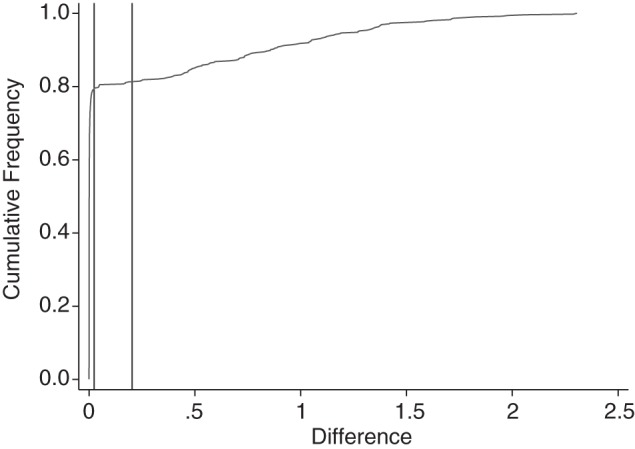
“The caliper of the PSM was chosen as following steps: First, a cumulative frequency plot according to Lunt et al. [28] was constructed to narrow the range of caliper.”
MethodZennati, O. (2025) · Middle East Development Journal · doi:10.1080/17938120.2025.2466925 · Cited by 4
“The choice of this matching method is motivated by the fact that matching with the nearest neighbour with a calliper improves the quality of the matching process (Austin, 2011; Lunt, 2014; Stuart, 2010).”
Mantaj, P., Hameed, I., Hirofuji, A., Dell’Aquila, M., Rahouma, M., Abdalla, S., Kennedy, M., Gregg, A. C., Rossi, C. S., Soletti, G. J., et al. (2025) · The Annals of Thoracic Surgery · doi:10.1016/j.athoracsur.2025.02.011 · Cited by 4
Yan, J. T., Boyne, D. J., Lo, E., Farah, E., O'Sullivan, D. E., & Cheung, W. Y. (2023) · Journal of Comparative Effectiveness Research · doi:10.57264/cer-2023-0061 · Cited by 4
Kim, H., & Bell, M. L. (2022) · medRxiv · doi:10.1101/2022.02.01.22270282 · Cited by 4
“, multiple exposed units are matched to one unexposed unit) (33).”
BackgroundMethodInfluentialThe Long-Term Impacts of Dementia on Preventive Care Utilization and Health BehaviorsPreprint
Lin, Z., & Chen, X. (2023) · medRxiv · doi:10.1101/2023.10.24.23297477 · Cited by 4
“Based on these estimated scores, observations from the dementia sample and the control sample are matched 1-to-1 without replacement, using a caliper of 0.20 standard deviations of the propensity scores (Austin, 2010; Desai et al., 2019; Lunt, 2014).”
MethodInfluentialAre women more or less likely to vote than men? Evidence from rural Bangladesh
Murshed, R. (2025) · World Development Perspectives · doi:10.1016/j.wdp.2025.100683 · Cited by 3
Jamal, A. N., Liu, N., & Li, Y. (2026) · Frontiers in Medicine · doi:10.3389/fmed.2026.1705623 · Cited by 3
“A greedy matching algorithm with a caliper set at 0.20 was used to compute the propensity scores and identify matched subjects (20, 21).”
InfluentialChukwu, C., Gilbody, H., Wickens, O., Carroll, C., Bhandari, S., & Kalra, P. A. (2023) · Biomedicines · doi:10.3390/biomedicines11092417 · Cited by 3
Early Discharge after Uncomplicated Elective Colectomy and Risk of Postdischarge Complication
Balas, M., Quereshy, F. A., Bohnen, J. D., & Jung, J. J. (2023) · Journal of the American College of Surgeons · doi:10.1097/xcs.0000000000000900 · Cited by 3
Opioid use disorder's impact on asthma hospitalizations
Koyner, F. J. G., Hodo, F., Barrera, N. I., Cerrud-Rodriguez, R. C., Henson, T., Glass, L. N., & Chong, D. H. (2024) · Annals of Allergy Asthma & Immunology · doi:10.1016/j.anai.2024.10.018 · Cited by 3
Eyes on the Ball: Activist Campaigns and Management’s Response at the Operational Level
Lungeanu, R., & Wiersema, M. F. (2024) · Journal of Management · doi:10.1177/01492063241305053 · Cited by 4
“We implement the matching procedure without replacement and with a caliper restriction of 0.25 standard deviations of the log-odds (Lunt, 2014) in order to avoid the assignment of a low-quality match (Rosenbaum & Rubin, 1985).”
InfluentialBelloni, S., Arrigoni, C., Arcidiacono, M. A., Boschi, G., Leonetti, A., Allevato, M., Diamanti, O., Cardone, C., Girardi, D., Ferrante, S., et al. (2025) · International Journal of Nursing Sciences · doi:10.1016/j.ijnss.2025.02.011 · Cited by 3
“…on covariates with ASD > 0.2 (i.e., age, sex, primary cancer type, presence of metastases, comorbidities, BMI, and treatment-related variables) [36], 1:1 nearest-neighbour algorithm without replacement, with a calliper width of 0.2 standard deviations of the logit of the propensity score [37].”
InfluentialAdopting LEDs changes attitudes towards climate change: experimental evidence from China
Gao, Y., D’Adda, G., & Tavoni, M. (2019) · Environmental Research Letters · doi:10.1088/1748-9326/ab1499 · Cited by 3
“25 standard deviations, in line with the 314 literature [32], but provide sensitivity to both the choice of caliper and the 315 bootstrapping results of 1000 simulations (see SI Section E).”
MethodMeasurement of Upper Airway Volume in Children with Craniofacial Abnormalities
Gordon, A. J., Ben‐Dov, T., Asfour, L., Pan, L. C., Homsi, M. T., Taufique, Z. M., & Rickert, S. M. (2023) · The Laryngoscope · doi:10.1002/lary.31203 · Cited by 3
Dahan, K. S. E., Yokoo, T., Mendiratta‐Lala, M., Fetzer, D. T., Davenport, M. S., Daher, D., Rich, N. E., Yang, E., Parikh, N. D., & Singal, A. G. (2024) · Abdominal Radiology · doi:10.1007/s00261-024-04674-1 · Cited by 3
“[45] Patient characteristics were summarized with medians and interquartile ranges (IQRs) for continuous variables and with proportions for categorical variables.”
Piccone, J. E. (2015) · NSUWorks (Nova Southeastern University) · Cited by 3
THE EFFECTS OF HEAD START DURATION ON THE BEHAVIORAL COMPETENCE OF SOCIALLY DISADVANTAGED CHILDREN
Youn, M. (2016) · Journal of Community Psychology · doi:10.1002/jcop.21822 · Cited by 13
Schindewolf, M., Fuß, T., Fink, H., Gemperli, A., Haine, A., & Baumgärtner, I. (2018) · Angiology · doi:10.1177/0003319717750486 · Cited by 3
Statistics Commentary Series: Commentary No. 30: Propensity Scores
Streiner, D. L. (2018) · Journal of Clinical Psychopharmacology · doi:10.1097/jcp.0000000000000991 · Cited by 4
“But, a narrower distance means that there may be fewer matches, leading to a different bias, in that the final estimate is not of the magnitude of the effect in those who were treated, but in those who were treated and able to be matched.(6) There are a large number of calipers that are used,(4) but the most commonly…”
Methodrollmatch: An R Package for Rolling Entry Matching
Jones, K., Chew, R., Witman, A. E., & Liu, Y. (2019) · The R Journal · doi:10.32614/rj-2019-005 · Cited by 4
“The lowest difference value for these five comparisons is .34, which while being the best match available, may still be too different to provide a high quality match and may bias estimates of the outcome if included (Lunt, 2013).”
BackgroundImproving Propensity Score Methods in Pharmacoepidemiology
Ali, M. S. (2014) · Utrecht University Repository (Utrecht University) · Cited by 3
Mass Media Exposure and Family Planning in West African Adolescents
Jacobs, J. (2016) · doi:10.6083/7h149q498 · Cited by 5
Household Financial Risk Tolerance in EuropePreprint
Laurinaityte, N. M. (2018) · SSRN Electronic Journal · doi:10.2139/ssrn.3175881 · Cited by 4
Flannery, D. J., Garvey, J., & Inyang, U. E. (2021) · Research Square · doi:10.21203/rs.3.rs-366984/v1 · Cited by 5
Brattfjell, M. L., Jozefiak, T., Lydersen, S., & Wichstrøm, L. (2023) · Psychiatric Services · doi:10.1176/appi.ps.20220079 · Cited by 2
Omae, H., Yanagisawa, S., 萩原, 敬., Omodaka, T., Hashimoto, S., Kimura, M., & Chikuda, H. (2024) · Knee Surgery Sports Traumatology Arthroscopy · doi:10.1002/ksa.12338 · Cited by 2
Maio, D. D., Mitchell, S. A., Batson, S., Keeney, E., & Thom, H. H. Z. (2025) · BMC Medical Research Methodology · doi:10.1186/s12874-025-02456-x · Cited by 3
Jeong, Y., & Song, J. (2025) · Journal of Public Administration Research and Theory · doi:10.1093/jopart/muaf005 · Cited by 4
Zheng, W., & Singh, K. (2025) · Journal of Business Research · doi:10.1016/j.jbusres.2025.115629 · Cited by 2
Wu, C., Liu, H., Meng, C., Li, X., & Gan, D. (2025) · Frontiers in Environmental Science · doi:10.3389/fenvs.2025.1626195 · Cited by 2
Lee, D. H., Park, Y., Choi, S., Kim, J., Yee, J., & Gwak, H. S. (2025) · Journal of the American Heart Association · doi:10.1161/jaha.124.038873 · Cited by 2
Cardiovascular disease and diagnosis of advanced prostate cancer
Nead, K. T., Haas, A. M., Zhao, J., Xiong, T., Tang, C. Z., Giordan, S. H., & Leeper, N. J. (2025) · Cardio-Oncology · doi:10.1186/s40959-025-00384-9 · Cited by 2
“We conducted 1:3 greedy nearest neighbor propensity score caliper (0.25) exact matching utilizing factors associated with delayed cancer diagnosis and CVD [4, 7].”
InfluentialReal-world oncologic outcomes of thoracoscopic and open tracheal cancer resection
Pohlman, A., Odeh, B., Coughlin, J. M., Raad, W. N., Lubawski, J. L., & Abdelsattar, Z. M. (2025) · Journal of Thoracic Disease · doi:10.21037/jtd-2025-1445 · Cited by 2
Zhang, T., Zhang, M., Fan, H., Chen, X., Peng, W., Yin, Z., & Li, X. (2025) · BMC Neurology · doi:10.1186/s12883-025-04478-w · Cited by 2
“Post-matching, the balance of covariates between the groups was assessed using standardized mean differences (SMDs), where an SMD of 0.1 or lower indicated adequate balance [26, 29, 30].”
InfluentialSchelldorfer, A., Laager, R., Haegeli, L., Schuetz, P., Kutz, A., & Yakupoglu, H. Y. (2026) · European Heart Journal Open · doi:10.1093/ehjopen/oeag053 · Cited by 2
“39 We assessed covariate balance before and after propensity score matching by computing absolute standardized differences.”
Risk of Relapse in Psychotic and Bipolar Disorders After Prenatal Antipsychotic Discontinuation
Liu, X., Smout, S., Mahjani, B., Munk‐Olsen, T., Blæhr, E. E., Robakis, T. K., & Bergink, V. (2026) · JAMA Network Open · doi:10.1001/jamanetworkopen.2026.0682 · Cited by 3
Freeman, I. A., Shimizu, M. R., Ilyas, M. H., Sampson, W. T., Mannina, C. M., & Kwon, Y. (2026) · The Journal of Arthroplasty · doi:10.1016/j.arth.2026.04.050 · Cited by 2
The Impact of Army JROTC Participation on School and Career Outcomes
Zaber, M. A., Lewis, M. W., Wrabel, S. L., Phillips, B., Franco, M., Locker, A. R., & John, E. M. (2023) · RAND Corporation eBooks · doi:10.7249/rra1577-1 · Cited by 2
Chong, K. S., Chang, Y.-H., Lin, M.-H., Hsu, C., Wang, C., Wang, C., Huang, Y., Lin, F., & Ou, H. (2024) · Frontiers in Endocrinology · doi:10.3389/fendo.2024.1329945 · Cited by 2
The effect of Tai Chi on plasma homocysteine in 1176 adults: a propensity score matching-based study
Gu, Y., Bai, J., Li, Y., Han, L., & Wang, D. (2025) · BMC Cardiovascular Disorders · doi:10.1186/s12872-025-04519-9 · Cited by 2
OMITTED VARIABLES, R2, AND BIAS REDUCTION IN MATCHING HIERARCHICAL DATA: A MONTE CARLO STUDY
Wang, Q., Maier, K. S., & Houang, R. T. (2017) · Journal of Statistics Advances in Theory and Applications · doi:10.18642/jsata_7100121791 · Cited by 2
Maximum entropy in the mean methods in propensity score matching for interval and noisy data
Gunn, L. H., Gzyl, H., ter Horst, E., Garzón, M. J. A., & Molina, G. (2018) · Communication in Statistics- Theory and Methods · doi:10.1080/03610926.2018.1497656 · Cited by 2
“Following the framework in Austin (2010), we compare results of our expanded entropy approach with two commonly used relatively scalable benchmarks, namely nearest neighbor matching and optimal matching (Austin 2014), without the introduction of optimal calipers which could bias the comparison (Lunt 2014; Austin 2011).”
ResultInfluentialSelecting External Controls for Internal Cases Using Stratification Score Matching Methods
Busgang, S. A., Waller, L. A., Colicino, E., D’Agostino, R., Hertz‐Picciotto, I., & Gennings, C. (2022) · International Journal of Environmental Research and Public Health · doi:10.3390/ijerph19052549 · Cited by 6
“The recommended caliper width differs in the PS literature [16,17]; here we follow the recommendation of 0.”
BackgroundMahmood, S. (2021) · Journal of Data Science · doi:10.6339/jds.202004_18(2).0007 · Cited by 2
ZaliQL: A SQL-Based Framework for Drawing Causal Inference from Big DataPreprint
Salimi, B., & Suciu, D. M. (2016) · arXiv (Cornell University) · doi:10.48550/arxiv.1609.03540 · Cited by 2
“t. Notice that NNM faces the risk of bad matches if the closest neighbor is far away. This issue can be resolved by imposing a tolerance level on the maximum distance, known as the caliper (see e.g., [19]). There are some rules of thumb for choosing the calipers (see e.g., [19]). NNM With Replacement We propose two al…”
MethodLo, C. K. Y., Tang, C. S., & Zhou, Y. (2018) · SSRN Electronic Journal · doi:10.2139/ssrn.3226286 · Cited by 2
“[Insert Figure 1 here] [Insert Table 2 here] 15 The caliper represents the probability difference between the sample and the matched firm of having a violation in a given year (Lunt 2013).”
BackgroundWang, X. (2022) · SSRN Electronic Journal · doi:10.2139/ssrn.4011630 · Cited by 3
Dunker, M., & Willkomm, S. (2022) · SSRN Electronic Journal · doi:10.2139/ssrn.4175275 · Cited by 2
Jiao, T., & Ruzieh, M. (2023) · Circulation · doi:10.1161/circulationaha.123.064702 · Cited by 2
Causal Inference in Anesthesia and Perioperative Observational Studies
Nguyen, T., Winter, A., Spence, J. D., Leguelinel, G., Landais, P., & Manach, Y. L. (2016) · Current anesthesiology reports · doi:10.1007/s40140-016-0174-5 · Cited by 1
“Therefore, the caliper width must be set at a value that minimizes both the bias due to the distance in propensity score between treated and controls [28, 29], and that due to incomplete matching [30].”
BackgroundLiu, D., Lei, L., Ruan, T., & He, P. (2019) · Chinese Medical Sciences Journal · doi:10.24920/003579 · Cited by 4
Gao, H., Wang, X., Lai, Y., Zhang, C., Mi, L., Ji, X., Wang, X., Song, Y., Zhu, J., & Liu, W. (2023) · Cancer Medicine · doi:10.1002/cam4.5592 · Cited by 1
The Far Reach of the Texas Top Ten Percent Plan: Consideration of Professional School Degrees
Templeton, T., White, C. L., & Horn, C. L. (2023) · The Journal of Higher Education · doi:10.1080/00221546.2023.2171216 · Cited by 1
“20 to provide optimal matching with a wide range of binary characteristics (Lunt, 2014).”
BackgroundZhu, Y., & Maharjan, K. L. (2023) · Sustainability · doi:10.3390/su152316447 · Cited by 2
Yu, Y.-L., Fu, J., Feng, Z.-W., Zhang, W., Dai, D.-F., Wang, M.-T., Zhou, Y., & Chen, X. (2025) · Journal of Surgical Research · doi:10.1016/j.jss.2025.02.028 · Cited by 1
Ma, Y., Wang, X., Mao, J., Lv, H., Ma, Y., Wu, H., Zhang, C., Wang, L., & Liang, X. (2025) · BMC Pregnancy and Childbirth · doi:10.1186/s12884-025-07940-2 · Cited by 1
“The 1:1 nearest neighbor matching protocol without replacement was performed [30–32], with a caliper width at 0.2 times the standard deviation (SD) of the logit propensity score [33, 34].”
InfluentialPan, Z. S., Schuengel, C., Coughlan, B., Bakkum, L., Woolgar, M., Carman, S., & Duschinsky, R. (2025) · Journal of Intellectual Disability Research · doi:10.1111/jir.70066 · Cited by 2
Syrikas, I., Karikis, I., Desai, N., & Tsikandylakis, G. (2025) · Knee Surgery Sports Traumatology Arthroscopy · doi:10.1002/ksa.70240 · Cited by 1
“These criteria resulted in a caliper width of 0.23 for both age and BMI, values supported by the literature as providing optimal treatment effect estimation, thereby ensuring closely matched pairs and minimising bias due to potential confounding by age and BMI [18].”
InfluentialPaek, S. C., & Astuti, Y. (2025) · SAGE Open · doi:10.1177/21582440251408853 · Cited by 1
“The .005 caliper width was chosen based on the statistical equality of sociodemographic status between the matched cases and the number of matched cases, as suggested by previous studies (Connolly & Gagne, 2016; Lunt, 2014).”
Who chooses English? Gender disparities in curriculum selection in Bangladesh
Murshed, R., & Uddin, M. R. (2026) · International Journal of Educational Development · doi:10.1016/j.ijedudev.2026.103531 · Cited by 1
Dong, Y., & Roberts, G. J. (2026) · Journal of Research on Educational Effectiveness · doi:10.1080/19345747.2026.2634037 · Cited by 1
Giulioni, C., Gauhar, V., Castellani, D., Yuen, S. K. K., Falsetti, F., Cafarelli, A., Fong, K. Y., Kalathia, J., Gadzhiev, N. K., Мартов, А. Г., et al. (2026) · Asian journal of urology · doi:10.1016/j.ajur.2025.11.001 · Cited by 1
“To ensure optimal matching of covariates, caliper width was initially set at 0.2 [14,15]; the target of an absolute standardized mean difference < 0.1 for all covariates [16] was achieved at a caliper width of 0.12.”
InfluentialDifferential Mortality Risk by Age in Males and Females With Steatotic Liver Disease
Yan, T., Chien, N., Nguyen, V. H., Le, I., Gudapati, S. T., Chau, A., Zhang, X., Barnett, S. D., Linden, S., Henry, L. L., et al. (2026) · MedComm · doi:10.1002/mco2.70677 · Cited by 1
Magee, L. A., Chatzakis, C., Syngelaki, A., Akolekar, R., von Dadelszen, P., & Nicolaides, K. H. (2026) · American Journal of Obstetrics and Gynecology · doi:10.1016/j.ajog.2026.04.014 · Cited by 1
Soberay, A. (2015) · Digital Commons - DU (University of Denver) · Cited by 2
Wang, Q., Houang, R. T., & Maier, K. S. (2017) · Interdisciplinary Education and Psychology · doi:10.31532/interdiscipeducpsychol.1.1.009 · Cited by 1
Beaume, J. M., Figueres, L., Bobot, M., de Laforcade, L., Ayari, H., Dolley‐Hitze, T., Gueutin, V., Braconnier, A., Golbin, L., Citarda, S., et al. (2021) · Clinical Pharmacology & Therapeutics · doi:10.1002/cpt.2427 · Cited by 1
Bussière, C., Chauvin, P., Josselin, J., & Sevilla‐Dedieu, C. (2022) · Health Economics Review · doi:10.1186/s13561-022-00397-5 · Cited by 1
“25 standard deviation of the propensity score [32].”
BackgroundWan, F., Xu, H., & Seidmann, A. A. (2023) · Hawaii International Conference on System Sciences (HICSS) · doi:10.24251/hicss.2023.695 · Cited by 1
Yu, J., Nam, W., Kim, K. H., Ha, Y., Song, G., Seo, H. K., Nam, J. K., Noh, T. I., Kang, S. H., Jeong, S., et al. (2025) · Journal of Urologic Oncology · doi:10.22465/juo.255000320016 · Cited by 1
Dubé, J., Gallo, J. L., Chapel, C., Hilal, M., Rosiers, F. D., & Champagne, M.-P. (2025) · Journal of Environmental Management · doi:10.1016/j.jenvman.2025.127417 · Cited by 1
Ratinger, T., Medonos, T., & Hruška, M. (2015) · RePEc: Research Papers in Economics · doi:10.22004/ag.econ.212242 · Cited by 1
“It can be supported by finding of Lunt (2013) that a tighter caliper led to greatly reduced bias and closer matches, although some subjects could not be matched.”
BackgroundBenefits Assessment of Large Scale High-Speed Rail Network in China: The Effect on Low-Cost CarriersPreprint
Wang, K., Xia, W., & Zhang, A. (2016) · SSRN Electronic Journal · doi:10.2139/ssrn.2888274 · Cited by 1
Metadata
- Authors
- Lunt, M.
- Affiliations
- University of Manchester (GB)
- Corresponding author
- Lunt, Mark
- ORCID
- Lunt, Mark
- Venue
- American Journal of Epidemiology
- Publisher
- Oxford University Press (OUP)
- Published
- 2013-10-10
- Volume
- 179
- Issue
- 2
- Pages
- 226-235
- ISSN
- 0002-9262 (ISSN-L)
- 1476-6256
- PMC
- PMC3873103
- OpenAlex
- W2154872949
- Cited by
- 358
- References
- 25
- Citations by year
- 2026: 30 · 2025: 50 · 2024: 21 · 2023: 35 · 2022: 31 · 2021: 39 · 2020: 36 · 2019: 39 · 2018: 24 · 2017: 16 · 2016: 15 · 2015: 16 · 2014: 6
- FWCI
- 10.88
- Type
- journal article
- Language
- en
- Open access
- hybrid
- doi.org
- Licence
- cc-by-nc
- Locations
- American Journal of Epidemiology (publishedVersion, cc-by-nc)
- Europe PMC (PubMed Central) (publishedVersion, cc-by-nc)
- PubMed Central (publishedVersion, cc-by-nc)
- PubMed (publishedVersion)
- Research Explorer (The University of Manchester) (publishedVersion)
- Funders
- Versus Arthritis (/17552)
- Topics
- Physical Sciences › Mathematics › Statistics and Probability › Advanced Causal Inference Techniques
- Physical Sciences › Mathematics › Statistics and Probability › Statistical Methods in Epidemiology
- Social Sciences › Decision Sciences › Statistics, Probability and Uncertainty › Meta-analysis and systematic reviews
- Keywords
- propensity score matching, covariate imbalance, matching bias, confounding, observational studies
- MeSH terms
- Epidemiologic Methods, Humans, Bias, Propensity Score
About these checks
Registry, retraction, Cites and statistics results are computed, not judged, with one exception: a printed reference that no index lists is read once by a model before it counts as a citation error. Claims are extracted by a model and kept only when their quote appears verbatim in the text; each cited source is then checked, with a model’s help, for whether it says what the claim relies on. Those verdicts can be wrong — read the claim’s quote and the cited source before relying on one.
Statistics and arithmetic are recomputed, not judged.
Confidence bands are shown only for fields calibrated on our annotated test set. None is calibrated yet, so no band is shown.
What counts as a claim ›How we measure confidence ›How we check this ›
Are you an author, or do you see a problem with this page? Request a review
Data sources
Bibliographic data: Semantic Scholar, OpenAlex, Crossref.
Contains information from the Semantic Scholar Academic Graph Datasets, made available under the ODC Attribution License (ODC-BY 1.0).
Semantic Scholar’s data is described in: Kinney, R., et al. (2023). The Semantic Scholar Open Data Platform. arXiv:2301.10140.
