

Selecting an Appropriate Caliper Can Be Essential for Achieving Good Balance With Propensity Score Matching
Open accessThe DOI matches its Crossref record; 23 of the 25 references it cites were found in a registry or an index.
Abstract
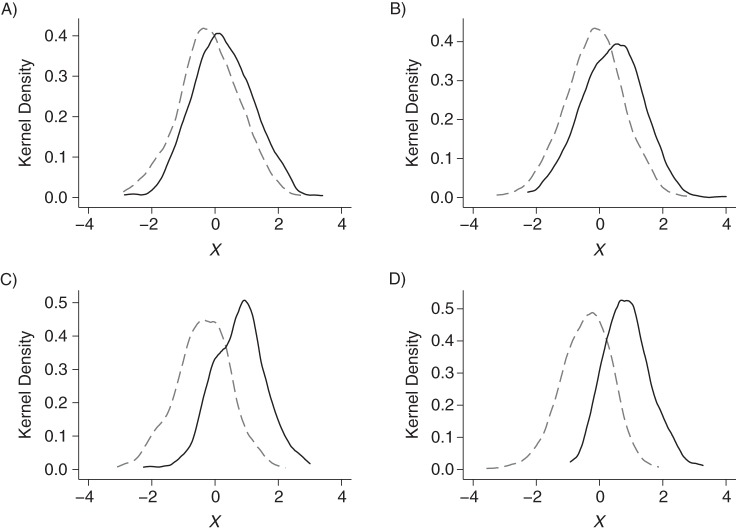
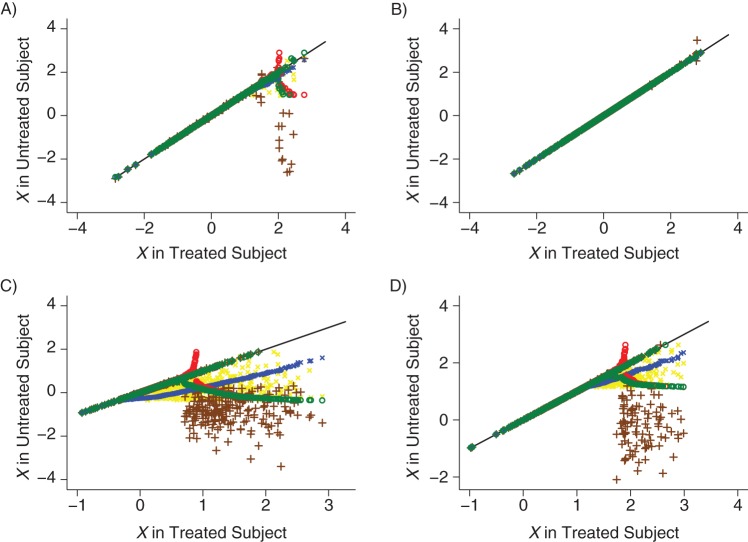
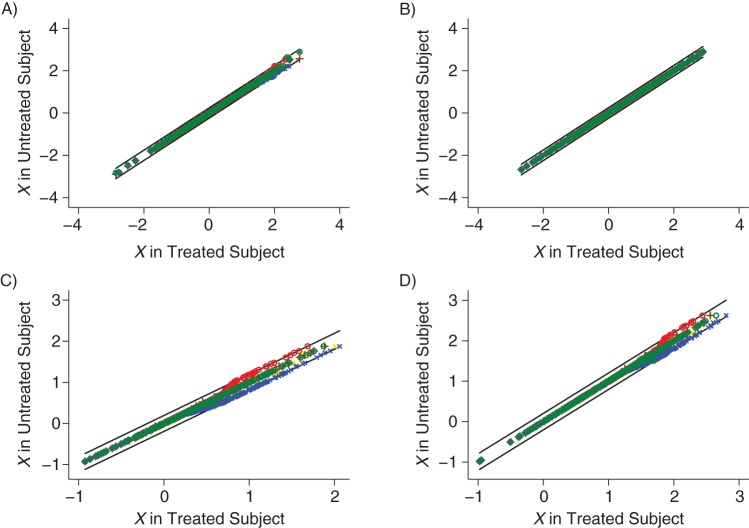
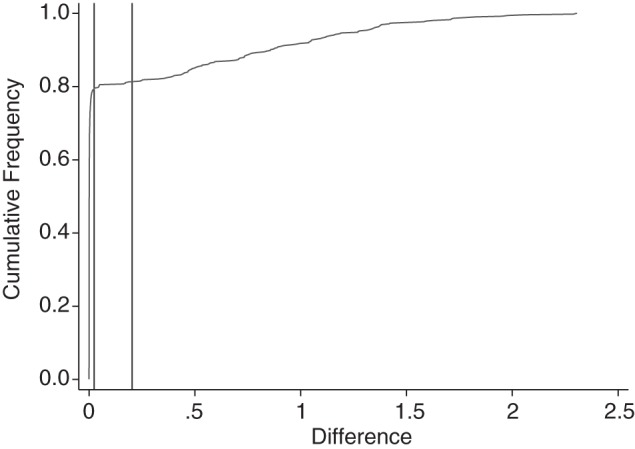
Matching on the propensity score is widely used to estimate the effect of an exposure in observational studies. However, the quality of the matches can be affected by decisions made during the matching process, particularly the order in which subjects are selected for matching and the maximum permitted difference between matched subjects (the "caliper"). This study used simulations to explore the effects of these decisions on both the imbalance of covariates and the closeness of matching, while allowing the numbers of potential matches and strengths of association between the confounding variable and the exposure to vary. It was found that, without a caliper, substantial bias was possible, particularly with a relatively small reservoir of potential matches and strong confounder-exposure association. Use of the recommended caliper reduced the bias considerably, but bias remained if subjects were selected by increasing or decreasing propensity score. A tighter caliper led to greatly reduced bias and closer matches, although some subjects could not be matched. This study suggests that a narrow caliper can improve the performance of propensity score matching. In situations where it is impossible to find appropriate matches for all exposed subjects, it is better to select subjects in order of the best available matches, rather than increasing or decreasing the propensity score.
Overview
The claims and statistics of this paper haven’t been checked yet.
Free: it reads the open-access text and checks the first 5 claims that cite a source we can check. Create a free account to check every claim.
Integrity signals
Registry
Cites
Statistics
Figures
Verification
Claims the paper makes
The claims and statistics of this paper haven’t been checked yet.
Free: it reads the open-access text and checks the first 5 claims that cite a source we can check. Create a free account to check every claim.
Claims other papers make about this one
Each is checked against this paper’s own text: does it say what the citing paper says it does?
In the citing paper
“Most of the literature suggests that the calliper method outperforms other methods such as nearest neighbour with and without replacement and optimal matching [55] and gives better results if it is difficult to find the matches from the control group [56].”
Self-check
Percentages, sums and reported differences re-computed from the paper’s own numbers.
The self-check needs the paper’s full text.
Citations
Cites
The central role of the propensity score in observational studies for causal effects
ROSENBAUM, P. R., & RUBIN, D. B. (1983) · Biometrika · doi:10.1093/biomet/70.1.41 · Cited by 31,241 · cited 4×
“It can be difficult to find appropriate matches when trying to match on several variables, but Rosenbaum and Rubin (7) showed that matching on the propensity score (the conditional probability of exposure given a set of covariates) could produce samples with the same distribution of covariates in exposed and unexposed…”
BackgroundInfluentialSOME PRACTICAL GUIDANCE FOR THE IMPLEMENTATION OF PROPENSITY SCORE MATCHING
Caliendo, M., & Kopeinig, S. (2008) · Journal of Economic Surveys · doi:10.1111/j.1467-6419.2007.00527.x · Cited by 6,238 · cited 1×
“2 standard deviations), more recent papers on the practicalities of matching have not given recommendations for setting a caliper (12, 13).”
BackgroundMatching Methods for Causal Inference: A Review and a Look Forward
Stuart, E. A. (2010) · Statistical Science · doi:10.1214/09-sts313 · Cited by 5,478 · cited 2×
“2 standard deviations), more recent papers on the practicalities of matching have not given recommendations for setting a caliper (12, 13).”
BackgroundPropensity Score-Matching Methods for Nonexperimental Causal Studies
Dehejia, R. H., & Wahba, S. (2002) · Review of Economics and Statistics · doi:10.1162/003465302317331982 · Cited by 4,846
Rosenbaum, P. R., & Rubin, D. B. (1985) · The American Statistician · doi:10.2307/2683903 · Cited by 4,774 · cited 6×
“It can be difficult to find appropriate matches when trying to match on several variables, but Rosenbaum and Rubin (7) showed that matching on the propensity score (the conditional probability of exposure given a set of covariates) could produce samples with the same distribution of covariates in exposed and unexposed…”
BackgroundMethodInfluentialAustin, P. C. (2011) · Pharmaceutical Statistics · doi:10.1002/pst.433 · Cited by 3,949 · cited 5×
“In practice, a wide variety of calipers is used (1) and, with the exception of Austin (11) (who recommended reducing the caliper from 0.25 standard deviations to 0.2 standard deviations), more recent papers on the practicalities of matching have not given recommendations for setting a caliper (12,…”
BackgroundMethodInfluentialA critical appraisal of propensity‐score matching in the medical literature between 1996 and 2003
Austin, P. C. (2008) · Statistics in Medicine · doi:10.1002/sim.3150 · Cited by 1,249
Matching Using Estimated Propensity Scores: Relating Theory to Practice
Rubin, D. B., & Thomas, N. (1996) · Biometrics · doi:10.2307/2533160 · Cited by 1,074
Matching Using Estimated Propensity Scores: Relating Theory to Practice
Thomas, N. (2006) · Matched Sampling for Causal Effects · doi:10.1017/cbo9780511810725.024 · Cited by 1,018 · cited 1×
“In order to be able to find suitable matches for all exposed subjects, the number of controls available needs to be greater than the number of exposed subjects; the ratio typically lies in the range of 2–20, although it may be higher (8).”
BackgroundControlling Bias in Observational Studies: A Review
Cochran, W. G. (2006) · Matched Sampling for Causal Effects · doi:10.1017/cbo9780511810725.005 · Cited by 958 · cited 5×
“It can be difficult to find appropriate matches when trying to match on several variables, but Rosenbaum and Rubin (7) showed that matching on the propensity score (the conditional probability of exposure given a set of covariates) could produce samples with the same distribution of covariates in exposed and unexposed…”
MethodInfluential
Cited by
Items 101–200 of 371
Kang, Z., Zhang, J., Zhu, C., Zhu, Y., Jiang, H., Tong, Q., & Dai, S. (2024) · BMC Medicine · doi:10.1186/s12916-024-03836-8 · Cited by 22
Portaccio, E., Tudisco, L., Pastò, L., Razzolini, L., Fonderico, M., Bellinvia, A., Ghezzi, A., Annovazzi, P. O. L., Zaffaroni, M., Moiola, L., et al. (2021) · Multiple Sclerosis Journal · doi:10.1177/13524585211023365 · Cited by 24
Board Diversity, Inventor Collaboration, and Corporate Innovation
Cao, C., Li, X., Li, X., Zeng, C. C., & Zhou, X. (2016) · Journal of Empirical Finance · doi:10.1016/j.jempfin.2021.10.004 · Cited by 22
Huebner, R. A., Hall, M. T., Walton, M. T., Smead, E., Willauer, T., & Posze, L. (2021) · Child Abuse & Neglect · doi:10.1016/j.chiabu.2021.105260 · Cited by 21
Takahashi, K., Kantarjian, H. M., Garcia‐Manero, G., Borthakur, G. M., Kadia, T. M., Dinardo, C. D., Jabbour, E. J., Pierce, S. A., Estrov, Z. E., Konopleva, M. Y., et al. (2015) · Clinical Lymphoma Myeloma & Leukemia · doi:10.1016/j.clml.2015.11.016 · Cited by 21
Ardito, F., Lai, Q., Rinninella, E., Mimmo, A., Vellone, M., Panettieri, E., Adducci, E., Cintoni, M., Mele, M. C., Gasbarrini, A., et al. (2020) · Updates in Surgery · doi:10.1007/s13304-020-00787-6 · Cited by 22
Comparative Effectiveness of Surgical Treatments for Pediatric Hydrocephalus
Pan, I.-W. E., Harris, D. A., Luerssen, T. G., & Lam, S. K. (2017) · Neurosurgery · doi:10.1093/neuros/nyx440 · Cited by 21
Soltész, Á., Molnar, Z. A., Szakál‐Tóth, Z., Tamáska, E., Katona, H., Fábry, S., Csikós, G. R., Berzsenyi, V., Tamás, C., Edes, I. F., et al. (2022) · Journal of Clinical Medicine · doi:10.3390/jcm11216517 · Cited by 20
“2 [25] using the logistic regression estimation algorithm with adjusted covari-”
MethodCastellani, D., Fong, K. Y., Traxer, O., Малхасян, В. А., Gadzhiev, N. K., Ragoori, D. R., Kamal, W. K., Kartalas, I. G., Yuen, S. K. K., Somani, B. K., et al. (2025) · Urology · doi:10.1016/j.urology.2025.01.065 · Cited by 20
Jiang, H., Hu, Y., Su, K., & Zhu, Y. (2021) · Journal of Contemporary Accounting & Economics · doi:10.1016/j.jcae.2021.100259 · Cited by 20
Hsu, H.-M., Chou, K., Lin, K., Chen, K., Su, S., & Chung, M. (2015) · Behaviour Research and Therapy · doi:10.1016/j.brat.2015.07.016 · Cited by 22
Tran, D. T., Thành, N. X., Opgenorth, D. L., Wang, X., Zuege, D. J., Zygun, D. A., Stelfox, H. T., & Bagshaw, S. M. (2019) · Journal of Critical Care · doi:10.1016/j.jcrc.2019.02.025 · Cited by 22
Mohammed, N., Ding, D., Hung, Y.-C., Xu, Z., Lee, C., Kano, H., Martínez-Álvarez, R., Martínez-Moreno, N., Mathieu, D., Kosák, M., et al. (2019) · Journal of neurosurgery · doi:10.3171/2019.1.jns183398 · Cited by 19
Jain, R., & Krishnapriya, V. S. (2020) · Economics of Innovation and New Technology · doi:10.1080/10438599.2020.1843271 · Cited by 21
Malmartel, A., & Ghasarossian, C. (2016) · Journal of Diabetes and its Complications · doi:10.1016/j.jdiacomp.2016.01.005 · Cited by 19
“Choosing a higher calliper could have allowed a full matching, but, in order to take into account confounders, it was essential to have an optimal matching with a low calliper (Lunt, 2014).”
BackgroundExamining the Impact of Federal Grants to Reduce Violent Crimes Against Women on Campus
Palmer, J. E., & Alda, E. (2016) · Review of higher education/The review of higher education · doi:10.1353/rhe.2016.0038 · Cited by 20
“We employed a caliper that is ¼ of the standard deviation of the outcome indicator (Lunt, 2014).”
MethodIs TVET more likely to lead to employment than general education? Evidence from Bangladesh
Murshed, R. (2025) · International Journal of Educational Development · doi:10.1016/j.ijedudev.2025.103424 · Cited by 19
Schultebraucks, K., Blekić, W., Basaraba, C. N., Corbeil, T., Khan, Z. A., Henry, B. F., Krawczyk, N., Rivera, B. D., Allen, B., Arout, C. A., et al. (2023) · Molecular Psychiatry · doi:10.1038/s41380-023-02049-4 · Cited by 18
“All analyses were conducted using Python version 3.7.4.”
InfluentialYamamoto, R., Cestero, R. F., Muir, M. T., Jenkins, D. H., Eastridge, B. J., Funabiki, T., & Sasaki, J. (2020) · The American Journal of Surgery · doi:10.1016/j.amjsurg.2020.07.017 · Cited by 18
Larrain, N., & Groene, O. (2023) · SSM - Population Health · doi:10.1016/j.ssmph.2023.101371 · Cited by 17
“However, when updating the evaluation of GK, the design led to selection bias in the matching process (Lunt, 2014), violating the critical assumption of common support (Rosenbaum & Rubin, 1983).”
MethodRogerson, C. M., Owora, A. H., He, T., Carroll, A. E., Schleyer, T., Abu-Sultaneh, S. M. A., Tu, W., & Mendonça, E. A. (2023) · Pediatric Pulmonology · doi:10.1002/ppul.26617 · Cited by 18
Mazzon, G., Dewan, S., Rasheed, M., Kulkarni, S., Brusa, D., Fontana, F., Fong, K. Y., Sarica, K., Farahat, Y., Chew, B. H., et al. (2025) · World Journal of Urology · doi:10.1007/s00345-025-05748-5 · Cited by 16
“To ensure optimal matching of covariates, the caliper width was started at 0.2 [10, 11] and decreased until the absolute standardized mean differ - ence (ASMD) for all covariates was 0.1 [10], which was achieved satisfactorily at a caliper width of 0.14.”
InfluentialKhalaf, S. Y. A., Khashan, A. S., Chappell, L. C., O’Reilly, É. J., & McCarthy, F. P. (2022) · Hypertension · doi:10.1161/hypertensionaha.122.18920 · Cited by 16
Lehmann, K. S., Klinger, C., Diers, J., Buhr, H. J., Germer, C., & Wiegering, A. (2021) · BJS Open · doi:10.1093/bjsopen/zrab102 · Cited by 19
Zheng, W., Ni, N., Luo, X. R., You, J., & Wu, X. (2024) · Journal of Management · doi:10.1177/01492063241238704 · Cited by 18
“…group, we adopt a 1:1 near-est-neighbor propensity score matching (PSM) within a 0.01-caliper distance without replacement (Dehejia & Wahba, 2002; Lunt, 2013) to match treatment and control firms, using all control variables from our main regression model (described later) measured in the year…”
InfluentialCastellani, D., Somani, B. K., Fong, K. Y., Yuen, S. K. K., Heng, C. T., Elshazly, M., Tan, K. M., Herrmann, T. R. W., Traxer, O., & Gauhar, V. (2025) · Korean journal of urology · doi:10.4111/icu.20250071 · Cited by 15
Nelson, R. E., Stevens, V. W., Jones, M., Samore, M. H., & Rubin, M. A. (2015) · American Journal of Infection Control · doi:10.1016/j.ajic.2014.09.014 · Cited by 16
The Influence of Surgical Specialty on Oncoplastic Breast Reconstruction
Blankensteijn, L. L., Crystal, D. T., Egeler, S. A., Varkevisser, R. R. B., Ibrahim, A. M. S., Sharma, R., Lee, B. T., & Lin, S. J. (2019) · Plastic & Reconstructive Surgery Global Open · doi:10.1097/gox.0000000000002248 · Cited by 15
Brown, D. W., DeSantis, S. M., Greene, T. J., Maroufy, V., Yaseen, A. S., Wu, H., Williams, G. W., & Swartz, M. D. (2020) · Statistics in Medicine · doi:10.1002/sim.8540 · Cited by 15
“57,58 Outcome models to obtain conditional ATE estimates utilize logistic regression for the unadjusted and adjusted models, survey-weighted generalized linear models for GBM weighting, and conditional logistic regression for GPS-CDF matching and stratification.”
MethodJose, A., Shah, S. A., Anwar, N., Jones, C. R., McCormack, F. X., Sherman, K. E., & Elwing, J. (2021) · Respiratory Medicine · doi:10.1016/j.rmed.2021.106683 · Cited by 15
Mennicke, A. M., Tripodi, S. J., Veeh, C. A., Wilke, D. J., & Kennedy, S. C. (2015) · Journal of Offender Rehabilitation · doi:10.1080/10509674.2015.1076103 · Cited by 17
“comparison pool of 182,083 (which reflects the total released minus 254 STOP program participants) resulted in a comparison to treatment ratio of 716:1, which exceeds the current recommendation of 20:1 (Lunt, 2013).”
BackgroundMethodResultInfluentialJohara, F. T., Benedetti, A., Platt, R. W., Menzies, D., Viiklepp, P., Schaaf, H. S., & Chan, E. D. (2021) · BMC Medical Research Methodology · doi:10.1186/s12874-021-01452-1 · Cited by 15
Trinh, M., Khou, V., Kalloniatis, M., & Nivison-Smith, L. (2021) · Investigative Opthalmology & Visual Science · doi:10.1167/iovs.62.13.13 · Cited by 14
Pham, V. T., Roongtawanreongsri, S., Ho, T. Q., & Tran, P. H. N. (2022) · Environment and Development Economics · doi:10.1017/s1355770x22000146 · Cited by 15
Wu, W., An, P.-G., Liu, Q., Zhang, Z., Hu, X., Yao, J., & Zhang, J. (2025) · Oral Oncology · doi:10.1016/j.oraloncology.2025.107218 · Cited by 14
Trinh, M., Eshow, N., Alonso‐Caneiro, D., Kalloniatis, M., & Nivison‐Smith, L. (2022) · Investigative Ophthalmology & Visual Science · doi:10.1167/iovs.63.11.12 · Cited by 14
Tsou, Y., Su, Y.-T., Lin, C., & Liu, N. (2023) · World Journal of Clinical Cases · doi:10.12998/wjcc.v11.i29.6984 · Cited by 14
“However, for patients with AC, different etiologies may have different clinical manifestations, and patients may receive different drainage methods and thus may respond differently to ERCP[11,12].”
Takahashi, K., Kantarjian, H. M., Yang, Y., Sasaki, K., Jain, P., DellaSala, S. E., Ravandi, F., Kadia, T. M., Pemmaraju, N., Daver, N. G., et al. (2016) · Cancer · doi:10.1002/cncr.30197 · Cited by 14
“Intermediate 14 (16) 15 (17) High 4 (5) 6 (7) WBC, 310(3)/lL 23.”
Xu, M., Zhou, Z., Xu, R., Zhang, H., Lin, N., & Zhong, Y. (2019) · World Journal of Surgical Oncology · doi:10.1186/s12957-019-1577-9 · Cited by 14
McGovern, A. P., Dennis, J., Shields, B. M., Hattersley, A. T., Pearson, E. R., & Jones, A. G. (2019) · BMC Medicine · doi:10.1186/s12916-019-1307-8 · Cited by 14
The Rehabilitation Enhancing Aging Through Connected Health Prehabilitation Trial
Bean, J. F., Brown, L. G., DeAngelis, T. R., Ellis, T. D., Kumar, V. S. S., Latham, N. K., Lawler, D., Ni, M., & Perloff, J. N. (2019) · Archives of Physical Medicine and Rehabilitation · doi:10.1016/j.apmr.2019.04.015 · Cited by 15
Giulioni, C., Castellani, D., Falsetti, F., Bhojani, N., Chew, B. H., Yuen, S. K. K., Shrestha, A., Contreras, P., Sundaram, P., Chong, T. W., et al. (2025) · World Journal of Urology · doi:10.1007/s00345-025-05769-0 · Cited by 13
Global and Individual Treatment Effects Using Machine Learning Methods
Smith, B. I., Chimedza, C., & Bührmann, J. H. (2020) · International Journal of Artificial Intelligence in Education · doi:10.1007/s40593-020-00203-5 · Cited by 13
“However, Lunt (2013) states that the appropriate caliper depends on the dataset and should be tight enough to produce a close match but at the same time produce a sufficient number of matches.”
BackgroundMethodInfluentialDeleu, F., Deneux‐Tharaux, C., Chiesa-Dubruille, C., Seco, A., & Bonnet, M. (2022) · Journal of Clinical Anesthesia · doi:10.1016/j.jclinane.2022.110874 · Cited by 14
Chatelet, F., Ferrand, F. R., Atallah, S., Thariat, J., Mouawad, F., Fakhry, N., Malard, O., Even, C., de Monès, E., Uro‐Coste, E., et al. (2023) · European Journal of Cancer · doi:10.1016/j.ejca.2023.02.020 · Cited by 14
Wu, X., Li, C., Zhang, X., Song, Y., Zhao, D., Lan, Y., & Zhou, B. (2022) · Frontiers in Cardiovascular Medicine · doi:10.3389/fcvm.2022.803695 · Cited by 14
“Secondly, we did not set the caliper value for the PSM, potentially leading to a deviation in the results (37).”
ResultLiu, J., Xiao, L., & Wang, B. (2023) · Travel Behaviour and Society · doi:10.1016/j.tbs.2023.100692 · Cited by 12
Cardiovascular Disease and Breast Cancer Stage at Diagnosis
Angelov, I., Haas, A. M., Brock, E., Luo, L., Zhao, J., Smith, B. D., Giordano, S. H., Leeper, N. J., & Nead, K. T. (2025) · JAMA Network Open · doi:10.1001/jamanetworkopen.2024.52890 · Cited by 14
Shadyab, A. H., Aslanyan, V., Jacobs, D. M., Salmon, D. P., Morrison, R. H., Katula, J. A., Jin, S., Thomas, R. G., LaCroix, A. Z., Pa, J., et al. (2025) · Alzheimer s & Dementia · doi:10.1002/alz.70118 · Cited by 13
Nie, W., Qian, J., Xu, M., Gu, K., Qian, F., Lü, J., Zhang, X., Wang, H., Yan, B., Zhang, B., et al. (2020) · Journal of the National Comprehensive Cancer Network · doi:10.6004/jnccn.2019.7383 · Cited by 12
Huebner, R., Willauer, T., Hall, M. T., Smead, E., Poole, V., Posze, L., & Hibbeler, P. G. (2021) · Journal of Substance Abuse Treatment · doi:10.1016/j.jsat.2021.108563 · Cited by 7
Gauhar, V., Lim, E. J., Fong, K. Y., Sancha, F. G., Socarrás, M. E. R., Enikeev, D. V., Sofer, M., Tursunkulov, A., Elterman, D., Bendigeri, M. T., et al. (2024) · Urology · doi:10.1016/j.urology.2024.03.003 · Cited by 13
The Prognostic Impact of Pericardial Fat Volumes in Resected Non-small Cell Lung Cancer
Shinohara, S., Otsuki, R., KOBAYASHI, K. P., Matsuo, M., Harada, K., Sugaya, M., & Nakagawa, M. (2019) · Annals of Surgical Oncology · doi:10.1245/s10434-019-07703-2 · Cited by 12
Campbell, C. M., & Labrecque, R. M. (2022) · Journal of Experimental Criminology · doi:10.1007/s11292-022-09532-y · Cited by 12
“In studies with larger sample sizes, such as thousands of cases in the treatment group, the use of a caliper most likely plays a more critical role in minimizing bias and potentially providing a closer estimate to the true effect (see Lunt, 2014).”
Piquero, A. R., Baglivio, M. T., & Wolff, K. T. (2023) · Youth Violence and Juvenile Justice · doi:10.1177/15412040231180816 · Cited by 13
“Conditional probabilities of being assessed fees or recidivism were used from the logit model to match youth who were assessed fees or restitution to youth who were not using a nearest-neighbor one-to-one with replacement algorithm (caliper = 2*SD of propensity score; Lunt, 2014) using the Stata program psmatch2 (Leuv…”
MethodDo sustainable companies have better financial performance? Revisiting a seminal study
King, A. A. (2025) · Journal of Management Scientific Reports · doi:10.1177/27550311251332904 · Cited by 12
“Calipers less than 0.2 or 0.25 have been shown to provide better estimates (Lunt, 2014), and many scholars follow Rosenbaum and Rubin (1985) in using a caliper of 25% of the standard deviation of the propensity score (for EIS, this would be a caliper of 0.06).”
InfluentialOutcomes Associated with Dronedarone Use in Patients with Atrial Fibrillation
Goehring, E. L., Bohn, R. L., Pezzullo, J. C., Tave, A. K., Jones, J. K., Bozzi, S., Tamayo, R. C. S. G., Sicignano, N., & Naccarelli, G. V. (2020) · The American Journal of Cardiology · doi:10.1016/j.amjcard.2020.08.026 · Cited by 11
Németh, E., Varga, T. R., Soltész, Á., Rácz, K., Csikós, G. R., Berzsenyi, V., Tamáska, E., Láng, Z., Molnar, G., Benke, K., et al. (2021) · Journal of Cardiothoracic and Vascular Anesthesia · doi:10.1053/j.jvca.2021.03.043 · Cited by 11
Martin, C., Shrestha, A., Morgan, J. L., Bradburn, M. J., Herbert, E., Burton, M., Todd, A., Walters, S. J., Ward, S. E., Holmes, G. R., et al. (2021) · Journal of Geriatric Oncology · doi:10.1016/j.jgo.2020.12.006 · Cited by 11
“…that had the same category of Nottingham Prognostic Index (NPI; risk categories ≤ 3.4, >3.4 to ≤ 5.4, >5.4), oestrogen receptivity (ER) and treatment (surgery and ER+, surgery and ER, PET and ER+), and age to within a calliper width of one year (approximately 1/6th of a standard deviation) [36].”
BackgroundInfluentialNurturing national champions? Local content in solar auctions and firm innovation
Münch, F. A., & Scheifele, F. (2023) · Energy Policy · doi:10.1016/j.enpol.2023.113574 · Cited by 14
Chen, X., Zhang, W., Cheng, B., Yu, Y.-L., Peng, J.-L., Bao, S.-H., Tong, C.-G., & Zhao, J. (2024) · International Journal of Surgery · doi:10.1097/js9.0000000000001027 · Cited by 10
“…the most optimally balanced patient groups, a 1:1 PSM was performed according to the following variables with a caliper of 0.25 (optimal matching) [34] : age, sex, BMI, American Society of Anesthesiologists (ASA) score, previous biliary surgery, obstructive jaundice, concomitant benign liver…”
MethodInfluentialSagy, I., Salman, A. A., Kezerle, L., Erez, O., Yoel, I., & Barski, L. (2017) · Heart & Lung · doi:10.1016/j.hrtlng.2017.06.004 · Cited by 12
The Effect of the Field of Study on the Higher Education Wage Premium — Evidence from Israel
Krill, Z., Geva, A., & Aloni, T. (2019) · Labour · doi:10.1111/labr.12150 · Cited by 10
Methodological progress note: A clinician's guide to propensity scores
Ambroggio, L., Cotter, J. M., & Hall, M. (2022) · Journal of Hospital Medicine · doi:10.1002/jhm.12791 · Cited by 10
Evaluation of a Serious and Violent Offender Reentry Initiative (SVORI) Program in a Midwest State
Veeh, C. A., Severson, M. E., & Lee, J. (2017) · Criminal Justice Policy Review · doi:10.1177/0887403415575144 · Cited by 9
“An important requirement of PSM is a large sample size; the current comparison pool of 12,704 resulted in a ratio (~27:1) above that recommended Veeh et al. 243 by Lunt (2013) of approximately 20 to 1.”
BackgroundCompetition law reform and firm performance: Evidence from developing countries
Kim, I., Lee, S., & Sharma, B. (2023) · Emerging Markets Review · doi:10.1016/j.ememar.2023.101050 · Cited by 9
Dahan, K. S. E., Yokoo, T., Daher, D., Davenport, M. S., Fetzer, D. T., Mendiratta‐Lala, M., Rich, N. E., Yang, E., Parikh, N. D., & Singal, A. G. (2025) · JHEP Reports · doi:10.1016/j.jhepr.2025.101357 · Cited by 10
Are educated individuals more likely to be civically engaged? Evidence from rural Bangladesh
Murshed, R., & Sabatés, R. (2025) · International Journal of Educational Research · doi:10.1016/j.ijer.2025.102574 · Cited by 10
Kay, H. Y., Jang, H. Y., Kim, I., & Oh, J. M. (2025) · European Journal of Pediatrics · doi:10.1007/s00431-025-06119-3 · Cited by 11
“Patients were matched 1:1 using the nearest neighbor approach with a maximum caliper distance of 0.25, according to the recommendations based on previous research [17, 18].”
InfluentialCormio, A., Castellani, D., Yuen, S. K. K., Fong, K. Y., Gadzhiev, N. K., Kalathia, J., Mehta, A., Малхасян, В. А., Kumar, N., Beltrán-Suárez, E., et al. (2025) · World Journal of Urology · doi:10.1007/s00345-025-06024-2 · Cited by 9
“To ensure optimal matching of covariates, the caliper width was started at 0.2 [17 , 18 ], with the target of absolute standardized mean difference (ASMD) for all covariates of 0.1 [18 ] being achieved at this starting caliper width.”
InfluentialLuo, S., Chen, W., Wu, C., Yang, Y., Li, S.-H., Fang, F., Huang, T., Wang, Y., Chiu, T., & Wu, S. (2020) · Cancers · doi:10.3390/cancers12061551 · Cited by 10
“25 standard deviations provides a better balance between treated and untreated patients, which was also used by other studies as well [6,7].”
MethodSchröders, J., Dewi, F. S. T., Nilsson, M., Nichter, M., & Sebastiån, M. S. (2020) · International Journal for Equity in Health · doi:10.1186/s12939-020-01238-9 · Cited by 10
“25 standard deviation caliper width to match respondents with a high SNI (5–7 points) with ones with a low SNI (0–4 points) [93, 94].”
BackgroundNjagi, P., Groot, W. N. J., & Arsenijevic, J. (2021) · BMJ Open · doi:10.1136/bmjopen-2020-048189 · Cited by 9
Zwanenburg, E. S., Veld, J. V., Amelung, F. J., Borstlap, W. A. A., Dekker, J. W. T., Hompes, R., Tuynman, J. B., Westerterp, M., van Westreenen, H. L., Bemelman, W. A., et al. (2023) · Diseases of the Colon & Rectum · doi:10.1097/dcr.0000000000002364 · Cited by 11
Effect of musculature on mortality, a retrospective cohort study
Shaver, A. L., Platek, M. E., Singh, A. K., Ma, S. J., Farrugia, M. K., Wilding, G. E., Ray, A. D., Ochs‐Balcom, H. M., & Noyes, K. (2022) · BMC Cancer · doi:10.1186/s12885-022-09751-6 · Cited by 11
Endo, A., Senda, A., Otomo, Y., Firek, M., Kojima, M., & Coimbra, R. S. M. (2022) · Critical Care Medicine · doi:10.1097/ccm.0000000000005596 · Cited by 9
“17 to achieve a good balance between the two groups (22).”
BackgroundSocial distancing causally impacts the spread of SARS-CoV-2: a U.S. nationwide event study
Gagnon, L. J., Gagnon, S., & Lloyd, J. (2022) · BMC Infectious Diseases · doi:10.1186/s12879-022-07763-y · Cited by 9
“25 standard deviations, based on the propensity scores from the logistic regression [35, 36].”
MethodVu, V. D., Trinh, S., Le, A. K., Johnson, T. J., Hoang, J. K., Jeong, D., Henry, L. L., Barnett, S. D., Cheung, R. C., & Nguyen, M. H. (2018) · Liver International · doi:10.1111/liv.14009 · Cited by 9
Language training for unemployed non-natives: who benefits the most?
Kivi, L. H., Sõmer, M., & Kallaste, E. (2020) · Baltic Journal of Economics · doi:10.1080/1406099x.2020.1740403 · Cited by 9
Matching on poset‐based average rank for multiple treatments to compare many unbalanced groups
Silan, M., Boccuzzo, G., & Arpino, B. (2021) · Statistics in Medicine · doi:10.1002/sim.9192 · Cited by 9
Emergency angiography for trauma patients and potential association with acute kidney injury
Yamamoto, R., Cestero, R. F., Yoshizawa, J., Maeshima, K., & Sasaki, J. (2021) · World Journal of Emergency Surgery · doi:10.1186/s13017-021-00400-0 · Cited by 9
Rhee, T., Kim, H., Kim, B., Han, K.-D., Lee, H., Hwang, I., Lee, H., Park, J., Yoon, Y. E., Kim, Y.-J., et al. (2023) · Scientific Reports · doi:10.1038/s41598-023-33344-3 · Cited by 9
Shen, C.-T., Hsieh, H., Pan, C., Wu, M., & Chuang, Y. (2021) · American Journal of Preventive Medicine · doi:10.1016/j.amepre.2021.05.024 · Cited by 10
Shadyab, A. H., Espeland, M. A., Odegaard, A., Manson, J. E., Haring, B., Johnson, K., Chen, Z., Zhang, B., & LaCroix, A. Z. (2025) · The Journals of Gerontology Series A · doi:10.1093/gerona/glaf095 · Cited by 8
“A caliper of 0.25 was selected as previously recommended to achieve covariate balance across treatment groups while allowing us to identify adequate numbers of matched pairs for analysis (30).”
InfluentialNeel, M., & Xu, J. (2025) · Contemporary Accounting Research · doi:10.1111/1911-3846.13063 · Cited by 8
Patterson, J. T., Wier, J. R., & Gary, J. L. (2022) · Journal of Bone and Joint Surgery · doi:10.2106/jbjs.22.00252 · Cited by 8
Mehl, S. C., Portuondo, J. I., Pettit, R. W., Fallon, S. C., Wesson, D. E., Massarweh, N. N., Shah, S. R., López, M. E., & Vogel, A. M. (2022) · Journal of Pediatric Surgery · doi:10.1016/j.jpedsurg.2021.12.025 · Cited by 8
Gonaus, C., Müller, E. A., STÖGGL, T. L., & Birklbauer, J. (2023) · Frontiers in Sports and Active Living · doi:10.3389/fspor.2023.1186199 · Cited by 9
“, the maximum distance permitted between matched individuals (36) of 0.”
BackgroundVamvakidou, A., Danylenko, O., Pradhan, J., Kelshiker, M. A., Jones, T., Whiteside, D. J., Sethi, A. S., & Senior, R. (2020) · European Heart Journal - Cardiovascular Imaging · doi:10.1093/ehjci/jeaa303 · Cited by 8
Causal Inference for Observational Studies
Kaplan, D. E. (2018) · The Journal of Infectious Diseases · doi:10.1093/infdis/jiy392 · Cited by 8
Propensity score oversampling and matching for uplift modeling
Vairetti, C., Gennaro, F., & Maldonado, S. (2024) · European Journal of Operational Research · doi:10.1016/j.ejor.2024.03.024 · Cited by 9
Agiro, A., Mu, F., Cook, E. E., Greatsinger, A., Chen, J., Zhao, A., Louden, E. M., Colman, E., Desai, P., & Chertow, G. M. (2024) · Journal of the American Heart Association · doi:10.1161/jaha.124.035256 · Cited by 7
Cotti, C. D., & Haley, M. R. (2014) · The Social Science Journal · doi:10.1016/j.soscij.2014.07.007 · Cited by 7
“This approach was chosen because recent research on the topic has shown that, without a caliper, substantial bias is possible (Lunt, 2013).”
MethodCausal effect of prolificacy on milk yield in dairy sheep using propensity score
Ferreira, V. C. A., Thomas, D. L., Valente, B. D., & Rosa, G. J. M. (2017) · Journal of Dairy Science · doi:10.3168/jds.2017-12907 · Cited by 7
Cost‐effectiveness of an adherence‐enhancing intervention for gout based on real‐world data
Lin, L. W., Teng, G. G., Lim, A. Y. N., Yoong, J., Zethraeus, N., & Wee, H. L. (2018) · International Journal of Rheumatic Diseases · doi:10.1111/1756-185x.13446 · Cited by 8
Lwin, K. K., Ota, T., Shimizu, K., & Mizoue, N. (2020) · Journal of Forest Research · doi:10.1080/13416979.2020.1810396 · Cited by 7
Sparsity of burn centers and prolonged length of hospital stay: A nationwide study
Yamamoto, R., Sato, Y., & Sasaki, J. (2021) · Burns · doi:10.1016/j.burns.2021.08.014 · Cited by 7
Russell, B., Hawarden, A., Gee, M. E., & Edmondson, R. J. (2020) · Gynecologic Oncology · doi:10.1016/j.ygyno.2020.10.035 · Cited by 7
Schanze, J.-L. (2021) · Sociological Methods & Research · doi:10.1177/0049124121995534 · Cited by 9
Public Disclosure of Foreign Subsidiaries and Aggressive International Tax AvoidancePreprint
Herbert, T., Olligs, P., & Overesch, M. (2015) · SSRN Electronic Journal · doi:10.2139/ssrn.2640552 · Cited by 7
Metadata
- Authors
- Lunt, M.
- Affiliations
- University of Manchester (GB)
- Corresponding author
- Lunt, Mark
- ORCID
- Lunt, Mark
- Venue
- American Journal of Epidemiology
- Publisher
- Oxford University Press (OUP)
- Published
- 2013-10-10
- Volume
- 179
- Issue
- 2
- Pages
- 226-235
- ISSN
- 0002-9262 (ISSN-L)
- 1476-6256
- PMC
- PMC3873103
- OpenAlex
- W2154872949
- Cited by
- 358
- References
- 25
- Citations by year
- 2026: 30 · 2025: 50 · 2024: 21 · 2023: 35 · 2022: 31 · 2021: 39 · 2020: 36 · 2019: 39 · 2018: 24 · 2017: 16 · 2016: 15 · 2015: 16 · 2014: 6
- FWCI
- 10.88
- Type
- journal article
- Language
- en
- Open access
- hybrid
- doi.org
- Licence
- cc-by-nc
- Locations
- American Journal of Epidemiology (publishedVersion, cc-by-nc)
- Europe PMC (PubMed Central) (publishedVersion, cc-by-nc)
- PubMed Central (publishedVersion, cc-by-nc)
- PubMed (publishedVersion)
- Research Explorer (The University of Manchester) (publishedVersion)
- Funders
- Versus Arthritis (/17552)
- Topics
- Physical Sciences › Mathematics › Statistics and Probability › Advanced Causal Inference Techniques
- Physical Sciences › Mathematics › Statistics and Probability › Statistical Methods in Epidemiology
- Social Sciences › Decision Sciences › Statistics, Probability and Uncertainty › Meta-analysis and systematic reviews
- Keywords
- propensity score matching, covariate imbalance, matching bias, confounding, observational studies
- MeSH terms
- Epidemiologic Methods, Humans, Bias, Propensity Score
About these checks
Registry, retraction, Cites and statistics results are computed, not judged, with one exception: a printed reference that no index lists is read once by a model before it counts as a citation error. Claims are extracted by a model and kept only when their quote appears verbatim in the text; each cited source is then checked, with a model’s help, for whether it says what the claim relies on. Those verdicts can be wrong — read the claim’s quote and the cited source before relying on one.
Statistics and arithmetic are recomputed, not judged.
Confidence bands are shown only for fields calibrated on our annotated test set. None is calibrated yet, so no band is shown.
What counts as a claim ›How we measure confidence ›How we check this ›
Are you an author, or do you see a problem with this page? Request a review
Data sources
Bibliographic data: Semantic Scholar, OpenAlex, Crossref.
Contains information from the Semantic Scholar Academic Graph Datasets, made available under the ODC Attribution License (ODC-BY 1.0).
Semantic Scholar’s data is described in: Kinney, R., et al. (2023). The Semantic Scholar Open Data Platform. arXiv:2301.10140.
