

The DOI matches its Crossref record; 26 of the 27 references it cites were found in a registry or an index.
Improving B-cell epitope prediction and its application to global antibody–antigen docking
Open accessAbstract
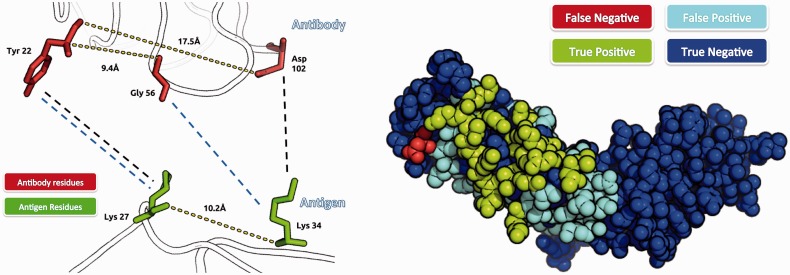
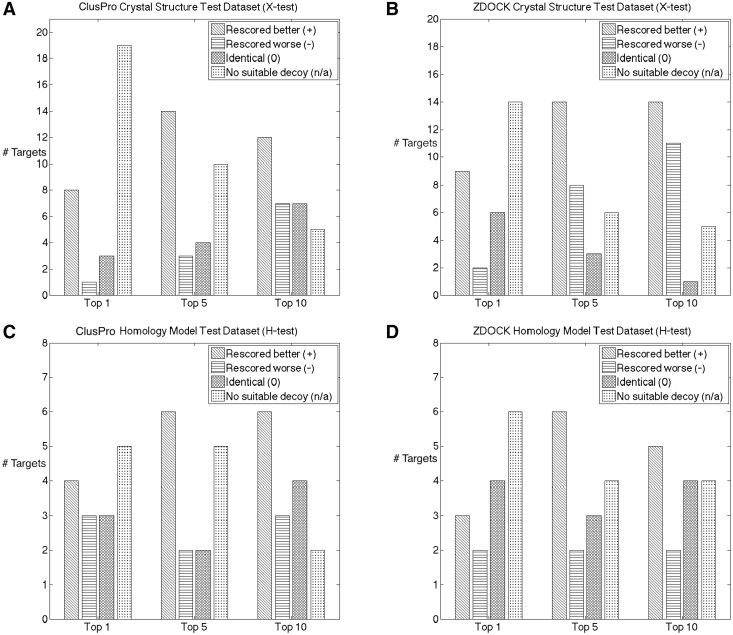
MOTIVATION: Antibodies are currently the most important class of biopharmaceuticals. Development of such antibody-based drugs depends on costly and time-consuming screening campaigns. Computational techniques such as antibody-antigen docking hold the potential to facilitate the screening process by rapidly providing a list of initial poses that approximate the native complex. RESULTS: We have developed a new method to identify the epitope region on the antigen, given the structures of the antibody and the antigen-EpiPred. The method combines conformational matching of the antibody-antigen structures and a specific antibody-antigen score. We have tested the method on both a large non-redundant set of antibody-antigen complexes and on homology models of the antibodies and/or the unbound antigen structure. On a non-redundant test set, our epitope prediction method achieves 44% recall at 14% precision against 23% recall at 14% precision for a background random distribution. We use our epitope predictions to rescore the global docking results of two rigid-body docking algorithms: ZDOCK and ClusPro. In both cases including our epitope, prediction increases the number of near-native poses found among the top decoys. AVAILABILITY AND IMPLEMENTATION: Our software is available from http://www.stats.ox.ac.uk/research/proteins/resources.
Overview
The claims and statistics of this paper haven’t been checked yet.
Run the check — free, no account needed. It reads the open-access text and checks the sources it cites.
Integrity signals
Registry
Cites
Statistics
Figures
Verification
Claims the paper makes
The claims and statistics of this paper haven’t been checked yet.
Run the check — free, no account needed. It reads the open-access text and checks the sources it cites.
Claims other papers make about this one
Each is checked against this paper’s own text: does it say what the citing paper says it does?
In the citing paper
“Modelled structures can be used at the Lead Identification stage to select surface exposed paratope residues for mutations [110] or to characterize the binding with respect to the cognate epitope [119].”
From Computational approaches to therapeutic antibody design: established methods and emerging trends (2020) · cites this paper as [119]
In the citing paper
“However, arbitrary molecular surfaces appear to be indistinguishable from epitope regions [167–169] suggesting that predictions should be performed with reference to a particular antibody [116, 118–120].”
From Computational approaches to therapeutic antibody design: established methods and emerging trends (2020) · cites this paper as [119]
Self-check
Percentages, sums and reported differences re-computed from the paper’s own numbers.
The self-check needs the paper’s full text.
Citations
Cites
Berman, H. M. (2000) · Nucleic Acids Research · doi:10.1093/nar/28.1.235 · Cited by 40,196
Cd-hit: a fast program for clustering and comparing large sets of protein or nucleotide sequences
Li, W.-Z., & Godzik, A. (2006) · Bioinform. · doi:10.1093/bioinformatics/btl158 · Cited by 10,996
Comparison of the predicted and observed secondary structure of T4 phage lysozyme
Matthews, B. W. (1975) · Biochimica et Biophysica Acta (BBA) - Protein Structure · doi:10.1016/0005-2795(75)90109-9 · Cited by 5,399 · cited 1×
“The datasets used in this study are presented in the sections below.”
MethodZDOCK: An initial‐stage protein‐docking algorithm
Chen, R., Li, L., & Weng, Z. (2003) · Proteins: Structure, Function, and Bioinformatics · doi:10.1002/prot.10389 · Cited by 1,393
Reliable B cell epitope predictions: impacts of method development and improved benchmarking
Kringelum, J. V., Lundegaard, C., Lund, O., & Nielsen, M. (2012) · PLoS Computational Biology · doi:10.1371/journal.pcbi.1002829 · Cited by 697
SAbDab: the structural antibody database
Dunbar, J., Krawczyk, K., Leem, J., Baker, T., Fuchs, A., Georges, G., Shi, J., & Deane, C. M. (2014) · Nucleic Acids Research · doi:10.1093/nar/gkt1043 · Cited by 674
The structural basis of antibody–antigen recognition
Sela-Culang, I., Kunik, V., & Ofran, Y. (2013) · Frontiers in Immunology · doi:10.3389/fimmu.2013.00302 · Cited by 530
Assessment of CAPRI predictions in rounds 3–5 shows progress in docking procedures
Méndez, R., Leplae, R., Lensink, M. F., & Wodak, S. J. (2005) · Proteins Structure Function and Bioinformatics · doi:10.1002/prot.20551 · Cited by 336
Computer-aided antibody design
Kuroda, D., Shirai, H., Jacobson, M. P., & Nakamura, H. (2012) · Protein Engineering Design and Selection · doi:10.1093/protein/gzs024 · Cited by 225
Application of asymmetric statistical potentials to antibody-protein docking
Brenke, R., Hall, D., Chuang, G., Comeau, S. R., Bohnuud, T., Beglov, D., Schueler-Furman, O., Vajda, S., & Kozakov, D. (2012) · Bioinform. · doi:10.1093/bioinformatics/bts493 · Cited by 205
Cited by
Sorted by citations
BepiPred-2.0: improving sequence-based B-cell epitope prediction using conformational epitopes
Jespersen, M. C., Peters, B., Nielsen, M., & Marcatili, P. (2017) · Nucleic Acids Research · doi:10.1093/nar/gkx346 · Cited by 1,739
Cao, Y., Su, B., Guo, X., Sun, W., Deng, Y., Bao, L., Zhu, Q., Zhang, X., Zheng, Y., Geng, C., et al. (2020) · Cell · doi:10.1016/j.cell.2020.05.025 · Cited by 1,188
Fundamentals and Methods for T- and B-Cell Epitope Prediction
Sanchez‐Trincado, J. L., Gomez‐Perosanz, M., & Reche, P. A. (2017) · Journal of Immunology Research · doi:10.1155/2017/2680160 · Cited by 675
An Introduction to B-Cell Epitope Mapping and In Silico Epitope Prediction
Potocnakova, L., Bhide, M. R., & Pulzová, L. (2016) · Journal of Immunology Research · doi:10.1155/2016/6760830 · Cited by 371
Computational approaches to therapeutic antibody design: established methods and emerging trends
Norman, R. A., Ambrosetti, F., Bonvin, A. M. J. J., Colwell, L. J., Kelm, S., Kumar, S., & Krawczyk, K. (2020) · Briefings in Bioinformatics · doi:10.1093/bib/bbz095 · Cited by 219
“We summarize the linear and conformational epitope predictors in Supplementary Information and those following the new paradigm of including antibody in providing epitope predictions (antibody-specific predictors) in Table 2C. Antibodyspecific epitope prediction was first addressed by Rapberger and co-workers in 2007…”
MethodSAbPred: a structure-based antibody prediction server
Dunbar, J., Krawczyk, K., Leem, J., Marks, C., Nowak, J., Regep, C., Georges, G. J., Kelm, S., Popovic, B., & Deane, C. M. (2016) · Nucleic Acids Research · doi:10.1093/nar/gkw361 · Cited by 202
DiscoTope-3.0: improved B-cell epitope prediction using inverse folding latent representations
Høie, M. H., Gade, F. S., Johansen, J. M., Würtzen, C., Winther, O., Nielsen, M., & Marcatili, P. (2024) · Frontiers in Immunology · doi:10.3389/fimmu.2024.1322712 · Cited by 151
Jespersen, M. C., Mahajan, S., Peters, B., Nielsen, M., & Marcatili, P. (2019) · Frontiers in Immunology · doi:10.3389/fimmu.2019.00298 · Cited by 148
Learning context-aware structural representations to predict antigen and antibody binding interfaces
Pittala, S., & Bailey‐Kellogg, C. (2020) · Bioinformatics · doi:10.1093/bioinformatics/btaa263 · Cited by 142
Progress and challenges in predicting protein interfaces
Esmaielbeiki, R., Krawczyk, K., Knapp, B., Nebel, J., & Deane, C. M. (2015) · Briefings in Bioinformatics · doi:10.1093/bib/bbv027 · Cited by 130
Guest, J. D., Vreven, T., Zhou, J., Moal, I. H., Jeliazkov, J. R., Gray, J. J., Weng, Z., & Pierce, B. G. (2020) · Structure · doi:10.1016/j.str.2021.01.005 · Cited by 124
Kazi, A., Chuah, C., Majeed, A. B. A., Leow, C. H., Lim, B. H., & Leow, C. Y. (2018) · Pathogens and Global Health · doi:10.1080/20477724.2018.1446773 · Cited by 122
Akbar, R., Bashour, H., Rawat, P., Robert, P. A., Smorodina, E., Cotet, T., Karlsen, K. F., Frank, R., Mehta, B. B., Vu, M. H., et al. (2022) · mAbs · doi:10.1080/19420862.2021.2008790 · Cited by 121
Protein interaction interface region prediction by geometric deep learning
Dai, B., & Bailey‐Kellogg, C. (2021) · Bioinformatics · doi:10.1093/bioinformatics/btab154 · Cited by 107
Mass spectrometric epitope mapping
Opuni, K. F. M., Al‐Majdoub, M., Yefremova, Y., El‐Kased, R. F., Koy, C., & Glocker, M. O. (2016) · Mass Spectrometry Reviews · doi:10.1002/mas.21516 · Cited by 98
Critical review of conformational B-cell epitope prediction methods
Cia, G., Pucci, F., & Rooman, M. J. (2023) · Briefings in Bioinformatics · doi:10.1093/bib/bbac567 · Cited by 104
Innovative Immunization Strategies for Antivenom Development
Bermúdez-Méndez, E., Fuglsang-Madsen, A. J., Føns, S., Lomonte, B., Gutiérrez, J. M., & Laustsen, A. H. (2018) · Toxins · doi:10.3390/toxins10110452 · Cited by 98
Modeling Antibody-Antigen Complexes by Information-Driven Docking
Ambrosetti, F., Jiménez‐García, B., Roel‐Touris, J., & Bonvin, A. M. J. J. (2019) · Structure · doi:10.1016/j.str.2019.10.011 · Cited by 98
Aldakheel, F. M. (2021) · International Journal of Environmental Research and Public Health · doi:10.3390/ijerph182212105 · Cited by 98
Khuat, T. T., Bassett, R., Otte, E. A., Grevis-James, A., & Gabryś, B. (2024) · Computers & Chemical Engineering · doi:10.1016/j.compchemeng.2024.108585 · Cited by 102
Bukhari, S. N. H., Jain, A., Haq, E., Mehbodniya, A., & Webber, J. L. (2022) · Pathogens · doi:10.3390/pathogens11020146 · Cited by 87
Shah, M., Ahmad, B., Choi, S., & Woo, H. G. (2020) · Computational and Structural Biotechnology Journal · doi:10.1016/j.csbj.2020.11.002 · Cited by 79
Antibody specific epitope prediction—emergence of a new paradigm
Sela‐Culang, I., Ofran, Y., & Peters, B. (2015) · Current Opinion in Virology · doi:10.1016/j.coviro.2015.03.012 · Cited by 78
Wilman, W., Wróbel, S., Bielska, W., Deszyński, P., Dudzic, P., Jaszczyszyn, I., Kaniewski, J., Młokosiewicz, J., Rouyan, A., Satława, T., et al. (2022) · Briefings in Bioinformatics · doi:10.1093/bib/bbac267 · Cited by 86
Guarra, F., & Colombo, G. (2023) · Journal of Chemical Theory and Computation · doi:10.1021/acs.jctc.3c00513 · Cited by 82
PEASE: predicting B-cell epitopes utilizing antibody sequence
Sela‐Culang, I., Ashkenazi, S., Peters, B., & Ofran, Y. (2014) · Bioinformatics · doi:10.1093/bioinformatics/btu790 · Cited by 71
The combination of artificial intelligence and systems biology for intelligent vaccine design
Russo, G., Reche, P. A., Pennisi, M. A., & Pappalardo, F. (2020) · Expert Opinion on Drug Discovery · doi:10.1080/17460441.2020.1791076 · Cited by 71
How repertoire data are changing antibody science
Marks, C., & Deane, C. M. (2020) · Journal of Biological Chemistry · doi:10.1074/jbc.rev120.010181 · Cited by 69
Zinsli, L. V., Stierlin, N., Loessner, M. J., & Schmelcher, M. (2021) · Computational and Structural Biotechnology Journal · doi:10.1016/j.csbj.2020.12.024 · Cited by 63
In silico methods for design of biological therapeutics
Roy, A., Nair, S. A., Sen, N., Soni, N., & Madhusudhan, M. S. (2017) · Methods · doi:10.1016/j.ymeth.2017.09.008 · Cited by 62
Brown, A. J., Snapkov, I., Akbar, R., Pavlović, M., Miho, E., Sandve, G. K., & Greiff, V. (2019) · Molecular Systems Design & Engineering · doi:10.1039/c9me00071b · Cited by 59
Computational design of antibodies
Fischman, S., & Ofran, Y. (2018) · Current Opinion in Structural Biology · doi:10.1016/j.sbi.2018.04.007 · Cited by 59
Huang, Y., Zhang, Z., & Zhou, Y. (2022) · Frontiers in Immunology · doi:10.3389/fimmu.2022.1053617 · Cited by 55
Bai, G., Sun, C., Guo, Z., Wang, Y., Zeng, X., Su, Y., Zhao, Q., & Ma, B. (2023) · Seminars in Cancer Biology · doi:10.1016/j.semcancer.2023.06.005 · Cited by 57
Dewaker, V., Morya, V. K., Kim, Y. H., Park, S. T., Kim, H. S., & Koh, Y. H. (2025) · Biomarker Research · doi:10.1186/s40364-025-00764-4 · Cited by 62
Antibody design using deep learning: from sequence and structure design to affinity maturation
Joubbi, S., Micheli, A., Milazzo, P., Maccari, G., Ciano, G., Cardamone, D., & Medini, D. (2024) · Briefings in Bioinformatics · doi:10.1093/bib/bbae307 · Cited by 56
In Silico Prediction of Linear B-Cell Epitopes on Proteins
EL‐Manzalawy, Y., Dobbs, D. L., & Honavar, V. (2016) · Methods in molecular biology · doi:10.1007/978-1-4939-6406-2_17 · Cited by 50
How B-Cell Receptor Repertoire Sequencing Can Be Enriched with Structural Antibody Data
Kovaltsuk, A., Krawczyk, K., Galson, J. D., Kelly, D. F., Deane, C. M., & Trück, J. (2017) · Frontiers in Immunology · doi:10.3389/fimmu.2017.01753 · Cited by 49
Toward real-world automated antibody design with combinatorial Bayesian optimization
Khan, A. A., Cowen-Rivers, A. I., Grosnit, A., Deik, D.-G.-X., Robert, P. A., Greiff, V., Smorodina, E., Rawat, P., Akbar, R., Dreczkowski, K., et al. (2023) · Cell Reports Methods · doi:10.1016/j.crmeth.2022.100374 · Cited by 72
The ClusPro AbEMap web server for the prediction of antibody epitopes
Desta, I., Kotelnikov, S., Jones, G. S., Ghani, U., Abyzov, M., Kholodov, Y. A., Standley, D. M., Beglov, D., Vajda, S., & Kozakov, D. (2023) · Nature Protocols · doi:10.1038/s41596-023-00826-7 · Cited by 45
Computationally-driven identification of antibody epitopes
Hua, C. K., Gacerez, A. T., Sentman, C. L., Ackerman, M. E., Choi, Y., & Bailey‐Kellogg, C. (2017) · eLife · doi:10.7554/elife.29023 · Cited by 44
Protein–protein interaction prediction methods: from docking-based to AI-based approaches
Tsuchiya, Y., Yamamori, Y., & Tomii, K. (2022) · Biophysical Reviews · doi:10.1007/s12551-022-01032-7 · Cited by 46
Haemoglobin, a new major allergen of Anisakis simplex
González‐Fernández, J., Daschner, Á., Nieuwenhuizen, N. E., Lopata, A. L., Frutos, C. D., Valls, A., & Cuéllar, C. (2015) · International Journal for Parasitology · doi:10.1016/j.ijpara.2015.01.002 · Cited by 43
Advances in In-silico B-cell Epitope Prediction
Sun, P., Guo, S., Sun, J., Tan, L., Lu, C. F., & Ma, Z. (2018) · Current Topics in Medicinal Chemistry · doi:10.2174/1568026619666181130111827 · Cited by 43
Multi‐perspectives and challenges in identifying B‐cell epitopes
Kumar, N., Bajiya, N., Patiyal, S., & Raghava, G. P. S. (2023) · Protein Science · doi:10.1002/pro.4785 · Cited by 40
Das, N. C., Chakraborty, P., Bayry, J., & Mukherjee, S. (2022) · Frontiers in Immunology · doi:10.3389/fimmu.2021.782506 · Cited by 39
Artificial intelligence approaches to human-microbiome protein–protein interactions
Lim, H., Cankara, F., Tsai, C.-J., Keskin, O., Nussinov, R., & Gursoy, A. (2022) · Current Opinion in Structural Biology · doi:10.1016/j.sbi.2022.102328 · Cited by 39
Recent Progress in Antibody Epitope Prediction
Zeng, X., Bai, G., Sun, C., & Ma, B. (2023) · Antibodies · doi:10.3390/antib12030052 · Cited by 44
Integrating machine learning to advance epitope mapping
Grewal, S., Hegde, N., & Yanow, S. K. (2024) · Frontiers in Immunology · doi:10.3389/fimmu.2024.1463931 · Cited by 38
Information-Driven Antibody–Antigen Modelling with HADDOCK
Ambrosetti, F., Jandová, Z., & Bonvin, A. M. J. J. (2022) · Methods in molecular biology · doi:10.1007/978-1-0716-2609-2_14 · Cited by 33
Conformational epitope matching and prediction based on protein surface spiral features
Lo, Y.-T., Shih, T.-C., Pai, T., Ho, L.-P., Wu, J., & Chou, H. (2021) · BMC Genomics · doi:10.1186/s12864-020-07303-5 · Cited by 35
Methods for sequence and structural analysis of B and T cell receptor repertoires
Teraguchi, S., Saputri, D. S., Llamas-Covarrubias, M. A., Davila, A., Díez, D., Nazlica, S. A., Rozewicki, J., Ismanto, H. S., Wilamowski, J., Xie, J., et al. (2020) · Computational and Structural Biotechnology Journal · doi:10.1016/j.csbj.2020.07.008 · Cited by 35
Diagnostic Performance of Dengue Virus Envelope Domain III in Acute Dengue Infection
Nguyen, N. M., Duong, B. T., Azam, M., Phuong, T. T., Park, H., Thuỷ, P. T. B., & Yeo, S. (2019) · International Journal of Molecular Sciences · doi:10.3390/ijms20143464 · Cited by 32
Zhou, J., Chen, J., Peng, Y., Xie, Y., & Xiao, Y. (2022) · Pathogens · doi:10.3390/pathogens11101095 · Cited by 32
Maximum-Entropy Models of Sequenced Immune Repertoires Predict Antigen-Antibody Affinity
Asti, L., Uguzzoni, G., Marcatili, P., & Pagnani, A. (2016) · PLoS Computational Biology · doi:10.1371/journal.pcbi.1004870 · Cited by 30
AbAdapt: an adaptive approach to predicting antibody–antigen complex structures from sequence
Davila, A., Xu, Z., Li, S., Rozewicki, J., Wilamowski, J., Kotelnikov, S., Kozakov, D., Teraguchi, S., & Standley, D. M. (2022) · Bioinformatics Advances · doi:10.1093/bioadv/vbac015 · Cited by 33
Advances of computational methods enhance the development of multi-epitope vaccines
Wei, Y., Qiu, T., Ai, Y., Zhang, Y., Xie, J., Zhang, D., Luo, X., Sun, X., Wang, X., & Qiu, J. (2024) · Briefings in Bioinformatics · doi:10.1093/bib/bbaf055 · Cited by 29
Computational tools for aiding rational antibody design
Krawczyk, K., Dunbar, J., & Deane, C. M. (2017) · Methods in molecular biology · doi:10.1007/978-1-4939-6637-0_21 · Cited by 26
A Structure-Based B-cell Epitope Prediction Model Through Combing Local and Global Features
Lu, S., Li, Y., Ma, Q., Nan, X., & Zhang, S. (2022) · Frontiers in Immunology · doi:10.3389/fimmu.2022.890943 · Cited by 23
How can we discover developable antibody-based biotherapeutics?
Bauer, J., Rajagopal, N., Gupta, P., Gupta, P. K., Nixon, A. E., & Kumar, S. (2023) · Frontiers in Molecular Biosciences · doi:10.3389/fmolb.2023.1221626 · Cited by 28
Multi-epitope vaccines: a promising strategy against viral diseases in swine
Chen, X., Li, Y., & Wang, X. H. (2024) · Frontiers in Cellular and Infection Microbiology · doi:10.3389/fcimb.2024.1497580 · Cited by 24
Mapping of antibody epitopes based on docking and homology modeling
Desta, I., Kotelnikov, S., Jones, G. S., Ghani, U., Abyzov, M., Kholodov, Y. A., Standley, D. M., Sabitova, M., Beglov, D., Vajda, S., et al. (2022) · Proteins Structure Function and Bioinformatics · doi:10.1002/prot.26420 · Cited by 25
SARS-CoV-2 antibodies recognize 23 distinct epitopic sites on the receptor binding domain
Jiang, J., Boughter, C. T., Ahmad, J., Natarajan, K., Boyd, L. F., Meier-Schellersheim, M., & Margulies, D. H. (2023) · Communications Biology · doi:10.1038/s42003-023-05332-w · Cited by 24
Jaszczyszyn, I., Bielska, W., Gawłowski, T., Dudzic, P., Satława, T., Kończak, J., Wilman, W., Janusz, B., Wróbel, S., Chomicz, D., et al. (2023) · Frontiers in Molecular Biosciences · doi:10.3389/fmolb.2023.1214424 · Cited by 24
Structure and Computation in Immunoreagent Design: From Diagnostics to Vaccines
Gourlay, L. J., Peri, C., Bolognesi, M., & Colombo, G. (2017) · Trends in biotechnology · doi:10.1016/j.tibtech.2017.06.018 · Cited by 23
B-Cell Epitope Predictions Using Computational Methods
Zheng, D., Liang, S., & Zhang, C. (2022) · Methods in molecular biology · doi:10.1007/978-1-0716-2609-2_12 · Cited by 22
Mallet, V., Ruano, L. C., Moine-Franel, A., Nilges, M., Druart, K., Bouvier, G., & Spérandio, O. (2021) · Bioinformatics · doi:10.1093/bioinformatics/btab849 · Cited by 26
Bozhanova, N. G., Sangha, A. K., Sevy, A. M., Gilchuk, P., Huang, K., Nargi, R. S., Reidy, J. X., Trivette, A., Carnahan, R. H., Bukreyev, A. A., et al. (2020) · Proceedings of the National Academy of Sciences · doi:10.1073/pnas.1922654117 · Cited by 21
Cha, J., Chan, L.-C., Wang, Y., Chu, Y., Wang, C., Lee, H., Xia, W., Shyu, W., Liu, S., Yao, J., et al. (2022) · Journal of Biological Chemistry · doi:10.1016/j.jbc.2022.101817 · Cited by 20
Bioinformatics tools and data resources for assay development of fluid protein biomarkers
Waury, K., Willemse, E. A. J., Vanmechelen, E., Zetterberg, H., Teunissen, C. E., & Abeln, S. (2022) · Biomarker Research · doi:10.1186/s40364-022-00425-w · Cited by 20
Choi, S., & Kim, D. (2024) · Scientific Reports · doi:10.1038/s41598-024-78506-z · Cited by 21
Epitopes of Protein Binders Are Related to the Structural Flexibility of a Target Protein Surface
Kim, D., Choi, Y., & Kim, H. (2021) · Journal of Chemical Information and Modeling · doi:10.1021/acs.jcim.0c01397 · Cited by 20
Computational Methods to Predict Conformational B-Cell Epitopes
Carroll, M., Rosenbaum, E., & Viswanathan, R. (2024) · Biomolecules · doi:10.3390/biom14080983 · Cited by 19
Accurate determination of epitope for antibodies with unknown 3D structures
Tahir, S., Bourquard, T., Musnier, A., Jullian, Y., Corde, Y., Omahdi, Z., Mathias, L., Reiter, É., Crépieux, P., Bruneau, G., et al. (2021) · mAbs · doi:10.1080/19420862.2021.1961349 · Cited by 18
SEPPA-mAb: spatial epitope prediction of protein antigens for mAbs
Qiu, T., Zhang, L., Chen, Z., Wang, Y., Mao, T., Wang, C., Cun, Y., Zheng, G., Yan, D., Zhou, M., et al. (2023) · Nucleic Acids Research · doi:10.1093/nar/gkad427 · Cited by 20
Simplifying complex antibody engineering using machine learning
Makowski, E. K., Chen, H.-T., & Tessier, P. M. (2023) · Cell Systems · doi:10.1016/j.cels.2023.04.009 · Cited by 19
Computational Methods in Immunoinformatics: Epitope Discovery and Diagnostic Applications
Bulla, A. C. S., da Silva, A. S., Sereno, B. P., Dias, M. F. R., & da Silva, M. L. (2025) · ACS Omega · doi:10.1021/acsomega.5c05538 · Cited by 17
Using B cell receptor lineage structures to predict affinity
Ralph, D., & Matsen, F. A., IV (2020) · PLoS Computational Biology · doi:10.1371/journal.pcbi.1008391 · Cited by 17
EpiScan: accurate high-throughput mapping of antibody-specific epitopes using sequence information
Wang, C., Wang, J., Song, W., Luo, G., & Jiang, T. (2024) · npj Systems Biology and Applications · doi:10.1038/s41540-024-00432-7 · Cited by 17
NbX: Machine Learning-Guided Re-Ranking of Nanobody–Antigen Binding Poses
Tam, C., Kumar, A., & Zhang, K. Y. J. (2021) · Pharmaceuticals · doi:10.3390/ph14100968 · Cited by 17
Huan, F., Gao, S., Gu, Y., Ni, L., Wu, M., Li, Y., Liu, M., Yang, Y., Xiao, A., & Liu, G. (2025) · Clinical Reviews in Allergy & Immunology · doi:10.1007/s12016-025-09052-3 · Cited by 16
Antibody–antigen complex modelling in the era of immunoglobulin repertoire sequencing
Raybould, M. I. J., Wong, W. K., & Deane, C. M. (2019) · Molecular Systems Design & Engineering · doi:10.1039/c9me00034h · Cited by 14
Zelek, W. M., Menzies, G. E., Brancale, A., Stockinger, B., & Morgan, B. P. (2020) · Immunology · doi:10.1111/imm.13228 · Cited by 16
High-Throughput Antibody Structure Modeling and Design Using ABodyBuilder
Leem, J., & Deane, C. M. (2018) · Methods in molecular biology · doi:10.1007/978-1-4939-8736-8_21 · Cited by 15
Advances in antibody discovery from human BCR repertoires
Xu, Z., Ismanto, H. S., Zhou, H., Saputri, D. S., Sugihara, F., & Standley, D. M. (2022) · Frontiers in Bioinformatics · doi:10.3389/fbinf.2022.1044975 · Cited by 18
Current Update on Rotavirus in-Silico Multiepitope Vaccine Design
Kuri, P. R., & Goswami, P. (2022) · ACS Omega · doi:10.1021/acsomega.2c07213 · Cited by 15
Integrated in-silico design and in vivo validation of multi-epitope vaccines for norovirus
Qiu, J., Wei, Y., Shu, J., Zheng, W., Zhang, Y., Xie, J., Zhang, D., Luo, X., Sun, X., Wang, X., et al. (2025) · Virology Journal · doi:10.1186/s12985-025-02796-6 · Cited by 15
Computational-Driven Epitope Verification and Affinity Maturation of TLR4-Targeting Antibodies
Ahmad, S. B., Batool, M., Kim, M.-S., & Choi, S. (2021) · International Journal of Molecular Sciences · doi:10.3390/ijms22115989 · Cited by 13
Neural message passing for joint paratope-epitope predictionPreprint
Vecchio, A. D., Deac, A., Lió, P., & Veličković, P. (2021) · arXiv (Cornell University) · doi:10.48550/arxiv.2106.00757 · Cited by 31
Deep learning in next-generation vaccine development for infectious diseases
Bhattacharya, M., Lo, Y.-H., Chatterjee, S., Das, A., Wen, Z., & Chakraborty, C. (2025) · Molecular Therapy — Nucleic Acids · doi:10.1016/j.omtn.2025.102586 · Cited by 19
Exploring antibody repurposing for COVID-19: beyond presumed roles of therapeutic antibodies
Rawat, P., Sharma, D., Srivastava, A., Vani, J., & Gromiha, M. M. (2021) · Scientific Reports · doi:10.1038/s41598-021-89621-6 · Cited by 13
Mleczko, J., Defort, A., Kozioł, J. J., Nguyen, T. T., Mirończyk, A., Zapotoczny, B., Nowak‐Jary, J., Gronczewska, E., Marć, M., & Dudek, M. R. (2015) · The Journal of Biochemistry · doi:10.1093/jb/mvv120 · Cited by 13
In Silico Designing of Vaccines: Methods, Tools, and Their Limitations
Slathia, P. S., & Sharma, P. (2020) · Springer eBooks · doi:10.1007/978-981-15-6815-2_11 · Cited by 12
Designing B-Cell Epitopes for Immunotherapy and Subunit Vaccines
Singh, H., Gupta, S., Gautam, A., & Raghava, G. P. S. (2015) · Methods in molecular biology · doi:10.1007/978-1-4939-2999-3_28 · Cited by 12
Sunny, S., Prakash, P. B., Gopakumar, G., & Jayaraj, P. B. (2023) · The Protein Journal · doi:10.1007/s10930-023-10121-9 · Cited by 12
Challenges in Detection of Serum Oncoprotein: Relevance to Breast Cancer Diagnostics
Lengfeld, J. E., Zhang, H., Stoesz, S. P., Murali, R., Pass, F., Greene, M. I., Goel, P. N., & Grover, P. (2021) · Breast Cancer Targets and Therapy · doi:10.2147/bctt.s331844 · Cited by 11
Prediction of Antibody Epitopes
Nielsen, M., & Marcatili, P. (2015) · Methods in molecular biology · doi:10.1007/978-1-4939-2999-3_4 · Cited by 10
WUREN: Whole-modal union representation for epitope prediction
Wang, X., Gao, X., Fan, X., Huai, Z., Zhang, G., Yao, M., Wang, T., Huang, X., & Lai, L. (2024) · Computational and Structural Biotechnology Journal · doi:10.1016/j.csbj.2024.05.023 · Cited by 9
Computational prediction of multiple antigen epitopes
Viswanathan, R., Carroll, M., Roffe, A., Fajardo, J. E., & Fiser, A. (2024) · Bioinformatics · doi:10.1093/bioinformatics/btae556 · Cited by 10
Cheung, A., Liu, Y., Chenoweth, A. M., Montaseri, H., Esapa, B., Chudasama, V., Baker, J. R., Thurston, D. E., & Karagiannis, S. N. (2026) · Physiological Reviews · doi:10.1152/physrev.00039.2025 · Cited by 12
Metadata
- Authors
- Krawczyk, K., Liu, X., Baker, T., Shi, J., & Deane, C. M.
- Affiliations
- Chinese Academy of Sciences (CN)
- Corresponding author
- Deane, Charlotte M.
- Venue
- Bioinformatics
- Publisher
- Oxford University Press (OUP)
- Published
- 2014-04-21
- Volume
- 30
- Issue
- 16
- Pages
- 2288-2294
- ISSN
- 1367-4803 (ISSN-L)
- 1367-4811
- PMC
- PMC4207425
- OpenAlex
- W2163174206
- Cited by
- 174
- References
- 27
- Citations by year
- 2026: 8 · 2025: 17 · 2024: 22 · 2023: 19 · 2022: 28 · 2021: 19 · 2020: 17 · 2019: 10 · 2018: 14 · 2017: 6 · 2016: 6 · 2015: 7 · 2014: 1
- FWCI
- 2.72
- Type
- journal article
- Language
- en
- Open access
- hybrid
- doi.org
- Locations
- Bioinformatics (publishedVersion, cc-by)
- Europe PMC (PubMed Central) (publishedVersion, cc-by)
- PubMed Central (publishedVersion, cc-by)
- PubMed (publishedVersion)
- Funders
- Engineering and Physical Sciences Research Council (EP/K032402/1)
- UCB Pharma
- Topics
- Life Sciences › Biochemistry, Genetics and Molecular Biology › Molecular Biology › vaccines and immunoinformatics approaches
- Life Sciences › Biochemistry, Genetics and Molecular Biology › Molecular Biology › Protein Structure and Dynamics
- Life Sciences › Pharmacology, Toxicology and Pharmaceutics › Drug Discovery › Computational Drug Discovery Methods
- Keywords
- B-cell epitope prediction, antibody-antigen docking, immune complexes, homology model
- MeSH terms
- Algorithms, Antigen-Antibody Complex, Humans, Software, Epitopes, B-Lymphocyte, Molecular Docking Simulation
About these checks
Registry, retraction, Cites and statistics results are computed, not judged, with one exception: a printed reference that no index lists is read once by a model before it counts as a citation error. Claims are extracted by a model and kept only when their quote appears verbatim in the text; each cited source is then checked, with a model’s help, for whether it says what the claim relies on. Those verdicts can be wrong — read the claim’s quote and the cited source before relying on one.
Statistics and arithmetic are recomputed, not judged.
Confidence bands are shown only for fields calibrated on our annotated test set. None is calibrated yet, so no band is shown.
What counts as a claim ›How we measure confidence ›How we check this ›
Are you an author, or do you see a problem with this page? Request a review
