

The neural correlates of inner speech defined by voxel-based lesion-symptom mapping
Open accessThe DOI matches its Crossref record; 78 of the 78 references it cites were found in a registry or an index.
Abstract
The neural correlates of inner speech have been investigated previously using functional imaging. However, methodological and other limitations have so far precluded a clear description of the neural anatomy of inner speech and its relation to overt speech. Specifically, studies that examine only inner speech often fail to control for subjects' behaviour in the scanner and therefore cannot determine the relation between inner and overt speech. Functional imaging studies comparing inner and overt speech have not produced replicable results and some have similar methodological caveats as studies looking only at inner speech. Lesion analysis can avoid the methodological pitfalls associated with using inner and overt speech in functional imaging studies, while at the same time providing important data about the neural correlates essential for the specific function. Despite its advantages, a study of the neural correlates of inner speech using lesion analysis has not been carried out before. In this study, 17 patients with chronic post-stroke aphasia performed inner speech tasks (rhyme and homophone judgements), and overt speech tasks (reading aloud). The relationship between brain structure and language ability was studied using voxel-based lesion-symptom mapping. This showed that inner speech abilities were affected by lesions to the left pars opercularis in the inferior frontal gyrus and to the white matter adjacent to the left supramarginal gyrus, over and above overt speech production and working memory. These results suggest that inner speech cannot be assumed to be simply overt speech without a motor component. It also suggests that the use of overt speech to understand inner speech and vice versa might result in misleading conclusions, both in imaging studies and clinical practice.
Overview
The claims and statistics of this paper haven’t been checked yet.
Free: it reads the open-access text and checks the first 5 claims that cite a source we can check. Create a free account to check every claim.
Integrity signals
Registry
Cites
Statistics
Figures
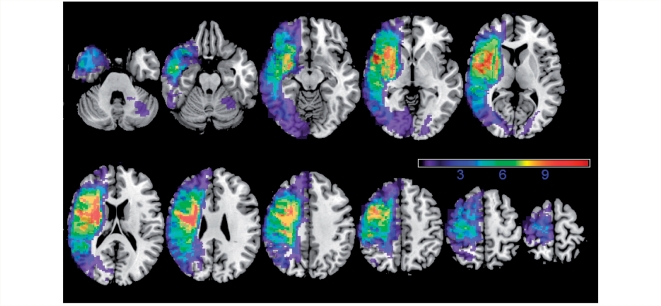
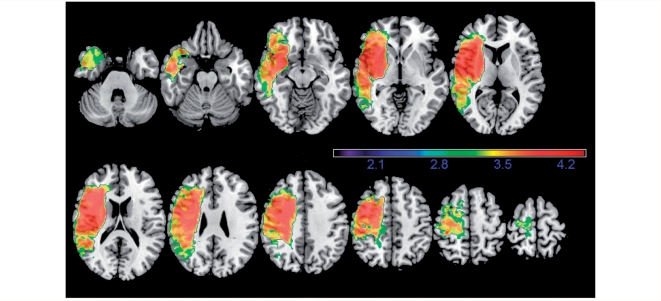
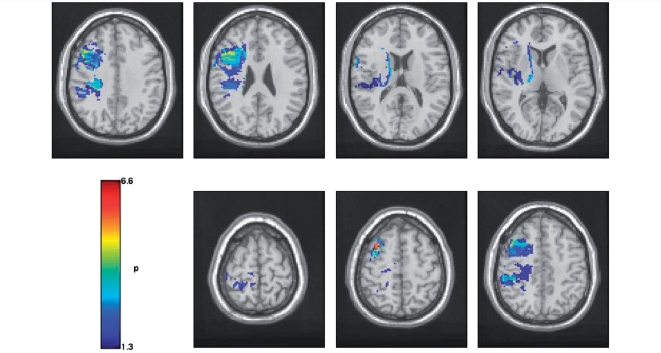
Verification
Claims the paper makes
The claims and statistics of this paper haven’t been checked yet.
Free: it reads the open-access text and checks the first 5 claims that cite a source we can check. Create a free account to check every claim.
Claims other papers make about this one
Each is checked against this paper’s own text: does it say what the citing paper says it does?
The cited source says what the claim attributes to it.
In the citing paper
“The involvement of a left-hemisphere network including IFG, STG and the cerebellum during generation of dialogic scenarios is consistent with prior inner speech studies (Shergill et al., 2001; Simons et al., 2010; Geva et al., 2011) and implies a greater demand on these areas when a dialogue must be produced (in contrast to a monologue).”
From The brain's conversation with itself: neural substrates of dialogic inner speech (2016) · cites this paper as Geva et al., 2011
Self-check
Percentages, sums and reported differences re-computed from the paper’s own numbers.
The self-check needs the paper’s full text.
Citations
Cites
Vygotsky, L. S. (1964) · Bulletin of the Orton Society · doi:10.1007/bf02928399 · Cited by 20,704 · cited 2×
“…in one’s head, has been suggested to play an important role in memory (Baddeley and Hitch, 1974), reading (Corcoran, 1966), language acquisition (Vygotsky, 1962), language comprehension (Blonskii, 1964), thinking (Sokolov, 1972) and even in consciousness and selfreflective activities (Morin…”
The Psychology of Learning and Motivation: Advances in Research and Theory
(2010) · Psychology of Learning and Motivation · doi:10.1016/c2009-0-62209-1 · Cited by 5,994
The cortical organization of speech processing
Hickok, G., & Poeppel, D. (2007) · Nature Reviews Neuroscience · doi:10.1038/nrn2113 · Cited by 5,495 · cited 1×
“…functional directionality of the dorsal route, in which processing advances from posterior to anterior regions, supporting repetition, language acquisition and monitoring of overt speech (Catani et al., 2005; Hickok and Poeppel, 2007; Saur et al., 2008; Friederici, 2009; Agosta et al., 2010).”
The neural correlates of the verbal component of working memory
Paulesu, E., Frith, C. D., & Frackowiak, R. S. J. (1993) · Nature · doi:10.1038/362342a0 · Cited by 2,230 · cited 2×
“Paulesu et al. (1993) found that covert rhyme judgement activated Brodmann area (BA) 44 as well as motor regions.”
The spatial and temporal signatures of word production components
Indefrey, P., & Levelt, W. J. M. (2004) · Cognition · doi:10.1016/j.cognition.2002.06.001 · Cited by 2,144
Fiber tracking: principles and strategies – a technical review
Mori, S., & van Zijl, P. C. M. (2002) · NMR in Biomedicine · doi:10.1002/nbm.781 · Cited by 2,024
Perisylvian language networks of the human brain
Catani, M., Jones, D. K., & ffytche, D. H. (2005) · Annals of Neurology · doi:10.1002/ana.20319 · Cited by 1,832 · cited 4×
“Diffusion tensor imaging studies demonstrated that the supramarginal gyrus and BA 44 are connected via a direct connection (Catani et al., 2005; Frey et al., 2008), as well as via indirect connections through the posterior superior temporal gyrus (Parker et al., 2005; Friederici, 2009).”
InfluentialVentral and dorsal pathways for language
Saur, D., Kreher, B. W., Schnell, S., Kümmerer, D., Kellmeyer, P., Vry, M.-S., Umarova, R., Musso, M., Glauche, V., Abel, S., et al. (2008) · Proceedings of the National Academy of Sciences · doi:10.1073/pnas.0805234105 · Cited by 1,553 · cited 2×
“It should be noted that previous studies emphasized a specific functional directionality of the dorsal route, in which processing advances from posterior to anterior regions, supporting repetition, language acquisition and monitoring of overt speech (Catani et al., 2005; Hickok and Poeppel, 2007; Saur et al., 2008; Fr…”
Voxel-based lesion-symptom mapping
Bates, E., Wilson, S. M., Saygin, A. P., Dick, F., Sereno, M. I., Knight, R. T., & Dronkers, N. F. (2003) · Nature Neuroscience · doi:10.1038/nn1050 · Cited by 1,457 · cited 5×
“relation to overt speech and working memory were examined, using voxel-based lesion–symptom mapping (Bates et al., 2003).”
InfluentialImproving Lesion-Symptom Mapping
Rorden, C., Karnath, H.-O., & Bonilha, L. (2007) · Journal of Cognitive Neuroscience · doi:10.1162/jocn.2007.19.7.1081 · Cited by 1,346 · cited 1×
“The covariate of interest (rhyme or homophone judgment) was first examined by itself using the NPM (non-parametric mapping) software package (Rorden et al., 2007).”
Research works printed but not linked: 5
- Breier JI Hasan KM Zhang W Men D Papanicolaou AC Language dysfunction after stroke and damage to white matter tracts evaluated using diffusion tensor imaging Am J Neuroradiol 2008 29 483 7 18039757 PMC3073452
- Hoeft F Meyler A Hernandez A Juel C Taylor-Hill H Martindale JL Functional and morphometric brain dissociation between dyslexia and reading ability Proc Natl Acad Sci USA 2007 104 4234 9 17360506 PMC1820738
- Kay J Coltheart M Lesser R Psycholinguistic assessment of language processing 1992 Hove, UK Psychology Press
- Saur D Kreher BW Schnell S Kummerer D Kellmeyer P Vry MS Ventral and dorsal pathways for language Proc Natl Acad Sci USA 2008 105 18035 40 19004769 PMC2584675
- Swinburn K Porter G Howard D Comprehensive aphasia test 2004 East Sussex, UK Psychology Press
Cited by
Inner Speech: Development, Cognitive Functions, Phenomenology, and Neurobiology
Alderson-Day, B., & Fernyhough, C. (2015) · Psychological Bulletin · doi:10.1037/bul0000021 · Cited by 864
Morawetz, C., Bode, S., Derntl, B., & Heekeren, H. R. (2017) · Neuroscience & Biobehavioral Reviews · doi:10.1016/j.neubiorev.2016.11.014 · Cited by 458
Perrone-Bertolotti, M., Rapin, L., Lachaux, J.-P., Baciu, M., & Lœvenbruck, H. (2014) · Behavioural Brain Research · doi:10.1016/j.bbr.2013.12.034 · Cited by 317
Neuroplasticity of Language Networks in Aphasia: Advances, Updates, and Future Challenges
Kiran, S., & Thompson, C. K. (2019) · Frontiers in Neurology · doi:10.3389/fneur.2019.00295 · Cited by 250
Segregation of the human medial prefrontal cortex in social cognition
Bzdok, D., Langner, R., Schilbach, L., Engemann, D. A., Laird, A. R., Fox, P. T., & Eickhoff, S. B. (2013) · Frontiers in Human Neuroscience · doi:10.3389/fnhum.2013.00232 · Cited by 229
Metadata
- Authors
- Geva, S., Jones, P. S., Crinion, J. T., Price, C. J., Baron, J.-C., & Warburton, E. A.
- Affiliations
- University of Cambridge (GB)
- University College London (GB)
- Wellcome Centre for Human Neuroimaging (GB)
- Inserm (FR)
- Corresponding author
- Geva, S.
- Venue
- Brain
- Publisher
- Oxford University Press (OUP)
- Published
- 2011-10-01
- Volume
- 134
- Issue
- 10
- Pages
- 3071-3082
- ISSN
- 0006-8950 (ISSN-L)
- 1460-2156
- PMC
- PMC3187541
- OpenAlex
- W2167886757
- Cited by
- 173
- References
- 77
- Citations by year
- 2026: 11 · 2025: 9 · 2024: 13 · 2023: 15 · 2022: 8 · 2021: 10 · 2020: 9 · 2019: 14 · 2018: 12 · 2017: 13 · 2016: 15 · 2015: 16 · 2014: 12 · 2013: 8 · 2012: 8
- FWCI
- 4.55
- Type
- journal article
- Language
- en
- Open access
- hybrid
- doi.org
- Licence
- cc-by-nc
- Locations
- Brain (publishedVersion, cc-by-nc)
- Europe PMC (PubMed Central) (publishedVersion, cc-by-nc)
- PubMed Central (publishedVersion, cc-by-nc)
- PubMed (publishedVersion)
- UCL Discovery (University College London) (submittedVersion)
- Funders
- National Institute for Health and Care Research
- Cambridge Overseas Trust
- Medical Research Council (G0500874)
- Topics
- Life Sciences › Neuroscience › Cognitive Neuroscience › Neurobiology of Language and Bilingualism
- Social Sciences › Psychology › Developmental and Educational Psychology › Reading and Literacy Development
- Social Sciences › Psychology › Experimental and Cognitive Psychology › Phonetics and Phonology Research
- Keywords
- inner speech, neural correlates, voxel-based lesion-symptom mapping, post-stroke aphasia, inferior frontal gyrus, supramarginal gyrus, white matter, reading aloud, working memory, language lateralization
- MeSH terms
- Adult, Aged, Aphasia, Brain, Brain Mapping, Female, Humans, Image Processing, Computer-Assisted, Language, Language Tests, Magnetic Resonance Imaging, Male, Middle Aged, Speech, Stroke
About these checks
Registry, retraction, Cites and statistics results are computed, not judged, with one exception: a printed reference that no index lists is read once by a model before it counts as a citation error. Claims are extracted by a model and kept only when their quote appears verbatim in the text; each cited source is then checked, with a model’s help, for whether it says what the claim relies on. Those verdicts can be wrong — read the claim’s quote and the cited source before relying on one.
Statistics and arithmetic are recomputed, not judged.
Confidence bands are shown only for fields calibrated on our annotated test set. None is calibrated yet, so no band is shown.
What counts as a claim ›How we measure confidence ›How we check this ›
Are you an author, or do you see a problem with this page? Request a review
How to cite
Cite CoChat for the checks on this page, and the paper for its own findings.
- This page
- CoChat. (2026). Citation check: The neural correlates of inner speech defined by voxel-based lesion-symptom mapping. https://app.cochat.ai/papers/10.1093/brain/awr232
- The paper
- Geva, S., Jones, P. S., Crinion, J. T., Price, C. J., Baron, J.-C., & Warburton, E. A. (2011). The neural correlates of inner speech defined by voxel-based lesion-symptom mapping. Brain. https://doi.org/10.1093/brain/awr232
Data sources
Bibliographic data: Semantic Scholar, OpenAlex, Crossref.
Contains information from the Semantic Scholar Academic Graph Datasets, made available under the ODC Attribution License (ODC-BY 1.0).
Semantic Scholar’s data is described in: Kinney, R., et al. (2023). The Semantic Scholar Open Data Platform. arXiv:2301.10140.
