

The neural correlates of inner speech defined by voxel-based lesion-symptom mapping
Open accessThe DOI matches its Crossref record; 78 of the 78 references it cites were found in a registry or an index.
Abstract
The neural correlates of inner speech have been investigated previously using functional imaging. However, methodological and other limitations have so far precluded a clear description of the neural anatomy of inner speech and its relation to overt speech. Specifically, studies that examine only inner speech often fail to control for subjects' behaviour in the scanner and therefore cannot determine the relation between inner and overt speech. Functional imaging studies comparing inner and overt speech have not produced replicable results and some have similar methodological caveats as studies looking only at inner speech. Lesion analysis can avoid the methodological pitfalls associated with using inner and overt speech in functional imaging studies, while at the same time providing important data about the neural correlates essential for the specific function. Despite its advantages, a study of the neural correlates of inner speech using lesion analysis has not been carried out before. In this study, 17 patients with chronic post-stroke aphasia performed inner speech tasks (rhyme and homophone judgements), and overt speech tasks (reading aloud). The relationship between brain structure and language ability was studied using voxel-based lesion-symptom mapping. This showed that inner speech abilities were affected by lesions to the left pars opercularis in the inferior frontal gyrus and to the white matter adjacent to the left supramarginal gyrus, over and above overt speech production and working memory. These results suggest that inner speech cannot be assumed to be simply overt speech without a motor component. It also suggests that the use of overt speech to understand inner speech and vice versa might result in misleading conclusions, both in imaging studies and clinical practice.
Overview
The claims and statistics of this paper haven’t been checked yet.
Free: it reads the open-access text and checks the first 5 claims that cite a source we can check. Create a free account to check every claim.
Integrity signals
Registry
Cites
Statistics
Figures
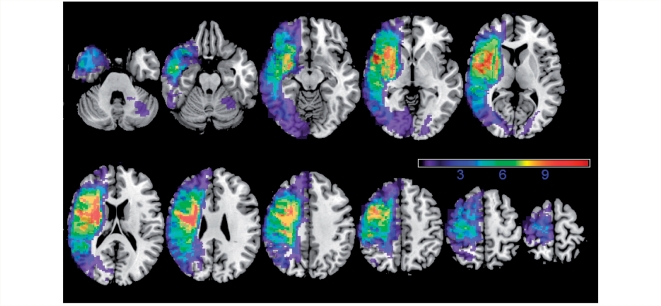
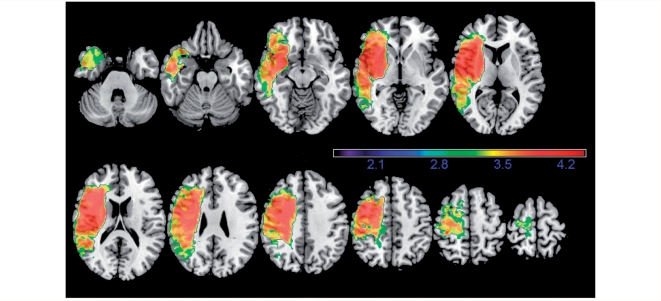
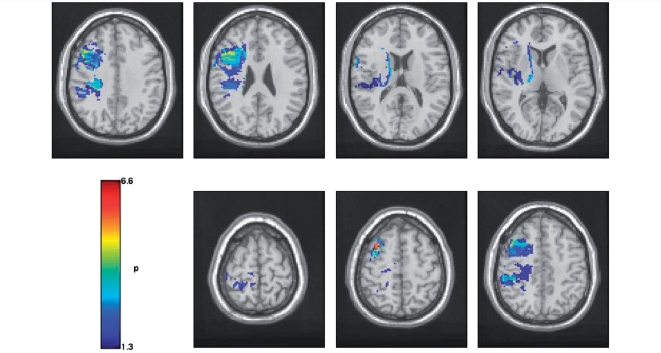
Verification
Claims the paper makes
The claims and statistics of this paper haven’t been checked yet.
Free: it reads the open-access text and checks the first 5 claims that cite a source we can check. Create a free account to check every claim.
Claims other papers make about this one
Each is checked against this paper’s own text: does it say what the citing paper says it does?
The cited source says what the claim attributes to it.
In the citing paper
“The involvement of a left-hemisphere network including IFG, STG and the cerebellum during generation of dialogic scenarios is consistent with prior inner speech studies (Shergill et al., 2001; Simons et al., 2010; Geva et al., 2011) and implies a greater demand on these areas when a dialogue must be produced (in contrast to a monologue).”
From The brain's conversation with itself: neural substrates of dialogic inner speech (2016) · cites this paper as Geva et al., 2011
Self-check
Percentages, sums and reported differences re-computed from the paper’s own numbers.
The self-check needs the paper’s full text.
Citations
Cites
Vygotsky, L. S. (1964) · Bulletin of the Orton Society · doi:10.1007/bf02928399 · Cited by 20,704 · cited 2×
“…in one’s head, has been suggested to play an important role in memory (Baddeley and Hitch, 1974), reading (Corcoran, 1966), language acquisition (Vygotsky, 1962), language comprehension (Blonskii, 1964), thinking (Sokolov, 1972) and even in consciousness and selfreflective activities (Morin…”
The Psychology of Learning and Motivation: Advances in Research and Theory
(2010) · Psychology of Learning and Motivation · doi:10.1016/c2009-0-62209-1 · Cited by 5,994
The cortical organization of speech processing
Hickok, G., & Poeppel, D. (2007) · Nature Reviews Neuroscience · doi:10.1038/nrn2113 · Cited by 5,495 · cited 1×
“…functional directionality of the dorsal route, in which processing advances from posterior to anterior regions, supporting repetition, language acquisition and monitoring of overt speech (Catani et al., 2005; Hickok and Poeppel, 2007; Saur et al., 2008; Friederici, 2009; Agosta et al., 2010).”
The neural correlates of the verbal component of working memory
Paulesu, E., Frith, C. D., & Frackowiak, R. S. J. (1993) · Nature · doi:10.1038/362342a0 · Cited by 2,230 · cited 2×
“Paulesu et al. (1993) found that covert rhyme judgement activated Brodmann area (BA) 44 as well as motor regions.”
The spatial and temporal signatures of word production components
Indefrey, P., & Levelt, W. J. M. (2004) · Cognition · doi:10.1016/j.cognition.2002.06.001 · Cited by 2,144
Fiber tracking: principles and strategies – a technical review
Mori, S., & van Zijl, P. C. M. (2002) · NMR in Biomedicine · doi:10.1002/nbm.781 · Cited by 2,024
Perisylvian language networks of the human brain
Catani, M., Jones, D. K., & ffytche, D. H. (2005) · Annals of Neurology · doi:10.1002/ana.20319 · Cited by 1,832 · cited 4×
“Diffusion tensor imaging studies demonstrated that the supramarginal gyrus and BA 44 are connected via a direct connection (Catani et al., 2005; Frey et al., 2008), as well as via indirect connections through the posterior superior temporal gyrus (Parker et al., 2005; Friederici, 2009).”
InfluentialVentral and dorsal pathways for language
Saur, D., Kreher, B. W., Schnell, S., Kümmerer, D., Kellmeyer, P., Vry, M.-S., Umarova, R., Musso, M., Glauche, V., Abel, S., et al. (2008) · Proceedings of the National Academy of Sciences · doi:10.1073/pnas.0805234105 · Cited by 1,553 · cited 2×
“It should be noted that previous studies emphasized a specific functional directionality of the dorsal route, in which processing advances from posterior to anterior regions, supporting repetition, language acquisition and monitoring of overt speech (Catani et al., 2005; Hickok and Poeppel, 2007; Saur et al., 2008; Fr…”
Voxel-based lesion-symptom mapping
Bates, E., Wilson, S. M., Saygin, A. P., Dick, F., Sereno, M. I., Knight, R. T., & Dronkers, N. F. (2003) · Nature Neuroscience · doi:10.1038/nn1050 · Cited by 1,457 · cited 5×
“relation to overt speech and working memory were examined, using voxel-based lesion–symptom mapping (Bates et al., 2003).”
InfluentialImproving Lesion-Symptom Mapping
Rorden, C., Karnath, H.-O., & Bonilha, L. (2007) · Journal of Cognitive Neuroscience · doi:10.1162/jocn.2007.19.7.1081 · Cited by 1,346 · cited 1×
“The covariate of interest (rhyme or homophone judgment) was first examined by itself using the NPM (non-parametric mapping) software package (Rorden et al., 2007).”
A brief cognitive test battery to differentiate Alzheimer's disease and frontotemporal dementia
Mathuranath, P. S., Nestor, P. J., Berrios, G. E., Rakowicz, W., & Hodges, J. R. (2000) · Neurology · doi:10.1212/01.wnl.0000434309.85312.19 · Cited by 1,029 · cited 1×
“BRAIN A JOURNAL OF NEUROLOGY The neural correlates of inner speech defined by voxel-based lesion–symptom mapping”
Burgess, P. W., & Shallice, T. (1997) · UCL Discovery (University College London) · Cited by 1,008
Functional connectivity in the human language system: a cortico-cortical evoked potential study
Matsumoto, R., Nair, D. R., LaPresto, E., Najm, I., Bingaman, W., Shibasaki, H., & Lüders, H. O. (2004) · Brain · doi:10.1093/brain/awh246 · Cited by 680 · cited 1×
“Matsumoto et al. (2004) used electrodes to directly stimulate anterior and posterior cortical regions and record evoked potentials in humans.”
Cerebral organization of component processes in reading
Pugh, K. R., Shaywitz, B. A., Shaywitz, S. E., Constable, R. T., Skudlarski, P., Fulbright, R. K., Bronen, R. A., Shankweiler, D. P., Katz, L., Fletcher, J. M., et al. (1996) · Brain · doi:10.1093/brain/119.4.1221 · Cited by 613 · cited 4×
“Rhyme judgement has been used previously in imaging studies (Frith, and Frackowiak, 1993; Pugh et al., 1996; Lurito et al., 2000; Paulesu et al., 2001; Hoeft et al., 2007), and unlike the tasks mentioned above, can provide the experimenter with control over, and data regarding, subjects’…”
InfluentialNeuropsychological Impairments of Short-Term Memory
(1990) · Cambridge University Press eBooks · doi:10.1017/cbo9780511665547 · Cited by 585
Separate neural subsystems within ‘Wernicke's area’
Wise, R. J. S., Scott, S. K., Blank, S. C., Mummery, C. J., Murphy, K., & Warburton, E. A. (2001) · Brain · doi:10.1093/brain/124.1.83 · Cited by 572 · cited 1×
“Wise et al. (2001) have suggested that the junction between the posterior supratemporal region and the inferior parietal lobe acts as a centre for binding speech perception and speech production, or lexical recall.”
Self-citationPathways to language: fiber tracts in the human brain
Friederici, A. D. (2009) · Trends in Cognitive Sciences · doi:10.1016/j.tics.2009.01.001 · Cited by 563 · cited 3×
“Diffusion tensor imaging studies demonstrated that the supramarginal gyrus and BA 44 are connected via a direct connection (Catani et al., 2005; Frey et al., 2008), as well as via indirect connections through the posterior superior temporal gyrus (Parker et al., 2005; Friederici, 2009).”
Lateralization of ventral and dorsal auditory-language pathways in the human brain
Parker, G. J. M., Luzzi, S., Alexander, D. C., Wheeler-Kingshott, C. A. M., Ciccarelli, O., & Lambon Ralph, M. A. (2005) · NeuroImage · doi:10.1016/j.neuroimage.2004.08.047 · Cited by 491 · cited 1×
“Diffusion tensor imaging studies demonstrated that the supramarginal gyrus and BA 44 are connected via a direct connection (Catani et al., 2005; Frey et al., 2008), as well as via indirect connections through the posterior superior temporal gyrus (Parker et al., 2005; Friederici, 2009).”
Dissociating the human language pathways with high angular resolution diffusion fiber tractography
Frey, S., Campbell, J. S. W., Pike, G. B., & Petrides, M. (2008) · The Journal of Neuroscience · doi:10.1523/jneurosci.2388-08.2008 · Cited by 448 · cited 2×
“Diffusion tensor imaging studies demonstrated that the supramarginal gyrus and BA 44 are connected via a direct connection (Catani et al., 2005; Frey et al., 2008), as well as via indirect connections through the posterior superior temporal gyrus (Parker et al., 2005; Friederici, 2009).”
Functional and morphometric brain dissociation between dyslexia and reading ability
Hoeft, F., Meyler, A., Hernandez, A., Juel, C., Taylor-Hill, H., Martindale, J. L., McMillon, G., Kolchugina, G., Black, J. M., Faizi, A., et al. (2007) · Proceedings of the National Academy of Sciences · doi:10.1073/pnas.0609399104 · Cited by 431 · cited 4×
“…judgement has been used previously in imaging studies (Frith, and Frackowiak, 1993; Pugh et al., 1996; Lurito et al., 2000; Paulesu et al., 2001; Hoeft et al., 2007), and unlike the tasks mentioned above, can provide the experimenter with control over, and data regarding, subjects’ performance.”
InfluentialRegional cerebral blood flow during object naming and word reading
Bookheimer, S. Y., Zeffiro, T. A., Blaxton, T., Gaillard, W., & Theodore, W. (1995) · Human Brain Mapping · doi:10.1002/hbm.460030206 · Cited by 410 · cited 7×
“, 2006); and other regions [superior temporal sulcus (Bookheimer et al., 1995; Shuster and Lemieux, 2005); supramarginal gyrus (Bookheimer et al.”
InfluentialDistinct parietal and temporal pathways to the homologues of Broca's area in the monkey
Petrides, M., & Pandya, D. N. (2009) · PLoS Biology · doi:10.1371/journal.pbio.1000170 · Cited by 396 · cited 1×
“A study of the macaque brain showed that Area 44, which is homologous to BA 44 in the human brain, receives input from area PFG of the inferior parietal lobule, which is homologous to the caudal part of the supramarginal gyrus in humans (Petrides and Pandya, 2009).”
McDermott, K. B., Petersen, S. E., Watson, J. M., & Ojemann, J. G. (2003) · Neuropsychologia · doi:10.1016/s0028-3932(02)00162-8 · Cited by 393 · cited 1×
“…Poldrack et al., 2001; Owen et al., 2004; Hoeft et al., 2007), and with other studies showing that the left inferior frontal gyrus, and particularly the pars opercularis, is involved in phonological processing (Mummery et al., 1996; McDermott et al., 2003; Burton et al., 2005; Price et al., 2005).”
Kleiman, G. M. (1975) · Journal of Verbal Learning and Verbal Behavior · doi:10.1016/s0022-5371(75)80013-2 · Cited by 378 · cited 1×
“…that when subjects are asked to recite irrelevant material aloud, their performance on rhyme judgement, but not on homophone judgement, declines (Kleiman, 1975; Besner et al., 1981; Wilding and White, 1985; Johnston and McDermott, 1986; Brown, 1987; Richardson, 1987; Howard and Franklin, 1990).”
Generating ‘tiger’ as an animal name or a word beginning with T: differences in brain activation
(1996) · Proceedings of the Royal Society of London. Series B: Biological Sciences · doi:10.1098/rspb.1996.0146 · Cited by 315 · cited 1×
“…Poldrack et al., 2001; Owen et al., 2004; Hoeft et al., 2007), and with other studies showing that the left inferior frontal gyrus, and particularly the pars opercularis, is involved in phonological processing (Mummery et al., 1996; McDermott et al., 2003; Burton et al., 2005; Price et al., 2005).”
Aphasia : a clinical perspective
Benson, D. F., & Ardila, A. (1996) · Oxford University Press eBooks · Cited by 301
Power in Voxel-based lesion-symptom mapping
Kimberg, D. Y., Coslett, H. B., & Schwartz, M. F. (2007) · Journal of Cognitive Neuroscience · doi:10.1162/jocn.2007.19.7.1067 · Cited by 297 · cited 1×
“A t-statistic was calculated and correction for multiple comparisons was achieved by employing the non-parametric permutation test, as recommended for medium-sized samples (Kimberg et al., 2007; Medina et al., 2010).”
Jacobson, E., Sokolov, A. N., Oninschenko, G. T., & Lindsley, D. B. (1973) · The American Journal of Psychology · doi:10.2307/1421961 · Cited by 288
The role of the arcuate fasciculus in conduction aphasia
Bernal, B., & Ardila, A. (2009) · Brain · doi:10.1093/brain/awp206 · Cited by 275 · cited 2×
“…case studies show that lesions to the arcuate fasciculus do not always result in conduction aphasia (Mori and van Zijl, 2002; Selnes et al., 2002; Bernal and Ardila, 2009) and conversely, that behavioural phenotypes of conduction aphasia can arise from lesions in regions outside the arcuate…”
Language networks in semantic dementia
Agosta, F., Henry, R. G., Migliaccio, R., Neuhaus, J., Miller, B. L., Dronkers, N. F., Brambati, S. M., Filippi, M., Ogar, J. M., Wilson, S. M., et al. (2010) · Brain · doi:10.1093/brain/awp233 · Cited by 271 · cited 2×
“It should be noted that previous studies emphasized a specific functional directionality of the dorsal route, in which processing advances from posterior to anterior regions, supporting repetition, language acquisition and monitoring of overt speech (Catani et al., 2005; Hickok and Poeppel, 2007; Saur et al., 2008; Fr…”
Poldrack, R. A., Temple, E., Protopapas, A., Nagarajan, S., Tallal, P., Merzenich, M., & Gabrieli, J. D. E. (2001) · Journal of Cognitive Neuroscience · doi:10.1162/089892901750363235 · Cited by 249 · cited 2×
“…with functional imaging studies of inner speech, especially of rhyme judgement (Paulesu et al., 1993; Pugh et al., 1996; Lurito et al., 2000; Poldrack et al., 2001; Owen et al., 2004; Hoeft et al., 2007), and with other studies showing that the left inferior frontal gyrus, and particularly…”
Conduction Aphasia and the Arcuate Fasciculus: A Reexamination of the Wernicke–Geschwind Model
Anderson, J. M., Gilmore, R., Roper, S., Crosson, B., Bauer, R. M., Nadeau, S., Beversdorf, D. Q., Cibula, J., Rogish, M., Kortencamp, S., et al. (1999) · Brain and Language · doi:10.1006/brln.1999.2135 · Cited by 246 · cited 1×
“And indeed, the involvement of the supramarginal gyrus in repetition has been demonstrated previously (Anderson et al., 1999; Quigg et al., 2006).”
The interplay of meaning, sound, and syntax in sentence production.
Vigliocco, G., & Hartsuiker, R. J. (2002) · Psychological Bulletin · doi:10.1037//0033-2909.128.3.442 · Cited by 231 · cited 2×
“It is flexible and can therefore be either phonological or phonetic (Oppenheim and Dell, 2010; see Vigliocco and Hartsuiker, 2002 for a related distinction).”
Impaired Speech Repetition and Left Parietal Lobe Damage
Fridriksson, J., Kjartansson, O., Morgan, P. S., Hjaltason, H., Magnusdottir, S., Bonilha, L., & Rorden, C. (2010) · The Journal of Neuroscience · doi:10.1523/jneurosci.1120-10.2010 · Cited by 225 · cited 2×
“Previous studies of the dorsal language route in patients with aphasia have shown that the arcuate fasciculus (Breier et al., 2008; Fridriksson et al., 2010) or the superior longitudinal fascic-”
Inner speech slips exhibit lexical bias, but not the phonemic similarity effect
Oppenheim, G. M., & Dell, G. S. (2008) · Cognition · doi:10.1016/j.cognition.2007.02.006 · Cited by 216 · cited 1×
“…(the tendency for errors in speech production to produce other words rather than non-words) but not the ‘phonemic similarity effect’ (the tendency to mix similar phonemes in speech production), suggesting that it is phonetically impoverished in comparison to overt speech (Oppenheim and Dell, 2008).”
Comparing cortical activations for silent and overt speech using event-related fMRI
Huang, J., Carr, T. H., & Cao, Y. (2002) · Human Brain Mapping · doi:10.1002/hbm.1060 · Cited by 216 · cited 13×
“Huang et al. (2002) stated that ‘it is incorrect to view the neural substrates of silent and overt speech as the same up the execution of motor movements, and it is therefore inappropriate to use silent speech as a motion-free substitute for overt speech in studies of language production’ (Huang et…”
InfluentialAn event-related fMRI study of overt and covert word stem completion
Palmer, E. D., Rosen, H. J., Ojemann, J. G., Buckner, R. L., Kelley, W. M., & Petersen, S. E. (2001) · NeuroImage · doi:10.1006/nimg.2001.0779 · Cited by 216 · cited 1×
“…the two conditions also produce separate activations in other regions of the brain, reflecting distinct non-motor cognitive processes (Ryding et al., 1996; Barch et al., 1999; Palmer et al., 2001; Huang et al., 2002; Indefrey and Levelt, 2004; Shuster and Lemieux, 2005; Basho et al., 2007).”
Aphasia: A Clinical Perspective
Benson, D. F., & Ardila, A. (1996) · doi:10.1093/oso/9780195089349.001.0001 · Cited by 214
A novel function for fragile X mental retardation protein in translational activation
Bechara, E. G., Didiot, M. C., Melko, M., Davidovic, L., Bensaid, M., Martin, P., Castets, M., Pognonec, P., Khandjian, E. W., Moine, H., et al. (2009) · PLoS Biology · doi:10.1371/journal.pbio.1000016 · Cited by 206
An fMRI investigation of covertly and overtly produced mono- and multisyllabic words
SHUSTER, L., & LEMIEUX, S. (2005) · Brain and Language · doi:10.1016/j.bandl.2004.07.007 · Cited by 205 · cited 7×
“…the overt condition in various brain regions including motor and pre-motor regions related to articulation (Huang et al., 2002; Owen et al., 2004; Shuster and Lemieux, 2005; Frings et al., 2006); sensory area (Shuster and Lemieux, 2005; Frings et al., 2006); and other regions [superior temporal…”
InfluentialTopographical Functional Connectivity Pattern in the Perisylvian Language Networks
Xiang, H.-D., Fonteijn, H. M., Norris, D. G., & Hagoort, P. (2010) · Cerebral Cortex · doi:10.1093/cercor/bhp119 · Cited by 199 · cited 1×
“Recently, it was shown that the pars opercularis shows functional connectivity to the supramarginal gyrus during resting state, and it was suggested that the two regions function together as a phonological processing system (Xiang et al., 2010).”
Meta‐analyses of object naming: Effect of baseline
Price, C. J., Devlin, J. T., Moore, C. J., Morton, C., & Laird, A. R. (2005) · Human Brain Mapping · doi:10.1002/hbm.20132 · Cited by 191 · cited 2×
“Lastly, Pugh et al. (1996) investigated activation associated with non-word covert rhyme judgement by using a region of interest analysis that included the lateral orbital gyrus (BA 10 and 47), dorsolateral prefrontal cortex (BA 46), inferior frontal gyrus (BA 44 and part of 45), superior temporal gyrus (BA 22, 38 and…”
Self-citationImaging speech production using fMRI
Gracco, V. L., Tremblay, P., & Pike, B. (2005) · NeuroImage · doi:10.1016/j.neuroimage.2005.01.033 · Cited by 189 · cited 1×
“However, other studies run contrary to this assumption (Huang et al., 2002; Gracco et al., 2005; Shuster and Lemieux, 2005).”
Barch, D. M., Sabb, F. W., Carter, C. S., Braver, T. S., Noll, D. C., & Cohen, J. D. (1999) · NeuroImage · doi:10.1006/nimg.1999.0500 · Cited by 186 · cited 2×
“Additionally, informative and important data regarding performance (type of response, errors and reaction time) cannot be obtained (Barch et al., 1999; Peck et al., 2004).”
An Acoustic Factor in Letter Cancellation
CORCORAN, D. W. J. (1966) · Nature · doi:10.1038/210658a0 · Cited by 184 · cited 1×
“…speech, or the ability to speak silently in one’s head, has been suggested to play an important role in memory (Baddeley and Hitch, 1974), reading (Corcoran, 1966), language acquisition (Vygotsky, 1962), language comprehension (Blonskii, 1964), thinking (Sokolov, 1972) and even in consciousness…”
Reading for Meaning: The Effects of Concurrent Articulation
Besner, D., Davies, J., & Daniels, S. (1981) · The Quarterly Journal of Experimental Psychology Section A · doi:10.1080/14640748108400801 · Cited by 174 · cited 2×
“on homophone judgement, declines (Kleiman, 1975; Besner et al., 1981; Wilding and White, 1985; Johnston and McDermott, 1986; Brown, 1987; Richardson, 1987; Howard and Franklin, 1990).”
Breier, J. I., Hasan, K. M., Zhang, W., Men, D., & Papanicolaou, A. C. (2008) · American Journal of Neuroradiology · doi:10.3174/ajnr.a0846 · Cited by 159 · cited 2×
“Previous studies of the dorsal language route in patients with aphasia have shown that the arcuate fasciculus (Breier et al., 2008; Fridriksson et al., 2010) or the superior longitudinal fascic-”
Cerebellar involvement in verb generation: an fMRI study
Frings, M., Dimitrova, A., Schorn, C. F., Elles, H.-G., Hein-Kropp, C., Gizewski, E. R., Diener, H. C., & Timmann, D. (2006) · Neuroscience Letters · doi:10.1016/j.neulet.2006.08.058 · Cited by 149 · cited 5×
“, 2007) found greater activation in the overt condition in various brain regions including motor and pre-motor regions related to articulation (Huang et al., 2002; Owen et al., 2004; Shuster and Lemieux, 2005; Frings et al., 2006); sensory area (Shuster and Lemieux, 2005; Frings et al.”
InfluentialMotor movement matters: The flexible abstractness of inner speech
Oppenheim, G. M., & Dell, G. S. (2010) · Memory & Cognition · doi:10.3758/mc.38.8.1147 · Cited by 145 · cited 2×
“It is flexible and can therefore be either phonological or phonetic (Oppenheim and Dell, 2010; see Vigliocco and Hartsuiker, 2002 for a related distinction).”
Self-awareness and the left inferior frontal gyrus: Inner speech use during self-related processing
Morin, A., & Michaud, J. (2007) · Brain Research Bulletin · doi:10.1016/j.brainresbull.2007.06.013 · Cited by 141 · cited 1×
“…has been suggested to play an important role in memory (Baddeley and Hitch, 1974), reading (Corcoran, 1966), language acquisition (Vygotsky, 1962), language comprehension (Blonskii, 1964), thinking (Sokolov, 1972) and even in consciousness and selfreflective activities (Morin and Michaud, 2007).”
Burton, M. W., LoCasto, P. C., Krebs-Noble, D., & Gullapalli, R. P. (2005) · NeuroImage · doi:10.1016/j.neuroimage.2005.02.024 · Cited by 135 · cited 1×
“…Poldrack et al., 2001; Owen et al., 2004; Hoeft et al., 2007), and with other studies showing that the left inferior frontal gyrus, and particularly the pars opercularis, is involved in phonological processing (Mummery et al., 1996; McDermott et al., 2003; Burton et al., 2005; Price et al., 2005).”
Basho, S., Palmer, E. D., Rubio, M. A., Wulfeck, B., & Müller, R.-A. (2007) · Neuropsychologia · doi:10.1016/j.neuropsychologia.2007.01.007 · Cited by 127 · cited 7×
“All but one of the studies above (Basho et al., 2007) found greater activation in the overt condition in various brain regions including motor and pre-motor regions related to articulation (Huang et al., 2002; Owen et al., 2004; Shuster and Lemieux, 2005; Frings et al., 2006); sensory area (Shuster…”
InfluentialInappropriate usage of the Brunner–Munzel test in recent voxel-based lesion-symptom mapping studies
Medina, J., Kimberg, D. Y., Chatterjee, A., & Coslett, H. B. (2010) · Neuropsychologia · doi:10.1016/j.neuropsychologia.2009.09.016 · Cited by 109 · cited 3×
“A t-statistic was calculated and correction for multiple comparisons was achieved by employing the non-parametric permutation test, as recommended for medium-sized samples (Kimberg et al., 2007; Medina et al., 2010).”
Peck, K. K., Moore, A. B., Crosson, B. A., Gaiefsky, M., Gopinath, K. S., White, K., & Briggs, R. W. (2004) · Stroke · doi:10.1161/01.str.0000110983.50753.9d · Cited by 105 · cited 1×
“Additionally, informative and important data regarding performance (type of response, errors and reaction time) cannot be obtained (Barch et al., 1999; Peck et al., 2004).”
Ruediger, W. C. (1919) · Psychological Bulletin · doi:10.1037/h0073041 · Cited by 94
Postma, A., & Noordanus, C. (1996) · Language and Speech · doi:10.1177/002383099603900403 · Cited by 87 · cited 1×
“In a study that looked at inner speech monitoring, participants were asked to produce ‘tongue twisters’ and report the number of self-corrections (Postma and Noordanus, 1996).”
Rudrauf, D., Mehta, S. H., Bruss, J., Tranel, D., Damásio, H., & Grabowski, T. J. (2008) · NeuroImage · doi:10.1016/j.neuroimage.2007.12.033 · Cited by 81 · cited 1×
“2) (for further details and an example see Rudrauf et al., 2008, p. 10).”
Multistable representation of speech forms: a functional MRI study of verbal transformations.
Sato, M., Baciu, M., Lœvenbruck, H., Schwartz, J.-L., Cathiard, M.-A., Segebarth, C., & Abry, C. (2004) · NeuroImage · doi:10.1016/j.neuroimage.2004.07.055 · Cited by 78 · cited 2×
“Lastly, an interesting study evaluated neural correlates associated with verbal transformations (Sato et al., 2004).”
Perceptual uniqueness point effects in monitoring internal speech
Özdemir, R., Roelofs, A., & Levelt, W. J. M. (2006) · Cognition · doi:10.1016/j.cognition.2006.10.006 · Cited by 74 · cited 1×
“Ozdemir et al. (2007) examined the influence of the ‘uniqueness point’ of a word on monitoring for the presence of specific phonemes in a word.”
Geva, S., Bennett, S., Warburton, E. A., & Patterson, K. (2011) · Aphasiology · doi:10.1080/02687038.2010.511236 · Cited by 67 · cited 10×
“The dorsal language route is mainly composed of the arcuate fasciculus and the superior longitudinal fasciculus [see Geva et al. (2011) for a review of recent anatomical studies of the dorsal language route].”
InfluentialSelf-citationSelf-monitoring behavior in a case of severe auditory agnosia with aphasia
Marshall, R. C., Rappaport, B. Z., & Garcia-Bunuel, L. (1985) · Brain and Language · doi:10.1016/0093-934x(85)90137-3 · Cited by 66 · cited 1×
“Marshall et al. (1985) presented a case study of a patient who had severe auditory comprehension deficits and impairment in speech production.”
Howard, D., & Franklin, S. (1990) · Neuropsychological Impairments of Short-Term Memory · doi:10.1017/cbo9780511665547.016 · Cited by 66
Owen, W. J., Borowsky, R., & Sarty, G. E. (2004) · Brain and Language · doi:10.1016/s0093-934x(03)00418-8 · Cited by 65
Conduction aphasia as a function of the dominant posterior perisylvian cortex: Report of two cases
Quigg, M., Geldmacher, D. S., & Elias, W. J. (2006) · Journal of Neurosurgery · doi:10.3171/jns.2006.104.5.845 · Cited by 54 · cited 1×
“And indeed, the involvement of the supramarginal gyrus in repetition has been demonstrated previously (Anderson et al., 1999; Quigg et al., 2006).”
Suppression Effects in Rhyme Judgement Tasks
Johnston, R. S., & McDermott, E. A. (1986) · The Quarterly Journal of Experimental Psychology Section A · doi:10.1080/14640748608401587 · Cited by 49 · cited 1×
“…that when subjects are asked to recite irrelevant material aloud, their performance on rhyme judgement, but not on homophone judgement, declines (Kleiman, 1975; Besner et al., 1981; Wilding and White, 1985; Johnston and McDermott, 1986; Brown, 1987; Richardson, 1987; Howard and Franklin, 1990).”
'Inner Speech' in Conduction Aphasia
Feinberg, T. E., Rothi, L. J. G., & Heilman, K. M. (1986) · Archives of Neurology · doi:10.1001/archneur.1986.00520060053017 · Cited by 44 · cited 1×
“Feinberg et al. (1986) tested five patients with conduction aphasia who were unable to read words aloud.”
Verbal self-correction and improvement in treated aphasic clients
Marshall, R. C., Neuburger, S. I., & Phillips, D. S. (1994) · Aphasiology · doi:10.1080/02687039408248680 · Cited by 41 · cited 1×
“Patients with post-stroke aphasia often complain that there is poor correspondence between the words they think or intend to say (inner speech), and the words they are able to produce out loud (overt speech) (Marshall et al., 1994).”
Selnes, O. A., van Zijl, P. C. M., Barker, P. B., Hillis, A. E., & Mori, S. (2002) · Aphasiology · doi:10.1080/02687030244000374 · Cited by 36 · cited 2×
“However, case studies show that lesions to the arcuate fasciculus do not always result in conduction aphasia (Mori and van Zijl, 2002; Selnes et al., 2002; Bernal and Ardila, 2009) and conversely, that behavioural phenotypes of conduction aphasia can arise from lesions in regions outside the…”
Impairment of Rhyme Judgments by Silent and Overt Articulatory Suppression
Wilding, J. P. H., & White, W. A. (1985) · The Quarterly Journal of Experimental Psychology Section A · doi:10.1080/14640748508400953 · Cited by 35 · cited 2×
“on homophone judgement, declines (Kleiman, 1975; Besner et al., 1981; Wilding and White, 1985; Johnston and McDermott, 1986; Brown, 1987; Richardson, 1987; Howard and Franklin, 1990).”
Ryding, E., Brådvik, B., & Ingvar, D. H. (1996) · Brain and Language · doi:10.1006/brln.1996.0023 · Cited by 28 · cited 4×
“…activation, the two conditions also produce separate activations in other regions of the brain, reflecting distinct non-motor cognitive processes (Ryding et al., 1996; Barch et al., 1999; Palmer et al., 2001; Huang et al., 2002; Indefrey and Levelt, 2004; Shuster and Lemieux, 2005; Basho et al.,…”
InfluentialDiffusion tensor imaging in the study of language and aphasia
Geva, S., Correia, M., & Warburton, E. A. (2011) · Aphasiology · doi:10.1080/02687038.2010.534803 · Cited by 28 · cited 6×
“The dorsal language route is mainly composed of the arcuate fasciculus and the superior longitudinal fasciculus [see Geva et al. (2011) for a review of recent anatomical studies of the dorsal language route].”
InfluentialSelf-citationFoki, T., Gartus, A., Geißler, A., & Beisteiner, R. (2007) · NeuroImage · doi:10.1016/j.neuroimage.2007.10.020 · Cited by 23 · cited 3×
“In accordance with Foki et al. (2008), we suggest that replacing the Wada test and direct electrostimulation, with functional MRI, requires the understanding of the anatomical differences between inner and overt speech.”
InfluentialLe langage intérieur et les diverses formes de l’aphasie.
Ballet, G. (1888) · MPG.PuRe (Max Planck Society) · Cited by 22
Phonological coding in rhyming and homophony judgement
Brown, G. D. A. (1987) · Acta Psychologica · doi:10.1016/0001-6918(87)90052-7 · Cited by 20 · cited 1×
“…that when subjects are asked to recite irrelevant material aloud, their performance on rhyme judgement, but not on homophone judgement, declines (Kleiman, 1975; Besner et al., 1981; Wilding and White, 1985; Johnston and McDermott, 1986; Brown, 1987; Richardson, 1987; Howard and Franklin, 1990).”
Phonology and reading: The effects of articulatory suppression upon homophony and rhyme judgements
Richardson, J. T. E. (1987) · Language and Cognitive Processes · doi:10.1080/01690968708406933 · Cited by 19 · cited 1×
“…that when subjects are asked to recite irrelevant material aloud, their performance on rhyme judgement, but not on homophone judgement, declines (Kleiman, 1975; Besner et al., 1981; Wilding and White, 1985; Johnston and McDermott, 1986; Brown, 1987; Richardson, 1987; Howard and Franklin, 1990).”
Egger, V. (1881) · Cited by 9
GLM permutation - nonparametric inference for arbitrary general linear models
Nichols, T. E., Ridgway, G. R., Webster, M., & Smith, S. W. (2008) · UCL Discovery (University College London) · Cited by 9
Lurito (2000) · doi:10.1002/1097-0193(200007)10:3<99::aid-hbm10>3.0.co;2-q · cited 4×
“In another study, covert word rhyme judgement task was compared with a baseline task in which participants performed a similarity judgement on sets of lines (Lurito et al., 2000).”
Influential
Research works printed but not linked: 5
- Breier JI Hasan KM Zhang W Men D Papanicolaou AC Language dysfunction after stroke and damage to white matter tracts evaluated using diffusion tensor imaging Am J Neuroradiol 2008 29 483 7 18039757 PMC3073452
- Hoeft F Meyler A Hernandez A Juel C Taylor-Hill H Martindale JL Functional and morphometric brain dissociation between dyslexia and reading ability Proc Natl Acad Sci USA 2007 104 4234 9 17360506 PMC1820738
- Kay J Coltheart M Lesser R Psycholinguistic assessment of language processing 1992 Hove, UK Psychology Press
- Saur D Kreher BW Schnell S Kummerer D Kellmeyer P Vry MS Ventral and dorsal pathways for language Proc Natl Acad Sci USA 2008 105 18035 40 19004769 PMC2584675
- Swinburn K Porter G Howard D Comprehensive aphasia test 2004 East Sussex, UK Psychology Press
Cited by
Inner Speech: Development, Cognitive Functions, Phenomenology, and Neurobiology
Alderson-Day, B., & Fernyhough, C. (2015) · Psychological Bulletin · doi:10.1037/bul0000021 · Cited by 864
Morawetz, C., Bode, S., Derntl, B., & Heekeren, H. R. (2017) · Neuroscience & Biobehavioral Reviews · doi:10.1016/j.neubiorev.2016.11.014 · Cited by 458
Perrone-Bertolotti, M., Rapin, L., Lachaux, J.-P., Baciu, M., & Lœvenbruck, H. (2014) · Behavioural Brain Research · doi:10.1016/j.bbr.2013.12.034 · Cited by 317
Neuroplasticity of Language Networks in Aphasia: Advances, Updates, and Future Challenges
Kiran, S., & Thompson, C. K. (2019) · Frontiers in Neurology · doi:10.3389/fneur.2019.00295 · Cited by 250
Segregation of the human medial prefrontal cortex in social cognition
Bzdok, D., Langner, R., Schilbach, L., Engemann, D. A., Laird, A. R., Fox, P. T., & Eickhoff, S. B. (2013) · Frontiers in Human Neuroscience · doi:10.3389/fnhum.2013.00232 · Cited by 229
Metadata
- Authors
- Geva, S., Jones, P. S., Crinion, J. T., Price, C. J., Baron, J.-C., & Warburton, E. A.
- Affiliations
- University of Cambridge (GB)
- University College London (GB)
- Wellcome Centre for Human Neuroimaging (GB)
- Inserm (FR)
- Corresponding author
- Geva, S.
- Venue
- Brain
- Publisher
- Oxford University Press (OUP)
- Published
- 2011-10-01
- Volume
- 134
- Issue
- 10
- Pages
- 3071-3082
- ISSN
- 0006-8950 (ISSN-L)
- 1460-2156
- PMC
- PMC3187541
- OpenAlex
- W2167886757
- Cited by
- 173
- References
- 77
- Citations by year
- 2026: 11 · 2025: 9 · 2024: 13 · 2023: 15 · 2022: 8 · 2021: 10 · 2020: 9 · 2019: 14 · 2018: 12 · 2017: 13 · 2016: 15 · 2015: 16 · 2014: 12 · 2013: 8 · 2012: 8
- FWCI
- 4.55
- Type
- journal article
- Language
- en
- Open access
- hybrid
- doi.org
- Licence
- cc-by-nc
- Locations
- Brain (publishedVersion, cc-by-nc)
- Europe PMC (PubMed Central) (publishedVersion, cc-by-nc)
- PubMed Central (publishedVersion, cc-by-nc)
- PubMed (publishedVersion)
- UCL Discovery (University College London) (submittedVersion)
- Funders
- National Institute for Health and Care Research
- Cambridge Overseas Trust
- Medical Research Council (G0500874)
- Topics
- Life Sciences › Neuroscience › Cognitive Neuroscience › Neurobiology of Language and Bilingualism
- Social Sciences › Psychology › Developmental and Educational Psychology › Reading and Literacy Development
- Social Sciences › Psychology › Experimental and Cognitive Psychology › Phonetics and Phonology Research
- Keywords
- inner speech, neural correlates, voxel-based lesion-symptom mapping, post-stroke aphasia, inferior frontal gyrus, supramarginal gyrus, white matter, reading aloud, working memory, language lateralization
- MeSH terms
- Adult, Aged, Aphasia, Brain, Brain Mapping, Female, Humans, Image Processing, Computer-Assisted, Language, Language Tests, Magnetic Resonance Imaging, Male, Middle Aged, Speech, Stroke
About these checks
Registry, retraction, Cites and statistics results are computed, not judged, with one exception: a printed reference that no index lists is read once by a model before it counts as a citation error. Claims are extracted by a model and kept only when their quote appears verbatim in the text; each cited source is then checked, with a model’s help, for whether it says what the claim relies on. Those verdicts can be wrong — read the claim’s quote and the cited source before relying on one.
Statistics and arithmetic are recomputed, not judged.
Confidence bands are shown only for fields calibrated on our annotated test set. None is calibrated yet, so no band is shown.
What counts as a claim ›How we measure confidence ›How we check this ›
Are you an author, or do you see a problem with this page? Request a review
Data sources
Bibliographic data: Semantic Scholar, OpenAlex, Crossref.
Contains information from the Semantic Scholar Academic Graph Datasets, made available under the ODC Attribution License (ODC-BY 1.0).
Semantic Scholar’s data is described in: Kinney, R., et al. (2023). The Semantic Scholar Open Data Platform. arXiv:2301.10140.
