

The DOI matches its Crossref record; 75 of the 75 references it cites were found in a registry or an index.
Reduced spontaneous but relatively normal deliberate vicarious representations in psychopathy
Open accessAbstract
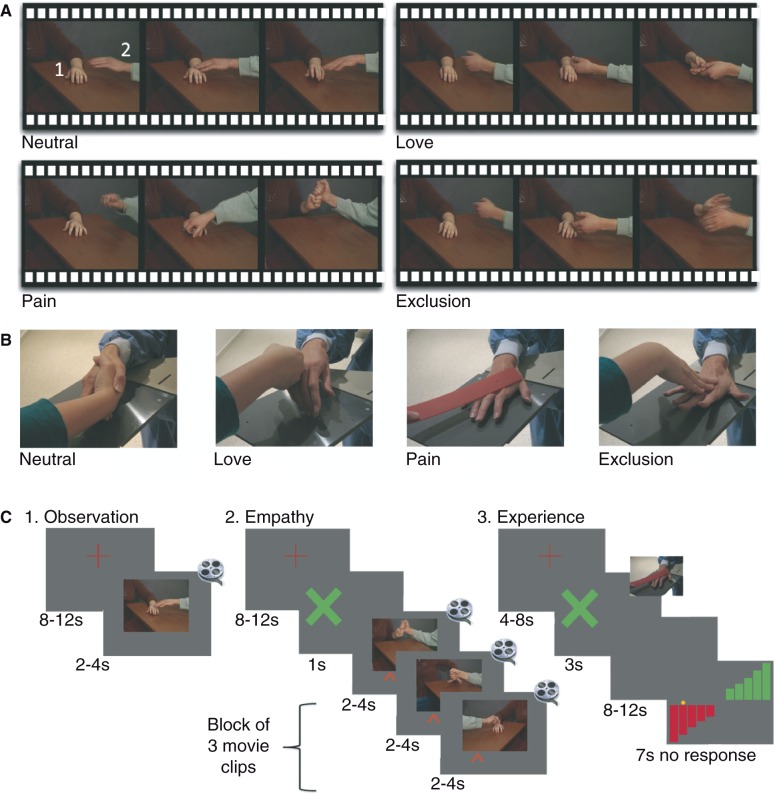
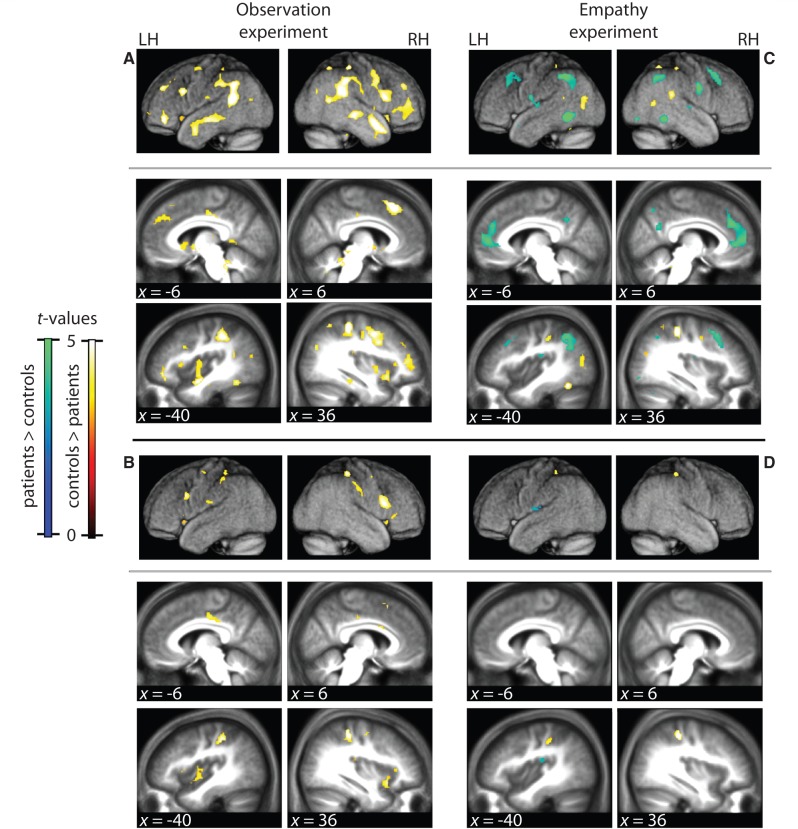
Psychopathy is a personality disorder associated with a profound lack of empathy. Neuroscientists have associated empathy and its interindividual variation with how strongly participants activate brain regions involved in their own actions, emotions and sensations while viewing those of others. Here we compared brain activity of 18 psychopathic offenders with 26 control subjects while viewing video clips of emotional hand interactions and while experiencing similar interactions. Brain regions involved in experiencing these interactions were not spontaneously activated as strongly in the patient group while viewing the video clips. However, this group difference was markedly reduced when we specifically instructed participants to feel with the actors in the videos. Our results suggest that psychopathy is not a simple incapacity for vicarious activations but rather reduced spontaneous vicarious activations co-existing with relatively normal deliberate counterparts.
Overview
The claims and statistics of this paper haven’t been checked yet.
Run the check — free, no account needed. It reads the open-access text and checks the sources it cites.
Integrity signals
Registry
Cites
Statistics
Figures
Verification
Claims the paper makes
The claims and statistics of this paper haven’t been checked yet.
Run the check — free, no account needed. It reads the open-access text and checks the sources it cites.
Claims other papers make about this one
Each is checked against this paper’s own text: does it say what the citing paper says it does?
In the citing paper
“In line with such independent functions, selective impairments in empathy or ToM have been observed in different psychopathologies such as autism and psychopathy.”
From On the interaction of social affect and cognition: empathy, compassion and theory of mind (2018) · cites this paper as [36]
Self-check
Percentages, sums and reported differences re-computed from the paper’s own numbers.
The self-check needs the paper’s full text.
Citations
Cites
Maldjian, J. A., Laurienti, P. J., Kraft, R., & Burdette, J. H. (2003) · NeuroImage · doi:10.1016/s1053-8119(03)00169-1 · Cited by 5,066 · cited 2×
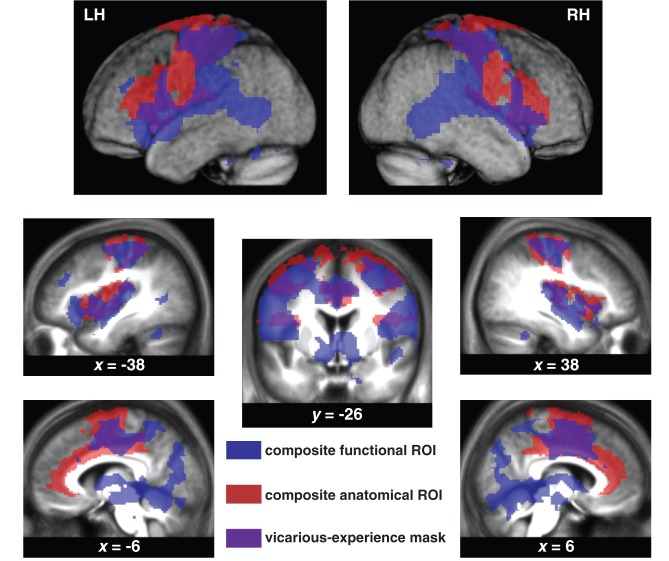
“, 2007) or the AAL atlas of the WFU Pickatlas (Maldjian et al., 2003) for regions not yet included in the Anatomy ToolBox and then combined them into a single composite anatomical region of interest using a logical ‘OR’ (Fig.”
Method(1998) · Cited by 4,172
Empathy for Pain Involves the Affective but not Sensory Components of Pain
Singer, T., Seymour, B., O'Doherty, J., Kaube, H., Dolan, R. J., & Frith, C. D. (2004) · Science · doi:10.1126/science.1093535 · Cited by 3,929
Meeting of minds: the medial frontal cortex and social cognition
Amodio, D. M., & Frith, C. D. (2006) · Nature Reviews Neuroscience · doi:10.1038/nrn1884 · Cited by 3,782 · cited 1×
“…in regions (outside the region of interest), associated with conscious menta- lizing (including the medial prefrontal cortex and the temporal pole) (Amodio and Frith, 2006; Van Overwalle and Baetens, 2009), and deliberate reappraisal (dorsolateral prefrontal cortex and angular gyrus, Ochsner et…”
BackgroundBoth of Us Disgusted in My Insula
Wicker, B., Keysers, C., Plailly, J., Royet, J.-P., Gallese, V., & Rizzolatti, G. (2003) · Neuron · doi:10.1016/s0896-6273(03)00679-2 · Cited by 2,185
Misunderstanding analysis of covariance.
Miller, G. A., & Chapman, J. P. (2001) · Journal of Abnormal Psychology · doi:10.1037/0021-843x.110.1.40 · Cited by 2,136 · cited 1×
“Unfortunately, as these variables were highly correlated with the factor Group [e.g. r(Group, Substance abuse) = 0.86], disentangling their contribution through inclusion of nuisance covariates in our analyses is impossible (Miller and Chapman, 2001).”
BackgroundInfluentialOchsner, K. N., Ray, R. D., Cooper, J. C., Robertson, E. R., Chopra, S., Gabrieli, J. D. E., & Gross, J. J. (2004) · NeuroImage · doi:10.1016/j.neuroimage.2004.06.030 · Cited by 2,113 · cited 1×
“…the region of interest), associated with conscious menta- lizing (including the medial prefrontal cortex and the temporal pole) (Amodio and Frith, 2006; Van Overwalle and Baetens, 2009), and deliberate reappraisal (dorsolateral prefrontal cortex and angular gyrus, Ochsner et al., 2004).”
BackgroundLamm, C., Decety, J., & Singer, T. (2011) · NeuroImage · doi:10.1016/j.neuroimage.2010.10.014 · Cited by 2,016 · cited 3×
“…activations in brain regions (insula and cin- gulate cortex) normally associated with feeling similar emotions oneself (Bastiaansen et al., 2009; Lamm et al., 2011), and wit- nessing what others do and sense recruits one’s own motor and somatosensory cortices (Pineda, 2008; Keysers and…”
BackgroundMethodThe empathic brain: how, when and why?
de Vignemont, F., & Singer, T. (2006) · Trends in Cognitive Sciences · doi:10.1016/j.tics.2006.08.008 · Cited by 1,846
Empathic neural responses are modulated by the perceived fairness of others
Singer, T., Seymour, B., O'Doherty, J. P., Stephan, K. E., Dolan, R. J., & Frith, C. D. (2006) · Nature · doi:10.1038/nature04271 · Cited by 1,726 · cited 2×
“Those defined using the AAL included the insula and the anterior/mid cingulate (Wicker et al., 2003; Singer et al., 2004, 2006; Jabbi et al., 2007; Bastiaansen et al., 2009; Lamm et al., 2011).”
Method
Research works printed but not linked: 4
- Hare, 1991, The Hare psychopathy checklist-revised
- Hare, 2001, De Psychopathie Checklist revised
- Lord, 1999, Autism diagnostic observation schedule. Manual
- Luteijn, 2004, GIT 2: Groninger intelligentie test 2
Cited by
Sorted by citations
Empathy: Gender effects in brain and behavior
Christov-Moore, L., Simpson, E. A., Coudé, G., Grigaityte, K., Iacoboni, M., & Ferrari, P. F. (2014) · Neuroscience & Biobehavioral Reviews · doi:10.1016/j.neubiorev.2014.09.001 · Cited by 1,137
“…instructed to be empathetic (i.e., under effortful control), they are capable of exhibiting significantly higher levels of empathy (Gillespie et al., 2014; Meffert et al., 2013; Senju et al., 2009; related, spontaneous vs. deliberate mimicry in autism: McIntosh et al., 2006; Oberman et al., 2009).”
BackgroundZaki, J. (2014) · Psychological Bulletin · doi:10.1037/a0037679 · Cited by 923
Clinical assessment of social cognitive function in neurological disorders
Henry, J. D., von Hippel, W., Molenberghs, P., Lee, T., & Sachdev, P. S. (2016) · Nature Reviews Neurology · doi:10.1038/nrneurol.2015.229 · Cited by 488
On the interaction of social affect and cognition: empathy, compassion and theory of mind
Preckel, K., Kanske, P., & Singer, T. (2018) · Current Opinion in Behavioral Sciences · doi:10.1016/j.cobeha.2017.07.010 · Cited by 348
“In psychopathy or chronic aggression, in contrast, ToM is intact, but the propensity to empathize with others is reduced [36,37].”
Tusche, A., Böckler, A., Kanske, P., Trautwein, F.-M., & Singer, T. (2016) · The Journal of Neuroscience · doi:10.1523/jneurosci.3392-15.2016 · Cited by 309
“…frequently display impaired perspective taking (Baron-Cohen et al., 1985; Hoffmann et al., 2015) but not necessarily impaired empathy (Silani et al., 2008; Bird et al., 2010), whereas psychopaths often lack empathy but are not impaired in perspective taking (Blair, 2008; Meffert et al., 2013).”
BackgroundInfluential
Metadata
- Authors
- Meffert, H., Gazzola, V., den Boer, J. A., Bartels, A. A. J., & Keysers, C.
- Affiliations
- Netherlands Institute for Neuroscience (NL)
- Corresponding author
- Keysers, Christian
- Venue
- Brain
- Publisher
- Oxford University Press (OUP)
- Published
- 2013-07-23
- Volume
- 136
- Issue
- 8
- Pages
- 2550-2562
- ISSN
- 0006-8950 (ISSN-L)
- 1460-2156
- PMC
- PMC3722356
- OpenAlex
- W2171909033
- Cited by
- 318
- References
- 75
- Citations by year
- 2026: 9 · 2025: 15 · 2024: 19 · 2023: 15 · 2022: 50 · 2021: 20 · 2020: 25 · 2019: 28 · 2018: 32 · 2017: 31 · 2016: 25 · 2015: 26 · 2014: 21 · 2013: 1
- FWCI
- 27.04
- Type
- journal article
- Language
- en
- Open access
- hybrid
- doi.org
- Licence
- cc-by-nc
- Locations
- Brain (publishedVersion, cc-by-nc)
- Europe PMC (PubMed Central) (publishedVersion, cc-by-nc)
- PubMed Central (publishedVersion, cc-by-nc)
- PubMed (publishedVersion)
- KNAW Research Portal (The Royal Netherlands Academy of Arts and Sciences) (publishedVersion, other-oa)
- KNAW research portal (Royal Academy of Art and Sciences (KNAW)) (publishedVersion, other-oa)
- Data Archiving and Networked Services (DANS) (submittedVersion, other-oa)
- University of Groningen research database (University of Groningen / Centre for Information Technology) (submittedVersion)
- Funders
- Nederlandse Organisatie voor Wetenschappelijk Onderzoek (452-04-305, 451-09-006)
- Topics
- Social Sciences › Psychology › Clinical Psychology › Psychopathy, Forensic Psychiatry, Sexual Offending
- Social Sciences › Psychology › Social Psychology › Action Observation and Synchronization
- Life Sciences › Neuroscience › Cognitive Neuroscience › Neural and Behavioral Psychology Studies
- Keywords
- psychopathy, empathy, spontaneous activation, video viewing, psychopathic offenders, neural basis of empathy, individual differences
- MeSH terms
- Adolescent, Adult, Antisocial Personality Disorder, Brain, Empathy, Humans, Magnetic Resonance Imaging, Male, Middle Aged, Social Perception, Criminals
About these checks
Registry, retraction, Cites and statistics results are computed, not judged, with one exception: a printed reference that no index lists is read once by a model before it counts as a citation error. Claims are extracted by a model and kept only when their quote appears verbatim in the text; each cited source is then checked, with a model’s help, for whether it says what the claim relies on. Those verdicts can be wrong — read the claim’s quote and the cited source before relying on one.
Statistics and arithmetic are recomputed, not judged.
Confidence bands are shown only for fields calibrated on our annotated test set. None is calibrated yet, so no band is shown.
What counts as a claim ›How we measure confidence ›How we check this ›
Are you an author, or do you see a problem with this page? Request a review
