

The DOI matches its Crossref record; 75 of the 75 references it cites were found in a registry or an index.
Reduced spontaneous but relatively normal deliberate vicarious representations in psychopathy
Open accessAbstract
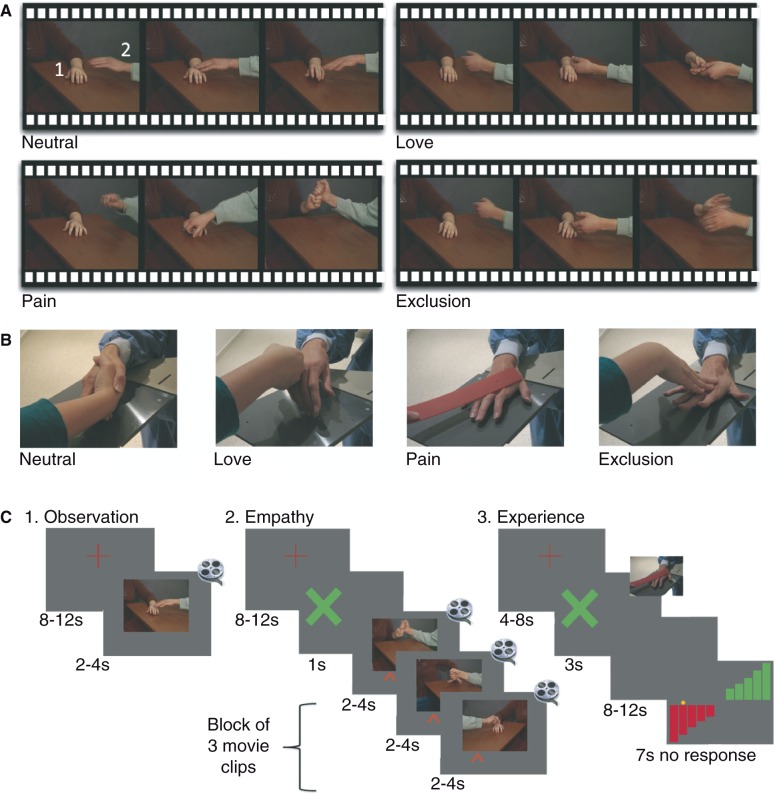
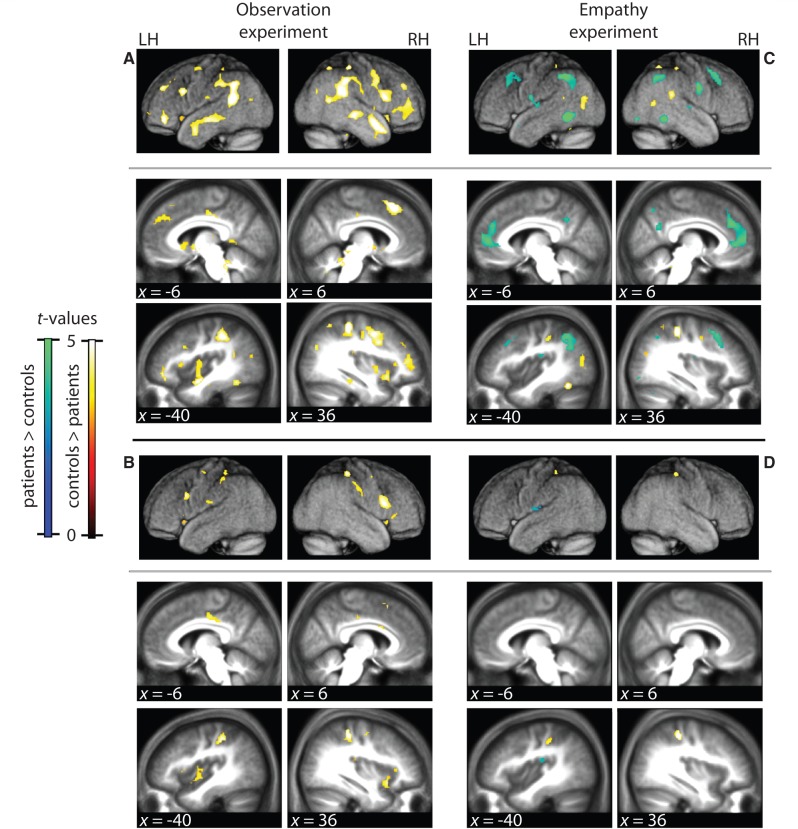
Psychopathy is a personality disorder associated with a profound lack of empathy. Neuroscientists have associated empathy and its interindividual variation with how strongly participants activate brain regions involved in their own actions, emotions and sensations while viewing those of others. Here we compared brain activity of 18 psychopathic offenders with 26 control subjects while viewing video clips of emotional hand interactions and while experiencing similar interactions. Brain regions involved in experiencing these interactions were not spontaneously activated as strongly in the patient group while viewing the video clips. However, this group difference was markedly reduced when we specifically instructed participants to feel with the actors in the videos. Our results suggest that psychopathy is not a simple incapacity for vicarious activations but rather reduced spontaneous vicarious activations co-existing with relatively normal deliberate counterparts.
Overview
The claims and statistics of this paper haven’t been checked yet.
Run the check — free, no account needed. It reads the open-access text and checks the sources it cites.
Integrity signals
Registry
Cites
Statistics
Figures
Verification
Claims the paper makes
The claims and statistics of this paper haven’t been checked yet.
Run the check — free, no account needed. It reads the open-access text and checks the sources it cites.
Claims other papers make about this one
Each is checked against this paper’s own text: does it say what the citing paper says it does?
In the citing paper
“In line with such independent functions, selective impairments in empathy or ToM have been observed in different psychopathologies such as autism and psychopathy.”
From On the interaction of social affect and cognition: empathy, compassion and theory of mind (2018) · cites this paper as [36]
Self-check
Percentages, sums and reported differences re-computed from the paper’s own numbers.
The self-check needs the paper’s full text.
Citations
Cites
Maldjian, J. A., Laurienti, P. J., Kraft, R., & Burdette, J. H. (2003) · NeuroImage · doi:10.1016/s1053-8119(03)00169-1 · Cited by 5,066 · cited 2×
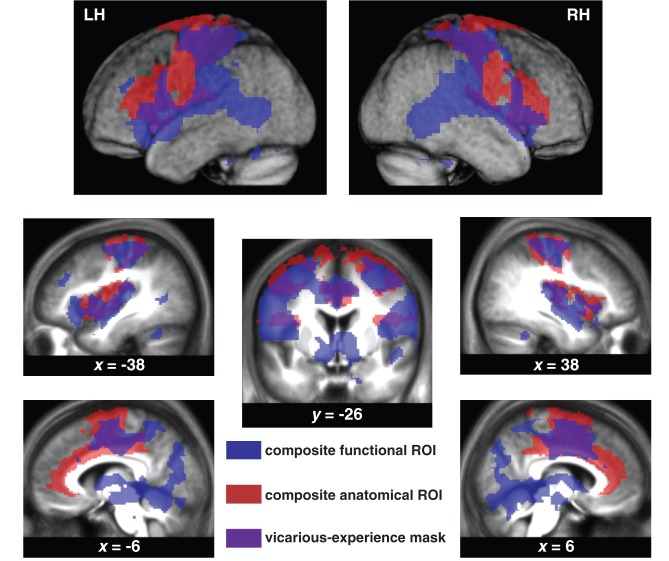
“, 2007) or the AAL atlas of the WFU Pickatlas (Maldjian et al., 2003) for regions not yet included in the Anatomy ToolBox and then combined them into a single composite anatomical region of interest using a logical ‘OR’ (Fig.”
Method(1998) · Cited by 4,172
Empathy for Pain Involves the Affective but not Sensory Components of Pain
Singer, T., Seymour, B., O'Doherty, J., Kaube, H., Dolan, R. J., & Frith, C. D. (2004) · Science · doi:10.1126/science.1093535 · Cited by 3,929
Meeting of minds: the medial frontal cortex and social cognition
Amodio, D. M., & Frith, C. D. (2006) · Nature Reviews Neuroscience · doi:10.1038/nrn1884 · Cited by 3,782 · cited 1×
“…in regions (outside the region of interest), associated with conscious menta- lizing (including the medial prefrontal cortex and the temporal pole) (Amodio and Frith, 2006; Van Overwalle and Baetens, 2009), and deliberate reappraisal (dorsolateral prefrontal cortex and angular gyrus, Ochsner et…”
BackgroundBoth of Us Disgusted in My Insula
Wicker, B., Keysers, C., Plailly, J., Royet, J.-P., Gallese, V., & Rizzolatti, G. (2003) · Neuron · doi:10.1016/s0896-6273(03)00679-2 · Cited by 2,185
Misunderstanding analysis of covariance.
Miller, G. A., & Chapman, J. P. (2001) · Journal of Abnormal Psychology · doi:10.1037/0021-843x.110.1.40 · Cited by 2,136 · cited 1×
“Unfortunately, as these variables were highly correlated with the factor Group [e.g. r(Group, Substance abuse) = 0.86], disentangling their contribution through inclusion of nuisance covariates in our analyses is impossible (Miller and Chapman, 2001).”
BackgroundInfluentialOchsner, K. N., Ray, R. D., Cooper, J. C., Robertson, E. R., Chopra, S., Gabrieli, J. D. E., & Gross, J. J. (2004) · NeuroImage · doi:10.1016/j.neuroimage.2004.06.030 · Cited by 2,113 · cited 1×
“…the region of interest), associated with conscious menta- lizing (including the medial prefrontal cortex and the temporal pole) (Amodio and Frith, 2006; Van Overwalle and Baetens, 2009), and deliberate reappraisal (dorsolateral prefrontal cortex and angular gyrus, Ochsner et al., 2004).”
BackgroundLamm, C., Decety, J., & Singer, T. (2011) · NeuroImage · doi:10.1016/j.neuroimage.2010.10.014 · Cited by 2,016 · cited 3×
“…activations in brain regions (insula and cin- gulate cortex) normally associated with feeling similar emotions oneself (Bastiaansen et al., 2009; Lamm et al., 2011), and wit- nessing what others do and sense recruits one’s own motor and somatosensory cortices (Pineda, 2008; Keysers and…”
BackgroundMethodThe empathic brain: how, when and why?
de Vignemont, F., & Singer, T. (2006) · Trends in Cognitive Sciences · doi:10.1016/j.tics.2006.08.008 · Cited by 1,846
Empathic neural responses are modulated by the perceived fairness of others
Singer, T., Seymour, B., O'Doherty, J. P., Stephan, K. E., Dolan, R. J., & Frith, C. D. (2006) · Nature · doi:10.1038/nature04271 · Cited by 1,726 · cited 2×
“Those defined using the AAL included the insula and the anterior/mid cingulate (Wicker et al., 2003; Singer et al., 2004, 2006; Jabbi et al., 2007; Bastiaansen et al., 2009; Lamm et al., 2011).”
Method
Research works printed but not linked: 4
- Hare, 1991, The Hare psychopathy checklist-revised
- Hare, 2001, De Psychopathie Checklist revised
- Lord, 1999, Autism diagnostic observation schedule. Manual
- Luteijn, 2004, GIT 2: Groninger intelligentie test 2
Cited by
Sorted by citations
Empathy: Gender effects in brain and behavior
Christov-Moore, L., Simpson, E. A., Coudé, G., Grigaityte, K., Iacoboni, M., & Ferrari, P. F. (2014) · Neuroscience & Biobehavioral Reviews · doi:10.1016/j.neubiorev.2014.09.001 · Cited by 1,137
“…instructed to be empathetic (i.e., under effortful control), they are capable of exhibiting significantly higher levels of empathy (Gillespie et al., 2014; Meffert et al., 2013; Senju et al., 2009; related, spontaneous vs. deliberate mimicry in autism: McIntosh et al., 2006; Oberman et al., 2009).”
BackgroundZaki, J. (2014) · Psychological Bulletin · doi:10.1037/a0037679 · Cited by 923
Clinical assessment of social cognitive function in neurological disorders
Henry, J. D., von Hippel, W., Molenberghs, P., Lee, T., & Sachdev, P. S. (2016) · Nature Reviews Neurology · doi:10.1038/nrneurol.2015.229 · Cited by 488
On the interaction of social affect and cognition: empathy, compassion and theory of mind
Preckel, K., Kanske, P., & Singer, T. (2018) · Current Opinion in Behavioral Sciences · doi:10.1016/j.cobeha.2017.07.010 · Cited by 348
“In psychopathy or chronic aggression, in contrast, ToM is intact, but the propensity to empathize with others is reduced [36,37].”
Tusche, A., Böckler, A., Kanske, P., Trautwein, F.-M., & Singer, T. (2016) · The Journal of Neuroscience · doi:10.1523/jneurosci.3392-15.2016 · Cited by 309
“…frequently display impaired perspective taking (Baron-Cohen et al., 1985; Hoffmann et al., 2015) but not necessarily impaired empathy (Silani et al., 2008; Bird et al., 2010), whereas psychopaths often lack empathy but are not impaired in perspective taking (Blair, 2008; Meffert et al., 2013).”
BackgroundInfluentialThe role of shared neural activations, mirror neurons, and morality in empathy – A critical comment
Lamm, C., & Majdandžić, J. (2015) · Neuroscience Research · doi:10.1016/j.neures.2014.10.008 · Cited by 252
“…the exact way in which this instructing should be devised is still somewhat controversial , with different studies yielding somewhat different results (Decety et al., 2013a, 2013b; Keysers and Gazzola, 2014b for review; Lockwood et al., 2013a, 2014; Meffert et al., 2013; Pfabigan et al., 2014 ).”
InfluentialThe anatomy of empathy: Vicarious experience and disorders of social cognition
Lockwood, P. L. (2016) · Behavioural Brain Research · doi:10.1016/j.bbr.2016.05.048 · Cited by 274
Lamm, C., Bukowski, H., & Silani, G. (2016) · Philosophical Transactions of the Royal Society B: Biological Sciences · doi:10.1098/rstb.2015.0083 · Cited by 240
Reducing Social Stress Elicits Emotional Contagion of Pain in Mouse and Human Strangers
Martin, L. J., Hathaway, G. A., Isbester, K., Mirali, S., Acland, E. L., Niederstrasser, N. G., Slepian, P. M., Trost, Z., Bartz, J. A., Sapolsky, R. M., et al. (2015) · Current Biology · doi:10.1016/j.cub.2014.11.028 · Cited by 246
“Most existing studies of pain empathy in humans have involved visual stimuli (pictures, video, or arbitrary cues) presented to a single participant [22–27].”
BackgroundEmotional Mirror Neurons in the Rat’s Anterior Cingulate Cortex
Carrillo, M., Han, Y., Migliorati, F., Liu, M., Gazzola, V., & Keysers, C. (2019) · Current Biology · doi:10.1016/j.cub.2019.03.024 · Cited by 238
The Evolution and Social Dynamics of Compassion
Gilbert, P. (2015) · Social and Personality Psychology Compass · doi:10.1111/spc3.12176 · Cited by 250
The Anatomy of Suffering: Understanding the Relationship between Nociceptive and Empathic Pain
Zaki, J., Wager, T. D., Singer, T., Keysers, C., & Gazzola, V. (2016) · Trends in Cognitive Sciences · doi:10.1016/j.tics.2016.02.003 · Cited by 220
Kanske, P., Böckler, A., Trautwein, F.-M., Parianen Lesemann, F. H., & Singer, T. (2016) · Social Cognitive and Affective Neuroscience · doi:10.1093/scan/nsw052 · Cited by 209
“responding (Blair, 2008), at least if empathic responding is not explicitly encouraged (Meffert et al., 2013).”
BackgroundIs There a ‘Social’ Brain? Implementations and Algorithms
Lockwood, P. L., Apps, M. A. J., & Chang, S. W. C. (2020) · Trends in Cognitive Sciences · doi:10.1016/j.tics.2020.06.011 · Cited by 218
“Evidence supporting this comes from one study that compared the neural responses of individuals with psychopathy and non-psychopathic participants while they viewed video clips of emotional hand interactions [90].”
ResultCommon and distinct neural correlates of personal and vicarious reward: A quantitative meta-analysis
Morelli, S. A., Sacchet, M. D., & Zaki, J. (2014) · NeuroImage · doi:10.1016/j.neuroimage.2014.12.056 · Cited by 213
Brito, S. A. D., Forth, A. E., Baskin-sommers, A. R., Brazil, I. A., Kimonis, E. R., Pardini, D. A., Frick, P. J., Blair, J., & Viding, E. M. (2021) · Nature Reviews Disease Primers · doi:10.1038/s41572-021-00282-1 · Cited by 205
Imaging empathy and prosocial emotions
Lamm, C., Rütgen, M., & Wagner, I. C. (2017) · Neuroscience Letters · doi:10.1016/j.neulet.2017.06.054 · Cited by 204
Parsing fear: A reassessment of the evidence for fear deficits in psychopathy.
Hoppenbrouwers, S. S., Bulten, B. H., & Brazil, I. A. (2016) · Psychological Bulletin · doi:10.1037/bul0000040 · Cited by 200
Stietz, J., Jauk, E., Krach, S., & Kanske, P. (2019) · Frontiers in Psychiatry · doi:10.3389/fpsyt.2019.00126 · Cited by 204
“Psychopathic individuals show similar brain activation as controls in the anterior insula and anterior cingulate cortex, but only deliberately, not spontaneously (90).”
BackgroundDissociating the ability and propensity for empathy
Keysers, C., & Gazzola, V. (2014) · Trends in Cognitive Sciences · doi:10.1016/j.tics.2013.12.011 · Cited by 172
“Interestingly, amygdala responses are also often abnormal in psychopathy unless attention is directed to emotions [4, 6]).”
BackgroundMethodInfluentialDoes online technology make us more or less sociable? A preliminary review and call for research
Waytz, A., & Gray, K. (2018) · Perspectives on Psychological Science · doi:10.1177/1745691617746509 · Cited by 157
“…a study showed that when psychopaths viewed emotion-laden videos of others, they generally showed less empathy-related brain activation but showed normal levels of empathy when explicitly instructed to empathize with the people in the videos (Meffert, Gazzola, den Boer, Bartels, & Keysers, 2013).”
BackgroundTowards understanding atypical social affiliation in psychopathy
Viding, E. M., & McCrory, E. J. P. (2019) · The Lancet Psychiatry · doi:10.1016/s2215-0366(19)30049-5 · Cited by 153
Differential benefits of mental training types for attention, compassion, and theory of mind
Trautwein, F.-M., Kanske, P., Böckler, A., & Singer, T. (2020) · Cognition · doi:10.1016/j.cognition.2019.104039 · Cited by 139
On the deep structure of social affect: Attitudes, emotions, sentiments, and the case of “contempt”
Gervais, M. M., & Fessler, D. M. T. (2016) · Behavioral and Brain Sciences · doi:10.1017/s0140525x16000352 · Cited by 135
Baskin-sommers, A. R., Curtin, J. J., & Newman, J. P. (2015) · Clinical Psychological Science · doi:10.1177/2167702614560744 · Cited by 139
Marsh, A. A. (2018) · Current Opinion in Behavioral Sciences · doi:10.1016/j.cobeha.2017.12.016 · Cited by 122
Psychopaths fail to automatically take the perspective of others
Drayton, L. A., Santos, L. R., & Baskin-sommers, A. R. (2018) · Proceedings of the National Academy of Sciences · doi:10.1073/pnas.1721903115 · Cited by 119
“Our finding of reduced altercentric interference in psychopathic individuals is especially interesting, given that psychopathy is associated with abnormalities in selective attention that prioritize the processing of goal-relevant information and limits the processing of goal-irrelevant information (43, 44).”
BackgroundThe Development and Validation of the Empathy Components Questionnaire (ECQ)
Batchelder, L., Brosnan, M., & Ashwin, C. (2017) · PLoS ONE · doi:10.1371/journal.pone.0169185 · Cited by 117
Impaired integration in psychopathy: A unified theory of psychopathic dysfunction.
Hamilton, R. K. B., Racer, K. H., & Newman, J. P. (2015) · Psychological Review · doi:10.1037/a0039703 · Cited by 116
“However, top-down mobilization of resources would alter connectivity (see Gordon, Stollstorff, Devaney , Bean, & Vaidya, 2012) such that deliberate attempts to activate this circuitry would be successful (see Meffert et al., 2013).”
BackgroundSocio-Cognitive Phenotypes Differentially Modulate Large-Scale Structural Covariance Networks
Valk, S. L., Bernhardt, B. C., Böckler, A., Trautwein, F., Kanske, P., & Singer, T. (2016) · Cerebral Cortex · doi:10.1093/cercor/bhv319 · Cited by 113
Moving beyond Stereotypes of Empathy
Zaki, J. (2016) · Trends in Cognitive Sciences · doi:10.1016/j.tics.2016.12.004 · Cited by 103
“Even individuals with psychopathy can will themselves to vicariously share others’ pain, in the process eliciting patterns of brain activity that closely approximate those of non-psychopathic individuals [4].”
Altered Resting-State Functional Connectivity in Cortical Networks in Psychopathy
Philippi, C. L., Pujara, M. S., Motzkin, J. C., Newman, J. P., Kiehl, K. A., & Koenigs, M. R. (2015) · Journal of Neuroscience · doi:10.1523/jneurosci.5010-14.2015 · Cited by 106
Yildirim, B. O., & Derksen, J. J. L. (2015) · Aggression and Violent Behavior · doi:10.1016/j.avb.2015.05.001 · Cited by 124
Harm to Others Acts as a Negative Reinforcer in Rats
Hernandez-Lallement, J., Attah, A. T., Soyman, E., Pinhal, C. M., Gazzola, V., & Keysers, C. (2020) · Current Biology · doi:10.1016/j.cub.2020.01.017 · Cited by 95
“Accordingly, it has been argued that psychiatric disorders characterized by antisocial behavior [2, 4] might stem from malfunctioning or biased vicarious emotions [5, 6].”
BackgroundThe causal role of the somatosensory cortex in prosocial behaviour
Gallo, S., Paracampo, R., Müller‐Pinzler, L., Severo, M. C., Blömer, L. A., Fernandes-Henriques, C., Henschel, A., Lammes, B. K., Maskaljunas, T., Suttrup, J., et al. (2018) · eLife · doi:10.7554/elife.32740 · Cited by 84
The social mind: disentangling affective and cognitive routes to understanding others
Kanske, P. (2018) · Interdisciplinary Science Reviews · doi:10.1080/03080188.2018.1453243 · Cited by 99
“contrast, show empathy deficits (Meffert et al. 2013) without concurrent changes in ToM (Winter et al.”
BackgroundMcAuliffe, W. H. B., Carter, E. C., Berhane, J., Snihur, A., & McCullough, M. E. (2019) · Personality and Social Psychology Review · doi:10.1177/1088868319887599 · Cited by 92
Klapwijk, E., Aghajani, M., Colins, O., Marijnissen, G., Popma, A., van Lang, N. V., van der Wee, N. V. D., & Vermeiren, R. (2016) · Journal of Child Psychology and Psychiatry and Allied Disciplines · doi:10.1111/jcpp.12498 · Cited by 76
Effort shapes social cognition and behaviour: A neuro-cognitive framework
Contreras-Huerta, L. S., Pisauro, M. A., & Apps, M. A. J. (2020) · Neuroscience & Biobehavioral Reviews · doi:10.1016/j.neubiorev.2020.08.003 · Cited by 91
When is narcissism associated with low empathy? A meta-analytic review
Urbonaviciute, G., & Hepper, E. G. (2020) · Journal of Research in Personality · doi:10.1016/j.jrp.2020.104036 · Cited by 97
Oxytocin reduces neural activity in the pain circuitry when seeing pain in others
Bos, P. A., Montoya, E. R., Hermans, E. J., Keysers, C., & van Honk, J. (2015) · NeuroImage · doi:10.1016/j.neuroimage.2015.03.049 · Cited by 72
“Psychopathic individuals on the other hand seem to have preserved cognitive but impaired spontaneous affective empathy (Decety et al., 2013; Meffert et al., 2013).”
BackgroundSchadenfreude deconstructed and reconstructed: A tripartite motivational model
Wang, S., Lilienfeld, S. O., & Rochat, P. (2018) · New Ideas in Psychology · doi:10.1016/j.newideapsych.2018.09.002 · Cited by 88
Neural mechanisms necessary for empathy-related phenomena across species
Paradiso, E., Gazzola, V., & Keysers, C. (2021) · Current Opinion in Neurobiology · doi:10.1016/j.conb.2021.02.005 · Cited by 78
Buon, M., Seara‐Cardoso, A., & Viding, E. M. (2016) · Psychonomic Bulletin & Review · doi:10.3758/s13423-016-1042-5 · Cited by 82
Functional neural correlates of psychopathy: a meta-analysis of MRI data
Deming, P., & Koenigs, M. R. (2020) · Translational Psychiatry · doi:10.1038/s41398-020-0816-8 · Cited by 81
“Meffert et al.(78) 46 PCL-R Viewing interacting hands 76 33”
BackgroundIndividual differences in empathy are associated with apathy-motivation
Lockwood, P. L., Ang, Y., Husain, M., & Crockett, M. J. (2017) · Scientific Reports · doi:10.1038/s41598-017-17415-w · Cited by 71
Functional Neuroscience of Psychopathic Personality in Adults
Seara‐Cardoso, A., & Viding, E. M. (2014) · Journal of Personality · doi:10.1111/jopy.12113 · Cited by 73
“Interestingly, Meffert et al. (2013) also reported that when participants were explicitly instructed to “empathize” with the actors in the video, group differences in activation related to psychopathy were reduced.”
BackgroundDugre, J. R., Raduà, J., Carignan-Allard, M., Dumais, A., Rubia, K., & Potvin, S. (2020) · Neuroscience & Biobehavioral Reviews · doi:10.1016/j.neubiorev.2020.09.013 · Cited by 75
The Empathic Brain of Psychopaths: From Social Science to Neuroscience in Empathy
van Dongen, J. D. M. (2020) · Frontiers in Psychology · doi:10.3389/fpsyg.2020.00695 · Cited by 79
Valdespino, A., Antezana, L., Ghane, M., & Richey, J. A. (2017) · Frontiers in Psychology · doi:10.3389/fpsyg.2017.02234 · Cited by 74
“High psychopathy individuals also showed attenuated insula response while identifying a perpetrator’s emotional state (Decety et al., 2015), and when observing affection or exclusion toward others (Meffert et al., 2013).”
Seara‐Cardoso, A., Sebastian, C. L., Viding, E. M., & Roiser, J. P. (2015) · Social Neuroscience · doi:10.1080/17470919.2015.1044672 · Cited by 75
“…findings are consistent with most of the prior work investigating empathy for pain in adults with high levels of psychopathy (Decety et al., 2013; Meffert et al., 2013), in adults with subclinical levels of psychopathy (Seara-Cardoso, Viding, Lickley, & Sebastian, 2015) and in children with high…”
Models, Mechanisms and Moderators Dissociating Empathy and Theory of Mind
Kanske, P., Böckler, A., & Singer, T. (2015) · Current Topics in Behavioral Neurosciences · doi:10.1007/7854_2015_412 · Cited by 64
“1996), spontaneous empathic responding is largely reduced (Meffert et al. 2013).”
BackgroundMolenberghs, P., Bosworth, R., Nott, Z. E., Louis, W. R., Smith, J. R., Amiot, C. E., Vohs, K. D., & Decety, J. (2014) · Human Brain Mapping · doi:10.1002/hbm.22527 · Cited by 65
“Previous research has shown that participants who show high levels of psychopathy, show less activation in regions typically associated with empathy, when watching others being hurt or in distress [Decety et al., 2006, 2009; Lockwood et al., 2013; Marsh et al., 2013; Meffert et al., 2013].”
BackgroundAffective Empathy Differs in Male Violent Offenders With High- and Low-Trait Psychopathy
Pfabigan, D. M., Seidel, E., Wucherer, A. M., Keckeis, K., Derntl, B., & Lamm, C. (2014) · Journal of Personality Disorders · doi:10.1521/pedi_2014_28_145 · Cited by 64
“Thus, based on the present data, one might hypothesize that inmates display frontal dysregulation associated with poor behavior control and impulsivity when confronted with distress cues, as recently suggested (Decety, Skelly, et al., 2013; Meffert et al., 2013).”
Backgroundvan Mulukom, V., Patterson, R. E., & van Elk, M. (2020) · Psychopharmacology · doi:10.1007/s00213-020-05568-y · Cited by 62
The importance of an exaggerated attention bottleneck for understanding psychopathy
Baskin-sommers, A. R., & Brazil, I. A. (2022) · Trends in Cognitive Sciences · doi:10.1016/j.tics.2022.01.001 · Cited by 63
“Psychopathic individuals did not exhibit similar neural responses to controls in their actual experience of pain when passively viewing the pain clips; however, psychopathic individuals showed similar neural responses to controls when instructed to imagine what the person was feeling or when physically experiencing th…”
BackgroundBrain Basis of Psychopathy in Criminal Offenders and General Population
Nummenmaa, L., Lukkarinen, L., Sun, L., Putkinen, V., Seppälä, K., Karjalainen, T., Karlsson, H. K., Hudson, M., Venetjoki, N., Salomaa, M., et al. (2021) · Cerebral Cortex · doi:10.1093/cercor/bhab072 · Cited by 60
“When viewing empathy-eliciting scenes, psychopathic individuals show significantly reduced frontocortical brain activity compared with healthy controls, consistent with their lowered care motivation (Decety et al. 2013; Meffert et al. 2013).”
BackgroundBidirectional cingulate-dependent danger information transfer across rats
Han, Y., Bruls, R., Soyman, E., Thomas, R. M., Pentaraki, V., Jelinek, N., Heinemans, M., Bassez, I., Verschooren, S., Pruis, I., et al. (2019) · PLoS Biology · doi:10.1371/journal.pbio.3000524 · Cited by 55
“323) or epoch × familiarity interaction (F[3,28] = 1.”
BackgroundMethodInfluentialNo feelings for me, no feelings for you: A meta-analysis on alexithymia and empathy in psychopathy
Burghart, M., & Mier, D. U. (2022) · Personality and Individual Differences · doi:10.1016/j.paid.2022.111658 · Cited by 58
Paracampo, R., Pirruccio, M., Costa, M., Borgomaneri, S., & Avenanti, A. (2018) · Neuropsychologia · doi:10.1016/j.neuropsychologia.2018.01.043 · Cited by 59
“It may reflect differences in spontaneous or strategic recruitment of visual, sensorimotor and cognitive mechanisms in EA (Meffert et al., 2013; Keysers and Gazzola, 2014) and such recruitment may vary as a function of task difficulty.”
Empathy and altruistic behavior in antisocial violent offenders with psychopathic traits
Mayer, S. V., Jusyte, A., Klimecki, O., & Schönenberg, M. (2018) · Psychiatry Research · doi:10.1016/j.psychres.2018.08.035 · Cited by 67
“, when psychopaths are explicitly instructed to empathize with others (Meffert et al., 2013).”
BackgroundSeara‐Cardoso, A., Queirós, A. N., Fernandes, E., Coutinho, J. F. P., & Neumann, C. S. (2019) · Journal of Personality Assessment · doi:10.1080/00223891.2019.1617297 · Cited by 58
The bad things we do because of empathy
Breithaupt, F. (2018) · Interdisciplinary Science Reviews · doi:10.1080/03080188.2018.1450928 · Cited by 55
“More recently, however, brain-imaging studies have revealed somewhat reduced but still empathetic patterns exhibited by psychopaths (Meffert et al. 2013; see also Decety et al. 2009).”
BackgroundViding, E. M., McCrory, E. J. P., & Seara‐Cardoso, A. (2014) · Current Biology · doi:10.1016/j.cub.2014.06.055 · Cited by 54
Towards a unified theory of emotional contagion in rodents—A meta-analysis
Hernandez-Lallement, J., Gómez-Sotres, P., & Carrillo, M. (2022) · Neuroscience & Biobehavioral Reviews · doi:10.1016/j.neubiorev.2020.09.010 · Cited by 53
“, 2012), and spontaneous vicarious perception (Meffert et al., 2013)) have been proposed to account for such social impairments, these theories have remained mostly speculative due to limited strategies for empirical testing.”
Neural responses to others’ pain vary with psychopathic traits in healthy adult males
Seara‐Cardoso, A., Viding, E. M., Lickley, R. A., & Sebastian, C. L. (2015) · Cognitive Affective & Behavioral Neuroscience · doi:10.3758/s13415-015-0346-7 · Cited by 58
“…responses in the brain regions typically recruited during empathic processing (i.e., AI, IFG, and mid/dACC), consistent with previous research based on individuals with extreme levels of psychopathic traits (Decety et al. 2013a, b; Lockwood et al., 2013; Marsh et al., 2013; Meffert et al., 2013).”
InfluentialKompier, N. F., Keysers, C., Gazzola, V., Lucassen, P. J., & Krugers, H. J. (2019) · Frontiers in Behavioral Neuroscience · doi:10.3389/fnbeh.2019.00143 · Cited by 53
Self-citationde Bildt, A. A., Sytema, S., Meffert, H., & Bastiaansen, J. A. (2015) · Journal of Autism and Developmental Disorders · doi:10.1007/s10803-015-2532-4 · Cited by 52
“The sample consisted of participants who applied for participation in two large neuroimaging studies into the neural basis of empathy (Bastiaansen et al. 2011b; Meffert et al. 2013).”
BackgroundMethodThe multidimensional representational space of observed socio-affective touch experiences
Masson, H. L., Plas, S. V. D., Daniëls, N., & de Beeck, H. O. (2018) · NeuroImage · doi:10.1016/j.neuroimage.2018.04.007 · Cited by 48
Empathy and Moral Understanding in Psychopathy
Maibom, H. L. (2022) · Oxford University Press eBooks · doi:10.1093/oxfordhb/9780198871712.013.41 · Cited by 49
Greater involvement of action simulation mechanisms in emotional vs cognitive empathy
Oliver, L. D., Vieira, J. B., Neufeld, R. W. J., Dziobek, I., & Mitchell, D. G. V. (2018) · Social Cognitive and Affective Neuroscience · doi:10.1093/scan/nsy013 · Cited by 55
“Interestingly, diminished spontaneous activity in action simulation regions, including the vPMC, during the observation of social hand interactions has been demonstrated in individuals with psychopathy (Meffert et al., 2013).”
BackgroundSocial neuroscience in psychiatry: unravelling the neural mechanisms of social dysfunction
Fett, A.-K. J., Shergill, S. S., & Krabbendam, L. (2014) · Psychological Medicine · doi:10.1017/s0033291714002487 · Cited by 50
“Three studies suggest that in individuals with PP the normal response in the empathy for pain network (including anterior insula, dorsal ACC and amygdala) is reduced when imagining the other in a painful situation (Decety et al. 2013a) or when simply watching interacting hands (Meffert et al. 2013).”
BackgroundInfluentialSome markers of mirroring appear intact in schizophrenia: evidence from mu suppression
Horan, W. P., Pineda, J. A., Wynn, J. K., Iacoboni, M., & Green, M. F. (2014) · Cognitive, Affective, & Behavioral Neuroscience · doi:10.3758/s13415-013-0245-8 · Cited by 47
“…mirroring, and borderline personality disorder is associated with selectively increased mirroring (Cheng et al., 2012; Chung et al., 2013; Dziobek et al., 2011; Iacoboni & Dapretto, 2006; Marsh et al., 2013; Meffert et al., 2013; Oberman et al., 2005; Perkins et al., 2010; Ripoll et al., 2013).”
Obeying orders reduces vicarious brain activation towards victims’ pain
Caspar, É. A., Ioumpa, K., Keysers, C., & Gazzola, V. (2020) · NeuroImage · doi:10.1016/j.neuroimage.2020.117251 · Cited by 50
The contribution of brain imaging to the understanding of psychopathy
Pujol, J., Harrison, B. J., Contreras‐Rodríguez, O., & Cardoner, N. (2018) · Psychological Medicine · doi:10.1017/s0033291718002507 · Cited by 52
“emotion-laden scenes (Decety et al., 2013b, 2015; Meffert et al., 2013), and emotional words (Contreras et al.”
BackgroundCapacity for upregulation of emotional processing in psychopathy: all you have to do is ask
Shane, M. S., & Groat, L. L. (2018) · Social Cognitive and Affective Neuroscience · doi:10.1093/scan/nsy088 · Cited by 46
“findings also dovetail with recent work from our laboratory (Arbuckle and Shane, 2017) and others (Meffert et al., 2013) that has shown an ability for high-psychopathy individuals to deliberately manifest vicarious responses for others.”
BackgroundResultBate, C., Boduszek, D., Dhingra, K., & Bale, C. (2014) · Journal of Forensic Psychiatry and Psychology · doi:10.1080/14789949.2014.943798 · Cited by 45
“…that psychopathic individuals struggle to recognise emotions in others (Blair et al., 2004), have an inability to feel emotions themselves (Meffert, Gazzola, den Boer, Bartels, & Keysers, 2013; Visser, Bay, Cook, & Myburgh, 2010), demonstrate less differentiated emotional responses to…”
Responsibility modulates pain-matrix activation elicited by the expressions of others in pain
Cui, F., Abdelgabar, A. R., Keysers, C., & Gazzola, V. (2015) · NeuroImage · doi:10.1016/j.neuroimage.2015.03.034 · Cited by 45
“That their activation is stronger in more empathic individuals (Singer et al., 2004) and weaker in psychopaths (Meffert et al., 2013) further supports their role in empathy.”
InfluentialEskenazi, P., Hartmann, F. G. H., & Rietdijk, W. J. R. (2016) · Accounting Organizations and Society · doi:10.1016/j.aos.2016.02.003 · Cited by 44
How reliable are amygdala findings in psychopathy? A systematic review of MRI studies
Deming, P., Heilicher, M. O., & Koenigs, M. R. (2022) · Neuroscience & Biobehavioral Reviews · doi:10.1016/j.neubiorev.2022.104875 · Cited by 53
Deming, P., Dargis, M. A., Haas, B. W., Brook, M. A., Jean Decety, A., Harenski, C. L., Kiehl, K. A., Koenigs, M. R., & Kosson, D. S. (2020) · NeuroImage · doi:10.1016/j.neuroimage.2020.117342 · Cited by 41
Burley, D. T., Gray, N. S., & Snowden, R. J. (2017) · PLoS ONE · doi:10.1371/journal.pone.0167436 · Cited by 52
Fu, G., Yu, Y., Ye, J., Zheng, Y., Li, W., Cui, N., & Wang, Q. (2022) · Journal of Affective Disorders · doi:10.1016/j.jad.2022.12.029 · Cited by 43
Increased similarity of neural responses to experienced and empathic distress in costly altruism
O’Connell, K., Brethel-Haurwitz, K. M., Rhoads, S. A., Cardinale, E. M., Vekaria, K. M., Robertson, E., Walitt, B. T., VanMeter, J. W., & Marsh, A. A. (2019) · Scientific Reports · doi:10.1038/s41598-019-47196-3 · Cited by 41
Unzipping empathy in psychopathy: Empathy and facial affect processing in psychopaths
Rijnders, R. J. P., Terburg, D., Bos, P. A., Kempes, M. M., & van Honk, J. (2021) · Neuroscience & Biobehavioral Reviews · doi:10.1016/j.neubiorev.2021.10.020 · Cited by 39
“In their fMRI study of psychopaths, Meffert et al. (2013) suggested that reduced empathy in psychopaths results from impaired stimulus driven, bottom-up attention to the emotions of others.”
BackgroundResultPsychopaths Show Enhanced Amygdala Activation during Fear Conditioning
Schultz, D. H., Balderston, N. L., Baskin-sommers, A. R., Larson, C. L., & Helmstetter, F. J. (2016) · Frontiers in Psychology · doi:10.3389/fpsyg.2016.00348 · Cited by 43
What Can Philosophers Learn from Psychopathy?
Maibom, H. L. (2018) · European journal of analytic philosophy · doi:10.31820/ejap.14.1.4 · Cited by 37
Elevated Psychopathy Scores Among Mixed Sexual Offenders
Brown, A. R., Dargis, M. A., Mattern, A. C., Tsonis, M. A., & Newman, J. P. (2015) · Criminal Justice and Behavior · doi:10.1177/0093854815575389 · Cited by 34
Biological correlates of psychopathy: a brief review
Debowska, A., Boduszek, D., Hyland, P., & Goodson, S. (2014) · Mental Health Review Journal · doi:10.1108/mhrj-10-2013-0034 · Cited by 33
Doenyas, C. (2017) · Motivation and Emotion · doi:10.1007/s11031-017-9636-4 · Cited by 34
Changes in brain activity following the voluntary control of empathy
Jimenez, K. C. B., Abdelgabar, A. R., Angelis, L. D., McKay, L. S., Keysers, C., & Gazzola, V. (2020) · NeuroImage · doi:10.1016/j.neuroimage.2020.116529 · Cited by 34
“…the fi rst hand experience of pain and with witnessing the pain of others (Engen and Singer, 2013; Keysers et al., 2010; Lamm et al., 2011; Singer et al., 2004; Meffert et al., 2013), and mirror neurons for pain have recently been reported in the homologous region of the rat (Carrillo et al., 2019).”
BackgroundInfluentialPaulus, F. M., Krach, S., Blanke, M., Roth, C., Belke, M., Sommer, J. B., Müller‐Pinzler, L., Menzler, K., Jansen, A., Rosenow, F., et al. (2015) · Cortex · doi:10.1016/j.cortex.2015.01.018 · Cited by 32
“…motivating helping behavior in healthy observers (Hein et al., 2010; Masten, Morelli, & Eisenberger, 2011) and related to disorders that are characterized by impairments in social interactions (Masten, Colich, et al., 2011; Masten, Morelli, et al., 2011; Meffert et al., 2013; Silani et al., 2008).”
BackgroundPatin, A., & Hurlemann, R. (2015) · Handbook of experimental pharmacology · doi:10.1007/978-3-319-16522-6_10 · Cited by 37
Baskin-sommers, A. R., & Newman, J. P. (2014) · Personality Disorders Theory Research and Treatment · doi:10.1037/per0000077 · Cited by 30
The Dialectic Between Empathy and Violence: An Opportunity for Intervention?
Chialant, D., Edersheim, J. G., & Price, B. H. (2016) · Journal of Neuropsychiatry · doi:10.1176/appi.neuropsych.15080207 · Cited by 33
Maibom, H. L. (2022) · doi:10.1093/oso/9780197637081.001.0001 · Cited by 29
Gillespie, S. M., Kongerslev, M., Sharp, C., Bo, S., & Abu-Akel, A. M. (2018) · Child Psychiatry & Human Development · doi:10.1007/s10578-018-0806-8 · Cited by 32
“In support of this approach, evidence suggests that directed empathy increases deliberate vicarious representations among adult males [83].”
BackgroundGillespie, S. M., McCleery, J. P., & Oberman, L. M. (2014) · Brain · doi:10.1093/brain/awt364 · Cited by 29
“Thus, Meffert et al. (2013) findings add significantly to current understanding of empathy deficits in psychopathy, distinguishing between spontaneous and deliberate vicarious experience.”
BackgroundResultInfluentialBrain alterations potentially associated with aggression and terrorism
Bogerts, B., Schöne, M., & Breitschuh, S. (2017) · CNS Spectrums · doi:10.1017/s1092852917000463 · Cited by 30
“Activation in the right anterior cingulate cortex was reduced in a cognitive control paradigm(97) and during empathizing.(101) The metaanalysis of Yang and Raine(95) showed that antisocial individuals have functional deficits in the right anterior cingulate cortex regardless of whether the subjects had to perform a co…”
BackgroundInfluentialA Motivational Framework for Psychopathy: Toward a Reconceptualization of the Disorder
Groat, L. L., & Shane, M. S. (2020) · European Psychologist · doi:10.1027/1016-9040/a000394 · Cited by 28
Metadata
- Authors
- Meffert, H., Gazzola, V., den Boer, J. A., Bartels, A. A. J., & Keysers, C.
- Affiliations
- Netherlands Institute for Neuroscience (NL)
- Corresponding author
- Keysers, Christian
- Venue
- Brain
- Publisher
- Oxford University Press (OUP)
- Published
- 2013-07-23
- Volume
- 136
- Issue
- 8
- Pages
- 2550-2562
- ISSN
- 0006-8950 (ISSN-L)
- 1460-2156
- PMC
- PMC3722356
- OpenAlex
- W2171909033
- Cited by
- 318
- References
- 75
- Citations by year
- 2026: 9 · 2025: 15 · 2024: 19 · 2023: 15 · 2022: 50 · 2021: 20 · 2020: 25 · 2019: 28 · 2018: 32 · 2017: 31 · 2016: 25 · 2015: 26 · 2014: 21 · 2013: 1
- FWCI
- 27.04
- Type
- journal article
- Language
- en
- Open access
- hybrid
- doi.org
- Licence
- cc-by-nc
- Locations
- Brain (publishedVersion, cc-by-nc)
- Europe PMC (PubMed Central) (publishedVersion, cc-by-nc)
- PubMed Central (publishedVersion, cc-by-nc)
- PubMed (publishedVersion)
- KNAW Research Portal (The Royal Netherlands Academy of Arts and Sciences) (publishedVersion, other-oa)
- KNAW research portal (Royal Academy of Art and Sciences (KNAW)) (publishedVersion, other-oa)
- Data Archiving and Networked Services (DANS) (submittedVersion, other-oa)
- University of Groningen research database (University of Groningen / Centre for Information Technology) (submittedVersion)
- Funders
- Nederlandse Organisatie voor Wetenschappelijk Onderzoek (452-04-305, 451-09-006)
- Topics
- Social Sciences › Psychology › Clinical Psychology › Psychopathy, Forensic Psychiatry, Sexual Offending
- Social Sciences › Psychology › Social Psychology › Action Observation and Synchronization
- Life Sciences › Neuroscience › Cognitive Neuroscience › Neural and Behavioral Psychology Studies
- Keywords
- psychopathy, empathy, spontaneous activation, video viewing, psychopathic offenders, neural basis of empathy, individual differences
- MeSH terms
- Adolescent, Adult, Antisocial Personality Disorder, Brain, Empathy, Humans, Magnetic Resonance Imaging, Male, Middle Aged, Social Perception, Criminals
About these checks
Registry, retraction, Cites and statistics results are computed, not judged, with one exception: a printed reference that no index lists is read once by a model before it counts as a citation error. Claims are extracted by a model and kept only when their quote appears verbatim in the text; each cited source is then checked, with a model’s help, for whether it says what the claim relies on. Those verdicts can be wrong — read the claim’s quote and the cited source before relying on one.
Statistics and arithmetic are recomputed, not judged.
Confidence bands are shown only for fields calibrated on our annotated test set. None is calibrated yet, so no band is shown.
What counts as a claim ›How we measure confidence ›How we check this ›
Are you an author, or do you see a problem with this page? Request a review
