

The DOI matches its Crossref record; 75 of the 75 references it cites were found in a registry or an index.
Reduced spontaneous but relatively normal deliberate vicarious representations in psychopathy
Open accessAbstract
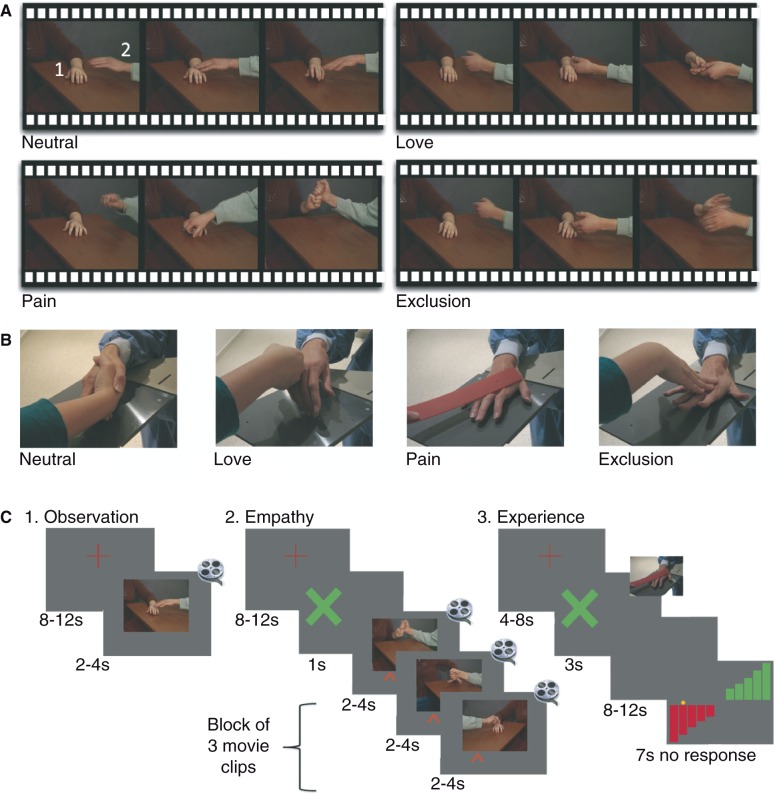
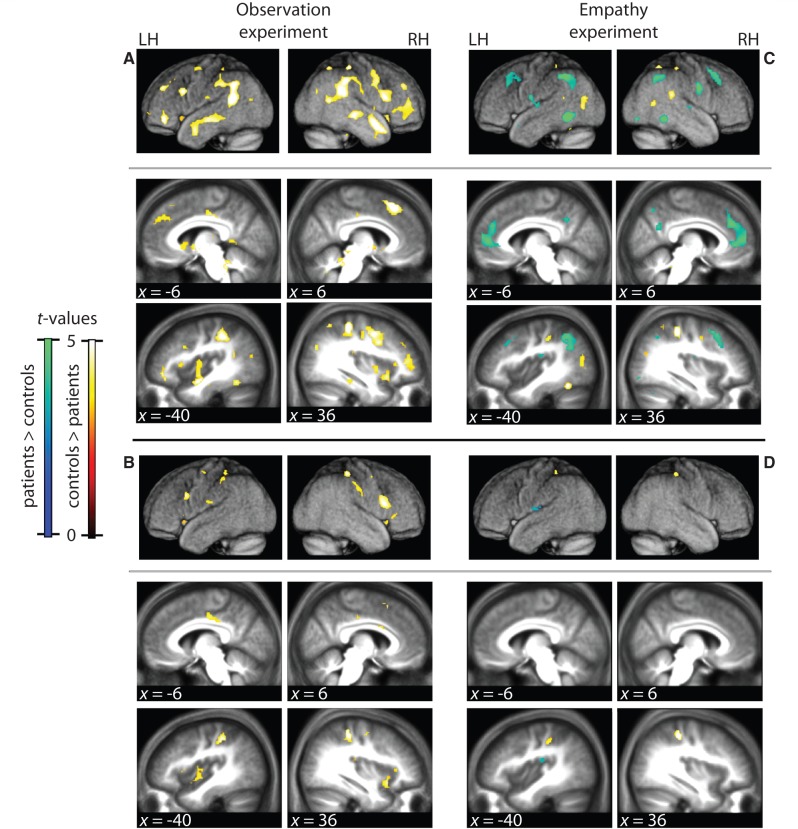
Psychopathy is a personality disorder associated with a profound lack of empathy. Neuroscientists have associated empathy and its interindividual variation with how strongly participants activate brain regions involved in their own actions, emotions and sensations while viewing those of others. Here we compared brain activity of 18 psychopathic offenders with 26 control subjects while viewing video clips of emotional hand interactions and while experiencing similar interactions. Brain regions involved in experiencing these interactions were not spontaneously activated as strongly in the patient group while viewing the video clips. However, this group difference was markedly reduced when we specifically instructed participants to feel with the actors in the videos. Our results suggest that psychopathy is not a simple incapacity for vicarious activations but rather reduced spontaneous vicarious activations co-existing with relatively normal deliberate counterparts.
Overview
The claims and statistics of this paper haven’t been checked yet.
Run the check — free, no account needed. It reads the open-access text and checks the sources it cites.
Integrity signals
Registry
Cites
Statistics
Figures
Verification
Claims the paper makes
The claims and statistics of this paper haven’t been checked yet.
Run the check — free, no account needed. It reads the open-access text and checks the sources it cites.
Claims other papers make about this one
Each is checked against this paper’s own text: does it say what the citing paper says it does?
In the citing paper
“In line with such independent functions, selective impairments in empathy or ToM have been observed in different psychopathologies such as autism and psychopathy.”
From On the interaction of social affect and cognition: empathy, compassion and theory of mind (2018) · cites this paper as [36]
Self-check
Percentages, sums and reported differences re-computed from the paper’s own numbers.
The self-check needs the paper’s full text.
Citations
Cites
Maldjian, J. A., Laurienti, P. J., Kraft, R., & Burdette, J. H. (2003) · NeuroImage · doi:10.1016/s1053-8119(03)00169-1 · Cited by 5,066 · cited 2×
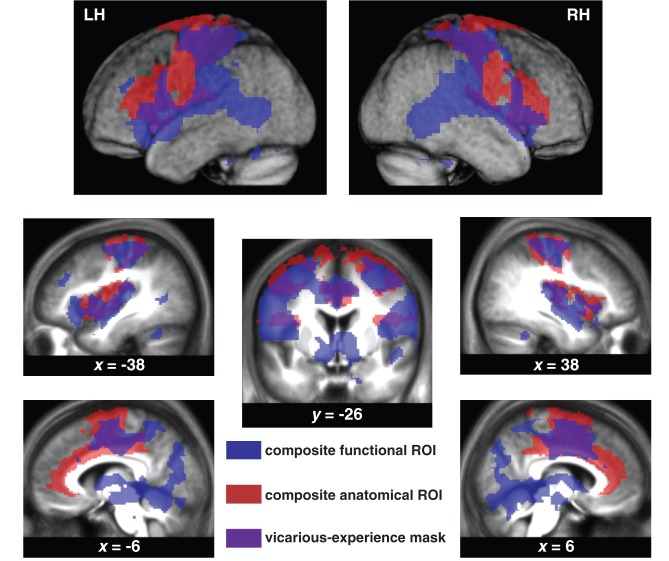
“, 2007) or the AAL atlas of the WFU Pickatlas (Maldjian et al., 2003) for regions not yet included in the Anatomy ToolBox and then combined them into a single composite anatomical region of interest using a logical ‘OR’ (Fig.”
Method(1998) · Cited by 4,172
Empathy for Pain Involves the Affective but not Sensory Components of Pain
Singer, T., Seymour, B., O'Doherty, J., Kaube, H., Dolan, R. J., & Frith, C. D. (2004) · Science · doi:10.1126/science.1093535 · Cited by 3,929
Meeting of minds: the medial frontal cortex and social cognition
Amodio, D. M., & Frith, C. D. (2006) · Nature Reviews Neuroscience · doi:10.1038/nrn1884 · Cited by 3,782 · cited 1×
“…in regions (outside the region of interest), associated with conscious menta- lizing (including the medial prefrontal cortex and the temporal pole) (Amodio and Frith, 2006; Van Overwalle and Baetens, 2009), and deliberate reappraisal (dorsolateral prefrontal cortex and angular gyrus, Ochsner et…”
BackgroundBoth of Us Disgusted in My Insula
Wicker, B., Keysers, C., Plailly, J., Royet, J.-P., Gallese, V., & Rizzolatti, G. (2003) · Neuron · doi:10.1016/s0896-6273(03)00679-2 · Cited by 2,185
Misunderstanding analysis of covariance.
Miller, G. A., & Chapman, J. P. (2001) · Journal of Abnormal Psychology · doi:10.1037/0021-843x.110.1.40 · Cited by 2,136 · cited 1×
“Unfortunately, as these variables were highly correlated with the factor Group [e.g. r(Group, Substance abuse) = 0.86], disentangling their contribution through inclusion of nuisance covariates in our analyses is impossible (Miller and Chapman, 2001).”
BackgroundInfluentialOchsner, K. N., Ray, R. D., Cooper, J. C., Robertson, E. R., Chopra, S., Gabrieli, J. D. E., & Gross, J. J. (2004) · NeuroImage · doi:10.1016/j.neuroimage.2004.06.030 · Cited by 2,113 · cited 1×
“…the region of interest), associated with conscious menta- lizing (including the medial prefrontal cortex and the temporal pole) (Amodio and Frith, 2006; Van Overwalle and Baetens, 2009), and deliberate reappraisal (dorsolateral prefrontal cortex and angular gyrus, Ochsner et al., 2004).”
BackgroundLamm, C., Decety, J., & Singer, T. (2011) · NeuroImage · doi:10.1016/j.neuroimage.2010.10.014 · Cited by 2,016 · cited 3×
“…activations in brain regions (insula and cin- gulate cortex) normally associated with feeling similar emotions oneself (Bastiaansen et al., 2009; Lamm et al., 2011), and wit- nessing what others do and sense recruits one’s own motor and somatosensory cortices (Pineda, 2008; Keysers and…”
BackgroundMethodThe empathic brain: how, when and why?
de Vignemont, F., & Singer, T. (2006) · Trends in Cognitive Sciences · doi:10.1016/j.tics.2006.08.008 · Cited by 1,846
Empathic neural responses are modulated by the perceived fairness of others
Singer, T., Seymour, B., O'Doherty, J. P., Stephan, K. E., Dolan, R. J., & Frith, C. D. (2006) · Nature · doi:10.1038/nature04271 · Cited by 1,726 · cited 2×
“Those defined using the AAL included the insula and the anterior/mid cingulate (Wicker et al., 2003; Singer et al., 2004, 2006; Jabbi et al., 2007; Bastiaansen et al., 2009; Lamm et al., 2011).”
MethodDapretto, M., Davies, M. S., Pfeifer, J. H., Scott, A. A., Sigman, M., Bookheimer, S. Y., & Iacoboni, M. (2006) · Nature Neuroscience · doi:10.1038/nn1611 · Cited by 1,694 · cited 2×
“These neural markers for empathy have been investigated in several psychiatric disorders, autism in particular (Dapretto et al., 2006; Decety and Moriguchi, 2007; Dinstein et al., 2008; MinioPaluello et al., 2009), but surprisingly, not directly in psychopathy.”
BackgroundLilienfeld, S. O., & Andrews, B. P. (1996) · Journal of Personality Assessment · doi:10.1207/s15327752jpa6603_3 · Cited by 1,435 · cited 3×
“05) on the Psychopathic Personality Inventory.”
MethodALE meta-analysis of action observation and imitation in the human brain
Caspers, S., Zilles, K., Laird, A. R., & Eickhoff, S. B. (2010) · NeuroImage · doi:10.1016/j.neuroimage.2009.12.112 · Cited by 1,386 · cited 6×
“Whenever possible we then used the Anatomy ToolBox (Eickhoff et al., 2007) or the AAL atlas of the WFU Pickatlas (Maldjian et al., 2003) for regions not yet included in the Anatomy ToolBox and then combined them into a single composite anatomical region of interest using a logical ‘OR’ (Fig.”
BackgroundMethodInfluentialUnderstanding others' actions and goals by mirror and mentalizing systems: a meta-analysis
Van Overwalle, F., & Baetens, K. (2009) · NeuroImage · doi:10.1016/j.neuroimage.2009.06.009 · Cited by 1,329 · cited 1×
“…the region of interest), associated with conscious menta- lizing (including the medial prefrontal cortex and the temporal pole) (Amodio and Frith, 2006; Van Overwalle and Baetens, 2009), and deliberate reappraisal (dorsolateral prefrontal cortex and angular gyrus, Ochsner et al., 2004).”
BackgroundAmunts, K., Kedo, O., Kindler, M., Pieperhoff, P., Mohlberg, H., Shah, N. J., Habel, U., Schneider, F., & Zilles, K. (2005) · Anatomy and Embryology · doi:10.1007/s00429-005-0025-5 · Cited by 1,264 · cited 1×
“= Cytoarchitectonic subdivisions of the hippocampus according to Amunts et al., 2005.”
MethodThe relation of empathy to aggressive and externalizing/antisocial behavior.
Miller, P. A., & Eisenberg, N. (1988) · Psychological Bulletin · doi:10.1037/0033-2909.103.3.324 · Cited by 1,211 · cited 5×
“Only if empathy is a spontaneous response, will you feel empathy in this circumstance, and reduce your violence (Miller and Eisenberg, 1988).”
BackgroundInfluentialHare Psychopathy Checklist-Revised
Hollerbach, P., Mokros, A., Nitschke, J., & Habermeyer, E. (2018) · Forensische Psychiatrie Psychologie Kriminologie · doi:10.1007/s11757-018-0478-z · Cited by 1,208
Assignment of functional activations to probabilistic cytoarchitectonic areas revisited
Eickhoff, S., Paus, T., Caspers, S., Grosbras, M.-H., Evans, A. C., Zilles, K., & Amunts, K. (2007) · NeuroImage · doi:10.1016/j.neuroimage.2007.03.060 · Cited by 1,038 · cited 3×
“Whenever possible we then used the Anatomy ToolBox (Eickhoff et al., 2007) or the AAL atlas of the WFU Pickatlas (Maldjian et al., 2003) for regions not yet included in the Anatomy ToolBox and then combined them into a single composite anatomical region of interest using a logical ‘OR’ (Fig.”
MethodMarsh, A. A., Finger, E. C., Mitchell, D. G. V., Reid, M. E., Sims, C., Kosson, D. S., Towbin, K. E., Leibenluft, E., Pine, D. S., & Blair, R. J. R. (2008) · American Journal of Psychiatry · doi:10.1176/appi.ajp.2007.07071145 · Cited by 852 · cited 2×
“Different emotions were tested because psychopathic individuals may not be equally impaired at perceiving all types of emotions (Blair et al., 2002; Kosson et al., 2002; Blair et al., 2004; Marsh et al., 2008).”
BackgroundWhat does the amygdala contribute to social cognition
Adolphs, R. (2010) · Annals of the New York Academy of Sciences · doi:10.1111/j.1749-6632.2010.05445.x · Cited by 836
Somatosensation in social perception
Keysers, C., Kaas, J. H., & Gazzola, V. (2010) · Nature Reviews Neuroscience · doi:10.1038/nrn2833 · Cited by 787 · cited 5×
“, 2010), the primary and secondary somatosensory cortices (SI = BA3a + b + BA1 + BA2 and SII = OP1 + OP2 + OP3 + OP4) (Keysers et al., 2010).”
BackgroundMethodInfluentialSelf-citationKiehl, K. A., Smith, A., Hare, R. D., Mendrek, A., Forster, B. B., Brink, J., & Liddle, P. F. (2001) · Biological Psychiatry · doi:10.1016/s0006-3223(01)01222-7 · Cited by 767 · cited 2×
“…cortices were also found during fear conditioning (Birbaumer et al., 2005), and in the cingulate cortex and inferior frontal gyrus while memorizing negative words (Kiehl et al., 2001), further pointing to functional deficits in brain regions that are known to be involved in vicarious re- sponses.”
BackgroundEmpathy and the somatotopic auditory mirror system in humans
Gazzola, V., Aziz-Zadeh, L., & Keysers, C. (2006) · Current Biology · doi:10.1016/j.cub.2006.07.072 · Cited by 752 · cited 2×
“The strength of these so called vicarious neural activations is predicted by interindividual differences in trait-empathy (Singer et al., 2004; Gazzola et al., 2006; Jabbi et al., 2007) and they are therefore thought to rep- resent a neural marker for empathy (Singer et al., 2004; Iacoboni, 2006;…”
BackgroundThe amygdala and ventromedial prefrontal cortex in morality and psychopathy
Blair, R. J. R. (2007) · Trends in Cognitive Sciences · doi:10.1016/j.tics.2007.07.003 · Cited by 742 · cited 5×
“…well with models of moral development emphasizing deficits in learning, where the amygdala of children normally helps them associate their instrumental aggressive behaviour, which is originally neutral, with negative emotions triggered by the distress of their victims (Blair, 2007).”
BackgroundInfluentialGazzola, V., & Keysers, C. (2008) · Cerebral Cortex · doi:10.1093/cercor/bhn181 · Cited by 740 · cited 3×
“Whenever possible we then used the Anatomy ToolBox (Eickhoff et al., 2007) or the AAL atlas of the WFU Pickatlas (Maldjian et al., 2003) for regions not yet included in the Anatomy ToolBox and then combined them into a single composite anatomical region of interest using a logical ‘OR’ (Fig.”
MethodDeficient Fear Conditioning in Psychopathy
Birbaumer, N., Veit, R., Lotze, M., Erb, M., Hermann, C., Grodd, W., & Flor, H. (2005) · Archives of General Psychiatry · doi:10.1001/archpsyc.62.7.799 · Cited by 706 · cited 2×
“Reduced activations in insular, cingulate and secondary somatosensory cortices were also found during fear conditioning (Birbaumer et al., 2005), and in the cingulate cortex and inferior frontal gyrus while memorizing negative words (Kiehl et al., 2001), further pointing to functional deficits in…”
BackgroundPsychopathy in instrumental and reactive violent offenders.
Cornell, D. G., Warren, J. I., Hawk, G. L., Stafford, E., Oram, G., & Pine, D. (1996) · Journal of Consulting and Clinical Psychology · doi:10.1037//0022-006x.64.4.783 · Cited by 703 · cited 2×
“Psychopathy is a personality disorder associated with a profound lack of empathy (Hare, 1991) and elevated reactive and instru- mental aggression (Williamson et al., 1987; Serin, 1991; Cornell et al., 1996; Patrick and Zempolich, 1998; Blair, 2007).”
BackgroundPatterson, C. M., & Newman, J. P. (1993) · Psychological Review · doi:10.1037/0033-295x.100.4.716 · Cited by 658 · cited 4×
“…might gen- erate the largest group differences in the absence of instruction to attend to specific, emotionally relevant aspects of the stimuli (Patterson and Newman, 1993; Newman et al., 2010; Moul et al., 2012), we further ventured to hypothesize that explicitly encouraging psychopathic…”
BackgroundInfluentialThe human inferior parietal cortex: Cytoarchitectonic parcellation and interindividual variability
Caspers, S., Geyer, S., Schleicher, A., Mohlberg, H., Amunts, K., & Zilles, K. (2006) · NeuroImage · doi:10.1016/j.neuroimage.2006.06.054 · Cited by 634 · cited 1×
“…= pars hIP1 = Cytoarchitectonic subdivisions of the intraparietal sulcus according to Choi et al., 2006; Scheperjans, 2008a,b; IPC = inferior parietal cortex; PGa., PF., PFm = Cytoarchitectonic subdivisions of the inferior parietal cortex according to Caspers et al., 2006, 2008; FD., SUB., CA., EC.”
MethodThe psychopathic individual: A lack of responsiveness to distress cues?
Blair, J., Jones, L. F., Clark, F., & SMITH, M. H. D. (1997) · Psychophysiology · doi:10.1111/j.1469-8986.1997.tb02131.x · Cited by 608 · cited 2×
“These studies show that psychopathic individuals display reduced physiological (Aniskiewicz, 1979; Blair et al., 1997; Perkins et al., 2010), blood oxygen level-dependent (BOLD) signal (Müller et al.”
BackgroundEmpathy for positive and negative emotions in the gustatory cortex
Jabbi, M., Swart, M., & Keysers, C. (2006) · NeuroImage · doi:10.1016/j.neuroimage.2006.10.032 · Cited by 590 · cited 5×
“The strength of these so called vicarious neural activations is predicted by interindividual differences in trait-empathy (Singer et al., 2004; Gazzola et al., 2006; Jabbi et al., 2007) and they are therefore thought to represent a neural marker for empathy (Singer et al.”
BackgroundMethodInfluentialPsychopathy in instrumental and reactive violent offenders.
Cornell, D. G., Warren, J. I., Hawk, G. L., et al. (1996) · Journal of Consulting and Clinical Psychology · doi:10.1037/0022-006x.64.4.783 · Cited by 538
The development of psychopathy
Blair, J., Peschardt, K. S., Budhani, S., Mitchell, D. G. V., & Pine, D. S. (2006) · Journal of Child Psychology and Psychiatry · doi:10.1111/j.1469-7610.2006.01596.x · Cited by 531 · cited 2×
“First, they point to reduced vicarious activity in regions involved in performing actions, feeling touch and experiencing emotions, that are considered functional markers of empathy, as a possible neural basis for the reduced empathy and antisocial behaviour, central to psychopathy (Hare et al., 2001; Hare, 2003; Blai…”
BackgroundDecety, J., & Moriguchi, Y. (2007) · BioPsychoSocial Medicine · doi:10.1186/1751-0759-1-22 · Cited by 497
Expanding the mirror: vicarious activity for actions, emotions, and sensations
Keysers, C., & Gazzola, V. (2009) · Current Opinion in Neurobiology · doi:10.1016/j.conb.2009.10.006 · Cited by 472 · cited 6×
“…by interindividual differences in trait-empathy (Singer et al., 2004; Gazzola et al., 2006; Jabbi et al., 2007) and they are therefore thought to rep- resent a neural marker for empathy (Singer et al., 2004; Iacoboni, 2006; Pineda, 2008; Bastiaansen et al., 2009; Keysers and Gazzola, 2009).”
BackgroundInfluentialEvidence for mirror systems in emotions
Bastiaansen, J. A., Thioux, M., & Keysers, C. (2009) · Philosophical Transactions of the Royal Society B Biological Sciences · doi:10.1098/rstb.2009.0058 · Cited by 445 · cited 7×
“…by interindividual differences in trait-empathy (Singer et al., 2004; Gazzola et al., 2006; Jabbi et al., 2007) and they are therefore thought to rep- resent a neural marker for empathy (Singer et al., 2004; Iacoboni, 2006; Pineda, 2008; Bastiaansen et al., 2009; Keysers and Gazzola, 2009).”
BackgroundMethodInfluentialThe human inferior parietal lobule in stereotaxic space
Caspers, S., Eickhoff, S. B., Geyer, S., Scheperjans, F., Mohlberg, H., Zilles, K., & Amunts, K. (2008) · Brain Structure and Function · doi:10.1007/s00429-008-0195-z · Cited by 395 · cited 1×
“…= pars hIP1 = Cytoarchitectonic subdivisions of the intraparietal sulcus according to Choi et al., 2006; Scheperjans, 2008a,b; IPC = inferior parietal cortex; PGa., PF., PFm = Cytoarchitectonic subdivisions of the inferior parietal cortex according to Caspers et al., 2006, 2008; FD., SUB., CA., EC.”
MethodTheory of mind and psychopathy: can psychopathic individuals read the ‘language of the eyes’?
Richell, R. A., Mitchell, D. G. V., Newman, C. G. J., Leonard, A., Baron‐Cohen, S., & Blair, J. (2003) · Neuropsychologia · doi:10.1016/s0028-3932(02)00175-6 · Cited by 378 · cited 2×
“…that performance and brain activity in tasks explicitly requiring social cognition are relatively preserved in psychopathy (Blair et al., 1996; Richell et al., 2003; Dolan and Fullam, 2004; Sommer et al., 2010), whereas abnorm- alities in automatically orienting to salient information might…”
BackgroundResultJabbi, M., Bastiaansen, J., & Keysers, C. (2008) · PLoS ONE · doi:10.1371/journal.pone.0002939 · Cited by 362 · cited 2×
“A recent functional MRI study in healthy volunteers showed that the anterior insula could be activated through the abovementioned mentalizing and reappraisal circuits while participants deliberately try to imagine what a character in a written story would feel (Jabbi et al., 2008).”
BackgroundSelf-citationReduced sensitivity to others' fearful expressions in psychopathic individuals
Blair, R. J. R., Mitchell, D. G. V., Peschardt, K. S., Colledge, E., Leonard, R. A., Shine, J. H., Murray, L. K., & Perrett, D. I. (2004) · Personality and Individual Differences · doi:10.1016/j.paid.2003.10.008 · Cited by 344 · cited 3×
“Different emotions were tested because psychopathic individuals may not be equally impaired at perceiving all types of emotions (Blair et al., 2002; Kosson et al., 2002; Blair et al., 2004; Marsh et al., 2008).”
BackgroundScheperjans, F., Eickhoff, S. B., Hömke, L., Mohlberg, H., Hermann, K., Amunts, K., & Zilles, K. (2008) · Cerebral Cortex · doi:10.1093/cercor/bhm241 · Cited by 336
Psychopathy and Violence in Criminals
Serin, R. C. (1991) · Journal of Interpersonal Violence · doi:10.1177/088626091006004002 · Cited by 335 · cited 2×
“Psychopathy is a personality disorder associated with a profound lack of empathy (Hare, 1991) and elevated reactive and instru- mental aggression (Williamson et al., 1987; Serin, 1991; Cornell et al., 1996; Patrick and Zempolich, 1998; Blair, 2007).”
BackgroundAttention Moderates the Fearlessness of Psychopathic Offenders
Newman, J. P., Curtin, J. J., Dvorak‐Bertsch, J. D., & Baskin-sommers, A. R. (2009) · Biological Psychiatry · doi:10.1016/j.biopsych.2009.07.035 · Cited by 309 · cited 2×
“…largest group differences in the absence of instruction to attend to specific, emotionally relevant aspects of the stimuli (Patterson and Newman, 1993; Newman et al., 2010; Moul et al., 2012), we further ventured to hypothesize that explicitly encouraging psychopathic individuals to empathize…”
BackgroundPsychopathy: Assessment and Forensic Implications
Hare, R. D., & Neumann, C. S. (2009) · The Canadian Journal of Psychiatry · doi:10.1177/070674370905401202 · Cited by 307 · cited 1×
“…in performing actions, feeling touch and experiencing emotions, that are consid- ered functional markers of empathy, as a possible neural basis for the reduced empathy and antisocial behaviour, central to psy- chopathy (Hare et al., 2001; Hare, 2003; Blair et al., 2006; Hare and Neumann, 2009).”
BackgroundDolan, M., & Fullam, R. S. (2004) · Psychological Medicine · doi:10.1017/s0033291704002028 · Cited by 303 · cited 2×
“Because previous studies have shown that performance and brain activity in tasks explicitly requiring social cognition are relatively preserved in psychopathy (Blair et al., 1996; Richell et al., 2003; Dolan and Fullam, 2004; Sommer et al., 2010), whereas abnormalities in automatically orienting to salient information…”
BackgroundResultObserver-Independent Cytoarchitectonic Mapping of the Human Superior Parietal Cortex
Scheperjans, F., Hermann, K., Eickhoff, S. B., Amunts, K., Schleicher, A., & Zilles, K. (2007) · Cerebral Cortex · doi:10.1093/cercor/bhm116 · Cited by 282
Violence: Criminal psychopaths and their victims.
Williamson, S., Hare, R. D., & Wong, S. C. P. (1987) · Canadian Journal of Behavioural Science/Revue canadienne des sciences du comportement · doi:10.1037/h0080003 · Cited by 278 · cited 2×
“Psychopathy is a personality disorder associated with a profound lack of empathy (Hare, 1991) and elevated reactive and instru- mental aggression (Williamson et al., 1987; Serin, 1991; Cornell et al., 1996; Patrick and Zempolich, 1998; Blair, 2007).”
BackgroundAbnormalities in emotion processing within cortical and subcortical regions in criminal psychopaths
Müller, J. L., Sommer, M., Wagner, V., Lange, K., Taschler, H., Röder, C. H., Schuierer, G., Klein, H. E., & Hajak, G. (2003) · Biological Psychiatry · doi:10.1016/s0006-3223(02)01749-3 · Cited by 277 · cited 1×
“BRAIN”
Choi, H.-J., Zilles, K., Mohlberg, H., Schleicher, A., Fink, G. R., Armstrong, E., & Amunts, K. (2006) · The Journal of Comparative Neurology · doi:10.1002/cne.20849 · Cited by 270
de Oliveira‐Souza, R., Hare, R. D., Bramati, I. E., Garrido, G. J., Ignácio, F. A., Tovar-Moll, F. F., & Moll, J. (2008) · NeuroImage · doi:10.1016/j.neuroimage.2007.12.054 · Cited by 269 · cited 1×
“In addition, grey matter has also been found to be reduced in regions associated with vicarious responses (de Oliveira-Souza et al., 2008; but see Müller et al., 2008; Tiihonen et al., 2008; Yang et al., 2009; Schiffer et al., 2011).”
BackgroundDinstein, I., Thomas, C., Behrmann, M., & Heeger, D. J. (2008) · Current Biology · doi:10.1016/j.cub.2007.11.004 · Cited by 266 · cited 1×
“These neural markers for empathy have been investigated in several psychiatric disorders, autism in particular (Dapretto et al., 2006; Decety and Moriguchi, 2007; Dinstein et al., 2008; MinioPaluello et al., 2009), but surprisingly, not directly in psychopathy.”
BackgroundSalekin, R. T., Worley, C. B., & Grimes, R. D. (2010) · Behavioral Sciences & the Law · doi:10.1002/bsl.928 · Cited by 259 · cited 4×
“(Salekin et al., 2010) will certainly represent an unfortunate”
BackgroundInfluentialTheory of Mind in the psychopath
Blair, J., Sellars, C., Strickland, I., Clark, F., Williams, A., SMITH, M. H. D., & Jones, L. F. (1996) · Journal of Forensic Psychiatry · doi:10.1080/09585189608409914 · Cited by 252 · cited 2×
“…studies have shown that performance and brain activity in tasks explicitly requiring social cognition are relatively preserved in psychopathy (Blair et al., 1996; Richell et al., 2003; Dolan and Fullam, 2004; Sommer et al., 2010), whereas abnorm- alities in automatically orienting to salient…”
BackgroundResultAberrant neural processing of moral violations in criminal psychopaths.
Harenski, C. L., Harenski, K. A., Shane, M. S., & Kiehl, K. A. (2010) · Journal of Abnormal Psychology · doi:10.1037/a0020979 · Cited by 251 · cited 2×
“…(Aniskiewicz, 1979; Blair et al., 1997; Perkins et al., 2010), blood oxygen level-dependent (BOLD) signal (Müller et al., 2003; but see Harenski et al., 2010) and electroencephalography (Cheng et al., 2012) responses to social emotional stimuli; recog- nize emotions less accurately…”
BackgroundPsychopathy and identification of facial expressions of emotion
Hastings, M. E., Tangney, J. P., & Stuewig, J. B. (2008) · Personality and Individual Differences · doi:10.1016/j.paid.2008.01.004 · Cited by 243 · cited 2×
“, 2012) responses to social emotional stimuli; recognize emotions less accurately from voices or faces (Blair et al., 2002, 2004; Kosson et al., 2002; Hastings et al., 2008); are less likely to attribute guilt to the protagonist in stories (Blair et al.”
BackgroundFacial affect recognition in criminal psychopaths.
Kosson, D. S., Suchy, Y., Mayer, A. R., & Libby, J. (2002) · Emotion · doi:10.1037/1528-3542.2.4.398 · Cited by 225 · cited 4×
“Different emotions were tested because psychopathic individuals may not be equally impaired at perceiving all types of emotions (Blair et al., 2002; Kosson et al., 2002; Blair et al., 2004; Marsh et al., 2008).”
BackgroundInfluentialPineda, J. A. (2008) · Behavioral and Brain Functions · doi:10.1186/1744-9081-4-47 · Cited by 224
Caruana, F., Jezzini, A., Sbriscia-Fioretti, B., Rizzolatti, G., & D, V. G. M. (2011) · Current Biology · doi:10.1016/j.cub.2010.12.042 · Cited by 205
Turning a deaf ear to fear: Impaired recognition of vocal affect in psychopathic individuals.
Blair, J., Mitchell, D. G. V., Richell, R. A., Kelly, S., Leonard, A., Newman, C., & Scott, S. K. (2002) · Journal of Abnormal Psychology · doi:10.1037/0021-843x.111.4.682 · Cited by 204 · cited 3×
“Different emotions were tested because psychopathic individuals may not be equally impaired at perceiving all types of emotions (Blair et al., 2002; Kosson et al., 2002; Blair et al., 2004; Marsh et al., 2008).”
BackgroundAbsence of Embodied Empathy During Pain Observation in Asperger Syndrome
Minio-Paluello, I., Baron‐Cohen, S., Avenanti, A., Walsh, V., & Aglioti, S. M. (2008) · Biological Psychiatry · doi:10.1016/j.biopsych.2008.08.006 · Cited by 204
Face affect recognition deficits in personality-disordered offenders: association with psychopathy
Dolan, M., & Fullam, R. S. (2006) · Psychological Medicine · doi:10.1017/s0033291706008634 · Cited by 185 · cited 1×
“…et al., 2008); are less likely to attribute guilt to the protagonist in stories (Blair et al., 1995), and have a weaker BOLD response in their premotor and primary somatosensory cortices while they observe faces in a gender discrimination task (Deeley et al., 2006; but see Dolan and Fullam, 2006).”
BackgroundBrain anatomy of persistent violent offenders: More rather than less
Tiihonen, J., Rossi, R., Laakso, M. P., Hodgins, S., Testa, C., Pérez, J., Repo‐Tiihonen, E., Vaurio, O., Soininen, H. S., Aronen, H. J., et al. (2008) · Psychiatry Research Neuroimaging · doi:10.1016/j.pscychresns.2007.08.012 · Cited by 177 · cited 2×
“In addition, grey matter has also been found to be reduced in regions associated with vicarious responses (de Oliveira-Souza et al., 2008; but see Müller et al., 2008; Tiihonen et al., 2008; Yang et al., 2009; Schiffer et al., 2011).”
BackgroundDeeley, Q., Daly, E., Surguladze, S., Tunstall, N., Mezey, G., Beer, D., Ambikapathy, A., Robertson, D., Giampietro, V., Brammer, M. J., et al. (2006) · British Journal of Psychiatry · doi:10.1192/bjp.bp.106.021410 · Cited by 176
Dissociation between affective sharing and emotion understanding in juvenile psychopaths
Cheng, Y., Hung, A.-Y., & Jean Decety, A. (2012) · Development and Psychopathology · doi:10.1017/s095457941200020x · Cited by 164 · cited 2×
“, 2010) and electroencephalography (Cheng et al., 2012) responses to social emotional stimuli; recognize emotions less accurately from voices or faces (Blair et al.”
BackgroundMüller, J. L., Gänßbauer, S., Sommer, M., Döhnel, K., Weber, T., Schmidt‐Wilcke, T., & Hajak, G. (2008) · Psychiatry Research Neuroimaging · doi:10.1016/j.pscychresns.2007.08.010 · Cited by 161 · cited 1×
“BRAIN”
A model of differential amygdala activation in psychopathy
Moul, C., Killcross, S., & Dadds, M. R. (2012) · Psychological Review · doi:10.1037/a0029342 · Cited by 159 · cited 7×
“…in the absence of instruction to attend to specific, emotionally relevant aspects of the stimuli (Patterson and Newman, 1993; Newman et al., 2010; Moul et al., 2012), we further ventured to hypothesize that explicitly encouraging psychopathic individuals to empathize with the actors on the…”
BackgroundInfluentialSchiffer, B. (2011) · Archives of General Psychiatry · doi:10.1001/archgenpsychiatry.2011.61 · Cited by 139 · cited 2×
“In addition, grey matter has also been found to be reduced in regions associated with vicarious responses (de Oliveira-Souza et al., 2008; but see Müller et al., 2008; Tiihonen et al., 2008; Yang et al., 2009; Schiffer et al., 2011).”
BackgroundEmotion attributions in the psychopath
Blair, J., Sellars, C., Strickland, I., Clark, F., Williams, A., SMITH, M. H. D., & Jones, L. F. (1995) · Personality and Individual Differences · doi:10.1016/0191-8869(95)00080-p · Cited by 129 · cited 2×
“…or faces (Blair et al., 2002, 2004; Kosson et al., 2002; Hastings et al., 2008); are less likely to attribute guilt to the protagonist in stories (Blair et al., 1995), and have a weaker BOLD response in their premotor and primary somatosensory cortices while they observe faces in a gender…”
BackgroundAbnormal temporal and prefrontal cortical gray matter thinning in psychopaths
Yang, Y., Raine, A., Colletti, P. M., Toga, A. W., & Narr, K. L. (2009) · Molecular Psychiatry · doi:10.1038/mp.2009.12 · Cited by 120 · cited 2×
“In addition, grey matter has also been found to be reduced in regions associated with vicarious responses (de Oliveira-Souza et al., 2008; but see Müller et al., 2008; Tiihonen et al., 2008; Yang et al., 2009; Schiffer et al., 2011).”
BackgroundEmotion and aggression in the psychopathic personality
Patrick, C. J., & Zempolich, K. A. (1998) · Aggression and Violent Behavior · doi:10.1016/s1359-1789(97)00003-7 · Cited by 120 · cited 2×
“Psychopathy is a personality disorder associated with a profound lack of empathy (Hare, 1991) and elevated reactive and instru- mental aggression (Williamson et al., 1987; Serin, 1991; Cornell et al., 1996; Patrick and Zempolich, 1998; Blair, 2007).”
BackgroundMirror neuron dysfunction in autism spectrum disorders
Perkins, T., Stokes, M. A., McGillivray, J., & Bittar, R. G. (2010) · Journal of Clinical Neuroscience · doi:10.1016/j.jocn.2010.01.026 · Cited by 104 · cited 2×
“These studies show that psychopathic individuals display reduced physiological (Aniskiewicz, 1979; Blair et al., 1997; Perkins et al., 2010), blood oxygen level-dependent (BOLD) signal (Müller et al.”
BackgroundParacellular Absorption: A Bat Breaks the Mammal Paradigm
Caviedes‐Vidal, E., Karasov, W. H., Chediack, J. G., Fasulo, V., Cruz-Neto, A. P., & Otani, L. (2008) · PLoS ONE · doi:10.1371/journal.pone.0001425 · Cited by 89
Failure to deactivate in autism: the co-constitution of self and other
Iacoboni, M. (2006) · Trends in Cognitive Sciences · doi:10.1016/j.tics.2006.08.002 · Cited by 71 · cited 2×
“…by interindividual differences in trait-empathy (Singer et al., 2004; Gazzola et al., 2006; Jabbi et al., 2007) and they are therefore thought to rep- resent a neural marker for empathy (Singer et al., 2004; Iacoboni, 2006; Pineda, 2008; Bastiaansen et al., 2009; Keysers and Gazzola, 2009).”
BackgroundIn psychopathic patients emotion attribution modulates activity in outcome-related brain areas
Sommer, M., Sodian, B., Döhnel, K., Schwerdtner, J., Meinhardt, J., & Hajak, G. (2010) · Psychiatry Research Neuroimaging · doi:10.1016/j.pscychresns.2010.01.007 · Cited by 54 · cited 2×
“…explicitly requiring social cognition are relatively preserved in psychopathy (Blair et al., 1996; Richell et al., 2003; Dolan and Fullam, 2004; Sommer et al., 2010), whereas abnorm- alities in automatically orienting to salient information might gen- erate the largest group differences in the…”
BackgroundResultBehavioral treatment for depression: An evaluation of therapeutic components
Turner, R. W., Ward, M. F., & Turner, D. J. (1979) · Journal of Clinical Psychology · doi:10.1002/1097-4679(197901)35:1 · Cited by 35
Research works printed but not linked: 4
- Hare, 1991, The Hare psychopathy checklist-revised
- Hare, 2001, De Psychopathie Checklist revised
- Lord, 1999, Autism diagnostic observation schedule. Manual
- Luteijn, 2004, GIT 2: Groninger intelligentie test 2
Cited by
Sorted by citations
Empathy: Gender effects in brain and behavior
Christov-Moore, L., Simpson, E. A., Coudé, G., Grigaityte, K., Iacoboni, M., & Ferrari, P. F. (2014) · Neuroscience & Biobehavioral Reviews · doi:10.1016/j.neubiorev.2014.09.001 · Cited by 1,137
“…instructed to be empathetic (i.e., under effortful control), they are capable of exhibiting significantly higher levels of empathy (Gillespie et al., 2014; Meffert et al., 2013; Senju et al., 2009; related, spontaneous vs. deliberate mimicry in autism: McIntosh et al., 2006; Oberman et al., 2009).”
BackgroundZaki, J. (2014) · Psychological Bulletin · doi:10.1037/a0037679 · Cited by 923
Clinical assessment of social cognitive function in neurological disorders
Henry, J. D., von Hippel, W., Molenberghs, P., Lee, T., & Sachdev, P. S. (2016) · Nature Reviews Neurology · doi:10.1038/nrneurol.2015.229 · Cited by 488
On the interaction of social affect and cognition: empathy, compassion and theory of mind
Preckel, K., Kanske, P., & Singer, T. (2018) · Current Opinion in Behavioral Sciences · doi:10.1016/j.cobeha.2017.07.010 · Cited by 348
“In psychopathy or chronic aggression, in contrast, ToM is intact, but the propensity to empathize with others is reduced [36,37].”
Tusche, A., Böckler, A., Kanske, P., Trautwein, F.-M., & Singer, T. (2016) · The Journal of Neuroscience · doi:10.1523/jneurosci.3392-15.2016 · Cited by 309
“…frequently display impaired perspective taking (Baron-Cohen et al., 1985; Hoffmann et al., 2015) but not necessarily impaired empathy (Silani et al., 2008; Bird et al., 2010), whereas psychopaths often lack empathy but are not impaired in perspective taking (Blair, 2008; Meffert et al., 2013).”
BackgroundInfluential
Metadata
- Authors
- Meffert, H., Gazzola, V., den Boer, J. A., Bartels, A. A. J., & Keysers, C.
- Affiliations
- Netherlands Institute for Neuroscience (NL)
- Corresponding author
- Keysers, Christian
- Venue
- Brain
- Publisher
- Oxford University Press (OUP)
- Published
- 2013-07-23
- Volume
- 136
- Issue
- 8
- Pages
- 2550-2562
- ISSN
- 0006-8950 (ISSN-L)
- 1460-2156
- PMC
- PMC3722356
- OpenAlex
- W2171909033
- Cited by
- 318
- References
- 75
- Citations by year
- 2026: 9 · 2025: 15 · 2024: 19 · 2023: 15 · 2022: 50 · 2021: 20 · 2020: 25 · 2019: 28 · 2018: 32 · 2017: 31 · 2016: 25 · 2015: 26 · 2014: 21 · 2013: 1
- FWCI
- 27.04
- Type
- journal article
- Language
- en
- Open access
- hybrid
- doi.org
- Licence
- cc-by-nc
- Locations
- Brain (publishedVersion, cc-by-nc)
- Europe PMC (PubMed Central) (publishedVersion, cc-by-nc)
- PubMed Central (publishedVersion, cc-by-nc)
- PubMed (publishedVersion)
- KNAW Research Portal (The Royal Netherlands Academy of Arts and Sciences) (publishedVersion, other-oa)
- KNAW research portal (Royal Academy of Art and Sciences (KNAW)) (publishedVersion, other-oa)
- Data Archiving and Networked Services (DANS) (submittedVersion, other-oa)
- University of Groningen research database (University of Groningen / Centre for Information Technology) (submittedVersion)
- Funders
- Nederlandse Organisatie voor Wetenschappelijk Onderzoek (452-04-305, 451-09-006)
- Topics
- Social Sciences › Psychology › Clinical Psychology › Psychopathy, Forensic Psychiatry, Sexual Offending
- Social Sciences › Psychology › Social Psychology › Action Observation and Synchronization
- Life Sciences › Neuroscience › Cognitive Neuroscience › Neural and Behavioral Psychology Studies
- Keywords
- psychopathy, empathy, spontaneous activation, video viewing, psychopathic offenders, neural basis of empathy, individual differences
- MeSH terms
- Adolescent, Adult, Antisocial Personality Disorder, Brain, Empathy, Humans, Magnetic Resonance Imaging, Male, Middle Aged, Social Perception, Criminals
About these checks
Registry, retraction, Cites and statistics results are computed, not judged, with one exception: a printed reference that no index lists is read once by a model before it counts as a citation error. Claims are extracted by a model and kept only when their quote appears verbatim in the text; each cited source is then checked, with a model’s help, for whether it says what the claim relies on. Those verdicts can be wrong — read the claim’s quote and the cited source before relying on one.
Statistics and arithmetic are recomputed, not judged.
Confidence bands are shown only for fields calibrated on our annotated test set. None is calibrated yet, so no band is shown.
What counts as a claim ›How we measure confidence ›How we check this ›
Are you an author, or do you see a problem with this page? Request a review
