

Thalamocortical Mechanisms Regulating the Relationship between Transient Beta Events and Human Tactile Perception
Open accessPublished version of a preprint
The DOI matches its Crossref record; 114 of the 114 references it cites were found in a registry or an index.
Abstract
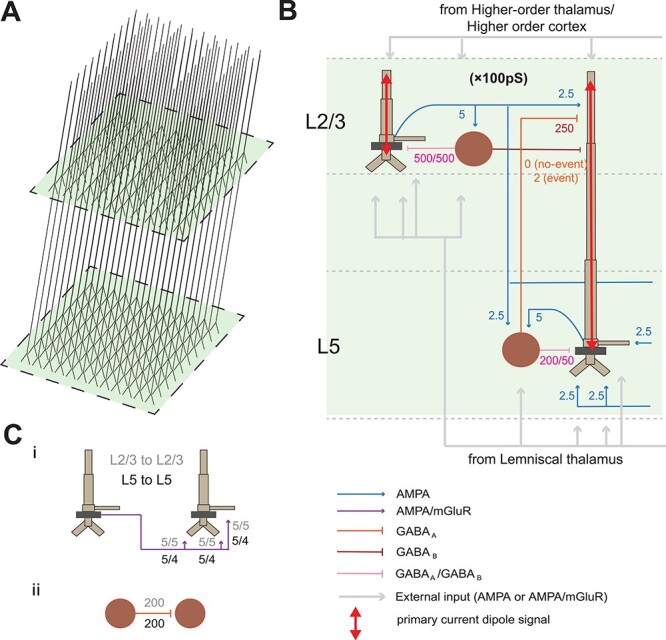
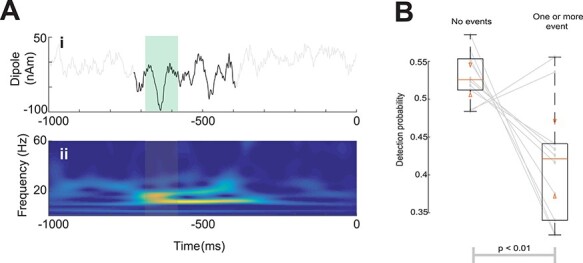
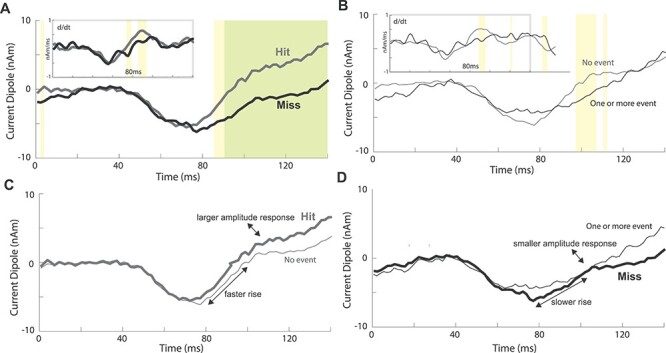
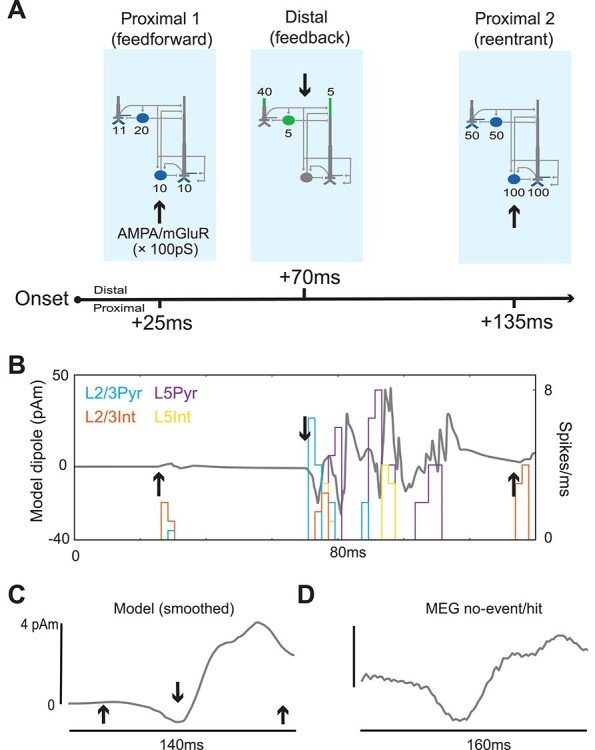
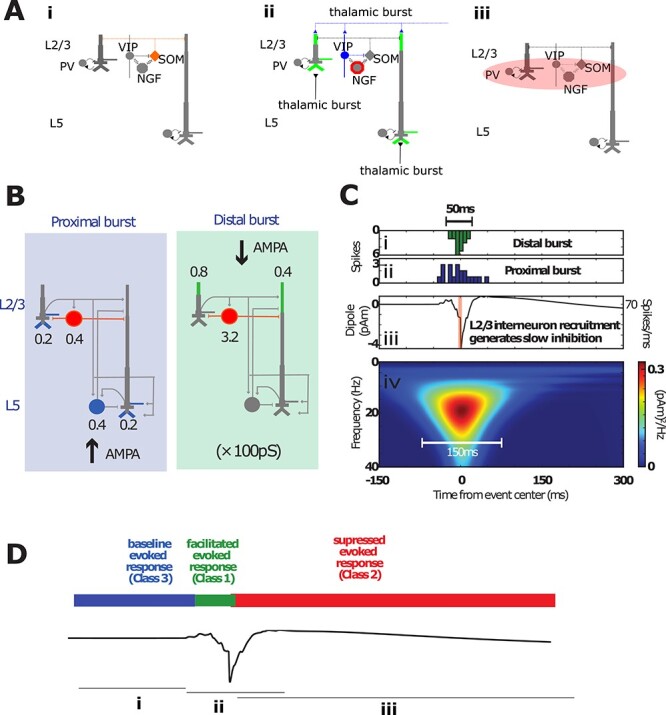
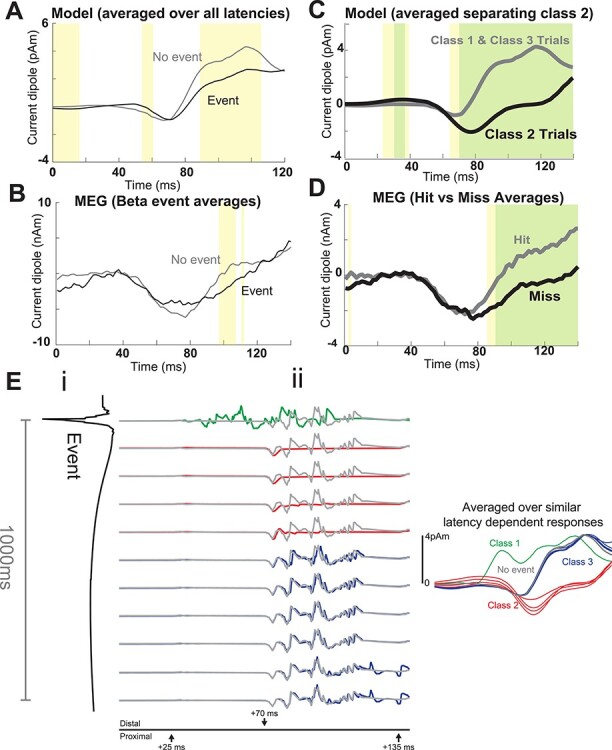
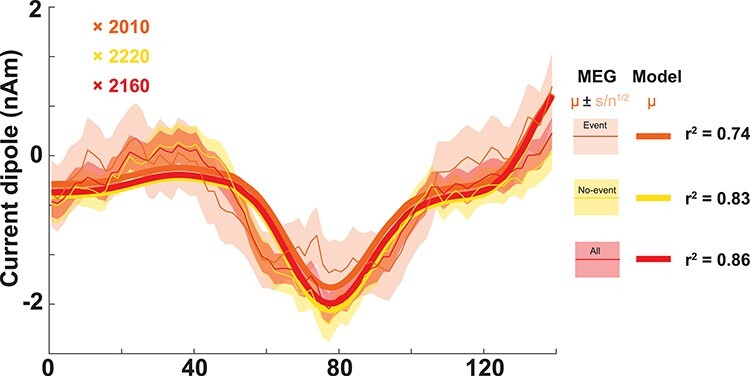
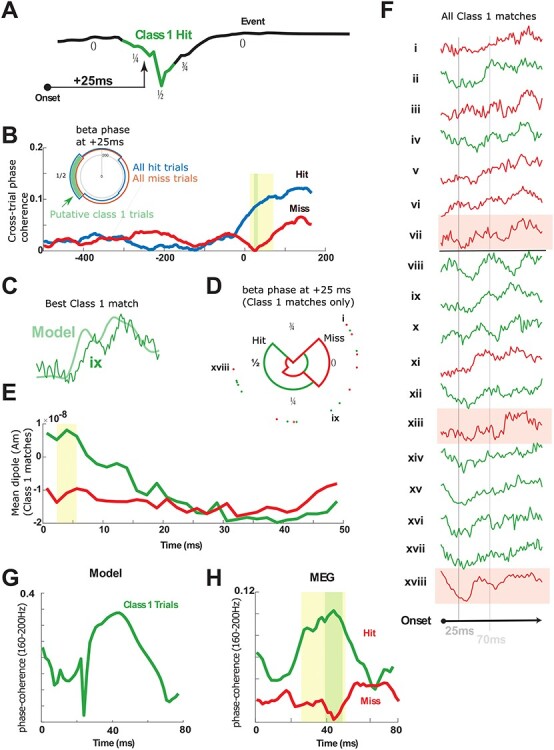
Transient neocortical events with high spectral power in the 15–29 Hz beta band are among the most reliable predictors of sensory perception. Prestimulus beta event rates in primary somatosensory cortex correlate with sensory suppression, most effectively 100–300 ms before stimulus onset. However, the neural mechanisms underlying this perceptual association are unknown. We combined human magnetoencephalography (MEG) measurements with biophysical neural modeling to test potential cellular and circuit mechanisms that underlie observed correlations between prestimulus beta events and tactile detection. Extending prior studies, we found that simulated bursts from higher-order, nonlemniscal thalamus were sufficient to drive beta event generation and to recruit slow supragranular inhibition acting on a 300 ms timescale to suppress sensory information. Further analysis showed that the same beta-generating mechanism can lead to facilitated perception for a brief period when beta events occur simultaneously with tactile stimulation before inhibition is recruited. These findings were supported by close agreement between model-derived predictions and empirical MEG data. The postevent suppressive mechanism explains an array of studies that associate beta with decreased processing, whereas the during-event facilitatory mechanism may demand a reinterpretation of the role of beta events in the context of coincident timing.
Overview
The claims and statistics of this paper haven’t been checked yet.
Free: it reads the open-access text and checks the first 5 claims that cite a source we can check. Create a free account to check every claim.
Integrity signals
Registry
Cites
Statistics
Figures
Verification
Claims the paper makes
The claims and statistics of this paper haven’t been checked yet.
Free: it reads the open-access text and checks the first 5 claims that cite a source we can check. Create a free account to check every claim.
Claims other papers make about this one
Each is checked against this paper’s own text: does it say what the citing paper says it does?
The cited source says what the claim attributes to it.
In the citing paper
“The fact that such events contribute to local field potentials and electrocorticography signals [71], including potentially from humans [72], suggests that such events may be observable with M/EEG, an idea that is also supported by biophysical modeling [73,74].”
From Testing circuit-level theories of consciousness in humans (2026) · cites this paper as [74]
Self-check
Percentages, sums and reported differences re-computed from the paper’s own numbers.
The self-check needs the paper’s full text.
Citations
Cites
U1 snRNP regulates cancer cell migration and invasion in vitro
Oh, J.-M., Venters, C. C., Di, C., Pinto, A. M., Wan, L., Younis, I., Cai, Z., Arai, C., So, B. R., Duan, J., et al. (2020) · Nature Communications · doi:10.1038/s41467-019-13993-7 · Cited by 7,157
Beta-band oscillations—Signalling the status quo?
Engel, A. K., & Fries, P. (2010) · Current Opinion in Neurobiology · doi:10.1016/j.conb.2010.02.015 · Cited by 2,953
Rhythms for cognition: communication through coherence
Fries, P. (2015) · Neuron · doi:10.1016/j.neuron.2015.09.034 · Cited by 2,725 · cited 1×
“…studies have shown that beta (and therefore its underlying neural process) can be deployed with temporal specificity in coordination with task and cognitive demands (van Ede et al. 2011; Fujioka et al. 2012; Sacchet et al. 2015; Spitzer and Haegens 2017; Fiebelkorn et al. 2018; Little et al. 2018).”
BackgroundBerridge, M. J. (1998) · Neuron · doi:10.1016/s0896-6273(00)80510-3 · Cited by 2,188
GABAergic Interneurons in the Neocortex: From Cellular Properties to Circuits
Tremblay, R., Lee, S., & Rudy, B. (2016) · Neuron · doi:10.1016/j.neuron.2016.06.033 · Cited by 2,033
Self-citationNo evidence that carotenoid pigments boost either immune or antioxidant defenses in a songbird
Koch, R. E., Kavazis, A. N., Hasselquist, D., Hood, W. R., Zhang, Y., Toomey, M. B., & Hill, G. E. (2018) · Nature Communications · doi:10.1038/s41467-018-02974-x · Cited by 1,924
GABAergic cell subtypes and their synaptic connections in rat frontal cortex
Kawaguchi, Y. (1997) · Cerebral Cortex · doi:10.1093/cercor/7.6.476 · Cited by 1,416
Controlling the familywise error rate in functional neuroimaging: a comparative review
Nichols, T., & Hayasaka, S. (2003) · Statistical Methods in Medical Research · doi:10.1191/0962280203sm341ra · Cited by 1,218
How Does a Brain Build a Cognitive Code?
Grossberg, S. (1982) · Boston Studies in the Philosophy of Science · doi:10.1007/978-94-009-7758-7_1 · Cited by 1,192
A new cellular mechanism for coupling inputs arriving at different cortical layers
Larkum, M. E., Zhu, J. J., & Sakmann, B. (1999) · Nature · doi:10.1038/18686 · Cited by 1,180
Cited by
Lundqvist, M., Miller, E. K., Nordmark, J., Liljefors, J., & Herman, P. (2024) · Trends in Cognitive Sciences · doi:10.1016/j.tics.2024.03.010 · Cited by 169
“In the former case, beta events can arise depending on how transient thalamic input currents are integrated in the network [12,18,74] or by transiently driving an oscillatory response in the connected inhibitory and excitatory neural populations [62].”
Neural Mechanisms of Domain-general Inhibitory Control
Wessel, J. R., & Anderson, M. C. (2023) · Trends in Cognitive Sciences · doi:10.1016/j.tics.2023.09.008 · Cited by 133
“Detailed biophysical modeling of the currents giving rise to these somatosensory β bursts suggests that they originate from changes in long-distance signaling from thalamus [174,176].”
BackgroundLaminar dynamics of high amplitude beta bursts in human motor cortex
Bonaiuto, J. J., Little, S., Neymotin, S. A., Jones, S. R., Barnes, G. R., & Bestmann, S. (2021) · NeuroImage · doi:10.1016/j.neuroimage.2021.118479 · Cited by 76
“In prior studies, we have presumed based on he literature that the thalamus is the source of the proximal and disal beta generating drives in primary cortical areas ( Law et al., 2021 ; herman et al., 2016 ).”
MethodSelf-citationDiverse beta burst waveform motifs characterize movement-related cortical dynamics
Szul, M. J., Papadopoulos, S., Alavizadeh, S., Daligaut, S., Schwartz, D., Mattout, J., & Bonaiuto, J. J. (2023) · Progress in Neurobiology · doi:10.1016/j.pneurobio.2023.102490 · Cited by 70
Brady, B., & Bardouille, T. (2022) · NeuroImage · doi:10.1016/j.neuroimage.2022.118974 · Cited by 59
Bursting with Potential: How Sensorimotor Beta Bursts Develop from Infancy to Adulthood
Rayson, H., Szul, M. J., El-Khoueiry, P., Debnath, R., Gautier-Martins, M., Ferrari, P. F., Fox, N. A., & Bonaiuto, J. J. (2023) · Journal of Neuroscience · doi:10.1523/jneurosci.0886-23.2023 · Cited by 53
“superficial layers that drive intracellular current in opposite directions within a cortical column (Law et al., 2022; Sherman et al., 2016).”
BackgroundDetecting Spontaneous Neural Oscillation Events in Primate Auditory Cortex
Neymotin, S. A., Tal, I., Barczak, A., O’Connell, M. N., McGinnis, T., Markowitz, N., Espinal, E., Griffith, E. Y., Anwar, H., Durá-Bernal, S., et al. (2022) · eNeuro · doi:10.1523/eneuro.0281-21.2022 · Cited by 50
“Overall our findings agree with prior studies of b in somatosensory (Sherman et al., 2016; Shin et al., 2017), motor (Feingold et al., 2015; Little et al., 2019; Wessel, 2020), and frontal cortex (Lundqvist et al., 2018).”
ResultSelf-citationDistinct functions for beta and alpha bursts in gating of human working memory
Liljefors, J., Almeida, R., Rane, G., Lundström, J. N., Herman, P. A., & Lundqvist, M. (2024) · Nature Communications · doi:10.1038/s41467-024-53257-7 · Cited by 47
“Alternatively,it wasrecently observed thatbeta bursts arepreceded by a brief window of excitation before the longer-lasting inhibition 39 .”
BackgroundSpatiotemporal organisation of human sensorimotor beta burst activity
Zich, C., Quinn, A. J., Bonaiuto, J. J., O’Neill, G. C., Mardell, L. C., Ward, N., & Bestmann, S. (2023) · eLife · doi:10.7554/elife.80160 · Cited by 41
Tolley, N. M., Rodrigues, P. L. C., Gramfort, A., & Jones, S. R. (2024) · PLoS Computational Biology · doi:10.1371/journal.pcbi.1011108 · Cited by 41
“…integration of coincident bursts of subthreshold proximal and distal dendritic excitatory synaptic inputs to cortical pyramidal neurons [24, 28], such that the distal drive is effectively stronger and lasts one beta period ( * 50 ms); a prediction that was supported by invasive laminar…”
Self-citationSchaworonkow, N. (2023) · Imaging Neuroscience · doi:10.1162/imag_a_00018 · Cited by 31
“…as a biomarker for motor function ( Rempe et al., 2022); testing the causal effects of different beta states with real- time phase stimulation ( Wischnewski et al., 2022); and detailed computational modeling for insights into generative mechanisms ( Law et al., 2022; Sherman et al., 2016).”
BackgroundJohnston, P. R., McIntosh, A. R., & Meltzer, J. A. (2022) · NeuroImage Clinical · doi:10.1016/j.nicl.2022.103277 · Cited by 27
“Beta oscillations, classically considered a sensorimotor rhythm (but also detectable in non-sensorimotor areas; Law et al., 2022) appear to be broadly associated with endogenous “top-down” controlled processing (Engel & Fries, 2010; Spitzer & Haegens, 2017).”
Morris, A., Temereanca, S., Zandvakili, A., Thorpe, R. V., Sliva, D. D., Greenberg, B. D., Carpenter, L. L., Philip, N. S., & Jones, S. R. (2023) · Scientific Reports · doi:10.1038/s41598-023-32801-3 · Cited by 26
Self-citationTatz, J. R., Mather, A., & Wessel, J. R. (2023) · Journal of Cognitive Neuroscience · doi:10.1162/jocn_a_01958 · Cited by 20
“In particular, Shin et al. (2017) showed that β-bursts over somatosensory cortices originating 300 to 100 ms before tactile stimulus delivery impaired perception whereas Law et al. (2022) showed that β-bursts contemporaneous with stimulus delivery aided perception.”
BackgroundThe layer 6b theory of attention
Zolnik, T. A., Eickholt, B. J., Molnár, Z., & Larkum, M. E. (2026) · Neuron · doi:10.1016/j.neuron.2025.11.024 · Cited by 18
Resolving the mesoscopic missing link: Biophysical modeling of EEG from cortical columns in primates
Herrera, B., Westerberg, J. A., Schall, M. S., Maier, A., Woodman, G. F., Schall, J. D., & Riera, J. J. (2022) · NeuroImage · doi:10.1016/j.neuroimage.2022.119593 · Cited by 18
Thorpe, R. V., Black, C. J., Borton, D. A., Hu, L., Saab, C. Y., & Jones, S. R. (2024) · Imaging Neuroscience · doi:10.1162/imag_a_00095 · Cited by 19
“…of source-localized evoked responses, particularly those from the somatosensory cortex ( S. R. Jones et al., 2007, 2009; Kohl et al., 2021; Law et al., 2022; Sliva et al., 2018; Ziegler et al., 2010), we tested and refined hypotheses on the multiscale generation of previously recorded MN…”
BackgroundMethodResultInfluentialSelf-citationKavanaugh, B. C., Fukuda, A. M., Gemelli, Z. T., Thorpe, R. V., Tirrell, E., Vigne, M. M., Jones, S. R., & Carpenter, L. L. (2023) · Journal of Psychiatric Research · doi:10.1016/j.jpsychires.2023.10.024 · Cited by 18
Self-citationConsciousness Requires a Four-Circuit Cycle
Stewart, A. (2023) · PhilPapers (PhilPapers Foundation) · doi:10.5281/zenodo.18836533 · Cited by 17
Oscillations in an artificial neural network convert competing inputs into a temporal code
Duecker, K., Idiart, M., van Gerven, M. A. J., & Jensen, O. B. (2024) · PLoS Computational Biology · doi:10.1371/journal.pcbi.1012429 · Cited by 14
Beta Burst Waveform Diversity: A Window onto Cortical Computation
Rayson, H., Moreau, Q., Gailhard, S., Szul, M. J., & Bonaiuto, J. J. (2025) · The Neuroscientist · doi:10.1177/10738584251390779 · Cited by 14
“…that beta bursts may cluster into discrete categories defined by specific patterns of synaptic input (Sherman et al 2016; Bonaiuto et al 2021; Law et al 2022), empirical analyses based on PCA often reveal continuous variation in waveform shapes (Rayson et al 2023; Szul et al 2023;…”
InfluentialNeuronal modeling of cross-sensory visual evoked magnetoencephalography responses in auditory cortex
Lankinen, K., Ahveninen, J., Jas, M., Raij, T., & Ahlfors, S. P. (2024) · Journal of Neuroscience · doi:10.1523/jneurosci.1119-23.2024 · Cited by 11
Diesburg, D. A., Wessel, J. R., & Jones, S. R. (2024) · Journal of Neuroscience · doi:10.1523/jneurosci.2016-23.2024 · Cited by 10
Self-citationHuman Sensorimotor Beta Event Characteristics and Aperiodic Signal Are Highly Heritable
Pauls, K. A. M., Salmela, E., Korsun, O., Kujala, J., Salmelin, R. H., & Renvall, H. (2023) · Journal of Neuroscience · doi:10.1523/jneurosci.0265-23.2023 · Cited by 9
“Experimental data are compatible with this model (Sherman et al., 2016; Bonaiuto et al., 2021; Law et al., 2022).”
ResultHNN-core: A Python software for cellular and circuit-level interpretation of human MEG/EEG
Jas, M., Thorpe, R. V., Tolley, N. M., Bailey, C., Brandt, S., Caldwell, B. A., Cheng, H., Daniels, D., Pujol, C. F., Khalil, M., et al. (2023) · The Journal of Open Source Software · doi:10.21105/joss.05848 · Cited by 9
Self-citationKavanaugh, B. C., Vigne, M. M., Tirrell, E., Acuff, W. L., Fukuda, A. M., Thorpe, R. V., Sherman, A. L., Jones, S. R., Carpenter, L. L., & Tyrka, A. R. (2024) · Brain and Cognition · doi:10.1016/j.bandc.2024.106164 · Cited by 8
Self-citationOPM-MEG reveals dynamics of beta bursts underlying attentional processes in sensory cortex
Rivero, G., Tanner, Z., Rier, L., Hill, R. M., Shah, V., Rea, M., Doyle, C., Osborne, J., Bobela, D., Morris, P. G., et al. (2025) · Scientific Reports · doi:10.1038/s41598-025-08037-8 · Cited by 8
Georgiev, C., Mongold, S. J., Cabaraux, P., Naeije, G., Duqué, J., & Bourguignon, M. (2025) · Imaging Neuroscience · doi:10.1162/imag_a_00570 · Cited by 7
“6) with naturally occurring beta bursts documented with MEG (~150 ms reported by Law et al., 2022; ~167 ms reported by Shin et al., 2017; and ~180 ms reported by Szul et al., 2023) and with Electrocorticography (between ~150 and ~200 ms reported by West et al., 2023); however, precise comparison is…”
InfluentialCortical origin of theta error signals
Herrera, B., Sajad, A., Errington, S. P., Schall, J. D., & Riera, J. J. (2023) · Cerebral Cortex · doi:10.1093/cercor/bhad367 · Cited by 7
Functional Roles of Cortical Inhibitory Interneurons
Shin, H., & Adesnik, H. (2023) · Oxford University Press eBooks · doi:10.1093/med/9780197676158.003.0008 · Cited by 7
Self-citationCortical response variability is driven by local excitability changes with somatotopic organization
Stephani, T., Nierula, B., Villringer, A., Eippert, F., & Nikulin, V. V. (2022) · NeuroImage · doi:10.1016/j.neuroimage.2022.119687 · Cited by 8
Simulations reveal that beta burst detection may inappropriately characterize the beta band
Langford, Z. D., & Wilson, C. R. E. (2025) · Journal of Neurophysiology · doi:10.1152/jn.00125.2024 · Cited by 6
Mujunen, T., Sompa, U., Muñoz-Ruiz, M., Monto, E., Rissanen, V., Ruuskanen, H., Ahtiainen, P., & Piitulainen, H. (2025) · Clinical Neurophysiology · doi:10.1016/j.clinph.2025.02.277 · Cited by 5
“…beta power can also work in favour of sensory perception: if a burst in beta power occurs at the same time as the afference reaches the cortex, the perception is facilitated, but if there is a temporal discrepancy between the two events, perception is hindered (Law et al., 2022; Shin et al., 2017).”
Characterizing the middle-age neurophysiology using EEG/MEGPreprint
Gula, J., Moiseeva, V., Ruiz, M. H., & Cappelletti, M. (2021) · bioRxiv (Cold Spring Harbor Laboratory) · doi:10.1101/2021.06.04.447084 · Cited by 4
Testing circuit-level theories of consciousness in humans
Dykstra, A. R., Zhu, Y., Fernandez Pujol, C., Zhou, D. W., Jones, S. R., Marvan, T., & Bonaiuto, J. J. (2026) · Trends in Cognitive Sciences · doi:10.1016/j.tics.2025.08.012 · Cited by 3
Self-citationBeta-band frequency shifts signal decisions in human prefrontal cortex
Rassi, E., Rodriguez‐Larios, J., Gret, C., Merchant, H., ElShafei, H. A., & Haegens, S. (2025) · iScience · doi:10.1016/j.isci.2025.113806 · Cited by 3
“33 Within this model, the duration of the distal drive is inversely related to beta frequency, providing a biophysical mechanism that leads to a frequency shift.”
Shpakivska‐Bilán, D., Susi, G., Zhou, D. W., Cabrera-Álvarez, J., Carvajal, B. P., Pereda, E., López, M. E., Bruña, R., Maestú, F., & Jones, S. R. (2025) · Imaging Neuroscience · doi:10.1162/imag.a.69 · Cited by 2
“…expression can be manipulated with attention (increasing in non-attentive states), and an increase in beta event rates is associated with a decrease in perceptual salience ( Shin et al., 2017), a process predicted to be mediated by an increase in inhibitory neuron activity ( Law et al., 2022).”
Self-citationWaller, D. A., Carpenter, L. L., & Jones, S. R. (2026) · Journal of Psychiatric Research · doi:10.1016/j.jpsychires.2026.03.010 · Cited by 1
“Prior studies combining biophysical neural modeling, human MEG imaging, and invasive animal recordings (Bonaiuto et al., 2021; Law et al., 2022; Sherman et al., 2016) lend insights into additional mechanistic factors that could help explain why beta event duration is predictive of antidepressant…”
Self-citationTolley, N., Zhou, D. W., Soplata, A. E., Daniels, D. S., Duecker, K., Pujol, C. F., Gao, J., & Jones, S. R. (2026) · Journal of Visualized Experiments · doi:10.3791/70618 · Cited by 1
Self-citationKim, S. J., Kim, C., Ryoo, S., Hwang, J., Park, J.-H., Seo, J. M., Byun, S., Yang, K., & Yeo, W. (2026) · Journal of Vestibular Research · doi:10.1177/09574271261471781 · Cited by 1
Bonaiuto, J. J. (2025) · HAL · Cited by 1
Korkealaakso, S., Ahrends, C., Niemelä, L., Vidaurre, D., Renvall, H., & Pauls, K. A. M. (2025) · bioRxiv (Cold Spring Harbor Laboratory) · doi:10.1101/2025.11.10.682052 · Cited by 1
Consciousness Requires Four Neural Loops: Architecture, Mechanism, and NecessityPreprint
Stewart, A. (2026) · SSRN Electronic Journal · doi:10.2139/ssrn.6908698 · Cited by 1
Spatio-Temporal Investigation of Brain-Wide SequencesPreprint
Felsenstein, O., & Abeles, M. (2021) · arXiv (Cornell University) · doi:10.48550/arxiv.2105.12976
Liu, Y., Liu, R., Horn, P. S., Westerkamp, G. C., Blank, E., Erickson, C. A., & Pedapati, E. V. (2023) · medRxiv · doi:10.1101/2023.05.31.23290596
“Recent analysis of discontinuous activity at the trial level have provided new insights into the constituent components of mean power changes, underlying cognitive processes, and causal relationships leading to behavioral responses (Becker et al., 2020; Jones, 2016; Law et al., 2021; Vinding et al., 2020).”
BackgroundBeta frequency shifts in decision making: Spectral fingerprints or communication channels?Preprint
Haegens, S., Rodriguez‐Larios, J., & Rassi, E. (2025) · PubMed Central · doi:10.48550/arxiv.2511.03503
“…modelling of beta oscillations suggests that variable frequencies can arise from the integration of synchronous subthreshold excitatory inputs targeting both proximal and distal dendrites of pyramidal neurons (Jones et al., 2009; Sherman et al., 2016; Neymotin et al., 2020; Law et al., 2022).”
Diesburg, D. A. (2022) · Iowa Research Online (The University of Iowa) · doi:10.25820/etd.006520
Realising the potential of wearable magnetoencephalography
Rivero, G. R. (2025) · Nottingham ePrints (University of Nottingham) · doi:10.17639/11303
Tolley, N. M., Zhou, D. W., Soplata, A. E., Daniels, D., Duecker, K., Pujol, C. F., Gao, J., & Jones, S. R. (2026) · bioRxiv (Cold Spring Harbor Laboratory) · doi:10.64898/2026.04.11.717895
Self-citationClassification of image category based on spatially distributed, transient high-frequency eventsPreprint
Díaz, A., Tal, I., Markowitz, N., Grossman, S., Espinal, E., Tostaeva, G., schroeder, C., Mehta, A. D., Neymotin, S. A., & Bickel, S. (2026) · bioRxiv (Cold Spring Harbor Laboratory) · doi:10.64898/2026.05.15.725481
Self-citationDuecker, K., Soplata, A. E., Tolley, N. M., Pugliese, S. M., Jones, T. A. E., Kandpal, C., Waller, D. A., Daniels, D. S., & Jones, S. R. (2026) · bioRxiv (Cold Spring Harbor Laboratory) · doi:10.64898/2026.10.29.762964
Self-citationTolley, N., Rodrigues, P. L. C., Gramfort, A., & Jones, S. R. (2024) · doi:10.1371/journal.pcbi.1011108.r003
Self-citation
Metadata
- Authors
- Law, R. G., Pugliese, S., Shin, H., Sliva, D. D., Lee, S., Neymotin, S., Moore, C., & Jones, S. R.
- Affiliations
- Harvard University (US)
- Brown University (US)
- Nathan Kline Institute for Psychiatric Research (US)
- Corresponding author
- Jones, Stephanie R
- ORCID
- Venue
- Cerebral Cortex
- Publisher
- Oxford University Press (OUP)
- Published
- 2021-08-16
- Volume
- 32
- Issue
- 4
- Pages
- 668-688
- ISSN
- 1047-3211 (ISSN-L)
- 1460-2199
- PMC
- PMC8841599
- OpenAlex
- W3195667497
- Cited by
- 41
- References
- 111
- Citations by year
- 2026: 5 · 2025: 7 · 2024: 8 · 2023: 15 · 2022: 5 · 2021: 1
- FWCI
- 3.81
- Type
- journal article
- Language
- en
- Open access
- hybrid
- doi.org
- Licence
- Locations
- Cerebral Cortex (publishedVersion, cc-by-nc)
- bioRxiv (Cold Spring Harbor Laboratory) (acceptedVersion, cc-by-nc-nd)
- PubMed Central (publishedVersion, cc-by-nc)
- PubMed (publishedVersion)
- Seoul National University Open Repository (Seoul National University) (submittedVersion)
- Funders
- Rehabilitation Research and Development Service (Project N9228-C)
- National Institute of Biomedical Imaging and Bioengineering (P20GM103645, R01EB022889)
- National Institute of Mental Health (R01MH106174)
- Topics
- Life Sciences › Neuroscience › Cognitive Neuroscience › Neural dynamics and brain function
- Life Sciences › Neuroscience › Cognitive Neuroscience › Tactile and Sensory Interactions
- Life Sciences › Neuroscience › Cognitive Neuroscience › Visual perception and processing mechanisms
- Keywords
- beta oscillations, tactile perception, somatosensory cortex, thalamocortical circuits, sensory suppression, tactile detection, neural modeling, magnetoencephalography
- MeSH terms
- Biophysics, Humans, Somatosensory Cortex, Touch, Magnetoencephalography, Touch Perception
About these checks
Registry, retraction, Cites and statistics results are computed, not judged, with one exception: a printed reference that no index lists is read once by a model before it counts as a citation error. Claims are extracted by a model and kept only when their quote appears verbatim in the text; each cited source is then checked, with a model’s help, for whether it says what the claim relies on. Those verdicts can be wrong — read the claim’s quote and the cited source before relying on one.
Statistics and arithmetic are recomputed, not judged.
Confidence bands are shown only for fields calibrated on our annotated test set. None is calibrated yet, so no band is shown.
What counts as a claim ›How we measure confidence ›How we check this ›
Are you an author, or do you see a problem with this page? Request a review
Data sources
Bibliographic data: Semantic Scholar, OpenAlex, Crossref.
Contains information from the Semantic Scholar Academic Graph Datasets, made available under the ODC Attribution License (ODC-BY 1.0).
Semantic Scholar’s data is described in: Kinney, R., et al. (2023). The Semantic Scholar Open Data Platform. arXiv:2301.10140.
