

The DOI matches its Crossref record; 36 of the 36 references it cites were found in a registry or an index.
Dissociating Inhibition, Attention, and Response Control in the Frontoparietal Network Using Functional Magnetic Resonance Imaging
Open accessAbstract
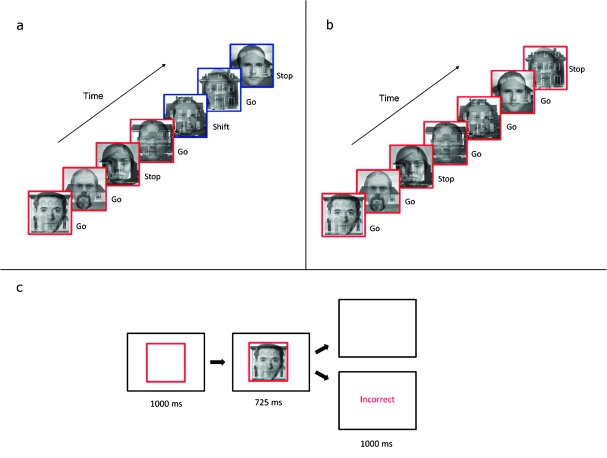
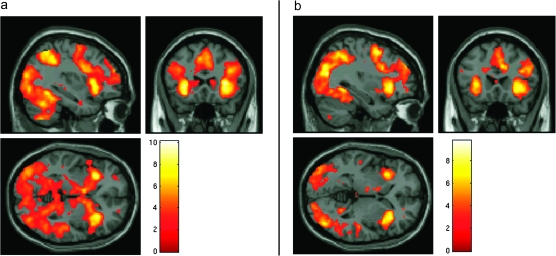
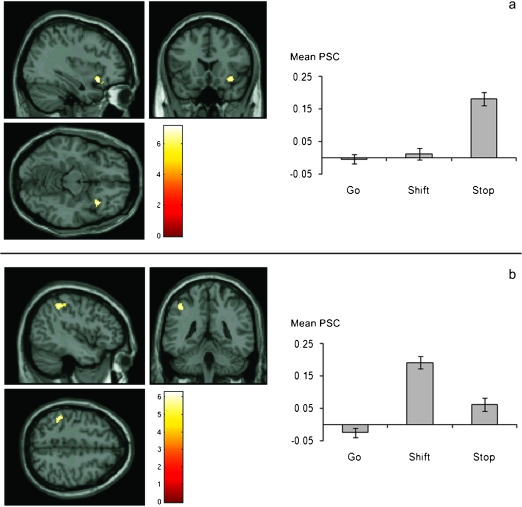
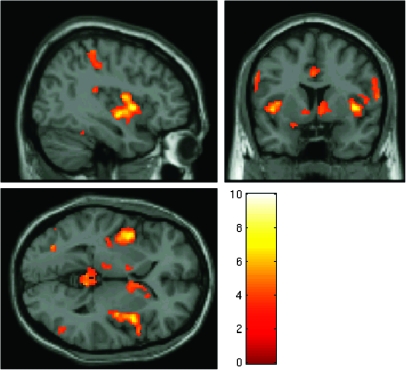
Evidence suggests that the right inferior frontal cortex (IFC) plays a specialized role in response inhibition. However, more recent findings indicate a broader role for this region in attentional control. Here, we used functional magnetic resonance imaging to examine the functional role of the right IFC in attention, inhibition, and response control in 2 experiments that employed novel variations of the go/no-go task. Across the 2 experiments, we observed a graded response in the right insula/IFC, whereby increasing response control demands led to an increase in activation. The results are consistent with the hypothesis that this region plays a key role in the integration of bottom-up, sensory information with top-down, response-related information to facilitate flexible, goal-directed behavior.
Overview
The claims and statistics of this paper haven’t been checked yet.
Run the check — free, no account needed. It reads the open-access text and checks the sources it cites.
Integrity signals
Registry
Cites
Statistics
Figures
Verification
Claims the paper makes
The claims and statistics of this paper haven’t been checked yet.
Run the check — free, no account needed. It reads the open-access text and checks the sources it cites.
Claims other papers make about this one
Each is checked against this paper’s own text: does it say what the citing paper says it does?
In the citing paper
“The right IFG, besides detecting changes in stimulus features (Sharp et al. 2010; Dodds et al. 2010), facilitates infrequent action-related events by activating nondominant but relevant responses while inhibiting automatic but irrelevant actions at the same time.”
From Large-scale functional neural network correlates of response inhibition: an fMRI meta-analysis (2017) · cites this paper as Dodds et al. 2010
Self-check
Percentages, sums and reported differences re-computed from the paper’s own numbers.
The self-check needs the paper’s full text.
Citations
Cites
Control of goal-directed and stimulus-driven attention in the brain
Corbetta, M., & Shulman, G. L. (2002) · Nature Reviews Neuroscience · doi:10.1038/nrn755 · Cited by 12,881 · cited 1×
“Cerebral Cortex May 2011;21:1155--1165 doi:10.1093/cercor/bhq187 Advance Access publication October 5, 2010 Dissociating Inhibition, Attention, and Response Control in the Frontoparietal Network”
BackgroundInfluentialCommon regions of the human frontal lobe recruited by diverse cognitive demands
Duncan, J., & Owen, A. M. (2000) · Trends in Neurosciences · doi:10.1016/s0166-2236(00)01633-7 · Cited by 2,498
The Prefrontal Cortex—An Update
Fuster, J. M. (2001) · Neuron · doi:10.1016/s0896-6273(01)00285-9 · Cited by 1,837
Stop-signal inhibition disrupted by damage to right inferior frontal gyrus in humans
Aron, A. R., Fletcher, P. C., Bullmore, E. T., Sahakian, B. J., & Robbins, T. W. (2003) · Nature Neuroscience · doi:10.1038/nn1003 · Cited by 1,771 · cited 2×
“Cerebral Cortex May 2011;21:1155--1165 doi:10.1093/cercor/bhq187 Advance Access publication October 5, 2010 Dissociating Inhibition, Attention, and Response Control in the Frontoparietal Network”
BackgroundInfluentialSelf-citationAron, A. R., & Poldrack, R. A. (2006) · The Journal of Neuroscience · doi:10.1523/jneurosci.4682-05.2006 · Cited by 1,630 · cited 1×
“Cerebral Cortex May 2011;21:1155--1165 doi:10.1093/cercor/bhq187 Advance Access publication October 5, 2010 Dissociating Inhibition, Attention, and Response Control in the Frontoparietal Network”
BackgroundInfluentialRight hemispheric dominance of inhibitory control: An event-related functional MRI study
Garavan, H., Ross, T. J., & Stein, E. A. (1999) · Proceedings of the National Academy of Sciences · doi:10.1073/pnas.96.14.8301 · Cited by 1,394 · cited 2×
“Cerebral Cortex May 2011;21:1155--1165 doi:10.1093/cercor/bhq187 Advance Access publication October 5, 2010 Dissociating Inhibition, Attention, and Response Control in the Frontoparietal Network”
BackgroundInfluentialThe role of the right inferior frontal gyrus: inhibition and attentional control
Hampshire, A., Chamberlain, S. R., Monti, M. M., Duncan, J., & Owen, A. M. (2010) · NeuroImage · doi:10.1016/j.neuroimage.2009.12.109 · Cited by 1,327 · cited 2×
“In another study, Hampshire et al. (2010) compared different versions of a stop-signal task and found that the right IFC was activated regardless of the specific output required— response inhibition, response initiation, or internal counting— but that activation was greater in blocks requiring a…”
BackgroundResultProjections to the frontal cortex from the posterior parietal region in the rhesus monkey
Petrides, M., & Pandya, D. (1984) · The Journal of comparative neurology · doi:10.1002/cne.902280110 · Cited by 1,101
Rubia, K., Russell, T., Overmeyer, S., Brammer, M. J., Bullmore, E. T., Sharma, T., Simmons, A., Williams, S. C. R., Giampietro, V., Andrew, C. M., et al. (2001) · NeuroImage · doi:10.1006/nimg.2000.0685 · Cited by 999 · cited 1×
“…frontal cortex (IFC) in the inhibition of motor responses (Kawashima et al. 1996; Garavan et al. 1999; Konishi et al. 1999; Menon et al. 2001; Rubia et al. 2001; Aron et al. 2003; Kelly et al. 2004; Aron and Poldrack 2006; Li et al. 2006; Hodgson et al. 2007; Leung and Cai 2007), suggesting…”
BackgroundA multimodal cortical network for the detection of changes in the sensory environment
Downar, J., Crawley, A. P., Mikulis, D. J., & Davis, K. D. (2000) · Nature Neuroscience · doi:10.1038/72991 · Cited by 947 · cited 2×
“…attentional reorienting and shifting (Corbetta and Shulman 2002; Hampshire and Owen 2006), oddball and target detection (McCarthy et al. 1997; Downar et al. 2000; Bledowski et al. 2004; Hampshire et al. 2007) and updating attended information (Hon et al. 2006), and is often coactivated with…”
BackgroundInfluential
Research works printed but not linked: 4
- 2009, Biological psychiatry, 67, 919
- 2001, 30, 319
- Kawashima, 1996, Brain research, 728, 79
- 2001, 13, 250
Cited by
Sorted by citations
Inhibition and the right inferior frontal cortex: one decade on
Aron, A. R., Robbins, T. W., & Poldrack, R. A. (2014) · Trends in Cognitive Sciences · doi:10.1016/j.tics.2013.12.003 · Cited by 2,166
Self-citationInhibition and impulsivity: behavioral and neural basis of response control
Bari, A., & Robbins, T. W. (2013) · Progress in Neurobiology · doi:10.1016/j.pneurobio.2013.06.005 · Cited by 1,921
Self-citationThe role of prefrontal cortex in cognitive control and executive function
Friedman, N. P., & Robbins, T. W. (2022) · Neuropsychopharmacology · doi:10.1038/s41386-021-01132-0 · Cited by 1,737
“The concept of diversity as well as unity of PFC functions can be illustrated in a typical fMRI study [144] which had defined task components of response inhibition and cognitive flexibility, finding increased BOLD activity in the FPN including both the RIFG region and in the parietal cortex.”
BackgroundSelf-citationImpulsivity, compulsivity, and top-down cognitive control
Dalley, J. W., Everitt, B. J., & Robbins, T. W. (2011) · Neuron · doi:10.1016/j.neuron.2011.01.020 · Cited by 1,589
“…for functional dissociations within the RIFG region that correspond to attentional and response inhibitory zones, and Dodds et al. have explicitly contrasted attentional and response control functions associated with the posterior parietal cortex and RIFG, respectively (Dodds et al., 2010).”
BackgroundSelf-citationA unified framework for inhibitory control
Munakata, Y., Herd, S. A., Chatham, C. H., Depue, B. E., Banich, M. T., & O’Reilly, R. C. (2011) · Trends in Cognitive Sciences · doi:10.1016/j.tics.2011.07.011 · Cited by 699
Fractionating impulsivity: neuropsychiatric implications
Dalley, J. W., & Robbins, T. W. (2017) · Nature Reviews Neuroscience · doi:10.1038/nrn.2017.8 · Cited by 607
“…a more important role for the inferior frontal cluster in response inhibition than in monitoring outcomes of the task but does not exclude the possibility that this structure has other functions such as executive attention or overall motor control 78 and operates as a node in other neural networks.”
Self-citationCreativity and the default network: A functional connectivity analysis of the creative brain at rest
Beaty, R. E., Benedek, M., Wilkins, R. W., Jauk, E., Fink, A., Silvia, P. J., Hodges, D. A., Koschutnig, K., & Neubauer, A. C. (2014) · Neuropsychologia · doi:10.1016/j.neuropsychologia.2014.09.019 · Cited by 456
Large-scale functional neural network correlates of response inhibition: an fMRI meta-analysis
Zhang, R., Geng, X., & Lee, T. M. C. (2017) · Brain Structure and Function · doi:10.1007/s00429-017-1443-x · Cited by 398
“The right IFG, besides detecting changes in stimulus features (Sharp et al. 2010; Dodds et al. 2010), facilitates infrequent action-related events by activating nondominant but relevant responses while inhibiting automatic but irrelevant actions at the same time.”
BackgroundCriaud, M., & Boulinguez, P. (2013) · Neuroscience & Biobehavioral Reviews · doi:10.1016/j.neubiorev.2012.11.003 · Cited by 368
Touroutoglou, A., Hollenbeck, M., Dickerson, B. C., & Feldman Barrett, L. (2012) · NeuroImage · doi:10.1016/j.neuroimage.2012.02.012 · Cited by 276
“…studies have shown increases in the activity of many regions within dAI network (dACC, MFG, SMG, FPA) during tasks that require attention/executive function (Barch et al., 1997; Cole and Schneider, 2007; Corbetta and Shulman, 2002; Dodds et al., 2011; Eichele et al., 2008; Kaller et al., 2011).”
A functional network perspective on response inhibition and attentional control
Erika-Florence, M., Leech, R., & Hampshire, A. (2014) · Nature Communications · doi:10.1038/ncomms5073 · Cited by 266
Hung, Y., Gaillard, S. L., Yarmak, P., & Arsalidou, M. (2018) · Human Brain Mapping · doi:10.1002/hbm.24232 · Cited by 212
Armbruster, D. J. N., Ueltzhöffer, K., Basten, U., & Fiebach, C. J. (2012) · Journal of Cognitive Neuroscience · doi:10.1162/jocn_a_00286 · Cited by 202
Banishing the Control Homunculi in Studies of Action Control and Behavior Change
Verbruggen, F., McLaren, I. P. L., & Chambers, C. D. (2014) · Perspectives on Psychological Science · doi:10.1177/1745691614526414 · Cited by 214
Disentangling common and specific neural subprocesses of response inhibition
Sebastian, A., Pohl, M. F., Klöppel, S., Feige, B., Lange, T., Stahl, C., Voss, A., Klauer, K. C., Lieb, K., & Tüscher, O. (2013) · NeuroImage · doi:10.1016/j.neuroimage.2012.09.020 · Cited by 193
“Yet, it might also be involved in attentional processing of a stop-signal (Boehler et al., 2011; Dodds et al., 2011; Hampshire et al., 2010; Sharp et al., 2010).”
BackgroundLawrence, N., Verbruggen, F., Morrison, S., Adams, R. C., & Chambers, C. (2014) · Appetite · doi:10.1016/j.appet.2014.11.006 · Cited by 204
Cognitive control reflects context monitoring, not motoric stopping, in response inhibition
Chatham, C. H., Claus, E. D., Kim, A., Curran, T., Banich, M. T., & Munakata, Y. (2012) · PLoS ONE · doi:10.1371/journal.pone.0031546 · Cited by 182
“More broadly, our conclusions are also in line with those drawn on the basis of comparisons of the same Double Go task we used above [11] and alternative context monitoring tasks [8–10,23–24] with the Stop Signal task, as described below.”
BackgroundResultde Bruin, A., Roelofs, A., Dijkstra, T., & FitzPatrick, I. (2014) · NeuroImage · doi:10.1016/j.neuroimage.2013.12.049 · Cited by 187
“Our fi nding of increased activation in the rIFG combined with greater activation in other parts of the frontoparietal network is also compatible with the idea that the rIFG is not an isolated module, but plays a role in this larger network (cf., Dodds et al., 2011).”
ResultAbreu, A. M., Macaluso, E., Azevedo, R. T., Cesari, P., Urgesi, C., & Aglioti, S. M. (2012) · European Journal of Neuroscience · doi:10.1111/j.1460-9568.2012.08104.x · Cited by 183
“response inhibition and attentional control (e.g. Aron et al., 2004; Dodds et al., 2011; Hampshire et al., 2010) and the anterior insula with heightened awareness and emotional processing (e.”
BackgroundInfluentialBlair, J., Veroude, K., & Buitelaar, J. K. (2016) · Neuroscience & Biobehavioral Reviews · doi:10.1016/j.neubiorev.2016.10.022 · Cited by 145
“The core neural systems involved in response inhibition include inferior frontal gyrus, anterior insula cortex and dorsomedial frontal cortex (particularly the pre-supplementary motor area) (e.g. Aron, 2011; Aron et al., 2014; Cai and Leung, 2011; Chikazoe et al., 2009; Dodds et al., 2011; Meffert et al., 2015).”
BackgroundBrain Stimulation in Alzheimer's Disease
Chang, C.-H., Lane, H., & Lin, C. (2018) · Frontiers in Psychiatry · doi:10.3389/fpsyt.2018.00201 · Cited by 150
“Previous neuroimaging study has demonstrated that right IFG involves in dissociating inhibition, attention, and response control in the frontoparietal network (115).”
BackgroundCognitive inhibition in depression and suicidal behavior: a neuroimaging study
Richard‐Devantoy, S., Ding, Y., Lepage, M., Turecki, G., & Jollant, F. (2015) · Psychological Medicine · doi:10.1017/s0033291715002421 · Cited by 140
“2009) and the integration of bottom-up sensory information with top-down response-related information (Dodds et al. 2011).”
BackgroundKharitonova, M., Martin, R., Gabrieli, J. D. E., & Sheridan, M. A. (2013) · Developmental Cognitive Neuroscience · doi:10.1016/j.dcn.2013.07.002 · Cited by 148
“…postulated to be critical for supporting response inhibition (e.g. Aron et al., 2004; Aron, 2007), but recent theoretical and empirical work has argued that it is instead involved in contextual monitoring (Chatham et al., 2011; Dodds et al., 2011; Hampshire et al., 2010; Munakata et al., 2011).”
BackgroundDefault network and frontoparietal control network theta connectivity supports internal attention
Kam, J. W. Y., Lin, J. J., Solbakk, A., Endestad, T., Larsson, P. G., & Knight, R. T. (2019) · Nature Human Behaviour · doi:10.1038/s41562-019-0717-0 · Cited by 133
Pan, J., Zhan, L., Hu, C., Yang, J., Wang, C., Gu, L., Zhong, S., Huang, Y., Wu, Q., Xie, X., et al. (2018) · Frontiers in Human Neuroscience · doi:10.3389/fnhum.2018.00070 · Cited by 130
“The FPN includes primarily portions of the frontal cortex and parietal cortex, in which the lateral PFC is a core region (Vincent et al., 2008; Dodds et al., 2011; Cole et al., 2013; Smith et al., 2013).”
BackgroundMethodFairhurst, M. T., Janata, P., & Keller, P. E. (2013) · NeuroImage · doi:10.1016/j.neuroimage.2013.09.027 · Cited by 116
“, 2010) and greater response control (Dodds et al., 2011).”
BackgroundGenetics of impulsive behaviour
Bevilacqua, L. M., & Goldman, D. A. (2013) · Philosophical Transactions of the Royal Society B Biological Sciences · doi:10.1098/rstb.2012.0380 · Cited by 129
“The role of the right inferior frontal gyrus (RIFG), associated with impulsive behaviour in healthy subjects and ADHD [38] is controversial [39,40].”
BackgroundBetter living through understanding the insula: Why subregions can make all the difference
Centanni, S. W., Janes, A. C., Haggerty, D. L., Atwood, B. K., & Hopf, F. W. (2021) · Neuropharmacology · doi:10.1016/j.neuropharm.2021.108765 · Cited by 116
“Higher AINS activity is seen with increasing response control requirements (Dodds et al., 2011; Wu et al., 2019) and hard versus easy attentional demands (Deary et al., 2004; Brooks et al., 2017), while insula lesion reduces cognitive function under high load (Wu et al., 2019).”
BackgroundDiesburg, D. A., & Wessel, J. R. (2021) · PsyArXiv (OSF Preprints) · doi:10.1016/j.neubiorev.2021.07.019 · Cited by 117
Prat, C. S., Mason, R. A., & Just, M. A. (2011) · Journal of Experimental Psychology Learning Memory and Cognition · doi:10.1037/a0026037 · Cited by 110
“Another possible account for the increased RH involvement with increasing processing demands is that it reflects a greater need for more general cognitive processes, such as response selection and/or inhibition (e.g., Dodds et al., 2010).”
Neural correlates of reversal learning in severe mood dysregulation and pediatric bipolar disorder
Adleman, N. E., Kayser, R., Dickstein, D., Blair, R. J. R., Pine, D., & Leibenluft, E. (2011) · Journal of the American Academy of Child & Adolescent Psychiatry · doi:10.1016/j.jaac.2011.07.011 · Cited by 106
Eliasova, I., Anderkova, L., Marecek, R., & Rektorova, I. (2014) · Journal of the Neurological Sciences · doi:10.1016/j.jns.2014.08.036 · Cited by 115
Reward prospect rapidly speeds up response inhibition via reactive control
Boehler, C. N., Schevernels, H., Hopf, J., Stoppel, C. M., & Krebs, R. M. (2014) · Cognitive Affective & Behavioral Neuroscience · doi:10.3758/s13415-014-0251-5 · Cited by 113
Li, Q., Yang, G., Li, Z., Qi, Y., Cole, M. W., & Liu, X. (2017) · Neuroscience & Biobehavioral Reviews · doi:10.1016/j.neubiorev.2017.09.032 · Cited by 96
“Some studies suggest that the left PC but not the right PC is relevant to attentional shifting between taskrelevant stimuli (Dodds et al., 2011) and mediates the allocation of attentional resources toward the task-relevant stream such that the processing of the information is up-regulated (Liu et…”
Clemente, M., Rodríguez, A., Solaz, B. R., & Alcañíz, M. (2013) · Expert Systems with Applications · doi:10.1016/j.eswa.2013.08.055 · Cited by 96
“Recent works (Dodds et al., 2011) have found evidence that the right insula may be activated by a combination of attentional and response control demands, playing a role in the processing of sensory stimuli that are relevant to the current goals.”
BackgroundDöhnel, K., Schuwerk, T., Meinhardt, J., Sodian, B., Hajak, G., & Sommer, M. (2012) · NeuroImage · doi:10.1016/j.neuroimage.2012.01.073 · Cited by 99
“Furthermore, this argument is consistent with a recent study reporting a graded IFC response with increasing response control demands being associated with an increase in IFC activation (Dodds et al., 2011).”
Heine, J., Prüß, H., Kopp, U. A., Wegner, F., Bergh, F. T., Münte, T. F., Wandinger, K., Paul, F., Bartsch, T., & Finke, C. (2018) · Journal of Neurology Neurosurgery & Psychiatry · doi:10.1136/jnnp-2017-317780 · Cited by 90
Awake and behaving mouse fMRI during Go/No-Go task
Han, Z., Chen, W., Chen, X., Zhang, K., Tong, C., Zhang, X., Li, C., & Liang, Z. (2019) · NeuroImage · doi:10.1016/j.neuroimage.2019.01.002 · Cited by 83
Response inhibition and addiction medicine
Spechler, P. A., Chaarani, B., Hudson, K. E., Potter, A., Foxe, J. J., & Garavan, H. (2015) · Progress in brain research · doi:10.1016/bs.pbr.2015.07.024 · Cited by 91
Mahjoory, K., Čėsnaitė, E., Hohlefeld, F. U., Villringer, A., & Nikulin, V. V. (2018) · NeuroImage · doi:10.1016/j.neuroimage.2018.12.001 · Cited by 76
“, 2014), especially when task requirements include switching (Dodds et al., 2011) and novelty aspects (Corbetta and Shulman, 2002).”
Proactive inhibitory control: A general biasing account
Elchlepp, H., Lavric, A., Chambers, C., & Verbruggen, F. (2016) · Cognitive Psychology · doi:10.1016/j.cogpsych.2016.01.004 · Cited by 77
“, 2010). For example, Cai et al. (2011) directly measured corticomotor excitability on go trials in a stop context (cue signaling ‘maybe stop left/right’) by means of motor evoked potentials.”
BackgroundFalse belief and counterfactual reasoning in a social environment
Hoeck, N. V., Begtas, E., Steen, J., Kestemont, J., Vandekerckhove, M. M. P., & Overwalle, F. V. (2014) · NeuroImage · doi:10.1016/j.neuroimage.2013.12.043 · Cited by 80
Predicting individual decision-making responses based on single-trial EEG
Si, Y., Li, F., Duan, K., Tao, Q., Li, C., Cao, Z., Zhang, Y., Biswal, B. B., Li, P., Yao, D., et al. (2019) · NeuroImage · doi:10.1016/j.neuroimage.2019.116333 · Cited by 78
“When making a decision, the association between the right insula and the inferior frontal cortex plays a crucial role in the integration of bottom-up, sensory information with top-down, response-related information to goal-directed behavior (Dodds et al., 2010).”
Hampshire, A., Chaudhry, A. M., Owen, A. M., & Roberts, A. (2011) · NeuroImage · doi:10.1016/j.neuroimage.2011.10.072 · Cited by 85
“More broadly, a similar area has often been reported in task manipulations that involve no obvious reward component at all— for example, response inhibition in the stop signal task (Aron et al., 2004; Dodds et al., 2011; Hampshire et al., 2010; Rubia et al., 2003), simple target detection (Hampshire et al.”
Bell, R. P., Foxe, J. J., Ross, L. A., & Garavan, H. (2013) · Neuropharmacology · doi:10.1016/j.neuropharm.2013.02.018 · Cited by 71
“…parietal lobule, bilateral insula and the midline cingulate and pre-SMA as canonical nodes of the RIC (Chen et al., 2009; Chevrier et al., 2007; Dodds et al., 2011; Fassbender et al., 2009, 2004; Garavan et al., 2006, 2008, 1999; Hampshire et al., 2010; Hester and Garavan, 2004; Kaufman et…”
Hong, X., Wang, Y., Sun, J., Li, C., & Tong, S. (2017) · Scientific Reports · doi:10.1038/s41598-017-08807-z · Cited by 77
A role for the claustrum in cognitive controlPreprint
Madden, M. B., Stewart, B. W., White, M. G., Krimmel, S. R., Qadir, H., Barrett, F. S., Seminowicz, D. A., & Mathur, B. N. (2022) · PsyArXiv (OSF Preprints) · doi:10.1016/j.tics.2022.09.006 · Cited by 76
Ho, T. C., Sacchet, M. D., Connolly, C. G., Margulies, D. S., Tymofiyeva, O., Paulus, M. P., Simmons, A. N., Gotlib, I. H., & Yang, T. T. (2017) · Neuropsychopharmacology · doi:10.1038/npp.2017.103 · Cited by 73
“Studies on depression have increasingly focused on IFNs centered on the anterior cingulate cortex (ACC), a structure situated medially in the cerebral cortex and superior to the corpus callosum.”
MethodInfluentialChiu, Y., & Egner, T. (2014) · Psychological Science · doi:10.1177/0956797614553945 · Cited by 74
Morein‐Zamir, S., Dodds, C., van Hartevelt, T. J., Schwarzkopf, W., Sahakian, B., Müller, U., & Robbins, T. (2014) · Human Brain Mapping · doi:10.1002/hbm.22539 · Cited by 65
“Previously, greater activation associated with shifting compared with stopping was reported in the left inferior parietal cortex [Dodds et al., 2011] though not in posterior medial areas.”
BackgroundMethodResultInfluentialSelf-citationAn fMRI Study to Analyze Neural Correlates of Presence during Virtual Reality Experiences
Clemente, M., Solaz, B. R., Rodríguez‐Pujadas, A., Barrós‐Loscertales, A., Baños, R. M., Botella, C., Alcañíz, M., & Ávila, C. (2013) · Interacting with Computers · doi:10.1093/iwc/iwt037 · Cited by 65
“Recent studies (Dodds et al., 2011) have found evidence that the right insula may be activated by a combination of attentional and response control demands, playing a role in the processing of sensory stimuli that are relevant to current goals.”
BackgroundThe Cambridge Handbook of Substance and Behavioral Addictions
Sussman, S. Y. (2020) · Cambridge University Press eBooks · doi:10.1017/9781108632591 · Cited by 64
Morein‐Zamir, S., Jones, P. S., Bullmore, E. T., Robbins, T. W., & Ersche, K. D. (2013) · Neuropsychopharmacology · doi:10.1038/npp.2013.90 · Cited by 63
“…cannot conclude unequivocally that the hypoactivation resulted from inhibitory impairments per se rather than related executive functions such as performance monitoring (Li et al, 2006), specific task characteristics (Aichert et al, 2012), or increased response control demands (Dodds et al, 2011).”
BackgroundSelf-citationInferior frontal cortex activity is modulated by reward sensitivity and performance variability
Fuentes‐Claramonte, P., Ávila, C., Rodríguez‐Pujadas, A., Costumero, V., Ventura‐Campos, N., Bustamante, J. C., Rosell‐Negre, P., & Barrós‐Loscertales, A. (2016) · Biological Psychology · doi:10.1016/j.biopsycho.2016.01.001 · Cited by 60
“attentional functions in addition to response inhibition (Dodds et al., 2011; Hampshire et al., 2010, 2009).”
Chevalier, N., Chatham, C. H., & Munakata, Y. (2014) · Journal of Experimental Psychology General · doi:10.1037/a0035868 · Cited by 67
Brain circuitry of compulsivity and impulsivity
Grant, J. E., & Kim, S. W. (2013) · CNS Spectrums · doi:10.1017/s109285291300028x · Cited by 61
“The right inferior frontal gyrus and its associated networks may also have an important role in top-down response control, given that malfunction of this area is associated with impulsive behaviors.(14,15) Thus, distinct but inter-related neurocircuits may be relevant to the many facets of impulsivity.”
BackgroundWang, H., Zhang, X., Si, C., Xu, Y., Liu, Q., Bian, H., Zhang, B.-W., Li, X., & Yan, Z. (2018) · Neuropsychiatric Disease and Treatment · doi:10.2147/ndt.s165677 · Cited by 61
“First, although the dlPFC is a significant part of the frontoparietal control network, a flexible and superordinate system supporting adaptive behavioral control, 57,68 different brain regions of the frontoparietal network have shared and unique functions across a broad range of cognitive demands.”
Si, Y., Jiang, L., Tao, Q., Chen, C., Li, F., Jiang, Y., Zhang, T., Cao, X., Wan, F., Yao, D., et al. (2019) · Journal of Neural Engineering · doi:10.1088/1741-2552/ab39ce · Cited by 57
“By contrast, a deficit in decision-making may be the result of impairments of cognitive brain functions, including cognitive control (Waskom et al 2016), monitor of action (Amodio and Frith 2006), attention (Dodds et al 2010) and goal maintenance (Sanfey et al 2003).”
BackgroundThe Impact of Emotional States on Cognitive Control Circuitry and Function
Cohen, A. O., Dellarco, D. V., Breiner, K., Helion, C., Heller, A. S., Rahdar, A., Pedersen, G., Chein, J., Dyke, J. P., Galvan, A., et al. (2016) · Journal of Cognitive Neuroscience · doi:10.1162/jocn_a_00906 · Cited by 54
Garavan, H., & Weierstall, K. (2012) · Preventive Medicine · doi:10.1016/j.ypmed.2012.05.018 · Cited by 54
“, 2010), although it may be the case that in order to evoke right IFG activity, the salience of these events must be relevant to response control (Dodds et al., 2011).”
BackgroundBattaglia‐Mayer, A., Buiatti, T., Caminiti, R., Ferraina, S., Lacquaniti, F., & Shallice, T. (2014) · Neuroscience & Biobehavioral Reviews · doi:10.1016/j.neubiorev.2014.03.002 · Cited by 56
Cornwell, B. R., Mueller, S. C., Kaplan, R., Grillon, C., & Monique Ernst, D. (2012) · Brain and Cognition · doi:10.1016/j.bandc.2012.01.002 · Cited by 52
“A specific role for right VLPFC in response inhibition, however, is a matter of significant debate (Dodds et al., 2010; Hampshire et al., 2010; Sharp et al., 2010).”
BackgroundSpace, time, and causality in the human brain
Woods, A. J., Hamilton, R. H., Kranjec, A., Minhaus, P., Bikson, M., Yu, J. W., & Chatterjee, A. K. (2014) · NeuroImage · doi:10.1016/j.neuroimage.2014.02.015 · Cited by 52
“Collectively, RIFG and insular cortex are thought to integrate sensory and cognitive information to facilitate goal-directed responses to stimuli in the environment (Dodds et al., 2011).”
BackgroundNeural mechanisms of high‐risk decisions‐to‐drink in alcohol‐dependent women
Arcurio, L. R., Finn, P., & James, T. W. (2013) · Addiction Biology · doi:10.1111/adb.12121 · Cited by 50
Morein-Zamir, S., Voon, V., Dodds, C. M., Sule, A., van Niekerk, J., Sahakian, B. J., & Robbins, T. W. (2016) · Psychological Medicine · doi:10.1017/s0033291715002330 · Cited by 50
“In healthy adults, this combined task has previously revealed stopping specific activation in the right inferior frontal cortex (IFC) and shifting specific activation in the left inferior parietal cortex (IPC), against a background of extensive co-activation for both in fronto-parietal regions (Dodds et al. 2011).”
BackgroundMethodInfluentialSelf-citationBehan, B., Stone, A., & Garavan, H. (2014) · Human Brain Mapping · doi:10.1002/hbm.22621 · Cited by 56
“However, its involvement in successful response inhibition has been linked to other functions including attentional monitoring and the detection and processing of salient cues [Chao et al., 2009; Dodds et al., 2011; Duann et al., 2009; Hampshire et al., 2010; Hester et al., 2004; Li et al., 2006; Sharp et al., 2010].”
BackgroundSingle-subject prediction of response inhibition behavior by event-related potentials
Stock, A., Popescu, F., Neuhaus, A. H., & Beste, C. (2015) · Journal of Neurophysiology · doi:10.1152/jn.00969.2015 · Cited by 51
Boehler, C. N., Appelbaum, L. G., Krebs, R. M., Chen, L.-C., & Woldorff, M. G. (2011) · PLoS ONE · doi:10.1371/journal.pone.0026386 · Cited by 48
“Moreover, it has recently been suggested in the context of a modified Go-NoGo task that the requirements for response control irrespective of response inhibition can also strongly activate the right IFG [29].”
Reed, D. D., Naudé, G. P., Gelino, B. W., & Amlung, M. T. (2020) · Cambridge University Press eBooks · doi:10.1017/9781108632591.011 · Cited by 48
Psychopathy and response inhibition: A meta-analysis of go/no-go and stop signal task performance
Gillespie, S. M., Lee, J., Williams, R., & Jones, A. (2022) · Neuroscience & Biobehavioral Reviews · doi:10.1016/j.neubiorev.2022.104868 · Cited by 51
Gürsel, D. A., Reinholz, L., Bremer, B., Schmitz‐Koep, B., Franzmeier, N., Avram, M., & Koch, K. (2020) · Journal of Psychiatry and Neuroscience · doi:10.1503/jpn.190038 · Cited by 48
Qiu, Z., & Wang, J. (2021) · Psychological Medicine · doi:10.1017/s0033291721000362 · Cited by 49
Macoveanu, J., Hornbøll, B., Elliott, R., Erritzøe, D., Paulson, O. B., Siebner, H. R., Knudsen, G. M., & Rowe, J. B. (2012) · Neuropsychopharmacology · doi:10.1038/npp.2012.264 · Cited by 49
“The right IFG has been previously associated with switching to alternative responses and withholding responses (Kenner et al, 2010; Dodds et al, 2011).”
BackgroundSchmidt, E. L., Burge, W. K., Visscher, K., & Ross, L. A. (2015) · Neuropsychology · doi:10.1037/neu0000242 · Cited by 52
Commonality between executive functioning and effortful control related to adjustment
Kim‐Spoon, J., Deater-Deckard, K. D., Calkins, S. D., King‐Casas, B., & Bell, M. A. (2018) · Journal of Applied Developmental Psychology · doi:10.1016/j.appdev.2018.10.004 · Cited by 53
“integrates inhibitory and attentional control to produce flexible, goal-directed behavior (Dodds et al., 2011).”
BackgroundThe Prevention and Treatment of Gambling Disorders: Some Art, Some Science
Derevensky, J. L. (2020) · Cambridge University Press eBooks · doi:10.1017/9781108632591.024 · Cited by 45
Assem, M., Shashidhara, S., Glasser, M. F., & Duncan, J. (2024) · Cerebral Cortex · doi:10.1093/cercor/bhad537 · Cited by 49
“Many previous fMRI studies focused on dissociations between executive functions, suggesting they are supported by functionally distinct territories of the association cortices (Wager et al. 2005; Dosenbach et al. 2006; Dodds et al. 2011; Hampshire et al. 2012; Eisenreich et al. 2017).”
Humans with latent toxoplasmosis display altered reward modulation of cognitive control
Stock, A., Dajkic, D., Köhling, H.-L., von Heinegg, E. H., Fiedler, M., & Beste, C. (2017) · Scientific Reports · doi:10.1038/s41598-017-10926-6 · Cited by 46
Considering the Overlap and Nonoverlap of Compulsivity, Impulsivity, and Addiction
Blum, A. W., & Grant, J. E. (2020) · Cambridge University Press eBooks · doi:10.1017/9781108632591.038 · Cited by 44
Neurobiological Foundations of Behavioral Addictions
Vaccaro, A. G., & Potenza, M. N. (2020) · Cambridge University Press eBooks · doi:10.1017/9781108632591.016 · Cited by 45
Neurobiology of Substance Addictions
Christie, N. C., & Bechara, A. (2020) · Cambridge University Press eBooks · doi:10.1017/9781108632591.015 · Cited by 44
Sensitization of Incentive Salience and the Transition to Addiction
Warlow, S. M., Baumgartner, H. M., Freeland, C. M., Naffziger, E. E., Olney, J. J., Berridge, K. C., & Robinson, M. J. F. (2020) · Cambridge University Press eBooks · doi:10.1017/9781108632591.006 · Cited by 46
Mindfulness-Based Interventions Applied to Addiction Treatments
Kechter, A., & Black, D. S. (2020) · Cambridge University Press eBooks · doi:10.1017/9781108632591.040 · Cited by 43
Multiple Memory Systems, Addiction, and Health Habits: New Routes for Translational Science
Stacy, A. W., Pike, J. R., & Lee, A. Y. (2020) · Cambridge University Press eBooks · doi:10.1017/9781108632591.017 · Cited by 43
Tanning as an Addiction: The State of the Research and Implications for Intervention
Miller, K. A., & Mays, D. M. (2020) · Cambridge University Press eBooks · doi:10.1017/9781108632591.037 · Cited by 43
Schulte, E. M., Schiestl, E. T., & Gearhardt, A. N. (2020) · Cambridge University Press eBooks · doi:10.1017/9781108632591.035 · Cited by 43
Behavioral Economics and Addictive Disorders
Jarmolowicz, D. P., & Schneider, T. D. (2020) · Cambridge University Press eBooks · doi:10.1017/9781108632591.005 · Cited by 42
Prevention and Treatment of Compulsive Buying Disorder
Galimov, A., & Black, D. W. (2020) · Cambridge University Press eBooks · doi:10.1017/9781108632591.027 · Cited by 42
Blum, K., Roy, A. K., Podesta, A., Modestino, E. J., Steinberg, B., Gondré-Lewis, M. C., Baron, D. A., Thanos, P. K., Lott, L., Badgaiyan, S., et al. (2020) · Cambridge University Press eBooks · doi:10.1017/9781108632591.031 · Cited by 42
Prevention and Treatment of “Food Addiction”
Davis, C., & Mason, A. E. (2020) · Cambridge University Press eBooks · doi:10.1017/9781108632591.023 · Cited by 42
Human Neurobiological Approaches to Hedonically Motivated Behaviors
Burger, K. S., Shearrer, G. E., & Sadler, J. R. (2020) · Cambridge University Press eBooks · doi:10.1017/9781108632591.009 · Cited by 42
Feedback Models for Gambling Control: The Use and Efficacy of Online Responsible Gambling Tools
Griffiths, M. D. (2020) · Cambridge University Press eBooks · doi:10.1017/9781108632591.034 · Cited by 42
Mind-wandering: mechanistic insights from lesion, tDCS, and iEEG
Kam, J. W. Y., Mittner, M., & Knight, R. T. (2022) · Trends in Cognitive Sciences · doi:10.1016/j.tics.2021.12.005 · Cited by 44
Chronotype regulates the neural basis of response inhibition during the daytime
Song, J., Feng, P., Zhao, X., Xu, W., Xiao, L., Zhou, J., & Zheng, Y. (2018) · Chronobiology International · doi:10.1080/07420528.2017.1392550 · Cited by 40
“The right lateral IFG is involved in both attentional and response control (Dodds et al., 2011; Hampshire et al., 2010) and has been referred to as a “brake”, because it is important for pausing and braking responses, in addition to outright stopping (Aron et al., 2014).”
BackgroundSuchotzki, K., Verschuère, B., Peth, J., Crombez, G., & Gamer, M. (2014) · Human Brain Mapping · doi:10.1002/hbm.22637 · Cited by 38
“However, note that our results also fit with findings and claims of other authors proposing that rIFG, rTPG, and rMFG activity may not be specific for one mental process, but rather reflect an interplay of multiple processes in complex cognitive tasks [Corbetta et al., 2008; Corbetta and Shulman, 2002; Dodds et al., 2…”
BackgroundResultNikolaou, K., Critchley, H., & Duka, T. (2013) · PLoS ONE · doi:10.1371/journal.pone.0076649 · Cited by 42
“Recent fMRI studies [34,35,36,37,38,39] have helped delineate distinct roles for the IFG and pre-SMA in SST and Go/No-Go task performance: The IFG is activated during the control of motor responses and successful stopping, but also more generically in response to presentations of infrequent visually-salient stimuli, a…”
BackgroundSegregating sustained attention from response inhibition in ADHD: An fMRI study
Hwang, S., Meffert, H., Parsley, I. C., Tyler, P. M., Erway, A. K., Botkin, M. L., Pope, K., & Blair, J. (2019) · NeuroImage Clinical · doi:10.1016/j.nicl.2019.101677 · Cited by 43
Becker, M., Repantis, D., Dresler, M., & Kühn, S. (2022) · Human Brain Mapping · doi:10.1002/hbm.25949 · Cited by 46
Bell, R. P., Garavan, H., & Foxe, J. J. (2014) · Neuropharmacology · doi:10.1016/j.neuropharm.2014.05.011 · Cited by 38
“…parietal lobule, bilateral insula and the midline cingulate and pre-SMA as canonical nodes of the RIC (Chen et al., 2009; Chevrier et al., 2007; Dodds et al., 2011; Fassbender et al., 2009, 2004; Garavan et al., 2006, 2008, 1999; Hampshire et al., 2010; Hester and Garavan, 2004; Kaufman et…”
BackgroundSutoko, S., Monden, Y., Tokuda, T., Ikeda, T., Nagashima, M., Funane, T., Atsumori, H., Kiguchi, M., Maki, A., Yamagata, T., et al. (2020) · Frontiers in Human Neuroscience · doi:10.3389/fnhum.2020.00003 · Cited by 38
Metadata
- Authors
- Dodds, C. M., Morein-Zamir, S., & Robbins, T. W.
- Affiliations
- GlaxoSmithKline (United Kingdom) (GB)
- University of Cambridge (GB)
- Corresponding author
- Dodds, C. M.
- ORCID
- Robbins, T. W.
- Venue
- Cerebral Cortex
- Publisher
- Oxford University Press (OUP)
- Published
- 2010-10-05
- Volume
- 21
- Issue
- 5
- Pages
- 1155-1165
- ISSN
- 1047-3211 (ISSN-L)
- 1460-2199
- PMC
- PMC3077432
- OpenAlex
- W2101475053
- Cited by
- 270
- References
- 36
- Citations by year
- 2026: 4 · 2025: 10 · 2024: 7 · 2023: 7 · 2022: 19 · 2021: 20 · 2020: 67 · 2019: 14 · 2018: 15 · 2017: 15 · 2016: 6 · 2015: 18 · 2014: 26 · 2013: 17 · 2012: 15
- FWCI
- 7.93
- Type
- journal article
- Language
- en
- Open access
- hybrid
- doi.org
- Licence
- cc-by-nc
- Locations
- Cerebral Cortex (publishedVersion, cc-by-nc)
- Europe PMC (PubMed Central) (publishedVersion, cc-by-nc)
- PubMed Central (publishedVersion, cc-by-nc)
- PubMed (publishedVersion)
- Funders
- Wellcome Trust (089589/Z/09/Z, 089589, 093875)
- Medical Research Council (089589/Z/09/Z)
- Topics
- Life Sciences › Neuroscience › Cognitive Neuroscience › Neural and Behavioral Psychology Studies
- Life Sciences › Neuroscience › Cognitive Neuroscience › Neurobiology of Language and Bilingualism
- Social Sciences › Arts and Humanities › Philosophy › Free Will and Agency
- Keywords
- response inhibition, attentional control, response control, right inferior frontal cortex, right insula, frontoparietal network, go/no-go task, top-down control, goal-directed behavior, cognitive flexibility
- MeSH terms
- Adolescent, Adult, Attention, Female, Humans, Magnetic Resonance Imaging, Male, Models, Neurological, Nerve Net, Neural Inhibition, Parietal Lobe, Prefrontal Cortex, Young Adult, Executive Function
About these checks
Registry, retraction, Cites and statistics results are computed, not judged, with one exception: a printed reference that no index lists is read once by a model before it counts as a citation error. Claims are extracted by a model and kept only when their quote appears verbatim in the text; each cited source is then checked, with a model’s help, for whether it says what the claim relies on. Those verdicts can be wrong — read the claim’s quote and the cited source before relying on one.
Statistics and arithmetic are recomputed, not judged.
Confidence bands are shown only for fields calibrated on our annotated test set. None is calibrated yet, so no band is shown.
What counts as a claim ›How we measure confidence ›How we check this ›
Are you an author, or do you see a problem with this page? Request a review
