

The DOI matches its Crossref record; 76 of the 76 references it cites were found in a registry or an index.
Individual Differences in Premotor Brain Systems Underlie Behavioral Apathy
Open accessAbstract
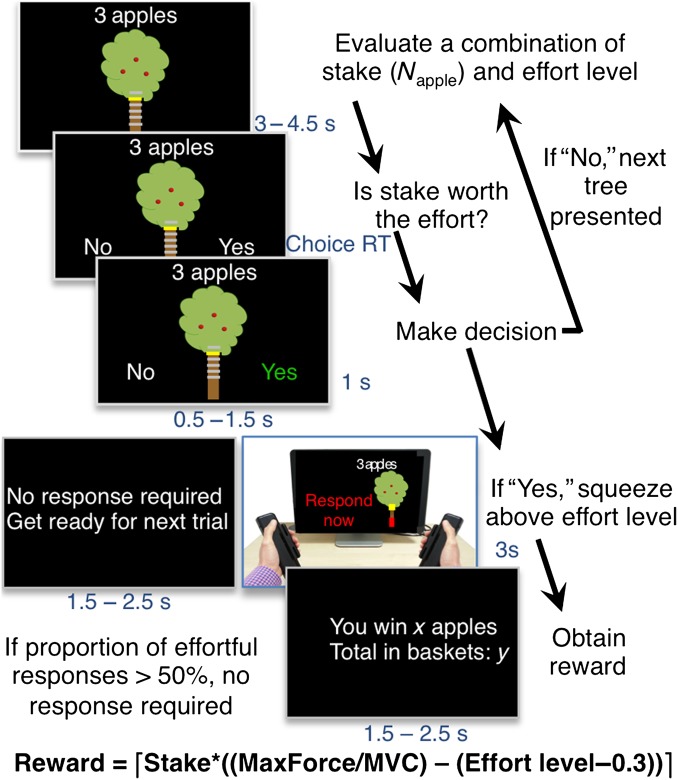
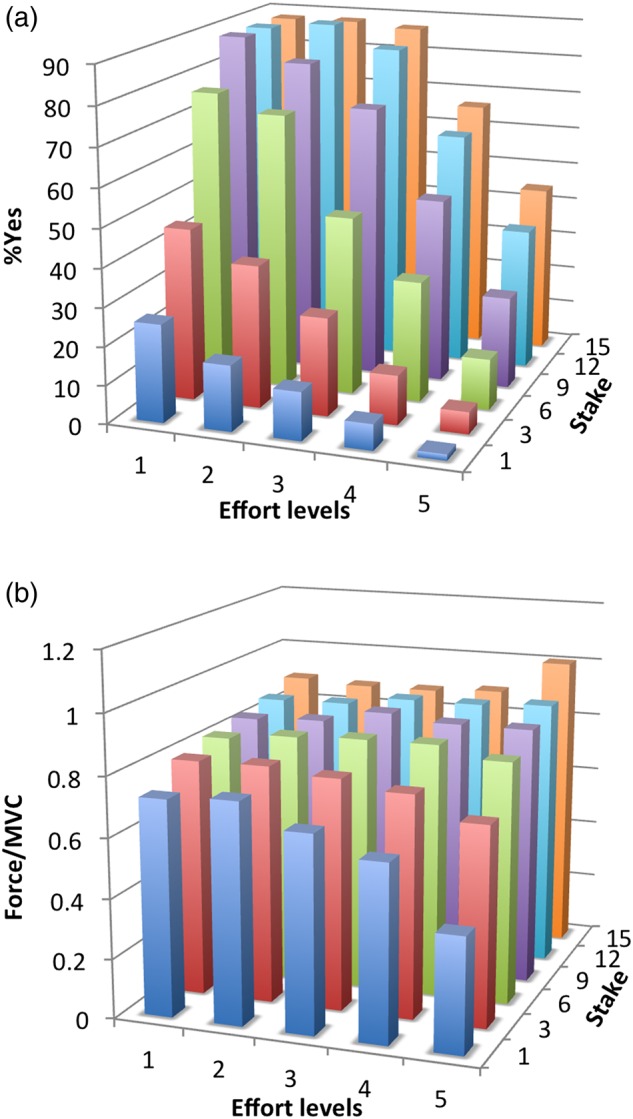
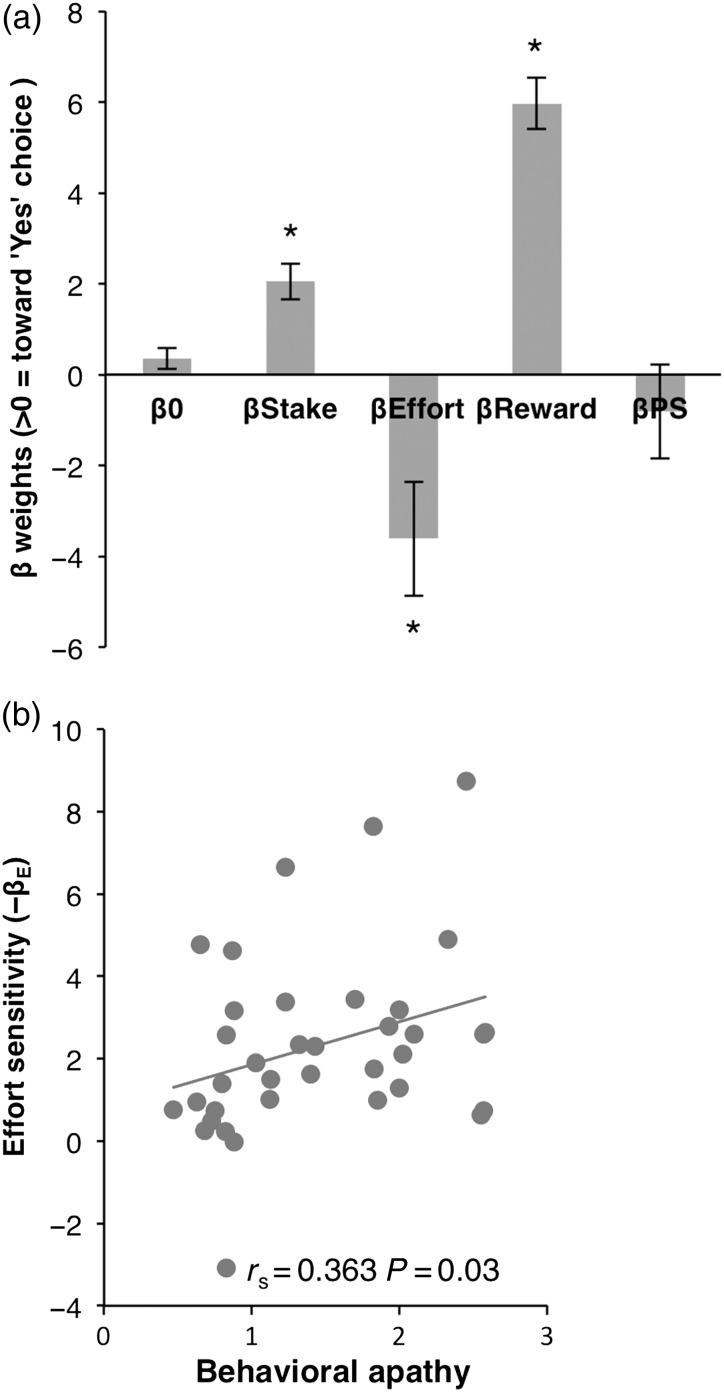
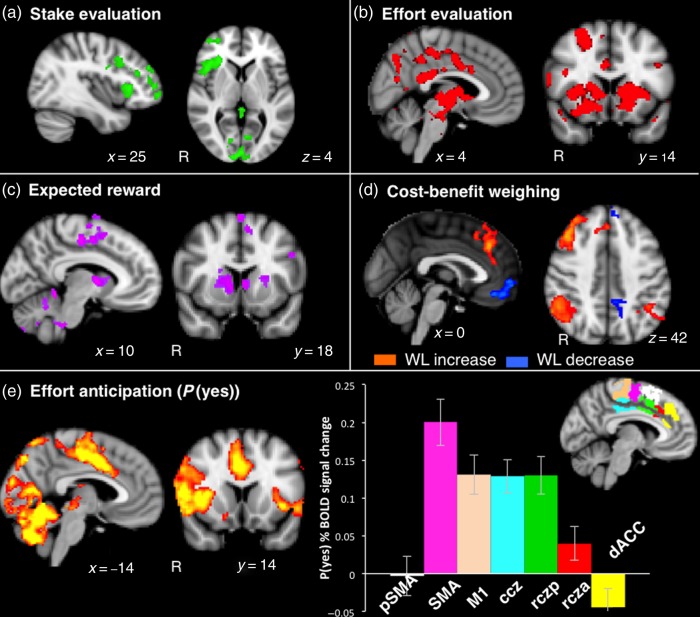
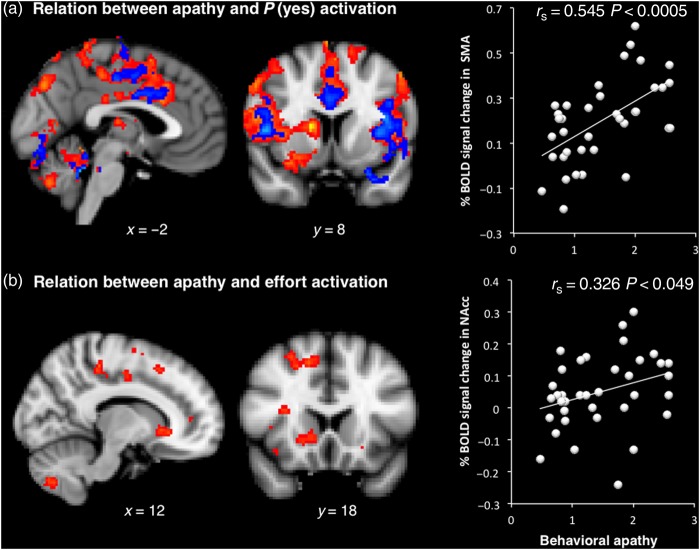
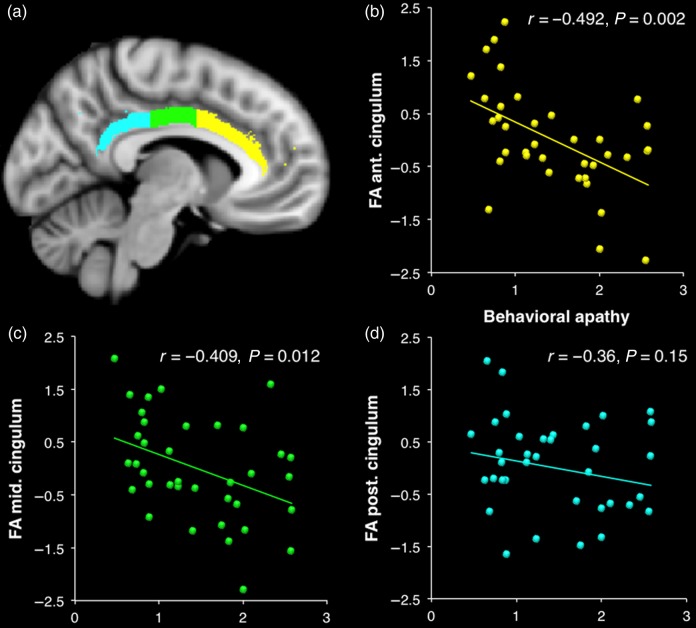
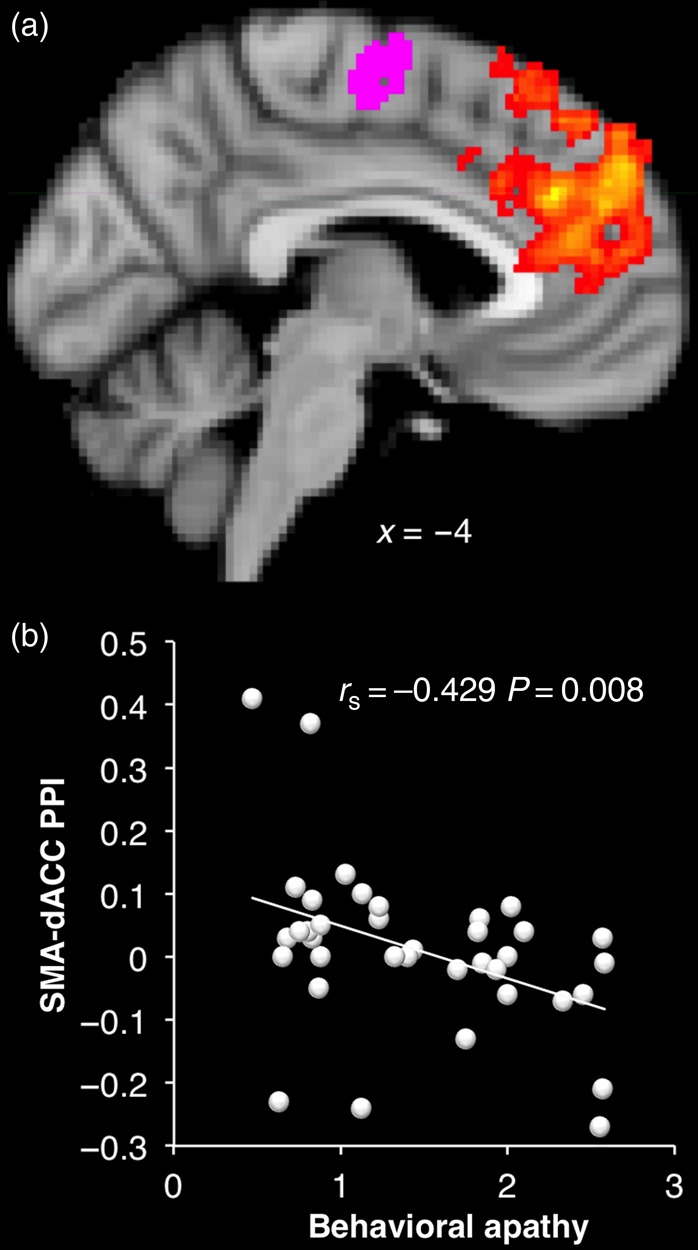
Lack of physical engagement, productivity, and initiative-so-called "behavioral apathy"--is a common problem with significant impact, both personal and economic. Here, we investigate whether there might be a biological basis to such lack of motivation using a new effort and reward-based decision-making paradigm, combined with functional and diffusion-weighted imaging. We hypothesized that behavioral apathy in otherwise healthy people might be associated with differences in brain systems underlying either motivation to act (specifically in effort and reward-based decision-making) or in action processing (transformation of an intention into action). The results demonstrate that behavioral apathy is associated with increased effort sensitivity as well as greater recruitment of neural systems involved in action anticipation: supplementary motor area (SMA) and cingulate motor zones. In addition, decreased structural and functional connectivity between anterior cingulate cortex (ACC) and SMA were associated with increased behavioral apathy. These findings reveal that effort sensitivity and translation of intentions into actions might make a critical contribution to behavioral apathy. We propose a mechanism whereby inefficient communication between ACC and SMA might lead to increased physiological cost--and greater effort sensitivity--for action initiation in more apathetic people.
Overview
The claims and statistics of this paper haven’t been checked yet.
Run the check — free, no account needed. It reads the open-access text and checks the sources it cites.
Integrity signals
Registry
Cites
Statistics
Figures
Verification
Claims the paper makes
The claims and statistics of this paper haven’t been checked yet.
Run the check — free, no account needed. It reads the open-access text and checks the sources it cites.
Self-check
Percentages, sums and reported differences re-computed from the paper’s own numbers.
The self-check needs the paper’s full text.
Citations
Cites
Lovibond, P. F., & Lovibond, S. H. (1995) · Behaviour Research and Therapy · doi:10.1016/0005-7967(94)00075-u · Cited by 14,523
Control of goal-directed and stimulus-driven attention in the brain
Corbetta, M., & Shulman, G. L. (2002) · Nature Reviews Neuroscience · doi:10.1038/nrn755 · Cited by 12,881
Jenkinson, M., Bannister, P., Brady, M., & Smith, S. (2002) · NeuroImage · doi:10.1006/nimg.2002.1132 · Cited by 11,888
Conflict monitoring and cognitive control
Botvinick, M. M., Braver, T. S., Barch, D. M., Carter, C. S., & Cohen, J. D. (2001) · Psychological Review · doi:10.1037/0033-295x.108.3.624 · Cited by 7,351
Contributions of anterior cingulate cortex to behaviour
Devinsky, O., Morrell, M. J., & Vogt, B. A. (1995) · Brain · doi:10.1093/brain/118.1.279 · Cited by 3,377
Characterization and propagation of uncertainty in diffusion-weighted MR imaging
Behrens, T. E. J., Woolrich, M. W., Jenkinson, M., Johansen‐Berg, H., Nunes, R. G., Clare, S., Matthews, P. M., Brady, J. M., & Smith, S. M. (2003) · Magnetic Resonance in Medicine · doi:10.1002/mrm.10609 · Cited by 3,038
Self-citationAnterior Cingulate Conflict Monitoring and Adjustments in Control
Kerns, J. G., Cohen, J. D., MacDonald, A. W., Cho, R. Y., Stenger, V. A., & Carter, C. S. (2004) · Science · doi:10.1126/science.1089910 · Cited by 2,891
Probabilistic Independent Component Analysis for Functional Magnetic Resonance Imaging
Beckmann, C. F., & Smith, S. M. (2004) · IEEE Transactions on Medical Imaging · doi:10.1109/tmi.2003.822821 · Cited by 2,707
Non-invasive mapping of connections between human thalamus and cortex using diffusion imaging
Behrens, T. E. J., Johansen-Berg, H., Woolrich, M. W., Smith, S. M., Wheeler-Kingshott, C. A. M., Boulby, P. A., Barker, G. J., Sillery, E. L., Sheehan, K., Ciccarelli, O., et al. (2003) · Nature Neuroscience · doi:10.1038/nn1075 · Cited by 2,330
Self-citationThe expected value of control: an integrative theory of anterior cingulate cortex function
Shenhav, A., Botvinick, M. M., & Cohen, J. D. (2013) · Neuron · doi:10.1016/j.neuron.2013.07.007 · Cited by 2,321
Research works printed but not linked: 1
- 10.1016/S1053-8119(02)91132-8 · DOI · Paper page
Cited by
Sorted by citations
Scale for the Assessment of Negative Symptoms
Andreasen, N. C. (1982) · PsycTESTS Dataset · doi:10.1037/t12696-000 · Cited by 1,888
Toward a rational and mechanistic account of mental effort
Shenhav, A., Musslick, S., Lieder, F., Kool, W., Griffiths, T. L., Cohen, J. D., & Botvinick, M. M. (2017) · Annual Review of Neuroscience · doi:10.1146/annurev-neuro-072116-031526 · Cited by 1,077
The Effort Paradox: Effort Is Both Costly and Valued
Inzlicht, M., Shenhav, A., & Olivola, C. Y. (2018) · Trends in Cognitive Sciences · doi:10.1016/j.tics.2018.01.007 · Cited by 977
Neuroscience of apathy and anhedonia: a transdiagnostic approach
Husain, M., & Roiser, J. P. (2018) · Nature reviews. Neuroscience · doi:10.1038/s41583-018-0029-9 · Cited by 682
Neurocomputational mechanisms underlying subjective valuation of effort costs
Chong, T. T.-J., Apps, M., Giehl, K., Sillence, A., Grima, L. L., & Husain, M. (2017) · PLOS Biology · doi:10.1371/journal.pbio.1002598 · Cited by 415
Self-citation
Metadata
- Authors
- Bonnelle, V., Manohar, S., Behrens, T., & Husain, M.
- Affiliations
- University of Oxford (GB)
- ORCID
- Manohar, Sanjay
- Venue
- Cerebral Cortex
- Publisher
- Oxford University Press (OUP)
- Published
- 2015-11-12
- Volume
- 26
- Issue
- 2
- Pages
- bhv247
- ISSN
- 1047-3211 (ISSN-L)
- 1460-2199
- PMC
- PMC4712805
- OpenAlex
- W2179264811
- Cited by
- 163
- References
- 76
- Citations by year
- 2026: 6 · 2025: 14 · 2024: 14 · 2023: 13 · 2022: 17 · 2021: 25 · 2020: 14 · 2019: 14 · 2018: 17 · 2017: 16 · 2016: 13
- FWCI
- 9.22
- Type
- journal article
- Language
- en
- Open access
- hybrid
- doi.org
- Licence
- cc-by
- Locations
- Cerebral Cortex (publishedVersion, cc-by)
- PubMed Central (publishedVersion, cc-by)
- PubMed (publishedVersion)
- HighWire Press Open Archive (submittedVersion)
- Funders
- Wellcome Trust
- Topics
- Life Sciences › Neuroscience › Cognitive Neuroscience › Neural and Behavioral Psychology Studies
- Life Sciences › Neuroscience › Cellular and Molecular Neuroscience › Neurotransmitter Receptor Influence on Behavior
- Social Sciences › Arts and Humanities › Philosophy › Free Will and Agency
- Keywords
- reward-based decision-making, effort-based decision making, supplementary motor area, anterior cingulate cortex, action prediction, structural connectivity, functional connectivity, motivation
- MeSH terms
- Adult, Brain Mapping, Cues, Decision Making, Female, Humans, Image Processing, Computer-Assisted, Individuality, Magnetic Resonance Imaging, Male, Motor Cortex, Neural Pathways, Photic Stimulation, Psychophysics, Reward, Young Adult, Feedback, Sensory, Apathy, Self Report, White Matter
About these checks
Registry, retraction, Cites and statistics results are computed, not judged, with one exception: a printed reference that no index lists is read once by a model before it counts as a citation error. Claims are extracted by a model and kept only when their quote appears verbatim in the text; each cited source is then checked, with a model’s help, for whether it says what the claim relies on. Those verdicts can be wrong — read the claim’s quote and the cited source before relying on one.
Statistics and arithmetic are recomputed, not judged.
Confidence bands are shown only for fields calibrated on our annotated test set. None is calibrated yet, so no band is shown.
What counts as a claim ›How we measure confidence ›How we check this ›
Are you an author, or do you see a problem with this page? Request a review
