

Spreading Uncertainty, Shrinking Birth Rates: A Natural Experiment for Italy
Open accessThe DOI matches its Crossref record; 92 of the 95 references it cites were found in a registry or an index.
Abstract
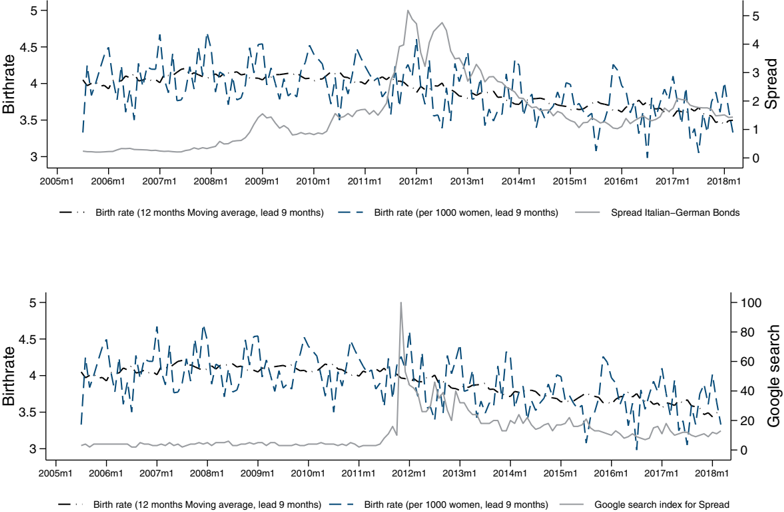
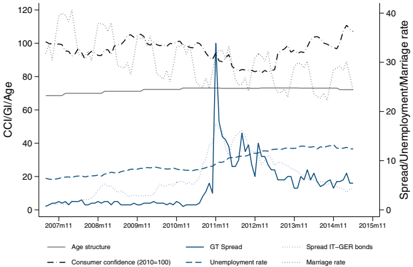
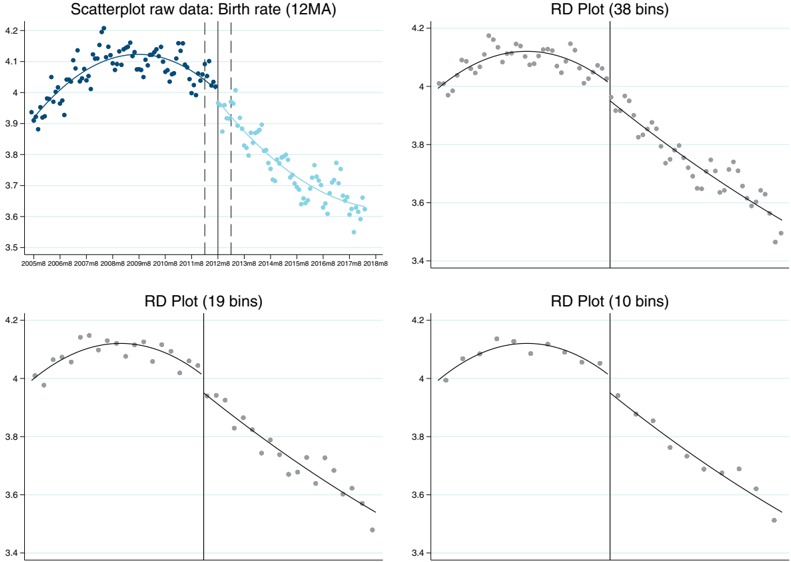
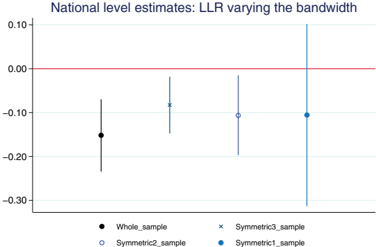
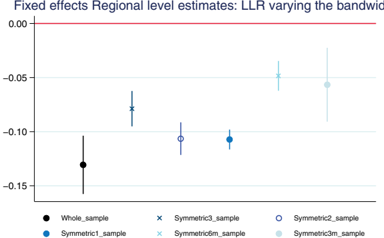
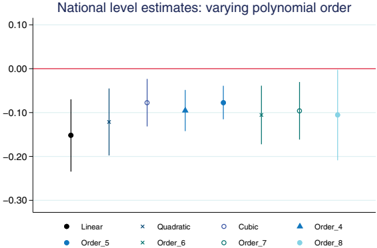
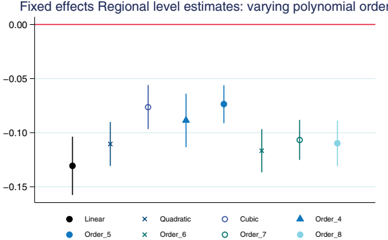
Many previous studies have documented the procyclicality of fertility to business cycles or labour market indicators in Western countries. However, part of the recent fertility decline witnessed since the Great Recession has been left unexplained by traditional measures. The present study advances the notion that birth postponement might have accelerated in response to rising uncertainty, which fuelled negative expectations and declining levels of confidence about the future. To provide empirical support for the causal effect of perceived uncertainty on birth rates, we focus on Italy’s sovereign debt crisis of 2011–2012 as a natural experiment. Perceived uncertainty is measured using Google trends for the term ‘spread’—which acted as somewhat of a barometer for the crisis both in the media and everyday conversations—to capture the general public’s degree of concern about the stability of Italian public finances. A regression discontinuity in time identifies the effect of perceived uncertainty on birth rates in Italy as a drop between 1.5% and 5%, depending on model specification.
Overview
The claims and statistics of this paper haven’t been checked yet.
Free: it reads the open-access text and checks the first 5 claims that cite a source we can check. Create a free account to check every claim.
Integrity signals
Registry
Cites
Statistics
Figures
Verification
Claims the paper makes
The claims and statistics of this paper haven’t been checked yet.
Free: it reads the open-access text and checks the first 5 claims that cite a source we can check. Create a free account to check every claim.
Self-check
Percentages, sums and reported differences re-computed from the paper’s own numbers.
The self-check needs the paper’s full text.
Citations
Cites
Knight, F. H. (1921) · Cited by 16,656
Modernity and Self-Identity: Self and Society in the Late Modern Age
Giddens, A. (2020) · The New Social Theory Reader · doi:10.4324/9781003060963-59 · Cited by 13,417
(2002) · Cited by 13,211
Risk Society, Towards a New Modernity
Leiss, W., Beck, U., Ritter, M., Lash, S., & Wynne, B. (1994) · Canadian Journal of Sociology / Cahiers canadiens de sociologie · doi:10.2307/3341155 · Cited by 12,546
Risk Society: Towards a New Modernity
Boyd, W., Beck, U., & Shrader-Frechette, K. S. (1993) · Economic Geography · doi:10.2307/143601 · Cited by 9,215
Modernity and self-identity: self and society in the late modern age
(1992) · Choice Reviews Online · doi:10.5860/choice.29-3618 · Cited by 5,633
Regression discontinuity designs in economics
Lee, D. S., & Lemieux, T. (2010) · Journal of Economic Literature · doi:10.1257/jel.48.2.281 · Cited by 4,534
Detecting influenza epidemics using search engine query data
Ginsberg, J., Mohebbi, M. H., Patel, R. S., Brammer, L., Smolinski, M. S., & Brilliant, L. (2009) · Nature · doi:10.1038/nature07634 · Cited by 4,295
Interrupted time series regression for the evaluation of public health interventions: a tutorial
Lopez Bernal, J., Cummins, S., & Gasparrini, A. (2016) · International Journal of Epidemiology · doi:10.1093/ije/dyw098 · Cited by 3,049
Keynes, J. M. (1973) · Palgrave Macmillan UK eBooks · doi:10.1007/978-1-349-00843-8 · Cited by 2,575
Research works printed but not linked: 9
- Askitas, N. and Zimmermann, K. F. (2011). Detecting Mortgage Delinquencies. IZA Discussion Paper Series . Bonn, Germany: Institute for the Study of Labor.
- Billari, F. C. and Zagheni, E. (2017). Big data and population processes: a revolution? In Petrucci, A. and Verde, R. (Eds.). SIS 2017. Statistics and Data Science: New Challenges, New Generations. 28-30 June 2017 Florence (Italy). Proceedings of the Conference of the Italian Statistical Society . Firenze, Italy: Firenze University Press, pp. 167-178.
- CENSIS (2018), 15 Rapporto Censis Sulla Comunicazione . Milano; FrancoAngeli.
- Cepernich, C. (2012). Storie di subprime. Downgrading, Spread e Default. La Narrazione Della Grande Crisi Tra Informazione e Popolarizzazione. Il Mulino , 3 /2012, 409-433.
- Clark, A. and Lepinteur, A. (2020). A Natural Experiment on Job Insecurity and Fertility in France . Review of Economics and Statistics. Just accepted.
- Coombs, W. T. and Holladay, S. J. (2004). Reasoned action in crisis communication: an attribution theory-based approach to crisis management. In Millar, D.P. and Heath, R.L. (Eds.) Responding to Crisis Communication Approach to Crisis Communication . Hillsdale: Lawrence Erlbaum Associates, pp. 95-115.
- Kreyenfeld, M., Andersson, G. and Pailhe ´, A. (2012). Economic uncertainty and family dynamics in. Europe: Introduction. Demographic Research , 27 , 835-852.
- Lanzieri, G. (2013). Towards a 'baby recession' in Europe? Europe (in Million) , 16 , 16-539.
- Ojala, J., Zagheni, E., Billari, F. and Weber, I. (2017). Fertility and its meaning: Evidence from search behavior. In Eleventh International AAAI Conference on Web and Social Media, 11(1) .
Cited by
Items 101–172 of 172
OECD (2024) · Society at a glance · doi:10.1787/f5123f61-en
One in ten women across the OECD condone men’s violence against women
OECD (2024) · Society at a glance · doi:10.1787/48293bd3-en
The share of youth in the total population declines in most countries
OECD (2024) · Society at a glance · doi:10.1787/ec93c832-en
COVID‑19 reduced life expectancy in many countries
OECD (2024) · Society at a glance · doi:10.1787/2f04485d-en
Fertility trends across the OECD: Underlying drivers and the role for policy
OECD (2024) · Society at a glance · doi:10.1787/fa367bad-en · Cited by 9
OECD (2024) · Society at a glance · doi:10.1787/08530691-en
On average less than half of the population trust their national government
OECD (2024) · Society at a glance · doi:10.1787/fcfa93ab-en
OECD (2024) · Society at a glance · doi:10.1787/a239711e-de
More so than men, women do not feel secure walking alone at night
OECD (2024) · Society at a glance · doi:10.1787/8df809b9-en
The strong decline in the youth to working-age ratio has stopped
OECD (2024) · Society at a glance · doi:10.1787/a0344871-en
Many think that child income support is inadequate
OECD (2024) · Society at a glance · doi:10.1787/050b4003-en
OECD (2024) · Society at a glance · doi:10.1787/e01b0e44-en
Satisfaction tends to be higher for education, public safety, and health
OECD (2024) · Society at a glance · doi:10.1787/22e14d99-en
OECD (2024) · Society at a glance · doi:10.1787/a63f6e7f-en
OECD (2024) · Society at a glance · doi:10.1787/bf453c34-en
Household expenditures have changed since 2000
OECD (2024) · Society at a glance · doi:10.1787/2e68274e-en
Gender gaps in performance vary across subjects in OECD countries
OECD (2024) · Society at a glance · doi:10.1787/a520b271-en
Cash support is not always tightly targeted to the poorest
OECD (2024) · Society at a glance · doi:10.1787/14716a91-en
The share of online vacancies demanding AI skills is small but increasing
OECD (2024) · Society at a glance · doi:10.1787/2a9c9130-en
More than five‑out-of-ten jobs in shortage are found in high-skilled occupations
OECD (2024) · Society at a glance · doi:10.1787/c1db1aa3-en
One in ten of the OECD population is foreign-born
OECD (2024) · Society at a glance · doi:10.1787/529eb923-en
The mean age at first marriage for both women and men rose by 6 years since 1990
OECD (2024) · Society at a glance · doi:10.1787/241e5239-en
OECD (2024) · Society at a glance · doi:10.1787/6b4029c2-en
Large differences in health spending per capita across the OECD
OECD (2024) · Society at a glance · doi:10.1787/cc96de8e-en
Teenage girls report more often to be victims of cyberbullying than boys
OECD (2024) · Society at a glance · doi:10.1787/45cb55bd-en
In two‑thirds of the OECD countries, migrants’ fertility rates are below replacement rate
OECD (2024) · Society at a glance · doi:10.1787/b7b2bdf1-en
On average across the OECD 27% of jobs have a high risk of automation
OECD (2024) · Society at a glance · doi:10.1787/2b5c11cd-en
OECD (2024) · Society at a glance · doi:10.1787/4502f8eb-en · Cited by 1
Income and wealth inequalities
OECD (2024) · Society at a glance · doi:10.1787/8e321b13-en · Cited by 4
Unemployment and social safety net benefits
OECD (2024) · Society at a glance · doi:10.1787/3a4306d8-en
On average across the OECD, the number of nurses is about 2.5 times that of doctors
OECD (2024) · Society at a glance · doi:10.1787/1de85a92-en
OECD (2024) · Society at a glance · doi:10.1787/4bf471b6-en
In most OECD countries, annual migration flows represent less than 1% of the population
OECD (2024) · Society at a glance · doi:10.1787/bc26d48e-en
Women continue to live over 5 years more than men on average across OECD countries
OECD (2024) · Society at a glance · doi:10.1787/e9ba2d5c-en
OECD (2024) · Society at a glance · doi:10.1787/b08fa75e-en
Social safety net benefits alone cannot prevent income poverty
OECD (2024) · Society at a glance · doi:10.1787/17772467-en
OECD (2024) · Society at a glance · doi:10.1787/972cb357-en
Preferences for government intervention and social policies
OECD (2024) · Society at a glance · doi:10.1787/89e94566-en
Social and economic risk perceptions and concerns
OECD (2024) · Society at a glance · doi:10.1787/16e28105-en
One‑third of all doctors and a quarter of nurses in OECD countries were over 55 years of age
OECD (2024) · Society at a glance · doi:10.1787/797e2ab9-en
The emergence of COVID‑19 led to increases in health spending in two‑thirds of OECD countries
OECD (2024) · Society at a glance · doi:10.1787/77de1594-en
Housing is a key worry for young adults
OECD (2024) · Society at a glance · doi:10.1787/f5aebe27-en
In 2022, many workers were worried about losing their jobs
OECD (2024) · Society at a glance · doi:10.1787/94d331d2-en
The link between family policy and fertility outcomes
OECD (2024) · Society at a glance · doi:10.1787/5ef1a25e-en
OECD (2024) · Society at a glance · doi:10.1787/78604ba2-en
Satisfaction with social policies and the government’s covid response
OECD (2024) · Society at a glance · doi:10.1787/4c4842f1-en
Key facts and figures (Infographic)
OECD (2024) · Society at a glance · doi:10.1787/ec4aa2e6-en
The demographic old age to working age ratio will double over the next four decades
OECD (2024) · Society at a glance · doi:10.1787/95dd4819-en
Women spend 4.5 more years after labour market exit than men
OECD (2024) · Society at a glance · doi:10.1787/ea5c5b29-en
Tobacco and alcohol consumption
OECD (2024) · Society at a glance · doi:10.1787/53223dd4-en
In most countries, benefit income declines significantly for people with long unemployment spells
OECD (2024) · Society at a glance · doi:10.1787/4521cc69-en
A majority in many countries think that today’s children will miss out on progress
OECD (2024) · Society at a glance · doi:10.1787/b11e50eb-en
Public spending family supports varies widely across OECD countries
OECD (2024) · Society at a glance · doi:10.1787/60ebf41c-en
OECD (2024) · Society at a glance · doi:10.1787/61dcb1c3-en
Acronyms and conventional signs
OECD (2024) · Society at a glance · doi:10.1787/79a914e7-en
One in seven 15‑year‑olds smoke at least once a month
OECD (2024) · Society at a glance · doi:10.1787/431f9867-en
Trust in national government varies across subgroups of the population
OECD (2024) · Society at a glance · doi:10.1787/db1c83e0-en
Simultaneous trends of fewer and later births
OECD (2024) · Society at a glance · doi:10.1787/8aae6f60-en
The number of deaths came close to the number of births across the OECD in 2021
OECD (2024) · Society at a glance · doi:10.1787/acbf999e-en
Housing Insecurity and First Births in Italy
Gallo, A., & Vignoli, D. (2025) · Springer eBooks · doi:10.1007/978-3-031-64447-4_11
Self-citationGattamelata, A., Coccia, M. E., Fioravanti, G., Zurkirch, V. P., & Moyano, N. (2025) · International Journal of Environmental Research and Public Health · doi:10.3390/ijerph22020186
“In contexts like Italy, where traditional gender norms coexist with increasing demands for gender equality, these dynamics shape individual and couple decisions regarding parenthood [21–24].”
Fertility and unemployment in times of crisis in Italy 21
García‐Pereiro, T., Pace, R., Patimo, R., & Misuraca, R. (2024) · Rivista italiana di economia, demografia e statistica · doi:10.71014/sieds.v78i2.267 · Cited by 1
The impact of economic and social factors on birth numbers: A panel data approach
Işık, U. (2025) · Business Economics and Management Research Journal · doi:10.58308/bemarej.1646092
Partisan Divergence in Fertility Change Before and During the COVID-19 Pandemic in Florida
Rackin, H., Gibson‐Davis, C. M., Williams, C. E., Hughes, D., & Yoo, S. (2025) · Population Research and Policy Review · doi:10.1007/s11113-025-09972-0 · Cited by 1
“Our results do align, though, with other individual-level and aggregate-level findings linking views and fertility during uncertain times (Comolli & Vignoli, 2021; Guetto et al., 2020, 2023; Lappegård et al., 2022; Vignoli et al., 2022).”
Spatio-Temporal Modeling and Forecasting in Environmental, Energy, and Demographic Systems
Vijaya, J., Nagaraju, J., & Manokaran, J. (2025) · IGI Global eBooks · doi:10.4018/979-8-3373-5302-9.ch011
Introduction to the Genus thematic series: The Inequality of uncertainty
Comolli, C. L., & Albertini, M. (2026) · Genus · doi:10.1186/s41118-026-00290-7
Self-citationIvanova, K., & Rüttenauer, T. (2026) · Journal of Marriage and the Family · doi:10.1111/jomf.70095
Parenthood decisions in uncertain times: Experimental evidence from four countries
Aassve, A., Mencarini, L., Peng, C., Plach, S., Amarales, A. R., & Tanturri, M. L. (2026) · Proceedings of the National Academy of Sciences · doi:10.1073/pnas.2601690123 · Cited by 2
Selmin, A., Bergamin, A., Dato, M., Veronese, M., & Danielis, M. (2026) · Midwifery · doi:10.1016/j.midw.2026.104951 · Cited by 1
Metadata
- Authors
- Comolli, C. L., & Vignoli, D.
- Affiliations
- University of Lausanne (CH)
- University of Florence (IT)
- Corresponding author
- Comolli, Chiara L
- Venue
- European Sociological Review
- Publisher
- Oxford University Press (OUP)
- Published
- 2021-02-01
- Volume
- 37
- Issue
- 4
- Pages
- 555-570
- ISSN
- 0266-7215 (ISSN-L)
- 1468-2672
- OpenAlex
- W3127266565
- Cited by
- 172
- References
- 95
- Citations by year
- 2026: 6 · 2025: 21 · 2024: 111 · 2023: 14 · 2022: 15 · 2021: 5
- FWCI
- 57.11
- Type
- journal article
- Language
- en
- Open access
- hybrid
- doi.org
- Licence
- Locations
- European Sociological Review (publishedVersion, cc-by-nc-nd)
- Archivio istituzionale della ricerca (Alma Mater Studiorum Università di Bologna) (submittedVersion, cc-by-nc-nd)
- Florence Research (University of Florence) (submittedVersion, cc-by-nc-nd)
- Funders
- Strategic Research Council of the Academy of Finland (293103)
- Tackling Inequality in Time of Austerity
- Swedish Research Council
- Linnaeus Center for Social Policy and Family Dynamics in Europe (349-2007-8701)
- European Union’s Horizon 2020 research and innovation programme
- ERC (725961)
- Topics
- Social Sciences › Demography › Family Dynamics and Relationships
- Health Sciences › Medicine › Reproductive Medicine › Reproductive Health and Technologies
- Social Sciences › Gender Studies › Gender, Labor, and Family Dynamics
- Keywords
- fertility decline, perceived uncertainty, birth postponement, sovereign debt crisis, Google Trends, public confidence, natural experiment, regression discontinuity design
About these checks
Registry, retraction, Cites and statistics results are computed, not judged, with one exception: a printed reference that no index lists is read once by a model before it counts as a citation error. Claims are extracted by a model and kept only when their quote appears verbatim in the text; each cited source is then checked, with a model’s help, for whether it says what the claim relies on. Those verdicts can be wrong — read the claim’s quote and the cited source before relying on one.
Statistics and arithmetic are recomputed, not judged.
Confidence bands are shown only for fields calibrated on our annotated test set. None is calibrated yet, so no band is shown.
What counts as a claim ›How we measure confidence ›How we check this ›
Are you an author, or do you see a problem with this page? Request a review
Data sources
Bibliographic data: Semantic Scholar, OpenAlex, Crossref.
Contains information from the Semantic Scholar Academic Graph Datasets, made available under the ODC Attribution License (ODC-BY 1.0).
Semantic Scholar’s data is described in: Kinney, R., et al. (2023). The Semantic Scholar Open Data Platform. arXiv:2301.10140.
