

Cholesteryl ester transfer protein: at the heart of the action of lipid-modulating therapy with statins, fibrates, niacin, and cholesteryl ester transfer protein inhibitors
Open accessThe DOI matches its Crossref record; 152 of the 152 references it cites were found in a registry or an index.
Abstract
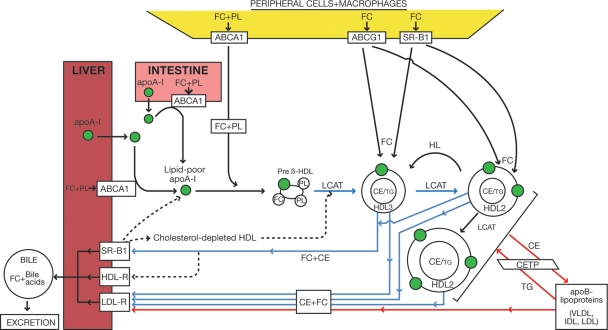
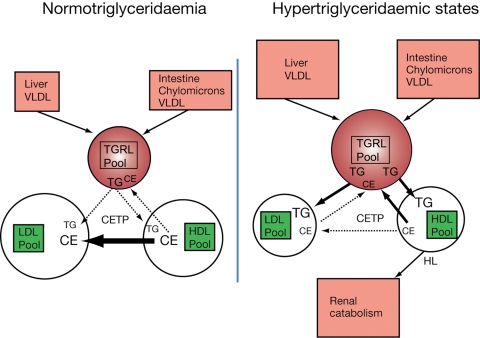
Subnormal plasma levels of high-density lipoprotein cholesterol (HDL-C) constitute a major cardiovascular risk factor; raising low HDL-C levels may therefore reduce the residual cardiovascular risk that frequently presents in dyslipidaemic subjects despite statin therapy. Cholesteryl ester transfer protein (CETP), a key modulator not only of the intravascular metabolism of HDL and apolipoprotein (apo) A-I but also of triglyceride (TG)-rich particles and low-density lipoprotein (LDL), mediates the transfer of cholesteryl esters from HDL to pro-atherogenic apoB-lipoproteins, with heterotransfer of TG mainly from very low-density lipoprotein to HDL. Cholesteryl ester transfer protein activity is elevated in the dyslipidaemias of metabolic disease involving insulin resistance and moderate to marked hypertriglyceridaemia, and is intimately associated with premature atherosclerosis and high cardiovascular risk. Cholesteryl ester transfer protein inhibition therefore presents a preferential target for elevation of HDL-C and reduction in atherosclerosis. This review appraises recent evidence for a central role of CETP in the action of current lipid-modulating agents with HDL-raising potential, i.e. statins, fibrates, and niacin, and compares their mechanisms of action with those of pharmacological agents under development which directly inhibit CETP. New CETP inhibitors, such as dalcetrapib and anacetrapib, are targeted to normalize HDL/apoA-I levels and anti-atherogenic activities of HDL particles. Further studies of these CETP inhibitors, in particular in long-term, large-scale outcome trials, will provide essential information on their safety and efficacy in reducing residual cardiovascular risk.
Overview
The claims and statistics of this paper haven’t been checked yet.
Free: it reads the open-access text and checks the first 5 claims that cite a source we can check. Create a free account to check every claim.
Integrity signals
Registry
Cites
Statistics
Figures
Verification
Claims the paper makes
The claims and statistics of this paper haven’t been checked yet.
Free: it reads the open-access text and checks the first 5 claims that cite a source we can check. Create a free account to check every claim.
Claims other papers make about this one
Each is checked against this paper’s own text: does it say what the citing paper says it does?
The source backs part of the claim, not all of it — or backs it for a different population, condition or comparison.
In the citing paper
“Remnant particles are enriched in cholesteryl esters and deficient in TG (Figure 2).”
From Triglyceride-rich lipoproteins and their remnants: metabolic insights, role in atherosclerotic cardiovascular disease, and emerging therapeutic strategies—a consensus statement from the European Atherosclerosis Society (2021) · cites this paper as [95]
Experimental — accuracy not yet measured
Self-check
Percentages, sums and reported differences re-computed from the paper’s own numbers.
The self-check needs the paper’s full text.
Citations
Cites
Rosuvastatin to Prevent Vascular Events in Men and Women with Elevated C-Reactive Protein
Ridker, P. M., Danielson, E., Fonseca, F. A. H., Genest, J., Gotto, A. M., Kastelein, J. J. P., Koenig, W., Libby, P., Lorenzatti, A. J., MacFadyen, J. G., et al. (2008) · New England Journal of Medicine · doi:10.1056/nejmoa0807646 · Cited by 6,674
High density lipoprotein as a protective factor against coronary heart disease
Gordon, T., Castelli, W. P., Hjortland, M. C., Kannel, W. B., & Dawber, T. R. (1977) · The American Journal of Medicine · doi:10.1016/0002-9343(77)90874-9 · Cited by 5,059
Intensive versus Moderate Lipid Lowering with Statins after Acute Coronary Syndromes
Cannon, C. P., Braunwald, E., McCabe, C. H., Rader, D. J., Rouleau, J. L., Belder, R., Joyal, S. V., Hill, K. A., Pfeffer, M. A., & Skene, A. M. (2004) · New England Journal of Medicine · doi:10.1056/nejmoa040583 · Cited by 4,938
Helsinki Heart Study: Primary-Prevention Trial with Gemfibrozil in Middle-Aged Men with Dyslipidemia
Frick, M. H., Elo, O., Haapa, K., Heinonen, O. P., Heinsalmi, P., Helo, P., Huttunen, J. K., Kaitaniemi, P., Koskinen, P., Manninen, V., et al. (1987) · New England Journal of Medicine · doi:10.1056/nejm198711123172001 · Cited by 3,881
Rosuvastatin to Prevent Vascular Events in Men and Women With Elevated C-Reactive Protein
Ridker, P. M., Danielson, E., Fonseca, F. A. H., Genest, J., Gotto, A. M., Kastelein, J. J. P., Koenig, W., Libby, P., Lorenzatti, A. J., MacFadyen, J. G., et al. (2009) · Obstetrical & Gynecological Survey · doi:10.1097/01.ogx.0000344393.60303.0a · Cited by 3,641
Intensive Lipid Lowering with Atorvastatin in Patients with Stable Coronary Disease
LaRosa, J. C., Grundy, S. M., Waters, D. D., Shear, C., Barter, P., Fruchart, J.-C., Gotto, A. M., Greten, H., Kastelein, J. J. P., Shepherd, J., et al. (2005) · New England Journal of Medicine · doi:10.1056/nejmoa050461 · Cited by 3,489
Rubins, H. B., Robins, S. J., Collins, D., Fye, C. L., Anderson, J. W., Elam, M. B., Faas, F. H., Linares, E., Schaefer, E. J., Schectman, G., et al. (1999) · New England Journal of Medicine · doi:10.1056/nejm199908053410604 · Cited by 3,439
High-density lipoprotein cholesterol and cardiovascular disease. Four prospective American studies.
Gordon, D. J., Probstfield, J. L., Garrison, R. J., Neaton, J. D., Castelli, W. P., Knoke, J. D., Jacobs, D. R., Bangdiwala, S., & Tyroler, H. A. (1989) · Circulation · doi:10.1161/01.cir.79.1.8 · Cited by 3,162
Research works printed but not linked: 28
- 2008, New England Journal of Medicine, 359, 2195, 10.1056/nejmoa0807646 · DOI · Paper page
- 2004, New England Journal of Medicine, 350, 1495, 10.1056/nejmoa040583 · DOI · Paper page
- 2002, Arteriosclerosis, Thrombosis, and Vascular Biology, 22, 1155, 10.1161/01.atv.0000022850.59845.e0 · DOI · Paper page
- 2008, Circulation Research, 103, 1084, 10.1161/circresaha.108.182063 · DOI · Paper page
- 2009, Arteriosclerosis, Thrombosis, and Vascular Biology, 29, 870, 10.1161/atvbaha.109.186031 · DOI · Paper page
- 2003, Annual review of medicine, 54, 321, 10.1146/annurev.med.54.101601.152409 · DOI · Paper page
- 2008, Annual review of pharmacology and toxicology, 48, 79, 10.1146/annurev.pharmtox.48.113006.094746 · DOI · Paper page
- 2006, Journal of the American College of Cardiology, 47, 492, 10.1016/j.jacc.2005.09.042 · DOI · Paper page
- 2007, The American journal of cardiology, 100, 25N
- 2003, Arteriosclerosis, Thrombosis, and Vascular Biology, 23, 160, 10.1161/01.atv.0000054658.91146.64 · DOI · Paper page
- 2005, Arteriosclerosis, Thrombosis, and Vascular Biology, 25, 585, 10.1161/01.atv.0000154140.73570.00 · DOI · Paper page
- 2008, Arteriosclerosis, Thrombosis, and Vascular Biology, 28, 39, 10.1161/atvbaha.107.148817 · DOI · Paper page
- 2006, Arteriosclerosis, Thrombosis, and Vascular Biology, 26, 977, 10.1161/01.atv.0000204327.96431.9a · DOI · Paper page
- Poulter N The impact of micronized fenofibrate on lipid subfractions and on reaching HDL-target levels in 7,098 patients with dyslipidaemia Br J Cardiol 1999 6 682 685
- 2008, Arteriosclerosis, Thrombosis, and Vascular Biology, 28, 1672, 10.1161/atvbaha.108.164541 · DOI · Paper page
- 2008, Arteriosclerosis, Thrombosis, and Vascular Biology, 28, 2016, 10.1161/atvbaha.108.171363 · DOI · Paper page
- 2006, Arteriosclerosis, Thrombosis, and Vascular Biology, 26, 1350, 10.1161/01.atv.0000219695.84644.56 · DOI · Paper page
- 2008, Arteriosclerosis, Thrombosis, and Vascular Biology, 28, 148, 10.1161/atvbaha.107.151688 · DOI
- 2007, New England Journal of Medicine, 357, 2109, 10.1056/nejmoa0706628 · DOI · Paper page
- 2008, Journal of the American College of Cardiology, 10, A322
- 2007, Circulation Research, 101, 1209
- 2007, New England Journal of Medicine, 356, 1304, 10.1056/nejmoa070635 · DOI · Paper page
- 2007, New England Journal of Medicine, 356, 1620, 10.1056/nejmoa071359 · DOI · Paper page
- 2004, Arteriosclerosis, Thrombosis, and Vascular Biology, 24, 490, 10.1161/01.atv.0000118278.21719.17 · DOI · Paper page
- 2009, Arteriosclerosis, Thrombosis, and Vascular Biology, 29, 268, 10.1161/atvbaha.108.179416 · DOI · Paper page
- 2005, Journal of the American College of Cardiology, 46, 1792, 10.1016/j.jacc.2005.06.080 · DOI · Paper page
- 2005, Arteriosclerosis, Thrombosis, and Vascular Biology, 25, 1057, 10.1161/01.atv.0000161928.16334.dd · DOI · Paper page
- 2007, Arteriosclerosis, Thrombosis, and Vascular Biology, 27, 1132, 10.1161/atvbaha.106.138347 · DOI · Paper page
Cited by
Items 101–200 of 307
Orsoni, A., Thérond, P., Tan, R., Giral, P., Robillard, P., Kontush, A., Meikle, P. J., & Chapman, M. J. (2016) · Journal of Lipid Research · doi:10.1194/jlr.p068585 · Cited by 41
Self-citationImpaired HDL Function Amplifies Systemic Inflammation in Common Variable Immunodeficiency
Macpherson, M. E., Halvorsen, B. L., Yndestad, A., Ueland, T., Mollnes, T. E., Berge, R. K., Rashidi, A., Otterdal, K., Gregersen, I., Kong, X. Y., et al. (2019) · Scientific Reports · doi:10.1038/s41598-019-45861-1 · Cited by 39
Heidari, A. (2020) · Advanced Science Engineering and Medicine · doi:10.1166/asem.2020.2635 · Cited by 39
Jiménez-Santos, M. A., Juárez‐Rojop, I. E., Tovilla‐Zárate, C. A., Espinosa-García, M. T., Juárez-Oropeza, M. A., Ramón-Frías, T., Bermudez‐Ocaña, D. Y., & Díaz-Zagoya, J. C. (2014) · Lipids in Health and Disease · doi:10.1186/1476-511x-13-22 · Cited by 38
“In addition, statins increment HDL-C levels throughout an increase of apoprotein A synthesis in the liver [13] and a reduced activity of cholesterol ester transfer protein (CETP).”
BackgroundÖörni, K., & Kovanen, P. T. (2021) · Journal of Clinical Medicine · doi:10.3390/jcm10081769 · Cited by 39
“It promotes the transfer of cholesteryl esters from high-density lipoproteins (HDLs) to the apoB-100-containing lipoproteins and, in exchange, triglycerides from them to the HDLs [14,15].”
BackgroundMathematically modelling the dynamics of cholesterol metabolism and ageing
Morgan, A. E., Mooney, K. M., Wilkinson, S. J., Pickles, N. A., & Auley, M. T. M. (2016) · Biosystems · doi:10.1016/j.biosystems.2016.05.001 · Cited by 36
Peripheral cholesterol metabolic disorders and Alzheimer s disease
Maria, D. L. (2011) · Frontiers in Bioscience-Elite · doi:10.2741/368 · Cited by 36
“Fibrates reduce body weight gain and adiposity (136) and show beneficial effects in atherosclerosis and diabetes (116,139).”
BackgroundInfluentialAtherosclerosis: Recent trials, new targets and future directions
Ladeiras‐Lopes, R., Agewall, S., Tawakol, A. A., Staels, B., Stein, E. A., Mentz, R. J., Leite-Moreira, A. F., Zannad, F. M., & Köenig, W. (2015) · International Journal of Cardiology · doi:10.1016/j.ijcard.2015.05.013 · Cited by 39
Dietary fructose and dyslipidemia: new mechanisms involving apolipoprotein CIII
Hieronimus, B., & Stanhope, K. L. (2019) · Current Opinion in Lipidology · doi:10.1097/mol.0000000000000653 · Cited by 34
Potential Contribution of Short Chain Fatty Acids to Hepatic Apolipoprotein A-I Production
Popeijus, H. E., Zwaan, W., Tayyeb, J. Z., & Plat, J. (2021) · International Journal of Molecular Sciences · doi:10.3390/ijms22115986 · Cited by 34
“Both cholesteryl ester and free cholesterol content within these particles are taken up by the liver via the low-density lipoprotein receptor (LDL-R), which binds the Apolipoprotein B-100 (ApoB-100) component of these lipoproteins [9,28,29].”
BackgroundFree Cholesterol Bioavailability and Atherosclerosis
Abe, R. J., Abe, J., Nguyen, M. T., Olmsted‐Davis, E. A., Mamun, A., Banerjee, P., Cooke, J. P., Fang, L., Pownall, H. J., & Le, N.-T. (2022) · Current Atherosclerosis Reports · doi:10.1007/s11883-022-01011-z · Cited by 34
Kappelle, P. J. W. H., van Tol, A., Wolffenbuttel, B. H. R., & Dullaart, R. P. F. (2010) · Cardiovascular Therapeutics · doi:10.1111/j.1755-5922.2010.00201.x · Cited by 33
Emerging therapeutic strategies to enhance HDL function
Redondo, S., Martínez‐González, J., Urraca, C., & Tejerina, T. (2011) · Lipids in Health and Disease · doi:10.1186/1476-511x-10-175 · Cited by 36
“The dal-VESSEL trial will assess the effect of dalcetrapib in the reduction of atheromatous plaques measured by PET/TAC and MRI [32].”
BackgroundInfluentialRemnant cholesterol in atherosclerotic cardiovascular disease: A systematic review and meta-analysis
Delialis, D., Georgiopoulos, G. A., Aivalioti, E., Konstantaki, C., Oikonomou, E., Bampatsias, D., Mavraganis, G., Vardavas, C. I., Liberopoulos, E. N., Stellos, K., et al. (2023) · Hellenic Journal of Cardiology · doi:10.1016/j.hjc.2023.04.007 · Cited by 33
Vaisberg, M. W., Bachi, A. L. L., Latrilha, C. M., Dioguardi, G., Bydlowski, S. P., & Maranhão, R. C. (2012) · Lipids · doi:10.1007/s11745-012-3685-y · Cited by 35
Nestel, P. J., Hoang, A., Sviridov, D., & Straznicky, N. E. (2011) · International Journal of Obesity · doi:10.1038/ijo.2011.170 · Cited by 31
Tani, S., Matsumoto, M., Nagao, K., & Hirayama, A. (2013) · Journal of Cardiology · doi:10.1016/j.jjcc.2013.06.018 · Cited by 34
Cho, K.-H. (2011) · The Journals of Gerontology Series A · doi:10.1093/gerona/glr169 · Cited by 31
“It is well known that higher CETP activity in HDL particles can cause their reduction in CE and increase in TG (36).”
Plaque imaging to refine indications for emerging lipid-lowering drugs
Alkhalil, M., Chai, J. T., & Choudhury, R. P. (2016) · European Heart Journal - Cardiovascular Pharmacotherapy · doi:10.1093/ehjcvp/pvw034 · Cited by 34
“Similarly, the direct effects of CETP inhibition on the exchange of neutral lipids are quite well understood, with detailed structural knowledge of CETP and its ability to physically bridge lipoproteins.(65) However, although the effects of CETP inhibition on HDL-c (and sometimes LDL-c) are striking, there is little o…”
BackgroundWanschel, A. C. B. A., Guizoni, D. M., Lorza‐Gil, E., Salerno, A. G., Paiva, A. A., Dorighello, G. G., Davel, A. P., Balkan, W., Hare, J. M., & Oliveira, H. C. F. (2021) · Biomolecules · doi:10.3390/biom11010069 · Cited by 30
“In doing so, CETP action leads to a net reduction of HDL-cholesterol in plasma, apparently increasing the risk of atherosclerosis development [5].”
BackgroundCausal Effect of Lipids and Lipoproteins on Atherosclerosis
Ference, B. A. (2018) · Cardiology Clinics · doi:10.1016/j.ccl.2017.12.001 · Cited by 28
Karalis, I. K., Bergheanu, S. C., Wolterbeek, R., Dallinga‐Thie, G. M., Hattori, H., van Tol, A., Liem, A. H., & Jukema, J. W. (2010) · Current Medical Research and Opinion · doi:10.1185/03007995.2010.509264 · Cited by 30
Diphenylpyridylethanamine (DPPE) Derivatives as Cholesteryl Ester Transfer Protein (CETP) Inhibitors
Harikrishnan, L. S., Finlay, H. J., Qiao, J. X., Kamau, M. G., Jiang, J., Wang, T. C., Li, J., Cooper, C. B., Poss, M. A., Adam, L. P., et al. (2012) · Journal of Medicinal Chemistry · doi:10.1021/jm300611v · Cited by 28
Liu, Y., Lu, K., Zhang, R., Hu, D., Yang, Z., Zeng, J., & Cai, W. (2024) · ACS Pharmacology & Translational Science · doi:10.1021/acsptsci.4c00574 · Cited by 29
Hieronimus, B., Griffen, S. C., Keim, N. L., Bremer, A. A., Berglund, L., Nakajima, K., Havel, P. J., & Stanhope, K. L. (2019) · Journal of Clinical Medicine · doi:10.3390/jcm8070913 · Cited by 28
“However, the traditional view on the generation of sdLDL involves cholesteryl ester transfer protein (CETP) -mediated TG transfer from TRL to LDL [15,53,54].”
Backgroundvon Eckardstein, A., & Binder, C. J. (2022) · Handbook of experimental pharmacology · doi:10.1007/978-3-030-86076-9 · Cited by 42
Pillois, X., Gautier, T., Bouillet, B., de Barros, J.-P. P., Jeannin, A., Vergès, B. L., Bonnet, J., & Lagrost, L. (2012) · Journal of Lipid Research · doi:10.1194/jlr.m022988 · Cited by 24
Meng, Q., Huang, L., Sun, Y., Bai, Y., Wang, B., Yu, W., Zhao, M., & Li, X. (2015) · PLoS ONE · doi:10.1371/journal.pone.0143924 · Cited by 25
“CETP facilitates the transfer of triglycerides from verylow-density lipoproteins and low-density lipoproteins to HDL in exchange for cholesterol ester [26].”
BackgroundAl-Mhanna, S. B., Leão, C., Ghazali, W. S. W., Mohamed, M., Batrakoulis, A., Afolabi, H. A., Abubakar, B. D., Aldhahi, M. I., Gülü, M., Yağın, F. H., et al. (2024) · Annals of Applied Sport Science · doi:10.61186/aassjournal.1300 · Cited by 29
Kostara, C. E., Ferrannini, E., Bairaktari, E. T., Papathanasiou, A. I., Elisaf, M., & Tsimihodimos, V. (2020) · International Journal of Molecular Sciences · doi:10.3390/ijms21228835 · Cited by 23
“CETP activity is elevated in the dyslipidaemias of metabolic disease involving insulin resistance and moderate to marked hypertriglyceridaemia, and is intimately associated with premature atherosclerosis and high cardiovascular risk [24].”
BackgroundHDL Cholesterol and Cardiovascular Outcomes: What Is the Evidence?
Rubenfire, M., & Brook, R. D. (2013) · Current Cardiology Reports · doi:10.1007/s11886-013-0349-3 · Cited by 24
Miller, M. M., Liu, Y., Jiang, J., Johnson, J. A., Kamau, M. G., Nirschl, D. S., Wang, Y., Harikrishnan, L. S., Taylor, D. S., Chen, A. Y. A., et al. (2012) · Bioorganic & Medicinal Chemistry Letters · doi:10.1016/j.bmcl.2012.08.011 · Cited by 22
Moringa oleifera Lam. prevents the development of high fructose diet-induced fatty liver
Muhammad, N., Ibrahim, K. G., Ndhlala, A. R., & Erlwanger, K. H. (2019) · South African Journal of Botany · doi:10.1016/j.sajb.2018.12.003 · Cited by 21
Elseweidy, M. M., Amin, R. S., Atteia, H. H., El-Zeiky, R. R., & Al-Gabri, N. A. (2018) · Biomedicine & Pharmacotherapy · doi:10.1016/j.biopha.2018.11.140 · Cited by 20
Effects of cholesterol and Lactobacillus acidophilus on testicular function
Çiftçi, G., & Tuna, E. (2021) · Daehan saengsik uihak hoeji/Clinical and experimental reproductive medicine · doi:10.5653/cerm.2020.04322 · Cited by 21
Gadkar, K. G., Lu, J. J.-Q., Sahasranaman, S., Davis, J. D., Mazer, N. A., & Ramanujan, S. (2015) · Journal of Lipid Research · doi:10.1194/jlr.m057943 · Cited by 20
Endogenous CETP activity as a predictor of cardiovascular risk: Determination of the optimal range
Villard, E. F., Federspiel, M.-C., Cherfils, C., Fesel-Fouquier, V., Bruckert, É., Clément, K., Bonnefont‐Rousselot, D., Goff, W. L., Bittar, R., Couvert, P., et al. (2013) · Atherosclerosis · doi:10.1016/j.atherosclerosis.2012.12.024 · Cited by 20
“Lipid-lowering therapy is usually associated with reduction in plasma CETP activity and concentration [5].”
BackgroundAzevedo, C. H. M., Wajngarten, M., Prete, A. C. L., Diament, J., & Maranhão, R. C. (2011) · Clinics · doi:10.1590/s1807-59322011000900006 · Cited by 19
“CETP specifically mediates the transfer of cholesteryl esters and triglycerides and is associated with HDL in the plasma.(19) In contrast, PLTP facilitates the transfer of surface phospholipids from other lipoproteins to HDL and influences HDL remodeling by promoting the formation of larger HDL particles, such as HDL2…”
Chen, X., Ziemba, T., Huang, C., Chang, M., Xu, C., Qiao, J. X., Wang, T. C., Finlay, H. J., Salvati, M., Adam, L. P., et al. (2018) · Journal of Pharmaceutical Sciences · doi:10.1016/j.xphs.2018.01.003 · Cited by 21
Gammon, C. S., Minihane, A. M., Kruger, R., Conlon, C. A., von Hurst, P. R., Jones, B., & Stonehouse, W. (2013) · British Journal Of Nutrition · doi:10.1017/s0007114513003437 · Cited by 20
“The most established function of CETP is the mediation of the transfer of neutral lipids, cholesteryl esters (mainly from HDL-C) and TAG (found in TAG-rich lipoproteins, VLDL and chylomicrons) between plasma lipoproteins((26,27)).”
BackgroundMeta-analyses between 18 candidate genetic markers and overweight/obesity
Tang, L., Ye, H., Hong, Q., Chen, F., Wang, Q., Xu, L., Bu, S., Liu, Q., Ye, M., Wang, D. W., et al. (2014) · Diagnostic Pathology · doi:10.1186/1746-1596-9-56 · Cited by 23
“CETP protein product transfers cholesterylesters from HDL to pro-atherogenic apoB-lipoproteins and thus has an impact on the lipid and HDL metabolism [36,37].”
BackgroundKhalaf, R. A., Sheikha, G. M. A., Al-Sha’er, M. A., Albadawi, G., & Taha, M. O. (2011) · Medicinal Chemistry Research · doi:10.1007/s00044-011-9917-5 · Cited by 19
“CETP is a glycoprotein involved in transporting lipoprotein particles and neutral lipids between HDL and low-density lipoproteins (LDL), and therefore CETP inhibitors could be useful agents in the future for treating dyslipidemia and related disorders.”
BackgroundInfluentialAtherogenic Dyslipidemia After Liver Transplantation: Mechanisms and Clinical Implications
Syed, T., & Siddiqui, M. S. (2021) · Liver Transplantation · doi:10.1002/lt.26069 · Cited by 18
“(11) This leads to the formation of large buoyant LDL molecules, which have high affinity for LDL receptors (LDLRs) and are readily removed from circulation(12) (Fig.”
BackgroundOptimal pharmacotherapy to combat the atherogenic lipid triad
Chapman, M. J., Redfern, J. S., McGovern, M. E., & Giral, P. (2011) · Current Opinion in Cardiology · doi:10.1097/hco.0b013e32834965e9 · Cited by 18
Self-citationHyperlipidemic Rabbit Models for Anti-Atherosclerotic Drug Development
Niimi, M., Chen, Y., Yan, H., Wang, Y., Koike, T., & Fan, J. (2020) · Applied Sciences · doi:10.3390/app10238681 · Cited by 22
“CETP inhibitors prevent the transfer of cholesteryl ester and increases plasma HDL-C levels; therefore, their use is intended to reduce the risk of atherosclerosis by improving blood lipid levels [93].”
BackgroundLee, J. S., Chapman, M. J., Piraino, P., Lamerz, J., Schindler, T. H., Cutler, P., & Dernick, G. (2015) · PROTEOMICS - CLINICAL APPLICATIONS · doi:10.1002/prca.201500036 · Cited by 18
“A 27% reduction in LDL-associated CETP suggests that proatherogenic heterotypic transfer of cholesteryl esters from HDL to VLDL is diminished by tocilizumab treatment, though HDL-associated CETP is also reduced by 17% [26,51].”
BackgroundSelf-citationHansel, B., Bonnefont‐Rousselot, D., Orsoni, A., Bittar, R., Giral, P., Roussel, R., Marre, M., Mohammedi, K., Bruckert, É., Chapman, M. J., et al. (2016) · Journal of clinical lipidology · doi:10.1016/j.jacl.2016.05.008 · Cited by 19
Self-citationGao, S., Wang, X., Cheng, D., Li, J., Li, L., Ran, L., Zhao, S., Fan, J., & Liu, E. (2017) · Mediators of Inflammation · doi:10.1155/2017/3824276 · Cited by 18
Chapman, M. J., Orsoni, A., Robillard, P., Thérond, P., & Giral, P. (2018) · Journal of clinical lipidology · doi:10.1016/j.jacl.2018.02.001 · Cited by 20
Self-citationRathnayake, K. M., Weech, M., Jackson, K. G., & Lovegrove, J. A. (2018) · Nutrition Research Reviews · doi:10.1017/s0954422418000033 · Cited by 20
“HDL3 is rapidly removed from the circulation, decreasing circulating HDL-cholesterol (HDL-C) concentrations, which is one proposed mechanism for the inverse association between exaggerated postprandial lipaemia and CVD risk((17)).”
BackgroundNew evidence for nicotinic acid treatment to reduce atherosclerosis
Montecucco, F., Quercioli, A., Dallegri, F., Viviani, G. L., & Mach, F. (2010) · Expert Review of Cardiovascular Therapy · doi:10.1586/erc.10.116 · Cited by 17
Clinical Pharmacokinetics and Pharmacodynamics of Dalcetrapib
Black, D. M., Bentley, D. J., Chapel, S. H., Lee, J.-T., Briggs, E., & Heinonen, T. M. (2018) · Clinical Pharmacokinetics · doi:10.1007/s40262-018-0656-3 · Cited by 17
“In addition, animals that have CETP are more prone to atherosclerosis [1].”
BackgroundDocumento Abordaje de la dislipidemia. Sociedad Española de Arteriosclerosis (parte III)
Núñez-Cortés, J. M., Alegría, E., Álvarez-Sala, J. L., Gimilio, J. A., Lahoz, C., Morató, T. M., Prieto, J. M. M., Pedro‐Botet, J., & Pintó, X. (2011) · Clínica e Investigación en Arteriosclerosis · doi:10.1016/j.arteri.2011.09.004 · Cited by 27
Dullaart, R. P. F., Constantinides, A., Perton, F. G., van Leeuwen, J. J. J., van Pelt, L. J., de Vries, R., & van Tol, A. (2011) · The Journal of Clinical Endocrinology & Metabolism · doi:10.1210/jc.2010-2139 · Cited by 19
Immune-Inflammation in Atherosclerosis: A New Twist in an Old Tale
Talepoor, A. G., Fouladseresht, H., Khosropanah, S., & Doroudchi, M. (2019) · Endocrine Metabolic & Immune Disorders - Drug Targets · doi:10.2174/1871530319666191016095725 · Cited by 16
Rhainds, D., Arsenault, B. J., Brodeur, M. R., & Tardif, J. (2012) · Future Cardiology · doi:10.2217/fca.12.25 · Cited by 20
Julve, J., Llaverías, G., Blanco‐Vaca, F., & Escolá‐Gil, J. C. (2011) · Current Vascular Pharmacology · doi:10.2174/157016111794519264 · Cited by 17
Campos-Perez, W. Y., Pérez-Robles, M., Torres‐Castillo, N., Rodríguez-Reyes, S. C., Trujillo, L., Navarro-Muñíz, E., López-Lizárraga, C. R., Llamas-Covarrubias, I. M., & Martínez‐López, E. (2020) · Journal of Human Nutrition and Dietetics · doi:10.1111/jhn.12747 · Cited by 15
Advances in the Study of the Antiatherogenic Function and Novel Therapies for HDL
Cao, P., Pan, H., Xiao, T., Zhou, T., Guo, J., & Su, Z. (2015) · International Journal of Molecular Sciences · doi:10.3390/ijms160817245 · Cited by 16
“results in larger, relatively triglyceride-enriched LDL species [90].”
ResultMolecular regulation of cholesterol metabolism: HDL-based intervention through drugs and diet.
Kumar, A., Debetto, P., & Dabbeni‐Sala, F. (2013) · PubMed · Cited by 16
Avances en el tratamiento de la hipercolesterolemia
Ascaso, J. F. (2010) · Endocrinología y Nutrición · doi:10.1016/j.endonu.2010.03.008 · Cited by 21
Some molecular targets for antihyperlipidemic drug research
Arya, N., Kharjul, M. D., Shishoo, C. J., Thakare, V. N., & Jain, K. S. (2014) · European Journal of Medicinal Chemistry · doi:10.1016/j.ejmech.2014.08.013 · Cited by 17
High-density lipoproteins. Part 2. Impact of disease states on functionality
Gluba-Brzózka, A., Olszewski, R., Franczyk, B., Młynarska, E., Rysz-Górzyńska, M., Rysz, J., Surma, S., Sheth, S., Banach, M., & Toth, P. P. (2025) · American Journal of Preventive Cardiology · doi:10.1016/j.ajpc.2025.101073 · Cited by 14
The Ebbs and Flows in the Development of Cholesterol-Lowering Drugs: Prospects for the Future
Hajhosseiny, R., Sabir, I. N., Khavandi, K., & Wierzbicki, A. S. (2014) · Clinical Pharmacology & Therapeutics · doi:10.1038/clpt.2014.76 · Cited by 14
Impact of triglyceride playing on stroke severity correlated to bilirubin
Li, Z., Zhang, J., & Luo, Y. (2020) · Medicine · doi:10.1097/md.0000000000021792 · Cited by 13
“This phenomenon could be explained as that elevation of TG may increase the exchange from TG-rich lipoproteins to HDL or LDL particles and finally caused the depression of HDL-C concentration in hypertriglyceridemia,([30]) which may partly interpret the result of our study.”
ResultPrincen, H. M. G., Pouwer, M. G., & Pieterman, E. J. (2016) · Toxicology Reports · doi:10.1016/j.toxrep.2016.02.002 · Cited by 15
Impact of Lipoproteins on Atherobiology
Ma, F., Rached, F. H., Kontush, A., & Chapman, M. J. (2018) · Cardiology Clinics · doi:10.1016/j.ccl.2017.10.001 · Cited by 15
Self-citationTae, H., Huh, H. J., Hwang, J., & Chae, J. (2018) · Psychiatry Research · doi:10.1016/j.psychres.2018.04.058 · Cited by 13
“HDL particles are different from other cholesterol in that they are central to ‘reverse cholesterol transport’, a process that transports excess cholesterol stored in peripheral cells to the liver for excretion (Kontush, and Chapman, 2006; Chapman et al., 2010).”
Liu, J., Zhao, M., Zhu, Y., Wang, X., Zheng, L., & Yin, Y. (2018) · Journal of Proteome Research · doi:10.1021/acs.jproteome.8b00290 · Cited by 14
Srisawasdi, P., Rodcharoen, P., Vanavanan, S., Chittamma, A., Sukasem, C., Nakorn, C. N., Dejthevaporn, C., & Kroll, M. H. (2021) · Pharmacogenomics and Personalized Medicine · doi:10.2147/pgpm.s278671 · Cited by 16
“Cholesteryl ester transfer protein (CETP) affects the pathogenesis of atherogenic dyslipidemia.(14,15) CETP is a hydrophobic protein mainly bound to HDL in plasma, which catalyzes the equimolar transfer of triglycerides and cholesterol esters between plasma HDL and triglyceride-rich lipoprotein particles [very lowdens…”
BackgroundThe best of the European Heart Journal: look back with pride
Lüscher, T. F., Gersh, B. J., Hendricks, G., Landmesser, U., Ruschitzka, F. T., & Wijns, W. C. (2012) · European Heart Journal · doi:10.1093/eurheartj/ehs098 · Cited by 14
Fernández‐Vega, B., García, M., Olivares, L., Álvarez, L., González‐Fernández, A., Artime, E., Cueto, A. F., Cobo, T., Coca‐Prados, M., Vega, J. A., et al. (2019) · Acta Ophthalmologica · doi:10.1111/aos.14280 · Cited by 12
“While carriers of the e4 allele of the APOE gene have higher total and VLDL cholesterol levels than non-carriers (Rasmussen 2016), the systemic effects of the e2 allele are not clear.”
BackgroundStructural and biophysical insight into cholesteryl ester-transfer protein
Hall, J., & Qiu, X. (2011) · Biochemical Society Transactions · doi:10.1042/bst0391000 · Cited by 15
Journey Through Cholesteryl Ester Transfer Protein Inhibition: From Bench to Bedside
Karalis, I. K., Rensen, P. C. N., & Jukema, J. W. (2013) · Circulation Cardiovascular Quality and Outcomes · doi:10.1161/circoutcomes.111.000014 · Cited by 15
Shimada, A., Kimura, H., Oida, K., Kanehara, H., Bando, Y., Sakamoto, S., WAKASUGI, T., Saga, T., Ito, Y., Kamiyama, K., et al. (2016) · Lipids in Health and Disease · doi:10.1186/s12944-016-0223-6 · Cited by 12
“CETP enhances the exchange of CE in LDL as well as HDL for TG in VLDL [2].”
BackgroundInfluentialHigh-density lipoprotein in cardiovascular diseases: From high quantity to high quality
Zhang, Y., Yu, M., Chen, Y., & Huang, J. (2025) · Clinica Chimica Acta · doi:10.1016/j.cca.2025.120574 · Cited by 11
Qiao, J. X., Wang, T. C., Adam, L. P., Chen, A. Y. A., Taylor, D. S., Yang, R., Zhuang, S., Sleph, P. G., Li, J. P., Li, D., et al. (2015) · Journal of Medicinal Chemistry · doi:10.1021/acs.jmedchem.5b01363 · Cited by 11
Therapeutic potential of antisense oligonucleotides for the management of dyslipidemia
Crooke, R. M., & Graham, M. J. (2011) · Clinical Lipidology · doi:10.2217/clp.11.59 · Cited by 11
Parra, E. S., Urban, A., Panzoldo, N. B., Nakamura, R., de Oliveira, R., & de Faria, E. C. (2011) · Lipids in Health and Disease · doi:10.1186/1476-511x-10-87 · Cited by 13
“Background The relationship between cholesteryl ester transfer protein (CETP) and lipoprotein metabolism is very complex and, in different metabolic backgrounds, depends largely on the concentration of high-density lipoprotein (HDL) and/or triglyceride-rich lipoproteins (TRL) [1].”
BackgroundYun, K. H., Shin, S.-N., Ko, J. S., Rhee, S. J., Kim, N., Oh, S. K., & Jeong, J. (2012) · Journal of Cardiology · doi:10.1016/j.jjcc.2012.07.008 · Cited by 11
Steiner, C., Holleboom, A. G., Karuna, R., Motazacker, M. M., Kuivenhoven, J. A., Frikke‐Schmidt, R., Tybjærg‐Hansen, A., Rohrer, L., Rentsch, K., & von Eckardstein, A. (2011) · Clinical Science · doi:10.1042/cs20110482 · Cited by 13
The Buffering Role of HDL in Balancing the Effects of Hypercoagulable State in Type 2 Diabetes
Mard‐Soltani, M., Dayer, M. R., Shamshirga, A., Ali-Bahar, H., & Nasirbaghe, Z. (2012) · Journal of Applied Sciences · doi:10.3923/jas.2012.745.752 · Cited by 11
Regulation and feedback of cholesterol metabolismPreprint
Mazein, A., Griffiths, W., Freeman, T. C., Ghazal, P., Mazein, A., Watterson, S., Holly, G., Hsieh, W., Abdullah, M. B., & Blanc, M. (2011) · Nature Precedings · doi:10.1038/npre.2011.6315.1 · Cited by 11
Franczyk, B., Młynarska, E., Rysz-Górzyńska, M., Gluba-Brzózka, A., Rysz, J., Sheth, S., Surma, S., Banach, M., & Toth, P. P. (2025) · American Journal of Preventive Cardiology · doi:10.1016/j.ajpc.2025.101068 · Cited by 10
“As a result, these agents raise HDL-C levels and lower LDL-C concentrations [161,162].”
Chiappe, E. L., Martín, M., Molli, A. E. I., Millán, A. L., Tetzlaff, W., Botta, E., Ferraro, F., Sáez, M. S. C., Lorenzón, M. V., Boero, L. E., et al. (2020) · Obesity Surgery · doi:10.1007/s11695-020-05076-0 · Cited by 11
High Density Lipoproteins: Is There a Comeback as a Therapeutic Target?
von Eckardstein, A. (2021) · Handbook of experimental pharmacology · doi:10.1007/164_2021_536 · Cited by 13
High density lipoprotein as a therapeutic target: Focus on its functionality
Rosso, L. A. G., Davico, B., Chiappe, E. L., Tetzlaff, W., Boero, L. E., Brites, F. D., & Martín, M. (2023) · Biocell · doi:10.32604/biocell.2023.031063 · Cited by 10
Wierzbicki, A. S. (2024) · Expert Opinion on Pharmacotherapy · doi:10.1080/14656566.2024.2444986 · Cited by 10
“Theoretically, this should enhance reverse the hepatic LDL receptors which are responsible for 50% of RCT in man [80].”
The beneficial effects of HDL-C on atherosclerosis: rationale and clinical results
Santos‐Gallego, C. G., Torres, F., & Badimón, J. J. (2011) · Clinical Lipidology · doi:10.2217/clp.10.90 · Cited by 11
Functionality of HDL particles: Heterogeneity and relationships to cardiovascular disease
Camont, L., Chapman, J., & Kontush, A. (2011) · Archives of Cardiovascular Diseases Supplements · doi:10.1016/s1878-6480(11)70784-4 · Cited by 16
Self-citationLaropiprant plus niacin for dyslipidemia and prevention of cardiovascular disease
OLSSON, A. G. (2010) · Expert Opinion on Pharmacotherapy · doi:10.1517/14656566.2010.489894 · Cited by 10
“Another suggested mechanism is a reduction of plasma cholesteryl ester transfer protein (CETP), probably induced by lower numbers of apo B containing acceptor particles (for review see [18]).”
BackgroundEndocytosis of LXRs: Signaling in liver and disease
Brahma, M., Ghosal, S., Maruthi, M., & Kalangi, S. K. (2022) · Progress in molecular biology and translational science · doi:10.1016/bs.pmbts.2022.07.008 · Cited by 9
Akram, M. A., Khodja, A., Dalibalta, S., & Majdalawieh, A. F. (2025) · Current Medicinal Chemistry · doi:10.2174/0109298673348217241119063941 · Cited by 11
Blocking HCV Entry as Potential Antiviral Therapy
Vercauteren, K., Leroux-Roels, G. G., & Meuleman, P. (2012) · Future Virology · doi:10.2217/fvl.12.47 · Cited by 10
Serum CETP concentration is not associated with measures of body fat: The NEO study
Blauw, L. L., de Mutsert, R., Lamb, H. J., Roos, A., Rosendaal, F. R., Jukema, J. W., Wang, Y., van Dijk, K. W., & Rensen, P. C. N. (2016) · Atherosclerosis · doi:10.1016/j.atherosclerosis.2016.01.031 · Cited by 9
Hirschler, V., Meroño, T., Maccallini, G., Rosso, L. A. G., Aranda, C., & Brites, F. D. (2011) · Cardiovascular & Hematological Agents in Medicinal Chemistry · doi:10.2174/187152511796196542 · Cited by 9
CETP‐mediated cholesteryl ester enrichment of apoB subclasses in type 1 diabetes
Bagdade, J. D., Knight‐Gibson, C., Simpson, N., Gerkin, R. D., Alaupovic, P., & Reardon, C. (2012) · European Journal of Clinical Investigation · doi:10.1111/j.1365-2362.2011.02636.x · Cited by 9
Hurt‐Camejo, E., Gautier, T., Rosengren, B. E., Dikkers, A., Behrendt, M., Grass, D., Rader, D. J., & Tietge, U. J. F. (2013) · Arteriosclerosis Thrombosis and Vascular Biology · doi:10.1161/atvbaha.113.301410 · Cited by 9
“We think that the finding that altered protein composition of VLDL represents the underlying basis of changes in Hurt-Camejo et al sPLA2 Inhibits CETP 2713 CETP activity in vivo is a novel observation because most studies published today focused on the protein composition and related cholesterol donor properties of HD…”
BackgroundInfluentialDong, X., Peng, C., Zhang, Y.-Y., Yu, J., Yang, L.-J., He, J.-B., Tao, X., Zhang, C., Chen, A. F., & Xie, H. (2021) · Frontiers in Pharmacology · doi:10.3389/fphar.2021.689880 · Cited by 9
“Every 10th coronal section was chosen for immunohistochemical staining (total three sections each) (Zhang et al., 2002; Chen et al., 2005; Dong et al., 2015).”
MethodLipidomics in Lipoprotein Biology
Lhomme, M., Camont, L., Chapman, M. J., & Kontush, A. (2012) · Wiley eBooks · doi:10.1002/9783527655946.ch10 · Cited by 10
Self-citation
Metadata
- Authors
- Chapman, M. J., Le Goff, W., Guerin, M., & Kontush, A.
- Affiliations
- Inserm (FR)
- Corresponding author
- Chapman, M. J.
- Venue
- European Heart Journal
- Publisher
- Oxford University Press (OUP)
- Published
- 2009-10-12
- Volume
- 31
- Issue
- 2
- Pages
- 149-164
- ISSN
- 0195-668X (ISSN-L)
- 1522-9645
- PMC
- PMC2806550
- OpenAlex
- W2064366700
- Cited by
- 298
- References
- 152
- Citations by year
- 2026: 2 · 2025: 14 · 2024: 11 · 2023: 10 · 2022: 11 · 2021: 18 · 2020: 9 · 2019: 19 · 2018: 17 · 2017: 10 · 2016: 21 · 2015: 24 · 2014: 21 · 2013: 24 · 2012: 22
- FWCI
- 4.63
- Type
- journal article
- Language
- en
- Open access
- hybrid
- doi.org
- Licence
- other-oa
- Locations
- European Heart Journal (publishedVersion, other-oa)
- PubMed Central (publishedVersion, cc-by-nc)
- PubMed (publishedVersion)
- HAL (submittedVersion, other-oa)
- HighWire Press Open Archive (submittedVersion)
- Topics
- Health Sciences › Medicine › Cardiology and Cardiovascular Medicine › Lipoproteins and Cardiovascular Health
- Life Sciences › Biochemistry, Genetics and Molecular Biology › Biochemistry › Cholesterol and Lipid Metabolism
- Health Sciences › Medicine › Cardiology and Cardiovascular Medicine › Lipid metabolism and disorders
- Keywords
- cholesteryl ester transfer protein, CETP inhibitors, dalcetrapib, anacetrapib, HDL cholesterol, apolipoprotein A-I, statins, fibrates, nicotinic acid, lipid therapy, residual cardiovascular risk, dyslipidemia, hypertriglyceridemia, insulin resistance, atherosclerosis, triglyceride-rich lipoproteins, low-density lipoprotein
- MeSH terms
- Hypolipidemic Agents, Cardiovascular Agents, Cardiovascular Diseases, Cholesterol, Humans, Cholesterol, HDL, Niacin, Hydroxymethylglutaryl-CoA Reductase Inhibitors, Cholesterol Ester Transfer Proteins, Fibric Acids
About these checks
Registry, retraction, Cites and statistics results are computed, not judged, with one exception: a printed reference that no index lists is read once by a model before it counts as a citation error. Claims are extracted by a model and kept only when their quote appears verbatim in the text; each cited source is then checked, with a model’s help, for whether it says what the claim relies on. Those verdicts can be wrong — read the claim’s quote and the cited source before relying on one.
Statistics and arithmetic are recomputed, not judged.
Confidence bands are shown only for fields calibrated on our annotated test set. None is calibrated yet, so no band is shown.
What counts as a claim ›How we measure confidence ›How we check this ›
Are you an author, or do you see a problem with this page? Request a review
Data sources
Bibliographic data: Semantic Scholar, OpenAlex, Crossref.
Contains information from the Semantic Scholar Academic Graph Datasets, made available under the ODC Attribution License (ODC-BY 1.0).
Semantic Scholar’s data is described in: Kinney, R., et al. (2023). The Semantic Scholar Open Data Platform. arXiv:2301.10140.
