

Cholesteryl ester transfer protein: at the heart of the action of lipid-modulating therapy with statins, fibrates, niacin, and cholesteryl ester transfer protein inhibitors
Open accessThe DOI matches its Crossref record; 152 of the 152 references it cites were found in a registry or an index.
Abstract
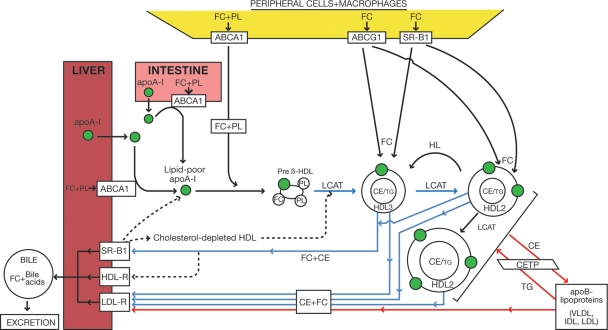
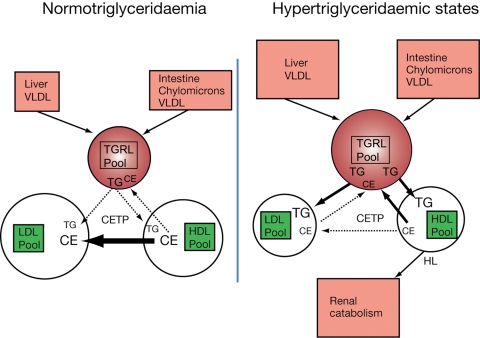
Subnormal plasma levels of high-density lipoprotein cholesterol (HDL-C) constitute a major cardiovascular risk factor; raising low HDL-C levels may therefore reduce the residual cardiovascular risk that frequently presents in dyslipidaemic subjects despite statin therapy. Cholesteryl ester transfer protein (CETP), a key modulator not only of the intravascular metabolism of HDL and apolipoprotein (apo) A-I but also of triglyceride (TG)-rich particles and low-density lipoprotein (LDL), mediates the transfer of cholesteryl esters from HDL to pro-atherogenic apoB-lipoproteins, with heterotransfer of TG mainly from very low-density lipoprotein to HDL. Cholesteryl ester transfer protein activity is elevated in the dyslipidaemias of metabolic disease involving insulin resistance and moderate to marked hypertriglyceridaemia, and is intimately associated with premature atherosclerosis and high cardiovascular risk. Cholesteryl ester transfer protein inhibition therefore presents a preferential target for elevation of HDL-C and reduction in atherosclerosis. This review appraises recent evidence for a central role of CETP in the action of current lipid-modulating agents with HDL-raising potential, i.e. statins, fibrates, and niacin, and compares their mechanisms of action with those of pharmacological agents under development which directly inhibit CETP. New CETP inhibitors, such as dalcetrapib and anacetrapib, are targeted to normalize HDL/apoA-I levels and anti-atherogenic activities of HDL particles. Further studies of these CETP inhibitors, in particular in long-term, large-scale outcome trials, will provide essential information on their safety and efficacy in reducing residual cardiovascular risk.
Overview
The claims and statistics of this paper haven’t been checked yet.
Free: it reads the open-access text and checks the first 5 claims that cite a source we can check. Create a free account to check every claim.
Integrity signals
Registry
Cites
Statistics
Figures
Verification
Claims the paper makes
The claims and statistics of this paper haven’t been checked yet.
Free: it reads the open-access text and checks the first 5 claims that cite a source we can check. Create a free account to check every claim.
Claims other papers make about this one
Each is checked against this paper’s own text: does it say what the citing paper says it does?
The source backs part of the claim, not all of it — or backs it for a different population, condition or comparison.
In the citing paper
“Remnant particles are enriched in cholesteryl esters and deficient in TG (Figure 2).”
From Triglyceride-rich lipoproteins and their remnants: metabolic insights, role in atherosclerotic cardiovascular disease, and emerging therapeutic strategies—a consensus statement from the European Atherosclerosis Society (2021) · cites this paper as [95]
Experimental — accuracy not yet measured
Self-check
Percentages, sums and reported differences re-computed from the paper’s own numbers.
The self-check needs the paper’s full text.
Citations
Cites
Rosuvastatin to Prevent Vascular Events in Men and Women with Elevated C-Reactive Protein
Ridker, P. M., Danielson, E., Fonseca, F. A. H., Genest, J., Gotto, A. M., Kastelein, J. J. P., Koenig, W., Libby, P., Lorenzatti, A. J., MacFadyen, J. G., et al. (2008) · New England Journal of Medicine · doi:10.1056/nejmoa0807646 · Cited by 6,674
High density lipoprotein as a protective factor against coronary heart disease
Gordon, T., Castelli, W. P., Hjortland, M. C., Kannel, W. B., & Dawber, T. R. (1977) · The American Journal of Medicine · doi:10.1016/0002-9343(77)90874-9 · Cited by 5,059
Intensive versus Moderate Lipid Lowering with Statins after Acute Coronary Syndromes
Cannon, C. P., Braunwald, E., McCabe, C. H., Rader, D. J., Rouleau, J. L., Belder, R., Joyal, S. V., Hill, K. A., Pfeffer, M. A., & Skene, A. M. (2004) · New England Journal of Medicine · doi:10.1056/nejmoa040583 · Cited by 4,938
Helsinki Heart Study: Primary-Prevention Trial with Gemfibrozil in Middle-Aged Men with Dyslipidemia
Frick, M. H., Elo, O., Haapa, K., Heinonen, O. P., Heinsalmi, P., Helo, P., Huttunen, J. K., Kaitaniemi, P., Koskinen, P., Manninen, V., et al. (1987) · New England Journal of Medicine · doi:10.1056/nejm198711123172001 · Cited by 3,881
Rosuvastatin to Prevent Vascular Events in Men and Women With Elevated C-Reactive Protein
Ridker, P. M., Danielson, E., Fonseca, F. A. H., Genest, J., Gotto, A. M., Kastelein, J. J. P., Koenig, W., Libby, P., Lorenzatti, A. J., MacFadyen, J. G., et al. (2009) · Obstetrical & Gynecological Survey · doi:10.1097/01.ogx.0000344393.60303.0a · Cited by 3,641
Intensive Lipid Lowering with Atorvastatin in Patients with Stable Coronary Disease
LaRosa, J. C., Grundy, S. M., Waters, D. D., Shear, C., Barter, P., Fruchart, J.-C., Gotto, A. M., Greten, H., Kastelein, J. J. P., Shepherd, J., et al. (2005) · New England Journal of Medicine · doi:10.1056/nejmoa050461 · Cited by 3,489
Rubins, H. B., Robins, S. J., Collins, D., Fye, C. L., Anderson, J. W., Elam, M. B., Faas, F. H., Linares, E., Schaefer, E. J., Schectman, G., et al. (1999) · New England Journal of Medicine · doi:10.1056/nejm199908053410604 · Cited by 3,439
High-density lipoprotein cholesterol and cardiovascular disease. Four prospective American studies.
Gordon, D. J., Probstfield, J. L., Garrison, R. J., Neaton, J. D., Castelli, W. P., Knoke, J. D., Jacobs, D. R., Bangdiwala, S., & Tyroler, H. A. (1989) · Circulation · doi:10.1161/01.cir.79.1.8 · Cited by 3,162
Research works printed but not linked: 28
- 2008, New England Journal of Medicine, 359, 2195, 10.1056/nejmoa0807646 · DOI · Paper page
- 2004, New England Journal of Medicine, 350, 1495, 10.1056/nejmoa040583 · DOI · Paper page
- 2002, Arteriosclerosis, Thrombosis, and Vascular Biology, 22, 1155, 10.1161/01.atv.0000022850.59845.e0 · DOI · Paper page
- 2008, Circulation Research, 103, 1084, 10.1161/circresaha.108.182063 · DOI · Paper page
- 2009, Arteriosclerosis, Thrombosis, and Vascular Biology, 29, 870, 10.1161/atvbaha.109.186031 · DOI · Paper page
- 2003, Annual review of medicine, 54, 321, 10.1146/annurev.med.54.101601.152409 · DOI · Paper page
- 2008, Annual review of pharmacology and toxicology, 48, 79, 10.1146/annurev.pharmtox.48.113006.094746 · DOI · Paper page
- 2006, Journal of the American College of Cardiology, 47, 492, 10.1016/j.jacc.2005.09.042 · DOI · Paper page
- 2007, The American journal of cardiology, 100, 25N
- 2003, Arteriosclerosis, Thrombosis, and Vascular Biology, 23, 160, 10.1161/01.atv.0000054658.91146.64 · DOI · Paper page
- 2005, Arteriosclerosis, Thrombosis, and Vascular Biology, 25, 585, 10.1161/01.atv.0000154140.73570.00 · DOI · Paper page
- 2008, Arteriosclerosis, Thrombosis, and Vascular Biology, 28, 39, 10.1161/atvbaha.107.148817 · DOI · Paper page
- 2006, Arteriosclerosis, Thrombosis, and Vascular Biology, 26, 977, 10.1161/01.atv.0000204327.96431.9a · DOI · Paper page
- Poulter N The impact of micronized fenofibrate on lipid subfractions and on reaching HDL-target levels in 7,098 patients with dyslipidaemia Br J Cardiol 1999 6 682 685
- 2008, Arteriosclerosis, Thrombosis, and Vascular Biology, 28, 1672, 10.1161/atvbaha.108.164541 · DOI · Paper page
- 2008, Arteriosclerosis, Thrombosis, and Vascular Biology, 28, 2016, 10.1161/atvbaha.108.171363 · DOI · Paper page
- 2006, Arteriosclerosis, Thrombosis, and Vascular Biology, 26, 1350, 10.1161/01.atv.0000219695.84644.56 · DOI · Paper page
- 2008, Arteriosclerosis, Thrombosis, and Vascular Biology, 28, 148, 10.1161/atvbaha.107.151688 · DOI
- 2007, New England Journal of Medicine, 357, 2109, 10.1056/nejmoa0706628 · DOI · Paper page
- 2008, Journal of the American College of Cardiology, 10, A322
- 2007, Circulation Research, 101, 1209
- 2007, New England Journal of Medicine, 356, 1304, 10.1056/nejmoa070635 · DOI · Paper page
- 2007, New England Journal of Medicine, 356, 1620, 10.1056/nejmoa071359 · DOI · Paper page
- 2004, Arteriosclerosis, Thrombosis, and Vascular Biology, 24, 490, 10.1161/01.atv.0000118278.21719.17 · DOI · Paper page
- 2009, Arteriosclerosis, Thrombosis, and Vascular Biology, 29, 268, 10.1161/atvbaha.108.179416 · DOI · Paper page
- 2005, Journal of the American College of Cardiology, 46, 1792, 10.1016/j.jacc.2005.06.080 · DOI · Paper page
- 2005, Arteriosclerosis, Thrombosis, and Vascular Biology, 25, 1057, 10.1161/01.atv.0000161928.16334.dd · DOI · Paper page
- 2007, Arteriosclerosis, Thrombosis, and Vascular Biology, 27, 1132, 10.1161/atvbaha.106.138347 · DOI · Paper page
Cited by
Items 201–300 of 307
Therapeutic inhibition of apoC-III for the treatment of hypertriglyceridemia
Bell, T. A., Graham, M. J., Baker, B. F., & Crooke, R. M. (2015) · Clinical Lipidology · doi:10.2217/clp.15.7 · Cited by 10
Marín-Medina, A., Ruíz-Hidalgo, G., Blé‐Castillo, J. L., Zetina‐Esquivel, A. M., Zamora, R. M., Juárez‐Rojop, I. E., & Díaz-Zagoya, J. C. (2019) · International Journal of Environmental Research and Public Health · doi:10.3390/ijerph16040627 · Cited by 8
“Cholesterol synthesis is performed primarily in the liver, while the kidneys, intestine, and adrenal glands play a secondary role [2].”
BackgroundHirschler, V., Meroño, T., Maccallini, G., Rosso, L. A. G., Aranda, C., & Brites, F. D. (2011) · Archives of Medical Research · doi:10.1016/j.arcmed.2010.11.009 · Cited by 8
Flores‐Castillo, C., Luna‐Luna, M., Carreón‐Torres, E., López‐Olmos, V., Frías, S., Juárez-Oropeza, M. A., Franco, M., Fragoso, J. M., Vargas‐Alarcón, G., & Pérez-Méndez, O. A. (2019) · International Journal of Molecular Sciences · doi:10.3390/ijms20102521 · Cited by 8
“Hence, atorvastatin enhanced the transfer of CE mass from proatherogenic to antiatherogenic lipoproteins, which agrees with the cardioprotective action of statins [39].”
BackgroundHypolipidemic and Antihyperlipidemic Drugs
Vardanyan, R., & Hruby, V. J. (2016) · Elsevier eBooks · doi:10.1016/b978-0-12-411492-0.00020-1 · Cited by 9
Bouchard, J., Raj, P., Yu, L., Sobhi, B., Malalgoda, M., Malunga, L. N., Netticadan, T., & Thandapilly, S. J. (2024) · Applied Physiology, Nutrition, and Metabolism · doi:10.1139/apnm-2023-0440 · Cited by 7
Zhang, W., Su, C., Yoshiji, S., & Lu, T. (2024) · Bioinformatics · doi:10.1093/bioinformatics/btae666 · Cited by 8
“…an intergenic variant near CETP [cholesteryl ester transfer protein, transferring cholesterol esters from HDL particles to other lipoproteins (Chapman et al. 2010)], while the putative core instruments for vitamin D levels included rs117576073, an intronic variant of CYP2R1 (vitamin D…”
Alexandre, F., Zago, V. H. D. S., Panzoldo, N. B., Parra, E. S., Scherrer, D. Z., Vendrame, F., Nunes, V. S., Gomes, É. I. L., Marcato, P. D., Nakandakare, E. R., et al. (2015) · Clinica Chimica Acta · doi:10.1016/j.cca.2015.01.006 · Cited by 9
Park, J., Kim, J., Shin, D., & Cho, K. (2011) · International Journal of Molecular Medicine · doi:10.3892/ijmm.2011.874 · Cited by 7
“The exchange of CE and TG between lipoproteins is linked to elevated levels of TG-enriched lipoprotein, which is pro-inflammatory and pro-atherogenic (31).”
BackgroundNicotinic Acid Accelerates HDL Cholesteryl Ester Turnover in Obese Insulin-Resistant Dogs
Bloc’h, J. L., Leray, V., Nazih, H., Gauthier, O., Serisier, S., Magot, T., Krempf, M., Nguyen, P., & Ouguerram, K. (2015) · PLoS ONE · doi:10.1371/journal.pone.0136934 · Cited by 10
“To date, most studies have shown that CETP plays a key role in the effect of NA [45], leading to increased HDL-C and apoAI in humans.”
BackgroundLüscher, T. F., Landmesser, U., Ruschitzka, F. T., & Grobbee, D. E. (2012) · European Journal of Preventive Cardiology · doi:10.1177/2047487312467876 · Cited by 6
LIPID METABOLISM CORRECTION BY ANTISENSE TECHNOLOGY
Afanasieva, O. I., & Pokrovsky, S. N. (2013) · Rational Pharmacotherapy in Cardiology · doi:10.20996/1819-6446-2013-9-5-532-541 · Cited by 6
Dyslipidaemia: what’s around the corner?
Wierzbicki, A. S., Perera, D., & Ewang-Emukowhate, M. (2014) · Clinical Medicine · doi:10.7861/clinmedicine.14-6-s41 · Cited by 6
Li, B., Chen, X.-F., Wu, H.-S., Su, J., Ding, Y.-Y., Zhang, Z., Rong, M., Dong, Y., He, X., Li, L.-Z., et al. (2024) · Heliyon · doi:10.1016/j.heliyon.2024.e28019 · Cited by 8
“Current niacin, fibrates, and statins are available to therapeutically elevate HDL-c [45].”
BackgroundHu, M., Yang, Y., Ng, C., Lee, C. P., Lee, V. W. Y., Hanada, H., Masuda, D., Yamashita, S., & Tomlinson, B. (2015) · Medicine · doi:10.1097/md.0000000000000881 · Cited by 6
“Pharmacological doses of niacin have favorable effects on all traditionally measured lipid parameters, including increasing high-density lipoprotein cholesterol (HDL-C) and decreasing low-density lipoprotein cholesterol (LDL-C), triglycerides and lipoprotein (a).(1,2) Niacin treatment was associated with decreased tot…”
BackgroundHoward, E., Attenbourgh, A., O’Mahoney, L. L., Sakar, A., Ke, L., & Campbell, M. D. (2021) · Nutrition Metabolism and Cardiovascular Diseases · doi:10.1016/j.numecd.2021.05.021 · Cited by 6
Liang, X.-J., Guo, X., Zhu, P.-H., Zhao, Z., You, Z., Yang, K., Song, Y., Li, L., & Song, X. (2025) · Journal of Medicinal Chemistry · doi:10.1021/acs.jmedchem.5c02436 · Cited by 5
Cui, M., Li, W., Ma, L., Ping, F., Liu, J., Wu, X., Mao, J., Wang, X., & Nie, M. (2017) · Oncotarget · doi:10.18632/oncotarget.18128 · Cited by 5
“CETP facilitates the net transfer of cholesteryl ester from HDL-C to other lipoproteins and transports cholesterol from peripheral tissues to the liver and regulates the concentration of HDL-C [19].”
BackgroundSchekatolina, S., Lahovska, V., Bekshaev, A. Y., Контуш, С. М., Goff, W. L., & Kontush, A. (2022) · Metabolites · doi:10.3390/metabo12070623 · Cited by 5
Self-citationHu, M., Yang, Y., Chan, P., & Tomlinson, B. (2015) · Pharmacogenomics · doi:10.2217/pgs.15.79 · Cited by 5
Zende, P. D., Bankar, M. P., Momin, A. R. A., & Kamble, P. (2014) · JOURNAL OF CLINICAL AND DIAGNOSTIC RESEARCH · doi:10.7860/jcdr/2014/7818.4441 · Cited by 5
“The CETP gene is one of the major genes affecting HDL metabolism; the gene codes for CETP, a protein responsible for the transfer of cholesteryl ester (CE) from HDL to apolipoprotein B-containing particles, particularly very low-density lipoprotein (VLDL), in exchange for triacylglyceride [4].”
BackgroundLiu, C., Luo, C., Hao, L., Wu, Q., Xie, H., Zhao, S., Hao, C., Zhao, D., & Cheng, M. (2016) · European Journal of Medicinal Chemistry · doi:10.1016/j.ejmech.2016.07.065 · Cited by 5
Maranhão, R. C., Filho, A. C. M., Sigal, G. A., Chagas, A. C. P., & da Luz, P. L. (2018) · Elsevier eBooks · doi:10.1016/b978-0-12-812348-5.00022-2 · Cited by 8
Ma, F., Darabi, M., Lhomme, M., Tubeuf, E., Canicio, A., Brerault, J., Medadje, N., Rached, F. H., Lebreton, S., Frisdal, É., et al. (2021) · Atherosclerosis · doi:10.1016/j.atherosclerosis.2021.03.002 · Cited by 7
Self-citationInventive HDL Mimicking Nanoparticles: A Promising Frontier in Cardiovascular Disease Management
Ratra, S., Mukherjee, S., Ray, S., Yu, A., & Rengan, A. K. (2025) · Cardiovascular Toxicology · doi:10.1007/s12012-025-10074-8 · Cited by 4
Zhang, H., Zhou, Z., Gu, J., Lin, Y., Yan, Y., Chen, X., Fan, M., & Huang, Y. (2025) · Progress in Neuro-Psychopharmacology and Biological Psychiatry · doi:10.1016/j.pnpbp.2025.111282 · Cited by 4
Alireza, H. (2021) · International Journal of Membrane Science and Technology · doi:10.15379/2410-1869.2021.08.02.05 · Cited by 6
Lin, Y.-C., Tu, H., & Wang, T. (2023) · Journal of Endocrinological Investigation · doi:10.1007/s40618-023-02209-x · Cited by 4
“It promotes the conversion of HDL to very low-density lipoprotein cholesterol (VLDL) and LDL in exchange for reverse-transported triglyceride (TG) [68].”
Giraldo, A. M., Loango, N., Castaño, H., & Landázuri, P. (2012) · Revista Colombiana de Cardiología · doi:10.1016/s0120-5633(12)70127-4 · Cited by 4
Skoczyńska, A., Wojakowska, A., Turczyn, B., Zatońska, K., Wołyniec, M., & Szuba, A. (2016) · Archives of Medical Science · doi:10.5114/aoms.2016.60950 · Cited by 4
Jackson, K. G., Lockyer, S., Carvalho-Wells, A. L., Williams, C. M., Minihane, A. M., & Lovegrove, J. A. (2016) · Molecular Nutrition & Food Research · doi:10.1002/mnfr.201600688 · Cited by 4
“(TRL), VLDL and their remnants, to the pathogenesis of atherosclerosis has been well described [2-4].”
Bouillet, B., Gautier, T., Terriat, B., Lagrost, L., Vergès, B. L., & Petit, J. (2019) · Acta Diabetologica · doi:10.1007/s00592-019-01340-7 · Cited by 4
Documento Abordaje de la dislipidemia. Sociedad Española de Arteriosclerosis (parte II)
Núñez-Cortés, J. M., Alegría, E., Álvarez-Sala, J. L., Gimilio, J. A., Lahoz, C., Morató, T. M., Prieto, J. M. M., Pedro‐Botet, J., & Pintó, X. (2011) · Clínica e Investigación en Arteriosclerosis · doi:10.1016/j.arteri.2011.09.005 · Cited by 6
Breast cancer metastatic dormancy and emergence, a role for adjuvant statin therapy
Beckwitt, C. H. (2018) · D-Scholarship@Pitt (University of Pittsburgh) · Cited by 5
Alireza, H. (2021) · International Journal of Membrane Science and Technology · doi:10.15379/2410-1869.2021.08.02.04 · Cited by 3
Quality control of herbal medicines in hyperlipidaemia: Metabolomics approach
Sajak, A. A. B., Azlan, A., Abas, F., & Hamzah, H. B. (2023) · International Food Research Journal · doi:10.47836/ifrj.30.3.01 · Cited by 4
Nazari, M., & Minasian, V. (2024) · Asian Journal of Sports Medicine · doi:10.5812/asjsm-147429 · Cited by 3
“High-density lipoprotein levels plays a crucial role in reverse cholesterol transport (RCT), which removes excess cholesterol from peripheral tissues and delivers it to the liver or bile for excretion (32).”
Lu, J., Liu, Y., Wang, Z., Zhou, K., Pan, Y., Zhong, S., & Jiang, G. (2024) · JACC Asia · doi:10.1016/j.jacasi.2024.07.011 · Cited by 4
Corral, P., & Schreier, L. E. (2013) · Clínica e Investigación en Arteriosclerosis · doi:10.1016/j.arteri.2013.08.002 · Cited by 5
Genetic variations and functions of KLF14 in gene expression and metabolic disease development
Riaz, Z., Saeed, S., & Riaz, S. (2025) · Journal of Applied Genetics · doi:10.1007/s13353-025-01015-w · Cited by 2
Lipid dysregulation in chronic diseases: systems biology and omics perspectives
Majumder, D., Bhattacharya, D., Gill, H. S., Rajeev, M., Sharma, S., Dwivedi, S. P., Nag, M., & Lahiri, D. (2026) · Xenobiotica · doi:10.1080/00498254.2026.2680076 · Cited by 2
“Mutations in CETP may para-doxically elevate HDl-c but confer inconsistent cardiovascular risk (chapman et al. 2010). loss-of-function variants in ANGPTL3/4/8 enhance lipoprotein lipase activity, producing a cardioprotective lipid profile and inspiring the development of ANGPtl3 inhibitors (Yang et…”
Tan, Y., Lin, Q., Xu, J. R., Zhu, L., Guo, L., Xie, Y., Du, X., Zhang, S., Wen, T., & Liu, L. (2022) · Frontiers in Cardiovascular Medicine · doi:10.3389/fcvm.2022.799300 · Cited by 2
Cai, Y., Hao, B., Chen, J., Li, Y., & Liu, H. (2022) · Frontiers in Cardiovascular Medicine · doi:10.3389/fcvm.2022.867646 · Cited by 2
Abaj, F., Esmaeily, Z., Naeini, Z., Alvandi, E., Rafiee, M., & Koohdani, F. (2023) · BMC Endocrine Disorders · doi:10.1186/s12902-023-01391-6 · Cited by 2
“On the other hand, the protective one (B2 allele) is related to a lower level of serum CETP which decreases the reverse transfer of cholesterol ester and carries out an increase in HDL-C level [18, 70, 71], yet, more investigations are required to provide insight into the interaction effect of the CETP Taq1b and DAL o…”
BackgroundIntegrated review of cardiometabolic biomarkers and dietary nutrients
Vermaa, R., Bisen, P. S., & Bulló, M. (2024) · Journal of Food Bioactives · doi:10.26599/jfb.2024.95027386 · Cited by 2
Hypertriglyceridemia in an outpatient department – Significance as an atherosclerotic risk factor
Scholz, M., Tselmin, S., Fischer, S., & Julius, U. (2015) · Atherosclerosis Supplements · doi:10.1016/j.atherosclerosissup.2015.02.011 · Cited by 2
Chemical Genetic Approaches for the Investigation of Neutral Lipid Metabolism
Doler, C., Schweiger, M., Zimmermann, R., & Breinbauer, R. (2016) · ChemBioChem · doi:10.1002/cbic.201500501 · Cited by 1
Probucol normalizes cholesteryl ester transfer in type 2 diabetes
Bagdade, J. D., Lane, J. T., & Subbaiah, P. V. (2016) · Diabetes Research and Clinical Practice · doi:10.1016/j.diabres.2016.04.020 · Cited by 2
Kruithof, A. C., Kumar, R., Stevens, J., de Kam, M. L., Gautam, A., Alikunju, S., Padhi, B. K., Kulkarni, S., Raghuvanshi, R. S., Gandhi, R., et al. (2019) · Clinical Pharmacology in Drug Development · doi:10.1002/cpdd.707 · Cited by 2
Clinical role of apolipoproteins A and B
Chumakova, G. A., Гриценко, О. В., Veselovskaya, N. G., Vakhromeeva, E. V., & Kozarenko, A. A. (2011) · CARDIOVASCULAR THERAPY AND PREVENTION · doi:10.15829/1728-8800-2011-6-105-111 · Cited by 8
Borrás-Pérez, X., & Eizagaechevarría, N. M. (2011) · Revista Española de Cardiología · doi:10.1016/s0300-8932(11)70010-0 · Cited by 2
Raising high-density lipoprotein: for better or worse?
Tomlinson, B. (2010) · Heart · doi:10.1136/hrt.2010.202788 · Cited by 2
“Furthermore, although these other classes of drugs may reduce CETP activity to a variable extent, partly related to the modulation of CETP activity by the level of plasma triglycerides, they do not bind to the CETP molecule as do the specific CETP inhibitors.(3) In addition, the effects of any dose of a statin on HDL-…”
BackgroundInfluentialTebar, W. R., Meneghini, V., Goulart, A. C., Santos, I. S., Santos, R. D., Bittencourt, M. S., Generoso, G., Pereira, A. C., Blaha, M. J., Jones, S. R., et al. (2025) · Journal of clinical lipidology · doi:10.1016/j.jacl.2025.02.015 · Cited by 1
Wang, X., Hao, L., Xu, X., Li, W., Liu, C., Zhao, D., & Cheng, M. (2017) · Molecules · doi:10.3390/molecules22101658 · Cited by 1
Lipid Droplets and Very Low Density Lipoproteins; Their Relation to Insulin Resistance
Olofsson, S., Andersson, L. K., Perman, J., Rutberg, M., Haversen, L., Lu, L., Lu, E., Mobini, R., Ståhlman, M., Myhre, S., et al. (2011) · InTech eBooks · doi:10.5772/21559 · Cited by 2
“This compositional change reflects the action of cholesterol ester transfer protein, which transports cholesterol esters from HDL and LDL to VLDL particles in exchange for triglycerides (Chapman et al., 2010).”
BackgroundInfluentialSantos‐Gallego, C. G., & Badimón, J. J. (2012) · Revista Colombiana de Cardiología · doi:10.1016/s0120-5633(12)70128-6 · Cited by 1
‘Triglyceride effect’ on the dynamics of plasma lipoproteins and its possible link to atherogenesis
Sheriff, D. S., Ali, E. F., & Priya, M. T. (2012) · Libyan Journal of Medicine · doi:10.3402/ljm.v7i0.18909 · Cited by 1
Las lipoproteínas de alta densidad: protectoras vasculares contra la aterosclerosis
Gutiérrez, Y. P., Gutiérrez, A. P., León, A. R., & Alvarez, C. (2013) · CorSalud · Cited by 12
Change of HDL in Various Diseases
Cho, K. (2019) · Springer eBooks · doi:10.1007/978-981-13-7387-9_3 · Cited by 1
Cho, K. (2019) · Springer eBooks · doi:10.1007/978-981-13-7383-1_2 · Cited by 1
Guo, X., Huang, Z., Chen, J., Hu, J., Hu, D., Peng, D., & Yu, B. (2022) · Frontiers in Cardiovascular Medicine · doi:10.3389/fcvm.2022.913363 · Cited by 1
“Intravascular HDL and TRLs interact through various metabolic pathways, most of which contain hetero-exchange of core lipids by cholesteryl ester transfer protein (CETP), resulting in the formation of triglyceride-enriched HDL and cholesteryl esterenriched TRLs (6).”
BackgroundBraidy, N., & Sachdev, P. S. (2023) · Elsevier eBooks · doi:10.1016/b978-0-12-823679-6.00005-9 · Cited by 1
Samineni, D. (2011) · OhioLink ETD Center (Ohio Library and Information Network)
Fernández-Travieso, J. C. (2013) · Revista CENIC. Ciencias biológicas
Enhancement of HDL Formation and Normalization of Intravascular HDL Remodeling
Kontush, A., & Chapman, M. J. (2011) · Wiley eBooks · doi:10.1002/9781118158678.ch11
Self-citationInhibidores de la protena transferidora de steres de colesterol. Cul es su futuro
Ros, E. (2010) · Clínica e Investigación en Arteriosclerosis · doi:10.1016/s0214-9168(10)70022-x
Is there a future for CETP-inhibitor therapy?
Robinson, J. G. (2011) · Clinical Investigation · doi:10.4155/cli.11.10
Anacetrapib: potential for the prevention and treatment of coronary heart disease
Cannon, C. P., Steen, D. L., & Khera, A. V. (2013) · Research Reports in Clinical Cardiology · doi:10.2147/rrcc.s27769
“Human CETP is a 476-residue, 74 kDa, hydrophobic glycoprotein primarily secreted by the liver and adipose tissue.(13) CETP was first cloned in 1987.”
Bouillet, B. (2013) · theses.fr (ABES) · doi:10.70675/77a7449cz5170z405bz9fbdz7df45ebb4037
“De plus, la CETP joue un rôle déterminant dans la formation des particules LDL athérogènes, petites et denses enrichies en esters de cholestérol, soit directement en favorisant le transfert des esters de cholestérol des HDL vers les LDL petites et denses, soit indirectement en enrichissant de manière préférentielle en…”
Genetic Experimental Preparations for Studying Atherosclerosis
Francis, S. (2014) · Progress in molecular biology and translational science · doi:10.1016/b978-0-12-386930-2.00001-x
HDL-kolesteroløkning : Vil farmakoterapi føre til bedret prognose?
Aalen, J. M. (2010) · NORA - Norwegian Open Research Archives
Teeman, C. S., Kurti, S. P., Cull, B. J., Emerson, S. R., Haub, M. D., & Rosenkranz, S. K. (2016) · The FASEB Journal · doi:10.1096/fasebj.30.1_supplement.1163.2
7 Vetzuur- en cholesterolsynthese
Schuit, F. C. (2010) · Bohn Stafleu van Loghum eBooks · doi:10.1007/978-90-313-8225-5_7
Tavoni, T. M. (2019) · Digital Library of Theses and Dissertations (Universidade de São Paulo) · doi:10.11606/t.9.2019.tde-08032019-181032
Bloc’h, J. L. (2010) · OpenGrey (Institut de l'Information Scientifique et Technique)
(2021) · American Journal of Pure and Applied Biosciences · doi:10.34104/ajpab.021.017028
Kontush, A., & Chapman, M. J. (2011) · Wiley eBooks · doi:10.1002/9781118158678.ch5
Self-citationKontush, A., & Chapman, M. J. (2011) · Wiley eBooks · doi:10.1002/9781118158678.ch7
Self-citationKontush, A., & Chapman, M. J. (2011) · Wiley eBooks · doi:10.1002/9781118158678.ch9
Self-citationYeo, N. J. Y. (2022) · DR-NTU (Nanyang Technological University) · doi:10.32657/10356/155373
Gao, S., Wang, X., Cheng, D., Li, J., Li, L., Ran, L., Zhao, S., Fan, J., & Liu, E. (2018) · Mediators of Inflammation · doi:10.1155/2018/6904538
Vetzuur- en cholesterolsynthese
Schuit, F. C. (2015) · Bohn Stafleu van Loghum eBooks · doi:10.1007/978-90-368-0620-6_7
Kontush, A., & Chapman, M. J. (2011) · Wiley eBooks · doi:10.1002/9781118158678.ch4
Self-citationdos Santos, A. P. C., de Alcântara, A. C., Soares, M. B. P., Deus, D. F., Freitas, F. R., Couto, F. D., Bidu, N. S., Brustolim, D., Maranhão, R. C., & Couto, R. D. (2023) · The Open Biomarkers Journal · doi:10.2174/0118753183266211231118141751
VLDL in Atherosclerosis: Variety of Mechanistic Implications
Poznyak, A. V., Glanz, V. Y., Sukhorukov, V. N., Melnichenko, A. A., Khotina, V. A., Lee, A. A., Lee, A. A., Beloyartsev, D. F., & Orekhov, A. N. (2024) · OnLine Journal of Biological Sciences · doi:10.3844/ojbsci.2024.777.787 · Cited by 1
“As a result, TGs and PLs are converted into small and dense High-Density Lp (HDL remnants or HDL3) and low lipid apoA1, which is quickly removed from the bloodstream by kidneys (Chapman et al ., 2010).”
BackgroundTaradeh, M. (2023) · theses.fr (ABES) · doi:10.70675/8cb53537z2270z4c15zb7b0za5a5fecc4fe3 · Cited by 2
Omozuwa, O. P., Ekhator, O. C., & Uwaya, D. O. (2025) · Open Journal of Bioscience Research · doi:10.52417/ojbr.v6i1.760
Shams, M. A., Minasian, V., Hashemipour, M., & Hovsepian, S. (2025) · Zahedan Journal of Research in Medical Sciences · doi:10.5812/zjrms-163541
Hypolipidemic and antihyperlipidemic drugs
Vardanyan, R., & Vardanyan, G. (2025) · Elsevier eBooks · doi:10.1016/b978-0-443-33869-4.00014-4
Yamashita, S., & Masuda, D. (2025) · Rare Disease and Orphan Drugs Journal · doi:10.20517/rdodj.2025.16
Hourcade‐Potelleret, F. (2012) · theses.fr (ABES) · doi:10.70675/e78e3f4az1aadz47d6z9a8bz8dd0e636d743
Varin, A. (2014) · theses.fr (ABES) · doi:10.70675/d46652b0z7942z481azab82z950d6f8312f8
Clinical Assessment of Anti-Atherogenic Function of HighDensity Lipoprotein (HDL)
Ma, F. (2018) · theses.fr (ABES) · doi:10.70675/aec01babza8edz47a2zb4d4zc7c3be00b185
Omics of human plasma lipoproteins : role in cardiometabolic diseases
Zakiev, E. (2019) · theses.fr (ABES) · doi:10.70675/d80fee25za2f2z4790z9eb9ze82d5514a198
Hardy, L. M. (2019) · theses.fr (ABES) · doi:10.70675/2f5f4b0dzc92fz4cb4z9c5bzeb6d3fd3e791
Role of HDL in Atherogenesis: Cholesterol and Atheroprotection
Poznyak, A. V., Sukhorukov, V. N., Glanz, V. Y., Popov, M. А., Pleshko, E. M., Starodubtseva, I. A., Kovyanova, T. I., & Orekhov, A. N. (2026) · OnLine Journal of Biological Sciences · doi:10.3844/ojbsci.2026.26.01.001
“That may result in higher levels of HDL cholesterol and a statistical connection with lower CVD risk [23].”
Metadata
- Authors
- Chapman, M. J., Le Goff, W., Guerin, M., & Kontush, A.
- Affiliations
- Inserm (FR)
- Corresponding author
- Chapman, M. J.
- Venue
- European Heart Journal
- Publisher
- Oxford University Press (OUP)
- Published
- 2009-10-12
- Volume
- 31
- Issue
- 2
- Pages
- 149-164
- ISSN
- 0195-668X (ISSN-L)
- 1522-9645
- PMC
- PMC2806550
- OpenAlex
- W2064366700
- Cited by
- 298
- References
- 152
- Citations by year
- 2026: 2 · 2025: 14 · 2024: 11 · 2023: 10 · 2022: 11 · 2021: 18 · 2020: 9 · 2019: 19 · 2018: 17 · 2017: 10 · 2016: 21 · 2015: 24 · 2014: 21 · 2013: 24 · 2012: 22
- FWCI
- 4.63
- Type
- journal article
- Language
- en
- Open access
- hybrid
- doi.org
- Licence
- other-oa
- Locations
- European Heart Journal (publishedVersion, other-oa)
- PubMed Central (publishedVersion, cc-by-nc)
- PubMed (publishedVersion)
- HAL (submittedVersion, other-oa)
- HighWire Press Open Archive (submittedVersion)
- Topics
- Health Sciences › Medicine › Cardiology and Cardiovascular Medicine › Lipoproteins and Cardiovascular Health
- Life Sciences › Biochemistry, Genetics and Molecular Biology › Biochemistry › Cholesterol and Lipid Metabolism
- Health Sciences › Medicine › Cardiology and Cardiovascular Medicine › Lipid metabolism and disorders
- Keywords
- cholesteryl ester transfer protein, CETP inhibitors, dalcetrapib, anacetrapib, HDL cholesterol, apolipoprotein A-I, statins, fibrates, nicotinic acid, lipid therapy, residual cardiovascular risk, dyslipidemia, hypertriglyceridemia, insulin resistance, atherosclerosis, triglyceride-rich lipoproteins, low-density lipoprotein
- MeSH terms
- Hypolipidemic Agents, Cardiovascular Agents, Cardiovascular Diseases, Cholesterol, Humans, Cholesterol, HDL, Niacin, Hydroxymethylglutaryl-CoA Reductase Inhibitors, Cholesterol Ester Transfer Proteins, Fibric Acids
About these checks
Registry, retraction, Cites and statistics results are computed, not judged, with one exception: a printed reference that no index lists is read once by a model before it counts as a citation error. Claims are extracted by a model and kept only when their quote appears verbatim in the text; each cited source is then checked, with a model’s help, for whether it says what the claim relies on. Those verdicts can be wrong — read the claim’s quote and the cited source before relying on one.
Statistics and arithmetic are recomputed, not judged.
Confidence bands are shown only for fields calibrated on our annotated test set. None is calibrated yet, so no band is shown.
What counts as a claim ›How we measure confidence ›How we check this ›
Are you an author, or do you see a problem with this page? Request a review
Data sources
Bibliographic data: Semantic Scholar, OpenAlex, Crossref.
Contains information from the Semantic Scholar Academic Graph Datasets, made available under the ODC Attribution License (ODC-BY 1.0).
Semantic Scholar’s data is described in: Kinney, R., et al. (2023). The Semantic Scholar Open Data Platform. arXiv:2301.10140.
