

Triglyceride-rich lipoproteins and high-density lipoprotein cholesterol in patients at high risk of cardiovascular disease: evidence and guidance for management
Open accessThe DOI matches its Crossref record; 250 of the 254 references it cites were found in a registry or an index.
Abstract
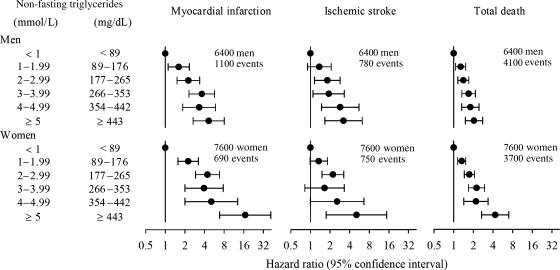
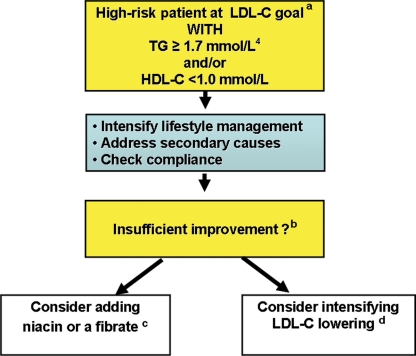
Even at low-density lipoprotein cholesterol (LDL-C) goal, patients with cardiometabolic abnormalities remain at high risk of cardiovascular events. This paper aims (i) to critically appraise evidence for elevated levels of triglyceride-rich lipoproteins (TRLs) and low levels of high-density lipoprotein cholesterol (HDL-C) as cardiovascular risk factors, and (ii) to advise on therapeutic strategies for management. Current evidence supports a causal association between elevated TRL and their remnants, low HDL-C, and cardiovascular risk. This interpretation is based on mechanistic and genetic studies for TRL and remnants, together with the epidemiological data suggestive of the association for circulating triglycerides and cardiovascular disease. For HDL, epidemiological, mechanistic, and clinical intervention data are consistent with the view that low HDL-C contributes to elevated cardiovascular risk; genetic evidence is unclear however, potentially reflecting the complexity of HDL metabolism. The Panel believes that therapeutic targeting of elevated triglycerides (≥ 1.7 mmol/L or 150 mg/dL), a marker of TRL and their remnants, and/or low HDL-C (<1.0 mmol/L or 40 mg/dL) may provide further benefit. The first step should be lifestyle interventions together with consideration of compliance with pharmacotherapy and secondary causes of dyslipidaemia. If inadequately corrected, adding niacin or a fibrate, or intensifying LDL-C lowering therapy may be considered. Treatment decisions regarding statin combination therapy should take into account relevant safety concerns, i.e. the risk of elevation of blood glucose, uric acid or liver enzymes with niacin, and myopathy, increased serum creatinine and cholelithiasis with fibrates. These recommendations will facilitate reduction in the substantial cardiovascular risk that persists in patients with cardiometabolic abnormalities at LDL-C goal.
Overview
The claims and statistics of this paper haven’t been checked yet.
Free: it reads the open-access text and checks the first 5 claims that cite a source we can check. Create a free account to check every claim.
Integrity signals
Registry
Cites
Statistics
Figures
Verification
Claims the paper makes
The claims and statistics of this paper haven’t been checked yet.
Free: it reads the open-access text and checks the first 5 claims that cite a source we can check. Create a free account to check every claim.
Claims other papers make about this one
Each is checked against this paper’s own text: does it say what the citing paper says it does?
The source backs part of the claim, not all of it — or backs it for a different population, condition or comparison.
In the citing paper
“Over the past three decades, epidemiologic and genetic evidence has accumulated to support the concept that elevated levels of plasma TG, TRL, and TRL remnants are causally related to an increased risk of ASCVD-related events—myocardial infarction (MI), stroke, and aortic valve stenosis—and all-cause mortality.1,2,17,19,20,24–28”
From Triglyceride-rich lipoproteins and their remnants: metabolic insights, role in atherosclerotic cardiovascular disease, and emerging therapeutic strategies—a consensus statement from the European Atherosclerosis Society (2021) · cites this paper as [2]
Experimental — accuracy not yet measuredThe source backs part of the claim, not all of it — or backs it for a different population, condition or comparison.
In the citing paper
“Recent advances in human genetics, together with a large body of epidemiologic, preclinical, and clinical trial results, provide strong support for a causal association between triglycerides (TG), TG-rich lipoproteins (TRL), and TRL remnants, and increased risk of myocardial infarction, ischaemic stroke, and aortic valve stenosis.”
From Triglyceride-rich lipoproteins and their remnants: metabolic insights, role in atherosclerotic cardiovascular disease, and emerging therapeutic strategies—a consensus statement from the European Atherosclerosis Society (2021) · cites this paper as [2]
Experimental — accuracy not yet measuredThe source backs part of the claim, not all of it — or backs it for a different population, condition or comparison.
In the citing paper
“elevated plasma TG levels (with the accumulation of TRL and remnant particles) are related not only to subclinical atherosclerosis and vascular inflammation independently of LDL-C in statin-naïve, apparently healthy subjects”
From Triglyceride-rich lipoproteins and their remnants: metabolic insights, role in atherosclerotic cardiovascular disease, and emerging therapeutic strategies—a consensus statement from the European Atherosclerosis Society (2021) · cites this paper as [2]
Experimental — accuracy not yet measuredThe source backs part of the claim, not all of it — or backs it for a different population, condition or comparison.
In the citing paper
“ApoE-mediated macrophage uptake of VLDL and remnants promotes an inflammatory (M1) phenotype,2,17,139 enhances inflammation, increases phagocytosis and foam cell formation, exerts defective efferocytotic activity, and favours fibrous cap thinning due to activation of metalloprotease expression140”
From Triglyceride-rich lipoproteins and their remnants: metabolic insights, role in atherosclerotic cardiovascular disease, and emerging therapeutic strategies—a consensus statement from the European Atherosclerosis Society (2021) · cites this paper as [2]
Experimental — accuracy not yet measuredThe source backs part of the claim, not all of it — or backs it for a different population, condition or comparison.
In the citing paper
“Current management strategies for HTG and mixed dyslipidemia provide limited and inconsistent benefits in TG lowering and cardiovascular outcomes, underscoring the need for more effective and durable approaches targeting TRL and apoB-containing lipoproteins (Filtz et al., 2024; Berglund et al., 2012; Chapman et al., 2011).”
From Efficacy and safety of small interfering RNA (siRNA) therapies for hypertriglyceridemia and mixed dyslipidemia: an updated systematic review and meta-analysis (2026) · cites this paper as Chapman et al., 2011
Experimental — accuracy not yet measured
8 more claims about this paper
Create a free account to see every claim other papers make about this one.
Self-check
Percentages, sums and reported differences re-computed from the paper’s own numbers.
The self-check needs the paper’s full text.
Citations
Cites
The Metabolic and Molecular Bases of Inherited Disease
Scriver, R. C. (1995) · Medical Entomology and Zoology · Cited by 12,101
European Guidelines on cardiovascular disease prevention in clinical practice (version 2012)
Authors/Task Force Members:, Perk, J., De Backer, G., Gohlke, H., Graham, I., Reiner, Ž., Verschuren, M., Albus, C., Benlian, P., Boysen, G., et al. (2012) · European Heart Journal · doi:10.1093/eurheartj/ehs092 · Cited by 8,490
Global estimates of the prevalence of diabetes for 2010 and 2030
Shaw, J. E., Sicree, R. A., & Zimmet, P. Z. (2010) · Diabetes Research and Clinical Practice · doi:10.1016/j.diabres.2009.10.007 · Cited by 7,216
Ticagrelor versus clopidogrel in patients with acute coronary syndromes
Wallentin, L., Becker, R. C., Budaj, A., Cannon, C. P., Emanuelsson, H., Held, C., Horrow, J., Husted, S., James, S., Katus, H., et al. (2009) · New England Journal of Medicine · doi:10.1056/nejmoa0904327 · Cited by 7,117
The metabolic and molecular bases of inherited disease
Chen, Y.-T. (2001) · Medical Entomology and Zoology · Cited by 6,928
Grundy, S. M., Cleeman, J. I., Merz, C. N. B., Brewer, H. B., Clark, L. T., Hunninghake, D. B., Pasternak, R. C., Smith, S. C., & Stone, N. J. (2004) · Circulation · doi:10.1161/01.cir.0000133317.49796.0e · Cited by 6,902
Prasugrel versus clopidogrel in patients with acute coronary syndromes
Wiviott, S. D., Braunwald, E., McCabe, C. H., Montalescot, G., Ruzyllo, W., Gottlieb, S., Neumann, F.-J., Ardissino, D., De Servi, S., Murphy, S. A., et al. (2007) · New England Journal of Medicine · doi:10.1056/nejmoa0706482 · Cited by 6,790
Cholesterol Treatment Trialists' (CTT) Collaboration (2010) · The Lancet · doi:10.1016/s0140-6736(10)61350-5 · Cited by 6,550
Helsinki Heart Study: Primary-Prevention Trial with Gemfibrozil in Middle-Aged Men with Dyslipidemia
Frick, M. H., Elo, O., Haapa, K., Heinonen, O. P., Heinsalmi, P., Helo, P., Huttunen, J. K., Kaitaniemi, P., Koskinen, P., Manninen, V., et al. (1987) · New England Journal of Medicine · doi:10.1056/nejm198711123172001 · Cited by 3,881
Research works printed but not linked: 2
- Gleim G Ballantyne CM Liu N Thompson-Bell S McCrary Sisk C Pasternak RC Mitchel Y Paolini JF Efficacy and safety profile of co-administered ER niacin/laropiprant and simvastatin in dyslipidaemia Br J Cardiol 2009 16 90 97
- Maclean A McKenney JM Scott R Brinton E Bays H Mitchel YB Paoloni JF Giezek H Vandormael K Ruck RA Gibson K McCrary Sisk C Maccubbin DL Efficacy and safety of extended-release niacin/laropiprant in patients with type 2 diabetes mellitus Br J Cardiol 2011 18 37 45
Cited by
Items 601–700 of 1,000
SIRT1 gene is associated with cardiovascular disease in the Iranian population
Mohtavinejad, N., Nakhaee, A., Harati, H., Poodineh, J., & Afzali, M. (2015) · Egyptian Journal of Medical Human Genetics · doi:10.1016/j.ejmhg.2014.11.005 · Cited by 17
Dyslipidemia and atherosclerotic carotid artery stenosis
Miura, Y., & Suzuki, H. (2019) · Vessel Plus · doi:10.20517/2574-1209.2018.69 · Cited by 17
Yang, Q., Yin, R., Cao, X., Huang, F., Zhou, Y., & Chen, W. (2018) · Nutrition & Metabolism · doi:10.1186/s12986-018-0308-5 · Cited by 17
Discordant Lipid Pattern and Carotid Atherosclerotic Plaque. Importance of Remnant Cholesterol
Masson, W. M., Lobo, M., Molinero, G., & Siniawski, D. A. (2017) · Arquivos Brasileiros de Cardiologia · doi:10.5935/abc.20170069 · Cited by 17
Xu, X., Pandit, R. U., Han, L., Li, Y., & Guo, X. (2019) · Angiology · doi:10.1177/0003319719854296 · Cited by 17
Beyond the Genetics of HDL: Why Is HDL Cholesterol Inversely Related to Cardiovascular Disease?
Kuivenhoven, J. A., & Groen, A. K. (2014) · Handbook of experimental pharmacology · doi:10.1007/978-3-319-09665-0_8 · Cited by 17
Self-citationLanglois, M. R. (2012) · Clinical Chemistry and Laboratory Medicine (CCLM) · doi:10.1515/cclm-2011-0636 · Cited by 16
Joint Associations of APOC3 and LDL-C–Lowering Variants With the Risk of Coronary Heart Disease
Wang, W., Li, R. P., Song, Z., Huang, N., Huang, T., Hua, X., & Tang, Y.-D. (2025) · JAMA Cardiology · doi:10.1001/jamacardio.2025.0195 · Cited by 16
Farnier, M., Retterstøl, K., Steinmetz, A., & Császár, A. (2012) · Diabetes and Vascular Disease Research · doi:10.1177/1479164111430715 · Cited by 16
Primary Hypertriglyceridemia: A Look Back on the Clinical Classification and Genetics of the Disease
Musambil, M., Al-Rubeaan, K. A., Al-Qasim, S., Alnaqeb, D., & Al-Soghayer, A. (2020) · Current Diabetes Reviews · doi:10.2174/1573399815666190502164131 · Cited by 16
Intérêt de la phase postprandiale pour la santé de l’homme
Laville, M., Vors, C., Nazare, J., & Michalski, M. (2013) · Bulletin de l Académie Nationale de Médecine · doi:10.1016/s0001-4079(19)31626-7 · Cited by 16
Prospective Study on Plasma MicroRNA‐4286 and Incident Acute Coronary Syndrome
Shen, M., Xu, X., Liu, X., Wang, Q.-H., Li, W., You, X., Peng, R., Yuan, Y. L., Long, P., Niu, R., et al. (2021) · Journal of the American Heart Association · doi:10.1161/jaha.120.018999 · Cited by 16
Siqués, P., Brito, J., Ordenes, S., & Pena, E. (2020) · Pulmonary Circulation · doi:10.1177/2045894020930626 · Cited by 16
Remnant cholesterol and severity of nonalcoholic fatty liver disease
Huang, H., Wang, J., Wu, L. M., Ruan, J., Hou, L., Shen, C., & Xu, C. (2023) · Diabetology & Metabolic Syndrome · doi:10.1186/s13098-023-01220-9 · Cited by 16
Searching for ways to switch on brown fat: are we getting warmer?
Whittle, A. J. (2012) · Journal of Molecular Endocrinology · doi:10.1530/jme-12-0080 · Cited by 16
Factores de riesgo cardiovascular
Ros, A. L., Al-Mahdi, E. A. R., Moya, R. R. M., & Gómez, J. L. Z. (2021) · Medicine - Programa de Formación Médica Continuada Acreditado · doi:10.1016/j.med.2021.06.011 · Cited by 16
Prevention of Atherosclerotic Cardiovascular Disease in Children with Familial Hypercholesterolemia
Peterson, A. L. H., McNeal, C. J., & Wilson, D. P. (2021) · Current Atherosclerosis Reports · doi:10.1007/s11883-021-00959-8 · Cited by 16
Hoffmann, W. G., Chen, Y., Schwartz, C. S., Barber, J. L., Dev, P. K., Reasons, R. J., Miranda-Maravi, S., Armstrong, B., Gerszten, R. E., Silbernagel, G., et al. (2023) · Journal of Lipid Research · doi:10.1016/j.jlr.2023.100495 · Cited by 16
Cho, J. M., Chae, J., Jeong, S., Moon, M. J., Ha, K.-C., Kim, S., & Lee, J. H. (2020) · Lipids in Health and Disease · doi:10.1186/s12944-020-01338-z · Cited by 16
Triglyceride: One molecule at the center of health and disease
Goldberg, I. J. (2012) · Biochimica et Biophysica Acta (BBA) - Molecular and Cell Biology of Lipids · doi:10.1016/j.bbalip.2012.02.005 · Cited by 16
Comparative study on fasting and postprandial lipid profile in type 2 diabetes mellitus
Chahal, J., Gupta, S., Chawla, S. S., & Grewal, H. (2021) · Journal of Family Medicine and Primary Care · doi:10.4103/jfmpc.jfmpc_1632_20 · Cited by 16
Enrichment of MTHFR 677 T in a Chinese long-lived cohort and its association with lipid modulation
Chen, N.-Y., Liu, C., Du, L.-L., Xiao, L., Ge, L., Wang, Y.-Y., Wei, Z., Wu, H., Luo, C.-Y., Liang, L., et al. (2014) · Lipids in Health and Disease · doi:10.1186/1476-511x-13-104 · Cited by 16
Aydınyılmaz, F., Özbeyaz, N. B., Gulıyev, İ., Algül, E., Şahan, H. F., & Kalkan, K. (2023) · Angiology · doi:10.1177/00033197231185204 · Cited by 15
Tikhonoff, V., Casiglia, E., Virdis, A., Grassi, G. M., Angeli, F., Arca, M., Barbagallo, C. M., Bombelli, M., Cappelli, F., Cianci, R., et al. (2024) · Journal of the American Heart Association · doi:10.1161/jaha.123.030319 · Cited by 15
Research advances in current drugs targeting hyperlipidemia (Review)
Zhao, H., Wang, Y., Li, Y., Cheng, R., & Chen, W. (2025) · Molecular Medicine Reports · doi:10.3892/mmr.2025.13623 · Cited by 15
Masana, L., & Plana, N. (2015) · Clínica e Investigación en Arteriosclerosis · doi:10.1016/j.arteri.2015.02.004 · Cited by 15
Self-citationControl del perfil lipídico global
Blasco, M., & Ascaso, J. F. (2019) · Clínica e Investigación en Arteriosclerosis · doi:10.1016/j.arteri.2019.10.002 · Cited by 15
The Need for Combination Drug Therapies in Patients with Complex Dyslipidemia
Barnett, J. R., Viljoen, A., & Wierzbicki, A. S. (2013) · Current Cardiology Reports · doi:10.1007/s11886-013-0391-1 · Cited by 15
ANGPTL3 serum concentration and rare genetic variants in Finnish population
Tikka, A., Metso, J., & Jauhiainen, M. (2017) · Scandinavian Journal of Clinical and Laboratory Investigation · doi:10.1080/00365513.2017.1379608 · Cited by 15
Zhai, Q., Dou, J., Wen, J., Wang, M., Zuo, Y., Su, X., Zhang, Y., Gaisano, H. Y., Mu, Y., & He, Y. L. (2022) · Endocrine · doi:10.1007/s12020-022-03012-z · Cited by 15
Hirowatari, Y., Manita, D., Kamachi, K., & Tanaka, A. (2016) · Annals of Clinical Biochemistry International Journal of Laboratory Medicine · doi:10.1177/0004563216672247 · Cited by 15
The year in cardiology 2015: prevention
Chapman, M. J., Blankenberg, S., & Landmesser, U. (2016) · European Heart Journal · doi:10.1093/eurheartj/ehv721 · Cited by 15
Self-citationAchila, O. O., Fessahye, N., Mengistu, S. T., Habtemikael, N. T., Werke, W. Y., Zemichael, F. T., Leghese, H. N., Weldegegish, T. A., Tekeste, T. H., & Garoy, E. Y. (2022) · Scientific Reports · doi:10.1038/s41598-022-09446-9 · Cited by 15
Gorzelak‐Pabiś, P., Woźniak, E., Wojdan, K., Chałubiński, M., & Broncel, M. (2019) · Journal of Interferon & Cytokine Research · doi:10.1089/jir.2018.0173 · Cited by 15
Impact of Lipoproteins on Atherobiology
Ma, F., Rached, F. H., Kontush, A., & Chapman, M. J. (2018) · Cardiology Clinics · doi:10.1016/j.ccl.2017.10.001 · Cited by 15
Self-citationFernández‐Cidón, B., Padró‐Miquel, A., Alía‐Ramos, P., Castro-Castro, M. J., Fanlo‐Maresma, M., Dot-Bach, D., Valero-Politi, J., Pintó, X., & Candás‐Estébanez, B. (2017) · Vascular Health and Risk Management · doi:10.2147/vhrm.s132475 · Cited by 15
The Differential Effects of HDL Subpopulations on Lipoprotein Lipase (LPL)-Mediated VLDL Catabolism
Wieczorek, E., Ćwiklińska, A., Kuchta, A., Kortas‐Stempak, B., Gliwińska, A., & Jankowski, M. (2021) · Biomedicines · doi:10.3390/biomedicines9121839 · Cited by 15
Yin, W., Wu, C., & Chen, J. (2012) · International journal of gerontology · doi:10.1016/j.ijge.2012.09.001 · Cited by 15
Ni, Z., Li, J., Qian, X., Yong, Y., Zhang, P., Geng, Y., Wang, Y., Chen, A., & Shao, Y. (2024) · Journal of Food Measurement & Characterization · doi:10.1007/s11694-024-02607-6 · Cited by 15
Владиславович, Е. М., & Arutyunov, G. P. (2023) · Diseases · doi:10.3390/diseases11040140 · Cited by 14
Case, B. C., Bress, A. P., Kolm, P., Philip, S., Herrick, J. S., Granowitz, C. B., Toth, P. P., Fan, W., Wong, N. D., HULL, M. L., et al. (2019) · Journal of clinical lipidology · doi:10.1016/j.jacl.2019.07.004 · Cited by 14
Evolocumab in the treatment of dyslipidemia: pre-clinical and clinical pharmacology
Page, M. M., & Watts, G. F. (2015) · Expert Opinion on Drug Metabolism & Toxicology · doi:10.1517/17425255.2015.1073712 · Cited by 14
Self-citationFarnier, M., Ducobu, J., & Bryniarski, L. (2011) · Current Medical Research and Opinion · doi:10.1185/03007995.2011.626398 · Cited by 14
Penta-therapy for severe acute hyperlipidemic pancreatitis
Lu, J. L., Xie, Y., Du, J., Kang, M., Jin, W., Li, Y., Xie, H., Cheng, R., Tian, R., & Wang, R. (2018) · The American Journal of Emergency Medicine · doi:10.1016/j.ajem.2018.01.092 · Cited by 14
Is hypertriglyceridemia atherogenic?
Roubille, F., Sultan, A., Huet, F., Leclercq, F., Macia, J., Gervasoni, R., Delseny, D., Akodad, M., & Roubille, C. (2018) · La Presse Médicale · doi:10.1016/j.lpm.2018.08.009 · Cited by 14
Impact of probiotics, prebiotics and synbiotics on lipid metabolism in humans
Jackson, K. G., & Lovegrove, J. A. (2012) · Nutrition and Aging · doi:10.3233/nua-130017 · Cited by 14
Deng, J., Tang, R., Chen, J., Zhou, Q., Zhan, X., Haibo, L., Peng, F., Wang, X., Wen, Y., Feng, X., et al. (2023) · Nutrition Metabolism and Cardiovascular Diseases · doi:10.1016/j.numecd.2023.02.009 · Cited by 14
Park, J., Kim, D. H., Lee, H., Lee, H., Hwang, I., Yoon, Y. E., Park, H. E., Lee, S., Choi, S., Kim, Y.-J., et al. (2021) · Journal of the American Heart Association · doi:10.1161/jaha.120.020050 · Cited by 14
Kim, S., Jin, Y., & Park, Y. (2015) · Genes & Nutrition · doi:10.1007/s12263-015-0475-1 · Cited by 14
Ivert, T., Malmström, H., Hammar, N., Carlsson, A. C., Wändell, P. E., Holzmann, M. J., Jungner, I., Ärnlöv, J., & Walldius, G. (2018) · PLoS ONE · doi:10.1371/journal.pone.0201972 · Cited by 14
The Ebbs and Flows in the Development of Cholesterol-Lowering Drugs: Prospects for the Future
Hajhosseiny, R., Sabir, I. N., Khavandi, K., & Wierzbicki, A. S. (2014) · Clinical Pharmacology & Therapeutics · doi:10.1038/clpt.2014.76 · Cited by 14
The SRGAP2 SNPs, their haplotypes and G × E interactions on serum lipid traits
Miao, L., Yin, R., Wu, J., Yang, S., Lin, W., & Pan, S. (2017) · Scientific Reports · doi:10.1038/s41598-017-10950-6 · Cited by 14
Zhang, Z., Chen, Q., Chen, Q., Hou, J. W., Li, X., Fu, J., Luo, Y., Su, H., Long, Y., Feng, Q., et al. (2024) · Journal of Inflammation Research · doi:10.2147/jir.s477860 · Cited by 14
Associations between smoking and blood-group, and the risk of dyslipidaemia amongst French women
MacDonald, C., Madika, A. L., Severi, G., Fournier, A., & Boutron‐Ruault, M. (2021) · Scientific Reports · doi:10.1038/s41598-021-94239-9 · Cited by 14
Associations of lifestyle and dietary habits with hyperlipidemia in Lebanon
Samaha, A., Zouein, F. A., Gebbawi, M., Fawaz, M. A., Houjayri, R., Samaha, R., Baydoun, S. A., & Eid, A. H. (2017) · Vessel Plus · doi:10.20517/2574-1209.2017.18 · Cited by 14
Magnetic levitation of nanoscale materials: the critical role of effective density
Ashkarran, A. A., & Mahmoudi, M. (2023) · Journal of Physics D Applied Physics · doi:10.1088/1361-6463/ad090d · Cited by 14
Risk prediction with triglycerides in patients with stable coronary disease on statin treatment
Werner, C., Filmer, A., Fritsch, M., Groenewold, S., Gräber, S., Böhm, M., & Laufs, U. (2014) · Clinical Research in Cardiology · doi:10.1007/s00392-014-0740-0 · Cited by 13
Tani, S., Nagao, K., Kawauchi, K., Yagi, T., Atsumi, W., Matsuo, R., & Hirayama, A. (2017) · American Journal of Cardiovascular Drugs · doi:10.1007/s40256-017-0238-z · Cited by 13
Siggaard-Andersen, N., Freiberg, J., & Nordestgaard, B. G. (2012) · PubMed · Cited by 13
Self-citationVolpe, M., Volpe, R., Gallo, G., Presta, V., Tocci, G., Folco, E., Peracino, A. P., Tremoli, E., & Trimarco, B. (2017) · High Blood Pressure & Cardiovascular Prevention · doi:10.1007/s40292-017-0211-6 · Cited by 13
Langlois, M. R., Nordestgaard, B. G., Langsted, A., Chapman, M. J., Aakre, K. M., Baum, H. H. E., Borén, J., Bruckert, É., Catapano, A. L., Cobbaert, C. M., et al. (2021) · Laboratory Service · doi:10.17116/labs20211001145 · Cited by 13
Self-citationde Expertos, G. D. T. D. D. A. D. L. S. E. D. A. Y. G. E. (2017) · Clínica e Investigación en Arteriosclerosis · doi:10.1016/j.arteri.2016.12.001 · Cited by 13
Comentarios a la guía ESC/EAS 2016 sobre el tratamiento de las dislipemias
de Isla, L. P., isLa, L. P. D., Fernández, P. L. S., Walther, L. Á.-S., Alonso, V. B., Conde, A. C., Basilio, E. G., García‐Ortiz, L., López, P. M., Ezquerra, E. A., et al. (2017) · Revista Española de Cardiología · doi:10.1016/j.recesp.2016.11.051 · Cited by 13
Comments on the 2016 ESC/EAS Guidelines for the Management of Dyslipidemias
de Isla, L. P., de Isla, L. P., Fernández, P. L. S., Walther, L. Á.-S., Alonso, V. B., Conde, A. C., Basilio, E. G., García‐Ortiz, L., López, P. M., Ezquerra, E. A., et al. (2017) · Revista Española de Cardiología (English Edition) · doi:10.1016/j.rec.2017.01.001 · Cited by 13
Use of Expert Consensus to Improve Atherogenic Dyslipidemia Management
Núñez-Cortés, J. M., Pedro‐Botet, J., Brea-Hernando, Á., Rodríguez, Á. D., González‐Santos, P., Hernández‐Mijares, A., Mantilla, T., Pintó, X., & Simó, R. (2013) · Revista Española de Cardiología (English Edition) · doi:10.1016/j.rec.2013.06.011 · Cited by 13
Farnier, M., Marcereuil, D., Niet, S. D., Ducobu, J., Steinmetz, A., Retterstøl, K., Bryniarski, L., Császár, A., & Vanderbist, F. (2012) · Clinical Drug Investigation · doi:10.2165/11630820-000000000-00000 · Cited by 13
Rizos, E. C., & Elisaf, M. (2013) · European Journal of Pharmacology · doi:10.1016/j.ejphar.2013.02.050 · Cited by 13
Amssayef, A., Azzaoui, B. E., Ajebli, M., & Eddouks, M. (2020) · Cardiovascular & Hematological Agents in Medicinal Chemistry · doi:10.2174/1871525718666200506100139 · Cited by 13
Huang, H., Xie, J., Hou, L., Miao, M., Xu, L., & Xu, C. (2023) · Journal of Diabetes Investigation · doi:10.1111/jdi.14133 · Cited by 13
Kačkov, S., Šimundić, A.-M., Nikolac, N., Ćelap, I., Dukić, L., RUZIC, D., & BILUSIC, M. (2013) · Physiological Research · doi:10.33549/physiolres.932493 · Cited by 13
The best of the European Heart Journal: look back with pride
Lüscher, T. F., Gersh, B. J., Hendricks, G., Landmesser, U., Ruschitzka, F. T., & Wijns, W. C. (2012) · European Heart Journal · doi:10.1093/eurheartj/ehs098 · Cited by 14
Impact of maternal hyperglycemia on cardiac development: Insights from animal models
Choudhury, T. Z., Majumdar, U., Basu, M., & Garg, V. (2021) · genesis · doi:10.1002/dvg.23449 · Cited by 13
Ngcobo, N. N., & Sibiya, N. H. (2024) · Diabetes and Vascular Disease Research · doi:10.1177/14791641241271949 · Cited by 13
Dong, W., Mao, Y., Xiang, Z., Zhu, J., Wang, H., Wang, A., Jiang, M., & Gu, Y. (2022) · Evidence-based Complementary and Alternative Medicine · doi:10.1155/2022/9727889 · Cited by 13
Zhang, C., Huang, Z., Jing, H., Fu, W., Yuan, M., Xia, W., Cai, L., Gan, X., Chen, Y., Zou, M., et al. (2017) · Theranostics · doi:10.7150/thno.18415 · Cited by 13
Replication and fine-mapping of genetic predictors of lipid traits in African–Americans
Feng, Q., Wei, W., Levinson, R. T., Mosley, J. D., & Stein, C. M. (2017) · Journal of Human Genetics · doi:10.1038/jhg.2017.55 · Cited by 13
Murkamilov, I. T., Sabirov, I. S., Fomin, V. V., Айтбаев, К. А., & Абдилалимовна, М. Ж. (2019) · Terapevticheskii arkhiv · doi:10.26442/00403660.2019.06.000047 · Cited by 13
Efficacy and safety of icosapent ethyl in hypertriglyceridaemia: a recap
Parhofer, K. G., Chapman, M. J., & Nordestgaard, B. G. (2020) · European Heart Journal Supplements · doi:10.1093/eurheartj/suaa116 · Cited by 12
Self-citationWhy, when and how should hypertriglyceridemia be treated in the high-risk cardiovascular patient?
Watts, G. F., & Karpe, F. (2011) · Expert Review of Cardiovascular Therapy · doi:10.1586/erc.11.61 · Cited by 12
Self-citationAlotaibi, T. F., Thackray, A. E., Roberts, M. J., Alanazi, T. M., BISHOP, N. C., Wadley, A. J., King, J. A., O’Donnell, E., STEINER, M. C., Singh, S. J., et al. (2020) · Medicine & Science in Sports & Exercise · doi:10.1249/mss.0000000000002560 · Cited by 12
Jiao, Z.-Y., Li, X.-T., Li, Y., Zheng, M., Cai, J., Chen, S., Wu, S.-L., & Yang, X. (2018) · Journal of Thoracic Disease · doi:10.21037/jtd.2018.04.132 · Cited by 12
Kim, S., Yang, L., Kim, S., Lee, R. G., Graham, M. J., Berliner, J. A., Lusis, A. J., Cai, L., Temel, R. E., Rateri, D. L., et al. (2017) · PLoS ONE · doi:10.1371/journal.pone.0182566 · Cited by 12
Xie, J., Wang, J., Zeng, R., & Xie, Y. (2023) · Frontiers in Endocrinology · doi:10.3389/fendo.2023.1220347 · Cited by 12
Fanlo‐Maresma, M., Candás‐Estébanez, B., Esteve-Luque, V., Padró‐Miquel, A., Escrihuela-Vidal, F., Carratini-Moraes, M., Corbella, E., Corbella, X., & Pintó, X. (2021) · Journal of Clinical Medicine · doi:10.3390/jcm10102218 · Cited by 12
The association of dyslipidemia with erythrocyte aggregation
Gyawali, P., Richards, R. S., Bwititi, P., & Nwose, E. U. (2015) · Clinical Lipidology · doi:10.2217/clp.15.3 · Cited by 12
Wang, B., Li, F., Guo, J., Wang, C., Xu, D., & Li, C. (2018) · Experimental and Therapeutic Medicine · doi:10.3892/etm.2018.7043 · Cited by 12
Božina, T., Šimić, I., Lovrić, J., Pećin, I., Jelaković, B., Sertić, J., & Reiner, Z. (2013) · PubMed · Cited by 12
Self-citationSYNE1‐QK1 SNPs, G × G and G × E interactions on the risk of hyperlipidaemia
Zheng, P., Yin, R., Liu, C., Deng, G., Guan, Y., & Wei, B. (2020) · Journal of Cellular and Molecular Medicine · doi:10.1111/jcmm.15239 · Cited by 12
Daiekhmin, S., & Al-Fartosi, K. G. (2021) · University of Thi-Qar Journal of Science · doi:10.32792/utq/utjsci.v8i2.815 · Cited by 12
Trends in metabolic syndrome risk factors among adolescents in rural Crete between 1989 and 2011
Girvalaki, C., Vardavas, C. I., Papandreou, C., Christaki, G., Vergetaki, A., Tsiligianni, I., Hatzis, C., & Kafatos, A. (2014) · HORMONES · doi:10.1007/bf03401340 · Cited by 12
Risk factors for microvascular atherosclerotic changes in patients with type 2 diabetes mellitus.
Šimić, I., Pećin, I., Tedeschi-Reiner, E., Zrinšćak, O., Šućur, N., & Reiner, Ž. (2013) · PubMed · Cited by 12
Quispe, R., Sweeney, T. E., Martin, S. S., Jones, S. R., Allison, M., Budoff, M. J., Ndumele, C. E., Elshazly, M. B., & Michos, E. D. (2024) · Journal of the American Heart Association · doi:10.1161/jaha.123.030548 · Cited by 11
Марущак, М. І., Vivsiana, I., Musiienko, V., Krynytska, І., & Kozak, K. (2021) · Acta Clinica Croatica · doi:10.20471/acc.2021.60.03.20 · Cited by 11
Doggrell, S. A. (2019) · Expert Opinion on Pharmacotherapy · doi:10.1080/14656566.2019.1609942 · Cited by 11
Kataoka, Y., Andrews, J., Puri, R., Psaltis, P. J., & Nicholls, S. J. (2017) · Journal of Atherosclerosis and Thrombosis · doi:10.5551/jat.rv16009 · Cited by 11
Remnant Cholesterol and the Risk of Coronary Artery Disease in Patients With Type 2 Diabetes
Wang, K., Ding, Y., Wang, R., Yang, J., Liu, X., Han, H., Shen, H., Sun, Y., Zhou, Y., & Ge, H. (2022) · Angiology · doi:10.1177/00033197221121008 · Cited by 11
Naranjo, M. C., Millán-Linares, M. C., & la Paz, S. M. (2019) · Elsevier eBooks · doi:10.1016/b978-0-12-811907-5.00008-7 · Cited by 11
Ouwens, M., Nauta, J. J. P., Ansquer, J.-C., & Driessen, S. (2015) · Current Medical Research and Opinion · doi:10.1185/03007995.2015.1098597 · Cited by 11
CE: Triglycerides Do They Matter?
Scordo, K. A., & Pickett, K. A. (2016) · AJN American Journal of Nursing · doi:10.1097/01.naj.0000511539.37103.0b · Cited by 11
Aterogénica, P. E. D. E. V. E. D. G. D. T. S. D. (2016) · Clínica e Investigación en Arteriosclerosis · doi:10.1016/j.arteri.2015.12.001 · Cited by 11
Metadata
- Authors
- Chapman, M. J., Ginsberg, H. N., Amarenco, P., Andreotti, F., Borén, J., Catapano, A. L., Descamps, O. S., Fisher, E., Kovanen, P. T., Kuivenhoven, J. A., Lesnik, P., Masana, L., Nordestgaard, B. G., Ray, K. K., Reiner, Z., Taskinen, M.-R., Tokgözoglu, L., Tybjærg-Hansen, A., Watts, G. F., & for the European Atherosclerosis Society Consensus Panel
- Affiliations
- Inserm (FR)
- Columbia University (US)
- Hôpital Bichat-Claude-Bernard (FR)
- Università Cattolica del Sacro Cuore (IT)
- University of Gothenburg (SE)
- University of Milan (IT)
- Hôpital de Jolimont (BE)
- New York University (US)
- Wihuri Research Institute (FI)
- University of Amsterdam (NL)
- Universitat Rovira i Virgili (ES)
- University of Copenhagen (DK)
- St George's, University of London (GB)
- University Hospital Center Zagreb, Croatia
- Biomedicum, Helsinki, Finland
- Hacettepe University, Ankara, Turkey
- Rigshospitalet, University of Copenhagen, Denmark
- The University of Western Australia (AU)
- Corresponding author
- Chapman, M. John
- Ginsberg, Henry N.
- ORCID
- Venue
- European Heart Journal
- Publisher
- Oxford University Press (OUP)
- Published
- 2011-04-29
- Volume
- 32
- Issue
- 11
- Pages
- 1345-1361
- ISSN
- 0195-668X (ISSN-L)
- 1522-9645
- PMC
- PMC3105250
- OpenAlex
- W2124481954
- Semantic Scholar
- 45f95c2cc9fe1ac7defbdab8c28b129aadd1667f
- Cited by
- 1,227
- References
- 254
- Citations by year
- 2026: 46 · 2025: 52 · 2024: 56 · 2023: 71 · 2022: 76 · 2021: 97 · 2020: 89 · 2019: 73 · 2018: 82 · 2017: 97 · 2016: 89 · 2015: 95 · 2014: 95 · 2013: 94 · 2012: 81
- FWCI
- 17.30
- Type
- journal article
- Language
- en
- Open access
- hybrid
- doi.org
- Licence
- Locations
- European Heart Journal (publishedVersion, other-oa)
- PubMed Central (publishedVersion, cc-by-nc)
- PubMed (publishedVersion)
- St George's Online Research Archive (St George's University of London) (acceptedVersion)
- HAL (submittedVersion, other-oa)
- Archivio Istituzionale della Ricerca (Universita Degli Studi Di Milano) (submittedVersion, other-oa)
- Data Archiving and Networked Services (DANS) (submittedVersion)
- HAL (submittedVersion)
- Hacettepe University Institutional Repository (hacettepe.edu.tr) (submittedVersion, other-oa)
- Pure Amsterdam UMC (submittedVersion)
- Research at the University of Copenhagen (University of Copenhagen) (submittedVersion)
- Spiral (Imperial College London) (submittedVersion, other-oa)
- Funders
- Kowa Company
- Novo Nordisk Fonden (NNF11OC1014864)
- Topics
- Health Sciences › Medicine › Cardiology and Cardiovascular Medicine › Lipoproteins and Cardiovascular Health
- Health Sciences › Medicine › Cardiology and Cardiovascular Medicine › Lipid metabolism and disorders
- Health Sciences › Medicine › Endocrinology, Diabetes and Metabolism › Diabetes, Cardiovascular Risks, and Lipoproteins
- Keywords
- triglyceride-rich lipoproteins, HDL cholesterol, cardiovascular risk, cardiometabolic abnormalities, hypertriglyceridemia, LDL cholesterol targets, nicotinic acid, fibrates, statin combination therapy, dyslipidemia, cardiovascular risk management, HDL metabolism
- MeSH terms
- Hypolipidemic Agents, Cardiovascular Diseases, Clinical Trials as Topic, Forecasting, Humans, Life Style, Lipoproteins, Cholesterol, HDL, Niacin, Risk Factors, Triglycerides, Fatty Acids, Omega-3, Hydroxymethylglutaryl-CoA Reductase Inhibitors, Dyslipidemias, Lipid Metabolism, Fibric Acids
About these checks
Registry, retraction, Cites and statistics results are computed, not judged, with one exception: a printed reference that no index lists is read once by a model before it counts as a citation error. Claims are extracted by a model and kept only when their quote appears verbatim in the text; each cited source is then checked, with a model’s help, for whether it says what the claim relies on. Those verdicts can be wrong — read the claim’s quote and the cited source before relying on one.
Statistics and arithmetic are recomputed, not judged.
Confidence bands are shown only for fields calibrated on our annotated test set. None is calibrated yet, so no band is shown.
What counts as a claim ›How we measure confidence ›How we check this ›
Are you an author, or do you see a problem with this page? Request a review
Data sources
Bibliographic data: Semantic Scholar, OpenAlex, Crossref.
Contains information from the Semantic Scholar Academic Graph Datasets, made available under the ODC Attribution License (ODC-BY 1.0).
Semantic Scholar’s data is described in: Kinney, R., et al. (2023). The Semantic Scholar Open Data Platform. arXiv:2301.10140.
