

Triglyceride-rich lipoproteins and high-density lipoprotein cholesterol in patients at high risk of cardiovascular disease: evidence and guidance for management
Open accessThe DOI matches its Crossref record; 250 of the 254 references it cites were found in a registry or an index.
Abstract
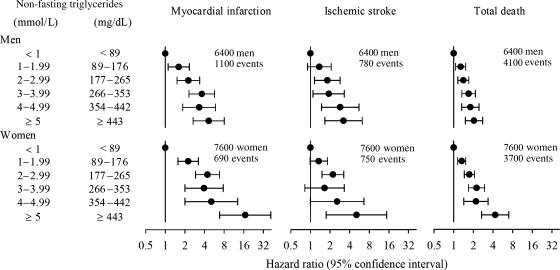
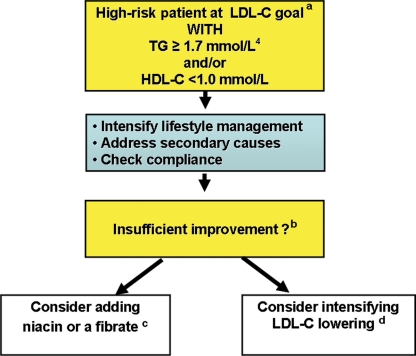
Even at low-density lipoprotein cholesterol (LDL-C) goal, patients with cardiometabolic abnormalities remain at high risk of cardiovascular events. This paper aims (i) to critically appraise evidence for elevated levels of triglyceride-rich lipoproteins (TRLs) and low levels of high-density lipoprotein cholesterol (HDL-C) as cardiovascular risk factors, and (ii) to advise on therapeutic strategies for management. Current evidence supports a causal association between elevated TRL and their remnants, low HDL-C, and cardiovascular risk. This interpretation is based on mechanistic and genetic studies for TRL and remnants, together with the epidemiological data suggestive of the association for circulating triglycerides and cardiovascular disease. For HDL, epidemiological, mechanistic, and clinical intervention data are consistent with the view that low HDL-C contributes to elevated cardiovascular risk; genetic evidence is unclear however, potentially reflecting the complexity of HDL metabolism. The Panel believes that therapeutic targeting of elevated triglycerides (≥ 1.7 mmol/L or 150 mg/dL), a marker of TRL and their remnants, and/or low HDL-C (<1.0 mmol/L or 40 mg/dL) may provide further benefit. The first step should be lifestyle interventions together with consideration of compliance with pharmacotherapy and secondary causes of dyslipidaemia. If inadequately corrected, adding niacin or a fibrate, or intensifying LDL-C lowering therapy may be considered. Treatment decisions regarding statin combination therapy should take into account relevant safety concerns, i.e. the risk of elevation of blood glucose, uric acid or liver enzymes with niacin, and myopathy, increased serum creatinine and cholelithiasis with fibrates. These recommendations will facilitate reduction in the substantial cardiovascular risk that persists in patients with cardiometabolic abnormalities at LDL-C goal.
Overview
The claims and statistics of this paper haven’t been checked yet.
Free: it reads the open-access text and checks the first 5 claims that cite a source we can check. Create a free account to check every claim.
Integrity signals
Registry
Cites
Statistics
Figures
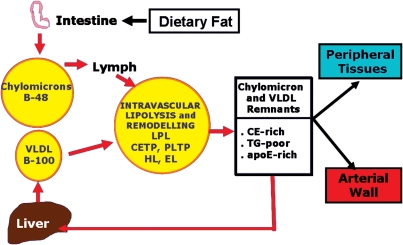
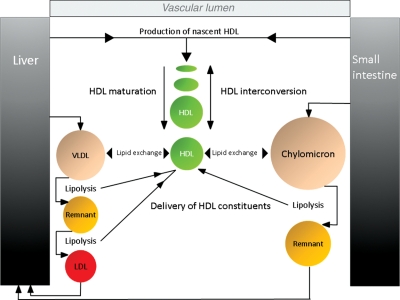
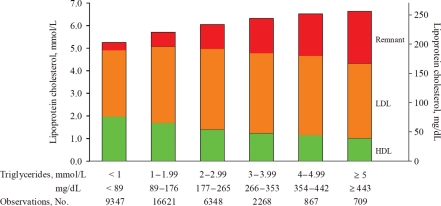
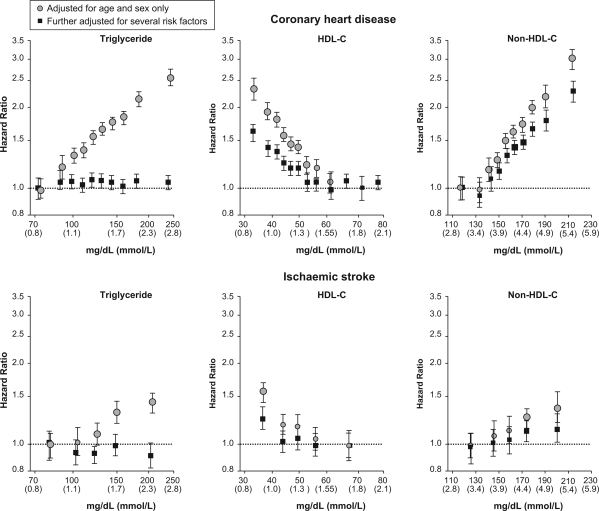
Verification
Claims the paper makes
The claims and statistics of this paper haven’t been checked yet.
Free: it reads the open-access text and checks the first 5 claims that cite a source we can check. Create a free account to check every claim.
Claims other papers make about this one
Each is checked against this paper’s own text: does it say what the citing paper says it does?
The source backs part of the claim, not all of it — or backs it for a different population, condition or comparison.
In the citing paper
“Over the past three decades, epidemiologic and genetic evidence has accumulated to support the concept that elevated levels of plasma TG, TRL, and TRL remnants are causally related to an increased risk of ASCVD-related events—myocardial infarction (MI), stroke, and aortic valve stenosis—and all-cause mortality.1,2,17,19,20,24–28”
From Triglyceride-rich lipoproteins and their remnants: metabolic insights, role in atherosclerotic cardiovascular disease, and emerging therapeutic strategies—a consensus statement from the European Atherosclerosis Society (2021) · cites this paper as [2]
Experimental — accuracy not yet measuredThe source backs part of the claim, not all of it — or backs it for a different population, condition or comparison.
In the citing paper
“Recent advances in human genetics, together with a large body of epidemiologic, preclinical, and clinical trial results, provide strong support for a causal association between triglycerides (TG), TG-rich lipoproteins (TRL), and TRL remnants, and increased risk of myocardial infarction, ischaemic stroke, and aortic valve stenosis.”
From Triglyceride-rich lipoproteins and their remnants: metabolic insights, role in atherosclerotic cardiovascular disease, and emerging therapeutic strategies—a consensus statement from the European Atherosclerosis Society (2021) · cites this paper as [2]
Experimental — accuracy not yet measuredThe source backs part of the claim, not all of it — or backs it for a different population, condition or comparison.
In the citing paper
“elevated plasma TG levels (with the accumulation of TRL and remnant particles) are related not only to subclinical atherosclerosis and vascular inflammation independently of LDL-C in statin-naïve, apparently healthy subjects”
From Triglyceride-rich lipoproteins and their remnants: metabolic insights, role in atherosclerotic cardiovascular disease, and emerging therapeutic strategies—a consensus statement from the European Atherosclerosis Society (2021) · cites this paper as [2]
Experimental — accuracy not yet measuredThe source backs part of the claim, not all of it — or backs it for a different population, condition or comparison.
In the citing paper
“ApoE-mediated macrophage uptake of VLDL and remnants promotes an inflammatory (M1) phenotype,2,17,139 enhances inflammation, increases phagocytosis and foam cell formation, exerts defective efferocytotic activity, and favours fibrous cap thinning due to activation of metalloprotease expression140”
From Triglyceride-rich lipoproteins and their remnants: metabolic insights, role in atherosclerotic cardiovascular disease, and emerging therapeutic strategies—a consensus statement from the European Atherosclerosis Society (2021) · cites this paper as [2]
Experimental — accuracy not yet measuredThe source backs part of the claim, not all of it — or backs it for a different population, condition or comparison.
In the citing paper
“Current management strategies for HTG and mixed dyslipidemia provide limited and inconsistent benefits in TG lowering and cardiovascular outcomes, underscoring the need for more effective and durable approaches targeting TRL and apoB-containing lipoproteins (Filtz et al., 2024; Berglund et al., 2012; Chapman et al., 2011).”
From Efficacy and safety of small interfering RNA (siRNA) therapies for hypertriglyceridemia and mixed dyslipidemia: an updated systematic review and meta-analysis (2026) · cites this paper as Chapman et al., 2011
Experimental — accuracy not yet measured
8 more claims about this paper
Create a free account to see every claim other papers make about this one.
Self-check
Percentages, sums and reported differences re-computed from the paper’s own numbers.
The self-check needs the paper’s full text.
Citations
Cites
The Metabolic and Molecular Bases of Inherited Disease
Scriver, R. C. (1995) · Medical Entomology and Zoology · Cited by 12,101
European Guidelines on cardiovascular disease prevention in clinical practice (version 2012)
Authors/Task Force Members:, Perk, J., De Backer, G., Gohlke, H., Graham, I., Reiner, Ž., Verschuren, M., Albus, C., Benlian, P., Boysen, G., et al. (2012) · European Heart Journal · doi:10.1093/eurheartj/ehs092 · Cited by 8,490
Global estimates of the prevalence of diabetes for 2010 and 2030
Shaw, J. E., Sicree, R. A., & Zimmet, P. Z. (2010) · Diabetes Research and Clinical Practice · doi:10.1016/j.diabres.2009.10.007 · Cited by 7,216
Ticagrelor versus clopidogrel in patients with acute coronary syndromes
Wallentin, L., Becker, R. C., Budaj, A., Cannon, C. P., Emanuelsson, H., Held, C., Horrow, J., Husted, S., James, S., Katus, H., et al. (2009) · New England Journal of Medicine · doi:10.1056/nejmoa0904327 · Cited by 7,117
The metabolic and molecular bases of inherited disease
Chen, Y.-T. (2001) · Medical Entomology and Zoology · Cited by 6,928
Grundy, S. M., Cleeman, J. I., Merz, C. N. B., Brewer, H. B., Clark, L. T., Hunninghake, D. B., Pasternak, R. C., Smith, S. C., & Stone, N. J. (2004) · Circulation · doi:10.1161/01.cir.0000133317.49796.0e · Cited by 6,902
Prasugrel versus clopidogrel in patients with acute coronary syndromes
Wiviott, S. D., Braunwald, E., McCabe, C. H., Montalescot, G., Ruzyllo, W., Gottlieb, S., Neumann, F.-J., Ardissino, D., De Servi, S., Murphy, S. A., et al. (2007) · New England Journal of Medicine · doi:10.1056/nejmoa0706482 · Cited by 6,790
Cholesterol Treatment Trialists' (CTT) Collaboration (2010) · The Lancet · doi:10.1016/s0140-6736(10)61350-5 · Cited by 6,550
Helsinki Heart Study: Primary-Prevention Trial with Gemfibrozil in Middle-Aged Men with Dyslipidemia
Frick, M. H., Elo, O., Haapa, K., Heinonen, O. P., Heinsalmi, P., Helo, P., Huttunen, J. K., Kaitaniemi, P., Koskinen, P., Manninen, V., et al. (1987) · New England Journal of Medicine · doi:10.1056/nejm198711123172001 · Cited by 3,881
Research works printed but not linked: 2
- Gleim G Ballantyne CM Liu N Thompson-Bell S McCrary Sisk C Pasternak RC Mitchel Y Paolini JF Efficacy and safety profile of co-administered ER niacin/laropiprant and simvastatin in dyslipidaemia Br J Cardiol 2009 16 90 97
- Maclean A McKenney JM Scott R Brinton E Bays H Mitchel YB Paoloni JF Giezek H Vandormael K Ruck RA Gibson K McCrary Sisk C Maccubbin DL Efficacy and safety of extended-release niacin/laropiprant in patients with type 2 diabetes mellitus Br J Cardiol 2011 18 37 45
Cited by
Items 501–600 of 1,000
Chen, Y., Zhao, S., & Zhao, Y. (2015) · Journal of clinical lipidology · doi:10.1016/j.jacl.2015.07.003 · Cited by 25
High density lipoproteins and type 2 diabetes: Emerging concepts in their relationship
Kostapanos, M. S., & Elisaf, M. S. (2014) · World Journal of Experimental Medicine · doi:10.5493/wjem.v4.i1.1 · Cited by 25
Chen, S., Chen, P., Hsu, H., Wu, M., & Yen, J.-H. (2017) · Journal of Agricultural and Food Chemistry · doi:10.1021/acs.jafc.7b02282 · Cited by 25
Management of Hypertriglyceridemia for Prevention of Atherosclerotic Cardiovascular Disease
Brinton, E. A. (2015) · Cardiology Clinics · doi:10.1016/j.ccl.2015.02.007 · Cited by 24
HDL Cholesterol and Cardiovascular Outcomes: What Is the Evidence?
Rubenfire, M., & Brook, R. D. (2013) · Current Cardiology Reports · doi:10.1007/s11886-013-0349-3 · Cited by 24
Ramms, B., Patel, S., Sun, X., Pessentheiner, A. R., Ducasa, G. M., Mullick, A. E., Lee, R. G., Crooke, R. M., Tsimikas, S., Witztum, J. L., et al. (2022) · JCI Insight · doi:10.1172/jci.insight.158414 · Cited by 24
Management of Hypertriglyceridemia for Prevention of Atherosclerotic Cardiovascular Disease
Brinton, E. A. (2016) · Endocrinology and Metabolism Clinics of North America · doi:10.1016/j.ecl.2015.09.012 · Cited by 24
Rodríguez-Mortera, R., Caccavello, R. J., Garay‐Sevilla, M. E., & Gugliucci, A. (2020) · Clinica Chimica Acta · doi:10.1016/j.cca.2020.05.014 · Cited by 24
Liu, S., Zhang, D., Ju, J., Wang, A., Du, T., Chen, X., Song, Y., Gao, Z., & Xu, H. (2023) · Frontiers in Endocrinology · doi:10.3389/fendo.2023.1260764 · Cited by 24
Athyros, V. G., Katsiki, N., Karagiannis, A. I., & Mikhailidis, D. P. (2014) · Current Pharmaceutical Design · doi:10.2174/1381612820666140620115756 · Cited by 24
Zeng, R., Li, S., Zhang, M., Li, X., Zhu, C., Guo, Y., Zhang, Y., & Li, J. (2017) · Journal of Cardiology · doi:10.1016/j.jjcc.2016.12.010 · Cited by 24
Bonfiglio, C., Leone, C. M., Silveira, L. V. D. A., Guerra, R., Misciagna, G., Caruso, M. G., Bruno, I., Buongiorno, C., Campanella, A., Guerra, V. M. B., et al. (2020) · Nutrition Metabolism and Cardiovascular Diseases · doi:10.1016/j.numecd.2020.07.002 · Cited by 24
Abi-Ayad, M., Abbou, A., Abi-Ayad, F. Z., Behadada, O., & Benyoucef, M. (2017) · Diabetes & Metabolic Syndrome Clinical Research & Reviews · doi:10.1016/j.dsx.2017.12.017 · Cited by 24
Romero, M. J., Lucas, R., Dou, H., Sridhar, S., Czikora, I., Mosieri, E. M., Rick, F. G., Block, N. L., Sridhar, S., Fulton, D. J., et al. (2016) · Proceedings of the National Academy of Sciences · doi:10.1073/pnas.1525520113 · Cited by 24
Shi, X., Li, M., Xuan, L., Li, H., Chen, B., Zhang, J., & Wang, H. (2019) · Experimental and Therapeutic Medicine · doi:10.3892/etm.2019.7618 · Cited by 24
Guo, T., Yin, R., Lin, W., Wang, W., Huang, F., & Pan, S. (2015) · Journal of Cellular and Molecular Medicine · doi:10.1111/jcmm.12713 · Cited by 24
Čabarkapa, D., Whetstone, J. M., Patterson, A. M., Mosier, E. M., Cabarkapa, D. V., & Fry, A. C. (2022) · International Journal of Environmental Research and Public Health · doi:10.3390/ijerph19084551 · Cited by 24
Consensus statement on the management of dyslipidaemias in adults
Béliard, S., Bonnet, F., Bouhanick, B., Bruckert, É., Cariou, B., Charrière, S., Durlach, V., Moulin, P., Valéro, R., & Vergès, B. L. (2016) · Diabetes & Metabolism · doi:10.1016/j.diabet.2016.07.033 · Cited by 23
Kitagami, M., Yasuda, R., Toma, N., Shiba, M., Nampei, M., Yamamoto, Y., Nakatsuka, Y., Sakaida, H., & Suzuki, H. (2017) · Journal of Stroke and Cerebrovascular Diseases · doi:10.1016/j.jstrokecerebrovasdis.2017.04.010 · Cited by 23
Saeed, A., Virani, S. S., Mulukutla, S. R., & Chow, C. K. (2021) · Current Diabetes Reviews · doi:10.2174/1573399817999210112192419 · Cited by 23
Modified and Dysfunctional Lipoproteins in Atherosclerosis: Effectors or Biomarkers?
Orekhov, A. N., & Sobenin, I. A. (2018) · Current Medicinal Chemistry · doi:10.2174/0929867325666180320121137 · Cited by 23
Wu, T., Zheng, Y., Yang, Y., Li, X., Ma, Y.-T., & Xie, X. (2019) · Metabolic Syndrome and Related Disorders · doi:10.1089/met.2018.0067 · Cited by 23
Pitavastatin: Novel effects on lipid parameters
Chapman, M. J. (2011) · Atherosclerosis Supplements · doi:10.1016/s1567-5688(11)70887-x · Cited by 23
Self-citationExposure and risk characterization for dietary methylmercury from seafood consumption in Kuwait
Laird, B., Chan, H. M., Kannan, K., Husain, A., Al-Amiri, H., Dashti, B., Sultan, A., Al-Othman, A., & Al-Mutawa, F. (2017) · Science of The Total Environment · doi:10.1016/j.scitotenv.2017.07.033 · Cited by 22
Do Persons with Diabetes Benefit from Combination Statin and Fibrate Therapy?
Rosenblit, P. D. (2012) · Current Cardiology Reports · doi:10.1007/s11886-011-0237-7 · Cited by 22
Zhao, S., Wang, F., Dai, Y., Lin, L., Tong, Q., Liao, Y., Yin, Y., Wang, G., Yan, Y., Li, X., et al. (2016) · International Journal of Cardiology · doi:10.1016/j.ijcard.2016.06.234 · Cited by 22
Postprandial hyperlipidemia as a risk factor in patients with type 2 diabetes
Tomlinson, B., Chan, P., & Lam, C. W. K. (2020) · Expert Review of Endocrinology & Metabolism · doi:10.1080/17446651.2020.1750949 · Cited by 22
Doonan, L. M., Fisher, E. A. A., & Brodsky, J. L. (2018) · Biochimica et Biophysica Acta (BBA) - Molecular and Cell Biology of Lipids · doi:10.1016/j.bbalip.2018.03.010 · Cited by 22
Self-citationPleiotropic effects of proprotein convertase subtilisin/kexin type 9 inhibitors?
Filippatos, T. D., Christopoulou, E. C., & Elisaf, M. (2018) · Current Opinion in Lipidology · doi:10.1097/mol.0000000000000523 · Cited by 22
Association between ambient air pollutants and lipid profile: A systematic review and meta-analysis
Wang, C., Meng, X.-C., Huang, C., Wang, J., Liao, Y.-H., Huang, Y., & Liu, R. (2023) · Ecotoxicology and Environmental Safety · doi:10.1016/j.ecoenv.2023.115140 · Cited by 22
Triglyceride-Rich Lipoproteins
Kockx, M., & Kritharides, L. (2018) · Cardiology Clinics · doi:10.1016/j.ccl.2017.12.008 · Cited by 22
Erickson, M. L., Haus, J. M., Malin, S. K., Flask, C. A., McCullough, A. J., & Kirwan, J. P. (2019) · Nutrition Metabolism and Cardiovascular Diseases · doi:10.1016/j.numecd.2019.06.012 · Cited by 22
Liu, Z., Liu, F., Cao, Y., Peng, S., Pan, H.-W., Hong, X., & Zheng, P. (2023) · Aging · doi:10.18632/aging.204542 · Cited by 22
Langsted, A., Freiberg, J. J., & Nordestgaard, B. G. (2017) · Atherosclerosis · doi:10.1016/j.atherosclerosis.2016.11.025 · Cited by 21
“It is not possible from our data to explain the reason for the extent of undertreatment or overtreatment with cholesterol-lowering therapy in individuals without ischemic heart disease and diabetes, that is, according to the European guidelines for prevention of cardiovascular disease [2,3,12].”
BackgroundSelf-citationGentile, M., Iannuzzi, A., Giallauria, F., D’Andrea, A., Venturini, E., Pacileo, M., Covetti, G., Panico, C., Mattiello, A., Vitale, G., et al. (2020) · Journal of Clinical Medicine · doi:10.3390/jcm9051422 · Cited by 21
Triglyceride-Rich Lipoproteins and Novel Targets for Anti-atherosclerotic Therapy
Reiner, Ž. (2018) · Korean Circulation Journal · doi:10.4070/kcj.2018.0343 · Cited by 21
Sahebkar, A., & Watts, G. F. (2014) · Diabetes Obesity and Metabolism · doi:10.1111/dom.12277 · Cited by 22
Self-citationFarha, R. K. A., Bustanji, Y. K., Al-Hiari, Y. M., Al‐Qirim, T. M., Shiekha, G. A., & Albashiti, R. (2016) · Journal of Enzyme Inhibition and Medicinal Chemistry · doi:10.1080/14756366.2016.1222581 · Cited by 21
Singh, A. B., & Liu, J. (2019) · Scientific Reports · doi:10.1038/s41598-019-52253-y · Cited by 21
Triglycerides Revisited to the Serial
Viecili, P. R. N., da Silva, B., Hirsch, G. E., Porto, F. G., Parisi, M. M., Castanho, A. R., Wender, M., & Klafke, J. Z. (2017) · Advances in clinical chemistry · doi:10.1016/bs.acc.2016.11.001 · Cited by 21
Zafrir, B., Khoury, R., & Saliba, W. (2023) · Journal of clinical lipidology · doi:10.1016/j.jacl.2023.03.009 · Cited by 21
Schuitema, P. C. E., Visseren, F. L. J., Nordestgaard, B. G., Teraa, M., van der Meer, M. G., Ruigrok, Y. M., Onland‐Moret, N. C., & Koopal, C. (2025) · Atherosclerosis · doi:10.1016/j.atherosclerosis.2025.120411 · Cited by 21
Self-citationDislipidemia aterogénica y riesgo residual. Estado de la cuestión en 2014
Núñez-Cortés, J. M., Pedro‐Botet, J., & Pintó, X. (2014) · Clínica e Investigación en Arteriosclerosis · doi:10.1016/j.arteri.2014.09.004 · Cited by 21
Davis, D. W., Navalta, J. W., McGinnis, G. R., Serafica, R. C., Izuora, K. E., & Basu, A. (2020) · Nutrients · doi:10.3390/nu12041120 · Cited by 21
Ling, Y., Jiang, J., Wu, B., & Gao, X. (2017) · Journal of clinical lipidology · doi:10.1016/j.jacl.2017.02.017 · Cited by 21
Tejera, C. H., Minnier, J., Fazio, S., Safford, M. M., Colantonio, L. D., Irvin, M. R., Howard, V. J., Zakai, N. A., & Pamir, N. (2021) · American Journal of Preventive Cardiology · doi:10.1016/j.ajpc.2021.100198 · Cited by 21
Inflammatory Biomarkers for Cardiovascular Risk Stratification in Familial Hypercholesterolemia
Bahrami, A., Liberale, L., Reiner, Ž., Carbone, F., Montecucco, F., & Sahebkar, A. (2020) · Reviews of physiology, biochemistry and pharmacology · doi:10.1007/112_2020_26 · Cited by 21
Krintus, M., Kuligowska-Prusińska, M., Laskowska, E., Janiszewska, E., & Kubica, J. (2015) · Cited by 21
Edes, A. N., Wolfe, B. A., & Crews, D. E. (2018) · General and Comparative Endocrinology · doi:10.1016/j.ygcen.2018.05.006 · Cited by 21
Kim, S.-Y., Jang, Y. J., Park, B., Yim, J., Lee, H.-K., Rhee, D., & Pyo, S. (2016) · Chemico-Biological Interactions · doi:10.1016/j.cbi.2016.07.034 · Cited by 21
Asghari, S., Aref‐Eshghi, E., Godwin, M. S., Duke, P. S., Williamson, T. S., & Mahdavian, M. (2015) · BMJ Open · doi:10.1136/bmjopen-2015-007954 · Cited by 21
Fathizadeh, H., Milajerdi, A., Reiner, Ž., Kolahdooz, F., Chamani, M., Amirani, E., & Asemi, Z. (2019) · Current Pharmaceutical Design · doi:10.2174/1381612825666190830154336 · Cited by 21
Cardiometabolic responses to cardiac rehabilitation in people with and without diabetes
Laddu, D., Ozemek, C., Hauer, T., Rouleau, C. R., Campbell, T. S., Wilton, S. B., Aggarwal, S., Austford, L. D., & Arena, R. A. (2019) · International Journal of Cardiology · doi:10.1016/j.ijcard.2019.11.134 · Cited by 21
Su, T., Hwang, J., Huang, K., Chiang, F., Chien, K., Wang, K., Charng, M., Tsai, W., Lin, L., Vige, R., et al. (2016) · Journal of Atherosclerosis and Thrombosis · doi:10.5551/jat.34231 · Cited by 20
Type-2 diabetes and coronary heart disease: common physiopathology, viewed from autoimmunity
Onat, A., Dönmez, İ., Karadeniz, Y., Çakır, H., & Kaya, A. (2014) · Expert Review of Cardiovascular Therapy · doi:10.1586/14779072.2014.910114 · Cited by 20
Chapman, M. J., Orsoni, A., Robillard, P., Thérond, P., & Giral, P. (2018) · Journal of clinical lipidology · doi:10.1016/j.jacl.2018.02.001 · Cited by 20
Self-citationHasvold, P., Thuresson, M., Sundström, J., Hammar, N., Kjeldsen, S. E., Johansson, G., Holme, I., & Bodegård, J. (2015) · Clinical Drug Investigation · doi:10.1007/s40261-015-0372-9 · Cited by 20
Tan, S.-H., Wu, J.-L., Zhuo, S.-X., Zhang, Y., & Wang, M. (2026) · World Journal of Cardiology · doi:10.4330/wjc.v18.i2.114960 · Cited by 20
Rhainds, D., Arsenault, B. J., Brodeur, M. R., & Tardif, J. (2012) · Future Cardiology · doi:10.2217/fca.12.25 · Cited by 20
Burokienė, N., Domarkienė, I., Ambrozaitytė, L., Uktverytė, I., Meškienė, R., Karčiauskaitė, D., Kasiulevičius, V., Šapoka, V., Kučinskas, V., & Kučinskienė, Z. A. (2017) · Advances in Medical Sciences · doi:10.1016/j.advms.2016.08.005 · Cited by 20
Wilkens, T. L., Tranæs, K., Eriksen, J. N., & Dragsted, L. O. (2021) · Nutrition Reviews · doi:10.1093/nutrit/nuab102 · Cited by 20
Metabolic disorders and inflammation are associated with familial combined hyperlipemia
Díaz-Ruiz, M., Martínez-Triguero, M. L., López‐Ruiz, A., la Cruz, F. F.-D., Bañuls, C., & Hernández‐Mijares, A. (2018) · Clinica Chimica Acta · doi:10.1016/j.cca.2018.09.009 · Cited by 20
Zhao, Q., Zhang, T., Cheng, Y., Ma, Y., Xu, Y.-K., Yang, J., & Zhou, Y.-J. (2020) · Lipids in Health and Disease · doi:10.1186/s12944-020-01355-y · Cited by 20
Morin, R., Mauger, J., Amaratunga, R., & Imbeault, P. (2021) · Journal of Translational Medicine · doi:10.1186/s12967-021-02933-z · Cited by 20
Reiner, Ž. (2011) · European Journal of Cardiovascular Prevention & Rehabilitation · doi:10.1177/1741826711418946 · Cited by 20
Visseren, F. L. J., Mach, F., Smulders, Y. M., Carballo, D., Koskinas, K. C., Bäck, M., Bénétos, A., Biffi, A., Boavida, J.-M., Capodanno, D., et al. (2022) · Giornale Ialiano di Cardiologia · doi:10.1714/3808.37926 · Cited by 20
Javandoost, A., Afshari, A., Saberi‐Karimian, M., Sahebkar, A., Safarian, H., Moammeri, M., Dizaji, B. F., Tavalaei, S., Ferns, G. A., Pasdar, A., et al. (2018) · PubMed Central · doi:10.22038/ajp.2018.10348 · Cited by 20
Langlois, M. R., & Nordestgaard, B. G. (2018) · Current Cardiology Reports · doi:10.1007/s11886-018-1036-1 · Cited by 19
Self-citationMasana, L., Ibarretxe, D., Heras, M., Cabré, A., Ferré, R., Merino, J., Plana, N., & Girona, J. (2013) · Atherosclerosis · doi:10.1016/j.atherosclerosis.2012.12.001 · Cited by 19
Self-citation(2012) · PubMed · Cited by 19
Lipidomics of triglyceride‐rich lipoproteins derived from hyperlipidemic patients on inflammation
Moreno‐Vedia, J., Llop, D., Rodríguez‐Calvo, R., Plana, N., Amigó, N., Rosales, R., Esteban, Y., Masana, L., Ibarretxe, D., & Girona, J. (2024) · European Journal of Clinical Investigation · doi:10.1111/eci.14132 · Cited by 19
Self-citationTeramoto, T., Abe, K., & Taneyama, T. (2013) · Cardiovascular Diabetology · doi:10.1186/1475-2840-12-163 · Cited by 20
Qiu, L., Yin, R., Khounphinith, E., Zhang, F.-H., Yang, D.-Z., & Pan, S. (2018) · Lipids in Health and Disease · doi:10.1186/s12944-018-0759-8 · Cited by 19
Hansel, B., Bonnefont‐Rousselot, D., Orsoni, A., Bittar, R., Giral, P., Roussel, R., Marre, M., Mohammedi, K., Bruckert, É., Chapman, M. J., et al. (2016) · Journal of clinical lipidology · doi:10.1016/j.jacl.2016.05.008 · Cited by 19
Self-citationLiu, H., Li, S., Cao, Y., Guo, Y., Zhu, C., Wu, N., & Li, J. (2021) · Atherosclerosis · doi:10.1016/j.atherosclerosis.2021.06.907 · Cited by 19
Girelli, D., Piubelli, C., Martinelli, N., Corrocher, R., & Olivieri, O. (2017) · European Journal of Internal Medicine · doi:10.1016/j.ejim.2017.03.019 · Cited by 19
Lower triglyceride levels are associated with better endothelial function
Takaeko, Y., Maruhashi, T., Kajikawa, M., Kishimoto, S., Yamaji, T., Harada, T., Hashimoto, Y., Han, Y., Kihara, Y., Chayama, K., et al. (2021) · Journal of clinical lipidology · doi:10.1016/j.jacl.2021.04.004 · Cited by 19
Lecamwasam, A., Mansell, T., Ekinci, E. I., Saffery, R., & Dwyer, K. M. (2022) · Frontiers in Nutrition · doi:10.3389/fnut.2022.821209 · Cited by 19
The triglyceride to HDL-cholesterol ratio and chronic graft failure in renal transplantation
Anderson, J. L. C., Bakker, S. J. L., & Tietge, U. J. F. (2021) · Journal of clinical lipidology · doi:10.1016/j.jacl.2021.01.009 · Cited by 19
Mthembu, S. X. H., Orlando, P., Silvestri, S., Ziqubu, K., Mazibuko-Mbeje, S. E., Mabhida, S. E., Nyambuya, T. M., Nkambule, B. B., Muller, C. J. F., Basson, A. K., et al. (2022) · Biochimie · doi:10.1016/j.biochi.2022.08.018 · Cited by 19
Are Elevated Serum Triglycerides Really a Risk Factor for Coronary Artery Disease?
Reiner, Ž. (2015) · Cardiology · doi:10.1159/000381304 · Cited by 18
Komiya, I., Yamamoto, A., Sunakawa, S., & Wakugami, T. (2021) · Lipids in Health and Disease · doi:10.1186/s12944-021-01434-8 · Cited by 18
Ku, E. J., Kim, B., Han, K., Lee, S., & Kwon, H. (2024) · Cardiovascular Diabetology · doi:10.1186/s12933-024-02422-9 · Cited by 18
Hipertrigliceridemias secundarias
Viñals, C., Zambón, D., Yago, G., Doménech, M., & Ortega, E. (2021) · Clínica e Investigación en Arteriosclerosis · doi:10.1016/j.arteri.2021.02.006 · Cited by 18
Jang, S.-J., Tuan, W.-L., Hsu, L., Er, L., Teng, M., Wu, S., & Ko, Y. (2022) · International Journal of Molecular Sciences · doi:10.3390/ijms232314963 · Cited by 18
Elevated remnant cholesterol increase 6-year type 2 diabetes mellitus onset risk
Yuan, L., Liu, J., Huang, Z., Zhao, Y. W., Feng, Y., Yang, X., Hu, H., Zhang, J., Li, T.-Z., Li, Y., et al. (2023) · Clinica Chimica Acta · doi:10.1016/j.cca.2023.117253 · Cited by 18
Lee, J. S., Chapman, M. J., Piraino, P., Lamerz, J., Schindler, T. H., Cutler, P., & Dernick, G. (2015) · PROTEOMICS - CLINICAL APPLICATIONS · doi:10.1002/prca.201500036 · Cited by 18
Self-citationThe Clinical Value of Lipid Abnormalities in Early Stage Cervical Cancer
Jiang, Q., Wang, L., Jin, M., Shou, Y., Zhu, H., & Li, A. (2022) · International Journal of General Medicine · doi:10.2147/ijgm.s352934 · Cited by 18
Remnant cholesterol and long-term incidence of death in coronary artery disease patients
Drexel, H., Mader, A., Larcher, B., Festa, A., Vonbank, A., Fraunberger, P., Leiherer, A., & Saely, C. H. (2025) · Atherosclerosis · doi:10.1016/j.atherosclerosis.2024.119048 · Cited by 17
Gao, L., Moodie, M., & Li, S.-C. (2019) · European Journal of Internal Medicine · doi:10.1016/j.ejim.2019.07.001 · Cited by 17
Simon, T. G., Corey, K. E., Chung, R. T., & Giugliano, R. P. (2016) · Digestive Diseases and Sciences · doi:10.1007/s10620-016-4330-z · Cited by 17
Fibrates and niacin: is there a place for them in clinical practice?
Wierzbicki, A. S., & Viljoen, A. (2014) · Expert Opinion on Pharmacotherapy · doi:10.1517/14656566.2014.972365 · Cited by 17
Cardiovascular protective properties of incretin-based therapies in type 2 diabetes
Şimşek, S., & de Galan, B. E. (2012) · Current Opinion in Lipidology · doi:10.1097/mol.0b013e3283590b8f · Cited by 17
Wang, J., Sun, Q., An, Y., Liu, J., Leng, S., & Wang, G. (2022) · Frontiers in Endocrinology · doi:10.3389/fendo.2022.951635 · Cited by 17
Riesgo cardiovascular residual de origen lipídico. Componentes y aspectos fisiopatológicos
Hernández‐Mijares, A., Ascaso, J. F., Blasco, M., Brea, Á., Rodríguez, Á. D., Mantilla, T., Pedro‐Botet, J., Pintó, X., & Millán, J. (2018) · Clínica e Investigación en Arteriosclerosis · doi:10.1016/j.arteri.2018.06.007 · Cited by 17
Atherogenic Dyslipidemia and Combination Pharmacotherapy in Diabetes: Recent Clinical Trials
Hamilton, S. J., & Watts, G. F. (2013) · The Review of Diabetic Studies · doi:10.1900/rds.2013.10.191 · Cited by 17
Self-citationShould raising high-density lipoprotein cholesterol be a matter of debate?
Athyros, V. G., Katsiki, N., Karagiannis, A. I., & Mikhailidis, D. P. (2012) · Journal of Cardiovascular Medicine · doi:10.2459/jcm.0b013e3283522422 · Cited by 17
Chang, C., Lin, X.-R., Lin, Y.-L., Fang, W.-H., Lin, S., Chang, S., & Kao, J. (2018) · PLoS ONE · doi:10.1371/journal.pone.0192740 · Cited by 17
Is hypertriglyceridemia atherogenic?
Huet, F., Roubille, C., & Roubille, F. (2019) · Current Opinion in Lipidology · doi:10.1097/mol.0000000000000622 · Cited by 17
Ahmad, S., Mora, S., Franks, P. W., Orho‐Melander, M., Ridker, P. M., Hu, F. B., & Chasman, D. I. (2018) · Clinical Chemistry · doi:10.1373/clinchem.2017.280545 · Cited by 17
Metadata
- Authors
- Chapman, M. J., Ginsberg, H. N., Amarenco, P., Andreotti, F., Borén, J., Catapano, A. L., Descamps, O. S., Fisher, E., Kovanen, P. T., Kuivenhoven, J. A., Lesnik, P., Masana, L., Nordestgaard, B. G., Ray, K. K., Reiner, Z., Taskinen, M.-R., Tokgözoglu, L., Tybjærg-Hansen, A., Watts, G. F., & for the European Atherosclerosis Society Consensus Panel
- Affiliations
- Inserm (FR)
- Columbia University (US)
- Hôpital Bichat-Claude-Bernard (FR)
- Università Cattolica del Sacro Cuore (IT)
- University of Gothenburg (SE)
- University of Milan (IT)
- Hôpital de Jolimont (BE)
- New York University (US)
- Wihuri Research Institute (FI)
- University of Amsterdam (NL)
- Universitat Rovira i Virgili (ES)
- University of Copenhagen (DK)
- St George's, University of London (GB)
- University Hospital Center Zagreb, Croatia
- Biomedicum, Helsinki, Finland
- Hacettepe University, Ankara, Turkey
- Rigshospitalet, University of Copenhagen, Denmark
- The University of Western Australia (AU)
- Corresponding author
- Chapman, M. John
- Ginsberg, Henry N.
- ORCID
- Venue
- European Heart Journal
- Publisher
- Oxford University Press (OUP)
- Published
- 2011-04-29
- Volume
- 32
- Issue
- 11
- Pages
- 1345-1361
- ISSN
- 0195-668X (ISSN-L)
- 1522-9645
- PMC
- PMC3105250
- OpenAlex
- W2124481954
- Semantic Scholar
- 45f95c2cc9fe1ac7defbdab8c28b129aadd1667f
- Cited by
- 1,227
- References
- 254
- Citations by year
- 2026: 46 · 2025: 52 · 2024: 56 · 2023: 71 · 2022: 76 · 2021: 97 · 2020: 89 · 2019: 73 · 2018: 82 · 2017: 97 · 2016: 89 · 2015: 95 · 2014: 95 · 2013: 94 · 2012: 81
- FWCI
- 17.30
- Type
- journal article
- Language
- en
- Open access
- hybrid
- doi.org
- Licence
- Locations
- European Heart Journal (publishedVersion, other-oa)
- PubMed Central (publishedVersion, cc-by-nc)
- PubMed (publishedVersion)
- St George's Online Research Archive (St George's University of London) (acceptedVersion)
- HAL (submittedVersion, other-oa)
- Archivio Istituzionale della Ricerca (Universita Degli Studi Di Milano) (submittedVersion, other-oa)
- Data Archiving and Networked Services (DANS) (submittedVersion)
- HAL (submittedVersion)
- Hacettepe University Institutional Repository (hacettepe.edu.tr) (submittedVersion, other-oa)
- Pure Amsterdam UMC (submittedVersion)
- Research at the University of Copenhagen (University of Copenhagen) (submittedVersion)
- Spiral (Imperial College London) (submittedVersion, other-oa)
- Funders
- Kowa Company
- Novo Nordisk Fonden (NNF11OC1014864)
- Topics
- Health Sciences › Medicine › Cardiology and Cardiovascular Medicine › Lipoproteins and Cardiovascular Health
- Health Sciences › Medicine › Cardiology and Cardiovascular Medicine › Lipid metabolism and disorders
- Health Sciences › Medicine › Endocrinology, Diabetes and Metabolism › Diabetes, Cardiovascular Risks, and Lipoproteins
- Keywords
- triglyceride-rich lipoproteins, HDL cholesterol, cardiovascular risk, cardiometabolic abnormalities, hypertriglyceridemia, LDL cholesterol targets, nicotinic acid, fibrates, statin combination therapy, dyslipidemia, cardiovascular risk management, HDL metabolism
- MeSH terms
- Hypolipidemic Agents, Cardiovascular Diseases, Clinical Trials as Topic, Forecasting, Humans, Life Style, Lipoproteins, Cholesterol, HDL, Niacin, Risk Factors, Triglycerides, Fatty Acids, Omega-3, Hydroxymethylglutaryl-CoA Reductase Inhibitors, Dyslipidemias, Lipid Metabolism, Fibric Acids
About these checks
Registry, retraction, Cites and statistics results are computed, not judged, with one exception: a printed reference that no index lists is read once by a model before it counts as a citation error. Claims are extracted by a model and kept only when their quote appears verbatim in the text; each cited source is then checked, with a model’s help, for whether it says what the claim relies on. Those verdicts can be wrong — read the claim’s quote and the cited source before relying on one.
Statistics and arithmetic are recomputed, not judged.
Confidence bands are shown only for fields calibrated on our annotated test set. None is calibrated yet, so no band is shown.
What counts as a claim ›How we measure confidence ›How we check this ›
Are you an author, or do you see a problem with this page? Request a review
Data sources
Bibliographic data: Semantic Scholar, OpenAlex, Crossref.
Contains information from the Semantic Scholar Academic Graph Datasets, made available under the ODC Attribution License (ODC-BY 1.0).
Semantic Scholar’s data is described in: Kinney, R., et al. (2023). The Semantic Scholar Open Data Platform. arXiv:2301.10140.
