

Triglyceride-rich lipoproteins and high-density lipoprotein cholesterol in patients at high risk of cardiovascular disease: evidence and guidance for management
Open accessThe DOI matches its Crossref record; 250 of the 254 references it cites were found in a registry or an index.
Abstract
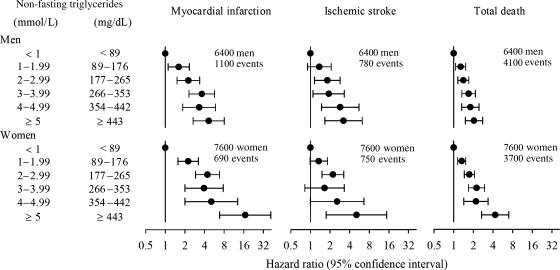
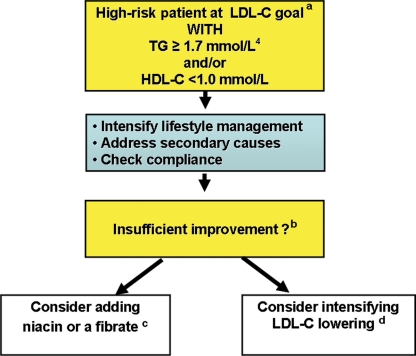
Even at low-density lipoprotein cholesterol (LDL-C) goal, patients with cardiometabolic abnormalities remain at high risk of cardiovascular events. This paper aims (i) to critically appraise evidence for elevated levels of triglyceride-rich lipoproteins (TRLs) and low levels of high-density lipoprotein cholesterol (HDL-C) as cardiovascular risk factors, and (ii) to advise on therapeutic strategies for management. Current evidence supports a causal association between elevated TRL and their remnants, low HDL-C, and cardiovascular risk. This interpretation is based on mechanistic and genetic studies for TRL and remnants, together with the epidemiological data suggestive of the association for circulating triglycerides and cardiovascular disease. For HDL, epidemiological, mechanistic, and clinical intervention data are consistent with the view that low HDL-C contributes to elevated cardiovascular risk; genetic evidence is unclear however, potentially reflecting the complexity of HDL metabolism. The Panel believes that therapeutic targeting of elevated triglycerides (≥ 1.7 mmol/L or 150 mg/dL), a marker of TRL and their remnants, and/or low HDL-C (<1.0 mmol/L or 40 mg/dL) may provide further benefit. The first step should be lifestyle interventions together with consideration of compliance with pharmacotherapy and secondary causes of dyslipidaemia. If inadequately corrected, adding niacin or a fibrate, or intensifying LDL-C lowering therapy may be considered. Treatment decisions regarding statin combination therapy should take into account relevant safety concerns, i.e. the risk of elevation of blood glucose, uric acid or liver enzymes with niacin, and myopathy, increased serum creatinine and cholelithiasis with fibrates. These recommendations will facilitate reduction in the substantial cardiovascular risk that persists in patients with cardiometabolic abnormalities at LDL-C goal.
Overview
The claims and statistics of this paper haven’t been checked yet.
Free: it reads the open-access text and checks the first 5 claims that cite a source we can check. Create a free account to check every claim.
Integrity signals
Registry
Cites
Statistics
Figures
Verification
Claims the paper makes
The claims and statistics of this paper haven’t been checked yet.
Free: it reads the open-access text and checks the first 5 claims that cite a source we can check. Create a free account to check every claim.
Claims other papers make about this one
Each is checked against this paper’s own text: does it say what the citing paper says it does?
The source backs part of the claim, not all of it — or backs it for a different population, condition or comparison.
In the citing paper
“Over the past three decades, epidemiologic and genetic evidence has accumulated to support the concept that elevated levels of plasma TG, TRL, and TRL remnants are causally related to an increased risk of ASCVD-related events—myocardial infarction (MI), stroke, and aortic valve stenosis—and all-cause mortality.1,2,17,19,20,24–28”
From Triglyceride-rich lipoproteins and their remnants: metabolic insights, role in atherosclerotic cardiovascular disease, and emerging therapeutic strategies—a consensus statement from the European Atherosclerosis Society (2021) · cites this paper as [2]
Experimental — accuracy not yet measuredThe source backs part of the claim, not all of it — or backs it for a different population, condition or comparison.
In the citing paper
“Recent advances in human genetics, together with a large body of epidemiologic, preclinical, and clinical trial results, provide strong support for a causal association between triglycerides (TG), TG-rich lipoproteins (TRL), and TRL remnants, and increased risk of myocardial infarction, ischaemic stroke, and aortic valve stenosis.”
From Triglyceride-rich lipoproteins and their remnants: metabolic insights, role in atherosclerotic cardiovascular disease, and emerging therapeutic strategies—a consensus statement from the European Atherosclerosis Society (2021) · cites this paper as [2]
Experimental — accuracy not yet measuredThe source backs part of the claim, not all of it — or backs it for a different population, condition or comparison.
In the citing paper
“elevated plasma TG levels (with the accumulation of TRL and remnant particles) are related not only to subclinical atherosclerosis and vascular inflammation independently of LDL-C in statin-naïve, apparently healthy subjects”
From Triglyceride-rich lipoproteins and their remnants: metabolic insights, role in atherosclerotic cardiovascular disease, and emerging therapeutic strategies—a consensus statement from the European Atherosclerosis Society (2021) · cites this paper as [2]
Experimental — accuracy not yet measuredThe source backs part of the claim, not all of it — or backs it for a different population, condition or comparison.
In the citing paper
“ApoE-mediated macrophage uptake of VLDL and remnants promotes an inflammatory (M1) phenotype,2,17,139 enhances inflammation, increases phagocytosis and foam cell formation, exerts defective efferocytotic activity, and favours fibrous cap thinning due to activation of metalloprotease expression140”
From Triglyceride-rich lipoproteins and their remnants: metabolic insights, role in atherosclerotic cardiovascular disease, and emerging therapeutic strategies—a consensus statement from the European Atherosclerosis Society (2021) · cites this paper as [2]
Experimental — accuracy not yet measuredThe source backs part of the claim, not all of it — or backs it for a different population, condition or comparison.
In the citing paper
“Current management strategies for HTG and mixed dyslipidemia provide limited and inconsistent benefits in TG lowering and cardiovascular outcomes, underscoring the need for more effective and durable approaches targeting TRL and apoB-containing lipoproteins (Filtz et al., 2024; Berglund et al., 2012; Chapman et al., 2011).”
From Efficacy and safety of small interfering RNA (siRNA) therapies for hypertriglyceridemia and mixed dyslipidemia: an updated systematic review and meta-analysis (2026) · cites this paper as Chapman et al., 2011
Experimental — accuracy not yet measured
8 more claims about this paper
Create a free account to see every claim other papers make about this one.
Self-check
Percentages, sums and reported differences re-computed from the paper’s own numbers.
The self-check needs the paper’s full text.
Citations
Cites
The Metabolic and Molecular Bases of Inherited Disease
Scriver, R. C. (1995) · Medical Entomology and Zoology · Cited by 12,101
European Guidelines on cardiovascular disease prevention in clinical practice (version 2012)
Authors/Task Force Members:, Perk, J., De Backer, G., Gohlke, H., Graham, I., Reiner, Ž., Verschuren, M., Albus, C., Benlian, P., Boysen, G., et al. (2012) · European Heart Journal · doi:10.1093/eurheartj/ehs092 · Cited by 8,490
Global estimates of the prevalence of diabetes for 2010 and 2030
Shaw, J. E., Sicree, R. A., & Zimmet, P. Z. (2010) · Diabetes Research and Clinical Practice · doi:10.1016/j.diabres.2009.10.007 · Cited by 7,216
Ticagrelor versus clopidogrel in patients with acute coronary syndromes
Wallentin, L., Becker, R. C., Budaj, A., Cannon, C. P., Emanuelsson, H., Held, C., Horrow, J., Husted, S., James, S., Katus, H., et al. (2009) · New England Journal of Medicine · doi:10.1056/nejmoa0904327 · Cited by 7,117
The metabolic and molecular bases of inherited disease
Chen, Y.-T. (2001) · Medical Entomology and Zoology · Cited by 6,928
Grundy, S. M., Cleeman, J. I., Merz, C. N. B., Brewer, H. B., Clark, L. T., Hunninghake, D. B., Pasternak, R. C., Smith, S. C., & Stone, N. J. (2004) · Circulation · doi:10.1161/01.cir.0000133317.49796.0e · Cited by 6,902
Prasugrel versus clopidogrel in patients with acute coronary syndromes
Wiviott, S. D., Braunwald, E., McCabe, C. H., Montalescot, G., Ruzyllo, W., Gottlieb, S., Neumann, F.-J., Ardissino, D., De Servi, S., Murphy, S. A., et al. (2007) · New England Journal of Medicine · doi:10.1056/nejmoa0706482 · Cited by 6,790
Cholesterol Treatment Trialists' (CTT) Collaboration (2010) · The Lancet · doi:10.1016/s0140-6736(10)61350-5 · Cited by 6,550
Helsinki Heart Study: Primary-Prevention Trial with Gemfibrozil in Middle-Aged Men with Dyslipidemia
Frick, M. H., Elo, O., Haapa, K., Heinonen, O. P., Heinsalmi, P., Helo, P., Huttunen, J. K., Kaitaniemi, P., Koskinen, P., Manninen, V., et al. (1987) · New England Journal of Medicine · doi:10.1056/nejm198711123172001 · Cited by 3,881
Research works printed but not linked: 2
- Gleim G Ballantyne CM Liu N Thompson-Bell S McCrary Sisk C Pasternak RC Mitchel Y Paolini JF Efficacy and safety profile of co-administered ER niacin/laropiprant and simvastatin in dyslipidaemia Br J Cardiol 2009 16 90 97
- Maclean A McKenney JM Scott R Brinton E Bays H Mitchel YB Paoloni JF Giezek H Vandormael K Ruck RA Gibson K McCrary Sisk C Maccubbin DL Efficacy and safety of extended-release niacin/laropiprant in patients with type 2 diabetes mellitus Br J Cardiol 2011 18 37 45
Cited by
Items 301–400 of 1,000
Hao, Q.-Y., Gao, J.-W., Yuan, Z.-M., Gao, M., Wang, J.-F., Schiele, F., Zhang, S.-L., & Liu, P.-M. (2022) · Circulation: Cardiovascular Imaging · doi:10.1161/circimaging.122.014116 · Cited by 49
Shao, Q., Yang, Z., Wang, Y., Li, Q., Han, K., Liang, J., Shen, H., Liu, X., Zhou, Y., Ma, X., et al. (2022) · Journal of Atherosclerosis and Thrombosis · doi:10.5551/jat.63397 · Cited by 49
Vors, C., Couillard, C., Paradis, M., Gigleux, I., Marin, J., Vohl, M., Couture, P., & Lamarche, B. (2018) · Journal of Nutrition · doi:10.1093/jn/nxx072 · Cited by 49
Yetukuri, L., Huopaniemi, I., Koivuniemi, A., Maranghi, M., Hiukka, A., Nygrén, H., Kaski, S., Taskinen, M., Vattulainen, I., Jauhiainen, M., et al. (2011) · PLoS ONE · doi:10.1371/journal.pone.0023589 · Cited by 49
Self-citationTrends in LDL-C and Non-HDL-C Levels with Age
Zhang, P., Su, Q., Ye, X., Guan, P., Chen, C., Hang, Y., Dong, J. P., Xu, Z., & Hu, W. (2020) · Aging and Disease · doi:10.14336/ad.2019.1025 · Cited by 49
Ginsberg, H. N., Hounslow, N. J., Senko, Y., Suganami, H., Bogdanski, P., Ceska, R., Kalina, A., Libis, R. A., Supryadkina, T. V., & Hovingh, G. K. (2022) · Diabetes Care · doi:10.2337/dc21-1288 · Cited by 48
Self-citationSahebkar, A., Simental-Mendía, L. E., Mikhailidis, D. P., Pirro, M., Banach, M., Sirtori, C. R., & Reiner, Ž. (2018) · Annals of Medicine · doi:10.1080/07853890.2018.1511919 · Cited by 48
Laghezza, A., Piemontese, L., Cerchia, C., Montanari, R., Capelli, D., Giudici, M., Crestani, M., Tortorella, P., Peiretti, F., Pochetti, G., et al. (2018) · Journal of Medicinal Chemistry · doi:10.1021/acs.jmedchem.8b00835 · Cited by 48
Ouchi, G., Komiya, I., Taira, S., Wakugami, T., & Ohya, Y. (2022) · Lipids in Health and Disease · doi:10.1186/s12944-021-01612-8 · Cited by 48
Vaccine Against PCSK9 Improved Renal Fibrosis by Regulating Fatty Acid β‐Oxidation
Wu, D., Zhou, Y., Pan, Y., Li, C., Wang, Y., Chen, F., Chen, X., Yang, S., Zhou, Z., Liao, Y., et al. (2020) · Journal of the American Heart Association · doi:10.1161/jaha.119.014358 · Cited by 48
Hypertriglyceridemia: the importance of identifying patients at risk
Kushner, P. A., & Cobble, M. E. (2016) · Postgraduate Medicine · doi:10.1080/00325481.2016.1243005 · Cited by 47
Omega-3 polyunsaturated fatty acids in the treatment of atherogenic dyslipidemia
Pirillo, A., & Catapano, A. L. (2013) · Atherosclerosis Supplements · doi:10.1016/s1567-5688(13)70004-7 · Cited by 47
Self-citationLipid lowering drugs and inflammatory changes: an impact on cardiovascular outcomes?
Ruscica, M., Ferri, N., Macchi, C., Corsini, A., & Sirtori, C. R. (2018) · Annals of Medicine · doi:10.1080/07853890.2018.1498118 · Cited by 47
Gao, S., Xu, H., Ma, W., Yuan, J., & Yu, M. (2022) · Journal of the American Heart Association · doi:10.1161/jaha.121.024366 · Cited by 47
Elnaem, M. H., Mohamed, M. H. N., Huri, H. Z., Azarisman, S. M., & Elkalmi, R. M. (2017) · Journal of Pharmacy And Bioallied Sciences · doi:10.4103/jpbs.jpbs_30_17 · Cited by 47
Björnson, E., Packard, C. J., Adiels, M., Andersson, L., Matikainen, N., Söderlund, S., Kahri, J., Hakkarainen, A., Lundbom, N., Lundbom, J., et al. (2020) · Journal of Internal Medicine · doi:10.1111/joim.13017 · Cited by 46
Self-citationArabi, S. M., Bahrami, L. S., Rahnama, I., & Sahebkar, A. (2022) · Pharmacological Research · doi:10.1016/j.phrs.2022.106061 · Cited by 46
Chaudhry, R., Viljoen, A., & Wierzbicki, A. S. (2018) · Expert Review of Clinical Pharmacology · doi:10.1080/17512433.2018.1480368 · Cited by 46
Pharmacotherapies for lipid modification: beyond the statins
Gotto, A. M., & Moon, J. E. (2013) · Nature Reviews Cardiology · doi:10.1038/nrcardio.2013.117 · Cited by 46
Triglycerides: a case for treatment?
Wierzbicki, A. S., Clarke, R. E., Viljoen, A., & Mikhailidis, D. P. (2012) · Current Opinion in Cardiology · doi:10.1097/hco.0b013e328353adc1 · Cited by 46
Ewang-Emukowhate, M., & Wierzbicki, A. S. (2013) · Journal of Cardiovascular Pharmacology and Therapeutics · doi:10.1177/1074248413492906 · Cited by 46
Ding, X., Tian, J., Chang, X., Liu, J., & Wang, G. (2025) · European Journal of Preventive Cardiology · doi:10.1093/eurjpc/zwaf248 · Cited by 46
Kim, S., Subramanian, V., Abdel‐Latif, A., & Lee, S. (2020) · Metabolic Syndrome and Related Disorders · doi:10.1089/met.2019.0120 · Cited by 46
Orsoni, A., Saheb, S., Levels, J. H. M., Dallinga‐Thie, G. M., Atassi, M., Bittar, R., Robillard, P., Bruckert, É., Kontush, A., Carrié, A., et al. (2011) · Journal of Lipid Research · doi:10.1194/jlr.p016816 · Cited by 46
Self-citationMonitoring of lipids, enzymes, and creatine kinase in patients on lipid-lowering drug therapy
Wiklund, O., Pirazzi, C., & Romeo, S. (2013) · Current Cardiology Reports · doi:10.1007/s11886-013-0397-8 · Cited by 45
Coelingh Bennink, H. J. T., Verhoeven, C., Zimmerman, Y., Visser, M., Foidart, J.-M., & Gemzell-Danielsson, K. (2017) · Menopause · doi:10.1097/gme.0000000000000823 · Cited by 45
Early investigational drugs targeting PPAR-α for the treatment of metabolic disease
Liu, Z.-M., Hu, M., Chan, P., & Tomlinson, B. (2015) · Expert Opinion on Investigational Drugs · doi:10.1517/13543784.2015.1006359 · Cited by 45
Miselli, M.-A., Nora, E. D., Passaro, A., Tomasi, F., & Zuliani, G. (2014) · Cardiovascular Diabetology · doi:10.1186/s12933-014-0135-6 · Cited by 45
Association of remnant cholesterol with depression among US adults
Wang, Y., & Shen, R. (2023) · BMC Psychiatry · doi:10.1186/s12888-023-04770-4 · Cited by 45
Chen, H.-C., Chen, P.-Y., Wu, M.-J., Tai, M.-H., & Yen, J.-H. (2016) · PLOS ONE · doi:10.1371/journal.pone.0162414 · Cited by 45
Johansen, M. Ø., Vedel‐Krogh, S., Nielsen, S. F., Afzal, S., Smith, G. D., & Nordestgaard, B. G. (2021) · Arteriosclerosis Thrombosis and Vascular Biology · doi:10.1161/atvbaha.120.315639 · Cited by 45
Self-citationŽák, A. (2015) · Medical Science Monitor · doi:10.12659/msm.893619 · Cited by 44
Chapman, M. J., Orsoni, A., Robillard, P., Hounslow, N., Sponseller, C. A., & Giral, P. (2014) · Current Medical Research and Opinion · doi:10.1185/03007995.2013.874989 · Cited by 44
Self-citationOh, S., Lee, M.-S., Jung, S., Kim, S., Park, H.-Y., Park, S., Kim, S.-Y., Kim, C., Jo, Y.-H., Kim, I.-H., et al. (2016) · Journal of Functional Foods · doi:10.1016/j.jff.2016.12.023 · Cited by 44
Padilla, N., Maraninchi, M., Béliard, S., Berthet, B., Nogueira, J.-P., Wolff, E., Nicolay, A., Bégu, A., Dubois, N., Grangeot, R., et al. (2014) · Arteriosclerosis, Thrombosis, and Vascular Biology · doi:10.1161/atvbaha.114.303849 · Cited by 43
Ooi, T. C., Krysa, J. A., Chaker, S., Abujrad, H., Mayne, J., Henry, K., Cousins, M., Raymond, A., Favreau, C., Taljaard, M., et al. (2017) · The Journal of Clinical Endocrinology & Metabolism · doi:10.1210/jc.2017-00684 · Cited by 43
Sasaki, Y., Raza-Iqbal, S., Tanaka, T., Murakami, K., Anai, M., Osawa, T., Matsumura, Y., Sakai, J., & Kodama, T. (2019) · International Journal of Molecular Sciences · doi:10.3390/ijms20225682 · Cited by 43
Campanella, A., Iacovazzi, P. A., Misciagna, G., Bonfiglio, C., Mirizzi, A., Franco, I., Bianco, A., Sorino, P., Caruso, M. G., Cisternino, A. M., et al. (2020) · Nutrients · doi:10.3390/nu12061674 · Cited by 43
Namkhah, Z., Ashtary‐Larky, D., Naeini, F., Clark, C. C. T., & Asbaghi, O. (2021) · Pharmacological Research · doi:10.1016/j.phrs.2021.105665 · Cited by 43
Matikainen, N., Adiels, M., Söderlund, S., Stennabb, S., Ahola, T., Hakkarainen, A., Borén, J., & Taskinen, M. (2014) · Obesity · doi:10.1002/oby.20781 · Cited by 42
Self-citationRemnant cholesterol is associated with cardiovascular mortality
Zhang, K., Qi, X., Zhu, F., Dong, Q., Gou, Z., Wang, F., Xiao, L., Li, M., Chen, L., Wang, Y., et al. (2022) · Frontiers in Cardiovascular Medicine · doi:10.3389/fcvm.2022.984711 · Cited by 42
Malmstedt, J., Kärvestedt, L., Swedenborg, J., & Brismar, K. (2015) · Cardiovascular Diabetology · doi:10.1186/s12933-015-0257-5 · Cited by 42
Zhou, X., Lian, P., Liu, H., Wang, Y., Zhou, M., & Feng, Z. (2023) · Nutrients · doi:10.3390/nu15204445 · Cited by 41
Ooi, E. M. M., Barrett, P. H. R., & Watts, G. F. (2013) · International Journal of Cardiology · doi:10.1016/j.ijcard.2013.06.069 · Cited by 42
Self-citationSecondary hypertriglyceridemia in children and adolescents
Blackett, P. R., Wilson, D. P., & McNeal, C. J. (2015) · Journal of clinical lipidology · doi:10.1016/j.jacl.2015.04.006 · Cited by 42
Food combinations for cholesterol lowering
Harland, J. I. (2012) · Nutrition Research Reviews · doi:10.1017/s0954422412000170 · Cited by 42
Amigó, N., Mallol, R., Heras, M., Martínez‐Hervás, S., Blanco‐Vaca, F., Escolá‐Gil, J. C., Plana, N., Yanes, Ó., Masana, L., & Correig, X. (2016) · Scientific Reports · doi:10.1038/srep19249 · Cited by 42
Self-citationA meta-analysis of efficacy of Morus alba Linn. to improve blood glucose and lipid profile
Phimarn, W., Wichaiyo, K., Silpsavikul, K., Sungthong, B., & Saramunee, K. (2016) · European Journal of Nutrition · doi:10.1007/s00394-016-1197-x · Cited by 42
Lee, Z.-V., Llanes, E. J., Sukmawan, R., Thongtang, N., Ho, H. Q. T., Barter, P., & on behalf of the Cardiovascular RISk Prevention (CRISP) in Asia Network (2021) · Lipids in Health and Disease · doi:10.1186/s12944-021-01450-8 · Cited by 41
Orsoni, A., Thérond, P., Tan, R., Giral, P., Robillard, P., Kontush, A., Meikle, P. J., & Chapman, M. J. (2016) · Journal of Lipid Research · doi:10.1194/jlr.p068585 · Cited by 41
Self-citationDittrich, J., Beutner, F., Teren, A., Thiery, J., Burkhardt, R., Scholz, M., & Ceglarek, U. (2019) · Atherosclerosis · doi:10.1016/j.atherosclerosis.2018.11.006 · Cited by 41
Asbaghi, O., Naeini, F., Ashtary‐Larky, D., Moradi, S., Zakeri, N., Eslampour, E., Kelishadi, M. R., & Naeini, A. A. (2021) · Journal of Trace Elements in Medicine and Biology · doi:10.1016/j.jtemb.2021.126741 · Cited by 41
Laurila, P., Surakka, I. L., Sarin, A., Yetukuri, L., Hyötyläinen, T., Söderlund, S., Naukkarinen, J., Tang, J. P., Kettunen, J., Mirel, D. B., et al. (2013) · Arteriosclerosis Thrombosis and Vascular Biology · doi:10.1161/atvbaha.112.300733 · Cited by 41
Self-citationGhafouri, K. J., Cooney, J., Bedford, D. K., Wilson, J., CASLAKE, M. J., & Gill, J. M. R. (2015) · The Journal of Clinical Endocrinology & Metabolism · doi:10.1210/jc.2015-1196 · Cited by 40
An Update on AMPK in Hydrogen Sulfide Pharmacology
Wang, M., Tang, W., & Zhu, Y. Z. (2017) · Frontiers in Pharmacology · doi:10.3389/fphar.2017.00810 · Cited by 40
The effect of cholesterol and triglycerides on the steady state shear rheology of blood
Apostolidis, A. J., & Beris, A. N. (2015) · Rheologica Acta · doi:10.1007/s00397-015-0889-0 · Cited by 40
Liang, Z., Yuan, Z., Li, G., Fu, F., & Shan, Y. (2018) · Journal of Medicinal Food · doi:10.1089/jmf.2018.4182 · Cited by 40
Wu, H., Xiong, L., Xu, Q., Wu, J., Huang, R., Guo, Q., Mao, H., Yu, X., & Yang, X. (2015) · Nutrition Metabolism and Cardiovascular Diseases · doi:10.1016/j.numecd.2015.05.006 · Cited by 40
Jiménez‐Cortegana, C., Iglesias, P., Ribalta, J., Vilariño‐García, T., Montánez, L., Arrieta, F., Aguilar‐Diosdado, M., Durán, S., Obaya, J. C., Becerra, A., et al. (2021) · Nutrients · doi:10.3390/nu13114150 · Cited by 39
Inhibition of pre-protein convertase serine kexin-9 (PCSK-9) as a treatment for hyperlipidaemia
Wierzbicki, A. S., Hardman, T. C., & Viljoen, A. (2012) · Expert Opinion on Investigational Drugs · doi:10.1517/13543784.2012.679340 · Cited by 39
He, L., Li, J., Sun, M., Wang, X., Zhao, J., Zhang, W., Lv, G., Wang, Y., & Lin, Z. (2023) · International Journal of Biological Macromolecules · doi:10.1016/j.ijbiomac.2023.128538 · Cited by 39
Nutraceutical approaches to metabolic syndrome
Sirtori, C. R., Pavanello, C., Calabresi, L., & Ruscica, M. (2017) · Annals of Medicine · doi:10.1080/07853890.2017.1366042 · Cited by 39
Therapeutic Potential of Mipomersen in the Management of Familial Hypercholesterolaemia
Gelsinger, C., Steinhagen‐Thiessen, E., & Kassner, U. (2012) · Drugs · doi:10.2165/11635060-000000000-00000 · Cited by 39
Cabrera, M., Sánchez-Chaparro, M. Á., Valdivielso, P., Quevedo-Aguado, L., Catalina-Romero, C., Fernández-Labandera, C., Ruiz-Moraga, M., González‐Santos, P., & Calvo‐Bonacho, E. (2014) · Atherosclerosis · doi:10.1016/j.atherosclerosis.2014.05.960 · Cited by 39
Remnant Cholesterol Independently Predicts the Development of Nonalcoholic Fatty Liver Disease
Huang, H., Xie, J., Zeng, Y., Liu, Z., Miao, M., Xu, L., & Xu, C. (2023) · The Journal of Clinical Endocrinology & Metabolism · doi:10.1210/clinem/dgad272 · Cited by 39
Complex effects of inhibiting hepatic apolipoprotein B100 synthesis in humans
Reyes‐Soffer, G., Moon, B. C., Hernández‐Ono, A., Dionizovik-Dimanovski, M., Jimenez, J., Obunike, J. C., Thomas, T. A., Ngai, C. I., Fontanez, N., Donovan, D. S., et al. (2016) · Science Translational Medicine · doi:10.1126/scitranslmed.aad2195 · Cited by 38
Self-citationTriglyceride-Rich Lipoproteins as a Source of Proinflammatory Lipids in the Arterial Wall
Öörni, K., Lehti, S., Sjövall, P., & Kovanen, P. T. (2018) · Current Medicinal Chemistry · doi:10.2174/0929867325666180530094819 · Cited by 38
Self-citationRydén, L., estable, G. D. T. D. L. S. E. D. C. S. D. Y. T. D. L. C. I., Grant, P. J., Anker, S. D., Berne, C., Cosentino, F., Danchin, N., Deaton, C., Escaned, J., Hammes, H. P., et al. (2014) · Revista Española de Cardiología · doi:10.1016/j.recesp.2013.10.015 · Cited by 40
Self-citationDiet Quality Is Associated with Cardiometabolic Outcomes in Survivors of Childhood Leukemia
Bérard, S., Morel, S., Teasdale, E., Shivappa, N., Hébert, J. R., Laverdière, C., Sinnett, D., Levy, E. H., & Marcil, V. (2020) · Nutrients · doi:10.3390/nu12072137 · Cited by 38
Zhu, Y., Chen, M., Liu, K., Gao, A., Kong, X., Liu, Y., Han, H., Li, H., Zhu, H., Zhang, J., et al. (2021) · Journal of Atherosclerosis and Thrombosis · doi:10.5551/jat.63136 · Cited by 38
Metabolomic biomarkers for personalised glucose lowering drugs treatment in type 2 diabetes
den Ouden, H., Pellis, L., Rutten, G. E. H. M., van Vonderen, I. K., Rubingh, C. M., van Ommen, B., van Erk, M. J., & Beulens, J. W. J. (2016) · Metabolomics · doi:10.1007/s11306-015-0930-4 · Cited by 38
Premature coronary heart disease and traditional risk factors-can we do better?
Sadeghi, R., Adnani, N., Erfanifar, A., Gachkar, L., & Maghsoomi, Z. (2013) · PubMed Central · Cited by 38
Targeting hypertriglyceridemia to mitigate cardiovascular risk: A review
Toth, P. P., Shah, P. K., & Lepor, N. E. (2020) · American Journal of Preventive Cardiology · doi:10.1016/j.ajpc.2020.100086 · Cited by 37
Low High-Density Lipoprotein Cholesterol to Monitor Long-Term Average Increased Triglycerides
Langsted, A., Jensen, A. M. R., Varbo, A., & Nordestgaard, B. G. (2020) · The Journal of Clinical Endocrinology & Metabolism · doi:10.1210/clinem/dgz265 · Cited by 37
Self-citationResidual cardiovascular risk of lipid origin. Components and pathophysiological aspects
Mijares, A. H., Ascaso, J. F., Blasco, M., Brea, Á., Díaz, Á., Mantilla, T., Pedro‐Botet, J., Pintó, X., & Millán, J. (2019) · Clínica e Investigación en Arteriosclerosis (English Edition) · doi:10.1016/j.artere.2019.02.002 · Cited by 37
Peters, B. S., Wierzbicki, A. S., Moyle, G. J., Nair, D. R., & Brockmeyer, N. H. (2011) · Clinical Therapeutics · doi:10.1016/j.clinthera.2011.12.001 · Cited by 37
Kim, C. H., Han, K. A., Yu, J., Lee, S. H., Jeon, H. K., Kim, S. H., Kim, S. Y., Han, K. H., Won, K., Kim, D.-B., et al. (2018) · Clinical Therapeutics · doi:10.1016/j.clinthera.2017.11.007 · Cited by 36
Postprandial dyslipidaemia and diabetes: mechanistic and therapeutic aspects
Pang, J., Chan, D. C., Barrett, P. H. R., & Watts, G. F. (2012) · Current Opinion in Lipidology · doi:10.1097/mol.0b013e328354c790 · Cited by 36
Self-citationAnti-sense oligonucleotide therapies for the treatment of hyperlipidaemia
Wierzbicki, A. S., & Viljoen, A. (2016) · Expert Opinion on Biological Therapy · doi:10.1080/14712598.2016.1196182 · Cited by 36
Kupreeva, M., Diané, A., Lehner, R. S., Watts, R., Ghosh, M., Proctor, S. D., & Vine, D. F. (2018) · American Journal of Physiology-Endocrinology and Metabolism · doi:10.1152/ajpendo.00018.2018 · Cited by 36
Pérez‐Martínez, P., Alcala-Diaz, J. F., Kabagambe, E. K., García‐Ríos, A., Tsai, M. Y., Delgado‐Lista, J., Kolovou, G. D., Straka, R. J., Gómez-Delgado, F., Hopkins, P. N., et al. (2016) · Journal of clinical lipidology · doi:10.1016/j.jacl.2016.05.009 · Cited by 35
HDL and Lifestyle Interventions
Escolá‐Gil, J. C., Julve, J., Griffin, B. A., Freeman, D. J., & Blanco‐Vaca, F. (2014) · Handbook of experimental pharmacology · doi:10.1007/978-3-319-09665-0_18 · Cited by 35
Clinical Trial Design for Triglyceride-Rich Lipoprotein-Lowering Therapies
Malick, W. A., Waksman, O., Do, R., Koenig, W., Pradhan, A. D., Stroes, E. S. G., & Rosenson, R. S. (2023) · Journal of the American College of Cardiology · doi:10.1016/j.jacc.2023.02.034 · Cited by 35
Progress in the care of common inherited atherogenic disorders of apolipoprotein B metabolism
Ellis, K. L., Hooper, A. J., Burnett, J. R., & Watts, G. F. (2016) · Nature Reviews Endocrinology · doi:10.1038/nrendo.2016.69 · Cited by 35
Self-citationMohamed-Yassin, M.-S., Baharudin, N., Daher, A. M., Bakar, N. A., Ramli, A. S., Abdul-Razak, S., Khan, N. A. M. N., Mohamad, M., & Yusoff, K. (2021) · BMC Cardiovascular Disorders · doi:10.1186/s12872-021-01956-0 · Cited by 35
Stauffer, M. E., Weisenfluh, L., & Morrison, A. (2013) · Vascular Health and Risk Management · doi:10.2147/vhrm.s52713 · Cited by 35
Wang, F., Liu, J., Deng, Q., Qi, Y., Wang, M., Wang, Y., Zhang, X., & Zhao, D. H. (2019) · Atherosclerosis · doi:10.1016/j.atherosclerosis.2019.04.225 · Cited by 35
Ito, K., Yoshida, H., Yanai, H., Kurosawa, H., Sato, R., Manita, D., Hirowatari, Y., & Tada, N. (2013) · International Journal of Cardiology · doi:10.1016/j.ijcard.2013.06.023 · Cited by 35
Triglycerides and Open Angle Glaucoma – A Meta-analysis with meta-regression
Pertl, L., Mossböck, G., Wedrich, A., Weger, M., Königsbrügge, O., Silbernagel, G., & Posch, F. (2017) · Scientific Reports · doi:10.1038/s41598-017-08295-1 · Cited by 35
Rahmati-Ahmadabad, S., Azarbayjani, M. A., Farzanegi, P., & Moradi, L. (2019) · European Journal of Preventive Cardiology · doi:10.1177/2047487319887828 · Cited by 35
Kim, Y.-L., Cho, J., Choi, J., Kim, C., & Park, S. (2013) · Journal of Renal Nutrition · doi:10.1053/j.jrn.2013.01.019 · Cited by 35
Tatsuno, I., Saitō, Y., Kudou, K., & Ootake, J. (2013) · Journal of clinical lipidology · doi:10.1016/j.jacl.2013.09.002 · Cited by 34
Goldberg, R. B. (2022) · Endocrinology and Metabolism Clinics of North America · doi:10.1016/j.ecl.2022.02.011 · Cited by 34
Li, K., Fan, F., Zheng, B., Jia, J., Liu, B., Liu, J., Chen, C., Zhou, J., Zhang, Y., & Huo, Y. (2021) · Lipids in Health and Disease · doi:10.1186/s12944-021-01490-0 · Cited by 34
Akivis, Y., Alkaissi, H. R., McFarlane, S. I., & Bukharovich, I. F. (2024) · Current Cardiology Reviews · doi:10.2174/011573403x272750240109052319 · Cited by 34
Consenso de expertos sobre propuestas para la mejora del manejo de la dislipemia aterogénica
Núñez-Cortés, J. M., Pedro‐Botet, J., Brea-Hernando, Á., Rodríguez, Á. D., González‐Santos, P., Hernández‐Mijares, A., Mantilla, T., Pintó, X., & Simó, R. (2013) · Revista Española de Cardiología · doi:10.1016/j.recesp.2013.06.014 · Cited by 34
Lelis, D. D. F., Calzavara, J. V. S., Santos, R. D., Sposito, A. C., Griep, R. H., Barreto, S. M., Molina, M. D. C. B., Schmidt, M. I., Duncan, B. B., Benseñor, I. M., et al. (2021) · Journal of clinical lipidology · doi:10.1016/j.jacl.2021.07.005 · Cited by 35
Zhang, Q., Yin, R., Chen, W., Cao, X., & Chen, Y. (2018) · Bioscience Reports · doi:10.1042/bsr20171058 · Cited by 34
Aghasizadeh, M., Samadi, S., Sahebkar, A., Miri‐Moghaddam, E., Esmaily, H., Souktanloo, M., Avan, A., Mansoori, A., Ferns, G. A., Kazemi, T., et al. (2021) · Journal of Clinical Laboratory Analysis · doi:10.1002/jcla.23770 · Cited by 34
Davis, D. W., Tallent, R., Navalta, J. W., Salazar, A., Lyons, T. J., & Basu, A. (2020) · Nutrients · doi:10.3390/nu12071902 · Cited by 34
Metadata
- Authors
- Chapman, M. J., Ginsberg, H. N., Amarenco, P., Andreotti, F., Borén, J., Catapano, A. L., Descamps, O. S., Fisher, E., Kovanen, P. T., Kuivenhoven, J. A., Lesnik, P., Masana, L., Nordestgaard, B. G., Ray, K. K., Reiner, Z., Taskinen, M.-R., Tokgözoglu, L., Tybjærg-Hansen, A., Watts, G. F., & for the European Atherosclerosis Society Consensus Panel
- Affiliations
- Inserm (FR)
- Columbia University (US)
- Hôpital Bichat-Claude-Bernard (FR)
- Università Cattolica del Sacro Cuore (IT)
- University of Gothenburg (SE)
- University of Milan (IT)
- Hôpital de Jolimont (BE)
- New York University (US)
- Wihuri Research Institute (FI)
- University of Amsterdam (NL)
- Universitat Rovira i Virgili (ES)
- University of Copenhagen (DK)
- St George's, University of London (GB)
- University Hospital Center Zagreb, Croatia
- Biomedicum, Helsinki, Finland
- Hacettepe University, Ankara, Turkey
- Rigshospitalet, University of Copenhagen, Denmark
- The University of Western Australia (AU)
- Corresponding author
- Chapman, M. John
- Ginsberg, Henry N.
- ORCID
- Venue
- European Heart Journal
- Publisher
- Oxford University Press (OUP)
- Published
- 2011-04-29
- Volume
- 32
- Issue
- 11
- Pages
- 1345-1361
- ISSN
- 0195-668X (ISSN-L)
- 1522-9645
- PMC
- PMC3105250
- OpenAlex
- W2124481954
- Semantic Scholar
- 45f95c2cc9fe1ac7defbdab8c28b129aadd1667f
- Cited by
- 1,227
- References
- 254
- Citations by year
- 2026: 46 · 2025: 52 · 2024: 56 · 2023: 71 · 2022: 76 · 2021: 97 · 2020: 89 · 2019: 73 · 2018: 82 · 2017: 97 · 2016: 89 · 2015: 95 · 2014: 95 · 2013: 94 · 2012: 81
- FWCI
- 17.30
- Type
- journal article
- Language
- en
- Open access
- hybrid
- doi.org
- Licence
- Locations
- European Heart Journal (publishedVersion, other-oa)
- PubMed Central (publishedVersion, cc-by-nc)
- PubMed (publishedVersion)
- St George's Online Research Archive (St George's University of London) (acceptedVersion)
- HAL (submittedVersion, other-oa)
- Archivio Istituzionale della Ricerca (Universita Degli Studi Di Milano) (submittedVersion, other-oa)
- Data Archiving and Networked Services (DANS) (submittedVersion)
- HAL (submittedVersion)
- Hacettepe University Institutional Repository (hacettepe.edu.tr) (submittedVersion, other-oa)
- Pure Amsterdam UMC (submittedVersion)
- Research at the University of Copenhagen (University of Copenhagen) (submittedVersion)
- Spiral (Imperial College London) (submittedVersion, other-oa)
- Funders
- Kowa Company
- Novo Nordisk Fonden (NNF11OC1014864)
- Topics
- Health Sciences › Medicine › Cardiology and Cardiovascular Medicine › Lipoproteins and Cardiovascular Health
- Health Sciences › Medicine › Cardiology and Cardiovascular Medicine › Lipid metabolism and disorders
- Health Sciences › Medicine › Endocrinology, Diabetes and Metabolism › Diabetes, Cardiovascular Risks, and Lipoproteins
- Keywords
- triglyceride-rich lipoproteins, HDL cholesterol, cardiovascular risk, cardiometabolic abnormalities, hypertriglyceridemia, LDL cholesterol targets, nicotinic acid, fibrates, statin combination therapy, dyslipidemia, cardiovascular risk management, HDL metabolism
- MeSH terms
- Hypolipidemic Agents, Cardiovascular Diseases, Clinical Trials as Topic, Forecasting, Humans, Life Style, Lipoproteins, Cholesterol, HDL, Niacin, Risk Factors, Triglycerides, Fatty Acids, Omega-3, Hydroxymethylglutaryl-CoA Reductase Inhibitors, Dyslipidemias, Lipid Metabolism, Fibric Acids
About these checks
Registry, retraction, Cites and statistics results are computed, not judged, with one exception: a printed reference that no index lists is read once by a model before it counts as a citation error. Claims are extracted by a model and kept only when their quote appears verbatim in the text; each cited source is then checked, with a model’s help, for whether it says what the claim relies on. Those verdicts can be wrong — read the claim’s quote and the cited source before relying on one.
Statistics and arithmetic are recomputed, not judged.
Confidence bands are shown only for fields calibrated on our annotated test set. None is calibrated yet, so no band is shown.
What counts as a claim ›How we measure confidence ›How we check this ›
Are you an author, or do you see a problem with this page? Request a review
Data sources
Bibliographic data: Semantic Scholar, OpenAlex, Crossref.
Contains information from the Semantic Scholar Academic Graph Datasets, made available under the ODC Attribution License (ODC-BY 1.0).
Semantic Scholar’s data is described in: Kinney, R., et al. (2023). The Semantic Scholar Open Data Platform. arXiv:2301.10140.
