

EU-Wi d e Cross-Section a l Obser v at i o n al Study of Lipid-Modifying Therapy Use in Se c ondary and Pr i mary Care: the DA VINCI study
Open accessThe DOI matches its Crossref record; 10 of the 10 references it cites were found in a registry or an index.
Abstract
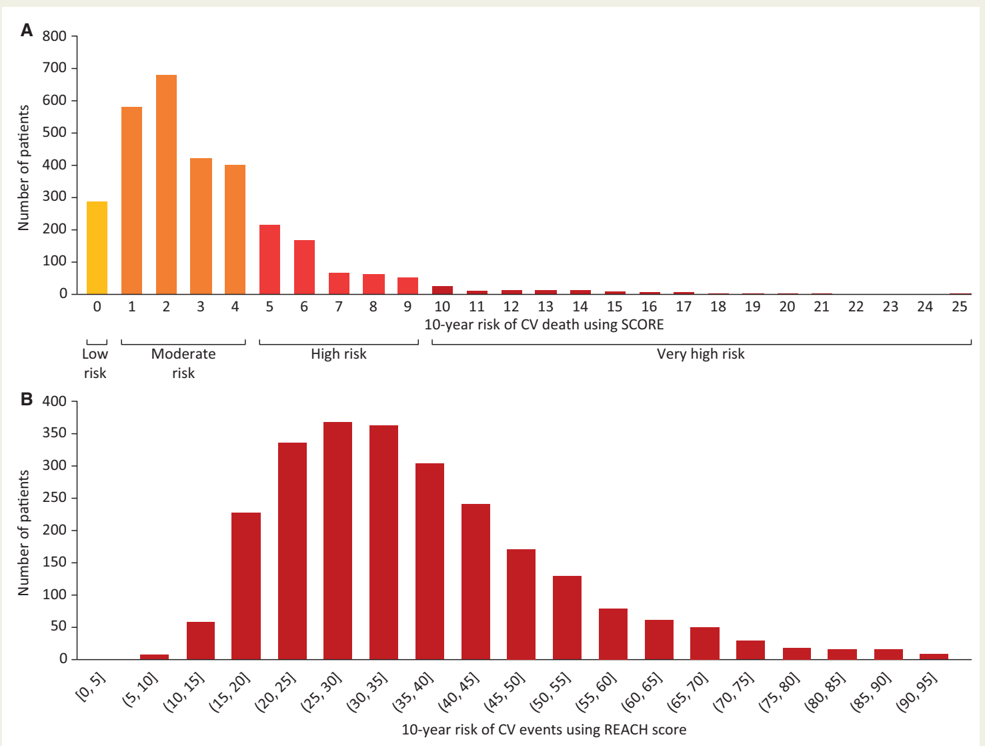
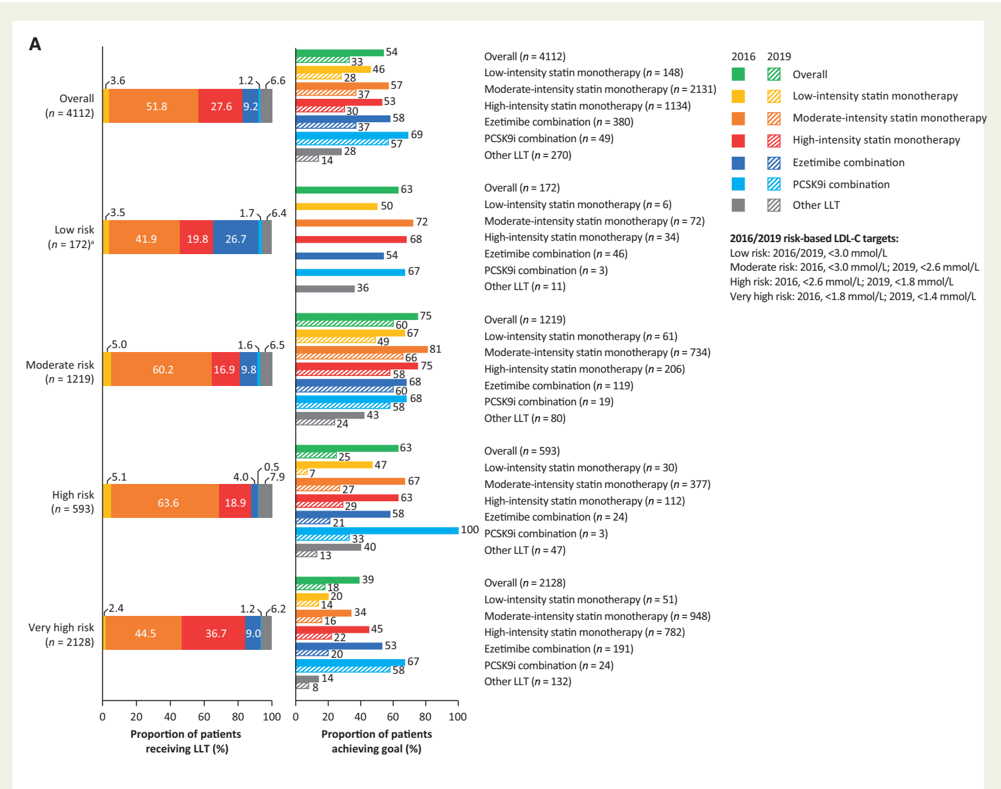
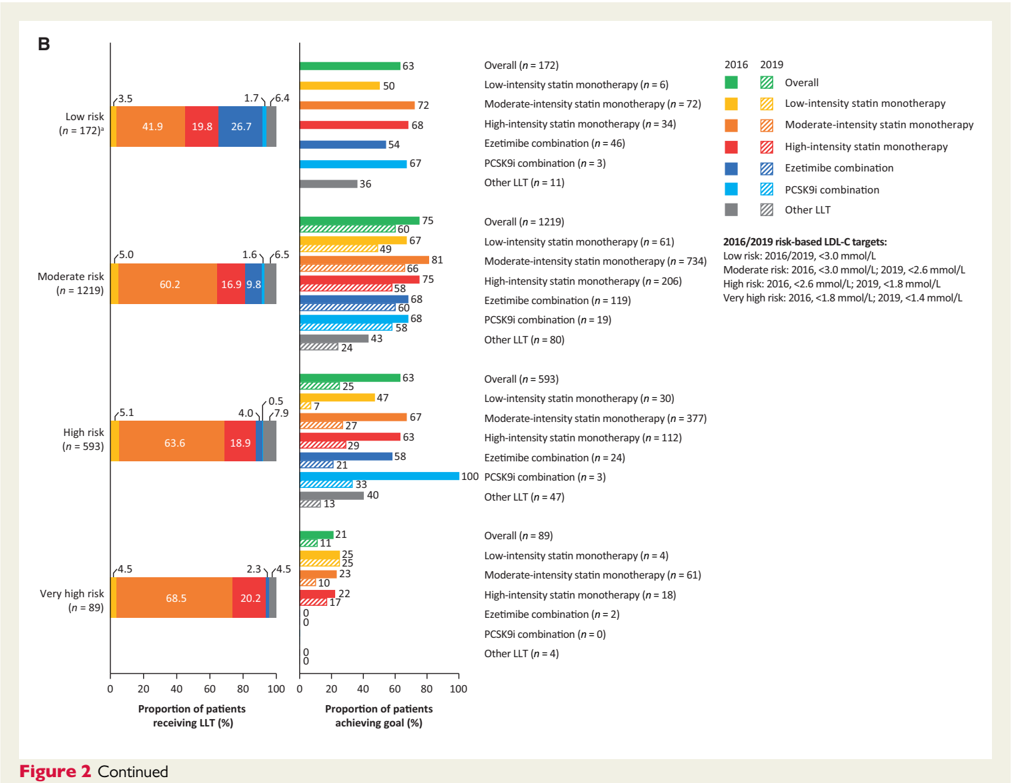
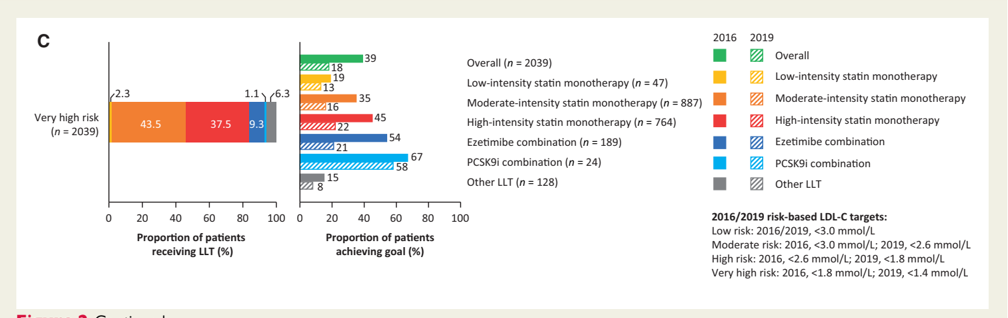
Aims: To provide contemporary data on the implementation of European guideline recommendations for lipid-lowering therapies (LLTs) across different settings and populations and how this impacts low-density lipoprotein cholesterol (LDL-C) goal achievement. Methods and results: An 18 country, cross-sectional, observational study of patients prescribed LLT for primary or secondary prevention in primary or secondary care across Europe. Between June 2017 and November 2018, data were collected at a single visit, including LLT in the preceding 12 months and most recent LDL-C. Primary outcome was the achievement of risk-based 2016 European Society of Cardiology (ESC)/European Atherosclerosis Society (EAS) LDL-C goal while receiving stabilized LLT; 2019 goal achievement was also assessed. Overall, 5888 patients (3000 primary and 2888 secondary prevention patients) were enrolled; 54% [95% confidence interval (CI) 52–56] achieved their risk-based 2016 goal and 33% (95% CI 32–35) achieved their risk-based 2019 goal. High-intensity statin monotherapy was used in 20% and 38% of very high-risk primary and secondary prevention patients, respectively. Corresponding 2016 goal attainment was 22% and 45% (17% and 22% for 2019 goals) for very high-risk primary and secondary prevention patients, respectively. Use of moderate–high-intensity statins in combination with ezetimibe (9%), or any LLT with PCSK9 inhibitors (1%), was low; corresponding 2016 and 2019 goal attainment was 53% and 20% (ezetimibe combination), and 67% and 58% (PCSK9i combination). Conclusion: Gaps between clinical guidelines and clinical practice for lipid management across Europe persist, which will be exacerbated by the 2019 guidelines. Even with optimized statins, greater utilization of non-statin LLT is likely needed to reduce these gaps for patients at highest risk.
Overview
The claims and statistics of this paper haven’t been checked yet.
Free: it reads the open-access text and checks the first 5 claims that cite a source we can check. Create a free account to check every claim.
Integrity signals
Registry
Cites
Statistics
Figures
Verification
Claims the paper makes
The claims and statistics of this paper haven’t been checked yet.
Free: it reads the open-access text and checks the first 5 claims that cite a source we can check. Create a free account to check every claim.
Claims other papers make about this one
Each is checked against this paper’s own text: does it say what the citing paper says it does?
The source backs part of the claim, not all of it — or backs it for a different population, condition or comparison.
In the citing paper
“The DA VINCI study found that out of 5888 patients with dyslipidaemia who were enrolled in 18 European countries, only 33% achieved their risk-based LDL-C goal recommended in the European Society of Cardiology (ESC) 2019 guidelines [12].”
From Established and Emerging Lipid-Lowering Drugs for Primary and Secondary Cardiovascular Prevention (2023) · cites this paper as [12]
Experimental — accuracy not yet measured
Self-check
Percentages, sums and reported differences re-computed from the paper’s own numbers.
The self-check needs the paper’s full text.
Citations
Cites
Mach, F., Baigent, C., Catapano, A. L., Koskinas, K. C., Casula, M., Badimon, L., Chapman, M. J., De Backer, G. G., Delgado, V., Ference, B. A., et al. (2020) · European Heart Journal · doi:10.1093/eurheartj/ehz455 · Cited by 8,961
Self-citation2016 ESC/EAS Guidelines for the Management of Dyslipidaemias
Catapano, A. L., Graham, I., De Backer, G., Wiklund, O., Chapman, M. J., Drexel, H., Hoes, A. W., Jennings, C. S., Landmesser, U., Pedersen, T. R., et al. (2016) · European Heart Journal · doi:10.1093/eurheartj/ehw272 · Cited by 3,162
Self-citationCollaborators, C. T. T. (. (2012) · The Lancet · doi:10.1016/s0140-6736(12)60367-5 · Cited by 2,833
Kotseva, K., De Backer, G., De Bacquer, D., Rydén, L., Hoes, A., Grobbee, D., Maggioni, A., Marques-Vidal, P., Jennings, C., Abreu, A., et al. (2019) · European Journal of Preventive Cardiology · doi:10.1177/2047487318825350 · Cited by 937
Wood, D. A., Backer, G. D., Graham, I., Poole-Wilson, P. A., Pyörälà, K., Shepherd, J., Zanchetti, A., Haman, P., Linhartová, K., Simon, J., et al. (1997) · Ghent University Academic Bibliography (Ghent University) · Cited by 537
EUROASPIRE Study Group (1997) · European Heart Journal · doi:10.1093/oxfordjournals.eurheartj.a015136 · Cited by 532
Nicholls, S. J., Brandrup-Wognsen, G., Palmer, M., & Barter, P. J. (2010) · The American Journal of Cardiology · doi:10.1016/j.amjcard.2009.08.651 · Cited by 248
Ferrières, J., Ferrari, G. M. D., Hermans, M. P., Elisaf, M., Toth, P. P., Horack, M., Brudi, P., Lautsch, D., Bash, L. D., Baxter, C. A., et al. (2018) · European Journal of Preventive Cardiology · doi:10.1177/2047487318806359 · Cited by 73
Steen, D. L., Khan, I., Ansell, D., Sanchez, R. J., & Ray, K. K. (2017) · BMJ Open · doi:10.1136/bmjopen-2016-013255 · Cited by 42
Self-citationThe past, present and future of lipidlowering therapy
Najam, O., Lambert, G. C., & Ray, K. K. (2015) · Clinical Lipidology · doi:10.2217/clp.15.40 · Cited by 7
Self-citation
Research works printed but not linked: 1
- 2. Baigent C, Blackwell L, Emberson J, Holland LE, Reith C, Bhala N, Peto R, Barnes EH, Keech A, Simes J, Collins R. Efficacy and safety of more intensive lowering of LDL cholesterol: a meta-analysis of data from 170,000 particiants in 26 rando- mised trials. Lancet 2010;376:1670.
Cited by
Items 301–400 of 963
Maloberti, A., Diri, B. P., Bellomare, M., Tognola, C., Shkodra, A., Algeri, M., Prencipe, G. P., Brollo, E., Ruzzenenti, G., Alloni, M., et al. (2026) · Nutrition Metabolism and Cardiovascular Diseases · doi:10.1016/j.numecd.2026.104543 · Cited by 8
The evolving therapeutic landscape of PCSK9 inhibition
Mansfield, B. S., Bene-Alhasan, Y. O., Ballantyne, C. M., & Raal, F. J. (2026) · Atherosclerosis · doi:10.1016/j.atherosclerosis.2026.120670 · Cited by 11
Gomes, D., Paiva, M. S., Freitas, P., Albuquerque, F., Lima, M. R., Santos, R. R., Presume, J., Trabulo, M., Aguíar, C., Ferreira, J., et al. (2024) · Arquivos Brasileiros de Cardiologia · doi:10.36660/abc.20230242 · Cited by 8
Zambon, A., Liberopoulos, E. N., Dovizio, M., Veronesi, C., Esposti, L. D., & de Isla, L. P. (2024) · European Heart Journal Open · doi:10.1093/ehjopen/oeae074 · Cited by 8
Bellosta, S., & Corsini, A. (2024) · Expert Opinion on Drug Metabolism & Toxicology · doi:10.1080/17425255.2024.2402493 · Cited by 8
“This is particularly evident in female patients who rarely meet the lipid targets recommended by the most recent clinical guidelines [1,4,19,20,76,79].”
New Approaches to Lipoproteins for the Prevention of Cardiovascular Events
Fujino, M., Giovanni, G. D., & Nicholls, S. J. (2024) · Journal of Atherosclerosis and Thrombosis · doi:10.5551/jat.rv22031 · Cited by 8
Biomarkers of residual risk and all-cause mortality after acute coronary syndrome.
Toso, A., Leoncini, M., Maioli, M., Villani, S., & Bellandi, F. (2025) · American Journal of Preventive Cardiology · doi:10.1016/j.ajpc.2025.100934 · Cited by 8
“[19,20].”
Deniz, M. F., Güven, B., Ebeoğlu, A. Ö., Gul, O. B., Nayir, A., Ozkan, P., Bulat, Z., Turk, I., Demirelce, Ö., Kimyonok, A., et al. (2025) · Journal of Clinical Medicine · doi:10.3390/jcm14020656 · Cited by 8
“Only 25% of high-risk primary prevention patients and 11% of very high-risk patients achieved the target LDL-C levels [25].”
Benimetskaya, K. S., Mikheenko, I., Uranov, A. E., Gartung, A. A., Kovalev, E. A., Spiridonov, A. A., Игоревна, Ш. И., Strokolskaya, I. L., Meshkova, M. А., Esev, L., et al. (2024) · Rational Pharmacotherapy in Cardiology · doi:10.20996/1819-6446-2024-3138 · Cited by 8
Campuzano, R., Mostaza, J. M., Barrios, V., Cabello, I. E., Gómez-Cerezo, J. F., Pallarés‐Carratalá, V., Martínez‐López, I., Castellanos, M., Hernández-Subirá, I., Talamante, N. M., et al. (2025) · Journal of Clinical Medicine · doi:10.3390/jcm14072340 · Cited by 8
“In contrast, the DA VINCI study confirmed that only 18% of patients on secondary prevention achieved LDL-C levels 55 mg/dL [19].”
Type 2 diabetes specialist care in Italy in the AMD Annals initiative 2024: The path is traced
Russo, G. T., Cosmo, S. D., Nicolucci, A., Manicardi, V., Rocca, A., Lucisano, G., Rossi, M. C., Bartolo, P. D., Cianni, G. D., & Candido, R. (2025) · Diabetes Research and Clinical Practice · doi:10.1016/j.diabres.2025.112273 · Cited by 8
Alieva, A. S., Reutova, O. V., Pavlyuk, E. I., Duplyakov, D. V., Хрипун, А. В., Efimova, I. P., Guryanova, Y. A., Тимощенко, Е. С., Nekrasov, A. A., Муратович, Н. А., et al. (2021) · Russian Journal of Cardiology · doi:10.15829/1560-4071-2021-4538 · Cited by 8
Arrobas, T., Guijarro, C., Campuzano, R., Piñero, M. R., Marcos, J. F. V., López, A. M. B., López, M. A. B., López, A. M., Donaire, J. A. G., Obaya, J. C., et al. (2023) · REC CardioClinics · doi:10.55783/rcmf.160106 · Cited by 8
Hypertension and dyslipidemia. Parallel risk factor control: role of fixed combination
Конради, А. О., & Alieva, A. S. (2021) · Arterial’naya Gipertenziya (Arterial Hypertension) · doi:10.18705/1607-419x-2021-27-3-376-383 · Cited by 8
The power of lipid registries for cardiovascular disease prevention
Nishikido, T., & Ray, K. K. (2021) · Current Opinion in Lipidology · doi:10.1097/mol.0000000000000783 · Cited by 8
Self-citationGynnild, M. N., Hageman, S. H. J., Spigset, O., Lydersen, S., Saltvedt, I. T., Dorresteijn, J. A. N., Visseren, F. L. J., & Ellekjær, H. (2022) · Open Heart · doi:10.1136/openhrt-2022-001972 · Cited by 8
Stürzebecher, P. E., Tünnemann-Tarr, A., Tuppatsch, K., & Laufs, U. (2023) · DMW - Deutsche Medizinische Wochenschrift · doi:10.1055/a-2009-5077 · Cited by 8
“Wurde die Risikoklassifikation für diese Patienten auf Basis der ESC/EASLeitlinien und der erhobenen Patientendaten (dokumentierter ASCVD-Status, Risikofaktoren wie aktueller/früherer Raucher, familiäre Hypercholesterinämie, Diabetes mellitus oder Hypertonie als Begleiterkrankung) nachberechnet, so ergab sich in 94,5…”
BackgroundInfluentialPedro‐Botet, J., Plana, N., Mostaza, J. M., Gómez‐Doblas, J. J., Olmo, M. R. F., Escobar, C., Díaz-Díaz, J. L., Ruíz, R. C., Valdivielso, P., & Cosín-Sales, J. (2023) · Clínica e Investigación en Arteriosclerosis · doi:10.1016/j.arteri.2023.04.001 · Cited by 8
Lehrke, M., Vogt, A., Schettler, V. J. J., Girndt, M., Fraass, U., Tabbert-Zitzler, A., Bridges, I. M., Dhalwani, N. N., & Ray, K. K. (2024) · Advances in Therapy · doi:10.1007/s12325-023-02757-x · Cited by 8
“…showed that, especially in very high-risk patients, intensification of treatment to the highest tolerated statin dose and through initiating combination therapy by adding ezetimibe and finally a proprotein convertase subtilisin/kexin type 9 (PCSK9) inhibitor increased LDL-C goal attainment [6, 7].”
BackgroundResultSelf-citationMichos, E. D., & Ferdinand, K. C. (2022) · European Atherosclerosis Journal · doi:10.56095/eaj.v1i1.9 · Cited by 8
Inia, J. A., van Nieuwkoop, A., Jukema, J. W., Rolin, B., Staarup, E. M., Mogensen, C., Princen, H. M. G., & van den Hoek, A. M. (2025) · Journal of Lipid Research · doi:10.1016/j.jlr.2025.100753 · Cited by 7
“…with eg ezetimibe or conventional PCSK9 inhibitors is recommended in these patients, prescription rates of combination therapy in clinical practice remains low, even when a higher proportion of the patients could achieve lower LDL-C levels with this approach compared to statin mono-therapy (40).”
Self-citationGragnano, F., Artana, C., Carrara, G., Sacco, A., Montalto, C., Mennuni, M. G., Zuin, M., D’Ascenzo, F., Nevo, F. D., Sio, V. D., et al. (2026) · European Journal of Internal Medicine · doi:10.1016/j.ejim.2026.106990 · Cited by 7
Primary Prevention of Coronary and Other Cardiovascular Diseases: A Focused Review
Higashiyama, A., Kohsaka, S., & Fujiyoshi, A. (2024) · Journal of Atherosclerosis and Thrombosis · doi:10.5551/jat.rv22019 · Cited by 7
Muck, M. A., Fischer, M., Hamerle, M., Strack, C., Holzhaeuer, M., Pfeffer, D., Hubauer, U., Maier, L. S., & Baessler, A. (2024) · Biology of Sex Differences · doi:10.1186/s13293-024-00642-y · Cited by 7
“…practice guidelines on CV risk prevention and dyslipidaemias, recent surveys assessing the use of lipid-lowering therapy (LLT) and attainment of LDL-C targets found only suboptimal over-all goal achievement in European and US patients, particularly in those at high CV risk and in women [14, 15].”
BackgroundBager, J., Mourtzinis, G., Simons, K., Rosengren, A., Åberg, M., & Andersson, T. (2025) · European Journal of Preventive Cardiology · doi:10.1093/eurjpc/zwaf052 · Cited by 7
Trends in Lipid‐Lowering Agent Consumption in Croatia: A 25‐Year Observational Study
Belančić, A., Štiglić, M. K., Prgomet, L., Pećin, I., Reiner, Ž., & Vitezić, D. (2025) · Pharmacology Research & Perspectives · doi:10.1002/prp2.70122 · Cited by 7
“Given the substantial increase in LLM use, it is crucial to explore the factors contributing to these trends [6].”
Tichopád, A., Donin, G., Zigmond, J., Ráfl, J., Rybář, M., Šedová, P., & Vrablík, M. (2025) · PLoS ONE · doi:10.1371/journal.pone.0325293 · Cited by 7
“Despite their proven efficacy and safety [1], the DA-VINCI study revealed that only 33% of patients met their risk-based goals according to 2019 ESC/ EAS guidelines [2].”
Haertel, F., Makhmudova, U., Geiling, J.-A., Lauer, B., Möbius‐Winkler, S., Otto, S., Schulze, P. C., & Weingärtner, O. (2025) · Clinical Research in Cardiology · doi:10.1007/s00392-025-02736-y · Cited by 7
“It is unfortunate that treatment options that are not generically available, such as BA and PCSK9-I, are not being utilized to their fullest potential, given the effectiveness of these options [8, 9].”
Hvid, K., Balling, M., Nordestgaard, B. G., & Afzal, S. (2025) · European Journal of Preventive Cardiology · doi:10.1093/eurjpc/zwaf735 · Cited by 7
Rallidis, L. S., Tasoulas, D., Leventis, I., Malkots, B., Kladou, E., Zapantiotis, D., Theofilatos, A., Zormpas, G., Kalogeras, P., Betsis, C., et al. (2022) · Hellenic Journal of Cardiology · doi:10.1016/j.hjc.2022.05.008 · Cited by 7
Self-citationConsensus document for lipid profile determination and reporting in Spanish clinical laboratories
Velilla, T. A., Guijarro, C., Ruíz, R. C., Piñero, M. R., Marcos, J. F. V., Pérez, A., López, M. A. B., López, A. M., Donaire, J. A. G., Obaya, J. C., et al. (2023) · Clínica e Investigación en Arteriosclerosis (English Edition) · doi:10.1016/j.artere.2023.05.001 · Cited by 7
“Recommendation 6: The basic lipid profile should include the determination of total cholesterol, HDL cholesterol, triglycerides, non-HDL cholesterol, and LDL cholesterol estimation.”
Krasieva, K., Gencer, B., Locatelli, I., Carballo, D., Müller, O., Fournier, S., Matter, C. M., Räber, L., Rodondi, N., Mach, F., et al. (2024) · Circulation Cardiovascular Quality and Outcomes · doi:10.1161/circoutcomes.123.010790 · Cited by 7
“Similar results have been found in the general population in the DA VINCI cohort, 33,34 where patients in primary prevention reach their respective LDL-c targets more frequently than patients in secondary prevention.”
MethodResultInfluentialMonoclonal Anti-PCSK9 Antibodies: Real-World Data
Guidotti, G., Liberati, V., Sorrentino, A., Lotti, E., Crudele, F., Rogolino, A. A., Sammartino, A., Slanzi, M., Gori, A. M., Marcucci, R., et al. (2024) · Journal of Clinical Medicine · doi:10.3390/jcm13154543 · Cited by 7
“The DA VINCI study, a cross-sectional study enrolling 5888 patients, showed that fewer than half of high-/very-high-CV-risk patients achieved the 2016 ESC LDL-C goals [8].”
BackgroundEvaluating obicetrapib as an emerging treatment for patients with dyslipidemia: a game changer?
Nicholls, S. J., Tan, S., Butters, J., & Nelson, A. J. (2024) · Expert Opinion on Pharmacotherapy · doi:10.1080/14656566.2024.2409324 · Cited by 7
New players in the treatment of hypercholesterolaemia: focus on bempedoic acid and inclisiran
Ruscica, M., Sirtori, C. R., Ferri, N., & Corsini, A. (2021) · European Heart Journal Supplements · doi:10.1093/eurheartj/suab090 · Cited by 7
Sánchez‐Bacaicoa, C., Galán, J., Guijarro, C., Rico‐Martín, S., Monréal, M., García, J. F. C., Aguilar‐Cortés, E., Muñoz-Torrero, J. F. S., & for FRENA Investigators (2021) · European Journal of Clinical Investigation · doi:10.1111/eci.13732 · Cited by 7
Levintow, S. N., Reading, S. R., Noshad, S., Mayer, S. E., Wiener, C., Eledath, B., Exter, J., & Brookhart, M. A. (2022) · Clinical Epidemiology · doi:10.2147/clep.s361258 · Cited by 7
Morieri, M. L., Pipino, C., & Doria, A. (2022) · Journal of Personalized Medicine · doi:10.3390/jpm12091402 · Cited by 7
Yu, Q., Xue, Q., Liu, H., Hu, J., Wang, R., Song, Y., Zhou, Y., Zhang, W., Zhu, Y., & Zhao, Q. (2023) · Frontiers in Cardiovascular Medicine · doi:10.3389/fcvm.2023.1103681 · Cited by 7
Escobar, C., Barrios, V., Cequier, A. R., Cosín-Sales, J., Seijas‐Amigo, J., Gómez‐Doblas, J. J., Arrarte, V., Tuñón, J., & Banach, M. (2023) · Journal of clinical lipidology · doi:10.1016/j.jacl.2023.10.002 · Cited by 7
Self-citationEmpleo del ácido bempedoico en los pacientes con dislipemia. Una aproximación práctica
Escobar, C., Barrios, V., Ariza, A., Campuzano, R., Martínez, J. M. G., & Mostaza, J. M. (2021) · Revista Española de Cardiología Suplementos · doi:10.1016/s1131-3587(21)00005-4 · Cited by 7
Escobar-Cervantes, C., Villa, G., Campos-Tapias, I., Sorio-Vilela, F., Lozano, J., Kahangire, D. A., Fernandez-Delgado, M., Sicras-Navarro, A., & Sicras-Mainar, A. (2022) · Advances in Therapy · doi:10.1007/s12325-022-02187-1 · Cited by 6
Maliha, M., Satish, V., Kumar, S. S., Chi, K. Y., Shama, N., Kharawala, A., Duarte, G., Li, W., Purkayastha, S., Mangeshkar, S., et al. (2025) · Healthcare · doi:10.3390/healthcare13020141 · Cited by 6
“However, studies have shown that despite the availability of statins and ezetimibe, a large number of high-risk patients fail to achieve the target LDL due to prescribing patterns and non-adherence [10–12].”
Guía latinoamericana de recomendaciones al egreso de un síndrome coronario agudo
Ponte-Negretti, C. I., Zaidel, E. J., López-Santi, R., Múnera, A. G., Bryce, A., M, S. N., Espinoza, J., Gaibor, J. C., Valcárcel, Y., Antonio, C. D., et al. (2024) · Archivos de cardiología de México · doi:10.24875/acm.m24000096 · Cited by 6
Toraño, P., Balmaseda, A., Bordons, A., Rozés, N., & Reguant, C. (2025) · Food Microbiology · doi:10.1016/j.fm.2025.104754 · Cited by 6
Yamashita, S., Fujita, H., Yokota, D., Isogai, Y., & Kitamoto, R. (2025) · Journal of Atherosclerosis and Thrombosis · doi:10.5551/jat.65336 · Cited by 6
“Indeed, LDL-C-modifying therapies lower the risk of cardiovascular events and mortality because they slow the progression of ASCVD, resulting in better cardiovascular outcomes 11, 12) .”
Roger, G., Packard, C. J., Masana, L., Laufs, U., Catapano, A. L., & Steg, P. G. (2025) · Heart · doi:10.1136/heartjnl-2025-325765 · Cited by 6
“47 However, clinical trial evidence indicates that due to the background medical and cardiometabolic status, the patient in each case is still at high risk.”
Self-citationSotin, T., Ge, X., Schönke, M., Vince, L., Thouzeau, A., Frey, S., Lorant, V., Krul, L., Pronk, A. C. M., Lalai, R. A., et al. (2025) · Cardiovascular Research · doi:10.1093/cvr/cvaf097 · Cited by 6
Weingärtner, O., Glück, S., Werdan, K., Schorr, J., Thieme, D., de la Llave, A., von Vultée, C., & Haerer, W. (2025) · Clinical Research in Cardiology · doi:10.1007/s00392-025-02751-z · Cited by 6
“The results demonstrated that the ESC/EAS targets are achieved in routine care in only a small proportion of patients (approximately a quarter in secondary prevention), primarily due to incomplete utilization of the available therapies [10].”
Córdoba‐Melo, B. D., Seni-Molina, S., Arango-Ibañez, J. P., Ayala, M. R., Méndez, J., Quintero-Yepes, V., Mejía-Cadavid, L. A., Cruz-Cuevas, J. D., Ordoñez, N. A., Buitrago, A. F., et al. (2025) · Lipids in Health and Disease · doi:10.1186/s12944-025-02657-9 · Cited by 6
“Additionally, the male predominance in our cohort is similar to the sex distribution in those studies [30, 31].”
InfluentialGargiulo, P., Ray, K. K., & Filardi, P. P. (2025) · European Heart Journal · doi:10.1093/eurheartj/ehaf615 · Cited by 6
Self-citationKhattak, S., Ochoa-Ferraro, A. F., Khan, N., George, S., Khan, S. Q., Townend, J., Dawson, C., & Thomas, M. R. (2025) · Journal of Clinical Medicine · doi:10.3390/jcm14227946 · Cited by 6
“…this, approximately 40% reached the ESC LDL-C target of less than 1.4 mmol/L, which compares favourably with previous studies showing that only approximately 20% of patients reach this target when treated with high-intensity statins alone, even when they have a much lower baseline LDL-C [21].”
InfluentialRay, K. K., & Kronenberg, F. (2026) · Atherosclerosis · doi:10.1016/j.atherosclerosis.2026.120636 · Cited by 6
Self-citationÁbel, T., Benczúr, B., & Csajbókné, É. C. (2026) · European Journal of Clinical Pharmacology · doi:10.1007/s00228-025-03965-w · Cited by 6
Low-Density Lipoprotein Cholesterol Goal Attainment in Indian Patients With Coronary Artery Disease
Puri, R., Bansal, M., Mahajan, K., Gupta, R., Mehta, V., Iyengar, S., Dorairaj, P., Agarwala, R., Khan, A., Bordoloi, N., et al. (2026) · JACC Asia · doi:10.1016/j.jacasi.2026.04.020 · Cited by 6
Márk, L., Harangi, M., Paragh, G., Nagy, G. G., Kőszegi, Z., Bednárszky, I., Járai, Z., & Csanádi, Z. (2021) · Cardiologia Hungarica · doi:10.26430/chungarica.2021.51.4.273 · Cited by 6
“A megoszlás alapján látható, hogy a betegek 82%ának 20%-nál nagyobb esélye van az éresemény ismétnagyobb (7).”
McCaughey, C., Ranganathan, D., Kerins, M., Murphy, G., & Murphy, R. T. (2022) · Irish Journal of Medical Science (1971 -) · doi:10.1007/s11845-021-02885-9 · Cited by 6
Laufs, U., Birkenfeld, A. L., Fraass, U., Hohenstein, B., Siegert, C., Klotsche, J., Steinhagen‐Thiessen, E., Pittrow, D., Dexl, S., Salmen, S., et al. (2022) · Cardiovascular Drugs and Therapy · doi:10.1007/s10557-022-07386-0 · Cited by 6
“Reasons may include caution of physicians to prescribe potent statins in high doses even in very high risk patients [14, 17], in particular to avoid a potentially increased rate of side effects after up titration [18].”
BackgroundResultEchevarría, A. B., García-Díaz, J. D. D., Caixàs, A., Plana, N., Corral, M. Á. R., Bridges, I. M., Dhalwani, N. N., Menchén, S. G., & Ray, K. K. (2023) · Clínica e Investigación en Arteriosclerosis · doi:10.1016/j.arteri.2023.04.004 · Cited by 6
Self-citationEbenbichler, C. F., Drexel, H., Hanusch, U., Toplak, H., Dhalwani, N. N., Bridges, I. M., Hoelzl, R., Hemetsberger, M., & Ray, K. K. (2023) · Wiener klinische Wochenschrift · doi:10.1007/s00508-023-02245-w · Cited by 6
Self-citationIs there a role for earlier use of combination therapy?
Revankar, S., Park, J. K., Satish, P., & Agarwala, A. (2024) · American Journal of Preventive Cardiology · doi:10.1016/j.ajpc.2024.100639 · Cited by 6
“Despite this demonstrated inadequacy of statin monotherapy, only 9 % and 1 % of patients were on ezetimibe and PCSK-9 inhibitors, respectively [62].”
BackgroundKerniss, H., Marín, L. A. M., Clemens, K., Litfin, C., Seidel-Sarpong, A., Hanses, U., Rühle, S., Schmucker, J., Osteresch, R., Fach, A., et al. (2024) · Clinical Research in Cardiology · doi:10.1007/s00392-024-02478-3 · Cited by 6
Santos, R. D., Kashiwagi, N. M., Cesena, F. Y., Assis, S. R. L., Nieri, J., Minanni, C. A., Franken, M., & Berwanger, O. B. (2024) · Arquivos Brasileiros de Cardiologia · doi:10.36660/abc.20240116 · Cited by 6
Impact of therapeutic inertia in lipid-lowering therapy in patients at very high cardiovascular risk
Cosín-Sales, J., Escobar, C., Gómez-Barrado, J. J., Cayuelas, J. M. A., del Egido, A. G., Martín, J. J. C., Rodrigo, A. I. H., Corbí‐Pascual, M., Cancelo, A. V., Vidal-Pérez, R., et al. (2025) · Clínica e Investigación en Arteriosclerosis (English Edition) · doi:10.1016/j.arteri.2025.500773 · Cited by 6
Bempedoic Acid: A New Tool for LDL-Cholesterol Control in Patients with Coronary Artery Disease
Bilato, C., Sesti, G., & Averna, M. R. (2022) · Reviews in Cardiovascular Medicine · doi:10.31083/j.rcm2305156 · Cited by 6
“In the DA VINCI study [2] which enrolled 2888 secondary prevention patients from 18 European countries, the target of LDL-C≤55 mg/dL was achieved only in the 18% of the population.”
BackgroundMajor Concepts in Treatment with Bempedoic Acid and Inclisiran that Clinicians Need To Know
Parham, J. S., & Goldberg, A. C. (2022) · Current Atherosclerosis Reports · doi:10.1007/s11883-022-01036-4 · Cited by 6
Barrios, V., Escobar, C., Suárez, C., García–Moll, X., & Lozano, F. S. (2022) · Journal of Clinical Medicine · doi:10.3390/jcm11123554 · Cited by 6
Ríos-Ibarra, M. O. D. L., Leiva-Pons, J. L., Rodríguez-Reyes, H., Alcocer-Gamba, M. A., Cortés-Lawrenz, J., Vizcaíno-Rios, F. M., Barragán-Luna, J., Farjat-Ruiz, J. I., Virgen-Carrillo, L. R., Padilla, F., et al. (2022) · Atherosclerosis Plus · doi:10.1016/j.athplu.2022.08.002 · Cited by 6
“The DA VINCI study evaluated the achievement of LDL-c goal across 18 European countries [15] and found only 54% achieved LDL-c goal based on 2016 ESC guidelines [3], while 33% the achieved LDL-c goals when using the 2019 ESC guideline [5].”
MethodVillar‐Taibo, R., Fernández-Rodríguez, E., Pérez, C. T., Díaz-Ortega, C., Sobrino, P. S., Carballeira, R. P., Novo, N. R., Rodríguez-Carnero, G., Pinal-Osorio, I., Cotovad, L., et al. (2022) · Endocrinología Diabetes y Nutrición · doi:10.1016/j.endinu.2022.06.009 · Cited by 6
Patti, G., Cavallari, I., Cesaro, A., Gragnano, F., Riva, L., Fimiani, F., Cuccia, C., Fresco, C., Calabrò, P., Leonardi, S., et al. (2022) · Vascular Pharmacology · doi:10.1016/j.vph.2022.107137 · Cited by 6
Bessonova, T. O., Мухортова, П. А., Терян, Р. А., Bagdasarov, A., & Musina, N. Z. (2023) · FARMAKOEKONOMIKA Modern Pharmacoeconomics and Pharmacoepidemiology · doi:10.17749/2070-4909/farmakoekonomika.2023.173 · Cited by 6
The era of targeted therapy for hyperlipidemia
Чубыкина, У. В., Tyurina, A. V., & Владиславович, Е. М. (2024) · Russian Journal of Cardiology · doi:10.15829/1560-4071-2024-6038 · Cited by 6
Ten-Year Evolution of Statin Eligibility and Use in a Population-Based Cohort
Rochat, M., Delabays, B., Marques-Vidal, P. M., Vollenweider, P., Mach, F., & Vaucher, J. (2022) · The American Journal of Cardiology · doi:10.1016/j.amjcard.2022.10.013 · Cited by 6
Pallarés‐Carratalá, V., Barrios, V., Fierro-González, D., García, J. P., & Cinza‐Sanjurjo, S. (2023) · International Journal of Environmental Research and Public Health · doi:10.3390/ijerph20032388 · Cited by 6
“Our results also show that the most widely used therapeutic strategy was moderateintensity statins, a lower step than that which would be expected for this risk according to the recommendations of the clinical practice guidelines [3], as already described in records such as Da Vinci, where only 20% of patients without…”
ResultMusumeci, G., Annibali, G., & Delnevo, F. (2023) · European Heart Journal Supplements · doi:10.1093/eurheartjsupp/suad086 · Cited by 6
“However, the availability of highly effective drugs alone is not enough unless accompanied by appropriate prescribing by the cardiologist and strict patient compliance: recent data suggest that, in clinical practice, suboptimal management of hypercholesterolaemia is widespread and goals are achieved in only 30% of pat…”
National Trends in Statin Use in Lithuania from 2010 to 2021
Makarevičius, G., Rinkūnienė, E., & Badarienė, J. (2022) · Medicina · doi:10.3390/medicina59010037 · Cited by 7
“Despite recent improvements in statin consumption in Europe, there still seems to be a gap between guideline recommendations and real-life clinical practices, with most of the high-risk patients not meeting the LDL-C levels recommended by the ESC/EAS [23,24].”
BackgroundTóth, Š., Turek, M., & Pella, D. (2023) · Archives of Medical Science · doi:10.5114/aoms/170961 · Cited by 5
“The DA VINCI study [23] described the success of achieving LDL-C target values and the most used hypolipaemic agents.”
Implementation Science: Strategies to Improve Adoption and Adherence to Clinical Practice Guidelines
Jones, L. K., Sarkies, M., Gionfriddo, M. R., Gidding, S. S., & Watts, G. F. (2024) · Contemporary cardiology · doi:10.1007/978-3-031-54960-1_6 · Cited by 5
Worledge, E., Billups, S. J., Titus, O., & Saseen, J. J. (2025) · Journal of clinical lipidology · doi:10.1016/j.jacl.2025.04.186 · Cited by 5
Seo, Y. H., Hong, J.-Y., Kim, Y.-K., Kim, K. H., Kwon, T., & Bae, J. (2025) · BMC Cardiovascular Disorders · doi:10.1186/s12872-025-05081-0 · Cited by 5
Ruhela, N., Singla, A., Trivedi, Y. V., Ahmed, M., Chikatimalla, R., Gupta, S., & Jain, R. (2025) · Coronary Artery Disease · doi:10.1097/mca.0000000000001574 · Cited by 5
Li, Z.-F., Yin, Z., Li, X., Lu, M.-Y., Zhang, W., Luo, F., Xu, Y.-L., Li, J., Dou, K.-F., Wang, X., et al. (2025) · Cardiovascular Diabetology · doi:10.1186/s12933-025-02910-6 · Cited by 5
“For example, the international DA VINCI observational study found that only about one-third of patients achieved 2019 guideline-based LDL-C goals, and specifically just 18% of very-high-risk patients met those targets [55].”
Stevens, C. A. T., Smith, J. L., Brandts, J., Barkas, F., Morales, M. M., Janani, L., Kiru, G., Kaza, N., Cornelius, V. R., Poulter, N. R., et al. (2025) · European Heart Journal - Digital Health · doi:10.1093/ehjdh/ztaf135 · Cited by 5
Self-citationHäner, J. D., Kakizaki, R., Taniwaki, M., Ohno, Y., Yahagi, K., Higuchi, Y., Siontis, G. C. M., Ando, K., Stortecky, S., Suzuki, N., et al. (2025) · JAMA Cardiology · doi:10.1001/jamacardio.2025.4723 · Cited by 5
Colivicchi, F., Temporelli, P. L., Fattirolli, F., Abrignani, M. G., Alonzo, A., Arca, M., Averna, M., Bertoli, D., Calabrò, P., Calò, L., et al. (2026) · European Heart Journal - Quality of Care and Clinical Outcomes · doi:10.1093/ehjqcco/qcag021 · Cited by 5
Self-citationMatteucci, A., Fusco, S. A. D., Bonanni, M., Marino, G., Fedele, S., Nardi, F., & Colivicchi, F. (2026) · Journal of clinical lipidology · doi:10.1016/j.jacl.2026.02.018 · Cited by 6
Schmidt, L. E., Speidl, W. S., Tsimikas, S., & Mayr, M. (2023) · European Heart Journal · doi:10.1093/eurheartj/ehad294 · Cited by 5
Sapina, A. I., Varlamova, Y. Y., Papyrina, M. G., Bezymyanny, A. S., Kordzaya, E. L., & Vasilyeva, E. Y. (2024) · Russian Journal of Cardiology · doi:10.15829/1560-4071-2024-5943 · Cited by 5
Raposeiras‐Roubín, S., Abu-Assi, E., Rivera, J. Á. P., Pérez, P. J., López, A. A., Tejedor, A. V., Pascual, M. J. C., Carrasquer, A., Jiménez-Méndez, C., González-Cambeiro, C., et al. (2024) · Revista Española de Cardiología (English Edition) · doi:10.1016/j.rec.2024.05.017 · Cited by 5
И., В. С., Ежов, M. B., Gurevich, V. S., Зафираки, В. К., Баров, П. А., Цыганкова, О. Г., Цыпленкова, Е. А., Prikhodko, E. P., Н., Г. В., В., Р. И., et al. (2022) · Атеросклероз и дислипидемии · doi:10.34687/2219-8202.jad.2022.04.0003 · Cited by 6
Barbati, G., Gregorio, C., Scagnetto, A., Indennidate, C., Cappelletto, C., & Lenarda, A. D. (2024) · PLoS ONE · doi:10.1371/journal.pone.0309470 · Cited by 5
“%) of patients who reach the LDL target proposed by the current guidelines according with their risk class, with very high risk group more often very far from the target [25].”
BackgroundTaha, H., Kandil, H., Badran, H. M., Farag, N. M., Khamis, H., Nasr, G. M., Samy, M., Abdrabou, M., Abuelezz, M., & Shaker, M. M. (2024) · The Egyptian Heart Journal · doi:10.1186/s43044-024-00562-7 · Cited by 5
“28 Therefore, there are persistent gaps between clinical guidelines and clinical practice for lipid management across the world.”
BackgroundTse, H., Chang, H., Colquhoun, D., Kim, J., Poh, K. K., Kostner, K., Hutayanon, P., Cho, M., Lange, J. L., Kodiappan, K., et al. (2024) · Cardiology and Therapy · doi:10.1007/s40119-024-00384-3 · Cited by 5
“The HEYMANS and DA VINCI studies iden‑ tified gaps between clinical guidelines and clinical practice for lipid management [14, 24].”
Wargny, M., Goronflot, T., Piriou, P., Pouriel, M., Bastien, A., Prax, J., Leux, C., Riche, V.-P., Trochu, J., Béliard, S., et al. (2025) · Diabetes & Metabolism · doi:10.1016/j.diabet.2025.101638 · Cited by 6
Xiang, L., Wu, H. G., Zhao, Z., Wu, T., Lv, D., Wu, P., Zheng, Y., Huang, Q., & Xu, T. (2025) · Frontiers in Endocrinology · doi:10.3389/fendo.2025.1512670 · Cited by 5
“This suggests that obicetrapib holds potential for helping patients who have not reached their LDL-C goals, fi lling a gap in current therapies (42).”
Nuevos tratamientos en la dislipemia
de Isla, L. P., & Valdivielso, P. (2021) · Clínica e Investigación en Arteriosclerosis · doi:10.1016/j.arteri.2021.02.003 · Cited by 5
Superando las barreras en el abordaje del paciente crónico
Molinera, V. G., Divisón, J. A., Rodríguez, Á. D., & Vargas, M. F. (2022) · Medicina de Familia SEMERGEN · doi:10.1016/j.semerg.2022.101874 · Cited by 5
Maher, V. M. G., Gallagher, J., Agar, R., Griffin, D. G., Colwell, N. S., O’Connor, P., McAdam, B. F., TOMKIN, G. H., Owens, D., Ryan, M., et al. (2023) · Irish Journal of Medical Science (1971 -) · doi:10.1007/s11845-023-03277-x · Cited by 5
Self-citationVillar‐Taibo, R., Fernández-Rodríguez, E., Pérez, C. T., Díaz-Ortega, C., Sobrino, P. S., Carballeira, R. P., Novo, N. R., Rodríguez-Carnero, G., Pinal-Osorio, I., Cotovad, L., et al. (2023) · Endocrinología Diabetes y Nutrición (English ed ) · doi:10.1016/j.endien.2022.06.017 · Cited by 5
Pinsdorf, D., Messiha, D., Petrikhovich, O., Bahar, M., Steinmetz, M., Mahabadi, A. A., Dykun, I., Lortz, J., Rassaf, T., & Rammos, C. (2023) · Journal of clinical lipidology · doi:10.1016/j.jacl.2023.05.100 · Cited by 5
Metadata
- Authors
- Ray, K. K., Molemans, B., Schoonen, W. M., Giovas, P., Bray, S., Kiru, G., Murphy, J., Banach, M., De Servi, S., Gaita, D., Gouni-Berthold, I., Hovingh, G. K., Jozwiak, J. J., Jukema, J. W., Kiss, R. G., Kownator, S., Iversen, H. K., Maher, V., Masana, L., Parkhomenko, A., Peeters, A., Clifford, P., Raslova, K., Siostrzonek, P., Romeo, S., Tousoulis, D., Vlachopoulos, C., Vrablik, M., Catapano, A. L., Poulter, N. R., & study, T. D. V.
- Affiliations
- Imperial College London (GB)
- Amgen (United States) (US)
- Amgen (United Kingdom) (GB)
- Amgen Hellas, 4 Gravias Street, Maroussi, 15125, Athens, Greece
- Medical University of Lodz (PL)
- IRCCS MultiMedica, Via Milanese, 300, 20099 Sesto San Giovanni, Milan, Italy
- Institutul de Boli Cardiovasculare, Fundatia Cardioprevent, Universitatea de Medicina si Farmacie Victor Babes din Timisoara, Timişoara 300041, Romania
- Polyclinic for Endocrinology, Diabetes and Preventive Medicine, Kerpener Str. 62, 50937 Cologne, Germany
- University of Amsterdam (NL)
- University of Opole (PL)
- Leiden University Medical Center (NL)
- Hungarian Army Medical Center, Budapest, 1134, Hungary
- Centre Cardiologique et Vasculaire, 36 Route de la Briquerie, 57100, Thionville, France
- University of Copenhagen (DK)
- Trinity College Dublin (IE)
- Institut de Recerca Biomèdica Catalunya Sud (ES)
- Emergency Cardiology Department, Institute of Cardiology, Kiev, Ukraine
- Cliniques Universitaires Saint Luc, Avenue Hippocrate 10, 1200, Brussels, Belgium
- Hammersmith Hospital (GB)
- Slovak Medical University, 831 01 Bratislava, Slovakia
- Ordensklinikum Linz Barmherzige Schwestern (AT)
- Sahlgrenska University Hospital (SE)
- National and Kapodistrian University of Athens (GR)
- Charles University, Prague, 116 36 Czech Republic
- MultiMedica (IT)
- Corresponding author
- Ray, Kausik K
- ORCID
- Venue
- European Journal of Preventive Cardiology
- Publisher
- Oxford University Press (OUP)
- Published
- 2020-08-28
- Volume
- 28
- Issue
- 11
- Pages
- 1279-1289
- ISSN
- 2047-4873 (ISSN-L)
- 2047-4881
- OpenAlex
- W3120916025
- Semantic Scholar
- c6684386e0c0c350ddbd229e351fb1eb1cd4e299
- Cited by
- 839
- References
- 10
- Citations by year
- 2026: 137 · 2025: 162 · 2024: 143 · 2023: 165 · 2022: 139 · 2021: 79 · 2020: 12
- FWCI
- 90.18
- Type
- journal article
- Language
- en
- Open access
- hybrid
- doi.org
- Licence
- Locations
- European Journal of Preventive Cardiology (publishedVersion, cc-by-nc)
- PubMed (publishedVersion)
- Research at the University of Copenhagen (University of Copenhagen) (publishedVersion, cc-by-nc)
- Leiden Repository (Leiden University) (submittedVersion, cc-by-nc)
- Rovira & Virgili repository (submittedVersion, cc-by)
- Data Archiving and Networked Services (DANS) (submittedVersion, other-oa)
- Data Archiving and Networked Services (DANS) (submittedVersion, cc-by-nc)
- DIAL (Catholic University of Leuven) (submittedVersion, other-oa)
- Pure Amsterdam UMC (submittedVersion, cc-by)
- Spiral (Imperial College London) (submittedVersion, cc-by-nc)
- Funders
- Amgen (Europe) GmbH
- Topics
- Health Sciences › Medicine › Cardiology and Cardiovascular Medicine › Lipoproteins and Cardiovascular Health
- Health Sciences › Medicine › Cardiology and Cardiovascular Medicine › Blood Pressure and Hypertension Studies
- Health Sciences › Medicine › Endocrinology, Diabetes and Metabolism › Diabetes, Cardiovascular Risks, and Lipoproteins
- Keywords
- lipid-lowering therapy, LDL cholesterol goal attainment, statins, ezetimibe, PCSK9 inhibitors, guideline implementation, primary prevention, secondary prevention, very high-risk patients, non-statin therapy, cardiovascular risk management, ESC/EAS guidelines
- MeSH terms
- Proprotein Convertase 9, Anticholesteremic Agents, Cardiovascular Diseases, Cross-Sectional Studies, Humans, Cholesterol, LDL, Primary Health Care, Risk Factors, Biomarkers, Treatment Outcome, Hydroxymethylglutaryl-CoA Reductase Inhibitors, Dyslipidemias
About these checks
Registry, retraction, Cites and statistics results are computed, not judged, with one exception: a printed reference that no index lists is read once by a model before it counts as a citation error. Claims are extracted by a model and kept only when their quote appears verbatim in the text; each cited source is then checked, with a model’s help, for whether it says what the claim relies on. Those verdicts can be wrong — read the claim’s quote and the cited source before relying on one.
Statistics and arithmetic are recomputed, not judged.
Confidence bands are shown only for fields calibrated on our annotated test set. None is calibrated yet, so no band is shown.
What counts as a claim ›How we measure confidence ›How we check this ›
Are you an author, or do you see a problem with this page? Request a review
Data sources
Bibliographic data: Semantic Scholar, OpenAlex, Crossref.
Contains information from the Semantic Scholar Academic Graph Datasets, made available under the ODC Attribution License (ODC-BY 1.0).
Semantic Scholar’s data is described in: Kinney, R., et al. (2023). The Semantic Scholar Open Data Platform. arXiv:2301.10140.
