

EU-Wi d e Cross-Section a l Obser v at i o n al Study of Lipid-Modifying Therapy Use in Se c ondary and Pr i mary Care: the DA VINCI study
Open accessThe DOI matches its Crossref record; 10 of the 10 references it cites were found in a registry or an index.
Abstract
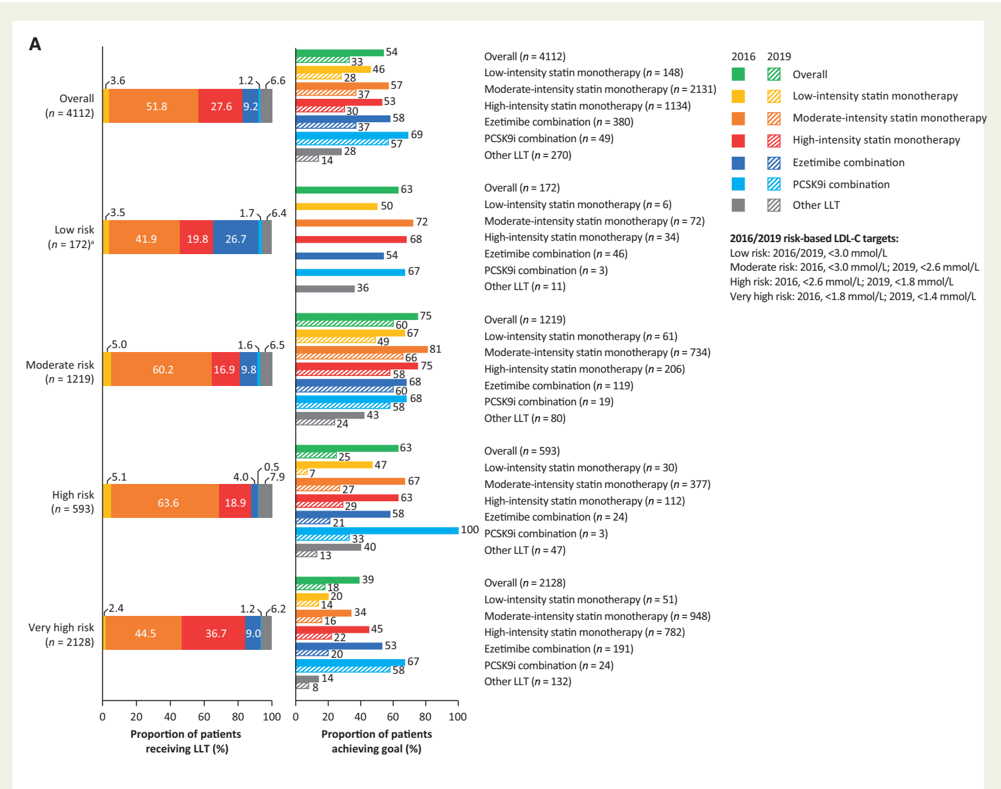
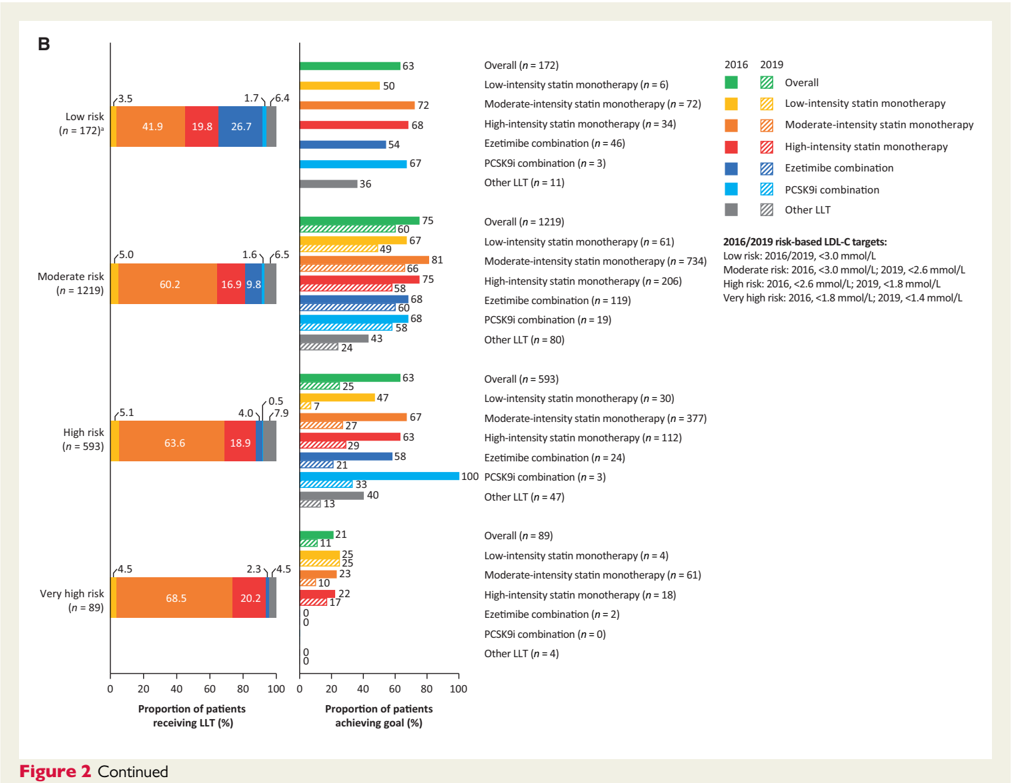
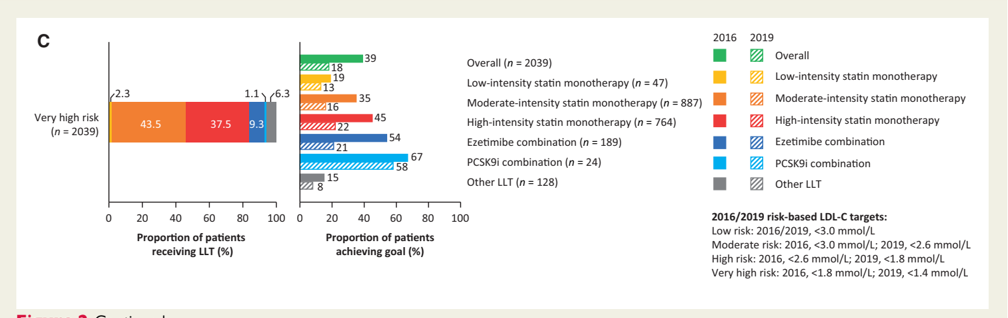
Aims: To provide contemporary data on the implementation of European guideline recommendations for lipid-lowering therapies (LLTs) across different settings and populations and how this impacts low-density lipoprotein cholesterol (LDL-C) goal achievement. Methods and results: An 18 country, cross-sectional, observational study of patients prescribed LLT for primary or secondary prevention in primary or secondary care across Europe. Between June 2017 and November 2018, data were collected at a single visit, including LLT in the preceding 12 months and most recent LDL-C. Primary outcome was the achievement of risk-based 2016 European Society of Cardiology (ESC)/European Atherosclerosis Society (EAS) LDL-C goal while receiving stabilized LLT; 2019 goal achievement was also assessed. Overall, 5888 patients (3000 primary and 2888 secondary prevention patients) were enrolled; 54% [95% confidence interval (CI) 52–56] achieved their risk-based 2016 goal and 33% (95% CI 32–35) achieved their risk-based 2019 goal. High-intensity statin monotherapy was used in 20% and 38% of very high-risk primary and secondary prevention patients, respectively. Corresponding 2016 goal attainment was 22% and 45% (17% and 22% for 2019 goals) for very high-risk primary and secondary prevention patients, respectively. Use of moderate–high-intensity statins in combination with ezetimibe (9%), or any LLT with PCSK9 inhibitors (1%), was low; corresponding 2016 and 2019 goal attainment was 53% and 20% (ezetimibe combination), and 67% and 58% (PCSK9i combination). Conclusion: Gaps between clinical guidelines and clinical practice for lipid management across Europe persist, which will be exacerbated by the 2019 guidelines. Even with optimized statins, greater utilization of non-statin LLT is likely needed to reduce these gaps for patients at highest risk.
Overview
The claims and statistics of this paper haven’t been checked yet.
Free: it reads the open-access text and checks the first 5 claims that cite a source we can check. Create a free account to check every claim.
Integrity signals
Registry
Cites
Statistics
Figures
Verification
Claims the paper makes
The claims and statistics of this paper haven’t been checked yet.
Free: it reads the open-access text and checks the first 5 claims that cite a source we can check. Create a free account to check every claim.
Claims other papers make about this one
Each is checked against this paper’s own text: does it say what the citing paper says it does?
The source backs part of the claim, not all of it — or backs it for a different population, condition or comparison.
In the citing paper
“The DA VINCI study found that out of 5888 patients with dyslipidaemia who were enrolled in 18 European countries, only 33% achieved their risk-based LDL-C goal recommended in the European Society of Cardiology (ESC) 2019 guidelines [12].”
From Established and Emerging Lipid-Lowering Drugs for Primary and Secondary Cardiovascular Prevention (2023) · cites this paper as [12]
Experimental — accuracy not yet measured
Self-check
Percentages, sums and reported differences re-computed from the paper’s own numbers.
The self-check needs the paper’s full text.
Citations
Cites
Mach, F., Baigent, C., Catapano, A. L., Koskinas, K. C., Casula, M., Badimon, L., Chapman, M. J., De Backer, G. G., Delgado, V., Ference, B. A., et al. (2020) · European Heart Journal · doi:10.1093/eurheartj/ehz455 · Cited by 8,961
Self-citation2016 ESC/EAS Guidelines for the Management of Dyslipidaemias
Catapano, A. L., Graham, I., De Backer, G., Wiklund, O., Chapman, M. J., Drexel, H., Hoes, A. W., Jennings, C. S., Landmesser, U., Pedersen, T. R., et al. (2016) · European Heart Journal · doi:10.1093/eurheartj/ehw272 · Cited by 3,162
Self-citationCollaborators, C. T. T. (. (2012) · The Lancet · doi:10.1016/s0140-6736(12)60367-5 · Cited by 2,833
Kotseva, K., De Backer, G., De Bacquer, D., Rydén, L., Hoes, A., Grobbee, D., Maggioni, A., Marques-Vidal, P., Jennings, C., Abreu, A., et al. (2019) · European Journal of Preventive Cardiology · doi:10.1177/2047487318825350 · Cited by 937
Wood, D. A., Backer, G. D., Graham, I., Poole-Wilson, P. A., Pyörälà, K., Shepherd, J., Zanchetti, A., Haman, P., Linhartová, K., Simon, J., et al. (1997) · Ghent University Academic Bibliography (Ghent University) · Cited by 537
EUROASPIRE Study Group (1997) · European Heart Journal · doi:10.1093/oxfordjournals.eurheartj.a015136 · Cited by 532
Nicholls, S. J., Brandrup-Wognsen, G., Palmer, M., & Barter, P. J. (2010) · The American Journal of Cardiology · doi:10.1016/j.amjcard.2009.08.651 · Cited by 248
Ferrières, J., Ferrari, G. M. D., Hermans, M. P., Elisaf, M., Toth, P. P., Horack, M., Brudi, P., Lautsch, D., Bash, L. D., Baxter, C. A., et al. (2018) · European Journal of Preventive Cardiology · doi:10.1177/2047487318806359 · Cited by 73
Steen, D. L., Khan, I., Ansell, D., Sanchez, R. J., & Ray, K. K. (2017) · BMJ Open · doi:10.1136/bmjopen-2016-013255 · Cited by 42
Self-citationThe past, present and future of lipidlowering therapy
Najam, O., Lambert, G. C., & Ray, K. K. (2015) · Clinical Lipidology · doi:10.2217/clp.15.40 · Cited by 7
Self-citation
Research works printed but not linked: 1
- 2. Baigent C, Blackwell L, Emberson J, Holland LE, Reith C, Bhala N, Peto R, Barnes EH, Keech A, Simes J, Collins R. Efficacy and safety of more intensive lowering of LDL cholesterol: a meta-analysis of data from 170,000 particiants in 26 rando- mised trials. Lancet 2010;376:1670.
Cited by
Items 501–600 of 963
Montalescot, G., Ferrari, É., Souteyrand, G., Bouleti, C., Rangé, G., Batias-Moreau, L., Chioccioli, M., Picchi, A., Dillinger, J., Esposito, G., et al. (2026) · JAMA · doi:10.1001/jama.2026.17302 · Cited by 3
Self-citationAlbackr, H. B., Waili, K. A., Almahmeed, W. A., Jarallah, M. A., Amin, M., Al‐Rasadi, K., Batais, M. A., Almigbal, T. H., Youssef, A. A., AlGhamdi, M. A., et al. (2023) · Current Vascular Pharmacology · doi:10.2174/1570161121666230710145604 · Cited by 3
Pre-hospital and in-hospital ST-elevation myocardial infarction from 2008 to 2020 in Australia
Ratwatte, S., Ng, A. C. C., Hyun, K. K., Philip, R., Boroumand, F., Weber, C. A., Kritharides, L., & Brieger, D. B. (2023) · International Journal of Cardiology Cardiovascular Risk and Prevention · doi:10.1016/j.ijcrp.2023.200214 · Cited by 3
Cordero, A., Flores, E., Escribano, D., Quintanilla, M. A., Arribas, J. M., López-Ayala, J. M., Masiá, M. D., Rey-Rañal, E. M., Zuazola, P., & Salinas, M. (2023) · REC CardioClinics · doi:10.1016/j.rccl.2023.09.005 · Cited by 3
Zeliaś, A., Bednarek, A., Dykla, D., Korpak-Wysocka, R., Szczygiel, P., & Dudek, D. (2024) · Kardiologia Polska · doi:10.33963/v.phj.101554 · Cited by 3
Lan, N. S. R., Hiew, J., Ferreira, I., Ritter, J. C., Manning, L. A., Fegan, P. G., Dwivedi, G., & Hamilton, E. J. (2025) · Journal of Diabetes and its Complications · doi:10.1016/j.jdiacomp.2025.109069 · Cited by 3
Artificial intelligence: a promising tool for the clinical cardiologist
Escobar, C., Fácila, L., Vidal-Pérez, R., Lapeña, A. P., Vivas, D., Martín, A. G., Manzano‐Fernández, S., Caballero, E. G., Barrios, V., & Freixa‐Pamias, R. (2025) · Expert Review of Cardiovascular Therapy · doi:10.1080/14779072.2025.2520830 · Cited by 3
Mostaza, J. M., Lahoz, C., Castro, M. G. D. Y., Campal, J. M. R., Velásquez, E., Gutiérrez, A. I., Díaz, J. F., Plana, N., Rodríguez‐Mañero, M., García-Díaz, J. D. D., et al. (2025) · Revista Clínica Española (English Edition) · doi:10.1016/j.rceng.2025.502344 · Cited by 3
Self-citationStock, J. K. (2021) · Atherosclerosis · doi:10.1016/j.atherosclerosis.2021.05.013 · Cited by 3
Citarella, A., Cammarota, S., Bernardi, F. F., Caliendo, L., D’Andrea, A., Fimiani, B., Fogliasecca, M., Pacella, D., Pagnotta, R., Trama, U., et al. (2022) · Journal of Clinical Medicine · doi:10.3390/jcm11154344 · Cited by 3
“Although in our study we cannot evaluate the rate of patients in whom the target LDL-C goals have been reached, the recent data also clearly show that, in most cases, only combination therapy with statins, ezetimibe, and PCSK9 inhibitors might be on target for most ASCVD patients [23,24].”
ResultConnolly, D. L., Zaman, A., Capps, N. E., Bain, S. C., & Fernando, K. (2023) · British Journal of Cardiology · doi:10.5837/bjc.2023.014 · Cited by 3
Arca, M., Averna, M. R., Borghi, C., Lettino, M., Filardi, P. P., Albertí, A., Bilato, C., Calabrò, P., Carubbi, F., Ciccone, M. M., et al. (2023) · Giornale Ialiano di Cardiologia · doi:10.1714/4100.40977 · Cited by 3
McKoy, J. N., Kalich, B. A., Greene, L., Mackey, R. H., Rosenthal, N. A., Khan, Y. M., Wójcik, C., Jones, J., & Carabuena, L. A. (2023) · Advances in Therapy · doi:10.1007/s12325-023-02716-6 · Cited by 3
Combined lipid lowering therapy, including ezetimibe, in the post-infarction period
Oleynikov, V. E., Salyamova, L. I., Chernova, A. A., Tonkoglaz, A. A., Vershinina, O. D., Babkina, I. A., & Plaksin, N. S. (2024) · Russian Journal of Cardiology · doi:10.15829/1560-4071-2024-5800 · Cited by 3
Sourij, H., Azhar, K., Aziz, F., Kojzar, H., Sourij, C., Fasching, P., Clodi, M., Ludvik, B. H., Mader, J. K., Resl, M., et al. (2024) · Diabetes Obesity and Metabolism · doi:10.1111/dom.15988 · Cited by 3
Henry, J. P., Gabriël, L., Luchian, M., Higny, J., Benoît, M., Xhaët, O., Blommaert, D., Telbis, A.-M., Robaye, B., Guédès, A., et al. (2024) · Journal of Personalized Medicine · doi:10.3390/jpm14101044 · Cited by 3
“While real-world data from European registries [12–14] have consistently revealed that LDL-C targets for high and very high cardiovascular risk patients are frequently unattained and that the utilization of dual therapy with statins and ezetimibe remains uncommon, it is important to highlight that…”
BackgroundMethodResultInfluentialBacri, C., Hireche, K., Alric, P., & Canaud, L. (2024) · Journal of Endovascular Therapy · doi:10.1177/15266028241302746 · Cited by 3
Machline-Carrion, M. J., Girotto, A. N., Raupp, P., Pereira, P. M., Monfardini, F., Santos, R. D., Santo, K., Ray, K. K., Cannon, C. P., & Berwanger, O. B. (2025) · American Heart Journal · doi:10.1016/j.ahj.2025.01.019 · Cited by 3
Self-citationDrago, E. F., Llorca, M. R. D., Martín, C. A., González, I. F., Rojas, Z. H., Gonçalves, A. Q., & López, C. (2020) · International Journal of Environmental Research and Public Health · doi:10.3390/ijerph17228590 · Cited by 3
“This highlights the continuing need to implement the CPGs adequately [18].”
BackgroundManaged care pharmacist updates for proprotein convertase subtilisin/kexin type 9 (PCSK9) inhibitors
Patel, J. (2021) · The American Journal of Managed Care · doi:10.37765/ajmc.2021.88608 · Cited by 3
Matta, M. G., Saenz, B., Schreier, L. E., Corral, A., Sarobe, A., & Corral, P. (2021) · Clínica e Investigación en Arteriosclerosis · doi:10.1016/j.arteri.2021.07.003 · Cited by 3
Fu, Y., Tang, E. Y. H., Sowden, S. L., Newton, J. L., & Whitty, P. (2022) · BMJ Open · doi:10.1136/bmjopen-2021-058951 · Cited by 3
Statin Intolerance—We Know Everything, We Know Nothing
Banach, M. (2022) · Journal of Clinical Medicine · doi:10.3390/jcm11175250 · Cited by 3
“Lipid disorders are the most common risk factors of cardiovascular disease (CVD) [1] and, more importantly, the worst monitored and controlled, with only a third of patients being on the low-density lipoprotein cholesterol (LDL-C) target in Europe [2], and only 24% in the Central and Eastern European (CEE) countries […”
BackgroundSelf-citationHeintjes, E. M., Anastassopoulou, A., Kuiper, J. G., Bilitou, A., Beest, F. J. A. P., Herings, R. M. C., Postma, M. J., & Jukema, J. W. (2022) · Current Medical Research and Opinion · doi:10.1080/03007995.2022.2129228 · Cited by 3
“0) History of ASCVD, n (%) 35,905 (66) 35,905 (95) – Affected vascular bed, n (%) Coronary arteries 26,604 (49) 26,604 (70) – Cerebrovascular arteries 14,458 (27) 14,458 (38) – Peripheral arteries 2847 (5) 2847 (7) – Number of affected vascular beds, n (%) 1 28,285 (52) 28,285 (74) – 2 7236 (13) 7236 (19) – 3 384 (1)…”
Self-citationSchiele, F., Sabouret, P. F., Puymirat, É., ABDENNBI, K., LEBEAU, F., MELTZ, M., Kownator, S., & Angoulvant, D. (2023) · Panminerva Medica · doi:10.23736/s0031-0808.22.04799-1 · Cited by 3
Self-citationLuca, L. D., Riccio, C., Navazio, A., Valente, S., Cipriani, M., Corda, M., Nardo, A. D., Francese, G. M., Napoletano, C., Tizzani, E., et al. (2023) · European Heart Journal Supplements · doi:10.1093/eurheartjsupp/suad100 · Cited by 3
Banach, M., Lewek, J., Pol, K., Rabczenko, D., Balanescu, S. M., Blaha, V., Češka, R., Jankowski, P., Surma, S., Kolovou, G. D., et al. (2023) · Frontiers in Cardiovascular Medicine · doi:10.3389/fcvm.2023.1206551 · Cited by 3
Self-citationHow Will Our Practice Change After the CLEAR Outcomes Trial?
Abrahams, T., Nelson, A. J., & Nicholls, S. J. (2024) · Current Atherosclerosis Reports · doi:10.1007/s11883-024-01188-5 · Cited by 3
“Cohort studies of high cardiovascular risk patients consistently report a low rate of use of combination therapy, albeit with a trend toward increasing utilization [36, 44].”
BackgroundNagy, G. G., Márk, L., Gerencser, A., Reiber, I., Kiss, N., Rokszin, G., Fábián, I., Csanádi, Z., Karádi, I., Aradi, D., et al. (2024) · Journal of Clinical Medicine · doi:10.3390/jcm13216562 · Cited by 3
“According to a survey conducted in the USA with 600,000 patients with known atherosclerotic heart disease, almost half of the patients does not even receive LLT, and only 22.5% receive a high-intensity statin dose that would be required for their respective risk category [8,9].”
BackgroundInfluentialPrimary prevention. The cornerstone to reduce the burden of cardiovascular disease
Barrios, V., Escobar, C., & Banach, M. (2021) · Revista Española de Cardiología (English Edition) · doi:10.1016/j.rec.2021.04.013 · Cited by 3
Self-citationPCSK9 inhibitors and treatment targets: an audit-based evaluation of a specialist lipid clinic
Suresh, A., Theodoraki, A., Ward, E., & Feher, M. D. (2022) · British Journal of Diabetes · doi:10.15277/bjd.2022.342 · Cited by 3
Lipid-lowering therapy: modern possibilities and real clinical practice
Блохина, А. В., Ershova, A. I., Meshkov, A. N., Ахмеджанов, Н. М., Иванова, А. А., Guseynova, K. A., Smetnev, S. A., Litinskaya, O. A., Boytsov, S. A., & Drapkina, O. (2022) · CARDIOVASCULAR THERAPY AND PREVENTION · doi:10.15829/1728-8800-2022-3369 · Cited by 3
Chekanova, V., Abolhassani, N., Vaucher, J., & Marques-Vidal, P. M. (2023) · BMJ Open · doi:10.1136/bmjopen-2022-065409 · Cited by 3
Conde, C. B., Martínez, N. R., Ibarbia, C. G., Guerra-Ruiz, A. R., Miguel, I. O., Belaustegui, M. C., Lavín, B. A., Vilchez, F. J. G., Hernández, J. M. D. L. T., & Hernández, J. L. (2023) · Revista Clínica Española (English Edition) · doi:10.1016/j.rceng.2023.02.011 · Cited by 3
Usova, E., Alieva, A. S., Звартау, Н. Э., & Shlyakhto, E. V. (2023) · Russian Journal of Cardiology · doi:10.15829/1560-4071-2023-5717 · Cited by 3
Misperceptions and management of risk: Ongoing challenges in women's cardiovascular health
Farukhi, Z. M., & Mora, S. (2021) · Atherosclerosis · doi:10.1016/j.atherosclerosis.2021.03.016 · Cited by 3
Manoj, S., Shah, J., Kumar, D., Pradhan, A. K., Kinare, A. B., Sharma, A. K., Aditya, M. S., Raj, R. A., Raina, A. A., Patel, A., et al. (2023) · Cardiology and Angiology An International Journal · doi:10.9734/ca/2023/v12i4350 · Cited by 2
Бадамшина, Л. Ф., Кашталап, В. В., Воробьев, А. С., Кудрявцева, О. В., & Александровна, У. И. (2024) · Атеросклероз и дислипидемии · doi:10.34687/2219-8202.jad.2024.03.0005 · Cited by 2
Łowicka, W., Graca, M., Szeliga, A., Szostak, A., Korta, K., Oluszczak, K., Szopińska, K., Dyląg, L., Śmigielska-Mikołajczyk, M. J., & Wawszkowicz, K. (2024) · Quality in Sport · doi:10.12775/qs.2024.19.54155 · Cited by 2
LIpid Response to Statins ± Ezetimibe In Mumbai (LIRIM): A Cross-sectional Observational Study
Shah, V. (2024) · Journal of the Association of Physicians of India · doi:10.59556/japi.72.0622 · Cited by 2
“34 The real-world achievement of LDL-C goals ( 55 mg/dL) in high-risk CVD patients treated with high-intensity statins was assessed in the retrospective, observational TERESA study ( n = 1,570).”
BackgroundLópez‐Pineda, A., Maldonado, C. S., Arrarte, V., Sánchez-Ferrer, F., Bertomeu‐González, V., Ruiz-Nodar, J. M., Quesada, J. A., & Cordero, A. (2024) · Journal of Cardiovascular Development and Disease · doi:10.3390/jcdd11090287 · Cited by 2
“Although this health survey does not specifically record the active ingredients that each woman was receiving, multiple national registries have shown that statins constitute the total practice of lipid-lowering treatments; this is consistent with other international studies [29,30].”
ResultSchlagen Frauenherzen anders? – Geschlechterunterschiede im Lipidmanagement
Muck, M. A., & Baessler, A. (2025) · Journal für Endokrinologie Diabetologie und Stoffwechsel · doi:10.1007/s41969-025-00263-9 · Cited by 2
Fernández-Olmo, R., Cordero, A., Oterino, A., Blanco-Echevarría, A., Vivas, D., Escobar, C., Ortega, E., Torres-Fonseca, M. M., Sánchez-Peinador, C., Quiroga, B., et al. (2025) · Clínica e Investigación en Arteriosclerosis · doi:10.1016/j.arteri.2025.500799 · Cited by 2
Alieva, A. M., Reznik, E. V., Khachirova, E. A., Светлаков, В. И., Teplova, N. V., Александровна, Б. Е., Вольфович, П. Д., Tereshchenko, A. S., Voronkova, K. V., Rakhaev, A. M., et al. (2025) · Russian Medical Inquiry · doi:10.32364/2587-6821-2025-9-11-1 · Cited by 2
Huang, Y., Yang, A., Shi, M., Yu, J., Wu, H., Lui, J. N. M., Kong, A. P. S., Ronald, C. W., Luk, A. O. Y., Ke, C., et al. (2025) · The Lancet Regional Health - Western Pacific · doi:10.1016/j.lanwpc.2025.101696 · Cited by 2
Long-term impact of telemedicine for lipid control after an acute coronary syndrome
Jiménez-Méndez, C., Vázquez, R., Delgado, W., Bartolome, D., & Silva, E. (2025) · European Journal of Preventive Cardiology · doi:10.1093/eurjpc/zwaf630 · Cited by 2
Cabezas, M. C., Orsini, M., Tokgözoğlu, L., Marx, N., Tuñón, J., Vrablík, M., Tavori, H., Bhatt, D. L., & Filardi, P. P. (2025) · Journal of clinical lipidology · doi:10.1016/j.jacl.2025.10.062 · Cited by 2
Rogozik, J. K., Grabowski, M., & Główczyńska, R. (2025) · Cardiology Journal · doi:10.5603/cj.99990 · Cited by 2
“The study revealed that a mere 17% of patients were successful in achieving their LDL-C goal based on CV risk [33].”
Leiter, L. A., Karmarkar, T. D., Bash, L. D., Exter, J., Schmier, J. K., Jayade, S. P., Roney, K., Simpson, R. J., & Baum, S. J. (2025) · American Journal of Preventive Cardiology · doi:10.1016/j.ajpc.2025.101386 · Cited by 2
“…a leading ASCVD risk factor (5, 7), remain sub-optimally managed despite the availability of safe and effective LLTs. Recent studies show that many patients eligible for LLT per major US and European treatment guidelines [10 – 12,30] are not receiving treat-ment treat-ment [ 6, 15 – 21 , 30 , 31 ].”
Garagoli, F., Masson, W. M., & Barbagelata, L. (2026) · Current Neurology and Neuroscience Reports · doi:10.1007/s11910-025-01476-w · Cited by 2
Estándares SEA 2026 para el control global del riesgo vascular
Mostaza, J. M., Pintó, X., Armario, P., Guijarro, C., Masana, L., Real, J. T., Arrobas-Velilla, T., Baeza‐Trinidad, R., Calmarza, P., Cebollada, J., et al. (2026) · Clínica e Investigación en Arteriosclerosis · doi:10.1016/j.arteri.2025.500889 · Cited by 2
Self-citationDesai, N. R., Hise, N. V., Niu, X., & Brown, A. S. (2026) · Journal of clinical lipidology · doi:10.1016/j.jacl.2026.02.010 · Cited by 2
The 2025 ESC/EAS Dyslipidaemia Focused Update: Clinical Interpretation and Practical Implications
Bonanni, L., Cutolo, A., & Ferri, N. (2026) · Cardiovascular Drugs and Therapy · doi:10.1007/s10557-026-07855-w · Cited by 2
“Despite this, achieving guideline-recommended targets in real-world settings remains challenging: recent European registry data show that fewer than 30% of high-risk patients reach the 70 mg/dL goal, with even lower attainment for the 55 mg/dL target in very high-risk individuals [15, 16].”
Katzmann, J. L., & Laufs, U. (2026) · Current Atherosclerosis Reports · doi:10.1007/s11883-026-01390-7 · Cited by 2
“Nevertheless, statin monotherapy still represents the majority of lipid-lowering treatment in many countries [21–24] and hence, the LDL-C targets are only infrequently achieved [23, 25–27].”
Connolly, D. L., Fuat, A., McCormack, T., McNally, D., Garstang, J., Ryan, J., Reed, A., Robinson, D., Catapano, A. L., & Ray, K. K. (2026) · BMJ Open · doi:10.1136/bmjopen-2025-114031 · Cited by 2
Self-citationAre we underestimating the benefits of lipid-lowering therapies?
Pirillo, A., Casula, M., Olmastroni, E., Scotti, S., Corsini, A., & Catapano, A. L. (2026) · Pharmacological Reviews · doi:10.1016/j.pharmr.2026.100140 · Cited by 2
Self-citationJabbar, A. B. A., Naeem, U., Zulfiqar, K., Inam, M., Hyder, A., Ahmed, S., Minhas, A. M. K., Slipczuk, L. N., Krittanawong, C., Sahebkar, A., et al. (2026) · Current Atherosclerosis Reports · doi:10.1007/s11883-026-01424-0 · Cited by 2
LDL-cholesterol distance to target: A practical tool for guiding lipid-lowering treatment decisions
Palloni, M. C., Farella, T., Faggiano, A., Vatri, M., Fattirolli, F., Angelino, E., Ambrosetti, M., Ruscica, M., Corsini, A., Carugo, S., et al. (2026) · Atherosclerosis Plus · doi:10.1016/j.athplu.2026.100574 · Cited by 2
“Large registries consistently confirm this gap: target attainment was only 33% in the DAVINCI study, while SANTORINI reported that nearly 80% of ASCVD patients failed to reach goals, with many receiving no LLT at all [5,41].”
A Comprehensive Review of PCSK9 Inhibitor Therapy
Hurwitz, M., Kulkarni, A., Marvel, F. A., & Patel, J. (2026) · Journal of Cardiovascular Pharmacology · doi:10.1097/fjc.0000000000001852 · Cited by 2
Sinnaeve, P., Cools, F. J. S., Demeure, F., Jouret, F., Ligot, N., Speeckaert, M. M., van de Borne, P., Vansintejan, J., Vercruysse, K., Verhaegen, A. A., et al. (2026) · Acta cardiologica. Supplementum · doi:10.1080/00015385.2026.2698800 · Cited by 2
Cardiovascular Outcomes in Response to Achieved LDL-C Levels After PCI in ACS and CCS
Kataoka, Y., Nicholls, S. J., Ray, K. K., Katasako-Yabumoto, A., Kitahara, S., Hosoda, H., Mitsui, K., Murai, K., Sawada, K., Iwai, T., et al. (2026) · JACC Asia · doi:10.1016/j.jacasi.2026.07.004 · Cited by 2
Self-citationMachline-Carrion, M. J., Santo, K., Girotto, A. N., Raupp, P., Pereira, P. M., Monfardini, F., Santos, R. H. N., Pereira, M. D. B., Sampaio, B. S., Moia, D. D. F., et al. (2026) · JAMA Cardiology · doi:10.1001/jamacardio.2026.2510 · Cited by 2
Self-citationHilgendorf, I., Westermann, D., Nowak, B., Uebel, P., Dürsch, M., Mahabadi, A. A., Nagel, G., Gerbaulet, U., Hiltl, S., Metzner, M., et al. (2026) · European Heart Journal · doi:10.1093/eurheartj/ehag738 · Cited by 2
Nekrasov, A. A., Тимощенко, Е. С., Анатольевна, Н. Т., Тимощенко, М. В., & Cherneva, D. V. (2021) · Атеросклероз и дислипидемии · doi:10.34687/2219-8202.jad.2021.03.0005 · Cited by 2
Reuser, A., Look, C., & Laufs, U. (2024) · DMW - Deutsche Medizinische Wochenschrift · doi:10.1055/a-2332-9120 · Cited by 2
Kim, M. C., Lee, S. H., Ahn, J. H., Lim, Y., Park, K., Kim, C., Ahn, J., Jeong, J., Lee, H., & Kang, W. C. (2024) · Cardiology and Therapy · doi:10.1007/s40119-024-00389-y · Cited by 2
“C goals and about 20% achieve the lower 2019 goals [24].”
Urbonas, G., Šileikienė, L., Valius, L., Grigalė, E., Kaupas, V., Juška, T., Vėbraitė, G., & Grabauskytė, I. (2024) · Medicina · doi:10.3390/medicina60121963 · Cited by 2
“An EU-wide DA VINCI study found that only 33% of patients receiving LLT achieved their risk-based 2019 ESC/EAS LDL-C goal, and goal achievement was even lower among patients at higher risk [20].”
Gavina, C., Carvalho, D. S., Afonso-Silva, M., Costa, I., Freitas, A. S., Canelas‐Pais, M., Lourenço‐Silva, N., Taveira‐Gomes, T., & Araújo, F. (2025) · International Journal of Cardiology Cardiovascular Risk and Prevention · doi:10.1016/j.ijcrp.2025.200385 · Cited by 2
“The DA VINCI study found that only 33 % of patients achieved the target LDL-C level as per ESC/EAS 2019 guidelines [27], and even poorer results were reported by the LATINO study, with less than 5 % achieving their risk-based goals [11].”
Pedro‐Botet, J., Freixa‐Pamias, R., Tamarit, J. J., López‐Miranda, J., Fernández-Olmo, R., Muñiz-Grijalvo, O., Vázquez, R., Guijarro, C., Padial, L. R., Díaz-Díaz, J. L., et al. (2025) · Clínica e Investigación en Arteriosclerosis (English Edition) · doi:10.1016/j.artere.2025.100738 · Cited by 2
Nousheen, S., REDDY, C. B., Madhavi, L. V., Mohan, P. R., & Navuluri, M. (2025) · Indian Journal of Cardiovascular Disease in Women · doi:10.25259/ijcdw_53_2025 · Cited by 2
Bhatia, R., Dhawan, V., Bhatia, A., Gupta, R., & Gupta, M. (2025) · Indian Journal of Cardiovascular Disease in Women · doi:10.25259/ijcdw_50_2025 · Cited by 2
Barrios, V., Escobar, C., Arrarte, V., Bravo, M., del Campo, A., Hidalgo, R., Recasens, L., & Cequier, A. R. (2021) · Clínica e Investigación en Arteriosclerosis · doi:10.1016/j.arteri.2021.05.003 · Cited by 2
Matta, M. G., Saenz, B., Schreier, L. E., Corral, A., Sarobe, A., & Corral, P. (2021) · Clínica e Investigación en Arteriosclerosis (English Edition) · doi:10.1016/j.artere.2021.11.004 · Cited by 2
Prieto-Díaz, M. Á., Méndez-Rodríguez, E., Murillo-García, D., Escobar-Cervantes, C., Pallarés‐Carratalá, V., Rodríguez, Á. D., Escribano‐Serrano, J., García, J. P., & Cinza‐Sanjurjo, S. (2022) · Medicina de Familia SEMERGEN · doi:10.1016/j.semerg.2022.04.007 · Cited by 2
ORION-3: delivering lipid lowering treatment for longer
Nicholls, S. J. (2023) · The Lancet Diabetes & Endocrinology · doi:10.1016/s2213-8587(22)00362-x · Cited by 2
Velilla, T. A., Guijarro, C., Ruíz, R. C., Piñero, M. R., Marcos, J. F. V., Pérez, A., López, M. A. B., López, A. M., Donaire, J. A. G., Obaya, J. C., et al. (2023) · Nefrología · doi:10.1016/j.nefro.2023.02.002 · Cited by 2
Hypercholesterinämie und kardiovaskuläres Risiko
Sinning, D., & Landmesser, U. (2023) · DMW - Deutsche Medizinische Wochenschrift · doi:10.1055/a-1932-6448 · Cited by 2
Wienbergen, H., Fach, A., Winzer, E. B., Schmucker, J., Hanses, U., Retzlaff, T., Rühle, S., Litfin, C., Kerniss, H., Marín, L. A. M., et al. (2023) · Clinical Research in Cardiology · doi:10.1007/s00392-023-02285-2 · Cited by 2
“…however, “real-world” studies, such as the EUROASPIRE, DYSIS, or DA VINCI survey, have shown that cardiovascular risk factors are insufficiently controlled in clinical practice and there is an unmet need for the implementation of effective long-term prevention programs after coronary events [3–5].”
Martín-Rioboó, E., Brotons-Cuixart, C., García, A. R., Sanz, F. V., Vargas, M. F., Amengual, A. M., Divisón, J. A., Vicente, M. C. S., Banegas, J. R., & Pallarés‐Carratalá, V. (2023) · PubMed Central · Cited by 2
Patients' preferences for secondary prevention following a coronary event
Trier, T. J. V., Jorstad, H. T., Reimer, W. J. M. S. O., Sunamura, M., ter Hoeve, N., Somsen, G. A., Peters, R. J. G., & Snaterse, M. (2024) · Preventive Medicine Reports · doi:10.1016/j.pmedr.2024.102681 · Cited by 2
“However, the majority of coronary patients fail to meet guideline-based targets (Kotseva et al., 2019; Ray et al., 2020; van Trier et al., 2023) due to various reasons, including non-adherence to medication, underutilisation of rehabilitation and lifestyle programs, and failure to maintain…”
Miya, A., Nakamura, A., Suzuki, Y., Nomoto, H., Kameda, H., Cho, K. Y., & Atsumi, T. (2024) · Diabetology International · doi:10.1007/s13340-024-00712-x · Cited by 2
Márk, L., Fülöp, P., Lőrincz, H., Dani, G., Tajtiné, K. F., Thury, A. Á., & Paragh, G. (2024) · Journal of Clinical Medicine · doi:10.3390/jcm13123398 · Cited by 2
“Figure 2 shows the proportion of patients at a high risk of reaching the LDL targets of 1.8 mmol/L and 1.4 mmol/L based on Hungarian and European data [9,38,39].”
BackgroundInfluentialRizzo, A. C., Schwarz, G., Paolucci, M., Cavallini, A. M., Mazzacane, F., Candelaresi, P., Mase, A. D., Marcheselli, S., Straffi, L., Poretto, V., et al. (2025) · Neurological Sciences · doi:10.1007/s10072-024-07969-9 · Cited by 2
“Recent studies [ 8 , 35 ], conducted through prospective registries on patients at high or very-high cardiovascular risk, included only a small subset of individuals with cerebral ASCVD and lacked comprehensive analysis needed for meaningful conclusions about statin use after stroke.”
Cinza‐Sanjurjo, S., Pallarés‐Carratalá, V., Rodríguez, Á. D., Fierro-González, D., Turégano-Yedro, M., & García, J. P. (2025) · Medicina de Familia SEMERGEN · doi:10.1016/j.semerg.2025.102460 · Cited by 2
Landmesser, U., Laufs, U., Schatz, U., Winzer, E. B., Nowak, B., Kassner, U., Gouni‐Berthold, I., Esteban, A., Lubyayi, L., Krueger, A., et al. (2025) · American Heart Journal · doi:10.1016/j.ahj.2025.05.014 · Cited by 2
Self-citationBertolín‐Boronat, C., Merenciano-Gonzalez, H., Marcos‐Garcés, V., Mas, M. L. M., Alberola, J. I. C., Civera, J. M., Reig, M. V., Hueso, M. R., Carmona, P. C., Pérez-Solé, N., et al. (2025) · Journal of Clinical Medicine · doi:10.3390/jcm14124242 · Cited by 2
Fernández-Olmo, R., Cordero, A., Oterino, A., Blanco-Echevarría, A., Vivas, D., Escobar, C., Ortega, E., Torres-Fonseca, M. M., Sánchez-Peinador, C., Quiroga, B., et al. (2025) · Clínica e Investigación en Arteriosclerosis (English Edition) · doi:10.1016/j.artere.2025.500799 · Cited by 2
Shift in therapeutic approaches in patients with hypercholesterolemia - a secondary data analysis
Zink, E., Steinhäuser, J., Blickle, P.-G., von Meißner, W., & Strumann, C. (2025) · BMC Family Practice · doi:10.1186/s12875-025-02982-z · Cited by 2
“Even after a considerable time, the recommendations have not been implemented to a satisfactory standard [24].”
Ray, K. K., Kaul, U., Rao, S., Sinha, N., Sahoo, P., Ponde, C., Mohan, J., Nair, T., Mehta, A., Gupta, P., et al. (2025) · European Cardiology Review · doi:10.15420/ecr.2025.35 · Cited by 2
“12,13 Despite the availability of effective LLT, as well as increased awareness and counselling on the importance of LDL-C reduction, many patients still fail to achieve LDL-C targets.”
Self-citationTomlinson, B. (2026) · Expert Opinion on Pharmacotherapy · doi:10.1080/14656566.2026.2642210 · Cited by 2
“Although effective treatments to reduce LDL-C are widely available, observational studies repeatedly show that most patients do not achieve their LDL-C targets [168,169].”
Selección de lo mejor del año 2018 en riesgo vascular y rehabilitación cardiaca
Frías, P. T., Ruíz, R. C., Duque, J. A. A., Senén, A. B., Olmo, M. R. F., & Jiménez, M. A. (2019) · REC CardioClinics · doi:10.1016/j.rccl.2019.01.007 · Cited by 2
Dislipidemia: i nuovi target e importanza delle terapie di associazione
Arca, M., & Fusco, S. A. D. (2021) · Giornale Ialiano di Cardiologia · doi:10.1714/3582.35670 · Cited by 2
Virtual lipid clinic after acute coronary syndrome
Vázquez, R., García, J. E. P., Salmerón, D. M., Mateos, D. B., & Nava, W. A. D. (2021) · Revista Española de Cardiología (English Edition) · doi:10.1016/j.rec.2021.07.008 · Cited by 2
Safety Issues Associated With the Clinical Application of PCSK9 Inhibitors: Current Findings
Wang, D., & Zhang, D. (2022) · Cardiology in Review · doi:10.1097/crd.0000000000000441 · Cited by 2
Baessler, A., & Fischer, M. (2022) · Herz · doi:10.1007/s00059-022-05111-z · Cited by 2
“Der DaVinci-Studie, einer EU(Europäische Union)weiten Erhebung zur primär- und sekundärprophylaktischen Lipidsenkertherapie, zufolge werden nur 38% der Patienten in der Sekundärprävention mit hochdosierten Statinen behandelt, nur wenige erhalten eine Kombinationstherapie mit Ezetimib (9%), noch weniger eine solche mit…”
BackgroundPedicino, D., & Volpe, M. (2022) · European Heart Journal · doi:10.1093/eurheartj/ehac502 · Cited by 2
Puche, J. E., Iturregui-Guevara, M., & Vázquez, R. (2022) · Hipertensión y Riesgo Vascular · doi:10.1016/j.hipert.2022.09.004 · Cited by 2
Underutilization of combination therapy in lipid lowering: a missed opportunity
Şener, Y. Z., & Tokgözoğlu, L. S. (2022) · European Journal of Preventive Cardiology · doi:10.1093/eurjpc/zwac251 · Cited by 2
Serum proteomic analysis: role in the search for biomarkers of atherosclerosis
Metelskaya, V. A. (2022) · Russian Journal of Preventive Medicine · doi:10.17116/profmed202225121135 · Cited by 2
Consensus document for lipid profile testing and reporting in Spanish clinical laboratories
Velilla, T. A., Guijarro, C., Ruíz, R. C., Piñero, M. R., Marcos, J. F. V., Pérez, A., López, M. A. B., López, A. M., Donaire, J. A. G., Obaya, J. C., et al. (2023) · Revista Clínica Española (English Edition) · doi:10.1016/j.rceng.2023.06.001 · Cited by 2
Metadata
- Authors
- Ray, K. K., Molemans, B., Schoonen, W. M., Giovas, P., Bray, S., Kiru, G., Murphy, J., Banach, M., De Servi, S., Gaita, D., Gouni-Berthold, I., Hovingh, G. K., Jozwiak, J. J., Jukema, J. W., Kiss, R. G., Kownator, S., Iversen, H. K., Maher, V., Masana, L., Parkhomenko, A., Peeters, A., Clifford, P., Raslova, K., Siostrzonek, P., Romeo, S., Tousoulis, D., Vlachopoulos, C., Vrablik, M., Catapano, A. L., Poulter, N. R., & study, T. D. V.
- Affiliations
- Imperial College London (GB)
- Amgen (United States) (US)
- Amgen (United Kingdom) (GB)
- Amgen Hellas, 4 Gravias Street, Maroussi, 15125, Athens, Greece
- Medical University of Lodz (PL)
- IRCCS MultiMedica, Via Milanese, 300, 20099 Sesto San Giovanni, Milan, Italy
- Institutul de Boli Cardiovasculare, Fundatia Cardioprevent, Universitatea de Medicina si Farmacie Victor Babes din Timisoara, Timişoara 300041, Romania
- Polyclinic for Endocrinology, Diabetes and Preventive Medicine, Kerpener Str. 62, 50937 Cologne, Germany
- University of Amsterdam (NL)
- University of Opole (PL)
- Leiden University Medical Center (NL)
- Hungarian Army Medical Center, Budapest, 1134, Hungary
- Centre Cardiologique et Vasculaire, 36 Route de la Briquerie, 57100, Thionville, France
- University of Copenhagen (DK)
- Trinity College Dublin (IE)
- Institut de Recerca Biomèdica Catalunya Sud (ES)
- Emergency Cardiology Department, Institute of Cardiology, Kiev, Ukraine
- Cliniques Universitaires Saint Luc, Avenue Hippocrate 10, 1200, Brussels, Belgium
- Hammersmith Hospital (GB)
- Slovak Medical University, 831 01 Bratislava, Slovakia
- Ordensklinikum Linz Barmherzige Schwestern (AT)
- Sahlgrenska University Hospital (SE)
- National and Kapodistrian University of Athens (GR)
- Charles University, Prague, 116 36 Czech Republic
- MultiMedica (IT)
- Corresponding author
- Ray, Kausik K
- ORCID
- Venue
- European Journal of Preventive Cardiology
- Publisher
- Oxford University Press (OUP)
- Published
- 2020-08-28
- Volume
- 28
- Issue
- 11
- Pages
- 1279-1289
- ISSN
- 2047-4873 (ISSN-L)
- 2047-4881
- OpenAlex
- W3120916025
- Semantic Scholar
- c6684386e0c0c350ddbd229e351fb1eb1cd4e299
- Cited by
- 839
- References
- 10
- Citations by year
- 2026: 137 · 2025: 162 · 2024: 143 · 2023: 165 · 2022: 139 · 2021: 79 · 2020: 12
- FWCI
- 90.18
- Type
- journal article
- Language
- en
- Open access
- hybrid
- doi.org
- Licence
- Locations
- European Journal of Preventive Cardiology (publishedVersion, cc-by-nc)
- PubMed (publishedVersion)
- Research at the University of Copenhagen (University of Copenhagen) (publishedVersion, cc-by-nc)
- Leiden Repository (Leiden University) (submittedVersion, cc-by-nc)
- Rovira & Virgili repository (submittedVersion, cc-by)
- Data Archiving and Networked Services (DANS) (submittedVersion, other-oa)
- Data Archiving and Networked Services (DANS) (submittedVersion, cc-by-nc)
- DIAL (Catholic University of Leuven) (submittedVersion, other-oa)
- Pure Amsterdam UMC (submittedVersion, cc-by)
- Spiral (Imperial College London) (submittedVersion, cc-by-nc)
- Funders
- Amgen (Europe) GmbH
- Topics
- Health Sciences › Medicine › Cardiology and Cardiovascular Medicine › Lipoproteins and Cardiovascular Health
- Health Sciences › Medicine › Cardiology and Cardiovascular Medicine › Blood Pressure and Hypertension Studies
- Health Sciences › Medicine › Endocrinology, Diabetes and Metabolism › Diabetes, Cardiovascular Risks, and Lipoproteins
- Keywords
- lipid-lowering therapy, LDL cholesterol goal attainment, statins, ezetimibe, PCSK9 inhibitors, guideline implementation, primary prevention, secondary prevention, very high-risk patients, non-statin therapy, cardiovascular risk management, ESC/EAS guidelines
- MeSH terms
- Proprotein Convertase 9, Anticholesteremic Agents, Cardiovascular Diseases, Cross-Sectional Studies, Humans, Cholesterol, LDL, Primary Health Care, Risk Factors, Biomarkers, Treatment Outcome, Hydroxymethylglutaryl-CoA Reductase Inhibitors, Dyslipidemias
About these checks
Registry, retraction, Cites and statistics results are computed, not judged, with one exception: a printed reference that no index lists is read once by a model before it counts as a citation error. Claims are extracted by a model and kept only when their quote appears verbatim in the text; each cited source is then checked, with a model’s help, for whether it says what the claim relies on. Those verdicts can be wrong — read the claim’s quote and the cited source before relying on one.
Statistics and arithmetic are recomputed, not judged.
Confidence bands are shown only for fields calibrated on our annotated test set. None is calibrated yet, so no band is shown.
What counts as a claim ›How we measure confidence ›How we check this ›
Are you an author, or do you see a problem with this page? Request a review
Data sources
Bibliographic data: Semantic Scholar, OpenAlex, Crossref.
Contains information from the Semantic Scholar Academic Graph Datasets, made available under the ODC Attribution License (ODC-BY 1.0).
Semantic Scholar’s data is described in: Kinney, R., et al. (2023). The Semantic Scholar Open Data Platform. arXiv:2301.10140.
