

EU-Wi d e Cross-Section a l Obser v at i o n al Study of Lipid-Modifying Therapy Use in Se c ondary and Pr i mary Care: the DA VINCI study
Open accessThe DOI matches its Crossref record; 10 of the 10 references it cites were found in a registry or an index.
Abstract
Aims: To provide contemporary data on the implementation of European guideline recommendations for lipid-lowering therapies (LLTs) across different settings and populations and how this impacts low-density lipoprotein cholesterol (LDL-C) goal achievement. Methods and results: An 18 country, cross-sectional, observational study of patients prescribed LLT for primary or secondary prevention in primary or secondary care across Europe. Between June 2017 and November 2018, data were collected at a single visit, including LLT in the preceding 12 months and most recent LDL-C. Primary outcome was the achievement of risk-based 2016 European Society of Cardiology (ESC)/European Atherosclerosis Society (EAS) LDL-C goal while receiving stabilized LLT; 2019 goal achievement was also assessed. Overall, 5888 patients (3000 primary and 2888 secondary prevention patients) were enrolled; 54% [95% confidence interval (CI) 52–56] achieved their risk-based 2016 goal and 33% (95% CI 32–35) achieved their risk-based 2019 goal. High-intensity statin monotherapy was used in 20% and 38% of very high-risk primary and secondary prevention patients, respectively. Corresponding 2016 goal attainment was 22% and 45% (17% and 22% for 2019 goals) for very high-risk primary and secondary prevention patients, respectively. Use of moderate–high-intensity statins in combination with ezetimibe (9%), or any LLT with PCSK9 inhibitors (1%), was low; corresponding 2016 and 2019 goal attainment was 53% and 20% (ezetimibe combination), and 67% and 58% (PCSK9i combination). Conclusion: Gaps between clinical guidelines and clinical practice for lipid management across Europe persist, which will be exacerbated by the 2019 guidelines. Even with optimized statins, greater utilization of non-statin LLT is likely needed to reduce these gaps for patients at highest risk.
Overview
The claims and statistics of this paper haven’t been checked yet.
Free: it reads the open-access text and checks the first 5 claims that cite a source we can check. Create a free account to check every claim.
Integrity signals
Registry
Cites
Statistics
Figures
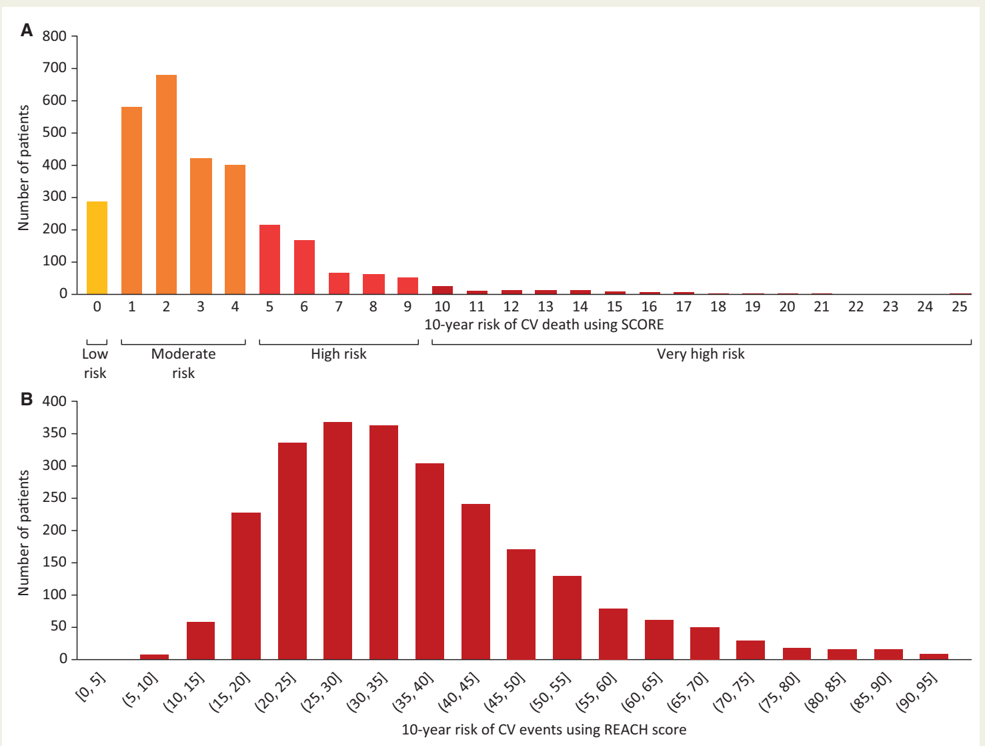
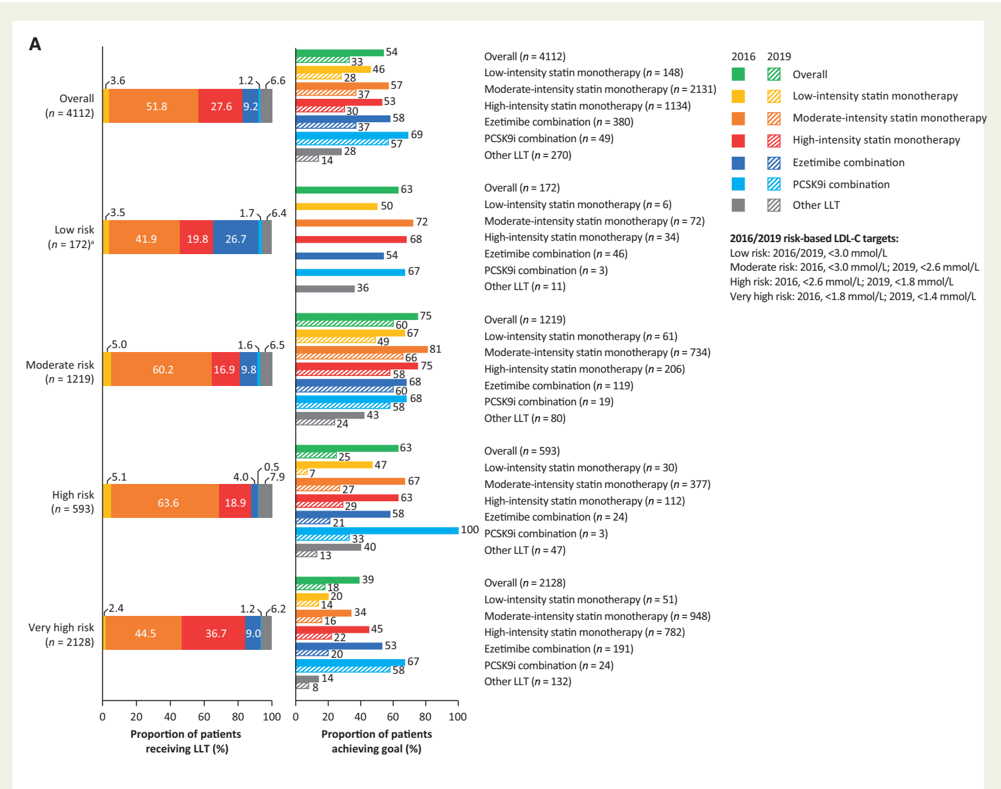
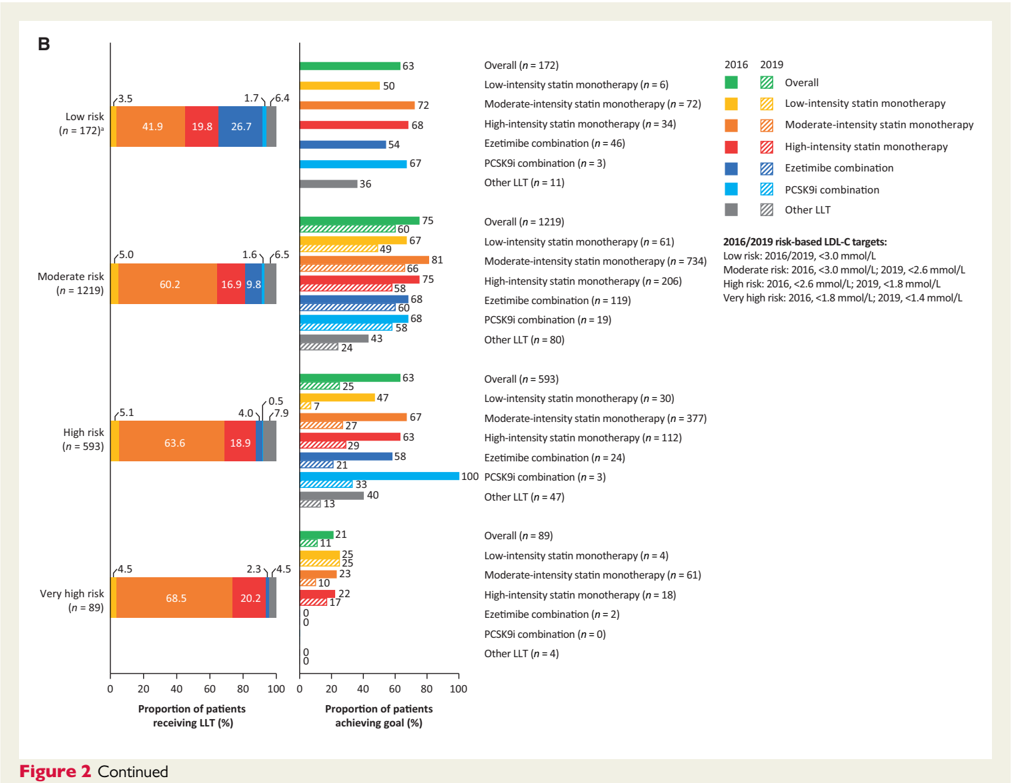
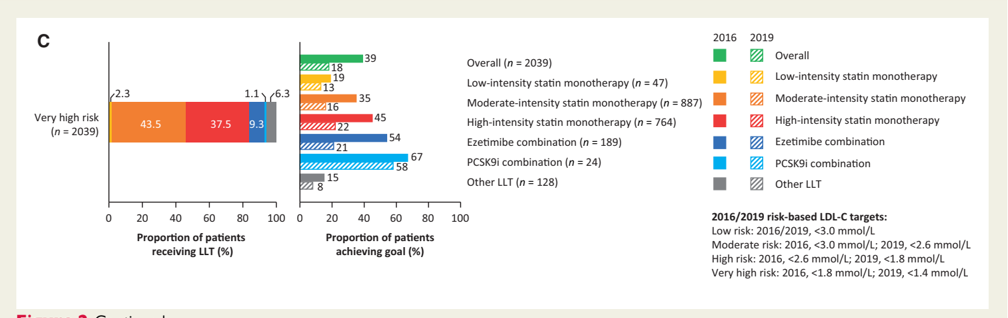
Verification
Claims the paper makes
The claims and statistics of this paper haven’t been checked yet.
Free: it reads the open-access text and checks the first 5 claims that cite a source we can check. Create a free account to check every claim.
Claims other papers make about this one
Each is checked against this paper’s own text: does it say what the citing paper says it does?
The source backs part of the claim, not all of it — or backs it for a different population, condition or comparison.
In the citing paper
“The DA VINCI study found that out of 5888 patients with dyslipidaemia who were enrolled in 18 European countries, only 33% achieved their risk-based LDL-C goal recommended in the European Society of Cardiology (ESC) 2019 guidelines [12].”
From Established and Emerging Lipid-Lowering Drugs for Primary and Secondary Cardiovascular Prevention (2023) · cites this paper as [12]
Experimental — accuracy not yet measured
Self-check
Percentages, sums and reported differences re-computed from the paper’s own numbers.
The self-check needs the paper’s full text.
Citations
Cites
Mach, F., Baigent, C., Catapano, A. L., Koskinas, K. C., Casula, M., Badimon, L., Chapman, M. J., De Backer, G. G., Delgado, V., Ference, B. A., et al. (2020) · European Heart Journal · doi:10.1093/eurheartj/ehz455 · Cited by 8,961
Self-citation2016 ESC/EAS Guidelines for the Management of Dyslipidaemias
Catapano, A. L., Graham, I., De Backer, G., Wiklund, O., Chapman, M. J., Drexel, H., Hoes, A. W., Jennings, C. S., Landmesser, U., Pedersen, T. R., et al. (2016) · European Heart Journal · doi:10.1093/eurheartj/ehw272 · Cited by 3,162
Self-citationCollaborators, C. T. T. (. (2012) · The Lancet · doi:10.1016/s0140-6736(12)60367-5 · Cited by 2,833
Kotseva, K., De Backer, G., De Bacquer, D., Rydén, L., Hoes, A., Grobbee, D., Maggioni, A., Marques-Vidal, P., Jennings, C., Abreu, A., et al. (2019) · European Journal of Preventive Cardiology · doi:10.1177/2047487318825350 · Cited by 937
Wood, D. A., Backer, G. D., Graham, I., Poole-Wilson, P. A., Pyörälà, K., Shepherd, J., Zanchetti, A., Haman, P., Linhartová, K., Simon, J., et al. (1997) · Ghent University Academic Bibliography (Ghent University) · Cited by 537
EUROASPIRE Study Group (1997) · European Heart Journal · doi:10.1093/oxfordjournals.eurheartj.a015136 · Cited by 532
Nicholls, S. J., Brandrup-Wognsen, G., Palmer, M., & Barter, P. J. (2010) · The American Journal of Cardiology · doi:10.1016/j.amjcard.2009.08.651 · Cited by 248
Ferrières, J., Ferrari, G. M. D., Hermans, M. P., Elisaf, M., Toth, P. P., Horack, M., Brudi, P., Lautsch, D., Bash, L. D., Baxter, C. A., et al. (2018) · European Journal of Preventive Cardiology · doi:10.1177/2047487318806359 · Cited by 73
Steen, D. L., Khan, I., Ansell, D., Sanchez, R. J., & Ray, K. K. (2017) · BMJ Open · doi:10.1136/bmjopen-2016-013255 · Cited by 42
Self-citationThe past, present and future of lipidlowering therapy
Najam, O., Lambert, G. C., & Ray, K. K. (2015) · Clinical Lipidology · doi:10.2217/clp.15.40 · Cited by 7
Self-citation
Research works printed but not linked: 1
- 2. Baigent C, Blackwell L, Emberson J, Holland LE, Reith C, Bhala N, Peto R, Barnes EH, Keech A, Simes J, Collins R. Efficacy and safety of more intensive lowering of LDL cholesterol: a meta-analysis of data from 170,000 particiants in 26 rando- mised trials. Lancet 2010;376:1670.
Cited by
Items 401–500 of 963
Velilla, T. A., Guijarro, C., Ruíz, R. C., Piñero, M. R., Marcos, J. F. V., Pérez, A., López, A. M. B., López, A. M., Donaire, J. A. G., Obaya, J. C., et al. (2023) · Advances in Laboratory Medicine / Avances en Medicina de Laboratorio · doi:10.1515/almed-2023-0047 · Cited by 6
Statin Intolerance: An Overview for Clinicians
Surma, S., Lewek, J., Penson, P. E., & Banach, M. (2023) · Contemporary diabetes · doi:10.1007/978-3-031-26681-2_23 · Cited by 5
Self-citationZafrir, B., Aker, A., Naoum, I., & Saliba, W. (2023) · The American Journal of Cardiology · doi:10.1016/j.amjcard.2023.07.032 · Cited by 5
Bempedoic acid: a new player for statin-intolerant patients and beyond
Giordano, S. A., Spaccarotella, C., Esposito, G., & Indolfi, C. (2023) · Current Opinion in Endocrinology Diabetes and Obesity · doi:10.1097/med.0000000000000853 · Cited by 5
Sudano, I., Krähenbühl, S., Mach, F., Anstett, A., Dhalwani, N. N., Bridges, I. M., Sibartie, M., & Ray, K. K. (2024) · Therapeutic Advances in Cardiovascular Disease · doi:10.1177/17539447231213288 · Cited by 5
Self-citationLong-term cardiovascular safety of inclisiran: a pooled analysis of phase 3 randomized trials
Karakasis, P., Patoulias, D., Barkas, F., Theofilis, P., Milionis, H. J., Doumas, M. N., Kassimis, G., Tsioufis, K. P., & Fragakis, N. (2024) · Hellenic Journal of Cardiology · doi:10.1016/j.hjc.2024.06.005 · Cited by 5
Kim, Y., Roh, J. W., Lee, O., Heo, S., Im, E., Cho, D., & Kim, B. (2024) · The Korean Journal of Internal Medicine · doi:10.3904/kjim.2024.080 · Cited by 5
“Furthermore, the proportion of patients with AMI taking PCSK9 inhibitors reportedly accounts for less than 1% of patients with an LDL-C level above 55 mg/dL in clinical practice [9].”
Li, W., Sun, L., & Yan, S. (2024) · Frontiers in Cardiovascular Medicine · doi:10.3389/fcvm.2024.1375040 · Cited by 5
Graf, M., Khera, A. V., May, S. G., Chung, S., N’Dri, L., Cristino, J. R., & Electricwala, B. (2024) · Heliyon · doi:10.1016/j.heliyon.2024.e35990 · Cited by 5
“Despite a compelling evidence base and universal endorsement by professional society guidelines, the majority of ASCVD patients in the U.S. fail to achieve adequate LDL-C reduction to protect against recurrent events [2,31,32].”
BackgroundKamiński, M., Kulecki, M., Kasprzak, D., Lachowski, P., Kulczycka, A., Kozłowska, M., Klause, D., Naskręt, D., Flotyńska, J., Zozulińska‐Ziółkiewicz, D., et al. (2025) · Nutrition Metabolism and Cardiovascular Diseases · doi:10.1016/j.numecd.2025.103853 · Cited by 5
van der Brug, S., Trier, T. J. V., Khader, A. O., Liem, A. H., Schut, A., Martens, F. M. A. C., Alings, M., & the PENELOPE investigators (2025) · Netherlands Heart Journal · doi:10.1007/s12471-025-01939-2 · Cited by 5
“Compared to recent observational studies, this incidence of target attainment is relatively high [8, 11], and the median LDL-C value of 1.6mmol/l is relatively low [12].”
Vecchia, L. A. D., STEFANO, F. D., Bussotti, M., Godino, C., Bernardi, M., Spadafora, L., Adriano, E. P., Guarini, P., & Pedretti, R. F. E. (2025) · Minerva Cardiology and Angiology · doi:10.23736/s2724-5683.25.06704-3 · Cited by 5
Qureshi, N., Antoniou, S., Cornel, J. H., Schiele, F., Filardi, P. P., Brachmann, J., Sidelnikov, E., Villa, G., Ferguson, S., Rowlands, C. T., et al. (2022) · Advances in Therapy · doi:10.1007/s12325-022-02344-6 · Cited by 5
“4 mmol/l) was achieved by 18% of patients, and this proportion increased to 22% for those patients receiving high-intensity statins or to 37% for those receiving ezetimibe in combination with a statin therapy [13].”
BackgroundBempedoic Acid for Lipid Management in the Indian Population: An Expert Opinion
Hiremath, J., Mohan, J. C., Hazra, P., Sawhney, J. P. S., Mehta, A., Shetty, S., Oomman, A., Shah, M., Bantwal, G., Agarwal, R., et al. (2023) · Cureus · doi:10.7759/cureus.35395 · Cited by 5
“The DA VINCI study from the European Union observed that among patients in the very high-risk primary and secondary prevention groups, HIS monotherapy was used in 20% and 38%, respectively [31].”
BackgroundSuboptimal lipid management in patients with acute ischemic stroke
Vandewalle, L., Duchi, F., Verhelle, K., & Vanacker, P. (2023) · Clinical Neurology and Neurosurgery · doi:10.1016/j.clineuro.2023.107717 · Cited by 5
Deaney, C., Donaldson, M., & Meskauskiene, A. (2023) · Journal of Primary Care & Community Health · doi:10.1177/21501319231172709 · Cited by 5
Velilla, T. A., Guijarro, C., Ruíz, R. C., Piñero, M. R., Marcos, J. F. V., Pérez, A., López, M. A. B., López, A. M., Donaire, J. A. G., Obaya, J. C., et al. (2023) · Advances in Laboratory Medicine / Avances en Medicina de Laboratorio · doi:10.1515/almed-2023-0010 · Cited by 6
An update on emerging drugs for the treatment of hypercholesterolemia
Nelson, A. J., Bubb, K. J., & Nicholls, S. J. (2021) · Expert Opinion on Emerging Drugs · doi:10.1080/14728214.2021.2009801 · Cited by 5
“match their level of cardiovascular risk [34].”
Кашталап, В. В. (2022) · Russian Journal of Cardiology · doi:10.15829/1560-4071-2022-5285 · Cited by 5
A retrospective study of people with familial hypercholesterolaemia in a Belgian lipid clinic
Ide, V., Cock, D. D., Pazmiño, S., Vangoitsenhoven, R., der Schueren, B. V., & Mertens, A. C. (2023) · Acta cardiologica. Supplementum · doi:10.1080/00015385.2023.2266647 · Cited by 5
“However, these results are in line with previous studies showing that undertreatment of hypercholesterol-aemia remains a major problem, both in patients with and without FH [9,22–24].”
BackgroundResultInfluentialReiber, I., Márk, L., Együd, F., Mező, I., & Császár, A. (2023) · Cardiologia Hungarica · doi:10.26430/chungarica.2023.53.6.633 · Cited by 5
Alcance de Metas de LDL-colesterol: Por que Falhamos e Como Podemos Melhorar?
Cesena, F. Y. (2022) · Arquivos Brasileiros de Cardiologia · doi:10.36660/abc.20220288 · Cited by 5
Nicholls, S. J., Ray, K. K., Lincoff, A. M., Sarnes, E., Gillard, K. K., Bloedon, L., Migliaccio-Walle, K., Elsea, D., & Nissen, S. E. (2026) · American Journal of Cardiovascular Drugs · doi:10.1007/s40256-025-00753-w · Cited by 4
“However, most high cardiovascular risk patients are not treated with recommended high-intensity statins, and as such, fail to reach guideline directed LDL-C levels [12, 13].”
Self-citationCinza-Sanjurjo, S., Barrios, V., Fierro-González, D., Polo-García, J., & Pallarés-Carratalá, V. (2024) · Cardiovascular Therapeutics · doi:10.1155/2024/4227941 · Cited by 4
“%) complied with the recommendations to a lesser extent than in the DA VINCI study (60% and 25%, respectively) [12].”
InfluentialAlieva, R. B., Shek, A. B., Abdullaev, A. A., Fozilov, K. G., Khoshimov, S. U., Abdullaeva, G., Zakirova, D. V., Kurbanova, R., Kan, L., & Kim, A. R. (2023) · Frontiers in Clinical Diabetes and Healthcare · doi:10.3389/fcdhc.2023.1277288 · Cited by 4
Real-world management of hypercholesterolemia in patients after acute coronary syndrome in Greece
Massia, D., Giovas, P. P., Papadopoulos, N., Katsimagklis, G., Pissimisis, E., Patsilinakos, S. P., Pappa, E., Baltogiannis, G., Kouremenos, N., Dontas, C., et al. (2025) · Atherosclerosis Plus · doi:10.1016/j.athplu.2025.03.002 · Cited by 4
“Contributory factors may include CV risk un-derestimation, poor adherence to prescribed treatment, or underutilization of the available treatment armamentarium due in part to local reimbursement guidelines [6 – 8].”
InfluentialSelf-citationPCSK9-Targeting Drugs and Gender: Are There Any Differences?
Liberati, V., Guidotti, G., Sorrentino, A., Slanzi, M., Lotti, E., Crudele, F., Rogolino, A. A., Alfano, F., Giusti, B., Gori, A. M., et al. (2025) · Journal of Clinical Medicine · doi:10.3390/jcm14134469 · Cited by 4
“Target LDL-C levels have been progressively reduced, but the gap between guidelines and actual LDL-C levels achieved in practice persists, especially in high-risk patients [16–18].”
Harnessing mRNA for heart health: a new era in cardiovascular treatment
Peng, F., Qiu, Z., Wang, Z., Li, F., Zhou, F., Yuan, S. S., Yuan, J., Wang, Y., Zhao, Y., Li, C., et al. (2025) · Theranostics · doi:10.7150/thno.111503 · Cited by 4
“Achieving therapeutic goals typically relies on multiple factors, including the clinician’s willingness to intensify treatment [101, 102], consistent insurance coverage [103, 104], drug affordability [105], and routine access to lipid monitoring [106]—all of which are frequently inadequate [107].”
InfluentialБикбаева, Г. Р., Kovalskaya, A. N., Kuznetsova, K. V., Дмитриевна, Д. П., Tukhbatova, A. V., Sukhinina, E. M., Pavlova, T. V., Duplyakov, D. V., & Savinova, E. V. (2025) · CARDIOVASCULAR THERAPY AND PREVENTION · doi:10.15829/1728-8800-2025-4318 · Cited by 4
Parhofer, K. G., Pittrow, D., Birkenfeld, A. L., Fraass, U., Hohenstein, B., Siegert, C., Klotsche, J., Steinhagen‐Thiessen, E., Dexl, S., Schettler, V. J. J., et al. (2025) · Clinical Research in Cardiology · doi:10.1007/s00392-025-02719-z · Cited by 4
“Com-paratively, the HEYMANS study demonstrated a persistence rate of 92% at 30 months [15].”
Weltler, P., Harbich, P. F., Burger, A. L., Dobner, S., Kaufmann, C. C., Geppert, A., Huber, K., & Pogran, E. (2025) · European Heart Journal Acute Cardiovascular Care · doi:10.1093/ehjacc/zuaf137 · Cited by 4
Kataoka, Y., Nicholls, S. J., Kiyoshige, E., Nishimura, K., Puri, R., Kitahara, S., Murai, K., Mitsui, K., Tomishima, Y., Sawada, K., et al. (2026) · European Heart Journal - Cardiovascular Imaging · doi:10.1093/ehjci/jeag057 · Cited by 4
“5 This finding suggests the need to improve the adoption of this intensified lipid-lowering therapies in patients with ASCVD.”
Kataoka, Y., Nicholls, S. J., Kitahara, S., Katasako-Yabumoto, A., Hosoda, H., Funabashi, S., Mitsui, K., Murai, K., Iwai, T., Sawada, K., et al. (2026) · Atherosclerosis · doi:10.1016/j.atherosclerosis.2026.120684 · Cited by 4
Schut, Y., Bühler, D., Snaterse, M., Malekzadeh, A., Somsen, G. A., Martens, F. M. A. C., & Winter, M. M. (2026) · EClinicalMedicine · doi:10.1016/j.eclinm.2026.103886 · Cited by 4
CETP Inhibitors: Back With a New Target
Nicholls, S. J., Ray, K. K., Nelson, A. J., & Kastelein, J. J. P. (2026) · Circulation Research · doi:10.1161/circresaha.125.327271 · Cited by 5
Self-citationHyperlipidemia: effective disease management with a focus on PCSK9 inhibitors
Shaw, P. B. (2021) · The American Journal of Managed Care · doi:10.37765/ajmc.2021.88606 · Cited by 4
Inclisiran in patients with acute ischemic stroke: first data
Cherepianskii, M. S., Ponomareva, G. M., Skiba, I. B., Abakarov, R. M., Дудайте, В. В., & Cherepianskaia, A. A. (2023) · Kardiologiia · doi:10.18087/cardio.2023.10.n2560 · Cited by 4
Terentes-Printzios, D. G., Dima, I., Benardos, P., Mitrou, P., Mathioudakis, K., Tsolakidis, A., Barkas, F., Tsioufis, K. P., Sfikakis, P. P., Liberopoulos, E. N., et al. (2024) · International Journal of Cardiology Cardiovascular Risk and Prevention · doi:10.1016/j.ijcrp.2024.200261 · Cited by 4
Self-citationCosts attributable to hypercholesterolemia in a single period and over the life cycle
Reitzinger, S., Reiss, M., & Czypionka, T. (2024) · The European Journal of Health Economics · doi:10.1007/s10198-024-01684-0 · Cited by 4
“18.5% of the very-high risk patients achieved the target of 3 mmol/l for 2016 and around half thereof achieved the target of 2.3 mmol /l for the year 2019 [18].”
BackgroundInfluentialKoeijer, R. D., de Geest-Vrolijk, M. E., Hajer, G. R., & Martens, F. M. A. C. (2025) · International Journal of Integrated Care · doi:10.5334/ijic.8654 · Cited by 4
Desouky, M. A., El‐Magd, M. A., Mousa, M. A., Mallick, A. H., Khan, D., & Desouky, D. A. (2025) · Beni-Suef University Journal of Basic and Applied Sciences · doi:10.1186/s43088-025-00694-y · Cited by 5
“Furthermore, many patients are unable to tolerate the statin dosages necessary to meet the LDL-C targets set by guidelines [166].”
Vinereanu, D., Camafort, M., Dzudié, A., Ivanović, B., Mostaza, J. M., Pećin, I., Postadzhiyan, A., Shaburishvili, T., & Magné, J. (2026) · European Heart Journal - Quality of Care and Clinical Outcomes · doi:10.1093/ehjqcco/qcag002 · Cited by 4
“In four countries (Croatia, Romania, Serbia, and Spain), patients also had to have a diagnosis of dyslipidaemia [defined as LDL-C ≥ 116 mg/dL ( ≥ 3.0 mmol/L) or already receiving lipid-lowering drugs (LLDs)].”
InfluentialTransatlantic guidelines on dyslipidemia and cardiovascular risk: key differences across the pond
Agha, A. M., Virani, S. S., & Ballantyne, C. M. (2020) · Current Opinion in Endocrinology Diabetes and Obesity · doi:10.1097/med.0000000000000608 · Cited by 4
Therapieoptionen zur LDL-C-Senkung zusätzlich zu Statinen
Weingärtner, O., Marx, N., Klose, G., & Laufs, U. (2022) · DMW - Deutsche Medizinische Wochenschrift · doi:10.1055/a-1516-2631 · Cited by 4
Wilkinson, M. J., Xu, I., Vasudevan, R. S., You, H., Xu, R., & Taub, P. R. (2023) · American Journal of Preventive Cardiology · doi:10.1016/j.ajpc.2023.100473 · Cited by 4
Perfil clínico de la hipercolesterolemia severa en 156.000 adultos en atención primaria
Gijón‐Conde, T., Sánchez, C. F., Delgado, I. I., Jiménez, B. R., & Banegas, J. R. (2023) · Clínica e Investigación en Arteriosclerosis · doi:10.1016/j.arteri.2023.08.002 · Cited by 4
Managing hypercholesterolaemia
Nelson, A. J., & Nicholls, S. J. (2024) · Australian Prescriber · doi:10.18773/austprescr.2024.006 · Cited by 4
“46 A 2-or 3-drug approach may be required to achieve optimal management.”
BackgroundGómez-Barrado, J. J., Gómez-Turégano, P., Beltran-Moreno, M., Fernández-Chamorro, A. I., Rodríguez, B. R., & Kounka, Z. (2024) · Clínica e Investigación en Arteriosclerosis · doi:10.1016/j.arteri.2024.01.002 · Cited by 4
Pohl, S., Engelbertz, C. M., Reinecke, H., Malyar, N. M., Meyborg, M., Brix, T. J., Varghese, J., & Gebauer, K. (2024) · Nutrition Metabolism and Cardiovascular Diseases · doi:10.1016/j.numecd.2024.03.007 · Cited by 4
Leening, M. J. G. (2024) · Netherlands Heart Journal · doi:10.1007/s12471-024-01863-x · Cited by 4
Hart, M., Rees, J. C., Newton, J. L., Stansby, G. P., Mackay, K., & Luvai, A. (2024) · Journal of clinical lipidology · doi:10.1016/j.jacl.2024.03.008 · Cited by 4
Colivicchi, F., Arca, M., Fusco, S. A. D., Pirillo, A., & Catapano, A. L. (2024) · Giornale Ialiano di Cardiologia · doi:10.1714/4252.42295 · Cited by 5
Self-citationDiévart, F., Bruckert, É., Aboyans, V., Bekka, S., Boccara, F., Munoz, B. B. B., Emmerich, J., Farnier, M., Gallo, A., Lemesle, G., et al. (2024) · Archives of cardiovascular diseases · doi:10.1016/j.acvd.2024.02.004 · Cited by 4
Self-citationNatale, F., Franzese, R., Marotta, L., Mollo, N., Solimene, A., Luisi, E., Gentile, C., Loffredo, F. S., Golino, P., & Cimmino, G. (2024) · Life · doi:10.3390/life14060679 · Cited by 4
“First, the monotherapy is not powerful enough, and recent observational studies clearly indicate that there are still too many patients in monotherapy failing to achieve the recommended target [67,68].”
BackgroundИ., В. С., Недогода, C. В., А., Л. В., М., Г. Г., Gurevich, V. S., Н., Б. Г., Н., В. Б., М., В. Ж., С., К. З., Е., Д. К., et al. (2022) · Атеросклероз и дислипидемии · doi:10.34687/2219-8202.jad.2022.04.0006 · Cited by 4
Arca, M., Pirillo, A., Gambacurta, R., Becker, C., Diamand, F., Ray, K. K., & Catapano, A. L. (2024) · European Atherosclerosis Journal · doi:10.56095/eaj.v3i3.76 · Cited by 4
Self-citationBrockmeyer, M., Fell, M., Parco, C., Hoss, A., Vargas, K. G., Wies, E., Lin, Y., Heinen, Y., Chernyak, N., Icks, A., et al. (2025) · BMC Cardiovascular Disorders · doi:10.1186/s12872-025-04599-7 · Cited by 4
“These findings correspond to large real-world datasets from the United States and Europe [24, 32, 36].”
Szinay, D., Szabó, K., Molnár, H., Béldi, T. G., Bencs, V., Lőrincz, H., Harangi, M., Griger, Z., & Nagy‐Vincze, M. (2025) · Journal of Clinical Medicine · doi:10.3390/jcm14103404 · Cited by 4
“In cases of contraindication of statin use, such as anti-HMGCR antibody positivity, disease activity, or previous statin-induced complaints, PCSK9 inhibitors or alternative therapies such as niacin or phytosterols could be chosen [13,38,39,44–46].”
Sohn, S. Y., Kim, Y. J., Doh, J., & Cho, S. W. (2025) · Cardiovascular Drugs and Therapy · doi:10.1007/s10557-025-07729-7 · Cited by 4
“However, there are discrepancies between guideline recommendations and implementation in real-world practice [4, 5], partly because of potential side effects or intolerance of patients to high-intensity statin [6, 7].”
The pharmacology of cholesterol-lowering drugs: The pharmacology of cholesterol-lowering drugs
Ballantyne, C. M., & Catapano, A. L. (2022) · European Atherosclerosis Journal · doi:10.56095/eaj.v1i1.7 · Cited by 4
Self-citationBempedoic acid: what prospective uses?
Jacomelli, I., Monzo, L., Panattoni, G., Lanzillo, C., Rebecchi, M., & Calò, L. (2023) · European Heart Journal Supplements · doi:10.1093/eurheartjsupp/suad012 · Cited by 4
“Even with optimized statins, greater utilization of non-statin lipid loweing therapies is likely needed to reduce these gaps for patients at highest risk.(4) Certainly, in this scenario there is a right position for bempedoic acid.”
BackgroundClinical profile of severe hypercholesterolemia in 156,000 adults in primary care
Gijón‐Conde, T., Sánchez, C. F., Delgado, I. I., Jiménez, B. R., & Banegas, J. R. (2024) · Clínica e Investigación en Arteriosclerosis (English Edition) · doi:10.1016/j.artere.2024.01.003 · Cited by 4
Maury, E., Brouyère, S., & Jansen, M. W. J. C. (2024) · Clinical Cardiology · doi:10.1002/clc.24330 · Cited by 4
Talviste, G., Leinsalu, M., Ross, P., & Viigimaa, M. (2024) · Medicina · doi:10.3390/medicina60091433 · Cited by 4
Goyal, A., Tariq, M. D., Jain, H., Shrestha, A. B., Fatima, L., Riyaz, R., Yadav, H. R., Safi, D., Yasinzai, A. Q. K., Khan, R., et al. (2024) · Cardiovascular Endocrinology & Metabolism · doi:10.1097/xce.0000000000000315 · Cited by 4
“…21% who received statin plus ezetimibe, and 58% who received combination therapy with a proprotein conver-tase subtilisin/kexin type 9 (PCSK9) inhibitor were able to achieve the LDL-C goal indicated by the 2019 European Society of Cardiology/European Atherosclerosis Society guideline [33].”
Nishikido, T., Fayyad, R. S., Melamed, S., & Ray, K. K. (2021) · Atherosclerosis · doi:10.1016/j.atherosclerosis.2021.02.011 · Cited by 4
Self-citationPrevención primaria. La piedra angular para reducir la carga de la enfermedad cardiovascular
Barrios, V., Escobar, C., & Banach, M. (2021) · Revista Española de Cardiología · doi:10.1016/j.recesp.2021.04.015 · Cited by 4
Self-citationPavlyuk, E. I., Васильевич, И. М., Alieva, A. S., Avdonina, N. G., Yakovlev, A. N., & Звартау, Н. Э. (2021) · Russian Journal of Cardiology · doi:10.15829/1560-4071-2021-4608 · Cited by 4
Belgian data of ODYSSEY APPRISE: stringent LDL‐c targets are in reach when using all available tools
Verdickt, S., der Schueren, B. V., Vangoitsenhoven, R., Descamps, O. S., & Mertens, A. C. (2021) · International Journal of Clinical Practice · doi:10.1111/ijcp.14916 · Cited by 4
Barrios, V., Escobar, C., Arrarte, V., Bravo, M., del Campo, A., Hidalgo, R., Recasens, L., & Cequier, A. R. (2021) · Clínica e Investigación en Arteriosclerosis (English Edition) · doi:10.1016/j.artere.2021.11.003 · Cited by 4
Fasano, T., Trenti, C., Negri, E. A., Guiducci, V., Foracchia, M., Bonelli, E., Canovi, S., Besutti, G., Bertolini, S., & Calandra, S. (2022) · Nutrition Metabolism and Cardiovascular Diseases · doi:10.1016/j.numecd.2021.12.024 · Cited by 4
Nguy, J., Hitchen, S. A., Lan, N. S. R., Dwivedi, G., Larbalestier, R. I., Yeap, B. B., & Fegan, P. G. (2022) · Internal Medicine Journal · doi:10.1111/imj.15700 · Cited by 4
Lowering LDL cholesterol in clinical practice: time for change?
Abushamat, L. A., & Ballantyne, C. M. (2022) · The Lancet · doi:10.1016/s0140-6736(22)01352-6 · Cited by 4
Torres, J. M. R., López-Téllez, A., Ariza, M. J., Rioja, J., García‐Casares, N., Rodríguez, E. E. G., García, J. A. R., Chaparro, M. Á. S., Barbancho, M. Á., & Valdivielso, P. (2023) · BMC Family Practice · doi:10.1186/s12875-023-01997-8 · Cited by 4
“In order to achieve the LDL-C levels that are currently recommended by European bodies [2], and considering the high VR of patients before and, especially, after being re-classified, it is clear that many patients should be treated with a statin-ezetimibe combination, in order to find optimal lipid treatment [50].”
ResultInfluentialRehm, M., Jaensch, A., Schöttker, B., Mons, U., Hahmann, H., Köenig, W., Brenner, H., & Rothenbacher, D. (2023) · BMC Cardiovascular Disorders · doi:10.1186/s12872-023-03469-4 · Cited by 4
“The recent observational DA VINCI study noted the persistent discrepancy between current guideline recommendations and recent clinical practice for lipid management in Europe [18].”
BackgroundKułach, A., Wieczorek, P., Urbańczyk-Świć, D., Turski, M., Wita, M., Grabarczyk, M., & Wita, K. (2023) · Kardiologia Polska · doi:10.33963/v.kp.98143 · Cited by 4
25 years of lipid-lowering therapy: secular trends in therapy of coronary patients
Ratz, M., Vogel, J. B., Kuehrer, H., Säly, C., Mündlein, A., Vonbank, A., MADER, A., Fraunberger, P., Leiherer, A., & Drexel, H. (2024) · Wiener klinische Wochenschrift · doi:10.1007/s00508-024-02365-x · Cited by 4
Estado autonómico y poder judicial
Mestre, J. B. I. (2002) · Dialnet (Universidad de la Rioja) · Cited by 6
Challenges in achieving LDL-C goals: Insights from the Italian SANTORINI study cohort
Arca, M., Calabrò, P., Solini, A., Pirillo, A., Gambacurta, R., Ray, K. K., & Catapano, A. L. (2026) · Nutrition, Metabolism and Cardiovascular Diseases · doi:10.1016/j.numecd.2025.104412 · Cited by 3
Self-citationMak, Y. H., Chua, F., Koh, X. H., Tan, V. H., Lee, Z. H., Lam, A., Tong, K. L., Yeo, C., Chow, W., & Loh, W. J. (2025) · Singapore Medical Journal · doi:10.4103/singaporemedj.smj-2024-172 · Cited by 3
Statins: are they appropriate for all patients?
Raal, F. J., & Mohamed, F. (2022) · PubMed Central · doi:10.1016/s2214-109x(21)00572-6 · Cited by 3
Gómez-Barrado, J. J., Gómez-Turégano, P., Beltran-Moreno, M., Fernández-Chamorro, A. I., Rodríguez, B. R., & Kounka, Z. (2024) · Clínica e Investigación en Arteriosclerosis (English Edition) · doi:10.1016/j.artere.2024.09.002 · Cited by 3
Bansal, M., Kasliwal, R. R., Chandra, P., Kapoor, R., Chouhan, N., Bhan, A., & Trehan, N. K. (2024) · Indian Heart Journal · doi:10.1016/j.ihj.2024.11.244 · Cited by 3
Choi, H., Oh, S. J., Jo, Y. H., Park, Y. H., Park, Y. H., Yang, T., Doh, J., Hong, Y. J., Ahn, K. T., Cho, J. M., et al. (2025) · Scientific Reports · doi:10.1038/s41598-025-00298-7 · Cited by 3
“However, statin use in the combination group included moderate, high, or unknown intensity 7 .”
Hlushchenko, I., Pamilo, S., Islam, M. M., Lähdeniemi, I. A. K., Tamlander, M., Ripatti, S., & Pfisterer, S. G. (2025) · Arteriosclerosis Thrombosis and Vascular Biology · doi:10.1161/atvbaha.125.322801 · Cited by 3
Córdoba‐Melo, B. D., Arango-Ibañez, J. P., Marín, S. P., Ruiz, Á. J., Molina, D. I., & Gómez‐Mesa, J. E. (2025) · BMJ Open · doi:10.1136/bmjopen-2025-100569 · Cited by 3
“27 28 However, in the Italian health-care system, where care pathways are more structured, ezetimibe combination therapy can reach 74.5%, while PCSK9i use remains consistently low (21.6% for aliro-cumab and 19.5% for evolocumab).”
InfluentialŠabović, M., Pejkov, H., Caraus, A., Gruev, I. T., Vintila, V., Csanádi, Z., Batjargal, S., Kovačević-Preradović, T., Kušljugić, Z., Kuprešak, D., et al. (2025) · Frontiers in Cardiovascular Medicine · doi:10.3389/fcvm.2025.1665059 · Cited by 3
Huang, J., Yu, Z., Wu, Y., Chen, C., Chen, Z., Zhao, J., He, J., Dong, Y., Li, B., Liu, C., et al. (2025) · JACC Advances · doi:10.1016/j.jacadv.2025.102184 · Cited by 3
Mostaza, J. M., Camafort, M., Rodriguez, S. S., Gasol, C. V., Wonenburguer, J. C. Y., Alcubilla, M. C., Escobar, C., Bujía, M. L. F., Trébol, F. G., Gracia, M., et al. (2025) · Clínica e Investigación en Arteriosclerosis (English Edition) · doi:10.1016/j.arteri.2025.500830 · Cited by 3
Zhang, Y., Jing, Z., Liu, Z., Lai, A., Tan, G., & Yan, B. P. (2025) · Scientific Reports · doi:10.1038/s41598-025-19856-0 · Cited by 4
“This observation is indirectly supported by previous studies 36 , which show that achieving and sustaining target non-HDL-C levels post-MI is associated with a reduced MACE risk 58,59 .”
Aguíar, C., Aguiar, P., Duarte, J. S., Gil, V. M., Mimoso, J., Monteiro, P. F., Pinto, F. J., Pinto, F., Raposo, J., HAFE, P. V., et al. (2025) · Revista Portuguesa de Cardiologia · doi:10.1016/j.repc.2025.10.003 · Cited by 3
Self-citationAudehm, R. G., Liew, D., Watts, G. F., Hespe, C. M., Rahman, M., Williamson, A. E., Sciascia, C., Santani, R., & Tonkin, A. M. (2025) · Heart Lung and Circulation · doi:10.1016/j.hlc.2025.07.012 · Cited by 3
How can we improve secondary prevention of cardiovascular disease?
Gill, J., Jayawardana, S., Carter, A., Miracolo, A., Politopoulou, K., Apostolou, E., & Kanavos, P. G. (2023) · London School of Economics and Political Science Research Online (London School of Economics and Political Science) · doi:10.21953/lse.f81e9y7znju1 · Cited by 3
Obicetrapib: A Novel Cholesterol Ester Transfer Protein Inhibitor
Maalizadeh, K., Parikh, M. A., Hunt, C. R., Frishman, W. H., & Peterson, S. J. (2025) · Cardiology in Review · doi:10.1097/crd.0000000000001136 · Cited by 3
Barkas, F., Szarek, M. J., Nelson, A. J., Ditmarsch, M., Kling, D. F., Davidson, M. H., Kastelein, J. J. P., Nicholls, S. J., & Ray, K. K. (2025) · European Journal of Preventive Cardiology · doi:10.1093/eurjpc/zwaf788 · Cited by 3
Self-citationSEA 2026 Standards for Global Control of Vascular Risk
Mostaza, J. M., Pintó, X., Armario, P., Guijarro, C., Masana, L., Real, J. T., Arrobas-Velilla, T., Baeza‐Trinidad, R., Calmarza, P., Cebollada, J., et al. (2026) · Clínica e Investigación en Arteriosclerosis (English Edition) · doi:10.1016/j.artere.2026.500889 · Cited by 3
Self-citationKafol, J., Fras, Z., Novaković, M., Sperling, L. S., Cevc, M., Krevel, B., Kafol, L., Kelenc, A., Kepic, K., Vrbinc, K. N., et al. (2026) · Lipids in Health and Disease · doi:10.1186/s12944-026-02897-3 · Cited by 3
“Achieving these targets remains challenging in many patients, particularly in real-world settings [10].”
Knowledge, Use, and Barriers in Dyslipidemia Management: A Cross-Sectional Survey of Clinicians
Mesquita-Lousada, A., Barbosa, A., Silva, J., D’Oria, M., Silva, D. S., Andrade, J. P., Ribeiro, H., & Rocha-Neves, J. P. (2026) · Journal of Clinical Medicine · doi:10.3390/jcm15072745 · Cited by 3
“Despite strong evidence-based guideline recommendations supported by robust data from landmark clinical trials, real-world implementation of optimal dyslipidemia management strategies remains suboptimal across diverse healthcare settings [11,12].”
Magnani, G., Paoli, G., Maglietta, G., Sala, R. L., De Stefano, G., Gurgoglione, F. L., Tuttolomondo, D., Triglia, L. T., Ardissino, M., Giacalone, R., et al. (2026) · European Heart Journal · doi:10.1093/eurheartj/ehag255 · Cited by 3
Lipoprotein(a) and residual cardiovascular risk in statin-treated patients
Oftadeh, S.-L., Pütz, A., Jacobsen, M., Balfanz, P., Marx, N., Brandts, J., Müller‐Wieland, D., & Verket, M. (2026) · European Journal of Preventive Cardiology · doi:10.1093/eurjpc/zwag296 · Cited by 3
Metadata
- Authors
- Ray, K. K., Molemans, B., Schoonen, W. M., Giovas, P., Bray, S., Kiru, G., Murphy, J., Banach, M., De Servi, S., Gaita, D., Gouni-Berthold, I., Hovingh, G. K., Jozwiak, J. J., Jukema, J. W., Kiss, R. G., Kownator, S., Iversen, H. K., Maher, V., Masana, L., Parkhomenko, A., Peeters, A., Clifford, P., Raslova, K., Siostrzonek, P., Romeo, S., Tousoulis, D., Vlachopoulos, C., Vrablik, M., Catapano, A. L., Poulter, N. R., & study, T. D. V.
- Affiliations
- Imperial College London (GB)
- Amgen (United States) (US)
- Amgen (United Kingdom) (GB)
- Amgen Hellas, 4 Gravias Street, Maroussi, 15125, Athens, Greece
- Medical University of Lodz (PL)
- IRCCS MultiMedica, Via Milanese, 300, 20099 Sesto San Giovanni, Milan, Italy
- Institutul de Boli Cardiovasculare, Fundatia Cardioprevent, Universitatea de Medicina si Farmacie Victor Babes din Timisoara, Timişoara 300041, Romania
- Polyclinic for Endocrinology, Diabetes and Preventive Medicine, Kerpener Str. 62, 50937 Cologne, Germany
- University of Amsterdam (NL)
- University of Opole (PL)
- Leiden University Medical Center (NL)
- Hungarian Army Medical Center, Budapest, 1134, Hungary
- Centre Cardiologique et Vasculaire, 36 Route de la Briquerie, 57100, Thionville, France
- University of Copenhagen (DK)
- Trinity College Dublin (IE)
- Institut de Recerca Biomèdica Catalunya Sud (ES)
- Emergency Cardiology Department, Institute of Cardiology, Kiev, Ukraine
- Cliniques Universitaires Saint Luc, Avenue Hippocrate 10, 1200, Brussels, Belgium
- Hammersmith Hospital (GB)
- Slovak Medical University, 831 01 Bratislava, Slovakia
- Ordensklinikum Linz Barmherzige Schwestern (AT)
- Sahlgrenska University Hospital (SE)
- National and Kapodistrian University of Athens (GR)
- Charles University, Prague, 116 36 Czech Republic
- MultiMedica (IT)
- Corresponding author
- Ray, Kausik K
- ORCID
- Venue
- European Journal of Preventive Cardiology
- Publisher
- Oxford University Press (OUP)
- Published
- 2020-08-28
- Volume
- 28
- Issue
- 11
- Pages
- 1279-1289
- ISSN
- 2047-4873 (ISSN-L)
- 2047-4881
- OpenAlex
- W3120916025
- Semantic Scholar
- c6684386e0c0c350ddbd229e351fb1eb1cd4e299
- Cited by
- 839
- References
- 10
- Citations by year
- 2026: 137 · 2025: 162 · 2024: 143 · 2023: 165 · 2022: 139 · 2021: 79 · 2020: 12
- FWCI
- 90.18
- Type
- journal article
- Language
- en
- Open access
- hybrid
- doi.org
- Licence
- Locations
- European Journal of Preventive Cardiology (publishedVersion, cc-by-nc)
- PubMed (publishedVersion)
- Research at the University of Copenhagen (University of Copenhagen) (publishedVersion, cc-by-nc)
- Leiden Repository (Leiden University) (submittedVersion, cc-by-nc)
- Rovira & Virgili repository (submittedVersion, cc-by)
- Data Archiving and Networked Services (DANS) (submittedVersion, other-oa)
- Data Archiving and Networked Services (DANS) (submittedVersion, cc-by-nc)
- DIAL (Catholic University of Leuven) (submittedVersion, other-oa)
- Pure Amsterdam UMC (submittedVersion, cc-by)
- Spiral (Imperial College London) (submittedVersion, cc-by-nc)
- Funders
- Amgen (Europe) GmbH
- Topics
- Health Sciences › Medicine › Cardiology and Cardiovascular Medicine › Lipoproteins and Cardiovascular Health
- Health Sciences › Medicine › Cardiology and Cardiovascular Medicine › Blood Pressure and Hypertension Studies
- Health Sciences › Medicine › Endocrinology, Diabetes and Metabolism › Diabetes, Cardiovascular Risks, and Lipoproteins
- Keywords
- lipid-lowering therapy, LDL cholesterol goal attainment, statins, ezetimibe, PCSK9 inhibitors, guideline implementation, primary prevention, secondary prevention, very high-risk patients, non-statin therapy, cardiovascular risk management, ESC/EAS guidelines
- MeSH terms
- Proprotein Convertase 9, Anticholesteremic Agents, Cardiovascular Diseases, Cross-Sectional Studies, Humans, Cholesterol, LDL, Primary Health Care, Risk Factors, Biomarkers, Treatment Outcome, Hydroxymethylglutaryl-CoA Reductase Inhibitors, Dyslipidemias
About these checks
Registry, retraction, Cites and statistics results are computed, not judged, with one exception: a printed reference that no index lists is read once by a model before it counts as a citation error. Claims are extracted by a model and kept only when their quote appears verbatim in the text; each cited source is then checked, with a model’s help, for whether it says what the claim relies on. Those verdicts can be wrong — read the claim’s quote and the cited source before relying on one.
Statistics and arithmetic are recomputed, not judged.
Confidence bands are shown only for fields calibrated on our annotated test set. None is calibrated yet, so no band is shown.
What counts as a claim ›How we measure confidence ›How we check this ›
Are you an author, or do you see a problem with this page? Request a review
Data sources
Bibliographic data: Semantic Scholar, OpenAlex, Crossref.
Contains information from the Semantic Scholar Academic Graph Datasets, made available under the ODC Attribution License (ODC-BY 1.0).
Semantic Scholar’s data is described in: Kinney, R., et al. (2023). The Semantic Scholar Open Data Platform. arXiv:2301.10140.
