

EU-Wi d e Cross-Section a l Obser v at i o n al Study of Lipid-Modifying Therapy Use in Se c ondary and Pr i mary Care: the DA VINCI study
Open accessThe DOI matches its Crossref record; 10 of the 10 references it cites were found in a registry or an index.
Abstract
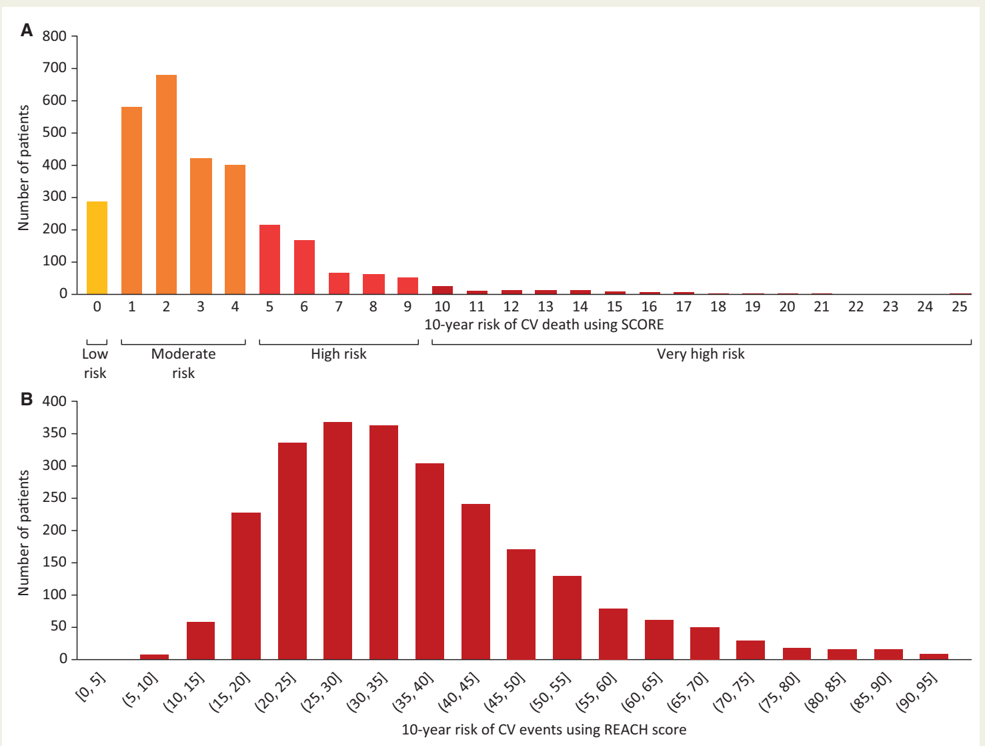
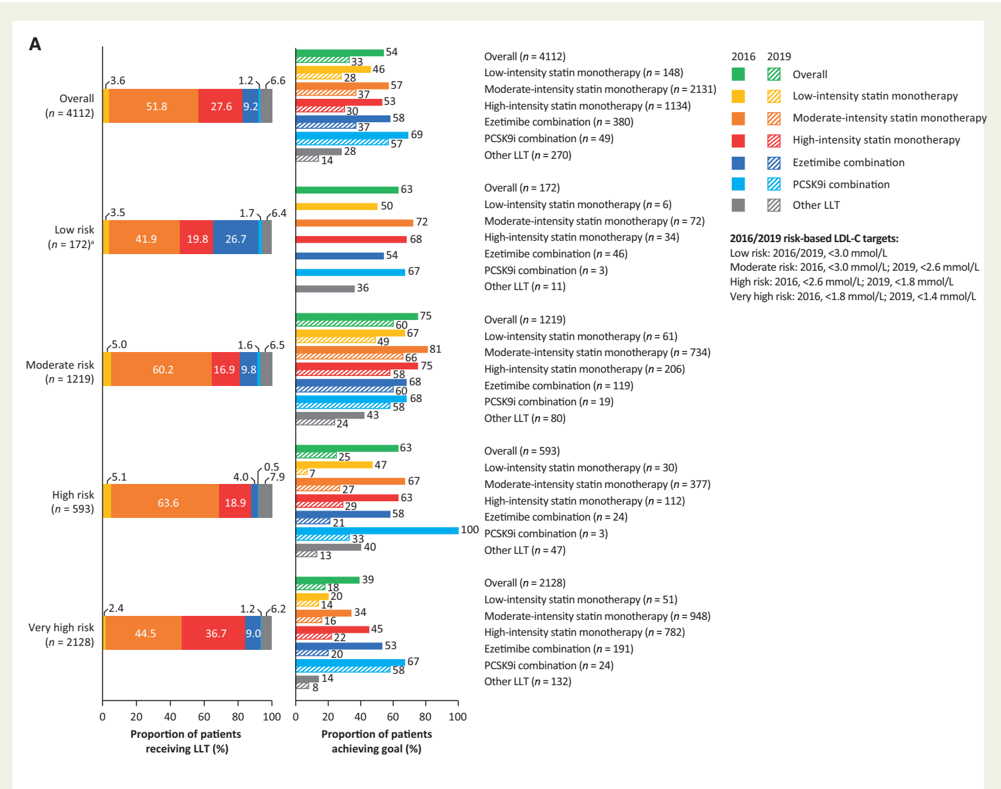
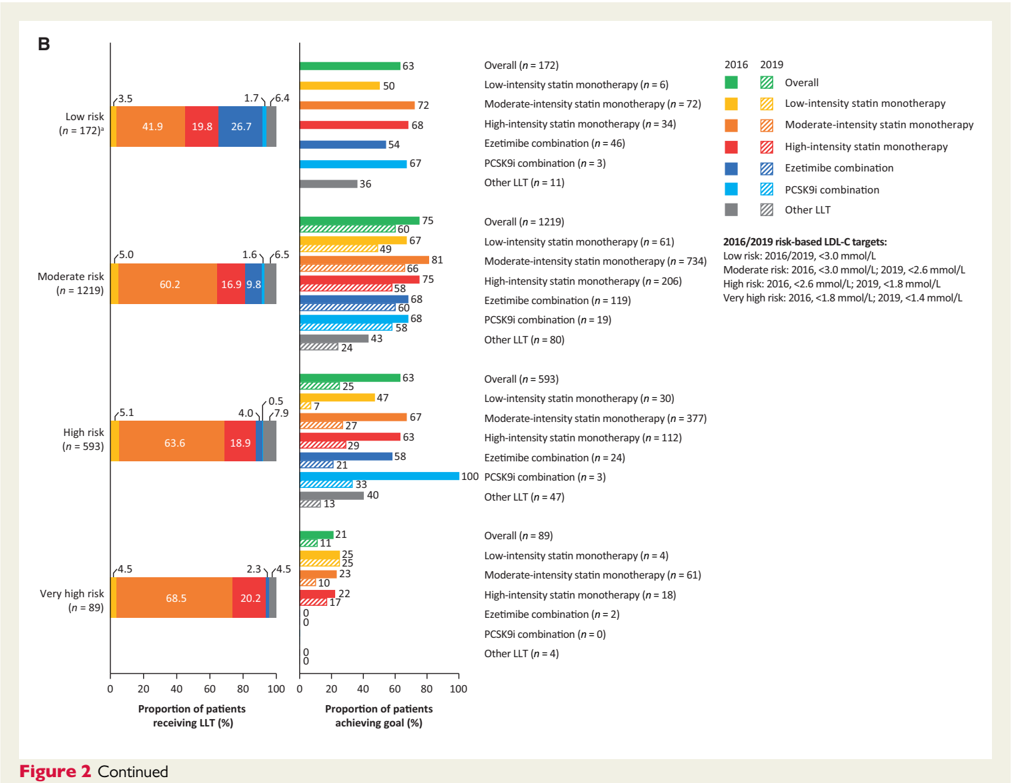
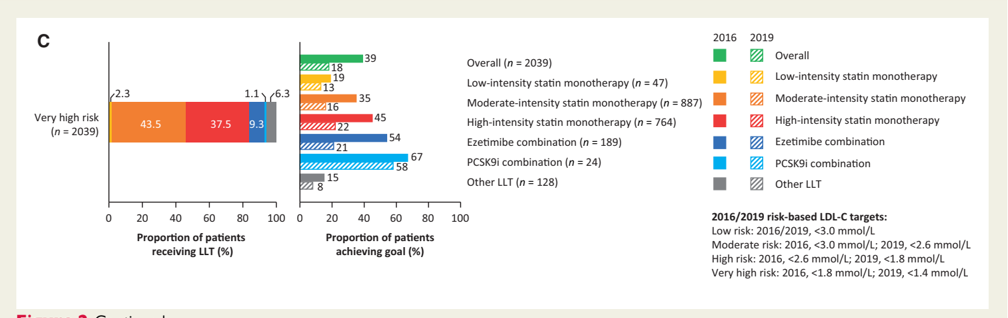
Aims: To provide contemporary data on the implementation of European guideline recommendations for lipid-lowering therapies (LLTs) across different settings and populations and how this impacts low-density lipoprotein cholesterol (LDL-C) goal achievement. Methods and results: An 18 country, cross-sectional, observational study of patients prescribed LLT for primary or secondary prevention in primary or secondary care across Europe. Between June 2017 and November 2018, data were collected at a single visit, including LLT in the preceding 12 months and most recent LDL-C. Primary outcome was the achievement of risk-based 2016 European Society of Cardiology (ESC)/European Atherosclerosis Society (EAS) LDL-C goal while receiving stabilized LLT; 2019 goal achievement was also assessed. Overall, 5888 patients (3000 primary and 2888 secondary prevention patients) were enrolled; 54% [95% confidence interval (CI) 52–56] achieved their risk-based 2016 goal and 33% (95% CI 32–35) achieved their risk-based 2019 goal. High-intensity statin monotherapy was used in 20% and 38% of very high-risk primary and secondary prevention patients, respectively. Corresponding 2016 goal attainment was 22% and 45% (17% and 22% for 2019 goals) for very high-risk primary and secondary prevention patients, respectively. Use of moderate–high-intensity statins in combination with ezetimibe (9%), or any LLT with PCSK9 inhibitors (1%), was low; corresponding 2016 and 2019 goal attainment was 53% and 20% (ezetimibe combination), and 67% and 58% (PCSK9i combination). Conclusion: Gaps between clinical guidelines and clinical practice for lipid management across Europe persist, which will be exacerbated by the 2019 guidelines. Even with optimized statins, greater utilization of non-statin LLT is likely needed to reduce these gaps for patients at highest risk.
Overview
The claims and statistics of this paper haven’t been checked yet.
Free: it reads the open-access text and checks the first 5 claims that cite a source we can check. Create a free account to check every claim.
Integrity signals
Registry
Cites
Statistics
Figures
Verification
Claims the paper makes
The claims and statistics of this paper haven’t been checked yet.
Free: it reads the open-access text and checks the first 5 claims that cite a source we can check. Create a free account to check every claim.
Claims other papers make about this one
Each is checked against this paper’s own text: does it say what the citing paper says it does?
The source backs part of the claim, not all of it — or backs it for a different population, condition or comparison.
In the citing paper
“The DA VINCI study found that out of 5888 patients with dyslipidaemia who were enrolled in 18 European countries, only 33% achieved their risk-based LDL-C goal recommended in the European Society of Cardiology (ESC) 2019 guidelines [12].”
From Established and Emerging Lipid-Lowering Drugs for Primary and Secondary Cardiovascular Prevention (2023) · cites this paper as [12]
Experimental — accuracy not yet measured
Self-check
Percentages, sums and reported differences re-computed from the paper’s own numbers.
The self-check needs the paper’s full text.
Citations
Cites
Mach, F., Baigent, C., Catapano, A. L., Koskinas, K. C., Casula, M., Badimon, L., Chapman, M. J., De Backer, G. G., Delgado, V., Ference, B. A., et al. (2020) · European Heart Journal · doi:10.1093/eurheartj/ehz455 · Cited by 8,961
Self-citation2016 ESC/EAS Guidelines for the Management of Dyslipidaemias
Catapano, A. L., Graham, I., De Backer, G., Wiklund, O., Chapman, M. J., Drexel, H., Hoes, A. W., Jennings, C. S., Landmesser, U., Pedersen, T. R., et al. (2016) · European Heart Journal · doi:10.1093/eurheartj/ehw272 · Cited by 3,162
Self-citationCollaborators, C. T. T. (. (2012) · The Lancet · doi:10.1016/s0140-6736(12)60367-5 · Cited by 2,833
Kotseva, K., De Backer, G., De Bacquer, D., Rydén, L., Hoes, A., Grobbee, D., Maggioni, A., Marques-Vidal, P., Jennings, C., Abreu, A., et al. (2019) · European Journal of Preventive Cardiology · doi:10.1177/2047487318825350 · Cited by 937
Wood, D. A., Backer, G. D., Graham, I., Poole-Wilson, P. A., Pyörälà, K., Shepherd, J., Zanchetti, A., Haman, P., Linhartová, K., Simon, J., et al. (1997) · Ghent University Academic Bibliography (Ghent University) · Cited by 537
EUROASPIRE Study Group (1997) · European Heart Journal · doi:10.1093/oxfordjournals.eurheartj.a015136 · Cited by 532
Nicholls, S. J., Brandrup-Wognsen, G., Palmer, M., & Barter, P. J. (2010) · The American Journal of Cardiology · doi:10.1016/j.amjcard.2009.08.651 · Cited by 248
Ferrières, J., Ferrari, G. M. D., Hermans, M. P., Elisaf, M., Toth, P. P., Horack, M., Brudi, P., Lautsch, D., Bash, L. D., Baxter, C. A., et al. (2018) · European Journal of Preventive Cardiology · doi:10.1177/2047487318806359 · Cited by 73
Steen, D. L., Khan, I., Ansell, D., Sanchez, R. J., & Ray, K. K. (2017) · BMJ Open · doi:10.1136/bmjopen-2016-013255 · Cited by 42
Self-citationThe past, present and future of lipidlowering therapy
Najam, O., Lambert, G. C., & Ray, K. K. (2015) · Clinical Lipidology · doi:10.2217/clp.15.40 · Cited by 7
Self-citation
Research works printed but not linked: 1
- 2. Baigent C, Blackwell L, Emberson J, Holland LE, Reith C, Bhala N, Peto R, Barnes EH, Keech A, Simes J, Collins R. Efficacy and safety of more intensive lowering of LDL cholesterol: a meta-analysis of data from 170,000 particiants in 26 rando- mised trials. Lancet 2010;376:1670.
Cited by
2024 ESC Guidelines for the management of chronic coronary syndromes
Vrints, C., Andreotti, F., Koskinas, K. C., Rossello, X., Adamo, M., Ainslie, J., Banning, A. P., Budaj, A., Buechel, R. R., Chiariello, G. A., et al. (2024) · European Heart Journal · doi:10.1093/eurheartj/ehae177 · Cited by 2,774
2025 Focused Update of the 2019 ESC/EAS Guidelines for the management of dyslipidaemias
Mach, F., Koskinas, K. C., Roeters van Lennep, J. E., Tokgözoğlu, L., Badimon, L., Baigent, C., Benn, M., Binder, C. J., Catapano, A. L., De Backer, G. G., et al. (2025) · European Heart Journal · doi:10.1093/eurheartj/ehaf190 · Cited by 688
Self-citationNicholls, S. J., Kataoka, Y., Nissen, S. E., Prati, F., Windecker, S., Puri, R., Hucko, T., Aradi, D., Herrman, J.-P. R., Hermanides, R. S., et al. (2022) · JACC: Cardiovascular Imaging · doi:10.1016/j.jcmg.2022.03.002 · Cited by 458
Ray, K. K., Haq, I., Bilitou, A., Manu, M. C., Burden, A., Aguiar, C., Arca, M., Connolly, D. L., Eriksson, M., Ferrières, J., et al. (2023) · The Lancet Regional Health - Europe · doi:10.1016/j.lanepe.2023.100624 · Cited by 339
Self-citationPolypill strategy in secondary cardiovascular prevention
Castellano, J. M., Pocock, S. J., Bhatt, D. L., Quesada, A. J., Owen, R., Fernandez-Ortiz, A., Sanchez, P. L., Marin Ortuño, F., Vazquez Rodriguez, J. M., Domingo-Fernández, A., et al. (2022) · New England Journal of Medicine · doi:10.1056/nejmoa2208275 · Cited by 334
Ray, K. K., Troquay, R. P. T., Visseren, F. L. J., Leiter, L. A., Scott Wright, R., Vikarunnessa, S., Talloczy, Z., Zang, X., Maheux, P., Lesogor, A., et al. (2023) · The Lancet Diabetes & Endocrinology · doi:10.1016/s2213-8587(22)00353-9 · Cited by 328
Self-citationRuscica, M., Ferri, N., Banach, M., Sirtori, C. R., & Corsini, A. (2023) · Cardiovascular Research · doi:10.1093/cvr/cvac020 · Cited by 243
Self-citationLee, R. G., Mazzola, A. M., Braun, M. C., Platt, C., Vafai, S. B., Kathiresan, S., Rohde, E., Bellinger, A. M., & Khera, A. V. (2023) · Circulation · doi:10.1161/circulationaha.122.062132 · Cited by 242
Inclisiran and cardiovascular events: a patient-level analysis of phase III trials
Ray, K. K., Raal, F. J., Kallend, D. G., Jaros, M. J., Koenig, W., Leiter, L. A., Landmesser, U., Schwartz, G. G., Lawrence, D., Friedman, A., et al. (2023) · European Heart Journal · doi:10.1093/eurheartj/ehac594 · Cited by 225
“Achieving these currently recommended, lower LDL-C goals/thresholds often necessitates combinations of lipid-lowering therapies for the majority of patients with atherosclerotic CV disease (ASCVD).(8) Monoclonal antibodies (mAbs) targeting circulating PCSK9 are potent therapies that lower LDL-C by 50–70%.”
BackgroundSelf-citationPhase 2b Randomized Trial of the Oral PCSK9 Inhibitor MK-0616
Ballantyne, C. M., Banka, P., Mendez, G., Garcia, R., Rosenstock, J., Rodgers, A., Mendizabal, G., Mitchel, Y., & Catapano, A. L. (2023) · Journal of the American College of Cardiology · doi:10.1016/j.jacc.2023.02.018 · Cited by 218
Self-citationCombination lipid-lowering therapy as first-line strategy in very high-risk patients
Ray, K. K., Reeskamp, L. F., Laufs, U., Banach, M., Mach, F., Tokgözoğlu, L. S., Connolly, D. L., Gerrits, A. J., Stroes, E. S. G., Masana, L., et al. (2022) · European Heart Journal · doi:10.1093/eurheartj/ehab718 · Cited by 216
Self-citationPoLA/CFPiP/PCS/PSLD/PSD/PSH guidelines on diagnosis and therapy of lipid disorders in Poland 2021
Banach, M., Burchardt, P., Chlebus, K., Dobrowolski, P., Dudek, D., Dyrbuś, K., Gąsior, M., Jankowski, P., Jozwiak, J. J., Kłosiewicz−Latoszek, L., et al. (2021) · Archives of Medical Science · doi:10.5114/aoms/141941 · Cited by 189
Self-citationNicholls, S. J., Ditmarsch, M., Kastelein, J. J., Rigby, S. P., Kling, D., Curcio, D. L., Alp, N. J., & Davidson, M. H. (2022) · Nature Medicine · doi:10.1038/s41591-022-01936-7 · Cited by 174
The dawn of a new era of targeted lipid-lowering therapies
Tokgözoğlu, L., & Libby, P. (2022) · European Heart Journal · doi:10.1093/eurheartj/ehab841 · Cited by 171
World Heart Federation Cholesterol Roadmap 2022
Ray, K. K., Ference, B. A., Séverin, T., Blom, D., Nicholls, S. J., Shiba, M. H., Almahmeed, W., Alonso, R., Daccord, M., Ezhov, M., et al. (2022) · Global Heart · doi:10.5334/gh.1154 · Cited by 146
Self-citationEvolocumab in Patients without a Previous Myocardial Infarction or Stroke
Bohula, E. A., Marston, N., Bhatia, A. K., Ferrari, G. M. D., Leiter, L. A., Nicolau, J. C., Park, J., Kuder, J., Murphy, S. A., Walsh, E., et al. (2025) · New England Journal of Medicine · doi:10.1056/nejmoa2514428 · Cited by 170
Self-citationRole of Bempedoic Acid in Clinical Practice
Ballantyne, C. M., Bays, H., Catapano, A. L., Goldberg, A., Ray, K. K., & Saseen, J. J. (2021) · Cardiovascular Drugs and Therapy · doi:10.1007/s10557-021-07147-5 · Cited by 150
“In addition to its effects on LDL-C, bempedoic acid also appears to reduce hsCRP, a marker of systemic inflammation associated with ASCVD.”
BackgroundInfluentialSelf-citationWorld Heart Federation Roadmap for Secondary Prevention of Cardiovascular Disease: 2023 Update
Laranjo, L., Lanas, F. T., Sun, M. C., Chen, D. A., Hynes, L., Imran, T. F., Kazi, D. S., Kengne, A. P., Komiyama, M., Kuwabara, M., et al. (2024) · Global Heart · doi:10.5334/gh.1278 · Cited by 169
“…non-adherence to cardiovascular medications remains a concern, despite growing research and efforts to mitigate this problem [55, 111, 112, 114–119], with self-reported non-adherence rates over the past 10 years remaining at approximately 25% for ACE inhibitors, 20% for statins and…”
Background2025 Focused Update of the 2019 ESC/EAS Guidelines for the management of dyslipidaemias
Mach, F., Koskinas, K. C., Roeters van Lennep, J. E., Tokgözoğlu, L., Badimon, L., Baigent, C., Benn, M., Binder, C. J., Catapano, A. L., De Backer, G. G., et al. (2025) · Atherosclerosis · doi:10.1016/j.atherosclerosis.2025.120479 · Cited by 159
Self-citationTargeted proteomics improves cardiovascular risk prediction in secondary prevention
Nurmohamed, N. S., Belo Pereira, J. P., Hoogeveen, R. M., Kroon, J., Kraaijenhof, J. M., Waissi, F., Timmerman, N., Bom, M. J., Hoefer, I. E., Knaapen, P., et al. (2022) · European Heart Journal · doi:10.1093/eurheartj/ehac055 · Cited by 144
“However, given their high recurrence risk, the most urgent need to identify highest-risk patients pertains to secondary prevention patients.(11,21) In the present study, we evaluated the predictive value of targeted proteomics in a secondary prevention setting using advanced machine learning techniques.”
Self-citationAverna, M., Banach, M., Bruckert, E., Drexel, H., Farnier, M., Gaita, D., Magni, P., März, W., Masana, L., Mello e Silva, A., et al. (2021) · Atherosclerosis · doi:10.1016/j.atherosclerosis.2021.03.039 · Cited by 137
Self-citationKrychtiuk, K. A., Ahrens, I., Drexel, H., Halvorsen, S., Hassager, C., Huber, K., Kurpas, D., Niessner, A., Schiele, F., Semb, A. G., et al. (2022) · European Heart Journal Acute Cardiovascular Care · doi:10.1093/ehjacc/zuac123 · Cited by 137
Self-citationPackard, C., Chapman, M. J., Sibartie, M., Laufs, U., & Masana, L. (2021) · Heart · doi:10.1136/heartjnl-2020-318760 · Cited by 108
“1 39 Results from studies such as EUROASPIRE V 40 and DA VINCI 41 indicate that achievement of the previous (2016) goals 42 was already challenging.”
Self-citationSafety and Efficacy of Obicetrapib in Patients at High Cardiovascular Risk
Nicholls, S. J., Nelson, A. J., Ditmarsch, M., Kastelein, J. J. P., Ballantyne, C. M., Ray, K. K., Navar, A. M., Nissen, S. E., Harada-Shiba, M., Curcio, D. L., et al. (2025) · New England Journal of Medicine · doi:10.1056/nejmoa2415820 · Cited by 103
Self-citationNovel and future lipid-modulating therapies for the prevention of cardiovascular disease
Brandts, J., & Ray, K. K. (2023) · Nature Reviews Cardiology · doi:10.1038/s41569-023-00860-8 · Cited by 120
Self-citationEffect of inclisiran on lipids in primary prevention: the ORION-11 trial
Ray, K. K., Kallend, D., Leiter, L. A., Raal, F. J., Koenig, W., Jaros, M. J., Schwartz, G. G., Landmesser, U., Garcia Conde, L., Wright, R. S., et al. (2022) · European Heart Journal · doi:10.1093/eurheartj/ehac615 · Cited by 116
“The use of ezetimibe in primary prevention patients in the present study was similar to that of the primary prevention cohort in the DA VINCI registry, while the use of high-intensity statins was twofold higher.(18) In conclusion, inclisiran administered twice-yearly (after the initial and 3-month doses) by subcutaneo…”
ResultSelf-citationEstablished and Emerging Lipid-Lowering Drugs for Primary and Secondary Cardiovascular Prevention
Michaeli, D. T., Michaeli, J. C., Albers, S., Boch, T., & Michaeli, T. (2023) · American Journal of Cardiovascular Drugs · doi:10.1007/s40256-023-00594-5 · Cited by 109
Bempedoic Acid: for Whom and When
Ruscica, M., Sirtori, C. R., Carugo, S., Banach, M., & Corsini, A. (2022) · Current Atherosclerosis Reports · doi:10.1007/s11883-022-01054-2 · Cited by 110
Self-citationRubino, J., MacDougall, D. E., Sterling, L. R., Hanselman, J. C., & Nicholls, S. J. (2021) · Atherosclerosis · doi:10.1016/j.atherosclerosis.2020.12.023 · Cited by 90
Banach, M., Penson, P. E., Vrablik, M., Bunc, M., Dyrbus, K., Fedacko, J., Gaita, D., Gierlotka, M., Jarai, Z., Magda, S. L., et al. (2021) · Pharmacological Research · doi:10.1016/j.phrs.2021.105499 · Cited by 102
“[28] Ray, KK, Molemans, B, Schoonen, WM, et al.”
Self-citationNurmohamed, N. S., Ditmarsch, M., & Kastelein, J. J. P. (2021) · Cardiovascular Research · doi:10.1093/cvr/cvab350 · Cited by 107
Ray, K. K., Aguiar, C., Arca, M., Connolly, D. L., Eriksson, M., Ferrières, J., Laufs, U., Mostaza, J. M., Nanchen, D., Bardet, A., et al. (2024) · European Journal of Preventive Cardiology · doi:10.1093/eurjpc/zwae199 · Cited by 79
Self-citationBanach, M., Surma, S., & Toth, P. P. (2023) · Archives of Medical Science · doi:10.5114/aoms/174743 · Cited by 95
“In turn, the LDL-C target in the group of patients with extreme cardiovascular risk (i.e, < 40 mg/dl; < 1 mmol/l) is achieved by less than 10% of patients [24, 25].”
BackgroundInfluentialSelf-citationDiretriz Brasileira de Dislipidemias e Prevenção da Aterosclerose – 2025
Rached, F. H., Miname, M. H., Rocha, V. Z., Zimerman, A., Cesena, F. Y., Sposito, A. C., Santos, R. D., Behr, P. E. B., Bianco, H. T., Alves, R. J., et al. (2025) · Arquivos Brasileiros de Cardiologia · doi:10.36660/abc.20250640 · Cited by 98
Banach, M., Reiner, Ž., Surma, S., Bajraktari, G., Bielecka-Dabrowa, A., Bunc, M., Bytyçi, I., Ceska, R., Cicero, A. F. G., Dudek, D., et al. (2024) · Drugs · doi:10.1007/s40265-024-02105-5 · Cited by 56
“…meet targets does not allow for the fact that the proportional lipid reduction could be achievable with current treatments in real life [22], and in many cases with very high baseline LDL-C, monotherapy is extremely unlikely to enable patients to reach their treatment targets [17, 33, 34, 77, 78].”
InfluentialSelf-citationBallantyne, C. M., Ditmarsch, M., Kastelein, J. J., Nelson, A. J., Kling, D., Hsieh, A., Curcio, D. L., Maki, K. C., Davidson, M. H., & Nicholls, S. J. (2023) · Journal of Clinical Lipidology · doi:10.1016/j.jacl.2023.05.098 · Cited by 84
Dyslipidaemia management in pregnant patients: a 2024 update
Lewek, J., Bielecka-Dabrowa, A. M., Toth, P. P., & Banach, M. (2024) · European Heart Journal Open · doi:10.1093/ehjopen/oeae032 · Cited by 91
Self-citationSafety and Tolerability of Inclisiran for Treatment of Hypercholesterolemia in 7 Clinical Trials
Wright, R. S., Koenig, W., Landmesser, U., Leiter, L. A., Raal, F. J., Schwartz, G. G., Lesogor, A., Maheux, P., Stratz, C., Zang, X., et al. (2023) · Journal of the American College of Cardiology · doi:10.1016/j.jacc.2023.10.007 · Cited by 79
Self-citationMehta, S. R., Paré, G., Lonn, E., Jolly, S. S., Natarajan, M. K., Pinilla‐Echeverri, N., Schwalm, J.-D., Sheth, T., Sibbald, M., Tsang, M., et al. (2022) · EuroIntervention · doi:10.4244/eij-d-22-00735 · Cited by 85
Banach, M., Penson, P. E., Farnier, M., Fras, Z., Latkovskis, G., Laufs, U., Paneni, F., Parini, P., Pirro, M., Reiner, Ž., et al. (2023) · Progress in Cardiovascular Diseases · doi:10.1016/j.pcad.2023.03.001 · Cited by 76
Self-citationVrablik, M., Seifert, B., Parkhomenko, A., Banach, M., Jóźwiak, J. J., Kiss, R. G., Gaita, D., Rašlová, K., Zachlederova, M., Bray, S., et al. (2021) · Atherosclerosis · doi:10.1016/j.atherosclerosis.2021.08.035 · Cited by 83
Self-citationAn “Inclisiran First” Strategy vs Usual Care in Patients With Atherosclerotic Cardiovascular Disease
Koren, M. J., Rodriguez, F., East, C., Toth, P. P., Watwe, V., Abbas, C. A., Sarwat, S., Kleeman, K., Kumar, B., Ali, Y., et al. (2024) · Journal of the American College of Cardiology · doi:10.1016/j.jacc.2024.03.382 · Cited by 81
Lipid-lowering in diabetes: An update
Chait, A., Eckel, R. H., Vrablík, M., & Zambon, A. (2023) · Atherosclerosis · doi:10.1016/j.atherosclerosis.2023.117313 · Cited by 81
Wilkinson, M. J., Lepor, N. E., & Michos, E. D. (2023) · Journal of the American Heart Association · doi:10.1161/jaha.122.028892 · Cited by 79
Schubert, J., Leosdottir, M., Lindahl, B., Westerbergh, J., Melhus, H., Modica, A., Cater, N., Brinck, J., Ray, K. K., & Hagström, E. (2024) · European Heart Journal · doi:10.1093/eurheartj/ehae576 · Cited by 57
“…guidelines remains poor, with the DA VINCI registry (conducted between 2017 and 2018) and the SANTORINI registries (conducted between 2020 and 2021) 20,21 suggesting that only about one in five patients achieve their LDL-C goals of 1.4 mmol/L (equivalent to a non–HDL-C of 2.2 mmol/L) on statin…”
InfluentialSelf-citationObicetrapib: Reversing the Tide of CETP Inhibitor Disappointments
Kastelein, J. J. P., Hsieh, A., Dicklin, M. R., Ditmarsch, M., & Davidson, M. H. (2024) · Current Atherosclerosis Reports · doi:10.1007/s11883-023-01184-1 · Cited by 68
“…top of high-intensity statin (Randomized Study of Obicetrapib as an Adjunct to Statin Therapy (ROSE)) [ This supports the potential for obicetrapib to fill the treat-ment gap for patients with elevated LDL-C who are unable to achieve treatment objectives with currently available therapies [65–67].”
BackgroundLipid Lowering Drugs: Present Status and Future Developments
Ruscica, M., Ferri, N., Santos, R. D., Sirtori, C. R., & Corsini, A. (2021) · Current Atherosclerosis Reports · doi:10.1007/s11883-021-00918-3 · Cited by 73
Chapman, M. J., Zamorano, J. L., & Parhofer, K. G. (2022) · Pharmacology & Therapeutics · doi:10.1016/j.pharmthera.2022.108172 · Cited by 67
Comparison of Current International Guidelines for the Management of Dyslipidemia
Aygun, S., & Tokgozoglu, L. (2022) · Journal of Clinical Medicine · doi:10.3390/jcm11237249 · Cited by 64
“The more recent Da Vinci trial confirmed these findings and also pointed out the underutilization of combination therapy and high-intensity statins [21].”
BackgroundBeyond statins: New pharmacological targets to decrease LDL-cholesterol and cardiovascular events
Raschi, E., Casula, M., Cicero, A. F. G., Corsini, A., Borghi, C., & Catapano, A. (2023) · Pharmacology & Therapeutics · doi:10.1016/j.pharmthera.2023.108507 · Cited by 59
Self-citationRubino, J., MacDougall, D. E., Sterling, L. R., Kelly, S. E., McKenney, J. M., & Lalwani, N. D. (2021) · Journal of Clinical Lipidology · doi:10.1016/j.jacl.2021.05.002 · Cited by 69
Cupido, A. J., Reeskamp, L. F., Hingorani, A. D., Finan, C., Asselbergs, F. W., Hovingh, G. K., & Schmidt, A. F. (2022) · JAMA Cardiology · doi:10.1001/jamacardio.2022.2333 · Cited by 68
Self-citationBallantyne, C. M., Gellis, L., Tardif, J.-C., Banka, P., Navar, A. M., Asprusten, E. A., Scott, R., Stroes, E. S. G., Froman, S., Mendizabal, G., et al. (2026) · JAMA · doi:10.1001/jama.2025.20620 · Cited by 68
Self-citationLewek, J., Niedziela, J. T., Desperak, P., Dyrbuś, K., Osadnik, T., Jankowski, P., Witkowski, A., Bielecka-Dabrowa, A. M., Dudek, D., Gierlotka, M. J., et al. (2023) · Journal of the American Heart Association · doi:10.1161/jaha.123.030414 · Cited by 69
Self-citationGargiulo, P., Basile, C., Cesaro, A., Marzano, F., Buonocore, D., Asile, G., Abbate, V., Vicidomini, F., Paolillo, S., Spaccarotella, C., et al. (2023) · Atherosclerosis · doi:10.1016/j.atherosclerosis.2023.01.001 · Cited by 62
PCSK9 inhibitors and reduction in cardiovascular events: Current evidence and future perspectives
Nicholls, S. J. (2023) · Kardiologia Polska · doi:10.33963/kp.a2023.0030 · Cited by 61
Lipid lowering combination therapy: From prevention to atherosclerosis plaque treatment
Masana, L., Plana, N., Andreychuk, N., & Ibarretxe, D. (2023) · Pharmacological Research · doi:10.1016/j.phrs.2023.106738 · Cited by 59
Self-citationBallantyne, C. M., Banach, M., Bays, H. E., Catapano, A. L., Laufs, U., Stroes, E. S. G., Robinson, P. L., Lei, L., & Ray, K. K. (2022) · The American Journal of Cardiology · doi:10.1016/j.amjcard.2022.03.020 · Cited by 58
Self-citationMach, F., Visseren, F. L. J., Cater, N. B., Salhi, N., Soronen, J., Ray, K. K., Delgado, V., Jukema, J. W., Laufs, U., Zamorano, J.-L., et al. (2024) · Journal of Clinical Lipidology · doi:10.1016/j.jacl.2024.07.001 · Cited by 57
Self-citationGonzález‐Juanatey, J. R., Cordero, A., Castellano, J. M., Masana, L., Dalmau, R., Ruiz, E., Sicras-Mainar, A., & Fuster, V. (2022) · International Journal of Cardiology · doi:10.1016/j.ijcard.2022.05.015 · Cited by 59
Self-citationToth, P. P., Bray, S., Villa, G., Palagashvili, T., Sattar, N., Stroes, E. S. G., & Worth, G. M. (2022) · Journal of the American Heart Association · doi:10.1161/jaha.122.025551 · Cited by 56
Self-citationA network meta-analysis on the comparative effect of nutraceuticals on lipid profile in adults
Osadnik, T., Goławski, M., Lewandowski, P., Morze, J., Osadnik, K., Pawlas, N., Lejawa, M., Jakubiak, G. K., Mazur, A., Schwingshackl, L., et al. (2022) · Pharmacological Research · doi:10.1016/j.phrs.2022.106402 · Cited by 57
Self-citation2022: The Year in Cardiovascular Disease – The Year of Upfront Lipid Lowering Combination Therapy.
Banach, M., Reiner, Ž., Cicero, A. F. G., Sabouret, P. F., Viigimaa, M., Sahebkar, A., Postadzhiyan, A., Gaiță, D. I., Pella, D., & Penson, P. E. (2022) · Archives of Medical Science · doi:10.5114/aoms/156147 · Cited by 57
Self-citationNicholls, S. J., Nelson, A. J., Lincoff, A. M., Brennan, D. M., Ray, K. K., Cho, L., Menon, V., Li, N., Bloedon, L. T., & Nissen, S. E. (2024) · JAMA Cardiology · doi:10.1001/jamacardio.2023.5155 · Cited by 57
Self-citationBrandts, J., Bray, S. L., Villa, G., Catapano, A. L., Poulter, N. R., Vallejo‐Vaz, A. J., & Ray, K. K. (2023) · The Lancet Regional Health - Europe · doi:10.1016/j.lanepe.2023.100665 · Cited by 54
Self-citationMakhmudova, U., Samadifar, B., Maloku, A., Haxhikadrija, P., Geiling, J.-A., Römer, R., Lauer, B., Möbius-Winkler, S., Otto, S., Schulze, P. C., et al. (2023) · Clinical Research in Cardiology · doi:10.1007/s00392-022-02147-3 · Cited by 52
“This pinpoints a need for improved preventive strategies [6, 7].”
BackgroundArnold, N., & Köenig, W. (2022) · Current Cardiology Reports · doi:10.1007/s11886-022-01782-6 · Cited by 52
Mitani, H., Suzuki, K., Ako, J., Iekushi, K., Majewska, R., Touzeni, S., & Yamashita, S. (2023) · Journal of Atherosclerosis and Thrombosis · doi:10.5551/jat.63940 · Cited by 52
Inclisiran in lipid management: A Literature overview and future perspectives
Scicchitano, P., Milo, M., Mallamaci, R., De Palo, M., Caldarola, P., Massari, F., Gabrielli, D., Colivicchi, F., & Ciccone, M. M. (2021) · Biomedicine & Pharmacotherapy · doi:10.1016/j.biopha.2021.112227 · Cited by 44
Bosco, G., Di Giacomo Barbagallo, F., Spampinato, S., Lanzafame, L., Di Pino, A., Piro, S., Purrello, F., & Scicali, R. (2023) · Journal of Clinical Medicine · doi:10.3390/jcm12062444 · Cited by 50
“Overall, combination therapy was associated with a higher rate of LDL-C target achievement than statin monotherapy; in particular, 37% and 57% of patients receiving the combination therapy of statin plus ezetimibe or PCSK9 inhibitor achieved LDL-C goal, respectively [36].”
BackgroundRay, K. K., Haq, I., Bilitou, A., Aguíar, C., Arca, M., Connolly, D. L., Eriksson, M., Ferrières, J., Hildebrandt, P. R., Laufs, U., et al. (2021) · Atherosclerosis Plus · doi:10.1016/j.athplu.2021.08.003 · Cited by 50
“However, the new lower LDL-C goals recommended by the 2019 ESC/EAS guidelines may not always be achievable with statin monotherapy, whereas the use of add-on therapy is associated with larger reductions in LDL-C [11,12] and a higher proportion of patients achieving their LDL-C goals [5].”
BackgroundMethodInfluentialSelf-citationNicholls, S. J., Nelson, A. J., Ditmarsch, M., Kastelein, J. J. P., Ballantyne, C. M., Ray, K. K., Návar, A. M., Nissen, S. E., Goldberg, A. C., Brunham, L. R., et al. (2024) · American Heart Journal · doi:10.1016/j.ahj.2024.05.002 · Cited by 48
Self-citationMeshkov, A. N., Ershova, A. I., Kiseleva, A. V., Shalnova, S. A., Drapkina, O. M., Boytsov, S. A., & on behalf of the FH-ESSE-RF Investigators (2021) · Journal of Personalized Medicine · doi:10.3390/jpm11060464 · Cited by 47
“2% of very-high-risk patients received PCSK9 inhibitors [27].”
BackgroundRay, K. K., Dhalwani, N. N., Sibartie, M., Bridges, I. M., Ebenbichler, C. F., Filardi, P. P., Villa, G., Vogt, A., & Bruckert, É. (2022) · European Heart Journal - Quality of Care and Clinical Outcomes · doi:10.1093/ehjqcco/qcac009 · Cited by 47
Self-citationMachline-Carrion, M. J., Girotto, A. N., Nieri, J., Pereira, P. M., Monfardini, F., Forestiero, F., Raupp, P., Roveda, F., Santo, K., Berwanger, O. B., et al. (2023) · The Lancet Regional Health - Americas · doi:10.1016/j.lana.2023.100534 · Cited by 46
Nishikido, T. (2023) · Cardiovascular Diabetology · doi:10.1186/s12933-023-01752-4 · Cited by 47
“The DAVINCI study and EUROASPIRE V survey across European countries revealed that only half of the patients with established ASCVD received high-intensity statin therapy, and less than half achieved the target LDL-C level of < 70 mg/ dL in secondary prevention [11, 12].”
BackgroundStatins and LDL-C in Secondary Prevention—So Much Progress, So Far to Go
Banach, M., & Penson, P. E. (2020) · JAMA Network Open · doi:10.1001/jamanetworkopen.2020.25675 · Cited by 45
Self-citationRay, K. K., Bruckert, E., Peronne-Filardi, P., Ebenbichler, C., Vogt, A., Bridges, I., Sibartie, M., & Dhalwani, N. (2023) · Atherosclerosis · doi:10.1016/j.atherosclerosis.2023.01.002 · Cited by 44
Self-citationLDL-C: The Only Causal Risk Factor for ASCVD. Why Is It Still Overlooked and Underestimated?
Ferhatbegović, L., Mršić, D., Kušljugić, S., & Pojskić, B. (2022) · Current Atherosclerosis Reports · doi:10.1007/s11883-022-01037-3 · Cited by 44
Colivicchi, F., Fabbri, G., Oliva, F. G., Abrignani, M. G., Arca, M., Averna, M. R., Catapano, A. L., Ceseri, M., Fusco, S. A. D., Lenarda, A. D., et al. (2025) · International Journal of Cardiology · doi:10.1016/j.ijcard.2025.133290 · Cited by 44
Self-citationDe Filippo, O., D’Ascenzo, F., Iannaccone, M., Bertaina, M., Leone, A., Borzillo, I., Ravetti, E., Solano, A., Pagliassotto, I., Nebiolo, M., et al. (2023) · Cardiovascular Diabetology · doi:10.1186/s12933-023-02022-z · Cited by 43
Mostaza, J. M., García‐Ortiz, L., Tembra, M. A. S., Calle, P. T., García, J. C., Pérez, V. E., Díaz-Díaz, J. L., Manzano-Espinosa, L., Catapano, A. L., Ray, K. K., et al. (2024) · Revista Clínica Española (English Edition) · doi:10.1016/j.rceng.2024.11.004 · Cited by 42
Self-citationDyslipidemia Management in Pregnancy: Why Is It not Covered in the Guidelines?
Lewek, J., & Banach, M. (2022) · Current Atherosclerosis Reports · doi:10.1007/s11883-022-01030-w · Cited by 43
“No significant difference between pravastatin (548 patients) and placebo group (543 patients) was observed (14.6% vs. 13.6%). At the same time, the authors did not report any significant differences between groups in the development of gestational hypertension, intrauterine growth retardation, neonatal morbidity, mort…”
MethodInfluentialSelf-citationEuropean guidelines for the treatment of dyslipidaemias: New concepts and future challenges
Pirillo, A., Casula, M., & Catapano, A. L. (2023) · Pharmacological Research · doi:10.1016/j.phrs.2023.106936 · Cited by 42
Self-citationCosín-Sales, J., Ruíz, R. C., Díaz-Díaz, J. L., Escobar, C., Olmo, M. R. F., Gómez‐Doblas, J. J., Mostaza, J. M., Pedro‐Botet, J., Plana, N., & Valdivielso, P. (2023) · Atherosclerosis · doi:10.1016/j.atherosclerosis.2023.04.013 · Cited by 42
Fixed Combination for the Treatment of Dyslipidaemia
Ferri, N., Ruscica, M., Santos, R. D., & Corsini, A. (2023) · Current Atherosclerosis Reports · doi:10.1007/s11883-023-01142-x · Cited by 40
Intensive LDL Cholesterol Targeting in Atherosclerotic Cardiovascular Disease
Lee, Y., Lee, S. J., Kim, J. W., Lee, S., Kim, G.-S., Park, J. H., Cho, J., Kang, W. C., Yoon, H., Kim, W., et al. (2026) · New England Journal of Medicine · doi:10.1056/nejmoa2600283 · Cited by 40
Obicetrapib—the Rebirth of CETP Inhibitors?
Chang, B. J., Laffin, L. J., Sarraju, A., & Nissen, S. E. (2024) · Current Atherosclerosis Reports · doi:10.1007/s11883-024-01231-5 · Cited by 40
Harada‐Shiba, M., Davdison, M. H., Ditmarsch, M., Hsieh, A., Wuerdeman, E., Kling, D. F., Nield, A., Dicklin, M. R., Nakata, A., Sueyoshi, A., et al. (2024) · Journal of Atherosclerosis and Thrombosis · doi:10.5551/jat.64828 · Cited by 39
“Following randomization, participants were evaluated at the clinic at weeks 2, 4, and 8 (end of treatment) for efficacy, safety, and PK assessments, and at week 12 for final safety and PK assessments.”
MethodLipid profile and lipoprotein(a) testing
Parhofer, K. G., & Laufs, U. (2023) · Deutsches Ärzteblatt international · doi:10.3238/arztebl.m2023.0150 · Cited by 38
Inclisiran, Reasons for a Novel Agent in a Crowded Therapeutic Field
Barbagallo, F. D. G., Andreychuk, N., Scicali, R., González-Lleó, A. M., Piro, S., Masana, L., & Ibarretxe, D. (2025) · Current Atherosclerosis Reports · doi:10.1007/s11883-024-01271-x · Cited by 38
Self-citationLaufs, U., Catapano, A. L., Caterina, R. D., Schiele, F., Sionís, A., Zaman, A., & Jukema, J. W. (2023) · Vascular Pharmacology · doi:10.1016/j.vph.2023.107141 · Cited by 38
Self-citationFactors Associated with Medication Non-Adherence in Patients with Dyslipidemia
Alefishat, E. A., Jarab, A. S., Al-Qerem, W. A., & Abu-Zaytoun, L. (2021) · Healthcare · doi:10.3390/healthcare9070813 · Cited by 38
“The DA VINCI study, which was conducted on 5888 patients on lipid-lowering therapy from 18 countries across Europe, revealed that less than half of patients with high or very high-risk cardiovascular risk achieved their LDL cholesterol goals [14].”
Bilitou, A., Were, J., Farrer, A., Rabe, A. P. J., Ming, S. W. Y., Haq, I., & Dunton, K. (2022) · ClinicoEconomics and Outcomes Research · doi:10.2147/ceor.s347085 · Cited by 37
“91 mmHg, respectively), diabetes, or kidney disease,(2) which is consistent with previous studies in England and Europe.(20,26,27) Nearly 80% of patients with dyslipidemias in our study were aged 40–69 years.”
ResultInfluentialWashed microbiota transplantation improves patients with metabolic syndrome in South China
Wu, L., Lu, X., Lin, D.-J., Chen, W.-J., Xue, X.-Y., Liu, T., Xu, J., Xie, Y.-T., Li, M.-Q., Lin, W.-Y., et al. (2022) · Frontiers in Cellular and Infection Microbiology · doi:10.3389/fcimb.2022.1044957 · Cited by 37
“Lipid-lowering drugs: statins (Briguori et al., 2009; Di Sciascio et al., 2009; Ray et al., 2021), ezetimibe, etc.”
Koenig, W., Conde, L. G., Landmesser, U., Leiter, L. A., Ray, K. K., Schwartz, G. G., Wright, R. S., Han, J., & Raal, F. J. (2024) · Cardiovascular Drugs and Therapy · doi:10.1007/s10557-022-07413-0 · Cited by 35
“Analysis from the DA VINCI registry showed that only 22% of patients with very high CV risk treated with high-intensity statins achieved recommended LDL-C levels [19].”
BackgroundInfluentialSelf-citationLong-Term Efficacy and Tolerability of PCSK9 Targeted Therapy: A Review of the Literature
Schonck, W. A. M., Stroes, E. S. G., Hovingh, G. K., & Reeskamp, L. F. (2024) · Drugs · doi:10.1007/s40265-024-01995-9 · Cited by 38
“In less controlled real-world settings, these objectives are often unattained as a result of clinical inertia exhibited by healthcare providers and poor patient adherence [90, 91].”
BackgroundSelf-citationFang, Q., Lu, X., Zhu, Y., Lv, X., Yu, F., Ma, X., Liu, B., & Zhang, H. (2024) · Cell Reports Medicine · doi:10.1016/j.xcrm.2024.101614 · Cited by 37
“10 Additionally, poor adherence among some patients seems to be one of the greatest challenges in lipid-lowering therapy.”
Banach, M., Burchardt, P., Chlebus, K., Dobrowolski, P., Dudek, D., Dyrbuś, K., Gąsior, M., Jankowski, P., Jozwiak, J. J., Kłosiewicz−Latoszek, L., et al. (2021) · Diagnostyka Laboratoryjna · doi:10.5604/01.3001.0015.4805 · Cited by 36
Self-citationAdvances in nucleic acid-targeted therapies for cardiovascular disease prevention
Makhmudova, U., Steinhagen‐Thiessen, E., Volpe, M., & Landmesser, U. (2024) · Cardiovascular Research · doi:10.1093/cvr/cvae136 · Cited by 35
Metadata
- Authors
- Ray, K. K., Molemans, B., Schoonen, W. M., Giovas, P., Bray, S., Kiru, G., Murphy, J., Banach, M., De Servi, S., Gaita, D., Gouni-Berthold, I., Hovingh, G. K., Jozwiak, J. J., Jukema, J. W., Kiss, R. G., Kownator, S., Iversen, H. K., Maher, V., Masana, L., Parkhomenko, A., Peeters, A., Clifford, P., Raslova, K., Siostrzonek, P., Romeo, S., Tousoulis, D., Vlachopoulos, C., Vrablik, M., Catapano, A. L., Poulter, N. R., & study, T. D. V.
- Affiliations
- Imperial College London (GB)
- Amgen (United States) (US)
- Amgen (United Kingdom) (GB)
- Amgen Hellas, 4 Gravias Street, Maroussi, 15125, Athens, Greece
- Medical University of Lodz (PL)
- IRCCS MultiMedica, Via Milanese, 300, 20099 Sesto San Giovanni, Milan, Italy
- Institutul de Boli Cardiovasculare, Fundatia Cardioprevent, Universitatea de Medicina si Farmacie Victor Babes din Timisoara, Timişoara 300041, Romania
- Polyclinic for Endocrinology, Diabetes and Preventive Medicine, Kerpener Str. 62, 50937 Cologne, Germany
- University of Amsterdam (NL)
- University of Opole (PL)
- Leiden University Medical Center (NL)
- Hungarian Army Medical Center, Budapest, 1134, Hungary
- Centre Cardiologique et Vasculaire, 36 Route de la Briquerie, 57100, Thionville, France
- University of Copenhagen (DK)
- Trinity College Dublin (IE)
- Institut de Recerca Biomèdica Catalunya Sud (ES)
- Emergency Cardiology Department, Institute of Cardiology, Kiev, Ukraine
- Cliniques Universitaires Saint Luc, Avenue Hippocrate 10, 1200, Brussels, Belgium
- Hammersmith Hospital (GB)
- Slovak Medical University, 831 01 Bratislava, Slovakia
- Ordensklinikum Linz Barmherzige Schwestern (AT)
- Sahlgrenska University Hospital (SE)
- National and Kapodistrian University of Athens (GR)
- Charles University, Prague, 116 36 Czech Republic
- MultiMedica (IT)
- Corresponding author
- Ray, Kausik K
- ORCID
- Venue
- European Journal of Preventive Cardiology
- Publisher
- Oxford University Press (OUP)
- Published
- 2020-08-28
- Volume
- 28
- Issue
- 11
- Pages
- 1279-1289
- ISSN
- 2047-4873 (ISSN-L)
- 2047-4881
- OpenAlex
- W3120916025
- Semantic Scholar
- c6684386e0c0c350ddbd229e351fb1eb1cd4e299
- Cited by
- 839
- References
- 10
- Citations by year
- 2026: 137 · 2025: 162 · 2024: 143 · 2023: 165 · 2022: 139 · 2021: 79 · 2020: 12
- FWCI
- 90.18
- Type
- journal article
- Language
- en
- Open access
- hybrid
- doi.org
- Licence
- Locations
- European Journal of Preventive Cardiology (publishedVersion, cc-by-nc)
- PubMed (publishedVersion)
- Research at the University of Copenhagen (University of Copenhagen) (publishedVersion, cc-by-nc)
- Leiden Repository (Leiden University) (submittedVersion, cc-by-nc)
- Rovira & Virgili repository (submittedVersion, cc-by)
- Data Archiving and Networked Services (DANS) (submittedVersion, other-oa)
- Data Archiving and Networked Services (DANS) (submittedVersion, cc-by-nc)
- DIAL (Catholic University of Leuven) (submittedVersion, other-oa)
- Pure Amsterdam UMC (submittedVersion, cc-by)
- Spiral (Imperial College London) (submittedVersion, cc-by-nc)
- Funders
- Amgen (Europe) GmbH
- Topics
- Health Sciences › Medicine › Cardiology and Cardiovascular Medicine › Lipoproteins and Cardiovascular Health
- Health Sciences › Medicine › Cardiology and Cardiovascular Medicine › Blood Pressure and Hypertension Studies
- Health Sciences › Medicine › Endocrinology, Diabetes and Metabolism › Diabetes, Cardiovascular Risks, and Lipoproteins
- Keywords
- lipid-lowering therapy, LDL cholesterol goal attainment, statins, ezetimibe, PCSK9 inhibitors, guideline implementation, primary prevention, secondary prevention, very high-risk patients, non-statin therapy, cardiovascular risk management, ESC/EAS guidelines
- MeSH terms
- Proprotein Convertase 9, Anticholesteremic Agents, Cardiovascular Diseases, Cross-Sectional Studies, Humans, Cholesterol, LDL, Primary Health Care, Risk Factors, Biomarkers, Treatment Outcome, Hydroxymethylglutaryl-CoA Reductase Inhibitors, Dyslipidemias
About these checks
Registry, retraction, Cites and statistics results are computed, not judged, with one exception: a printed reference that no index lists is read once by a model before it counts as a citation error. Claims are extracted by a model and kept only when their quote appears verbatim in the text; each cited source is then checked, with a model’s help, for whether it says what the claim relies on. Those verdicts can be wrong — read the claim’s quote and the cited source before relying on one.
Statistics and arithmetic are recomputed, not judged.
Confidence bands are shown only for fields calibrated on our annotated test set. None is calibrated yet, so no band is shown.
What counts as a claim ›How we measure confidence ›How we check this ›
Are you an author, or do you see a problem with this page? Request a review
Data sources
Bibliographic data: Semantic Scholar, OpenAlex, Crossref.
Contains information from the Semantic Scholar Academic Graph Datasets, made available under the ODC Attribution License (ODC-BY 1.0).
Semantic Scholar’s data is described in: Kinney, R., et al. (2023). The Semantic Scholar Open Data Platform. arXiv:2301.10140.
