

EU-Wi d e Cross-Section a l Obser v at i o n al Study of Lipid-Modifying Therapy Use in Se c ondary and Pr i mary Care: the DA VINCI study
Open accessThe DOI matches its Crossref record; 10 of the 10 references it cites were found in a registry or an index.
Abstract
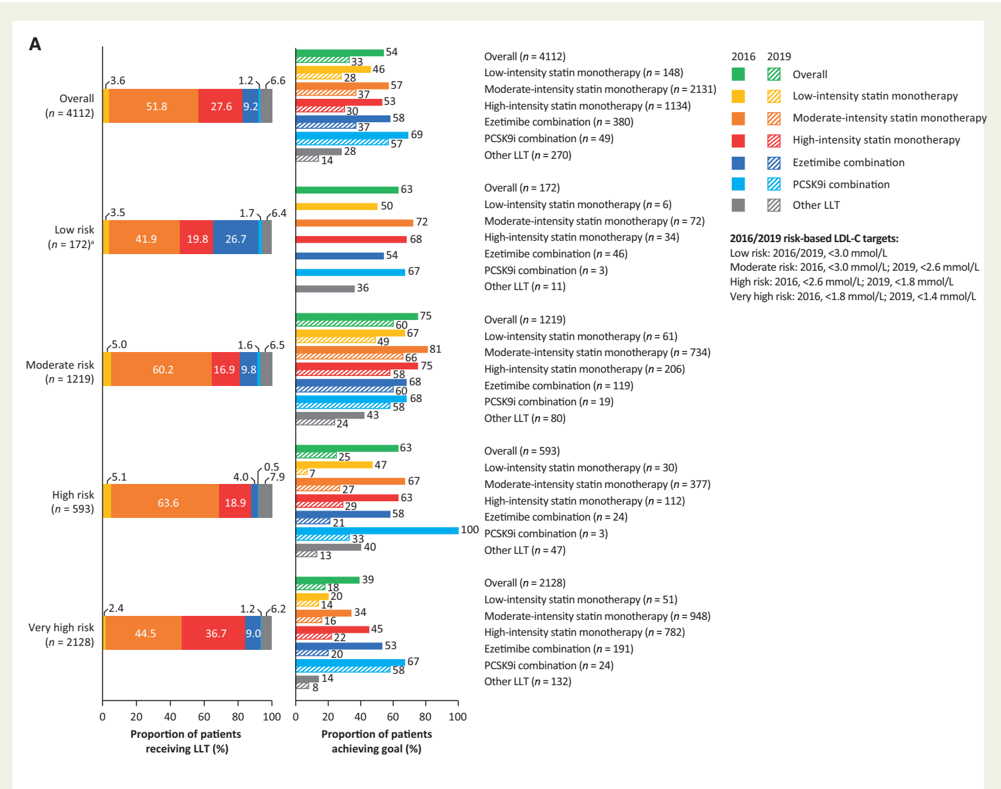
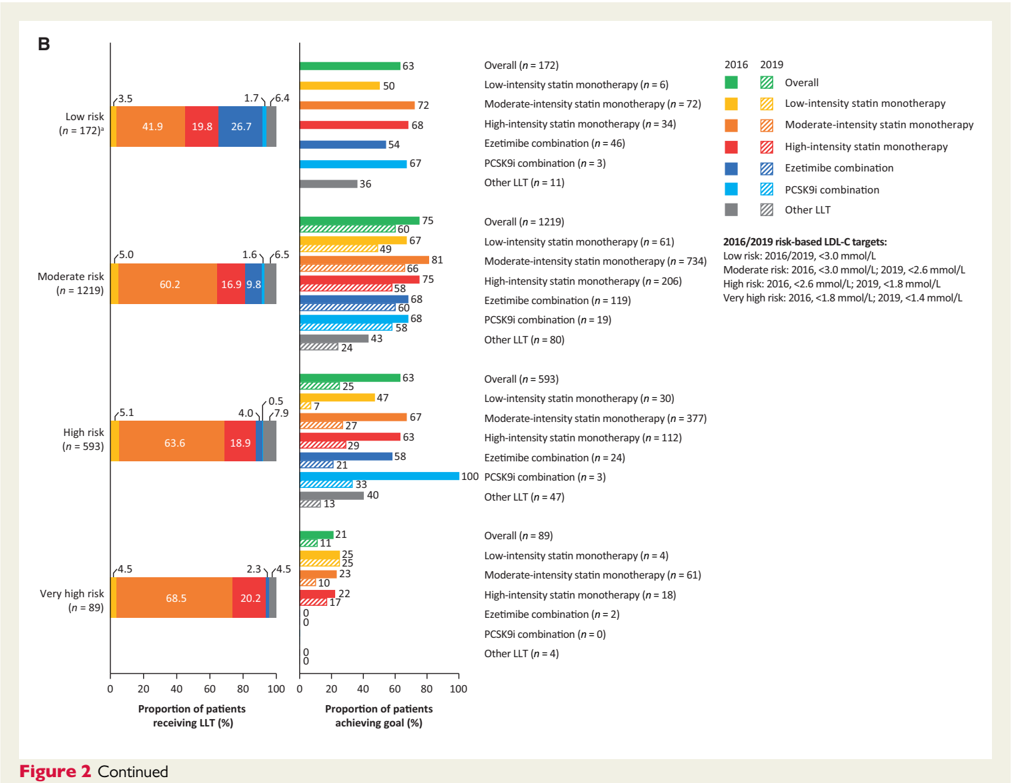
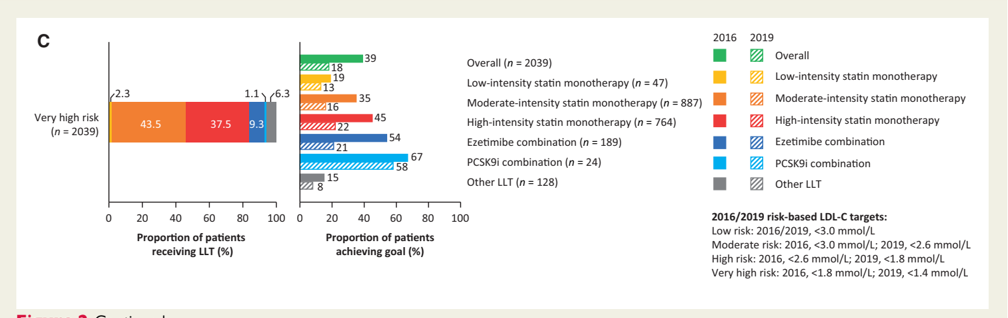
Aims: To provide contemporary data on the implementation of European guideline recommendations for lipid-lowering therapies (LLTs) across different settings and populations and how this impacts low-density lipoprotein cholesterol (LDL-C) goal achievement. Methods and results: An 18 country, cross-sectional, observational study of patients prescribed LLT for primary or secondary prevention in primary or secondary care across Europe. Between June 2017 and November 2018, data were collected at a single visit, including LLT in the preceding 12 months and most recent LDL-C. Primary outcome was the achievement of risk-based 2016 European Society of Cardiology (ESC)/European Atherosclerosis Society (EAS) LDL-C goal while receiving stabilized LLT; 2019 goal achievement was also assessed. Overall, 5888 patients (3000 primary and 2888 secondary prevention patients) were enrolled; 54% [95% confidence interval (CI) 52–56] achieved their risk-based 2016 goal and 33% (95% CI 32–35) achieved their risk-based 2019 goal. High-intensity statin monotherapy was used in 20% and 38% of very high-risk primary and secondary prevention patients, respectively. Corresponding 2016 goal attainment was 22% and 45% (17% and 22% for 2019 goals) for very high-risk primary and secondary prevention patients, respectively. Use of moderate–high-intensity statins in combination with ezetimibe (9%), or any LLT with PCSK9 inhibitors (1%), was low; corresponding 2016 and 2019 goal attainment was 53% and 20% (ezetimibe combination), and 67% and 58% (PCSK9i combination). Conclusion: Gaps between clinical guidelines and clinical practice for lipid management across Europe persist, which will be exacerbated by the 2019 guidelines. Even with optimized statins, greater utilization of non-statin LLT is likely needed to reduce these gaps for patients at highest risk.
Overview
The claims and statistics of this paper haven’t been checked yet.
Free: it reads the open-access text and checks the first 5 claims that cite a source we can check. Create a free account to check every claim.
Integrity signals
Registry
Cites
Statistics
Figures
Verification
Claims the paper makes
The claims and statistics of this paper haven’t been checked yet.
Free: it reads the open-access text and checks the first 5 claims that cite a source we can check. Create a free account to check every claim.
Claims other papers make about this one
Each is checked against this paper’s own text: does it say what the citing paper says it does?
The source backs part of the claim, not all of it — or backs it for a different population, condition or comparison.
In the citing paper
“The DA VINCI study found that out of 5888 patients with dyslipidaemia who were enrolled in 18 European countries, only 33% achieved their risk-based LDL-C goal recommended in the European Society of Cardiology (ESC) 2019 guidelines [12].”
From Established and Emerging Lipid-Lowering Drugs for Primary and Secondary Cardiovascular Prevention (2023) · cites this paper as [12]
Experimental — accuracy not yet measured
Self-check
Percentages, sums and reported differences re-computed from the paper’s own numbers.
The self-check needs the paper’s full text.
Citations
Cites
Mach, F., Baigent, C., Catapano, A. L., Koskinas, K. C., Casula, M., Badimon, L., Chapman, M. J., De Backer, G. G., Delgado, V., Ference, B. A., et al. (2020) · European Heart Journal · doi:10.1093/eurheartj/ehz455 · Cited by 8,961
Self-citation2016 ESC/EAS Guidelines for the Management of Dyslipidaemias
Catapano, A. L., Graham, I., De Backer, G., Wiklund, O., Chapman, M. J., Drexel, H., Hoes, A. W., Jennings, C. S., Landmesser, U., Pedersen, T. R., et al. (2016) · European Heart Journal · doi:10.1093/eurheartj/ehw272 · Cited by 3,162
Self-citationCollaborators, C. T. T. (. (2012) · The Lancet · doi:10.1016/s0140-6736(12)60367-5 · Cited by 2,833
Kotseva, K., De Backer, G., De Bacquer, D., Rydén, L., Hoes, A., Grobbee, D., Maggioni, A., Marques-Vidal, P., Jennings, C., Abreu, A., et al. (2019) · European Journal of Preventive Cardiology · doi:10.1177/2047487318825350 · Cited by 937
Wood, D. A., Backer, G. D., Graham, I., Poole-Wilson, P. A., Pyörälà, K., Shepherd, J., Zanchetti, A., Haman, P., Linhartová, K., Simon, J., et al. (1997) · Ghent University Academic Bibliography (Ghent University) · Cited by 537
EUROASPIRE Study Group (1997) · European Heart Journal · doi:10.1093/oxfordjournals.eurheartj.a015136 · Cited by 532
Nicholls, S. J., Brandrup-Wognsen, G., Palmer, M., & Barter, P. J. (2010) · The American Journal of Cardiology · doi:10.1016/j.amjcard.2009.08.651 · Cited by 248
Ferrières, J., Ferrari, G. M. D., Hermans, M. P., Elisaf, M., Toth, P. P., Horack, M., Brudi, P., Lautsch, D., Bash, L. D., Baxter, C. A., et al. (2018) · European Journal of Preventive Cardiology · doi:10.1177/2047487318806359 · Cited by 73
Steen, D. L., Khan, I., Ansell, D., Sanchez, R. J., & Ray, K. K. (2017) · BMJ Open · doi:10.1136/bmjopen-2016-013255 · Cited by 42
Self-citationThe past, present and future of lipidlowering therapy
Najam, O., Lambert, G. C., & Ray, K. K. (2015) · Clinical Lipidology · doi:10.2217/clp.15.40 · Cited by 7
Self-citation
Research works printed but not linked: 1
- 2. Baigent C, Blackwell L, Emberson J, Holland LE, Reith C, Bhala N, Peto R, Barnes EH, Keech A, Simes J, Collins R. Efficacy and safety of more intensive lowering of LDL cholesterol: a meta-analysis of data from 170,000 particiants in 26 rando- mised trials. Lancet 2010;376:1670.
Cited by
Items 601–700 of 963
Márk, L., Fazekas, K., Dani, G., Ruzsa, J., & Thury, A. Á. (2023) · Cardiologia Hungarica · doi:10.26430/chungarica.2023.53.3.273 · Cited by 2
Vila, À., Pons, E., García, P. T., Vidal, D., López, S., & Grau, A. (2023) · Clínica e Investigación en Arteriosclerosis (English Edition) · doi:10.1016/j.artere.2023.06.003 · Cited by 2
Lipid-lowering therapy in patients with peripheral artery disease – a call for action
Makhmudova, U., Kretzschmar, D., Schulze, P. C., & Weingärtner, O. (2022) · VASA · doi:10.1024/0301-1526/a001013 · Cited by 2
Going backwards: lifestyle in younger cardiac patients
Lüscher, T. F. (2023) · European Journal of Preventive Cardiology · doi:10.1093/eurjpc/zwad088 · Cited by 2
Atar, D., Bakken, A., & Munkhaugen, J. (2023) · Kardiologia Polska · doi:10.33963/kp.a2023.0087 · Cited by 2
Scheen, A. J., Wallemacq, C., & Lancellotti, P. (2024) · PubMed · Cited by 2
Proprotein convertase subtilisisn/kexin type 9 inhibitors: the earlier the better?
Pirillo, A., & Catapano, A. L. (2024) · European Journal of Preventive Cardiology · doi:10.1093/eurjpc/zwae206 · Cited by 2
Self-citationRazavi, A. C., Sokolsky, M., & Blumenthal, R. S. (2025) · Archives of Medical Science · doi:10.5114/aoms/207067 · Cited by 2
“Across both Europe and the United States, between one-half and two-thirds of individuals with clinical ASCVD do not attain LDL-C goals 1.8 mmol/l ( 70 mg/dl) [4–6].”
InfluentialSystematic literature review on the real-world effectiveness and safety of bempedoic acid
Cicero, A. F. G., Cannon, C. P., Gautam, R., Anwar, S., Ghatak, A., Sarnes, E., Powell, H. A., Chhabra, R., & Jawla, S. (2026) · Atherosclerosis Plus · doi:10.1016/j.athplu.2026.100562 · Cited by 1
“Like statins, bempedoic acid upregulates hepatic low-density lipoprotein (LDL) receptor expression, thereby reducing circulating LDL-C levels [11].”
Kardiovaskuläre Hochrisikopatienten: Hilfe bei der LDL-C-Zielwerterreichung
Makhmudova, U., Schulze, P. C., Vogt, A., & Weingärtner, O. (2021) · CardioVasc · doi:10.1007/s15027-021-3603-4 · Cited by 1
Selección de lo mejor del año 2021 en riesgo vascular y rehabilitación cardiaca
Ruíz, R. C., Arrarte, V., Olmo, R. F., Conde, A. C., Mazón‐Ramos, P., Pérez, A. B., Palau, P., & Rollán, M. S. (2021) · REC CardioClinics · doi:10.1016/j.rccl.2021.10.001 · Cited by 1
Clinical opportunities and healthcare impact of optimal treatment in the post-ACS patient
Gargiulo, G., & Esposito, G. (2022) · Global & Regional Health Technology Assessment · doi:10.33393/grhta.2022.2391 · Cited by 1
“Inoltre si è osservato che il raggiungimento del target era fortemente influenzato dalla terapia, che nella maggior parte dei casi richiedeva alti dosaggi di statina in combinazione con ezetimibe e PCSK9 inibitore (25).”
BackgroundLipid-Lowering Therapy Seen Through the Lens of Experts: Expectations Thwarted by Reality
Kaiser, S. E. (2022) · Turk Kardiyoloji Dernegi Arsivi-Archives of the Turkish Society of Cardiology · doi:10.5543/tkda.2022.22662 · Cited by 1
Novel LDL-cholesterol lowering therapies: A step forward a personalized medicine
Averna, M. R., & Cefalu, A. B. (2023) · European Journal of Internal Medicine · doi:10.1016/j.ejim.2023.04.026 · Cited by 1
Velilla, T. A., Guijarro, C., Ruíz, R. C., Piñero, M. R., Marcos, J. F. V., Pérez, A., López, M. A. B., López, A. M., Donaire, J. A. G., Obaya, J. C., et al. (2023) · Revista Clínica Española · doi:10.1016/j.rce.2022.11.001 · Cited by 1
Fusco, S. A. D., Scicchitano, P., Spinelli, A., Conte, E., Aquilani, S., Aiello, A., Nardi, F., Riccio, C., Caldarola, P., Luca, L. D., et al. (2023) · Giornale italiano di cardiologia · doi:10.1714/4060.40437 · Cited by 1
Makhmudova, U., Wolf, M., Willfeld, K., Beier, L., & Weingärtner, O. (2023) · DMW - Deutsche Medizinische Wochenschrift · doi:10.1055/a-2117-6504 · Cited by 1
“Die LDL-C-Zielwerte der ESC/EAS-Leitlinien werden im Versorgungsalltag häufig jedoch nicht erreicht [7].”
BackgroundHaskiah, F., Abdelhai, K., Hilu, R., & Khaskia, A. (2024) · Metabolic Syndrome and Related Disorders · doi:10.1089/met.2023.0310 · Cited by 1
“8 In addition, data from the Hyperlipidemia Therapy in Tertiary Cardiological Center registry suggested that * 70% of ACS patients did not reach target LDL-C levels at the 1-year follow-up.”
Perrone, V., Medea, G., Urbinati, S., Sangiorgi, D., & Esposti, L. D. (2024) · Global & Regional Health Technology Assessment · doi:10.33393/grhta.2024.2731 · Cited by 1
Нерешенные проблемы дислипидемии и резидуального сердечно-сосудистого риска
Gurevich, V. S., Козиолова, Н. А., Владиславович, Е. М., Сергиенко, И. В., Alieva, A. S., Вавилова, Т. В., Панов, А. В., Obrezan, A. G., Калашников, В. Ю., Арутюнов, Г. П., et al. (2023) · Атеросклероз и дислипидемии · doi:10.34687/2219-8202.jad.2023.01.0005 · Cited by 1
Fuster, V. P., & Escobar, C. F. (2023) · Revista médica de Chile · doi:10.4067/s0034-98872023000901143 · Cited by 1
“This reluctance and underestimating patients’ cardiovascular risk were the most critical barriers to achieving lipid objectives and are related to therapeutic inertia, which has been previously observed in specialized care in Spain 17, 30 .”
InfluentialAragona, C. O., Bianco, A., Caruso, R., Cerulli, M., Cosentino, N., Cittadini, A., Gabriele, M., Mallardo, M., Marini, R., Miserrafiti, B., et al. (2024) · Monaldi Archives for Chest Disease · doi:10.4081/monaldi.2024.2972 · Cited by 1
Ponomareva, O. A., Vladimirskiy, V. E., & Petukhova, I. V. (2024) · Современные проблемы науки и образования · doi:10.17513/spno.33855 · Cited by 1
Sollerud, E. P., Ikdahl, E., Kerola, A. M., Sexton, J., & Semb, A. G. (2025) · Journal of clinical lipidology · doi:10.1016/j.jacl.2025.02.002 · Cited by 1
Combination of statin and ezetimibe in the post-infarction period
Oleynikov, V. E., Salyamova, L. I., Sherbinina, A. V., Golubeva, A. V., & Alimov, N. (2024) · Terapevticheskii arkhiv · doi:10.26442/00403660.2024.12.203077 · Cited by 1
Gebauer, K., Malyar, N. M., Varghese, J., Reinecke, H., Brix, T. J., & Engelbertz, C. M. (2025) · Lipids in Health and Disease · doi:10.1186/s12944-025-02542-5 · Cited by 1
“This disappointing LDL-C goal achievement is in line with the SANTORINI and DA VINCI registry [34, 35] and can be explained by underuse of add-on LLT in addition to statin medication.”
Lipid management in patients newly referred to a vascular surgery outpatient clinic
Vergouwen, M., Bayrouti, A., Krzyzaniak, H., & Petrasek, P. F. (2025) · JVS-Vascular Insights · doi:10.1016/j.jvsvi.2025.100231 · Cited by 1
Du, R., Guo, Y., Zhong, W., Gao, Y., Xu, M., Wang, C., & Yuan, Y. (2025) · Biochemistry and Biophysics Reports · doi:10.1016/j.bbrep.2025.102014 · Cited by 1
“In addition, traditional drug therapy is usually only targeted at a single pathological link, such as antiplatelet drugs mainly inhibit thrombosis, [32], statins mainly regulate blood lipids, [35], GAS has a multi-target and multi-pathway mechanism of action, and GAS has a multi-pathway mechanism.”
Pei, L., Su, M., Yakeya, R., Hu, Z., Abudurexiti, A., Lin, X., Zhao, H., Abudourexiti, G., Sidike, A., & Li, X. (2025) · Frontiers in Public Health · doi:10.3389/fpubh.2025.1554858 · Cited by 1
Wexelman, W. J., Ciffone, N. A., & Shah, N. P. (2025) · Advances in Therapy · doi:10.1007/s12325-025-03182-y · Cited by 1
Xu, L., Lei, M., Li, L., Li, Y., Gu, C., & Zheng, P. (2025) · Frontiers in Pharmacology · doi:10.3389/fphar.2025.1555508 · Cited by 1
Voit, F., Breitschwerdt, S., Balogh, A., Bidner, H., Schwender, S. E., Boesecke, C., Wagner, L., Wolf, E., & Spinner, C. D. (2025) · HIV Research & Clinical Practice · doi:10.1080/25787489.2025.2535352 · Cited by 1
Viljoen, A., Auyeung, V., Foot, H., Grimmett, C., Bodini, S., Douglas, L., Kaloti, T., Moon, Z., Chhabra, R., Cotterill, E., et al. (2025) · Current Medical Research and Opinion · doi:10.1080/03007995.2025.2538748 · Cited by 1
“Despite proven pharmacological options for reducing LDL-C levels, real-world data shows that lipid levels are often inadequately controlled, particularly amongst patients at high and very high CV risk 2,3 .”
Self-citationRadano, I., Delnevo, F., Aranzulla, T. C., Piazza, S., Rosa, C. D., Muccioli, S., Trucco, M. C. F., Ricotti, A., Quaglino, S., Ferri, M., et al. (2025) · Journal of Vascular Diseases · doi:10.3390/jvd4030027 · Cited by 1
Ji, Y., Chadha, A., Krity, A., & Huang, S. (2025) · Frontiers in Endocrinology · doi:10.3389/fendo.2025.1553173 · Cited by 1
Tailored intervention improves statin adherence and reduces LDL-cholesterol levels
Nilamsari, W. P., Putri, N. S., Alsagaff, M. Y., Jaya, H. P., Suprapti, B., Astuti, N. T., & Wusqo, H. U. (2025) · Pharmacia · doi:10.3897/pharmacia.72.e158156 · Cited by 1
Use of Lipid-Lowering Treatment in Primary Prevention in Spain (Lipidspain)
García‐Villarino, M., Lozano-Aida, C., Gutiérrez, L. S., Lambert, C., González‐Vidal, T., García, A. V., Pujante, P., Villa-Fernández, E., Delgado, E., Torre, E. L. M., et al. (2025) · Journal of Clinical Medicine · doi:10.3390/jcm14176059 · Cited by 1
“The DA VINCI study showed that only 33% of patients reached the 2019 ESC/EAS guideline targets, with combination therapies used in just 10% of cases [20].”
Mostaza, J. M., Lahoz, C., Castro, M. G. D. Y., Campal, J. M. R., Velásquez, E., Gutiérrez, A. I., Díaz, J. F., Plana, N., Rodríguez‐Mañero, M., García-Díaz, J. D. D. D., et al. (2025) · Revista Clínica Española · doi:10.1016/j.rce.2025.502344 · Cited by 1
Self-citationOrtiz, N., Shehata, J., Smart, J., Leinwand, B., Ali, A., Katariya, D., Dicklin, M. R., & Hsieh, A. (2025) · Journal of Medical Economics · doi:10.1080/13696998.2025.2558314 · Cited by 1
Preferences of patients and healthcare professionals on lipid-lowering therapies for ASCVD
Olmo, R. F., Hermida, Á. B. Á., Castellanos, M., Cerezo, J. F. G., Guaita, M., Jansen‐Chaparro, S., Obaya, J. C., Parrondo, J., Mitjana, L. M., Reimóndez-Troitiño, S., et al. (2025) · REC CardioClinics · doi:10.1016/j.rccl.2025.08.007 · Cited by 1
The lipid card in cardiovascular patients: early enthusiasm but limited long-term use
Nashtar, M. A., Canbay, A. E., Patsalis, P., & Steinmetz, M. (2025) · Clinical Research in Cardiology · doi:10.1007/s00392-025-02772-8 · Cited by 1
“The DA VINCI study found only 18% of patients with established atherosclerotic cardiovascular disease on guideline—recommended therapy achieved LDL-C < 1.4 mmol/L (≈55 mg/dL); even with high-intensity statins or ezetimibe, goal attainment rose to just 37% [3].”
InfluentialFilardi, P. P., Arcangeli, E., Carullo, P., Galeone, C., & Arca, M. (2025) · Global & Regional Health Technology Assessment · doi:10.33393/grhta.2025.3503 · Cited by 1
“…su pazienti a cui è stata prescritta la terapia ipolipemizzante per la prevenzione primaria o secondaria nell’assistenza prima - ria o secondaria in tutta Europa, nel quale l’utilizzo di statine a intensità moderata-alta in combinazione con ezetimibe è stato identificato nel 9% dei pazienti (35).”
Breaking barriers: Innovative therapies for managing homozygous familial hypercholesterolemia
Huang, S.-J., Huang, P. H., Song, N.-N., Jia, X.-H., Gao, H., Lu, Z., & Wen, X. (2025) · Experimental and Molecular Pathology · doi:10.1016/j.yexmp.2025.105003 · Cited by 1
Martí, M. C., García‐González, X., Torres-Bondia, F. I., Lozano, J., & Gómez-Navarro, V. (2025) · Journal of Medical Economics · doi:10.1080/13696998.2025.2575456 · Cited by 1
“However, in the clinical practice treatment with maximally tolerated standard therapy is usually insufficient to achieve the therapeutic targets 17 .”
Rabob, P., & Jedsadayanmata, A. (2025) · Clinics and Practice · doi:10.3390/clinpract15110193 · Cited by 1
“Similar observations have been reported in real-world cohorts, where only a small proportion of patients achieved a level of 55 mg/dL despite receiving high-intensity statin therapy [13,20,21].”
Antibody-Based Therapeutics for Hypercholesterolemia
Tomlinson, B., & Chan, P. (2025) · Biologics · doi:10.2147/btt.s500456 · Cited by 1
Rosman, A., Looi, Z. L., Fegade, M., & Thum, C. H. (2025) · Malaysian Journal of Medical Sciences · doi:10.21315/mjms-04-2025-294 · Cited by 1
“%) with high-and moderate-intensity statins is the most prescribed LLT compared to low-intensity statins among ASCVD patients (33).”
InfluentialLandolfo, M., Gezzi, A., Spannella, F., Giulietti, F., Alborino, F., Massini, L. S., & Sarzani, R. (2025) · BMC Medicine · doi:10.1186/s12916-025-04552-7 · Cited by 1
“For example, the DA VINCI study—conducted across 18 European countries—reported that 48.2% of patients in primary prevention met LDL-C goals under the 2019 ESC/EAS guidelines, over four times higher than our findings [13, 14].”
InfluentialMiteva, K., & Mach, F. (2025) · European Heart Journal · doi:10.1093/eurheartj/ehaf1009 · Cited by 1
Marušić, R., Šojat, D., Bačun, T., Nešković, N., Debeljak, Ž., Glegj, M., Polić, M. V., & Marczi, S. (2026) · Biomedicines · doi:10.3390/biomedicines14010113 · Cited by 1
“In the cross-sectional DA VINCI study, which included patients from 18 European countries, only 54% achieved LDL-C goals according to the 2016 ESC/EAS guidelines, and merely 33% met the stricter 2019 targets, with attainment particularly low among very-high-risk individuals [21].”
InfluentialBrockmeyer, M., Chernyak, N., Dröge, D., Wessel, H., Parco, C., Hoss, A., Vargas, K. G., Lin, Y., Rickert, A., Ritz, S., et al. (2026) · BMC Cardiovascular Disorders · doi:10.1186/s12872-025-05475-0 · Cited by 1
“However, data from large international registries show poor attainment of these treatment goals in highest cardiovascular risk patients, with a great need for improvement [5, 6].”
Combination Lipid-Lowering Therapy After ACS: Should this be the New Standard of Care?
Brandts, J., & Marx, N. (2026) · Current Cardiology Reports · doi:10.1007/s11886-026-02346-8 · Cited by 1
“European registries echo these findings: The Davinci Study (2017–2018), which included patients on LLT, showed that only 39% of patients with ASCVD would attain the 2016 ESC/EAS goal of 1.8 mmol/L for ASCVD patients and 18% of patients the current goal of 1.4 mmol/L, respec - tively [21].”
InfluentialCan Australia afford the costs of cardiology guidelines? True costs and strategies for reduction
Cao, J., & Celermajer, D. S. (2026) · Internal Medicine Journal · doi:10.1111/imj.70369 · Cited by 1
RAO, G. V. P., Suryakala, D., Lingam, M., & Lakshmi, B. B. (2026) · International Journal of Applied Pharmaceutics · doi:10.22159/ijap.2026v18i3.56528 · Cited by 1
Timmermans, M. J. C., Witvliet, M. P., van Erkelens, J. A., Reitsma, J., Kamphuisen, P. W., Camaro, C., Danse, P. W., & Arkenbout, E. K. (2026) · Netherlands Heart Journal · doi:10.1007/s12471-026-02028-8 · Cited by 1
“Despite the proven benefits of lipid-lowering medication on future CVD events in patients with established CVD, adherence to lipid-lowering medication is often suboptimal [7–14].”
Pradhan, A. K., Singh, A. K., & Singh, A. K. (2026) · Heart India · doi:10.4103/heartindia.heartindia_75_25 · Cited by 1
Ray, K., Aguiar, C., Arca, M., Connolly, D., Eriksson, M., Ferriéres, J., Laufs, U., Mostaza, J., Nanchen, D., Boachie, C., et al. (2026) · American Journal of Preventive Cardiology · doi:10.1016/j.ajpc.2026.101577 · Cited by 1
“Furthermore, factors such as intolerance to more effective doses of statins, a lack of perception of the additional benefits offered by further LDL-C lowering, the cost and availability of therapies such as ezetimibe, and limited access to PCSK9is could also affect population-level control [14,18].”
InfluentialSelf-citationChallenges in achieving low-density lipoprotein targets: a cross-sectional study in statin users
Çiçekli, A., & Sağlan, Y. (2026) · Turkish Journal of Family Practice · doi:10.54308/turkjfampract.2026.888 · Cited by 1
“[2] In the TEKHARF 2011/14 cohort, LDL-C >130 mg/ dL was observed in 39% of men and in 46% of women in a sample predominantly composed of postmenopausal women.”
Cardiovascular risk factor target control in Romanian adults with type 2 diabetes
Luca, S. A., Bungau, R. M., Herascu, A., Avram, V. F., Lazăr, S., & Timar, B. (2026) · Scientific Reports · doi:10.1038/s41598-026-45656-1 · Cited by 1
“…the LDL-c target endorsed by the 2019 ESC guidelines and, although control of lipid targets increased with combination therapy, it remained underutilized, with only 9% of patients receiving moderate or high intensity statin plus ezetimibe and 1% an additional PCSK9 inhibitor, respectively 29 .”
RNA-Targeted Therapeutics for Lipid Metabolic Disorders: From Bench to Bedside
Ali, I., Qiu, J., Cheang, W. S., Wang, G., & Xu, S. (2026) · Research · doi:10.34133/research.1288 · Cited by 1
“The European DA VINCI registry reported that while 84% of patients on lipid-lowering therapy received statin monotherapy, only 33% attained the 2019 European Society of Cardiology/European Atherosclerosis Society (ESC/EAS) LDL-C goals [ 51 , 52 ].”
Çolak, A., Kumral, Z., Öztürk, Ö., Kunak, A. Ü., Elmas, A. N., Bedir, Ö., Karaduman, M., Babat, N., Uyan, U., Şentürk, N., et al. (2026) · Lipids in Health and Disease · doi:10.1186/s12944-026-02950-1 · Cited by 1
“As a result, combination therapies are frequently necessary [4].”
Lipid lowering in coronary artery disease – not just statins
Han, J., Masmanian, E., Wang, T., & Chua, T. P. (2026) · Clinical Medicine · doi:10.1016/j.clinme.2026.100594 · Cited by 1
AlHabeeb, W., Alamri, H., Elbadawi, H., AlRuthia, Y. S., Alharbi, W., Alshammeri, O., Tash, A. A., Almoziny, S., Kholaif, N., Halawani, H., et al. (2026) · Journal of the Saudi Heart Association · doi:10.37616/2212-5043.1488 · Cited by 1
“Similar trends have been observed in Europe and North America, where registry-based data underscore the challenge of translating guideline-directed therapy into clinical practice, as reflected in poor risk-based LDL-C goal attainment [25,27,46].”
Põld, A., Elken, A., Viigimaa, M., Kalda, R., Fischer, K., Toompere, K., Irs, A., Milani, L. A., Alavere, H., Pajusalu, S., et al. (2026) · BMJ Open · doi:10.1136/bmjopen-2026-120048 · Cited by 1
Update on Investigation and Management of Dyslipidaemias and Cardiovascular Disease Risk
Antwi, K., Luvai, A., Downie, P., Ghani, A., Maple, M., & Mbagaya, W. (2026) · British Journal of Hospital Medicine · doi:10.31083/bjhm54141 · Cited by 1
Bene-Alhasan, Y. O., Osta, S. A., Issaka, Y., Acquah, I., Alkhatib, A. M., Othman, L., Mensah, S. O., Howard, A., Ballantyne, C. M., Virani, S. S., et al. (2026) · Atherosclerosis · doi:10.1016/j.atherosclerosis.2026.120794 · Cited by 1
Lee, J. M., Kim, Y., Lee, S. Y., Kwon, W., Hwang, D., Chon, M. K., Joh, H. S., Lee, S. H., Lee, K. Y., Seo, Y. H., et al. (2026) · Korean Circulation Journal · doi:10.4070/kcj.2026.0191 · Cited by 1
“139)140) To overcome these limitations, non-statin LDL-C-lowering drugs, such as ezetimibe, PCSK9 inhibitors, or bempedoic acid, are recommended for patients who do not achieve LDL-C targets despite statin therapy or who cannot tolerate statin therapy.”
Niu, Q., Yao, P., Gan, L., Wang, L., Jiang, Y., & Cao, Y. (2026) · Journal of clinical lipidology · doi:10.1016/j.jacl.2026.07.017 · Cited by 1
Avidan, Y., Kobo, O. M., Weizman, B., Jonas, M., Hadar, D., Zafrir, B., & Kassem, S. (2026) · Cardiovascular Drugs and Therapy · doi:10.1007/s10557-026-07918-y · Cited by 1
Dyslipidemia in primary care patients – Treatment and control (LANTERN study) Algarve
Teixeira, S., Correia, A. J., Castro, M., Pombo, A. M., Palhau, A., Reis, D., Costa, I., Silva, J., Tavares, P., Estevens, R., et al. (2026) · Revista Portuguesa de Cardiologia · doi:10.1016/j.repc.2026.04.006 · Cited by 1
Luo, S., Lin, L., Lin, Y., Qiu, P., Cai, K., Huang, H., Zeng, Y., Huang, H., Liang, H., & Xu, Y. (2026) · Frontiers in Pharmacology · doi:10.3389/fphar.2026.1841158 · Cited by 1
“A European study revealed that moderate-dose statin monotherapy was the most common lipid-lowering therapy, with only 18% of very high-risk patients achieving their LDL-C goals (Ray et al., 2020).”
Cardiovascular risk management in the elderly: a dilemma in daily clinical practice
Dacquino, G. M., Galati, G., Genovese, L., Bravo, F. F., Bernardi, M., Spadafora, L., & Pedretti, R. F. E. (2026) · European Journal of Preventive Cardiology · doi:10.1093/eurjpc/zwag316 · Cited by 2
Protocol-Based Implementation of Early Intensive Lipid Management After Acute Coronary Syndrome
Oyama, K., Takahashi, J. T., Funaki, T., Oyamada, S., Horiguchi, S., Nakamura, A., Yagi, T., Ogata, K., Yahagi, H., Iwabuchi, K., et al. (2026) · Journal of the American College of Cardiology · doi:10.1016/j.jacc.2026.08.026 · Cited by 1
CRISPR therapy for dyslipidemia
Nicholls, S. J. (2026) · Current Opinion in Lipidology · doi:10.1097/mol.0000000000001062 · Cited by 1
Bempedoic Acid: From Guidelines to the Real World
Zimodro, J. M., & Gouni‐Berthold, I. (2026) · Journal of Lipid and Atherosclerosis · doi:10.12997/jla.2026.15.3.381 · Cited by 1
Self-citationFeatures of Lipid Disorders in Cardiovascular–Kidney–Metabolic Syndrome
Ceasovschih, A., Şener, Y. Z., Arici, M., Cherska, M., Bianconi, V., Ejubović, M., Kotlyarov, S. N., Ristovski, V., Yetkin, A., Golforoush, P. A., et al. (2026) · International Journal of Molecular Sciences · doi:10.3390/ijms27188317 · Cited by 1
“Indeed, despite the availability of highly effective lipid-lowering therapies, dyslipidaemia remains substantially undertreated in routine clinical practice [217,218].”
Gautam, A. K., Prajapathi, S., Singh, A., Pradhan, A. K., Ali, W., Shukla, A., Bhandari, M., Sharma, A., Vishwakarma, P., Chaudhary, G. K., et al. (2026) · American Heart Journal Plus Cardiology Research and Practice · doi:10.1016/j.ahjo.2026.100939 · Cited by 1
“…figures highlight a considerable shortfall in real-world practice compared to recommended targets, aligning with broader international observations such as the DA VINCI study (33% reaching 2019 ESC/EAS targets) and SANTORINI study (20.7% reaching 2019 ESC/EAS targets in ASCVD patients) [24,25].”
InfluentialGuideline recommendations, clinical trial data, and new and emerging therapies
Lindsley, J. (2021) · The American Journal of Managed Care · doi:10.37765/ajmc.2021.88607 · Cited by 1
Atherosclerotic cardiovascular diseases and clinical significance of treatment with inclisiran
Blaha, V. (2021) · Klinická farmakologie a farmacie · doi:10.36290/far.2021.011 · Cited by 1
“Přes veškeré důkazy a doporučení prokázala recentní celoevropská observační studie DA VINCI (1), že u pacientů léčených vysoce intenzivní monoterapií statiny dosáhlo pouze 33 % jedinců příslušného léčebného cíle dle recentních doporučení odborných autorit z roku 2019 (European Society of Cardiology/European Atheroscle…”
Matsuzaki, S., Miller, H., Takiuchi, T., Klar, M., & Matsuo, K. (2021) · Expert Opinion on Drug Safety · doi:10.1080/14740338.2021.1973427 · Cited by 1
A SAMSON nyomán: statinintolerancia, nocebohatás, adherencia
Márk, L., Reiber, I., Bajnok, L., & Paragh, G. (2021) · Cardiologia Hungarica · doi:10.26430/chungarica.2021.51.2.125 · Cited by 1
Ldl-c Levels In Secondary Prevention: The Lower The Better and The Sooner The Better
Vázquez, R. (2021) · Journal of Cardiology & Cardiovascular Therapy · doi:10.19080/jocct.2021.17.555954 · Cited by 1
“However, the latest multicenter secondary prevention studies such as EUROASPIRE [12] and DA VINCI [13] show poor lipid control in our patients despite the disponibility of drugs capable of achieving this goal.”
BackgroundPinto, M. D., Santucci, A., Guarnaccia, F., Tutarini, C., & Musto, C. (2022) · Giornale italiano di cardiologia · doi:10.1714/3750.37329 · Cited by 1
¿Qué pacientes pueden beneficiarse del ácido bempedoico en la práctica clínica?
Barrios, V., & Escobar, C. (2022) · Revista Española de Cardiología · doi:10.1016/j.recesp.2022.03.010 · Cited by 1
Heaven can wait… for lipid control in very high cardiovascular risk patients
Silva, A. M. E. (2021) · Revista Portuguesa de Cardiologia · doi:10.1016/j.repc.2021.05.004 · Cited by 1
Which patients could benefit from the use of bempedoic acid in clinical practice?
Barrios, V., & Escobar, C. (2022) · Revista Española de Cardiología (English Edition) · doi:10.1016/j.rec.2022.05.007 · Cited by 1
Bigolin, P., Zalunardo, B., Mazzolai, L., Belch, J. J. F., & Visonà, A. (2022) · VASA · doi:10.1024/0301-1526/a001026 · Cited by 1
Walukiewicz, M., Rogowicz, D., Wołowiec, Ł., Chudzińska, M., Sinkiewicz, A., & Grześk, G. (2023) · Irish Journal of Medical Science (1971 -) · doi:10.1007/s11845-023-03285-x · Cited by 1
Inclisiran: new era of lipid-lowering therapy?
Beneš, J. (2023) · Cor et Vasa · doi:10.33678/cor.2022.043 · Cited by 1
“These unsatisfactory results were further confi rmed by recently published study showing that only 17% and 22% patients with a very high risk in primary and secondary prevention, respectively, met the new 2019 goals.(8)”
ResultConde, C. B., Martínez, N. R., Ibarbia, C. G., Guerra-Ruiz, A. R., Miguel, I. O., Belaustegui, M. C., Lavín, B. A., Vilchez, F. J. G., Hernández, J. M. D. L. T., & Hernández, J. L. (2023) · Revista Clínica Española · doi:10.1016/j.rce.2023.02.001 · Cited by 1
Haskiah, F., & Khaskia, A. (2023) · Journal of clinical lipidology · doi:10.1016/j.jacl.2023.04.002 · Cited by 1
Velilla, T. A., Guijarro, C., Ruíz, R. C., Piñero, M. R., Marcos, J. F. V., Pérez, A., López, M. A. B., López, A. M., Donaire, J. A. G., Obaya, J. C., et al. (2023) · Cirugía Cardiovascular · doi:10.1016/j.circv.2023.02.001 · Cited by 1
Modern prospects of targeted hypolipidemic therapy
Kuchmin, A. N., Борисович, Н. М., Grachev, A. M., & Смирнова, Е. В. (2023) · Bulletin of the Russian Military Medical Academy · doi:10.17816/brmma321350 · Cited by 1
Kopp, K., Motloch, L. J., Berezin, A. Е., Maringgele, V., Ostapenko, H., Mirna, M., Schmutzler, L., Dieplinger, A. M., Hoppe, U. C., & Lichtenauer, M. (2023) · Journal of Clinical Medicine · doi:10.3390/jcm12175685 · Cited by 1
“OECD; European Observatory on Health Systems and Policies.”
BackgroundInfluentialDyslipidemia - the known unknown
Šatný, M. (2023) · Vnitřní lékařství · doi:10.36290/vnl.2023.060 · Cited by 1
Scheen, A. J., Wallemacq, C., & Lancellotti, P. (2023) · PubMed · Cited by 1
Echevarría, A. B., García-Díaz, J. D. D., Caixàs, A., Plana, N., Corral, M. Á. R., Bridges, I. M., Dhalwani, N. N., Menchén, S. G., & Ray, K. K. (2023) · Clínica e Investigación en Arteriosclerosis (English Edition) · doi:10.1016/j.artere.2023.04.003 · Cited by 1
Self-citationSarbast, S., & Mohamad, J. B. (2024) · Cureus · doi:10.7759/cureus.53849 · Cited by 3
“In the European DAVINCI study, 44% achieved the LDL-C goal [21].”
BackgroundInfluentialClinical impact of genetic testing for lipid disorders
Muzurović, E. M., Borozan, S., & Rizzo, M. (2024) · Current Opinion in Cardiology · doi:10.1097/hco.0000000000001133 · Cited by 1
Paparodis, R. D., Androulakis, I., Askitis, D. P., Perogamvros, I., Angelopoulos, N., Rizoulis, A. A., Livadas, S., & Boniakos, A. (2024) · Endocrines · doi:10.3390/endocrines5020009 · Cited by 1
Metadata
- Authors
- Ray, K. K., Molemans, B., Schoonen, W. M., Giovas, P., Bray, S., Kiru, G., Murphy, J., Banach, M., De Servi, S., Gaita, D., Gouni-Berthold, I., Hovingh, G. K., Jozwiak, J. J., Jukema, J. W., Kiss, R. G., Kownator, S., Iversen, H. K., Maher, V., Masana, L., Parkhomenko, A., Peeters, A., Clifford, P., Raslova, K., Siostrzonek, P., Romeo, S., Tousoulis, D., Vlachopoulos, C., Vrablik, M., Catapano, A. L., Poulter, N. R., & study, T. D. V.
- Affiliations
- Imperial College London (GB)
- Amgen (United States) (US)
- Amgen (United Kingdom) (GB)
- Amgen Hellas, 4 Gravias Street, Maroussi, 15125, Athens, Greece
- Medical University of Lodz (PL)
- IRCCS MultiMedica, Via Milanese, 300, 20099 Sesto San Giovanni, Milan, Italy
- Institutul de Boli Cardiovasculare, Fundatia Cardioprevent, Universitatea de Medicina si Farmacie Victor Babes din Timisoara, Timişoara 300041, Romania
- Polyclinic for Endocrinology, Diabetes and Preventive Medicine, Kerpener Str. 62, 50937 Cologne, Germany
- University of Amsterdam (NL)
- University of Opole (PL)
- Leiden University Medical Center (NL)
- Hungarian Army Medical Center, Budapest, 1134, Hungary
- Centre Cardiologique et Vasculaire, 36 Route de la Briquerie, 57100, Thionville, France
- University of Copenhagen (DK)
- Trinity College Dublin (IE)
- Institut de Recerca Biomèdica Catalunya Sud (ES)
- Emergency Cardiology Department, Institute of Cardiology, Kiev, Ukraine
- Cliniques Universitaires Saint Luc, Avenue Hippocrate 10, 1200, Brussels, Belgium
- Hammersmith Hospital (GB)
- Slovak Medical University, 831 01 Bratislava, Slovakia
- Ordensklinikum Linz Barmherzige Schwestern (AT)
- Sahlgrenska University Hospital (SE)
- National and Kapodistrian University of Athens (GR)
- Charles University, Prague, 116 36 Czech Republic
- MultiMedica (IT)
- Corresponding author
- Ray, Kausik K
- ORCID
- Venue
- European Journal of Preventive Cardiology
- Publisher
- Oxford University Press (OUP)
- Published
- 2020-08-28
- Volume
- 28
- Issue
- 11
- Pages
- 1279-1289
- ISSN
- 2047-4873 (ISSN-L)
- 2047-4881
- OpenAlex
- W3120916025
- Semantic Scholar
- c6684386e0c0c350ddbd229e351fb1eb1cd4e299
- Cited by
- 839
- References
- 10
- Citations by year
- 2026: 137 · 2025: 162 · 2024: 143 · 2023: 165 · 2022: 139 · 2021: 79 · 2020: 12
- FWCI
- 90.18
- Type
- journal article
- Language
- en
- Open access
- hybrid
- doi.org
- Licence
- Locations
- European Journal of Preventive Cardiology (publishedVersion, cc-by-nc)
- PubMed (publishedVersion)
- Research at the University of Copenhagen (University of Copenhagen) (publishedVersion, cc-by-nc)
- Leiden Repository (Leiden University) (submittedVersion, cc-by-nc)
- Rovira & Virgili repository (submittedVersion, cc-by)
- Data Archiving and Networked Services (DANS) (submittedVersion, other-oa)
- Data Archiving and Networked Services (DANS) (submittedVersion, cc-by-nc)
- DIAL (Catholic University of Leuven) (submittedVersion, other-oa)
- Pure Amsterdam UMC (submittedVersion, cc-by)
- Spiral (Imperial College London) (submittedVersion, cc-by-nc)
- Funders
- Amgen (Europe) GmbH
- Topics
- Health Sciences › Medicine › Cardiology and Cardiovascular Medicine › Lipoproteins and Cardiovascular Health
- Health Sciences › Medicine › Cardiology and Cardiovascular Medicine › Blood Pressure and Hypertension Studies
- Health Sciences › Medicine › Endocrinology, Diabetes and Metabolism › Diabetes, Cardiovascular Risks, and Lipoproteins
- Keywords
- lipid-lowering therapy, LDL cholesterol goal attainment, statins, ezetimibe, PCSK9 inhibitors, guideline implementation, primary prevention, secondary prevention, very high-risk patients, non-statin therapy, cardiovascular risk management, ESC/EAS guidelines
- MeSH terms
- Proprotein Convertase 9, Anticholesteremic Agents, Cardiovascular Diseases, Cross-Sectional Studies, Humans, Cholesterol, LDL, Primary Health Care, Risk Factors, Biomarkers, Treatment Outcome, Hydroxymethylglutaryl-CoA Reductase Inhibitors, Dyslipidemias
About these checks
Registry, retraction, Cites and statistics results are computed, not judged, with one exception: a printed reference that no index lists is read once by a model before it counts as a citation error. Claims are extracted by a model and kept only when their quote appears verbatim in the text; each cited source is then checked, with a model’s help, for whether it says what the claim relies on. Those verdicts can be wrong — read the claim’s quote and the cited source before relying on one.
Statistics and arithmetic are recomputed, not judged.
Confidence bands are shown only for fields calibrated on our annotated test set. None is calibrated yet, so no band is shown.
What counts as a claim ›How we measure confidence ›How we check this ›
Are you an author, or do you see a problem with this page? Request a review
Data sources
Bibliographic data: Semantic Scholar, OpenAlex, Crossref.
Contains information from the Semantic Scholar Academic Graph Datasets, made available under the ODC Attribution License (ODC-BY 1.0).
Semantic Scholar’s data is described in: Kinney, R., et al. (2023). The Semantic Scholar Open Data Platform. arXiv:2301.10140.
