

Genomes of Stigonematalean Cyanobacteria (Subsection V) and the Evolution of Oxygenic Photosynthesis from Prokaryotes to Plastids
Open accessThe DOI matches its Crossref record; 108 of the 108 references it cites were found in a registry or an index.
Abstract
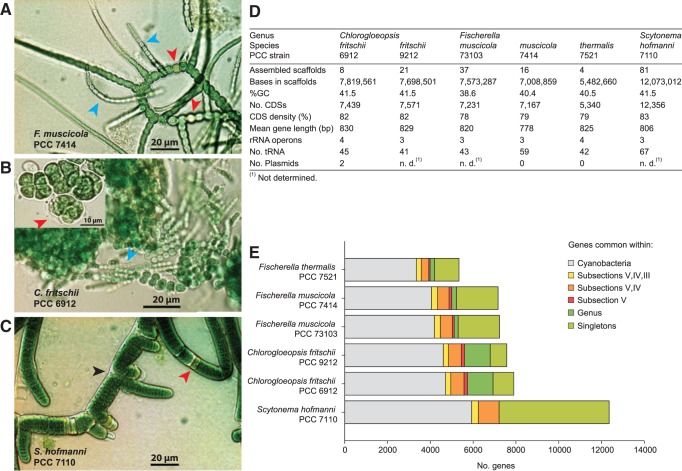
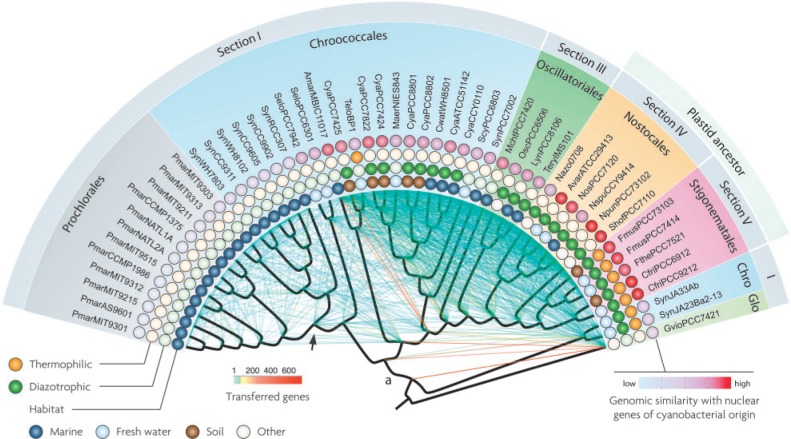
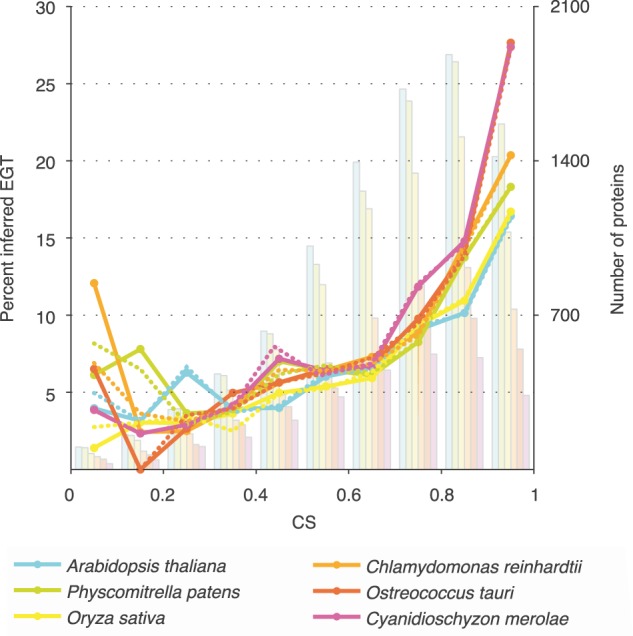
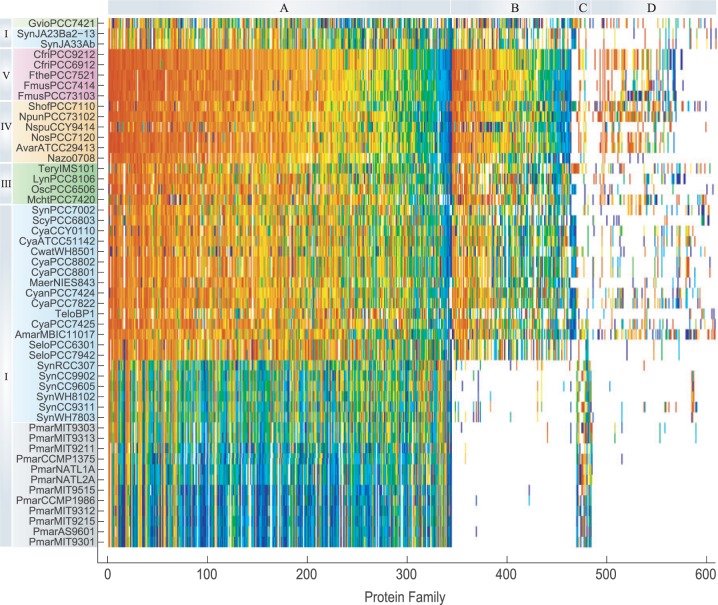
Cyanobacteria forged two major evolutionary transitions with the invention of oxygenic photosynthesis and the bestowal of photosynthetic lifestyle upon eukaryotes through endosymbiosis. Information germane to understanding those transitions is imprinted in cyanobacterial genomes, but deciphering it is complicated by lateral gene transfer (LGT). Here, we report genome sequences for the morphologically most complex true-branching cyanobacteria, and for Scytonema hofmanni PCC 7110, which with 12,356 proteins is the most gene-rich prokaryote currently known. We investigated components of cyanobacterial evolution that have been vertically inherited, horizontally transferred, and donated to eukaryotes at plastid origin. The vertical component indicates a freshwater origin for water-splitting photosynthesis. Networks of the horizontal component reveal that 60% of cyanobacterial gene families have been affected by LGT. Plant nuclear genes acquired from cyanobacteria define a lower bound frequency of 611 multigene families that, in turn, specify diazotrophic cyanobacterial lineages as having a gene collection most similar to that possessed by the plastid ancestor.
Overview
The claims and statistics of this paper haven’t been checked yet.
Free: it reads the open-access text and checks the first 5 claims that cite a source we can check. Create a free account to check every claim.
Integrity signals
Registry
Cites
Statistics
Figures
Verification
Claims the paper makes
The claims and statistics of this paper haven’t been checked yet.
Free: it reads the open-access text and checks the first 5 claims that cite a source we can check. Create a free account to check every claim.
Claims other papers make about this one
Each is checked against this paper’s own text: does it say what the citing paper says it does?
The cited source doesn’t support the claim as written.
In the citing paper
“Less than 5% of the genes thought to have been present in the cyanobacterial progenitor of the plastid typically remain in the organellar genome, and hundreds of cyanobacterial genes can be found in the nuclear genomes of extant algae and plants (Dagan et al. 2013, Qiu, Yoon, et al. 2013).”
From Genomic Insights into Plastid Evolution (2020) · cites this paper as Dagan et al. 2013
Checked by a reasoning model — may be wrong.
Experimental — accuracy not yet measuredThe cited source says what the claim attributes to it.
In the citing paper
“Less than 5% of the genes thought to have been present in the cyanobacterial progenitor of the plastid typically remain in the organellar genome, and hundreds of cyanobacterial genes can be found in the nuclear genomes of extant algae and plants (Dagan et al. 2013, Qiu, Yoon, et al. 2013).”
From Genomic Insights into Plastid Evolution (2020) · cites this paper as Dagan et al. 2013
Self-check
Percentages, sums and reported differences re-computed from the paper’s own numbers.
The self-check needs the paper’s full text.
Citations
Cites
Gapped BLAST and PSI-BLAST: a new generation of protein database search programs
Altschul, S. (1997) · Nucleic Acids Research · doi:10.1093/nar/25.17.3389 · Cited by 73,302
The neighbor-joining method: a new method for reconstructing phylogenetic trees.
(1987) · Molecular Biology and Evolution · doi:10.1093/oxfordjournals.molbev.a040454 · Cited by 59,715 · cited 2×
“Polysaccharide-free high molecular weight genomic DNA (gDNA) from strains of Fischerella was obtained by following a protocol for polysaccharide-rich plants (Sharma et al. 2002).”
MethodPHYLIP-Phylogeny inference package (Version 3.2)
Felsenstein, J. (1989) · Cladistics · Cited by 18,906
Guindon, S., Dufayard, J.-F., Lefort, V., Anisimova, M., Hordijk, W., & Gascuel, O. (2010) · Systematic Biology · doi:10.1093/sysbio/syq010 · Cited by 18,376 · cited 5×
“A phylogenetic tree was reconstructed from the concatenated alignment using the NJ approach and the software described as earlier.”
MethodInfluentialMAFFT: a novel method for rapid multiple sequence alignment based on fast Fourier transform
Katoh, K. (2002) · Nucleic Acids Research · doi:10.1093/nar/gkf436 · Cited by 17,027 · cited 5×
“The sequences of protein families were aligned using MAFFT (Katoh et al. 2002) Ver.”
MethodInfluentialApplication of Phylogenetic Networks in Evolutionary Studies
Huson, D. H., & Bryant, D. (2006) · Molecular Biology and Evolution · doi:10.1093/molbev/msj030 · Cited by 8,830 · cited 5×
“To test the consistency of the backbone (consensus) phylogeny, we reconstructed a phylogenetic network using SplitsTree (Huson and Bryant 2006).”
BackgroundMethodInfluentialGeneric Assignments, Strain Histories and Properties of Pure Cultures of Cyanobacteria
Rippka, R., Stanier, R. Y., Deruelles, J., Herdman, M., & Waterbury, J. B. (1979) · Microbiology · doi:10.1099/00221287-111-1-1 · Cited by 7,606 · cited 7×
“In addition Scytonema hofmanni PCC 7110, a Nostocales representative (subsection IV) isolated from a limestone cave (Crystal cave, Bermuda) (Rippka et al. 1979), whose filaments form false branches (fig.”
BackgroundInfluentialSelf-citationThe rapid generation of mutation data matrices from protein sequences
Jones, D. T., Taylor, W. R., & Thornton, J. M. (1992) · Bioinformatics · doi:10.1093/bioinformatics/8.3.275 · Cited by 6,947 · cited 4×
“Protein sequence distances were calculated with PROTDIST (Felsenstein 1993), and applying the JTT substitution model (Jones et al. 1992).”
MethodInfluentialKEGG for integration and interpretation of large-scale molecular data sets
Kanehisa, M., Goto, S., Sato, Y., Furumichi, M., & Tanabe, M. (2012) · Nucleic Acids Research · doi:10.1093/nar/gkr988 · Cited by 4,848
Pruitt, K. D., Tatusova, T., & Maglott, D. R. (2007) · Nucleic Acids Research · doi:10.1093/nar/gkl842 · Cited by 4,481
Research works printed but not linked: 3
- Mereschkowsky C Über Natur und Ursprung der Chromatophoren im Pflanzenreiche Biol Centralbl. 1905 25 593 604 [English translation in Eur J Phycol. 1999;34:287–295.]
- Rippka R Herdman H Pasteur culture collection of Cyanobacteria: catalogue and taxonomic handbook. I. Catalogue of strains 2002 Paris Institut Pasteur
- Stanier RY Some aspects of the biology of cells and their possible evolutionary significance Symp Soc Gen Microbiol. 1970 20 1 38
Cited by
Endosymbiosis and Eukaryotic Cell Evolution
Archibald, J. M. (2015) · Current Biology · doi:10.1016/j.cub.2015.07.055 · Cited by 654
“The evidence that prokaryote-to-eukaryote HGT has facilitated the ‘recent’ adaptation of protists to low oxygen environments is increasingly compelling (e.g., [74–76]).”
BackgroundInfluentialEndosymbiotic theories for eukaryote origin
Martin, W. F., Garg, S., & Zimorski, V. (2015) · Philosophical Transactions of the Royal Society B: Biological Sciences · doi:10.1098/rstb.2014.0330 · Cited by 583
Self-citationEndosymbiotic theory for organelle origins
Zimorski, V., Ku, C., Martin, W. F., & Gould, S. B. (2014) · Current Opinion in Microbiology · doi:10.1016/j.mib.2014.09.008 · Cited by 453
“The problem is that when we look at all the trees that include prokaryotic lineages, chlamydiae no longer stand out [71].”
BackgroundInfluentialSelf-citationEarly photosynthetic eukaryotes inhabited low-salinity habitats
Sánchez-Baracaldo, P., Raven, J. A., Pisani, D., & Knoll, A. H. (2017) · Proceedings of the National Academy of Sciences · doi:10.1073/pnas.1620089114 · Cited by 322
“Broad taxonomic studies of prokaryotes imply a terrestrial/freshwater ancestry for Cyanobacteria (49, 50) and their early diverging lineages (9, 11, 51).”
BackgroundAn Early-Branching Freshwater Cyanobacterium at the Origin of Plastids
Ponce-Toledo, R. I., Deschamps, P., López-García, P., Zivanovic, Y., Benzerara, K., & Moreira, D. (2017) · Current Biology · doi:10.1016/j.cub.2016.11.056 · Cited by 311
“Plastids have highly reduced genomes (they encode only between 80 and 230 proteins) compared with free-living cyanobacterial genomes, which encode between 1,800 and 12,000 proteins [10].”
InfluentialCyanobacteria and the Great Oxidation Event: evidence from genes and fossils
Schirrmeister, B. E., Gugger, M., & Donoghue, P. C. J. (2015) · Palaeontology · doi:10.1111/pala.12178 · Cited by 304
Self-citationEmerging and evolving concepts in gene essentiality
Rancati, G., Moffat, J., Typas, A., & Pavelka, N. (2018) · Nature Reviews Genetics · doi:10.1038/nrg.2017.74 · Cited by 277
The multicellular nature of filamentous heterocyst-forming cyanobacteria
Herrero, A., Stavans, J., & Flores, E. (2016) · FEMS Microbiology Reviews · doi:10.1093/femsre/fuw029 · Cited by 250
“Homologs of ftsQ, but not of ftsB, ftsL and ftsN, have been detected in six Section V strains and the Section IV Scytonema hofmanni (Dagan et al. 2013).”
Phylogenetic rooting using minimal ancestor deviation
Tria, F. D. K., Landan, G., & Dagan, T. (2017) · Nature Ecology & Evolution · doi:10.1038/s41559-017-0193 · Cited by 239
Self-citationCyanobacteria evolution: Insight from the fossil record
Demoulin, C. F., Lara, Y. J., Cornet, L., François, C., Baurain, D., Wilmotte, A., & Javaux, E. J. (2019) · Free Radical Biology and Medicine · doi:10.1016/j.freeradbiomed.2019.05.007 · Cited by 237
Comparative genomics reveals insights into cyanobacterial evolution and habitat adaptation
Chen, M.-Y., Teng, W.-K., Zhao, L., Hu, C.-X., Zhou, Y.-K., Han, B.-P., Song, L.-R., & Shu, W.-S. (2021) · The ISME Journal · doi:10.1038/s41396-020-00775-z · Cited by 223
Origin of marine planktonic cyanobacteria
Sánchez-Baracaldo, P. (2015) · Scientific Reports · doi:10.1038/srep17418 · Cited by 211
The onset of the ‘Ordovician Plankton Revolution’ in the late Cambrian
Servais, T., Perrier, V., Danelian, T., Klug, C., Martin, R., Munnecke, A., Nowak, H., Nützel, A., Vandenbroucke, T. R. A., Williams, M., et al. (2016) · Palaeogeography, Palaeoclimatology, Palaeoecology · doi:10.1016/j.palaeo.2015.11.003 · Cited by 174
“The cyanobacteria are another large, heterogeneous group of principally photosynthetic prokaryotic organisms that are widely considered as another major component of the modern phytoplankton (Blank, 2013; Dagan et al., 2013).”
BackgroundGenomic Insights into Plastid Evolution
Sibbald, S. J., & Archibald, J. M. (2020) · Genome Biology and Evolution · doi:10.1093/gbe/evaa096 · Cited by 161
Algal endosymbionts as vectors of horizontal gene transfer in photosynthetic eukaryotes
Qiu, H., Yoon, H. S., & Bhattacharya, D. (2013) · Frontiers in Plant Science · doi:10.3389/fpls.2013.00366 · Cited by 157
“…purpureum (Bhattacharya et al., 2013), the red seaweed Chondrus crispus (Collen et al., 2013), the green picoprasinophytes Ostreococcus tauri (Derelle et al., 2006) and Micromonas spp. (Worden et al., 2009), the green algae Chlorella variabilis NC64A (Blanc et al., 2010), Coccomyxa…”
BackgroundKu, C., & Martin, W. F. (2016) · BMC Biology · doi:10.1186/s12915-016-0315-9 · Cited by 149
“Claims for LGT from chlamydiae to the plant lineage [47, 54, 74, 75] have been repeatedly published, but also repeatedly tested and rejected [50, 76–80], and the same claims have been advanced again recently [81], ignoring the many tests [50, 76–80] that refuted such claims, as if (See figure on previous page.”
BackgroundSelf-citationThe Physiology of Phagocytosis in the Context of Mitochondrial Origin
Martin, W. F., Tielens, A. G. M., Mentel, M., Garg, S. G., & Gould, S. B. (2017) · Microbiology and Molecular Biology Reviews · doi:10.1128/mmbr.00008-17 · Cited by 152
“eukaryotic lineage from cyanobacteria via the origin of plastids (108, 109).”
BackgroundSelf-citationGenomic perspectives on the birth and spread of plastids
Archibald, J. M. (2015) · Proceedings of the National Academy of Sciences · doi:10.1073/pnas.1421374112 · Cited by 152
“Sequenced red, green, and glaucophyte plastid genomes are typically in the range of 100– 200 kb-pairs in size and possess at most ∼250 genes (19–21), a small fraction of the ∼2,000–12,000 genes found in extant cyanobacteria (22).”
BackgroundThe terrestrial biota prior to the origin of land plants (embryophytes): a review of the evidence
Wellman, C. H., & Strother, P. K. (2015) · Palaeontology · doi:10.1111/pala.12172 · Cited by 155
“These speculations as to the terrestrial origin to the photosynthetic eukaryotes are highly supported by an independent phylogenomic study (Dagan et al. 2013), which indicated that the acquisition of the a + b chloroplast occurred in freshwater settings.”
BackgroundStreptophyte Terrestrialization in Light of Plastid Evolution
de Vries, J., Stanton, A., Archibald, J. M., & Gould, S. B. (2016) · Trends in Plant Science · doi:10.1016/j.tplants.2016.01.021 · Cited by 161
“– likely an ancestor of section IV or V cyanobacteria [66] – through a heterotrophic unicellular eukaryote.”
BackgroundSelf-citationNowack, E. C. M., Price, D. C., Bhattacharya, D., Singer, A., Melkonian, M., & Grossman, A. R. (2016) · Proceedings of the National Academy of Sciences · doi:10.1073/pnas.1608016113 · Cited by 151
“More recently, it was proposed that horizontal gene transfers (HGTs) from cooccurring intracellular bacteria also supplied genes that facilitated plastid establishment (6).”
BackgroundResultInfluentialEndosymbiotic gene transfer from prokaryotic pangenomes: Inherited chimerism in eukaryotes
Ku, C., Nelson-Sathi, S., Roettger, M., Garg, S., Hazkani-Covo, E., & Martin, W. F. (2015) · Proceedings of the National Academy of Sciences · doi:10.1073/pnas.1421385112 · Cited by 137
“The chlamydiae helper symbiont (72, 74) and other hypotheses that summon supernumerary phylobionts from trees are problematic (75, 76)—if we think things through in full, supernumerary phylobionts entail the inference of an additional supernumerary partner for every eukaryotic nuclear gene with prokaryotic homologs, o…”
BackgroundSelf-citationOrigin and Evolution of Plastids and Photosynthesis in Eukaryotes
McFadden, G. I. (2014) · Cold Spring Harbor Perspectives in Biology · doi:10.1101/cshperspect.a016105 · Cited by 111
“They argue that nitrogen fixation, along with the alchemy of photosynthesis, was an early driver for endosymbiosis but became less important to the partnership with increasing nitrate abundance (Dagan et al. 2013).”
BackgroundInfluentialOrigin and Evolution of Water Oxidation before the Last Common Ancestor of the Cyanobacteria
Cardona, T., Murray, J. W., & Rutherford, A. W. (2015) · Molecular Biology and Evolution · doi:10.1093/molbev/msv024 · Cited by 130
“This contrasts, however, with the recent proposal that the plastid ancestor might have been more closely related to heterocystous cyanobacteria (Deusch et al. 2008; Dagan et al. 2013; Ochoa de Alda et al. 2014).”
de Vries, J., Sousa, F. L., Bölter, B., Soll, J., & Gould, S. B. (2015) · The Plant Cell · doi:10.1105/tpc.114.135541 · Cited by 131
Self-citationComparative and Functional Algal Genomics
Blaby-Haas, C. E., & Merchant, S. S. (2019) · Annual Review of Plant Biology · doi:10.1146/annurev-arplant-050718-095841 · Cited by 131
Plant Evolution and Climate Over Geological Timescales
Boyce, C. K., & Lee, J. (2017) · Annual Review of Earth and Planetary Sciences · doi:10.1146/annurev-earth-063016-015629 · Cited by 131
Biosynthesis of Ambiguine Indole Alkaloids in CyanobacteriumFischerella ambigua
Hillwig, M. L., Zhu, Q., & Liu, X. (2013) · ACS Chemical Biology · doi:10.1021/cb400681n · Cited by 124
A Metagenomic Approach to Cyanobacterial Genomics
Alvarenga, D. O., Fiore, M. F., & Varani, A. M. (2017) · Frontiers in Microbiology · doi:10.3389/fmicb.2017.00809 · Cited by 134
“…| Article 809 to verify the structure of DNA packaging (Lehmann et al., 2014); to better comprehend the relationship between morphology and genetics (Dagan et al., 2013; Gonzalez-Esquer et al., 2016); to advance the evolutionary history of the phylum and early life on Earth (Cardona et al., 2015;…”
BackgroundInfluentialde Vries, J., de Vries, S., Slamovits, C. H., Rose, L. E., & Archibald, J. M. (2017) · Plant and Cell Physiology · doi:10.1093/pcp/pcx037 · Cited by 116
“Anabaena variabilis belongs to the section IV cyanobacteria, whose proteins show high similarity to plastid endosymbiosis-derived nuclear genes (Dagan et al. 2013).”
BackgroundProterozoic photosynthesis – a critical review
Butterfield, N. J. (2015) · Palaeontology · doi:10.1111/pala.12211 · Cited by 113
“Nostocales (subsection IV) and Stigonematales (subsection V) cyanobacteria are notable for being both morphologically complex and phylogenetically legitimate, documenting a single, monophyletic origin of cellular differentiation (Nostocales + Stigonematales) and threedimensional growth (Stigonematales; Rippka et al. 1…”
BackgroundInfluentialSynechococcus: 3 billion years of global dominance
Dvořák, P., Casamatta, D. A., Poulíčková, A., Hašler, P., Ondřej, V., & Sanges, R. (2014) · Molecular Ecology · doi:10.1111/mec.12948 · Cited by 126
Evolutionary Development of Redox Regulation in Chloroplasts
Balsera, M., Uberegui, E., Schürmann, P., & Buchanan, B. B. (2014) · Antioxidants and Redox Signaling · doi:10.1089/ars.2013.5817 · Cited by 118
“P lastids likely evolved as a consequence of the stable integration of a prokaryotic oxyphototroph—the ancestor of present-day cyanobacteria—into a eukaryotic host (51, 90, 204).”
A fresh look at the evolution and diversification of photochemical reaction centers
Cardona, T. (2015) · Photosynthesis Research · doi:10.1007/s11120-014-0065-x · Cited by 107
“In some phylogenies, the Firmicutes branch as the earliest diverging group of all bacteria (Gupta 2003;Ciccarelli et al. 2006; Jun et al. 2010;David and Alm 2011; Satoh et al. 2013), while in others, they branch early but after the evolution of a few non-phototrophic clades (Jun et al. 2010; Segata…”
BackgroundMethodInfluentialWu, C., & Chaw, S. (2013) · Plant Biotechnology Journal · doi:10.1111/pbi.12141 · Cited by 109
Horizontal and endosymbiotic gene transfer in early plastid evolution
Ponce‐Toledo, R. I., López‐García, P., & Moreira, D. (2019) · New Phytologist · doi:10.1111/nph.15965 · Cited by 107
“The phylogenetic origin of these non-cyanobacterial prokaryotic genes in Archaeplastida seems to cover a wide range of bacterial phyla (Dagan et al., 2013).”
BackgroundThe plastid ancestor originated among one of the major cyanobacterial lineages
de Alda, J. A. G. O., Esteban, R., Egaña, M. L. D., & Houmard, J. (2014) · Nature Communications · doi:10.1038/ncomms5937 · Cited by 125
Pereira, S. B., Mota, R., Vieira, C. P., Vieira, J., & Tamagnini, P. (2015) · Scientific Reports · doi:10.1038/srep14835 · Cited by 114
Airs, R. L., Temperton, B., Sambles, C., Farnham, G., Skill, S. C., & Llewellyn, C. A. (2014) · FEBS Letters · doi:10.1016/j.febslet.2014.08.026 · Cited by 96
“fritschii has been sequenced [37], which provides opportunity to search for genes which encode enzymes that may be responsible for chlorophyll f and chlorophyll d biosynthesis.”
BackgroundComparative Genomics of DNA Recombination and Repair in Cyanobacteria: Biotechnological Implications
Cassier-Chauvat, C., Veaudor, T., & Chauvat, F. (2016) · Frontiers in Microbiology · doi:10.3389/fmicb.2016.01809 · Cited by 86
“Most cyanobacteria possess a single circular chromosome, ranging from 1.44Mb in size (the marine symbiotic strain UCYN-A) to 12.07Mb (Scytonema hofmanni PCC7110) (Dagan et al., 2013).”
BackgroundGenome and pan-genome analysis to classify emerging bacteria
Caputo, A., Fournier, P., & Raoult, D. (2019) · Biology Direct · doi:10.1186/s13062-019-0234-0 · Cited by 99
Asaf, S., Khan, A. L., Khan, M. A., Shahzad, R., Lubna, Kang, S., Al‐Harrasi, A., Al-Rawahi, A. N., & Lee, I. (2018) · PLoS ONE · doi:10.1371/journal.pone.0192966 · Cited by 92
Crossroads in the evolution of plant specialized metabolism
Rieseberg, T. P., Dadras, A., Fürst‐Jansen, J. M. R., Ashok, A. D., Darienko, T., de Vries, S., Irisarri, I., & de Vries, J. (2022) · Seminars in Cell and Developmental Biology · doi:10.1016/j.semcdb.2022.03.004 · Cited by 95
Garcia-Pichel, F., Lombard, J., Soule, T., Dunaj, S., Wu, S. H., & Wojciechowski, M. F. (2019) · mBio · doi:10.1128/mbio.00561-19 · Cited by 85
“according to standard cyanobacterial phylogenies (27, 28), diverged earlier from the”
Regulatory RNAs in photosynthetic cyanobacteria
Kopf, M., & Hess, W. R. (2015) · FEMS Microbiology Reviews · doi:10.1093/femsre/fuv017 · Cited by 96
“1 Mbp in Scytonema hofmanni PCC 7110 (Dagan et al. 2013).”
BackgroundInfluentialLandscape of microalgae omics and metabolic engineering research for strain improvement: An overview
Stavridou, E., Karapetsi, L., Nteve, G., Tsintzou, G. P., Chatzikonstantinou, M., Tsaousi, M., Martínez, Á. T., Flores, P., Merino, M., Dobrovic, L., et al. (2024) · Aquaculture · doi:10.1016/j.aquaculture.2024.740803 · Cited by 85
Cyanobacteria: the bright and dark sides of a charming group
Sciuto, K., & Moro, I. (2015) · Biodiversity and Conservation · doi:10.1007/s10531-015-0898-4 · Cited by 95
“If RC1 and RC2 evolved in independent lineages and eventually merged in the organism that became the common ancestor of cyanobacteria or if the common ancestor of cyanobacteria evolved with both the RCs and then it gave origin to anoxygenic photosynthetic bacteria by loss of either RC1 or RC2 is still debated (Govindj…”
BackgroundResultInfluentialGenome mining for natural product biosynthetic gene clusters in the Subsection V cyanobacteria
Micallef, M. L., D’Agostino, P. M., Sharma, D., Viswanathan, R., & Moffitt, M. C. (2015) · BMC Genomics · doi:10.1186/s12864-015-1855-z · Cited by 90
“Proc Natl Acad Sci USA.”
BackgroundInfluentialUyeda, J. C., Harmon, L. J., & Blank, C. E. (2016) · PLoS ONE · doi:10.1371/journal.pone.0162539 · Cited by 87
Taxonomic Novelty and Distinctive Genomic Features of Hot Spring Cyanobacteria
Alcorta, J., Alarcón-Schumacher, T., Salgado, O., & Díez, B. (2020) · Frontiers in Genetics · doi:10.3389/fgene.2020.568223 · Cited by 76
Nowruzi, B., & Porzani, S. J. (2020) · Journal of Applied Toxicology · doi:10.1002/jat.4088 · Cited by 79
An Expanded Ribosomal Phylogeny of Cyanobacteria Supports a Deep Placement of Plastids
Moore, K. R., Magnabosco, C., Momper, L., Gold, D. A., Bosak, T., & Fournier, G. P. (2019) · Frontiers in Microbiology · doi:10.3389/fmicb.2019.01612 · Cited by 71
Genomics-Informed Insights into Endosymbiotic Organelle Evolution in Photosynthetic Eukaryotes
Nowack, E. C. M., & Weber, A. P. M. (2018) · Annual Review of Plant Biology · doi:10.1146/annurev-arplant-042817-040209 · Cited by 74
Dittami, S. M., Heesch, S., Olsen, J. L., & Collén, J. (2017) · Journal of Phycology · doi:10.1111/jpy.12547 · Cited by 67
The monoplastidic bottleneck in algae and plant evolution
de Vries, J., & Gould, S. B. (2018) · Journal of Cell Science · doi:10.1242/jcs.203414 · Cited by 72
“Based on the overall sequence similarity, the plastid donor appears to belong to a group of cyanobacteria able to fix atmospheric nitrogen (Dagan et al., 2013).”
BackgroundSelf-citationWalton, K., & Berry, J. P. (2016) · Marine Drugs · doi:10.3390/md14040073 · Cited by 68
“In fact, the Stigonematales represent the most complex prokaryotes, and were originally thought to be directly ancestral to eukaryotes [9].”
BackgroundPlant Proteins are Smaller Because They are Encoded by Fewer Exons than Animal Proteins
Ramírez‐Sánchez, O., Pérez‐Rodríguez, P., Delaye, L., & Tiessen, A. (2016) · Genomics Proteomics & Bioinformatics · doi:10.1016/j.gpb.2016.06.003 · Cited by 70
“According to previous studies [8,34,35], genes transferred from chloroplasts to the nucleus can be identified by constructing phylogenetic trees containing both eukaryotic and prokaryotic homologs and then looking for trees in which Arabidopsis and cyanobacteria branch together.”
BackgroundNonheterocytous cyanobacteria from B razilian saline‐alkaline lakes
Andreote, A. P. D., Vaz, M. G. M. V., Genuário, D. B., Barbiéro, L., Rezende-Filho, A. T., & Fiore, M. F. (2014) · Journal of Phycology · doi:10.1111/jpy.12192 · Cited by 76
Eßer, C., Kuhn, A., Groth, G., Lercher, M. J., & Maurino, V. G. (2014) · Molecular Biology and Evolution · doi:10.1093/molbev/msu041 · Cited by 67
“The origin of algae and plants can be traced back to the endosymbiosis of a cyanobacterium in a eukaryotic host, with the cyanobacterium later evolving into plastids (Dagan et al. 2013).”
BackgroundChemistry, bioactivity and biosynthesis of cyanobacterial alkylresorcinols
Martins, T. P., Rouger, C., Glasser, N. R., Freitas, S., de Fraissinette, N. B., Balskus, E. P., Taşdemir, D., & Leão, P. N. (2019) · Natural Product Reports · doi:10.1039/c8np00080h · Cited by 65
Interactions of photosynthesis with genome size and function
Raven, J. A., Beardall, J., Larkum, A. W. D., & Sánchez‐Baracaldo, P. (2013) · Philosophical Transactions of the Royal Society B Biological Sciences · doi:10.1098/rstb.2012.0264 · Cited by 69
“Recent analyses have shown that the morphologically complex true-branching cyanobacterium Scytonema hofmanni PCC 7110 is the most gene-rich prokaryote currently known, with 12356 protein-coding genes in its 12073 kbp genome [20].”
BackgroundInfluentialThe economics of organellar gene loss and endosymbiotic gene transfer
Kelly, S. (2020) · doi:10.1101/2020.10.01.322487 · Cited by 62
The economics of organellar gene loss and endosymbiotic gene transfer
Kelly, S. (2021) · Genome Biology · doi:10.1186/s13059-021-02567-w · Cited by 62
Assessing the bacterial contribution to the plastid proteome
Qiu, H., Price, D. C., Weber, A. P. M., Facchinelli, F., Yoon, H. S., & Bhattacharya, D. (2013) · Trends in Plant Science · doi:10.1016/j.tplants.2013.09.007 · Cited by 62
Exploring cyanobacterial genomes for natural product biosynthesis pathways
Micallef, M. L., D’Agostino, P. M., Al‐Sinawi, B., Neilan, B. A., & Moffitt, M. C. (2014) · Marine Genomics · doi:10.1016/j.margen.2014.11.009 · Cited by 67
Identification of DXCF cyanobacteriochrome lineages with predictable photocycles
Rockwell, N. C., Martin, S. S., & Lagarias, J. C. (2015) · Photochemical & Photobiological Sciences · doi:10.1039/c4pp00486h · Cited by 58
The Order of Trait Emergence in the Evolution of Cyanobacterial Multicellularity
Hammerschmidt, K., Landan, G., Tria, F. D. K., Alcorta, J., & Dagan, T. (2020) · Genome Biology and Evolution · doi:10.1093/gbe/evaa249 · Cited by 60
Self-citationEndosymbiosis: Did Plastids Evolve from a Freshwater Cyanobacterium?
de Vries, J., & Archibald, J. M. (2017) · Current Biology · doi:10.1016/j.cub.2016.12.006 · Cited by 60
“One can thus ask the following question: if present, to which modern-day group of cyanobacteria are these nuclear genes most similar? Such analyses have recently shown that algal-plant nuclear genes of cyanobacterial origin show highest sequence similarity to, and are more abundant in, nitrogen-fixing filamentous cyan…”
Reconstructing the complex evolutionary history of mobile plasmids in red algal genomes
Lee, J., Kim, K. M., Yang, E. C., Miller, K. A., Boo, S. M., Bhattacharya, D., & Yoon, H. S. (2016) · Scientific Reports · doi:10.1038/srep23744 · Cited by 59
Biotic Host–Pathogen Interactions As Major Drivers of Plastid Endosymbiosis
Cenci, U., Bhattacharya, D., Weber, A. P. M., Colleoni, C., Subtil, A., & Ball, S. G. (2017) · Trends in Plant Science · doi:10.1016/j.tplants.2016.12.007 · Cited by 57
The origin and evolution of cyanobacteria
Shestakov, S. V., & Karbysheva, E. A. (2017) · Biology Bulletin Reviews · doi:10.1134/s2079086417040090 · Cited by 67
“06 Mb) form an association with plants, and the filamentous cyanobacterium Scytonema hofmanii PCC 7110 contains more than 12000 genes (Dagan et al., 2013).”
BackgroundInfluentialRockwell, N. C., Martin, S. S., Gan, F., Bryant, D. A., & Lagarias, J. C. (2015) · Photochemical & Photobiological Sciences · doi:10.1039/c4pp00336e · Cited by 55
Currency, Exchange, and Inheritance in the Evolution of Symbiosis
Wein, T., Picazo, D. R., Blow, F., Woehle, C., Jami, E., Reusch, T. B. H., Martin, W. F., & Dagan, T. (2019) · Trends in Microbiology · doi:10.1016/j.tim.2019.05.010 · Cited by 54
“20% genes that descended from the plastid ancestor [83].”
BackgroundSelf-citationGenetic, Genomics, and Responses to Stresses in Cyanobacteria: Biotechnological Implications
Cassier-Chauvat, C., Blanc-Garin, V., & Chauvat, F. (2021) · Genes · doi:10.3390/genes12040500 · Cited by 50
“The other model cyanobacteria Synechococcus PCC 7942 and Synechococcus PCC 7002 possess a circular chromosome of, respectively, 2.69 Mbp and 3.0 Mbp, each occurring at two to five copies per cell [175–177].”
BackgroundInfluentialStucken, K., Koch, R., & Dagan, T. (2013) · Biological Research · doi:10.4067/s0716-97602013000400009 · Cited by 52
Self-citationNitrogenase Inhibition Limited Oxygenation of Earth’s Proterozoic Atmosphere
Allen, J. F., Thake, B., & Martin, W. F. (2019) · Trends in Plant Science · doi:10.1016/j.tplants.2019.07.007 · Cited by 55
Self-citationPlastid establishment did not require a chlamydial partner
Domman, D., Horn, M., Embley, T. M., & Williams, T. A. (2015) · Nature Communications · doi:10.1038/ncomms7421 · Cited by 51
“However, despite substantial progress on the evolution of plastids and their relationships to free-living cyanobacteria 7,8 , the initial selective pressure that drove the acquisition and retention of the cyanobacterial endosymbiont remains unclear.”
Physiological and evolutionary implications of tetrameric photosystem I in cyanobacteria
Li, M., Calteau, A., Semchonok, D. A., Witt, T. A., Nguyen, J. T., Sassoon, N., Boekema, E. J., Whitelegge, J. P., Gugger, M. F., & Bruce, B. D. (2019) · Nature Plants · doi:10.1038/s41477-019-0566-x · Cited by 52
“…et al., 2011) suggests that the closest cyanobacterial relative to plastid ancestors may have also had tetrameric PSI, reinforcing the gene homologies and phylogenomic conclusions that heterocyst-forming cyanobacteria are the most closely related to the plastid ancestor (Dagan et al., 2013).”
BackgroundSelf-citationPaulinella , a model for understanding plastid primary endosymbiosis
Gabr, A., Grossman, A. R., & Bhattacharya, D. (2020) · Journal of Phycology · doi:10.1111/jpy.13003 · Cited by 53
Capelli, C., Ballot, A., Cerasino, L., Papini, A., & Salmaso, N. (2017) · Harmful Algae · doi:10.1016/j.hal.2017.05.004 · Cited by 52
The Glaucophyta: the blue-green plants in a nutshell
Jackson, C. J., Clayden, S. L., & Reyes‐Prieto, A. (2015) · Acta Societatis Botanicorum Poloniae · doi:10.5586/asbp.2015.020 · Cited by 53
“, a few hundreds from diverse proteobacteria and actinobacteria), and that typical HGT from free-living bacteria better explains the presence of Chlamydiae-like sequences [97].”
Rigonato, J., Gama, W. A., Alvarenga, D. O., Branco, L. H. Z., Brandini, F. P., Genuário, D. B., & Fiore, M. F. (2016) · INTERNATIONAL JOURNAL OF SYSTEMATIC AND EVOLUTIONARY MICROBIOLOGY · doi:10.1099/ijsem.0.001066 · Cited by 50
“These results indicate that the expression level of cell division proteins are correlated with filament formation, which may be confirmed in the future, as until now no candidate genes involved in cellular morphology have been found in cyanobacterial genomes (Dagan et al., 2013).”
BackgroundDvořák, P., Jahodářová, E., Hašler, P., Gusev, E., & Poulíčková, A. (2015) · Fottea · doi:10.5507/fot.2015.010 · Cited by 48
“Our 16S rRNA tree largely corresponds to other recently published phylogenies (e.g. Perkerson et al. 2011; daGan et al. 2013; komárek et al. 2014) in a sense that there are formed same monophyletic clusters representing genera (e.g. Wilmottia, Nodosilinea, and Pseudanabaena sensu stricto).”
Kabirnataj, S., Nematzadeh, G., Talebi, A. F., Tabatabaei, M., & Singh, P. K. (2018) · Plant Systematics and Evolution · doi:10.1007/s00606-017-1488-6 · Cited by 48
Li, B., Lopes, J. S., Foster, P. G., Embley, T. M., & Cox, C. J. (2014) · Molecular Biology and Evolution · doi:10.1093/molbev/msu105 · Cited by 49
“…antiquity of the symbiotic event the exact phylogenetic relationship of primary plastids to extant cyanobacterial diversity has proven difficult to determine, and currently several competing hypotheses exist (Deusch et al. 2008; Falcón et al. 2010; Criscuolo and Gribaldo 2011; Dagan et al. 2013).”
BackgroundMethodInfluentialGenetic and metabolic advances in the engineering of cyanobacteria
Vijay, D., Akhtar, M. K., & Hess, W. R. (2019) · Current Opinion in Biotechnology · doi:10.1016/j.copbio.2019.05.012 · Cited by 45
Origin and evolution of green plants in the light of key evolutionary events
Zhang, Z., Ma, X., Liu, Y., Yang, L., Shi, X., Wang, H., Diao, R., & Zhong, B. (2022) · Journal of Integrative Plant Biology · doi:10.1111/jipb.13224 · Cited by 47
Shimura, Y., Hirose, Y., Misawa, N., Osana, Y., Katoh, H., Yamaguchi, H., & Kawachi, M. (2015) · DNA Research · doi:10.1093/dnares/dsv022 · Cited by 45
“Therefore, comparative genomics between cyanobacteria and photosynthetic eukaryotes has attracted significant attention.(4,5) Genomic data are rapidly accumulating as high-throughput genome sequencers have become more prevalent in the past decade; to date, over 100 cyanobacterial genome sequences have been deposited i…”
BackgroundSato, N., & Awai, K. (2017) · Genome Biology and Evolution · doi:10.1093/gbe/evx238 · Cited by 42
“A detailed analysis of glycogen-related metabolic enzymes concluded, however, that there is no compelling evidence that chlamydia played an important role in plastid establishment (Domman et al. 2015).”
BackgroundNürnberg, D. J., Mariscal, V., Parker, J., Mastroianni, G., Flores, E., & Mullineaux, C. W. (2014) · Molecular Microbiology · doi:10.1111/mmi.12506 · Cited by 42
“, 2013), and that branching might be mainly a result of expressing a very few proteins which affect the regulation of cell division genes and/or the localization of their proteins (Dagan et al., 2013).”
BackgroundResultInfluentialAdvances in genomics, transcriptomics and proteomics of toxin‐producing cyanobacteria
D’Agostino, P. M., Woodhouse, J. N., Makower, A. K., Yeung, A. C. Y., Ongley, S. E., Micallef, M. L., Moffitt, M. C., & Neilan, B. A. (2015) · Environmental Microbiology Reports · doi:10.1111/1758-2229.12366 · Cited by 41
Cyanobacteria in Terrestrial Symbiotic Systems
Rikkinen, J. (2017) · Springer eBooks · doi:10.1007/978-3-319-46261-5_8 · Cited by 46
Biotic interactions as drivers of algal origin and evolution
Brodie, J. A., Ball, S. G., Bouget, F., Chan, C. X., Clerck, O. D., Cock, J. M., Gachon, C. M. M., Grossman, A. R., Möck, T., Raven, J. A., et al. (2017) · New Phytologist · doi:10.1111/nph.14760 · Cited by 42
“Although the MATH remains controversial due largely to issues associated with ‘deep time’ gene phylogenies and the unresolved role of HGT in eukaryote evolution (Dagan et al., 2013; Ball et al., 2016a), its complexity reflects well-established biotic interactions.”
Backgroundvan Lis, R., Popek, M., Couté, Y., Kosta, A., Drapier, D., Nitschke, W., & Atteia, A. (2016) · Journal of Biological Chemistry · doi:10.1074/jbc.m116.766048 · Cited by 40
“As shown here, a vertical inheritance of ADHE from cyanobacteria appears sound for the chlorophytes, especially because the enzyme is present in the species of the orders Nostocales and Stigonematales, proposed to be at the origin of all primary plastids (52).”
BackgroundEvolutionary genomic insights into cyanobacterial symbioses in plants
de Vries, S., & de Vries, J. (2022) · Quantitative Plant Biology · doi:10.1017/qpb.2022.3 · Cited by 41
“, 2017) other studies suggest that this ancestral free-living, symbiotically competent cyanobacterium might have been a filamentous cyanobacterium—as these analyses recover affiliation to a section of extant filamentous cyanobacteria based on phylogenetic and sequence similarity data (Dagan et al., 2013; Ochoa de Alda…”
Physiology, anaerobes, and the origin of mitosing cells 50 years on
Martin, W. F. (2017) · Journal of Theoretical Biology · doi:10.1016/j.jtbi.2017.01.004 · Cited by 40
“For plastids, genomic ata point to heterocyst-forming cyanobacteria ( Dagan et al., 2013 ) or mitochondria the genomic data point to facultatively anaeroic proteobacteria ( Müller et al., 2012 ), respectively.”
BackgroundSelf-citationRegulatory RNA at the crossroads of carbon and nitrogen metabolism in photosynthetic cyanobacteria
Muro-Pastor, A. M., & Hess, W. R. (2019) · Biochimica et Biophysica Acta (BBA) - Gene Regulatory Mechanisms · doi:10.1016/j.bbagrm.2019.194477 · Cited by 39
Ni, J., Tao, F., Wang, Y., Yao, F., & Xu, P. (2016) · Green Chemistry · doi:10.1039/c6gc00317f · Cited by 37
Evolutionary rewiring: a modified prokaryotic gene-regulatory pathway in chloroplasts
Puthiyaveetil, S., Ibrahim, I. M., & Allen, J. F. (2013) · Philosophical Transactions of the Royal Society B Biological Sciences · doi:10.1098/rstb.2012.0260 · Cited by 42
Self-citationZhang, R., Nowack, E. C. M., Price, D. C., Bhattacharya, D., & Grossman, A. R. (2017) · The Plant Journal · doi:10.1111/tpj.13488 · Cited by 36
Metadata
- Authors
- Dagan, T., Roettger, M., Stucken, K., Landan, G., Koch, R., Major, P., Gould, S. B., Goremykin, V. V., Rippka, R., Tandeau de Marsac, N., Gugger, M., Lockhart, P. J., Allen, J. F., Brune, I., Maus, I., Pühler, A., & Martin, W. F.
- Affiliations
- Heinrich Heine University Düsseldorf (DE)
- Fondazione Edmund Mach (IT)
- Institut Pasteur (FR)
- Massey University (NZ)
- Queen Mary University of London (GB)
- Bielefeld University (DE)
- Corresponding author
- Dagan, Tal
- ORCID
- Venue
- Genome Biology and Evolution
- Publisher
- Oxford University Press (OUP)
- Published
- 2012-12-07
- Volume
- 5
- Issue
- 1
- Pages
- 31-44
- ISSN
- 1759-6653 (ISSN-L)
- PMC
- PMC3595030
- OpenAlex
- W2163991020
- Semantic Scholar
- b6ba87597ba08d95e25091a3ecb0b5b48f2f2e04
- Cited by
- 255
- References
- 108
- Citations by year
- 2026: 4 · 2025: 8 · 2024: 15 · 2023: 7 · 2022: 16 · 2021: 19 · 2020: 22 · 2019: 21 · 2018: 14 · 2017: 32 · 2016: 32 · 2015: 30 · 2014: 22 · 2013: 13
- FWCI
- 8.36
- Type
- journal article
- Language
- en
- Open access
- gold
- doi.org
- Licence
- cc-by-nc
- Locations
- Genome Biology and Evolution (publishedVersion, cc-by-nc)
- Europe PMC (PubMed Central) (publishedVersion, cc-by-nc)
- PubMed Central (publishedVersion, cc-by-nc)
- PubMed (publishedVersion)
- CINECA IRIS Institutional Research Information System (Fondazione Edmund Mach) (submittedVersion, cc-by-nc)
- UCL Discovery (University College London) (submittedVersion)
- PUB – Publications at Bielefeld University (Bielefeld University) (submittedVersion)
- Publikationen an der Universität Bielefeld (Universität Bielefeld) (submittedVersion)
- Funders
- Leverhulme Trust
- Centre National de la Recherche Scientifique
- FP7 Ideas: European Research Council (281357, 232975)
- Topics
- Life Sciences › Biochemistry, Genetics and Molecular Biology › Molecular Biology › Photosynthetic Processes and Mechanisms
- Life Sciences › Agricultural and Biological Sciences › Ecology, Evolution, Behavior and Systematics › Protist diversity and phylogeny
- Life Sciences › Biochemistry, Genetics and Molecular Biology › Molecular Biology › Genomics and Phylogenetic Studies
- Keywords
- cyanobacterial genome, endosymbiosis, plastid origin, horizontal gene transfer, diazotrophic cyanobacteria
- MeSH terms
- Cyanobacteria, Fresh Water, Multigene Family, Photosynthesis, Phylogeny, Plants, Symbiosis, Water, Genome, Bacterial, Ecosystem, Evolution, Molecular, Gene Transfer, Horizontal, Genome, Plastid
About these checks
Registry, retraction, Cites and statistics results are computed, not judged, with one exception: a printed reference that no index lists is read once by a model before it counts as a citation error. Claims are extracted by a model and kept only when their quote appears verbatim in the text; each cited source is then checked, with a model’s help, for whether it says what the claim relies on. Those verdicts can be wrong — read the claim’s quote and the cited source before relying on one.
Statistics and arithmetic are recomputed, not judged.
Confidence bands are shown only for fields calibrated on our annotated test set. None is calibrated yet, so no band is shown.
What counts as a claim ›How we measure confidence ›How we check this ›
Are you an author, or do you see a problem with this page? Request a review
Data sources
Bibliographic data: Semantic Scholar, OpenAlex, Crossref.
Contains information from the Semantic Scholar Academic Graph Datasets, made available under the ODC Attribution License (ODC-BY 1.0).
Semantic Scholar’s data is described in: Kinney, R., et al. (2023). The Semantic Scholar Open Data Platform. arXiv:2301.10140.
