

Genomes of Stigonematalean Cyanobacteria (Subsection V) and the Evolution of Oxygenic Photosynthesis from Prokaryotes to Plastids
Open accessThe DOI matches its Crossref record; 108 of the 108 references it cites were found in a registry or an index.
Abstract
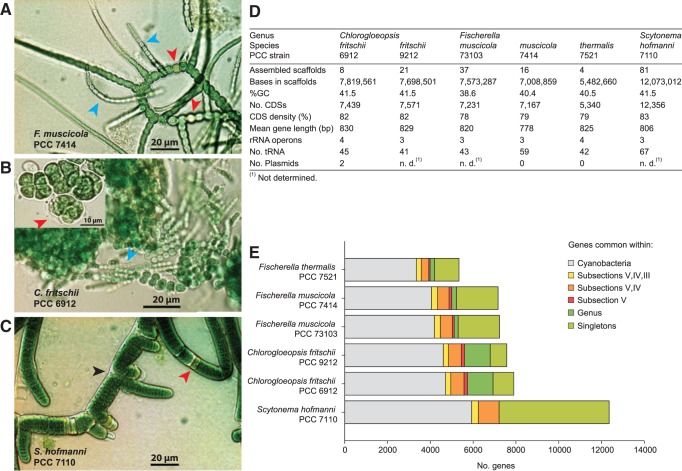
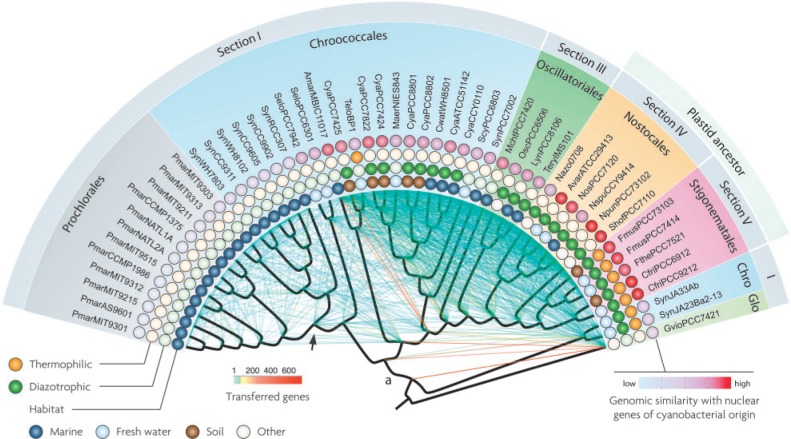
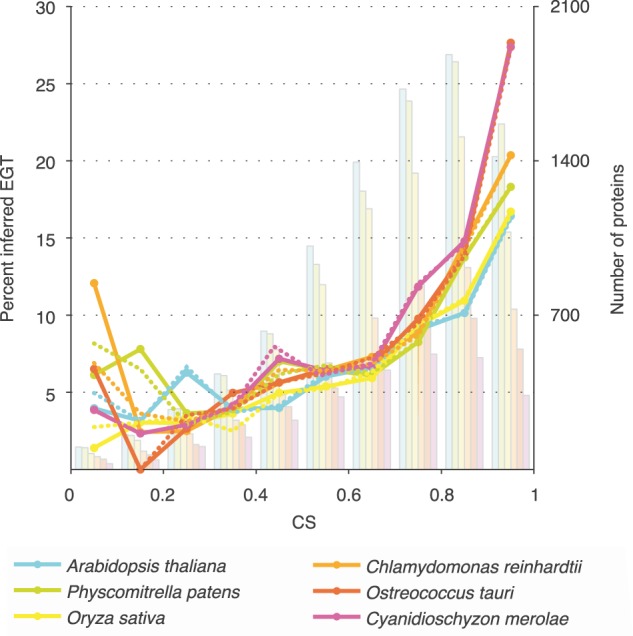
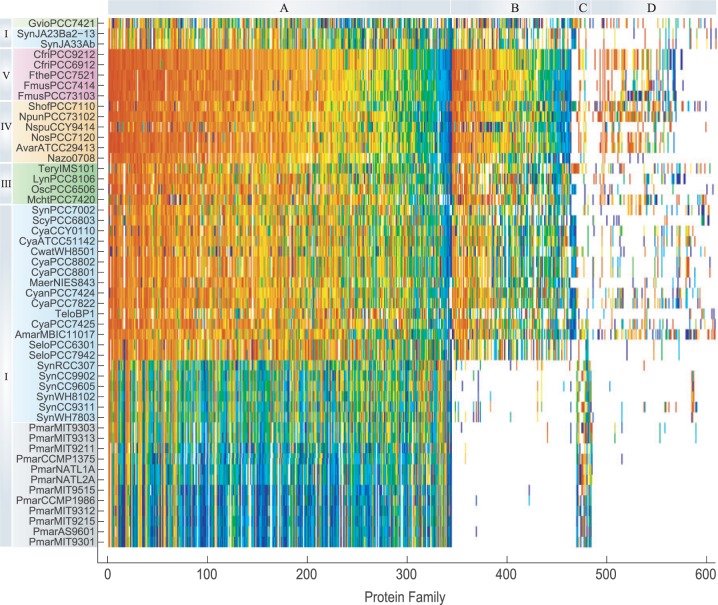
Cyanobacteria forged two major evolutionary transitions with the invention of oxygenic photosynthesis and the bestowal of photosynthetic lifestyle upon eukaryotes through endosymbiosis. Information germane to understanding those transitions is imprinted in cyanobacterial genomes, but deciphering it is complicated by lateral gene transfer (LGT). Here, we report genome sequences for the morphologically most complex true-branching cyanobacteria, and for Scytonema hofmanni PCC 7110, which with 12,356 proteins is the most gene-rich prokaryote currently known. We investigated components of cyanobacterial evolution that have been vertically inherited, horizontally transferred, and donated to eukaryotes at plastid origin. The vertical component indicates a freshwater origin for water-splitting photosynthesis. Networks of the horizontal component reveal that 60% of cyanobacterial gene families have been affected by LGT. Plant nuclear genes acquired from cyanobacteria define a lower bound frequency of 611 multigene families that, in turn, specify diazotrophic cyanobacterial lineages as having a gene collection most similar to that possessed by the plastid ancestor.
Overview
The claims and statistics of this paper haven’t been checked yet.
Free: it reads the open-access text and checks the first 5 claims that cite a source we can check. Create a free account to check every claim.
Integrity signals
Registry
Cites
Statistics
Figures
Verification
Claims the paper makes
The claims and statistics of this paper haven’t been checked yet.
Free: it reads the open-access text and checks the first 5 claims that cite a source we can check. Create a free account to check every claim.
Claims other papers make about this one
Each is checked against this paper’s own text: does it say what the citing paper says it does?
The cited source doesn’t support the claim as written.
In the citing paper
“Less than 5% of the genes thought to have been present in the cyanobacterial progenitor of the plastid typically remain in the organellar genome, and hundreds of cyanobacterial genes can be found in the nuclear genomes of extant algae and plants (Dagan et al. 2013, Qiu, Yoon, et al. 2013).”
From Genomic Insights into Plastid Evolution (2020) · cites this paper as Dagan et al. 2013
Checked by a reasoning model — may be wrong.
Experimental — accuracy not yet measuredThe cited source says what the claim attributes to it.
In the citing paper
“Less than 5% of the genes thought to have been present in the cyanobacterial progenitor of the plastid typically remain in the organellar genome, and hundreds of cyanobacterial genes can be found in the nuclear genomes of extant algae and plants (Dagan et al. 2013, Qiu, Yoon, et al. 2013).”
From Genomic Insights into Plastid Evolution (2020) · cites this paper as Dagan et al. 2013
Self-check
Percentages, sums and reported differences re-computed from the paper’s own numbers.
The self-check needs the paper’s full text.
Citations
Cites
Gapped BLAST and PSI-BLAST: a new generation of protein database search programs
Altschul, S. (1997) · Nucleic Acids Research · doi:10.1093/nar/25.17.3389 · Cited by 73,302
The neighbor-joining method: a new method for reconstructing phylogenetic trees.
(1987) · Molecular Biology and Evolution · doi:10.1093/oxfordjournals.molbev.a040454 · Cited by 59,715 · cited 2×
“Polysaccharide-free high molecular weight genomic DNA (gDNA) from strains of Fischerella was obtained by following a protocol for polysaccharide-rich plants (Sharma et al. 2002).”
MethodPHYLIP-Phylogeny inference package (Version 3.2)
Felsenstein, J. (1989) · Cladistics · Cited by 18,906
Guindon, S., Dufayard, J.-F., Lefort, V., Anisimova, M., Hordijk, W., & Gascuel, O. (2010) · Systematic Biology · doi:10.1093/sysbio/syq010 · Cited by 18,376 · cited 5×
“A phylogenetic tree was reconstructed from the concatenated alignment using the NJ approach and the software described as earlier.”
MethodInfluentialMAFFT: a novel method for rapid multiple sequence alignment based on fast Fourier transform
Katoh, K. (2002) · Nucleic Acids Research · doi:10.1093/nar/gkf436 · Cited by 17,027 · cited 5×
“The sequences of protein families were aligned using MAFFT (Katoh et al. 2002) Ver.”
MethodInfluentialApplication of Phylogenetic Networks in Evolutionary Studies
Huson, D. H., & Bryant, D. (2006) · Molecular Biology and Evolution · doi:10.1093/molbev/msj030 · Cited by 8,830 · cited 5×
“To test the consistency of the backbone (consensus) phylogeny, we reconstructed a phylogenetic network using SplitsTree (Huson and Bryant 2006).”
BackgroundMethodInfluentialGeneric Assignments, Strain Histories and Properties of Pure Cultures of Cyanobacteria
Rippka, R., Stanier, R. Y., Deruelles, J., Herdman, M., & Waterbury, J. B. (1979) · Microbiology · doi:10.1099/00221287-111-1-1 · Cited by 7,606 · cited 7×
“In addition Scytonema hofmanni PCC 7110, a Nostocales representative (subsection IV) isolated from a limestone cave (Crystal cave, Bermuda) (Rippka et al. 1979), whose filaments form false branches (fig.”
BackgroundInfluentialSelf-citationThe rapid generation of mutation data matrices from protein sequences
Jones, D. T., Taylor, W. R., & Thornton, J. M. (1992) · Bioinformatics · doi:10.1093/bioinformatics/8.3.275 · Cited by 6,947 · cited 4×
“Protein sequence distances were calculated with PROTDIST (Felsenstein 1993), and applying the JTT substitution model (Jones et al. 1992).”
MethodInfluentialKEGG for integration and interpretation of large-scale molecular data sets
Kanehisa, M., Goto, S., Sato, Y., Furumichi, M., & Tanabe, M. (2012) · Nucleic Acids Research · doi:10.1093/nar/gkr988 · Cited by 4,848
Pruitt, K. D., Tatusova, T., & Maglott, D. R. (2007) · Nucleic Acids Research · doi:10.1093/nar/gkl842 · Cited by 4,481
Lateral gene transfer and the nature of bacterial innovation
Ochman, H., Lawrence, J. G., & Groisman, E. A. (2000) · Nature · doi:10.1038/35012500 · Cited by 3,816 · cited 2×
“But reconstructing those events is not straightforward, because lateral gene transfer (LGT) redistributes genes among prokaryote genomes (Ochman et al. 2000), and among cyanobacterial genomes in particular (Raymond et al. 2002; Mulkidjanian et al. 2006; Dufresne et al. 2008; Shi and Falkowski…”
BackgroundAn efficient algorithm for large-scale detection of protein families
Enright, A. J. (2002) · Nucleic Acids Research · doi:10.1093/nar/30.7.1575 · Cited by 3,588 · cited 5×
“DNA isolation from strains of Chlorogloeopsis was performed as described (Franche and Damerval 1988), with the addition of 1% Sarkosyl during lysozyme treatment to remove polysaccharides and a final RNA digestion step.”
MethodInfluentialThe Microbial Engines That Drive Earth's Biogeochemical Cycles
Falkowski, P. G., Fenchel, T., & Delong, E. F. (2008) · Science · doi:10.1126/science.1153213 · Cited by 3,379 · cited 4×
“The chemical benefit of O2 could, of course, have only been of value if the initial endosymbiosis had taken place at a time in Earth’s history, or in an environment, where O2 was not freely available in sufficient amounts.”
BackgroundInfluentialConsed: A Graphical Tool for Sequence Finishing
Gordon, D., Abajian, C., & Green, P. (1998) · Genome Research · doi:10.1101/gr.8.3.195 · Cited by 3,302 · cited 2×
“But reconstructing those events is not straightforward, because lateral gene transfer (LGT) redistributes genes among prokaryote genomes (Ochman et al. 2000), and among cyanobacterial genomes in particular (Raymond et al. 2002; Mulkidjanian et al. 2006; Dufresne et al. 2008; Shi and Falkowski…”
BackgroundMethodPHYLIP ( PHYLogeny Inference Package)
Cummings, M. P. (2004) · Dictionary of Bioinformatics and Computational Biology · doi:10.1002/9780471650126.dob0534.pub2 · Cited by 3,127
ProtTest: selection of best-fit models of protein evolution
Abascal, F., Zardoya, R., & Posada, D. (2005) · Bioinformatics · doi:10.1093/bioinformatics/bti263 · Cited by 3,063
Whelan, S., & Goldman, N. (2001) · Molecular Biology and Evolution · doi:10.1093/oxfordjournals.molbev.a003851 · Cited by 2,849 · cited 2×
“From among 35,862 trees in total, WAG model was found as the best fit in 89% of the trees, with WAG + I + G as the more prevalent choice (34%).”
MethodImproved microbial gene identification with GLIMMER
Delcher, A. (1999) · Nucleic Acids Research · doi:10.1093/nar/27.23.4636 · Cited by 2,493 · cited 3×
“Gene prediction was performed by means of combining results of the software tools GLIMMER (Delcher et al. 1999), CRITICA (Badger and Olson 1999), and GISMO (Krause et al. 2007).”
BackgroundMethodThe COG database: new developments in phylogenetic classification of proteins from complete genomes
Tatusov, R. L. (2001) · Nucleic Acids Research · doi:10.1093/nar/29.1.22 · Cited by 1,895 · cited 1×
“…those events is not straightforward, because lateral gene transfer (LGT) redistributes genes among prokaryote genomes (Ochman et al. 2000), and among cyanobacterial genomes in particular (Raymond et al. 2002; Mulkidjanian et al. 2006; Dufresne et al. 2008; Shi and Falkowski 2008), over…”
BackgroundDating the rise of atmospheric oxygen
Bekker, A., Holland, H. D., Wang, P.-L., Rumble, D., Stein, H. J., Hannah, J. L., Coetzee, L. L., & Beukes, N. J. (2004) · Nature · doi:10.1038/nature02260 · Cited by 1,435 · cited 1×
“Cyanobacteria forged two major evolutionary transitions with the invention of oxygenic photosynthesis and the bestowal of photosynthetic lifestyle upon eukaryotes through endosymbiosis.”
BackgroundThe Hydrogen Hypothesis for the First Eukaryote
Martin, W., & Müller, M. (1998) · Nature · doi:10.1038/32096 · Cited by 1,282
Self-citationGenome divergence in two Prochlorococcus ecotypes reflects oceanic niche differentiation
Rocap, G., Larimer, F. W., Lamerdin, J., Malfatti, S., Chain, P., Ahlgren, N. A., Arellano, A., Coleman, M., Hauser, L., Hess, W. R., et al. (2003) · Nature · doi:10.1038/nature01947 · Cited by 1,204 · cited 1×
“Supplementary figures S1–S7 and tables S1–S3 are available at Genome Biology and Evolution online (http://www.gbe. oxfordjournals.org/).”
BackgroundThe Biogeochemical Cycles of Trace Metals in the Oceans
Morel, F. M. M., & Price, N. M. (2003) · Science · doi:10.1126/science.1083545 · Cited by 1,193 · cited 2×
“Networksof thehorizontal component reveal that60%ofcyanobacterial gene familieshavebeen affected by LGT. Plant nuclear genes acquired from cyanobacteria define a lower bound frequency of 611 multigene families that, in turn, specify diazotrophic cyanobacterial lineages as having a gene collection…”
BackgroundInfluentialProterozoic Ocean Chemistry and Evolution: A Bioinorganic Bridge?
Anbar, A. D., & Knoll, A. H. (2002) · Science · doi:10.1126/science.1069651 · Cited by 1,191 · cited 1×
“Geochemists have found over the last decade that an approximately 2 billion year span of protracted ocean anoxia ended only about 580 Ma (Anbar and Knoll 2002; Johnston et al. 2009; Lyons et al. 2009; Lyons and Reinhardt 2009; Sahoo et al. 2012).”
BackgroundMartin, W., Rujan, T., Richly, E., Hansen, A., Cornelsen, S., Lins, T., Leister, D., Stoebe, B., Hasegawa, M., & Penny, D. (2002) · Proceedings of the National Academy of Sciences · doi:10.1073/pnas.182432999 · Cited by 1,178 · cited 1×
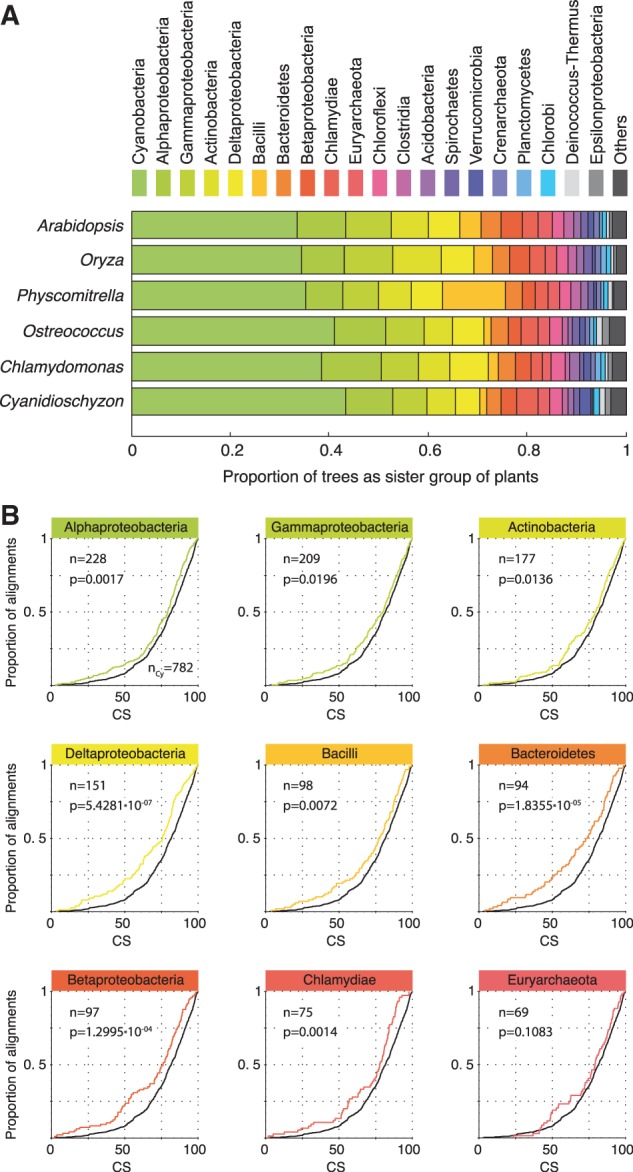
“…of Arabidopsis thaliana, Oryza sativa subsp. japonica, Physcomitrella patens, Chlamydomonas reinhardtii, Entamoeba histolytica, Dictyostelium discoideum, Filobasidiella neoformans, Saccharomyces cerevisiae, Schizosaccharomyces pombe, Drosophila melanogaster, Ciona intestinalis, Danio rerio,…”
BackgroundSelf-citationGenome sequence of the ultrasmall unicellular red alga Cyanidioschyzon merolae 10D
Matsuzaki, M., Misumi, O., Shin-i, T., Maruyama, S., Takahara, M., Miyagishima, S.-Y., Mori, T., Nishida, K., Yagisawa, F., Nishida, K., et al. (2004) · Nature · doi:10.1038/nature02398 · Cited by 1,085 · cited 1×
“Gene prediction was performed by means of combining results of the software tools GLIMMER (Delcher et al. 1999), CRITICA (Badger and Olson 1999), and GISMO (Krause et al. 2007).”
MethodEstimating the timing of early eukaryotic diversification with multigene molecular clocks
Parfrey, L. W., Lahr, D. J. G., Knoll, A. H., & Katz, L. A. (2011) · Proceedings of the National Academy of Sciences · doi:10.1073/pnas.1110633108 · Cited by 899 · cited 2×
“Fossil evidence supports the notion that the primary plastid endosymbiosis occurred at least 1.2 billion years ago (Butterfield 2000) and molecular estimates suggest that plastids might have arisen by approximately 1.5 billion years ago (Parfrey et al. 2011).”
BackgroundInfluentialBiochemistry and Evolution of Anaerobic Energy Metabolism in Eukaryotes
Müller, M., Mentel, M., van Hellemond, J. J., Henze, K., Woehle, C., Gould, S. B., Yu, R.-Y., van der Giezen, M., Tielens, A. G. M., & Martin, W. F. (2012) · Microbiology and Molecular Biology Reviews · doi:10.1128/mmbr.05024-11 · Cited by 838
Self-citationPhytoplankton in the ocean use non-phosphorus lipids in response to phosphorus scarcity
Van Mooy, B. A. S., Fredricks, H. F., Pedler, B. E., Dyhrman, S. T., Karl, D. M., Koblížek, M., Lomas, M. W., Mincer, T. J., Moore, L. R., Moutin, T., et al. (2009) · Nature · doi:10.1038/nature07659 · Cited by 838
Hohmann-Marriott, M. F., & Blankenship, R. E. (2011) · Annual Review of Plant Biology · doi:10.1146/annurev-arplant-042110-103811 · Cited by 744
Butterfield, N. J. (2000) · Paleobiology · doi:10.1666/0094-8373(2000)026<0386:bpngns>2.0.co;2 · Cited by 714 · cited 1×
“Fossil evidence supports the notion that the primary plastid endosymbiosis occurred at least 1.2 billion years ago (Butterfield 2000) and molecular estimates suggest that plastids might have arisen by approximately 1.5 billion years ago (Parfrey et al. 2011).”
BackgroundInfluentialGenDB--an open source genome annotation system for prokaryote genomes
Meyer, F. (2003) · Nucleic Acids Research · doi:10.1093/nar/gkg312 · Cited by 680 · cited 2×
“…them among the most complex of prokaryotes, for which reason they were even long thought to be the direct ancestors of all eukaryotes but only in the days before the endosymbiotic origin of plastids has been postulated (Mereschkowsky 1905) and eventually gained compelling support (Doolittle 1980).”
BackgroundSelf-citationExocellular polysaccharides from cyanobacteria and their possible applications
De Philippis, R. (1998) · FEMS Microbiology Reviews · doi:10.1016/s0168-6445(98)00012-6 · Cited by 660 · cited 1×
“…carbon exporters as the key innovation at plastid origin is that cyanobacteria are well known to produce copious amounts of exopolysaccharides (De Philippis and Vincenzini 1998), such that there would be no need to evolve or insert transporters for provision of carbohydrates to be realized by…”
BackgroundGould, S. B., Waller, R. F., & McFadden, G. I. (2008) · Annual Review of Plant Biology · doi:10.1146/annurev.arplant.59.032607.092915 · Cited by 634 · cited 8×
“Putative EGT Arabidopsis thaliana 30,897 9,025 801 (8.9”
BackgroundInfluentialSelf-citationThe tiny eukaryote Ostreococcus provides genomic insights into the paradox of plankton speciation
Palenik, B., Grimwood, J., Aerts, A., Rouzé, P., Salamov, A., Putnam, N., Dupont, C., Jorgensen, R., Derelle, E., Rombauts, S., et al. (2007) · Proceedings of the National Academy of Sciences · doi:10.1073/pnas.0611046104 · Cited by 625 · cited 1×
“Gene prediction was performed by means of combining results of the software tools GLIMMER (Delcher et al. 1999), CRITICA (Badger and Olson 1999), and GISMO (Krause et al. 2007).”
MethodPattern pluralism and the Tree of Life hypothesis
Doolittle, W. F., & Bapteste, E. (2007) · Proceedings of the National Academy of Sciences · doi:10.1073/pnas.0610699104 · Cited by 546 · cited 3×
“Worse, given that LGT is frequent among cyanobacteria (Raymond et al. 2002; Mulkidjanian et al. 2006; Shi and Falkowski 2008; Dufresne et al. 2008), there is no reason to suspect that any “core” gene phylogeny will be a faithful proxy for the rest of the genome (Doolittle and Bapteste 2007).”
BackgroundInfluentialOcean oxygenation in the wake of the Marinoan glaciation
Sahoo, S. K., Planavsky, N. J., Kendall, B., Wang, X., Shi, X., Scott, C., Anbar, A. D., Lyons, T. W., & Jiang, G. (2012) · Nature · doi:10.1038/nature11445 · Cited by 544
Unicellular Cyanobacterium Symbiotic with a Single-Celled Eukaryotic Alga
Thompson, A. W., Foster, R. A., Krupke, A., Carter, B. J., Musat, N., Vaulot, D., Kuypers, M. M. M., & Zehr, J. P. (2012) · Science · doi:10.1126/science.1222700 · Cited by 517
Transfer of photosynthesis genes to and from Prochlorococcus viruses
Lindell, D., Sullivan, M. B., Johnson, Z. I., Tolonen, A. C., Rohwer, F., & Chisholm, S. W. (2004) · Proceedings of the National Academy of Sciences · doi:10.1073/pnas.0401526101 · Cited by 516 · cited 1×
“Key words: plastid evolution, endosymbiosis, phylogenomics, true-branching cyanobacteria, nitrogen fixation.”
Kumar, K., Mella-Herrera, R. A., & Golden, J. W. (2010) · Cold Spring Harbor Perspectives in Biology · doi:10.1101/cshperspect.a000315 · Cited by 498
Unicellular Cyanobacterial Distributions Broaden the Oceanic N 2 Fixation Domain
Moisander, P. H., Beinart, R. A., Hewson, I., White, A. E., Johnson, K. S., Carlson, C. A., Montoya, J. P., & Zehr, J. P. (2010) · Science · doi:10.1126/science.1185468 · Cited by 422 · cited 1×
“Here, we report genome sequences for the morphologically most complex true-branching cyanobacteria, and for Scytonema hofmanni PCC 7110, which with 12,356 proteins is the most gene-rich prokaryote currently known.”
BackgroundStrategy by which nitrogen-fixing unicellular cyanobacteria grow photoautotrophically
Mitsui, A., Kumazawa, S., Takahashi, A., Ikemoto, H., Cao, S., & Arai, T. (1986) · Nature · doi:10.1038/323720a0 · Cited by 419
Modular networks and cumulative impact of lateral transfer in prokaryote genome evolution
Dagan, T., Artzy-Randrup, Y., & Martin, W. (2008) · Proceedings of the National Academy of Sciences · doi:10.1073/pnas.0800679105 · Cited by 409 · cited 9×
“The MLN analysis conservatively assumes that all gene trees for all protein families are compatible (Dagan et al. 2008) and entails no gene tree comparisons.”
BackgroundMethodInfluentialSelf-citationCRITICA: coding region identification tool invoking comparative analysis
Badger, J. H., & Olsen, G. J. (1999) · Molecular Biology and Evolution · doi:10.1093/oxfordjournals.molbev.a026133 · Cited by 409 · cited 1×
“By necessity, and perhaps more so than for any other prokaryotic group, LGT has always been hard-wired into the bigger picture of cyanobacterial evolution.”
BackgroundCyanophora paradoxa Genome Elucidates Origin of Photosynthesis in Algae and Plants
Price, D. C., Chan, C. X., Yoon, H. S., Yang, E. C., Qiu, H., Weber, A. P. M., Schwacke, R., Gross, J., Blouin, N. A., Lane, C., et al. (2012) · Science · doi:10.1126/science.1213561 · Cited by 380
Tracking Euxinia in the Ancient Ocean: A Multiproxy Perspective and Proterozoic Case Study
Lyons, T. W., Anbar, A. D., Severmann, S., Scott, C., & Gill, B. C. (2009) · Annual Review of Earth and Planetary Sciences · doi:10.1146/annurev.earth.36.031207.124233 · Cited by 373 · cited 1×
“Geochemists have found over the last decade that an approximately 2 billion year span of protracted ocean anoxia ended only about 580 Ma (Anbar and Knoll 2002; Johnston et al. 2009; Lyons et al. 2009; Lyons and Reinhardt 2009; Sahoo et al. 2012).”
BackgroundTansley Review No. 116: Cyanobacterium–plant symbioses
RAI, A. N., SÖDERBÄCK, E., & BERGMAN, B. (2000) · New Phytologist · doi:10.1046/j.1469-8137.2000.00720.x · Cited by 364 · cited 1×
“This view is supported by the circumstance that in modern symbioses involving cyanobacteria, nitrogen (not reduced carbon) is usually the key nutrient underlying the success of the partnership (Rai et al. 2000; Raven 2002).”
BackgroundPhylogenetic analyses of cyanobacterial genomes: Quantification of horizontal gene transfer events
Zhaxybayeva, O., Gogarten, J. P., Charlebois, R. L., Doolittle, W. F., & Papke, R. T. (2006) · Genome Research · doi:10.1101/gr.5322306 · Cited by 334 · cited 2×
“Our estimate is found in agreement with earlier quantification of LGT frequency among cyanobacteria using an embedded quartets approach (Zhaxybayeva et al. 2006).”
BackgroundResultUnraveling the genomic mosaic of a ubiquitous genus of marine cyanobacteria
Dufresne, A., Ostrowski, M., Scanlan, D. J., Garczarek, L., Mazard, S., Palenik, B. P., Paulsen, I. T., de Marsac, N. T., Wincker, P., Dossat, C., et al. (2008) · Genome Biology · doi:10.1186/gb-2008-9-5-r90 · Cited by 334 · cited 3×
“The chemical benefit of O2 could, of course, have only been of value if the initial endosymbiosis had taken place at a time in Earth’s history, or in an environment, where O2 was not freely available in sufficient amounts.”
BackgroundAnoxygenic photosynthesis modulated Proterozoic oxygen and sustained Earth's middle age
Johnston, D. T., Wolfe-Simon, F., Pearson, A., & Knoll, A. H. (2009) · Proceedings of the National Academy of Sciences · doi:10.1073/pnas.0909248106 · Cited by 329 · cited 2×
“Geochemists have found over the last decade that an approximately 2 billion year span of protracted ocean anoxia ended only about 580 Ma (Anbar and Knoll 2002; Johnston et al. 2009; Lyons et al. 2009; Lyons and Reinhardt 2009; Sahoo et al. 2012).”
Background(2002) · Springer eBooks · doi:10.1007/0-306-48005-0 · Cited by 328
The cyanobacterial genome core and the origin of photosynthesis
Mulkidjanian, A. Y., Koonin, E. V., Makarova, K. S., Mekhedov, S. L., Sorokin, A., Wolf, Y. I., Dufresne, A., Partensky, F., Burd, H., Kaznadzey, D., et al. (2006) · Proceedings of the National Academy of Sciences · doi:10.1073/pnas.0605709103 · Cited by 324 · cited 3×
“The chemical benefit of O2 could, of course, have only been of value if the initial endosymbiosis had taken place at a time in Earth’s history, or in an environment, where O2 was not freely available in sufficient amounts.”
BackgroundBLANK, C. E., & SÁNCHEZ‐BARACALDO, P. (2010) · Geobiology · doi:10.1111/j.1472-4669.2009.00220.x · Cited by 298
MARTIN, W., & KOWALLIK, K. V. (1999) · European Journal of Phycology · doi:10.1017/s0967026299002231 · Cited by 284
Self-citationWhole-Genome Analysis of Photosynthetic Prokaryotes
Raymond, J., Zhaxybayeva, O., Gogarten, J. P., Gerdes, S. Y., & Blankenship, R. E. (2002) · Science · doi:10.1126/science.1075558 · Cited by 272 · cited 7×
“Supplementary figures S1–S7 and tables S1–S3 are available at Genome Biology and Evolution online (http://www.gbe. oxfordjournals.org/).”
BackgroundResultInfluentialNitrogen fixation in eukaryotes – New models for symbiosis
Kneip, C., Lockhart, P., Voß, C., & Maier, U.-G. (2007) · BMC Evolutionary Biology · doi:10.1186/1471-2148-7-55 · Cited by 238 · cited 1×
“The theory for the initial benefit of plastids that is currently best founded in direct observation, we would argue, is that nitrogen fixation was a key to the establishment of the symbiosis (Kneip et al. 2007).”
BackgroundSelf-citationDeusch, O., Landan, G., Roettger, M., Gruenheit, N., Kowallik, K. V., Allen, J. F., Martin, W., & Dagan, T. (2008) · Molecular Biology and Evolution · doi:10.1093/molbev/msn022 · Cited by 215 · cited 1×
“Key words: plastid evolution, endosymbiosis, phylogenomics, true-branching cyanobacteria, nitrogen fixation.”
Self-citationSwingley, W. D., Chen, M., Cheung, P. C., Conrad, A. L., Dejesa, L. C., Hao, J., Honchak, B. M., Karbach, L. E., Kurdoglu, A., Lahiri, S., et al. (2008) · Proceedings of the National Academy of Sciences · doi:10.1073/pnas.0709772105 · Cited by 213 · cited 1×
“Supplementary figures S1–S7 and tables S1–S3 are available at Genome Biology and Evolution online (http://www.gbe. oxfordjournals.org/).”
BackgroundPhotosystem I gene cassettes are present in marine virus genomes
Sharon, I., Alperovitch, A., Rohwer, F., Haynes, M., Glaser, F., Atamna-Ismaeel, N., Pinter, R. Y., Partensky, F., Koonin, E. V., Wolf, Y. I., et al. (2009) · Nature · doi:10.1038/nature08284 · Cited by 211 · cited 1×
“Key words: plastid evolution, endosymbiosis, phylogenomics, true-branching cyanobacteria, nitrogen fixation.”
Ran, L., Larsson, J., Vigil-Stenman, T., Nylander, J. A. A., Ininbergs, K., Zheng, W.-W., Lapidus, A., Lowry, S., Haselkorn, R., & Bergman, B. (2010) · PLoS ONE · doi:10.1371/journal.pone.0011486 · Cited by 211
C OMPLEX E VOLUTION OF P HOTOSYNTHESIS
Xiong, J., & Bauer, C. E. (2002) · Annual Review of Plant Biology · doi:10.1146/annurev.arplant.53.100301.135212 · Cited by 211 · cited 4×
“To explain the origin of cyanobacterial water-splitting photosynthesis, both of the main competing theories require LGT to account for the distribution of photosystems across prokaryotic groups (Xiong and Bauer 2002; Hohmann-Marriot and Blankenship 2011).”
BackgroundInfluentialHeads or Tails: A Simple Reliability Check for Multiple Sequence Alignments
Landan, G., & Graur, D. (2007) · Molecular Biology and Evolution · doi:10.1093/molbev/msm060 · Cited by 202 · cited 2×
“A concatenated alignment was reconstructed from the aligned protein sequences, and all genes were weighted equally (supplementary fig.”
MethodSelf-citationStucken, K., John, U., Cembella, A., Murillo, A. A., Soto-Liebe, K., Fuentes-Valdés, J. J., Friedel, M., Plominsky, A. M., Vásquez, M., & Glöckner, G. (2010) · PLoS ONE · doi:10.1371/journal.pone.0009235 · Cited by 196 · cited 1×
“Patterns of gene presence and absence might identify genes related to cyanobacterial morphological diversity (Stucken et al. 2010; Larsson et al. 2011).”
BackgroundSelf-citationGenome evolution in cyanobacteria: The stable core and the variable shell
Shi, T., & Falkowski, P. G. (2008) · Proceedings of the National Academy of Sciences · doi:10.1073/pnas.0711165105 · Cited by 194 · cited 4×
“5(1):31–44. doi:10.1093/gbe/evs117 Advance Access publication December 7, 2012 35 homologous sequences, these are conservative lower bound estimates, in contrast to other recent studies (Raymond et al. 2002; Mulkidjanian et al. 2006; Shi and Falkowski 2008; Dufresne et al. 2008).”
BackgroundResultInfluentialRichly, E., & Leister, D. (2004) · Gene · doi:10.1016/j.gene.2004.01.008 · Cited by 189 · cited 2×
“Chloroplasts were once free-living cyanobacteria and contained approximately 2,000 proteins (Richly and Leister 2004), a number comparable with a cyanobacterium, yet the genomes of modern plastids contain only 5–10% as many genes as those of their free-living cousins.”
BackgroundLichen Guilds Share Related Cyanobacterial Symbionts
Rikkinen, J., Oksanen, I., & Lohtander, K. (2002) · Science · doi:10.1126/science.1072961 · Cited by 189 · cited 1×
“…et al. 2008), prymnesiophytes with associated N-fixing cyanobacteria that might be ectosymbionts (Thompson et al. 2012), cyanobionts in lichens (Rikkinen et al. 2002), coralloid roots of cycads (Costa et al. 2004), the angiosperm Gunnera (Chiu et al. 2005), and the water-fern Azolla (Ran et…”
BackgroundDNA isolation from dry and fresh samples of polysaccharide-rich plants
Sharma, A. D., Gill, P. K., & Singh, P. (2002) · Plant Molecular Biology Reporter · doi:10.1007/bf02772129 · Cited by 184 · cited 1×
“Polysaccharide-free high molecular weight genomic DNA (gDNA) from strains of Fischerella was obtained by following a protocol for polysaccharide-rich plants (Sharma et al. 2002).”
MethodDid an ancient chlamydial endosymbiosis facilitate the establishment of primary plastids?
Huang, J., & Gogarten, J. P. (2007) · Genome Biology · doi:10.1186/gb-2007-8-6-r99 · Cited by 184 · cited 2×
“This theory postulates that the plant ancestor consumed cyanobacteria as food and was parasitized by environmental chlamydias (Huang and Gogarten 2007; Moustafa et al. 2008), whereby the chlamydias were key to establishing the plastid because chlamydia-like bacteria donated genes that allowed…”
BackgroundFree-radical-induced mutation vs redox regulation: Costs and benefits of genes in organelles
Allen, J. F., & Raven, J. A. (1996) · Journal of Molecular Evolution · doi:10.1007/bf02352278 · Cited by 182 · cited 1×
“A potential problem with this view is that nitrogen fixation has not been retained by any modern plant (Allen and Raven 1996).”
BackgroundSelf-citationAllen, J. F., & Martin, W. (2007) · Nature · doi:10.1038/445610a · Cited by 178 · cited 1×
“Such an electron donor could have been aqueous MnII/III, which has the utilitous property of being photo-oxidized by ultraviolet light (Allen and Martin 2007), an abundant component of solar radiation incident on the Earth’s surface prior to accumulation of atmospheric oxygen.”
BackgroundSelf-citationIdentification of cyanobacterial cell division genes by comparative and mutational analyses
Miyagishima, S., Wolk, C. P., & Osteryoung, K. W. (2005) · Molecular Microbiology · doi:10.1111/j.1365-2958.2005.04548.x · Cited by 174 · cited 1×
“Transposon mutagenesis of Synechococcus elongatus PCC 7942 (subsection I) revealed that the loss of several genes involved in cell division leads to filament formation (Miyagishima et al. 2005).”
BackgroundGenome fluctuations in cyanobacteria reflect evolutionary, developmental and adaptive traits
Larsson, J., Nylander, J. A., & Bergman, B. (2011) · BMC Evolutionary Biology · doi:10.1186/1471-2148-11-187 · Cited by 164 · cited 6×
“…(diameter 1mm or less) share reduced genome sizes (<3 Mb) as a common trait, and seem to have arisen from ancestors with larger genomes (Larsson et al. 2011) that, inferred from the phylogeny, lived in terrestrial, brackish, or perhaps freshwater environments (Sánchez-Baracaldo et al.…”
BackgroundInfluentialMetabolic Symbiosis and the Birth of the Plant Kingdom
Deschamps, P., Colleoni, C., Nakamura, Y., Suzuki, E., Putaux, J.-L., Buleon, A., Haebel, S., Ritte, G., Steup, M., Falcon, L. I., et al. (2008) · Molecular Biology and Evolution · doi:10.1093/molbev/msm280 · Cited by 162 · cited 1×
“Key words: plastid evolution, endosymbiosis, phylogenomics, true-branching cyanobacteria, nitrogen fixation.”
Morphological and habitat evolution in the Cyanobacteria using a compartmentalization approach
SÁNCHEZ‐BARACALDO, P., HAYES, P. K., & BLANK, C. E. (2005) · Geobiology · doi:10.1111/j.1472-4669.2005.00050.x · Cited by 158
Prechtl, J., Kneip, C., Lockhart, P., Wenderoth, K., & Maier, U.-G. (2004) · Molecular Biology and Evolution · doi:10.1093/molbev/msh086 · Cited by 149 · cited 1×
“This is true for diatoms with N2-fixing cyanobacterial endosymbionts (Prechtl et al. 2004; Kneip et al. 2008), prymnesiophytes with associated N-fixing cyanobacteria that might be ectosymbionts (Thompson et al. 2012), cyanobionts in lichens (Rikkinen et al. 2002), coralloid roots of cycads (Costa…”
BackgroundSelf-citationLong-Branch Attraction and the rDNA Model of Early Eukaryotic Evolution
Stiller, J. W., & Hall, B. D. (1999) · Molecular Biology and Evolution · doi:10.1093/oxfordjournals.molbev.a026217 · Cited by 144 · cited 1×
“Compositional heterogeneity such as AT bias and heterotachy can cause LBA (Lockhart et al. 2006), and a basal position due to an LBA often involves the grouping of strains in which strain-specific character states are abundant (Stiller and Hall 1999).”
BackgroundXenbase: a Xenopus biology and genomics resource
Bowes, J. B., Snyder, K. A., Segerdell, E., Gibb, R., Jarabek, C., Noumen, E., Pollet, N., & Vize, P. D. (2007) · Nucleic Acids Research · doi:10.1093/nar/gkm826 · Cited by 133 · cited 1×
“Phylogenetic Analysis of Cyanobacterial Genomes Fully sequenced cyanobacterial proteomes were downloaded from NCBI version March/2011.”
MethodChlamydiae Has Contributed at Least 55 Genes to Plantae with Predominantly Plastid Functions
Moustafa, A., Reyes-Prieto, A., & Bhattacharya, D. (2008) · PLoS ONE · doi:10.1371/journal.pone.0002205 · Cited by 132 · cited 1×
“…theory postulates that the plant ancestor consumed cyanobacteria as food and was parasitized by environmental chlamydias (Huang and Gogarten 2007; Moustafa et al. 2008), whereby the chlamydias were key to establishing the plastid because chlamydia-like bacteria donated genes that allowed export…”
BackgroundBrinkman, F. S. L., Blanchard, J. L., Cherkasov, A., Av-Gay, Y., Brunham, R. C., Fernandez, R. C., Finlay, B. B., Otto, S. P., Ouellette, B. F. F., Keeling, P. J., et al. (2002) · Genome Research · doi:10.1101/gr.341802 · Cited by 126
Heterotachy and Tree Building: A Case Study with Plastids and Eubacteria
Lockhart, P., Novis, P., Milligan, B. G., Riden, J., Rambaut, A., & Larkum, T. (2006) · Molecular Biology and Evolution · doi:10.1093/molbev/msj005 · Cited by 125
Self-citationWeber, A. P. M., Linka, M., & Bhattacharya, D. (2006) · Eukaryotic Cell · doi:10.1128/ec.5.3.609-612.2006 · Cited by 122 · cited 1×
“…membrane and that the incorporation of a metabolite antiporter like the triose phosphate translocator in the ancestral plastid membrane was the essential step for establishing the primary endosymbiosis by allowing the plant ancestor to profit from cyanobacterial carbon fixation (Weber et al. 2006).”
BackgroundHow many genes in Arabidopsis come from cyanobacteria? An estimate from 386 protein phylogenies
Rujan, T., & Martin, W. (2001) · Trends in Genetics · doi:10.1016/s0168-9525(00)02209-5 · Cited by 117
Self-citationMitochondrial and plastid evolution in eukaryotes: an outsiders' perspective
Gross, J., & Bhattacharya, D. (2009) · Nature Reviews Genetics · doi:10.1038/nrg2610 · Cited by 105 · cited 1×
“In the same vein, it was furthermore argued that the key to establishment of the plastid entailed the insertion of additional host-controlled metabolite exchange proteins into plastid membranes fulfilling a similar export role (Gross and Bhattacharya 2009).”
BackgroundIntertwined Evolutionary Histories of Marine Synechococcus and Prochlorococcus marinus
Zhaxybayeva, O., Doolittle, W. F., Papke, R. T., & Gogarten, J. P. (2009) · Genome Biology and Evolution · doi:10.1093/gbe/evp032 · Cited by 105 · cited 2×
“Supplementary figures S1–S7 and tables S1–S3 are available at Genome Biology and Evolution online (http://www.gbe. oxfordjournals.org/).”
BackgroundDaddy, where did (PS)I come from?
Baymann, F., Brugna, M., Mühlenhoff, U., & Nitschke, W. (2001) · Biochimica et Biophysica Acta (BBA) - Bioenergetics · doi:10.1016/s0005-2728(01)00209-2 · Cited by 105 · cited 3×
“One theory posits that the two photosystems evolved in independent lineages and became merged in the founder cyanobacterium via LGT (Baymann et al. 2001), while the alternative has it that the photosystems diverged within a photosynthetic (protocyanobacterial) ancestor and were subsequently…”
BackgroundDifferential Gene Retention in Plastids of Common Recent Origin
Reyes-Prieto, A., Yoon, H. S., Moustafa, A., Yang, E. C., Andersen, R. A., Boo, S. M., Nakayama, T., Ishida, K.-I., & Bhattacharya, D. (2010) · Molecular Biology and Evolution · doi:10.1093/molbev/msq032 · Cited by 102
Exploring Cyanobacterial Mutualisms
Usher, K. M., Bergman, B., & Raven, J. A. (2007) · Annual Review of Ecology, Evolution, and Systematics · doi:10.1146/annurev.ecolsys.38.091206.095641 · Cited by 98
Large-Scale Phylogenomic Analyses Indicate a Deep Origin of Primary Plastids within Cyanobacteria
Criscuolo, A., & Gribaldo, S. (2011) · Molecular Biology and Evolution · doi:10.1093/molbev/msr108 · Cited by 97 · cited 4×
“An alternative suggestion is that the initial advantage of plastids may have simply been their uniquely useful metabolic end product, O2, as a boost to respiration in early mitochondria (Martin and Müller 1998).”
BackgroundInfluentialRevolutionary concepts in evolutionary cell biology
Doolittle, W. F. (1980) · Trends in Biochemical Sciences · doi:10.1016/0968-0004(80)90010-9 · Cited by 95 · cited 1×
“…them among the most complex of prokaryotes, for which reason they were even long thought to be the direct ancestors of all eukaryotes but only in the days before the endosymbiotic origin of plastids has been postulated (Mereschkowsky 1905) and eventually gained compelling support (Doolittle 1980).”
BackgroundKneip, C., Voβ, C., Lockhart, P. J., & Maier, U. G. (2008) · BMC Evolutionary Biology · doi:10.1186/1471-2148-8-30 · Cited by 94 · cited 6×
“The early physiological association of the plastid ancestors with their host might thus have been similar to that of the unicellular nitrogen-fixing endosymbiont and its diatom host Rhopalodia (Kneip et al. 2008), or the highly reduced Nostoc azollae, an obligate cyanobiont of water-ferns, whose genome has drastically…”
BackgroundInfluentialSelf-citationThe origin of mitochondria in light of a fluid prokaryotic chromosome model
Esser, C., Martin, W., & Dagan, T. (2007) · Biology Letters · doi:10.1098/rsbl.2006.0582 · Cited by 92 · cited 1×
“…uncritical interpretation of computational results of genome comparisons that, as has long been known (Rujan and Martin 2001; Martin et al. 2002; Esser et al. 2007; Dagan et al. 2008), would implicate many other groups of prokaryotes far more strongly than they would implicate chlamydias as…”
BackgroundSelf-citationIndependence of Circadian Timing from Cell Division in Cyanobacteria
Mori, T., & Johnson, C. H. (2001) · Journal of Bacteriology · doi:10.1128/jb.183.8.2439-2444.2001 · Cited by 88 · cited 1×
“Furthermore, filament formation in S. elongatus PCC 7942 can be induced by over-expression of the gene encoding FtsZ, which is known as a cell division protein (Mori and Johnson 2001).”
BackgroundA redox switch hypothesis for the origin of two light reactions in photosynthesis
Allen, J. F. (2005) · FEBS Letters · doi:10.1016/j.febslet.2005.01.015 · Cited by 85 · cited 4×
“Among many possibilities (Xiong and Bauer 2002; HohmannMarriot and Blankenship 2011; Williamson et al. 2011), it has been suggested that the progenitor of the cyanobacteria had genes for both type I (RCI) and type II (RCII) photosynthetic reaction centers (via gene duplication) but expressed either set of genes depend…”
BackgroundMethodInfluentialSelf-citationThe SAR11 Group of Alpha-Proteobacteria Is Not Related to the Origin of Mitochondria
Rodríguez-Ezpeleta, N., & Embley, T. M. (2012) · PLoS ONE · doi:10.1371/journal.pone.0030520 · Cited by 80
The evolution of Photosystem II: insights into the past and future
Williamson, A., Conlan, B., Hillier, W., & Wydrzynski, T. (2010) · Photosynthesis Research · doi:10.1007/s11120-010-9559-3 · Cited by 73 · cited 1×
“Among many possibilities (Xiong and Bauer 2002; HohmannMarriot and Blankenship 2011; Williamson et al. 2011), it has been suggested that the progenitor of the cyanobacteria had genes for both type I (RCI) and type II (RCII) photosynthetic reaction centers (via gene duplication) but expressed either…”
BackgroundGISMO--gene identification using a support vector machine for ORF classification
Krause, L., McHardy, A. C., Nattkemper, T. W., Pühler, A., Stoye, J., & Meyer, F. (2006) · Nucleic Acids Research · doi:10.1093/nar/gkl1083 · Cited by 65 · cited 1×
“By necessity, and perhaps more so than for any other prokaryotic group, LGT has always been hard-wired into the bigger picture of cyanobacterial evolution.”
BackgroundSelf-citationLehner, J., Zhang, Y., Berendt, S., Rasse, T. M., Forchhammer, K., & Maldener, I. (2011) · Molecular Microbiology · doi:10.1111/j.1365-2958.2011.07554.x · Cited by 59
Evidence of a chimeric genome in the cyanobacterial ancestor of plastids
Gross, J., Meurer, J., & Bhattacharya, D. (2008) · BMC Evolutionary Biology · doi:10.1186/1471-2148-8-117 · Cited by 51
Sequence based data supports a single Nostoc strain in individual coralloid roots of cycads
Costa, J.-L., Martínez‐Romero, E., & Lindblad, P. C. (2004) · FEMS Microbiology Ecology · doi:10.1016/j.femsec.2004.05.001 · Cited by 45 · cited 1×
“…al. 2008), prymnesiophytes with associated N-fixing cyanobacteria that might be ectosymbionts (Thompson et al. 2012), cyanobionts in lichens (Rikkinen et al. 2002), coralloid roots of cycads (Costa et al. 2004), the angiosperm Gunnera (Chiu et al. 2005), and the water-fern Azolla (Ran et al. 2010).”
BackgroundThe Evolution of Cyanobacterial Symbioses
Raven, J. A. (2002) · Biology & Environment Proceedings of the Royal Irish Academy · doi:10.3318/bioe.2002.102.1.3 · Cited by 45 · cited 1×
“This view is supported by the circumstance that in modern symbioses involving cyanobacteria, nitrogen (not reduced carbon) is usually the key nutrient underlying the success of the partnership (Rai et al. 2000; Raven 2002).”
BackgroundNitrogen Deprivation Stimulates Symbiotic Gland Development in Gunnera manicata
Chiu, W.-L., Peters, G. A., Levieille, G., Still, P. C., Cousins, S., Osborne, B. A., & Elhai, J. (2005) · PLANT PHYSIOLOGY · doi:10.1104/pp.105.064931 · Cited by 44
Diazocyte development in the marine diazotrophic cyanobacterium Trichodesmium
Sandh, G., Xu, L., & Bergman, B. (2011) · Microbiology · doi:10.1099/mic.0.051268-0 · Cited by 43 · cited 3×
“Diazocyte development in the marine diazotrophic cyanobacterium Trichodesmium.”
BackgroundCell Evolution: Gene Transfer Agents and the Origin of Mitochondria
Richards, T. A., & Archibald, J. M. (2011) · Current Biology · doi:10.1016/j.cub.2010.12.036 · Cited by 41 · cited 1×
“…endosymbiotic theory in the age of genomes should be: The ancestors of plastids underwent LGT, just like modern cyanobacteria, whose genomes are chimeras of genes from many sources (Mulkidjanian et al. 2006), and the plastid ancestor genome was probably no different (Richards and Archibald 2011).”
Background[88] Tests on nif probes and DNA hybridizations
Franche, C., & Damerval, T. (1988) · Methods in enzymology on CD-ROM/Methods in enzymology · doi:10.1016/0076-6879(88)67091-1 · Cited by 41 · cited 1×
“DNA isolation from strains of Chlorogloeopsis was performed as described (Franche and Damerval 1988), with the addition of 1% Sarkosyl during lysozyme treatment to remove polysaccharides and a final RNA digestion step.”
MethodStiller, J. W. (2011) · BMC Evolutionary Biology · doi:10.1186/1471-2148-11-259 · Cited by 39 · cited 1×
“…organelle, the other putative phylogenetic signals in the data, especially that involving chlamydia, are better explained in terms of known phenomena, such as LGT among free-living prokaryotes (Dagan et al. 2008) and by phylogeny reconstruction errors (White et al. 2007; Stiller 2011) (fig.”
BackgroundTreeness Triangles: Visualizing the Loss of Phylogenetic Signal
White, W., Hills, S. F. K., Gaddam, R., Holland, B. R., & Penny, D. (2007) · Molecular Biology and Evolution · doi:10.1093/molbev/msm139 · Cited by 34 · cited 1×
“…organelle, the other putative phylogenetic signals in the data, especially that involving chlamydia, are better explained in terms of known phenomena, such as LGT among free-living prokaryotes (Dagan et al. 2008) and by phylogeny reconstruction errors (White et al. 2007; Stiller 2011) (fig.”
BackgroundLight-driven oxygen production from superoxide by Mn-binding bacterial reaction centers
Allen, J. P., Olson, T. L., Oyala, P. H., Lee, W.-J., Tufts, A. A., & Williams, J. C. (2012) · Proceedings of the National Academy of Sciences · doi:10.1073/pnas.1115364109 · Cited by 27
Self-citationAn early productive ocean unfit for aerobics
Lyons, T. W., & Reinhard, C. T. (2009) · Proceedings of the National Academy of Sciences · doi:10.1073/pnas.0910345106 · Cited by 26
Research works printed but not linked: 3
- Mereschkowsky C Über Natur und Ursprung der Chromatophoren im Pflanzenreiche Biol Centralbl. 1905 25 593 604 [English translation in Eur J Phycol. 1999;34:287–295.]
- Rippka R Herdman H Pasteur culture collection of Cyanobacteria: catalogue and taxonomic handbook. I. Catalogue of strains 2002 Paris Institut Pasteur
- Stanier RY Some aspects of the biology of cells and their possible evolutionary significance Symp Soc Gen Microbiol. 1970 20 1 38
Cited by
Endosymbiosis and Eukaryotic Cell Evolution
Archibald, J. M. (2015) · Current Biology · doi:10.1016/j.cub.2015.07.055 · Cited by 654
“The evidence that prokaryote-to-eukaryote HGT has facilitated the ‘recent’ adaptation of protists to low oxygen environments is increasingly compelling (e.g., [74–76]).”
BackgroundInfluentialEndosymbiotic theories for eukaryote origin
Martin, W. F., Garg, S., & Zimorski, V. (2015) · Philosophical Transactions of the Royal Society B: Biological Sciences · doi:10.1098/rstb.2014.0330 · Cited by 583
Self-citationEndosymbiotic theory for organelle origins
Zimorski, V., Ku, C., Martin, W. F., & Gould, S. B. (2014) · Current Opinion in Microbiology · doi:10.1016/j.mib.2014.09.008 · Cited by 453
“The problem is that when we look at all the trees that include prokaryotic lineages, chlamydiae no longer stand out [71].”
BackgroundInfluentialSelf-citationEarly photosynthetic eukaryotes inhabited low-salinity habitats
Sánchez-Baracaldo, P., Raven, J. A., Pisani, D., & Knoll, A. H. (2017) · Proceedings of the National Academy of Sciences · doi:10.1073/pnas.1620089114 · Cited by 322
“Broad taxonomic studies of prokaryotes imply a terrestrial/freshwater ancestry for Cyanobacteria (49, 50) and their early diverging lineages (9, 11, 51).”
BackgroundAn Early-Branching Freshwater Cyanobacterium at the Origin of Plastids
Ponce-Toledo, R. I., Deschamps, P., López-García, P., Zivanovic, Y., Benzerara, K., & Moreira, D. (2017) · Current Biology · doi:10.1016/j.cub.2016.11.056 · Cited by 311
“Plastids have highly reduced genomes (they encode only between 80 and 230 proteins) compared with free-living cyanobacterial genomes, which encode between 1,800 and 12,000 proteins [10].”
Influential
Metadata
- Authors
- Dagan, T., Roettger, M., Stucken, K., Landan, G., Koch, R., Major, P., Gould, S. B., Goremykin, V. V., Rippka, R., Tandeau de Marsac, N., Gugger, M., Lockhart, P. J., Allen, J. F., Brune, I., Maus, I., Pühler, A., & Martin, W. F.
- Affiliations
- Heinrich Heine University Düsseldorf (DE)
- Fondazione Edmund Mach (IT)
- Institut Pasteur (FR)
- Massey University (NZ)
- Queen Mary University of London (GB)
- Bielefeld University (DE)
- Corresponding author
- Dagan, Tal
- ORCID
- Venue
- Genome Biology and Evolution
- Publisher
- Oxford University Press (OUP)
- Published
- 2012-12-07
- Volume
- 5
- Issue
- 1
- Pages
- 31-44
- ISSN
- 1759-6653 (ISSN-L)
- PMC
- PMC3595030
- OpenAlex
- W2163991020
- Semantic Scholar
- b6ba87597ba08d95e25091a3ecb0b5b48f2f2e04
- Cited by
- 255
- References
- 108
- Citations by year
- 2026: 4 · 2025: 8 · 2024: 15 · 2023: 7 · 2022: 16 · 2021: 19 · 2020: 22 · 2019: 21 · 2018: 14 · 2017: 32 · 2016: 32 · 2015: 30 · 2014: 22 · 2013: 13
- FWCI
- 8.36
- Type
- journal article
- Language
- en
- Open access
- gold
- doi.org
- Licence
- cc-by-nc
- Locations
- Genome Biology and Evolution (publishedVersion, cc-by-nc)
- Europe PMC (PubMed Central) (publishedVersion, cc-by-nc)
- PubMed Central (publishedVersion, cc-by-nc)
- PubMed (publishedVersion)
- CINECA IRIS Institutional Research Information System (Fondazione Edmund Mach) (submittedVersion, cc-by-nc)
- UCL Discovery (University College London) (submittedVersion)
- PUB – Publications at Bielefeld University (Bielefeld University) (submittedVersion)
- Publikationen an der Universität Bielefeld (Universität Bielefeld) (submittedVersion)
- Funders
- Leverhulme Trust
- Centre National de la Recherche Scientifique
- FP7 Ideas: European Research Council (281357, 232975)
- Topics
- Life Sciences › Biochemistry, Genetics and Molecular Biology › Molecular Biology › Photosynthetic Processes and Mechanisms
- Life Sciences › Agricultural and Biological Sciences › Ecology, Evolution, Behavior and Systematics › Protist diversity and phylogeny
- Life Sciences › Biochemistry, Genetics and Molecular Biology › Molecular Biology › Genomics and Phylogenetic Studies
- Keywords
- cyanobacterial genome, endosymbiosis, plastid origin, horizontal gene transfer, diazotrophic cyanobacteria
- MeSH terms
- Cyanobacteria, Fresh Water, Multigene Family, Photosynthesis, Phylogeny, Plants, Symbiosis, Water, Genome, Bacterial, Ecosystem, Evolution, Molecular, Gene Transfer, Horizontal, Genome, Plastid
About these checks
Registry, retraction, Cites and statistics results are computed, not judged, with one exception: a printed reference that no index lists is read once by a model before it counts as a citation error. Claims are extracted by a model and kept only when their quote appears verbatim in the text; each cited source is then checked, with a model’s help, for whether it says what the claim relies on. Those verdicts can be wrong — read the claim’s quote and the cited source before relying on one.
Statistics and arithmetic are recomputed, not judged.
Confidence bands are shown only for fields calibrated on our annotated test set. None is calibrated yet, so no band is shown.
What counts as a claim ›How we measure confidence ›How we check this ›
Are you an author, or do you see a problem with this page? Request a review
Data sources
Bibliographic data: Semantic Scholar, OpenAlex, Crossref.
Contains information from the Semantic Scholar Academic Graph Datasets, made available under the ODC Attribution License (ODC-BY 1.0).
Semantic Scholar’s data is described in: Kinney, R., et al. (2023). The Semantic Scholar Open Data Platform. arXiv:2301.10140.
